
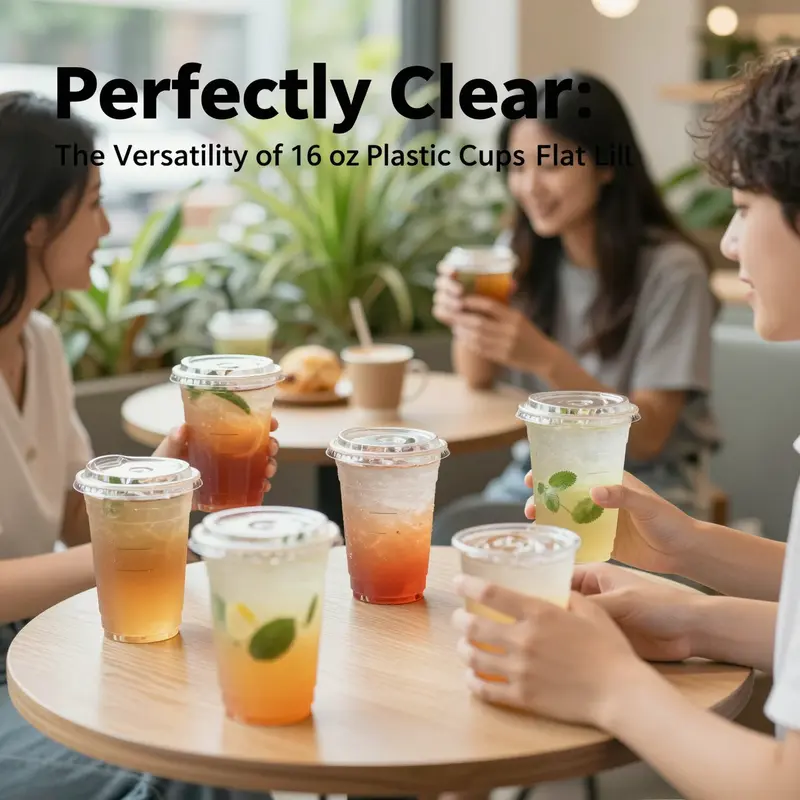
In the bustling realm of beverage service, the 16 oz clear plastic cups with flat lids stand out as a favorite among bubble tea shops, restaurants, food trucks, and catering services alike. These versatile cups not only enhance the visual appeal of your drinks but also provide practical benefits such as spill prevention and temperature maintenance. This article delves into the key features that make these cups indispensable, explores their material composition and sustainable options, analyzes current market trends and supplier dynamics, and discusses their myriad applications in various service settings. By the end of your reading, you’ll have a well-rounded understanding of how 16 oz plastic clear cups with flat lids can elevate your beverage offerings.
Seeing Through Clarity: The Subtle Design Mastery of 16 oz Clear Cups with Flat Lids
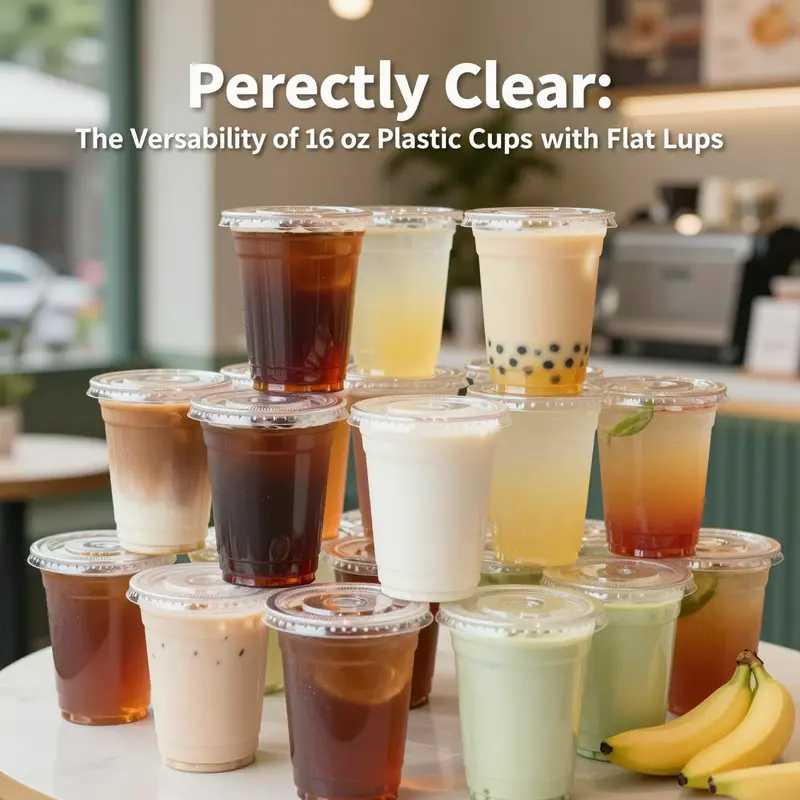
The 16 oz clear plastic cup with a flat lid sits at the intersection of form and function, where visual appeal meets practical performance. It is a small yet telling element in the broader ecosystem of take-away beverages and desserts. Consumers gravitate toward the clean lines, the way colors and textures of a drink shimmer through transparent walls, and the confidence that a simple lid seals in freshness without obstructing the view. For a business, this combination translates into a tool that combines display power with operational efficiency, a pairing that can elevate customer experience while keeping costs predictable in high-volume settings. In this light, the 16 oz cup becomes more than a container; it is a disposable platform optimized for both sensory impact and logistics.
Capacity is a practical anchor in menu design and portion control. At roughly 473 ml, the 16 oz size resonates with common serving standards for iced beverages, smoothies, cold brews, and layered drinks. It also proves useful for dessert servings or snack portions that benefit from a clear window into the product. The size supports a range of beverage densities—from a dense, syrupy smoothie to a lightly aerated cold brew—without overwhelming the user or requiring a larger cup and more material. In a café or a snack kiosk, this equilibrium helps maintain consistent portioning across shifts and staff, while still leaving room for topping foams, swirls, or a drizzle of sauce without spillage.
The visual clarity of these cups is a defining feature. PET, PS, PP, and even PLA-based variants offer transparency that showcases the drink’s color, texture, and garnish. PET is the workhorse here, prized for its combination of stiffness, clarity, and strength. It holds its shape well when filled with cold liquids and during transport, which helps prevent deformation that might otherwise compromise a seal or reduce display appeal. PS provides excellent clarity as well, though it can be more susceptible to cracking under certain stresses. PP offers a balance of chemical resistance, durability, and lightness, with good performance in handling and stacking. PLA, a biodegradable option, introduces sustainability into the equation and aligns with consumer demand for eco-friendly packaging. However, PLA’s thermal properties and composting requirements differ from traditional plastics, which can influence storage and disposal decisions. Taken together, material choice becomes a strategic decision: clarity versus toughness, cost versus end-of-life considerations, and the intended use environment.
The lid design is the other side of the coin. A flat lid delivers a snug, secure seal that minimizes leaks during transport and reduces the risk of cross-contamination. The flat geometry also simplifies stacking, loading onto service trays, and compatibility with standard cup holders, making operations more predictable in busy environments. Some lid variants feature a small vent hole to ease sipping, especially for carbonated or foamy drinks, while others prioritize an airtight closure for longer hold times. The flat lid thus functions not only as a barrier against spills but as a component that influences temperature retention, moisture control, and overall consumer satisfaction at the moment of sip.
Single-use convenience remains a practical hallmark of these cups. In food-service, catering, and events, the lightweight profile reduces handling effort for staff and minimizes the weight load for customers carrying multiple drinks. The disposable nature simplifies cleanup and enables rapid turnover, an essential attribute in high-volume contexts. Yet even as a convenience, the design must balance environmental considerations. This is where material choices and end-of-life options become a core part of procurement decisions. PET and PP are often recyclable in many municipal streams, while PS is widely accepted in many programs but can be more challenging to process in some communities. PLA adds a different dimension, offering biodegradability under industrial conditions, but with caveats about home compostability and real-world infrastructure. Suppliers and buyers weigh these trade-offs as they craft procurement specifications and sustainability claims that align with organizational goals and consumer expectations.
Customization opportunities expand the value proposition beyond the base container. Many suppliers offer branding options, enabling a cup that carries logos, color accents, or unique design elements. The aesthetic impact of branding on a clear cup can be powerful: a logo or color scheme can integrate seamlessly with a beverage’s look, reinforcing brand recognition without obscuring the product inside. Custom printing and packaging configurations can extend to matching lid styles or coordinated bulk-wrapping, providing a cohesive, branded experience for take-away customers. The economics of customization hinge on volume and lead times, but the potential return—increased brand visibility and perceived quality—can offset higher per-unit costs in the right setting. This is where suppliers’ capabilities in China—regions renowned for large-scale plasticware production—play a pivotal role. Their capacity to offer consistent quality at scale, together with customization options, helps businesses achieve both identity and efficiency in one package.
From a sourcing perspective, the supply chain for 16 oz clear cups with flat lids hinges on market maturity and regional logistics. China remains a central hub, offering scalable production, robust quality controls, and competitive pricing that reflect economies of scale. Buyers frequently encounter MOQs that require market-ready volumes for economical pricing, with typical bulk packaging arranged in sets that align with shift schedules and service volumes. The availability of free samples, with shipping covered by the buyer, helps buyers validate fit with their beverage profiles and service models before committing to larger orders. Payment methods, including secure options, provide reassurance in cross-border transactions. While the allure of low unit costs is compelling, the real value emerges when suppliers can match specifications with consistent quality, dependable lead times, and responsive service. In busy retail environments, even small variances in cup dimensions or lid fit can cascade into customer frustration, so precision in manufacturing tolerances and rigorous quality assurance are essential elements of a reliable supply arrangement.
A well-chosen cup strategy also considers the breadth of materials and their environmental footprint. PET’s recyclability often positions it as a practical default in many markets, while PS brings transparency and rigidity that can reduce breakage during transport. PP’s resilience helps when the cup needs to withstand chillier beverages or longer service cycles. PLA’s biodegradable profile introduces a sustainability lens that resonates with environmentally conscious consumers, but it requires compatible industrial composting infrastructure to realize its full benefits. In practice, many operators adopt a mixed approach: PET or PP for standard cold beverages, with PLA options for venues prioritizing compostable alternatives. Such strategies demonstrate how a single product family can accommodate diverse sustainability goals, customer expectations, and logistical realities without sacrificing the clarity and convenience that define the 16 oz format.
The consumer experience is shaped by more than the beverage itself. Clarity reveals the drink’s color and texture—layers of coffee, milk, or fruit puree become visible windows into crafting. The lid’s ease of use, its resistance to leaking, and its contribution to temperature retention influence the overall perception of quality. A well-sealed cup preserves carbonation and keeps cold drinks at the intended temperature for longer, enhancing mouthfeel and aroma release when the lid is finally removed. Merchandising plays a subtle but meaningful role when cups align with store design and messaging. In a busy self-serve setting, a clear cup can attract attention from afar and invite the customer to examine the product before purchase, an advantage that’s difficult to achieve with opaque containers.
Operational efficiency also factors into cup selection. The flat-lid design supports quick and repeatable assembly lines, reducing the cognitive load on staff during busy periods. The uniform geometry enables quick stacking and stable loading into coolers or display cases. When combined with reliable lid fit, the cup- lid system minimizes waste through fewer spills and fewer customer-initiated returns or exchanges. For venues that rely on grab-and-go service, this reliability translates into smoother throughput, happier customers, and better overall service metrics. While the simplicity of a cup might seem incidental, in high-volume settings it underpins the reliability of the entire service chain—from the moment a beverage is prepared to the moment a customer takes it away.
A practical reflection on customization and packaging can be seen in cross-category packaging ecosystems that pair cups with compatible lids, sleeves, and disposable accessories. For readers curious about how a brand can extend its packaging language beyond the cup itself, there is an accessible example of multifunctional, eco-conscious solutions on a dedicated product page. senang05-food-grade-disposable-kraft-paper-12oz-porridge-bucket-portable-microwavable-paper-soup-cup-with-lids offers a window into coordinated packaging strategies that blend sustainability with branding and convenience. This example illustrates how manufacturers and suppliers can deliver a cohesive set of take-away containers that respect consumer expectations and operational realities. https://cupbowlpack.com/product/senang05-food-grade-disposable-kraft-paper-12oz-porridge-bucket-portable-microwavable-paper-soup-cup-with-lids/.
In parallel with the emphasis on display and utility, the chain of custody for these cups involves careful attention to food-grade safety, regulatory compliance, and handling practices. Materials used in these cups must meet food-contact standards, with migration and leaching profiles assessed to minimize any risk to consumers. The choice of resin and coating, any printing inks, and the adhesives used in labeling all contribute to the cup’s overall safety profile. Storage conditions, including temperature, humidity, and exposure to direct sunlight, can influence the material’s performance over time, especially for PLA-based alternatives. For operators, this means selecting cups that not only look appealing but also maintain their integrity under realistic service conditions. In practice, this translates into clear criteria for vendors: consistent wall thickness, precise lid-fit tolerances, and reliable barrier properties that prevent leaks and preserve beverage quality. The right combination of clarity, lid design, and material choice supports both customer trust and efficient service.
The broader takeaway is that the 16 oz clear cup with a flat lid is more than a passive container. It is a thoughtfully engineered interface that supports the display of vibrant products, protects quality during handling, and aligns with practical needs—from bulk packaging and supply chain reliability to customization and sustainability. It demonstrates how a simple vessel can carry multiple strategic priorities: visual appeal, operational efficiency, customer satisfaction, and environmental responsibility. As menus evolve and consumer expectations continue to shift toward transparency, both literally and figuratively, the cup remains a critical touchpoint in the beverage and food service experience. Its enduring relevance lies in its balance of clear presentation, secure sealing, and scalable production, which together enable businesses to deliver consistent experiences at scale without compromising on environmental stewardship or cost discipline.
For deeper technical background on the science behind these cups, see the external resource that discusses material properties, grades, and industrial performance. https://www.made-in-china.com/products-search/hot-products/The-Science-Behind-Plastic-Clear-Cups-With-Flat-Lids-Properties-Material-Grades-and-Industrial-Performance-Insights.html
Clear Choices: Material Makeups and the Sustainability Thread in 16 oz Cups with Flat Lids
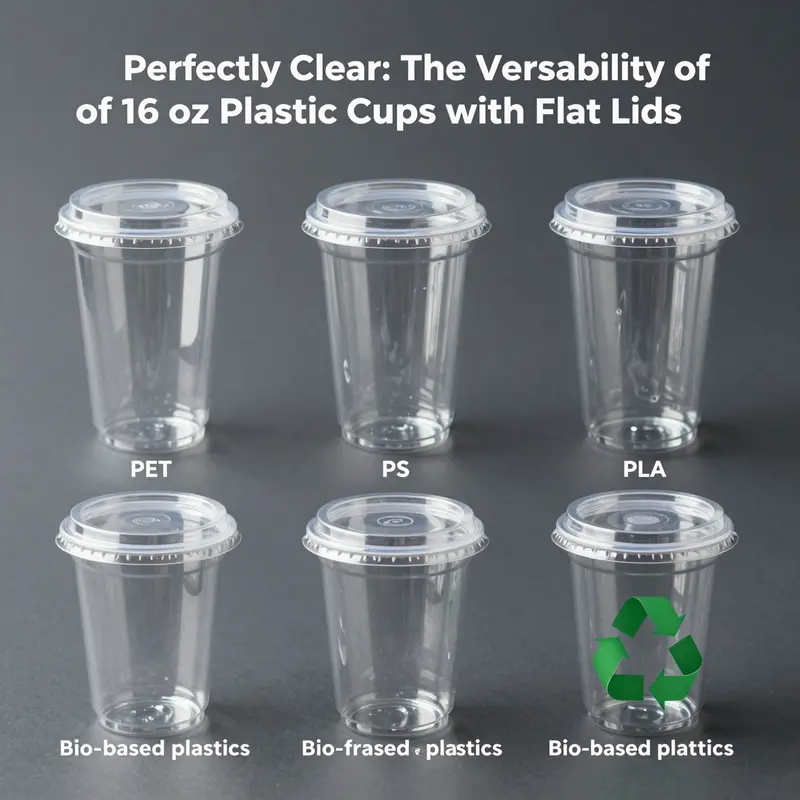
The material makeup of a 16 oz clear plastic cup with a flat lid is more than a technical detail; it is the backbone of performance in use and a hinge point for waste, resource use, and responsibility. The cup and lid are typically made from a polymer family chosen for clarity, strength, and processability, with each option carrying a different life cycle and end-of-life path. In practice, the most common material in these cups is a clear, rigid polymer that shows a beverage with pristine clarity and light weight, and that is often marketed as recyclable in many municipal streams. Yet recycling reality varies by place, and success depends on local facilities, consumer sorting, and labeling clarity that helps prevent contamination during collection. PET is widely accepted due to clarity, impact resistance, barrier properties, and strong recycling rates in many programs. When collected through curbside or drop-off streams, PET can be reprocessed into bottles or other products, but only if the streams stay uncontaminated. However, the environmental benefit hinges on the reliability of the recycling channel. PP offers heat resistance and stiffness, making it well suited for cold beverages and temperature fluctuations. PP is widely recyclable in many systems, often designated with its own recycling code. It is chosen for barrier performance and stacking efficiency, which can reduce transport emissions. However, PP can be more expensive to produce than PET and may offer slightly less optical clarity; for operators balancing presentation with durability, PP provides a reliable alternative that fits circular economy goals if the local stream supports it. PS provides stiffness and transparency but carries a heavier environmental burden. In many curbside programs, PS is not accepted, or requires specialized collection. This mismatch between performance and end-of-life creates a constraint for operators prioritizing easy recycling. The environmental tension is sharpened when PS ends up in ecosystems because of persistence. While PS remains familiar for cost or specific properties, its adoption is tempered by sustainability concerns and evolving waste-management expectations. PLA, a bio-based option derived from renewable resources, offers potential for lower embodied energy and compostability under industrial conditions. In theory, composting PLA in certified facilities could yield favorable end-of-life outcomes, but real-world results depend on the availability of industrial composting infrastructure and consumer sorting. Not all areas have facilities capable of processing PLA at scale. In those places, PLA may behave similarly to conventional plastics in landfills, limiting its sustainability advantage. The benefits are real but conditional and require compatible waste-management systems. The flat lid has a material counterpart and practical impact on sustainability. A flat lid may be made from the same family of plastics as the cup or from a different material, which creates layered end-of-life challenges. Lids with straw slots can complicate recycling if not engineered with precision. The lid and cup sharing compatible materials and clear labeling improves the potential for material recovery. In practice, designing for circularity means choosing a lid that can be collected in the same stream as the cup. Beyond raw material choices, real sustainability emerges from disposal education. A cup may be recyclable in theory, but if consumers do not know how to dispose of it or if local programs do not accept the material, benefits may not materialize. Clear labeling and simple sorting guidance can transform consumer behavior, turning a disposable item into a responsibly managed resource. For businesses, pursuing cups made from recycled content can lower virgin resin demand, provided downstream systems accept the recycled material. Certified compostable PLA may be an option where industrial facilities exist, paired with a robust collection and composting network. Another path is to minimize packaging and optimize logistics to reduce transport and storage impacts while keeping performance. The end-of-life infrastructure remains central; material choice should align with local recycling or composting options, and guidance to customers should be clear to maximize diversion from landfills. In procurement decisions, suppliers may emphasize different materials, manufacturing locales, and customization options. Brand considerations, while attractive, should be weighed against end-of-life factors and the capacity of local waste systems. Selecting a more recyclable material with a straightforward end-of-life can align with sustainability goals even if it sacrifices some optical properties. From a consumer viewpoint, education and labeling elevate perceived sustainability. Clear messaging about how to dispose of the cup and lid helps integrate the item into a circular economy. Customers who understand the end-of-life path can influence procurement choices as well. To explore recycling guidelines, a practical external resource provides an industry-backed view of what makes recycling programs work and where gaps commonly arise: https://www.plastic-institute.org/recycling-guidelines
Clear Choices: Market Trends, Sustainability, and Supplier Strategy for 16 oz Clear Cups with Flat Lids
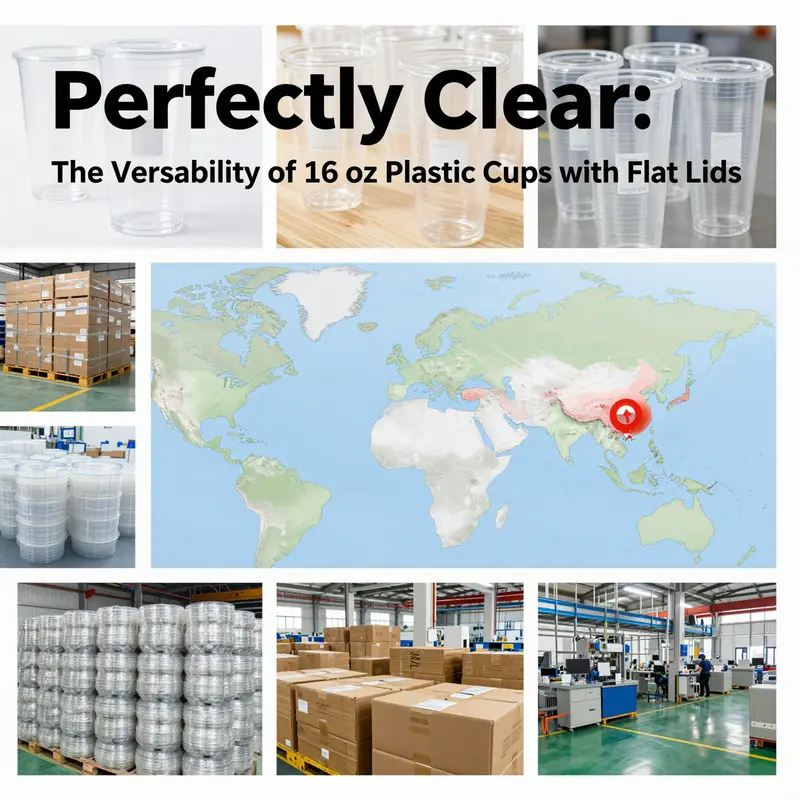
The market for 16 oz clear plastic cups with flat lids sits at a critical crossroads where clarity, reliability, and responsibility intersect with evolving consumer expectations and a tightened global supply chain. These cups, typically offered in PET, PS, or PP, are chosen for their transparency, rigidity, and cost efficiency, making them a staple for serving cold beverages such as iced coffee, smoothies, juices, and cold brew across retail, food service, and event environments. The 473 ml capacity, a familiar benchmark for convenience and portion control, carries not just a volume spec but a bundle of practical considerations: the way the cup presents the drink to a consumer, how it stacks and stacks well in storage, and how it travels from counter to customer without spilling. The standard flat lid is more than a simple closure; it is a functional seal that minimizes leaks during transport, preserves temperature, and supports an orderly, uniform lineup for display and handling. While some versions may include a vent hole to facilitate sipping, the prevailing design philosophy emphasizes a secure, even rim that fosters stability during pouring, stacking, and movement. This subtle engineering matters because a cup’s performance under real-world use—whether on a crowded campus post-gradation day, at a bustling airport lounge, or during a summer festival—depends on the predictability of a lid’s fit and a cup’s ability to resist deformation when full of a chilly beverage. Beyond function, the aesthetics and branding potential of a clear 16 oz cup are intimately tied to material choice and finish. PET remains the go-to for many suppliers due to its combination of clarity, strength, and relatively straightforward recycling streams. PS, while offering excellent optical properties and cost advantages in some markets, often invites scrutiny from regulators and consumers alike for environmental considerations. PP provides a middle ground with good heat resistance and chemical compatibility, though it may trade some clarity for durability in certain applications. The rise of PLA-based options introduces a biodegradable path that aligns with sustainability goals, yet it also introduces nuances in thermal tolerance and end-of-life processing. This spectrum—PET’s transparency and durability, PS’s economic edge, PP’s versatility, and PLA’s ecological appeal—frames a decision matrix that brands and manufacturers must navigate in tandem with evolving environmental standards and consumer sentiment that increasingly rate packaging choices on life-cycle impact as much as on cost and convenience. Sustainability, once a premium feature, has become a baseline expectation in many markets. Certifications such as those from the Biodegradable Products Institute (BPI) are becoming more prominent, signaling compostability and a commitment to responsible end-of-life handling. These certifications influence procurement criteria in North America and Europe, where regulatory frameworks and consumer demand push for packaging options that can be integrated into compliant waste streams. The shift toward sustainability interacts with consumer preferences in tangible ways. Cropping up across market segments is a demand for packaging that reduces environmental footprints without compromising beverage quality or user experience. Brands are increasingly asking how a 16 oz clear cup can be both aesthetically appealing—showcasing the beverage’s color and texture—and responsibly produced, with materials sourced ethically and disposed of through established, if sometimes complex, recycling or composting programs. In practice this translates into a trio of design and policy considerations. First is material selection that balances clarity, barrier properties, and end-of-life outcomes. PET remains favored for its crisp appearance and robust performance under cold conditions, which suits the common use cases for iced coffee and smoothies. Second is functional design: the rim’s uniformity, the lid’s fit, and the absence of sharp edges all reduce spillage risk and improve user confidence during consumption on the go. A flat lid, in particular, is valued for its predictable sealing geometry and compatibility with standard dispensing and vending workflows. Third is branding and customization. For many operators, the ability to print logos, colors, or seasonal motifs on cups and lids adds marketing heft, enabling a consistent brand experience from the point of purchase to the handoff. The eco-conscious thread in this narrative has extended beyond the cup itself to the broader packaging ecosystem. Suppliers increasingly outline lifecycle considerations that were less prominent a decade ago. The conversation now often includes not just whether a cup is clear and affordable, but whether it has a transparent path toward reduced environmental impact, whether the lid design optimizes material use, and whether the supplier can articulate end-of-life options to customers who want to communicate responsible choices to their own patrons. In practice, this means brands weigh not only the raw material but also the supply chain’s resilience. The supplier landscape for these cups remains dominated by global manufacturers, with China continuing to play a pivotal role due to scalable production, robust customization capabilities, and competitive cost structures. Ningbo, among other manufacturing hubs, demonstrates a mature ecosystem for high-volume plasticware, offering a breadth of options from standard clear PET to more specialized blends and biodegradable alternatives. Buyers often approach supplier selection with a structured mindset: assess quality assurance processes, confirm certifications and compliance with international standards, and review the supplier’s ability to meet evolving regulatory demands and sustainability goals alongside price and lead times. The procurement dynamic is not merely about unit price but about the reliability of supply, the ability to customize, and the willingness to engage in long-term commitments that align with a retailer’s calendar, seasonal promotions, and events calendar. In markets where brand differentiation matters, OEM (Original Equipment Manufacturer) and ODM (Original Design Manufacturer) arrangements become essential. A buyer can procure cups with logos, colorways, or even special rim finishes tailored to a brand’s look and feel, while still leveraging the core cup’s performance and cost efficiencies. This is where the supplier’s technical capability and project management discipline become as important as price. A careful balance of cost, quality, and sustainability is the anchor of strategic sourcing in this category. The market presents a spectrum of price points that reflect volume, material choice, and customization. For instance, PET-based 16 oz cups with flat lids often fetch different unit costs depending on whether the buyer is purchasing basic clear stock, a special co-polymer blend, or a PLA-based option intended to improve compostability. MOQs and bulk pricing shape initial engagement, with many suppliers in the 20,000 kg range or higher, depending on the configuration and the extent of customization offered, including printed branding or embossed logos. Buyers who want to test new suppliers or new materials frequently rely on samples or pilot orders, with some suppliers offering free samples while the buyer covers shipping. Payment methods commonly include secure options such as PayPal, wire transfers, or other well-established channels, reflecting the need to manage international procurement with a balance of speed and risk mitigation. The trend toward more transparent supply chain information also comes into play. Sourcing strategies increasingly favor suppliers that can demonstrate operational stability, consistent production capacity, and clear traceability for materials, including the source of resin pellets, manufacturing processes, and post-consumer recycling outcomes. In this sense, the supplier landscape resembles a mosaic where cost efficiency and environmental responsibility must exist in harmony with product performance and brand expectations. The business implications of these dynamics are far-reaching. Operators looking to enter or expand in this market must rethink the traditional price-driven approach and consider a holistic framework that integrates cost, supply assurance, and sustainability metrics. A robust supplier evaluation matrix can include factors such as material compatibility with existing lines, the ability to support branding initiatives, compliance with international packaging standards, and the supplier’s track record in delivering consistent quality across large production runs. The versatility of the cup design is another essential consideration. A 16 oz clear cup with a flat lid should adapt to a broad set of beverages—from dense, viscosity-heavy smoothies to lighter, more beverage-like iced teas—without compromising the drinking experience, while the lid’s sealing integrity should be tested across a wide range of temperatures and handling scenarios to minimize leakage and product loss. In practice, this translates into a careful orchestration of packaging decisions with marketing and operations planning. A retailer focusing on seasonal campaigns might prioritize a high-clarity PET option to showcase the beverage’s color during summer promotions, paired with a logo-printed lid for brand visibility at the point of sale. A quick-service restaurant chain pursuing a sustainability narrative might lean toward a PLA-based option or a PET-PLA blend, with clear labeling that communicates compostability and a defined waste stream. At the same time, the choice of packaging must align with the retailer’s logistics footprint. The flat lid design, while straightforward, must be compatible with existing automated cup dispensers and sleeve systems, ensuring smooth user experiences from the moment a drink is poured to the moment the customer seals and retrieves their beverage. Such compatibility reduces handling time and helps maintain service efficiency, a key driver of customer satisfaction in fast-paced venues. The market’s trajectory suggests continued growth, tempered by the complexity of balancing cost, performance, and environmental responsibility. As consumer expectations sharpen and regulations tighten, brands that can articulate a credible sustainability narrative without compromising convenience will likely command stronger loyalty and market share. Suppliers that can consistently deliver on quality and reliability while offering meaningful customization options and transparent end-of-life stories will remain competitive players in a crowded field. For buyers, the path forward lies in a deliberate, multi-faceted sourcing strategy: prioritize material choices that meet both functional requirements and environmental goals, demand clear documentation of supplier capabilities and certifications, and cultivate supplier partnerships that support long-term brand objectives rather than short-term price wins. In this evolving landscape, a 16 oz clear cup with a flat lid is not merely a disposable tool but a conduit for brand identity, consumer trust, and sustainable practice that can traverse markets and seasons with dependability. As the palette of options broadens—from traditional PET to plant-based and compostable alternatives—buyers gain the opportunity to align packaging decisions with a broader corporate responsibility agenda while preserving the clarity, reliability, and efficiency that customers expect. For readers exploring related configurations and eco-friendly packaging narratives, one example of broader packaging innovation in a closely related cup format can be explored here: eco-friendly disposable double-wall craft paper coffee cup with lid. This reference highlights how brands are extending their sustainability conversations across cup formats, offering a useful perspective on how paper-based options with lids can coexist with plastic-based solutions in a portfolio that emphasizes responsible design and robust consumer experience. External resources provide additional context on the broader supplier landscape and technical capabilities in this space, reinforcing that strategic sourcing must consider not only the unit economics but also supplier reliability, regulatory alignment, and the environmental narratives that increasingly guide purchasing decisions. For those seeking deeper insight into global supplier options and mass-production capabilities, the following external resource offers a broader view of the market dynamics and manufacturing scale that underpin 16 oz clear cups with flat lids: https://www.alibaba.com/product-detail/Fuling-PET-CUP-16-oz-Clear-Plastic-Cups-with-Lids-for-all-beverage-types-Custom-logo-printing-available-Explore-ODM-and-ODM-services-for-your-business-needs.html
Clarity, Conveyance, and Craft: The Enduring Role of 16 oz Clear Cups with Flat Lids in Modern Beverage Service
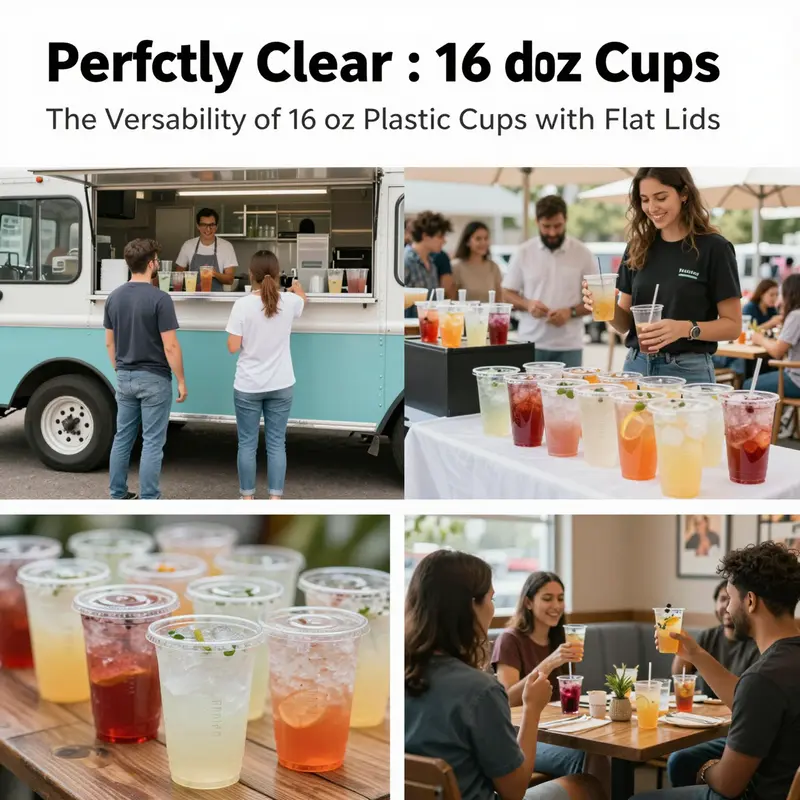
The 16 oz clear plastic cup with a flat lid stands as a quiet workhorse in the world of beverage service, where presentation, practicality, and price must align in real time. Its clarity showcases the color and texture of the drink, inviting curiosity and appetite. The flat lid, simple in form yet crucial in function, seals in freshness, minimizes spills, and supports a fast, on-the-go service model. Across settings that range from quick-serve counters to outdoor events, these cups embody a design philosophy that marries everyday convenience with a level of durability that keeps pace with customer demand. Understanding why this combination endures requires looking closely at material choices, design features, and the broader ecosystem in which these cups operate, from branding opportunities to sustainability considerations. The result is a narrative of how a seemingly small packaging decision can influence everything from shelf appeal to waste streams, without sacrificing speed or cost efficiency.
Material choice lies at the heart of the cup’s performance. The most common options—PET, PS, and PP—each bring distinct strengths. PET, or polyethylene terephthalate, is prized for its high clarity and sturdy form. The visual appeal of a beverage inside a crystal-clear cup can amplify perceived quality, while the material’s rigidity helps resist denting and flex during transit. This is especially important when the drink travels through the bustling rhythm of a busy service line or the bustle of a festival’s crowded lanes. PS, or polystyrene, offers a glass-like transparency with a lighter touch, providing a balance between visibility and cost. PP, or polypropylene, contributes resilience, chemical resistance, and a degree of heat tolerance that broadens the envelope of suitable beverages, though it may sometimes yield slightly less optical brilliance than PET in certain light conditions. Each material serves the same essential purpose—visible, sanitary presentation of a cold beverage—but the choice can subtly shift end-user experience, maintenance needs, and even the environmental conversations that surround disposable cups.
A growing segment of options also includes PLA-based variants, which introduce a compostable or bio-based dimension to the equation. These eco-conscious alternatives respond to a demand for more sustainable waste profiles, yet they come with trade-offs. PLA often behaves differently under heat and moisture exposure, and its end-of-life processing can depend on access to industrial composting streams. For operators, the decision between traditional petrochemical plastics and bio-based alternatives involves weighing consumer expectations for sustainability, regulatory constraints, and the practical realities of waste management in their locale. The bottom line remains that the fundamental clarity and strength that consumers expect from a 16 oz cup must be preserved, regardless of the chosen chemistry.
Beyond material choices, the cup’s design and its accompanying lid define the day-to-day utility that operators rely on. The flat lid is more than a simple cover; it is a practical seal that minimizes leakage during transport and handling while preserving beverage temperature within the short windows of service. The lid’s flat surface accommodates a straightforward, reliable fit on the rim, and many versions incorporate a small vent or straw slot to ease drinking and reduce pressure buildup. This combination of a secure seal and user-friendly access is especially valuable in fast-paced environments where customers expect a familiar, dependable experience without sacrificing speed. The flat lid’s profile also supports a compact, stackable stacking geometry that streamlines both storage and restocking in cramped back-of-house spaces or crowded event booths. The physical efficiency of this design underpins its popularity, enabling operators to scale service during peak periods without compromising reliability or speed.
For operators seeking a path to stronger brand presence, customization offers a clear and accessible avenue. Suppliers commonly provide options to imprint logos, slogans, or colors onto the cups themselves, transforming a disposable item into a mobile advertising and brand-consistency asset. The impact of on-cup branding extends beyond aesthetics; it can reinforce perceived value, signal quality, and cultivate familiarity with a product line. When branding aligns with color schemes or typography that echo a business’s broader packaging ecosystem, the unboxing or takeaway experience becomes cohesive rather than incidental. This is where the 16 oz clear cup with a flat lid earns an extra layer of value: it serves as a canvas for a business’s identity and a bridge between in-store presentation and to-go moments.
From a logistical vantage point, these cups are designed for bulk handling. They commonly arrive in bulk packs, often in 100-count configurations or other efficient packaging formats that support quick restocking and a smooth line flow. The scalability of production and the breadth of customization options mean that a shop can tailor its cup program to its specific needs—whether prioritizing a minimalist, cost-efficient approach or chasing a premium, high-clarity presentation with bespoke branding. Suppliers frequently offer samples to verify everything from material feel to print alignment, with buyers covering shipping costs and using the trial period to confirm compatibility with cup holders, lids, and straws. Once a choice is made, the conversation often shifts to larger-scale procurement arrangements, including potential minimum order quantities and negotiated pricing based on total volume and custom features. In this ecosystem, the economics of a 16 oz cup are not merely about per-unit price; they are about forecasting, inventory discipline, and the alignment of packaging logistics with customer demand.
The appeal of the cup extends into safety and environmental dimensions that increasingly shape procurement decisions. Food-contact safety remains a baseline requirement, with many variants enjoying FDA approval for direct contact with consumables. For operators concerned about end-of-life outcomes, compostable or certified options provide a pathway to reduce landfill impact, albeit with caveats regarding processing infrastructure. Certifications such as compostability align with broader sustainability narratives, yet they can lead to nuanced considerations about where and how the cups are disposed of. The conversation around sustainability often centers on balancing convenience with environmental stewardship. While compostable options address end-of-life concerns, their practicality hinges on the availability of appropriate composting facilities and local waste management practices. In many markets, ongoing improvements in recycling streams and materials science continue to influence the feasibility and desirability of different cup compositions. Integrating these considerations into the purchase decision requires a careful synthesis of consumer expectations, regulatory landscapes, and the operational realities of waste processing.
The real-world applications of 16 oz clear cups with flat lids illustrate their versatility across multiple service contexts. In fast-food outlets and casual dining stalls, the cups are prized for enabling a clear view of the product while ensuring a spill-resistant service model. The visual transparency of the cup can heighten product appeal, letting customers gauge drink composition at a glance, from color intensity to texture. The flat lid’s functionality reinforces this by delivering a dependable barrier during transit and at the table, supporting a smoother customer experience and fewer service interruptions. In events and gatherings, where logistics reign and disposable solutions dominate, the cups’ light weight, sturdiness, and ease of disposal help organizers manage large beverage queues with minimal overhead. Whether serving sodas, cold-pressed juices, or customized frozen treats, the cups adapt to a broad range of cold offerings while maintaining a professional, sanitary appearance. Takeout and catering operations also benefit from a combination of compatibility with standard cup holders, efficient stackability, and the option for branded presentation that extends the event experience beyond the moment of purchase.
A practical lens on choice emerges when considering the safety and environmental compliance of the packaging. The FDA’s affirmation of food-contact safety remains a foundational benchmark for any cup intended for beverages. For markets and brands that prioritize sustainability, BPI certification or other compostability credentials may be pursued to address end-of-life goals. Yet the tension between performance and environmental outcomes persists: a cup may offer excellent clarity and barrier properties, but those advantages must be weighed against the realities of how the product will be disposed of and processed. This tension is not a static dilemma but a dynamic conversation that evolves with consumer expectations, regulatory developments, and the evolving capabilities of recycling and composting industries. For operators, staying informed about these dimensions means not only selecting the right material for the beverage and context but also aligning procurement with the broader goals and capabilities of their waste streams.
In contemplating sourcing, the global supply chain for these cups reveals a pattern of concentrated manufacturing and competitive pricing. China remains a central hub, offering scalable production capacity, customization capabilities, and favorable economics that can translate into meaningful savings for large orders. The geographic concentration is matched by the range of options available to buyers, from straightforward, crystal-clear PET cups to more specialized variants that emphasize compostability or design flexibility. In this landscape, buyers often encounter minimum order quantities and quoting structures that reflect the scale of manufacturing and the level of customization required. The economics are further influenced by the purity and uniformity of the material, the tolerance for tinting or coloration, and the precision of the print or label application. For buyers, the practical takeaway is that a well-planned procurement strategy—one that accounts for lead times, customization needs, and transportation—can unseal significant value in a program that, on the surface, seems routine.
To round out the picture, consider the practical implications of choosing a 16 oz clear cup with a flat lid for a given operation. The decision is rarely isolated to a single attribute; it is the synthesis of clarity, lid design, material behavior, and branding possibilities. Operators must also weigh logistical realities such as compatibility with existing cup holders, the ease of stacking and storage, and the consistency of lid fit across production runs. In environments where high-volume service is the norm, the reliability of the seal and the predictability of the stacking configuration can save labor, reduce waste, and contribute to a smoother customer experience. When a cup program is aligned with brand messaging and sustainability objectives, the investment in customization and selected materials can reinforce a consumer’s perception of quality and responsibility. The end result is not a disposable item, but a component within a carefully designed service system that balances speed, clarity, and responsibility in a market that continually tests the boundaries of convenience and environmental awareness.
For readers seeking to explore how these packaging choices are represented in supplier ecosystems and to compare options beyond the narrative above, a broader overview of eco-friendly, recyclable packaging options can be found in dedicated supplier resources. senang-factory-price-multi-purpose-eco-friendly-recyclable-wholesale-promotion-custom-print-shopping-bag-craft-paper
External resource: https://www.alibaba.com/product-detail/Fuling-PET-CUP-16-oz-Clear-Plastic_1600579284431.html?spm=a2700.1
Final thoughts
The 16 oz clear plastic cups with flat lids are more than just containers; they are essential tools for enhancing service quality and customer experience. Their key features—durability, visual appeal, and practical design—combined with an increasing focus on sustainability, make them a smart choice for any beverage-focused business. Understanding market trends and supplier dynamics helps in making informed procurement decisions, ensuring that you get the best quality at competitive prices. As these cups find applications in various contexts—from bustling food trucks to upscale restaurants—they continue to play a vital role in packaging solutions that meet today’s demands. Remember, choosing the right packaging can significantly enhance your brand’s image and customer satisfaction.