
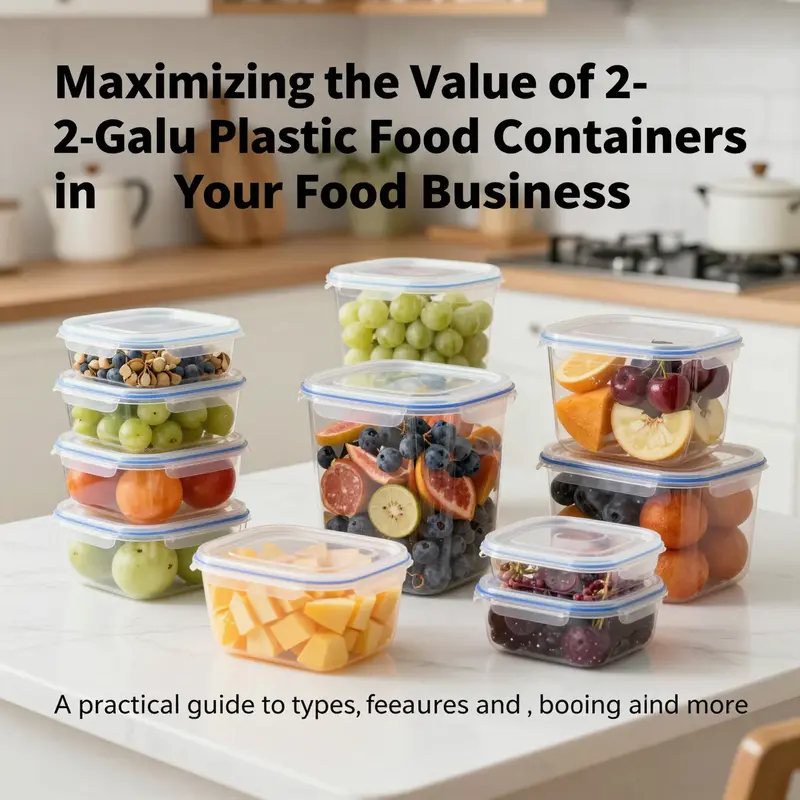
In a fast-paced food service environment, effective storage is essential for maintaining quality and efficiency. 2-gallon plastic food containers offer versatile options for bulk ingredients, from dry goods to liquids, and are popular across restaurants, cafes, catering services, food trucks, and event operations. This guide outlines key types, core features, common uses, buying tips, and environmental considerations to help you optimize inventory management and food safety.
Bulk Capacity, Everyday Use: The Design and Safety of 2-Gallon Plastic Food Containers
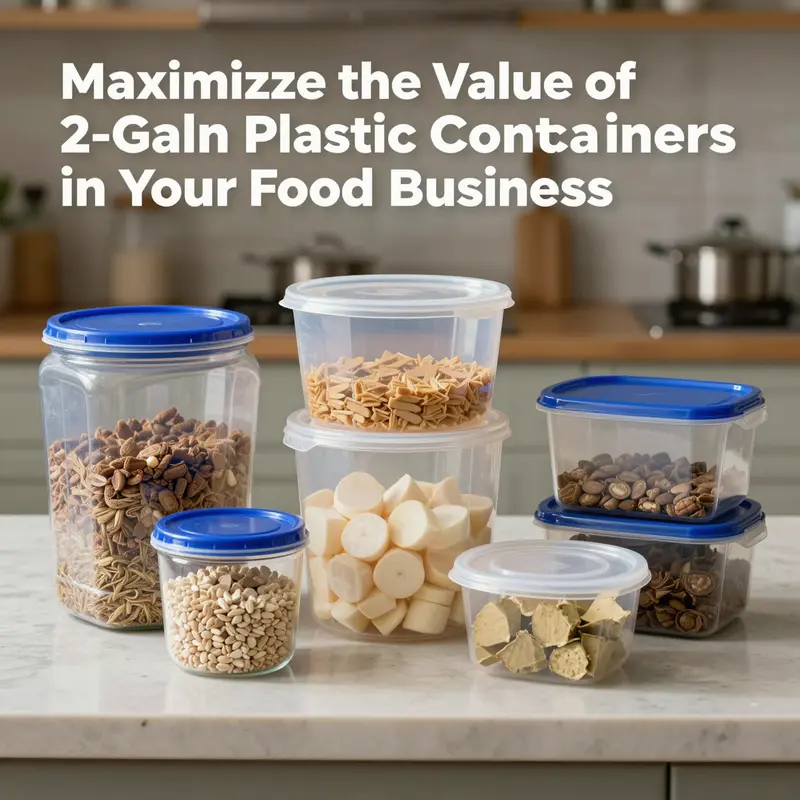
Capacity is a shared promise between utility and reliability. In the world of bulk storage, the 2-gallon container balances the appetite for sizable quantities with the practical demands of shelf life, portability, and hygienic handling. Nearly eight liters of potential storage, this size sits at the crossroads where households begin to treat bulk buying as a true operating principle and food service operations scale to meet consistent demand. The approximate volume—7.57 liters—anchors a family of containers that come in slightly different shapes, textures, and lid systems. Consumers may encounter a near-square profile, a compact round form, or a rectangular, low-profile design that stacks efficiently on shelves. Typical dimensions float around 15 inches by 11 inches by 5 inches in many catalogs, a footprint that accommodates large bags of dry staples like rice or flour while still fitting through standard kitchen and pantry openings. In other contexts, a more cubic 9-by-9-by-9 inch configuration appears, particularly when the goal is uniform stacking or integration with modular storage systems. Regardless of the silhouette, the 2-gallon class is built to optimize space, minimize air exposure, and keep contents accessible for scooping, pouring, and resealing. This emphasis on practicality reverberates through every material choice and every connection between lid and body, so the engineering becomes as much about daily workflow as it is about chemical stability and safety.
Material choice is the first definitive thread in the fabric of 2-gallon containers. The dominant options—high-density polyethylene (HDPE), low-density polyethylene (LDPE), and polypropylene (PP)—each bring a distinct set of properties to the table. HDPE emerges as the workhorse for durable, moisture-resistant, and impact-tolerant storage. It offers robust barrier properties to moisture and many common foods, lending itself to long-term storage of dry goods such as grains, sugar, and pasta. The material is typically opaque or translucent, and its composition lends itself to rigid, punishing-use environments without sacrificing food safety when manufactured to appropriate standards. Importantly, HDPE-based containers marketed for food contact are commonly BPA-free and FDA-aligned, a baseline assurance that helps mitigate concerns around everyday storage and repeated use. The rigidity and chemical resistance of HDPE make it a reliable choice for bulk bins, brining solutions, and even fermentation activities where inertness and mechanical integrity are prized.
LDPE, by contrast, introduces flexibility. It is the material of choice for squeeze bottles, soft-sided packaging, and designs where a gentler pour is needed or where an adaptable seal is required. In the 2-gallon space, LDPE is less common for rigid, traditional pails but remains relevant for containers that demand a blend of pliability and lightness. Its flexibility can ease handling in certain workflows, though its barrier properties and stiffness do not always match those of HDPE for long-term dry storage. Polypropylene, meanwhile, is noted for heat resistance and a different balance of stiffness and toughness. PP-based 2-gallon containers can withstand moderate temperatures during handling and even light heating or hot-fill scenarios that might be encountered in some cooking or fermentation processes. The trade-offs among HDPE, LDPE, and PP reach beyond raw performance: cost, recyclability, and compatibility with different lid systems all ride along with the material choice, shaping the overall value proposition for a given use case.
The lids and sealing mechanisms are not afterthoughts but central to the container’s ability to preserve content. Airtight gaskets, snap-on lids, and other secure-sealing configurations are designed to resist moisture ingress, pests, and air exchange. A reliable seal helps maintain the integrity of stored dry goods over weeks or months, supports fermentation schedules where oxygen exposure matters, and reduces the risk of spoilage during transport. A well-designed lid also contributes to user experience. It should be easy to remove and reattach without sacrificing seal quality after repeated use, and it must mitigate accidental spills during handling. In bulk operations, the lid system often aligns with the container’s shape—square or rectangular designs may maximize stacking and pallet efficiency, while round configurations might favor uniform stacking stability and a lower risk of corner damage when boxes are moved through tight spaces. The interplay between lid geometry, gasket material, and the body’s rigidity is a small study in practical engineering, yet it translates into meaningful gains in freshness, sanitation, and workflow efficiency across kitchens and warehouses.
Material safety and regulatory alignment are integral to trust in any food-contact container. Reputable 2-gallon containers are manufactured to meet food-grade standards and carry certifications that reassure users about their safety in contact with a wide range of foods. The labeling typically includes claims about being BPA-free and compliant with widely recognized food-safety guidelines. This is not just a marketing cue; it reflects a careful, ongoing focus on material behavior in contact with flavors, oils, and moisture. For professional kitchens and food service operations, these assurances dovetail with routine testing for chemical migration, dimensional stability, and durability under cycling—from repeated filling and pouring to frequent washing and sanitizing. The result is a container that remains inert to the foods it holds while withstanding the rigors of everyday use, whether in a home pantry, a commercial prep area, or an industrial storage room.
The versatility of the 2-gallon format extends well beyond the pantry. While it remains a reliable vessel for storing bulk staples like beans, rice, flour, sugar, or salt, it also finds a place in the broader food-prep and fermentation ecosystems. Consider sourdough starters and brines, where steady, scalable volumes become central to consistent outcomes. In fermentations, the ability to seal cleanly and maintain a controlled environment helps preserve texture, flavor, and microbial balance. For meat brining, the combination of large capacity with secure lid systems enables salt or sugar-based cures to permeate evenly while keeping the environment sanitary and free from contaminants. In commercial settings, bulk storage containers streamline inventory control, reduce the number of containers needed on a shelf, and simplify rotation practices, all while keeping the contents accessible to staff during busy service periods. The utility extends beyond food alone. Some hobbyists repurpose bulk containers to organize craft materials, seeds, or other bulk supplies, illustrating how robust, food-grade containers can support varied, practical workflows outside the kitchen.
As the market for bulk packaging evolves, the two-gallon format persists because it offers a rare blend of scale, manageability, and safety. The design challenge is not merely to hold a given volume but to ensure that the container integrates with the user’s daily rhythms. This means predictable weights, which ease handling and reduce strain, and consistent dimensional profiles that enable straightforward shelving, stacking, and shipping calculations. The weight of a typical 2-gallon container stays modest—often around a pound—an attribute that helps with portability and operational cost in logistics. The packaging ecosystem also reinforces a broader, increasingly conscious approach to materials: many users seek recyclable options and materials that support efficient end-of-life processing, aligning with sustainability goals that are now central to both households and larger facilities.
To tie these threads together, consider how the 2-gallon container embodies a design philosophy that marries form, function, and safety. Shape and size choices respond to real-world tasks: the need to measure, scoop, pour, and reseal with confidence; the demand for stable stacking in crowded shelves or pallets; and the expectation that contents remain resilient against moisture and contamination. Material selection—HDPE for durability and barrier performance, PP for heat resistance, and LDPE for flexibility in niche applications—maps directly onto those tasks. The lid system, with its airtight seal and user-friendly interface, completes the loop by preserving freshness and protecting the contents during transport and storage. In labs of everyday use, these containers become vehicles for consistency, enabling a kitchen, a café, or a warehouse to move from one batch to the next with predictable results. They are a practical embodiment of the idea that bulk storage can be both efficient and safe, a combination that quietly powers both the pantry and the pipeline of commercial food operations.
For readers curious about how packaging ecosystems connect with broader take-away and storage solutions, a practical reference on packaging formats beyond rigid plastic can be found here: senang05-disposable-kraft-paper-soup-cup-bowl-with-paper-lid-takeaway-lunch-packing-takeout-food-packaging-bucket. This broader lens helps illuminate the choices faced when planning a storage system, whether for a home, a café, or a distribution facility, and underscores how even the most bulk-minded containers sit within a wider packaging landscape that values safety, efficiency, and adaptability.
External resource for further standards and specifications can be explored here: https://www.cambro.com/products/food-storage-containers
Bulk-Sized Safekeeping: Material, Safety, and Real-World Use of Two-Gallon Plastic Food Containers
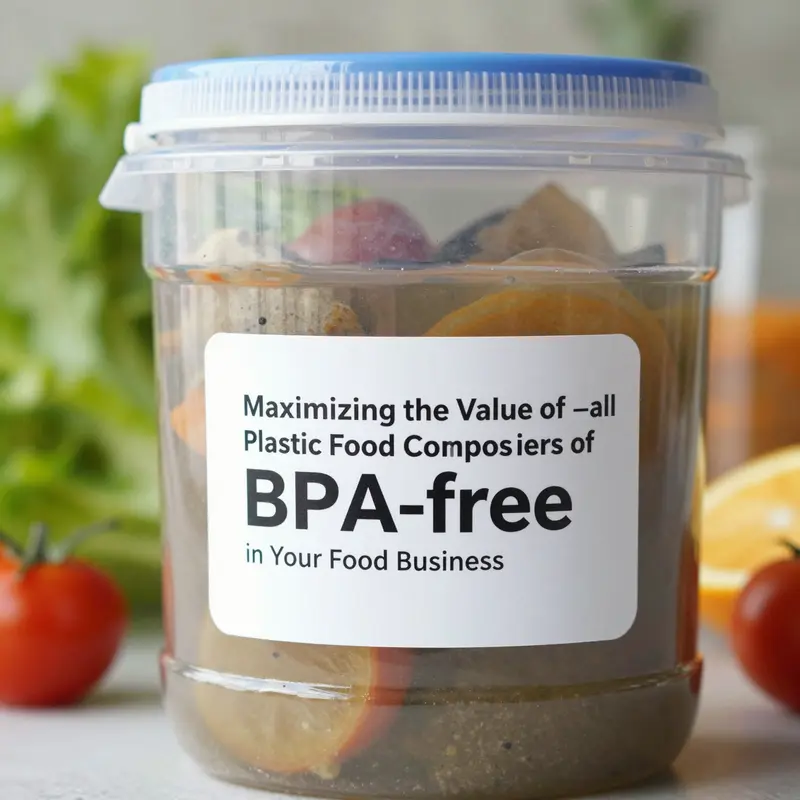
Two-gallon plastic food containers sit at a steady intersection of everyday practicality and industrial reliability. Their size makes them practical for households seeking bulk storage and for operations that need to move large quantities with manageable handling. In practice, these containers are engineered to hold roughly 7.57 liters, a sweet spot that balances the need for bulk capacity with the realities of shelf space, transport logistics, and family or facility workflows. They become a kind of anchor in the pantry, the kitchen, the canteen, or the storeroom, where bulk dry goods like rice, flour, beans, sugar, salt, and nuts accumulate and demand orderly organization. Yet their value runs deeper than capacity alone. The material choices, safety assurances, and design details shape how confidently a user can depend on them for storing consumables across a range of conditions.
Material composition matters as much as the volume they hold. The core of these containers is typically high-density polyethylene, or HDPE, a polymer renowned for its strength, rigidity, and chemical resistance. HDPE’s molecular structure provides a natural resilience against many of the substances encountered in food storage, from dry grains to lightly acidic liquids. When HDPE is specified as food-grade, it has been processed and tested to meet standards that govern direct contact with food and beverages. That designation is critical because it translates to predictable performance: minimal leaching, stable color and clarity in the appropriate formulations, and a structure that tolerates repeated handling without cracking or excessive wear. In practice, this means a container that can endure the bumps of routine usage—from crowded kitchen shelves to the back of a delivery truck—without compromising the integrity of its contents.
Beyond the material’s baseline robustness, the safety features built into these two-gallon containers build a crucial level of trust. A defining and increasingly common attribute is BPA-free construction. Bisphenol-A is a chemical that has generated considerable consumer concern, particularly around products that contact food or beverages. By labeling their HDPE as BPA-free, manufacturers communicate a commitment to reducing potential health risks associated with exposure. This BPA-free assurance broadens the scope of what can be stored safely. Water, dry goods, fermented products, homemade preserves, oils, and vinegars all fall within the safe-use envelope when the container is BPA-free. The certification and labeling aren’t just compliance buzzwords; they are a practical signal to users who juggle multiple storage tasks—canning, fermenting, or simply keeping staples neatly organized—without worrying about unintended chemical interactions.
Safety, however, does not rest on material declarations alone. The physical design of these containers emphasizes airtightness and leak resistance, two attributes that matter when the container travels, stacks, or sits under a jarred lid in a crowded cabinet. An airtight, leak-proof construction with a secure screw-top lid ensures the product remains uncontaminated by ambient air or moisture ingress. This is especially important for dry goods that can suffer from humidity exposure, which invites clumping or mold growth in the worst cases, or for liquids that could slosh and spill during transport or storage. The seal integrity also preserves aroma and flavor, which is a significant consideration in fermentation or when storing lightly flavored oils and vinegars that should not pick up off-notes from the surrounding environment. The design doesn’t stop at the lid; some models incorporate reinforced ribbing on the body to improve grip and structural rigidity. In heavy-use environments, and during long transports, a textured surface or a metallic handle can make a real difference in hot or cold conditions when lifting a full container. This attention to grip and handling is not a cosmetic detail—it directly impacts safety by reducing the risk of slips or drops.
Sustainability considerations also frame the value proposition of two-gallon containers. The HDPE material is widely recyclable, categorized as #2 plastic in many recycling streams. This classification aligns with broader sustainability programs that encourage recovery and reprocessing at end of life. While reuse is common in the short term for multiple storage cycles, the recyclability of HDPE offers a clear pathway to reduce long-term waste. The ideal scenario marries practical durability with responsible end-of-life choices: a container that can be cleaned and reused for a broad range of storage tasks, then responsibly recycled when it exceeds its useful life. The overall environmental footprint thus becomes a balance between longevity, reusability, and the availability of recycling infrastructure in a given region.
In day-to-day use, these two-gallon containers prove versatile beyond the obvious bulk storage of dry goods. They are well-suited to emergency preparedness kits, where having a reliable, sealed vessel for staples is part of a broader resilience strategy. The ability to store a substantial quantity of beans, rice, or other dry staples in a single container simplifies inventory management while keeping everything protected from moisture and pests. Fermentation, another practice noted in the research, benefits from the dual characteristics of an airtight seal and robust material. Whether used for controlled fermentation projects or for phase storage during longer fermentation cycles, the container offers a stable milieu that helps maintain consistent conditions, at least from a moisture and oxygen-control perspective. The capacity also makes it practical for households that prepare large batches of preserves, infused oils, or flavored syrups, so long as the contents align with the product’s safe-use guidelines. For liquids like water or vinegar, the combination of a secure lid and tight seal provides a level of confidence during transport, on-site cooking operations, or storage in less-than-ideal environments where humidity or temperature swings could otherwise threaten quality.
The design language of these containers—secure lids, strong body, and thoughtful finishes—speaks to a broader philosophy of reliable, long-lasting storage. In environments that demand durability, such as community kitchens, school cafeterias, or small-scale food service operations, the peace of mind that comes with a leak-proof, BPA-free vessel can be a decisive factor in workflow efficiency. Fewer spills mean cleaner workspaces, less product waste, and reduced maintenance costs. Fewer contaminants mean higher food-safety confidence for the end consumer, an outcome that matters regardless of whether the container is on a kitchen shelf at home or in a bustling food prep area. The interplay of material science and everyday practicality is what elevates a large, seemingly simple container from a generic bulk tub to a dependable facilitator of organized storage.
For readers who want to explore related packaging formats that share the same safety-first mindset, there are resources and examples that illustrate how alternative materials and designs compare. Consider a paper-based packaging option that emphasizes different performance criteria—portability, recyclability, and compostability—while still prioritizing food-grade safety. You can explore a related option here: food-grade-disposable-kraft-paper-12oz-porridge-bucket-portable-microwavable-paper-soup-cup-with-lids. This link offers a contrast in material choice, and it can illuminate how designers balance safety, durability, and user experience across different container families.
From a broader market perspective, the two-gallon plastic food container embodies a synthesis of safety, performance, and practical utility. The HDPE base supports robust handling while its BPA-free labeling aligns with growing consumer expectations for safer materials in everyday storage. The airtight seal and sturdy construction address the core concerns of spillage and contamination, crucial when containers move from pantry to pantry, kitchen to lab, or home to a commercial setting. The recyclability of the material further enhances its appeal, respecting environmental considerations alongside operational demands. In short, these containers are not merely large tubs; they are purpose-built tools that help households and facilities manage bulk ingredients with confidence, reduce waste, and maintain quality across a spectrum of storage scenarios.
For readers seeking a broader perspective on safety certifications and technical specifications, the official product documentation from reputable suppliers provides essential details that underpin confidence in use. External resources outline the regulatory benchmarks and quality-control practices that accompany food-grade HDPE products, reinforcing the practical outcomes discussed here. External reference: https://www.epackagesupply.com/2-gallon-bpa-free-food-grade-bucket.html. As the landscape of consumer safety and sustainability continues to evolve, the two-gallon container remains a pragmatic, scalable solution that supports efficient storage, safer handling, and responsible stewardship of materials throughout their life cycle.
From Pantry to Processing Line: The Versatile World of 2-Gallon Plastic Food Containers
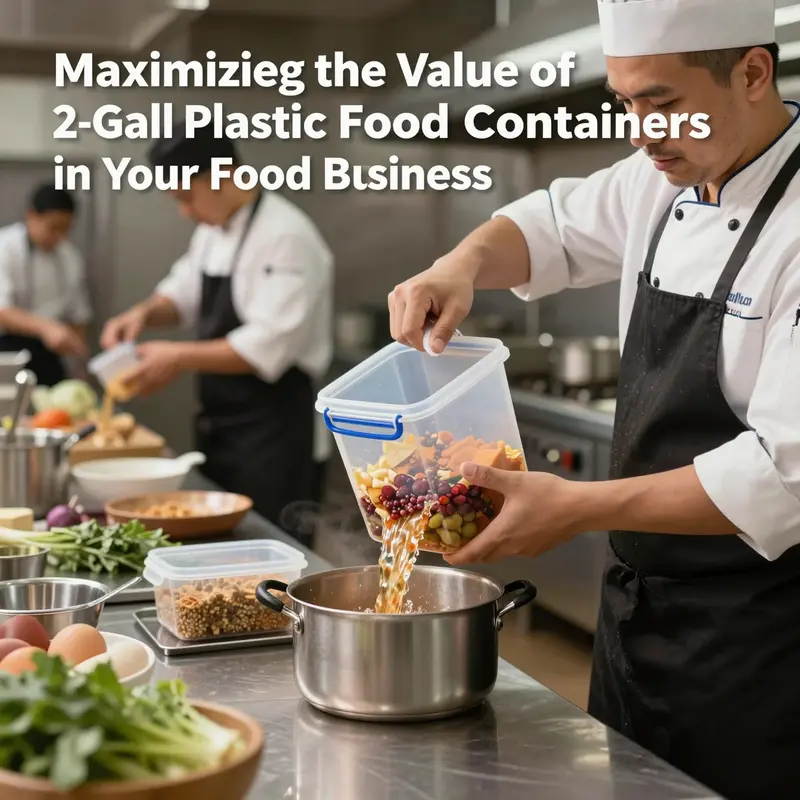
Across kitchens, warehouses, and bustling catering bays, 2-gallon plastic food containers quietly shoulder the heavy lifting of daily food life. They are not mere placeholders in a cabinet; they are the architecture of bulk storage, the first line of defense against stockouts, and the flexible platform for a range of culinary and logistical tasks. When size is condensed into a practical footprint, these containers become a smart blend of capacity and efficiency. They typically hold about 7.57 liters and measure roughly 15 inches by 11 inches by 5 inches, a scale that fits neatly on shelves, in transit, and inside compact storage solutions. Built from food-grade plastics such as high-density polyethylene (HDPE) or polypropylene (PP), these tubs are designed to be sturdy yet light enough to lift without strain. They are commonly marketed as BPA-free, reinforcing a concern that remains central to modern food handling: safety linked to material choice. In everyday terms, they are the workhorses of the bulk-storage world, a practical compromise between volume and manageability that empowers both home cooks and professional crews to plan, prepare, and perform with confidence.
The value of this container class becomes evident when considering the variety of tasks it supports. At home, the bulk storage of dry goods—rice, flour, beans, sugar, salt, and nuts—can be organized into a neat, compact system that minimizes clutter and maximizes shelf space. In dedicated space-saving kitchens, where every square foot matters, the container’s rectangular or square silhouette helps vertical storage in cabinets and pantries, aligning with the way shelves are designed to bear weight and restrict movement. The same footprint makes it easy to stack several units in a cart or a spill-proof bin, a feature that translates directly into time savings during shopping and stock checks. And because these containers are designed for repeated use, they offer a degree of resilience that supports long-term budgeting and waste reduction. They resist everyday wear and tear and are built to resist staining and sluggish staining that can accompany frequent use in busy environments.
Material safety sits at the heart of their appeal. HDPE and PP are recognized for their chemical resistance and durability, qualities that suit both dry goods and liquids. The emphasis on food-grade materials and BPA-free construction is not a marketing slogan but a practical stance on consumer health and product integrity. When you place a bag of rice into one of these containers, you are not just purchasing a receptacle—you are selecting a sanitary, sealable, and nearly inert environment that reduces the risk of contamination over time. The interiors are typically designed to be smooth, making cleanup straightforward and minimizing crevices where residues can accumulate. This design choice matters in real-world routines: a quick rinse, a thorough scrub, and the tub is ready for a next cycle of use. The exterior, while robust, is also optimized for handling and transport, with a form that can tolerate the knocks and shifts of a busy kitchen, a crowded catering hall, or a mobile food truck’s rigors.
Beyond the pantry, these containers find a robust foothold in cooking, fermentation, and preservation. They serve as practical fermenting buckets for homemade preserves, vegetable ferments, and even certain brining processes. In fermentation, the ability to hold and mix with consistency matters; the 2-gallon size provides ample headspace for the development of microflora while still keeping the batch manageable for a home hobbyist or a small-scale producer. Brining meat, a process that benefits from both space and controlled exposure to brine, becomes markedly easier when the vessel is durable, easy to wipe clean, and compatible with saltwater solutions. The same vessels can hold liquids such as oils, vinegar, and other kitchen staples, enabling bulk refills and large-batch preparations that reduce the number of trips to and from storage. In this sense, the containers are not limited to static storage; they become part of the workflow that drives flavor development, texture control, and consistency across batches.
Industry and market dynamics further illuminate the container’s value proposition. In fast-paced food service environments—food trucks, pop-up markets, and event catering—the ability to efficiently stack, transport, and reuse containers translates directly into better throughput and fewer stockouts. The compact footprint allows operators to maximize shelf density in limited spaces, while the sturdy build reduces the risk of breakage under vibration, stacking, or rough handling during transit. This, in turn, supports a more predictable supply chain for bulk ingredients, reducing the need for emergency restocks and enabling steadier menu execution across venues. The same benefits extend to larger kitchens and commissaries where multiple stations rely on a consistent, reliable bulk storage system. Storage planners appreciate the linear footprint and predictable dimensions; they know how many tubs fit on a rack, how many racks fit into a truck, and how the entire supply chain tightens around a uniform container size.
Shape and design matter just as much as material. The universal appeal of a rectangular or square container lies in its storage efficiency. It aligns with the way pantries, cabinets, and mobile cargo spaces are laid out, enabling better utilization of vertical space and easier stacking without rolling, tipping, or wedging. The lids, designed to seal against moisture and dust, contribute to long-term shelf life for dry goods and the integrity of liquids. The simple mechanism—flat lids with secure rims—reduces the risk of leakage and ensures that contents remain contained during transport. When a kitchen staffer reaches for a tub, the mental model is consistent: a familiar size, a familiar lid, reliable performance. This consistency undergirds operational speed, a critical factor in both household routines and professional kitchens where timing is everything.
A broader look at the materials and safety standards reveals a consistent commitment to quality. HDPE and PP, used for these containers, deliver not only durability but resistance to a broad range of culinary substances. The container’s performance is anchored by these materials’ low permeability and composed interaction with foods. Food safety certifications underscore a shared industry standard: if a container is marketed for food use, it is designed to minimize risk of chemical transfer, even when used across multiple cycles. This is essential when a product flows from bulk storage to kitchen prep, where cross-contact or residues can become a source of concern. The ability to store liquids, oils, and vinegar, alongside dry goods, demonstrates the container’s versatility while keeping safety in clear focus. The conversation between form and function is ongoing; manufacturers refine resin blends, wall thickness, and lid sealing to push durability, readability of labeling, and ease of cleaning even further.
In practical terms, choosing the right 2-gallon container means looking for a balance of safety, reuse potential, and return on investment. Buyers seek clarity on what the container is best suited for, and how it performs under real-world conditions. Will the vessel tolerate a hot-soaking sanitation cycle, or is it intended for periodic cleaning with standard dish soap and water? Is the interior smooth enough to prevent residue buildup after repeated use, yet rugged enough to resist cracking if dropped? How well does it seal with the lid, and does the seal hold under the humidity of a busy kitchen or during long transport? These questions shape procurement decisions for households and for professional operations alike. Importantly, this is not solely about the container’s capacity. It is about how the entire system—from the pantry to the prep line to delivery and service—flows with efficiency and safety, how the container becomes a reliable hub for a moment where time, space, and safety intersect.
To connect these ideas back to the wider world of packaging and storage, consider how innovations in material science and design can extend the life of a 2-gallon container while maintaining its core advantages. The flexibility of HDPE and PP means new wall textures, improved lid geometries, and smarter labeling facilitate faster training, easier inspection, and better traceability in bulk operations. The bulk-storage habit is deeply practical, but it also invites a broader discussion about sustainability, reuse, and end-of-life considerations. When these tubs are retired from service, their recyclability provides a path toward reducing landfill impact, a crucial factor for businesses aiming to meet increasingly stringent environmental expectations without sacrificing performance. The story of the 2-gallon container, in this light, is one of continuous improvement—tapping into safer materials, more reliable seals, and thoughtful shapes that respect the realities of people who rely on them every day.
For readers who want a deeper technical understanding of containers used in water and related storage applications, a technical guide offers a comprehensive overview of standards, properties, and practical applications. This external resource provides a broader frame for how 2-gallon storage containers fit into a family of products designed to safeguard contents while optimizing space and flow. In the meantime, the practical lesson remains clear: the 2-gallon plastic food container is a reliable, adaptable, and economical partner for both mundane and mission-critical tasks in kitchens and beyond. Its blend of volume, durability, and square- and rectangle-forward geometry continues to prove valuable as storage needs evolve and workflows scale up. It is not just about what the container holds; it is about how that holding capacity supports a more organized, safer, and efficient culinary and logistical practice.
kraft-paper-octagonal-bowl containers
External resource: https://www.plasticcontainerguide.com/2-gallon-water-storage-container-standards-properties-applications/
Two-Gallon Plastic Food Containers: Bulk-Ready Capacity, Safe Design, and the Shifting Market
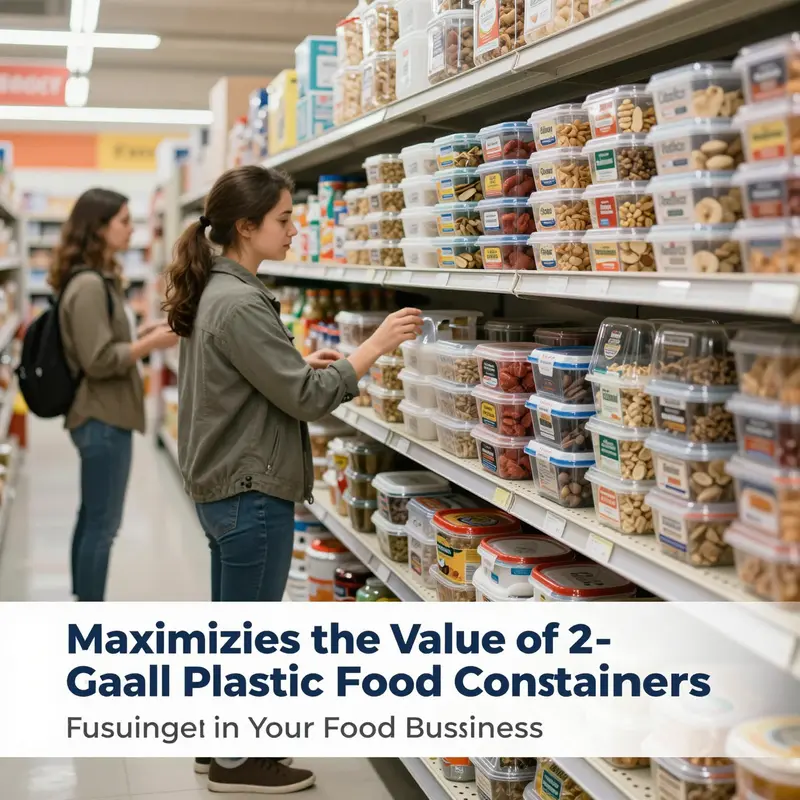
Two-gallon plastic food containers occupy a practical space between everyday household needs and larger-scale storage demands. Holding roughly 7.57 liters, and commonly measuring around 15 inches by 11 inches by 5 inches, they offer a balanced footprint that fits pantry shelves, commercial cabinets, and worktable setups without dominating space. This size is particularly valued for bulk dry goods such as grains, legumes, sugar, salt, and nuts, but it also accommodates liquids and oils when the lid seals tightly and the container is designated for food use. The shift toward bulk storage is not merely about capacity; it reflects a broader trend toward efficiency, waste reduction, and preparedness. In homes, a two-gallon unit can streamline meal-prep cycles, portion control, and recipe batching. In small but busy commercial environments—catering, grocery-prep stations, or coffee shops that double as micro-kitchens—the same vessel supports bulk ingredient handling, ingredient rotation, and the consolidation of several dry or semi-dry items into a compact, uniform system. The appeal, then, lies in how a single container can simplify routines, reduce clutter, and minimize the number of taps, lids, or secondary bins needed for the day’s workflow.
Material choice stands at the core of that practicality. The most common substrates for these containers are high-density polyethylene (HDPE) and polypropylene (PP). HDPE is favored for its sturdy impact resistance, stiffness, and durability under repeated handling. It maintains its shape when stacked, resists minor punctures, and tends to perform well with dry goods and even certain wet items if the lid forms a robust seal. PP, meanwhile, offers commendable clarity, heat resistance, and chemical stability; it can be a good option when visibility of contents matters or when a slightly lighter weight is desirable. The ultimate goal is a container that both holds contents securely and withstands routine handling—whether being slid into a crowded cabinet, carried across a kitchen, or stacked in a warehouse racking system. In both cases, the choice of material is inseparable from safety, because what touches the food must meet clean, predictable standards. For many buyers, that means insisting on BPA-free labeling and verkno certifications that demonstrate compliance with food-contact regulations. Those labels are not mere marketing; they signify a baseline assurance that the container’s interior surfaces have been designed to minimize leaching and to remain food-safe over time, including when used for oil-rich products or acidic liquids that can challenge plastic performance.
Safeguarding food quality goes beyond material selection. A two-gallon container reaches its full potential when paired with a lid that forms a true seal, reducing exposure to air, moisture, and pests. Airtight designs protect aromas and prevent spoilage, a critical consideration for bulk dry goods that sit on shelves or in delivery vehicles for extended periods. The lid’s integrity matters just as much as the body’s. A reliable seal helps maintain content stability during transport, whether a shipment moves from a storage room to a prep area or from a supplier’s loading dock to a restaurant kitchen. Stackability is another practical feature, allowing operations to optimize vertical space. When containers nest securely or interlock in a stable stack, storage density improves and the risk of tipping decreases during handling. For kitchens that run on efficiency, every inch saved in storage can translate into faster service and cleaner workstations.
Users also benefit from design nuances that extend the container’s versatility. Some two-gallon models offer built-in pour spouts to facilitate controlled pouring without spilling into measuring cups or flour dust clouds. Graduated measurement markings on the sides support portion control and inventory tracking, especially when preparing bulk batches or when reconstituting items from bulk bags. A container that accommodates dishwashers or freezers adds a layer of convenience that can be particularly valuable in busy kitchens and prep areas, where rotating through multiple batches requires repeated washing and, at times, freezing steps for storage convenience. For fermentation projects, pickling, or oil storage, the container’s chemical resistance and temperature tolerance come into sharper focus. While not every container is designed for every use, a well-chosen two-gallon unit can handle a range of legitimate culinary and preservation tasks, provided the material and design align with the user’s needs.
Choosing the right container is a matter of aligning specifications with intended use. Home cooks may prioritize affordability, nestability, and dishwasher compatibility, while small businesses might emphasize seal reliability, lid durability, and the capacity to withstand heavy daily use. For bulk grain storage or dry staples, a sturdy HDPE option with an airtight lid and stackable footprint often provides a balance of resilience and practicality. When oils, syrups, or solvent-like liquids enter the equation, material stability and a seal that resists permeation become paramount. In this context, it is important to verify that the container meets recognized food safety standards and carries independent testing or certifications that reassure users about long-term safety and performance. This diligence matters because the ecosystem surrounding plastic food containers is not static. Innovations in polymer formulations, lid geometries, and closure mechanisms continually expand the range of use cases—from more secure seals to lids that can double as measuring tools. As a result, buyers should not assume a single design fits all tasks; rather, they should evaluate the container’s compatibility with the specific contents, the expected storage duration, and the planned handling environment.
Beyond individual choices, the purchasing landscape for plastic food containers of this size mirrors wider market dynamics. The two-gallon category is nested within a growing global market for plastic food containers that reflects rising consumer and commercial demand for convenient, durable packaging solutions. Market analyses point to substantial gains in the near-to-mid term, driven by macro trends such as meal-prep culture, the rise of on-the-go consumption, and the expansion of e-commerce and delivery services that demand reliable bulk packaging. These drivers push production capacities, influence price points, and shape the availability of standard sizes, including the two-gallon segment. For buyers, that translates into a need to plan for seasonal spikes, negotiate favorable terms in bulk purchases, and consider lifecycle costs—how long a container lasts, how easily it can be cleaned and reused, and whether its seal remains trustworthy across cycles of fill-and-use.
From a financial perspective, the market’s growth trajectory has tangible implications for procurement strategies. A healthy compound annual growth rate in this space means more options and more competition among suppliers, which can translate into better terms for buyers who adopt bulk purchasing approaches. Seasonal promotions, educational campaigns on food safety, and the push toward sustainability all factor into the decision process. In practical terms, that means evaluating not just the price per unit, but also the total cost of ownership: the number of cycles the container can withstand before replacement, the ease of repurposing containers for different products, and the availability of compatible lids or accessory components that extend their utility. For a business, a well-timed bulk purchase can reduce the risk of stockouts during busy periods, maintain consistent service levels, and streamline inventory management across kitchens, cafés, catering outfits, and food trucks.
The broader context for these choices lies in the steady expansion of the plastic container ecosystem, a trend that continues to evolve as consumer expectations shift toward convenience without sacrificing safety. Consumers are increasingly attuned to the importance of choosing products that minimize waste, support portion control, and enable efficient planning for meals or events. In this light, the two-gallon container is more than a storage vessel; it is a modular component of a larger system—one that couples material science with usability and supply-chain strategy. The result is a practical tool that can bridge the gap between home cooking and commercial operations, offering a scalable solution that remains approachable for individual households while delivering value to small businesses that rely on reliable, repeatable storage and handling.
For readers seeking a grounded framework to navigate buying decisions, the emphasis remains on three pillars: safety, practicality, and lifecycle value. Safety means verifying material composition, seeking BPA-free labeling, and confirming conformity with food-contact standards. Practicality centers on the interplay between seal integrity, stackability, and feature sets such as pour spouts or measurement marks that aid portioning and inventory control. Lifecycle value expands the lens to include durability, ease of cleaning, and the containers’ adaptability to diverse contents over time. When these elements align, a two-gallon plastic container reveals itself not as a single-use tool but as a durable, reusable component of a well-planned storage strategy.
External resource for deeper buying guidance: How To Choose The Best 2 Gallon Container: A Complete Buying Guide. https://www.kitchenwareexpert.com/best-2-gallon-container/
Two Gallons and the Planet: The Lifecycle of 2-Gallon Plastic Food Containers
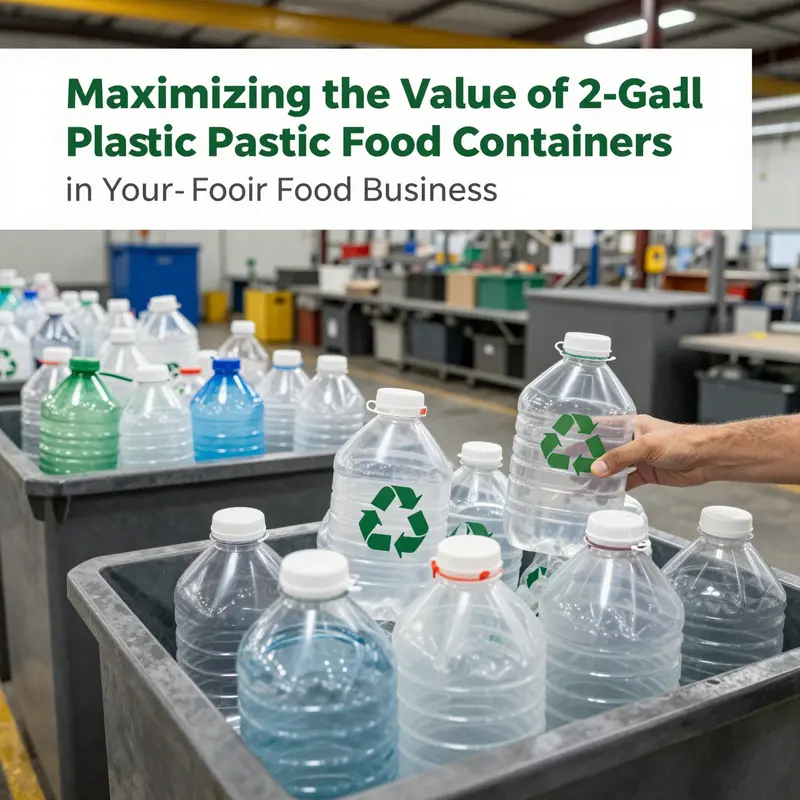
Two-gallon plastic food containers occupy a practical niche in homes and operations that need bulk storage with portability and durability. Their roughly 7.5-liter capacity and dimensions around 15 by 11 by 5 inches make them versatile for dry goods like flour, rice, beans, and sugar, and in some settings for liquids in bulk. They are commonly made from HDPE or PP, materials chosen for strength, chemical resistance, and cost efficiency.
The environmental footprint follows the broader story of plastic packaging: production, use, and end-of-life. HDPE and LDPE are widely recycled in many programs, but actual outcomes depend on local infrastructure and user behavior. Even with recyclability, energy and resources are consumed in reprocessing, and contamination or dyes can complicate recycling.
Reuse can reduce waste but safety matters. Cracks, clouding, or odors may harbor residues or migration of additives if containers are heated or heavily cleaned. The safest practice is to retire containers showing wear and to avoid storing highly acidic or hot contents in older plastics.
The recycling system and consumer practices influence results more than material choice alone. Improvements in labeling, convenient drop-off points, and education are critical to raise diversion rates. The bulk-storage lifecycle is thus a network: procurement, storage hygiene, reuse, recycling, and waste management must align for best outcomes.
Alternative packaging and business models, such as reusable containers and bulk-bulk systems, can help reduce plastic waste. Research and policy discussions emphasize durability, redesign for recyclability, and better consumer guidance. The bottom line is to balance practicality with stewardship, using durable, cleanable designs and ensuring safe disposal or repurposing at end of life.
Final thoughts
2-gallon plastic food containers offer a versatile and efficient solution for a range of food business needs, from organized storage to streamlined workflows. Their material safety features, compatibility with bulk ingredients, and broad applicability—from restaurants to mobile catering—make them a valuable tool. When selecting containers, consider size, lid compatibility, material safety certifications, and ease of cleaning to maximize longevity and sustainability.