
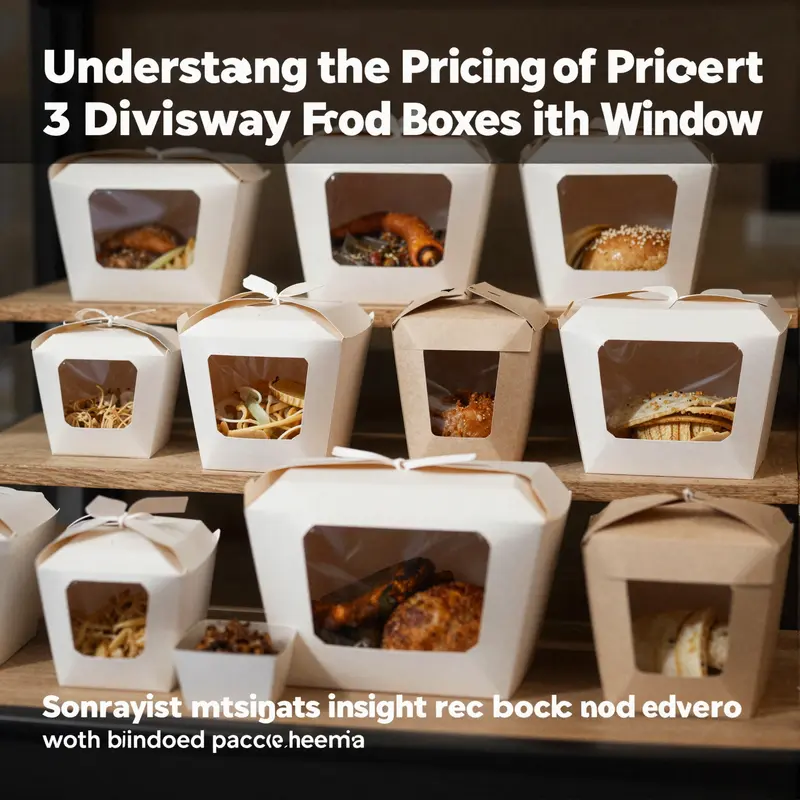
Navigating the world of takeaway food packaging can be challenging, especially when it comes to understanding pricing models. The 3 division takeaway food box with window is gaining popularity among businesses like bubble tea shops, restaurants, food trucks, and event planners due to its practicality and visual appeal. This article explores pricing analysis, material options, bulk purchase discounts, and market trends affecting the prices of these boxes. By delving into each aspect, this guide aims to provide a holistic view of what to expect when investing in these essential packaging solutions.
From Box Design to Bill of Materials: Pricing Pathways for the 3-Compartment Takeaway Box with Window
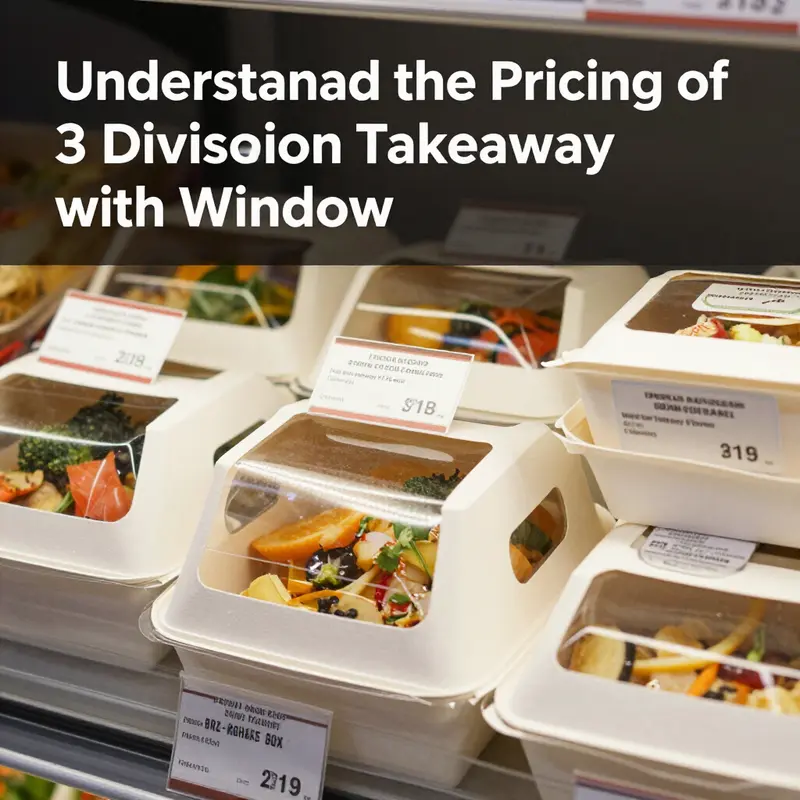
The 3-compartment takeaway box with a window is a product of cost-aware design and scalable manufacturing. This chapter outlines how pricing emerges from material choice, volume, and regional production ecosystems. It explains why mass-produced plastic options typically yield the lowest per-unit cost at scale, while sustainable materials command premium. The discussion covers four common materials: plastic PP, bagasse, kraft/recycled paper, and PLA/compostables, with representative price bands for orders of 50,000 units or more. It highlights Guangdong as the most cost-efficient origin, with Zhejiang and Jiangsu offering design and sustainability advantages at a premium. It also notes that secondary costs—window quality, customization, printing, shipping, and required certifications—can shift the total landed price by noticeable margins. The chapter then translates these insights into practical guidance: anchor core designs in a high-volume, cost-efficient baseline (ideally plastic from Guangdong) and maintain a separate track for premium materials and finishes (such as bagasse or PLA) to respond to brand goals without destabilizing unit costs. Finally, it provides a framework for supplier evaluation, BOM transparency, and staged adoption of sustainability that supports predictable budgeting and risk management in large-scale packaging programs.
Between Clarity and Cost: Pricing Realities for Three-Compartment Takeaway Boxes with Windows
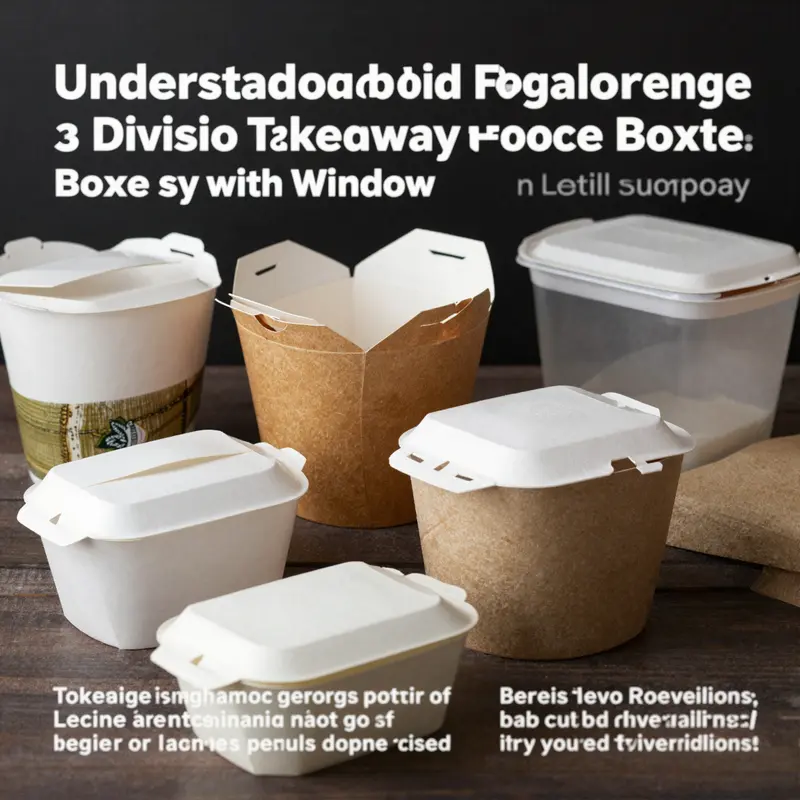
A windowed, three-compartment takeaway box is more than a container; it is a stage for color, aroma, and the first impression a customer experiences as they choose, carry, and eventually consume a meal. The way this box performs—how well it keeps sauces contained, how clearly the contents are displayed, and how reliably it tolerates heat and moisture—shapes whether a restaurant’s packaging supports the food and amplifies the brand. Because a box with a window is both function and theater, price becomes a careful negotiation between material performance, sustainability goals, and the economics of scale. In this chapter, we turn from what the box is to what it costs to get it, especially when buying in bulk. The discussion centers on two principal material families that dominate most supplier catalogs: food-grade kraft paper with a window and durable plastics such as polypropylene (PP) or polyethylene terephthalate (PET). Each material brings a distinct story of costs, tradeoffs, and logistical considerations that influence decision making for chains, caterers, and independent operators alike. The numbers are not merely numbers; they encode material science, supply chain realities, regulatory compliance, and the practicalities of day-to-day use in kitchens and on delivery routes.
From the procurement perspective, the pricing landscape for a three-compartment box with a window is surprisingly nuanced. An initial, high-level overview reduces the question to a single price point: about 0.023 USD per piece for orders exceeding 50,000 units when the box is paper-based. That figure, if taken at face value, would suggest an almost unbelievably low unit cost at large volumes. Yet, deeper supplier data and market practice reveal a more layered reality. For kraft-with-window configurations, bulk pricing is typically in the range of roughly 0.80 to 1.50 USD per unit, contingent on volume, regional market, the exact dimensions of the box, the sophistication of the window film, and any customization like logo printing or color lamination. The tension between that 0.023 figure and the 0.80–1.50 band underscores a recurring procurement dynamic: early estimates may reflect promotional, sample, or ultra-high-volume scenarios; standard bulk pricing more often reflects practical production costs, material choices, and regional freight terms.
Plastic options—PP and PET—tend to fall into a different economic pattern. In large orders of 10,000 units or more, the unit price of plastic three-compartment boxes with windows frequently lands in a 0.40 to 0.90 USD band. These prices benefit from the durable, moisture-resistant properties of plastic, which also enable broader compatibility with microwaves and freezers, depending on material type and thickness. The clear advantage here is a predictable cost profile at scale, aided by mature supply chains in regions with established plastic-processing industries. The flip side concerns environmental considerations; even with recycled content and recycling streams, plastic packaging raises different end-of-life challenges compared with paper-based solutions. The price-to-performance equation for plastic is anchored in reliability, barrier properties, and the long-standing familiarity of manufacturers with high-speed, high-volume production lines.
The contrast between these material families is not merely about per-unit price. It is also about how the box performs under real-world conditions. Kraft paper with a window typically relies on a transparent cellulose film or a bioplastic window, such as PLA, to preserve visibility of the contents while preserving the integrity of the paper body. That window, however, can fog when hot steam from a meal rises inside the box, a characteristic that can diminish the consumer’s ability to inspect the dish at the pickup point or during delivery when the customer is on the move. The paper body and the window film must therefore balance barrier properties, clarity, and heat tolerance. In hot and cold food scenarios, this balance matters as much as the cost. For many operators, the decision hinges on sustainability goals: kraft options are increasingly attractive because recycled or compostable paper—and the corresponding window materials—align with growing consumer demand for eco-friendly packaging.
By contrast, plastic options typically deliver superior fog resistance and clearer visibility, driven by high-quality PET or PP window films and the inherent moisture and oil resistance of the plastic body. Plastics also offer robust performance for microwave use and longer storage in refrigeration or freezer environments, provided the materials are compatible with heat. Yet, plastic carries environmental considerations that influence corporate responsibility programs and potential regulatory constraints in some markets. The choice, then, becomes a negotiation between environmental impact, material performance, and price, with each factor weighing differently depending on the intended use, the expected turnover of boxes, and the willingness of the supplier to accommodate customization.
Sourcing realities shape the bottom line as well. Direct engagement with manufacturers, particularly those located in high-volume hubs such as Guangdong Province, China, can yield substantial cost advantages. The integrated nature of such supply chains—where raw materials, extrusion and forming, window film lamination, and final packaging come under one umbrella—often translates into lower landed costs and shorter lead times. The cost savings can be in the range of 10 to 15 percent versus comparable arrangements with middlemen or distributors who add overheads and markup. For buyers who require consistent quality and transparent pricing, seeking direct-from-factory quotes, requesting material specifications (food-grade certifications, coating compositions, and barrier properties), and validating production capacities can reveal more favorable terms and reduce the risk of price volatility during peak seasons.
The practical implications of volume are clear: once ordering reaches tens of thousands of units, the economies of scale begin to dominate. The paper option may appear cheaply priced at first glance, but the true cost picture includes the window film, coatings on the paper, the durability of the fold lines, and the ability of the box to resist deformation during transit. In the same breath, a seemingly modest premium on the plastic option often yields meaningful gains in drop-test performance, moisture resistance, and the potential for reuse or longer shelf life in cold-chain logistics. A thoughtful buyer weighs the likelihood of returns, the probability of leakages, and the customer experience when the box is opened at the point of consumption. In all cases, the window—by offering visual appeal and brand visibility—has value beyond mere aesthetics. It can accelerate impulse purchases and convey freshness, which in turn supports revenue goals even before the first bite.
An important nuance in pricing is the role of customization. When operators need layered color prints, branded windows, or laminated finishes, the per-unit cost increases, yet the incremental value to the brand can be substantial. A customized window not only elevates perceived quality but can also improve shelf presence on display and on social media posts that feature food packaging. In markets where environmental certifications are a selling point, the use of recycled or compostable kraft and PLA-based windows may open opportunities for promotional pricing or customer loyalty programs that justify the extra investment. The decision calculus, therefore, extends beyond raw unit price to encompass brand positioning, consumer expectations, and the potential for marketing differentiation.
To illustrate the material-specific nuances, consider one practical path of inquiry: a restaurant chain evaluating two paths for a year-long packaging program. If the chain prioritizes sustainability and the average order includes hot dishes, kraft with a cellulose or PLA window might be favored, especially if the company can secure bulk pricing in the neighborhood of 0.80 to 1.50 USD per unit. If, instead, the priority is maximum reliability for mixed-temperature meals, a plastic PP or PET solution may be preferred, with a target cost near 0.40 to 0.90 USD per unit at scale. In either case, a robust total cost of ownership model is essential. Such a model would estimate not only the per-unit price but also window material performance, the probability and cost of leakage, the impact on speed of packing lines, and the downstream effects on waste streams and recycling programs.
A recommended sourcing approach blends market insight with practical testing. Begin by requesting samples that mirror the final box size, thickness, and window specification. While samples are essential for confirming fit and visual appeal, do not rely on sample pricing to guide long-term contracts. Some suppliers quote high sample costs—often around 15 USD per piece or higher—to reflect the costs of establishing new tooling and coatings. This is not representative of mass production pricing, which will typically reflect scale. If possible, perform a small pilot across multiple regions to observe how the boxes perform under regional distribution conditions, including temperature variations during transport and the stress of stacking on pallets. Gather feedback from kitchen staff on ease of folding, lid fitting, and leak resistance, and measure consumer perceptions of visibility and overall packaging quality. A well-structured pilot reduces the risk of expensive redesigns after mass production begins and clarifies which material path aligns best with business goals.
For readers seeking concrete references in the market, the supplier landscape often highlights two distinct directions. Paper-based options with window films show strong mass-market appeal when sustainability and cost are the primary drivers. Direct quotations of bulk prices in the 0.80–1.50 USD per unit range, with additional costs for customization, are common in many supplier catalogs. Plastic options, while generally offering lower unit costs at high volumes and providing stronger moisture and heat resistance, must be weighed against long-term environmental considerations and potential regulatory guidance in specific regions. The choice is not simply about the cheapest box; it’s about the box that best supports the food it holds, the brand it represents, and the logistics network that delivers it.
For a tangible sense of the kraft-paper pathway, you can explore examples of kraft-based packaging solutions that emphasize customization and practicality for takeout needs. kraft paper catering takeaway box provides a window into how a kraft-based structure can be configured with various window films, coatings, and printing options to achieve both functional performance and brand differentiation. This link helps illustrate how the paper pathway translates into real-world packaging decisions, even as the underlying economics depend heavily on scale, location, and supplier terms.
Finally, external market data and supplier listings continue to evolve with currency fluctuations, commodity prices, and shifting regulatory standards. An external reference that captures the current pricing landscape for three-compartment takeaway boxes with windows can be found in industry listings and supplier catalog pages. For a detailed snapshot of a recent kraft-with-window offering, including sample pricing and bulk ranges, the following external resource provides context and data that align with the themes discussed here: https://www.alibaba.com/product-detail/New-Design-3-Layer-Takeaway-Recycled_1600575444132.html. This resource illustrates how bulk pricing, material choices, and customization options converge in a real-world procurement scenario, reinforcing the notion that the best pricing strategy is one that couples rigorous testing with transparent supplier communication and a clear alignment between material properties and the intended use.
The take-away is straightforward. When evaluating a three-compartment takeaway box with a window, the price picture is not a single line on a quote sheet. It is a matrix where material science, production scale, window technology, and regional logistics intersect with brand strategy and sustainability commitments. Kraft-based options offer compelling environmental credentials and respectable bulk pricing at scale, but they require careful assessment of window fogging and durability under hot fill. Plastic options deliver predictable performance and strong visual clarity, especially at higher volumes, yet they bring environmental considerations that some brands may wish to balance through recycled content or end-of-life programs. The most effective procurement approach blends test-driven validation with direct factory engagement, a clear understanding of total cost of ownership, and an eye toward long-term supply resilience. For practitioners, the decision is not simply to buy the cheapest box but to adopt a packaging choice that aligns with product quality, customer experience, and the broader goals of the business.
External resource: https://www.alibaba.com/product-detail/New-Design-3-Layer-Takeaway-Recycled_1600575444132.html
Windowed 3-Compartment Takeaway Boxes at Scale: Navigating Bulk Pricing, Regional Advantage, and Customization

A window can turn a simple takeout container into a showcase. For operators who rely on three-compartment takeaway boxes with a window, the economics of bulk purchases are not merely a matter of unit price. They are a calculated dance between material choice, volume, design complexity, and the realities of global manufacturing hubs. When orders climb into the tens of thousands, a supplier’s price per piece can shift the entire cost structure of a menu or a restaurant’s packaging program. In this context, the most concrete data point often cited for paper-based, windowed 3-compartment boxes is a price around 0.023 USD per unit, achievable when ordering 50,000 pieces or more. That figure sets a baseline for planning and negotiation. It also highlights a broader truth: at scale, paper versions frequently present the most predictable economics, while other materials—plastic or bagasse—hold the potential for further savings or trade-offs, depending on size, thickness, and customization requirements. The challenge for buyers is to forecast demand accurately, align it with supplier capabilities, and translate volume into durable, brand-affirming packaging.
A closer look at the sourcing landscape reveals why bulk pricing can be so favorable in certain regions. Guangdong Province in China offers a compelling combination of scale, efficiency, and proximity to export infrastructure. In practice, cities such as Dongguan and Shenzhen host a dense ecosystem of plastic and thermoforming manufacturers, with a concentration of food-grade polypropylene (PP) processing, sophisticated conveying systems, and integrated packaging supply chains. This clustering matters for buyers because it reduces the distance between design, production, and shipment. Shorter lead times, fewer handoffs, and a more responsive supplier network translate into smoother price negotiations and better terms for large orders.
Industry observers note that Guangdong suppliers typically quote prices that are 10–15% lower than those from other regions. The savings come from cumulative economies of scale, advanced automation, and the ability to standardize core components across many customers. For a three-compartment box with a window, such savings compound when the demand is stable and repeatable. The same factories can also offer a broader suite of customization options—logo placement, color matching, and lid variations—without breaking economies of scale. The result is a compelling value proposition for buyers who plan to introduce or expand a windowed packaging line on a national or international basis.
For buyers aiming to capitalize on these regional advantages, sourcing platforms on the global market become important complements to direct factory outreach. Platforms that connect buyers to verified manufacturers can present tiered pricing tied to volume—an arrangement that rewards greater quantities with lower per-unit costs. The MOQs in these marketplaces are typically designed for business-to-business buyers and can range from relatively modest single-truck quantities to multi-container orders. The practical implication is straightforward: the more you buy, the more leverage you have to push the unit price down. Of course, every price is a negotiation in which the material choice, the required dimensions, and the level of customization all factor into the final figure.
Material choice is the most obvious axis of variation beyond quantity. Paper-based boxes with a window deliver certain advantages: a natural, recyclable base, a clean surface for branding, and a degree of rigidity that protects contents during transport. The 0.023 USD per unit price for paper boxes under high-volume terms illustrates what’s possible when the design is standardized for mass production. By contrast, plastic- or bagasse-based 3-compartment window boxes often carry varied price ranges because they hinge on the exact resin formulation, thickness, and whether additional features accompany the package. In practice, customers can expect lower material costs with larger, simpler designs, while more complex configurations—such as reinforced corners, deeper compartments, or custom window shapes—may incur incremental costs. The key is to map the desired consumer experience to the most efficient manufacturing route.
To navigate this terrain, buyers often begin with a clear set of requirements: the material preference (for example, PP plastic or kraft paper), the number of compartments, the window size and placement, and the exact overall dimensions of the box. They then translate these requirements into a request for quotes (RFQ) that specifies quantity tiers, lead times, and any branding or structural constraints. In highly active markets, it can be advantageous to request samples or pre-production approvals. While samples add time and cost, they validate fit, finish, and seal integrity before committing to a long-term run. The reality is that bulk pricing works best when the buyer has confidence that the product will perform under typical handling and storage conditions, from kitchen to customer door.
A practical path toward securing favorable bulk pricing combines market insight with disciplined procurement practices. First, identify suppliers in the primary manufacturing region, focusing on those with demonstrated capacity for windowed, multi-compartment designs and a track record in food-grade materials. Second, specify your required material and finish, and outline any branding needs. Third, request tiered pricing aligned to known volume bands. Fourth, compare lead times and after-sales support, including customization capabilities and potential for on-site color matching. Finally, establish a calendar plan that aligns production cycles with seasonal demand and promotional events. The result is not just a price quote; it is a procurement plan that reduces risk and improves reliability across peak periods.
From a logistics perspective, the proximity of these factories to major export hubs further enhances the value proposition. With ports nearby, transport costs and transit times can be reduced, and the likelihood of delays caused by last-mile logistics is tempered by regional expertise in handling high-volume shipments. In the windowed three-compartment format, packaging integrity is essential. The window must withstand stacking, vibration, and moisture exposure, while the seals must resist leaks and ensure the contents remain appealing throughout the supply chain. The stability of the supply chain, both in terms of materials and manufacturers, becomes a strategic asset when negotiating terms for tens of thousands of units.
Branding and customization add another layer of consideration. Many factories specializing in these box designs also offer branding services, such as logo imprints, color customization, and lid design variants. When brands embed their identity into packaging, the incremental cost of customization is often amortized across higher volume purchases. In practice, buyers discover that the most cost-effective approaches preserve core packaging performance while delivering a distinctive look. The window design itself can be part of the brand narrative—allowing the consumer to view the product inside while still presenting a clean, cohesive exterior.
In this sourcing context, one practical tip stands out. When evaluating suppliers, ask about the full cost of ownership. This includes not only the per-unit price but also the expected waste from returns or damaged stock, the ease of inventory handling, and the compatibility of the boxes with typical filling lines. Some facilities are better tuned to high-speed thermoforming and can deliver greater consistency across a large run. Others may excel at customization but require longer lead times. Understanding these trade-offs helps buyers forecast total costs over a campaign or over multiple promotions. It also clarifies where speed or flexibility is most valuable and where cost savings should be prioritized.
From the consumer-facing side, the window transforms the perceived value of the product inside. A well-executed windowed, three-compartment box can encourage higher order value by enabling clear visibility of the main item while still protecting sauces or sides in the adjacent compartments. The effect is more than cosmetic; it can influence perceived freshness and portion control. Retailers and foodservice operators often weigh that display advantage against the cost of the packaging. In regions where competition is intense, even small improvements in presentation can translate into meaningful revenue lift, especially when paired with reliable supply and predictable pricing.
For readers who want to explore concrete supplier options and confirm current pricing, a practical route is to use a reputable B2B marketplace that aggregates verified manufacturers. Such platforms typically allow buyers to filter by material, window configuration, and MOQs, then compare quotes from multiple suppliers. Importantly, these quotes should reflect the current market conditions, including the prevailing exchange rates and freight costs. In a market that is sensitive to material costs and shipping volatility, your negotiation strategy should emphasize volume as a lever, while also highlighting the value of reliability, lead-time accuracy, and post-sale support. The combination of regional scale, persistent cost discipline, and customization capability creates a compelling case for Guangdong-based manufacturers when the goal is to secure windowed 3-compartment boxes at favorable bulk prices.
For readers seeking a concrete example of a windowed packaging option in a closely related category, consider a product page that showcases a kraft paper box with a window designed for bakery items and snacks. This reference highlights how a window can be integrated without compromising structural integrity or branding clarity. See the detailed product page here: kraft white cardboard muffin box with window.
External resource for broader context: https://www.alibaba.com/product-detail/3-Division-Takeaway-Food-Box-With-Window_1600497825222.html
In sum, the pathway to favorable bulk pricing for windowed three-compartment takeaway boxes hinges on recognizing the regional advantages, calibrating material choices to actual needs, and anchoring negotiations in a well-structured volume plan. The data point of 0.023 USD per unit at MO 50,000-plus orders illustrates what scale can unlock in a predictable paper-based option. Yet the broader landscape invites continued exploration of alternatives, especially when customization, branding, and supply chain resilience are priorities. Buyers who cultivate relationships with capable manufacturers in high-volume hubs, who leverage marketplaces to compare multiple quotes, and who integrate samples into their decision process will stand best positioned to translate bulk discounts into meaningful business value over time.
Seeing Through the Window: How Sustainability, Customization, and Supply Chains Redefine the Price of the 3-Compartment Takeaway Box

The 3-compartment takeaway box with a window stands at the crossroads of practicality, perception, and policy. It is no longer merely a receptacle for meals; it is a visual promise to customers, a brand statement for operators, and a reflection of a rapidly shifting global supply chain. The window invites customers to glimpse the contents, communicating freshness and quality while preserving hygiene. The three compartments organize diverse components—protein, starch, vegetables, sauces—without mingling, which appeals to both diners and food preparers. But every inch of that clear pane, every seam of the fold, and every layer of material carries a cost. The price of such a container, especially when purchased in bulk, is shaped by a constellation of forces that extend far beyond the raw material itself. The most tangible benchmark in the current market is the price per unit for paper-based, windowed options when orders top the five-figure threshold. In this segment of the market, a paper-based, windowed box can be as low as roughly 0.023 USD per piece for orders exceeding 50,000 units. That is a baseline that reflects economies of scale and the relatively mature production ecosystems for paperboard packaging. Yet this figure may be the floor rather than the ceiling, depending on the choices a buyer makes about materials, design intensity, and branding. And for the many buyers who consider materials beyond traditional paper, the landscape becomes more complex, with prices that move in response to policy, geography, and the sophistication of customization.
Sustainability has become the most consequential driver of this price dynamics. Across Western markets, regulatory pressure is nudging packaging away from conventional plastics toward materials that can be composted or otherwise integrated into circular economies. Bagasse—sugarcane fiber—has emerged as a leading eco-friendly alternative, along with PLA—polylactic acid—derived from renewable sources. Both options offer compostability, but they also introduce cost premiums relative to conventional plastics or standard paper. Suppliers in key manufacturing hubs, especially in regions like Zhejiang, have built deep expertise in eco-innovations to meet stringent environmental standards. The shift toward these materials is not merely a green oath; it is a regulatory imperative in many jurisdictions. When a customer chooses a windowed, three-compartment box in a sustainability-minded supply chain, a portion of the price reflects the embodied costs of these advanced materials, the energy needed to process them, and the testing required to verify compostability or compliance certificates. The premium is not only about material science; it is about assurance—the assurance that the packaging will perform under heat and transit while aligning with a brand’s environmental commitments.
But sustainability alone does not set the price. Customization and design sophistication have re-emerged as central levers for value capture. The window in a takeaway box is the most visible manifestation of a design choice that conveys transparency and confidence to customers. The production realities of this feature are not trivial. A window typically requires a clear material layer integrated into the lid or the sidewall, precise cutting and sealing, and sometimes a protective film that prevents fogging or leakage. The result is a more complex manufacturing process than a plain, solid-walled box. Suppliers who offer high-fidelity printing, unique shapes, or branded window geometries can command a premium, particularly when the window size is large or the viewing area is critical to the product’s perception. The broader trend toward branded packaging—where containers become an extension of a restaurant’s identity—further escalates these costs. According to market insights gathered from global B2B platforms, the depth of customization typically correlates with a rise in price, especially for boxes with expansive, crystal-clear windows and high-contrast branding that requires durable inks and coatings. In practice, a buyer weighing a windowed three-compartment box must decide whether the enhanced brand impact and consumer appeal justify the incremental cost per unit.
A third axis of price formation lies in the global sourcing landscape and the reliability of supply chains. China remains the dominant producer of disposable food containers, accounting for a substantial share of global capacity. Within China, regional clusters offer distinct advantages and cost structures. Guangdong is renowned for high-volume plastic production and rapid delivery cycles, while Zhejiang has carved out a reputation for eco-friendly innovations and materials development. The sourcing choice can shift the cost equation in meaningful ways. For instance, a supplier in Zhejiang may impose higher base prices when bio-based resins or compostable coatings are involved, reflecting the materials’ inherent costs and the need to meet Western market certifications. Yet these higher input costs can be offset by the strategic value of sustainability credentials, longer-term supply assurances, and access to certifications that Western customers increasingly demand. In other words, the geography of production intersects with policy and brand strategy, producing a price-social value tension that buyers must navigate.
Transparency and reliability in the supply chain have become a distinct competitive differentiator. Buyers are increasingly prioritizing direct manufacturers over trading houses to reduce the opacity that can accompany opaque markups and inconsistent quality. Large-scale producers—those operating expansive facilities and employing sizeable teams—are often viewed as more dependable partners, particularly when price volatility in input materials, shipping costs, and currency exchange is high. The stability of pricing, within that frame, tends to improve when buyers engage with manufacturers that can demonstrate traceability, consistent quality control, and robust post-sale support. All of this feeds back into the total cost of ownership: a supplier with stronger reliability may command slightly higher unit prices but deliver lower risk of disruption, fewer quality incidents, and more predictable lead times. For operators who ship thousands of boxes weekly, that predictability has market value that can indirectly affect the perceived competitiveness of a given price point.
Within this integrated picture, the three-compartment structure with a window emerges as a focal design that embodies the interplay of material choice, customization depth, and supply chain strategy. The three compartments optimize portion control and reduce cross-contamination, aligning with quality and safety expectations that are increasingly scrutinized by customers and regulators alike. The window nourishes consumer engagement by enabling visual assessment without compromising hygiene—an attribute that can drive demand, particularly in markets where perception of freshness fuels repeat purchases. Yet the window is not cost-free. It introduces design constraints that demand precise alignment of lid, film, or pane, and it can influence the choice of adhesives, coatings, and barrier properties needed to maintain product integrity during transport. The exact combination of materials—whether a paper-based core, a bagasse or PLA-based outer, or a hybrid with a clear window layer—will be the principal determinant of whether the unit price sits at the lower end of the spectrum or climbs toward a premium tier.
In navigating this price landscape, buyers increasingly rely on a framework that accounts for sustainability, customization, regional sourcing advantages, and supplier reliability. The interplay among these factors suggests a dynamic where the most economical options are found when scale and efficiency align with relatively simple materials, short supply chains, and standard customization. As regulatory expectations intensify and consumer preferences tilt toward aesthetically refined, eco-friendly packaging, the premium associated with advanced materials and elaborate branding will likely widen. The smart players in this market are those who can balance these elements—pushing innovation in eco-friendly materials and window design while maintaining material efficiency, clear cost visibility, and reliable delivery performance. They will also capitalize on the growing expectation that packaging not only protects and presents food but also communicates a brand’s values and story in a tangible, time-tested format.
For readers seeking real-time benchmarks and supplier performance data, platforms that aggregate B2B sourcing intelligence can be valuable. Such platforms offer an ongoing view of price ranges, material mixes, and customization options across suppliers and regions. When evaluating a potential supplier, it is crucial to ask not only about unit price but also about lead times, minimum order quantities, certification status (for compostability, food safety, and recycled content), and post-sales support. The ability to provide consistent quality, batch-to-batch reliability, and clear traceability can have a meaningful impact on the total cost of ownership, especially for high-volume buyers whose operations hinge on predictable packaging costs.
As the market continues to evolve, the three-compartment takeaway box with a window becomes a microcosm of broader economic and environmental shifts. The materials science developing around bagasse and bioplastics will continue to improve, potentially narrowing some cost gaps over time while simultaneously enabling more ambitious window designs and branding opportunities. The push toward customization will intensify, with brands seeking ever more precise control over color, finish, seal integrity, and the size and shape of the window itself. And the logistics ecosystem will continue to optimize, with regional clusters offering different value propositions—some prioritizing speed and scale, others prioritizing sustainability credentials and regulatory compliance. The result is a market that rewards those who can integrate material science with design thinking, supply chain discipline, and a clear narrative about value for the consumer and the planet. The window, in this sense, is more than a feature; it is a signal—a readable storefront on the box that communicates a chain of choices made upstream, from fiber and resin to factory floor and freight lane.
For those who want a concise synthesis of where price sits today and why, a pragmatic takeaway is this: the lowest price point for a windowed, three-compartment box in large volumes typically rests with paper-based options, around 0.023 USD per piece for orders above 50,000 units. When materials move toward biobased or compostable alternatives, price often rises in step with sustainability claims and certification requirements. Customization depth directly correlates with price increases, particularly when large windows, intricate print work, or brand-specific coatings are involved. Finally, the sourcing geography and the supplier’s scale and reliability can either cushion price volatility or amplify it, depending on how these factors balance with the buyer’s risk tolerance and operational priorities. In a market that prizes transparency, both in the product and in the supply chain, the ultimate value proposition of a windowed three-compartment box rests on how well it aligns with the operator’s brand story, regulatory obligations, and the expectations of discerning diners who want to see what they are about to eat while trusting that the container will perform from kitchen to curb.
Internal reference material and further reading can be found on relevant supplier pages that detail eco-friendly, window-enabled packaging options. For example, you can explore a representative product page that demonstrates how kraft paper-based containers with built-in windows are designed to balance visibility, safety, and sustainability. kraft-paper-octagonal-bowl-1200ml-waterproof-eco-friendly-disposable-salad-bowl-for-snack-cookie-warm-cold-food-pet-lid. This page illustrates how an octagonal, lid-ready design integrates with eco-friendly materials to address both functional and branding considerations—an approach that resonates with the broader themes discussed here.
External reference: for a broader, real-time sense of price benchmarks, supplier capabilities, and market dynamics, see the global sourcing landscape at https://www.alibaba.com.
Final thoughts
In conclusion, understanding the pricing of 3 division takeaway food boxes with windows is essential for businesses in the food service industry. By analyzing pricing structures, exploring diverse material options, and taking advantage of bulk purchase discounts, businesses can make informed decisions. Additionally, staying up-to-date with market trends will ensure that your brand remains competitive while meeting consumer demands. Investing in quality takeaway boxes not only enhances food presentation but also adds value to your service offerings.