
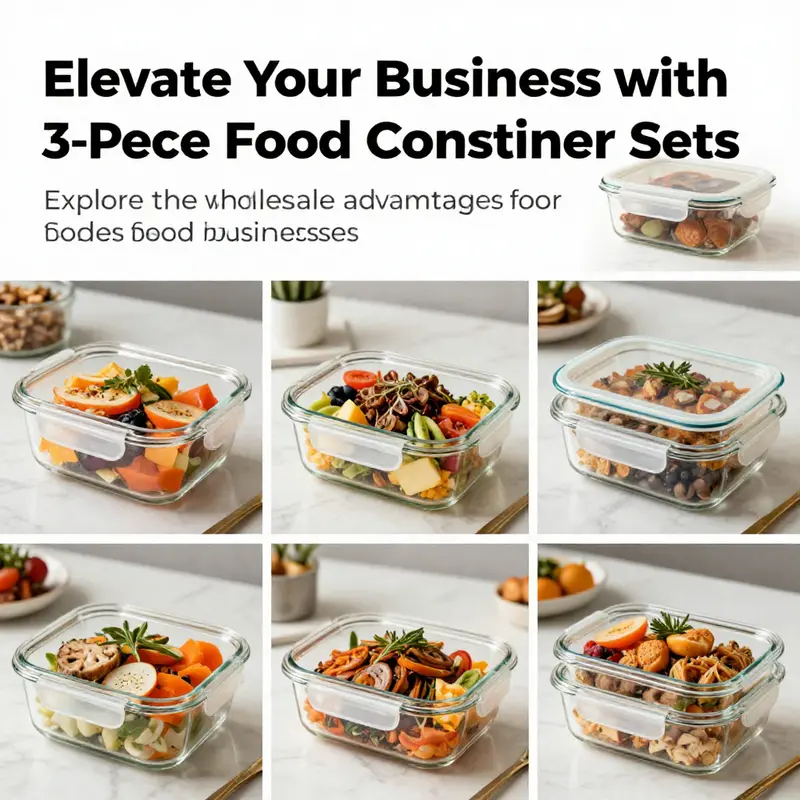
The demand for practical and effective food storage solutions has never been higher among bubble tea shops, restaurants, food trucks, and catering services. One option that is gaining traction is the 3-piece rectangle glass food container set available wholesale. These containers, crafted from durable borosilicate glass, offer a host of features that cater to the needs of various food service operators. This article delves into the features of these sets, outlines the benefits they provide, examines the current market trends, discusses the challenges faced by suppliers, and emphasizes the importance of sustainability and health in the food storage space. By the end, you’ll understand why investing in wholesale glass food containers is a smart move for your business.
Bulk Brilliance in Glass: The Three-Piece Rectangle Storage Set That Elevates Wholesale Kitchen Solutions
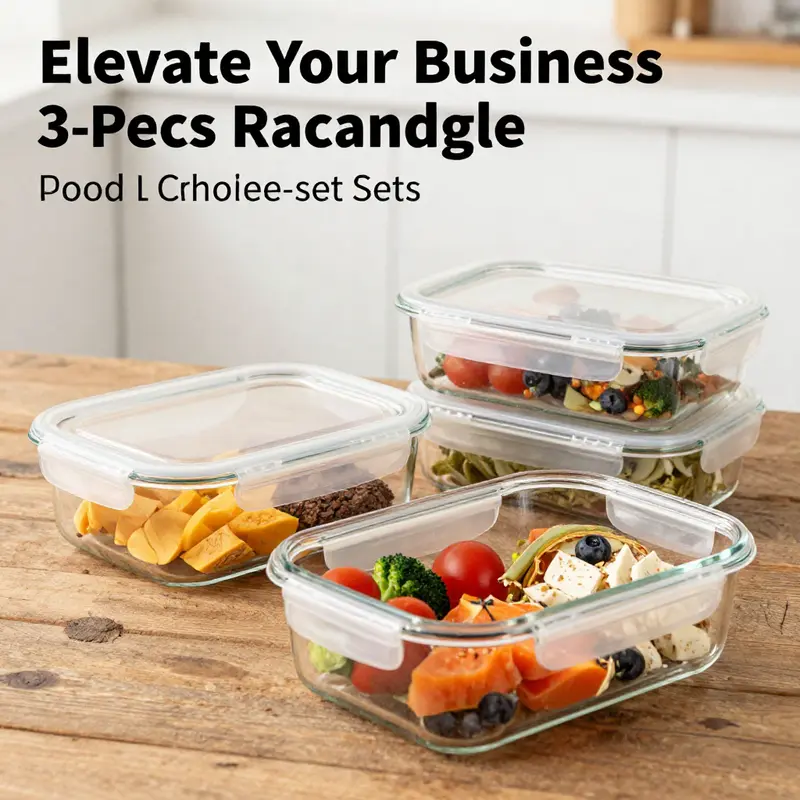
In commercial kitchens, catering operations, and even home meal-prep studios, the choice of storage containers ripples through every workflow from prep to plate. The three-piece rectangle glass storage set, when sourced wholesale, embodies a rare blend of durability, versatility, and sustainability that aligns with contemporary food-service demands. This trio of rectangular vessels is more than a convenient way to hold leftovers or prepped ingredients; it is a modular system that supports efficient prep, precise portioning, and seamless service. At its core lies glass—in particular tempered soda-lime or borosilicate varieties—that offers a clarity and resilience that plastics rarely match. Borosilicate glass, known for its superior thermal resistance and lower risk of chemical leaching, is especially valued in settings where reheating, baking, or hot storage intersect with long hours and high volumes. The glass containers in these wholesale sets are designed to endure temperature fluctuations from cold refrigerators to preheated ovens or microwaves, all while maintaining their shape and integrity. This durability helps cut the frequency of replacements and minimizes downtime caused by cracked or warped containers. In kitchens that run on tight margins, that steadiness translates into tangible cost savings and smoother service during peak hours. The materials themselves carry a quiet assurance: no harmful plastics adjacent to the food, no uncertain coatings, just a straightforward, inert surface that preserves taste and purity.
The rectangular form is not a cosmetic preference but a practical one. Elongated, flat sides maximize usable storage space in crowded refrigerators and on busy prep counters. The shape facilitates even stacking and tidy organization, enabling staff to label, rotate, and retrieve items quickly. For large batches of meals, casseroles, or baking components, the long, shallow profiles of these containers offer a more efficient footprint than round options. This is especially valuable when shelf space is at a premium or when careful FIFO (first in, first out) practices are in play. In a wholesale context, the three-piece configuration often corresponds to a curated capacity ladder: a small, medium, and large rectangle that covers a broad spectrum of daily needs without inviting excessive inventory risk. The emphasis on large capacity within each piece means cooks can store substantial quantities—perfect for batch cooking or bulk meal prep—while keeping portions clear and consistent for service.
Lids play a crucial role in the overall performance of wholesale storage sets. Tight-sealing designs help preserve freshness, reduce odor transfer, and prevent leaks during transport or accidental tipping in busy kitchens. A robust gasket, typically silicone, works in concert with precisely engineered rims to create a reliable seal. The ability to withstand repeated opening and closing without warping or losing grip is a practical advantage for teams that rehearse rapid cycle times. Some wholesale iterations explore vented lid designs, even on glass containers, to balance the need for venting steam during reheating with the goal of minimizing moisture buildup inside the container. The result is a dependable, spill-resistant solution that keeps ingredients and prepared meals ready for service or cold storage. The lids themselves are often designed with stackability in mind, aligning with the containers to form compact, organized towers that save precious cabinet and refrigerator space. In a busy operation, this space efficiency translates into less clutter, faster access, and a calmer workflow that supports consistent meal quality across shifts.
Customization, a common feature in wholesale channels, broadens the appeal of the three-piece rectangle glass set. Buyers can sometimes tailor sizes, lid configurations, and even color accents to align with branding or kitchen aesthetics. While the core performance rests on the glass and seal, the option to harmonize lids with specific color caps or to incorporate logo accents on the lids or containers can elevate a wholesale program from a functional supply line to a recognizable element of a restaurant’s or caterer’s identity. This adaptability makes wholesale purchases more than a cost play; they become a strategic component of a business’s operational philosophy.
From a performance standpoint, the glass itself commands attention. High-clarity glass shows food contents clearly, aiding inventory checks and portioning discipline. When the set is composed of tempered soda-lime or borosilicate glass, it carries a reassuring resistance to thermal stress. This means the containers can move from fridge to microwave with minimal risk of cracking, and—where appropriate—into oven environments for gentle reheating or warming. Dishwasher safety further supports the practicalities of daily use, reducing labor and enabling staff to clean efficiently after service. Of course, with any heat-accustomed glass, care guidelines matter: sudden temperature changes should be avoided, and extreme high-heat exposure beyond the manufacturer’s scope is typically discouraged. Yet within normal kitchen routines, these containers perform with a reliability that is highly prized in high-volume settings.
An often-understated advantage lies in the environmental footprint of reusable glass versus disposable or single-use plastics. Reusability is a core driver of today’s sustainability narratives in hospitality and home cooking alike. The glass containers in a wholesale trio lend themselves to frequent reuse year after year, resisting the gradual degradation that plagues plastics after repeated cycles. Since the set is designed for long life, its environmental impact is reduced over time, especially when paired with proper care and recycling practices at the end of its useful life. This aligns with current consumer expectations, where health, safety, and responsibility converge in food storage decisions. The aesthetic aspect should not be overlooked, either. The sleek, modern lines of rectangular glass integrate seamlessly into contemporary kitchen designs, presenting a clean, professional look on a restaurant pass or a chic home pantry. The containers do not just store meals; they present them, making them equally suited to serving when needed or to transporting pre-portioned entrees to a waiting table. The glass’s neutral tone and clear presentation invite confidence in the quality and freshness of the contents, a subtle but meaningful advantage in settings where presentation matters as much as practicality.
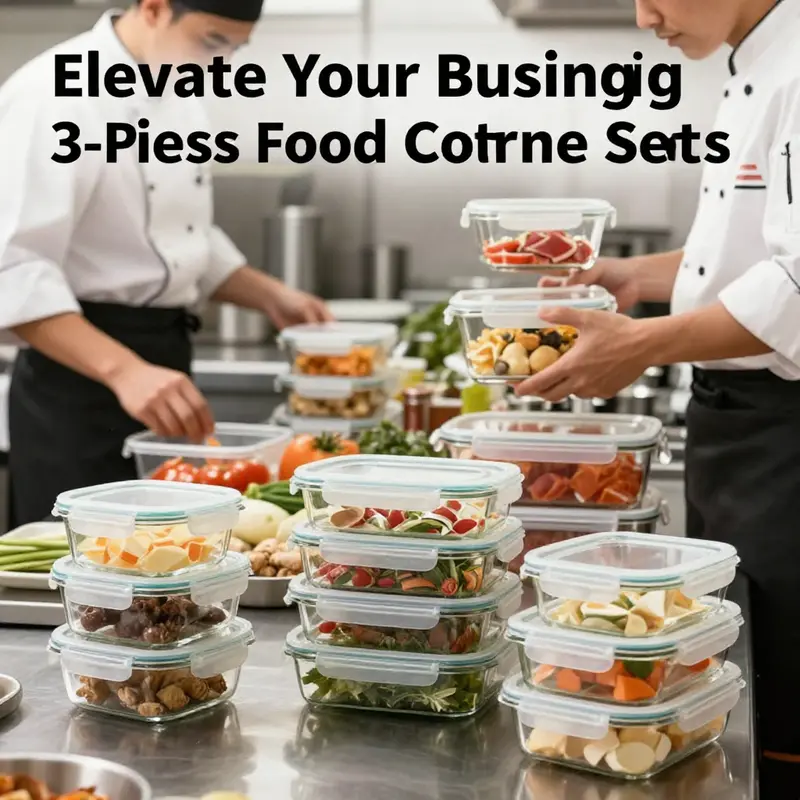
Wholesale markets also facilitate supply chain efficiency through standardized sets and predictable lead times. For buyers, the ability to order three-piece configurations in bulk reduces procurement complexity and simplifies inventory planning. The practical MOQs—often starting around ten to thirty pieces—make it feasible for smaller eateries or growing catering outfits to test a solution without absorbing excessive risk. For larger operations, wholesale pricing unlocks further economies of scale, enabling more aggressive cost controls in a landscape where margins can be tight and service expectations are high. This is complemented by the potential for extended assortments, accessory options, or complementary storage solutions that can be integrated into a broader program. In practice, a buyer can coordinate a set of three pieces with lids designed to match or contrast with other containers in the kitchen, creating a modular system that supports a spectrum of recipes, menus, and service styles.
Supply chain transparency is another benefit of wholesale access. Reputable wholesale channels often provide real-time pricing, MOQ details, and customer reviews, offering buyers a grounded sense of reliability before making an investment. The decision to purchase wholesale glass storage sets becomes less a leap of faith and more a data-informed choice that aligns with operational realities and financial targets. For instance, buyers can gauge turnover expectations, analyze the compatibility of the set with existing prep workflows, and foresee storage patterns that optimize refrigerator or pantry space. The ultimate payoff is a system that is at once robust, economical, and adaptable enough to meet evolving menu demands without forcing compromises on safety or quality.
To connect this discussion to broader packaging ecosystems, consider how rectangular glass storage sets sit alongside other contemporary solutions in the wholesale landscape. While glass offers clarity, durability, and a product-safe profile ideal for food storage and reheating, other formats—such as vented or non-vented take-away containers, disposable options, or kraft-paper alternatives—address different facets of the supply chain, from transport efficiency to branding opportunities. A well-considered wholesale selection may even integrate a small mix of form factors to accommodate batch cooking, catering deliveries, and in-restaurant service. When choosing, buyers weigh factors such as dishwasher compatibility, oven or microwave safety, lid compatibility, and how the set’s dimensions translate to practical storage and stackability in their particular kitchen layout.
For readers seeking practical guidance on related storage and packaging formats, a related resource explores rectangle-based takeaway packaging that can complement a glass storage program. See this related take-away rectangle box with lid for more context on how rectangle formats can harmonize with wholesale glass offerings in mixed-material workflows. in-stock new design salad rectangle takeaway kraft paper octagonal box with lid.
As a closing frame, buyers contemplating wholesale purchases of a three-piece rectangle glass storage set should view the decision as an investment in operational clarity and service consistency. The set’s minimalist, durable design supports not only the functional demands of batch cooking and efficient prep but also the aesthetic and safety considerations that today’s customers demand. It is a practical platform on which kitchens can build reliable, repeatable storage routines, enabling teams to focus on what matters most: delivering fresh, flavorful meals with speed and care. In this sense, wholesale glass storage is less about a single product and more about a disciplined approach to how a kitchen thinks about space, safety, and standards of quality. External references can further illuminate the breadth of options available in the wholesale market, including live listings and supplier details that help buyers compare options and plan a scalable procurement strategy. External resource: Alibaba wholesale listing for three-piece rectangle glass storage containers.
null
null
Clear Value in Bulk: The Rise of 3-Piece Rectangle Glass Food Container Sets in Wholesale Markets
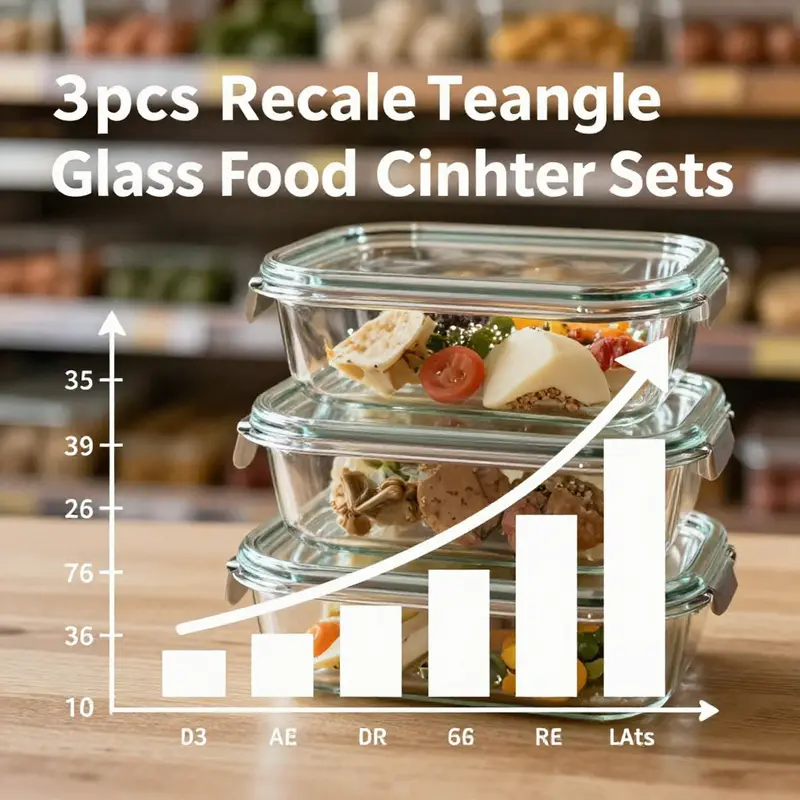
A wholesale market for storage solutions often hinges on two pillars: reliability and adaptability. The 3-piece rectangle glass food container set embodies both, presenting a durable, aesthetically versatile option for a wide range of buyers—from family-owned cafés to large catering operations. The core appeal rests on borosilicate glass, a material long favored in kitchens for its resistance to thermal shock, its non-toxic properties, and its longevity. When a buyer looks at these sets in bulk, they are not merely purchasing containers; they are investing in a storage system that can withstand the rigors of daily use, from hot meals being reheated in a microwave to cold preparations being chilled in a refrigerator, and then safely cleansed in a dishwasher. The language of wholesale here is not just price-per-unit or minimum order quantity; it is the promise of consistent performance, stabilized by a material science that reduces waste and enhances the kitchen’s operational rhythm.
Sustainability remains the clearest driver shaping buyer decisions. In today’s market, consumers and operators alike are increasingly wary of single-use plastics and the chemical leaching that can accompany older plastics. High borosilicate glass meets this demand with a transparent, non-porous surface that does not absorb odors or flavors and resists staining. It also travels well through varied climate conditions, an important attribute for distributors who ship products across regions with different humidity levels and temperatures. The wholesale ecosystem rewards sets that can be scaled without compromising quality. When a restaurant orders hundreds of units, consistency in weight, wall thickness, and lid fit becomes crucial to minimizing breakage and return rates. In this regard, wholesalers emphasize standardized dimensions and strict tolerance levels, ensuring that each piece nests predictably with its peers and with compatible lids across batches.
Customization options are expanding the appeal of these glass sets beyond pure utility. Buyers now expect a degree of tailoring to fit their brand identity and specific storage needs. Lids can be swapped for bamboo or wooden variants, which align with a hygge-inspired or eco-conscious aesthetic popular in many Western markets. Silicone seals are increasingly common, offering enhanced airtightness to keep ready-to-eat meals fresh for longer—an important feature for meal-prep services and takeout operations that depend on consistent quality from prep to plate. The ability to stack containers without compromising stability is another design refinement exciting wholesalers: it helps maximize kitchen storage and back-of-house efficiency, a tangible benefit when square footage is at a premium.
Price remains a pragmatic consideration in wholesale purchasing. The typical range—roughly US$1.07 to US$2.95 per unit, with a minimum order quantity (MOQ) around 100 units—places the 3-piece rectangle glass set in a competitive position for a broad spectrum of buyers. For small to mid-sized operations, the per-unit cost can be justified by the reduction in disposable packaging costs, improved food safety, and the durability that reduces the frequency of replacements. For larger distributors or multi-unit operations, the bulk pricing becomes even more attractive, as it supports uniform inventory across locations and simplifies procurement processes. The economics of these sets are not simply about the sticker price; they hinge on lifecycle costs, including shattered-damage rates, return logistics, and the potential for resale or repurposing of damaged components in a responsible way.
Design trends in the wholesale space reflect a blend of practicality and modern aesthetics. The most successful offerings strike a balance between minimalist transparency and a curated sense of style. Transparent glass, with its clean lines and the ability to showcase food presentations, resonates with contemporary kitchen décor as much as it does with professional workflows. In Western markets especially, kitchenware is increasingly treated as an extension of interior design, and the visible quality of the container becomes part of the dining experience. The rectangular shape is not merely a space-saving geometry; it mirrors the way many prep lines and cold storage shelves are organized, enabling predictable stacking, even distribution of portions, and easy labeling. The result is a product that reads as both functional and refined, a duality that wholesalers leverage in catalog descriptions and promotional imagery to attract buyers who want storage that looks as good as it performs.
Beyond aesthetics, functional attributes drive the wholesale value proposition. Borosilicate glass tolerates rapid temperature shifts well, which means these sets can be moved from freezer to microwave or oven (depending on the lid design and model) with a lower risk of cracking. This versatility supports a wide array of use cases—from batch cooking and portioning to meal-prep services and home dining—making the sets attractive across channels. The lids, particularly those with vented features, address a practical pain point: air circulation during reheating or when transporting warm dishes. By mitigating steam buildup, vented lids help maintain texture and prevent sogginess, a nuance that matters when customers judge food quality by appearance and aroma as much as by taste.
For wholesale buyers, the decision to add a 3-piece rectangle glass set to inventory is often influenced by the stability of the supply chain. Consistency in sourcing—from borosilicate glass batches to gasket materials and lid components—reduces the risk of compatibility issues that complicate restocking. Suppliers who can offer customization while preserving consistent batch quality build trust with buyers who need reliable procurement across multiple locations. This reliability translates into fewer stockouts, smoother delivery schedules, and more predictable budgeting, which are all critical in wholesale negotiations where margins can be narrow and schedules tight.
The conversation about sustainability and customization leads naturally to a broader ecosystem of eco-friendly packaging and storage options. While glass stands out for reusability and safety, wholesale buyers also weigh alternatives that complement glass storage—such as durable, recyclable paper-based packaging and containers designed for single-serve use in takeout operations. In this context, a wholesale strategy that pairs glass storage with compatible non-glass packaging can create a cohesive, greener storage system. For readers curious about related packaging formats, consider the option of integrating a grab-and-go approach that uses paper-based takeaway containers for meals assembled in glass, thereby reducing waste while preserving presentation and temperature control. For wholesale buyers exploring non-glass packaging alternatives, consider in-stock new design salad rectangle takeaway kraft paper octagonal box with lid. in-stock new design salad rectangle takeaway kraft paper octagonal box with lid.
Importantly, wholesale buyers are not choosing between one format or another in isolation. The most successful purchasers view the market as a spectrum of solutions that can be deployed together to optimize operational workflows. A restaurant kitchen might use glass containers for cold-storage, prep, and portioning, while the front-of-house or takeout packaging could rely on recyclable or compostable paper-based options for distribution. This strategy aligns with a broader trend toward design-for-circular-economy thinking, where products are valued for their durability, reusability, and end-of-life considerations. The wholesale framework, with its emphasis on MOQ, bulk pricing, and customization, is particularly well-suited to supporting such holistic packaging ecosystems. It allows buyers to negotiate not only the price per unit but also the terms of customization, delivery schedules, and post-purchase support, including potential replacement policies and warranty considerations.
In the long arc of market development, the 3-piece rectangle glass set is positioned to benefit from continued advances in glass technology and lid engineering. Advances in surface coatings, for example, can improve scratch resistance and ease of cleaning, while lid designs may evolve to incorporate more robust sealing mechanisms and improved venting controls. These refinements may come with modest price increases, but the trade-off often pays off in reduced breakage, longer product life, and enhanced user satisfaction—factors that wholesalers weigh heavily when evaluating the total cost of ownership for buyers. As global demand for durable, sustainable, and visually appealing storage solutions grows, the wholesale channel has a critical role to play in shaping supply, quality assurance, and brand reputation for storage products across markets.
For readers seeking a broader context and standard benchmarks, the wholesale landscape in this segment is underscored by industry guidelines and performance metrics published in widely recognized industry resources. A recent comprehensive guide on standards and industrial applications provides a thorough framework for evaluating material specifications, performance benchmarks, and real-world usage scenarios. This resource complements the practical insights of wholesale buyers by offering a reference point for material safety, heat resistance, and long-term durability that designers and procurement teams can compare against internal testing data and supplier certifications. You can explore this external resource for deeper technical context and industry best practices: https://www.alibaba.com/product-detail/Comprehensive-Guide-to-3pcs-Food-Warmer-Sets_1600584874397.html.
As wholesale markets continue to evolve, buyers will increasingly prioritize a seamless blend of form and function. The 3-piece rectangle glass container set demonstrates how a thoughtfully designed, well-sourced, and customizable storage solution can support a wide range of business models. Its success in bulk channels rests on a balance of material resilience, practical design, and buyer-centric customization that respects both operational demands and environmental considerations. The result is not merely a container that holds food; it is a reliable system that sustains efficiency, reduces waste, and elevates the everyday act of storage into an experience of clarity and confidence for both operators and their customers.
Fragile Right, Fortunes Strong: Navigating Quality, Compliance, and Competition in Wholesale 3-Piece Rectangle Glass Containers
The wholesale market for a 3-piece rectangle glass food container set sits at the intersection of durability, safety, and price. On the surface, these sets promise a practical value proposition: durable borosilicate glass that withstands thermal shifts, reusable and recycled-friendly design, and the potential for bulk discounts that suit restaurants, caterers, and bulk retailers. Yet beneath the bright promise lies a web of challenges that wholesalers must navigate with precision. The story of these containers is less about a single feature and more about how a supplier threads consistency through material science, regulatory frameworks, logistics, and fierce market competition while remaining faithful to a growing consumer appetite for safer, more sustainable food storage. In this sense, wholesale success is less about chasing the lowest price per piece and more about balancing risk, reliability, and responsible sourcing across every stage of the chain from factory to end user kitchen.\n\nQuality consistency is the bedrock of trust in the wholesale arena. Glass, though seemingly straightforward, is a material whose performance hinges on a fine line of specifications. High borosilicate glass offers impressive resistance to thermal shock and long-term durability, but minute differences in composition or processing can alter crystallinity, edge strength, or the way heat distributes through a container during reheating. When a buyer places a bulk order—often in tens or hundreds of sets—the challenge becomes ensuring uniformity across production lots. A warehouse that receives a shipment with even a handful of pieces that feels slightly thicker, or a lid whose gasket compression differs from batch to batch, will see a ripple of dissatisfaction, increasing the likelihood of returns, exchanges, and reputational risk. Wholesalers therefore invest in rigorous sampling protocols, supplier audits, and batch testing that checks for temperature tolerance, lid fit, and leak resistance. These QC steps are not merely about catching defects; they are about confirming that every piece in a set performs the same under microwave or oven use, and that the glass remains inert and safe for food contact across repeated cycles of heating, cooling, and washing.\n\nThe regulatory landscape adds a dense layer of complexity that can silently erode margins if not navigated with diligence. Across markets, safety standards for food-contact materials diverge. Some regions emphasize BPA-free status and FDA alignment, while others prioritize specific labeling, recyclability declarations, or certifications that attest to durability and safe migration limits. The lack of universally trusted third-party verification can complicate due diligence, particularly when a supplier relies on certificates that appear to vary in credibility. The Alibaba discourse around certificate authenticity illustrates a broader reality in wholesale sourcing: buyers demand credible documentation, and wholesalers must invest in transparent, verifiable compliance stories that can travel across borders. The risk here is twofold. First, non-compliance can trigger costly recalls, delayed shipments, or market bans. Second, even when compliance is attainable, the cost of obtaining robust third-party verification and maintaining ongoing audits can compress margins, especially in a market that prizes low unit prices. It becomes essential for wholesalers to build a compliance playbook that includes supplier qualification criteria, certificate validation steps, and ongoing post-market surveillance that reassures buyers about long-term safety and legal conformity.\n\nLogistics and packaging stand as equally formidable challenges. Glass containers are inherently fragile, and bulk shipments magnify the consequences of mishandling. The typical wholesale order structure—large lots, such as 99 pieces per shipment—means that a single crate of damaged lids, chipped corners, or misaligned seals can cascade into significant loss, not only through replacement costs but also through greater freight charges, insurance, and the administrative burden of claims. Protective packaging becomes a balancing act: enough padding and rigid outer packaging to safeguard against transit shocks, yet not so heavy that shipping costs balloon or environmental footprints expand. The environmental footprint of protective packaging itself is a rising concern for buyers who care about sustainability. Wholesalers respond by innovating with multi-layer padding, crush-resistant boxes, and packaging that doubles as display-ready pallets for easier warehouse handling. They also explore insurance options and partnerships with carriers that specialize in fragile goods to reduce breakage risk, timelines, and ultimately, returns.\n\nCompetition and price pressure intensify these dynamics. The 3-piece rectangle glass set exists in a crowded field of similar designs and aesthetics. When price per piece can swing dramatically—from ultra-low listings to more stable premium offerings—wholesalers must decide where to position themselves. A race to the bottom often yields commoditization, eroding brand credibility and undermining the ability to deliver consistent quality, service, and support. The strategic counter-move hinges on differentiating through reliability, thermal performance, and the non-negotiable safety profile that glass storage offers. Buyers are not only purchasing a container; they are purchasing confidence that the product will perform across repeated cycles of freezing, microwaving, and cleaning. In this context, the value proposition extends beyond price. It includes predictable lead times, consistent packaging, accurate size tolerances, and the assurance that the lids—whether vented or sealed—will function as intended for home kitchens, restaurant buffets, or catering operations. The wholesale ecosystem rewards those who can blend competitive pricing with transparent quality control and dependable logistics.\n\nThe wholesale model also invites a broader consideration of how customization can counterbalance price pressures. A wholesale buyer often seeks not a single, one-size-fits-all solution, but a suite of options: varying sizes within the rectangle family, multiple lid styles to suit different ventilation needs, and even color or finish variants that coordinate with a buyer’s brand or kitchen line. Customization at scale becomes a tangible differentiator, especially when it aligns with functional requirements. For example, some models feature air holes in the lids to promote venting during microwave reheating, a feature that can reduce pressure buildup and eating-for-two mishaps in busy kitchens. Others prioritize compatibility with standard oven temperatures, a crucial selling point for home cooks who want to reheat meals without transferring to other dishes. Achieving this level of customization, however, demands a robust supply chain: multiple tooling options, controlled manufacturing processes, and the capacity to manage color and lid design variations without sacrificing batch-to-batch consistency. The payoff is clear. Wholesalers who can offer a catalog of tested configurations with reliable lead times command the loyalty of buyers who value reliability as highly as price.\n\nAmid these structural challenges, consumer sentiment and environmental considerations shape buying behavior. The modern customer recognizes that glass storage is a safer alternative to certain plastics, especially for high-temperature use, and appreciates the sustainability of reusable glass. The absence of chemical leaching, the ability to withstand multiple cycles without degradation, and the option to repair or reintroduce glass into the recycling stream—all contribute to a compelling value narrative. Yet this narrative must be backed by evidence and supply chain resilience. Wholesalers who can demonstrate traceability—origin of the glass, batch numbers, and documented testing results—present a more credible investment proposition. In a market where every purchase is weighed against potential waste and recalls, the ability to show responsible sourcing and durability is not merely a reputational asset but a practical risk mitigation strategy.\n\nAs wholesalers map the path forward, collaborations across the supply chain become essential. A successful approach fuses engineering insight with logistics optimization and market intelligence. It means establishing supplier relationships that go beyond price negotiations to include ongoing quality assurance, joint development of better packaging solutions for transit, and shared data on failure modes and remediation. It also means preparing buyers for contingencies—longer lead times during peak seasons, improved packaging that reduces breakage, or alternative configurations when size or lid designs are in high demand. In practice, this translates to a holistic operations mindset: clear specifications, consistent QC, rigorous certification trails, and a logistics playbook that minimizes damage and maximizes on-time delivery. It is a tall order, but it is precisely what distinguishes a dependable wholesale partner from a transactional supplier.\n\nTo connect these threads with adjacent packaging conversations, consider how wholesale buyers sometimes explore related formats that share the same ethos of durability, food safety, and sustainability. See the discussion around innovative rectangle takeaway options, such as the in-stock new-design salad rectangle takeaway kraft paper octagonal box with lid, which offers insights into how packaging versatility and design nuance influence procurement decisions and downstream usage. For more on that particular option, you can explore this example: senang03-in-stock-new-design-salad-rectangle-takeaway-kraft-paper-octagonal-box-with-lid. This cross-pollination of packaging strategies helps buyers understand how the same principles—quality, safety, and efficiency—play out across materials and formats in wholesale supply chains.\n\nIn closing, the wholesale market for 3-piece rectangle glass food container sets thrives on a balance of material integrity, regulatory clarity, and operational resilience. The challenges are real: ensuring uniform glass quality across batches, navigating a patchwork of safety standards, protecting fragile shipments, and competing in a price-sensitive environment without eroding the value of reliability. Yet these challenges also create opportunities. By emphasizing consistent performance, transparent compliance, and logistical excellence, wholesalers can build enduring relationships with buyers who value long-term viability over short-term savings. They can also push the envelope on customization, enabling configurations that align with diverse kitchen needs and cooking workflows. In a world increasingly attentive to health, sustainability, and responsible consumption, the wholesale pathway for rectangle glass containers is less about chasing a single best price and more about delivering confidence—piece by piece, batch by batch, shipment by shipment. External sources on sourcing dynamics and market context provide additional texture to this evolving landscape. See, for instance, the wholesale rectangle glass food container listing for a broader market view: https://www.alibaba.com/product-detail/Wholesale-Rectangle-Glass-Food-Container_1600527819712.html?spm=a2700.details.click&productId=1600527819712
Health, Waste Reduction, and Value in a 3-Piece Rectangle Glass Container Set
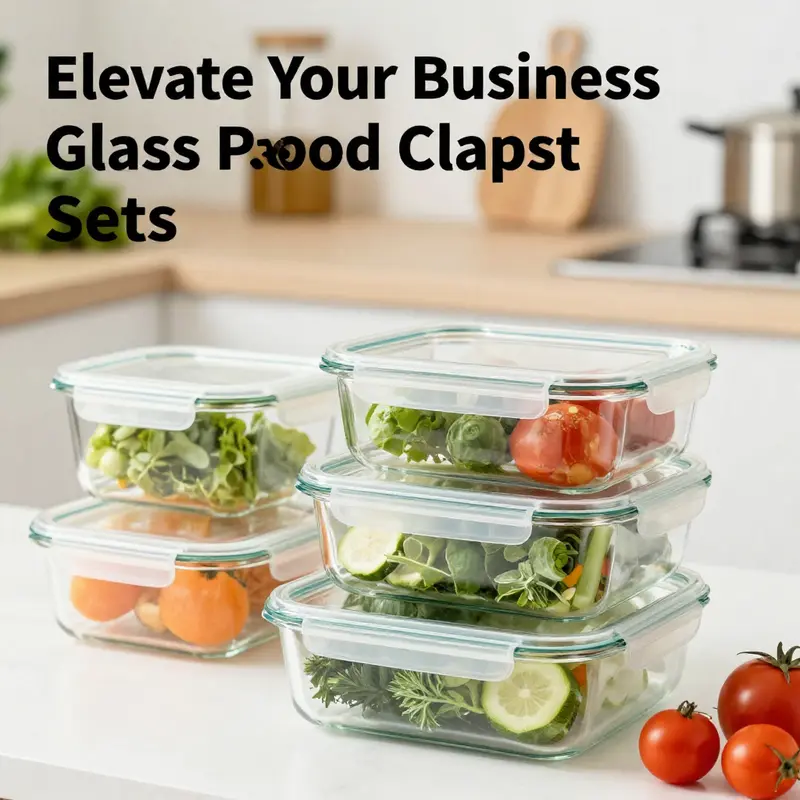
Choosing storage solutions involves more than swapping materials. For wholesale buyers—restaurants, caterers, meal-prep services, and busy households—the right rectangle glass container balances safety, durability, and environmental impact. Made from high borosilicate glass, these sets offer chemical stability, reuse potential, and recyclability, aligning health goals with cost efficiency at scale. Key considerations include safety under heating, lid venting for safety, durability through dishwasher cycles, and the recyclability of glass at end-of-life. In wholesale channels, bulk purchases can reduce per-unit costs while maintaining consistent quality across units. This combination positions a 3-piece rectangle glass container set as a practical backbone for both commercial operations and home use.
Final thoughts
As the food service industry continues to evolve, investing in 3-piece rectangle glass food container sets serves multiple purposes, from enhancing food storage to contributing to a sustainable future. By sourcing these containers wholesale, businesses can benefit from cost savings and quality assurance while embracing eco-friendly practices that resonate with modern consumers. Organizations looking to stay ahead in the competitive food market should consider incorporating these glass food container sets into their supply chain to not only improve operational efficiency but also promote health and sustainability in their offerings. Choosing these containers means more than just a storage solution; it embodies a commitment to quality and care that customers are increasingly valuing.