
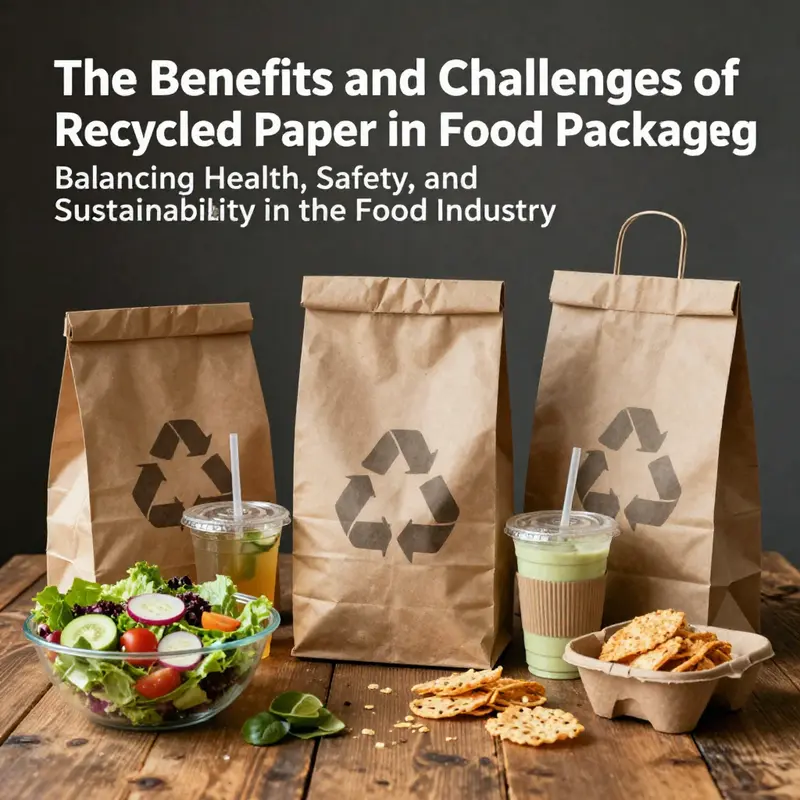
As the food industry increasingly turns to sustainable practices, the use of recycled paper in food packaging has gained momentum. This approach not only aligns with eco-friendly goals but significantly reduces our carbon footprint. However, this innovation is not without its challenges, especially concerning health and safety. The reality is that while recycled paper can help protect our forests and conserve resources, it may also pose risks of contamination. Understanding these complications is critical for bubble tea shops, restaurants, food trucks, and corporate procurement teams looking to make informed choices. In the sections to come, we will delve into health and safety concerns associated with recycled paper, explore its environmental impact, and review innovative solutions that can help ensure its safe use in food packaging.
null
null
Balancing Green Promise and Health Guardrails: The Environmental Footprint of Recycled Paper in Food Packaging

Recycled paper in food packaging is often celebrated as a step toward sustainability, yet its environmental footprint depends on multiple factors across the lifecycle. Reuse of existing fibers can reduce virgin pulp demand, lower energy use, and lessen water consumption when recycling streams operate efficiently. However, the net benefit hinges on the quality of the recycling system, the presence of inks and coatings, and the end-of-life handling.
A lifecycle perspective reveals trade-offs: recycling can introduce additional energy and cleaning demands for deinking and contaminant removal, which may offset some emissions savings if not managed well. The real-world gains depend on regional infrastructure, processing accuracy, and consumer disposal patterns. In many regions, packaging materials recover rates are improving, yet barriers like cross-contamination or incompatible coatings can complicate recycling and limit environmental gains.
Material choices also interact with safety considerations. Mineral oil hydrocarbons (MOH) and other contaminants can migrate from packaging into food if barriers are weak or degraded. Safeguards—such as barrier coatings, improved decontamination processes, and stricter supplier controls—help minimize migration while preserving recyclability. Regulators and industry players are increasingly aligning on testing, transparency, and design practices that protect health without sacrificing circularity.
In practice, achieving true environmental benefits requires an integrated approach: selecting recyclable coatings, ensuring high-quality fiber recovery, and maintaining rigorous safety standards throughout procurement and manufacturing. When these links in the chain work together, recycled paper packaging can support sustainability goals without compromising consumer protection. The story is not binary but a spectrum determined by system performance, investment in recycling, and thoughtful barrier technology.
Guardians of the Shelf: Building Safe, Sustainable Pathways for Recycled Paper in Food Packaging
Recycling paper for food packaging presents a paradox that sits at the intersection of responsibility and risk. On one hand, the environmental ledger favors recycled paper: less deforestation, lower water and energy use, and reduced emissions when compared with virgin materials. The calculation is compelling enough to justify significant shifts in packaging policy and consumer expectations. On the other hand, the very materials we rely on for reuse—newspapers, mailers, and other printed papers—carry residues from inks, additives, and lubricants that can migrate into food over time. When packaging is stored on shelves, in transit, or in food storage, volatile compounds can travel from the paper’s surface into the packaging atmosphere and eventually into the food itself. The result is a tension that calls for rigorous science, thoughtful design, and intelligent policy to move toward a future where sustainability is not at odds with safety.
The core environmental advantage of recycled paper lies in its ability to reduce resource consumption and pollution associated with tree harvesting and processing. By reusing fibers, mills can avoid depleting forests and can lower energy requirements and effluent loads. Yet the same pathways that enable recycling can carry contaminants forward. Mineral oil hydrocarbons (MOH), a family of compounds derived from printing inks and lubricants used in paper production, are slow to vanish through conventional recycling processes. What makes MOH particularly challenging is their tendency to migrate not only through direct contact but also via the vapor phase. In the context of food packaging, that means even if the edible product does not touch the paper surface, MOH can still find its way into the food as it sits in a moisture-controlled or even a warm storage environment. The health implications, especially with long-term exposure, include inflammatory responses in organs and, in some analyses, an elevated cancer risk flag—alerts that have prompted regulators to scrutinize MOH levels in packaging materials and, by extension, in human tissues.
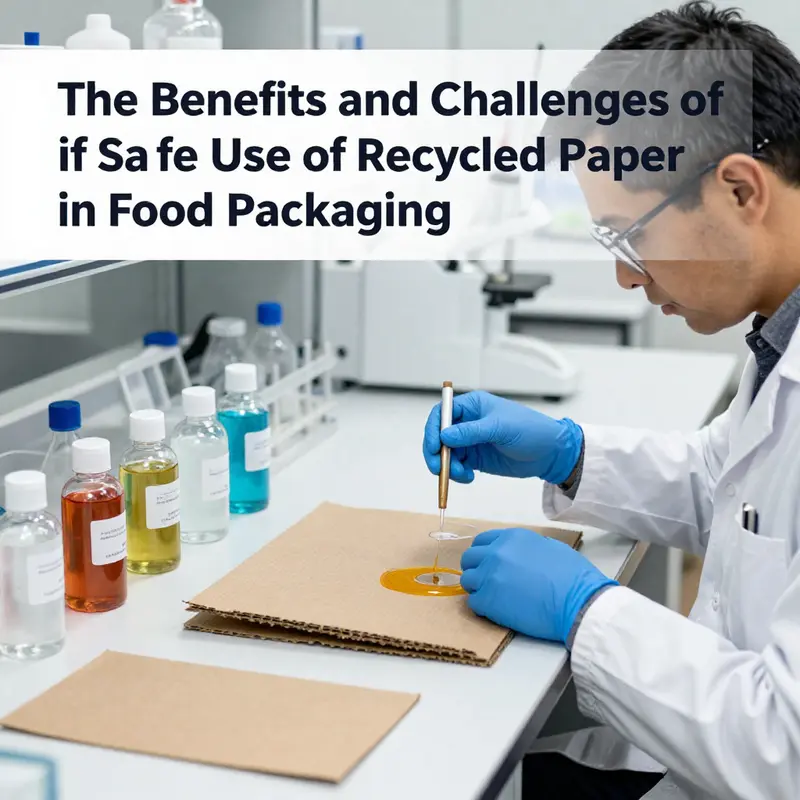
This risk profile is not merely hypothetical. Empirical research conducted in leading food-safety laboratories has highlighted MOH absorption rates from recycled paperboard into a range that can exceed European safety limits by substantial margins, especially for staples like rice, pasta, and flour that readily absorb lipophilic contaminants. The practical implication is clear: recycled paper packaging cannot be assumed safe by virtue of its recyclability alone. It must be engineered, monitored, and validated to ensure that the packaging acts as a barrier rather than a conduit for contaminants.
What follows in this chapter is not a retreat from circular design but a map of the emerging, smarter pathways that reconcile environmental benefits with stringent health protections. The innovations described here arise from a convergence of material science, thoughtful product design, and a systems perspective on how packaging intersects with supply chains, retail environments, and consumer behavior. Rather than presenting a single silver bullet, the field is coalescing around a cluster of complementary approaches that collectively reduce risk while preserving the recyclability and renewability that make recycled paper attractive in the first place.
A central advance is the development of barrier papers that render the recycled sheet capable of protecting food from moisture, grease, and oxygen without relying on non-recyclable films. Conventional barrier coatings often added a plastic-like layer that hindered recyclability because it fragmented the fiber stream or complicated end-of-life processing. The new generation of barrier papers replaces those problematic films with durable, waterborne or heat-sealed coatings that can be stripped or dissolved during recycling, preserving the integrity of the fiber loop. When designed correctly, these barrier papers maintain the protective performance needed for foods with intrinsic moisture or fat content while keeping the recycling system intact. In practice, this reduces the incentive to mix multiple materials in a single package and aligns with circular economy principles that seek to keep materials in productive use for as long as possible.
Beyond barrier innovation, there is movement toward white kraft papers engineered specifically for food contact. These papers aim to balance mechanical performance with predictability of migration behavior. They are designed from responsibly sourced wood fibers and tested to meet international food-safety standards, including metrics relevant to contaminant migration, absence of harmful extractables, and overall suitability for packaging applications such as bread bags, snack wraps, and cup linings. The objective is to deliver a material that feels familiar to consumers—an everyday paper that can be recycled again after use—while offering the reliability needed to keep MOH and other potential migrants at bay under typical storage and handling conditions.
A related line of development emphasizes design-for-recycling as a strategic discipline. Packaging structures are simplified to minimize material complexity and reduce the number of distinct layers that must be separated during recycling. When folding, printing, and finishing are orchestrated with end-of-life realities in mind, the packaging ecosystem becomes more forgiving of post-use sorting and processing. In practice, this can mean streamlined box geometries, reduced reliance on coatings that complicate recycling streams, and graphic designs that encourage consumer engagement without increasing waste. The idea is not to sacrifice brand appeal or user experience but to ensure that the packaging supports a clean, efficient recycling loop after it fulfills its primary function of protecting the product and communicating its value.
Another important strand is the exploration of antimicrobial or hygienic enhancements applied to recycled papers themselves. The aim is to extend shelf life and maintain hygiene without resorting to liquid preservatives that may complicate recycling or create new waste streams. Such approaches can include incorporating naturally derived antimicrobial agents into the fiber or employing surface treatments that reduce microbial load on the packaging exterior. The challenge remains to ensure that these technologies do not introduce new contaminants or migrate into food under normal usage. Achieving that balance demands rigorous testing, clarity of labeling, and robust performance criteria that survive the full lifecycle of the packaging—from printing and filling to distribution and storage on retail shelves.
Crucially, these developments are not the sole domain of large, centralized manufacturers. They reflect a broader ecosystem of research and collaboration across material science, packaging design, and supply-chain logistics. The goal is to preserve the environmental advantages of recycling while layering in protective features that guarantee consumer safety and regulatory compliance. In this sense, the future of recycled-paper packaging is less about choosing between sustainability and safety and more about integrating both into a coherent, validated system that remains adaptable as science evolves and consumer expectations shift.
The practical implications for brand owners, retailers, and recyclers are substantial. Brands that commit to recycled-paper packaging can communicate a responsible stance that resonates with environmentally conscious consumers. At the same time, they must ensure that the packaging is genuinely safe for the foods it contains or surrounds. For retailers, the focus shifts to ensuring that the packaging performs as expected throughout the supply chain, including in transit and on shelves where temperature and humidity fluctuations can influence migration and diffusion processes. For recyclers, the priority is maintaining a clean input stream that remains compatible with existing pulping and fiber-recovery technologies, thereby avoiding costly separations or downgrades in fiber quality.
To translate these ideas into practice, designers and engineers increasingly adopt a portfolio approach. They test multiple barrier concepts, fiber blends, and surface chemistries to identify configurations that meet performance criteria across diverse food categories while preserving recyclability. The outcomes are not only about reducing MOH exposure but also about enabling a robust circular economy where used paper returns to the fiber loop with minimal loss of quality. In this environment, lifecycle thinking becomes a governance instrument: every packaging choice carries implications for energy use, water quality, air emissions, and end-of-life processing. The strategic question, then, is how to optimize the entire value chain so that the environmental benefits of recycling are not eroded by unseen safety risks.
One encouraging sign is the emergence of barrier papers engineered to be fully recyclable, avoiding non-recyclable plastic films that historically compromised recycling streams. These materials demonstrate that it is possible to maintain moisture and grease resistance with coatings that can be captured and reprocessed within standard recycling facilities. This aligns with the broader ambition of keeping packaging in a closed loop, where post-consumer fibers are reintroduced into new packaging without accumulating contaminants that escalate risk or degrade material quality. The design philosophy here is pragmatic: build in redundancies at the material and process level so that the system remains resilient under real-world handling and storage conditions.
To illustrate how these ideas translate into tangible options, consider the line of barrier papers that replace traditional plastic or foil coatings with sustainable, recyclable alternatives. These papers achieve the barrier performance necessary for products with higher fat content or longer shelf life, while preserving fiber integrity during pulping. The practical effect is a less intrusive approach to contamination control—one that integrates with existing recycling infrastructure rather than requiring a substitution that would complicate downstream processing. When such papers are used, MOH migration can be kept within safer ranges across a broad spectrum of foods, including those that are prone to absorbing lipophilic substances.
Design-for-recycling principles are equally important in packaging concept development. Brands are reassessing the complexity of the packaging systems they require for a given product. A simplified structure reduces the risk of material incompatibilities and streamlines the sorting and recovery process. In addition, design choices that create opportunities for reuse can extend the life of packaging resources beyond a single cycle. Conceiving packaging as a design object that can be repurposed—whether as a desktop organizer, a label, or a second-life product—can shift consumer perception and behavior toward a more circular mindset. Such reuse-oriented thinking does not diminish product safety; instead, it complements protective measures by creating durable, meaningful interactions with packaging that encourage responsible disposal.
The practical reality is that these advances require a careful alignment of standards, testing, and regulatory oversight. Agencies across regions are actively evaluating MOH exposure risks and are increasingly transparent about how they derive acceptable limits. The result is a regulatory landscape that rewards innovation while imposing clear expectations for material performance, migration testing, and end-of-life stewardship. For manufacturers, this means investing in rigorous quality-control regimes, supplier qualification, and documentation that can withstand audit and traceability demands. For retailers and foodservice operators, the implication is a more informed choice framework—one that weighs not only the product’s performance and price but also the integrity of its packaging in a circular economy.
With these ideas in mind, it is worth noting how the broader packaging community translates theory into practice in everyday contexts. The move toward barrier papers that maintain recyclability is not only a technical achievement; it is a cultural shift toward treating packaging as a resource that remains valuable after use. This reframes waste as a resource, sparking new business models around take-back programs, extended producer responsibility, and clearer consumer guidance about recycling streams. It also invites designers to think beyond the single-use moment, asking how a package’s form, finish, and print can contribute to easier, safer recycling later. In the end, the success of recycled-paper packaging hinges on a shared understanding of both the environmental imperative and the health imperative—a dual commitment that makes the packaging system robust, trustworthy, and forward-looking.
For readers who want to explore concrete examples of these concepts in action, a compact reference point can be found in the discussion of barrier papers that preserve recyclability while delivering reliable protection. In particular, the field is seeing a push toward white kraft materials designed for food safety, where fiber quality, barrier performance, and end-of-life compatibility are engineered in concert. The convergence of these strands—barrier chemistry, full recyclability, and design-for-recycling—signals a future in which recycled paper can confidently serve as a primary material in a wide range of food-contact applications without compromising safety standards or circular economy objectives. This is not an abstract ideal; it is a tangible shift grounded in materials science, supply-chain collaboration, and an evidence base that continues to grow as more research, testing, and real-world deployments accumulate.
For practitioners and policymakers alike, the message is clear: advancing the safe use of recycled paper in food packaging requires a holistic approach that links material innovation with process integration, regulatory clarity, and consumer engagement. By embracing barrier papers, refining white kraft options for food contact, and prioritizing design-for-recycling, the industry can reduce MOH-related risks while preserving the environmental benefits that make recycling compelling. The path is navigable, but it calls for deliberate investment, ongoing quality assurance, and transparent communication about both benefits and safety measures. If pursued with discipline and collaborative spirit, sustainable packaging can become a model of how to balance planetary health with human health—a practical embodiment of the circular economy in action.
As a practical note for readers seeking additional context, a deeper dive into barrier paper development and related innovations offers a useful technical reference. The literature and industry disclosures emphasize that safe use of recycled paper in food packaging is evolving through a layered approach, combining barrier performance with recycling-compatible chemistries and consumer-friendly design principles. The result is a packaging ecosystem that preserves the benefits of recycled fibers without compromising safety. When these components align, the packaging becomes a facilitator of sustainability rather than a barrier to it, enabling a food system that honors both the health of people and the health of the planet.
Internal reference: for a concrete example of recycled-paper packaging options in action, you can explore a kraft paper octagonal bowl packaging that demonstrates how a simple form factor can marry functionality with recyclability. This example illustrates how packaging structures can be optimized to minimize material complexity while delivering the performance that food products require. While the product page itself is one among many in the market, the underlying principle remains: simple, recyclable designs can achieve both performance and end-of-life compatibility when embedded in a thoughtfully designed system. This approach complements the broader strategic shifts described above and helps ground the discussion in tangible packaging choices.
External resource for further reading: https://www.upm.com/en/innovation/solyd-white-kraft-paper
Final thoughts
As we navigate the complex landscape of food packaging, it’s clear that recycled paper presents a double-edged sword. The environmental benefits of utilizing this material are substantial, contributing to conservation and sustainability. However, the health risks associated with potential contaminants demand our attention and action. The intersection of safety and sustainability can be managed through strict quality control and advanced technologies. By embracing innovation, food businesses can confidently use recycled paper without compromising on safety. A commitment to responsible sourcing and packaging can elevate your brand’s reputation while fostering a healthier environment.