
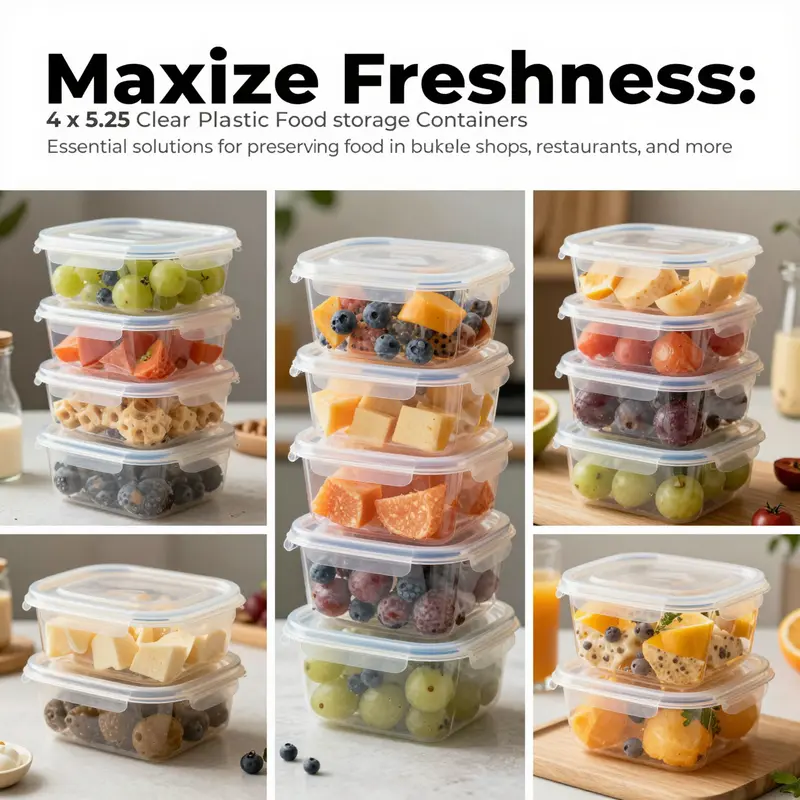
Every food and beverage establishment—from trendy bubble tea shops to bustling catering services—relies on effective food storage solutions to maintain freshness and organization. Among these solutions, the 4 x 5.25 clear plastic food storage containers stand out, combining practicality and efficiency crucial for fast-paced environments. These containers not only keep ingredients safe and fresh but also enhance visibility, making inventory management easier. Understanding their environmental impact, practical benefits, and economic considerations can help food entrepreneurs make informed choices that support operations while contributing positively to sustainability. This exploration will delve into the environmental ramifications of using these containers, underscore their practicality in busy kitchens, and analyze market trends that illustrate their growing significance in food service.
Beyond Convenience: Tracing the Environmental Footprint of 4 x 5.25 Clear Plastic Food Storage Containers
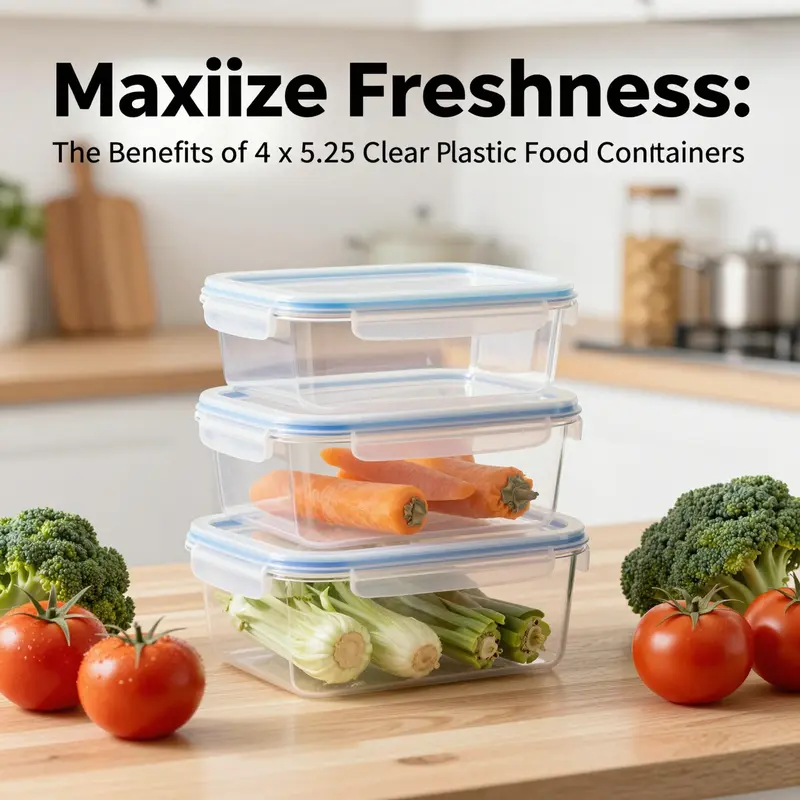
The 4 x 5.25 clear plastic food storage containers sit in many kitchens as reliable workhorses of preservation and organization. Their transparent walls offer an immediate inventory of what’s inside, a feature that, on the surface, seems purely practical. But behind that ease of use lies a web of material choices, production practices, and end-of-life challenges that shape their environmental footprint in surprising ways. These containers are typically designed around a standard dimension set—about 5.25 inches in one measure, with a capacity that often lands near 5.2 liters (roughly 175 ounces). The sizes are chosen for stackability and space efficiency, a practical fit for refrigerators, pantry shelves, and commercial backrooms alike. They are commonly made from BPA-free polyolefins such as polypropylene (PP) or polyethylene terephthalate (PET), plastics derived from fossil fuels. That origin—rooted in petroleum—sets the stage for a lifecycle that touches climate, ecosystems, and human health across production, use, and disposal.
From a lifecycle perspective, the environmental impact of these four containers can be understood through three intertwined stages: production and resource use, durability and reuse, and end-of-life management. Each stage carries its own set of pressures, and together they reveal a fuller picture than any single attribute. On the production side, the extraction and refining of oil support the creation of the polymers that form the containers. The process consumes substantial energy and releases greenhouse gases, while also contributing to air and water pollution in ways that can be overlooked in daily kitchen routine. In aggregate terms, plastic manufacturing has become a dominant driver of emissions, reflecting a broader trend in which the global plastics industry accounts for a meaningful share of carbon output each year. The numbers are striking. The lifecycle of common clear plastics used for food storage contributes to more than a sliver of global emissions; some analyses estimate a figure exceeding a percent of total annual emissions, a scale comparable to the output of large power plants. The takeaway is not that plastics are a monolithic villain, but that production cycles for everyday containers carry a systemic weight that deserves attention when we aim to reduce our environmental impact.
There is another layer to this story: the question of longevity and use. The design promise of plastic containers emphasizes reusability and durability, yet actual performance can ebb under real-world conditions. Heat, sunlight, and aggressive detergents can degrade the polymer matrix, causing cracks, warping, or surface crazing. These changes do not merely affect aesthetics or performance; they can influence safety and the overall resource burden of a given product. A container that cracks or warps early may be discarded sooner than expected, prompting more resource use in replacement and contributing to a cycle of short-lived reuse rather than long-lasting use. The environmental math becomes more nuanced when considering the average consumer’s habits: a container that lasts many years while being carefully cared for can offset a larger share of its initial production impact than a cheaply made, short-lived counterpart. The balance hinges on behavior—how consistently the container is used, what it’s used for, and how it is cleaned and stored.
End-of-life realities compound the complexity. Even if a plastic container is marked as recyclable, the global recycling rate for plastics remains stubbornly low. The best estimates from major environmental authorities indicate that a fraction of produced plastic waste—often cited around single digits in percentage terms—gets recycled, with a much larger share ending up in landfills or the environment. The fate of unrecycled plastics is persistent: they may persist for decades to centuries in landfills, and once exposed to natural conditions, they can fragment into microplastics that infiltrate soils, waterways, and ultimately the food chain. The potential health concerns associated with microplastics—ranging from ecological disruption to measurable traces in drinking water and even human tissues—underscore that the environmental footprint of these containers extends beyond visible waste streams. In effect, the convenience of a clear, stackable container can mask a long tail of environmental consequences if disposal and recycling are not managed thoughtfully.
A practical tension emerges when considering reuse as a primary strategy for reducing impact. The marketed promise of reuse is compelling: a sturdy container that can hold leftovers, dry goods, and prepared meals again and again. Yet real-world durability is finite. Repeated exposure to heat from reheating or microwaving, sunlight in sunlit kitchens, and harsh cleaning agents can accelerate material fatigue. The result is often a paradox: the more a container is reused, the more important it becomes to scrutinize the conditions under which it is used. If a container is consistently exposed to high temperatures or aggressive cleaners, the risk of chemical leaching—even if the lid remains intact—may rise, prompting replacements that increase the life-cycle burden. The nuanced conclusion is not to abandon reuse but to recognize that reuse must be paired with mindful usage to truly minimize environmental impact over time. This means avoiding unnecessary heating, selecting appropriate uses (cool storage rather than hot reheating directly in the container), and conducting periodic assessments of integrity.
Given these complexities, many households and small businesses explore greener pathways without sacrificing the practical benefits that clear plastic containers offer. A portion of the conversation centers on material alternatives and design shifts that can meaningfully reduce environmental harm. Glass, for instance, presents a compelling inertness to chemical interactions and a high recyclability profile. Glass does not interact with food chemistry in the same way plastics can, particularly under heat; it can be recycled repeatedly without degradation in quality. The downside, of course, includes weight, breakability, and sometimes higher upfront cost. Then there is silicone, whose production footprint is generally lower in some life-cycle assessments than that of traditional plastics and which can endure hundreds of uses when cared for properly. Silicone’s flexibility also supports a long service life across varied storage needs, from liquids to solids and from fridge to freezer applications. The trade-offs here are nuanced as well: silicone is not as universally inert as glass, and its own material properties shape how it performs in different contexts.
Within this broader discussion of alternatives lies a practical implication for consumers who rely on 4 x 5.25 clear plastic containers daily. If the goal is to reduce the environmental burden while retaining the benefits of organized, predictable storage, reconsidering the full lifecycle is essential. One approach is to minimize the total number of containers in use and to optimize their capacity for the most frequently stored items. When possible, selecting containers with longer expected lifespans and using them for a wide range of foods can spread the environmental costs over more servings and meals. Another approach is to prioritize packaging choices that align with circular economy principles—designs that support easier disassembly, recycling, or safe repurposing at the end of life. These paths do not demand renouncing convenience; they invite a more deliberate alignment of everyday storage habits with long-term ecological responsibilities.
As readers of this article move through the practical applications and environmental considerations of 4 x 5.25 clear plastic containers, the thread that ties these threads together is a call for mindful consumption. The containers’ clear walls make contents legible, a tidy symbol of the careful curation many households strive for in food storage. Yet clarity should also extend to the lifecycle of the product: clarity about where materials come from, how they are made, what happens after use, and how smaller choices—such as how we wash, reuse, and dispose of them—add up at scale. The choices we make in our kitchens ripple outward, shaping resource use, emissions, and the health of ecosystems that support our food supply.
For readers seeking a practical pivot toward more sustainable storage practices without discarding the utility of well-organized kitchens, there is a bridge to consider. While plastic remains a convenient option for many, there is growing interest in durable, reusable alternatives that can withstand daily use with less environmental cost over time. In this light, returning to a broader perspective on packaging—one that weighs the strengths and weaknesses of each material against real-world use—allows for smarter decisions. This is not a single-choice debate but a continuum of options, where the most sustainable path often blends longer life, careful use, and end-of-life planning with the conveniences that modern kitchens rely on. For those who wish to explore greener storage options that harmonize with a philosophy of reuse and recyclability, a related avenue to consider is a line of kraft paper-based containers designed for long-term reuse and recycled content, which offers a different set of trade-offs and benefits. If you want to learn more about that option, you can explore a sample of related eco-friendly packaging alternatives that emphasize recyclability and compostability in complementary food-service contexts in this resource: kraft-paper octagonal bowl with lid.
From a policy and public health perspective, the lifecycle concerns around clear plastic storage containers are reinforced by authoritative analyses that summarize both the emissions from production and the long tail of end-of-life waste. The U.S. Environmental Protection Agency remains a key reference point for understanding the scope of plastic waste, recycling rates, and the long-term environmental costs of disposable and reusable plastics. The juxtaposition of high-use practicality with persistent waste challenges underscores the necessity of a balanced approach: use what works well, reuse where feasible, and divert as much material as possible from landfills at the end of life. This perspective is essential when writing about materials that occupy a central place in our kitchens, because it reframes storage not as a one-time purchase but as part of a broader responsibility to resource stewardship and environmental integrity.
In conclusion, the environmental footprint of four 5.25-inch clear plastic food storage containers arises from a confluence of material choices, production realities, and end-of-life dynamics. Their BPA-free construction and transparent design offer tangible benefits for food safety and organization, while the lifecycle stories of PP and PET highlight both the potential and limits of reuse. Reframing decisions around durability, heating practices, washing protocols, and end-of-life strategies can tilt the balance toward lower overall impact. When feasible, exploring alternatives such as glass or silicone can further reduce ecological costs, though each option carries its own set of trade-offs that must be weighed in light of specific storage needs. The overarching message is pragmatic: understand the lifecycle, make informed choices at the point of purchase, and adopt everyday habits that heighten the chances of a sustainable outcome over the container’s lifetime. For readers looking to broaden the conversation with related packaging options that emphasize recyclability and reuse in food service, consider the kraft-paper alternative mentioned earlier as part of a broader toolkit for sustainable storage.
External resource: https://www.epa.gov/landfills/plastic-waste-and-landfilling
Clarity, Capacity, and Convenience: The Everyday Utility of 4 x 5.25 Clear Plastic Food Storage Containers
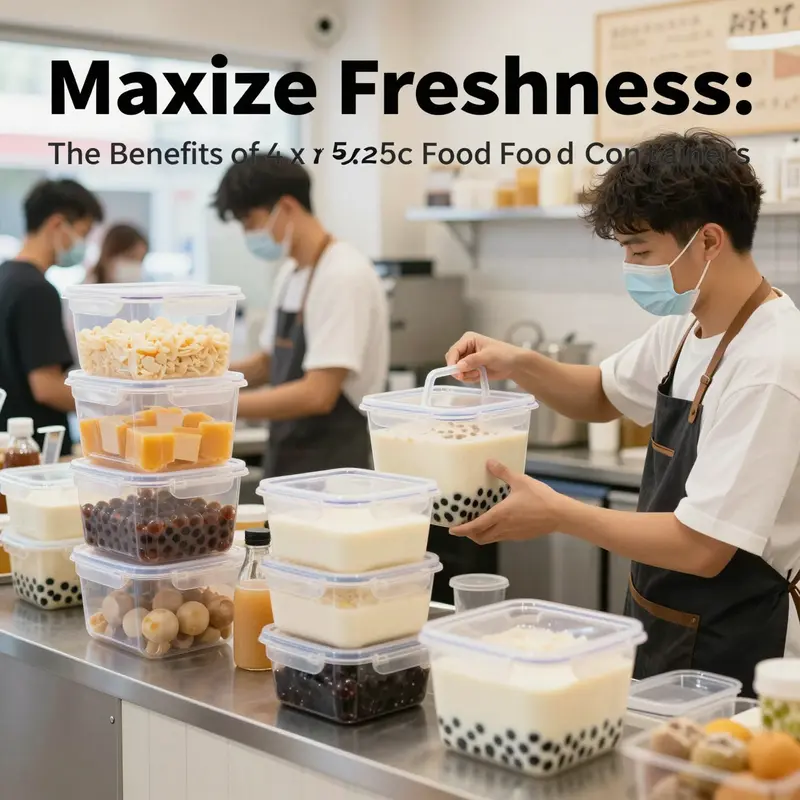
Clear plastic storage containers that measure 4 by 5.25 inches may appear modest, yet their effect on kitchen efficiency and everyday routines is substantial. These compact, rectangular vessels are designed to hold roughly 5.2 liters of content, a capacity that suits meal prep, batch cooking, and the casual storage of leftovers without crowding shelves. They are typically fashioned from BPA-free polyethylene, a material choice that reassures users about safety for everyday food storage, reheating, and freezing. The transparency of the walls enables instant visual recognition of contents, which saves time, reduces the number of times a lid is opened, and helps curb waste by limiting guesswork about what is inside. When paired with sealable, locking lids, these containers become reliable tools for maintaining freshness, preventing leaks, and supporting a kitchen routine that emphasizes both health and practicality. The combination of clear visibility and a secure seal makes them equally useful in homes and in commercial kitchens where a steady pace of service requires dependable and uniform storage solutions.
The design and construction of these containers balance form and function in a way that supports continuous use. The 4 by 5.25 inch footprint yields a shallow, space-efficient profile that stacks neatly in pantries, refrigerators, and prep stations. The rectangular shape maximizes interior volume relative to the exterior dimensions, allowing more efficient use of shelf space compared with round containers of similar capacity. The lids are equipped with a locking mechanism that creates an airtight seal, a feature that is essential for preserving moisture levels in dry goods, minimizing freezer burn on frozen items, and preventing spills during transport. Because the lids snap into place rather than simply resting on top, there is less risk of accidental opening, which reduces the chance of cross contamination in busy kitchens. The material choice, BPA-free polyethylene, provides a balance of rigidity and resilience. It resists cracking under normal drops or bumps and tolerates repeated cycles of freezing and reheating, which is important for households that rely on batch-prepped meals or weekly meal plans.
One of the core strengths of these containers lies in their visual clarity. The transparent walls eliminate the guesswork that often accompanies stored foods. This is not merely a convenience; it is a practical safeguard against spoilage and waste. When you can see condensation patterns, color changes, or the emergence of off smells—right through the wall—you can act quickly, either by consuming, rotating, or discarding items before they compromise other ingredients. The ease of content identification also supports organization by category and groupings, such as a pantry of dry staples or a refrigerator drawer dedicated to prewashed fruits and vegetables. In kitchens where time is at a premium, the ability to locate the exact container you need in seconds translates to faster meal assembly and less rummaging through opaque boxes.
Versatility is the other defining trait that elevates the 4 x 5.25 inch format. These containers are well suited for leftovers, but their utility extends far beyond that single role. They can be employed to store chopped vegetables, cooked grains, sauces, toppings, and even small portions of pet food or craft ingredients in a workshop or break room. Their size makes them ideal for portion-controlled meal prep, which is a common practice in many households and some commercial settings. The same attributes that support storage also support transport. Pack a prepared meal for a child’s lunch, a colleague’s midday snack, or a weekend picnic, and the secure lid helps ensure that nothing leaks or spills along the way. This transport capability is especially valuable for people who carry meals in bags or backpacks, where a stable, leak-proof container is a practical peace of mind.
From a safety and convenience viewpoint, the combination of microwave safety, dishwasher compatibility (top rack), and freezer readiness broadens the daily window of use. A container that can transition from freezer to microwave to table without requiring multiple transfers is inherently more efficient. The top rack dishwasher compatibility reduces hand washing chores and helps maintain consistent cleanliness in high-demand environments. At the same time, the ability to withstand freezing temperatures without becoming brittle or losing shape makes them robust enough for long-term storage and seasonal ingredient preservation. The materials and construction are designed to endure repetitive cycles, a factor that matters in both home kitchens and larger operations where containers are subject to frequent use and cleaning routines.
Space efficiency is a recurring benefit, in part because the stackable design allows for orderly, image-friendly storage. When empty, these containers nest within each other to minimize space usage in a pantry or cabinet. When full, they stack in a way that creates clean vertical lines in a refrigerator or on a shelf, simplifying inventory management and enabling more predictable access. In crowded kitchens where every inch of space matters, the ability to create order without sacrificing capacity is a valuable asset. The consistent dimensions across a family of containers also enable uniform stacking, which is particularly helpful in commercial kitchens where prep lines demand orderly, repeatable systems that staff can recognize at a glance.
Organizationally, the containers support a wide range of storage schemes. They are suitable for storing dry goods such as cereals, flour, sugar, and snacks as well as prepared meals and perishable items like sauces and condiments. The clear walls help users distinguish between items that sit side by side on a shelf, reducing mix-ups and enabling more precise rotation practices. The durability of the plastic adds to long-term reliability, as denting or deformation can undermine seal integrity and even cause uneven closures. The snap-and-lock lid design contributes to stability; it minimizes the risk of spills when containers are moved from one location to another, such as from a fridge to a car trunk during a field trip, a delivery route, or a catering event. This combination of seal integrity, visibility, and stacking stability makes the 4 x 5.25 inch format a practical backbone for both home and commercial use.
Sustainability considerations also inform the appeal of these containers. The use of BPA-free polyethylene aligns with consumer expectations about safer food contact materials. While no single container can solve every waste-related challenge, choosing durable, reusable plastics over disposable alternatives reduces the volume of single-use packaging that ends up in landfills. The fact that these containers are designed for multi-use cycles—refrigerating, reheating, washing, and reusing—supports a more sustainable approach to food storage in households and micro enterprises alike. In practice, this means fewer purchases of disposable containers and more predictable, ongoing utilization of a single, well-chosen set of vessels. It also means that kitchens can develop standardized workflows that minimize waste and maximize the shelf life of stored foods, a combination that benefits both budgets and environmental goals.
From a practical standpoint, transport safety is enhanced by the lid design. Snap-and-lock lids reduce the likelihood of accidental openings during transit, a feature that matters when containers are carried in bags, backpacks, or vehicle doors bouncing on uneven roads. This reliability is particularly important for families that commute with meals, for staff delivering samples in a catering context, or for teams in food service operations that need to portion out meals and snacks with confidence. The combination of a secure seal and a transparent body ensures that food can be observed without being opened, a daily convenience that supports both quality control and service consistency.
In contemplating how these containers integrate into broader kitchen systems, it is useful to view them as a scalable element within a modular storage strategy. Their compact footprint and uniform dimensions allow them to interlock with other similarly sized containers, enabling a kind of modular architecture in which specific storage zones are dedicated to certain ingredients or meals. This modularity can be particularly valuable in commercial kitchens where space allocation must be carefully managed and where staff turnover or shift changes can otherwise disrupt established routines. The 4 x 5.25 inch family is versatile enough to serve as the first layer of a layered system, a practice that tends to improve speed and accuracy during peak service periods.
The chapter on usage and practical benefits thus reveals a straightforward truth: small, well designed containers can carry a disproportionate share of the daily workload. They connect the moment of preparation with the moment of consumption, creating a continuous, reliable loop from grocery bag to dinner plate. The visible contents, the secure seals, and the space savings combine to produce tangible outcomes—less food waste, faster retrieval, safer transport, and more efficient cleaning routines. In sum, the 4 x 5.25 clear plastic storage containers reinforce a kitchen culture that prizes clarity, discipline, and resilience. They are not flashy gadgets so much as dependable workhorses that adapt to a wide range of routines and settings, from the quiet rhythm of family meals to the brisk tempo of a busy food service operation.
As a closing note, consider the broader implications of choosing containers that balance transparency, safety, and durability. When a kitchen prioritizes visibility, it also promotes mindful eating and better inventory control. When a seal is airtight, freshness is preserved longer, which translates into better taste and texture for meals that might otherwise be wasted. When a product is durable, it survives the rigors of daily use and reduces the need for frequent replacements. And when the design is compact and stackable, it makes room for new ingredients, new ideas, and new ways of cooking. All of these elements come together in the seemingly modest 4 x 5.25 inch container to shape a kitchen environment in which organization and nourishment are not separate goals but a unified practice that supports healthier routines and more economical operations.
For readers seeking to connect this discussion to hands on examples beyond the written page, there is a wide array of take-away style options that share the same logic of safety, visibility, and transport reliability. For instance, you can explore food-grade take-away bowls with lids that extend this same philosophy into portable meals and on the go dining scenarios. food-grade take-away bowls with lids The aim is not to replace the medium sized storage container but to complement it with compatible options that uphold the same standards of clarity, cleanliness, and containment. When you assemble a set of containers that share a common design language, you create a kitchen system that is easier to stock, easier to use, and more reliable in the long term.
In pondering the practicalities of daily life, it is worth recalling that a kitchen is a workshop of routines as much as a place for nourishment. The 4 x 5.25 clear plastic storage containers inhabit that workshop by making visible the invisible processes of storage, rotation, and reheating. They hold the potential to transform how meals are planned, how leftovers are managed, and how efficiently a household or business runs. The truth is simple: when you can see what you have, you can plan more effectively. When you can trust that what you see is safely stored, you can act with certainty. And when you can move items from prep to plate with minimal fuss, you free time for creativity, conversation, and the pleasure of sharing good food. The 4 x 5.25 format thus stands as a pragmatic emblem of how everyday tools, thoughtfully designed, can quietly elevate the ordinary act of cooking and eating into something steadier, more reliable, and more satisfying.
External resources can broaden this perspective further by exploring guidelines on food contact materials and safety standards. For broader safety considerations, see FDA guidance on BPA and food contact substances.
Clarity, Cost, and Capacity: The Economic Trajectory of 4 x 5.25-Inch Clear Plastic Food Storage Containers
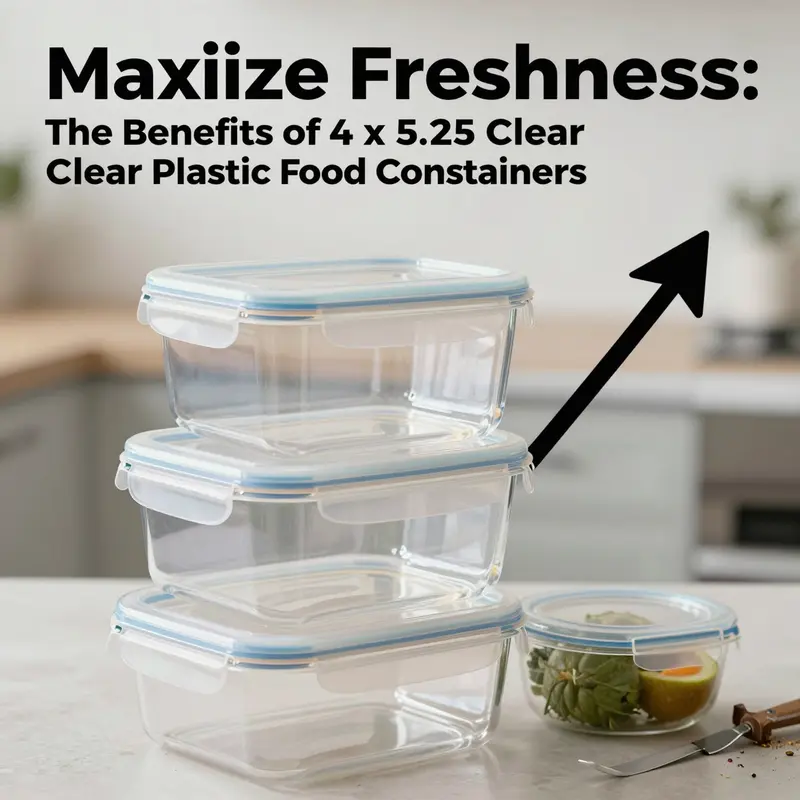
The rise of the 4 x 5.25-inch clear plastic food storage container is a story about precision in design meeting discipline in usage. In kitchens of homes and in the back rooms of smaller food operations, these compact, transparent vessels have become a practical standard for preserving freshness, organizing ingredients, and simplifying daily routines. They are not merely boxes for holding leftovers; they are microcosms of a market that prizes visibility, efficiency, and safety. When we zoom in on the economics of this specific size and material combination, what emerges is a narrative that weaves together raw material costs, manufacturing economies, consumer demand for organization, and the evolving expectations around health and sustainability. The container set in question, typically holding around 5.2 liters of capacity, exemplifies how a well executed design can deliver value through a balance of form, function, and fabric of the supply chain. In market terms, the 4 x 5.25 category is a small but telling piece of a much larger movement toward lightweight, reusable, and recyclable storage options that fit neatly into constrained spaces like compact refrigerators, shelves, and cabinet dividers. As this chapter unfolds, the discussion threads together market size forecasts, material preferences, consumer behavior, and the practical realities of day to day kitchen use, painting a cohesive picture of why these containers continue to gain traction even as consumer attention pivots toward broader packaging innovations.
The market context for these containers is set by a broader trajectory in the global food storage container sector. A steady growth pattern is visible, with forecasts that project the market expanding from about 170.9 billion USD in 2025 to roughly 254.6 billion USD by 2033, reflecting a compound annual growth rate just under 5 percent. This momentum is driven by a confluence of urbanization, rising interest in meal prepping, and the ongoing emphasis on food preservation that reduces waste and extends the usability of ingredients. Within this expanding landscape, the 4 x 5.25 size represents a versatile niche. It is small enough to fit into standard domestic storage spaces yet capacious enough to handle daily portions, salads, snacks, or leftovers in a way that keeps contents visible and accessible. The visibility of the contents is what sets clear plastic apart; it enables quick inventory checks and reduces the decision friction that often leads to waste. In practical terms, this translates to real-world efficiency: a shopper or a kitchen manager can locate what they need at a glance, retrieve it, and reseal it without rummaging through opaque containers. The time savings and reduced spoilage that flow from this clarity accumulate into measurable economic benefits over time, particularly in busy households or high-activity kitchens where every minute matters.
Material choice is a central thread in the economic narrative. Plastic containers continue to command the largest share in the market due to the ongoing allure of polypropylene and Tritan materials. These plastics strike a desirable balance between cost, durability, and safety. Their lightweight nature lowers transportation costs and handling requirements, while their durability translates into long service life under typical kitchen conditions. The appeal is further enhanced by BPA-free formulations, which align with consumer expectations around health and safety. In the context of the 4 x 5.25 category, the use of BPA-free plastics is not just a health feature; it is a value proposition that supports reuse and longer product lifecycles. Consumers increasingly understand that paying a modest premium for safer plastics pays dividends in kitchen confidence and waste reduction over the long run. The market trend toward safer, reusable materials thus reinforces the economic case for these containers, even when priced above lower grade alternatives.
From an economic perspective, the most tangible advantages lie in visibility, efficiency, and space management. The transparent walls of these containers serve as a natural inventory system, letting cooks and managers see contents without opening lids. In a homestead, that means less time spent guessing what is inside and how much is left, and less food waste due to misidentification or forgotten items. In a professional kitchen or a small-scale operation, the same principle translates into streamlined workflows. Staff can rapidly allocate tasks, track usage, and reorganize stock as needed, reducing bottlenecks that often arise when containers are not clearly labeled or are difficult to inspect. The stackable geometry common to the 4 x 5.25 footprint further compounds these gains. Neatly stacking containers minimizes vertical waste in fridges, pantries, and prep areas, freeing precious shelf space for other essentials and cutting the need for additional storage units. The long-term cost implications are clear: fewer containers are damaged, less space is required for storage, and the overall operational footprint is trimmed. In sum, the economic value is not only in the upfront price or material cost but in the cumulative savings generated by better storage discipline, faster access, and reduced waste across daily operations.
A closer look at materials underscores a critical trade-off that shapes purchasing decisions. While lower cost plastics may be tempting at first glance, the realities of heat exposure, dishwashing cycles, and contact with acidic or fatty foods can erode performance and safety over time. This is where the shift toward BPA-free, food-grade materials becomes economically meaningful. The premium paid for higher-quality plastics often yields dividends in the form of greater resistance to stress cracking, better resilience under repeated temperature changes, and longer service life. Consumers who routinely wash containers in hot water or place them in refrigeration or freezers recognize the practical implications of material choice, because the wrong plastic can become brittle, discolored, or even leach trace elements under certain conditions. In a market that prizes sustainability alongside safety, the ability to reuse containers many times over a longer period reduces the per-use cost and aligns with broader environmental goals. The 4 x 5.25 category thus sits at the intersection of prudent budgeting and responsible material selection, a stance that buyers increasingly adopt as part of a comprehensive kitchen management approach.
The economic advantages also extend to how these containers integrate with existing kitchen ecosystems. Their clear exterior and uniform dimensions create a predictable backbone for organizational schemes, whether a family is building a weekly meal prep plan or a cafe is standardizing its bulk storage for a small menu. The predictability of size means easier stacking, easier labeling, and easier substitution when needs shift. It is not unusual to see a set of multiple 4 x 5.25 containers used to compartmentalize ingredients for several recipes, making it straightforward to prepare and portion meals in advance. For commercial settings, the efficiency benefits compound when combined with compatible lids and seals that secure freshness while resisting leaks. A well-sealed container minimizes cross-contamination risks and reduces the need for frequent replacements, which translates into cost containment over time. Within the context of inventory and workflow management, these containers function as a modular system that scales with demand, allowing kitchens to adjust storage configurations as menus and volumes evolve. The modularity also supports lab-like organization in home kitchens, where the same containers can be repurposed for dry goods, marinated items, or even nonfood storage when needed, adding versatility without incurring additional product lines.
Within this market landscape, consumer demand for organization and predictability continues to drive preferences toward clear, rectangular forms in compact sizes. The 4 x 5.25 dimension is particularly appealing because it aligns with common shelf depths and refrigerator layouts, enabling a clean, uniform appearance that is both aesthetically pleasing and functionally practical. The durability of polyolefin plastics, combined with proven sealable lid systems, provides confidence that contents remain protected during storage and that items can be nested or stacked with minimal risk of tipping or misalignment. This practical reliability becomes a cornerstone of the value proposition. For households and small businesses, the promise of a reliable organization system translates into time savings during meal planning, shopping, and cleanup, which in turn contributes to perceived value and willingness to invest in a quality set rather than settling for cheaper, disposable options. The purchasing decision, therefore, is often shaped by a combination of tangible performance metrics—clarity, seal integrity, durability, and capacity—and intangible considerations such as peace of mind and the satisfaction of keeping foods at their best for longer.
The chapter would be incomplete without acknowledging the broader industry movement toward sustainability and recyclability. The economic calculus grows more nuanced as environmental concerns influence consumer choices and policy landscapes. While the immediate benefits of a clear plastic storage system lie in usability and waste reduction, the long horizon demands attention to how materials are sourced, manufactured, and ultimately disposed of. Reusable plastics with strong durability profiles reduce the frequency of replacement purchases and lower the volume of disposable packaging that ends up in landfills. Yet sustainability is not a binary attribute; it manifests in multiple layers: the proportion of recycled content, the energy intensity of production, the end-of-life options, and the potential for multiple reuse cycles. In the markets that shape the 4 x 5.25 category, manufacturers increasingly highlight the BPA-free nature of their formulations, the resilience of their lids against warping, and the ease with which containers can be cleaned and sanitized in commercial settings. These features resonate with professionals and consumers who want dependable tools that respect both health and environmental considerations, reinforcing the perception that higher upfront costs are justified by longer service life and reduced replacement frequency.
An important practical question that emerges for buyers is how much value to assign to the small, frequent use cases that define daily kitchen life. A compact container in this size range often accompanies a pattern of repeated, routine tasks: portioning, storing, and reheating. The cost of a single properly sealed, transparent container is easy to amortize across dozens or hundreds of uses over its lifetime. The cumulative savings from less waste, better inventory control, and faster prep cycles accumulate into a discernible economic advantage that is easy to overlook in the short term. On a macro level, this logic supports the market momentum described in industry forecasts. When a large share of households and small businesses identify similar benefits from clarity and efficiency, demand for well-designed 4 x 5.25 containers grows in tandem with households managing more elaborate meal prep routines or small-scale catering ventures that rely on precise portioning and reliable presentation.
To illustrate the evolving packaging landscape in a way that connects to real-world product markets without naming specific brands, consider how a related category showcases the same underlying dynamics. A representative example in the broader packaging family highlights the appeal of transparency, compact form, and versatile lids as features that translate across contexts. In this linked reference, the discussion revolves around clear plastic packaging used for pastry and dessert items, emphasizing how clear, well-sealed formats communicate freshness and quality while supporting efficient handling. Such cross-category parallels help underscore why the 4 x 5.25 clear plastic storage container resonates beyond its immediate use cases and becomes a reference point for how small, efficient storage solutions contribute to organized, safe, and cost-conscious kitchens. See the related example here: clear plastic pastry container packaging.
Looking ahead, the interplay between material science, consumer preferences, and policy direction will continue to shape the economics of the 4 x 5.25 category. Innovations in durable, recycled content plastics, improved sealing technologies, and design refinements that maximize stackability without compromising lid integrity will help sustain the momentum. As manufacturers seek to balance cost with safety and performance, buyers will increasingly encounter a tiered market where BPA-free, food-grade plastics command a premium but deliver durable value across longer lifecycles. The result is a market that remains practical and price-sensitive yet more focused than ever on performance, reliability, and the environmental footprint of every container purchased. This synthesis of factors—market growth, material choices, operational efficiency, and sustainability considerations—defines the economic trajectory of 4 x 5.25 clear plastic storage containers and explains why these items maintain relevance in both the home kitchen and the micro-operations that keep small food businesses humming.
External resource for further reading: Grand View Research provides a comprehensive market forecast for food storage containers, outlining drivers, segment dynamics, and future growth expectations that contextualize the specific niche of 4 x 5.25 clear plastic containers within the broader industry. https://www.grandviewresearch.com/industry-analysis/food-storage-container-market
Final thoughts
In an era where quality and sustainability go hand-in-hand, the 4 x 5.25 clear plastic food storage containers provide an unmatched solution for food and beverage operators. Their environmental impact, practical usage, and favorable economic trends underscore their importance in a thriving food service landscape. By investing in these containers, businesses not only enhance their food preservation capabilities but also align with sustainable practices that resonate with today’s environmentally conscious consumers. It’s clear that a small, subtle choice in food storage can yield significant benefits for operations and the planet alike.