
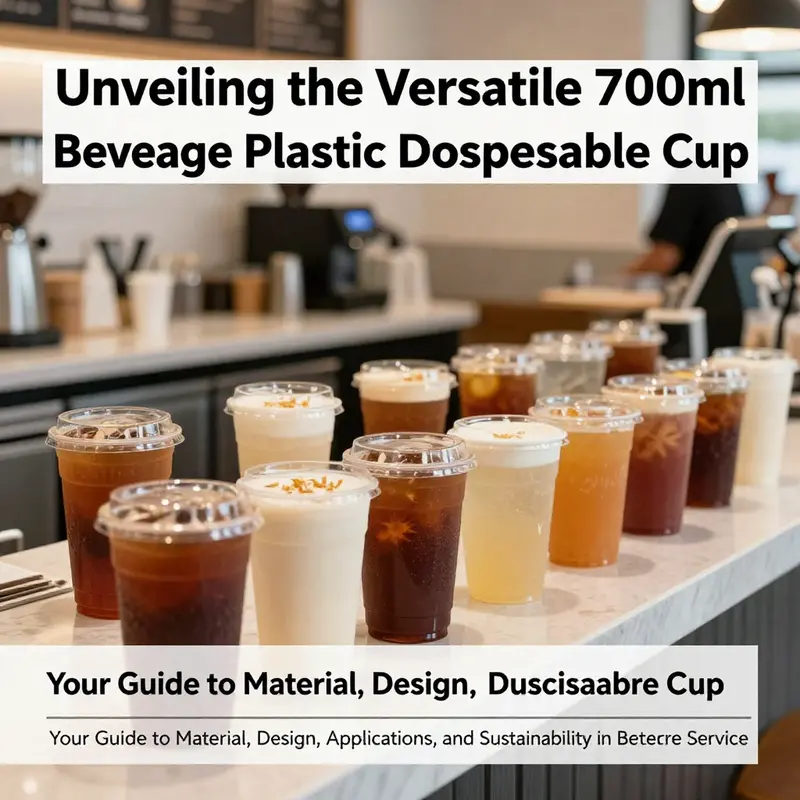
The 700ml disposable plastic beverage cup has become a staple in the beverage service industry, catering to cafes, bubble tea shops, food trucks, and event planners alike. Understanding its composition, design features, diverse applications, and environmental considerations is essential for making informed choices that align with your business needs and customers’ expectations. This article will navigate through these crucial aspects, highlighting the reliability and versatility of the 700ml plastic cup as a key player in the modern beverage service landscape.
null
null
Size, Seal, and Show: How the 700ml Beverage Plastic Disposable Cup Synthesizes Design with Demand
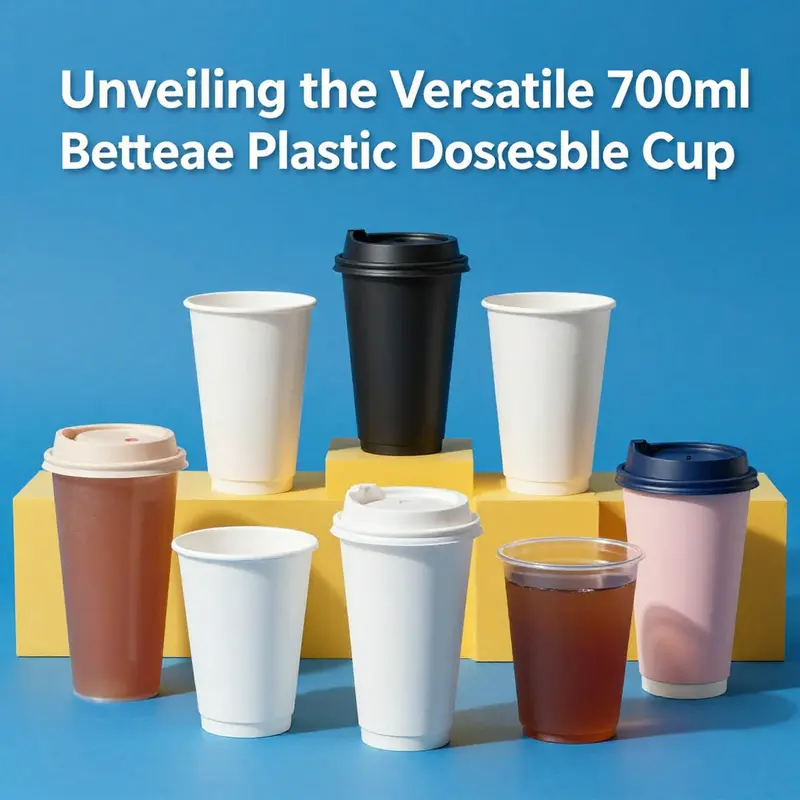
The 700ml beverage plastic disposable cup operates at the intersection of capacity, convenience, and consumer perception. Its design is not merely about holding fluids; it is a carefully calibrated solution that supports a wide spectrum of beverage experiences, from the caffeine-powered morning rush to the parade of fruit-infused drinks at outdoor events. In practical terms, this cup embodies a balance between robust material performance, reliable seal systems, and a visual presentation that helps the drink itself tell a story. A single, well-considered container can transport a product across moments of transport, service, and consumption without sacrificing safety, taste, or aesthetics. The chapter that follows takes readers through the core design features that make this 700ml cup a versatile workhorse in modern foodservice, while anchoring those features in the realities of hot and cold beverages, high-volume environments, and ongoing shifts toward sustainability.
Central to the cup’s appeal is its material backbone. The primary choice is food-grade polypropylene (PP), with some variants leveraging PET for particular use cases. Both materials are chosen for food safety and performance under temperature stress. The U.S. FDA 21CFR177.1520 standard is a cornerstone certification, signaling that the plastic is approved for direct contact with consumables and, by extension, safe for hot and cold beverages alike. This is not a mere checkbox; it underwrites consumer trust at the moment of purchase. The safeguarding sequence also typically includes RoHS and REACH compliance, which monitor and limit hazardous substances. The design teams behind the 700ml cup pay special attention to lead content restrictions and microbial safety testing, ensuring that the cup not only performs under heat but remains inert in the presence of liquids during handling and transport. These certifications translate into a shared language of safety that cafes, food trucks, and event organizers rely on when they choose a single-use solution.
Material selection feeds into temperature resilience, a feature that matters as much to hot drinks as to cold ones. PP’s heat resistance allows direct contact with hot beverages such as coffee and tea without compromising the cup’s structural integrity. The cups retain shape while withstanding the thermal shocks that can occur when a barista transfers a cup from a hot brew to a cold pastry display or when an outdoor vendor handles filled cups on a windy day. The result is a cup that remains rigid and dependable from first pour to last sip. While some environments favor PP for its cost and clarity, others may opt for PET variants to optimize clarity and impact resistance. Whichever material is chosen, the design remains anchored in safety and compliance, with the letter of regulatory standards guiding every step of the manufacturing and distribution process.
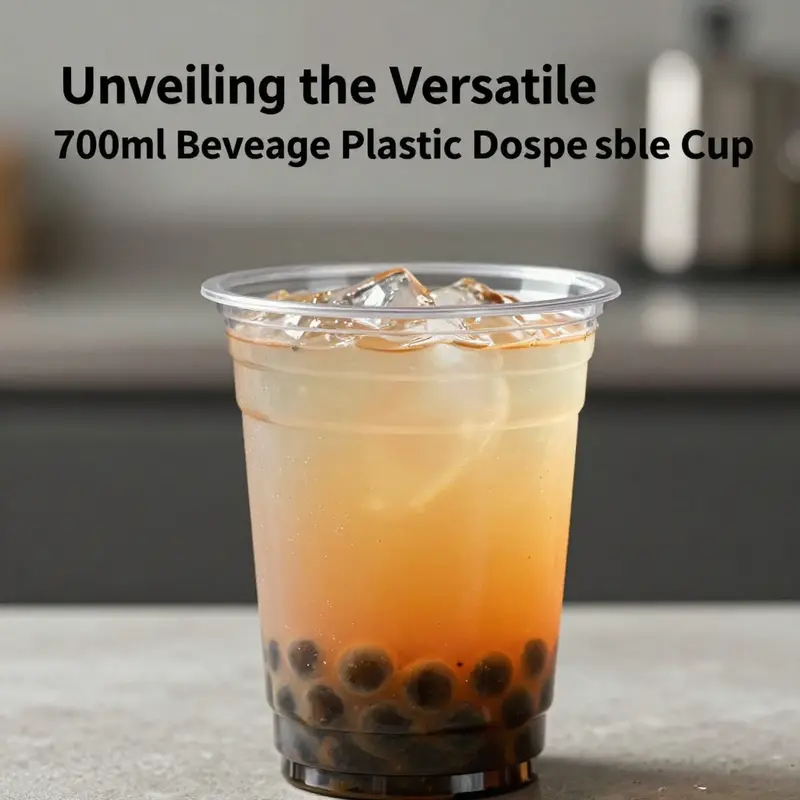
The clear, single-wall construction is one of the most conspicuous design choices behind the 700ml cup’s appeal. Visibility matters: the color, carbonation, or layering of a beverage can enhance the perception of quality, flavor, and freshness. A transparent wall invites curiosity, letting customers gauge the drink’s hue and density at a glance. The aesthetic value is not purely cosmetic; it translates into practical marketing benefits for beverages that rely on color to convey their identity—fruit-infused drinks, layered tea, or vibrant cocktails, for instance. At the same time, single-wall construction reduces material complexity compared to insulated alternatives, enabling clear communication of the liquid’s appearance and, in many cases, a lower environmental footprint when the goal is a straightforward, single-use vessel.
Yet the sector also recognizes the value of insulation. Double-wall insulated variants exist for buyers who want to extend heat retention without resorting to insulators around the cup. These variants introduce a thermally separated space between the inner wall and outer wall, reducing the rate of heat transfer to the external surface. The payoff is a cup that feels comfortable to hold with a hot drink while maintaining drink temperature longer, all without adding a sleeve. The choice between single-wall and double-wall variants reflects a broader decision about service context. A fast-paced cafe may favor the cost advantages and simplicity of single-wall cups, while a specialty shop serving high-temperature beverages during winter events might prioritize the insulation benefits of a double-wall version. Across these scenarios, the caliber of the cup remains a defining factor; the 700ml size is deliberately substantial to support generous pours while still being manageable for one-handed transport and tipping.
The 90mm caliber is more than a numeric specification; it is a functional design parameter that informs both usability and drinkability. This diameter supports larger portions such as robust coffee drinks, smoothies, and milk teas, creating an experience that aligns with consumer expectations for a “big cup” in today’s beverage culture. The capacity of 700ml is itself a statement of intent: it speaks to a demand for more substantial servings in a single, disposable vessel. For operators, the larger size can translate into higher average check values and a more satisfying customer encounter—crucial in high-volume settings such as festivals, stadiums, or catering events where efficiency and impression matter as much as the drink’s flavor profile.
The 700ml cup’s lid system operates as a critical counterpart to the cup body. An injection-molded lid design delivers a secure seal, a feature essential for travel and transport. A tight seal prevents leaks when the cup is jostled during movement or stacked with other cups in a tray. For carbonated beverages, the lid must resist gas pressure without bowing or failing, maintaining the integrity of the seal from the moment the drink is poured to the moment it is enjoyed. This need for reliability under pressure is a primary reason why many manufacturers standardize on a robust snap-fit or twist-on closure. In contexts such as outdoor events or mobile vendors, a leak-proof lid translates directly into reduced spill risk, fewer product losses, and a safer, cleaner customer experience. The lid’s design also supports branding opportunities, whether through color-coded closures or printed elements that echo the cup’s aesthetic language.
Beyond the lid, the cup’s hygiene profile is a non-negotiable. As a single-use vessel, it is designed to avoid the cross-contamination risks that can accompany reused containers. The manufacturing discipline emphasizes hygienic design in paths of potential contact with beverages and the interior surface, ensuring surfaces are easy to clean in production and safe for consumer use without additional handling. The combination of a clean interior surface, straightforward assembly, and compatibility with sanitized production lines makes these cups a reliable choice for cafeterias, food trucks, emergency relief operations, and large-scale events where rapid turnover is essential. The user experience is further strengthened by the container’s resistance to deformation under heat and pressure, which reduces the likelihood of leaks or spills during transport or refrigeration.
Branding and customization play a significant role in how this cup performs in the market. The design supports multiple printing techniques, enabling operators to communicate their identity clearly. Silk-screen printing can convey bold logos and color narratives, while hot stamping adds a touch of premium sheen with metallic finishes on the cup exterior. Frosting and coating techniques provide opportunities to create tactile textures or to reinforce color fidelity in challenging lighting conditions. These options are not merely decorative; they help a beverage brand tell its story in a crowded marketplace, turning a simple vessel into a visible extension of the brand’s philosophy. The customization spectrum thus ranges from subtle branding on premium lines to eye-catching graphics for promotional campaigns, making the cup a versatile canvas for marketing strategies that rely on print fidelity and durability in real-world use.
The cup’s versatility across different use cases is a hallmark of its design. In cafés and coffee shops, the 700ml size supports larger beverages such as specialty lattes and iced coffees. Milk tea and smoothie bars benefit from the generous capacity, accommodating larger pearls or blended fruit components without compromising the drink-to-cup ratio. Events and festivals benefit from a lightweight yet sturdy vessel that can handle a high throughput with predictable performance. Food trucks and catering services rely on the cup’s portability and leak resistance to streamline service in variable spaces. Emergency relief operations rely on the hygienic, single-use nature of the cup to provide a safe hydration option in challenging conditions. The design thus functions as a universal tool within a broader ecosystem of beverage service, enabling operators to scale up offerings while maintaining consistency in safety and presentation.
In contextual terms, the 700ml cup does not exist in isolation from the sustainability conversation. While it delivers convenience, its environmental footprint invites ongoing innovation. Recyclability remains a central consideration; food-grade PP is recyclable within certain municipal programs, albeit with challenges around contamination and sorting. Some manufacturers now explore bio-based or recycled PP to reduce reliance on fossil fuels, balancing performance with ecological goals. The fact that this cup can avoid certain recycling complications associated with mixed-material paper cups—such as liners—points to a potential environmental advantage, even as it remains non-biodegradable in most configurations. The industry’s evolution toward eco-friendly formulations signals a deliberate shift in how single-use containers are perceived and used. Operators who choose these variants often weigh factors like supply chain stability, post-use collection, and local recycling capabilities to determine whether an eco-conscious option aligns with their waste-management realities.
Within this ongoing discussion, several pragmatic considerations shape decision-making. For instance, while the 700ml cup is lauded for its one-time use expediency, it is not designed to rival the durability of reusable systems. In crowded environments, even robust disposables can suffer from scuffs or odor transfer when stored for extended periods. Proper storage and rotation help manage these issues. For beverages that rely on strong color, aroma, or layered presentation—such as fruit-infused drinks or vibrant milk teas—the clear wall provides a valuable visual cue for both customers and staff, guiding choices and reducing the likelihood of product mix-ups.
The design philosophy behind the 700ml cup thus centers on a few core ideas: capacity that respects portion expectations, durability to withstand real-world handling, safety reinforced by rigorous certifications, and a surface that supports both brand storytelling and practical usage. The combination of a secure lid, a reliable seal, and a clear wall makes the cup a practical tool for service delivery. Whether used in a bustling cafe, a mobile food truck, or a temporary relief site, the cup’s design anticipates the flow of activities—from pour to sip to disposal—without compromising the drink’s integrity.
To acknowledge the broader ecosystem in which these cups operate, it is useful to consider the available variants that align with specific operational goals. Some buyers prioritize insulation to extend the warmth of hot beverages during outdoor service, while others optimize for visual impact to highlight color and clarity in fruit-forward drinks. A few operators favor eco-friendly materials that reduce the environmental footprint, even if such choices require careful alignment with local recycling streams. The design language remains consistent across variants: a transparent, sturdy, and reliable vessel that can be printed or finished to reflect a brand’s identity while preserving the safety and convenience that customers expect.
The conversation about design features and functional advantages is not merely academic. For many operators, these considerations translate into tangible business outcomes: fewer spills, faster service, clearer branding, and improved customer satisfaction. When a cup performs reliably, staff can focus more on the beverage’s quality and consistency rather than on handling complications. In turn, customers experience a product that feels thoughtfully designed, from the moment the lid snaps into place to the moment the last sip is savored. The 700ml cup thus serves as a microcosm of the broader beverage packaging evolution—where form supports function, and function supports brand experience in equal measure.
For readers seeking a concrete example of the type of eco-friendly, large-capacity disposable cups discussed here, one can explore industry references that document best practices and product features. Best-selling eco-friendly disposable 700ml cup with take-away lid.
In closing, the 700ml beverage plastic disposable cup embodies a design language that is both practical and aspirational. It speaks to the needs of busy service environments while inviting operators to align with safer, cleaner, and more visually engaging beverage experiences. As the market continues to evolve, the cup’s design will increasingly reflect a holistic view of how capacity, seal integrity, material safety, and branding can come together in a single, disposable container. The next chapter will build on this foundation by examining how emerging materials and lifecycle considerations reshape the long-term viability of large-format disposable cups, while still honoring the core principles of safety, usability, and brand storytelling that make the 700ml cup a mainstay of contemporary beverage service.
External resource: https://www.alibaba.com/product-detail/700ml-Disposable-Plastic-Tasting-Cup-Creative_1600384798187.html?spm=a2700.1.x.search0001&albigoFirstSearch=true&s=p&searchText=700ml+plastic+cup
null
null
Navigating Environmental Trade-Offs: Sustainability Realities for 700ml Disposable Plastic Beverage Cups
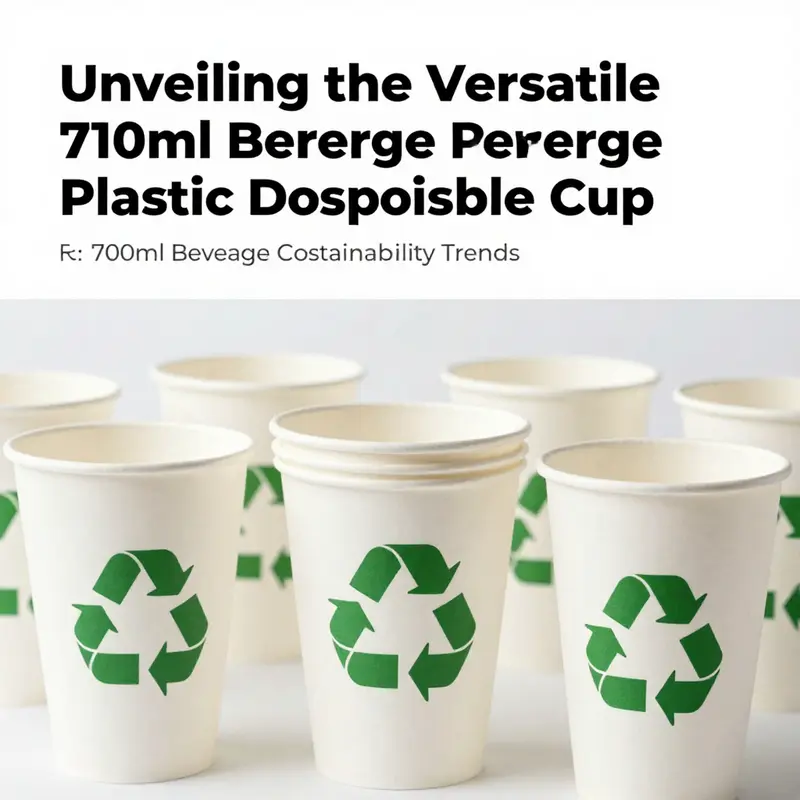
The environmental story of a 700ml disposable plastic beverage cup is not a simple tale of good or bad. It is a layered narrative where material science, waste systems, consumer behavior, and policy intersect. Understanding that complexity matters for businesses choosing cups, for events serving large volumes of drinks, and for consumers deciding whether to accept a single-use vessel. This chapter explores the practical environmental trade-offs, exposes common pitfalls that undermine sustainability claims, and outlines the realistic pathways that reduce ecological harm while meeting demand for convenience.
At the material level, food-grade polypropylene (PP) brings clear performance advantages. It resists heat, withstands impacts, and offers clarity that showcases colorful drinks—attributes that explain why PP is favored for 700ml cups. Those same attributes, however, create the core environmental tension: PP is derived from non-renewable petrochemicals and is not biodegradable. End-of-life outcomes therefore rely heavily on collection, sorting, and recycling infrastructure. When those systems work, the carbon and waste footprint falls. When they fail, PP contributes to long-lived plastic pollution.
A recurring and damaging practice in the market is the blending of non-degradable polymers into materials marketed as biodegradable. This opportunistic mixing lowers costs but negates the intended benefit. For example, starch-based formulations with added PP can appear compostable on initial inspection yet do not break down in real composting conditions. Tests have shown such cups can remain structurally intact after weeks in compost, creating false confidence and contaminating compost streams. The result is twofold: genuinely compostable products lose market share to cheaper look-alikes, and municipal composting facilities receive materials that disrupt processing and reduce the quality of finished compost.
Chemical safety is another critical dimension. Regulatory compliance for food contact is essential, but labels alone do not guarantee safety. There have been documented cases where cups labeled as safer or biodegradable contained elevated levels of chemical contaminants. This underlines the need for rigorous testing across both chemical migration and microbiological safety. Certification frameworks that cover both composition and chemical migration are more meaningful than marketing claims. For businesses and event planners selecting cups, insisting on third-party test certificates for both food-contact safety and biodegradability is a prudent step.
Recycling dynamics for 700ml PP cups are uneven globally. In some municipalities, PP is routinely collected and remanufactured into pellets for new products. In others, the cups end up in landfill or incineration because of low collection rates or contamination with food residue. Mixed-material products—particularly paper cups with plastic linings—further complicate recovery. Pure PP cups have an advantage here because they avoid composite-material separation challenges. Yet even pure PP faces contamination issues: a greasy or sticky residue can lead a recycling facility to reject loads. This demonstrates that better design must be paired with improved consumer education and waste-service capability.
From a lifecycle perspective, the energy and emissions associated with manufacturing a PP cup are significant but not uniformly worse than alternatives. For instance, paper cups with plastic linings require both paper production and polymer coating processes. Their mixed-material nature complicates recycling and often leads to lower recycling rates. Reusable alternatives typically reduce per-use emissions but require multiple uses to offset the higher initial material footprint associated with produce durable vessels. Thus, the environmental calculus depends on realistic use patterns: if a reusable cup is used dozens or hundreds of times, it performs far better. If it becomes another single-use item, the benefits vanish.
Market responses to these realities are visible in three broad streams: design optimization, material innovation, and systems-based approaches. Design optimization includes making PP cups lighter without compromising strength, improving lid seals to reduce spills and wasted beverage, and standardizing sizes and shapes to simplify recycling streams. These incremental changes reduce resource use per cup and improve the chance that a discarded cup is suitable for recycling.
Material innovation spans the development of bio-based PP alternatives, the incorporation of recycled PP content, and exploration of truly compostable polymers. Incorporating recycled PP can reduce reliance on virgin fossil feedstocks and lower greenhouse gas emissions associated with production. The challenge is feedstock availability: high-quality recycled PP suitable for food contact is scarce, and regulatory approval for post-consumer recycled content in food-contact items is stringent. Bio-based alternatives—polymers synthesized from renewable biomass—offer a lower carbon footprint on paper, but they must prove they do not compete with food resources, and that their end-of-life pathways are clearly defined and certified.
Compostable polymers offer promise for catering and event contexts where collection and industrial composting exist. However, the market has seen extensive greenwashing: some products claim compostability but are blended with non-compostable plastic, or they require industrial composting conditions that are unavailable in most regions. That mismatch between claim and infrastructure turns a potential solution into a source of waste contamination. Rigorous certification—supported by third-party testing under realistic composting scenarios—separates credible options from marketing spin.
Systems-based approaches may be the most impactful lever. Reusable cup programs and deposit-return schemes change consumer behavior and create circular flows for materials. Refillable models at cafes and events reduce single-use volumes and, importantly, keep material in use through many cycles. Deposit-return systems for take-away cups incentivize return and improve recovery rates. These models require coordination among service providers, logistics for returns, and consumer education, but they address the root cause: single-use volume.
Policy measures reinforce market shifts. Clear labeling standards, stricter rules against misleading biodegradability claims, and mandates for recyclability or minimum recycled content create level playing fields. Extended producer responsibility (EPR) schemes that require manufacturers to fund collection and recycling make economic sense: they internalize end-of-life costs and reward designs that are easier to recover. For a 700ml cup, EPR can push makers toward using recycled content and simpler constructions that municipal systems can handle.
Practical choices for businesses and consumers reflect these realities. Where recycling infrastructure is robust and contamination can be minimized, pure PP cups with high recycled content offer a pragmatic compromise: they provide performance while enabling closed-loop recovery. Where industrial composting is available and reliable, certified compostable cups that meet rigorous standards can be appropriate for food-service settings with proper collection. Reusable systems remain the gold standard when feasible; stainless steel, glass, and ceramic vessels avoid plastic altogether and remove microplastic risk. For events where disposables remain necessary, choosing paper-based options designed for recyclability or certified compostable materials, and pairing them with collection stations, reduces environmental leakage.
Transparency plays a central role. Buyers should demand verifiable documentation: independent test reports for food-contact safety, clear certification for compostability where claimed, and traceable recycled-content claims. Vendors who supply full-chain documentation help buyers avoid inadvertently contributing to contamination or greenwashing. Equally important is effective signage and staff training at points of service to steer used cups to appropriate streams—recycling, composting, or return systems—because the best-designed cup is only as sustainable as the system that handles it after use.
The future of the 700ml disposable cup hinges on aligning materials, design, and systems. Pure material innovation without collection systems will leave waste unmanaged. Improved collection without better products will capture less value. Policies that reward circularity, combined with corporate commitments to recycled content and honest labeling, can shift the market. Meanwhile, incremental design improvements—lighter walls, secure lids, and standardization—can reduce resource use and improve sorting. For stakeholders navigating this space, the guiding principle is simple: match the cup to the system. Select materials that local infrastructure can manage. Favor reuse where practical. Require independent verification for biodegradability and chemical safety.
A clear and immediate action for purchasers is to seek suppliers who publish third-party test results and who offer recycled-content options. For operators hosting events or high-volume service points, investing in return or deposit systems, and providing visible, well-designed collection stations, will dramatically increase recovery rates. For policymakers, focusing on anti-greenwashing enforcement, standardized labeling, and incentives for recycling infrastructure will produce outsized environmental benefits.
The research and testing that exposed mislabeled biodegradable cups is a cautionary tale: without transparency, good intentions can be co-opted. The referenced investigation underscores the need for which claims are acceptable, which standards are meaningful, and which products deserve trust. For further details on that investigation and its findings, consult the Shanghai Consumer Council report: https://www.shcc.org.cn/xxgk/xxgkxw/202602/t2026020859431.html
For those exploring alternative disposable options that pair better with existing composting or recycling systems, consider review of paper-based containers designed for recyclability and certified compostable tableware. A practical example of a similarly sized alternative is a recyclable kraft paper bowl with a PP lid, which balances material separation with user convenience: https://cupbowlpack.com/product/best-selling-disposable-rectangle-kraft-paper-salad-bowl-with-pp-lid-750ml-microwavable-sugar-use-embossing/
This chapter aims to reframe the conversation from single-product decisions to system-aware choices. The environmental impact of a 700ml disposable plastic cup depends less on a single attribute and more on how the cup fits into a wider circular economy. Matching materials to local infrastructure, demanding transparency, and pursuing reuse where possible are practical, measurable steps that reduce harm and support a more sustainable future for beverage service.
Final thoughts
As the beverage service industry evolves, the 700ml plastic disposable cup remains an essential product for a variety of applications. Its robust material, user-friendly design, and versatility across different settings make it an ideal choice for bubble tea shops, food trucks, and event planners. However, embracing sustainability and actively seeking eco-friendly options will enhance your brand’s responsibility and appeal. By understanding the benefits and considerations surrounding these cups, businesses can make informed decisions that positively impact their operations and the environment.