
In Malaysia’s thriving food and beverage industry, choosing the right packaging is crucial for businesses like bubble tea shops, restaurants, and catering services. With a significant shift towards convenience and sustainability, plastic food containers have become a key component in food service. This article delves into the vibrant landscape of wholesale plastic food containers in Malaysia, exploring reliable suppliers, market demand trends, pricing insights, and innovations in customization. Each chapter reveals essential information that can help your business optimize packaging solutions to better serve your customers and stand out in a competitive market.
Choosing Reliable Wholesale Plastic Food Container Suppliers for Malaysia: Materials, Compliance, and Sourcing Strategy
Sourcing plastic food containers wholesale for the Malaysian market requires more than price comparisons. It demands a clear view of materials, regulatory compliance, production capabilities, and logistical realities. This chapter brings those elements together into a practical, strategic narrative that helps buyers distinguish dependable suppliers from risky options, assess product suitability for diverse food applications, and structure sourcing decisions to protect brand reputation and operational continuity.
At the center of any procurement decision is material safety. Not all plastics are equal where food contact is concerned. Buyers must prioritize containers made from food-grade polymers that resist leaching, tolerate intended temperature ranges, and match end-use requirements such as reheating or freezing. Commonly used polymers include polypropylene (PP) and polystyrene (PS), each offering distinct benefits. PP is widely used for microwave-safe containers due to its higher heat tolerance and chemical stability. PS delivers clarity and stiffness for premium presentation but may be less tolerant of high heat. In parallel, PVC sheet appears across broader industrial uses in Malaysia for its cost-effectiveness and versatility, but PVC’s role in direct food contact is limited by regulatory scrutiny in many markets. Understanding these material properties is critical because the choice influences manufacturing methods, labeling, recycling pathways, and cost.
Equally important are verifiable safety standards and compliance documentation. International regulations such as the EU food contact framework and the U.S. Food and Drug Administration set stringent migration and composition limits. Suppliers should provide certifications or test reports demonstrating conformity with applicable standards. For businesses importing into Malaysia, ask for test certificates that reference internationally recognized methods and, when possible, third-party lab reports. Locally relevant standards and the oversight of the national standards body also matter. Procurement teams must confirm whether the supplier’s materials and finished goods comply with Malaysian requirements and whether additional testing will be required upon arrival. Without this documentation, even low-cost shipments can be halted at customs or lead to product recalls and customer complaints.
A practical supplier evaluation starts with a consistent checklist. First, verify food-grade certification for materials and final products. Second, examine the supplier’s production capacity and lead times. Wholesale purchasers should confirm that minimum order quantities align with commercial needs and that the factory can scale to meet peak demand. Third, review quality control processes—whether the supplier conducts in-line inspections, final inspections, or offers third-party quality audits. Fourth, request samples that reflect the exact material, thickness, and finishing to be used. Samples reveal fit-for-purpose details that certificates cannot, such as lid sealing integrity, stackability, and weight tolerances.
Customization and branding are often essential for food businesses. Where suppliers offer customization, buyers should assess their tooling capabilities, minimum order thresholds for custom runs, and the clarity of communication around artwork requirements and proof approvals. Customization increases lead time and unit cost, so it must be balanced against the value of brand recognition and customer experience. For clients seeking tailored solutions—special shapes, compartments for meal prep, or embossed logos—confirm the supplier’s track record for repeat orders and ask for references. A supplier that repeatedly fills bespoke orders reliably is likely to handle the operational complexities that follow.
Price remains a decisive factor, but it cannot be considered in isolation. Wholesale pricing typically varies with order volume, material choice, and complexity of design. For large-volume runs, unit costs can fall significantly, yet buyers should calculate landed cost rather than focusing only on factory price. Landed cost includes freight, insurance, duties, customs clearance, and any local testing or repackaging. Ocean freight is cost-effective for large quantities, but air freight can be justified for urgent replenishments or high-value goods. Collaborate with freight forwarders early in the sourcing process to estimate realistic lead times and costs for your chosen port of entry in Malaysia.
Sustainability and recyclability are reshaping buyer expectations across Southeast Asia. Demand in Malaysia is rising for recyclable, microwave-safe, and convenient packaging. This trend affects material selection and supplier choice. Opting for recyclable polymers or designs that simplify separation improves the environmental profile of the product and aligns with consumer preferences. Suppliers who can document the recyclability of their materials and who offer guidance on local recycling streams add value. In cases where compostable or biodegradable alternatives are considered, verify composting standards and local waste-management compatibility; not all municipal systems accept these materials, and improper disposal can negate environmental claims.
Small-batch flexibility is another consideration. Some suppliers are willing to accept relatively modest minimum orders that suit small and medium enterprises. This flexibility enables buyers to test new SKUs without committing to massive inventory. However, smaller production runs often carry higher per-unit costs and potentially slower turnaround times. When small-batch suppliers are used, negotiate firm timelines and penalties or remedies for missed deliveries. Ensure quality checks are in place to prevent inconsistent batches from reaching customers.
Communication and transparency are frequently undervalued but decisive factors in long-term supplier relationships. Clear lead-time estimates, proactive updates on production progress, and timely sample shipment build trust. Confirm the supplier’s responsiveness during initial exchanges. Poor communication in early stages is often predictive of complications later. For overseas suppliers, language clarity and willingness to sign clear contractual terms—including specifications, inspection protocols, and remedies for non-conformance—are signs of professionalism.
Import compliance and customs clearance in Malaysia require attention to documentation and labeling. Ensure commercial invoices, packing lists, certificates of origin, and any health or compliance certificates are prepared in advance. Duties and taxes vary by material classification, so classify goods correctly and consult with a customs broker if needed. Proper HS codes and accurate declarations prevent delays and added costs. For refrigerated or temperature-sensitive products, ensure cold-chain arrangements are contractually described with the freight provider.
Quality control can take multiple shapes: pre-shipment inspections by third-party agencies, random sampling on arrival, or established quality agreements. For high-risk items or new suppliers, a pre-shipment inspection with clear acceptance criteria is prudent. Agree on sample retention policies and non-conformance processes. When a supplier offers continuous improvement initiatives or corrective action plans, it indicates an orientation toward partnership rather than one-off selling.
Selecting a supplier network should consider diversification to mitigate risk. Relying on a single source can create vulnerability to production slowdowns or raw material shortages. A primary supplier with backup partners ensures continuity. Maintain regular performance reviews and keep safety stock where feasible to bridge potential supply gaps. When selecting backup suppliers, prioritize those with similar compliance records to avoid introducing non-conforming goods.
Finally, factor in product application and end-user expectations. Containers for delivery and takeaway need secure lids and shock-resistant designs. Meal-prep customers expect microwave-safe features and portion-friendly compartmentalization. Restaurants may value stackability and efficient storage. Catering and event markets demand durability and presentation quality. Match the chosen supplier’s capabilities to these end-use requirements and test prototypes in real operational conditions to uncover design flaws or user experience issues.
For buyers prioritizing local regulatory alignment and material insights within Malaysia, industry guides and standards bodies provide essential reference points. They help interpret local conformity requirements and testing expectations, and inform decisions on material suitability and labeling. Use these resources to validate supplier claims, cross-check certificates, and frame technical specifications for procurement contracts.
As part of product development or procurement workflows, integrate testing milestones: initial sample review, pilot batch testing with end-users, and a final pre-shipment check. This phased approach reduces the chance of large-scale returns or product recalls. Keep detailed records of specifications, batch numbers, and test results to trace any quality issues back to a specific production run.
In summary, sourcing wholesale plastic food containers for Malaysia is a nuanced process that blends material science, regulatory diligence, supplier assessment, and logistical planning. Prioritize food-grade certifications, confirm production and customization capabilities, and measure total landed cost rather than only factory price. Build transparent relationships with suppliers who demonstrate quality systems and communication discipline. Maintain testing checkpoints and diversify sourcing to mitigate risk. By aligning supplier selection with material suitability and market expectations, businesses can secure packaging that protects food quality, satisfies customers, and supports operational resilience.
For further technical reference on plastic sheet composition and applications in Malaysia, consult the industry overview available at: https://www.plastic-sheets-malaysia.com/overview-of-plastic-sheet-price-malaysia/
For a practical example of a food-grade container type compatible with many take-away and meal-prep uses, consider reviewing product details for food-grade square salad bowls with PP lids to understand common specifications and consumer expectations: senang-130 food-grade square salad bowls with PP lids.
Serving Growth: Market Demand Trends and the Future of Plastic Food Containers in Malaysia
The evolving landscape of Malaysia’s food economy is inseparable from the packaging that carries, protects, and preserves its meals. In urban centers and expanding peri-urban districts alike, consumers increasingly rely on convenient, safe, and dependable packaging for ready-to-eat meals, dairy products, fresh produce, and home meal-prep routines. The market for plastic food containers in Malaysia reflects this shift with tangible scale and directional momentum. In 2024, the market was valued at USD 3.9 million and is projected to reach USD 5.6 million by 2032, signaling a compound annual growth rate of 4.3% across the period. These figures are more than a numerical snapshot; they map a trajectory shaped by consumer behavior, industrial expansion, and a broader push toward more efficient, hygienic food handling. Even as sustainability questions rise to the top of public discourse, the demand for food-grade, recyclable, and microwave-safe container solutions remains robust, particularly in sectors that depend on high turnover and fast service. The resilience of this segment is anchored not only in everyday convenience but also in the reliability it provides to supply chains that must move meals from producers to consumers within narrow time windows. This interplay between demand, compliance, and practicality is what makes the Malaysian market for plastic food containers a focal point for wholesalers and manufacturers alike.
A closer look at the drivers reveals a triad of forces propelling growth. First, the food and beverage sector’s demand is expanding beyond traditional take-away services. Ready-to-eat meals, dairy products packaged for longer shelf life, and fresh produce that requires protective barriers all contribute to a sustained need for containers that shield contents from moisture, air, and handling damage. Here, the desire for product integrity translates directly into packaging choices, with a notable shift toward rigid plastics and clamshell designs that offer superior protection and shelf-life extension compared with looser forms. These advancements are not merely about keeping content intact; they enable merchants to maintain quality across a broader distribution network, which in turn supports growth in delivery platforms, restaurant operations, and grocery-store logistics.
Second, convenience and durability continue to differentiate packaging solutions. Plastic containers that can withstand refrigerating, freezing, microwaving, and repeated handling are valued for their versatility. In Malaysia’s bustling retail and food-service landscape, containers are not just passive vessels; they are workpieces that enable efficient workflows in kitchens, storefronts, and delivery hubs. Durable containers reduce breakage, minimize waste from spillage, and simplify inventory planning. This practicality resonates with vendors who need reliable, scalable packaging options that can be customized for different meal formats, sizes, and branding requirements while still delivering cost efficiency at high volumes. As a result, the market is gradually favoring formats that merge performance with recyclability and reuse where feasible, aligning with both short-term operational needs and longer-term sustainability goals.
Third, the packaging market sits within a broader industrial ecosystem that continues to grow. The Malaysian plastics industry is expanding rapidly, with downstream manufacturing capabilities spanning electronics, automotive, and packaging sectors. The scale of this ecosystem provides a fertile ground for supply and innovation, even as firms face pressure to address environmental concerns. The sector’s health is a key indicator for plastic container suppliers, because it signals the availability of skilled manufacturing capacity, material supply chains, and investment in process improvements that can lower costs and improve quality. While demand for traditional plastics remains cost-driven, there is a parallel push toward cleaner-label and more sustainable solutions. Manufacturers and distributors increasingly explore recyclable content, recyclable packaging systems, and even bio-based alternatives to meet evolving brand and regulatory expectations.
From a market-sizing perspective, Malaysia’s demand aligns with global shifts toward packaged convenience. The 2024 value of USD 3.9 million, rising to an anticipated USD 5.6 million by 2032, conveys not only volume growth but evolving packaging needs across sectors. Within this growth, the broader plastics industry’s trajectory—projected to reach USD 5.07 billion by 2031, rising at a CAGR of about 3.86% from 2026 onward—highlights how container packaging sits at the intersection of consumer demand, manufacturing capability, and policy direction. This macro view matters because container solutions do not exist in isolation; they are one component of a larger system that includes recycling infrastructure, waste management, and the push for recycled content in consumer packaging. Environmental considerations are no longer peripheral; they shape supply decisions, material choices, and design strategies for both domestic manufacturers and importers serving the Malaysian market.
The environmental narrative surrounding plastic containers in Malaysia has become more nuanced. Regulatory frameworks are guiding a shift toward sustainable options, including recyclable, bio-based, and compostable materials where appropriate. The transition is not instantaneous, and conventional plastics still dominate on a cost-performance basis, particularly in mass-market segments. Yet the trajectory is clear: brands and retailers increasingly demand materials and designs that can be tracked for recycled content, that are compatible with existing recycling streams, and that support cleaner end-of-life outcomes. For the packaging ecosystem, this translates into a portfolio that offers not only durability and cost efficiency but also compatibility with sustainability narratives and regulatory expectations. In practice, this means more emphasis on design for recyclability, material transparency, and the use of packaging formats that can be efficiently processed by local or regional recycling systems.
Technology and manufacturing innovations are playing a crucial role in this transition. Advancements in forming processes, tight quality controls, and the development of standards for food-grade materials improve the reliability of containers intended for direct food contact. Improved testing, traceability, and quality assurance reassure distributors and buyers that containers meet safety requirements, which is essential for foods with high moisture or fat content, dairy, and ready-to-eat meals. At the same time, progress in recycling infrastructure is vital to addressing labor shortages and ensuring that post-consumer plastics can re-enter the value chain. The combined effect is a packaging landscape in which manufacturers and suppliers can offer higher-quality, more consistent products while expanding options for sustainable content, recycling-compatible designs, and branding opportunities that resonate with the environmentally conscious consumer.
In this context, sourcing and procurement strategies become central to business planning. Wholesale markets for plastic food containers in Malaysia draw on a global supply network, with suppliers in nearby regions offering a range of materials, sizes, and customization capabilities. The opportunity for brands and retailers lies in securing food-grade materials, ensuring compliance with safety standards, and negotiating terms that balance price with reliability and lead times. Early 2026 price references place high-quality disposable meal containers in a range roughly between USD 0.05 and USD 0.09 per piece when orders reach around 10,000 pieces or more. Price variation within this band depends on material choice, such as polypropylene versus polystyrene, the complexity of the design, and the degree of customization, including branding, color, and shape. While such data provide a helpful benchmark, they underscore the importance of direct quotations, samples, and logistics arrangements to tailor packaging solutions to specific needs and timelines.
The wholesale landscape also emphasizes the importance of a flexible supplier approach. On established trade platforms, there are numerous Gold Suppliers and Trade Assurance-certified firms that specialize in recyclable disposable packaging, microwave-safe containers, and divided lunch boxes. These suppliers typically support small-to-medium batch orders and can accommodate various packaging designs and branding requirements. For buyers, this translates into a robust option set but also a reminder to evaluate supplier credibility, consistency in food-grade standards, and post-purchase service. Because Malaysia’s import ecosystem must contend with ocean or air freight choices, as well as customs considerations, buyers are advised to seek samples, verify certifications, and confirm logistics terms early in the process to avoid delays and quality issues.
From a practical standpoint, the decision-making process around container choices blends technical, regulatory, and commercial dimensions. Food-service businesses, retailers, and meal-prep operations weigh factors such as barrier properties, moisture resistance, heat tolerance, and compatibility with standard kitchen machinery. For dairy and ready-to-eat products, the packaging must remain intact through cold-chain handling and potential reheating. For fresh produce, clamshells and rigid containers provide physical protection that reduces bruising and spoilage during transport and display. These considerations dovetail with sustainability ambitions, as design choices that optimize recyclability and recycled content help brands meet public expectations and policy goals while maintaining cost effectiveness. The result is a market that rewards container solutions offering a measured balance of performance, safety, and environmental responsibility.
The internal landscape of sourcing in Malaysia often intersects with regional supply dynamics. International suppliers that provide food-grade materials and customization services add resilience to the local market, offering options for branding, sizes, colors, and shapes that help retailers distinguish themselves in a competitive space. In practice, this means a buyer can procure containers that align with the branding and retail format of a store, delivery service, or restaurant concept, while still achieving favorable unit economics at scale. A practical takeaway for buyers is to request samples, review food safety certifications, and discuss branding capabilities early in negotiations. Such steps, coupled with an understanding of the logistics framework—whether shipments move by sea or by air—can smooth import flows, minimize transit times, and reduce total landed costs. The market continues to reward suppliers who can demonstrate consistent quality, reliable lead times, and transparent communication across the procurement cycle.
An important consideration for market participants is how to translate these dynamics into a successful buying strategy. For retailers and service providers, it is essential to align packaging choices with the growth segments described in market research: ready-to-eat meals, fresh produce packaging, and meal-prep containers. The emerging trend toward recyclable and eco-friendly materials should be interpreted not as a rejection of plastic but as a push toward smarter, more responsible packaging that preserves content while enabling end-of-life solutions. The balance between cost, performance, and sustainability will shape purchasing decisions and influence supplier relationships for years to come. In guiding decisions, buyers should consider not only the price per piece but the total cost of ownership, including shelf-life benefits, return on investment in branding and packaging aesthetics, and the ease with which the packaging can be integrated into recycling streams or reprocessing cycles.
For readers seeking an illustrative example of how this landscape translates into real-world options, consider the manifold possibilities for customizable, food-grade packaging offered by suppliers capable of supporting both branding and functional requirements. These options underscore the importance of evaluating packaging not only by its immediate utility but by how it positions a brand within a sustainable, compliant food system. In practical terms, this means prioritizing containers that perform reliably across cold-chain conditions, that promote consumer trust through clear labeling, and that are compatible with regional recycling schemes. The packaging decision, therefore, becomes a strategic element of market positioning, channel strategy, and environmental stewardship—an integrated component of a business plan that seeks to grow with the Malaysian market while contributing to more sustainable packaging practices.
To connect this discussion with concrete sourcing options without losing sight of regulatory and logistical realities, buyers should explore supplier catalogs and samples while maintaining a focus on compliance and reliability. For instance, one category of disposable packaging features carton-like fiberboard or kraft-material options that offer alternative aesthetics and improved end-of-life options, while other formats emphasize robust plastic performance for food-service applications. Each format has its own set of advantages and trade-offs, and decision-makers should map these against their product mix, distribution channels, and regulatory requirements. In this context, an internal reference point for readers exploring specific design and branding capabilities can be found in one of the available supplier catalogs that demonstrates how branding and packaging design can be integrated with functional performance. See more here: senang05-disposable-26oz kraft paper soup cup with lid.
In closing, the Malaysian market for plastic food containers sits at an important crossroads, where steady demand, improved manufacturing capability, and policy-driven sustainability ambitions intersect. The data points—USD 3.9 million in 2024 rising to USD 5.6 million by 2032, with a 4.3% CAGR, alongside a broader plastics industry trajectory toward USD 5.07 billion by 2031 at a 3.86% CAGR—describe a landscape of opportunity tempered by responsibility. For buyers and suppliers alike, success will hinge on delivering packaging that performs under pressure, respects safety and regulatory standards, and contributes to broader circular economy objectives. The path forward will reward firms that invest in material science, process efficiency, and transparent communication with customers about sustainability, compatibility with recycling infrastructure, and end-of-life outcomes. This is not merely about stacking containers on shelves; it is about building a packaging ecosystem that sustains growth while aligning with evolving consumer expectations and government roadmaps. External market insights can deepen understanding of these trends and provide a broader context for strategic planning: https://www.freedonia.com/malaysia-plastic-food-containers-market-size-forecast-report-2031/.
Pricing in the Malaysian Wholesale Plastic Food Container Market: Cost Realities, Sourcing Paths, and Sustainability Drives
Across Malaysia’s vibrant food service landscape, the wholesale market for plastic food containers sits at the intersection of practicality, price discipline, and evolving sustainability expectations. Food service operators—from large hotel caterers to bustling take-out outlets and expanding meal-prep services—need packaging that is reliable, food-safe, and affordable at scale. The pricing and cost dynamics behind these containers are shaped by a handful of core factors: material choice, container size and design, the scale of the order, and the broader logistics chain that brings the product to shore and into kitchens. When you add the growing emphasis on sustainability—think recyclability, compostability, and lower carbon footprints—the cost equation becomes even more nuanced. Sourcing decisions in Malaysia are thus not merely about unit price; they revolve around total landed cost, supplier reliability, and alignment with regulatory trends that favor greener packaging.
Material choice is the most visible lever in the cost equation. Polypropylene (PP) remains the workhorse material for many wholesale buyers due to its combination of strength, heat resistance, and microwave safety. For bulk operators who run high-volume to-go services, PP containers deliver predictable performance while keeping per-unit costs in a manageable range. The practical reality is that if you compare PP with alternatives such as polystyrene (PS) or more premium eco-friendly formulations, the price gap can be substantial. PP typically offers the most cost-effective baseline, making it the default option for many operators who require reliable leakage resistance, stackability for efficient storage, and compatibility with standard cleaning or sanitation workflows.
That said, the market is increasingly attentive to alternatives that reduce environmental impact. Biodegradable or recyclable options often carry a premium over conventional PP, commonly in the 15 to 30 percent range. This premium reflects additives, processing methods, and the certifications required to meet food-safety and environmental standards. For a business weighing sustainability against cost, the decision often hinges on a combination of customer expectations, the nature of the service, and the packaging’s end-of-life handling. In some segments—such as premium delivery concepts or brands promoting a circular economy—the premium is not merely tolerated but strategically justified as part of a broader value proposition.
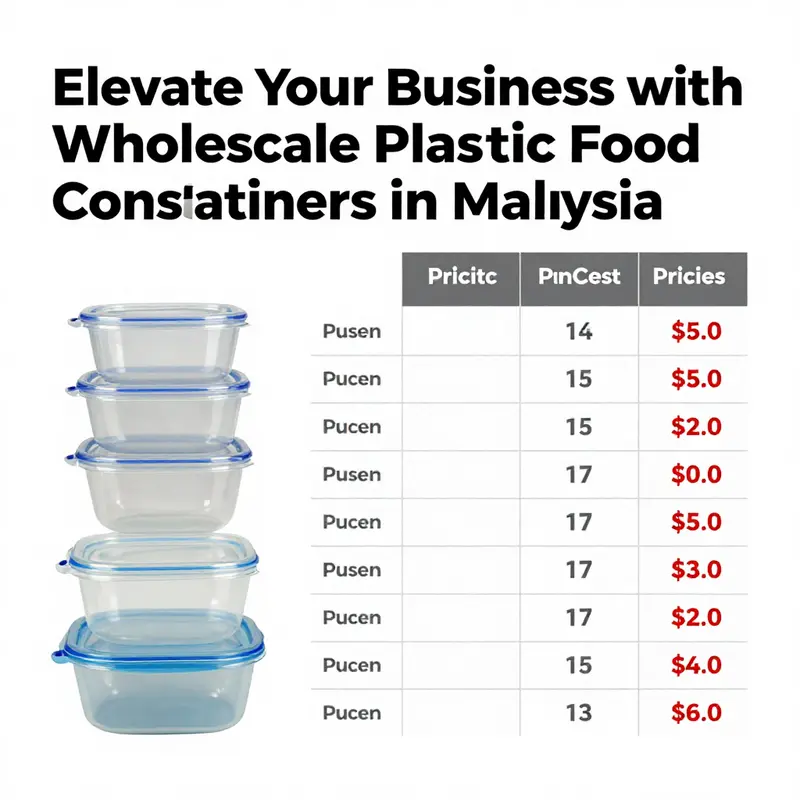
Size and design complexity introduce another set of cost dynamics. The unit cost for standard disposable PP containers typically ranges from roughly RM0.15 to RM0.50 when ordered in quantities of 1,000 units or more. As with many manufacturing economies, larger volumes drive lower unit costs through better utilization of tooling and production lines. When a design requires custom shapes, branding, or specialized features such as unique lids, inserts, or embossing, the price can rise by roughly 20 to 40 percent. Those increases reflect the added tooling, molds, and production steps required to deliver a customized product that still adheres to food-safety standards. For businesses that plan a long-term supply relationship, balancing the benefits of standardization against the appeal of a bespoke look is essential. A modest, well-chosen customization strategy can yield meaningful brand lift without destabilizing the unit economics.
Order volume, lead times, and the supplier’s capability set a practical ceiling on what you pay and how soon you receive product. In practice, many wholesale hubs in Malaysia offer scalable pricing tied to order size, but the market is not monolithic. Some suppliers are comfortable with mid-level runs—starting around the several thousands of pieces—while others emphasize very large volumes and longer-term contracts. For smaller outfits or those testing a new format, it is common to encounter minimum order quantities around the 10,000-piece mark or higher, particularly for customized packaging. This reality means buyers should plan procurement calendars with forecasted volumes and secure flexible terms where possible. At the same time, a few suppliers do offer more agile arrangements for starter runs or samples, which can be crucial for evaluating performance in real-world kitchen environments before committing to larger purchases.
Forecasting and cost control extend beyond the unit price and manifest in landed cost calculations. Total landed cost includes freight, insurance, duties or import taxes, and handling charges, in addition to the base unit price. Ocean freight, while slower, often yields the most favorable per-unit economics for very large orders, making it a natural choice for bulk purchases that populate dense catering operations or meal-prep facilities. Air freight, by contrast, accelerates delivery times and can be worth the premium for businesses with tight menu cycles or sudden demand spikes, though its unit costs can be substantially higher. In practice, a well-planned mix of shipping methods—balancing cost with delivery reliability—helps stabilize supply chains and guard against stockouts that can disrupt service quality.
Malaysia’s wholesale landscape also reflects national and regional dynamics that influence price trajectories. Kuala Lumpur’s principal wholesale clusters benefit from dense supplier ecosystems, which foster competitive pricing and bulk delivery efficiencies. Logistics infrastructure, including port facilities and inland distribution networks, supports timely replenishment for large-volume operators. The government’s ongoing emphasis on sustainable packaging further nudges price trajectories, with greater emphasis on recyclable materials and standardized labeling. Over time, these policy currents can compress the price premium for greener options as supply chains mature and economies of scale take hold. For buyers, this means that the premium for eco-friendly packaging may become more predictable and, in some cases, narrower as demand grows and manufacturing capacity expands.
To ground these considerations in real-world data, you can consult market intelligence resources that track pricing benchmarks and supply dynamics. One valuable source provides up-to-date market analysis on Malaysia’s plastic food container sector, including pricing benchmarks and growth projections. While numbers fluctuate with currency movements and supply chain conditions, the overarching trend is clear: cost discipline remains achievable at scale, but buyers should actively manage the trade-offs between price, performance, and sustainability. This landscape favors operators who adopt disciplined sourcing practices, maintain flexibility in packaging formats, and cultivate relationships with suppliers that can blend standard offerings with selective customization when needed.
From a procurement perspective, thinking in terms of total value rather than unit price alone is essential. A lower unit price that comes with erratic lead times, inconsistent quality, or weak after-sales support can end up costing more in practice. Conversely, a slightly higher per-unit price may yield savings through reliable supply, consistent performance in high-traffic service environments, and a packaging design that reduces spillage and waste. When planning supplier conversations, emphasize three criteria that often govern true value: food-safety certification and material traceability, reliability of supply, and the ability to accommodate evolving packaging standards. Demonstrating a preference for suppliers who can provide documentation and testing results helps ensure that the total cost of ownership remains favorable across the product lifecycle.
For businesses exploring safer, greener, and more cost-efficient options, there is a compelling intermediate path that blends performance with sustainability. Consider modular packaging systems that use a standard base size with multiple lid options, enabling a single tooling investment to cover several SKUs. This approach reduces the sunk cost of tooling while preserving the flexibility to tailor packaging for different menus, portion sizes, and branding messages. It also fosters more predictable production scheduling for manufacturers and more consistent stock levels for buyers. When applied in practice, a modular approach often yields smoother forecasting and fewer emergencies in kitchen operations, translating into tangible cost savings over time.
To illustrate how sustainability and cost considerations can converge, many operators now evaluate packaging alternatives that maintain performance while reducing environmental impact. Kraft paper-based bowls and compostable or recyclable lids—where available—offer a pathway to greener packaging without compromising leak resistance or heat tolerance. A notable example of how packaging formats evolve in this market is the growing presence of eco-friendly, kraft-based take-away solutions, which can be more cost-effective than niche bio-plastics when produced at scale and distributed through established channels. For businesses that wish to explore such options, it is useful to consider a specific example of a sustainable packaging format that still delivers on practicality. For instance, you can learn more about eco-friendly kraft paper soup bowls and related take-away containers through suppliers who provide these formats as part of their broader packaging families. eco-friendly kraft paper soup bowl product.
The strategic takeaway for pricing and cost management in Malaysia’s plastic food container wholesale market is straightforward: aim for robust total landed cost control, invest in scalable and versatile packaging formats, and balance the allure of customization with the benefits of standardization. Begin with a solid base of standard PP containers that meet food-safety standards and deliver reliable performance across typical service conditions. Use smaller, well-timed batches of customization to protect brand identity without triggering excessive tooling costs. Simultaneously, build a sourcing framework that emphasizes supplier reliability, transparent documentation, and the ability to respond to shifting demand patterns with speed and precision. When you do this well, you are not just negotiating a price you are negotiating a sustainable supply chain that can adapt to a growing market and a changing regulatory environment.
For practitioners keen on deeper insights into the pricing landscape and broader market dynamics, real-time data resources can illuminate current benchmarks and trajectories. This broader market view complements the internal cost optimization work and helps teams set realistic expectations around supplier negotiations, lead times, and the feasibility of greener packaging formats over the next several years. By combining careful cost analysis with strategic sourcing and a commitment to sustainability, Malaysian buyers can protect margins while delivering quality packaging that meets the evolving expectations of consumers and regulators alike. In doing so, they reinforce the role of packaging not just as a cost center, but as a strategic element in delivering value to customers and building resilient food-service operations.
External resource for broader market context: Market Research Future’s Malaysia plastic food containers market analysis provides updated pricing benchmarks, market size, and growth projections that complement the local view described here. https://www.marketresearchfuture.com/market-research/malaysia-plastic-food-containers-market
null
null
Final thoughts
In conclusion, understanding the wholesale plastic food container market in Malaysia is vital for businesses aiming to excel in food service. From identifying credible suppliers and recognizing market trends to analyzing pricing and embracing customization, each aspect plays a significant role in navigating this essential sector. By thoughtfully selecting packaging that aligns with your brand values and customer expectations, you can enhance your service offering, improve sustainability, and ultimately drive business growth. Stay informed and proactive in sourcing the best solutions for your specific needs.