
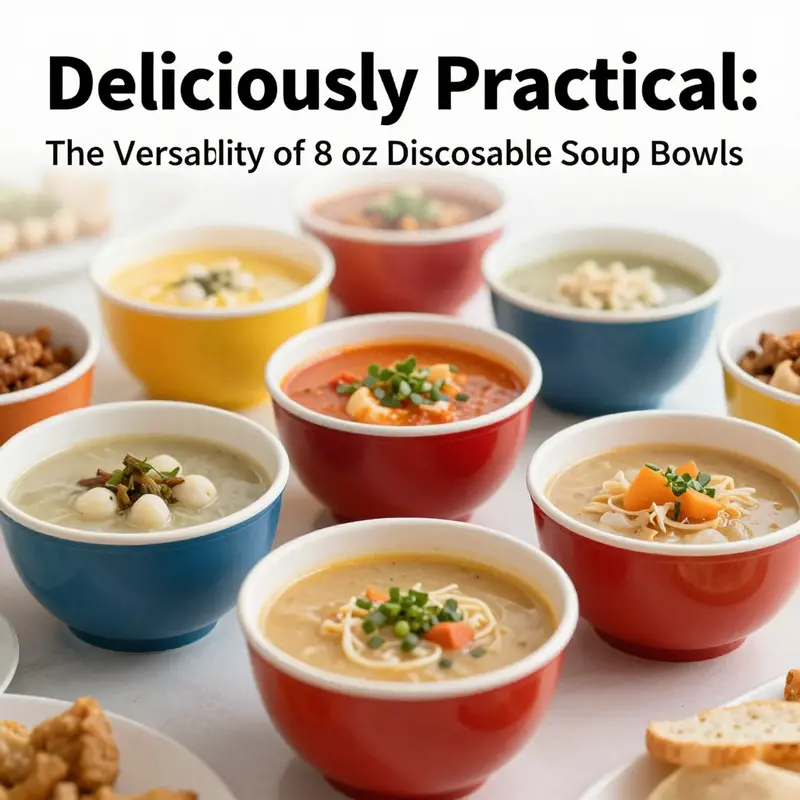
With the rising popularity of on-the-go dining and instantaneous meal solutions, 8 oz disposable soup bowls have emerged as a staple in the food service industry. These versatile containers cater to various culinary needs, appealing especially to bubble tea shops, restaurants, food trucks, catering services, and event planners. In this exploration, we dive into the construction of these bowls, their unique design features, economic considerations in production and purchase, the sustainability aspect, and their market applications. Each chapter will provide insights that underscore the importance of choosing the right packaging for your food service establishment.
Small Vessels, Big Promise: The Construction and Craft Behind 8 oz Disposable Soup Bowls
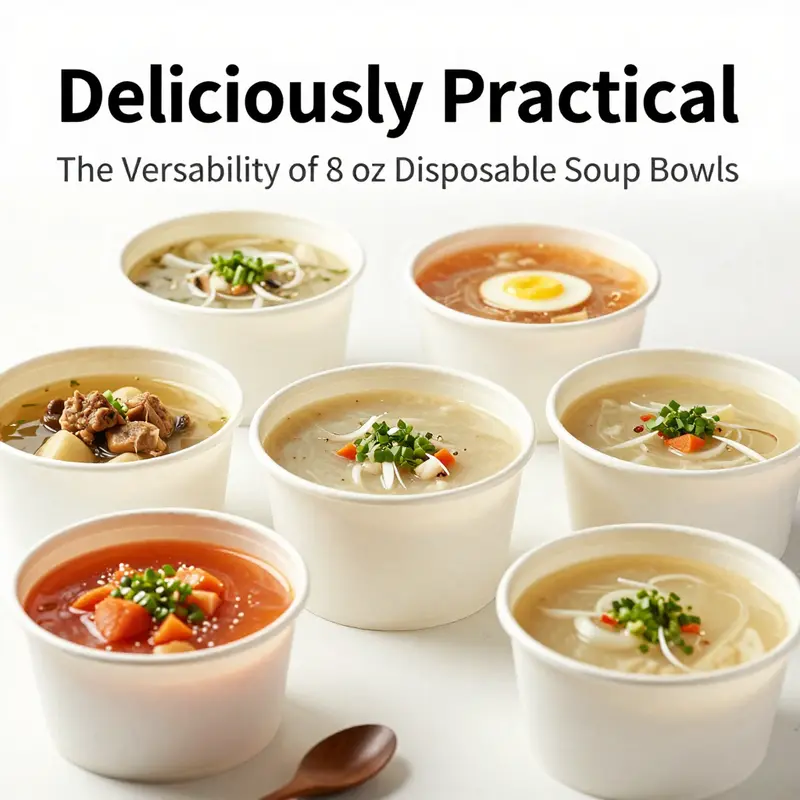
The 8 oz disposable soup bowl is a compact yet high-stakes component of modern food service.
Its small capacity must hold hot liquids, sauces, and broths without leaking, while remaining light enough to handle after a transit from kitchen to desk.
The material choice, paperboard with a coating, or clear plastics, drives heat retention, moisture control, and end of life considerations.
Paper-based bowls, the most common in this size, rely on a food-grade board coated with either polyethylene (PE) for moisture resistance or PLA for compostability.
PE offers robust leakage protection but complicates recycling, while PLA aligns with sustainability goals when industrial composting is available.
Plastic bowls, often polystyrene or polypropylene, deliver heat retention and a glossy feel but face ongoing recyclability questions.
Foam and divided variants add specific benefits and trade-offs, such as insulation and portion control for mixed meals.
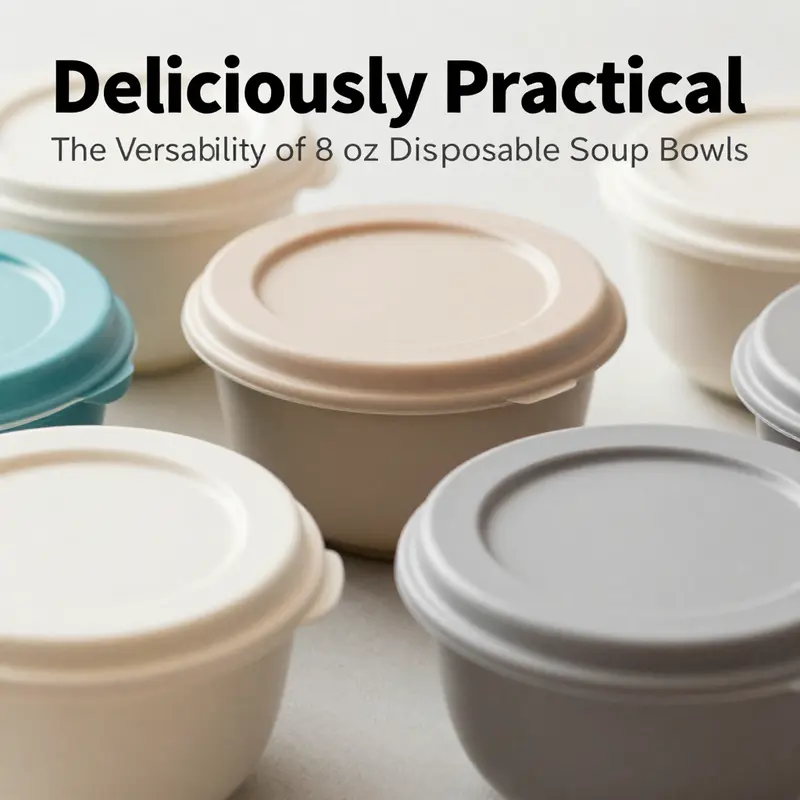
The lid, usually polypropylene, snaps on tightly and may feature vents or sip holes to reduce spills and preserve temperature.
Manufacturing spans global supply chains with emphasis on quality assurance, migration testing, and oil resistance to ensure safety under real-world use.
Branding opportunities through printing can be integrated with careful leading times and minimum order quantities.
Sustainability remains central; brands weigh coating choices, alternatives like bagasse or recycled fiber, and the realities of cost versus performance.
In procurement terms, predictability of supply, compatibility with lids and serviceware, and clear performance data drive decisions in busy kitchens and catering operations.
null
null
Balancing Cost, Scale, and Sustainability: Economic Realities of 8 oz Disposable Soup Bowls
Balancing Cost, Scale, and Sustainability: Economic Realities of 8 oz Disposable Soup Bowls
Choosing the right 8 oz disposable soup bowl requires more than picking the cheapest option. Businesses must weigh production constraints, unit economics, logistics, branding, and environmental impact. These bowls are simple in use but complex in procurement. Understanding the economic levers behind them helps operators reduce cost, protect margins, and deliver a consistent customer experience.
A primary economic factor is the minimum order quantity (MOQ). Many manufacturers set MOQs per size and print design. For double-wall bowls, MOQs can be in the tens of thousands. High MOQs lower per-unit manufacturing costs, but increase upfront cash outlay and inventory risk. Small operators face a trade-off. They can accept higher per-unit prices for smaller runs, partner with distributors, or pool orders with other local businesses. Each option affects cash flow and storage needs.
Material selection drives a second major cost axis. Standard food-grade kraft paper with a polyethylene (PE) coating provides spill resistance and heat retention. It is familiar, reliable, and widely manufactured. However, the PE layer complicates compostability, limiting end-of-life solutions. Alternatives—water-based coatings, bagasse, bamboo, or fully compostable laminates—often cost more initially. Yet at scale, sustainable materials can approach parity with traditional options. Volume matters: suppliers can offer competitive eco-friendly pricing for large orders. Choosing a material should reflect both immediate cost and long-term brand positioning.
Customization adds another dimension. Custom printing with CMYK or Pantone colors strengthens brand recognition. It also adds setup work, increases production complexity, and raises the MOQ in many cases. Printers use plates, digital proofs, and repeatable color processes. Suppliers with in-house graphic teams reduce iteration time. They can lower reprint costs by catching layout errors early. Buyers must factor in design fees, proof cycles, and the potential for obsolete inventory when trends or menus change.
Pricing scales predictably with volume. Unit cost falls as order size grows due to fixed cost dilution and manufacturing efficiency. A mid-sized order might cost noticeably more per bowl than a very large order. Shipping terms matter too. FOB pricing shifts freight responsibility to the buyer, while CIF includes sea freight and insurance. Payment terms affect cash flow. Longer lead times and larger deposits can tie up working capital. Buyers should model landed cost, not just unit price.
Lead time, logistics, and packaging form another cost cluster. Standard delivery times after deposit and design confirmation can stretch several weeks. Delays add inventory pressure and risk menu disruption. Packaging for transport—palletization, outer cartons, and protective wraps—adds cost but prevents damage. Warehousing also matters: storing tens of thousands of bowls requires space and inventory controls. Seasonal demand increases complexity. Holiday menus or festival seasons often require advance buying, which increases storage duration and financing costs.
Quality control is non-negotiable. A leaky bowl or a lid that fails impacts reputation and waste. Inspections at origin, third-party lab testing, and pilot runs reduce quality risk. These steps add expense, but they prevent costly returns and customer complaints. Suppliers that offer tamper-evident sealing or vented lid designs can reduce spill liabilities and improve delivery reliability. The right lid design can also lower the rate of returns or refunds.
Another hidden cost is disposal and regulatory compliance. Local waste management regulations shape disposal costs. If a bowl is not industrially compostable, composting facilities may reject it. Recycling streams require separation of coatings. Some jurisdictions impose packaging taxes or reporting requirements. Businesses must include disposal fees and compliance costs in their total cost calculation. Offering clearly labeled disposal instructions reduces contamination and lowers waste handling charges.
Inventory management and forecasting influence per-unit economics. Overstock ties up capital and risks obsolescence. Understock leads to emergency purchases at premium prices. Using sales data and simple forecasting models helps balance inventory with demand. Many small operators benefit from consignment or vendor-managed inventory when available. This approach reduces their inventory risk while providing suppliers with predictable production schedules.
Negotiation strategies can change the economics significantly. Consolidating SKUs reduces tooling and color-change costs. Standardizing to one or two bowl variants simplifies production and reduces MOQ pressure. Negotiating flexible MOQs or split shipments can lower upfront inventory and spread risk. Asking suppliers for sample packs and pilot runs gives real-world performance data before full production. Buyers should also seek clarity on packaging counts per carton, pallet configurations, and hidden fees like customs handling.
Sustainability choices deserve a business-first analysis. Using compostable materials can increase costs slightly. But sustainable choices can improve brand loyalty and justify a higher menu price. They can reduce disposal fees where composting infrastructure exists. Some suppliers now offer water-based coatings that perform like PE and cost similarly at scale. When evaluating sustainable options, include end-of-life costs, customer perception value, and potential regulatory advantages.
Branding investments must be assessed against returns. Branded bowls make an impression and aid repeat business. Yet printing increases MOQ and per-unit cost. For many operators, a hybrid approach works best. Use a plain stock bowl for most orders. Reserve printed bowls for high-profile promotions, catering accounts, or subscription meal programs. This tactic balances visibility with affordability.
Finally, total cost of ownership provides the clearest financial picture. Calculate unit price plus lids, shipping, inspection, storage, disposal, and hidden fees. Factor in failure rates, returns, and customer experience impacts. Compare this sum across suppliers and materials. Often, a slightly higher unit price buys greater reliability, fewer failures, and lower indirect costs.
Practical procurement tips follow from these economic realities. First, quantify annual usage and map seasonal peaks. Second, request detailed landed cost quotations that include packaging and shipping. Third, ask for lead time guarantees and penalties. Fourth, evaluate samples under real conditions. Fifth, explore cooperative purchasing with peers to access larger volume pricing. Sixth, test sustainable materials in small runs before scaling. Seventh, align branding efforts with SKU rationalization to control MOQs.
Choosing the right 8 oz disposable soup bowl is an exercise in trade-offs. Each decision influences cost, scale, and sustainability. A strategic procurement approach reduces surprises and protects margins. It lets businesses offer safe, attractive, and consistent single-serve soup solutions without unnecessary expense.
For a supplier example showing MOQs and product details, see the supplier product information here: https://www.alibaba.com/product-detail/8oz-Disposable-Paper-Soup-Bowl-Soup-Cup_1600497385319.html
You can also review a related product page for an 8 oz disposable cup for trade reference: senang01 8oz disposable cup product page.
Balancing Performance and Planet: The Sustainability Story of 8 oz Disposable Soup Bowls
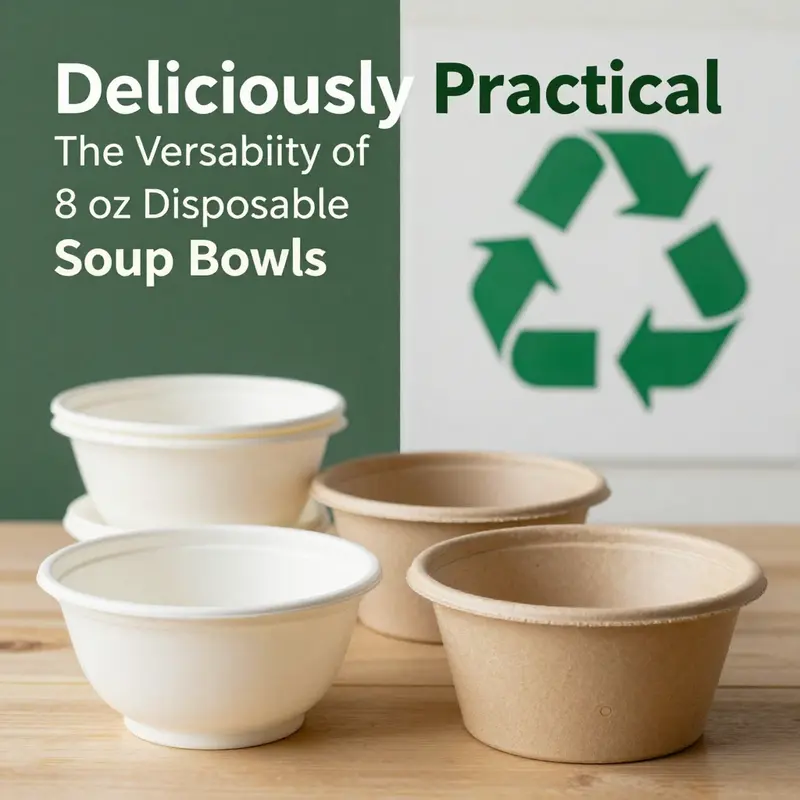
Material choices and the life cycle of 8 oz disposable soup bowls
Every choice about an 8 oz disposable soup bowl carries environmental consequences. Materials, manufacturing, transport, use, and disposal together define the product’s footprint. Traditional plastic and foam options were once the standard because they reliably held hot liquids, insulated contents, and resisted leaks. Their usefulness came at a cost. These materials break down slowly, fragment into microplastics, and persist in landfills and marine environments. That persistence creates long-term impacts that communities and regulators increasingly want to avoid.
Paper-based bowls changed the conversation by offering a renewable substrate derived from wood or recycled fibers. When uncoated, paper is biodegradable, and it often requires less energy to produce than petroleum-based plastics. However, paper alone lacks water resistance. To hold soup, paper bowls are commonly lined with a thin polyethylene (PE) coating. That coating prevents leaks and improves heat retention. It also complicates end-of-life processing. Standard recycling streams struggle to separate thin plastic layers from paper fibers, reducing the likelihood that these bowls will actually be recycled.
Biodegradable alternatives such as molded sugarcane bagasse, bamboo pulp, and other plant fibers offer a clearer end-of-life profile. These materials are byproducts or rapidly renewable crops that can be composted under industrial conditions. They resist heat, handle liquids well without plastic liners, and generally carry stronger claims about biodegradability. Choosing these options reduces reliance on fossil-fuel plastics and supports circular-materials goals. For foodservice operations that want lower-impact disposables, these plant-based bowls are an increasingly viable option.
Design and certification matter as much as material choice. A bowl labeled “compostable” is only meaningful if it meets recognized standards and local infrastructure supports composting. Certifications tied to established standards verify performance in industrial composting or anaerobic digestion. Look for independent third-party verification to confirm that a product breaks down within a specified time frame and leaves no harmful residues. Without certification, compostable claims are hard to trust, and they may mislead customers.
The practical differences between coated paper and bagasse bowls also shape decisions. PE-coated paper often offers lower unit cost and compatibility with certain lid systems. It can be leak-resistant and familiar to kitchen staff. Bagasse and bamboo bowls may cost more per unit, but they typically avoid synthetic coatings and perform well with hot liquids. Some plant-fiber bowls are microwave-safe and can be used for reheating. These functional benefits make sustainable bowls acceptable substitutes in many operations, reducing barriers to adoption.
Transportation and production scale influence environmental outcomes. A bowl made from locally sourced fibers and produced nearby will likely have a lower carbon footprint than one shipped across oceans. Conversely, imported options made from renewable fibers can still outperform locally produced plastic bowls on a total life-cycle basis. Procurement decisions should weigh embodied carbon, supplier transparency, and manufacturing practices alongside unit price.
End-of-life realities often determine the actual environmental benefit of a switch. Compostable bowls need appropriate collection and processing. Where industrial composters operate, plant-fiber bowls can return nutrients to soil and close material loops. Where composting is absent, these bowls may be landfilled, where their degradation is slower and methane emissions can occur. PE-coated paper bowls can be recyclable in specialized facilities that delaminate the plastic lining, but many municipal systems do not accept them. This mismatch between product capability and waste infrastructure can negate theoretical environmental advantages.
Businesses should audit local waste systems before choosing packaging. For catering groups, food trucks, or retailers, aligning packaging with available disposal methods protects environmental claims. If composting is available, design a clear separation and collection process. Label containers to show where to place them and train staff to avoid contamination. Contamination with food waste can compromise recycling streams, so clear guidance is essential for both compostable and recyclable systems.
Cost remains a practical barrier for many operations. Bulk pricing can make sustainable bowls competitive, especially when viewed against total operating costs. Consider hidden savings such as reduced breakage, lighter shipping weight, or simplified menu assembly. Some suppliers offer mixed solutions—paper bowls with compostable liners or partial-coating technologies that simplify recycling. Those hybrid options can act as transitional steps for businesses wanting to reduce plastic use without a sudden budget impact.
Supply chain transparency supports better decisions. Verify raw material sourcing to avoid unintended environmental trade-offs. For example, ensure fiber sourcing does not drive deforestation. Certifications for sustainable forestry and recycled content add confidence. Similarly, ask suppliers about additives, inks, and adhesives used in printing. Food-safe dyes and low-impact inks help keep bowls within acceptable thresholds for industrial composting and recycling.
Communication with customers also matters. Clear, honest labeling reduces contamination and sets correct expectations. Mark bowls with disposal instructions and certification logos where appropriate. Educate staff to inform customers about proper disposal at point-of-sale. When consumers understand that a bowl is compostable only in industrial facilities, they are less likely to place it into home compost or recycling bins incorrectly.
Transitioning thoughtfully reduces environmental harm. A staged approach lets operations test materials in real conditions. Start with a pilot of plant-fiber bowls for a subset of menu items. Monitor leak resistance, customer feedback, and disposal outcomes. Pair pilots with staff training and clear signage. Capture data on returns and contamination. Use that evidence to scale successful options and refine procurement choices.
Policy and market forces push further shifts. Municipal bans and extended producer responsibility schemes are changing what packaging is acceptable. Businesses that adapt early avoid regulatory surprises and may benefit from incentives. Suppliers are innovating, developing lower-impact coatings and improved compostable laminates. Those technological advances aim to retain performance while reducing the need for fossil-derived materials.
Sustainability is not a single metric. It includes carbon footprint, resource renewability, pollution potential, and practical usability. A balanced choice for 8 oz disposable soup bowls will consider all these dimensions. The best option in one city may not be the best in another. Match bowl materials to disposal systems, prioritize verified compostable or recyclable options, and document the supply chain. Small changes across many kitchens add up.
For operations ready to make a change, explore plant-fiber bowls that work with existing lid systems and handling routines. Many suppliers offer molded sugarcane and molded-fiber bowls suited to hot liquids and takeout needs. Learn more about locally available molded sugarcane options such as natural sugarcane bagasse pulp bowls by following this link: natural sugarcane bagasse pulp bowls.
Real-world examples show that when compostable bowls reach industrial facilities, their benefits become tangible. Ensure procurement aligns with disposal and labeling. When combined with staff training and clear customer messaging, switching to plant-based bowls reduces single-use waste and supports circular practices. For a practical reference on a commonly discussed sugarcane bagasse bowl product, see: https://www.amazon.co.uk/dp/B0B9KXWQJZ
Small Cup, Big Footprint: How 8 oz Disposable Soup Bowls Shape Modern Food Service
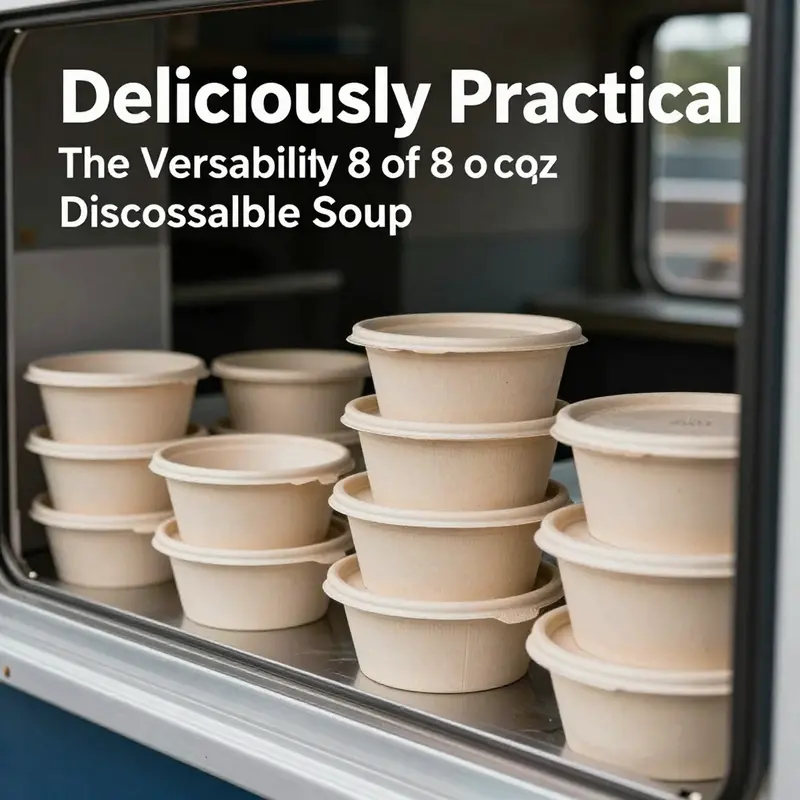
In the fast-paced world of food service, the humble 8 oz disposable soup bowl does more than hold broth or porridge. It functions as a compact, portable dining experience that travels from kitchen to curb, from office break room to delivery box, all while carrying a brand’s promise of hygiene, warmth, and simplicity. This chapter follows the arc of how this unassuming vessel has become a central component of a broader shift toward single-serving convenience. It is not just about containment; it is about enabling a workflow where speed, safety, and consistency meet the evolving expectations of customers who want food that is ready to eat the moment it is handed to them and easy to transport to their next destination. The worth of these bowls emerges when we view them as the visible edge of a service model rather than as a mere packaging line item.
Across food service sectors, the 8 oz size has earned its place precisely because it aligns with how people want to eat in the moments between meals. In food trucks and mobile catering, space is premium and turnover is rapid. The compact bowl fits neatly into cramped prep areas and can be portioned with predictable accuracy. The ability to seal and transport hot liquids without fear of leakage lets operators extend service into neighborhoods and events where a full dining setup would be impractical. The bowl becomes part of a system that prioritizes efficiency: quick service, swift cleanup, and the freedom to serve a diverse array of hot, liquid-based dishes—from light broths to curries—without compromising integrity during transit. The same logic of portability applies to delivery services and meal kit providers, where the packaging has to preserve temperature, prevent contamination, and present a neat, brand-forward image upon opening. A tight seal, capable lids, and, when needed, vented openings or sip tabs, help manage steam and heat, reducing the risk of scalding while keeping the contents appealing and ready to enjoy.
Material choice underpins this performance. Most 8 oz bowls are crafted from food-grade kraft paper with a polyethylene coating that resists leaks and preserves heat. This combination creates a balance between barrier properties and practicality: a relatively sturdy, heat-retentive wall that nonetheless remains light enough for everyday handling. For operators, this translates into less spillage during transport, steadier presentation for customers queuing up, and fewer returns due to compromised packaging. Lids—typically polypropylene—are designed for snap-on or press-fit security, sometimes including vented openings or sip tabs to ease pouring. The liner can be tailored to connect seamlessly with insulated tray systems in professional kitchens, elevating the bowl from a standalone item to a component of a broader service solution. In branding terms, these bowls offer a surprisingly flexible canvas. Logo printing, color customization, and lid integration can all be embedded into the design process, allowing a business to project its identity with every cup that leaves the kitchen. Digital proofs and in-house design support streamline this integration, helping operators maintain a consistent look across menus, promotions, and grab-and-go cases.
Sustainability sits at the core of many buying decisions today, and the 8 oz class illustrates both the tensions and possibilities in modern packaging. PE-coated paper bowls are not typically compostable, because the plastic layer complicates industrial composting. Yet they are recyclable in many facilities that can separate the paper and plastic components. For environmentally conscious consumers and organizations, this has sparked interest in alternatives that use plant-based fibers like sugarcane bagasse or bamboo, or recycled paper fibers, sometimes with PLA coatings that aim to offer compostability in the right infrastructure. The market often presents a pragmatic middle ground: a product that performs exceptionally in terms of leakage control and heat retention while offering scalable recycling options where available. Cost considerations intersect with sustainability as well. In bulk, these bowls can be remarkably affordable: prices can start at modest levels for large orders and decrease further with volume, a factor that makes them attractive not only to large chains but also to smaller operators who stage quick-service concepts in dense urban areas. Delivery timelines, typically a few weeks after deposit and design confirmation, vary by supplier and trade terms like FOB or CIF, but the pattern remains consistent: the more customization and branding required, the longer the lead time, balanced by the market’s demand for a distinctive, memorable packaging experience.
The bowl’s role within the broader ecosystem of food service becomes clearer when we consider the spectrum of applications. In grocery-store grab-and-go sections, the 8 oz bowl offers a compact, ready-to-eat option that fits into the shopper’s day as a convenient, hygienic means to enjoy a quick meal without cooking. It also complements the growing demand for impulse purchases driven by busy schedules and the desire for healthier, portion-controlled meals. In institutional settings—cafeterias, hospitals, and large-scale dining facilities—the extra-thick walls and robust sealants help prevent warping and leaks when serving liquid-based dishes such as soups, broths, and stews, even when the contents include chunkier ingredients. The bowls are compatible with standardized serving practices and can be deployed across meal programs that require precise portions, thereby helping operations maintain consistency in quality and cost per serving. Here, the packaging becomes part of a controlled dining environment, contributing to waste reduction and operational efficiency through predictable portioning.
Branding and customization emerge as a practical pathway to differentiation. A simple, cost-effective way to extend brand reach is by printing logos, choosing color palettes that align with a restaurant’s identity, and integrating lid designs that reinforce a cohesive look from kitchen to consumer. This level of customization supports marketing objectives by turning a routine takeout item into a recognizable touchpoint. Digital design services and in-house graphic capabilities are common add-ons that enable operators to preserve brand integrity across multiple channels, including online ordering platforms, curbside pickups, and in-store merchandising. Linking packaging design to the consumer experience reinforces the perception of quality and care, turning a basic container into a vessel for trust.
From a practical standpoint, operators are often balancing cost, speed, and sustainability. The numbers matter: bulk pricing can begin at low per-unit costs for 1,000-piece orders and improve with larger volumes. Lead times of around 25 to 30 days are typical, and trade terms like FOB or CIF reflect the global nature of supply chains in the packaging market. This means a food truck operator can plan promotions or seasonal menus with a reliable supply of compatible bowls and lids, while a hospital cafeteria can align its procurement with budget cycles and dietary programs. The retail consumer’s experience is equally important. On major online marketplaces, white kraft disposable soup containers with lids appear in packs designed for home use, illustrating how the same functional solution scales for both commercial and personal contexts. The core narrative remains the same: a product that carries heat, keeps contents secure, and presents a neat, consistent appearance.
As the market continues to evolve, several trends shape the strategic choices around these bowls. The shift toward sustainable packaging drives demand for biodegradable materials and compostable coatings, even as the cost curve for these materials must be managed to maintain affordability at scale. The potential for branding through color, logo, and lid customization adds value beyond function, turning packaging into a miniature billboard that travels with customers across the city and into their homes. In this sense, the 8 oz disposable soup bowl represents more than a container; it is a link in a chain that connects product quality, consumer convenience, sustainability considerations, and brand storytelling.
To illustrate how a practical packaging decision dovetails with a broader service proposition, consider a scenario where a small chain expands into mobile formats and delivery while preserving a consistent, branded experience. The chain can offer a range of soups, broths, and porridge in uniform 8 oz bowls, each with a secure lid to ensure safe transit. They can choose a design language that echoes their restaurant aesthetics, providing a cohesive customer journey from the moment the order is placed to the moment the first spoonful is enjoyed. In addition to the functional benefits, the packaging becomes a channel for communication—clear labeling about ingredients, temperature tolerance, and sustainability statements can be integrated directly onto the bowl or lid, reinforcing trust and transparency with diners.
For operators exploring branding while preserving function, you can view an example of a disposable kraft paper soup cup with lid. This accessible entry point demonstrates how design, material choice, and lid architecture work together to deliver a reliable experience for customers across different service contexts. As the market matures, the marriage of performance and presentation will continue to define which bowls become standard and which fade from the shelves. The 8 oz bowl’s enduring value lies in its ability to serve as a flexible, scalable solution that accommodates the diverse rhythms of modern food service, from the curbside rush to the quiet moment of a home meal.
External resources can provide a broader technical lens on materials and lifecycle considerations for 8 oz paper bowls. For a deeper dive into composition, grades, and industry support, see: https://www.benjaminross.com/paper-bowls-8oz-overview
Final thoughts
The versatility, convenience, and practicality of 8 oz disposable soup bowls make them an essential choice for bubble tea shops, restaurants, food trucks, and catering services. Navigating their design features, economic benefits, and environmental implications is paramount for businesses aiming to elevate their operation and meet consumer demands. With informed decisions about packaging, food establishments can enhance customer satisfaction and operational efficiency. By integrating these bowls into your service, you’re not only improving the dining experience but also contributing to an efficient and responsible food service ecosystem.