
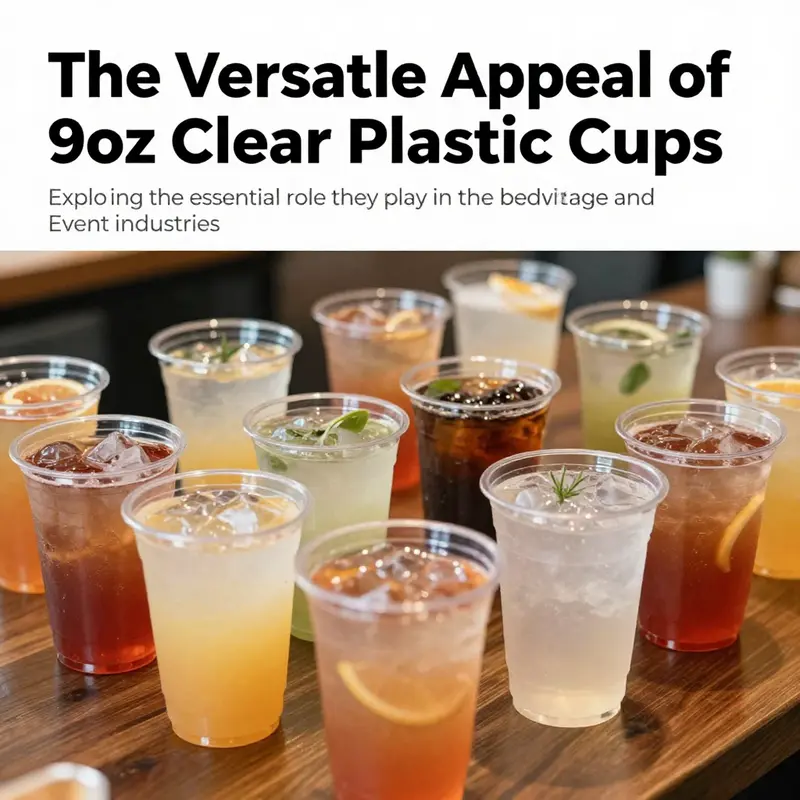
9oz clear plastic cups have emerged as an essential component in the beverage and event sectors, serving not only as practical solutions for cold drinks but also as a canvas for brand presentation. Their lightweight, yet durable design combined with versatile applications makes them an ideal choice for bubble tea shops, food trucks, and event planners alike. This article delves into the fundamentals of 9oz clear plastic cups, including their design and composition, market demand, sustainability considerations, and the exciting opportunities for customization and branding. Each chapter contributes to a holistic understanding of why these cups are a savvy choice for professionals in the beverage industry.
Clear by Design: Materials, Construction, and Sustainable Choices for 9oz Plastic Cups
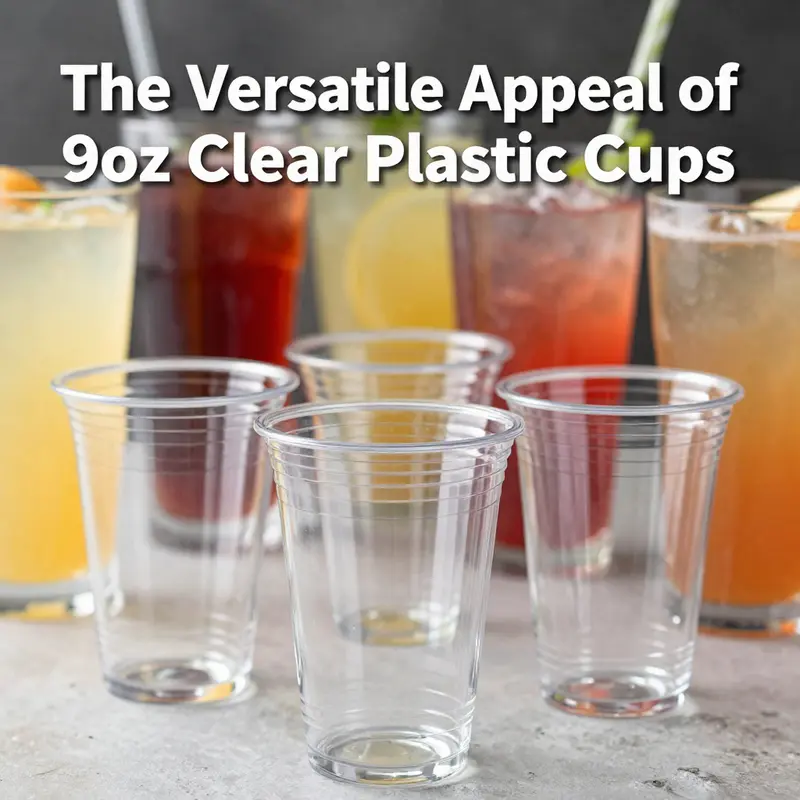
Design and Material Composition of 9oz Clear Plastic Cups
The material inside a 9oz clear plastic cup defines its look, feel, and performance. Material choice determines clarity, strength, temperature tolerance, and environmental impact. Modern designs balance those demands with manufacturing efficiency and end-user experience. Whether used for iced coffee, smoothies, or plated desserts, the composition and subtle design choices make these small vessels reliable and presentable.
At the core are a few base polymers. Polypropylene (PP) offers flexibility and chemical resistance. It bends rather than cracks and resists many common beverage acids. Polystyrene (PS) provides excellent clarity and a glass-like appearance. It is rigid and offers a crisp rim for comfortable drinking. Polyethylene terephthalate (PET) produces high transparency, good barrier properties, and strong impact resistance. PET is often the benchmark for crystal-clear cups intended to showcase layered drinks or colorful presentations. Emerging options include plant-based alternatives such as polylactic acid (PLA) and specially formulated biodegradable PET that meet industrial composting standards. These alternatives aim to reduce fossil-fuel dependency and offer better end-of-life pathways under certain conditions.
Clarity and optical quality vary by polymer and processing method. PET typically yields the clearest cups with a brilliant gloss. PS can also be very clear but tends to be more brittle, especially in thin gauges. PP is less glossy and slightly opaque compared with PET. Manufacturers manipulate wall thickness, annealing, and additives to improve appearance without sacrificing durability. Frosted finishes are achieved either by changing the polymer formulation or by surface texturing during thermoforming. Frosting softens glare and provides a premium touch, while retaining enough transparency to hint at the drink inside.
Design shapes are deceptively important. The classic tapered profile remains popular because it nests efficiently for transport and storage. A tapered cup slides into the next with minimal friction, saving space while maintaining stable stacking. U-shaped or contoured sides add ergonomic grip points. Small inward curves near the middle let fingers rest naturally, making the cup easier to hold when condensation forms. Rim design affects user comfort and lid fit. Rolled rims are common; they strengthen the edge and make sipping pleasant. Some premium-run cups include reinforced rims for repeated handling during events.
Lid compatibility is a basic functional requirement. Smooth dome lids accommodate whipped toppings and straws while giving visible height to layered drinks. Vented dome lids allow steam to escape and reduce pressure build-up when handling chilled but effervescent drinks, though vents must be placed carefully to avoid drips. Snap-fit lids rely on precisely engineered bead-and-groove relationships. Material stiffness and dimensional tolerance determine how tightly a lid locks and whether it will stay secure during transport. For on-the-go use, leak resistance often results from a combination of a properly designed lid and a cup wall that resists deformation under load.
Manufacturing processes influence structural performance and cost. Thermoforming forms cups by heating sheets and drawing them over molds, producing cups with thin, consistent walls and excellent transparency. Injection molding allows more complex features, such as integrated handles or thicker rims, and yields greater consistency in critical dimensions. Both processes are optimized to minimize scrap and to maintain tight tolerances for lid fit. Additive measures like flange shaping or ribbing can reinforce high-stress zones without adding much material.
Food safety and regulatory compliance guide material selection. Most reputable cups use food-grade resins that meet regional regulatory standards for food contact. Many producers specify that their materials are BPA-free and comply with local or international food-safety codes. Certifications for compostability or biodegradability, such as third-party BPI endorsements, verify that certain materials will break down under industrial composting conditions. It is important to note that industrial composting has precise temperature, moisture, and microbial activity requirements, and not all home compost systems reach those conditions. Clear communication and labeling help businesses choose the proper cup based on intended disposal pathways.
Sustainability is no longer an afterthought. Bioplastic options like PLA reduce reliance on fossil feedstocks and may appeal to brands seeking lower carbon footprints. Biodegradable PET formulations can be designed to disintegrate in industrial composting facilities, offering a compromise between the clarity and strength of conventional PET and improved end-of-life outcomes. However, eco-friendly claims must be evaluated in context. Mechanical recycling remains the dominant pathway for many clear plastics, particularly PET. Contamination from food residue or mixing incompatible polymers can hinder recycling. Design for recyclability emphasizes mono-material constructions, clear labeling, and minimal use of decorative elements that might compromise recycling streams.
Decoration techniques affect both aesthetics and recyclability. Simple printing and single-color accents can reinforce a brand without obstructing recycling. More elaborate embellishments, like metallic rims or glitter, create striking visuals but complicate end-of-life processing. Metallic foils and glitter often require separate removal and can contaminate composting and recycling systems. Shrink sleeves allow full-coverage graphics but introduce a different polymer layer that may not match the cup resin. Heat-stamped rims or subtle embossing can add perceived value while staying within recyclable design parameters.
Thermal behavior and mechanical strength are practical concerns. PET maintains clarity and stiffness across a broad temperature range but can deform under prolonged exposure to hot liquids. PP withstands higher temperatures and works better with warm beverages, though transparency is reduced. PLA tends to soften at modest temperatures, so it is best reserved for cold drinks. Designers must match wall thickness, polymer choice, and expected use-case to avoid warping, leaking, or structural failure.
Weight and feel matter to customers. A lightweight cup economizes material and shipping costs. A slightly heavier cup conveys sturdiness and premium quality. Gauge selection is a subtle balancing act: thinner walls cut cost and waste, but may flex and leak. Slightly thicker walls improve rigidity and lid sealing. This trade-off often reflects the brand’s positioning and the typical use pattern.
Operational considerations also shape design choices. Nesting behavior affects cashier ergonomics and storage efficiency. Reinforced rims help with high-volume filling lines. Cups designed for automated lid application require consistent bead heights and wall stiffness. Clear cups used for layered desserts must resist crushing when stacked. Catering and events often demand cups that look good on display, resist condensation rings, and perform reliably during transport.
Finally, communication through labeling informs proper disposal. Clear, concise instructions help consumers recycle or compost correctly. When cups are made from industrially compostable materials, labeling should indicate the need for industrial composting facilities. When a cup is recyclable, guidance should encourage rinsing and placement in appropriate recycling streams. Such transparency reduces contamination and improves end-of-life outcomes.
For businesses exploring alternatives, examples of eco-conscious packaging include printed paper and compostable dessert tubs, which illustrate how design and material choices shape usability and sustainability. Consider exploring eco-friendly printed paper ice cream cups for ideas that cross material categories: https://cupbowlpack.com/product/senang07-eco-friendly-printed-logo-paper-ice-cream-cups-with-lid-ice-cream-paper-bowl-paper-ice-cream-cups-with-lid/.
For further technical details and industry-standard specifications on compostable PET formulations, see the supplier reference here: https://www.alibaba.com/product-detail/Fuling-9oz-Disposable-Plastic-Cups-with_1600583274658.html
Crystal Clarity in Service: The Applications and Market Pulse of 9oz Clear Plastic Cups
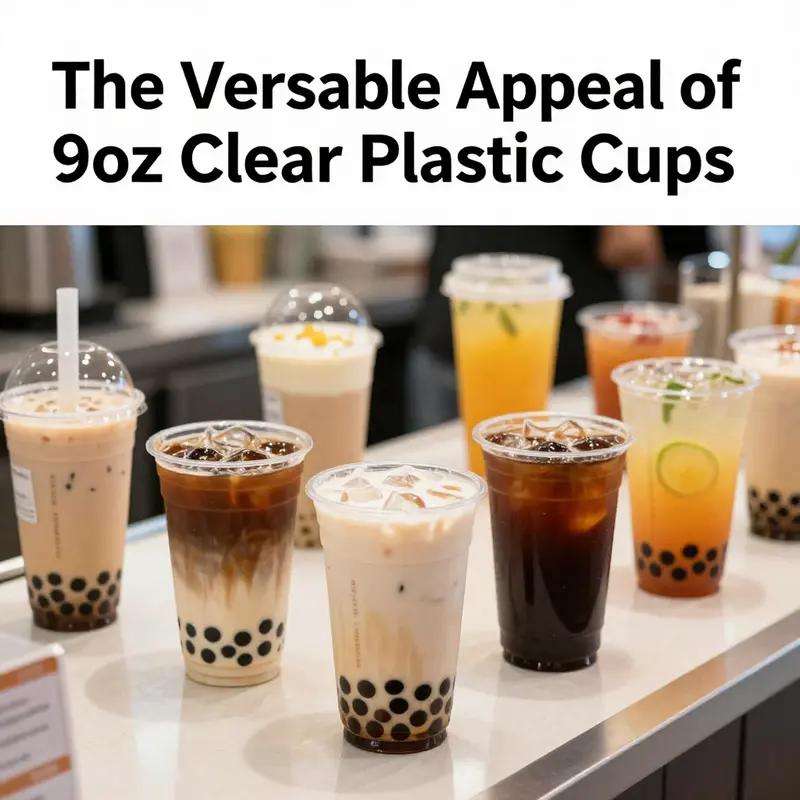
Crystal clarity at the point of service is more than an aesthetic attribute. A 9oz clear plastic cup invites the eye to linger on the beverage inside, and in a bustling cafe or a crowded event, that visual cue can be a decisive factor in a customer’s choice. The transparency is not accidental; it signals purity, freshness, and confidence. When a drink rests in a crystal-clear vessel, the color, texture, and even condensation patterns become part of the marketing message. For iced beverages where hues and textures shift with ice, a transparent wall lets customers assess color contrasts, carbonation, and the overall appeal at a glance. This visual-sensory dynamic—how the drink looks when served—becomes part of the consumer experience, reinforcing perceptions of quality without a single word spoken. In practice, that clarity supports a simple truth: customers tend to trust what they can see, and a well-presented beverage can justify a premium feel even in a casual setting.
Material choice sits at the core of performance. Most manufacturers specify polypropylene (PP) or PET as the base resin, selected for durability, optical clarity, and resistance to leaks. These materials are widely recognized as safe for food contact, and many products are labeled BPA-free, addressing consumer concerns about chemical migration. In everyday terms, that assurance translates into reliability during long shifts, outdoor events, or quick-service days when a cup must stand up to temperature fluctuations, transport jostling, and the demands of fast service. A practical feature is dome-lid compatibility—two common variants, smooth and vented. Smooth dome lids seal snugly and support reliable straw retention, making them a natural fit for cold drinks that will travel through a line or into an event tote. Ventilated lids help release pressure and steam, which can be advantageous for carbonated beverages or thick smoothies, but they are generally not recommended for hot liquids due to safety concerns. This lid ecosystem broadens the operational envelope, enabling a range from iced coffee and bubble tea to chilled cocktails and fruit smoothies, while keeping spills at bay.
In the daily rhythm of cafes, convenience stores, catering services, and social gatherings, the 9oz cup serves as a versatile vessel that can be adapted to many tasks beyond holding a beverage. Its mid-size capacity makes it well-suited to portion control, a critical consideration in high-volume environments that must balance speed with consistency. In busy cafeterias, event caterers, and corporate offices alike, a standardized 9oz cup provides a predictable single-serve footprint that simplifies inventory management, reduces waste, and streamlines workflow. The same size lends itself to snack packaging and meal-prep scenarios, especially when secured with snap-fit lids that minimize leaks during transport. The combination of a clear window and a secure seal makes it possible to offer on-the-go consumption without compromising containment. Even when used for more than drinks—such as packaging dry foods or small portions for tasting events—the clear cup remains a reliable, economical option. The inherent flexibility endears it to operators who juggle multiple formats within a single service line, from grab-and-go beverages to portable appetizers.
As consumer tastes evolve, so too does the perception of sustainability. Clear plastic cups are not immune to the broad shift toward environmentally responsible packaging. Market demand now favors materials that lower environmental impact or enable responsible end-of-life management. Biodegradable options and compostable formulations are increasingly appearing in catalogs, often marketed alongside certifications that signal industrial compostability or compostability in appropriate conditions. For many buyers, such certifications are not merely marketing hooks; they provide a practical framework for evaluating end-of-life outcomes and aligning with corporate sustainability goals. The emerging balance between performance and responsibility unfolds across several dimensions: reduced environmental impact during production, potential for compostable alternatives, and the ability to participate in circular systems that keep material streams recoverable.
Design innovations have also shaped expectations for this cup format. The secure snap-fit lid is perhaps the most visible improvement, delivering leak resistance and user-friendly one-handed access—a critical advantage in fast-paced service environments. A clear domed lid maximizes containment while preserving visibility of the beverage’s attributes, supporting a broader range of contents beyond simple drinks. Beyond lids, manufacturers debate thin-wall versus thicker-wall constructions, where wall thickness influences insulation, rigidity, and the tactile feel in the hand. The objective is to optimize heat transfer, maintain crisp presentation, and resist deformation under the weight of ice and liquid without clouding the plastic or compromising grip. In parallel, innovations in seal geometry and straw retention hardware contribute to a more seamless customer experience, reducing spill points and facilitating efficient service in high-traffic settings.
The global market dynamics amplify these considerations. The disposable cup sector has expanded in step with convenience-driven consumer behavior and the hospitality and event management industries’ ongoing demand for quick-service solutions. In this context, the 9oz clear variant positions itself as a versatile workhorse, capable of accommodating a wide array of beverages and small food portions. Its appeal is reinforced by bulk-buying dynamics—operators source in large quantities to achieve economies of scale and predictable pricing. The availability of customization options, including branding on the cups, adds strategic value for businesses seeking to reinforce identity during service, catering events, or promotional campaigns. While price remains a factor, the assurance of consistent supply, reliable performance, and branding opportunities often weighs more heavily as buyers plan seasonal promotions, wedding receptions, or large outdoor gatherings.
In practice, commercial interest in these cups reflects a market that values readiness and adaptability. Buyers look for stock-keeping reliability, supplier responsiveness, and the ability to scale for peak periods. Customization options—such as logo printing or color accents—can translate into stronger brand recall and a more cohesive customer experience when paired with a well-curated beverage program. At the same time, sustainability considerations are increasingly integrated into procurement decisions. The availability of recycled-content resin, post-consumer resin, or certified biodegradable alternatives offers pathways to align packaging with broader ESG objectives, even as operators manage the trade-offs in cost and performance. The market thus favors a balanced approach, where clarity and reliability are matched by responsible material choices and transparent lifecycle narratives.
Procurement realities also shape how these cups are bought and used. Operators commonly source in bulk packs, such as 500-count or 1000-count configurations, to optimize handling, inventory turnover, and cost per unit. Storage considerations—flat stacking, minimal space requirements, and stacking tolerance—play a practical role in back-of-house efficiency. Lids, straws, and related accessories are chosen to complement the cup’s performance, creating a cohesive unit that travels smoothly from the kitchen to the service counter or event floor. In this ecosystem, branding opportunities become part of a broader marketing strategy, turning a simple cup into a mobile billboard during peak service times. The alignment of lid fit, cup clarity, and branding elements can meaningfully influence guest perception, particularly in venues that rely on a rapid turnover of customers and a strong, visually appealing presentation.
The broader packaging ecosystem recognizes the cup as part of an end-to-end system. Lids, domes, and straw options are designed to integrate seamlessly with cup shapes and diameters, ensuring compatibility across a range of suppliers. This interoperability is essential for operators who favor flexibility in supplier sourcing or who run multi-brand beverage programs. Yet even as the ecosystem grows more interconnected, sustainability remains a central criterion. Buyers increasingly demand transparency about material sources, recyclability, and the availability of recycling streams that can accommodate the cup and its associated components. Education about end-of-life options becomes part of procurement conversations, helping brands communicate their environmental stance to customers who have grown more discerning about packaging choices.
Customization remains a practical lever for value creation. Logos, color accents, and messaging on a 9oz clear cup enhance brand recall and contribute to a consistent, professional guest experience. For venues that host weddings, corporate tastings, or large outdoor festivals, branding can elevate the perceived quality of the beverages and reinforce the event’s theme. The economics of customization depend on minimum order quantities and lead times, but many buyers find that the incremental branding investment pays off through increased recognition and a more memorable customer journey. Yet the design challenge remains to ensure that branding does not obscure the drink’s appearance or create a visually cluttered presentation. The best outcomes arise when branding acts as a subtle, well-integrated element that complements the drink’s color and presentation rather than overpowering it.
Viewed as packaging across a system, the 9oz clear cup embodies a balance of simplicity and versatility. It is a platform that supports service speed, consistent portioning, brand storytelling, and evolving sustainability goals. The pursuit of ongoing material innovation—balancing clarity with resilience, exploring bio-based resins or recycled-content feedstocks, and improving end-of-life pathways—will continue to shape the dataset that operators rely on when selecting this cup for a given application. In this light, the cup is not merely a disposable; it is a practical instrument through which efficiency, aesthetics, and responsibility intersect in everyday commerce.
Operationally, the future likely includes refined materials that preserve optical clarity while lowering environmental impact, as well as improved manufacturing practices that reduce energy use and waste. The industry is watching for developments in compatibility with composting infrastructures, advances in recycle-ready design, and smarter lid systems that further minimize spills and simplify disposal. The ongoing challenge remains to deliver performance that meets the demands of hot or cold beverages, while ensuring that the cup and its lids, straws, and seals work together to optimize the user experience from first glance to last sip. In sum, the 9oz clear plastic cup remains a compact yet potent conduit for beverage concepts, service efficiency, and sustainability storytelling in the modern hospitality landscape.
As this chapter concludes, the 9oz clear cup stands as a reliable, adaptable instrument in the toolbox of contemporary foodservice. Its enduring appeal lies in the crisp presentation it affords, the practical lid ecosystem that supports safe transport, and the capacity to scale with brand ambitions and environmental commitments. The cup is small, yet its impact on customer perception, operational throughput, and corporate responsibility narratives is disproportionately large. In markets where speed, clarity, and reliability govern the guest experience, this cup exemplifies how a simple vessel can be a strategic asset—an unobtrusive mediator between a refreshing beverage and a memorable moment.
Internal hyperlink insertion: The broader packaging conversation often touches on parallel formats that emphasize clarity, containment, and branding across product families. A related resource that showcases similar design considerations in a different format can be instructive for operators exploring cohesive packaging ecosystems. customized disposable single-wall paper ice cream cups with lid
External reference: https://www.alibaba.com/product-detail/Fuling-9oz-Disposable-Plastic-Cups-with-Lids-Eco-Friendly-and-Custom-Print-Options_1600547258355.html
This chapter has explored how a straightforward, mid-size clear cup functions across service contexts, why it remains relevant amid sustainability ambitions, and how design and branding choices intersect with performance. The cup’s story is one of practical reliability, visual appeal, and evolving responsibility—a concise snapshot of how packaging choices help shape the modern beverage experience.
Clear by Design, Lean by Choice: Reexamining the Sustainability of 9oz Clear Plastic Cups
The 9oz clear plastic cup is a familiar sight in coffee shops and event spaces. It offers transparency, lightness, and dependable performance, while keeping costs predictable. Yet sustainability concerns invite a deeper look at what goes into the cup from material choice to end of life. This chapter surveys the factors that determine the environmental footprint of these cups and how brands operators and consumers can align practice with ecological goals.
Material choices and their implications. In many cases cups are made from polypropylene or polystyrene, with some applications using PET or other resins. Each resin carries a different energy profile and end of life pathway. Polypropylene is lightweight and impact resistant to cold beverages, helping minimize spillage and waste. Polystyrene provides clarity and rigidity but faces questions about recyclability and persistence in some waste streams. PET can enable strong recycling streams where infrastructure exists, but its processing depends on local programs. In recent years some options labeled as biodegradable PET have appeared, designed to break down under certain conditions. The key caveat is that real world impact hinges on disposal and the capacity of local systems to manage the resin. Without proper recycling or industrial composting, even well designed cups may end up in landfills.
End of life and disposal realities. Recyclability depends on local programs contamination and consumer sorting. In some places clear plastics can be accepted but mixing with other plastics should be minimal and facilities must handle the resin at scale. Contamination from food residue lids or inserts can derail recycling. Compostable cups promise a route to organic breakdown in industrial facilities, but home composting is rarely effective and not all curbside programs accept compostable plastics. When choosing compostable options operators should connect with industrial composting partners and label products clearly so users know how to dispose of each item. Certifications by independent bodies offer signals about recyclability or compostability, but they do not guarantee perfect outcomes. They also come with trade offs such as brittleness or performance differences in high volume environments. A robust strategy links material choice with local waste capacity and with disposal workflows that prioritize recovery over landfill.
Product design and operational realities. Durable cups that resist cracking and leakage can reduce waste by lowering the need for replacements and avoiding messy cleanups. Design features that work with domed or vented lids support containment and temperature management for cold drinks. When used effectively, such features can shorten service times and reduce waste. Brands can also use printing and customization to communicate sustainability messages, but messages should reflect actual end of life outcomes rather than just appearances on the shelf.
Behavior and infrastructure. The environmental benefit depends on how people dispose of cups and how well local sorting facilities operate. Contamination remains a major barrier. In regions with advanced recycling networks clear cups may be recovered, while regions lacking infrastructure may find even recyclable designs ending up in landfills. Industrial composting facilities make compostable cups more viable, but access varies widely; in places without composting, compostable options may complicate waste streams. A practical approach for operators is to align product selection with available disposal options, invest in clear labeling and staff training for separation, and communicate honestly with customers about how to dispose of cups. A hybrid strategy can work well: use recyclable clear plastics where recycling is strong, and offer compostable options where industrial composting is accessible, all while maintaining product performance and customer experience.
Circular economy perspective. Single use items sit within a broader system that benefits from lower per use impact through reduced spillage and improved lid technology. In some contexts durable reusable options offer a meaningful counterpoint to disposables, particularly in high volume environments where lifecycles can be extended with dishwasher safe and durable designs. The sustainability argument becomes more powerful when brands connect material choices with waste management capacity and with transparent user guidance toward proper disposal.
Practical takeaways. For operators and brands the path to better end of life is practical and collaborative. Assess the local disposal ecosystem can industrial composting handle certified compostables are there strong recycling streams for clear plastics and what are the contamination thresholds. Invest in clear labeling and staff training and communicate openly with customers about how to dispose of cups. Consider a hybrid approach that favors recyclable plastics where possible and reserves compostable options for contexts with robust industrial composting, all while maintaining high standards for product performance.
Final thought. The sustainability of 9oz clear plastic cups is not a single metric but an integrated system that combines material choice with disposal reality and consumer behavior. When these elements align, these cups can serve service needs while contributing to a circular economy mindset and a reduction in waste across busy environments.
External note. This chapter acknowledges higher level tradeoffs in waste management policy and the fact that local realities vary widely.
Clear Canvases, Bold Brands: Transforming 9oz Clarity into Memorable Consumer Experiences
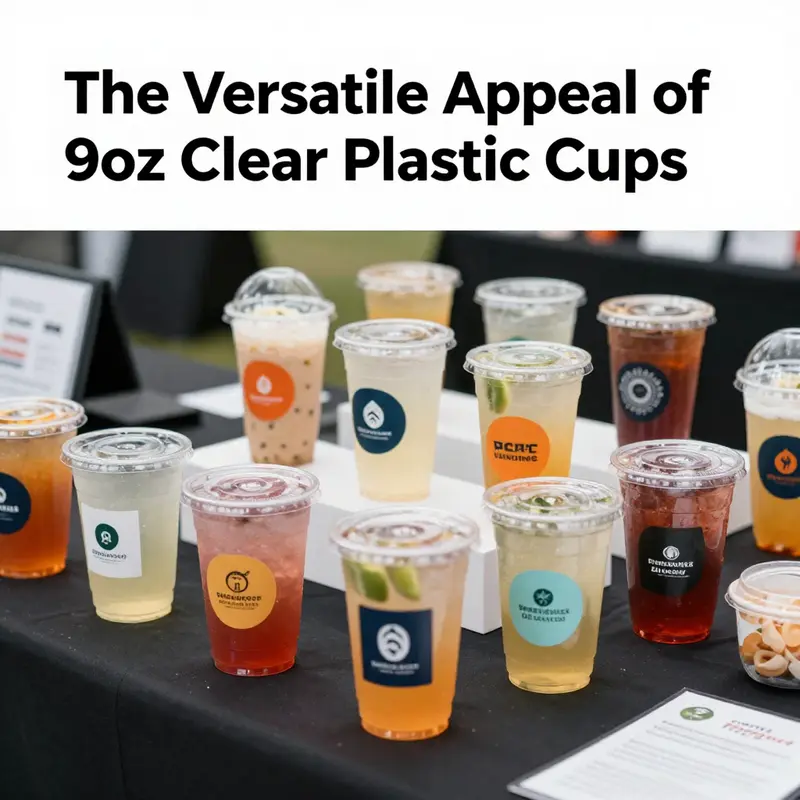
Every cup is more than a receptacle for a drink; it is a blank canvas that carries a brand’s first impression and a promise of consistency. In the realm of cold beverages, the 9oz clear plastic cup stands out not just for its convenience but for its ability to showcase what a brand values. When a beverage—iced coffee, iced tea, a vibrant smoothie, or a fruit juice—appears through a crystal-clear vessel, it invites consumers to notice the liquid as much as the label. The sheer transparency invites the beverage to speak for itself, while the branding around the cup frames the experience. In this sense, 9oz clear cups become tools of marketing as much as they are vessels of hydration, capable of elevating ordinary moments into branded rituals at cafes, in catering scenarios, and at events of all scales.
The material science behind these cups matters as much as the graphics you print on them. Typically manufactured from clear PET or similar polymers, these cups are chosen for their optical clarity, toughness in transit, and compatibility with cold beverages. The clarity is not merely cosmetic; it is a functional asset that enhances perceived freshness and quality. For operators who aim to convey a premium or curated experience, that visual integrity matters. When the beverage color itself changes with ingredients—cold brew, citrus-infused tea, a berry smoothie—the cup becomes a stage for color harmony. A well-chosen lid system can reinforce that stage, with smooth dome lids providing a clean line for branding while securing straw retention, and vented lids offering practical relief for steam or carbonation without compromising the display. The collaboration between the cup’s transparency and the diet of design elements—logo, color blocks, gradients, or minimal typography—can yield a cohesive, memorable impression at a glance.
Branding on 9oz clear cups travels beyond the obvious logo placement. The potential extends into the typography system, graphic scale, and the way color interacts with the drink’s hue. When a supplier offers high-resolution printing on clear PET or comparable materials, brands gain the advantage of fidelity—sharp edges, accurate color reproduction, and the ability to render intricate line work without sacrificing legibility. Because the cup remains transparent, the printed graphics must be designed with an awareness of how the beverage itself will pass through the surface. In practice, this means choosing print areas that avoid interfering with the drink’s visibility while maximizing the contrast between the beverage shade and the label elements. A robust color palette, a restrained type treatment, and a focal graphic that reads at a small scale can yield a result that remains legible from a distance yet refined up close.
The customization journey begins with a concept: a company color system translated into a cup’s circumference, a logo that reads crisply even when seen from across a room, and a graphic motif that tells a brand story at the point of purchase. The process is supported by a spectrum of manufacturers and service providers who offer OEM capabilities, design support, and sample programs. For teams planning large campaigns or ongoing programs, bulk production is a practical consideration; MOQs, sample approvals, and lead times all affect timelines and budget. The advantages of bulk customization are clear: uniform appearance across all venues, consistency in color and print quality, and the opportunity to align the cup experience with other branded assets such as napkins, lids, and sleeve designs. The scale is compelling when a brand is rolling out a nationwide event, a seasonal promotion, or a new product line. In this space, the 9oz cup serves as a portable ambassador, a compact piece of collateral that travels with the beverage and the message.
The customization ecosystem for these cups is enhanced by platforms that connect brands with manufacturers offering printed options, rapid prototyping, and flexible MOQs. While the landscape is rich with options, the guiding principle remains straightforward: clarity of the brand message, fidelity of reproduction, and reliability of supply. The best partners will supply not only the printed design but also practical guidance on how to optimize the artwork for the target substrate. This means advising on print-ready file formats, color management strategies that align with a brand’s Pantone standards or CMYK workflow, and printing techniques that preserve detail on curved surfaces. It also means offering real-world considerations such as durability in transit, compatibility with common dome lids, and the ability to withstand outdoor event exposure—sun, wind, crowd dynamics—without fading or peeling.
An essential aspect of this journey is sustainability. Modern branding programs increasingly seek alignment with environmental goals, so the availability of eco-conscious options matters. Some manufacturers now offer biodegradable or recyclable variants that maintain the same level of print quality and user experience. The concept of responsible packaging has grown from a niche concern to a baseline expectation for many brands. When sustainability is framed as a design constraint rather than a concession, the branding strategy can actually gain sophistication. For instance, a campaign may pair a clear cup with a callout for recyclable materials or compostable components in the lid or sleeve. This approach preserves the visual clarity of the cup while signaling a commitment to responsible consumption. The goal is to make the cup a positive touchpoint that reinforces a brand’s values rather than a compromise dictated by cost alone.
Practical design decisions play a pivotal role in how effective a branded 9oz cup becomes. The choice of typography should favor legibility at a distance and on a curved surface; a bold wordmark may work well along the cup’s midsection, while supporting copy might live closer to the base where the cup’s circumference offers the most stable printing area. Color strategy matters just as much here as it does in any other channel. A limited palette anchored by a primary brand color ensures consistency when the cup is held alongside signage, a digital screen, and a service counter. The dynamics of color also influence perception: cooler tones can convey refreshment and cleanliness, while warmer accents can evoke energy and approachability. The designer must account for how the drink’s natural color will interact with the printed graphics, ensuring there is enough contrast to maintain legibility as light passes through the cup.
Another layer of opportunity lies in the relationship between the cup and its lid. A secure dome lid can preserve the visual impact of the design even during transport, enabling a one-handed grip that also showcases the branding. In environments where mobility and speed are critical—catering events, trade shows, or busy cafe counters—the choice of lid design becomes a partner to the artwork. A clever arrangement might feature a central logo or a repeating motif that aligns with cup geometry as the lid fits snugly, turning even the act of drinking into a moment of brand reinforcement. While the literature often emphasizes lid compatibility for leak resistance, the broader takeaway is that every design element—from the lip to the lid profile—contributes to a coherent brand moment.
From a production perspective, the path from concept to finished cups is facilitated by suppliers that provide not only printing capabilities but also design support and quality controls. The most effective partners operate with in-house design teams, robust quality assurance programs, and fast turnaround timelines. They recognize that campaigns are time-bound and that delays can erode impact. A well-coordinated workflow ensures that artwork is optimized for the curved surface, proofs are generated promptly, and mass production proceeds with predictable yields. In practice, this translates into a seamless experience for brands that want to test concepts quickly, iterate on visuals, and scale up for large events without sacrificing visual integrity. The end result is a branded experience that feels intentional and polished, something that customers remember as part of the event or venue experience rather than as a separate marketing touchpoint.
Beyond pure branding, these cups also enable practical extensions of the consumer journey. They serve as physical reminders of a message long after the beverage is finished. Used in a promotional giveaway or packaged as a keepsake at the end of an event, a customized cup can travel through a customer’s daily life, reinforcing recall and association with the brand. This is especially powerful in settings where consumers encounter the product repeatedly, such as university campuses, corporate cafeterias, or recurring social events. Even in everyday settings, a well-branded cup can spark conversations, creating social proof that extends the campaign’s reach. The cups become part of a larger storytelling ecosystem—one that combines the beverage experience with tangible branding elements that persist beyond the moment of purchase.
In more complex campaigns, the strategy might involve coordinating the cup design with other packaging and merchandising assets. When a brand uses the same color family across cups, lids, sleeves, and napkins, the visual language becomes immediately recognizable. The integrated approach helps reduce cognitive load for customers, who can rapidly identify the brand through a consistent visual signature. It also supports a cohesive on-site experience at events, where attendees navigate queues, signage, and product displays that all echo the same brand story. The result is not just a cup with a logo but a holistic branded moment that feels deliberate, efficient, and memorable.
For teams seeking practical inspiration, the path to success often starts with a clear brief: define the audience, the setting, and the emotional tone you want to evoke. Then translate that brief into print-ready artwork that respects the cup’s geometry, ensures legibility, and aligns with your sustainability commitments. The internal process should also consider compliance with safety and food-contact regulations, especially when introducing new materials or printing methods. When managed with rigor, customization becomes a proactive driver of brand equity rather than a one-off marketing tactic.
If you want to explore a concrete example of branding beyond the typical disposable format, you can explore the concept of eco-friendly printed-logo cups through this resource. eco-friendly printed-logo paper cup with custom print options. While the focus here is on paper cups, the underlying principles—clear messaging, print fidelity, and the alignment of form and function—translate directly to clear plastic cups as well. The essence remains: design for the moment, ensure clarity and durability, and treat the cup as a component of a broader brand narrative rather than a stand-alone product.
For brands that want to push the envelope further, there is also the option to explore biodegradable or compostable variants that maintain print integrity and user experience. These options provide a pathway to demonstrate environmental responsibility while preserving the visual impact of the branding. The collaboration between material choice, printing technology, and sustainable design becomes a story in itself—one that can be shared with customers who value responsible choices and consistent brand messaging.
In practice, the success of a branded 9oz clear cup hinges on thoughtful alignment between the drink, the print, and the event or point-of-sale context. It requires designers to consider how the cup will be held, viewed, and interacted with in real life. It demands production partners who can deliver on time and on brief, while maintaining fidelity from proof to final production. And it invites marketers to think beyond the logo to the overall sensory experience—the color of the drink, the rhythm of the hand-to-mouth action, the moment when the lid snaps into place and the brand’s visual language becomes a familiar cue. When executed with care, a seemingly simple cup becomes a trusted companion in a brand’s communications toolkit.
External resource: https://www.alibaba.com/product-detail/Fuling-9oz-Disposable-Plastic-Cups-with1600452378262.html?spm=a2700.galleryofferlist.pproductDetail.3.7c4d6a65UHkLjO&productId=1600452378262&src=srp
Final thoughts
In summary, 9oz clear plastic cups represent a vital resource for businesses in the beverage sector and event planning industry. Their design and durability ensure they stand up to the rigors of daily use while also enhancing the presentation of drinks. As the market seeks sustainable solutions, these cups also answer the call for eco-friendliness. Furthermore, the potential to customize these cups allows businesses to amplify their branding and engage customers effectively. Investing in high-quality 9oz clear plastic cups not only benefits operational needs but also elevates the customer experience.