
The demand for sustainable options in the food and beverage industry is greater than ever. As more businesses strive to adopt eco-friendly practices, 12oz compostable paper cups are becoming a preferred choice among bubble tea shops, restaurants, food trucks, and event planners. Constructed from renewable resources, these cups not only serve functionality but also effectively cater to the environmental aspirations of modern consumers. Throughout this article, we will delve into the material composition of these compostable cups, the certification standards that guarantee their eco-friendliness, the economic advantages they offer, and their significant environmental impact, ensuring you have all the insights needed to make informed choices for your establishment.
The Material Blueprint Behind Affordable 12oz Compostable Paper Cups: Paper, PLA, and the Industrial Composting Path
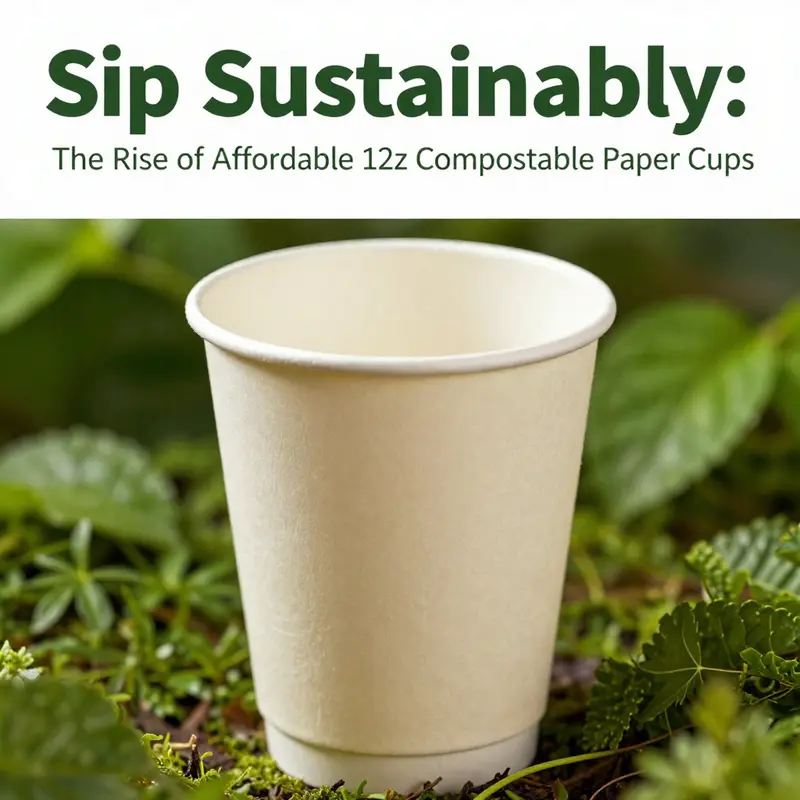
Every consumer-facing cup carries more than just a handle and a lid; it carries a material story that shapes its performance, cost, and end-of-life fate. Cheap 12oz compostable paper cups sit at a curious crossroads. They promise a reduction in plastic waste while maintaining the familiar, low-cost experience of a standard paper cup. Yet their sustainability claim hinges on material choices, how those materials interact with disposal infrastructure, and the real-world behavior of businesses and households. The chapter that follows weaves these threads together, tracing the material composition that makes these cups affordable and compostable, and examining what that means for how they are used, disposed of, and valued in a market hungry for both price relief and environmental accountability. At the core lies a straightforward pairing: a paper body that gives structure and a plant-based lining that resists liquid leakage. What happens beyond that pairing determines whether the cup truly closes the loop or merely shifts packaging waste from one stage to another in a longer supply chain.\n\nThe paper body is the backbone of these cups. In the best cases, it is sourced from responsibly managed forests or from recycled fibers, a choice that already positions the cup as more sustainable than many fully plastic alternatives. Paper offers strength, stiffness, and a familiar texture that teeth and hands recognize from everyday use. It is relatively easy to manufacture at scale, and it carries recyclability connotations in many consumer minds. But the paper alone cannot resist the rapid flow of coffee, tea, or other hot liquids without a protective barrier. That barrier is provided by a lining, the second critical component of the material equation. The lining most often used in affordable compostable cups is a plant-based biopolymer known as polylactic acid, or PLA. PLA is derived from renewable resources—primarily corn starch or sugarcane—and is celebrated for its ability to biodegrade under controlled industrial composting conditions. PLA fulfills a critical function: enabling liquid resistance without resorting to traditional, petroleum-based plastics. This alignment between a renewable feedstock and a functional barrier is a linchpin of the eco-friendly narrative around these cups.\n\nThe synergy between paper and PLA is more than a simple pairing; it represents a carefully balanced trade-off between barrier performance, cost, and end-of-life options. The PLA lining provides resistance to fats and liquids, ensuring that the cup remains sturdy until the consumer finishes the beverage. The paper body contributes to rigidity, allows for a relatively thin profile, and offers a surface that can be printed with branding or event-specific information. When this combination is engineered with compostability in mind, the cup can be certified to break down in industrial facility. Certifications such as ASTM D6400 or EN 13432 signal that, under the right conditions, the cup will decompose into water, carbon dioxide, and organic matter within a defined period. These standards are not mere marketing embellishments; they set measurable expectations for manufacturers and facilities. They also imply a commitment to avoiding toxic residues or incomplete decomposition, which can undermine confidence in compostable products as legitimate waste solutions.\n\nYet the certification story is incomplete without acknowledgment of the disposal landscape. Industrial composting facilities, where these cups are designed to be processed, are not evenly distributed across geographies or even across urban areas within the same city. This geographic disparity means that a cup could be fully compliant with compostability standards and still not reach an appropriate processing stream if the end user lacks access to industrial composting. Home composting, while conceptually compatible with the idea of compostable materials, often fails to achieve the necessary temperatures and residence times that these cups require to break down. The result is a gap between the ideal end-of-life scenario described in certifications and the practical realities of how cups end up in the waste stream. The material choice, therefore, must be understood not as a universal solution but as a component of a broader system that includes consumer behavior, municipal waste management, and the availability of industrial composting infrastructure.\n\nFrom a cost perspective, the material combination of paper and PLA helps explain why these cups can be marketed as both affordable and environmentally preferable. The paper portion can be relatively inexpensive when sourced in bulk and produced at scale. The PLA lining, while more costly than petroleum-based alternatives, benefits from being derived from renewable feedstocks and can be manufactured with predictable supply chains that mirror the production timelines of paper. When combined, the two components deliver a price-to-performance ratio that appeals to event organizers, coffee shops, catering companies, and other buyers seeking to balance price with a sustainability narrative. Bulk purchasing often brings the per-cup figure down toward or just around the dollar mark, depending on quantities and supplier terms. The economic logic is straightforward: a slightly higher raw-material cost for a compostable PLA lining is offset by a broader market that rewards products with compostability credentials and by the reduced costs associated with waste management and potential corporate sustainability goals.\n\nDiscussions of material composition would be incomplete without a nod to the real world—how these products perform across the life cycle, how they stand up to everyday use, and what differentiation exists for buyers who want more than just a clear conscience. The paper body gives the cup its tactile strength and structural integrity; the PLA lining delivers the liquid barrier that makes the cup practical for hot beverages. Together, they compose a product that appears, at first glance, to embody the promise of sustainable convenience. But the practical sustainability story depends on accurate disposal and consumer participation. If an industrial composting facility will not accept the cup, or if the facility exists only in isolated pockets, the intended end-of-life path falters. This is not a critique of the material itself; rather, it is a reminder that material choices must be paired with infrastructure and education. For buyers, understanding this pairing is essential to avoid greenwashed claims that obscure the complexities of real-world waste streams.\n\nConsumers and businesses alike should also recognize the interplay between compostability and recyclability. PLA, though plant-based, is not always compatible with traditional recycling streams. In many cases, the presence of a PLA-lined cup in a standard paper-recycling stream can complicate processing because the two materials require different handling. In plants that can separate them, recycling remains a viable option; in others, composting remains the more practical end-of-life route. This nuance matters because it reframes the sustainability advantage of the cup. It is not simply a matter of being able to purportedly break down; it is about the capacity of local facilities to receive and process the cup in a way that returns nutrients to the system. For businesses, this means engaging with suppliers who can explain not just the material composition but also the disposal capabilities available to their customers. It also suggests that marketing messages should be careful to describe end-of-life options in a way that aligns with local waste infrastructure, rather than presenting compostability as a universal fix.\n\nThe sourcing choices surrounding the paper body—whether it comes from recycled fibers or from responsibly managed forests—also shape the environmental profile. Recycled fibers reduce the demand for new wood and lower energy and water use in production, while responsibly managed forests provide the assurance that fiber procurement does not drive deforestation or habitat loss. Both approaches carry their own benefits and trade-offs, but together they underscore a fundamental principle: the most sustainable outcome emerges when material decisions are aligned with a transparent supply chain that can verify claims and provide clear disposal guidance. Transparency becomes a shared value across manufacturers, distributors, and end buyers, enabling institutions to compare options not only on price but also on verified environmental performance.\n\nTo bring this discussion back to the practical realities of the market, consider how a typical purchaser perceives and uses these cups. In settings where composting facilities are accessible and where staff can guide users toward the appropriate disposal option, the cups can fulfill a legitimate sustainability objective. In circumstances with limited composting infrastructure, the same cups risk becoming marginal improvements at best or misinterpreted as a broader green solution that solves everything. The material combination makes sense under the right conditions: a paper body for structure and renewability, a PLA lining for barrier performance, and a framework of standards that give buyers confidence in a composting end-of-life pathway. The payoff is a product that can be positioned not merely as a cheaper option but as a credible, certified pathway toward reducing plastic waste in beverage service—the kind of packaging choice that aligns with broader corporate sustainability goals and consumer expectations without sacrificing practicality or price.\n\nFrom a sourcing perspective, the narrative around composition also informs how buyers navigate supplier options and marketing claims. The availability of cups with a PLA lining that complies with recognized standards gives buyers a straightforward metric for evaluating products. The presence of a recognized certification can serve as a guidepost during supplier selection, particularly when a buyer is comparing multiple options that differ in fiber origin, barrier technology, or end-of-life infrastructure compatibility. Buyers who emphasize branding may also look for cups that accommodate logos and custom prints while preserving the material’s integrity and the end-of-life story. In this context, an internal option that blends affordability with branding potential can be especially appealing to venues that want to communicate sustainability messages to customers at the point of use. For example, a supplier that offers a range of eco-friendly, printed-logo paper cups targeted at 12-ounce servings provides a practical combination of visual impact and material integrity, supporting a cohesive sustainability narrative without forcing a price premium that defeats the business case. eco-friendly-printed-logo 12oz paper cups.\n\nIn sum, the material composition of affordable 12oz compostable paper cups is not a single-layer story but a layered narrative. The paper body offers supported structure and a canvas for branding, while the PLA lining supplies the crucial barrier that makes liquid containment possible without resorting to petroleum-based plastics. Certifications anchor the claim that these cups can break down under industrial composting conditions, but the practical realization of that promise depends on a disposal landscape that can receive and process them as intended. The cost realities reflect a balancing act between material inputs, manufacturing scale, and market demand for both price and sustainability. The result is a product that can be both economically attractive and environmentally meaningful, provided that buyers and facilities align on end-of-life stewardship. The conversation around these cups continues to evolve as supply chains develop and waste-management infrastructure expands, shaping a future where affordable compostable options are not an exception but a standard feature of beverage service.\n\nExternal resources can illuminate the broader context of how these materials perform in practice. For a representative example of how compostable cups are marketed and positioned in consumer channels, readers can consult industry listings that highlight compostable paper cups with similar material profiles and acceptance criteria. This external reference offers a snapshot of the consumer-facing interpretation of compostable cups and the practical realities of purchasing decisions in bulk and in retail formats. https://www.amazon.com/ECOLipak-Compostable-Paper-Cups-12-Ounce/dp/B07X9Y5ZQV
Beyond the Price Tag: Certification Standards that Make Cheap 12oz Compostable Paper Cups Truly Sustainable
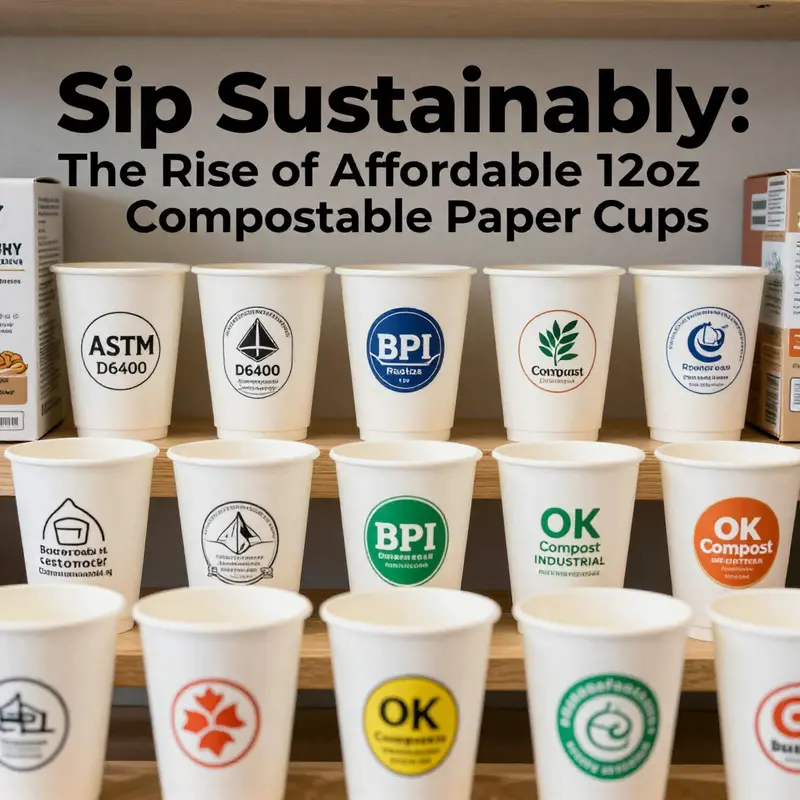
Cheap 12oz compostable cups lure buyers with low upfront costs, but sustainability hinges on certification, not the sticker price. In the rush to host an event or run a busy café, it is easy to assume that a low-cost option is automatically responsible. Yet certification standards are the quiet gatekeepers that translate a promise into measurable environmental performance. They do more than check a box; they define what happens to the cup after use, how it interacts with food safety, and whether the disposal system can actually transform the cup into useful compost. For any purchaser evaluating affordability alongside accountability, the question is not only how little a cup costs, but how convincingly its certifications back up its compostable claim over the long haul. When a 12oz cup is marketed as compostable, the certification landscape becomes the essential map that guides buyers from price to practical, end-of-life outcomes. In this sense, price is a lever, and certification is the fulcrum that ensures that lever actually tilts toward sustainability rather than merely toward a cheaper version of a disposable habit.
A foundation of trust in food contact materials rests on compliance with food safety regulations. The EU Regulation (EC) No 1935/2004 sets a baseline that materials used in contact with food must not release substances in harmful quantities. For a paper cup with a PLA lining—the bioplastic derived from renewable resources like corn starch—this regulation translates to a careful assessment of how the lining interacts with beverages, fats, and acids. It requires that migration of constituents into food remains within permitted limits, a safeguard that protects consumers and underpins the legitimacy of a compostable claim. This is not a theoretical standard; it shapes the way suppliers formulate the cup and the way buyers confirm that a given product can legally be used with food. A cheap cup that truly respects this rule is not merely a cheaper version of the same product; it is a cup that has passed a safety screen that is recognized across jurisdictions and markets. The practical upshot for purchasers is that documentation accompanying the cup—the certificates, the test reports, and the traceable pathways—becomes as important as the price tag itself.
On the environmental side, several certifications signal real biodegradability and compostability in real facilities. Among the most widely recognized are TÜV OK Compost and ASTM D6400. The TÜV OK Compost mark indicates that a product is suitable for industrial composting and meets explicit criteria for biodegradability and compostability. It gives buyers confidence that the cup will break down in a commercial composting stream rather than persisting as waste. The ASTM D6400 standard provides a parallel framework in the United States. It defines the conditions under which a material will break down into non-toxic residues in a municipal or industrial composting facility, with specified rates of disintegration and limits on residuals. When a cheap cup bears these marks, it signals that affordability has not come at the expense of landfill-bound outcomes. The OK Biobased certification further strengthens the story by verifying that a portion of the cup content is derived from renewable biomass. This is not merely a green marketing slogan; it is a quantifiable claim about the material’s origin and the lifecycle it traces. Taken together, these certifications help buyers distinguish between cups that claim compostability in principle and those that demonstrate it in practice.
Beyond the immediate biodegradability claims, the governance of packaging extends into how producers manage end-of-life responsibilities. Many environmentally conscious cups are also part of broader sustainability regimes, including Germany’s Extended Producer Responsibility (EPR) packaging regulations. EPR places the onus on producers to finance the collection, sorting, and recycling or composting of their packaging. While the day-to-day operation of an event may not visibly reveal these policies, they shape the supply chain architecture that makes compostable cups viable at scale. An inexpensive cup that is supported by a robust EPR framework signals a more resilient overall system: it is backed by the policy environment and the financial incentives that ensure proper waste handling and ongoing compliance. In jurisdictions where EPR is well established, the cost per cup might reflect these implicit investments, but the long-term gains include clearer responsibility for end-of-life outcomes and more predictable disposal streams for organizers and operators.
Supply chain documentation plays a pivotal role in translating certification into usable procurement knowledge. When sourcing cheap compostable cups, buyers should request certificates and test results that corroborate the certifications claimed. This goes beyond a single certificate; it encompasses the vendor’s ability to provide ongoing proof of compliance with EU and German sustainability standards, as well as any applicable regional or industry-specific requirements. In this respect, the documentation becomes a form of price discipline: it helps buyers avoid inadvertently selecting a low-cost option that relies on questionable or expired marks. The reality is that some listings on large online marketplaces may advertise compostability without delivering verifiable proof. Therefore, buyers are advised to seek supplier-provided certificates or direct confirmations from recognized certification bodies. The emphasis on documentation safeguards both consumer safety and environmental integrity, ensuring that a bargain cup does not become a disposal burden dressed in green rhetoric.
A practical reminder about the materials involved clarifies the pathway to composting for many buyers. The paper body of a 12oz cup with a PLA lining is designed to be compatible with industrial composting facilities rather than home composting systems. PLA itself has a different disintegration profile than conventional plastics, and industrial facilities equipped with high temperatures and controlled moisture conditions are generally required to realize the intended composting result. Certification marks such as OK Compost INDUSTRIAL specifically denote compatibility with those industrial streams. This distinction matters for event organizers who must plan for the logistics of composting or recycling; a cup that cannot be accepted in the local composting facility will end up as residual waste, undermining the sustainability claim. Consequently, buyers should align their sourcing decisions with local waste-management capabilities and verify that the end-of-life infrastructure exists to accept the cups in question. The dialogue between certification and facility availability means that a cup’s environmental credentials are only as good as the system that processes it after use.
To connect theory with a real-world lens, consider how a listing that highlights eco-friendly design choices translates into certified practice. A product page that emphasizes an eco-friendly approach to printing logos or branding can be a helpful signal, but certification remains the benchmark of credibility. For a practical example of how sustainability credentials are presented in product listings, see the eco-friendly printed logo paper ice cream cups with lid. This linked example illustrates how suppliers communicate environmental attributes while still operating within the certification framework that validates compostability and safety. eco-friendly printed logo paper ice cream cups with lid
A final, pragmatic layer concerns cost and scale. The economics of cheap 12oz compostable cups do not collapse under scrutiny when certification and documentation are prioritized alongside bulk pricing. The research behind affordable options shows that bulk purchasing can start around $150 for 150 cups, translating to roughly $1.00 per cup. That cost structure demonstrates that compostable options can be financially viable at scale without compromising the standards that make composting feasible. The tension between cost and credibility is not a zero-sum game; when certifications are transparent and well-supported by documentation, the lower price point becomes a result of efficient production and a trustworthy supply chain rather than a dilution of environmental safeguards. In this sense, the chapter’s core argument is that price and certification are not rivals but complementary facets of a responsible procurement decision.
For those who want to explore the broader context of sustainability in disposable paper goods, a representative supplier page demonstrates how eco-friendly features are integrated into product lines while still aligning with recognized standards. The combination of food-safety compliance, biodegradability parameters, renewable content verification, and responsible waste management creates a robust framework for evaluating cheap cups that genuinely meet compostability expectations. The end result is a cup that does not merely pretend to be green but is backed by a certified lifecycle that can be traced from raw materials through to the composting facility and beyond. In the end, customers, event organizers, and food-service operators gain confidence when their low-cost choice adheres to proven standards, and the planting of the seed for a more sustainable packaging ecosystem begins with discerning certification rather than accepting cost alone as a guarantee of virtue.
External resource for further reading: https://www.alibaba.com/product-detail/Comgesi-Customized-Insulated-Paper-Cup-Disposable_1600476724338.html
Small Cup, Big Value: The Economics and Sustainability of Affordable 12oz Compostable Paper Cups
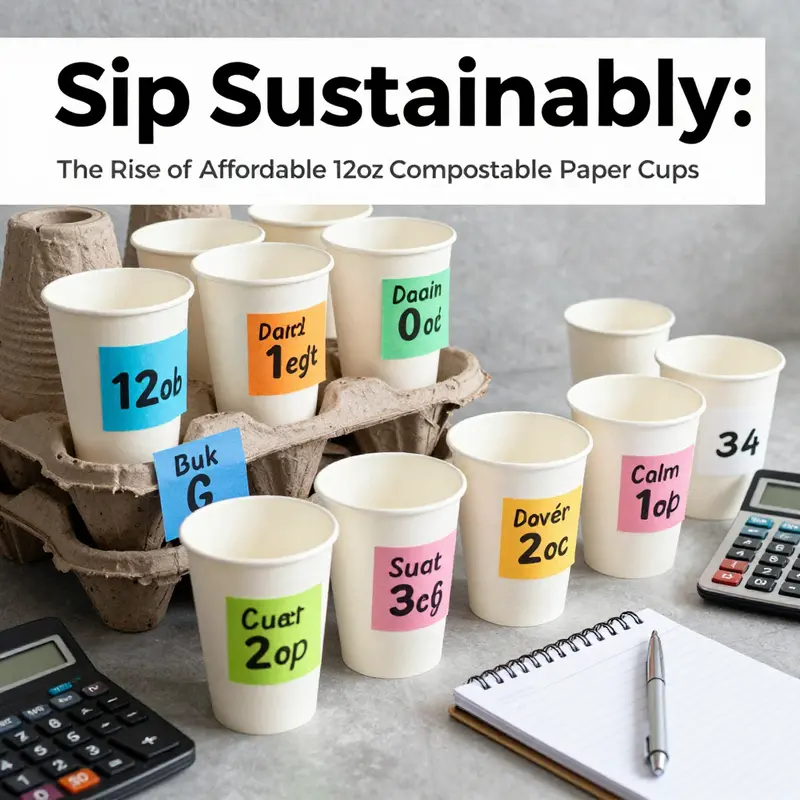
Across the crowded landscape of disposable beverage containers, the affordable 12oz compostable paper cup stands out not merely as a product but as a statement—a choice that blends budgetary practicality with environmental responsibility. As businesses—from neighborhood cafes to event organizers and retailers—seek to reduce the environmental footprint of their carryout and hospitality operations, these cups offer a rare convergence of price and principle. They are built around a simple yet effective architecture: a paper body that provides a reliable, familiar feel and a lining of polylactic acid (PLA), a bioplastic derived from renewable resources such as cornstarch. The PLA lining is not just a material choice; it signals an intent toward end-of-life processing that diverges from conventional petroleum-based disposables. When these cups reach the appropriate composting stream, they are designed to break down in industrial facilities in a way that supports a circular approach to packaging waste. This is not a vague aspiration; it is anchored in established standards that guide both manufacturers and composting infrastructure.
The certifications attached to these cups matter as much as the cups themselves. They are often certified under recognized compostability standards, including ASTM D6400, BPI, and OK Compost INDUSTRIAL, ensuring that the decomposition process is safe, predictable, and compatible with professionally managed composting systems. For businesses, this is more than a badge of ecological intent; it is a compliance anchor. It helps ensure that the cups do not simply vanish in a landfill, but follow a pathway that, in the proper facilities, returns nutrients to the soil. In markets where waste regulation tightens and customers increasingly demand visible sustainability commitments, those certifications do more than reassure customers—they can become a differentiator in a crowded competitive landscape.
From a pricing perspective, the economics of these cups can be surprisingly compelling. The research results reveal a spectrum of affordable options that scale with order size, underscoring the practical value of buying in bulk. A typical mid-range example is a pack of 200 cups at $49.95, translating to about $0.25 per cup. This price point sits at the sweet spot for many small businesses that want to offer a sustainable option without passing a steep premium to customers. The economics become more favorable with larger orders: 100 cups at $31.95 yields roughly $0.32 per cup, while 50 cups at $21.95 comes to about $0.44 per cup. Although the per-unit price increases as orders shrink, even these smaller quantities remain competitive when compared with non-compostable counterparts, especially when the environment and brand reputation are taken into account.
These numbers illuminate a broader truth about sustainability in practice: it is not only a matter of “doing good” but a matter of smart budgeting and strategic procurement. The per-cup cost, when viewed through the lens of annual consumption and replacement rates, can translate into meaningful savings over time. Cafes that serve hundreds of beverages daily, or events that run multiple sessions with repeated service, can leverage bulk pricing to stabilize costs and reduce the volatility that often accompanies commodity prices in the packaging market. The same logic applies to retailers who host tasting events, pop-up shops, or seasonal campaigns where disposable cups are an operational necessity. In such contexts, adopting a compostable option that remains economically viable is a practical decision that aligns economic resilience with environmental stewardship.
Beyond the face value of a price tag, the long-term financial benefits of choosing compostable cups become more pronounced when framed against evolving regulatory landscapes and consumer expectations. Regulations that favor or require end-of-life stewardship are becoming more common, particularly in jurisdictions prioritizing composting infrastructure and waste diversion. As policies push for more sustainable packaging—whether through mandates, labeling clarity, or incentives—companies that already source compliant, compostable options can avoid last-minute compliance costs and complex retrofits. In turn, this can translate into more predictable budgeting, improved audit outcomes, and easier alignment with green certifications that some organizations seek to display as part of their corporate identity.
The appeal of compostable cups is also tied to the broader narrative of waste reduction and resource stewardship. 100 percent compostable by design, the cups reduce landfill waste when recycled through the right channels. They support initiatives that track and demonstrate progress toward waste diversion goals. This is not merely an aesthetic or marketing advantage; it is an operational advantage that can dovetail with sustainability reporting, investor relations, and grant opportunities. For example, so long as a business maintains appropriate records of compostability certifications and partner facilities, it can position itself as a participant in green business ecosystems, where incentives or recognition programs exist to reward responsible packaging choices. While incentives vary by locale and program, the overarching logic remains consistent: lower environmental impact can accompany lower long-run costs or enhanced brand value.
A practical lens on these cups also reveals opportunities to optimize supply chains. PLA-lined cups, when sourced from reputable suppliers, are part of a broader packaging ecosystem designed to minimize waste and maximize end-of-life processing. The alignment with industrial composting facilities means that companies need to understand the availability and accessibility of such facilities in their regions. Some municipalities maintain robust industrial composting networks, while others rely more on private or regional partnerships. In either case, clear labeling and certification help ensure that cups are placed in the correct stream and do not degrade into materials that complicate composting processes. The reliability of the supply chain—consistent quality, predictable lead times, and responsive customer service—becomes as essential as the price per cup. A price advantage is most valuable when it is supported by dependable delivery schedules and consistent product quality, especially for larger events or recurring service models.
For organizations seeking to integrate these cups with branding and customer experience, the opportunity is twofold. On one hand, a cup served in a familiar, affordable shell that meets compostability standards communicates a practical commitment to sustainability. On the other hand, the opportunity exists to reinforce that message visually through branding strategies that complement the cup’s eco-friendly profile. Some suppliers offer eco-friendly printed-logo options, which can extend the sustainability narrative from the product itself to the customer touchpoint. For readers exploring branded options, consider a pathway that combines affordability with a green message and reliable performance. A relevant example of such a supplier is the eco-friendly printed-logo paper cup line, available for take-away coffee and other hot beverages in the 8- to 12-ounce range. This option demonstrates how branding can be integrated without sacrificing the core sustainability and cost advantages that these cups provide. Readers who want to explore this branded approach can find more detail here: eco-friendly printed-logo paper cups for take-away coffee.
The economic argument for cheap 12oz compostable cups thus rests on a blend of material choice, certification credibility, and scale-driven pricing. Yet the story remains incomplete without considering the end-user experience and the operational realities of disposal. Industrial composting, not household composting, is typically the pathway where these cups fully realize their environmental potential. This distinction matters because it shapes how businesses talk to customers and how facilities handle waste streams. The certifications ensure that the cups perform as intended under industrial conditions, but the evidence of impact is strongest when communities build robust composting networks capable of processing these products efficiently and safely. In turn, this infrastructure—whether public or private—underpins both the ecological benefit and the economic argument. When customers see a business investing in compostable cups and, crucially, in the systems that support proper disposal, they often respond with stronger loyalty, greater willingness to choose that business, and even advocacy in their social circles. The payoff is not merely environmental; it is relational and reputational as well, creating a durable competitive edge for brands that knit sustainability into everyday practice.
The interplay between price, performance, and policy underscores a broader lesson for managers and planners: the value of a packaging choice is not determined by a single metric. It is shaped by how the product behaves in real-world use, how it is disposed of after use, and how that disposal aligns with a company’s strategic sustainability goals. The 12oz compostable cup’s appeal lies in its ability to deliver dependable performance at scale while enabling a business to articulate a credible sustainability narrative. For cafes juggling high volumes and tight margins, this triple alignment—cost efficiency, environmental responsibility, and clear consumer messaging—can translate into steadier profit margins and more resilient operating models.
As readers consider procurement options, the potential for internal alignment becomes apparent. Businesses that adopt eco-conscious packaging can leverage branding, supplier relationships, and consumer expectations as a coherent, integrated strategy. To illustrate a practical branding angle, one could partner with suppliers offering branded, eco-friendly cups that carry a visible sustainability story. The process of selecting such cups involves more than price per unit; it includes evaluating packaging aesthetics, compatibility with existing lids and sleeves, reliability of the PLA lining under typical beverage temperatures, and the supplier’s ability to maintain consistent quality across large orders. In this sense, the economics of cheap 12oz compostable cups are not a stand-alone calculation but part of a broader decision framework that balances cost, carbon footprint, and corporate messaging. The result is a packaging choice that serves customers well, respects the planet, and supports business longevity.
For readers seeking a practical entry point into this approach, a direct link to a representative product line that embodies affordability and compostability can be valuable. Explore a supplier option that emphasizes eco-friendly branding and the 12-ounce footprint for take-away beverages through this example: eco-friendly printed-logo paper cups for take-away coffee. This link points to a real-world option that demonstrates how branding and sustainability can be integrated without sacrificing price competitiveness. It also serves as a reminder that the market offers a spectrum of configurations to suit different business models, from quick-service venues to planned marketing campaigns that prioritize environmental credentials.
In reviewing the broader landscape, it is clear that the economics of cheap 12oz compostable cups are most compelling when viewed through a lifecycle lens. The initial price per cup must be weighed against disposal costs saved by diverting waste from landfills, the potential for certifications that bolster consumer trust, and the long-term advantages of aligning with regulatory trends that encourage responsible packaging. When these elements converge, the result is not merely a favorable line item on a P&L but a strategic asset that supports sustainable growth. The cups become a conduit for a company’s environmental commitments to resonate with customers, investors, and regulators alike. And as markets adapt to new norms around packaging waste and circular economy principles, the affordability of these cups helps ensure that sustainable practices stay within reach for a broad array of businesses.
External resources offer additional context for practitioners who want to verify disposal pathways and certification nuances. For a concrete reference on consumer access to compostable options and the practical pricing spectrum in a real marketplace, see the external product page linked here: https://www.amazon.com/dp/B0CZPQJY6V. This resource provides a snapshot of how these cups are priced and positioned in the market, complementing the broader analysis with concrete, consumer-facing data. While individual experiences may vary by supplier, geography, and facility availability, the core takeaway remains consistent: affordable, compostable cups with validated end-of-life pathways are increasingly accessible and financially viable for a wide range of operations.
Beyond the Price Tag: Unpacking the True Environmental Cost of Cheap 12oz Compostable Paper Cups
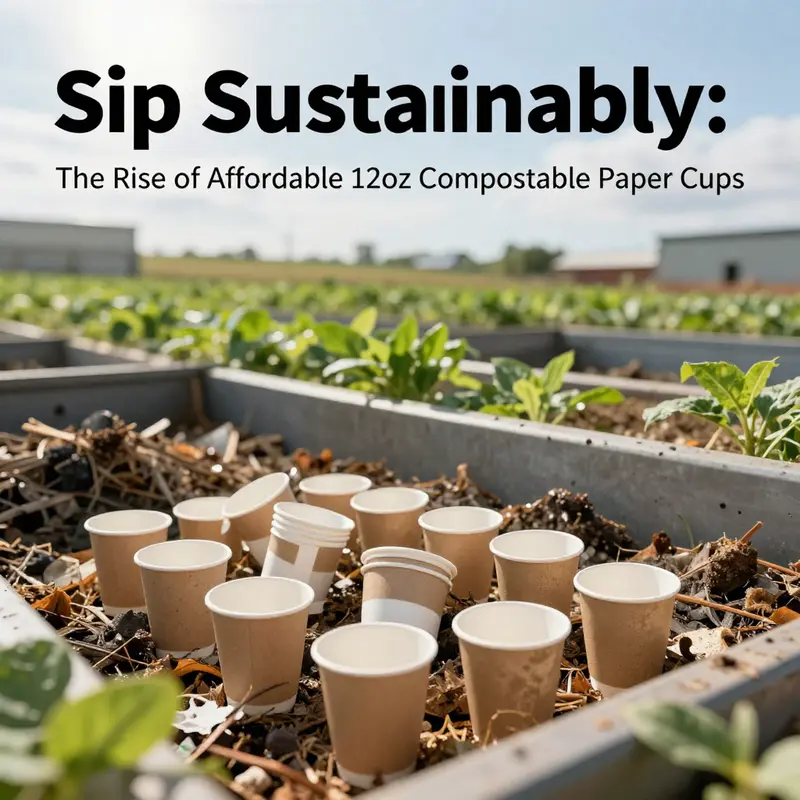
The promise of cheap 12oz compostable paper cups rests on a simple narrative: they offer a cleaner, greener substitute for plastic while fitting budgets for events, cafeterias, or quick service operations. Yet the environmental calculus behind that narrative is far from straightforward. The story of a low cost cup unfolds across manufacturing choices, disposal systems, and consumer behavior that can amplify or erode its sustainability.
Mislabeling remains a persistent pattern in this sector. Many cups marketed as compostable or biodegradable do not always perform as claimed. Some blends include starches or plant derivatives but still embed nondegradable plastics such as polypropylene, which can prevent true degradation in a composting facility and may contaminate organics streams.
PFAS concerns: some cups use fluorinated coatings to repel liquids. PFAS are persistent in the environment and can migrate into soil and water. The health and ecological implications extend beyond disposal.
Even certified products depend on facility conditions. Industrial composting infrastructure is unevenly distributed, and many people dispose of cups in regular trash. Labeled compostable products may behave like conventional plastics in the waste stream if appropriate facilities are not available, making the lifecycle benefit conditional.
Production footprint: paper pulp requires energy and water; waterproof linings add downstream processing challenges that can reduce recycling efficiency if separation fails.
Pricing reality: low unit cost can be appealing but may not translate into real environmental savings if disposal systems are lacking or contamination increases processing costs. A holistic approach considers certification, supply chain transparency, and local disposal realities.
What buyers can do: request lifecycle mapping from suppliers, assess local composting capacity, account for disposal costs, and invest in consumer education. Favor products with credible certifications and robust end-of-life ecosystems.
Conclusion: sustainability is system-wide; price and conscience can align with discipline and due diligence when the entire lifecycle is supported by credible infrastructure and transparent information.
External resource: Shanghai Consumer Council investigation at https://www.shcc.org.cn/.
Final thoughts
Adopting cheap 12oz compostable paper cups is not just a logistical decision; it’s a statement of your commitment to sustainability and environmental responsibility. As demonstrated, these cups, made from renewable materials and backed by stringent certifications, can enhance your brand’s appeal while helping you cut down on waste and costs. In a world where eco-consciousness is increasingly important, choosing compostable options allows your business to stay competitive and socially responsible. Make the switch today and contribute positively to the environment while delighting your customers.