

As the trend towards sustainability drives innovation in packaging, bagasse clamshell factories stand at the forefront of this revolution. These factories produce eco-friendly disposable tableware made from bagasse, a natural by-product of the sugar industry. This article delves into the intricate production processes in these factories, analyzes market trends influencing product demand, highlights technological innovations shaping manufacturing, and considers the economic and environmental impacts of bagasse clamshell factory operations. Each chapter will enhance your understanding of this vital business sector, empowering you as a business owner to make informed decisions and stay competitive in the marketplace.
From Sugarcane Residue to Sustainable Takeout: An Integrated Journey Through Bagasse Clamshell Factory Production
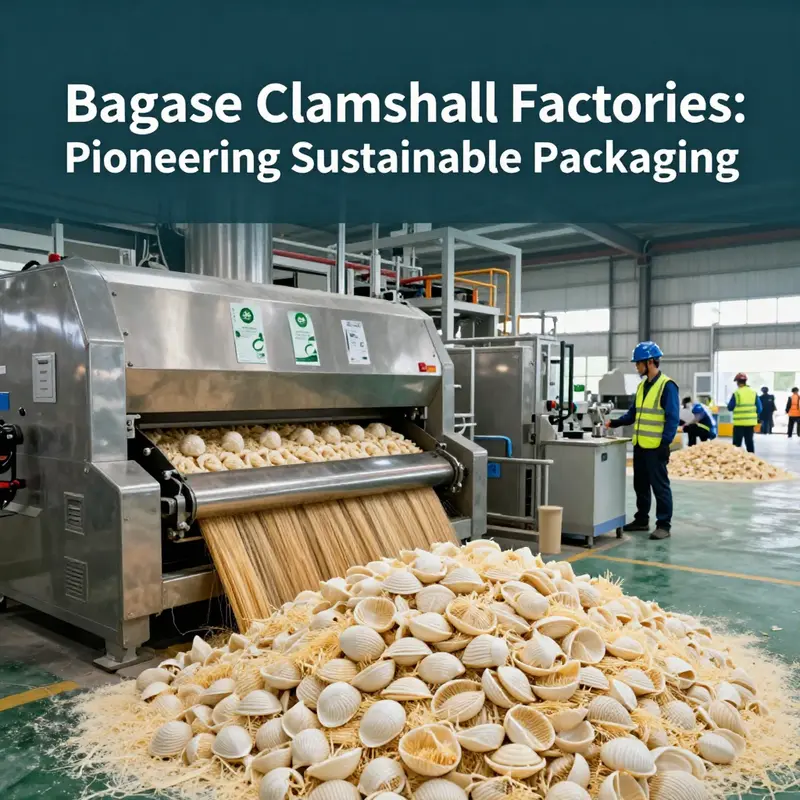
The bagasse clamshell factory sits at the intersection of waste valorization and consumer convenience. It is not simply a line of machines turning fibrous leftovers into disposable tableware; it is an integrated system that begins the moment a harvest of sugarcane ends and ends only when a compostable container has safely carried a meal and returned to the soil or a composting facility. This seamless transformation rests on a disciplined flow of materials, energy, and quality that keeps the green promise intact while producing a reliable, cost-effective product for the growing takeout and food service sectors. In this narrative, the factory is a living organism, balancing raw material abundance with process precision, market demand with environmental responsibility, and engineering ingenuity with practical scale.
The primary raw material—bagasse—comes from the fibrous residue left after juice extraction from sugarcane. It is abundant in regions tied to sugar production, and its availability provides a steady feedstock for continuous manufacturing. In practice, an efficient facility leverages regional clustering to simplify logistics, secure stable supply, and share specialized knowledge. The advantage of clustering is not merely proximity; it is an ecosystem where suppliers, equipment manufacturers, and end users co-evolve. In such hubs, mills, pulp houses, and packaging units align on standards, certifications, and safety practices, creating an archetype for sustainable packaging. Within this ecosystem, the quality of incoming bagasse is a crucial lever. Clean feedstock minimizes downstream impurities, reduces waste during pulping, and extends the life of cutting tools and forming dies. The journey from field to mold begins with a thoughtful cleaning and sorting stage that removes foreign matter and dust, ensuring the slurry begins its life as a uniform, predictable feedstock for the pulping step.
Once cleaned, the bagasse enters the pulping process. Here, mechanical processing is paired with water to create a homogeneous slurry. The objective is not to weaken the material but to liberate the lignocellulosic matrix just enough to allow a controlled flow into the forming dies. The pulping parameters—viscosity, fiber length, and moisture content—are tuned with care. Too coarse a slurry yields weak walls; too fine a slurry risks clogging and inconsistent density. Operators monitor temperature, agitation speed, and pH to maintain a stable environment for the chemical and physical reactions happening within the slurry. This stage is the quiet heart of the workflow, translating agricultural by-products into a feedstock that behaves predictably under pressure and heat in the mold.
The molding operation is where the material meets its final geometry. Bagasse clamshells are formed in hydraulic presses designed for high-volume production and strict dimensional control. Two-station or multi-station configurations enable continuous throughput, with cycles that align closely to drying times and downstream handling. The molding process relies on a combination of pressure and heat to impart rigidity and leak resistance. Precision in mold design is essential: the geometry must resist flexing under load, hold a secure seam, and present a clean, consumer-friendly outer surface. Modern clamshell tooling often features interchangeable dies to accommodate a spectrum of sizes, most frequently 6-inch and 8-inch forms with three compartments to separate entrees, sides, and dressings. The mold surface finish, depth of the cavity, and seam geometry determine not only performance but the ease with which the product releases from the mold and proceeds to drying.
Following molding, the drying phase solidifies the product and reduces moisture to a level compatible with transport, stacking, and shelf life. Drying systems vary, but the objective remains the same: remove enough moisture to prevent deformation, microbial growth, and warping while maintaining structural integrity and a pleasant tactile feel. In many facilities, post-press drying is integrated into the line with controlled airflow, temperature, and humidity. Temperature control is a balancing act—too high and the surface can crack; too low and moisture lingers, compromising performance. Advances in energy-efficient drying technologies, including closed-loop air circulation and heat recovery, help factories reduce operating costs while diminishing the carbon footprint of the process. The drying stage also primes the product for downstream handling, where a careful cooling sequence minimizes residual stress that could otherwise lead to warping after packing.
Quality inspection follows the drying process, acting as a final corrective filter before the clamshells leave the plant. Modern facilities pair human oversight with automated systems to check dimensions, seam integrity, and surface finish. Defective items are diverted early, and rework loops are minimized through inline monitoring of process parameters. The consistency of wall thickness, lid alignment, and seal strength is critical; even small deviations can lead to leakage or poor stacking behavior in transportation. A robust inspection regime reassures buyers that the clamshells will perform under typical food packaging conditions—hot oils, sauces, and refrigerated storage—without compromising safety or ergonomics. After passing inspection, the containers enter packaging, where they are stacked, counted, and wrapped in moisture-resistant packaging that protects them from humidity during distribution.
Distribution completes the lifecycle of the product within the factory’s control. Finished bags are grouped into shipments designed to maximize space, minimize packaging waste, and preserve cleanliness. The packaging layer is more than a container for the product; it is a statement of sustainability, sometimes featuring certifications and labeling that communicate compostability, safety, and regulatory compliance. An efficient distribution strategy relies on reliable logistics partners, but it also relies on the predictability of the manufacturing line. When the line runs smoothly, forecast accuracy improves, inventory costs fall, and customer lead times shorten. This reliability is particularly valuable in the takeout sector, where restaurants and food-service operators depend on consistent supply and on a product that aligns with their environmental commitments.
In parallel with the mechanics of production, there is a broader ecosystem at work that shapes what these facilities look like and how they innovate. Regions known for bagasse clamshell production have cultivated a suite of capabilities—from pulping technology and hydromechanical forming to energy-efficient drying and automated quality control—that collectively raise the bar for global competitiveness. R&D activities in these hubs push for improvements in heat resistance and moisture barriers, enabling clamshells to withstand longer transportation times or more challenging service conditions without losing rigidity or leaking. Tooling technologies—ranging from optimized mold geometries to multilayer barrier coatings—are explored to extend product performance while keeping costs in check. The net effect is a scalable, adaptable production system that can respond to shifting demand patterns, whether a city sees a surge in takeout meals or a region expands its eco-packaging infrastructure.
Crucially, the viability of these factories rests on more than process optimization. A sustainable supply chain for bagasse depends on stable, traceable sourcing agreements with sugar mills and pulp suppliers. The capacity to forecast bagasse supply, manage seasonal variations, and maintain quality across batches is as important as the precision of the molding machine. In practice, producers often align with industry standards and certifications to reassure buyers about safety and compostability. The presence of recognized certifications, such as those aligned with FDA safety standards and compostability programs, helps factories access diverse markets. This certification ecosystem supports not only the domestic market but also international exports, where buyers require verifiable assurances that the packaging is safe for contact with food and compatible with composting processes after use.
Another dimension of the production narrative is the customer-facing value proposition embedded in the product design. The choice of a three-compartment layout—common for balancing salads, entrees, and sides—addresses practical food-service needs while keeping the geometry conducive to secure stacking and minimal leakage at the seams. The sizes, typically 6-inch and 8-inch, represent a balance between portion control, material usage, and compatibility with standard takeout dimensions. From a business perspective, these size configurations also influence unit pricing and demand forecasting, factors that feed into the broader economics of a bagasse clamshell factory. In bulk terms, price points often reflect the efficiency of the line, the stability of raw material supply, and the breadth of certifications required to serve different markets. The economics thus emerge from a confluence of process discipline, supply chain reliability, and the credibility conferred by rigorous certification.
This integrated production approach is not just about replacing plastic with plant-based alternatives. It is about designing a system that can deliver consistent performance while reducing environmental impact. The renewable nature of bagasse, combined with the biodegradability of the final product, creates a compelling lifecycle story for customers who seek to minimize plastic waste without compromising the reliability of their packaging. In practice, a well-run factory demonstrates energy efficiency in every step—from pulping through mold cycles to the drying phase—while maintaining throughput that satisfies the demand of busy kitchens and catering operations. The resulting products must withstand the rigors of real-world use, from hot meals to short-term refrigeration, and then break down as intended when composted or disposed of through appropriate facilities.
In reflecting on the production journey, it is clear that the factory is more than a sequence of operations. It is a learning organization that continuously absorbs innovations from its manufacturing hubs and translates them into tangible gains in quality, cost, and environmental performance. The ability to scale, the discipline to maintain consistent product quality, and the commitment to responsible sourcing shape the resilience of these facilities in a market that increasingly values sustainability as a core criterion. The end-to-end view—from raw bagasse to a finished, compostable clamshell—illustrates how a single product can embody circular economy principles while meeting the practical needs of food-service customers. It is this fusion of material science, mechanical engineering, and supply-chain discipline that defines the contemporary bagasse clamshell factory and will shape its ongoing evolution as demand for eco-friendly packaging continues to grow. For readers seeking deeper technical specifics on machinery and standards, a detailed resource on bagasse clamshell equipment and industry norms is available for further exploration: https://www.1688.com/offer/672593410387.html?spm=a2b0e.11466841.0.0.6d7a6c8fJYkMmX. In parallel, practitioners interested in practical supplier engagement can consult the disposable tableware category to understand how these products are positioned within broader packaging solutions, including compatibility considerations with takeout workflows Disposable Tableware.
From Sugarcane Fiber to the Shelf: The Rise and Reach of Bagasse Clamshell Factories
The journey of bagasse from a by-product of the sugar industry to a staple of sustainable packaging is more than a seasonal trend; it marks a wholesale shift in how food is served, transported, and discarded. Bagasse, the fibrous pulp left after juice extraction, has found its second life as a versatile, compostable material. As consumer awareness about plastic waste grows and regulatory pressures tighten around single-use plastics, bagasse clamshells have evolved from niche alternatives to mass-market mainstays. The market story that unfolds around bagasse clamshell factory products is not only about improved materials but also about a new industrial ecology—one that links agricultural by-products, intelligent manufacturing, logistics efficiency, and a global appetite for greener options.
Numbers tell a compelling part of this story. The global bagasse pulp and paper market, valued at roughly USD 612 million in 2024, is projected to reach USD 905 million by 2031, a compound annual growth rate of 5.8%. That trajectory reflects more than rising demand for eco-friendly packaging; it signals a broader acceptance of bagasse as a credible, scalable input for a range of consumer goods. Within this broader market, the bagasse tableware segment—where clamshells belong—was worth about USD 1.2 billion in 2024 and is forecast to swell to roughly USD 2.5 billion by 2033. The entire stock clamshell packaging category, which encompasses a spectrum of compostable and biodegradable options, stood at USD 6.00 billion in 2025 and is expected to climb to USD 7.87 billion by 2030. Taken together, these figures frame a robust demand ecosystem where bagasse clamshells are not a boutique option but a scalable, cost-competitive choice for many foodservice applications.
In practical terms, growth is most visible where supply chains, technology, and consumer habits converge. The market is being steered by rising demand from the food service, takeout, and e-commerce sectors, all of which require packaging that can perform reliably while aligning with sustainability commitments. Bagasse clamshells meet a critical need: they are sturdy enough for hot and cold foods, they resist leaks and odors, and they break down relatively quickly when composted under appropriate conditions. This combination makes them particularly attractive for meal delivery, quick-service restaurants, cafeterias, and prepared-food retailers that aim to reduce plastic footprints without compromising the user experience.
Geography matters in this narrative, and China emerges as a central fulcrum. The country remains the dominant hub for sustainable packaging production, with concentrated industrial clusters in Anhui, Zhejiang, and Guangdong. These regions offer a potent mix of factors that underpin the bagasse clamshell economy: abundant supply of raw bagasse, mature processing technologies, well-developed logistics networks, and cost advantages that enable economies of scale. For buyers, this translates into reliable access to a diverse range of clamshell designs—whether standard round profiles or more specialized shapes, including square or multi-compartment configurations that suit varied menu formats. The ability to customize, scale, and maintain consistent quality at competitive prices is a core driver of the global appeal of Chinese bagasse clamshell factories.
Another practical dimension shaping the market is the ease with which buyers can validate suppliers and prototype product lines. The landscape is increasingly dotted with offerings of low-cost samples—sometimes as low as USD 0.01 per piece—facilitating rapid prototyping, market testing, and iteration before a larger procurement commitment. For a restaurant chain testing a new delivery concept or a caterer piloting a festival service, this capability reduces upfront risk and accelerates learning. It also underscores the importance of a robust supplier network that can support not only mass production but the small, iterative runs that inform packaging design and performance.
Within the product spectrum, the typical bagasse clamshell box often attends to a practical recipe of dimensions and compartments. The market standard frequently includes 6-inch and 8-inch formats, each designed with three compartments to separate components such as a salad, a main course, and a side. This layout is not only convenient but also aligns with portioning practices in many dining formats, from grab-and-go to dine-in accompaniment. The three-compartment design also supports a growing trend toward meal customization and combination meals, where the separation of components helps preserve textures and flavors during transport. From a manufacturing perspective, these shapes and configurations can be produced with high fidelity using established bagasse processing lines, aided by folding, forming, and occasionally lamination steps that improve moisture resistance and stacking efficiency for packaging stacks.
The economic side of the equation hinges on competitive production costs, certification credentials, and the ability to meet global standards. For many buyers, the path to procurement begins with a clear view of certification regimes. FDA certification, OK Compost certification, and BPI certification appear repeatedly as yardsticks of safety and compostability. These endorsements reassure customers that the packaging will perform as intended during use and will decompose in appropriate composting environments after disposal, reducing the long-tail environmental impact associated with packaging waste. In an era of heightened environmental scrutiny and evolving regulations, such certifications are not optional add-ons but fundamental prerequisites for doing sustained business across borders.
Close attention to cost is also essential. Bulk orders—defined commonly at a minimum of 10,000 units—vary in price but often cluster in a favorable range around USD 0.09 to USD 0.10 per unit. This price point sits at a competitive crossroad: it undercuts many traditional plastic alternatives while still delivering reliable margins for manufacturers who can optimize raw material supply, energy use, and labor. The margin dynamics reinforce the importance of scale and process efficiency. In this context, the bagasse clamshell factory gear—whether it’s hydrothermal pretreatment steps, pulping substitutions, or optimization of drying and pressing cycles—takes on renewed strategic significance. The aim is not merely to produce a single container but to create a repeatable, quality-driven process that can deliver consistent outputs across batches and seasons.
To readers and practitioners seeking to source intelligently, the supplier ecosystem has evolved into a well-woven network of manufacturers, distributors, and platform-enabled buyers. B2B platforms, including widely used online marketplaces, provide a venue to publish requests for quotations and to compare capabilities. Prospective buyers are advised to look for suppliers with complete certification qualifications, clear production capabilities, and verified export experience. Beyond certifications, buyers increasingly value demonstrable reliability—lead times, minimum order quantities, defect rates, and the ability to produce specialized configurations (such as multi-compartment designs or square clamshells) at scale. In this environment, the advantages of a seasoned bagasse clamshell factory extend beyond the product itself; they encompass the company’s capacity to manage complex logistics, provide consistent quality, and respond quickly to changing demand signals.
For those seeking avenues to explore related packaging choices, the broader ecosystem offers a spectrum of disposable tableware and related packaging categories. A convenient starting point is the disposable tableware category, which aggregates a wide array of compostable and recyclable options and can serve as a practical reference point for buyers assessing alternatives to bagasse. This link is not a detour but a resource to understand how bagasse clamshells fit within a larger portfolio of sustainable tableware solutions: disposable tableware category.
Where this market is headed, a unifying thread is the pursuit of customization and sustainability certifications. Buyers increasingly seek tailored solutions that meet precise portioning, branding, and functional requirements while still upholding environmental stewardship. The production side responds with more flexible tooling, modular forming lines, and tighter process control to deliver variants with predictable performance. At the same time, a growing emphasis on certifications helps ensure that the entire lifecycle—from production to composting—meets evolving regulatory expectations, enabling manufacturers to pursue green credentials in a disciplined, verifiable manner.
The convergence of these factors—market growth, geographic specialization, certification rigor, cost discipline, and customization capability—heralds a future where bagasse clamshell products are not merely an alternative packaging option but a central pillar of sustainable packaging strategies worldwide. The trajectory foretells broader adoption in fast-food and meal-delivery ecosystems, where the convenience of reliable, well-designed clamshells aligns with a consumer base that increasingly values circular economy attributes. It also suggests that manufacturers will continue to invest in process innovations that lower costs, improve material performance, and shorten time-to-market for new configurations, thereby expanding the range of menu formats and service styles that bagasse clamshells can support.
In sum, the bagasse clamshell factory narrative is one of material resilience meeting manufacturing discipline within a market that rewards sustainability, scalability, and speed. As the global push toward reduced plastic waste continues, bagasse-based clamshells stand out for their blend of compostability, functional performance, and cost competitiveness. The dynamics at play—robust market growth, strategic production hubs, and a ready network of suppliers—combine to position bagasse clamshells as a dependable component of the modern packaging ecosystem. The chapter of this story is still being written, but the pages already reveal a trend: sustainable packaging is moving from the margins of green procurement into the mainstream of everyday commerce.
External resource: https://www.marketsandmarkets.com/Market-Reports/bagasse-pulp-paper-market-2581.html
From Bagasse to Bento: Automation in Clamshell Production

Bagasse clamshells sit at the crossroads of agriculture, materials science, and modern manufacturing. They repurpose sugarcane residue into durable, compostable food-service ware, with Zhejiang Province as a notable hub for automation, testing, and scale. Modern plants combine automated feeding, precision die-cutting, inline inspection, and centralized control systems to deliver consistent shells across high volumes. Real-time sensors monitor thickness, edge quality, and surface finish, prompting automatic adjustments to preserve uniformity and minimize waste.
Energy efficiency and environmental performance have become baseline requirements. Heat recovery, pre-drying, and water-use reductions help factories cut costs while meeting stricter regulations. Intelligent control systems enable rapid switching between sizes and configurations without sacrificing yield, a capability valuable for brands that demand flexibility alongside standardization.
Material performance remains a design anchor: bagasse must balance stiffness and barrier properties with foldability and consumer usability. Controlled pre-conditioning and surface treatments tune moisture and improve forming reliability. Regional ecosystems, especially in automation-rich hubs like Zhejiang, create resilient supply chains that can scale responsibly and maintain product safety. Certifications, transparent labeling, and reliable testing practices build buyer confidence and support long-term partnerships.
Looking ahead, ongoing R&D explores coatings and barrier layers, digital twins and simulations, and broader supplier networks to sustain cost and performance advantages as demand for compostable tableware grows.
From Waste to Worth: The Economic Pulse and Environmental Footprint of Bagasse Clamshell Factory Operations

bagasse clamshells sit at the intersection of agricultural waste valorization and modern packaging demands. When sugarcane pulp, the bagasse by-product, is repurposed into disposable clamshell containers, a sequence of decisions unfolds that reverberates through economies and ecosystems alike. The chapter that follows explores not only the visible benefits of this shift away from petroleum-based plastics but also the subtle, sometimes hidden costs that accompany scaled production. It is a narrative about systems—how feedstock availability, processing technology, energy choices, and regulatory frameworks knit together to determine the true cost and true value of bagasse clamshell operations over time.
On the environmental side, bagasse clamshells are often positioned as a cleaner alternative to fossil-based packaging. The fundamental logic is straightforward: take a renewable agricultural by-product, divert it from waste streams, and transform it into a biodegradable packaging option that can, in industrial composting facilities, return to the earth without leaving long-lived residues. This aligns well with circular economy principles, transforming a waste stream into a value stream. Certifications that attest to PFAS-free content and compostability, such as OK Compost and related credentials, help establish credibility in markets that increasingly require end-of-life assurances. When manufacturers in highly integrated regional clusters demonstrate ongoing compliance with extended producer responsibility (EPR) expectations in Europe, they signal a commitment to shared accountability for packaging beyond the shelf and through the disposal bin. Taken together, these factors create a narrative of environmental stewardship that resonates with lawmakers, brand owners, and consumers alike.
Yet the environmental story cannot be told in absolutes. The footprint of any manufacturing operation rests on energy choices and transport patterns. If a clamshell factory is powered by renewable energy, the direct carbon emissions per container can be substantially lower than those of fossil-powered facilities. Conversely, long-haul shipping from regions with abundant bagasse supply to distant markets can add a significant transport footprint that partly negates upstream sustainability claims. The balance often hinges on local energy infrastructure, the efficiency of the production line, and the robustness of the logistics network—factors that regional policy, market demand, and corporate strategy continually reshape. A mature, energy-aware operation can attain notable improvements through heat recovery systems, high-efficiency drying technologies, and modular equipment that reduces idle energy use. These improvements do not arise by accident; they come from deliberate capital investment, lean manufacturing practices, and a vision to minimize energy intensity per unit produced.
Economically, bagasse clamshell factories have a broad, multifaceted impact. They catalyze job creation in manufacturing settings ranging from raw material handling and pulping to finished goods assembly, packaging, quality control, and distribution. The clustering of production in transportation-efficient corridors—such as those that have formed in major regional hubs—creates a value chain that can deliver cost advantages to buyers without sacrificing reliability. In markets where regulatory signals favor sustainable packaging, manufacturers that maintain certifications and robust export experience gain a competitive edge, especially when they can scale output to meet rising demand. The pricing dynamics of bulk orders reflect both the raw material economics and the efficiency of the plant floor. Costs per unit drop as volume increases, particularly when factories can maintain high output with stable quality and minimal waste. This creates a powerful incentive for restaurants, catering companies, and other food-service entities to switch from plastics to bagasse-based options, further reinforcing demand and investment in processing capacity.
The Chinese bagasse packaging sector exemplifies this dynamic in a distinctive way. Regions such as Anhui, Zhejiang, and Guangdong have evolved into a concentrated industry cluster, not simply because bagasse is readily available there, but because these provinces also host mature processing technologies, well-designed logistics channels, and a cost structure that supports scalable production. The advantages of such clusters extend beyond price; they enable faster response times, easier supplier collaboration, and a shared ecosystem of certification and education that helps bring new entrants up to global standards. In practical terms, this means an operator can produce and ship tens or hundreds of thousands of units with consistent quality, while meeting international standards that reassure buyers about safety, compostability, and environmental responsibility.
The market signals that shape factory economics also reflect evolving consumer expectations. Public awareness of waste and pollution has sharpened attention on the end-of-life fate of disposable tableware. In response, many buyers prefer materials that originate from renewable sources and that can be composted in appropriate facilities. This preference, coupled with regulatory drivers that favor extended responsibility for packaging producers, creates a framework in which bagasse clamshells are not merely a substitute for plastic but a design-focused material choice that invites innovation. Companies no longer compete solely on unit price; they compete on total value, which includes certification credibility, supply reliability, and the ability to customize formats while maintaining compostability and safety standards. The typical product specifications—a 6-inch or 8-inch clamshell with three compartments—remain anchored in practicality for meal packaging, yet the production lines behind them must accommodate a spectrum of configurations, printability, and barrier properties to meet varied food types and service contexts.
From a governance perspective, the operations of bagasse clamshell factories are increasingly intertwined with regulatory frameworks that govern packaging waste, chemical disclosures, and end-of-life management. In some markets, the European model of extended producer responsibility has become a de facto norm, pushing manufacturers to design for recyclability or compostability and to participate in stewardship programs that fund take-back and composting infrastructure. These developments do not merely impose compliance costs; they stimulate industry-wide improvements in process efficiency, waste minimization, and product stewardship. For factory operators, the lesson is clear: sustainability cannot be an add-on; it must be embedded in the business model, from feedstock procurement and energy sourcing to product design and downstream recovery.
If we turn to the operational realities that underlie these macro trends, a few essential dynamics stand out. First, feedstock security matters. Bagasse supply tends to be seasonal and regionally concentrated, so factories that cultivate stable relationships with sugar producers or with bagasse collectors can stabilize input costs and reduce supply risk. Second, process efficiency matters. Bagasse pulping is a water-sensitive and energy-intensive step; advances in pulping chemistry, board formation, and drying tech can markedly reduce energy use and water discharge. Third, quality management matters. Certification schemes require consistent product performance, including the ability to decompose under industrial composting timelines and to be PFAS-free. Achieving and maintaining these standards requires rigorous quality control, traceability, and supplier assurance. These factors, when integrated, produce a factory that is not only a producer of packaging but a steward of sustainable supply chains.
The path forward for bagasse clamshell factories involves deliberate optimization and regionalization. Energy efficiency must be pursued with the same vigor as throughput; cleaner energy, heat-recovery networks, and intelligent scheduling can shave kilowatt hours per unit without sacrificing output. Transportation emissions demand ongoing attention, too. Localized sourcing of bagasse and closer proximity to end markets can dramatically reduce freight-related carbon footprints and improve overall lifecycle performance. Strengthening regional manufacturing capacity—not merely chasing the lowest marginal cost—can reduce exposure to long-haul disruptions and create more resilient supply chains in a world of rising operational uncertainty. In this sense, the bagasse clamshell factory becomes a node of sustainability that supports regional economic activity while contributing to a broader decarbonization agenda.
The conversation about economics and environment is incomplete without considering how the industry communicates these attributes to buyers. Transparent data on energy mixes, waste management practices, and end-of-life performance strengthens trust. Clear, verifiable certifications offer a language that spans cultures and regulatory regimes, enabling manufacturers to operate in diverse markets without repeatedly redefining baseline standards. In practice, buyers often request RFQs through professional B2B platforms, prioritizing manufacturers with comprehensive certifications, clear production capabilities, and export experience. This demand-side emphasis reinforces supply-side improvements and, over time, encourages new entrants to adopt the same rigor, widening the overall sustainability footprint of the sector.
For readers seeking a deeper look at how packaging standards align with sustainability goals, there is a valuable avenue to explore the broader context of paper packaging and related materials. See the paper packaging category for more on how packaging formats evolve in response to environmental criteria and consumer demand. Paper packaging
External resources can further illuminate the sourcing and certification landscape. A widely cited external reference provides examples of how producers articulate safety, compostability, and lifecycle considerations to global buyers. Access the detailed product listings and certifications to see how standards are communicated in practice: https://www.alibaba.com/product-detail/Craft-Biodegradable-Takeaway-Bagasse-Clamshell_1600497385111.html
In sum, bagasse clamshell factory operations sit at the heart of a transition where waste becomes wealth and where environmental stewardship aligns with economic vitality. The most successful operators treat sustainability as a strategic asset embedded in every decision—from how bagasse is sourced to how energy is used, from how products are designed for end-of-life to how markets are engaged and educated about the value of compostable packaging. When these threads are woven with care, the factory becomes more than a production site; it turns into a catalyst for regional resilience, cleaner supply chains, and a more hopeful balance between consumption and conservation.
Final thoughts
Bagasse clamshell factories embody the intersection of sustainability and economic viability, providing innovative packaging solutions that cater to a growing market. Understanding the intricacies of their production processes, market dynamics, technological advancements, and the broader impacts of their operations is crucial for business owners looking to thrive in a competitive environment. By embracing these eco-friendly practices, companies can not only enhance their brand reputation but also contribute positively to environmental sustainability. Investing in bagasse packaging is not merely a business decision; it’s a commitment to a greener future.