
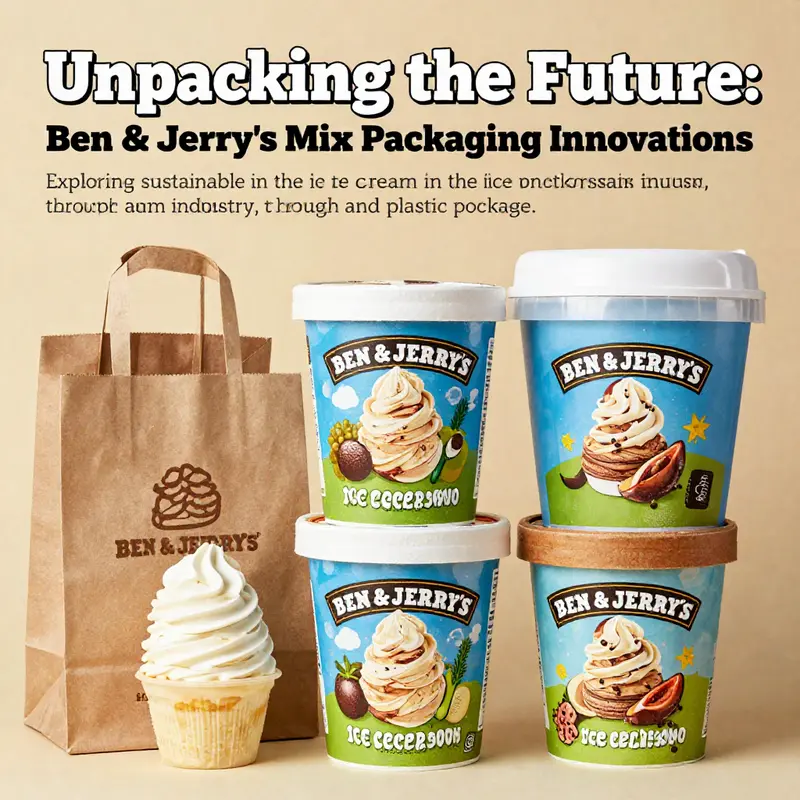
In today’s conscientious marketplace, the dialogue surrounding packaging has never been more critical. As brands like Ben & Jerry’s transition towards sustainability, understanding the implications of packaging materials—specifically paper versus plastic—becomes paramount for businesses, including bubble tea shops, restaurants, and catering services. This article delves into the current practices in Ben & Jerry’s mix packaging, focusing on its sustainability initiatives, the challenges of plastic usage, and the innovative steps towards a more eco-friendly future. Each chapter will uncover important aspects that can shape not only consumer preferences but also operational practices within the food and beverage sector.
Packaging the Promise: Reimagining Ben & Jerry’s Containers for a Circular Cold Chain
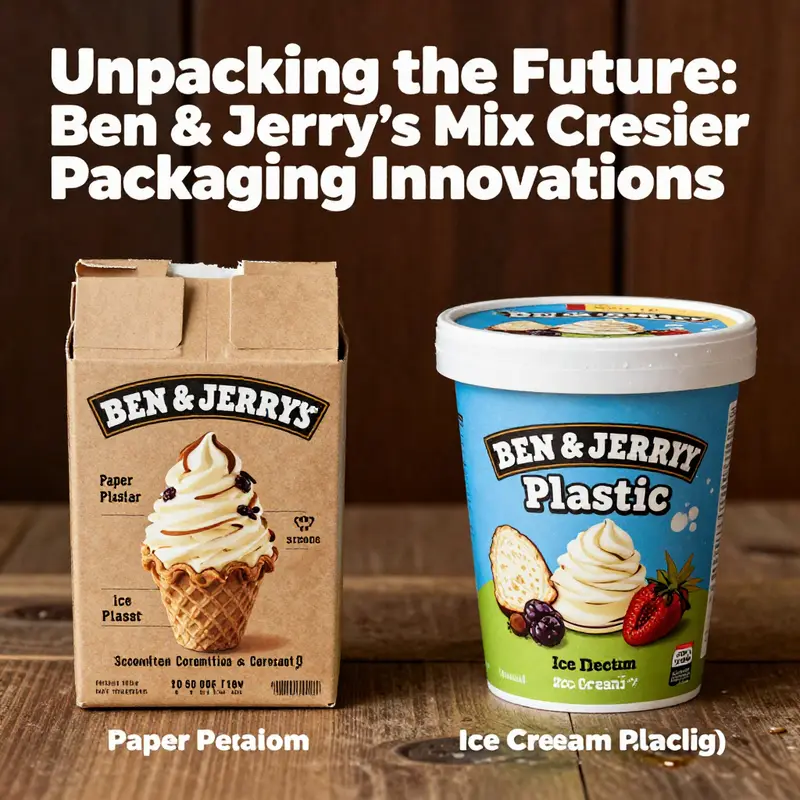
Ben & Jerry’s packaging sits at the intersection of safety, sustainability, and sensory experience. The pint must protect ice cream through a demanding cold chain while communicating quality and value to the shopper. Today the brand is exploring a layered approach that reduces plastic reliance by testing paper-based outer packaging, recycled content in core containers, and optimized labeling that aids end-of-life sorting. The challenge is to preserve performance in freezing conditions, prevent leaks, and maintain product integrity, even as the environmental footprint of packaging is scrutinized. Early pilots indicate that outer sleeves and cartons made from high-quality paper with moisture barriers can work in concert with a plastic core, enabling a phased transition toward greater circularity. PCR plastics in pint cores offer a practical path to lowering fossil-fuel intensity, provided that the recycled resin meets the strict standards required for repeated freeze–thaw cycles. The broader strategy emphasizes transparency, supplier collaboration, and consumer education to ensure end-of-life pathways are clear and accessible. In practice, this means designing for disassembly, selecting barrier coatings with recyclability in mind, and aligning with municipal recycling and composting infrastructure across markets. While progress may be incremental, the overarching goal remains steadfast: a fully circular packaging model by 2030 that preserves product quality, respects real-world logistics, and delivers tangible environmental benefits.
Scoops, Structure, and Sustainability: Reimagining Ben & Jerry’s Packaging Path from Plastic to Paper and Beyond
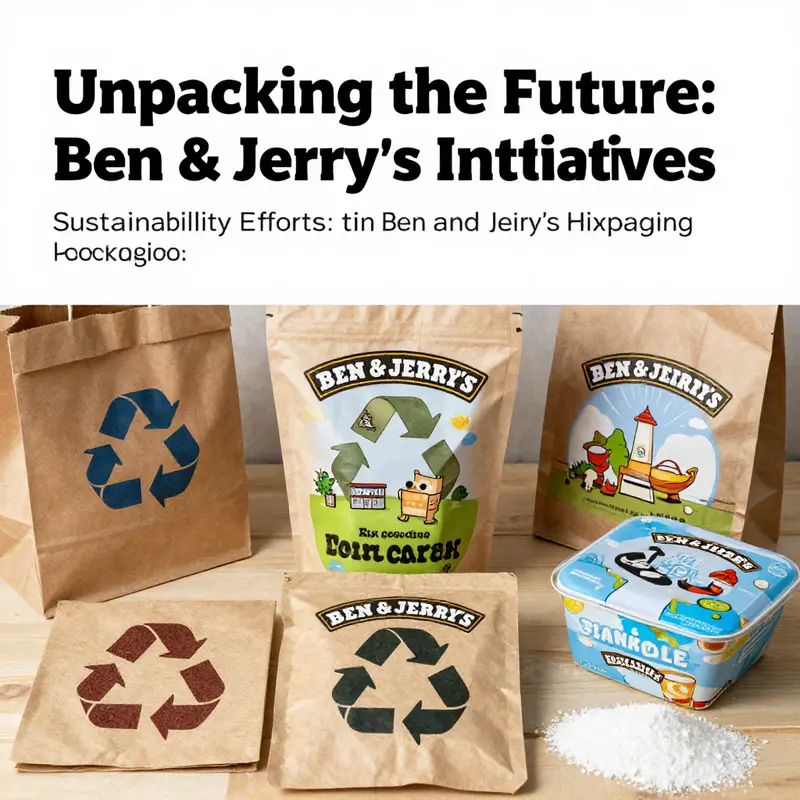
Packaging a frozen treat is as much about safeguarding texture and flavor as it is about reducing environmental impact. The ice cream scoop, the chill of the storage, the seal that keeps air and freezer burn at bay—all these needs converge with a growing demand for packaging that can be recycled, reused, or responsibly composted. In that space, Ben & Jerry’s stands at a crossroads that many packaged goods brands face: the practical realities of protecting a premium product in a global supply chain, and the equally urgent imperative to minimize waste and carbon footprint through smarter materials and smarter systems. The question—paper or plastic for mix packaging—cannot be answered with a single, simple choice. It requires looking at the entire packaging ecosystem, the performance of materials under cold conditions, the life cycle impacts, and the infrastructure that can actually close the loop. What begins as a corporate aspiration to shift to 100% recycled, recyclable, or compostable materials by 2030 unfolds as a series of measured experiments, partnerships, and design revisions that gradually tilt the balance toward paper while recognizing the current limits of recycling systems and consumer behavior.
Ben & Jerry’s has long operated in a plastic-dominated landscape for its core ice cream containers. The containers that cradle the frozen dessert—made from polymers like PP or PE—offer the durability that freezing requires, the high barrier properties that prevent leakage, and the clear shelf life that keeps flavors stable from production line to freezer aisle. Those advantages do not vanish overnight when a company declares a sustainability target; rather, they spotlight the trade-offs that come with any shift away from established materials. The 2030 commitment signals intent, but the path is not a binary switch. It is a disciplined transition that weaves together innovations in materials science, recyclability standards, and consumer engagement. In practical terms, the organization has begun testing lighter weight plastics and exploring recyclable alternatives that can integrate into existing recycling streams without compromising product protection. This is a necessary step, because any transition must preserve the cold chain and keep packaging free from leakage—a non-negotiable for a product that relies on low temperatures to maintain quality.
Behind the ice cream cup, there is a broader packaging strategy that includes the outer carton and any paper-based elements that can be integrated without sacrificing performance. The initial results in the field show a careful, incremental shift toward paper-based solutions. A newer generation of cartons—crafted from renewable, responsibly sourced paperboard—emerges as a pivotal piece of the strategy. These cartons are designed to be fully recyclable within municipal systems, a feature that matters for a brand with footprints in multiple jurisdictions and with a diverse set of waste management practices. The plant-based inner lining that sometimes accompanies these cartons is a deliberate deviation from the traditional plastic layer. It reduces fossil fuel dependency and minimizes contamination risks within recycling streams, helping to keep the paper fiber pure enough to be reprocessed into new products. This is not mere “green bravado”; it is a calculated step to align packaging design with the realities of municipal recycling, where plastics can complicate the fiber recycling mix and increase downstream contamination. In practice, the paper-based approach also simplifies the end-of-life story for consumers who already know how to sort paper goods from plastic. When a carton is placed into the curbside bin, it carries a clearer message about what to do next, which in turn improves recycling outcomes across neighborhoods and cities with varying infrastructure.
The shift toward paper also travels through the packaging’s surface and labeling. Innovation in paper-based sleeves and labels—many of which eschew plastic coatings in favor of barrier coatings or plant-based laminates—contributes to a more circular packaging model. When coatings on paper become less dependent on fossil-based plastics, the recycling stream becomes less contaminated, and the likelihood of paper fiber recovery rises. This doesn’t mean plastics disappear from every packaging component; rather, it signals a reimagined architecture in which barriers, inks, and adhesives are selected for compatibility with recycling systems and for reduced environmental impact. The design philosophy here emphasizes compatibility with existing municipal facilities and a circular pathway that keeps materials circulating rather than sent to landfills or downcycled into lower-grade applications. It is a nuanced evolution, not a categorical overhaul, and it requires close alignment among designers, material suppliers, and waste management partners to ensure that the performance benefits of paper do not come at the expense of product safety or consumer convenience.
A parallel thread in this story is transparency and consumer education. The company has publicly embraced clear, action-oriented messaging about recycling. It partners with organizations that specialize in sustainable packaging to share best practices and to help align industry-wide standards. This is critical because the success of a move toward paper hinges on consumer participation. If a carton is labeled as recyclable but households lack access to appropriate facilities, the intended environmental benefit dissolves at the recycling bin. By investing in consumer education, Ben & Jerry’s seeks to reduce the “wish-cycling” phenomenon—where people recycle items they hope are recyclable rather than those that actually are—and to foster informed participation in a broader system that includes curbside programs, drop-off facilities, and local waste authorities. The education effort is not just about informing; it is about building trust that the packaging choices are part of a real plan to minimize waste and to shape a more resilient packaging ecosystem over time.
The integration of paper-based elements into the mix packaging also carries implications for the supply chain. Paperboard must come from responsibly managed forests, and the manufacturing process must be able to sustain the scale of a global brand without undercutting the performance that consumers expect. The inner barrier layers, if used, must offer reliable containment while remaining compatible with recycling streams. In the background, the industry is pushing toward standardization of materials, coatings, and recycling guidance—an effort that benefits all brands facing similar trade-offs between performance, cost, and end-of-life outcomes. Ben & Jerry’s willingness to test and refine these approaches is part of a broader industry trend that seeks to reconfigure the packaging landscape so that paper can carry a larger share of the burden—without compromising the safety and quality that define the brand’s premium positioning. The journey is iterative and collaborative, relying on pilot programs, feedback from recycling streams, and continuous improvement in materials science.
Within this evolving framework, the practical reality for many consumers remains that the iconic ice cream container is still primarily plastic today. The core container—where the scoop travels from freezer to spoon—continues to rely on plastics to meet the demands of a frozen product. Yet the outer packaging, which includes cartons, sleeves, and some labeling, is increasingly seen as the testing ground for paper-based solutions that can function within municipal recycling systems. This bilateral approach—retaining plastic where it serves essential performance needs while substituting as much paper as possible where feasible—reflects a pragmatic transition strategy. It also aligns with a growing recognition that a successful move toward sustainability must work within real-world constraints: the cold chain, consumer handling, and the logistics of millions of households and local recycling programs. The aspiration remains clear: a packaging system in which paper-based components are the dominant, recyclable, and curbside-friendly elements, while plastic is used only where it delivers verifiable improvements in product protection and shelf stability that cannot be achieved with paper alone.
For readers curious about concrete examples of the kind of packaging materials being explored, the market offers a glimpse into a range of eco-friendly options. One sees products that are designed specifically for dairy applications, featuring paper cups or cartons with internal plant-based liners and minimal, easily separable coatings. These designs aim to be compatible with standard recycling infrastructure and to reduce contaminant streams that can hinder paper fiber recovery. Such examples provide a tangible sense of how a brand can blend sustainability ambitions with practical constraints, moving toward a future where the dominant packaging layer is paper while preserving the sensory and safety performance that customers expect from a premium frozen treat. The path is not about abandoning plastics entirely, but about rebalancing the packaging portfolio so that paper-based systems carry greater weight in the overall circular economy.
In this context, it is helpful to consider how the packaging decisions resonate with the broader goal of a fully circular system. Paper-based packaging, when responsibly sourced and properly designed for recyclability, reduces dependence on fossil-based materials and can close loops more effectively in many communities. However, it also raises questions about water use, energy intensity, and the potential for fiber degradation over multiple recycling cycles. The industry, including major players in the ice cream segment, is actively researching barrier technologies that can preserve product integrity while enabling recyclability of the paper fiber. Plant-based liners, water-based inks, and non-plastic coatings are all pieces of the puzzle that must work in concert to deliver a packaging solution that is both high-performing and environmentally responsible. That is why the sustainability agenda is as much about process improvement and supplier collaboration as it is about the material choice itself. When brands partner with suppliers, waste managers, and industry coalitions to align standards for recyclability and compostability, progress accelerates. The result is a packaging ecosystem where designers can confidently choose paper as the default carrier for many applications, while still selecting plastics for niche components where their properties are indispensable and where alternatives have yet to match performance.
Consumer perception also plays a critical role in this transition. A shift from plastic-dominated packaging to paper-based options can be accelerated when consumers recognize the rationale behind the change and feel empowered to participate in proper disposal. The messaging must balance honesty about current capabilities with optimism about the potential for systemic improvement. Transparency about the goals, the steps being taken, and the challenges faced helps build trust. When people understand that a paper-based carton with a plant-based liner holds a lighter environmental punch than a plastic container, they may be more inclined to recycle correctly, seek out recycling options where offered, and advocate for improved recycling infrastructure in their communities. The net effect is a virtuous cycle: better packaging choices encourage better recycling habits, which in turn motivates further investments in paper-based solutions and more robust infrastructure.
As a practical illustration of how these principles translate to market options, one can look to the supply side where manufacturers offer eco-friendly paper cups and cartons designed for cold foods. While not all such products are identical, they share a common aim: to provide packaging that performs under freezer conditions while being compatible with standard recycling streams. The existence of these options demonstrates that the transition toward paper is not a distant prospect but an active area of development, with real-world products already entering markets and proving their viability in diverse settings. This is essential for a brand pursuing a 2030 target, because it reduces the risk that the move toward paper will be an expensive, untested gamble. Instead, it becomes a tested, scalable pathway that gradually rebalances the packaging mix toward paper-based solutions where feasible and appropriate, with plastics retained only where necessary for safety and performance.
To tie these threads together, the packaging story at Ben & Jerry’s is not a single declaration but a layered program that blends material science, recycling system improvements, and consumer engagement. The core product still relies on plastics to maintain the coveted cold-chain integrity, while outer packaging and ancillary components are increasingly designed with paper-based solutions that can be integrated into municipal recycling. The ambition remains: by 2030, to illuminate a packaging system that embraces 100% recycled, recyclable, or compostable materials across all ice cream containers. This requires ongoing collaboration with suppliers who can deliver paperboard that meets rigorous barrier and durability requirements, with waste management partners who can handle a broader spectrum of recyclable materials, and with consumers who understand and practice proper recycling. It is a holistic, systemic effort rather than a single material switch. And it is precisely the kind of shift that could inspire similar moves across the consumer goods sector, where the packaging equation is a driver of environmental impact far beyond the walls of any one brand.
For readers who want to explore a concrete example of the kind of packaging options that align with this approach, consider the following supplier resource. It offers eco-friendly, paper-based ice-cream cups with lids designed for retail and take-away settings. The product line emphasizes a plant-based interior and a coating strategy that minimizes reliance on fossil-based plastics, aligning with the broader goal of reducing packaging-related waste while preserving product integrity. eco-friendly paper ice-cream cups with lid
Externally, the sustainability narrative continues to be shaped by overarching industry standards and policy developments. As noted in the company’s sustainability communications, progress toward the 2030 objective will demand not only material substitutions but also a reimagining of how waste is collected, sorted, and reprocessed. The collaboration with organizations like the Sustainable Packaging Coalition illustrates a commitment to moving beyond isolated acts of green branding toward systemic improvements. From a lifecycle perspective, paper-based packaging reduces certain emissions and energy demands associated with plastic production, but it also introduces its own set of considerations, such as the sourcing of fiber, the efficiency of recycling streams for paper, and the need for coatings or laminates that are compatible with recycling infrastructure. The real test is whether the industry can harmonize these elements so that the overall environmental impact trends downward over time, even as product demand, global supply chains, and consumer preferences evolve. The 2030 goal thus acts as both a beacon and a wager: a beacon that signals a future where packaging materials are selected to maximize recyclability and reuse, and a wager that the ecosystem can adapt quickly enough to meet the target while maintaining the brand’s quality standards and economic viability.
Readers seeking a deeper dive into the brand’s official sustainability framework can consult the organization’s sustainability portal, which details progress toward the 2030 commitments and the specific packaging innovations in the pipeline. While the roadmap is long and complex, the throughline remains consistent: maintain product integrity, reduce waste, and push packaging toward greater circularity through paper-based solutions where practical, supported by transparent communication and robust recycling partnerships. The journey is ongoing, and each incremental step—whether it is introducing a plant-based inner liner, developing a recyclable sleeve, or engaging with municipal authorities to improve curbside recovery—contributes to a broader shift in how disposable packaging is designed, processed, and perceived by the public. The ultimate aim is a packaging ecosystem in which the majority of ice cream containers can be processed in standard recycling streams, with compostable components where appropriate, and with a production footprint that reflects a commitment to sustainable materials across the product’s entire life cycle.
External Resource: For a broader view of the company’s environmental progress and ongoing packaging initiatives, see the official sustainability resource referenced in their materials and reports. https://www.benjerry.com/sustainability
Cold Containers, Complex Consequences: Reexamining Ben & Jerry’s Mix Packaging Between Plastic Realities and Paper Potential
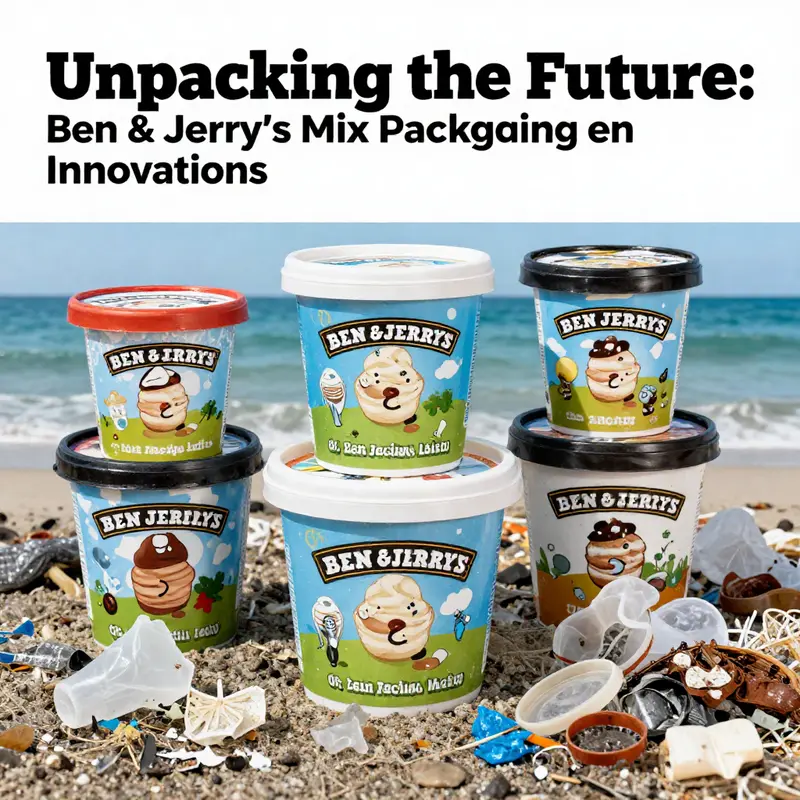
Ben & Jerry’s has long been celebrated for bold flavors and playful imagery, but the packaging surrounding its iconic ice cream mix is a quieter, stubbornly practical story. The choice of container shapes the fate of a product long after the scoops vanish. In the broader world of frozen desserts, the packaging that preserves texture, aroma, and temperature acts like a silent gatekeeper, deciding not only shelf life but the emissions, waste streams, and even the ease with which a consumer can recycle or reuse. When we zoom in on Ben & Jerry’s mix packaging, the dominant reality is still plastic. The tubs that hold the mix, the seals that guard freshness, and the convenience features that let a family reseal leftovers are all largely fashioned from polymers such as polypropylene and polyethylene. This is not a random preference born of fashion or cost alone. It is a calculated compromise among barrier performance, durability, weight, and the demands of cold chain logistics. Plastic’s barrier properties are superb for freezing conditions. It keeps moisture at bay, reduces oxygen ingress, and minimizes the risk of contamination that could alter flavor or texture. In a product category where even small flavor shifts can affect consumer perception, that reliability matters. The same material’s light weight translates into lower transport energy and fewer emissions per unit shipped, a meaningful advantage in a supply chain that stretches across multiple continents and climates. And then there is the matter of consumer convenience. Modern plastic packaging can be engineered to resist leaks, to endure stacking without crushing, and to offer resealability that extends the usable life of a half-full tub. The user experience matters, and from a product design standpoint, plastic offers a practical vocabulary for portion control, easy opening, and tamper-evident features that give shoppers confidence with a quick glance at the package. In short, plastic packaging supports taste, texture, and logistics in a way for which paper, in many cases, still struggles to compete. All of this sits within a broader corporate mission to minimize environmental impact, even if the current state of affairs appears at odds with long term goals. Ben & Jerry’s has explicitly committed to a future in which packaging is 100 percent recycled or renewable by 2030. The ambition is clear, and the corporation has begun to publish progress, test new materials, and partner with suppliers to push for innovations that may one day reduce dependence on virgin plastics. The company has explored lighter weight plastic packaging, which preserves the protective qualities while trimming material use. It has also pursued recyclable materials that can be reprocessed more readily in modern municipal programs. These moves signal a recognition that a one size fits all approach to packaging is unlikely to solve the problem of waste and climate impact. Yet the current situation remains rooted in plastic as the primary form for core product containers. Outer packaging and secondary packaging may incorporate recycled paper or paperboard, and some internal labeling may rely on paper, but the essential container that keeps the product in a frozen, stable state is still plastic for most Ben & Jerry’s mixes.
There is a tension here that sits at the heart of the mix packaging discussion. On one side, plastic offers the performance, cost, and reliability that large-scale food producers require to deliver consistent product quality. On the other, the environmental consequences of continuing to rely on virgin plastic—especially when much of the packaging ends up in landfills or becomes mismanaged plastic waste—pose challenges that cannot be swept under the rug. The environmental argument is not simply about aesthetics or public perception. It is about which waste streams we want to feed and how those streams intersect with oceans, wildlife, and future generations. Plastic waste contributes to marine pollution, which in turn disrupts ecosystems and imposes costs on communities that must manage contaminated environments. The production of virgin plastic borrows from fossil fuels, emitting greenhouse gases that contribute to climate change. When we measure the full lifecycle—extraction, manufacturing, distribution, use, and end of life—the calculus becomes intricate. The benefits of plastic in terms of barrier properties and logistics are tangible, but the drawbacks in waste management and emissions are equally real. This is precisely why Ben & Jerry’s sustainability commitments matter so much. The company is not perched on a pedestal declaring a simple replacement; it is steering a complex transition that must balance cold chain integrity, consumer expectations, supplier capabilities, and the reality of municipal recycling infrastructure.
Diving into the sustainability initiatives, the organization has publicly aimed to shift toward 100 percent recycled or renewable materials by 2030. This is more than a slogan; it signals a willingness to overhaul supply chains, invest in material science, and collaborate with recyclers and policymakers. Progress is incremental, and it is visible in practical ways. For example, the move toward lighter weight plastics reduces raw material use and can lower transport emissions, while still preserving the essential cooling properties that protect the product. The exploration of recyclable materials that are compatible with existing recycling streams is another careful step. It is not simply about making the container recyclable in theory; it is about ensuring that the packaging can actually be collected, separated, and reprocessed in real-world programs that vary from city to city and country to country. The company has also shown interest in testing alternative solutions that reduce the life cycle footprint, even while recognizing that any shift must not compromise the consumer experience or food safety. The pragmatic approach of incremental changes, coupled with long-range commitments, reflects a broader trend in which a major food brand acknowledges that the path to sustainable packaging is a marathon, not a sprint.
The narrative, however, cannot ignore the stubborn realities of current recyclability. Much of what is classified as plastic packaging used for mix containers is not consistently recyclable through standard municipal streams. This means that despite best intentions and advanced materials, a substantial portion of packaging ends up in landfills or in environments where recovery is uncertain. The challenge is not solely the chemical composition of the material but also the design of the packaging and the compatibility of the recycling system. For plastic packaging to deliver its promised environmental benefits, it must be part of a reliable end-of-life loop. If the loop is broken, the perceived gains in lighter weight and lower energy during transport cannot fully translate into lower overall environmental impact. This gap between intention and outcome has spurred more aggressive strategies around system-level improvements, including better labeling, easier disassembly, and collaborations with municipalities to standardize recycling acceptance where feasible. In the absence of such systemic changes, the advantage of plastic packaging remains contingent on whether the waste can be efficiently captured and reprocessed.
The interplay between packaging design and environmental responsibility extends to the broader ecosystem of paper and fiber-based alternatives. Paper packaging offers attractive qualities for recyclability and consumer perception, but it comes with its own set of tradeoffs. Paper production is energy and water intensive, and when used in packaging for frozen products, it often requires barrier coatings or laminates to withstand moisture and maintain structural integrity. Those coatings can complicate recycling, effectively turning a seemingly recyclable fiber into a mixed-material challenge that requires specialized processing. The lifecycle comparisons are not straightforward: even if paper seems more benign at a glance, the energy, water use, and potential forest implications can offset perceived advantages if the fiber is not sourced responsibly or if coatings hinder end-of-life processing. This reality underscores a core point in the larger packaging discourse: the best path forward is not a simple swap from one material to another, but a thoughtful, systems-level redesign that weighs material performance, supply chain practicality, and end-of-life outcomes.
Against this backdrop, consumer behavior and policy environment become critical levers. The success of any packaging transition hinges on clear communication with shoppers about recycling options, along with consistent, accessible collection streams. The desire for convenient packaging that preserves product quality must be harmonized with the need to ensure those same containers can be responsibly processed after use. In practice, this means not only designing for recycling but also supporting infrastructure, education, and incentives that encourage proper disposal and reuse. Collaboration with retailers, municipal programs, and third-party recyclers becomes essential, as does a willingness to adopt new materials that may require different sorting or processing techniques. The story of Ben & Jerry’s mix packaging is thus a case study in how a brand navigates the tension between performance and responsibility, between the certainty of a preserved frozen product and the uncertainty of long-term waste management.
An important facet of the current conversation involves tangible experiments with alternative materials and formats. There is ongoing exploration of paper-based options, such as eco-friendly take-away paper cups and compatible lids that can stand up to heat and moisture, while maintaining a consumer-friendly experience. These options, while not yet standard for the core mix containers, illustrate that the industry is actively testing pathways that may one day replace or complement traditional plastic. To glimpse a concrete example of how paper-based packaging can be designed for practical use, see the discussion around eco-friendly, printed-logo paper cups in take-away contexts, which provides insight into how branding, material choice, and end-of-life considerations can converge in a single product family. The linked example, while not a direct substitute for a frozen dessert tub, demonstrates the kinds of design decisions and material science considerations that shape future packaging choices. eco-friendly printed-logo paper cups.
The interplay between what is technically possible and what is practically scalable informs the debate around paper versus plastic. If a fiber-based tub could deliver equivalent barrier performance, consumer acceptance, and a clear end-of-life advantage, it would alter the strategic calculus for a brand that treats packaging as an extension of its responsibility. Yet achieving that outcome at the scale required by a major ice cream line is not trivial. It demands advances in barrier technologies, coatings that resist moisture without compromising recyclability, and a supply chain that can guarantee responsible sourcing, consistent quality, and cost parity with the status quo. The 2030 goal signals intent to invest in precisely these arenas, but the road to a 100 percent recycled or renewable packaging system is long and iterative. In the meantime, progress often takes the form of hybrid approaches: reducing material thickness, switching to more widely recyclable resin types, increasing the share of recycled content, and designing secondary packaging to be easier to separate and process. Each step reduces environmental impact, but none alone solves the total lifecycle challenge.
In this context, it is essential to acknowledge that the packaging story is inseparable from the broader mission to reduce climate impact. The source materials, the energy used in manufacturing, the emissions tied to distribution, and the fate of packaging at the end of life all converge to tell a single narrative about embedded value and responsibility. While plastic offers undeniable advantages for product integrity and logistics, its environmental footprint cannot be ignored. The shift toward recyclable or renewable content by 2030 is not a cosmetic adjustment; it is a systemic rethinking of how packaging is designed, produced, and recovered. It requires alignment with recyclers, policymakers, and customers who are increasingly attuned to sustainability signals. The conversation is not simply about favoring one material over another. It is about cultivating an ecosystem in which packaging choices are guided by end-of-life viability, transparent risk assessments, and measurable reductions in waste and emissions. The challenge is not only to innovate but to integrate innovations into a functioning system that can support global supply chains and diverse municipal realities.
As this chapter unfolds, it becomes clear that the plastic reality of Ben & Jerry’s mix packaging is both a practical necessity and a crucible for sustainability innovation. The company is not alone in this struggle; many food brands wrestle with the same dilemma. The path forward likely lies in a combination of material science breakthroughs, smarter design for recyclability, enhanced recycling infrastructure, and a willingness to phase in changes gradually while maintaining product safety and consumer trust. The end goal is not simply a paper or plastic label but a packaging system that preserves flavor, protects the planet, and respects the economics of mass production. In the immediate terms, Ben & Jerry’s progress toward 2030 will be judged not only by the rate of change but by the integrity of the system that supports that change—how well it minimizes environmental impact without compromising the sensory experience that defines the brand. The balance is delicate, and the stakes are high, but the direction is unmistakably toward a future where packaging serves both people and the planet with greater clarity and responsibility.
External reference for deeper context on corporate responsibility and progress toward sustainable packaging can be found here: https://www.benjerry.com/responsibility
Scoop Toward Circularity: Reimagining Ice Cream Packaging for a Plastic-Light Future
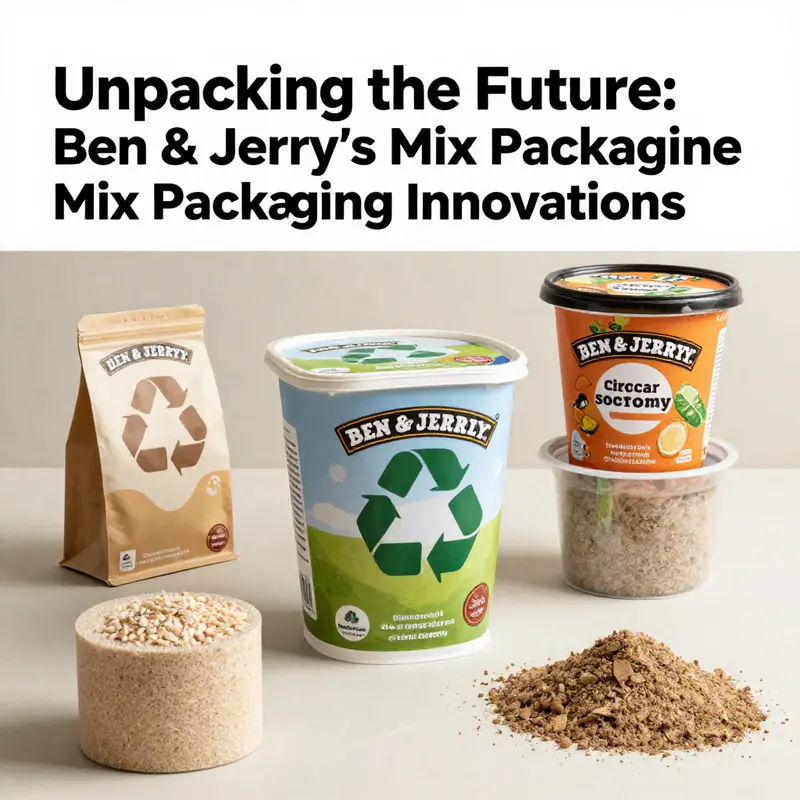
Packaging for frozen desserts has long prioritized plastic tubs for a reason. Their low permeability and structural integrity keep the product at a consistent temperature and prevent leaks during shipping and handling. In practice, the majority of a tub is a blend of polymers, primarily polypropylene and various polyethylenes, designed to endure subzero temperatures and mechanical abuse from stocking to scooping. Outer cartons and labels, by contrast, are more likely to be paper-based or recycled paperboard, but they represent only a fraction of the overall package and are not the main barrier to end-of-life handling. The consequence is a packaging system that is efficient for the product but fraught with complexity when it comes to end-of-life management. The ability to reclaim and reuse or recycle such packaging depends on how materials are separated, collected, and processed at scale, and that in turn hinges on the incentives, infrastructure, and consumer behavior that shape the post-consumer waste stream. The challenge is not simply a technical one; it is an organizational and cultural puzzle that asks manufacturers, waste managers, and households to align toward a shared goal of material persistence rather than material disposal.
Recognizing these realities, the brand has set a bold target: by 2030, to achieve packaging that is 100% recyclable or reusable, and to eliminate virgin plastic in its packaging wherever feasible. This commitment acknowledges that a one-material solution is unlikely; the market will require a portfolio of strategies that work together. A central pillar is the development of plant-based packaging that can serve as both a compatible barrier and a pathway to end-of-life solutions beyond landfilling. In pilot programs, compostable ice cream tubs, crafted from plant-based materials, are tested to see whether they can break down under industrial composting conditions without compromising the integrity of the contents during storage. The promise here is twofold: it aims to reduce the reliance on fossil-based plastics, and it aligns with global efforts to curb plastic pollution by creating a viable end-of-life option that favors a closed-loop approach rather than a single-use narrative. The industrial composting pathway, while promising, requires conditions that are not universally available at household level, underscoring the need for coordinated policy support, municipal investment, and consumer participation to make such a system viable at scale. The broader point is that the move toward plant-based and compostable materials cannot be understood in isolation; it must be embedded within a wider system designed to recapture value rather than merely disperse waste into the environment.
To realize such shifts, the company is not acting alone. It is investing in closed-loop recycling systems and exploring partnerships with waste management entities to enhance collection, sorting, and processing infrastructure. The idea is to keep materials in circulation for as long as possible, extending the life of resources that already exist and reducing the need for virgin feedstocks. In practice, this means rethinking the packaging design to minimize the number of layers and to favor materials that can be easily separated or even reused rather than discarded. The objective is to simplify the package so that recycling facilities can sort and process it with high fidelity, reducing contamination and inefficiency in the recovery stream. The updated approach considers adhesives, inks, coatings, and labels as potential points of failure; if they hinder recyclability, they must be redesigned or eliminated. The strategic logic is not merely ecological; it is economic as well. Efficient recycling lowers waste management costs, improves material yields, and creates a more resilient supply chain that can withstand fluctuations in commodity markets.
Any move toward recyclable or compostable packaging also requires a reimagining of the consumer experience. Clear, consistent information about recyclability, composting, and disposal is essential to guide households and curb the spread of misinformed disposal practices. The company has signaled that packaging will carry explicit recyclability guidance, so the average consumer can act with confidence at the curb. This educational emphasis is not window dressing; it recognizes that the most sustainable packaging can still fail if end users do not understand how to dispose of it. The emphasis on consumer education dovetails with a broader strategy to support the infrastructure that makes circularity possible, including accessible take-back programs and better curbside recycling options. The educational layer also extends to retailers and local policymakers, whose cooperation determines the practical realities of recycling streams, labeling standards, and the availability of drop-off points or take-back options for durable packaging.
Beyond single-use concepts, the brand is exploring a step toward reuse models that embody a broader circular economy. The idea is to embrace durable, returnable packaging that can be cleaned, refilled, and reintroduced into circulation rather than discarded after a single use. In this context, a global reuse platform that offers durable containers is a telling example, illustrating how a large-scale food brand can reframe packaging as a resource rather than waste. While such models face practical hurdles—modalities for collection, cleaning, and logistics, and consumer willingness to participate—these experiments point toward a future where packaging costs and waste streams are decoupled from product volumes. The reuse model also provides a strategic hedge against the volatility of recycling markets by creating a predictable lifecycle, albeit with higher upfront investments in cleaning, antimicrobial safety, logistics, and return systems. The social dimension should not be underestimated: a successful reuse program builds brand trust, fosters community engagement, and aligns with climate goals through reduced material throughput.
To anchor these ambitions in tangible options, designers and engineers are embracing a more streamlined packaging stack. The aim is to reduce the number of material layers, eliminate non-recyclable components, and ensure the remaining elements can be processed by standard facilities. Simplified packaging reduces the risk of contamination and makes the recycling stream more efficient. In practice, this can involve choosing a single material for the tub, or at least minimizing mixed-material interfaces that require specialized recovery processes. However, the economic realities of supply, demand, and competition must be navigated carefully. The timing of scaling up plant-based tubs, the availability of composting infrastructure, and the cost of material changes all influence the pace of progress. Yet the direction is clear: packaging should be designed not only for brand protection and shelf appeal but also for end-of-life recovery. The design philosophy emphasizes recyclability, reusability, and the potential for some formats to be refilled rather than simply discarded.
A critical thread in this narrative is the broader ecosystem in which packaging circulates. Sorting technology at recycling facilities has improved, but it still faces challenges with multi-layer laminates, colorized plastics, and adhesives that can hamper separation and reprocessing. The sector is increasingly attentive to design cues that facilitate recycling, such as choosing inks and coatings that are easy to remove, and opting for barrier systems that rely on recyclable materials rather than incompatible composites. The result is a shift away from treating packaging as a disposable afterthought toward treating it as a resource that can be recovered and repurposed repeatedly. The implications reach beyond laboratories and boardrooms; they touch the jobs of waste workers, the logistics pipelines of distributors, and the daily routines of consumers who prepare meals and desserts for themselves and their families. The system-level perspective is essential because the value of any packaging change depends on the capacity of the waste management network to recover and reintegrate materials into new products.
Within this narrative of change, educational considerations and consumer behavior take center stage. Even the most advanced packaging solution will falter if households do not understand the best method of disposal. The company therefore commits to guiding consumers with precise cues on packaging, including clear icons, simple language, and transparent statements about what can be recycled, what should be composted, and what belongs in residual waste. Education becomes a non-technical tool of design, shaping behavior in ways that improve the performance of the recycling system as a whole. In this sense, packaging becomes a collaborative artifact—the company, the recycling stream, and the consumer each playing a role in turning a linear lifecycle into a circular one. The educational task also involves highlighting the limits of current infrastructure, preparing audiences for the realities of industrial composting and extended producer responsibility while celebrating successes where communities lean into better collection systems and higher recycling rates.
For those seeking concrete illustrations of how the packaging mix might look in one region’s waste system, there is a useful line of inquiry into plant-based and paper-based containers used for other takeaway formats. Designers are watching how a range of food service packaging products—plates, bowls, and even containers used for hot or cold meals—are evolving toward recyclable or compostable options. The lessons learned from these initiatives inform the choices that a leading ice cream brand may apply to its mix packaging in the near term. The trajectory suggests that the future may hold an assortment of formats that fit different logistical realities, climates, and waste-management capabilities, rather than a single universal solution. The aim is to maintain product integrity and flavor while enabling robust circularity through material choices and end-of-life design.
An emblematic possibility is experimentation with a gluten carton alternative that marries barrier performance with recyclability, a line of thought that points toward a single-material approach whenever feasible. In tandem with this, the company probes partnerships that can accelerate the development and deployment of recyclable packaging across markets—partnerships that share the risk of source material, manufacturing, and end-of-life infrastructure. The ultimate measure will be resilience in the supply chain, the ability to scale innovations without compromising quality, and the willingness of communities and governance to invest in recycling and composting capacity. The balance between performance, safety, and sustainability is delicate, and progress arrives through incremental, well-planned steps rather than one dramatic leap. This measured pace allows for learning, iteration, and the careful balancing of environmental goals with consumer expectations and food safety standards.
Thus the path forward is not merely about swapping one material for another. It is about reimagining the entire packaging system—its design, its signals to consumers, its collection and processing workflows, and its economic underpinnings. A packaging system designed with recyclability in mind can reduce the energy, water, and emissions associated with production, enhance the reliability of the shelf supply, and reduce the magnitude of post-consumer waste created in the first place. The ambition to move toward 100 percent recyclable or reusable packaging by 2030 will require the alignment of brand strategy, manufacturing realities, and the public infrastructure that handles waste after a product leaves the freezer. The challenge is not simply to replace a plastic tub with a paper one; it is to craft a holistic approach that integrates material science, design for disassembly, and an ecosystem that rewards responsible disposal. The story is bigger than any single reform; it is a collective effort to turn packaging into a durable, looping resource rather than a one-way impulse toward waste.
Even as these ideas take shape, a crucial question remains for consumers, municipalities, and policymakers: how do we measure success? Metrics such as recycling rates, contamination levels, and the uptake of return or refill programs will reveal whether the packaging is truly closing the loop. The answers will differ by region, yet the underlying principle endures: keeping materials in circulation rather than letting them escape into the environment is the most powerful lever for reducing the footprint of frozen desserts. The narrative here is not a rejection of plastic but a recommitment to why plastics exist in the first place: to protect a product and its people, while planning for a lifecycle that honors the planet as much as the palate.
Ultimately the story of packaging for frozen desserts will continue to unfold as new materials, new processes, and new consumer behaviors converge. The chapter ahead will explore how different jurisdictions balance environmental goals, economic feasibility, and social acceptance as they attempt to scale innovations that reduce plastic pollution while protecting the foods people love. The direction is not a simple replacement of one material with another; it is a strategic reconfiguration of how packaging supports a circular economy. The road to 2030 is long, and the route will be marked by experiments that test, learn, and adapt. As designers, engineers, and marketers collaborate across disciplines, the packaging that flies from the freezer becomes part of a larger conversation about sustainability—an ongoing, iterative endeavor that aligns taste with responsibility. In this evolving landscape, every packaging choice becomes a data point in a larger system of accountability and opportunity, inviting continuous refinement and shared progress toward a future where the scoop and the system harmonize in a more sustainable rhythm. For those following the practical side of this transition, a concrete example from related formats demonstrates how single-material options and simplified stacks can translate into real-world gains, while maintaining product safety and consumer appeal. The journey is incremental, but the destination—less plastic, more reuse, and better end-of-life outcomes—feels within reach when the whole supply chain moves in unison toward circularity.
External resource: official sustainability report at https://www.benjerry.com/sustainability
Internal link reference: kraft-paper-noodle-box-matt-lamination-embossing
Final thoughts
Ben & Jerry’s mix packaging journey reflects a wider industry trend toward sustainability, with careful consideration of paper and plastic materials. The company’s proactive approach showcases their commitment to balancing product integrity and environmental responsibility. The dialogues initiated in this exploration have profound implications for businesses across the food and beverage sector, providing crucial insights as they navigate the complexities of packaging decisions. Embracing both innovations and sustainable practices will not only enhance brand reputation but also resonate positively with environmentally-conscious consumers.