

As the global push for sustainability continues, businesses are increasingly turning to biodegradable bowls as a preferred packaging solution. This article delves into the specifications, pricing, and supplier information for these eco-friendly alternatives, targeting a range of industries such as bubble tea shops, restaurants, food trucks, catering services, and corporate event planners. By understanding these aspects, businesses can make informed decisions that not only cater to their operational needs but also resonate with environmentally conscious consumers. Each chapter will provide insights into product variations, market dynamics, and trustworthy suppliers to foster practical applications for your business.
Material Matters and Market Momentum: A Deep Dive into Biodegradable Bowls for Wholesale

Biodegradable bowls have moved from niche alternatives to core components of sustainable food service, catering, and event planning. For wholesalers, the value lies in predictable performance, scalable sourcing, and branding opportunities that align with growing consumer expectations. These bowls are rooted in plant-based fibers and pulps that can be sourced renewably and disposed of with minimal environmental impact. Buyers evaluate material science, manufacturing processes, packaging, logistics, and post-purchase support to ensure environmental claims are verifiable and not marketing rhetoric. Materials such as sugarcane bagasse, bamboo fiber, and wheat straw blends provide a balance of strength and break-down behavior, while plant-based pulps may offer different degradation profiles. The common thread is a commitment to natural origins, backed by clear standards and certifications that guide evaluation.
Alongside renewable content, practical performance matters: heat resistance, leak prevention, microwave compatibility, and the ability to handle hot soups and cold dishes without compromising safety. Design choices such as inner structural support and moisture-repellent surfaces help resist seepage while enabling compostability in appropriate facilities. Standards like EN 13432 and ASTM D6400 offer frameworks for evaluating compostability, and conformity helps buyers avoid greenwashing. PFAS-free formulations are increasingly important to operators who want to minimize chemical migration into food and the environment.
The product landscape spans small bowls for desserts to larger formats for main courses, with typical sizes from 6 ounces to 32 ounces. Many wholesalers also offer customization for logos or environmental messaging on the surface, turning a disposable item into a brand touchpoint. Economics are driven by tiered pricing and bulk discounts, with considerations for freight, packaging, and lead times. A quality wholesale program also emphasizes supplier credibility, transparent pricing, reliable sampling, and clear returns or replacements policies.
Logistics and sourcing are global, with manufacturing concentrated in major hubs and a focus on third-party certifications, documentation, and export experience. Sample programs allow testing of size, texture, heat tolerance, and compatibility with lids and sleeves before large orders. In practice, a streamlined wholesale pathway emphasizes consistent product performance, efficient packaging, and robust after-sales service, enabling brands to deliver reliable guest experiences while advancing sustainability goals.
For buyers, a practical starting point is to explore category pages on wholesale platforms to compare material options, sizes, and lead times. A credible supplier will provide clear material composition statements, performance data, and a documented path to compostability under recognized standards. When possible, independent testing data and third-party certifications strengthen confidence and reduce procurement risk. A thoughtful sampling phase can reveal gaps between expectations and real-world performance, guiding pricing negotiations and customization decisions.
Ultimately, wholesale procurement of biodegradable bowls supports not only environmental stewardship but also brand storytelling and waste reduction across operations. By selecting materials with strong performance, enabling reliable branding options, and ensuring scalable supply chains, wholesalers can build programs that meet today’s sustainability demands while maintaining operational efficiency and guest satisfaction.
Pricing, Scale, and Sustainability: Navigating Wholesale Markets for Biodegradable Bowls
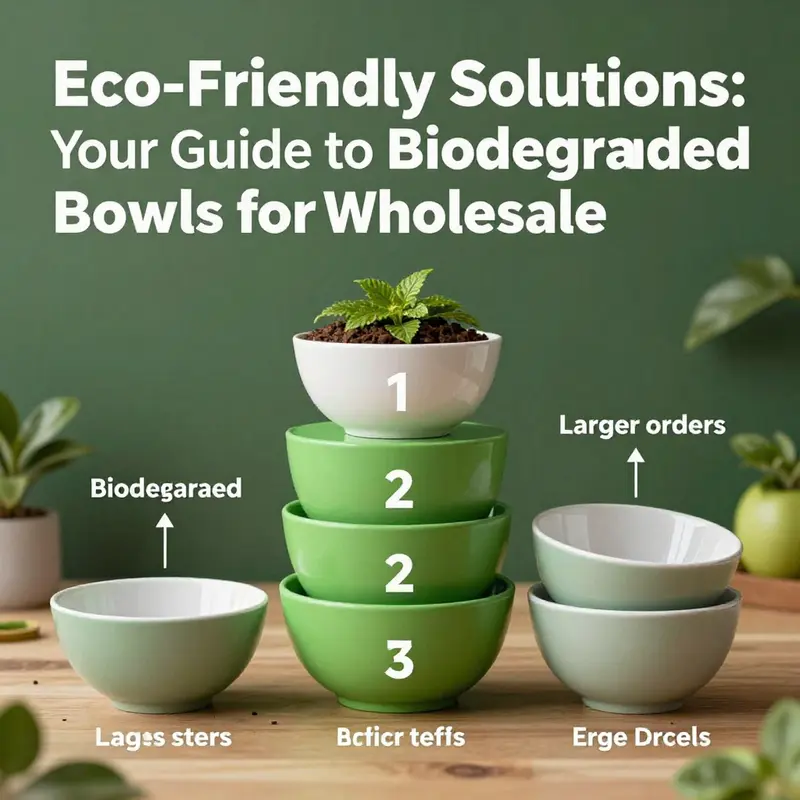
The wholesale market for biodegradable bowls sits at a careful intersection of sustainability, cost discipline, and supply chain resilience. Buyers who are sourcing for restaurants, catering services, or large-scale events face a triple challenge: securing a reliable, affordable supply of bowls that meet environmental commitments; aligning lead times and logistics with seasonal demand; and shaping a procurement plan that preserves margins even as input prices and freight costs fluctuate. In this context, pricing is not a single number but a layered structure shaped by material choice, capacity commitments, customization, and the realities of global trade. The most notable dynamics center on sugarcane bagasse bowls, which have emerged as the workhorse of large-scale adoption, while more premium materials like coconut-shell bowls carve out niches where design, branding, or gift-market appeal justify higher unit costs. The underlying message is clear: the economics of bulk ordering reward scale, but they also reward clarity about specifications and a disciplined approach to supplier selection and risk management.
At the heart of the pricing conversation is material behavior under heat and oil, and how that translates into both performance and production costs. Sugarcane bagasse, a byproduct of the sugar industry, yields a fibrous pulp that can be molded into sturdy, grease-resistant bowls capable of handling hot foods without collapsing or warping. In wholesale terms, this material has become the default for mass-market applications because its cost curve benefits from economies of scale. In recent market windows, the most competitive price points for 32-ounce bags have hovered around the lower segment of the spectrum—approximately 0.053 US dollars per piece for orders in the millions. This price point, while seemingly modest, reflects a careful calibration of raw material costs, formulating tolerances, and the efficiencies of high-volume production lines located in major export hubs. For buyers who do not require the largest possible sizes or who are willing to mix SKUs, there are even more favorable prices on smaller bowls. The literature from industry sources shows that smaller-capacity bowls can be procured in the range of roughly 0.023 to 0.042 US dollars each, with minimum order quantities that can be modest—down to tens or even dozens of pieces for trial orders. This tiered structure exemplifies how unit economics shift with the scope of the order and the sophistication of the supplier’s processing line.
From a strategic standpoint, the quantity sensitivity of price is one of the most compelling reasons to plan around forecasted demand. For buyers who can commit to volumes in the hundreds of thousands or millions of units, the cost per piece can approach parity with conventional plastic alternatives in many cases, especially when factoring in the total cost of ownership that includes waste management and potential consumer goodwill. The threshold where bagasse bowls begin to compete economically with traditional plastics typically aligns with long-run demand stability and robust lead times. In markets with strong growth in takeaway and delivery services, large orders yield not only price benefits but also supply security—an intangible but highly valuable asset in times of global disruption. The key takeaway is that scale is a powerful driver of cost efficiency, but it requires a clear commitment to a stable sourcing plan, accurate demand planning, and a vendor base that can deliver consistency over extended periods.
Coconut-shell bowls introduce a contrasting economic profile. While their per-unit price tends toward the premium end—reflecting the natural materials, artisanal appeal, and often more intricate manufacturing processes—these bowls occupy a space where branding, gift packaging, and boutique dining experiences give them a distinct advantage. In supplier markets that can meet niche design requests and ensure 100% natural materials, coconut-shell bowls can command prices around the 1.58 US dollars per piece mark for smaller but higher-quality runs, with orders beginning at modest MOQs such as twenty units. The delta between coconut-shell bowls and bagasse in both cost and consumer perception underscores a broader strategic decision for wholesale buyers: whether to chase the deepest price per unit for high-volume, functional use, or to cultivate a premium sub-brand within a broader product assortment that can command higher margins even at smaller batch sizes. The market supports both strategies, provided buyers articulate a coherent value proposition to retailers, caterers, and end consumers, and pair the product choice with appropriate messaging about compostability and end-of-life options.
Beyond these two pillars, other materials contribute to the pricing mosaic. Bamboo-based bowls and composite-fiber bowls, which leverage agricultural byproducts and plant fibers, tend to sit between bagasse and coconut-shell offerings in terms of price and performance. Buyers who require strong oil resistance, heat tolerance, and a firm barrier against leakage often find that these alternatives deliver the reliability needed for hot foods without compromising compostability. The exact pricing for these options depends on design complexity, thickness, and any certifications the supplier carries. In wholesale terms, the market price tends to form a continuum rather than a few discrete tiers: basic, mid-range, and premium segments, with the bulk of orders clustering in the middle band where performance, environmental claims, and manufacturing efficiency converge.
A practical, business-oriented lens on pricing emphasizes the role of minimum order quantities, or MOQs, as a material determinant of unit cost. The studies and supplier data indicate a wide dispersion in MOQs across suppliers and product lines. Some manufacturers are willing to entertain very small trial runs—twenty or so units—for specialized materials like coconut-shell bowls or for custom shapes that appeal to boutique brands. Others, particularly those with fully automated bagasse lines, require MOQs that run into the hundreds of thousands or even millions to achieve favorable unit pricing. The upshot for purchasers is clear: negotiate upfront about MOQs in the context of your demand forecast, and build a supplier pipeline that preserves flexibility. A well-structured procurement plan might combine a primary bagasse supplier for core line items with a secondary partner offering niche materials or ornamented finishes for seasonal campaigns. By mapping demand across SKUs and time horizons, a buyer can tilt the mix toward larger orders at the best price while reserving a portion of the portfolio for premium, value-added options that support branding efforts.
The procurement process itself has a governance dimension that materially affects pricing outcomes. When a buyer engages wholesale channels, the negotiation often encompasses more than price alone. Payment terms, lead times, production capacity, sample availability, and trade assurances all color the total cost of ownership. Platforms that provide trade assurance and buyer protection reduce the risk of misalignment between expectation and delivery. They also create a credible environment for negotiating bulk discounts and favorable shipping terms. Sample programs—whether free or low-cost—play a pivotal role in the decision to scale purchases. With samples in hand, buyers can validate the material performance, embossing clarity for branding, and the integrity of the microwaveable claims that accompany many biodegradable bowls. In practice, the best deals arise when a buyer couples a transparent demand forecast with a procurement plan that emphasizes supplier reliability, not just price. In markets where rapid growth is expected, the value of a diversified supplier base becomes apparent: a mix of manufacturers in different regions reduces the exposure to a single-point failure, whether due to port congestion, labor disruptions, or energy supply turbulence.
From a logistics perspective, the wholesale calculation must also account for shipping costs, freight terms, and the relative advantages of proximity to export hubs. Suppliers located near major ports in export-oriented economies can optimize lead times and reduce freight per unit, which matters especially as MOQs rise. It is common for suppliers to exclude shipping costs from quoted prices, placing the burden on buyers to include freight, insurance, and duties in the total landed cost. Buyers should use a consistent method to compare offers: convert all quotations to a common currency, compute per-unit landed costs, and model scenarios for different volumes and service levels. When a supplier can provide flexible packaging configurations, palletization options, and optimized container loading, the incremental cost per unit can be further reduced. This is particularly meaningful for very large orders, such as those reaching the million-unit mark, where even modest improvements in packaging efficiency and container density translate into meaningful savings.
The decision calculus for choosing between bulk bagasse, premium coconut-shell, or hybrid material offerings becomes more nuanced when the sustainability narrative is factored in. Consumers and institutions are increasingly attentive to the end-of-life story of disposable tableware. Certifications that verify compostability in industrial facilities, and in some cases in home compost environments, can influence buyer preference and allow higher price points for premium lines. Buyers who communicate these environmental advantages with clarity can unlock a pricing premium that surpasses the tolerance of traditional cost-cutters. In addition, the branding possibilities offered by customization—logo printing, color schemes, and even shape variations—can translate into incremental value that justifies higher unit costs, particularly in events, hospitality spaces, and premium retail formats where aesthetics carry weight. Customization often involves non-recurring tooling or setup fees, which should be amortized across the expected volume to avoid eroding margins. Strategic buyers integrate these costs into the overall procurement model by tying them to long-term commitments or multi-year supply arrangements that stabilize price exposure and ensure consistency in branding across campaigns.
To translate these market dynamics into a practical sourcing playbook, buyers should start with a transparent specification sheet that captures material choice, size range, leakage resistance, heat tolerance, microwave compatibility, and any certification claims. The specification becomes the reference point for tendering, supplier comparison, and contract formation. Once suppliers are identified, the next step is to request samples that cover several use cases: hot meals, cold desserts, and any items that involve sauces or oils. The sample phase is critical for validating the functional claims and the printability of branding elements if customization is desired. When evaluating supplier proposals, a scoring framework that weights price, lead time, MOQs, and reliability can help avoid price-only decisions that later prove brittle in practice. In markets where demand is volatile, assess the supplier’s production ramping capacity and their exposure to raw material price swings. A resilient supply arrangement often involves a blend of long-term contracts with incumbents and a few flexible, project-based partnerships for seasonal surges.
The supplier landscape for biodegradable bowls is heavily concentrated in certain regions with established manufacturing ecosystems. This concentration offers advantages in scale, but it does mean buyers should be mindful of currency risk, regulatory changes, and geopolitical dynamics that can affect trade flows. One practical implication is to consider currency-hedging strategies or pricing corridors that limit exposure to rapid shifts in exchange rates. Another is to align procurement cycles with the supplier’s production calendars, which may reflect seasonal demand in hospitality markets or capacity constraints tied to agricultural harvests for bagasse-based production. In addition, buyers should verify that the supplier’s quality management systems and third-party certifications align with the intended markets—whether domestic, regional, or global—since regulatory expectations can differ across jurisdictions and influence the overall cost of compliance.
As buyers continue to navigate this landscape, an accessible route to broad market visibility remains essential. Wholesale platforms and marketplaces provide aggregated pricing, product specifications, and supplier credibility signals that help buyers triage options quickly. These platforms often expose multiple tiers of pricing based on quantity bands, which makes it feasible to compare across several suppliers in a short window. But even with such platforms, the most successful procurement outcomes come from combining data-driven analysis with a disciplined negotiation posture. Open conversations about demand forecasts, production lead times, and contingency plans for disruption tend to produce more favorable terms than price-only negotiations. In practical terms, this means buyers should prepare a robust procurement calendar that aligns with restaurant cycles, catering event calendars, and the planning horizon of corporate or public sector procurement teams. A well-constructed calendar reduces the risk of rushed orders that lead to premium pricing or low-quality substitutions, and it heightens the chance of securing stable pricing through long-term supplier partnerships.
Within this ecosystem, the role of documentation cannot be overstated. Clear purchase orders, well-defined packaging requirements, and explicit expectations about labeling and branding reduce the risk of miscommunication and post-order disputes. When suppliers perceive a strong, organized buyer—one that presents precise forecasts, consistent ordering patterns, and transparent quality benchmarks—the negotiation posture shifts toward long-term collaboration rather than transactional pricing. This collaborative dynamic is especially valuable when working with suppliers who offer customization and branding options. The buyer gains leverage to negotiate better terms for ongoing programs, while the supplier gains visibility into sustained demand that supports efficient production planning and capital utilization.
Finally, the internal logistics of implementing a wholesale purchase of biodegradable bowls require a circumspect tactical view of risk. Price is important, but it is only one facet of total cost of ownership. Reliability of supply, consistency of material performance, and the ability to fulfill large orders on time are equally critical. For organizations that are building or expanding a sustainability program, these factors translate into tangible benefits in the form of waste diversion from landfills, improved consumer perception of responsible brands, and the potential for partnerships with distributors and retailers who favor environmental stewardship. The chapter closes with a practical reminder: the best wholesale decisions arise from a holistic view that merges price competitiveness with resilience, sustainability messaging, and an adaptable supply network. Substantial savings emerge when these elements align, turning bulk orders into a strategic asset rather than a one-off cost center. To deepen your understanding of related packaging categories and how they intersect with sustainable sourcing, you can explore related disposable offerings via the disposable bowls category linked here: disposable bowls category.
External resource for further context: business-grade marketplaces and supplier hubs continue to evolve. A widely used reference for wholesale procurement of biodegradable bowls is a major global marketplace that aggregates suppliers, pricing tiers, and certification details, helping buyers compare options across regions and materials. This external resource provides current listings, sample policies, and standardized documentation that support rigorous due-diligence during supplier selection and contract negotiation. For readers seeking a broader, real-time view of the wholesale landscape, the following external hub is a useful anchor: Alibaba wholesale biodegradable bowls hub.
External resource: https://www.alibaba.com/showroom/biodegradable-bowls.html
Trust, Transparency, and Trade Assurance in Biodegradable Bowls Wholesale

Sourcing biodegradable bowls wholesale demands more than a low unit price and a glossy brochure. It requires a careful, repeatable process that connects product integrity with long-term reliability. Buyers who scale into wholesale volumes must build a chain of trust from the first inquiry to the final delivery. That trust rests on three pillars: credible supplier credentials, transparent trade practices, and robust quality assurance that can be demonstrated through certificates and documented procedures. When these elements align, a wholesale buyer is not merely purchasing a single set of bowls; they are investing in a predictable supply chain that can adapt to demand swings, evolving sustainability standards, and diverse customer expectations. The modern buyer knows that a green guarantee is only as strong as the factory floor that turns a renewable raw material into a finished, edible-filed bowl that performs as promised in a bustling kitchen or a busy event hall.
The materials at the heart of biodegradable bowls—sugarcane bagasse, bamboo fiber, and wheat straw—each carry different performance profiles. Bagasse-based bowls often showcase strength and heat resistance that appeal to hot foods and busy catering lines. Bamboo fiber can contribute a smooth finish and stiffness, while wheat straw blends may offer lighter weight without sacrificing integrity. Though these materials share the umbrella claim of being biodegradable and compostable, the underlying polymer matrix, moisture resistance, and fiber fineness influence how bowls behave under hot fill, immersion, or microwave reheating. Wholesale buyers benefit from a clear breakdown of these characteristics, including minimum thickness, structural ribs, and the presence or absence of synthetic coatings. A transparent specification sheet can prevent misaligned expectations when a restaurant chain transitions to bulk orders for seasonal menus or promotional events.
Central to these specifications is the distinction between industrial composting and home composting. In industrial facilities, high heat, controlled moisture, and specialized microbes accelerate biodegradation. Home composting, by contrast, varies with climate, season, and household practices. Responsible suppliers are explicit about the conditions under which their bowls achieve certified biodegradability and compostability. They can point to third-party certifications that validate performance in real-world settings, not just laboratory tests. Buyers benefit from knowing whether a product is certified for industrial composting only or fully compliant with home composting standards as well. This clarity matters for retailers that emphasize consumer education or for businesses that sponsor take-back programs. The goal is to align product claims with customer capabilities, ensuring that end-of-life options are practical and effective rather than theoretical.
Certifications function as a universal language that bridges cultural and regulatory differences across markets. Among the most respected benchmarks are standards that verify compostability under specific conditions and timelines. ASTM D6400 is widely recognized for certifying compostability in North American contexts, while EN 13432 serves similarly in many European markets. When a supplier can present credible evidence that their bowls meet these standards, wholesale buyers gain a tangible basis for marketing, sustainability reporting, and customer assurance. But certifications are not a one-time checkbox. They require periodic renewal, updated test reports, and ongoing compliance with evolving standards. A supplier’s readiness to provide current certificates or to arrange re-testing on request signals a mature quality culture, not merely a one-off labor of love. In practical terms, this means a buyer can request copies of certification documents, test reports from accredited laboratories, and the scope of certification, including the materials tested and the end-of-life scenario demonstrated in the tests.
Beyond the lab, the traceability of a product’s journey from feedstock to finished bowl matters deeply, especially in wholesale channels where orders are large and procurement cycles are long. Reputable suppliers maintain transparent records of raw material sourcing, batch numbers, and production dates. They can demonstrate that each production run adheres to defined quality control protocols, including in-line inspection at multiple stages, random sampling for mass balance checks, and clear lot traceability. For buyers, this traceability translates into confidence that a single shipment won’t represent a mixed bag of materials or a drift in performance from a prior batch. In wholesale scenarios, where a single contaminated lot or a misalignment in write-ups can disrupt a national rollout, traceability reduces risk and accelerates problem resolution. The value of document-driven reliability grows exponentially as order sizes climb, and as buyers demand more accountability from their suppliers.
Trade assurance is the practical mechanism that translates certification and traceability into financial certainty. In cross-border wholesale, platforms that offer trade assurance create a virtual safety net. They typically guarantee on-time delivery, protect against incomplete shipments, and offer recourse if the received goods fail to meet the agreed specifications. For buyers, this reduces the anxiety that often accompanies bulk purchases from overseas suppliers. It also helps balance cash flow. Instead of paying everything upfront, buyers may be able to negotiate staged payments or escrow arrangements that release funds in line with documented milestones. The essential idea is straightforward: when a supplier commits to transparent, verifiable performance, the buyer gains leverage to demand accountability through the purchasing process. The result is a more predictable commercial relationship, where disputes can be resolved efficiently and with clear remedies if something goes wrong.
Within this framework, sampling becomes a non-negotiable step rather than a courtesy. Free or low-cost samples connected to a trade assurance program give buyers the opportunity to assess print quality, fiber texture, and the overall user experience before committing to large-scale orders. A well-designed sampling policy can also reveal the supplier’s responsiveness. Timely delivery of samples, accurate representation of batch characteristics, and the willingness to adjust based on feedback signal a mature supplier capable of maintaining consistency at higher volumes. For buyers, the sampling process should be structured but not burdensome: a handful of representative bowls, tested under real conditions in their own kitchens or events, provides insight into heat tolerance, moisture management, and stacking behavior in stacking pallets and cold-chain environments. In addition to physical sampling, buyers should request digital specifications, including dimensional tolerances, surface finish, and any coatings or sealants used, plus the environmental claims tied to those finishes.
The wholesale buyer also needs to evaluate the supplier’s production capacity and schedule reliability. A factory capable of fulfilling 100,000-unit or 1,000,000-unit orders with consistent lead times is not just about raw material supply. It reflects process discipline across procurement, manufacturing, quality control, and logistics. A credible supplier will articulate their capacity in terms of monthly output, batch size, and maximum run length without compromising quality. They will also describe how they protect against disruptions, whether through alternative fiber sources, buffer stock, or contingency plans for major holidays and peak seasons. Buyers should seek evidence of capacity planning, not guesses about what could be done. The most convincing demonstrations come in the form of documented production schedules, past performance data showing on-time delivery rates, and concrete commitments to ramp up capacity in response to confirmed forecasts. In practice, this translates into a translucent conversation in which the supplier explains how they handle demand spikes, how they manage changeovers between product variants, and how they verify that color accuracy and print alignment remain stable across different supply lots.
From the buyer’s perspective, the procurement conversation often pivots on risk management. A robust risk management approach begins with a clean contract that spells out responsibilities, delivery windows, acceptance criteria, and remedies for non-conformance. A well-structured contract aligns with the platform’s trade assurance terms, ensuring that the expectations in the agreement map to the protections provided by the assurance program. Clear acceptance criteria are essential. They should specify the exact product dimensions, weight ranges, the absence of PFAS or other harmful additives, microwave safety notes, and the compostability claim. The moment a shipment arrives, a formal inspection against the acceptance criteria should take place. Any deviation triggers a defined corrective action plan, with timelines for replacement, return, or a discount, depending on the severity of the non-conformance. When buyers couple this operational rigor with trade assurance, they cultivate an environment in which quality is not accidental but engineered into the procurement process.
Customization adds another layer of complexity that wholesale buyers frequently explore to differentiate their brands. Printing logos, branding elements, or even unique color schemes on biodegradable bowls is increasingly common as businesses strive to make sustainable packaging a recognizable part of their value proposition. Customization, however, must be managed within the boundaries of the supplier’s capabilities and the agreed lead times. Design files should be converted into print-ready formats, with precise color profiles and print areas defined. The supplier should confirm the feasibility of the customization and provide proofs prior to production. In some cases, custom runs may require longer lead times and higher minimum order quantities, but the incremental value—brand recognition, marketing cohesion, and consumer trust—can justify the extra effort. Buyers should treat customization as a strategic decision, not merely a cosmetic addition, ensuring that the final product aligns with brand messaging about sustainability, safety, and performance.
Even with strong supplier credentials and robust trade assurances, many wholesale buyers will still examine the logistical choreography that brings bowls from factory to storefront. Shipping terms, packaging integrity, and the handling of fragile items all influence the overall value proposition. The choice of incoterms, whether EXW, FOB, CIF, or DAP, has implications for freight cost distribution, risk transfer, and the buyer’s control over the import process. Buyers should seek detailed freight quotations that break down shipping costs by leg—origin to port, port to distribution center, and last-mile delivery—and provide visibility into potential surcharges, palletization standards, and container utilization. A well-documented shipping plan can prevent last-minute surprises that derail a launch event or a seasonal campaign. Packaging optimization, including protective inner liners and outer cartons sized for efficient warehouse handling, minimizes breakage and accelerates unloading timelines. Suppliers who offer packaging design consultation as part of their value proposition demonstrate a willingness to think beyond the sale and toward the entire supply ecosystem.
The sustainability conversation remains central to wholesale decisions, particularly for buyers who must communicate value to retailers, end consumers, and regulatory bodies. Certifications signal intent, but ongoing compliance proves commitment. Buyers should review not just the import certificates but also any environmental management systems the supplier operates, such as waste minimization, energy efficiency, and responsible sourcing policies. A supplier that can document their adherence to an environmental management framework, share annual sustainability reports, and demonstrate progress toward measurable goals communicates a long-term orientation that aligns with brand missions. This is especially important when competitive pricing is compelling; the risk of greenwashing increases if claims are not backed by verifiable data. The combination of certifications, traceability, and continuous improvement processes creates a credible platform for growth in markets that increasingly reward transparency.
When a wholesale buyer is ready to move from inquiry to order, the selection process should feel like a narrowing of options rather than a leap of faith. In a mature procurement ecosystem, the buyer has access to a vetted pool of suppliers who can demonstrate consistent capacity, reliable delivery histories, and a willingness to integrate with their procurement systems. The best partnerships emerge when both sides invest in communication routines that reduce ambiguity. Regular quarterly reviews, performance dashboards, and mutually agreed improvement plans help maintain alignment over time. The buyer’s due diligence should include a triangulation of three data points: the supplier’s certification suite, the platform-backed trade assurance mechanism, and the supplier’s track record for on-time delivery and product conformity. When these elements converge, wholesale buyers reduce the cost of quality failures and preserve brand integrity across channels, from online marketplaces to brick-and-mortar stores.
As buyers navigate the global landscape of biodegradable bowls wholesale, an anchored principle should guide every decision: match the supplier’s capabilities with the buyer’s strategic goals. If the goal is to scale quickly while maintaining strict compostability criteria, the supplier must be able to demonstrate both process control and regulatory alignment. If the aim is to build a differentiated consumer experience through branding and packaging, the supplier should offer customization without compromising lead times or quality. And if risk containment is the priority, trade assurance, clear contracts, and robust sampling programs become non-negotiable elements of the partnership. In practice, this means asking the right questions, demanding the right documents, and designing a purchasing framework that blends supplier credibility with buyer oversight. That framework, built on verifiable certifications, transparent trade practices, and disciplined quality management, creates a resilient baseline for sustainable wholesale success.
Internal links can reinforce this approach by guiding readers toward related topics without pulling focus away from the chapter. For a broader view of the disposable bowls ecosystem within the site, readers can explore the dedicated page that aggregates related products and packaging solutions: disposable-bowls. This resource anchors the practical implications of supplier selection to a wider catalog of items that share the same sustainability mission and compatibility with wholesale workflows.
While the internal link helps readers connect with adjacent content, buyers should also consult credible external resources to verify trade assurances and regulatory alignment on a global scale. An established external reference that complements this discussion is a widely used cross-border marketplace’s information hub on trade assurance, which explains how buyers and suppliers can establish secure terms, escrow arrangements, and dispute resolution processes. This external perspective reinforces the idea that supplier credibility and buyer protection are two sides of a single, co-dependent system. The result is a more informed procurement journey, where confidence grows from documented standards, transparent practices, and a mutually beneficial governance framework that governs every shipment from factory to customer.
External resource: https://www.alibaba.com/trade/search?fsb=y&IndexArea=product_en&CatId=&SearchText=biodegradable%20bowls%20wholesale&tab=all
Final thoughts
Choosing biodegradable bowls for wholesale isn’t just about sustainability; it’s a strategic business decision that aligns with the growing consumer demand for eco-friendly options. Whether you’re a bubble tea shop, a restaurant, a food truck, or an event planner, understanding the specifications, pricing, and reliable suppliers of these products can enhance your operational efficiency and brand reputation. By integrating these sustainable solutions into your offerings, you not only contribute to the environment but also attract a more conscientious clientele. Opt for biodegradable options today and set the stage for a greener tomorrow!