
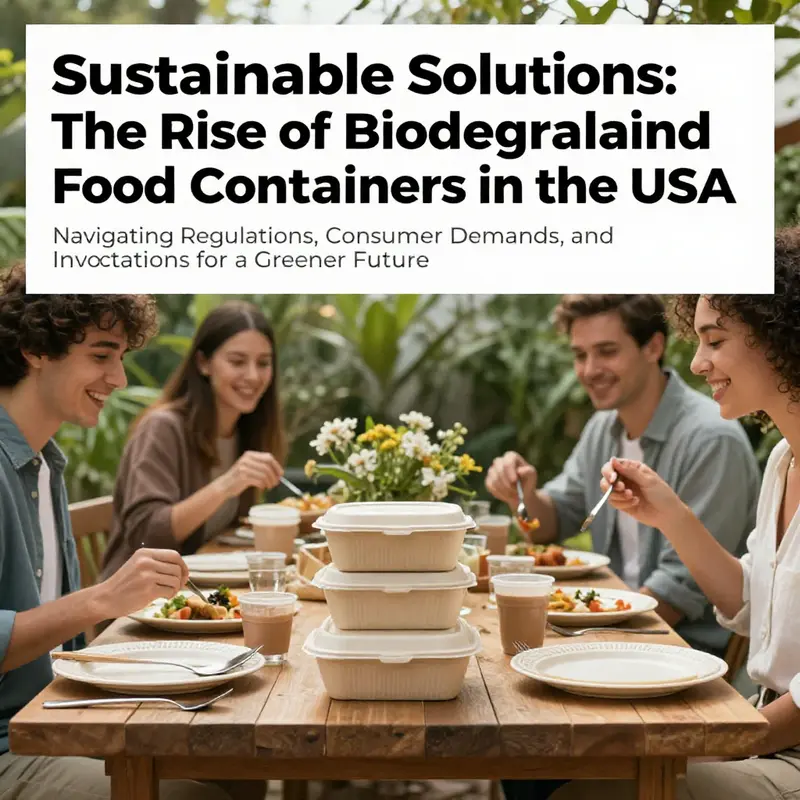
As our world shifts towards more eco-conscious practices, the importance of biodegradable food containers cannot be overstated. This growth in the biodegradable container market responds directly to both environmental regulations and evolving consumer preferences, particularly in industries like food service and hospitality. With cities leading the charge on plastic bans and consumers favoring sustainable brands, understanding these dynamics is essential for businesses looking to adapt. In this exploration, we will delve into the impact of environmental regulations, the influence of consumer preferences, and the technological innovations driving the market for biodegradable food containers in the USA.
Beyond the Ban: How Environmental Regulation Is Reshaping the U.S. Wholesale Market for Biodegradable Food Containers
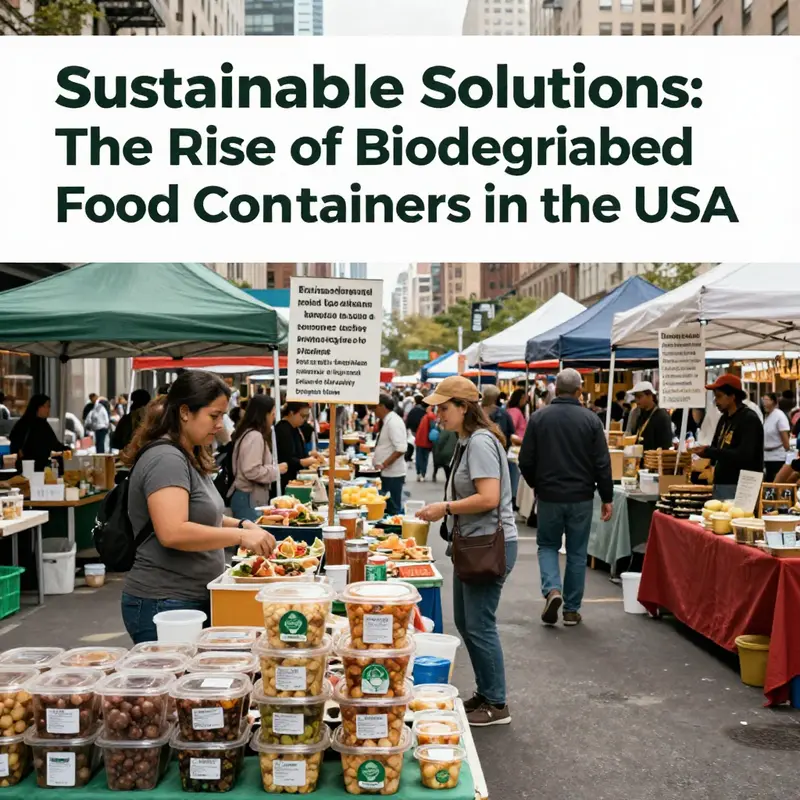
Regulation is not merely a constraint; in the realm of biodegradable food containers it acts as a catalyst that nudges the entire supply chain toward innovation, reliability, and clarity. In the United States, where business decisions move quickly and consumer expectations shift with social momentum, wholesalers find themselves navigating a regulatory current that both directs choices and reveals new opportunities. The public policy landscape, coupled with rising environmental awareness, has created a market where packaging choices are no longer determined by price alone but by a broader calculus that weighs environmental impact, regulatory compliance, and the practical realities of food service operations. This is not a narrow compliance issue; it is a strategic condition shaping product development, supplier networks, and the way brands communicate value to customers who increasingly equate sustainability with trust and quality. The wholesale market for biodegradable containers thus sits at a crossroads where policy, materials science, and consumer preference converge, demanding a holistic approach from manufacturers, distributors, and retailers alike.
Regulatory momentum in this space is most visible in state- and city-level initiatives that target single-use plastics and related waste streams. California’s SB 54 and New York’s restrictions on single-use plastics have become touchstones, not only because they ban or limit specific items but because they establish a broader standard for what constitutes acceptable packaging in the eyes of regulators and the public. These measures do more than reduce litter; they create a predictable demand signal for compostable and biodegradable alternatives. In markets where restaurants and food service operations are the primary buyers of wholesale packaging, such regulations translate into a requirement for packaging that performs reliably under heat, moisture, and handling conditions while also fitting into existing waste streams such as industrial composting facilities. The effect is twofold: wholesalers gain leverage to promote certified, compliant solutions, and producers are incentivized to invest in materials that can meet stringent performance and labeling criteria rather than defaulting to conventional plastics.
A key regulatory feature shaping wholesale decisions is the push for standardization through third-party certification and clear labeling. Many states require that biodegradable products carry verifiable certifications and that they meet defined criteria for biodegradation and compostability. The two standards most commonly referenced are a biodegradability standard that specifies how a material breaks down under controlled conditions and a labeling criterion that clarifies what kind of composting stream is appropriate. This creates a practical framework for wholesalers who must evaluate supplier claims and ensure that every container they source can withstand typical food-service use and then exit the supply chain in a controlled manner. Third-party verification, such as testing against recognized standards and independent audits, becomes a gatekeeper that helps prevent greenwashing while enabling brands to communicate credible claims to customers buying wholesale.
In this regulatory context, the distinction between industrial and home composting is not a mere technical detail; it has real operational consequences. Materials that break down in an industrial composting facility may require temperatures and microbial activity not present in a home composting setting. For wholesale buyers, this means choosing materials whose lifecycle aligns with the waste-management infrastructure available to their customers. Businesses serving urban areas with robust industrial composting networks may confidently source certain bagasse or cornstarch-based materials with industrial certification, while smaller eateries in areas lacking composting facilities might favor recyclable or compostable-paper options that require less specialized waste streams. The regulatory framework thus indirectly guides customer segmentation for wholesale distributors and shapes the product mix that wholesalers present to the market.
From a materials perspective, the principal choices in the U.S. market reflect a balance between performance, environmental profile, and regulatory compatibility. Sugarcane bagasse, for instance, has earned a reputation for durability and heat resistance, traits that matter in hot food service contexts and in containers that must resist moisture without warping. This makes bagasse-based packaging appealing for certain takeout formats, especially where a sturdy, rigid structure is desirable. Cornstarch-based materials, often marketed as plant-based plastics, bring the promise of compostability, and in some instances are positioned for scenarios where cold or room-temperature foods are common. Kraft-paper and pulp-based options remain foundational within the wholesale landscape because of their recyclability and the relative maturity of recycling streams in many U.S. municipalities. Each material class carries a distinctive regulatory narrative—certification pathways, labeling requirements, and real-world performance expectations—so wholesalers must steward a portfolio that offers choices aligned with varied regulatory and waste-management contexts.
The regulatory environment has downstream effects on wholesale pricing and supply chain dynamics as well. When regulations tighten, certification processes add cost and complexity, but they also create an opportunity for differentiation in a crowded market. For buyers seeking to avoid compliance risk, sourcing from suppliers who can demonstrate consistent conformity to ASTM-like standards and BPI-type verification becomes a prudent strategy. This is where the wholesale market often consolidates around partners who can provide not only the right materials but the documentation and logistics to support regulatory adherence. Packaging buyers lean into suppliers who can offer dependable lead times, scalable production capabilities, and transparent terms of delivery, including arrangements like Delivered Duty Paid (DDP) that remove friction from cross-border movements and domestic distribution alike. The practical takeaway for wholesalers is a renewed emphasis on supplier screening, documentation habits, and the ability to forecast regulatory-driven demand shifts with confidence.
Prices in this space are highly sensitive to scale, material choice, and the degree of customization a buyer demands. Bulk orders—certainly in the tens of thousands of units—often unlock the most favorable unit costs, reflecting both the fixed costs of certification and the efficiencies gained from high-volume production. Yet even at large scales, the variability of material performance under different temperature profiles and moisture levels keeps wholesale brackets dynamic. A single container may perform brilliantly under standard conditions but encounter spill or degradation risks when exposed to heat or humidity during delivery. Wholesalers who can match products to specific regulatory contexts—industrial composting capabilities, local waste practices, and labeling standards—can deliver not just containers but a reliable, end-to-end packaging solution that minimizes risk for food-service operators and accelerates onboarding for new accounts.
To bring a concrete sense of how these regulatory currents translate into catalog decisions and customer conversations, consider the typical buyer in the wholesale market: a regional distributor serving independent restaurants, food halls, and quick-service providers seeking to align with sustainability goals without sacrificing performance or affordability. The buyers in this segment are tasked with balancing several demands at once. They must ensure that the packaging they offer can withstand the rigors of daily use in a busy kitchen, survive transit from factory to warehouse to storefront, and ultimately fit into the customer’s waste-management approach. They must also respect brand promises—consumers increasingly audit a brand’s packaging as a proxy for its values. That means clarity in labeling, consistent product specifications, and a reliable traceable supply chain. In practice, this translates into a measured portfolio approach: a mix of durable, heat-resistant options; a line of compostable alternatives with well-documented industrial certifications; and recyclable or easily collectible paper-based solutions for operators who want to maximize post-consumer recycling. The goal is not simply to meet a regulatory requirement; it is to deliver packaging that supports the customer’s sustainability narrative while providing predictable performance during service, storage, and delivery.
A closer look at the lifecycle of this market reveals how policies signal opportunity for suppliers who align with the intent of the regulations. Certification requirements, for example, push manufacturers toward rigorous testing protocols and standardized labeling. While this can raise the upfront cost of development, it also creates a pathway for differentiating products in a crowded field. Wholesalers can leverage these certifications as a competitive advantage, offering customers reassurance about end-of-life outcomes and about the consistency of packaging performance across batches. In turn, brands that communicate credible environmental claims—backed by third-party validation—tend to command a stronger price-to-value proposition in wholesale negotiations, particularly with customers who maintain a public-facing sustainability stance or who participate in compliance-driven procurement programs.
The regulatory framework also encourages innovation in materials and processing methods. Wholesalers are increasingly attentive to how new processing technologies can enhance the compostability and strength of biodegradable containers without compromising recyclability or creating confusion in waste streams. For instance, advances in the processing of bagasse and plant-based composites have yielded products that resist grease and moisture more effectively, broadening their applicability across different menu formats and seasonal menus. Similarly, improvements in paper-based packaging formulations, surface coatings, and lid-integrity testing contribute to containers that seal reliably, maintain heat, and deliver a clean consumption experience. Though these developments require ongoing due diligence in supplier qualification, they also present opportunities to introduce premium lines that align with higher-wattage consumer segments while still maintaining wholesale scale.
From a strategic standpoint, the most successful wholesalers cultivate a policy-centered approach to sourcing. They build relationships with manufacturers who can demonstrate a clear road map for regulatory compliance, including robust labeling systems, traceable material origins, and transparent environmental performance metrics. They also invest in educating their teams and their customers about the nuance of biodegradability versus compostability, as well as the conditions under which a product will actually degrade. For instance, a bagasse-based option may break down under industrial composting conditions but remain stable in ordinary landfills or recycling streams. Clear communication about these distinctions helps prevent misaligned expectations at the point of sale and reduces the risk of returns or customer dissatisfaction. The result is a more confident wholesale market where buyers can select packaging that matches not only regulatory requirements but also the operational realities of their customers and the waste-management infrastructure in their locale.
In this broader landscape, one practical illustration of how wholesale decisions unfold is the selection of a kraft-paper-based take-away solution. Kraft-paper containers offer recyclability and compostability traits that align with many municipal programs, reducing post-consumer waste complexity for operators. They also provide a surface suitable for branding and printed messaging, which helps restaurants communicate sustainability commitments to diners. For wholesalers, the value proposition rests on combining reliable performance with predictable certification pathways and scalable supply. An internal reference point for buyers exploring this space is to consider formats and finishes that can support a spectrum of service models—from casual take-out to premium meal delivery—while preserving the integrity of the contents and the brand’s environmental narrative. Even in this ostensibly simple category, the regulatory lens adds a layer of due diligence: packaging must be compatible with the food contact materials regulations, labeled to reflect compostability status where applicable, and sourced from suppliers who can substantiate their claims with third-party tests.
The regulatory story also intersects with the dynamics of e-commerce and wholesale platforms that connect manufacturers with buyers. In a market driven by rapid fulfillment and the demand for customization, digital marketplaces provide a bridge between compliant suppliers and food-service operators seeking scalable, dependable packaging solutions. These platforms enable wholesalers to source materials that meet specific regional requirements, track certifications, and arrange for logistics terms that minimize friction in cross-border or domestic distribution. They also support the storytelling that underpins a brand’s sustainability promise, offering opportunities to display certifications, lifecycle information, and waste-management guidance alongside product listings. In practical terms, this means that wholesalers who adopt a compliance-forward mindset can present a compelling value proposition to customers who are navigating both environmental goals and tight margins.
As the market evolves, the interdependence of regulation, material science, and logistics becomes even more evident. The push for clarity in labeling and the push for reliable, scalable supply converge in a wholesale environment where customers expect not only green credentials but also a predictable cost structure and consistent product availability. Wholesalers therefore need to establish robust supplier vetting processes, maintain up-to-date certification documentation, and develop flexible logistics plans that accommodate the diverse waste-management realities of their customer base. The result is a marketplace that moves toward sustainability without sacrificing efficiency or reliability—a crucial balance for operators who must serve high-volume demand while staying aligned with environmental commitments. In this setting, the capacity to offer a curated selection of compliant options, coupled with clear communication about end-of-life pathways, becomes a key differentiator in wholesale negotiations and a driver of long-term growth.
For those seeking tangible examples of how these dynamics play out in the field, consider the role of a kraft-paper-based option that has gained traction among distributors and operators alike. This category is particularly relevant for menus that emphasize freshness and a rustic aesthetic, while still requiring robust performance in transit and on hot or moist foods. The choice of a paper-based solution, when aligned with appropriate coatings and certifications, can deliver a compelling value proposition: sustainable credentials paired with practical execution. This alignment is precisely what makes the packaging narrative compelling to operators who want to demonstrate responsibility to their guests without compromising on resilience or cost efficiency. The broader implication for wholesale strategists is straightforward: invest in solutions that meet the dual demands of regulatory compliance and operational practicality, and you will be better positioned to capitalize on the regulatory-driven demand shift that continues to accelerate in major urban markets and their surrounding regions.
Embedded within this regulatory and market mosaic is the opportunity to enrich the conversation with real-world resources. For buyers navigating the complexities of certifications and end-of-life considerations, it is useful to reference authoritative guidance on sustainable materials and waste management. An accessible external resource that aligns with the themes discussed here is the U.S. Environmental Protection Agency’s Sustainable Management of Plastics initiative, which offers insights into policy developments, waste streams, and industry best practices. This resource helps frame the regulatory intent behind packaging updates and provides a backdrop for wholesale decision-making as markets adapt to evolving environmental expectations. Access to this information supports wholesalers in maintaining compliance while continuing to offer innovative, high-performing packaging solutions that meet the needs of diverse food-service operators.
For readers seeking concrete, on-the-ground examples of how compliant packaging can be sourced and operationalized, a related internal reference point is a supplier-facing catalog entry that highlights a disposable kraft-paper take-away box with a transparent lid, designed for wholesale distribution and customization. This example illustrates how a single packaging format can be adapted to different branding needs while satisfying regulatory criteria and waste-management realities. The broader takeaway is that compliance does not have to limit choice; when managed thoughtfully, it can expand the range of viable options and empower wholesalers to tailor their portfolios to the preferences and requirements of their customers. In this sense, regulation acts as a bridge between responsible manufacturing and practical market success, aligning environmental goals with the realities of fast-paced food-service environments.
From a strategic perspective, the wholesale market is moving toward a model in which certifications, material choice, and waste-stream compatibility are the core differentiators. The most successful players will be those who invest in transparency—documenting certifications, communicating end-of-life expectations, and providing clear guidance on which waste streams are appropriate for each packaging solution. This level of clarity reduces friction for customers as they implement new packaging in their operations and helps ensure that sustainability claims hold up under scrutiny from regulators, customers, and even end-consumers who examine packaging as part of a brand’s overall environmental story. In short, regulatory requirements are redefining value in the biodegradable-container space: value now hinges on verifiable compliance, dependable performance, and a credible environmental narrative that resonates with today’s sustainability-minded audience.
As the market evolves, the conversation between regulation and wholesale practice will become even more nuanced. Regulators will continue to refine labeling standards, certification criteria, and definitions of biodegradability versus compostability. Wholesalers, in turn, will respond with more sophisticated supplier networks, better traceability, and more robust logistical arrangements to ensure that product flow remains smooth even as new materials and standards emerge. The result is a feed-forward cycle in which policy shapes product development and market expectations, while the market’s response helps regulators gauge the effectiveness of their programs. The ultimate beneficiary of this dynamic is the consumer, who gains access to packaging solutions that align with a broader commitment to environmental stewardship, while the food-service ecosystem benefits from more predictable supply chains, clearer guidance, and the confidence that the materials used to package meals are consistent with stated sustainability goals.
For further reading and to explore a real-world example of the kind of wholesale packaging solutions discussed here, you can examine a catalog entry that showcases a kraft-paper-based take-away box with a clear lid and customization options. This example demonstrates how a single packaging format can be leveraged for branding, regulatory compliance, and operational reliability across different market segments. disposable kraft paper take-away boxes.
External resource for further guidance: U.S. EPA Sustainable Management of Plastics: https://www.epa.gov/sustainable-management-plastics
Shifting Values, Rising Demand: How Consumer Preferences Drive Biodegradable Food Container Wholesale in the USA
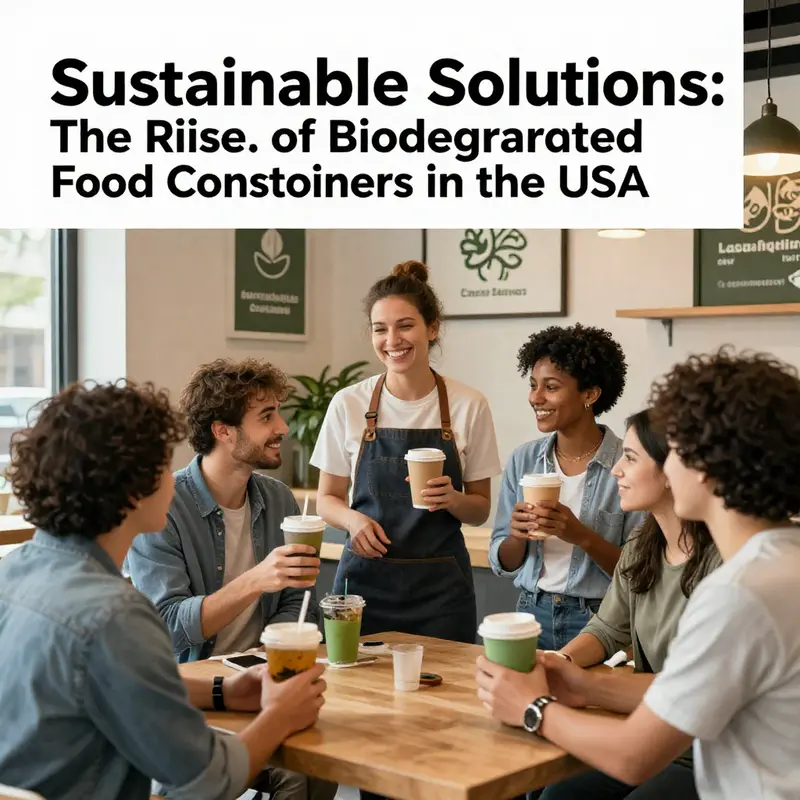
A unifying trend defines the U.S. market for biodegradable food containers: consumers increasingly demand sustainable packaging as part of the dining experience. From daily lunch spots to cloud kitchens and meal-delivery services, buyers now seek packaging that shows how it’s made, what happens after use, and how environmental commitments are communicated.
In surveys and procurement conversations, roughly two-thirds of consumers prefer environmentally responsible packaging, a signal that sustainability has become a baseline expectation. This shift influences menus, delivery models, and wholesale sourcing and pricing strategies, reshaping supplier relationships as much as consumer choices.
Regulatory dynamics support this shift: bans on single-use plastics and tougher compostable standards drive adoption. Cities and regions implement frameworks that reward materials with proven end-of-life viability, turning disposable containers into a decision anchored in performance and responsibility.
Material choices drive performance and cost: bagasse, PLA, cornstarch-based plastics, bamboo, kraft paper each bring trade-offs for hot vs cold foods, microwave safety, and composting infrastructure. A balanced portfolio helps meet diverse culinary needs and local waste streams.
Wholesale market responses include certified compostable and biodegradable options (ASTM D6400, BPI), scalable logistics, and Delivered Duty Paid terms to simplify cross-border procurement. Volume discounts reflect economies of scale, while reliability and traceability become differentiators even at lower price points.
Design and packaging strategies emphasize multi-use formats, branding-friendly aesthetics, and durable construction that travels well. The example of a kraft paper octagonal box with lid illustrates a broader trend toward packaging that supports presentation and environmental responsibility, with options that are compostable under appropriate conditions.
End-of-life communication matters: consumers want to know how to dispose of packaging and where to recycle or compost. Certifications and transparent labeling build trust and reduce confusion, helping brands align packaging choices with consumer values and local waste capabilities.
For wholesalers, the economics hinge on material selection, certification costs, customization, and logistics. The value proposition is broader than price per unit; it includes waste management savings, regulatory alignment, and a compelling brand narrative that resonates with a values-driven audience.
As awareness and infrastructure mature, the wholesale ecosystem for biodegradable containers in the United States will continue to evolve toward greater choice, predictable supply, and stronger alignment with consumer values.
Beyond Plastic in Bulk: Innovations Redefining Biodegradable Food Containers for the U.S. Wholesale Market
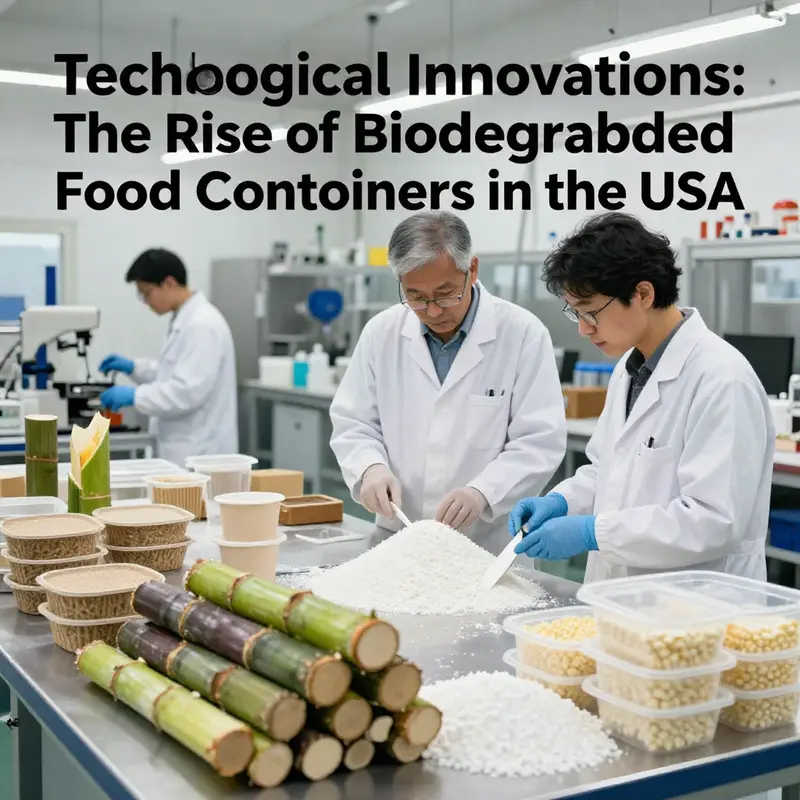
The wholesale landscape for biodegradable food containers in the United States is evolving from a niche choice to a strategic operating principle. Behind the glossy brochures and rapid ship times lies a complex ecosystem where material science, manufacturing discipline, and logistical prowess converge to meet growing demand from a public increasingly vigilant about planetary health. The innovations driving this shift are not merely incremental; they are redefining what is possible in terms of performance, cost, and scope. In this chapter, we trace how new materials, smarter designs, and smarter packaging concepts are elevating biodegradable containers from a greener option to a business enabler that aligns with regulatory timelines, consumer expectations, and supply chain realities. The arc we explore connects the science of biodegradable substrates with the practical demands of wholesale buyers who must balance durability, safety, and cost at scale, all while positioning themselves as responsible brands in a crowded market.
At the core of these advances is a reimagining of the substrates themselves. Sugarcane bagasse, cornstarch-based plastics, and kraft paper pulp have emerged as a trio of principal materials, each offering distinct advantages for different application profiles. Bagasse, the fibrous residue left after sugarcane processing, is renowned for its strength and heat resistance. In clamshells and multi-compartment meal containers, bagasse-based formulations demonstrate a surprising resilience when faced with hot foods, sauces, and longer hold times. This resilience translates into a more reliable user experience in busy take-out environments, where containers must hold their contents without deformation or leakage and maintain structural integrity for the duration of delivery. The performance credentials of bagasse come with a favorable environmental narrative as well: the material is often sourced from agricultural byproducts, reinforcing circular economy logic and reducing reliance on petroleum-based polymers.
Cornstarch-based plastics, commonly referred to in the industry as PLA, offer another path toward sustainability, particularly for cold or room-temperature applications. PLA’s favorable compostability profile—under industrial conditions—aligns with consumer and regulatory expectations that single-use packaging should not persist in the environment for generations. For many wholesale buyers, PLA provides a compelling combination of process compatibility and end-of-life feasibility. Yet, the conversation is nuanced. Home compostability remains a topic of consumer debate, and the distinction between industrial composting facilities and home environments continues to shape how brands message their packaging. In practice, many suppliers emphasize the end-of-life route that is realistically available to their customers, while researchers continue to refine PLA’s barrier properties and heat resistance to extend its applicability across more menu offerings.
Kraft paper and pulp-based solutions round out the material palette with a familiar, recyclable option that appeals to brands seeking an earthy, craft-forward aesthetic. Kraft-based containers pair well with a broad spectrum of food items and can be engineered to achieve impressive stiffness and stacking strength, critical for efficient warehousing and shipping. The blends of paper with bio-based coatings offer a balance of printability, moisture management, and biodegradability that resonates with many operators who want to project a consistent sustainability story from kitchen to curbside pickup. In practice, buyers are increasingly evaluating a matrix of material choices against the anticipated handling conditions, the target food types, and the designed shelf life of the product itself.
Beyond substrate selection, there has been a clear push toward lightweighting without compromising performance. Reducing the weight of packaging translates into tangible benefits: lower freight costs, increased payload capacity, and a smaller overall carbon footprint per unit sold. Lightweighting efforts leverage advances in molding techniques, reinforcing structures with minimal material without reducing impact resistance or thermal performance. In wholesale ecosystems, this translates to lower total landed costs for buyers who ship large volumes across long distances. The math is compelling: lighter containers require less energy in transit, and when scaled across thousands or tens of thousands of units, the cumulative savings become meaningful. Importantly, this is not a compromise on user experience; modern lightweight designs maintain robust drop resistance, leak containment, and stackability—qualities that are essential for restaurant take-out, meal-prep services, and subscription-based meal boxes.
A particularly exciting frontier is smart packaging. The integration of sensing technologies—such as time-temperature indicators, freshness sensors, and even digital QR indicators that link to product data—offers a new layer of value. For wholesale buyers, smart packaging signals that food safety compliance can be monitored in real time, potentially reducing waste and improving operational predictability. This is not about gimmicks; it is about embedding information that helps operators manage the flow of meals from kitchen to consumer. In practice, smart packaging helps restaurants optimize portion integrity, ensure hot-case performance, and verify that products meet declared temperatures upon delivery. The data captured by these systems can also feed into sustainability dashboards, supporting brand storytelling around responsible packaging and waste reduction.
Concurrently, the regulatory context continues to sharpen the incentives for adopting biodegradable solutions. Cities and states have moved assertively to curb the use of conventional single-use plastics, with notable examples driving a broader shift toward compostable and biodegradable options. This regulatory trajectory creates a pull-through effect for wholesale suppliers who can demonstrate scalable, compliant solutions at competitive prices. For wholesalers, the challenge is to balance material innovation with practical standards and consumer safety. As the research notes, rigorous definitions for quality standards in biodegradable liquid containers—whether for beverages or pharmaceuticals—are becoming fixtures in procurement criteria. Suppliers who preemptively align with these evolving standards reduce the risk for buyers and shorten the path to compliance in a highly regulated market. In the wholesale context, achieving this alignment demands a concerted effort across supply chain design, testing protocols, and documentation that supports regulatory audits and product stewardship.
These standards and expectations feed directly into how containers perform in real-world environments. The broadening applications of biodegradable packaging extend beyond basic takeout boxes. Luxury brands are increasingly turning to compostable or biodegradable packaging as a core facet of their sustainability proposition, using materials that convey quality while signaling environmental responsibility. Subscription box services, which deliver curated experiences to consumers on a recurring basis, find value in packaging that not only protects contents but also reinforces a premium, planet-friendly brand narrative. In this context, packaging becomes part of the product experience rather than a disposable afterthought. The holistic sustainability approach, now a strategic priority for many operators, embraces packaging that decomposes safely while contributing to enhanced consumer loyalty and perceived social value.
From a market perspective, the wholesale sector is undergoing a maturation that makes biodegradable options more scalable and cost-effective. As materials mature, production methods become more efficient, and the supply chain grows more resilient, the gap between lab-scale innovation and factory-floor deployment narrows. The macro effect is a broader affordability and accessibility of biodegradable solutions across industries that rely on takeout, delivery, and food-service packaging. For wholesalers, this translates into more predictable pricing, shorter lead times, and greater customization capability—factors that collectively reduce total cost of ownership over the product life cycle. In practice, this means bulk buyers can negotiate terms that include faster shipping, reliable quality, and options for tailored print runs or customer-specific packaging motifs—without sacrificing the end-of-life story that their customers demand.
All of these threads intertwine with the broader imperative to curb food waste. Advanced technologies in biodegradable packaging—particularly those that leverage intelligent sensing to monitor freshness and safety—address one of the most stubborn challenges in modern food systems. As the cited research suggests, intelligent packaging is moving from a novelty to a pragmatic tool in the fight against waste, providing actionable data to retailers, caterers, and households. While not every application will require embedded sensors, the very possibility broadens the envelope for what wholesale partners can offer. It enables a portfolio approach: for some accounts, a straightforward, sturdy clamshell that performs under heat and humidity suffices; for others, a premium line with active freshness indicators and digital traceability adds measurable value. The wholesale market, therefore, benefits from a diversified product strategy that matches customer needs with material capabilities and end-of-life outcomes.
For buyers navigating this evolving landscape, the decision matrix becomes more nuanced. It is not solely about price per container; it is about a holistic package that includes supply assurance, regulatory alignment, compatible accessories, and a coherent sustainability story. The best wholesale partners now present a portfolio that balances the three core substrates—bagasse, PLA, and kraft—while offering design flexibility, scalable manufacturing, and efficient logistics. The end-to-end value proposition extends beyond the container itself. It encompasses the ease of ordering, the predictability of delivery, and the confidence that the packaging will perform under the pressures of peak service times, diverse cuisines, and long-distance distribution. In this sense, the innovations discussed are not abstract technicalities; they are the practical levers by which wholesale businesses deliver reliable service while advancing environmental stewardship.
To connect these threads with tangible sourcing realities, consider the broader ecosystem that enables bulk procurement. Wholesale buyers increasingly rely on platforms that connect them to verified manufacturers capable of producing biodegradable containers at scale, with options for customization and terms that fit large orders. The market has shown a clear preference for suppliers who can offer fast shipping, consistent product quality, and clear communication about end-of-life pathways. In practice, this means evaluating supplier capabilities around three dimensions: material provenance and performance, manufacturing scalability, and logistical reliability. A well-rounded sourcing strategy acknowledges that the most advanced material solution on paper may underperform if the supply chain cannot deliver it consistently, or if the packaging cannot be integrated smoothly into current operations. Conversely, a robust supply chain paired with a thoughtfully engineered material that meets performance targets can unlock efficiencies and improve brand perception across both commercial customers and end consumers.
The future of wholesale biodegradable containers in the United States looks increasingly like a convergence of material science, packaging design, and supply chain orchestration. As innovations continue to mature, we should expect to see more modular packaging concepts that can be adapted to different menu formats, temperature profiles, and service models without sacrificing recyclability or compostability. For operators, this means more options to optimize the balance between cost, performance, and sustainability. For manufacturers, it signals opportunities to realize economies of scope and scale, making high-performance biodegradable options accessible to a broader range of food-service channels—from premium meal delivery platforms to casual fast-casual restaurants and corporate cafeterias. The dynamic is not a simple substitution of one material for another; it is a redefinition of how packaging can be engineered as a value-added component of the overall dining experience.
As these innovations circulate through the wholesale channel, a few practical takeaways emerge for buyers, suppliers, and policymakers alike. First, alignment with performance standards and end-of-life pathways is essential. Buyers should seek transparent documentation about material composition, compostability, and any certifications that attest to environmental claims. Second, supply chain resilience should be evaluated alongside environmental promises. The most effective solutions will couple durable, food-safe performance with consistent availability, especially during demand spikes or supply disruptions. Third, a portfolio approach—offering a spectrum of materials and design options—appears best suited to meet diverse customer needs and price points. In this context, the wholesale market becomes not just a seller of containers but a partner in sustainability, enabling brands to communicate a credible, measurable commitment to environmental responsibility while maintaining the reliability essential to food-service operations.
The conversation would be incomplete without acknowledging the broader research that informs these developments. An important area of study examines how intelligent sensing and real-time data can be integrated into packaging to fight food waste, a topic explored in depth in recent scholarly work. While the aim of such research is to illuminate paths toward smarter packaging systems, it also underscores the collaborative potential among material science, packaging engineering, and data analytics in the wholesale space. For readers seeking a deeper dive into these advanced technologies, a comprehensive discussion is available in the associated scholarly article that surveys the role of intelligent sensing in biodegradable packaging and its impact on food waste reduction. External researchers and industry practitioners alike can draw on these findings to guide design decisions, regulatory strategy, and long-range investment planning. Read the full article here.
Internal link reference for practical sourcing considerations is embedded here for readers exploring real-world product examples that illustrate the material types and design strategies discussed. To see how a typical food-grade takeaway bowl with lids is positioned in a wholesale catalog and how customization can be handled at scale, you can review a representative product category that aligns with the described material families and performance criteria. This example offers a window into how containers are specified, tested, and packaged for bulk distribution, while maintaining a consistent sustainability narrative across the supply chain. food-grade takeaway bowls with lids
In closing, the innovations shaping biodegradable food containers for the U.S. wholesale market are less about a single breakthrough and more about an integrated approach. Material science, process optimization, smart packaging concepts, and a responsive supply chain all contribute to a more resilient, transparent, and sustainable packaging ecosystem. Buyers who can navigate this landscape with a clear view of performance, compliance, and end-of-life outcomes will be well positioned to meet evolving customer expectations and regulatory requirements. As consumers push for greener choices, wholesale players who invest in rigorous standards, scalable manufacturing, and intelligent packaging capabilities will help accelerate the transition away from conventional plastics toward packaging that serves both people and the planet.
Final thoughts
The market for biodegradable food containers in the USA is not merely a trend; it reflects a significant paradigm shift towards sustainability in packaging within the food industry. Understanding the impact of environmental regulations, responding adequately to consumer preferences, and leveraging technological innovations are critical for businesses aiming to thrive in this evolving landscape. Embracing these changes not only aligns with current market demands but also positions brands as leaders in sustainability. As we move forward, prioritizing eco-friendly solutions will not only enhance brand loyalty but also contribute to the greater good of preserving our planet.