
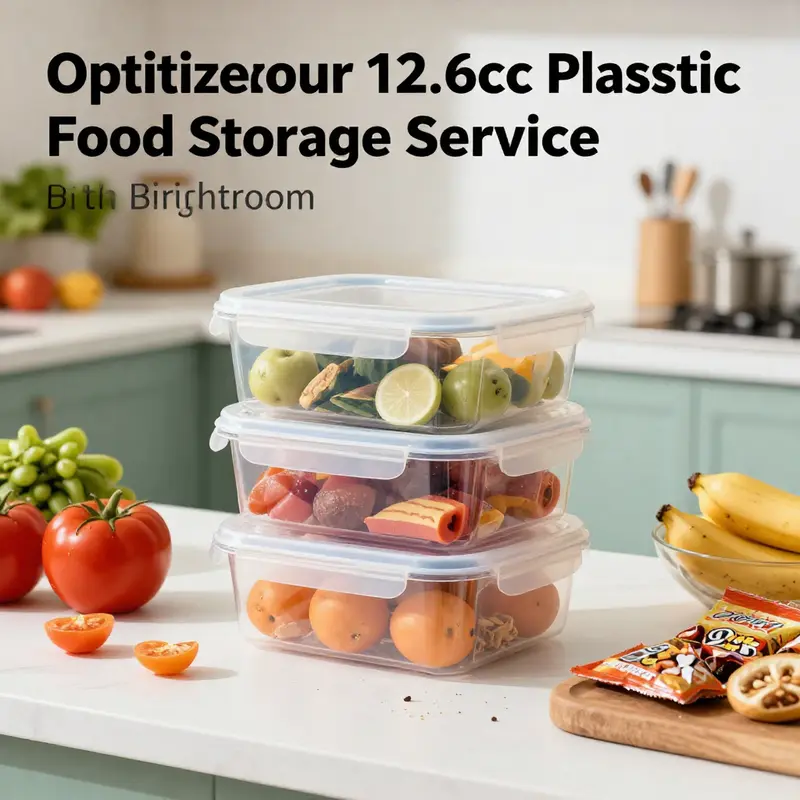
Effective organization is key to success in the food and beverage industry, where speed and reliability define customer satisfaction. The Brightroom 12.6c Tall Rectangle Plastic Food Storage Container is designed with businesses such as bubble tea shops, restaurants, food trucks, and catering services in mind. In this piece, we will explore its key features that enhance workspace efficiency, delve into the economic aspects of its purchase, and examine the user experience and design that make it an indispensable tool for event planners and corporate procurement teams.
null
null
The Tall Rectangle and Household Economics: Storage, Space, and Everyday Savings
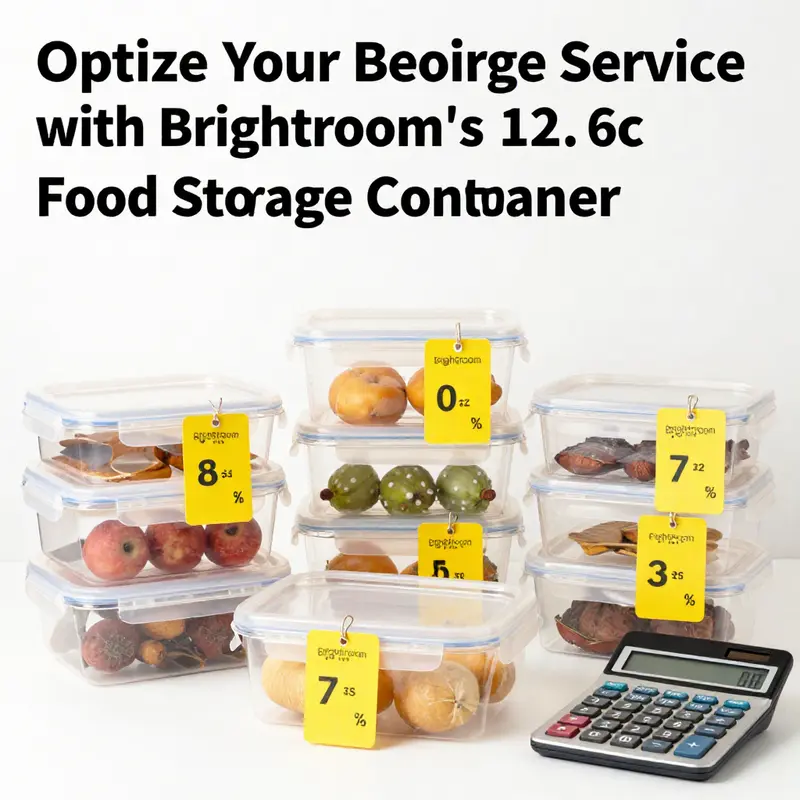
The tall rectangle plastic storage option is more than a container; it is a lens on how households translate space into value. When a pantry lineup is uniform and the lids seal reliably, the everyday act of tidying becomes a small but meaningful economic decision. This chapter traces the logic that links a modest purchase to measurable budget outcomes, focusing on price, durability, and the ways visibility and standard geometry shape behavior.
The immediate signal is price and affordability. A set of five containers priced around the mid range offers a durable solution without signaling luxury. This is a deliberate investment in efficiency rather than a cosmetic upgrade. The core value rests not only in the price tag but in the time saved, the clarity of contents, and the reduced likelihood of spoilage and duplicate purchases. When contents are visible and neatly organized, household members can plan meals more reliably and avoid impulse buys that add up over time.
Durability and seal integrity matter for long term value. A rigid body, well designed lids, and a clear material resist cracking and leaks, extending the usable life and lowering replacement frequency. The psychological assurance of a dependable seal lowers cognitive load and supports consistent shopping and portion control over months and years.
Visibility drives micro management that yields real savings. Clear walls enable quick audits of what exists, what is running low, and what should be bought. A simple inventory habit reduces waste, avoids overstocking, and helps align purchases with actual needs. The net effect is a steady reduction in spoilage and in wasteful trips to the store.
Financing can adjust the timing of the cost. Retail promotions that offer six month no interest financing lower upfront cash outlay, provided the balance is repaid within the promotional window. When paid in full on schedule, the model adds no interest and can fit smoothly into a household budget. If terms are missed, carrying costs erode the savings from better organization.
Lifecycle costs matter. How many years will the container remain functional under ordinary use, and how many wash cycles can it withstand? Durable design lowers annualized costs and supports a scalable system that can expand as family needs grow. The geometry of an 8 by 8 inch footprint and a moderate height enables efficient stacking in shallow cabinets, making every inch count and improving overall shelf real estate.
Market context and behavior complete the picture. For households that plan meals and bulk stock, a uniform, space efficient system often delivers the strongest return. The decision to upgrade rests on a calculated balance of convenience and cost, with a preference for consistency in size and reliability in performance. In this sense, the tall rectangle is not a single purchase but a foundation for a repeatable storage strategy that supports budgeting discipline and predictable routines.
Clarity in Form: Designing a Tall Rectangle Plastic Storage Container for Seamless Kitchen Rhythm
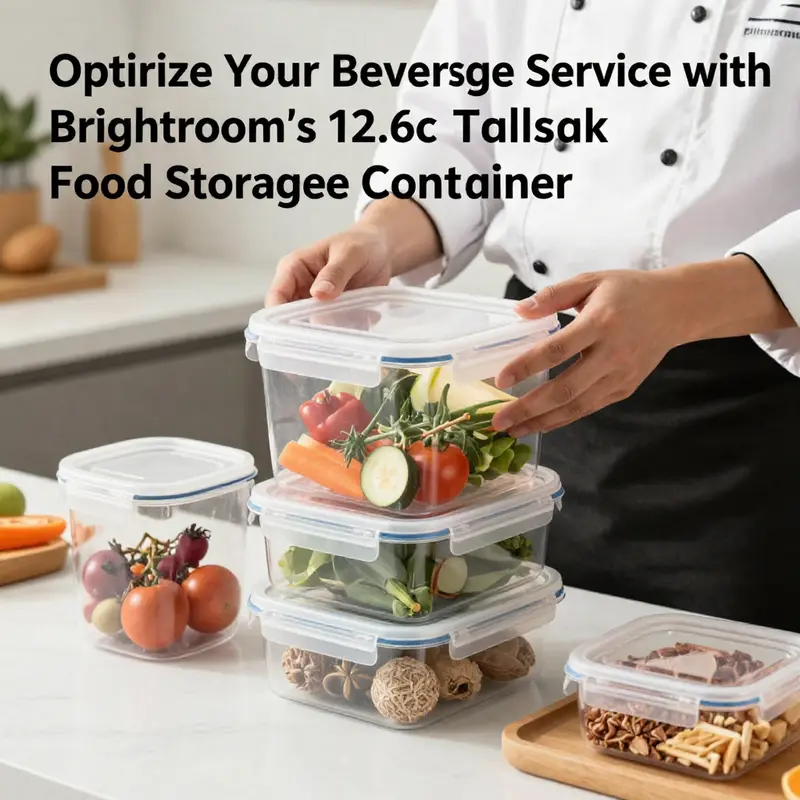
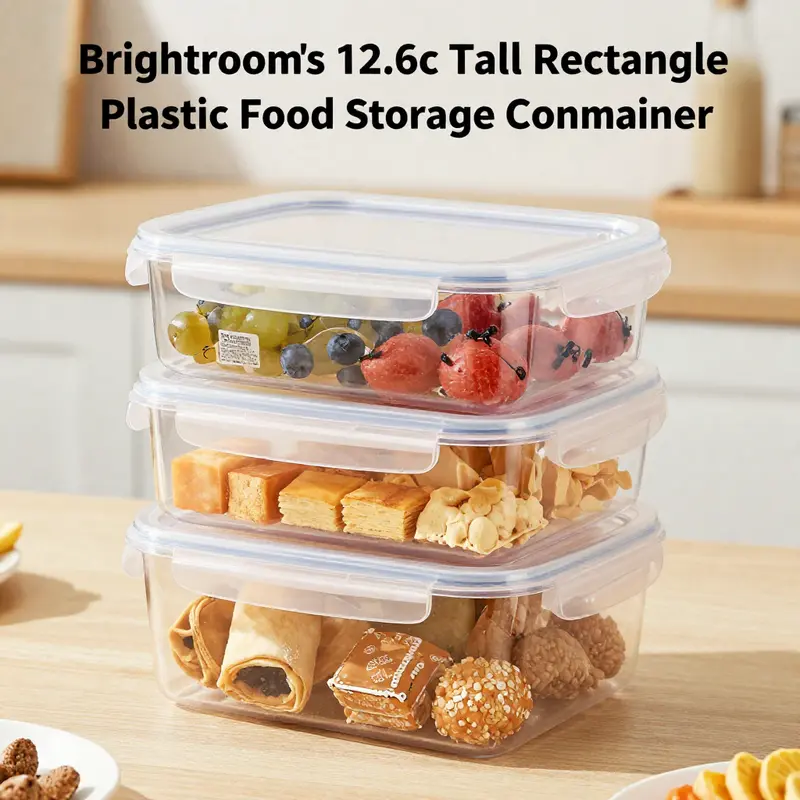
The design of a tall rectangle plastic storage container is more than a matter of capacity. It is a careful calibration of visibility, access, and space efficiency that translates into a smoother daily routine in the kitchen and beyond. In enduring kitchens, the simplest tools become the most powerful when they merge form with function. A tall rectangle that measures eight inches in length, width, and height is not just a box; it is a small architectural decision that shapes how food is stored, found, and used. When you open a cabinet or a pantry and encounter containers that are easy to identify at a glance, neatly stacked, and reliably sealed, your planning process gains momentum. You move from reactive rummaging to proactive organization, and that shift changes the tempo of everyday cooking, snack preparation, and even bulk-buying habits. The core of this experience lies in three intertwined design decisions: visibility, seal, and stackability, each reinforcing the others to deliver a cohesive, user-centered product narrative without demanding a complicated routine in return.
Visibility is the first and most immediate benefit. A transparent shell lets contents declare themselves through light and shadow, sparing you the cognitive load of lifting lids or reading labels to determine what lies inside. This is not merely about aesthetics; it is about reducing small daily frictions. When you stock a container with dry goods—beans, grains, or snack assortments—the contents serve as a living inventory. The sight line cuts down the time spent deciding what to cook or portion for a lunchbox. In a busy kitchen, where decisions accumulate quickly, that visual honesty streamlines meal planning and reduces the risk of purchasing duplicates or letting items pass their prime unnoticed. The refractive clarity also communicates cleanliness, inviting users to treat the container with care because its contents remain legible and the container itself remains perceptibly pristine.
The seal is the second pillar, and it is the practical heart of freshness protection. A secure white lid—designed to create a reliable barrier against air, moisture, and incidental spills—transforms a simple storage vessel into a trustworthy keeper of flavors, textures, and aromas at their best. The lid design must negotiate two realities: it should be easy enough for daily use and robust enough to withstand repeated closures without loosening. In real kitchens, small frustrations accumulate when a lid is stubborn, when a seal loosens after a dishwasher cycle, or when a container fails to prevent a stray leak during a move or a quick trip to the table. A well-executed lid mechanism recognizes that users are right-handed or left-handed, that they handle containers with wet hands or while juggling utensils, and that they value an assurance that the seal remains intact during stacking or transport. The result is a feeling of reliability that extends beyond the container itself into the routine of planning, portioning, and serving.
Then there is the architecture of space—the stackability that elevates efficiency without compromising accessibility. This product is designed to nest neatly with others, enabling vertical organization that maximizes cabinet or pantry real estate. Stackability is not simply about putting one box on top of another; it is about ensuring that the structure remains stable when loaded with heavy dry goods or light, airy snacks. A well-considered stack exploits vertical space while preserving quick access to the bottom container. This duality matters because modern kitchens often balance a multitude of storage tasks: bulk-bought staples, weekly meal components, and daily grab-and-go items all need to coexist within a shared footprint. When a container’s dimensions promote orderly stacking, the entire system becomes more forgiving of crowded shelves. You gain a rhythm in which grabbing a premeasured portion for a recipe or a lunchbox becomes a straightforward, almost automatic action rather than a deliberate, time-consuming search.
The dimensions—eight inches in length, eight inches in width, and eight inches in height—are not incidental. This is a shape that aligns with how many storage frameworks are laid out, and it respects the need for both flexibility and predictability. A square footprint contributes to uniform stacking patterns, while the height enables efficient vertical use without making the container awkward to handle. This is a design choice that acknowledges real-world constraints: cabinets with adjustable shelves, pantry cubbies of varying depths, and refrigerators with compartmental layouts that prefer modular, square-ish modules. The result is a storage system that feels engineered for everyday life rather than improvised or improvised elements that merely fit a single niche. The container’s clear material reinforces this sense of intentional design. Transparency communicates not only contents but also the condition of those contents. It invites a habit of quick visual checks that minimizes waste and supports a more mindful approach to food storage, where you see at a glance what needs to be used, and when.
From a usability perspective, the container is a quiet facilitator of routine. The ease of retrieval—pulling out a single unit from a stack without dislodging the entire column—speaks to a well-balanced edge profile and lid-edge geometry that are gentle on fingers and resilient under frequent handling. The simple, uncluttered lines of the container fit neatly into a modern kitchen aesthetic, where functionality and form are in harmony. The aesthetic is not superficial; it reinforces a cultural signal to care for food, to plan ahead, and to respect the space you inhabit. When a container looks coherent with the rest of a modular system, it reduces visual noise and makes the kitchen feel calmer and more orderly. This, in turn, contributes to a more sustained commitment to organized storage, since the reward for maintaining order is immediate and tangible: a space that reads as neat, transparent, and trustworthy, with every item precisely where you expect it to be.
The user experience is further enriched by the container’s compatibility with modular storage frameworks that enable flexible configurations. In a setting where shelves, bins, and dividers are designed to interlock or align, a container of this shape becomes a reliable building block. You can arrange, reconfigure, and expand without encountering awkward gaps or mismatched dimensions. This adaptability matters because kitchen needs evolve: you may rotate bulk staples into a higher shelf as your pantry grows, or you may repurpose a container for a different category of items as your shopping habits shift. The container’s balanced proportions support a seamless transition between uses, from dry pantry staples to snack assortments or even specialty items that occupy a more permanent place in the kitchen ecosystem. In this sense, the design is not a single-use artifact but a durable tool that invites ongoing optimization of space, routine, and mindset.
The narrative of use is also colored by the practical realities of maintenance and care. A transparent plastic shell is straightforward to wash, dry, and reassemble, provided care guidelines are observed. Regular cleaning helps preserve the clarity that makes the contents readable at a glance. While the lid seals the container, it also benefits from a careful dry-down routine to prevent moisture buildup that could affect long-term seal performance. The simplicity of care is a subtle yet powerful factor in the overall user experience: it lowers friction in daily maintenance and supports a longer lifecycle for the container as a trusted kitchen partner. When you do not have to wrestle with stubborn residues or lingering odors, your attention stays on cooking, planning, and sharing meals with others. This is the kind of design that feels invisible in the moment but remains indispensable over time.
In reflecting on the broader implications of this design, its role in everyday organization becomes clearer. The container’s clarity, seal, and stackability together form a triad that guides choices about what to buy, how to portion, and where to place items in the home. A well-sequenced kitchen experience is built from a sequence of small, almost unnoticeable victories: quick recognition of contents, dependable freshness, and efficient use of vertical space. When such victories accumulate, they shape an overall impression of competence and ease that affects how one plans meals, stores ingredients, and even cleans up after cooking. The effect extends beyond the kitchen, shaping routines in the dining area, the school lunch program at home, and the weekly grocery habit. In short, the container becomes a catalyst for thoughtful storage behavior, turning what could be a cluttered obstacle into a reliable partner in daily life.
For readers exploring related options within a similar category, the idea of compact, stackable, and visually intelligible vessels is echoed across a family of products designed to support organized storage. A related category of durable, easy-to-clean, take-away style containers demonstrates how the same design principles can translate into different contexts—portable, reusable, and space-conscious options that complement a modular approach to organizing. This cross-category relevance underscores the value of clear visibility, secure sealing, and space efficiency as universal criteria for thoughtful storage design. If you are curious to see an example of how those principles translate in another storage format, consider exploring the broader category of food-grade takeaway bowls, which illustrates how compact dimensions and reliable lids can coexist with everyday practicality. food-grade takeaway bowls to see a real-world application of similar ideas in a different context.
The convergence of design and use in this tall rectangle container invites a broader reflection on how we curate the spaces we inhabit. The kitchen, after all, is not a showroom; it is a working environment where efficiency, clarity, and trust must coexist. A container that communicates its contents at a glance, creates a reliable seal to preserve freshness, and stacks without creating a brittle, top-heavy silhouette becomes more than a practical tool. It becomes a quiet contributor to a more mindful cooking experience. In such a setting, the act of cooking is less celebration of novelty and more a disciplined, enjoyable practice of preparation, portioning, and preservation. The container embodies that philosophy: it is simple, honest, and capable, and in its simplicity it invites the user to bring consistency and care to daily meals.
From this perspective, the container’s design is a reminder that the best kitchen tools are those that disappear into the routine, letting the user focus on the task at hand. The goal is not to attract attention through novelty but to earn trust by performing consistently, with clarity and grace. When you reach for a container that looks predictable in the best possible sense—clear to read, easy to seal, easy to stack—you are not just storing food; you are reinforcing a way of organizing life that supports healthier choices, less waste, and greater satisfaction in everyday meals. The design thus becomes a partner in the daily practice of cooking, storage, and sustainable living, a partner that makes the routine feel natural rather than chore-like. This is the essence of thoughtful container design: it disappears into the workflow and leaves behind a garden of possibilities, a pantry that breathes with order, and a kitchen that feels capable, calm, and ready for whatever the day demands.
External resource: https://www.walmart.com/ip/Brightroom-12-6c-Tall-Rectangle-Plastic-Food-Storage-Container/53702944
Final thoughts
In the competitive food and beverage sector, efficiency and organization can define the success of your business. The Brightroom 12.6c Tall Rectangle Plastic Food Storage Container emerges as a pivotal ally for bubble tea shops, restaurants, and catering services by providing a stackable and transparent solution to store a variety of items. Its economic benefits and user-centered design make it a wise investment for any enterprise looking to optimize their operations. By incorporating these containers into your workflow, you are not merely purchasing a product; you are enhancing your overall service delivery.