
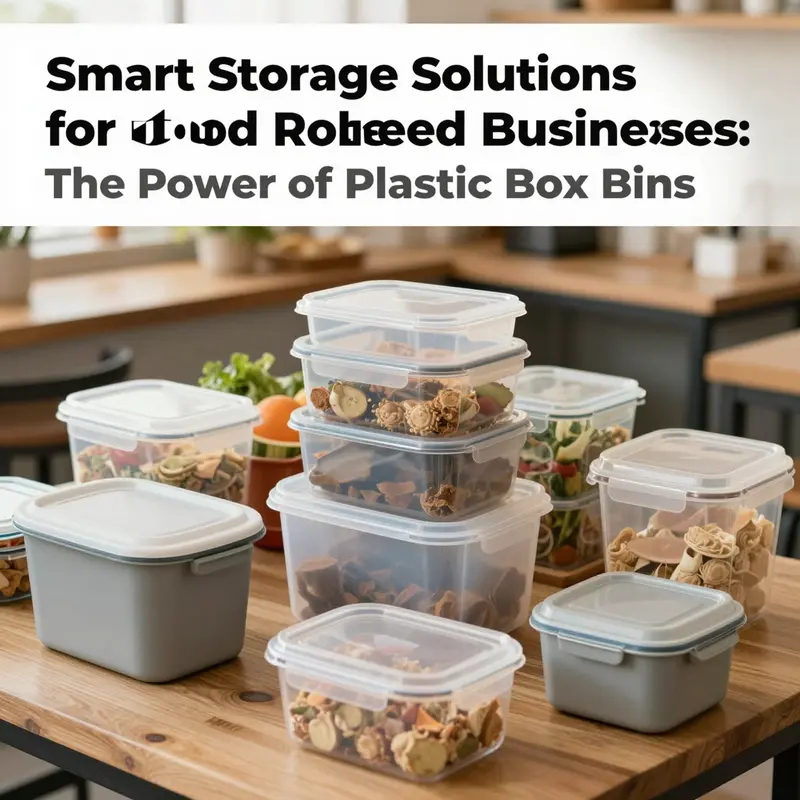
In today’s competitive food service industry, efficient storage solutions are paramount. Box bins plastic containers offer a versatile approach to food storage, suited for a variety of businesses, from bubble tea shops to catering services. Their designs cater to specific needs, ensuring safety and convenience while maintaining food integrity. This article explores several types of plastic food containers, detailing their unique benefits and applications across different sectors. Readers will gain insights into black plastic bento boxes, stackable bulk containers, round containers for liquids, screw-on lid designs, and hinged containers for ready-to-eat foods—a comprehensive overview that highlights how each container type contributes to effective food management.
Black Plastic Food Containers Reimagined: The Bento Box and Modern Meal Management
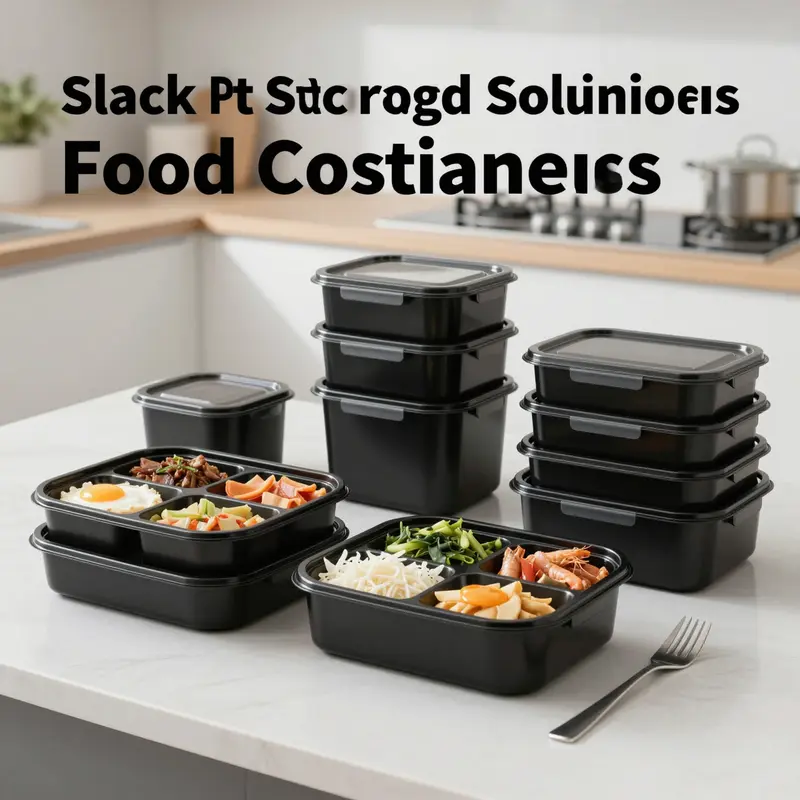
Black plastic food containers, especially the bento box style with multiple compartments, are more than vessels for meals – they are compact systems that govern portioning, transport, and presentation. Their design emphasizes keeping components distinct while reducing packaging waste and simplifying storage. In institutional settings like schools and workplaces, these containers support organized meals and efficient service. The matte black exterior signals cleanliness and consistency, while the interior geometry minimizes food residue and eases cleaning. Lids seal securely to prevent leaks, and interlocking rims or stackable profiles optimize refrigeration and loading for busy kitchens. Material choices, typically food-grade polypropylene or similar polymers, balance durability with safety, heat tolerance, and recyclability. Designers consider heat and chemical exposure during repeated washing and reheating, always weighing convenience against environmental impact. The sustainability conversation also touches on recycling challenges unique to dark pigments, which can complicate sorting in some facilities. Overall, the black bento box embodies a practical approach to modern meal management: it consolidates multiple components into a single unit, supports portion control, and harmonizes usability with responsible materials choices.
null
null
Round 750ml Plastic Containers: A Versatile Nexus for Liquids, Storage, and Everyday Packaging
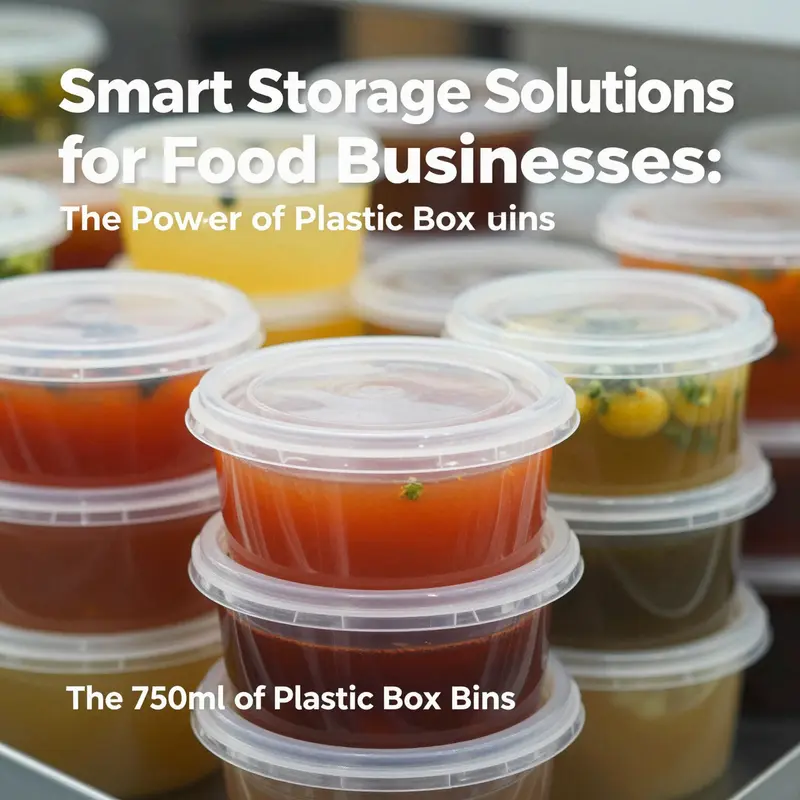
Round 750ml plastic containers sit at an intriguing crossroads of practicality and design. They are not merely vessels; they are compact systems built to hold, protect, and dispense a wide range of liquids and semi liquids while fitting neatly into homes, kitchens, service counters, and industrial workflows. In the broader landscape of box bins and plastic containers used for food, this specific size and shape emerge as a pragmatic solution where clarity, reliability, and ease of handling converge. They embody a balance between performance and manageability that many households and small operations seek when choosing packaging for beverages, sauces, dressings, or splittable portions for meals on the go. Their appeal rests on a handful of core attributes, each contributing to a dependable user experience that reduces waste, enhances hygiene, and supports efficient logistics from shelf to table.\n\nThe materials most commonly used for these 750ml rounds are PET, or Polyethylene Terephthalate, and Polypropylene, PP. Each material carries its own set of strengths, and together they illuminate why the 750ml round is a popular choice across multiple sectors. PET is prized for its superb clarity and excellent barrier properties, which help preserve the freshness and flavor of the contents while making the liquid visible to the consumer. This visibility is more than cosmetic; it reduces the likelihood of opening the container to check product condition, a small but meaningful step toward maintaining quality in a busy setting. PET’s safety credentials for food contact add another layer of confidence for both retailers and end users, especially in environments where transparency is valued not just for aesthetics but for hygiene and trust. PP, on the other hand, delivers heat resistance and resilience. It can withstand hot fill processes and, in certain designs, gentle reheating or serving at modest temperatures without compromising structural integrity. PP’s capability to maintain a strong seal during use means that sauces, oils, dressings, or beverages stored in these rounds can be managed with less risk of leakage, an important consideration for transport, display, and aftermarket handling.\n\nThe round shape itself contributes to the container’s functional efficiency. With a smooth interior and a symmetric profile, the 750ml container minimizes corners where liquids can cling or residues can accumulate. This design reduces cleaning difficulty and promotes more thorough sanitation between uses, a nontrivial benefit in both domestic kitchens and professional settings. The curvature of the interior supports uniform stirring and mixing, an advantage when the contents require agitation for uniform texture, emulsification, or consistent flavor distribution. The compact form also supports stable stacking, an essential feature for storage in crowded refrigerators, pantries, or service stations. When space is at a premium, the round, uniform footprint helps maximize capacity without sacrificing accessibility.\n\nBeyond the base container, the lid or closure system plays a pivotal role in the performance of a 750ml round. Many variants employ screw caps or tamper evident closures that create a reliable seal, reducing the risk of leaks during transport and ensuring product integrity from purchase to use. A secure seal is particularly important for liquids and semi liquids that can otherwise migrate or spill during movement. The seal also supports shelf life and consumer confidence, signaling that the product has remained protected since packaging. In addition to standard screw caps, some designs feature tamper evident bands or rotatable closures that provide an immediate visual cue if the packaging has been opened. This combination of robust closure mechanisms and a transparent body offers a practical balance of visibility and security, which aligns with both consumer expectations and regulatory considerations in food grade packaging.\n\nProduct variants within the 750ml family extend the container’s utility beyond straight storage. Some designs incorporate spray or pump based adaptations, enabling controlled dispensing for products such as liquids used for cleaning, automotive detailing, or household care. While these outlets serve non food applications, they illustrate the breadth of the container’s structural adaptability. For food focused uses, the same general round format can accommodate a range of liquids needed for cooking, sauce storage, or beverage portioning. The adaptability of neck finishes, closure types, and molded features such as integrated handles or ergonomic grips speaks to a broader packaging strategy that prioritizes ease of use, portion control, and user safety.\n\nBranding and customization are integral to the utility of 750ml round containers, particularly for businesses that rely on packaging as a touchpoint with customers. The neck finish, cap color, embossing, labeling areas, and even the overall silhouette can be tailored to suit branding needs without compromising the container’s functional performance. A well considered design language consistent with broader packaging systems helps products stand out on crowded shelves while maintaining compatibility with standard dispensing and storage routines. The capacity of 750ml is a practical middle ground: large enough to hold a meaningful quantity of liquid, yet compact enough to be managed, stored, and recycled efficiently. This balance is valuable to households seeking convenience in meal prep and to retailers aiming to optimize display space and customer experience.\n\nSustainability remains a central consideration in choosing any plastic container, and the 750ml round is no exception. In response to growing demand for responsible packaging, manufacturers have expanded into recyclable and lightweight options that preserve performance while reducing environmental impact. The use of food grade plastics that are BPA free and FDA approved provides a safety baseline while allowing for closed loop recycling in many markets. Consumers increasingly gravitate toward packaging that minimizes material use when practical and that supports recycling after use. This shift has spurred innovations in resin formulations, wall thickness optimization, and seal technology that keeps liquids secure while enabling material recovery at end of life. In many regions, the lifecycle of a 750ml round—from production to repurposing or recycling—fits into broader sustainability programs that prioritize circular economy principles and responsible waste management.\n\nFrom a practical standpoint, the 750ml round container is a versatile choice for both households and smaller operations. In the kitchen, it serves well for storing sauces, soups, stocks, dressings, and marinades with the benefit of straightforward portioning. In small scale catering or food service, these containers support batch prep and efficient service while keeping different liquids segregated when combined with appropriate lids and seals. In industrial contexts, their durability and clear presentation can aid labeling, inventory control, and quality assurance protocols, where quick visual checks on contents are desirable. The round geometry supports predictable supply chain handling, with standard dimensions that simplify storage, transportation, and inventory planning. It is a container that embodies a practical philosophy: reliable performance, straightforward operation, and compatibility with a wide range of liquids and conditions.\n\nThe material dialogue PET for clarity and barrier properties, PP for heat resistance and seal integrity frames the selection criteria that guide producers, retailers, and consumers alike. While PET excels at conveying product visibility and preserving integrity for many beverages, PP offers a robust alternative for hot fill applications and products that demand a strong thermal barrier. The choice often hinges on the intended use, the anticipated storage temperatures, and the preferred handling regime in both the consumer’s kitchen and the supplier’s packaging line. In tandem with these material considerations, closures and seal technology contribute to the container’s success by ensuring leak resistance and product safety throughout the distribution journey. Such considerations become even more meaningful when packaging decisions intersect with standards for food contact materials, labeling accuracy, and regulatory compliance.\n\nWithin the broader ecosystem of box bins and plastic containers for food, the 750ml round stands out for its pragmatic versatility. It promises a coherent experience: a transparent canvas that showcases the product, a reliable closure that guards against spills, and a shape that makes stacking and storage efficient. It is not the most glamorous option, but it is among the most dependable when the goal is to manage liquids with precision and ease. For households managing meal prep, or small scale operations seeking consistent packaging performance, these containers offer a pragmatic blend of properties that minimize friction in daily routines while sustaining quality and safety. In that sense, the round 750ml container functions as a microcosm of careful packaging design: a deliberate convergence of material science, mechanical design, and practical workflow considerations that together deliver reliable liquid management.\n\nFor readers who wish to explore adjacent packaging forms, one can consider the broader spectrum of plastic containers used in beverage and food storage, recognizing how variations in material choice, closure design, and structural geometry influence performance. The conversation around round 750ml containers is part of a larger dialogue about how packaging choices affect user experience, supply chain efficiency, and sustainability outcomes. As with any packaging decision, the best path is informed by a clear picture of intended use, environmental goals, safety requirements, and cost considerations. When these factors align, the 750ml round becomes more than a container; it becomes a dependable partner in everyday cooking, storage, and service.\n\nExternal resource: https://www.plasticbottlesupply.com/types-of-750ml-plastic-bottles/
Sealed for Freshness: The Role of Screw-On Lid Containers in Preventing Spillage Across Liquids and Semi-Solids
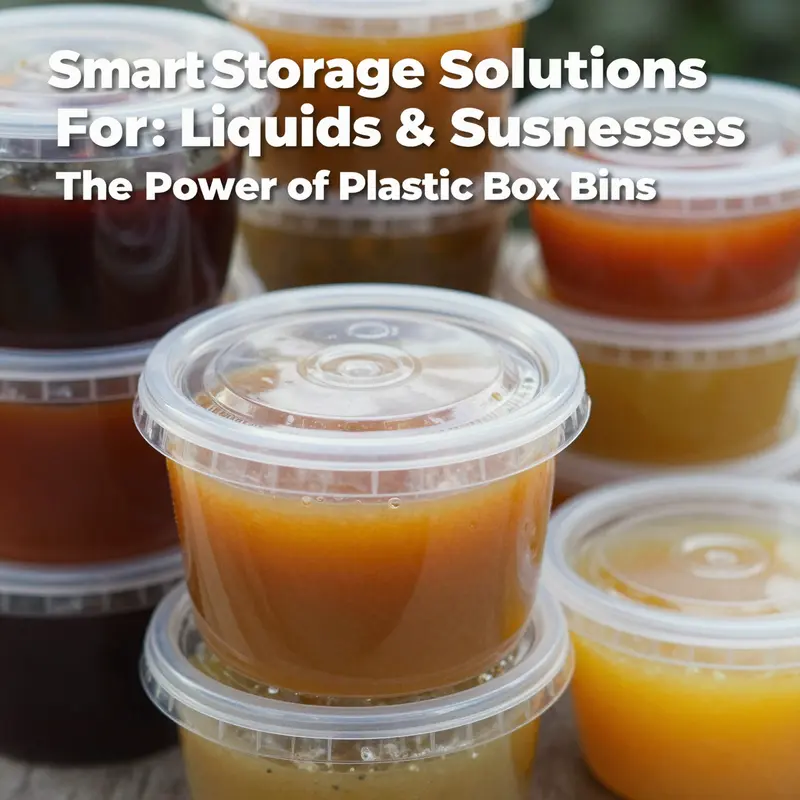
Screw-on lid containers stand as quiet workhorses in the world of plastic food storage. They are designed not merely to hold contents but to guard them, to keep flavors intact, textures stable, and transport risks at bay. In kitchens, catering lines, and even on boats where space is tight and movement is constant, the ability to prevent leaks and spills becomes a decisive factor in maintaining hygiene, controlling costs, and delivering consistent quality. The science behind these containers rests on a simple, enduring principle: a tight seal creates a barrier against air, moisture, and the mechanical jostling that can otherwise turn a carefully prepared sauce into a mess. This is more than a convenience; it is a reliability standard that many food-service and household routines depend on every day. The screw-on lid, with its threaded neck and skilled mating with a gasket, makes this possible in ways that other closing mechanisms struggle to match. When you consider the broad spectrum of applications—from ready-to-eat meals to bulk liquids—these containers prove versatile by design and robust by material choice.
At the heart of the screw-on system is the threaded design. The threads on the neck of the container and the corresponding threads on the lid work together to create a secure, repeated seal. In high-quality examples, a gasket made from rubber or silicone sits between the lid and the container surface. This gasket fills microscopic gaps, blocks air entry, and forms a resilient barrier against moisture. The result is an hermetic feel that keeps sauces bright, dressings vibrant, and marinades unscathed by the chilly, dry air of a refrigerator or the warm, humid environment of a transit vehicle. It is a small engineering detail, yet it has outsized consequences for flavor retention and shelf life over time. Materials used for these containers—commonly food-grade polyethylene (HDPE) or polypropylene (PP)—are chosen for their balance of strength, chemical resistance, and light weight. HDPE brings toughness and low permeability, making it a dependable workhorse for thicker liquids and more aggressive formulations. PP offers a lighter touch with excellent heat resistance, which becomes valuable for items that experience temperature swings during storage or re-heating. Both materials align with safety standards for direct food contact, helping assure both retailers and consumers of reliability and safety.
The functional utility of screw-on lids extends beyond the basic seal. Temperature resistance is a practical virtue that broadens the contexts in which these containers can serve. Depending on the resin type and the overall design, such containers can be freezer-safe, microwave-safe, or both. This dual compatibility unlocks a continuum of use cases: from freezing a prepared sauce in portions to reheating a semi-solid like a thick curry or a dessert sauce in the same vessel. The ability to withstand freezing without cracking and to tolerate gentle reheating without warping is not incidental; it reduces waste, simplifies prep routines, and supports a smoother supply chain from kitchen to table. In environments where speed and reliability matter—as in catering, buffets, or shipboard galley operations—the leakproof character of screw-on lids translates into tangible operational gains. Spills that would contaminate other foods, or stain fabrics and surfaces, are dramatically mitigated by a dependable seal. This is a practical benefit that extends beyond a single dish or application. It helps protect other ingredients in a shared cooler, maintains clean workspaces, and contributes to safer, more efficient service.
Size and versatility are other strengths of screw-on lid containers. The same sealing principle can be scaled from tiny 35-milliliter condiment jars to large multi-liter containers used for bulk liquids. The range accommodates sauces, dressings, marinades, soups, stews, and even beverages, with shapes that optimize handling, pouring, and mixing. A round, smooth interior is common in many of these designs because it minimizes food residue in corners and makes cleaning easier. Smooth interiors also reduce sites where bacteria might cling and where flavors might become cross-contaminated between batches. The exterior, meanwhile, is shaped to resist hand fatigue during frequent use, and the thread profile is engineered to offer a reliable seal even after repeated openings and closings. In practical terms, this means a cup or jar can travel through a busy kitchen, a delivery route, and a storage rack without sacrificing its seal or its contents.
Performance and reliability sit hand in hand with cleaning considerations. The tight seal, while excellent for preventing leaks, can complicate cleaning if residues are trapped near the gasket. Yet modern designs account for this by ensuring the gasket is accessible, removable, or shaped to minimize trapping zones. The interior finish also matters; a seamless, glossy interior prevents food from becoming lodged in micro-imperfections and helps reduce staining and lingering odors. For households and food operations alike, this balance between airtight performance and ease of cleaning is critical. It ensures that containers remain hygienic and functional over many cycles of use, saving time and reducing the risk of contamination that can occur with imperfect sanitation.
From a safety standpoint, these containers align with stringent expectations for direct food contact. They are typically manufactured from food-grade plastics and designed to be BPA-free and FDA-approved, addressing concerns about chemical migration, odor retention, and stain resistance. The color and clarity of the material—whether a translucent PP or a sturdy HDPE—also contribute to user confidence. Clear or transparent bodies offer the practical advantage of visibly confirming the contents without opening the closure, an important convenience in busy service environments where quick identification matters. The lid’s color and texture, along with the neck’s threading, are not mere aesthetics; they signal compatibility with the contents and assist in achieving a reliable seal across thousands of cycles.
In everyday practice, the screw-on lid container is an enabling technology for accurate portioning and controlled presentation. The precise threading allows the same lid to be fastened firmly in any number of rotations, a feature that supports consistent performance even when users are wearing gloves or are in low-light conditions. This consistency is crucial for catering operations that rely on predictable packaging to prevent overflows during transport or during the stacking of multiple containers in a cooler. The design also supports modular stacking; interlocking rims and uniformly sized threads enable secure vertical storage, reducing the space required in refrigerators and storerooms. When a kitchen staff member unscrews a lid, they expect a clean release and a quick, tidy reseal. The experience should feel reassuring, not laborious, and that sense of reliability reinforces trust in the packaging system as a whole.
The broader context of plastic food containers—within the ecosystem of box bins and diverse storage solutions—highlights how the screw-on lid complements other forms of containment. It sits alongside hinged or sealable options that prioritize freshness for ready-to-eat items, and alongside bulk, transparent bins that aid inventory and portion control. Each type, in its own way, contributes to reducing waste, improving hygiene, and supporting efficient workflows in both domestic kitchens and large-scale food operations. The screw-on lid’s strength lies in its core pairing: a secure seal and a resilient material, together ensuring that liquids and semi-solids stay put, even when transportation involves motion, vibration, or temperature extremes. This reliability is not merely technical; it translates into practical outcomes—fewer mislabelings, less product loss, and more consistent experiences for consumers who depend on predictable packaging at home or in a service setting.
For practitioners exploring take-away and delivery formats, the connection between durable lids and practical packaging becomes clearer. A lid that closes with a confident twist can be the difference between a successful delivery and a compromised order. The same logic applies when containers are used for compound salads, dressings, or soup portions that require reheating and serving in the same vessel. In such contexts, choosing a container material that can withstand repeated temperature changes without deforming is essential. The coupling of rugged plastic and reliable threading provides both security and flexibility, enabling cooks and operators to store, transport, and reheat in a single, familiar container. The end user appreciates not only the absence of leaks but also the ease of pouring or spooning contents without wrestling with a cap that won’t budge or a seal that has become brittle from repeated exposure to heat or cold.
To illustrate how lid design and packaging choices intersect with broader packaging strategies, consider the concept of lid accessibility and user-friendly handling. An effective screw-on lid offers tactile feedback when engaged, and the threads must be able to accommodate quick, repeated use. The design should also accommodate variations in user grip strength and be forgiving of minor misalignments, so the seal remains reliable even if the user is in a rush. These practical considerations are a reminder that packaging is not only about chemistry and mechanics; it is about human factors and the realities of fast-paced food service. When combined with a container shape that minimizes waste, reduces spillage, and streamlines cleaning, screw-on lids become a foundational feature that supports the flow of meals from kitchen to consumer while maintaining safety, quality, and satisfaction.
One example of how packaging ecosystems reflect similar containment goals can be seen in the broader family of take-away packaging with lids that protect contents during transit. For a broader look at lid-focused packaging designs that share this emphasis on containment, you can explore a related example in the take-away kraft-paper category, which features PET-covered lids and practical, recyclable construction. Take-away Kraft Paper Food Packaging with PET Cover Lid. This example demonstrates how lid systems can be adapted across materials without losing the core objective of preventing leaks and preserving freshness. Internal linking to such complementary packaging designs helps readers appreciate how the choice of lid type, material, and closure mechanism fit into a wider strategy of dependable, safe, and efficient food packaging. Take-away Kraft Paper Food Packaging with PET Cover Lid
In sum, screw-on lid containers for liquids and semi-solids embody a precise convergence of materials science, mechanical design, and practical usability. They are engineered to prevent spillage, guard flavor and texture, and enable safe handling across the full arc of storage, transport, and reheating. Their value extends beyond a single product category, reinforcing the role of robust plastic containment within a broader system of box bins and plastic containers that together shape how food is stored, displayed, and enjoyed. As manufacturers refine gasket materials, thread profiles, and interior finishes, the everyday act of sealing a jar or bottle remains a testament to the importance of reliability in packaging—the quiet guarantee that every lid, when twisted shut, carries the promise of freshness, safety, and order.
External resource for deeper technical insight: https://www.example.com/plastic-condiment-containers-with-lids-industrial-performance
Sealed for Freshness: The Practicality and Promise of Hinged, Sealable Containers for Ready-to-Eat Meals
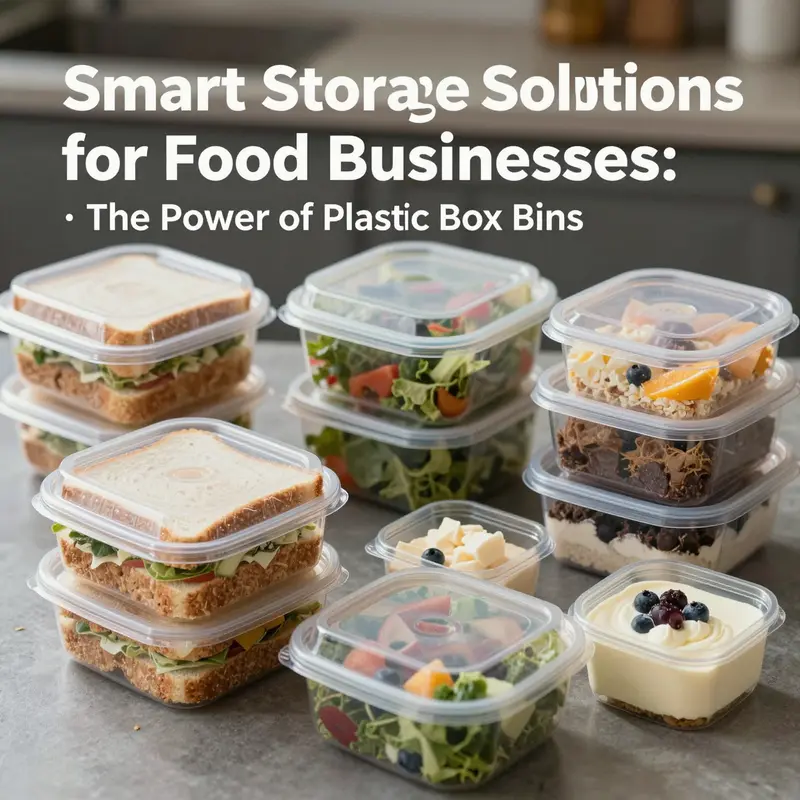
Hinged, sealable containers have become a quiet backbone of ready-to-eat meals and takeout, carrying a promise of freshness, safety, and convenience. The hinge is more than a joint; it is a crafted interface that opens smoothly with one hand and clicks back into a reliable seal, preserving moisture and flavors while preventing leaks during transport. This combination of reliability and simplicity reduces spill risk, protects temperature, and makes leftovers easier to store without mingling aromas with other foods. In fast-paced routines, a well-designed lid that functions with a single lift and a confident snap helps commuters, students, or busy professionals manage meals with less fuss. The goal is to minimize mess and maximize convenience without sacrificing safety or cleanliness.
Material choices balance durability, heat resistance, and environmental considerations. Polypropylene (PP) remains common because of its strength and chemical inertness, while PET or PET-G can add stiffness and transparency for quick content recognition. Yet the conversation around sustainability is growing. Some designs incorporate recyclable polymers or compostable outer shells, and there is interest in bio-based films that fit into recycling streams. The hinge must endure repeated openings, resist cracking in cold storage, and hold a seal after reheating in microwaves. The balance between performance and end-of-life compatibility shapes material selection and product labeling.
From a service perspective, hinged containers streamline operations. They enable fast assembly, reduce the number of separate lids, and support space-efficient stacking in refrigerators and delivery vehicles. A secure seal keeps sauces contained, preserves texture, and helps maintain appealing presentation for multi-component meals. The ergonomic benefits matter too: lids that open with a finger and snap shut with a satisfying click support one-handed use, a subtle but meaningful advantage for people on the go.
But practical efficiency must coexist with responsibility. Manufacturers are exploring reuse pathways and improved recyclability, aligning with consumer demands for sustainable packaging. Venting features can help manage steam for hot meals while preserving seal integrity, but venting must be carefully designed to avoid compromising leak resistance. Clear labeling that indicates microwave compatibility, dishwasher safety, and end-of-life options helps households and operations maintain product longevity. Ongoing innovations in hinge geometry, gasket materials, and sealing surfaces continue to improve reliability and sustainability across the lifecycle.
In the broader landscape, hinged, sealable containers intersect with everyday routines—from grocery-store pick-up to school lunch programs and catering events. Their capacity to maintain cleanliness, resist stains and odors, and minimize waste makes them a practical centerpiece of modern food packaging. The ultimate goal is a packaging system that supports safe handling, consistent portioning, and dependable performance, while evolving toward greener options that responsibly manage resources and end-of-life disposal.
For further context on real-world designs and performance, industry benchmarks and supplier resources can offer detailed specifications on latch types, gasket materials, and heat resistance, helping buyers compare options and plan procurement for diverse dining contexts.
Final thoughts
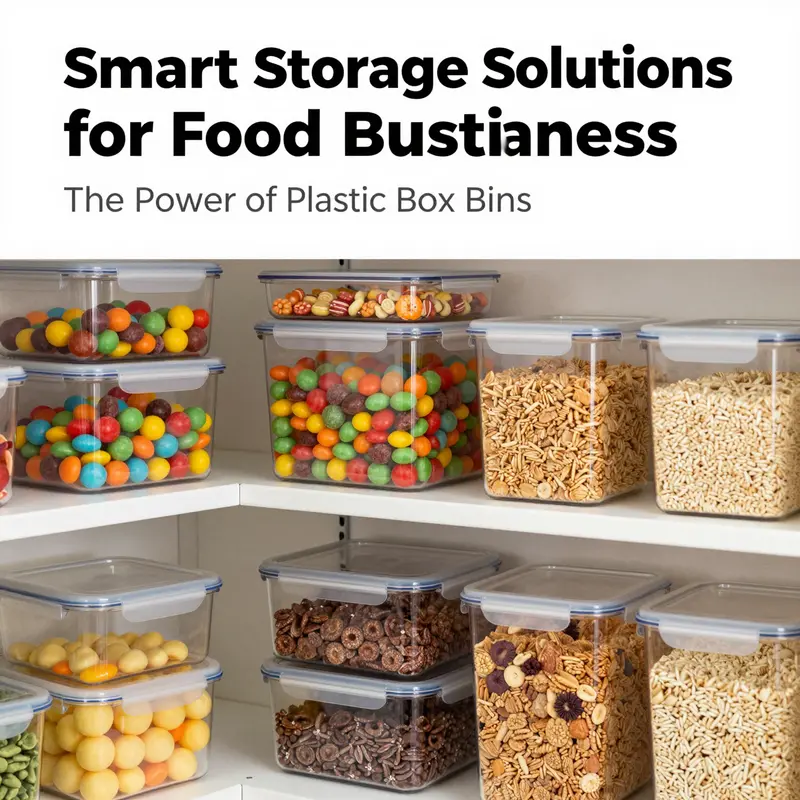
Box bins plastic containers are more than just storage solutions; they represent a strategic advantage for any food-related business. By understanding the specific types available—from black plastic bento boxes and transparent stackable containers to round and screw-on options—food service providers can enhance their operations, improve food safety, and optimize efficiency. The right container not only meets operational needs but also contributes to a better consumer experience. As the industry evolves, investing in the right food storage solutions will undoubtedly lead to greater customer satisfaction and business growth.