
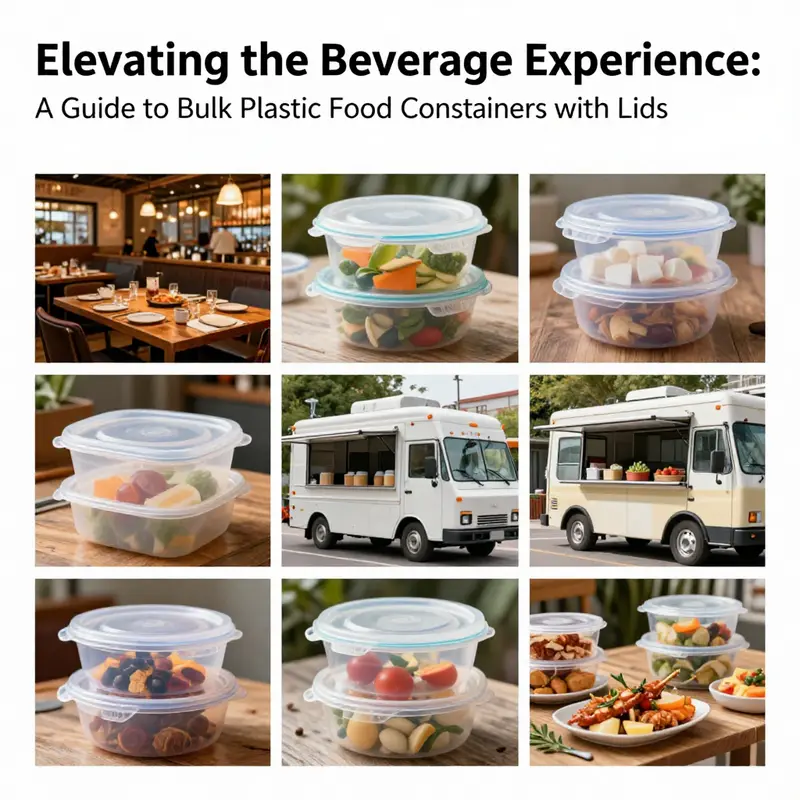
As the food service industry evolves, bulk plastic food containers with lids have become essential for Bubble Tea shops, restaurants, food trucks, and catering services. Their versatility in packaging beverages and meals ensures products stay fresh and secure during delivery or take-out. Beyond convenience, understanding the manufacturing processes, compliance with safety standards, and emerging market trends in this area can significantly enhance operational efficiency and customer satisfaction. This article will delve into the intricate manufacturing processes behind these containers, explore the materials ensuring safety and compliance, and identify current market opportunities to maximize your procurement strategies.
From Melt to Meal: The Quiet Engineering Behind Bulk Plastic Food Containers with Lids

The manufacturing floor hums with a disciplined rhythm that belies the simplicity of the end product. A bulk line that churns out countless containers with lids is not merely a sequence of machines but a carefully choreographed ecosystem. It begins with resin in the form of clean, food-grade pellets and ends with a stack of sturdy, reliable vessels able to carry meals, soups, snacks, and sauces across continents. Between those two poles lies a chain of decisions—material selection, molding techniques, precision tolerances, and rigorous quality assurance—woven together by modern plants that emphasize automation, traceability, and compliance as much as throughput. The chapter that follows traces this journey in a way that respects the quiet complexity of industrial plastic packaging, where science, engineering, and logistics converge to deliver safe, practical, and recyclable options for everyday food service and consumer use.
At the heart of the container body is the choice of resin. The most common workhorse materials are high-density polyethylene (HDPE) and polypropylene (PP), each offering a distinct balance of stiffness, impact resistance, chemical compatibility, and heat tolerance. HDPE brings excellent toughness and chemical resistance at a relatively low cost, making it a staple for bulk storage and transport containers. PP, with its higher moisture and heat resistance, can handle a broader range of temperatures, including occasional microwave exposure, depending on additives and processing conditions. Both resins can be formulated with food-contact compliance in mind, meeting standards that guarantee safety for ambient, refrigerated, and even heated environments. The certification landscape is not a mere formality; it is a practical map that guides suppliers to ensure products do not leach substances and remain safe for repeated use or single-serve disposal, depending on the end-use scenario. In many regions, the path from resin to finished part is documented through food-grade approvals, BPA-free assurances, and evidence of conformity to recognized testing regimes.
The choice of material informs every subsequent step, and so the cycle begins with meticulous handling of raw materials. In modern plants, resins are stored in controlled environments to prevent contamination and moisture uptake, then dried to optimum levels before they enter the extrusion or molding stages. Precision in feeding rates, melt temperatures, and residence times becomes a daily discipline. Melted resin is forced through extruders to form a parison—the hollow tube that will become the container body through blow molding. The scale of these operations is striking: a typical facility may run clean rooms and automated assembly lines aligned with ISO standards, with spaces large enough for continuous output and small enough to maintain process control. For many manufacturers, monthly production capacity for bulk containers often reaches into the hundreds of thousands or millions of pieces, depending on the size range and the speed of the lines. This capacity is not merely a number; it reflects a carefully engineered balance between cycle times, cooling efficiency, and operator intervention points.
Blow molding is the heart of the container body production. The parison is clamped into a mold cavity, and compressed air is introduced to inflate the plastic into the shape of the hollow form. In this moment, the parison becomes a vessel, its walls conforming to the mold’s curvature while thin sections emerge where the product requires strength and lightness. Modern blow molds are designed for rapid cycling and quick changeovers, enabling a production line to switch between sizes and configurations with minimal downtime. The cooling stage follows, selecting the right cooling rate to avoid warping and ensure dimensional accuracy. After solidification, the mold opens, and the finished container is ejected with minimized contact to prevent surface blemishes that could compromise sealing performance or appearance. The result of this stage is a container body that blends lightness with rigidity, a form that resists deformation during stacking and use while preserving its shape when filled with liquids or solid foods.
The lid, by contrast, is the product of injection molding—a process chosen for its precision and repeatability. Molten plastic is injected at high pressure into a mold cavity shaped like the lid, and the part emerges with intricate features designed for secure closure. The threading on the rim, the sealing flange, and any tamper-evident bands or venting features are born in the mold. Injection molding allows for tight tolerances and consistent thread profiles, which are essential for reliable sealing of bulk containers as they move through storage, transit, and consumer handling. The lid’s performance hinges on the harmonization of materials and geometry with the body of the container. A well-tuned system ensures that the lid threads smoothly, seals tightly against liquids, and resists creep or loosening under repeated torque. This precision is not a luxury but a necessity in high-volume production, where even minor dimensional drift can translate into significant leakage risks, improper stacking, or failed palletization.
In practice, the two processes—blow molding for the body and injection molding for the lid—must be integrated through shared design language and process control. Dimensional compatibility is a constant consideration; the inner diameter, lip thickness, and sealing surfaces on the lid must align with the container’s mouth and wall thickness. Engineers model these relationships during the design phase, often running simulations and pilot trials to quantify how different wall thicknesses behave under cooling and handling. The outcome is a product family with interchangeable parts across sizes, so a single lid design can serve multiple container volumes when the geometry allows, reducing tooling costs and simplifying supply chains. The ability to reuse molds and calibrate processes quickly hinges on a robust tooling ecosystem: the molds themselves, the machines that feed them, and the control software that synchronizes cycle timing and quality checks.
Quality control in this environment is both continuous and multi-layered. On the line, automated systems monitor wall thickness, surface finish, and presence of flash or flash remnants. Inline sensors detect deviations in resin viscosity, temperature, and pressure, providing real-time alerts that can halt a line before out-of-spec parts accumulate. Post-molding inspection adds another layer, checking for dimensional accuracy, lid alignment, and sealing performance. The goal is not only defect reduction but also traceability. Each batch is linked to material lots, machine IDs, operator shifts, and environmental conditions, so any issue can be traced back to its source and corrected at the root. Standards such as GB/T 13508-92 for polyethylene blow-molded barrels and SN/T 0271–93 for export transport packaging serve as anchors for these QA activities, guiding testing protocols and acceptance criteria. Where higher levels of assurance are required, facilities may pursue ISO 9001 certification or HACCP plans that formalize quality management and product safety habits across the organization.
The environmental and regulatory dimension of manufacturing bulk plastic containers with lids also informs design and operations. Materials are selected not only for performance but for recyclability, with some suppliers offering recyclable labels and packaging that simplifies downstream sorting. In many markets, compliance goes beyond material safety to include restrictions on additives, migration limits, and labeling requirements that facilitate consumer understanding and regulatory oversight. In practice, this means keeping current with local and international standards, maintaining documentation that demonstrates conformity, and ensuring that packaging designed for export travels with the necessary certificates and declarations. The regulatory landscape is dynamic. Agencies update guidelines to reflect evolving safety science and environmental priorities, which in turn influence material choices, process controls, and end-of-life considerations for containers and lids alike.
Logistics and supply chain resilience play an equally crucial role. The regional distribution of manufacturing clusters in China—whether in Hubei, Jiangsu, Zhejiang, Jiangxi, or Sichuan—reflects a deliberate strategy to build a full industrial chain from raw material procurement through to shipment. Clusters close to international logistics hubs shorten transit times and reduce risk, enabling export cycles that can span from roughly two to four weeks depending on destination and mode. For a bulk container producer, this proximity translates into more predictable lead times for large orders, quicker response to customization requests, and better contingency planning in the face of material shortages or port congestion. It also underscores the importance of agile prototyping capabilities: a customer may request a new lid texture, a different sealing geometry, or a variation in wall thickness to balance cost and performance. In such cases, having access to rapid tooling and nearby suppliers who can provide qualified resins, color concentrates, and surface finishes accelerates the path from concept to production-ready part.
Design for safety and practicality sits alongside a broader concern for sustainability. Advances in polymer science and lifecycle thinking encourage formulations and manufacturing practices that reduce energy use, minimize waste, and improve recyclability. Some plants have integrated closed-loop cooling and energy recovery, while others pursue recyclable packaging labels and environmentally friendly outer packaging to align with evolving consumer expectations and regulatory pressures. The lifecycle of a bulk container with a lid thus becomes a story of repeated use, careful handling, and, where appropriate, disciplined end-of-life disposal. In contexts where single-use plastic is still commonplace for bulk applications, manufacturers emphasize heat resistance and mechanical integrity to ensure safe, leak-free performance over the product’s service life. In markets with stricter environmental standards, the emphasis shifts toward reducing overall material input without compromising performance, or toward providing clear guidance on disposal and recycling pathways to end users.
The consumer’s experience, though distal from the factory floor, is shaped by many of these technical choices. A container that is lightweight yet sturdy, with a precisely machined lid that seals snugly, translates into fewer spill incidents, easier handling, and more predictable stacking during distribution and in consumer kitchens. The design language of the lid—its threads, seal profile, and any venting or tamper-evident features—speaks to the reliability of the product in real-world conditions. It is also a testament to the marriage of form and function that defines modern packaging: a simple object that, through careful engineering, becomes a reliable workhorse in the daily choreography of food service, storage, and transport. In the broader narrative of bulk packaging, the container and its lid are not static products but evolving interfaces between material science, process engineering, and logistical strategy.
Within this ecosystem, one can observe a recurring pattern: the successful integration of design intent with manufacturing capability. The ability to develop independent molds for lids and bodies, to execute multi-color injections when needed, and to apply surface treatments such as silk printing or hot stamping all contribute to a portfolio of products that can be tailored to different markets and applications without sacrificing efficiency. The end result is a family of shapes and sizes that offers consistent performance, clear regulatory compliance, and a viable route to scale. When a customer seeks a bulk solution with predictable quality and adaptable features, the producer’s capability to blend multiple process technologies into a single, coherent workflow stands as the true measure of value. The art here is not only to produce containers that keep foods safe, but to develop a manufacturing system that can respond quickly to shifting demand, changing safety standards, and the ever-present pressure to improve sustainability.
For researchers, designers, and procurement professionals exploring this domain, the practical takeaway is this: the success of bulk plastic food containers with lids rests on disciplined material selection, precise molding strategies, and a robust quality and supply chain framework. The body and lid are not separate considerations but two halves of a unified design challenge. The production line is a single organism that must breathe with the same cadence—from resin intake to finished goods, through testing and packaging, and into the hands of customers who rely on it for safe, efficient meal preparation and service. It is a story of engineers translating the behavior of molten polymer into a reliable vessel, of technicians extracting tolerances from metal and silicone into a consistent, repeatable product, and of managers aligning engineering, quality, and logistics to ensure that billions of meals travel safely from bench to table.
To illustrate the breadth of this field beyond the numbers, consider the practical example of a lid designed for a crowded production line. The lid’s features must be reliable across millions of cycles, maintaining thread engagement without excessive resistance, resisting cross-threading, and preserving a tight seal under varying temperatures. The design must tolerate minor fluctuations in wall thickness and molding conditions that naturally occur in high-volume manufacturing. The interplay between mold design, cooling, and material rheology becomes the core of process optimization. Tooling improvements—such as easier mold changeovers, better venting channels, and enhanced ejector systems—translate into less downtime and higher overall yield. Each small improvement compounds into meaningful economic and environmental benefits, reinforcing the truth that in bulk packaging, engineering detail is not peripheral but central to success.
The knowledge embedded in modern plants is also a living archive. As new standards emerge, QA protocols are updated, and new materials or processing aids become available, factories adapt without losing momentum. The result is a resilient manufacturing footprint capable of supporting both mass production and adaptation to new product configurations. These capabilities, in turn, support the broader supply chain through improved predictability, reduced risk of recalls, and greater confidence among distributors and retailers who rely on consistent performance. In this sense, the manufacturing process becomes not only a technical endeavor but a strategic one, strengthening the relationships between material suppliers, toolmakers, plant operators, and end users.
For those seeking to understand how such systems are evaluated in practice, the recommended framework highlights several pillars: compliance, technical capability, quality control, and supply chain resilience. Compliance means verifying food-contact certifications across relevant jurisdictions, from domestic safety standards to export compliance. Technical capability includes independent mold development, multi-color injection capacity, and surface treatment options that allow for branding and product differentiation without compromising integrity. Quality control spans in-line process monitoring and post-mold inspection, with a clear path for traceability to raw materials and equipment. Supply chain resilience looks at backup material sources, contingency production capacity, and experience with export customs clearance. Together, these pillars form a practical lens through which manufacturing partners can be assessed, selected, and managed across the lifecycle of bulk container production.
In closing the loop of this narrative, the factory floor is not an abstract concept but a living system that embodies the convergence of science, engineering, and logistics. The bulk plastic food container with a lid is the tangible artifact of that convergence—a product that travels from a raw resin and a heated barrel to a sealed, safe vessel that protects contents in transit and on shelves. Its manufacture encapsulates a modern industrial philosophy: optimize for performance and safety while maintaining flexibility, efficiency, and sustainability. When the lines run smoothly, the outcome is more than a container; it is a reliable link in the global chain that feeds, nourishes, and sustains daily life, all while meeting the precise demands of health standards, customer expectations, and environmental responsibility.
For further reading on the governance and standards that shape these processes, readers may consult the National Market Supervision and Administration resources, which provide authoritative guidelines on production licensing and technical standards governing food-grade plastic packaging. This external reference helps situate the practical factory-level details within the broader regulatory landscape that governs how these containers come into being and enter the market. As the industry evolves, ongoing attention to compliance, innovation, and sustainability will continue to define the next generation of bulk packaging and its role in feeding and nourishing communities around the world. See external reference: https://www.samr.gov.cn/zwgk/ztzl/xxgk/ . Additionally, one illustrative example of lid design in this ecosystem demonstrates how form and function intersect on the shelf and in the workflow: senang02-top-fashion-double-wall-pe-coated-lunch-lid-matt-lamination-embossing-eco-friendly-rectangle-bowl-sushi-potato-chips. This link provides a concrete sense of how lid geometry, aesthetics, and sealing features come together in a real-world product line, reinforcing the point that these seemingly simple parts are the product of a sophisticated engineering discipline.
Between Strength and Safety: Materials, Compliance, and Global Trade in Bulk Plastic Food Containers with Lids
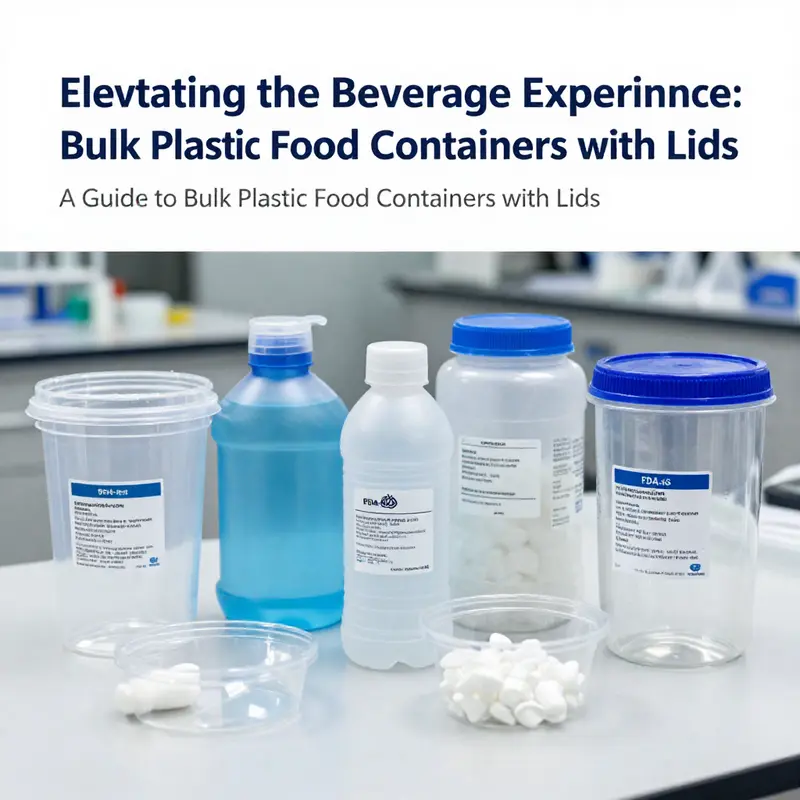
Materials determine what bulk plastic food containers with lids can do in the hands of users who handle, transport, portion, and store food at scale. They determine not only durability but safety of each meal that passes through a distributor, caterer, or factory line. This chapter traces raw materials from container walls to regulatory frameworks governing food contact, and shows how manufacturers balance performance with responsibility in a global supply chain that focuses on logistics as much as chemistry. In many markets, including major production clusters in Asia, material choice is guided by a triad: safety, manufacturability, and lifecycle impact. When a lid snaps shut on a bulk container, it is more than a seal; it is a guarantee that the material will perform under heat or cold, endure repeated washing, and meet standards that protect food from migration. The interplay between material science and compliance becomes the backbone of credibility, enabling bulk providers to offer reliable supply to food service networks, retailers, and industrial users who depend on predictable performance at scale.
A first decision concerns the polymer family. High density polyethylene, or HDPE, offers rigidity and moisture resistance. It resists moisture ingress and maintains shape under heavy loads. HDPE is valued for containers reused in industrial packaging or long storage cycles, where resistance to cracking and deformation matters as much as barrier performance. In practice, HDPE’s toughness translates into fewer breakages during long journeys and fewer replacements in a warehouse setting. Its chemical resistance matters for low acidic or mildly alkaline foods; HDPE tends to be inert enough to avoid interactions that could alter flavor or color during storage. While HDPE provides a robust baseline, polypropylene, or PP, is common for containers intended for meal prep, freezer storage, and microwave use. PP’s heat resistance enables safe exposure to temperatures in microwaves or dishwashers, making it ideal for hot foods during service. PP’s balance of strength and resilience across a wide temperature range supports users who reheat without warping or cracking.
Beyond HDPE and PP, designers explore other polymers for niche needs. Some applications require transparent, rigid containers, which leads to polycarbonate, but PC raises regulatory attention due to additive migration concerns. In many markets, BPA-free alternatives are preferred, using copolymers or engineered blends. BPA-free copolyesters can combine clarity with toughness, enabling visually inspectable contents and durable performance in a wider temperature window. Bulk offerings emphasize blends that minimize tastable migration while maximizing impact resistance, cleanliness, and recyclability. Even when a material seems compatible with food contact, large-scale manufacturing demands attention to process compatibility, tooling wear, and color stability during long lines. The result is a family of materials that can be tuned through design choices such as wall thickness, ribbing, lid geometry, and seal materials to achieve the exact rigidity, flexibility, and sealing efficiency required by the customer.
But material choice is also about safety and regulation. In the United States, containers for food contact must meet regulatory expectations to prevent harmful substances from migrating into food. The FDA sets guidance for materials intended to contact food, including safety, compositional restrictions, and testing protocols for migration. In the European Union, Regulation 1935/2004 frames requirements for materials and articles in contact with food. Compliance requires chemistry, manufacturing, and quality assurance teams to work together. Migration tests evaluate how much substance can transfer into food and are part of validation packages. In practice, bulk container makers select polymers with favorable safety profiles and document manufacturing processes that prevent contamination during molding, filling, and finishing. The goals are to ensure safety, maintain product integrity during transport and storage, and provide traceable documentation for cross-border distribution.
Most manufacturers aim for BPA-free formulations and recyclability statements aligned with local streams. Where possible, materials are chosen to align with resin codes and local recycling capabilities. A modern material story often surfaces not as a single hero plastic but as a suite of materials used across product lines while preserving safety and performance. A shift is toward materials offering a mix of mechanical strength, clarity, and low propensity for additive leaching after multiple heating cycles. This sequencing safety, performance, and recyclability guides product developers as they adapt to evolving customer requirements and regulations.
Lids and seals are equally critical. A container is only as reliable as its closure system. Modern bulk containers pair wall materials with gasketed lids designed to resist leakage, maintain freshness, and withstand repeated washing. Airtight closures reduce oxygen ingress, slowing degradation of perishables, while stackable designs improve warehouse footprint and freight efficiency. Some applications use vented features that help manage moisture for extended storage. Design choices are layered with hygiene considerations: surfaces chosen for smoothness to minimize residue and ease cleaning, important when high-volume cleaning intersects with sanitation protocols. The objective is a hygienic surface that resists microbial growth without requiring aggressive cleaners that could compromise performance. Across lines, the core principles remain: sturdy walls, reliable seals, and surfaces that clean easily without swelling after repeated sanitization.
From a procedural perspective, compliant supply chains are built on documentation. Material safety data, migration results, and evidence of compliance become the currency of trust between manufacturers and buyers. Reputable suppliers provide documentation that confirms composition, recyclability, and regulatory compliance. This reflects a shift from price-only to multi-criteria assessment that foregrounds safety, traceability, and lifecycle impact. Buyers seeking to validate suppliers typically look for evidence of independent mold development, multi-color injection, and surface treatment capabilities, plus hygiene-focused design features. These criteria align with ISO 9001 or HACCP certifications, signaling a systematic approach to control, risk management, and continual improvement.
The geographic dimension is non incidental. In major Asia manufacturing hubs, bulk plastic container production is centered in regions with mature ecosystems spanning resin procurement, polymer processing, mold making, and automated assembly. These clusters benefit from a complete value chain that enables rapid prototyping and mass production. Facilities may operate clean rooms and automated lines that adhere to ISO standards, with factory footprints ranging widely. The scale enables large orders and fast design changes, while proximity to logistics hubs reduces export times for global customers. The chain of custody from resin to mold to finishers takes concrete, traceable form. The synergy among suppliers helps ensure each batch meets specifications while remaining adaptable to customization at scale.
For buyers seeking reliable manufacturers, the evaluation framework remains practical. Compliance is non negotiable: suppliers should hold valid certifications for food contact materials, whether the standards come from national authorities or regional bodies. Technical capability matters as well: does the supplier have independent mold development, multi-color injection, and surface treatment capabilities? A robust quality control system is essential, with ISO 9001 or HACCP recognition offering assurance that processes are monitored and improved over time. Finally, supply chain resilience cannot be overlooked: local material backup, emergency production capacity plans, and documented export clearance experience provide a safety margin that matters when orders scale. These criteria translate into real-world outcomes such as predictable production schedules, consistent material performance, and fewer last-minute substitutions, reducing risk for buyers undertaking large distribution programs.
To connect theory with practice, consider a practical example of a bulk container with a lid that embodies these standards. A typical reference could be a food-grade take-away bowl with lids that aligns with a supplier’s documented compliance and performance suite. Such a product demonstrates how an integrated approach—material safety, lid integrity, and process reliability—creates tangible value for a business that ships thousands of units weekly. For readers seeking concrete options, an example of the kind of practical product available is the food-grade take-away bowl with lids. This link is representative of how suppliers present a cohesive package: the container material, the lid’s sealing system, and the documentation that validates safety, recyclability, and compliance, all packaged together for bulk procurement.
The conversation about materials and standards loops back to the broader logic of bulk manufacturing: the need to balance field-tested performance with the realities of mass production. The choice of material must withstand the climate of storage and transport, fit within operations that require consistent cycle times, cleanliness, and automation that reduces human error. A closely aligned manufacturing environment values standardization, with consistent resin grades, predictable melt viscosity, and uniform molding parameters, because these factors underpin repeatable part geometry, reliable lid fit, and a consistent surface finish for downstream labeling and branding when present in bulk packaging lines. The more a supplier can demonstrate control over these variables, the more confidently a buyer can place large and complex orders, knowing that the same performance will emerge week after week, month after month.
Looking ahead, the evolution of materials and compliance in bulk plastic food containers with lids will likely continue to be driven by a combination of stricter food-contact regulations, advances in polymer technology, and market demand for sustainable packaging. In practice, this means ongoing exploration of materials with higher barrier properties to limit migration, refinement of cleaning and sterilization processes to preserve material integrity, and the development of more robust labeling that communicates safety credentials clearly to buyers and end users alike. It also means that the supply chain must stay agile—capable of responding to shifts in resin availability, changing export rules, and new market standards in different regions. The result is a dynamic ecosystem where materials science, regulatory frameworks, and logistics converge to enable bulk containers that are not only functional and economical but also trustworthy across borders and meals. This is the heart of the modern bulk packaging enterprise: a disciplined synthesis of chemistry, manufacturing, and compliance that empowers everyday food distribution at scale.
External resources can illuminate the path from material choice to regulatory compliance. For readers seeking a practical external reference on food contact substances, the regulatory environment that shapes what manufacturers must demonstrate before products can reach consumers is explained by authorities and industry bodies. While specifics vary by jurisdiction, the overarching principles—minimizing migration, ensuring safety across temperature ranges, and providing documentation—are widely shared. For deeper reading, consult the FDA’s overview of food contact substances and related guidance. The FDA maintains resources such as safety considerations, testing concepts, and regulatory context at https://www.fda.gov/food/food-contact-materials/fda-food-contact-substances.
From Clusters to Global Markets: Trends, Innovation, and Opportunity in Bulk Plastic Food Containers with Lids
The market for bulk plastic food containers with lids sits at a crossroads of scale, safety, and sustainability. Globally, buyers in food service, retail, and e-commerce demand packaging that is economical, reliable, and compliant with evolving safety standards. The trajectory points to steady expansion with mid-single-digit growth in the coming years, driven by the convergence of consumer behavior, logistics, and packaging science. Manufacturers that align process excellence with material performance, regulatory compliance, and end-to-end value creation will be best positioned to capture demand across regions and market segments.\n\nRegional dynamics show dense clusters around injection molding, resin processing, tooling, and testing facilities. In particular, hubs in China illustrate how access to raw materials, sophisticated tooling, and advanced testing networks enable rapid prototyping, small-batch customization, and scalable production without compromising consistency. High-efficiency facilities often sit in industrial parks with clean rooms, automation lines, and ISO-aligned quality management practices, delivering volumes that can reach millions of units per month for large buyers with broad SKU needs.\n\nSupply chain reliability hinges on proximity to export hubs and major ports, which compress transit times and support time-sensitive orders. A well-designed supplier network maintains food-grade certifications, transparent labeling, and traceability across lots. Regions that host capable suppliers also tend to demonstrate greater resilience; nearby firms can reallocate capacity quickly when disruptions occur, helping buyers maintain service levels during volatility.\n\nMaterial safety remains non-negotiable. Food-grade polypropylene and polyethylene, with occasional polycarbonate for clear, rigid applications, provide stiffness, clarity, chemical resistance, and processing compatibility. Safety certifications and labeling conventions (for example, FDA or equivalent standards, BPA-free assurances, and recyclability claims) guide procurement decisions. While recyclable and compostable formulations are expanding, the core requirement is that the container preserves product quality, withstands ambient, refrigerated, and microwave environments, and resists contamination over its lifecycle.\n\nFrom a design perspective, innovations stress stackability, lid-lid alignment, leakage resistance, and venting. Multi-compartment and portion-controlled configurations broaden the addressable market, enabling households, institutions, and food-service operators to meet diverse use cases while maintaining economies of scale. Customization at scale—color branding, debossing or embossing, and branding-friendly packaging—adds value without sacrificing throughput.\n\nStrategic sourcing emphasizes regional clustering and end-to-end capability. Buyers look for suppliers who can manage resin procurement, mold making, assembly, and packaging, or offer specialized competencies such as multi-color injection and advanced surface finishes. Proximity to logistics hubs reduces risk and cycle times, a key advantage as orders grow in volume and complexity. Evaluation often involves a performance scorecard balancing price, reliability, risk, and scalability, with site visits and documentation reinforcing trust.\n\nDigital traceability and process transparency are increasingly expected. Producers publish quality assurance records, monitor supplier materials, and apply change control for formulation updates. Real-time production dashboards, lot tracing, and audit trails enable recalls, consumer safety, and faster product iteration. In parallel, contingency planning and supplier diversification reduce exposure to resin shortages, port disruptions, or equipment failures.\n\nThe buyer’s perspective centers on risk mitigation, predictable demand, and long-term partnerships. The market favors manufacturers who can deliver consistent performance at scale, even as product formats diversify or regional demand shifts occur. The ultimate trajectory is gradual expansion driven by smarter manufacturing—automation, data-driven quality controls, and material innovations that improve sustainability without compromising cost or safety.\n\nUltimately, bulk plastic food containers with lids will continue to evolve toward smarter, more adaptable packaging ecosystems that support efficient distribution, responsible sourcing, and enhanced consumer experience. The core advantages—economies of scale, consistency, and trusted performance across borders—remain the foundation for growth, with digital tooling, resilient supply chains, and advanced materials shaping the next phase of opportunity.
Final thoughts
Understanding the manufacturing processes, compliant materials, and evolving market trends surrounding bulk plastic food containers with lids is pivotal for businesses in the food service industry. Companies that prioritize these factors can enhance their service offerings while ensuring product safety and customer satisfaction. By leveraging insights into manufacturing capabilities and market opportunities, you can strategically position your brand for growth and efficiency – making informed procurement decisions that align with industry trends and consumer expectations.