
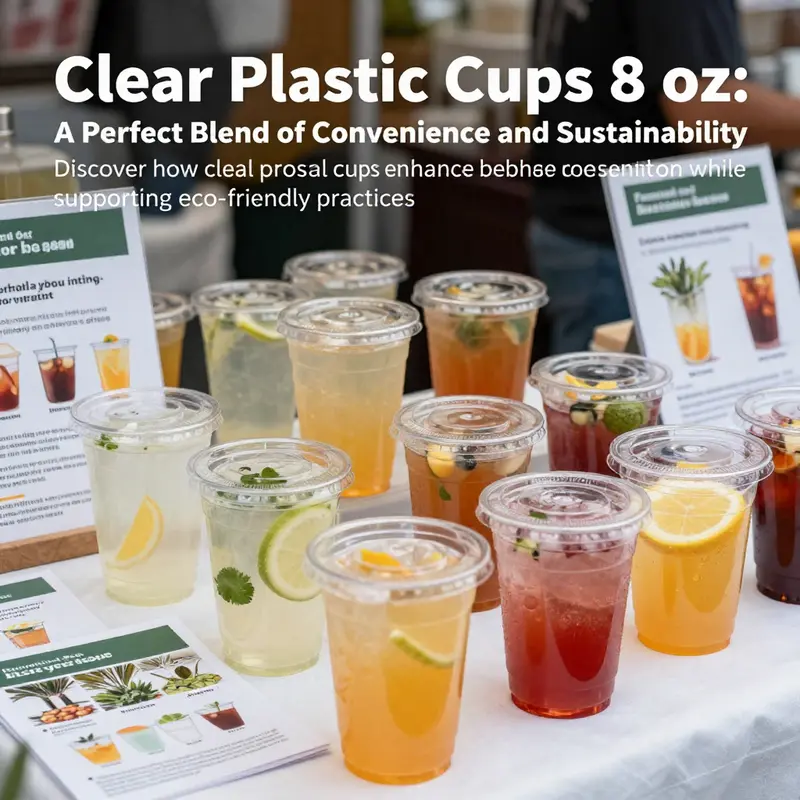
Clear plastic cups in the 8-ounce size are not just functional; they serve as a crucial element in the food and beverage industry. For bubble tea shops, beverage chains, restaurants, food trucks, catering services, and event planners, these cups are essential for showcasing vibrant drinks while providing practical solutions for immediate consumption. As customers seek both aesthetics and sustainability, understanding the value of these cups allows businesses to make informed decisions. This article delves into the importance of clear plastic cups, explores eco-friendly alternatives, evaluates durability and functionality, and examines current market dynamics and sourcing options, ultimately illustrating how these cups can elevate your business’s service and environmental responsibility.
Seeing Value in a Small Cup: How 8-Ounce Clear Cups Shape Taste, Trust, and Sustainability in Food and Drink

The 8-ounce clear plastic cup is a deceptively simple tool in the kitchen and on the front line of service. It sits at the crossroads of practicality and perception, a small vessel that does big work. When a customer looks at a drink through a transparent wall, color and texture become more than mere attributes; they become signals of freshness, quality, and care. A bright smoothie, a creamy milkshake, or a piercingly cold iced tea took on their character not just because of what is inside, but because the cup lets that character shine. In a world where visual appeal can spark a moment of craving, the 8 oz clear cup becomes a stage manager, guiding attention toward the product and then letting the consumer decide to taste. This visual dynamic matters most in busy spaces—the rush of a cafe, the steady hum of a dessert shop, the swift tempo of event catering—where every moment of decision is nudged by what the consumer sees, and what they expect to see, when they pick up a cup. The clarity of the cup helps the drink do the talking. It allows the natural hues of fruit, the swirl of a topping, the shimmer of condensation to be legible at a glance. In social media and digital menus, where a photo can be worth more than a paragraph, the honesty of a clear cup becomes a marketing asset. A beverage’s aesthetic is not only about the liquid inside; it is about the spectator’s confidence that the product matches what the image promises. The cup, then, is more than packaging. It is a facilitator of trust and a communicator of quality, especially for cold drinks where appearance and temperature cues are intertwined. Customers are drawn to transparent cups because they can read a drink without lifting the lid or guessing the contents. The glassy wall reveals the soul of the beverage: density, temperature, and the subtle gradient of a layered coffee or a naturally bright fruit blend. This accessibility matters for brand perception. In a marketplace crowded with choices, the simple act of seeing through a cup can elevate a product from a routine purchase to a moment of appreciation. And because the 8 oz capacity is a familiar, manageable portion, it supports a clear, uncomplicated narrative of portion control and value. The cup becomes a visual standard that aligns with consumer expectations for single servings—several sips, a clean finish, minimal waste. In this way, the 8 oz clear cup performs a quiet but essential service: it helps customers gauge their own experience, supports impulse choices with credible presentation, and reinforces the perception of consistency across outlets. The cup’s translucent shell also has implications for staff performance and operational efficiency. In fast-turn environments, staff must move quickly, assemble drinks, and manage a high throughput of orders. A clear cup reduces the burden of ambiguity in the final product. Baristas and servers can verify color, layering, and texture at a glance before the sip, ensuring that what reaches the customer matches the intended recipe. This reduces the likelihood of miscommunication and returns, a practical benefit in high-volume settings where speed with accuracy matters as much as speed itself. Even the minimal act of stacking and storing cups benefits from clarity. When a brand relies on a shelf display or a back-bar organization, transparent cups help staff count stock and spot issues without handling every item. Seeing a stack through to the bottom can reveal the presence of chips, cloudiness, or corrosion in the packaging that would otherwise go unnoticed until the moment of service. The material choices for these cups are the quiet engineers behind the scenes, shaping durability, temperature tolerance, and user experience while keeping the focus on the drink itself. Traditional clear cups are often made from lightweight polymers that balance rigidity with flexibility. Polystyrene and polypropylene, for instance, offer a combination of clarity, stability, and resistance to leakage that suits the demands of cold beverages. These materials hold up during transport, resisting cracking when knocked against a counter or during a hurried handoff to a customer exiting a doorway. They also maintain a crisp appearance as long as the liquid remains inside, preserving the drink’s hue and texture until the last sip. Yet no material is without trade-offs. The lightweight design favors cost efficiency and disposability, factors that drive widespread adoption across a spectrum of venues—from pop-up kiosks to formal catering setups. The single-use nature of many 8 oz cups minimizes cleaning workload and mitigates the risk of cross-contamination in busy periods. That practicality is especially valuable when menus feature a mix of dairy, fruit, and toppings, increasing the probability that a restaurant or cafe will face multiple beverage profiles in a single shift. The real conversation about these cups expands when sustainability enters the frame. In recent years, the industry has moved beyond a binary choice of plastic vs. no plastic. The rise of compostable and recyclable options adds a new layer to the decision matrix. Polylactic acid, or PLA, stands out as a notable development in the 8 oz clear-cup space. PLA cups are designed to resemble their petroleum-based counterparts in transparency and form, but they derive from renewable resources like cornstarch. They are marketed as commercially compostable, meaning they break down under industrial composting conditions into carbon dioxide and water, without releasing harmful pollutants. For businesses that emphasize environmental responsibility, PLA can align with composting programs and waste-stream strategies that some customers expect from forward-thinking brands. The ecological argument for PLA hinges on the belief that a controlled composting infrastructure can divert cups from landfills and enable a more circular approach to packaging. Of course, the effectiveness of this approach depends on local waste-management capabilities. In many regions, industrial composting facilities are the norm rather than the exception, and the cups must be collected in separate streams to realize their compostability. In practical terms, PLA cups work well for cold drinks—smoothies, milkshakes, iced teas, and cocktails—where the vessel’s interaction with the beverage remains gentle and the temperature remains cool. They also require compatible lids and closures that preserve the seal and maintain the drink’s integrity during transport. For organizations seeking to balance sustainability with cost and performance, PLA offers a compelling option, provided the waste stream is managed accordingly. Alongside PLA, there are clear cups made from traditional plastics that emphasize durability, leak resistance, and user comfort. These BPA-free options target users who want the convenience of a disposable cup with fewer concerns about chemical migration or off-flavors. The modern consumer can appreciate cups that maintain a secure grip, even as condensation forms along the walls. A well-designed cup includes features that support practical use: sturdy rims for sipping, wide enough diameters to accommodate straws, and compatible lids that prevent spills during a quick handoff or an enthusiastic exhale in a crowded space. The compatibility between cups, lids, and straws is more than a matter of convenience; it affects the consumer’s experience of safety and cleanliness. A poorly matched trio can lead to leaks, misfits, and awkward moments on social media, where images of spilled drinks become a universal punchline. Designers and suppliers thus focus on standardization and interchangeability. They strive to ensure that domed lids, flat lids, and straw holes align with the cup’s geometry, offering a seamless, leak-resistant experience. For events and venues that host large crowds, this standardization translates into faster service, fewer complaints, and a smoother post-event cleanup. The selection process for 8 oz clear cups is a balancing act among several priorities. Cost per cup remains a central consideration, especially for high-volume operations. The economies of scale can drive the per-unit price downward, enabling more generous promotions, larger menus, or lower breakage risk due to a lighter, more forgiving cup. Yet cost cannot be pursued in isolation from performance. A cup that feels flimsy, or that fogs with the first sip of a chilled beverage, undermines trust and damages the customer’s perception of the brand. In other words, the physical experience of the cup—its stiffness, its clarity, its resistance to leakage—directly influences how a drink is judged. Operationally, the 8 oz size also supports a precise approach to portion control. It aligns with consumer preferences for smaller portions and more frequent sampling. In an era of mindful consumption, customers often choose a single-serving option to calibrate their intake, while operators benefit from predictable waste levels and easier inventory management. This precision is not solely about the act of pouring. It translates to predictable cooling curves, consistent presentation, and straightforward shelf and back-bar organization. The capacity reinforces a standard that simplifies menu design and training, ensuring staff can quickly recall which beverages belong in an 8 oz cup, where to place lids and straws, and how to present the finished drink to the guest with confidence. The broader sustainability conversation also benefits from the sheer accessibility of 8 oz clear cups in the marketplace. A diverse range of materials, from conventional plastics to compostable PLA and even more durable BPA-free variants, offers options tailored to different business models and environmental goals. While some operators emphasize the possibility of reusability, others highlight the advantages of controlled disposal coupled with recycling or composting programs. The industry’s bottom line is not about adhering to a single path but about providing a spectrum of responsible choices that visitors can understand and appreciate. Sourcing decisions, too, play a critical role in shaping the lifecycle of these cups. Many buyers gravitate toward scalable suppliers who can deliver consistent quality at a steady cadence. The online marketplace landscape supports bulk purchasing, customization, and packaging that fit a brand’s unique needs, from the number of cups per case to the dimensions of the lids and the compatibility with straws. In this context, it is useful to consider how a business might approach a supplier search with sustainability and performance in mind. While some buyers lean toward the most economical option, others seek a compromise that adds environmental value without compromising reliability. The balance often depends on the beverage category, the expected service tempo, and the brand’s environmental narrative. For those who want to explore options that align with eco-conscious goals, a practical route is to evaluate cups by their material family, temperature compatibility, and end-of-life possibilities. PLA cups serve cold beverages well and offer a compostable promise, while traditional clear cups provide robust performance and cost efficiency for high-volume service. In between, BPA-free variants emphasize safety and consumer reassurance, particularly for products that are consumed directly from the cup without a lid in place, a context that invites careful handling and hygiene considerations. As businesses navigate these options, the 8 oz clear cup remains a foundational piece of the packaging ecosystem. It is not an isolated commodity but a conduit for flavor, presentation, and customer engagement. Its transparent walls help beverages communicate more effectively, while its iconic capacity anchors menus, training, and service models. Its adaptability across settings—coffee shops, juice bars, bakeries, and event venues—speaks to a universal truth: customers respond positively when what they see matches what they taste, and a clear cup makes that alignment feel natural and trustworthy. The practical implications extend to social experiences as well. In today’s culture of sharing, a drink in a transparent cup invites photos, comments, and quick judgments about presentation. A drink that shows off natural color without disguise is more likely to be captured, liked, and shared. This kind of social proof, when combined with quick service, can amplify a beverage’s appeal across multiple touchpoints. The 8 oz size thus becomes more than a measure; it becomes a design decision, a business discipline, and a channel through which sustainability, safety, and satisfaction are communicated. While it is essential to acknowledge the trade-offs—disposability versus reuse, cost versus environmental footprint—these cups offer a flexible platform for brands to tell their story. For some operators, the choice centers on mixing aesthetic appeal with an efficient, scalable operation. For others, it is about aligning with a broader sustainability strategy that engages customers in a shared effort to improve waste outcomes. The chain from cup to consumer is a simple one, but its impact is layered. The drink is prepared, poured, and capped; the cup offers a pathway for the product to travel from kitchen to customer with minimal friction. The surrounding ecosystem—lids, straws, sleeves, and labeling—amplifies this smooth transition, ensuring that presentation and hygiene stay intact from counter to curb. In sum, the importance of the 8 oz clear cup lies in its ability to harmonize visibility, portion control, material performance, and sustainability options within the fast-paced food and beverage industry. It is a small instrument with a decisive influence on perception, experience, and operational efficiency. For buyers and operators who seek to balance allure with practicality, the cup provides a reliable canvas on which a beverage can shine, while accommodating a spectrum of environmental preferences and logistical realities. A thoughtful choice here supports not only today’s service excellence but also tomorrow’s commitments to responsible packaging. For those exploring options that strike the right balance between cost, performance, and environmental considerations, an accessible avenue exists to compare scalable, adaptable solutions that maintain clarity, ensure containment, and support a responsible waste strategy. Visit sources that compile 8 oz clear cups and related accessories to understand the range of options, then consider how a supplier’s approach to packaging, sustainability, and customization aligns with your brand’s values. When in doubt, prioritize compatibility, stability, and the ability to maintain beverage integrity across the entire service cycle. The aim is to choose a cup that does not merely hold a drink, but also preserves the visual promise, reinforces trust, and contributes to a more sustainable hospitality narrative. To explore complementary reading and potential sourcing options, you can refer to industry catalog pages that emphasize standardization and compatibility across lids, straws, and cups, thereby reducing waste and ensuring a consistent customer experience. Internal link reference: 8oz Best-Price Plastic-Free Disposable Cups. External reference: https://www.alibaba.com/product-detail/8-Oz-Clear-Plastic-Cup-999_1600547723516.html?spm=a2700.details.0.0.1a6b4d9eZKvQlU&src=y
Through the Clear Lens of Sustainability: Reimagining 8 oz Eco-Friendly Clear Cups

The 8-ounce clear plastic cup sits at a crossroads of mass practicality and perceptual glamour. In many food and beverage settings, its transparency is more than a design choice; it is a storytelling device. It lets the colors of a latte art-topped milkshake, a layered smoothie, or a bright cocktail spill into the foreground, inviting customers to gauge texture, hue, and even the presence of toppings at a glance. Yet the same clarity that excites visual appeal also highlights the environmental question that increasingly shapes menus, brands, and event choices. If a cup can show off a drink in the same moment it signals a commitment to responsible consumption, it becomes more than a container. It becomes a statement about how a business treats resources, waste, and the communities it serves. In this chapter, we explore how the 8-ounce format—long favored for its balance of portion control and convenience—can be reimagined through sustainable materials that preserve that crucial clarity, while aligning with modern expectations for circularity, responsible sourcing, and lifecycle thinking. This is not about abandoning the practical benefits of a single-use cup; it is about expanding the options that deliver those benefits without compromising environmental goals.
The most widely discussed pathway is the shift from traditional petroleum-based plastics to plant-derived or recycled-content alternatives that retain the visual appeal of a clear cup while reducing ecological footprints. Among the most prominent is PLA, or polylactic acid, a bioplastic derived from fermented plant starches such as corn or sugarcane. PLA cups in the 8-ounce size offer the same optical clarity as their conventional counterparts and are designed to be compatible with compostable lids and a range of cold beverages. The selling point extends beyond aesthetics: for businesses committed to a lifecycle narrative, PLA is marketed as commercially compostable, meaning it can break down into water, carbon dioxide, and organic material under industrial composting conditions. This is not a blanket invitation to home-compost or to landfill disposal; the success of PLA in reducing environmental impact hinges on the availability of appropriate composting infrastructure. In many communities, industrial facilities with proper temperature and moisture regimes are a prerequisite for realizing the anticipated end-of-life benefits. In practice, a consumer encounter with a PLA 8 oz cup—whether in a cafe, at a wedding reception, or at a festival—becomes an opportunity to communicate a brand’s environmental commitments, assuming the waste stream is appropriately managed after the event.
Beyond PLA, there is a growing interest in recycled-content options that emphasize reuse in a broader circular economy. Recycled PET, or rPET, uses post-consumer plastic waste to form new cups. While not compostable, rPET can reduce demand on virgin feedstocks and lower the overall environmental footprint by diverting material from landfills and supporting recycling systems. Cups made with rPET are typically BPA-free and recyclable at their end of life, assuming the local recycling stream accepts them and the necessary sorting technologies are in place. This pathway aligns with a broader sustainability narrative: it emphasizes material stewardship and the transformation of waste streams into valuable inputs for new products. While the degree of environmental benefit depends on regional reuse and recycling capabilities, rPET remains an important option for brands balancing durability, clarity, and recyclability within their waste management framework.
A third trajectory involves the familiar yet evolving role of paper products that carry plant-based linings, such as PLA. Paper cups with PLA linings can deliver the same visual appeal associated with a clear cup while offering a more straightforward route for composting in communities with suitable infrastructure. However, the reality is nuanced. The compostability of plant-based linings hinges on the entire packaging system and the composting process—some paper-based cups still require industrial-grade conditions to break down efficiently. For events and venues, this underscores a practical truth: sustainability is not a single technology but a network of choices, from the cup material itself to the availability of composting facilities and the behavior of end users during waste disposal. In this space, a 8-ounce PLA-lined cup can be a strong fit for cold beverages—such as iced tea, smoothies, or milkshakes—where the demand for clean visibility remains essential and where the product life cycle aligns with industrial composting opportunities.
The ecosystem of options does not end with PLA and rPET. Emerging materials—bamboo fiber and sugarcane bagasse, for example—offer renewable, compostable alternatives that can be tailored to specific service contexts. Bamboo fiber cups bring a natural, textured aesthetic that can be engineered to present a clear, crisp appearance while offering improved rigidity and heat tolerance relative to some thin plastics. Sugarcane bagasse, the fibrous pulp left after extracting juice, yields cups that are both renewable and compostable. These materials are particularly well-suited for cold beverages and some hot offerings, depending on the formulation and wall construction. They also open doors to a broader brand story about the sourcing of raw materials from sustainable agricultural byproducts, reinforcing a narrative of waste reduction and community stewardship.
One practical dimension that must accompany any material choice is certification and end-of-life logistics. True sustainability in this space requires clarity about what “compostable” means in practice. Certifications from recognized bodies—such as formally accredited compostability standards—help ensure that cups labelled as compostable will break down under appropriate industrial conditions rather than persisting in landfills or failing in curbside streams. For many operators, the question is not only whether a cup is compostable, but whether the local waste system can reliably process it. The reality is that home composting, while appealing, often does not deliver the controlled environment necessary for these materials to fully degrade. Brands, venues, and event organizers thus need to align product choices with local composting capabilities and educate customers about proper disposal. This alignment extends to the lids and accessories that accompany the cups. A compatible lid, designed to work with a given material without compromising seal integrity, is essential for maintaining temperature and preventing leaks, particularly in a crowded service setting where beverages are transported and consumed rapidly.
In practice, these material choices carry tangible trade-offs. PLA can deliver excellent clarity and stiffness for the 8-ounce format, but its composting advantages depend on infrastructure that isn’t universally available. rPET offers a strong recycling story and excellent durability, yet its end-of-life credit rests on the existence of robust post-consumer collection and sorting streams. Paper-based cups with plant-based linings can be visually appealing and can integrate into composting programs where offered, though they may not always match the moisture barrier and clarity of plastic. Bamboo fiber and bagasse bring renewed attention to renewable resources and compostability, but their performance in terms of heat resistance and stackability varies by product design. For event planners and cafes—where speed, cost, and customer experience converge—these trade-offs must be balanced with operational realities: the availability of waste streams, the speed of service, and the willingness of guests to participate in separate disposal or sorting.
Another layer of consideration lies in the economics and supply chain realities of 8-ounce cups in sustainable variants. In markets with high demand for eco-friendly packaging, suppliers often present a spectrum of options across materials and price points. The cost delta between a standard PET cup and a PLA or rPET alternative can reflect differences in resin costs, processing complexity, and the scale of manufacturing. For operators, this means a deliberate decision about which sustainability story aligns with brand values and customer expectations within budget constraints. A brand that markets itself on premium sustainability may invest in higher-cost, compostable PLA options paired with certified composting services and visitor education. A brand that prioritizes accessibility and mass adoption might lean toward recycled-content or paper-with-PLA alternatives, emphasizing recyclability or local composting when available. In either case, the success of a sustainable 8 oz clear cup rests on a holistic approach: aligning material choice with waste infrastructure, ensuring compatibility with lids and straws, and communicating the disposal expectations to customers in a transparent, actionable way.
The sourcing landscape for these options is broad and increasingly accessible. For buyers evaluating options, it helps to consider not just the cup in isolation but the entire packaging ecosystem: the lid, the straw, the sleeve, and the downstream waste stream. A cohesive system reduces confusion at the point of consumption and improves the likelihood that the product will be disposed of properly. In practice, that means selecting cups that pair with lids designed to minimize leaks, with straw solutions that suit the cup type, and with packaging that supports efficient sorting in the local recycling or composting infrastructure. Sourcing discussions often unfold in the context of larger sustainability mandates, whether a cafe chain is pursuing a waste-reduction certification, an event planner is curating a green footprint for a conference, or a venue is signaling its environmental values to attendees. In all cases, the emphasis remains on clarity of purpose: can the chosen 8-ounce cup deliver the sensory and aesthetic benefits customers expect while lowering the environmental impact relative to previous practices?
For operators who want a concrete path forward, the answer lies in a careful mix of material selection, certification awareness, and waste-stream planning. The selection should begin with a clear understanding of the beverage format and service context. Cold drinks with clear visibility benefits typically perform well with PLA or rPET variants, provided the end-of-life strategy is sound. For venues that rely on centralized composting programs, PLA cups can offer strong alignment with sustainability goals, especially when accompanied by compatible lids and compostable straws. In markets where recycling remains the dominant waste channel, rPET options can provide a meaningful reduction in virgin plastic use and an accessible route to circularity. Paper-based cups with PLA linings present another avenue, particularly in settings where composting is readily available or where customers are educated to separate organics from recyclables. In all cases, it is essential to verify that the packaging is certified as compostable or recyclable where claimed, and to confirm local facilities can process the product at scale.
The opportunity here is not merely to substitute one material for another but to craft a packaging narrative that speaks to consumers about responsibility and integrity. A clear cup, once a backdrop for drinks, becomes a tangible signal of a brand’s priorities when paired with credible disposal options and transparent labeling. Restaurants, cafes, event organizers, and retailers have the chance to educate patrons about disposal choices at the point of sale, which can improve recycling and composting rates and reduce contamination in waste streams. This is not a marketing ploy; it is a practical discipline that connects production choices to real-world outcomes. The most effective implementations align material properties with a business’s operational realities, a city’s waste-management infrastructure, and a clear customer-facing message about how to participate in sustainable practices.
As the market continues to evolve, so too does the broader context of sustainability in clear cups. The 8-ounce size remains a versatile standard, bridging personal servings with social rituals—from coffee breaks to dessert tastings to after-hours events. The path forward is not a single solution but a portfolio strategy: embrace PLA for compostability where facilities exist, integrate rPET for recyclability where there is robust post-consumer processing, and consider paper-based options with PLA linings where waste systems support organics. Recognize the role of bamboo fiber and bagasse as renewable alternatives that can strengthen a sustainability narrative without sacrificing performance. Most importantly, insist on credible certifications and practical end-of-life planning. A truly sustainable 8-ounce clear cup is defined not just by how it performs in a controlled test but by how it behaves in the busy, real world of customers, waste streams, and community infrastructure.
To illustrate how these ideas translate into practical choices, consider the potential of a case where a venue seeks to balance clarity, cost, and compostability for a large outdoor event. The organizers might select an 8-ounce PLA cup for cold beverages, paired with a certified compostable lid and compostable straw, and ensure on-site waste stations are clearly marked and staffed to guide attendees. They would verify that the local composting facility accepts PLA-lined cups and provide customers with simple disposal guidance—such as placing cup cores and lids into organics while recycling the PET cups where applicable. In another scenario, a coffee shop with an ambitious recycling program could adopt 8-ounce rPET cups, emphasizing the recycled content and the importance of recycling at the end of life. A business focused on premium experiences might experiment with bamboo fiber or bagasse cups for certain product lines, highlighting the unique material story while maintaining clear visibility and leak resistance. In every case, the success comes from aligning the product choice with the waste-management ecosystem, the service model, and the expectations of informed customers who value both taste and responsible packaging.
This integrated perspective—where chemistry, design, waste systems, and consumer behavior meet—defines the current trajectory for clear 8-ounce cups. The smooth interplay of transparency, performance, and sustainability turns a simple cup into a platform for responsible branding, environmental stewardship, and practical efficiency. It is a reminder that the most compelling packaging stories are not built on a single breakthrough but on a system of reliable choices, clear communication, and achievable outcomes. The next steps for any business considering these options are practical: map the waste streams, verify certifications, test the materials under the actual beverage conditions, and engage customers in the disposal process with clarity and consistency.
For readers who want to explore more deeply the breadth of eco-friendly alternatives and the nuances of compostability versus recyclability, a broader resource on innovative packaging options offers detailed comparisons across materials, performance, and end-of-life scenarios. This knowledge supports an informed approach to selecting the right 8-ounce cup for each context, balancing the desire for crystal-clear presentation with the responsibilities that come with modern waste management. The journey toward sustainable clarity is iterative and context-dependent, but it is increasingly within reach for brands that commit to thoughtful material selection, credible certifications, and transparent customer guidance. Use the following resource as a starting point for a comprehensive view of current options and their practical implications: GotCups’s overview of top eco-friendly alternatives to plastic cups in 2025.
Internal reference: For those looking to pair a sustainable 8-ounce cup with a cost-conscious, plastic-free, single-wall option in a paper-based format, an example of an accessible product category can be found here: Best-price 8oz paper cup. Best-price 8oz paper cup. This link is illustrative of how a paper-based 8-ounce option can be positioned within a sustainability-forward procurement strategy, offering a tangible alternative to conventional plastic cups while maintaining the perceived clarity and user convenience that customers expect in cold beverage service.
External resource: GotCups’s overview of top eco-friendly alternatives to plastic cups in 2025 provides a broader context for understanding the evolving landscape of materials, end-of-life options, and market readiness. GotCups article.
Built to Serve: Durability and Practical Performance of 8 oz Clear Plastic Cups

Built to Serve: Durability and Practical Performance of 8 oz Clear Plastic Cups
An 8 ounce clear plastic cup must do more than hold liquid. It must protect the beverage, present it attractively, and survive handling from counter to customer. Durability and functionality drive purchasing decisions for cafes, caterers, and event planners who need predictable performance at scale. This chapter walks through the physical properties, common design features, everyday performance, maintenance realities, and environmental trade-offs that define how these small, transparent vessels perform in real operations.
Materials determine much of a cup’s behavior. Traditional clear cups are cast in polymers such as polypropylene or polystyrene that deliver clarity and rigidity. These materials resist impact and maintain shape under normal use. BPA-free formulations are common, reducing chemical exposure risks and broadening suitability for foodservice. More recently, compostable plant-based polymers have entered the market, offering clear appearance with different end-of-life properties. Each material choice brings a distinct balance of strength, temperature tolerance, and ecological footprint.
Durability begins with wall thickness and polymer choice. A properly engineered 8 oz cup has a wall profile that resists pinching and cracking while remaining light enough to stack. Rigid walls prevent bulging when filled and cut down on spills during transport. Impact resistance matters when cups are passed among staff during busy service or stacked in storage. When dropped from typical counter heights, higher-grade plastics absorb energy better and are less likely to shatter into sharp fragments.
Temperature tolerance is a key practical concern. While labeled for cold beverages, some clear plastic cups tolerate a range of temperatures that includes warm liquids. The level of heat resistance depends on the polymer. Polypropylene offers greater thermal stability than polystyrene, and cups made from it can carry warm coffee briefly without deforming. However, prolonged exposure to high heat may reduce structural integrity. If beverages will be very hot, double-walled or insulated alternatives should be considered.
Functional features expand the utility of an 8 oz clear cup well beyond simply holding liquid. Lids designed to fit snugly are the most obvious enhancement. A secure lid prevents spills during carry-out and supports stable stacking when cups are transported in bulk. Many lids integrate straw ports and snap-seal mechanisms that lock in place. When lids and cups are manufactured to the same tolerances, leaks and misalignment become rare. Compatibility between lid types matters, so operators should standardize on one lid style when possible.
Ergonomics and measurement markings add everyday usefulness. Cups with gentle contours improve grip for patrons. Raised ridges or tapered profiles make holding cold, condensation-prone cups easier. Measurement lines printed on the interior or exterior aid consistent portioning for staff preparing cocktails, smoothies, or samples. For operations that require exact volumes, these markings speed service and reduce waste.
Visual clarity is itself a functional asset. A transparent cup showcases color, texture, and layering. Visual appeal can increase perceived value and support upselling of premium items. For marketing, a clear presentation helps create consistent images for social channels. Visual cues also help staff verify contents at a glance, reducing order errors and speeding fulfillment.
Stackability and nesting behavior affect logistics. Well-designed 8 oz cups nest tightly without binding. This reduces storage space and makes handoffs simpler during service. Nesting diameter and rim design determine how many cups fit in a dispenser or storage bin. A slight lip that prevents cups from sticking together is a small design detail with outsized operational benefits.
Leak resistance and rim integrity deserve attention. A strong rim prevents deformation when lids are applied and when customers sip. Reinforced rims also resist chipping if cups are bumped or dropped. For beverages with ice or carbonation, rim design influences how spills occur, so choosing cups with a defined lip can minimize splashes. Sealing surfaces must be smooth and consistent to mate with lids and maintain an effective barrier against leaks.
Cleaning and reuse options expand or limit lifecycle choices. Some clear plastic cups are rated as dishwasher safe, allowing limited reuse in lower-risk contexts. Reuse increases value and reduces waste when safe and practical. Yet repeated exposure to heat, detergent, and mechanical abrasion degrades clarity and strength. Unless a cup is explicitly designed for repeated cycles, treating it as single-use is the safe, low-risk option for food safety compliance in many commercial settings.
Operational efficiency ties directly to cost-effectiveness. Purchasing in bulk lowers per-unit costs and simplifies inventory. Durable single-use cups that resist cracking reduce the number of unexpected replacements during service. Likewise, cups that accept standard lids and straw types reduce SKU complexity in supply chains. For events and catering, choosing cups that stack and ship compactly cuts transport expenses and shortens setup time.
Environmental considerations now shape functional expectations. Biobased, commercially compostable clear cups are becoming viable alternatives to petroleum-derived plastics. These cups mimic the transparency and feel of traditional plastics while offering a different disposal pathway. Commercial composting facilities break down certain biopolymers into harmless end products under controlled conditions. Customers often prefer cups with a clear sustainability story, which can align with brand positioning. Yet compostable materials require correct disposal infrastructure to realize their benefits. In the absence of industrial composting services, these cups may still end up in landfill, eroding their environmental advantage.
Compatibility with alternative straws and lids matters for sustainability and usability. Many biodegradable cups are designed to work with paper straws and compostable lids. These combinations preserve the functional experience while improving the environmental profile. However, operators must test these pairings for fit and durability. Paper straws change the sipping feel and can degrade over long use. Ensuring the straw port and lid design support the chosen straw type prevents customer complaints.
Choosing between single-use and limited-reuse strategies depends on context. High-volume quick-service outlets often prioritize single-use cups for speed and hygiene. Low-footprint cafes and event venues might choose durable, dishwasher-rated options to reduce waste. Hybrid approaches also exist: offering compostable cups for takeout while using reusable cups for in-house consumption. Whatever the approach, training staff on proper handling, disposal, and sourcing reduces friction and maintains consistent guest experiences.
Customization and branding can be achieved without sacrificing function. Clear cups accept sleeve and sticker branding, letting operators showcase logos while preserving the view of the drink. Printing directly on clear cups is also possible with compatible inks and allows precise portion labels and allergen warnings. Customization must not interfere with cup nesting or lid sealing. Therefore, manufacturers should confirm that printing processes do not alter rim geometry or surface finish in critical areas.
Sourcing practicalities influence durability outcomes. Buying from reliable manufacturers ensures consistent material quality and tight dimensional control. Tighter tolerances reduce lid leaks and improve stackability. When working with suppliers, requesting sample runs and performing stress tests helps verify performance before large orders. Operators should specify temperature tolerance, compostability certifications if applicable, and intended lid compatibility to avoid mismatches in the field.
Ultimately, the right 8 oz clear plastic cup blends resilience, convenience, and aesthetic value. It protects the beverage, enhances presentation, and integrates smoothly with lids and straws. Material advances, including compostable polymers, add new options for operators balancing environmental goals with service needs. The small details—rim strength, nesting behavior, measurement marks, and lid fit—define daily reliability more than any single material claim.
For businesses exploring both traditional and innovative supply lines, a broad marketplace connects buyers with manufacturers and customization services. To research supplier options and product specifications, consult comprehensive B2B listings that detail material composition and compatibility.
External resource: https://www.alibaba.com/product-detail/High-Quality-8-oz-Clear-Plastic-Cup-BPA-Free1600497573298.html?spm=a2700.galleryofferlist.poffer.d_title.3d7c3a4fKgQYtW
For those seeking an alternative in paper-based serviceware, consider an internal resource that outlines eco-friendly 8 oz paper cup options that pair well with clear plastic alternatives: eco-friendly 8 oz paper cup.
These choices ensure an operation can match product performance with brand values and logistical realities. Small cups make a big difference when they are designed to perform under pressure.
Clear Insight: Market Dynamics, Material Choices, and Global Sourcing of 8 oz Clear Plastic Cups

The slender, translucent cylinder that customers take for granted at a cafe or event—the 8-ounce clear plastic cup—becomes a lens through which we can observe broader trends in consumer behavior, production economics, and sustainability. These cups are more than vessels; they are a visual promise. Their transparency allows a drink’s color, texture, and even gradient of foam to tell a story before the first sip. In the hands of a barista or a dessert shop, these cups become portable windows for brands that rely on social media, impulse purchases, and the quick-service rhythm of crowded mornings and festival afternoons. The modern consumer marketplace rewards convenience, aesthetic appeal, and reliability in roughly equal measure. As a result, the market for 8 oz clear cups sits at the intersection of fast service and design, where decisions about material choice, manufacturing scale, and sourcing strategies ripple through price, performance, and brand perception. The chapter that follows traces this intersection without oversimplifying it, showing how demand patterns, product innovations, and supplier ecosystems co-evolve to shape what ends up in a customer’s hand.
In many markets, the demand for convenience is a primary driver of growth for 8 oz clear cups. On-the-go consumption has become a default mode for beverages, from milkshakes and smoothies to iced teas and cocktails in casual settings. This demand pushes operators toward packaging solutions that are lightweight, stackable, and easy to dispose of after a single use. The result is a packaging ecosystem where speed and efficiency matter as much as appearance. A cup that looks pristine in a hurried lineup can influence a customer’s perception of a drink’s quality, and that perception has tangible consequences for customer satisfaction, repeat visits, and even social media sharing. The visual opportunity is not merely about clarity but about the way a drink appears against the backdrop of a well-lit storefront or a latte art burst captured by a smartphone. In this sense, the 8 oz clear cup has earned a quiet leadership role in shaping beverage presentation across diverse formats, from dine-in cafes to mobile catering at weddings and corporate gatherings.
The rise of specialty beverage outlets has also reshaped what operators expect from 8 oz clear cups. Dessert cafes and smoothie bars emphasize not only how a drink tastes but how it looks at the moment of delivery. Customers increasingly expect a blend of practicality and premium presentation. In response, cup design has evolved to address temperature maintenance and grip, two features that can elevate the consumer experience. Double-walled insulation, for example, is no longer a niche feature; it has become a differentiator for high-end milkshakes and specialty beverages. While many single-wall cups suffice for cold drinks, the demand for improved insulation and a better hold on slick surfaces has nudged manufacturers toward more sophisticated geometries and material blends. This shift underscores a broader pattern: customers appreciate packaging that preserves drink consistency while enhancing comfort and usability during consumption. The result is a market where performance characteristics—such as heat resistance for certain beverages, leak-proof seals, and lid compatibility—are as important as the cup’s transparency.
Material choices sit at the core of this dynamic. Traditional PET cups offer excellent clarity, lightness, and cost efficiency, which aligns with the needs of high-volume, price-sensitive operators. Yet, environmental concerns and evolving waste-management capabilities have opened space for alternatives like polylactic acid (PLA), a biodegradable and compostable material derived from renewable resources such as cornstarch. PLA-based 8 oz clear cups are marketed as eco-friendly options that can appeal to businesses aiming to align with sustainability goals. The key caveat is that their compostability is typically certified under industrial conditions rather than home composting. In practical terms, this means that a PLA cup may require access to an industrial composting facility to fulfill its environmental promise. For beverage outlets, that often translates into the need for clear communications about end-of-life disposal and alignment with local waste-stream infrastructure. The industry’s messaging around PLA is nuanced: it offers a pathway toward reduced fossil-fuel dependence and lower carbon footprints in production, but it also introduces responsibilities in sorting, labeling, and partnering with composting services. The balance between conventional plastics and bio-based alternatives thus becomes a strategic decision that blends environmental ambitions with operational realities.
The market also features durable, BPA-free options that maintain clarity while prioritizing safety and reuse potential in single-use contexts. As with any disposable packaging, operators weigh cost against perceived quality, user experience, and the convenience of disposal. Even when a cup is sold as single-use, the memory of a sturdy grip, reliable leak resistance, and the drink’s temperature retention can influence brand perception long after the transaction is completed. For many venues, the economics of 8 oz cups—including cost per unit, packaging efficiency, and the price sensitivity of customers—drive decisions to standardize on a particular material or supplier. In this calculus, manufacturers and brands must evaluate not just the upfront price, but the total cost of ownership across supply, storage, and waste disposal. That total often favors solutions with predictable performance, broad compatibility with lids and straws, and a track record for consistent quality.
The sourcing landscape for 8 oz clear cups is richly diverse, reflecting both global manufacturing capacity and the varied needs of different market segments. Buyers can access a broad catalog of options through major supplier platforms, with hundreds or thousands of SKUs available. The capacity to source in bulk—commonly in 200-pack units or larger—appears as a practical default for many operators, from small cafes starting out to established foodservice chains scaling up their operations. Bulk sourcing offers notable advantages: price stability, simplified inventory management, and the ability to negotiate terms that fit a business’s cash flow and storage constraints. Material choices—and therefore the potential sensory and environmental attributes of the cups—can be tailored to meet specific operational goals. Operators can select from standard clear PET cups for mainstream applications, or they can pursue more specialized options, such as leak-proof designs or break-resistant variants, where durability supports longer event timelines or more demanding service conditions. The capacity to customize—through logo printing, branding on the cup, or specific diameters and lids compatibility—appears as a meaningful differentiator for operators building a cohesive brand experience across multiple touchpoints.
A core dimension of sourcing strategy is the spectrum of customization and specifications that suppliers can deliver. In addition to basic clarity and volume, buyers increasingly seek features like leak-proofing, break resistance, and lightweight handling. These features influence not only the consumer experience but also the operational efficiency of a service line. For instance, leak-proof designs reduce spillage during transport and service, which can be especially valuable in busy periods or at outdoor events. Break resistance supports a safer service environment and reduces the risk of fragile cups during handling. Lightweight cups simplify packaging, stacking, and disposal logistics, contributing to more compact storage and streamlined distribution. The ability to print logos or branding on cups is another tangible advantage for marketing and brand recognition, especially when cups are used in social-media-friendly settings where the cup serves as a background for photos and videos. Materials, durability, and customization together define a supplier’s value proposition and influence a buyer’s decision on which partner to establish a long-term relationship with.
Manufacturing scales and processes also shape the availability and pricing of 8 oz clear cups. The market offers a range of production setups to accommodate different throughput levels and business models. Semi-automatic cup machines, for example, provide a cost-effective path for small to medium operations that want to maintain control over production while avoiding the high capital expenditure of full automation. Manual oversight in such setups may slow output somewhat, but it preserves flexibility for custom runs and local manufacturing adjustments—an appealing arrangement for startups and regional producers who want to experiment with new designs or small batches without committing to a large build-out. For larger operators with stable demand, fully automated lines may be the preferred route, delivering higher speeds, consistent tolerances, and lower unit costs at scale. The production choices interact with packaging and logistics considerations: palletization, transport fragility, storage conditions, and shelf life all influence planning and procurement. The interplay of these factors means that sourcing decisions cannot be made in isolation. A cup is not a standalone item but a small but essential node in a broader supply chain that touches raw materials, machine capabilities, labeling, and waste management.
Within this convergence of demand and supply, market intelligence becomes a critical asset. Operators who track consumer preferences, seasonal spikes, and event calendars can align procurement with anticipated needs, reducing the risk of stockouts or overstock situations. For example, festive seasons, summer heat waves, or large-scale events tend to push beverage sales higher, prompting a demand spike for clear cups that can showcase vibrant drinks while standing up to the rigors of service. In regions with robust recycling and composting infrastructure, brands may find opportunities to emphasize sustainability in packaging choices, selecting PLA-based options where appropriate and communicating disposal instructions clearly to customers. In other markets, where infrastructure is less mature, PET or PS-based options with clear labeling about recycling may be the more practical route. This dynamic landscape requires a careful balance of environmental objectives, cost control, and customer experience.
Sourcing strategies also hinge on access to diverse suppliers and the ability to verify quality and safety standards. Platforms that host a wide range of manufacturers enable buyers to compare price, lead times, and customization options. Yet, the translational work of due diligence—ensuring food safety compliance, confirming material safety data, and evaluating production traceability—remains essential. Buyers increasingly demand evidence of certifications, quality-control processes, and documentation that supports food-contact compliance. The capacity to verify and audit suppliers—whether through third-party certifiers or on-site visits—helps mitigate risk and supports long-term supplier relationships. In many cases, the choice between PET, PLA, or other materials is not solely a matter of performance but also of how well the supplier aligns with the buyer’s broader sustainability and corporate responsibility goals. The sourcing landscape, therefore, is not static; it evolves in response to shifting consumer expectations, waste-management capabilities, and the willingness of suppliers to invest in new materials and packaging innovations.
The broader ecosystem surrounding 8 oz clear cups includes ancillary components such as compatible lids and straws, which can either reinforce a seamless consumer experience or introduce friction if mismatches occur. Compatible lids—whether with domed or flat profiles—impact product security, spill resistance, and the overall aesthetic of the beverage presentation. Straw compatibility, including considerations for diameter and hole design, can influence the convenience of use. In many cases, operators prefer a tightly integrated packaging system where the cup, lid, and straw operate harmoniously as a single consumer experience. This integration reduces the likelihood of functional issues at the point of sale, during transport, or in the consumer’s hands. It also supports branding through cohesive packaging design and predictable performance across multiple service contexts.
As operators navigate the sea of options, the decision matrix becomes a blend of economics, functionality, and brand alignment. The modern buyer looks for predictable quality, reliable supply, and the flexibility to adapt to changing circumstances. Whether choosing a traditional PET cup for cost-conscious outlets or a PLA-based option for brand-conscious venues seeking sustainability signals, the ultimate criterion is whether the packaging enhances the drink’s appeal while keeping operations smooth and margins confident. In this sense, the 8 oz clear cup is a microcosm of today’s packaging challenges and opportunities: a product that must be clear enough to showcase color and texture, robust enough to withstand busy service, and responsible enough to fit a business’s environmental and social commitments. The ongoing dialogue among manufacturers, distributors, and end customers shapes ongoing improvements in clarity, resistance, insulation, and end-of-life solutions. It is a dialogue that matters for everyone—from a small coffee shop preparing for a weekend rush to a multinational event company coordinating dozens of caterings in a single season.
For practitioners seeking practical ways to engage with this market, a strategic approach that combines market awareness with supplier evaluation can yield meaningful results. Start with a clear understanding of your consumption profile: what beverages are most common, what temperatures are typical, and what scale you need to maintain consistent service. This foundation informs material selection, whether prioritizing clarity and cost or leaning toward sustainable materials and branding opportunities. Then map your supply chain to identify the right mix of suppliers who can deliver the desired volume, customization, and lead times. Maintain open channels with packaging engineers and procurement specialists to validate that the chosen cups will integrate smoothly with lids, straws, and any brand signage. This approach reduces risk and enables a more fluid response to demand fluctuations or shifting consumer preferences. Finally, invest in education around end-of-life solutions. Communicate with customers about disposal options and collaborate with local waste-management providers to align packaging choices with available recycling or composting streams. Transparent labeling and precise communication help ensure that the environmental benefits of a given cup are realized where they matter most.
In sum, the market for 8 oz clear cups is moving toward a balanced equation: clarity and convenience combined with responsible material choices and reliable sourcing. The most successful operators treat packaging not as a mere cost, but as a strategic element that influences product perception, operational efficiency, and environmental alignment. The choice between PET, PLA, or other materials is not a one-time decision but an ongoing dialogue among design, production, and waste-management realities. As consumer behavior continues to evolve toward greater emphasis on visual appeal and on-the-go consumption, the 8 oz clear cup will remain a pivotal instrument in shaping the beverage experience. The supply chain will continue to respond with greater customization, more scalable production options, and a larger constellation of packaging formats designed to work in concert with lids, straws, branding, and end-of-life programs. For those seeking to explore current supplier options and benchmark pricing, a comprehensive catalog of 8 oz clear cup offerings is readily accessible through major sourcing platforms, where buyers can compare materials, specifications, and print capabilities to align with their operational goals. External resource: https://www.alibaba.com/showroom/8-oz-clear-plastic-cups.html. Internal reference for related packaging options and branding opportunities can be explored here: https://cupbowlpack.com/product/senang01-best-price-8oz-double-packaging-plastic-free-single-wall-craft-paper-food-grade-disposable-cup-for-wine-mineral-water/.
Final thoughts
Navigating the world of clear plastic cups, particularly the versatile 8 oz size, offers significant advantages for businesses eager to enhance their beverage presentation and align with sustainability efforts. From their aesthetic appeal in showcasing colorful drinks to the evolving options of biodegradable materials, these cups cater to both consumer demands and operational needs. As market dynamics shift and sustainable practices take precedence, integrating clear plastic cups into your service strategy is not only a practical choice but also a step towards a more responsible business model. Whether you’re a bubble tea shop looking to captivate customers or an event planner aiming for eco-conscious solutions, the right clear plastic cup can make all the difference.