
As the demand for sustainable practices in the food and beverage industry rises, businesses are progressively searching for eco-friendly solutions that do not compromise on quality or budget. 10oz compostable paper cups have emerged as a leading choice to meet both consumer expectations and environmental commitments. This article delves into the cost analysis, environmental impact, and evolving consumer preferences surrounding these affordable cups, providing critical insights for bubble tea shops, restaurants, food trucks, catering services, event planners, and corporate procurement teams. Each chapter will uncover how these cups can benefit your operations while aligning with the growing green movement.
The Margin-Minded Path: Unpacking the True Cost and Value of Cheap 10oz Compostable Paper Cups
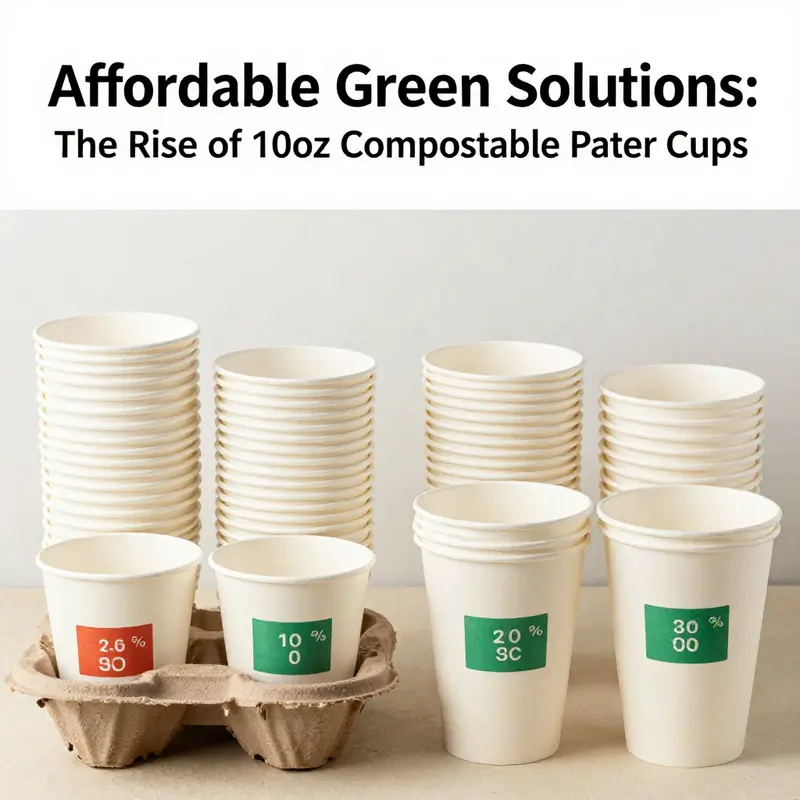
Every packaging decision carries a string of hidden costs, questions of reliability, and the quiet pressure of sustainable claims that customers increasingly demand. When a buyer looks at cheap 10-ounce compostable paper cups, they are not simply selecting a price tag. They are weighing how much insulation a cup provides for hot beverages, how well it resists leakage, and how efficiently it can be dispatched across a busy service line or a crowded event. In markets where sustainability is no longer optional but expected, the cheapest option can sometimes be a bargain only if it aligns with the full spectrum of cost considerations, from the initial purchase to the end-of-life path for the product. The economics of these cups, therefore, demand a holistic view. They invite a conversation not just about per-unit cost but about total cost of ownership, risk, and long-term value for a business that relies on fast, reliable service and a credible environmental story.
At the core of this discussion is a simple, practical reality: the unit price for 10-ounce compostable cups is highly sensitive to order volume. In the current market, the most aggressive price points appear at substantial MOQs—typically tens of thousands of units. A standard bulk option often lands at a price around two to three cents per cup when the order reaches the 50,000-piece threshold. This is a margin-driven decision as much as a material choice. The logic is straightforward: the supplier spreads setup costs, manufacturing changes, and freight into larger batches, which lowers the per-unit cost. A buyer can then transfer a portion of those savings into promotional opportunities, extended programs, or reduced pricing for customers. But this is not the whole story. While the headline price is compelling, several other costs and tradeoffs shape the total affordability and practicality of adopting such cups for a given business model.
Consider the contrast between that bulk price and the realities of smaller orders. If a café, event organizer, or distributor needs to test concepts, sample products, or run a limited pilot, the per-unit price can swing dramatically higher. Retail channels, for example, show sample pricing that might hover around a tenth or more per cup, though this is not a direct mirror of wholesale terms. The discrepancy is not just a function of volume; it reflects the different value propositions in play at the retail end, including branding, packaging integrity, and the speed of fulfillment. The lesson here is not to default to bulk terms as the only source of value. Rather, it is to size the procurement approach to the business need, ensuring that the trial phase, scaling, and long-term contracts all align with cash flow, demand forecasts, and sustainability commitments.
The volumes and price bands illuminate the first layer of cost drivers. The typical 10-ounce compostable cup in this segment is crafted from a fairly standard thickness of paper, often around 300 to 320 gsm, with a coating that is described as aqueous or water-based. The coating choice is not cosmetic; it has a direct impact on both performance and compostability. Water-based coatings are favored in markets that emphasize green credentials because they avoid certain fossil-derived laminates. Yet, they can require slightly more delicate handling in manufacturing and sealing, and the bonding strength needs to be consistent to hold up to hot liquids. The wall structure—whether the cup is single-wall or double-wall—plays a critical role in insulation and usability. For hot beverages, a double-wall design reduces heat transfer to the hand, improving customer satisfaction and staff efficiency during busy service periods. This added insulation is a material and manufacturing premium, and it is a common lever for price differences across suppliers.
A further cost driver is the base material itself and its resilience under heat. A cup built with higher GSM paper and a robust internal structure will better withstand the rigors of hot beverages, reducing the risk of sweating and structural failures during service. In bulk terms, even small increments in GSM or coating thickness can translate into meaningful price changes when multiplied by tens of thousands of units. Customization, while valuable for branding, adds another tier of cost. Even modest printing, logo placement, or color matching can push unit costs up by roughly 10 to 30 percent depending on the complexity and the supplier’s setup fees. In a market that prizes clean aesthetics and clear messaging, that extra investment can pay dividends in customer perception and repeat business. Still, it is essential to calibrate customization to the business objective. A simple, well-executed branding approach may suffice for many venues and events, while high-visibility campaigns may justify more expansive options.
Beyond the face value of the unit price, there are additional costs that buyers must anticipate. Shipping and freight are rarely included in advertised prices. International sourcing, especially from manufacturing hubs in Asia, typically introduces freight costs that accumulate as the order size grows. The per-unit impact of freight can range from a fraction of a cent to a few cents, depending on carrier choices, shipping speed, and the final destination. This means that the headline unit price must be interpreted in light of total landed cost, which includes shipping, duties, and insurance if applicable. Even when freight is modest, the cumulative impact on a 50,000-unit order matters. Then there are handling fees, packaging, and inspection costs that may sit on the buyer’s ledger as a matter of policy or risk management.
Another invisible cost is the payment and logistics security provided by platforms that connect buyers with suppliers. Reputable platforms can offer buyer protection, escrow arrangements, and quality assurance programs that reduce the risk of receiving defective goods or misrepresented specifications. Those protections have a price—often built into the supplier’s terms or reflected in slightly higher quoted prices—but they can be worth it for a procurement program that seeks to minimize post-purchase disruption. For a buyer negotiating terms, the decision to pay for such protections rests on the balance of risk appetite, supplier reliability, and the consequences of a failed shipment. In a market that emphasizes sustainability, the risk profile also includes the potential for a product to fail the compostability claim or fail to perform under typical service conditions. These are not merely quality issues; they touch the brand’s credibility and the consumer’s trust in the environmental promise.
Lead times and supply continuity constitute another layer of cost that rarely appears on a price tag. A 50,000-unit order might require several weeks of lead time plus a production window for coating and packaging. If demand spikes or if a supplier experiences a production disruption, the organization may need to secure buffers, alternate suppliers, or emergency stock. Each of these choices has an attached cost—whether it is the price premium of expedited production, the opportunity cost of unavailable service slots, or the capital tied up in safety stock. The fragile balance between lean inventory and reliable supply is particularly acute for disposable packaging, where trends and demand can swing rapidly with seasonal events, marketing campaigns, or shifts in consumer behavior.
The total cost of ownership becomes even more nuanced when one considers end-of-life and regulatory expectations. Compostable cups carry environmental claims that depend on modern composting infrastructure. Some facilities require industrial composting conditions, while home composting is often not sufficient to achieve the intended environmental outcomes. For a buyer, the practical implication is that a low purchase price does not automatically translate into lower environmental impact. If a business markets its sustainability, it must ensure its partners and customers understand the correct disposal path and support the local composting ecosystem. This may entail additional investments in customer education, local partnerships, or supplier certifications that verify compostability under defined conditions. While these considerations do not always alter the per-unit purchase price, they influence the perceived value, brand alignment, and long-term viability of a sustainable packaging program.
Another subtle yet important factor is performance consistency. When you buy in bulk, you expect uniformity across tens of thousands of cups. A few defective pieces can create bottlenecks in a service line, increase waste, or force staff to improvise with improvisational workarounds. The consequences extend beyond the cost of replacement cups. They affect the flow of service, staff morale, and customer satisfaction. The risk is not merely a single missing cup; it is a ripple effect that can slow a whole line, interrupt a shift, or color a brand’s reputation during a high-visibility moment. The best procurement practices embrace strict quality assurance cycles, including pre-shipment inspections, random sampling, and a clear remedy process if defects are detected. These practices, while additive in expense, provide a foundation for reliability that can be worth far more than the incremental cost.
To connect these threads, consider the following synthesis: if the goal is to minimize per-unit price at high volume while maintaining service quality, the most compelling scenario often involves a carefully structured long-term contract with a supplier who can deliver consistent double-wall insulation, aqueous coating reliability, and scalable production. This solution reduces per-unit price through economy of scale, while preserving the service quality and environmental integrity that customers expect. Yet the path to that ideal state is rarely linear. It requires strategic alignment of forecast accuracy, supplier capability, and internal processes that govern procurement, budgeting, and risk management. It also calls for a clear understanding of when to pursue bulk savings and when to pursue flexibility. For some events or campaigns, it may make sense to lock in a bulk price under a usage cap, with a plan for incremental additions if demand exceeds forecasts. For others, a more modular approach with staged orders and contingency options could offer greater resilience. In both cases, the decision hinges on the ability to quantify not just the unit price but the entire delivery ecosystem surrounding the product.
The decision framework begins with a transparent tally of cost elements. Start with the base unit price for the desired cup configuration, noting MOQs and any volume-based discounts. Add the expected freight per unit to obtain landed cost, then factor in any duties or insurance as applicable. Include potential handling or inspection charges and the cost of certifications or platform protections if those are part of the procurement agreement. Consider the cost of customization only if it aligns with branding goals; otherwise, keep it lean. Finally, quantify the cost of risk — the potential waste, quality failures, and supply disruptions that could arise if the program relies on a single supplier or an overly aggressive lead-time expectation. With this composite lens, a buyer can compare not just two alternatives but several scenario trees: a lean, high-velocity program with minimal stock; a balanced plan with a modest stock buffer; or a robust, contract-driven approach designed to weather demand volatility.
The practical takeaway is that price alone cannot determine the best option for cheap 10-ounce compostable cups. The right choice is the one with the lowest total cost of ownership over the intended lifecycle of use, including the environmental narrative that accompanies the product. The cost calculus must accommodate insulation needs, hot beverage performance, and end-of-life realities while preserving the option to scale in a predictable and financially sustainable way. The market itself responds to these realities. In recent years, suppliers have become more adept at offering standardized configurations that meet common hot-beverage demands while maintaining compostability credentials. Buyers benefit when they can translate these configurations into a procurement plan that respects both budgetary constraints and the business’s broader sustainability commitments. The best value is often found where price, performance, and responsibility converge, not where price alone dictates behavior.
To illustrate how these considerations translate into practical procurement decisions, let’s anchor the discussion in a real-world framing of bulk pricing dynamics. The most aggressive published unit price appears at a 50,000-piece MOQ, reflecting the supplier’s emphasis on scale. If a buyer can rationalize that volume, the per-unit price can be compelling. When you scale beyond that threshold, a smaller incremental cost increase per unit may still be acceptable, given the broader market’s price elasticity and the supplier’s capacity to maintain consistent quality and delivery timelines. For organizers testing new beverage concepts or for smaller venues experimenting with sustainability branding, the path may be to enter with a controlled pilot, gather real usage data, and then navigate the stepwise ramp to bulk orders. In this approach, the initial investment is not simply about buying cups; it is about validating demand, testing customer response to the compostable format, and calibrating operational processes to achieve efficient distribution and waste management.
A practical way to visualize this approach is to imagine the procurement as a calendar that maps demand, production cycles, and shipping windows. Begin with a forecast that includes peak service times, seasonal fluctuations, and event-driven surges. Align that forecast with supplier lead times and MOQs, then layer on a tiered pricing plan that rewards larger commitments without compromising agility. The calendar becomes a tool for negotiating favorable terms that reflect both the buyer’s need for price stability and the supplier’s need for production efficiency. In parallel, design a waste-disposal communication plan for customers. If a sustainability claim accompanies the cups, the plan should clearly indicate whether industrial composting is required, how to prepare the cup for composting, and where end-of-life facilities exist in the community. A credible program that explains disposal options is not merely a compliance measure; it strengthens consumer trust and reinforces the value proposition of choosing compostable packaging over conventional alternatives.
In the end, the appeal of cheap 10-ounce compostable cups lies not just in the price per unit but in the potential to create a coherent, scalable, and responsible packaging program. The cheapest option can be the best option when it aligns with a robust procurement framework, a clear understanding of total landed costs, a reliable supply chain, and a credible environmental narrative. The opposite can also be true: a sensational price that ignores the full cost of ownership may yield short-term savings but create long-term headaches. The task for buyers is to balance ambition with discipline, returning again to the numbers—volume, weight, coating, insulation, and transport—while never losing sight of the environmental obligations and the customer experience that accompany the packaging decision.
For those who want a tangible sense of how a supplier frames a product with multiple performance and customization options, one can consult a representative product page that demonstrates the range of configurations commonly available for this category. This page shows how double-wall construction, water-based coatings, and branding options can be combined to produce a cup that satisfies hot-beverage customers while still meeting compostable claims. See the internal page here: senang-disposable-double-wall-craft-paper-cups-multi-size-6-24-oz-custom-logo-for-coffee-tequila. This link provides a concrete example of how a supplier formats product features, packaging, and customization in a way that aligns with the broader cost structure discussed above. The page illustrates the balance between insulation performance, coating choice, and branding flexibility, all within a framework that buyers can adapt to their own budget and sustainability goals.
As a reference point for the broader market dynamics, consider external sources that detail the materials and processing choices that road-test the cost and performance of these cups in bulk. An external resource that provides real-time data on bulk pricing, technical specifications, and the eco-claims associated with compostable cups can help buyers validate their internal analyses and negotiate more effectively with suppliers. External resource: https://www.alibaba.com/product-detail/10oz-Aqueous-Biodegradable-Compostable-Coffee_1600478392459.html
Beyond the Price Tag: Unpacking the Environmental Footprint of Cheap 10oz Compostable Paper Cups
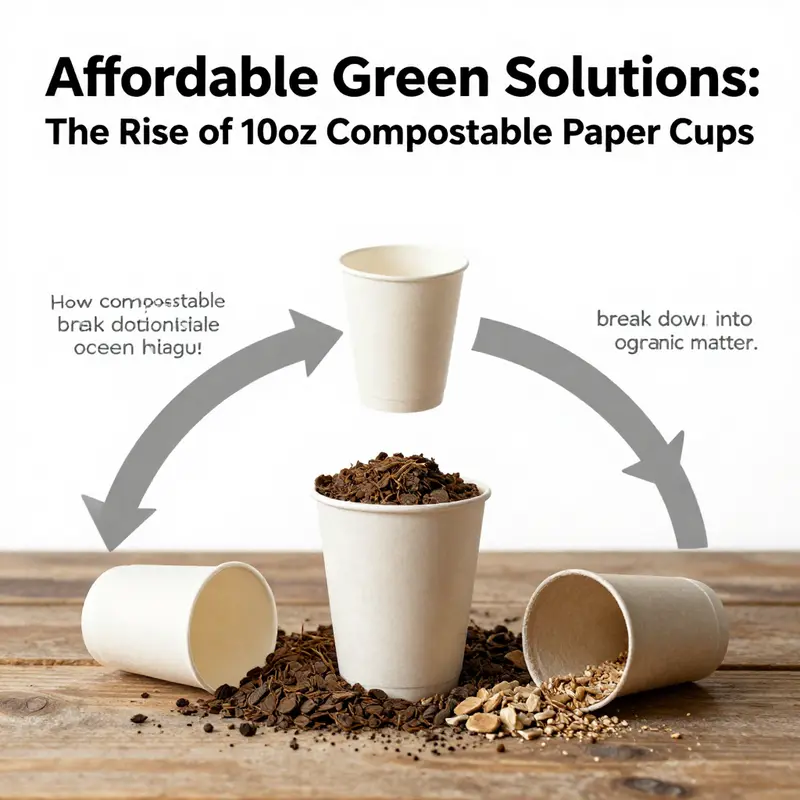
The appeal of inexpensive, 10-ounce compostable paper cups is clear: reduce cost while projecting a green image, especially in a world of rising plastic waste concerns. Yet the environmental footprint of these cups is not a simple equation of “cheaper equals better.” It is a layered story that unfolds across supply chains, disposal infrastructure, consumer behavior, and regional waste management policies. In practice, the true sustainability of cheap 10-ounce compostable cups depends as much on how they are disposed of and processed as on the materials and energy used to produce them. When viewed through a lifecycle lens, these cups are not a universal solution but rather a set of trade-offs that must be navigated with care, transparency, and a systemic view of waste streams.
At the heart of the environmental assessment lies a straightforward premise: compostable cups are designed to break down in composting facilities. Industrial or commercial composting operations operate under controlled conditions—higher temperatures, regulated moisture, and specific microbial activity—to accelerate the degradation of lignocellulosic fibers and certain bioplastics. In theory, that means less long-term waste and a reduced burden on landfills. In practice, the reality is more nuanced. The environmental benefit of industrial composting is heavily contingent on the presence and accessibility of compatible facilities in a given region. Where such infrastructure is robust and widely accessible, compostable cups can contribute to a circular flow of nutrients, returning organic matter to soil rather than to a landfill. But when the supply chain ends at a sorting and disposal step that funnels cups into landfills, the favorable disposal path evaporates. In anaerobic landfill conditions, the decomposition of organic matter is slow and often accompanied by methane production, a potent greenhouse gas. In that context, what began as a promise of environmental relief can lose its edge, and the cup’s end-of-life story may resemble that of a non-recyclable, non-compostable packaging option instead of a true circular asset.
A central technical challenge concerns the materials that give compostable cups their functional integrity. Many products marketed as compostable rely on thin barrier layers to prevent liquid leakage. These barriers are often derived from plant-based polymers that can be compatible with composting under specific conditions, but not all composting streams are equal. The barrier materials may require higher temperatures or longer residence times to break down fully. Where facilities do not reach those thresholds, the barrier lingers in the compost stream or ends up as packaged waste that cannot be composted with ordinary municipal organics. The consequence is a paradox: a product that claims to be compostable can fail to decompose in the very environment intended to receive it if the local infrastructure or consumer disposal habits do not align with its design. For businesses and communities, this underscores the importance of matching packaging choices to the realities of local waste systems and to clear consumer guidance about disposal expectations.
The lifecycle of these cups also involves resource use that deserves attention. Paper cups begin with wood pulp and other plant fibers, which are renewable in theory but require energy, water, and chemical processing to convert into finished consumer packaging. Even when fibers come from responsibly managed sources, the production step consumes water and energy, emits carbon or other pollutants, and generates solid waste—though these impacts can be mitigated with efficient manufacturing practices and renewable energy inputs. The upstream footprint is only part of the equation. Transportation adds another layer of emissions; cups sourced from distant suppliers accumulate the costs of long-haul transport in both fuel use and climate impact. When evaluating environmental performance, it becomes essential to balance local sourcing against the broader benefits of specialized manufacturing at scale. Large-scale production often improves material efficiency and waste minimization, but the origin of supply matters just as much as the efficiency of the process itself.
A further dimension is the potential use of a thin plastic or bioplastic lining inside the cup to prevent leaks. This lining improves the functional viability of the cup but can complicate disposal and decompose under limited conditions. If the lining is derived from polylactic acid or other bioplastics, the composting facility must have the appropriate composting profile and temperature regimes to achieve complete degradation. Without compatible facilities, the lining may persist in the environment or in the end-product material after composting. In fields where municipal guidance emphasizes compostability, labeling and consumer education become critical to avoid mixing streams that contaminate compost piles. The risk is not just consumer misunderstanding but also the potential for municipal programs to be overwhelmed by mislabeled items, making it harder to maintain clean, high-quality compost outputs.
These nuances reveal why the environmental performance of cheap compostable cups cannot be measured by price alone. A lower unit cost might reflect manufacturing efficiencies or aggressive supplier competition, but it can also correlate with compromises in material quality, barrier integrity, or end-of-life performance. For buyers, the decision calculus becomes a matter of balancing price with the probabilities of successful composting, the presence of appropriate facilities, and the likelihood that users will dispose of cups correctly. In regions with mature composting networks, the environmental gains can be meaningful, especially when the cups substitute for plastics or other non-biodegradable packaging. In areas lacking such infrastructure, the same cups may contribute little to a circular economy and may even complicate waste management by contaminating compost streams if mislabeled or miscollected.
Consumer behavior plays a pivotal role in translating product design into environmental benefits. Even the most thoughtfully engineered compostable cups can fall short if users drop them into trash bins or contaminate compost streams with non-compostable components. Education and clear labeling help, but they must be complemented by practical on-site disposal options. Cafés, retailers, and event organizers are increasingly under pressure to provide convenient, clearly marked composting options or to steer customers toward reusable solutions. The decision to opt for cheap compostable cups, then, becomes as much a behavioral challenge as an engineering one. When the purchase is framed as a contribution to a more sustainable waste system, it entails commitments beyond product selection: staff training, consumer communication, and the establishment of reliable disposal pathways that align with local infrastructure.
From a policy and planning perspective, the environmental story of these cups intersects with broader waste-management strategies. Municipal programs differ widely in their definitions of what counts as compostable and in the infrastructure they can support. Some municipalities accept certified compostable packaging in curbside organics programs; others do not, preferring to keep organics streams separate or to exclude packaging with certain barrier materials. This patchwork reality means that a product’s supposed end-of-life benefits are contingent on local governance. In places where policy supports compostable packaging and where facilities exist to process it, suppliers may market these cups as part of a viable strategy to reduce fossil-fuel dependence and landfill mass. In other places, policymakers face the challenge of avoiding greenwashing while promoting real, measurable improvements in waste handling. The EPA’s Sustainable Materials Management framework, for instance, emphasizes that the environmental benefits of composting hinge on the entire system—from feedstock to end-of-life processing—and not on a single product feature. For readers seeking a broader, evidence-based context, the U.S. EPA provides comprehensive guidance on composting and sustainable materials management that helps contextualize these packaging choices within a lifecycle perspective. See the EPA resource for a wider lifecycle view of composting and material recovery.
This systemic view has practical implications for procurement decisions. When a buyer considers cheap compostable cups, the assessment should extend beyond the sticker price to include a few critical questions: Is there a functional composting option available for end-of-life handling in the community or facility network? Are the cups designed with barriers and materials that align with those facilities’ capabilities? Do staff and customers understand how to dispose of the cups properly, and is there visible guidance at the point of use? Are there opportunities to reduce waste through reuse or by switching to higher-recovery packaging alternatives in certain contexts? Each question points toward a path where price remains a consideration but is balanced by the likelihood of achieving meaningful environmental outcomes.
Within the broader discourse on sustainable packaging, cheap compostable cups can play a role in decoupling some packaging waste from fossil-based plastics. The key lies in explicit, transparent communication about the conditions under which these cups perform as intended. Green claims should be supported by clear labeling, third-party certification where appropriate, and alignment with local composting capabilities. Without such alignment, the environmental benefits become aspirational rather than actionable, and the cups may carry the same end-of-life uncertainty that plagues many packaging options. In practice, the most effective approach is often a combination: select packaging that reliably decomposes in available facilities, educate users about proper disposal, and pair the solution with reuse where feasible. For organizations seeking practical pointers on sustainable cup design and deployment, industry discussions and supplier blogs frequently emphasize the importance of holistic waste-management strategies alongside material choices. A notable resource from supplier discussions highlights a range of eco-friendly, printed-logo cup options that underscore how design choices and disposal considerations can be integrated in a single procurement decision. For readers exploring related, practical procurement perspectives, you can explore this discussion at senang07-eco-friendly-printed-logo-buy-paper-cup-take-away-coffee-cup, which delves into how branding and packaging choices intersect with environmental outcomes. senang07-eco-friendly-printed-logo-buy-paper-cup-take-away-coffee-cup.
The environmental dialogue around cheap 10-ounce compostable cups thus remains complex and context-dependent. It is not enough to consider only the price or the nominal “compostable” label. The true sustainability of these cups emerges when their end-of-life performance, supply-chain realities, and consumer behaviors converge toward a well-supported disposal pathway and a robust waste-management system. When these conditions are met, compostable cups can contribute to a reduction in fossil-fuel use and a more circular economy. When they are not, the same packaging can be a missed opportunity or a risk of undermining municipal composting programs. That is the paradox embedded in seemingly simple procurement decisions: a cup’s environmental impact is a product of design, process, policy, and people working in concert, not a single factor that can be optimized in isolation.
For those who want to situate this issue within a broader evidence base, the ecology of composting and the sustainability of packaging materials are discussed in depth by responsible agencies and researchers. The EPA’s composting guidance illustrates how municipal waste streams and consumer behavior determine the outcomes of any compostability claim. The framework encourages stakeholders to consider the entire value chain and to implement practices that maximize organics recovery while minimizing contamination and energy use. Readers can consult the EPA’s Sustainable Materials Management: Composting resource to explore lifecycle thinking and how different packaging options fare when subjected to real-world conditions, regulations, and market dynamics. [External resource: https://www.epa.gov/smm/composting]
In closing, the environmental impact of cheap 10-ounce compostable cups cannot be reduced to a simple dichotomy of “good” or “bad.” It is better understood as a spectrum shaped by local composting infrastructure, education, labeling clarity, and the broader design and procurement choices that accompany packaging decisions. The price tag matters, but it is merely one coordinate in a multidimensional map of environmental responsibility. Companies seeking sustainable procurement should weigh immediate cost against longer-term waste management realities, invest in staff and shopper education, and align packaging choices with local facilities and policies. When done thoughtfully, these cups can be part of a broader strategy to move away from fossil-fuel-dependent packaging, provided the end-of-life system is capable of processing them in a way that actually realizes the intended environmental benefits. The overarching lesson is clear: material innovation alone does not guarantee sustainability. It must be matched with infrastructure, behavior, and policy that enable real, measurable outcomes in the places where cups are used and discarded.
null
null
Final thoughts
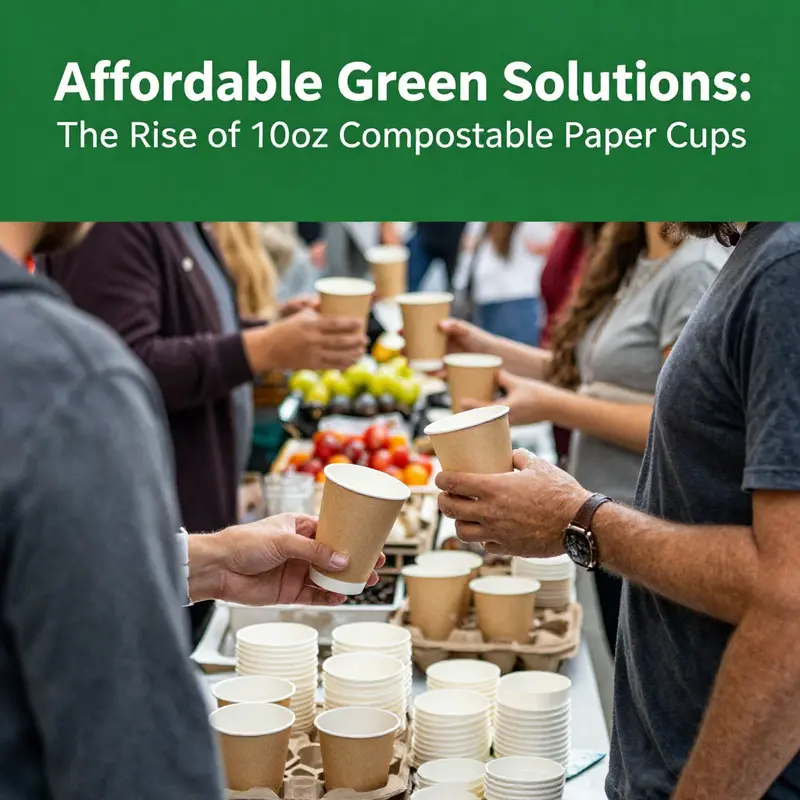
The shift towards sustainable practices in the food and beverage industry illustrates a powerful trend where consumers not only prefer but even demand eco-friendly options. The affordability of 10oz compostable paper cups offers businesses a practical solution that aligns with current market expectations and regulations. By choosing these cups, companies not only reduce their environmental footprint but also bolster their brand reputation among increasingly eco-conscious customers. Adopting such sustainable practices today can pave the way to a greener tomorrow for the entire industry.