
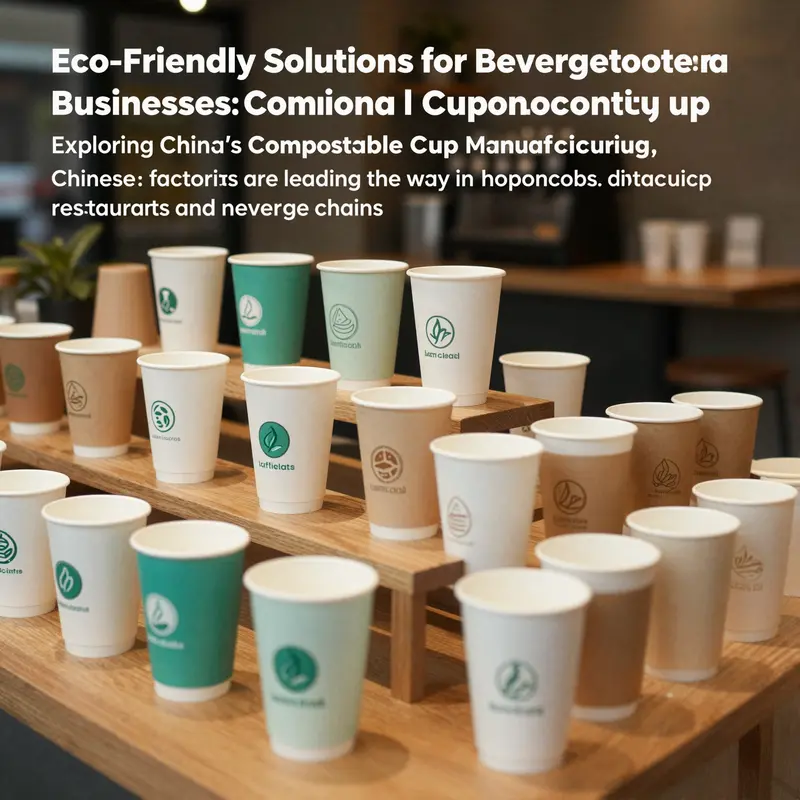
In a world increasingly aware of environmental concerns, businesses in the food and beverage sector are seeking sustainable alternatives that do not compromise on quality. China, a leading player in the manufacturing of compostable cups, is addressing this demand with innovative production methods aimed at replacing traditional single-use plastics. This article explores the operations of China’s compostable cup paper factories, the technological advancements shaping their production processes, and the economic impact of these factories on local markets. By understanding these facets, restaurants, food trucks, beverage chains, and event planners can make informed decisions when choosing eco-friendly materials that resonate with their values and their customers’ expectations.
Lifecycle in Motion: How China’s Compostable Cup Factories Turn Renewable Fibers into Biodegradable Hospitalityware
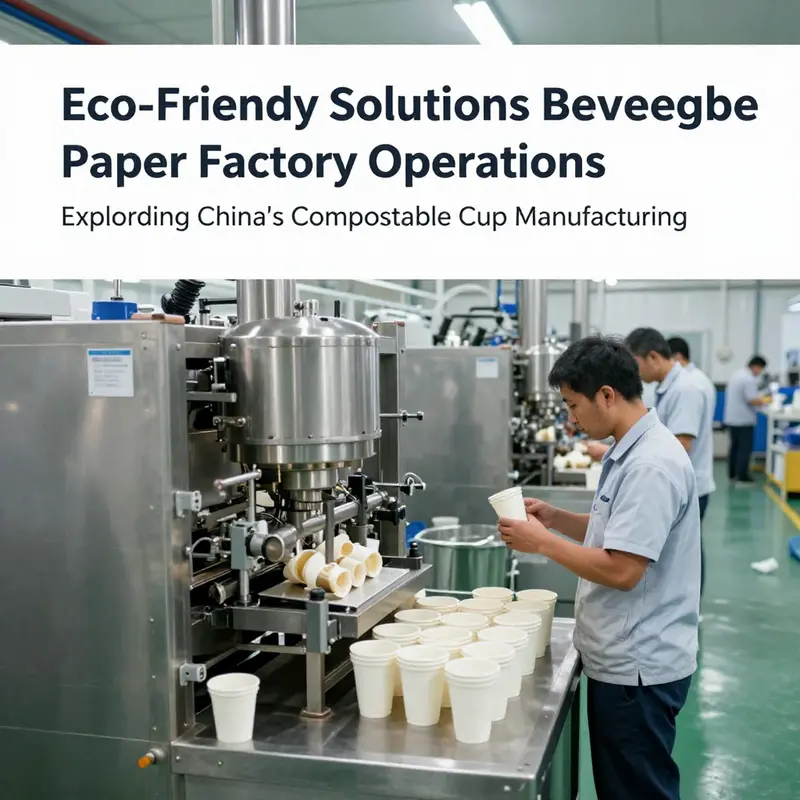
The story of China’s compostable cup factories unfolds as a narrative of transformation, where renewable feedstocks, precision engineering, and a shifting regulatory and consumer landscape converge to redefine a staple of modern dining. As one of the world’s largest production hubs for biodegradable paper cup solutions, China has built an intricate ecosystem that links farmers, material developers, converters, and brand owners in a tightly choreographed sequence. At the heart of this system lies a simple ambition: to replace petroleum-based plastics with a footprint that is cleaner, safer, and more compatible with circular economy aims. The journey from raw fibers to a finished cup, ready to hold a cold smoothie or a hot take-away brew for a short period, is not just a factory routine. It is a disciplined workflow that balances material science, manufacturing technique, and market demand under the umbrella of environmental responsibility.
A practical illustration of this balance is seen in the scale and scope of a representative modern enterprise in Shandong, within the broader ecosystem of the country’s green disposable tableware industry. The company sits on a sprawling 80-acre site in the regional development zone, backed by substantial capital investment and a clear mandate to lead in sustainable single-use tableware. It operates with a philosophy that marries R&D, design, manufacturing, sales, and service into an integrated continuum. Its portfolio spans more than fifty variants of natural and white-grade paper pulp tableware, all designed to be biodegradable and compostable where industrial facilities exist. The ambition here is not merely to produce a disposable item; it is to deliver an alternative that aligns with the environmental aspirations of modern eateries, corporate cafeterias, and events that seek to reduce plastic leakage and its downstream impacts. In this context, the factory’s annual capacity—ticking at hundreds of billions of units under a single roof—becomes a signal that the industry has matured from experimentation to scale, and that the economics of green materials have become more competitive with traditional options.
The underlying material science driving these factories rests on two pillars: renewable feedstocks and biobased lining. The base substrate is typically food-grade paper, selected for its reliability, barrier properties, and compatibility with high-speed converting lines. The inner wall of each cup is coated with a thin, uniform layer of a biodegradable polymer—most commonly polylactic acid (PLA) or starch-based polymers. This coating serves a practical function: it prevents leakage and provides a barrier against moisture and lipids, thereby maintaining food safety standards while enabling the cup to perform across a spectrum of beverages. PLA, derived from fermented corn starch or sugarcane, is central to the narrative because it embodies the industry’s core promise: a material that is 100% biodegradable under industrial composting conditions and that also offers the familiar clarity and gloss associated with conventional plastics. In essence, PLA grants the performance and consumer experience that brands expect, while steering the lifecycle away from fossil-based plastics.
The economic calculus behind the shift to PLA and related biopolymers is intricate but increasingly favorable. Biobased materials have been steadily improving in performance, processing, and cost, aided by scale effects and supportive policy environments. The non-toxic profile of these materials complements stringent food-contact standards, which China’s regulatory framework increasingly harmonizes with international expectations. For processing facilities, this translates into machines and lines designed to handle thermoplastic forming with a level of precision that minimizes waste while maximizing yield. The cup bodies, lids, and even sleeves are produced through advanced forming technologies that ensure consistent wall thickness, dimensional accuracy, and finish. The result is a family of products that can hold cold beverages, juices, smoothies, and even short-term hot drinks—funneled through a design language that emphasizes ease of use, reliable sealing, and consumer confidence in a paper-based alternative to plastic.
From a production perspective, the base material matters as much as the coating. The choice of paper—its basis weight, whiteness, and surface smoothness—determines how well the coating adheres and how evenly it spreads across the inner surface. This translates directly into leak resistance, heat tolerance, and the perception of quality at the point of sale. The coating itself is carefully calibrated to provide a robust barrier without compromising biodegradability or food safety. The thickness and uniformity of the coating influence not only leakage prevention but also the cup’s tactile feel, which in turn affects consumer satisfaction and perceived value. Quality control in this sphere is rigorous, with inline sensors and periodic lab tests ensuring that each run meets stringent standards before the product enters the market.
One of the most striking features of China’s compostable cup factories is the degree of automation that underpins large-scale production. Modern facilities deploy a combination of high-speed corrugation, die-cutting, coating, and filling lines that are highly automated. This enables consistent output across tens of millions of units per day, a scale necessary to support major foodservice networks and large event organizers. The automation layer is not merely about efficiency; it is a means to sustain uniform quality across a vast product family that includes different sizes, formats, and aesthetic treatments. Yet, automation does not erase the human dimension. Skilled operators monitor the lines, perform preventative maintenance, and intervene with quality checks that catch anomalies before they snowball into defects. The human element remains essential for handling customization requests, which are increasingly common as restaurants and brands seek to align their disposable packaging with corporate identities and sustainability commitments.
Customization itself represents a major value proposition in this market. Factories now offer digital or lithographic printing, enabling brands to imprint logos, environmental certifications, and brand colors directly onto cups or their sleeves. The objective is to fuse function with branding in a way that elevates the guest experience while signaling environmental stewardship. The market demand for such customization has driven the integration of printing suites into the same production environments that coat and form the cups, an alignment that reduces lead times and improves supply chain resilience. The result is a product that not only serves a practical purpose but also becomes a vehicle for brand storytelling and sustainability messaging. In the context of a broader Chinese supply chain that extends across provinces like Guangdong, Zhejiang, and Jiangsu, this combination of scale and customization has helped many producers offer competitive MOQs and integrated packaging solutions that appeal to global buyers who require consistent quality and traceability.
Market context helps explain why China has emerged as a leading base for biodegradable paper cups. By early 2026, the country’s industry ecosystem had evolved into a mature network of feedstock suppliers, converting plants, coating specialists, and contract manufacturers, all aligned with a robust logistics and testing framework. This ecosystem supports direct procurement through B2B platforms, enabling buyers to reach verified manufacturers, request samples, and access certifications such as ISO standards, food-contact approvals, and other regulatory attestations. The procurement landscape is further enriched by the ability to coordinate with suppliers who can offer turnkey packaging and branding services, making the decision to switch from conventional plastics to compostable cups economically compelling for larger buyers with complex supply needs.
The compatibility of these cups with regulatory and environmental expectations is a cornerstone of their appeal in international markets. The lifecycle logic—from renewably sourced feedstocks to compostable liners, and from high-precision manufacturing to traceable supply chains—fits within broader waste management and sustainability programs that many governments now actively promote. For brand owners, the prospect of aligning packaging with sustainability goals is not only about compliance; it is about meeting evolving consumer expectations that place environmental responsibility at the center of corporate identity. As a result, compostable cup factories in China have become not just manufacturers but strategic partners in the shift toward more responsible hospitality packaging.
A concrete example from the domestic landscape helps anchor these observations. A leading modern producer in Shandong demonstrates how a single enterprise can fuse scale with a comprehensive product line and a strong value proposition. The company sits on an expansive 80-acre site and has mobilized a total investment of roughly 2.5 billion yuan to build out a manufacturing platform with an annual capacity to produce hundreds of billions of one-time paper pulp meal and beverage containers. Its product catalog includes more than fifty variants in two base color families—natural and white—designed to meet a wide spectrum of consumer tastes and regulatory requirements. The emphasis is squarely on biodegradable paper-based tableware, crafted to provide low-toxicity, low-carbon alternatives to conventional disposable plastics. Through this lens, the enterprise exemplifies how scale, material science, and design converge to support the needs of a thriving, sustainability-minded hospitality sector.
The production philosophy at such facilities goes beyond simply making a cup. It encompasses a lifecycle mindset that starts with careful material selection and continues through manufacturing, distribution, use, and end-of-life. The capabilities to reproduce consistent performance across a broad range of beverages and temperatures are complemented by the ability to customize packaging to reflect a client’s brand identity and environmental promises. This combination—robust containment, responsible materials, and brand-aligned aesthetics—helps drive adoption across diverse retail and foodservice contexts, from quick-service chains to premium venues seeking to differentiate themselves with a green packaging story.
Alongside these manufacturing capabilities, the industry benefits from a well-developed B2B procurement environment. Buyers can engage directly with manufacturers via established platforms that verify suppliers, support bulk inquiries, and provide access to testing samples. The emphasis on international compliance—such as ISO certifications and approvals appropriate for the U.S. and European markets—helps reassure buyers about the reliability and safety of the products, even as they pursue ambitious sustainability targets. This is not a simple substitution of materials; it is a strategic shift that requires confidence in performance, safety, and the ability to scale with demand. In practice, this means rigorous testing, because even biodegradable materials must demonstrate predictable behavior in food-contact applications and during the early stages of industrial composting processes.
The sector’s progression toward automation and customization has also spurred new business models. Some manufacturers offer end-to-end services, including design concepts, printing, packaging design, and co-branding options that align with environmental labels and certifications. In a market where corporate social responsibility is increasingly a driver of consumer choice, these integrated services help buyers present cohesive sustainability stories—from the procurement of compostable cups to the communication of compostability credentials on menus and digital channels. The narrative that emerges is not just about a single product; it is about a system that enables brands to minimize plastic use, reduce waste, and maintain guest experience at the point of sale, even as consumer expectations evolve toward clarity around the end-of-life options for disposables.
To illustrate the connectivity between market forces and factory operations, consider the role of customization and branding within the production line. In practice, facilities invest in printing and finishing capabilities that permit on-demand or near-on-demand customization. This capability reduces the risk of obsolescence and allows brands to refresh designs with changing campaigns, seasonal themes, or sustainability certifications without disrupting the overall production schedule. The ability to weave brand storytelling into packaging resonates strongly with consumers who are attentive to the environmental narratives behind the products they purchase. The end-to-end production model becomes a value proposition that extends beyond immediate use, reinforcing how compostable cups can support broader sustainability strategies within the hospitality sector.
The landscape, however, is not without its complexities. Feedstock variability, the capital intensity of biopolymer processing, and the need for robust composting infrastructure are real considerations. While PLA offers compelling advantages, its performance is contingent on industrial composting facilities capable of achieving the necessary temperatures and residence times. Not all markets have ready access to such facilities, which means producers and buyers must work together to align product design with local waste management capabilities. This includes clear labeling, consumer education about proper disposal, and, where possible, the development of take-back programs or partnerships that facilitate proper end-of-life treatment. In China’s fast-moving and diverse market context, these dynamics are actively shaping how products are launched and scaled across regions with different regulatory environments and consumer practices.
Amid these dynamics, stories of specific firms provide a grounded lens through which to view systemic change. The enterprise in Shandong, with its sizable footprint and expansive product range, embodies the industry’s trajectory from regional producer to global supplier. Its emphasis on green, biodegradable paper pulp tableware aligns with a broader push toward sustainability that spans upstream material development and downstream consumer adoption. The company’s approach demonstrates that success in this field requires more than just efficient manufacturing; it requires an integrated strategy that harmonizes supply chain resilience, product safety, aesthetic versatility, and environmental stewardship. The operations model, with its careful balance of automation and skilled oversight, shows how large-scale production can deliver consistent performance while maintaining a responsible environmental profile.
As the industry continues to evolve, the narrative extends beyond national borders. The global demand for responsibly sourced, biodegradable packaging solutions invites further collaboration with suppliers, researchers, and policymakers who are shaping the future of sustainable materials. The integration of renewable feedstocks, biodegradable coatings, and advanced forming technologies presents a roadmap for continued innovation. In this light, China’s compostable cup factories are not simply responding to a market trend; they are contributing to a longer-term transition in packaging—one that seeks to harmonize consumer convenience with environmental integrity and systemic waste reduction.
For readers who want to glimpse the market dynamics from a procurement perspective, the supply-chain transparency and the option to sample before committing to large orders are particularly relevant. The ability to access verified manufacturers, obtain quality certifications, and test performance prior to scale can be a decisive factor in how quickly brands can shift away from plastics and toward compostable alternatives. The ongoing conversation about compostability standards and end-of-life infrastructure means that buyers should remain engaged with suppliers who can demonstrate not only product quality but also a credible plan for environmental impact assessment and regulatory alignment. In this sense, the operations of these factories are as much about governance and process as they are about chemistry and machinery.
Within this evolving ecosystem, a commonly used touchpoint for brands and buyers is the opportunity to explore customization options that reflect a company’s commitment to sustainability as well as its business identity. For readers who want to explore a concrete example of supplier-led customization in the context of eco-friendly packaging, consider exploring the broader spectrum of options available through industry platforms that showcase biodegradable cup designs and branding capabilities. An example spotlight from the market highlights the availability of solutions oriented toward eco-friendly branding. If you follow a link to a representative supplier page—expressly designed to illustrate the range of customization possibilities—you will see how symbolic branding and material choice intersect to create packaging that communicates environmental values while preserving the user experience. This demonstrates how the factory floor is connected to the consumer’s perception, and how the lifecycle narrative is shaped by design choices as much as chemical composition.
The Chinese industry’s forward momentum rests on a combination of policy momentum, consumer demand, and a willingness to invest in specialized equipment and trained personnel. It is a story of industrial evolution: from the early exploration of renewable feedstocks and biodegradable coatings to the current phase of large-scale, automated production that can respond to brand-specific requests with speed and reliability. The end result, when well-executed, is a disposable cup that satisfies regulatory requirements, performs consistently in use, and demonstrates a clear pathway for end-of-life management through industrial composting. For shifting consumer expectations and a world increasingly attentive to plastic leakage and microplastics, this is a promising development—a development that is increasingly embedded in the operational DNA of leading facilities across the country and in adjacent regions sharing a similar trajectory.
To connect readers with a concrete route for further exploration, consider how the market’s emphasis on customization links to the broader supply chain. The potential to deploy brand-specific logos, sustainability labels, and eco-certifications creates a value proposition that extends beyond the cup itself. It leverages the fabric of an integrated industrial system that can deliver not only a product but also a narrative about responsible consumption. This narrative, in turn, reinforces demand for compostable cups while encouraging brands to invest in the educational efforts needed to ensure proper disposal and participation in composting programs.
In closing the loop of this chapter without closing the door to future chapters, the factory floor reveals a philosophy that blends science, design, and policy into a cohesive whole. Renewable feedstocks, biodegradable liners, precise forming technologies, and automation converge to produce a family of products that are more than disposable. They are embodiments of a transition toward materials and processes designed to minimize environmental impact while safeguarding the user experience. As the industry continues to scale, researchers and manufacturers will likely refine coatings, further optimize production lines, and broaden the accessibility of industrial composting infrastructure. The journey remains deeply collaborative—across fields of material science, engineering, logistics, and regulatory compliance—and it is this collaboration that will determine how quickly compostable cups become the standard rather than the exception in the global hospitality sector.
For readers seeking a direct route to observe one facet of this evolving landscape, a community of suppliers and buyers frequently uses dedicated platforms to locate and evaluate options for eco-friendly packaging. The following internal resource provides a granular look at a segment of the market that emphasizes sustainability and customization while maintaining rigorous standards: eco-friendly-printed-logo-buy-paper-cup-take-away-coffee-cup-8-oz-12-oz-paper-cup.
For a broader industry perspective and producer criteria that contextualize these local operations within global supply chains, readers can consult external references that catalog supplier capabilities and certifications. An authoritative starting point is a widely used industry directory that aggregates manufacturers and evaluates compliance across regions. See https://www.alibaba.com/showroom/papercupmanufacturer.html for guidance on standards, supplier verification, and the range of capabilities available to buyers seeking scalable, compliant compostable cup solutions.
The chapter thus sketches a landscape where China’s compostable cup factories operate as both industrial powerhouses and strategic partners in sustainability. They translate renewables into practical packaging, convert complexity into reliable supply, and extend brand storytelling into environmentally conscious consumer choices. The ongoing evolution of this sector will continue to hinge on the synergy between material innovation, process engineering, and the policy and market signals that reward responsible packaging choices. In this sense, the operations described here are not merely about making cups; they are about enabling a more sustainable hospitality culture—one cup at a time.
From Pulp to Promise: Technological and Systemic Advances in China’s Compostable Paper Cup Factories
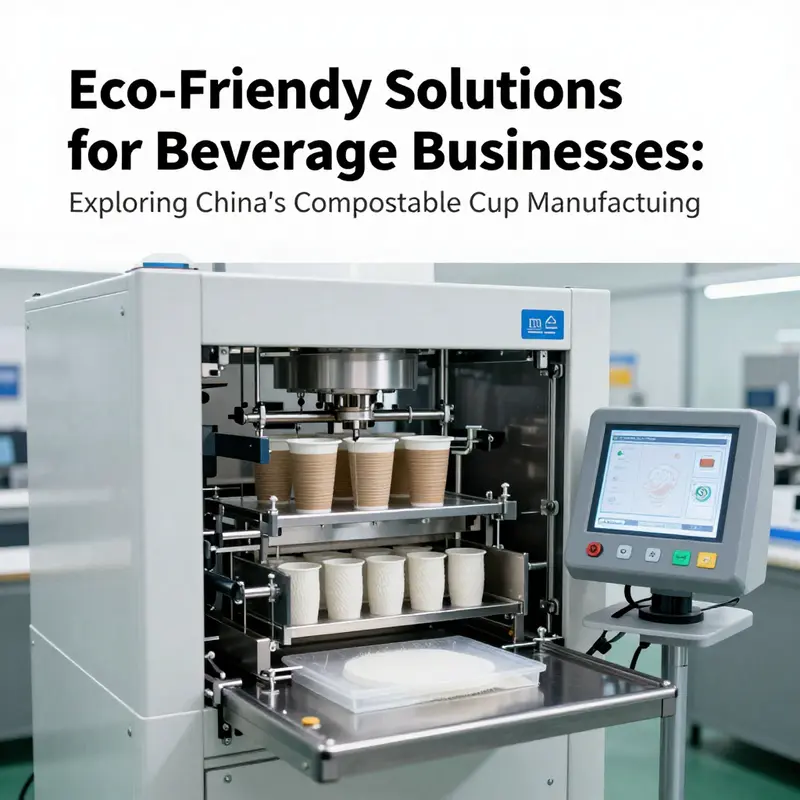
The emergence of compostable cups within China’s packaging landscape sits at the intersection of resource security, environmental policy, and industrial scale. In the broader arc of modern manufacturing, the shift from conventional disposable ware to pulp-based, compostable alternatives reflects both a reimagining of what “disposable” can mean and a recalibration of how demand is organized, produced, and returned to the earth. The chapter that follows does not pretend to map every innovation in the country’s vast network of paper goods plants. Instead, it traces a coherent through-line from a leading Shandong-based producer through the practical, material, and organizational transformations that enable scale without sacrificing compostability. What emerges is a narrative of how a factory floor can become a site where ideas about sustainability are converted into tangible products, and how those products, in turn, shape the behavior of brands, caterers, and consumers alike.
In the context of the research materials at hand, the most explicit portrait centers on a modern, integrated enterprise located in the Gaotang Economic Development Zone of Shandong. The company encompasses research and development, design, manufacturing, sales, and service under one roof, occupying a substantial footprint of eighty mu and channeling a capital investment measured in the hundreds of millions of yuan. Its published capacity—about 20 billion disposable eco-friendly meal boxes per year—signifies more than a number on a balance sheet. It signals the scale at which a single site can influence supply chains that previously relied on non-degradable and less sustainable alternatives. The firm’s portfolio, described as including natural and white series across more than fifty models of green, biodegradable pulp tableware, exemplifies a deliberate strategy to deliver a spectrum of options that can meet diverse culinary contexts while maintaining a consistent commitment to environmental performance.
What makes this case particularly instructive is not merely the breadth of product lines or the sheer production capacity. It is the way such a factory embodies the integration of upstream material science, process engineering, and downstream market alignment into a single, coherent system. The company positions itself as a research-enabled manufacturing operation, with the aim of offering an environmentally preferable substitute for traditional disposable ware. The emphasis on “degradable” and “environmentally friendly” materials signals a conscious choice to partner with advancements in fiber technology, coatings, and adhesives that support compostability as a practical end-of-life pathway. In a market where consumer expectations for eco-labels increasingly translate into purchasing decisions, the ability to offer a natural-to-white spectrum of products with credible compostability credentials can create a differentiated value proposition for the hospitality and food-service sectors.
The heart of the chapter’s inquiry—how technological innovations materialize in China’s compostable cup production—rests on understanding the factory’s end-to-end approach. It is not enough to claim that compostable cups exist or that a plant produces them at scale. The real technical story lies in how raw materials are sourced and processed, how pulp is refined and shaped into cups, how coatings are applied to achieve barrier properties without compromising compostability, and how the plant monitors and controls quality across millions of units. It is also about how the plant manages waste, water, and energy within a closed loop that echoes the circular economy principles many brands now demand. In other words, the factory’s true innovations are often hidden in the margins: the efficiency of fiber recovery, the effectiveness of enzyme-based or starch-based coatings, the precision of the forming dies, the reliability of inline inspection, and the degree to which branding and design integrate with performance and end-of-life considerations.
Material science underwrites these advancements. The shift from purely conventional paper packaging to compostable options requires not only raw fiber but also compatible binders, coatings, and adhesives that can break down under composting conditions. In China, the push toward bagasse and other agricultural fibers, coupled with coatings that avoid petroleum-based barriers, is altering the raw-material toolkit available to a plant such as the one described. Bagasse, a by-product of sugarcane processing, offers a relatively fiber-rich feedstock that can be formed into cups with reduced reliance on a virgin wood-pulp base. The prospect of using natural coatings and water-based finishes reduces the introduction of synthetic barriers that would otherwise hinder biodegradability. When paired with adhesives that can function in wet environments without compromising compostability, these material choices help ensure that cups can perform in a food-service setting while remaining compatible with industrial composting streams.
On the plant floor, process innovations converge around the same goal: produce consistent, safe, and compostable cups at scale. Automation in pulp preparation, forming, and cutting reduces variability that might otherwise threaten barrier performance or barrier integrity. Modern cups demand uniform wall thickness, precise rim geometry, and airtight seals with their lids and sleeves. The use of rotary die-cutting and high-speed forming lines can achieve these specifications across tens of millions of units per month while preserving the ability to switch quickly between designs without significant downtime. Inline quality-control cameras and moisture sensors track parameters in real time, enabling immediate adjustment rather than post-production rework. In a context where a single plant can supply a wide range of clients—from street vendors to full-service restaurants—such agile manufacturing capabilities are essential. They also support a broader trend toward customization in a way that does not compromise the environmental promises of compostable packaging.
Energy efficiency and water management are not mere compliance concerns but central to the viability of large-scale compostable cup production. Conventional papermaking and pulping demand substantial energy, and the adoption of energy-recovery systems, combined heat and power arrangements, and waste-heat utilization, can dramatically reduce the carbon and operating costs of a plant. In tandem, closed-loop water systems minimize consumption and reduce effluent load. When a factory operates at this scale, even marginal improvements in water reuse or energy recovery compound into meaningful outcomes over the course of a year. These efficiencies are not abstract; they translate into lower life-cycle costs, faster turnaround times for large orders, and an ability to respond to customers’ just-in-time needs without sacrificing environmental performance.
Equally important is the plant’s approach to end-of-life performance. Compostability is not an attribute that can be verified by a single test in a warehouse; it must be demonstrated across the product family under realistic conditions and within the scope of existing industrial composting streams or home-composting norms where applicable. Establishing credible compostability credentials typically involves aligning with recognized standards and third-party verification. It also requires a transparent supply chain that ensures the entire lifecycle—from raw materials to the disposed cup’s journey back into the soil or composting system—meets defined criteria. In practice, this translates into careful selection of fiber sources, coatings, and adhesives and a packaging philosophy that minimizes additives that could hinder biodegradation. The Shandong plant’s natural-and-white product family illustrates how a single factory can balance aesthetics, consumer expectations, and compostability, offering choices for customers who want a more rustic, natural look or a cleaner, white presentation, without compromising end-of-life performance.
If one surveys the broader Chinese landscape, the dialogue around technological innovation in compostable cups often centers on two poles: upstream material development and downstream recycling and waste-management infrastructure. The research results available for this chapter emphasize a different part of the spectrum—waste containers and recycling equipment—rather than upstream cup production itself. This emphasis reflects a real truth: the most rapid visibility tends to come from the end-of-life stage, where sorting, collection, and processing systems are easier to measure and regulate. Yet production-level innovations are quietly still advancing along parallel tracks. Companies are experimenting with alternative fiber blends that improve stiffness and heat resistance without depending on petrochemical-based coatings. They are testing biodegradable coatings that maintain barrier properties for hot beverages while remaining amenable to composting environments. They are refining adhesives to secure lids or sleeves in conditions of high humidity and heat, all while preserving the ability to break down in composting streams. And they are integrating digital design tools to tailor branding and packaging to specific market segments while preserving a core commitment to environmental responsibility.
The practical implications for customers—cafes, caterers, and food-service operators—are significant. A plant capable of delivering both a wide palette of aesthetic options and stable, high-volume performance changes how buyers approach procurement. Instead of choosing between eco-credentials and reliability, they can seek both. The plant’s capacity to produce fifty-plus models in two color families means menus, brands, and events can be designed around compostable cups that fit consistently with a restaurant’s or a third-party reseller’s visual identity. The possibility of printing or branding on these cups, while retaining compostability, has implications for marketing and consumer perception. In this sense, the internal design teams within manufacturing facilities become as consequential as engineers who optimize the pulp and coating processes. A well-integrated operation can translate technical breakthroughs into brand narratives that resonate with conscious consumers and with procurement professionals seeking to balance cost, performance, and environmental impact.
The material, process, and branding dimensions converge most tangibly when we consider the lifecycle and the policy environment. Chinese regulators have increasingly emphasized sustainability within packaging, nudging manufacturers toward more responsible sourcing and better end-of-life outcomes. That policy wave makes it crucial for plants to document material choices, production parameters, and testing results that demonstrate compostability under credible conditions. It also explains why producers invest in design-for-end-of-life thinking from the outset. If a cup can perform reliably in a coffee shop and then degrade in a suitable composting stream, it reduces the environmental burden and aligns with the broader public goals of reducing packaging waste. These market and policy accelerants help explain why the type of integrated, research-oriented production described at the Shandong facility is not simply a niche tactic but a strategic response to the demands of a rapidly evolving sector.
In turbulent markets, the ability to adapt design and manufacturing workflows rapidly is a form of technological innovation in itself. The plant’s strategy—to offer a natural and a white series across more than fifty models—also acts as a flexible platform for experimentation. It supports a portfolio that can be suited to different restaurant concepts, price points, and consumer expectations while maintaining a consistent compostability premise. This balance—between uniform process discipline and adaptable product design—allows the factory to test and scale new formulations, coatings, and fiber blends with minimal disruption to core production lines. It also means that the organization can iterate on packaging and branding in ways that directly influence downstream adoption among food-service operators, who must align with environmental commitments while meeting their customers’ needs for reliability, convenience, and aesthetics.
Despite these concrete indicators of progress, the broader research environment suggests there is still a gap in publicly accessible, granular data about ongoing technological innovations specifically in the upstream production of compostable cups in China. The available documents tend to spotlight waste-management-oriented enterprises and equipment manufacturers, rather than the upstream paper-cup mills themselves. That gap does not diminish the importance of the innovations described above; rather, it highlights the need for a more granular dialogue about the manufacturing challenges, testing regimes, and certification pathways that enable compostable cups to move from pilot lines to mainstream supply. For scholars and industry observers, this gap invites deeper inquiries into how pulp selection, fiber pretreatment, coating chemistries, and barrier technologies evolve in concert with scale-up, and how pilot successes translate into reliable mass production.
Still, the trajectory suggested by current examples points toward a more tightly integrated ecosystem. A plant that can combine research, design, manufacturing, and service under one umbrella is positioned not only to push product quality upward but to coordinate more closely with customers on specifications, branding, and end-of-life ambitions. The capacity to offer a wide range of product designs while also meeting compostability criteria enables a more dynamic dialogue between suppliers and buyers. In practice, this means buyers can specify cups that fit a brand’s visual language and functional requirements—such as heat resistance, leak-proof performance, and easy handling—without compromising environmental outcomes. It also means that suppliers can respond to regulatory changes, such as new compostability standards or revised waste-management guidelines, with agility rather than delay.
The internal link between design and sustainability is no longer optional. A cup that looks right on a storefront shelf must also perform in composting facilities if it is to deliver on its environmental promise. Brands increasingly demand proof that their packaging choices connect to actual end-of-life outcomes. In response, manufacturers are aligning product development with analytical life-cycle assessments, ensuring that the environmental advantages claimed in marketing messages are grounded in measurable performance. Such alignment requires transparent supply chains, rigorous testing, and credible verification from third-party bodies. When a factory like the one in Shandong can demonstrate both scale and credibility, it becomes a critical node in a national economy pursuing more responsible packaging practices.
The broader implication for readers of this chapter—and for the industry more generally—is that technological innovation in compostable cup production cannot be reduced to a single breakthrough. It is a constellation of improvements across materials, processes, and business models. It is about how a plant integrates R&D with manufacturing, how it coordinates with customers to deliver both performance and environmental benefits, and how it participates in governance structures that reward sustainable outcomes. The chapter’s case suggests a healthy, forward-looking trend: scale and sophistication are not incompatible with compostability. A modern paper cup factory in China can, and increasingly does, combine high-volume production with responsible material choices, robust process control, and meaningful end-of-life considerations. This is the kind of integrated capability that will matter most as the country’s packaging industry navigates evolving consumer expectations, regulatory landscapes, and global competition.
For readers seeking a concrete touchpoint in the broader narrative of this topic, consider the way branding and packaging converge in the market for eco-conscious disposable ware. The industry’s move toward branding-friendly, compostable cups demonstrates how design and sustainability can be mutually reinforcing. As brands look to differentiate themselves through responsible practices, the ability to couple compelling visuals with verifiable compostability becomes a strategic asset. A good illustration of this tension—where branding design intersects with environmental performance—emerges in the domain of printed branding on compostable cups. The demand for branding flexibility is real, and it is being addressed by offerings such as the option to source eco-friendly printed-logo cups that maintain compostability. See an example of such formatting and branding in practice here: eco-friendly printed-logo paper cups.
In sum, this chapter maps a trajectory of purposeful innovation at the interface of material science, manufacturing engineering, and market dynamics in China’s compostable cup sector. It highlights how a leading Shandong plant translates aspirations for sustainability into reliable, scalable, and market-ready products. It also underscores the persistent need for more granular scholarship on upstream production technologies—the specifics of pulping, coating chemistries, and adhesion systems that enable compostability at scale. As the industry continues to mature, the integration of design, process optimization, and life-cycle thinking will define the next wave of breakthroughs. If the current momentum holds, Chinese paper factories will increasingly demonstrate that compostability is not a limitation on scale but a guiding principle for efficient, responsible, and innovative manufacturing.
External resource: https://www.un.org/sustainabledevelopment/sustainable-consumption-production/
null

null
Final thoughts
China’s compostable cups paper factories represent a crucial step towards sustainable practices in the beverage and food industries. By leveraging innovative technologies and efficient operations, they not only meet rising consumer demand for eco-friendly products but also stimulate local economies. As restaurants, catering services, and beverage chains transition toward green alternatives, they can foster a responsible image aligned with current environmental trends. Investing in these sustainable solutions is not just economically viable but expresses a commitment to preserving the planet for future generations.