
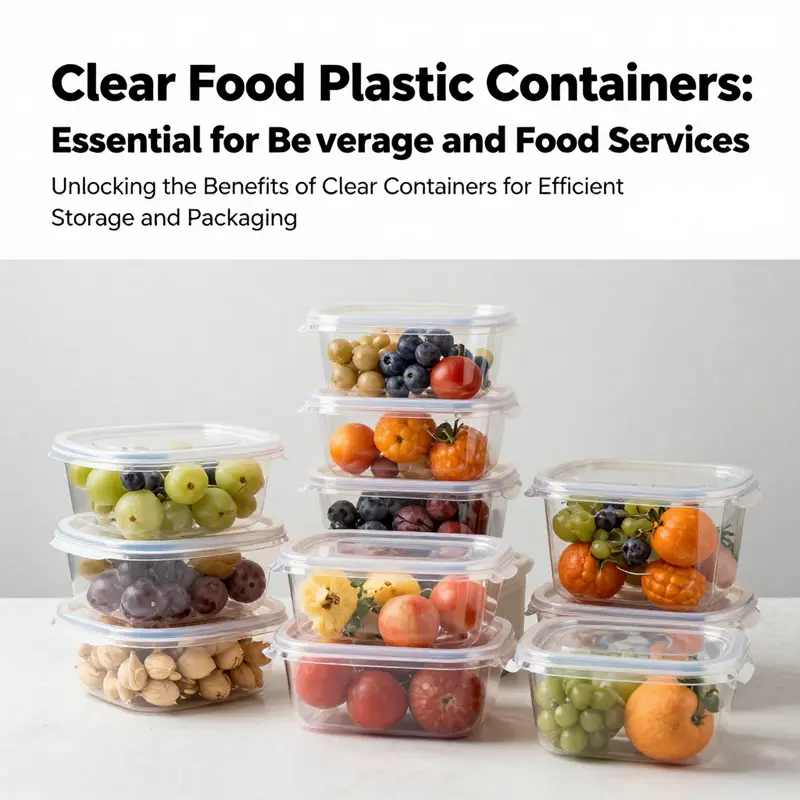
In the world of food and beverage services, clear food plastic containers have become a vital component for efficient storage and appealing presentation. Being transparent, lightweight, and versatile, these containers cater perfectly to the needs of bubble tea shops, restaurants, food trucks, catering services, event planners, and corporate procurement teams. In this exploration, you’ll uncover how these containers enhance food storage and packaging, delve into the materials that compose them, assess their environmental impact, discuss consumer safety and regulations, and finally, analyze current market trends and pricing strategies. Every chapter will illustrate how these containers can not only streamline operations but also elevate customer satisfaction in any food-related enterprise.
null
null
Transparent Structures: How Materials Shape Clarity, Safety, and Sustainability in Clear Food Plastic Containers
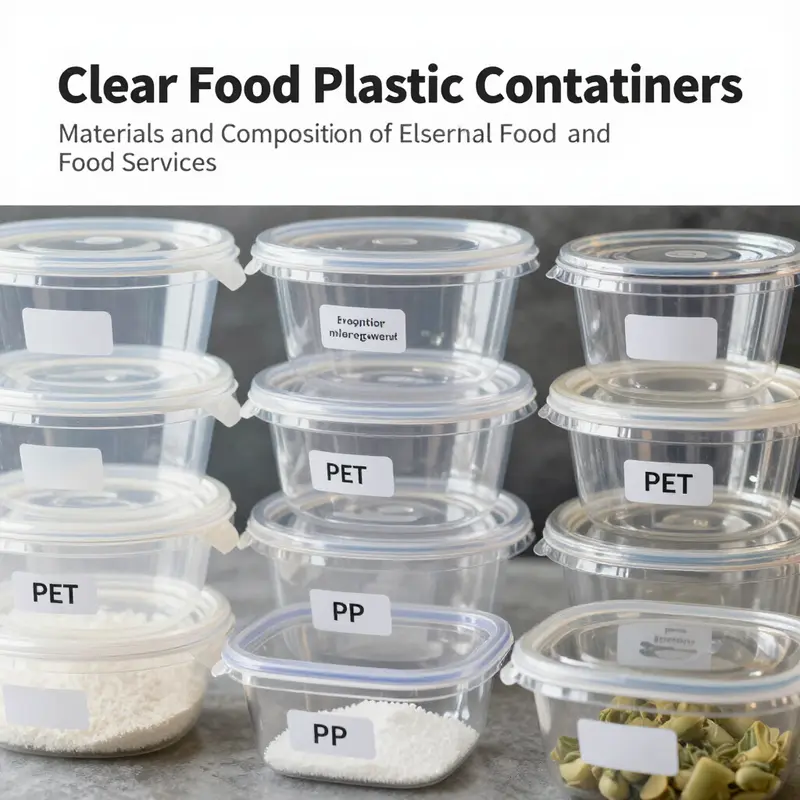
Clear food plastic containers do more than hold leftovers; they act as a material interface between meals and the people who store, transport, and heat them. The choice of resin, its molecular architecture, and the way it is processed determine not only how neat a display looks, but also how safe it is to use, how long it lasts, and how easily it can be recycled. In this chapter, we explore the core materials that give these containers their signature transparency and their practical consequences in kitchens of all scales. The conversation begins with the most common plastics and then threads through safety certifications, heat tolerance, and the stubborn questions surrounding sustainability. In doing so, the discussion stays grounded in the realities of everyday use, where a container must remain clear enough to identify its contents while resisting the wear and tear of repeated heating, washing, and stacking. The materials chosen are more than a list of properties; they are a strategic decision about reliability, cost, and environmental impact that affects deli counters, catering operations, and household pantries alike. For anyone who manages procurement or design thinking around storage, understanding these materials helps align expectations with performance and with long-term goals for waste reduction and safe food handling. Within this framework, the emphasis on transparency remains central because visual access to stored food is not merely aesthetic; it is a practical cue that informs inventory decisions, portion control, and meal planning. The most successful containers balance clear visibility with a resistance to fogging, cracking, or warping after exposure to heat and grease. They also balance the desire for a lightweight feel with the need for durable hinges, secure closures, and reliable lids that seal in freshness without complicating use. From the first selection to the final wash, material choices cascade into every step of the user experience, influencing safety, efficiency, and satisfaction. And because the story of these containers is also a story about waste and resource use, attention to material lineage matters. The industry has increasingly shifted toward food-grade polymers that meet strict regulatory scrutiny, with an emphasis on virgin materials to avoid contamination from recycled sources. Yet the conversation cannot ignore the growing demand for sustainability, including recyclable variants and the availability of biodegradable options for single-use applications. In practice, this means buyers weigh the logic of reuse against the convenience of disposability, always through the lens of health and safety. When we look at the core materials—PP, PS, PET, BOPS, and PVC—we see a spectrum of trade-offs that are worth understanding in depth before making a procurement decision. Polypropylene, or PP, is perhaps the most versatile in this group. Its heat resistance is a major strength, allowing many PP containers to be placed in microwaves without deforming. This makes PP an attractive choice for meal-prep boxes or containers intended for reheating. Its light weight and durability also contribute to lower shipping costs and reduced breakage in transit. Because PP can withstand higher temperatures, it is often favored in reusable or semi-reusable packaging configurations, where the container is expected to endure multiple cycles of use, wash, and reuse. In environments that demand frequent cleaning, the chemical stability of PP’s backbone supports repeated exposure to detergents and hot water. However, even with these advantages, PP is not a universal solution. In some instances, colorants or additives can alter clarity, and very high heat exposure over long periods can eventually lead to deformation or surface wear. The clarity of PP is generally excellent, but it can still become dulled if scratched or exposed to harsh cleaning regimens. Polystyrene, or PS, presents a different balance. Its high clarity and rigidity make it a preferred material for cold-to-room-temperature applications where a crisp, glass-like look is desirable. PS-based containers deliver an appealingly transparent presentation, which is valuable in deli display cases and cold meals where visual appeal can drive consumer choice. Yet PS has limitations. It tends to be more brittle than PP and is less tolerant of heat; prolonged exposure to microwave conditions is not recommended, and high-temperature storage can lead to warping or cracking. In settings where containers are subjected to frequent heating, the risk profile shifts away from PS toward materials with stronger heat resistance. PET, or polyethylene terephthalate, is another staple in clear packaging. PET excels in clarity and strength, delivering a transparent, light, and sturdy solution for single-use packaging, such as disposable salad bowls and takeaway receptacles. It travels well through cold chains, resisting impact and maintaining a clean appearance. But PET is not designed for high-heat applications. Its performance can deteriorate when exposed to hot foods or heated surfaces, which raises concerns about safety and odor transfer during reheating. This makes PET a strong candidate for cold storage and cold-serving products, but less suitable for containers intended for microwave reheating or long-term hot storage. A more advanced variant of PS, Biaxially Oriented Polystyrene, known as BOPS, offers enhanced strength and clarity relative to standard PS. The orientation process aligns the polymer molecules to improve stiffness and barrier properties, which can translate into more premium-looking clamshells and ready-to-eat packaging. The result is a crisp, attractive appearance that supports product visibility and presentation in retail or food-service displays. Nevertheless, BOPS shares some heat- and chemical-sensitivity concerns with PS, requiring careful design consideration when heat exposure is part of the intended use. PVC, though once common in food packaging, is increasingly restricted due to environmental and health concerns. When present in modern formulations, it is typically in highly controlled contexts and subject to regulatory scrutiny that limits its use in many markets. Its leaching profile and fire-retardant chemistries demand rigorous testing and certification, and many modern manufacturers phase PVC out of direct food-contact applications in favor of safer, more transparent alternatives. The safety framework surrounding these materials hinges on rigorous testing and certification. In the United States, many containers fall under food-contact regulations such as FDA 21 CFR 177.1520, which governs the safe direct contact of plastics with food and the conditions under which thermal exposure is permitted. This regulatory backbone helps ensure that the plastic composition and processing do not introduce harmful substances into the food chain during typical storage or reheating scenarios. A related concern in many listings is the emphasis on virgin material usage. The insistence on virgin resin, rather than recycled content, aims to preserve purity and reduce the risk of contaminants that could migrate into food. For buyers, this often translates into clear labeling and robust supplier assurances about material sourcing, batch traceability, and consistent quality across lots. From a sustainability standpoint, the landscape is evolving. Recyclable variants and more ecologically mindful design approaches are increasingly common, even as demand for single-use convenience persists. Some users seek biodegradable options like PLA for certain single-use applications, recognizing the lower carbon footprint associated with compostable or bio-based polymers. At the same time, reusable configurations—especially those combining tempered glass or high-quality, durable plastics—are considered more eco-friendly over time, despite higher upfront costs. In practice, this means a menu of choices where the best option depends on the context: volume of use, expected reheating practices, dishwasher or sterilization routines, and local recycling infrastructure. One practical challenge that often emerges in daily use is cloudiness. Over time, clear containers can develop a milky or foggy appearance due to microscopic scratches, mineral deposits from hard water, or subtle chemical interactions from repeated heat and grease exposure. The good news is that cloudiness is often reversible through straightforward cleaning methods. Gentle soaking in a mixture of vinegar and baking soda, followed by careful rinsing, helps to dissolve mineral buildup and restore visibility. It is important to avoid abrasive scrubbers that can scratch the surface and exacerbate clouding, and to wash at moderate temperatures aligned with the resin’s tolerance. This practical maintenance detail reinforces a broader point: the lifecycle of a clear container includes decisions at the point of purchase and ongoing care in the kitchen. Temperature dynamics play a crucial role as well. Prolonged exposure to high heat can cause warping, softening, or chemical interactions in lower-quality plastics. Even when a material is labeled microwave-safe, repeated cycles of heating and cooling can gradually degrade its performance, especially if the container has a thin wall, aggressive lubricants, or poorly sealed lids. In addition to physical changes, there is a continued emphasis on chemical safety when heated. Some materials are more likely to leach trace compounds under elevated temperatures, a concern that motivates the BPA-free standard and other regulatory assurances. BPA-free formulations have become a standard expectation for clear containers intended for direct contact with hot foods, and many manufacturers point to food-grade certifications to reassure buyers about safety across typical use scenarios. The procurement decision thus becomes a balance among several factors: clarity of material, mechanical durability, heat tolerance, compatibility with microwaves and dishwashers, and the broader environmental footprint of production and disposal. The supply chain reality reflects this complexity. Large-scale buyers often source in bulk, evaluating a matrix of specifications, certifications, and price points. In bulk contexts, the per-unit cost can be remarkably low, while still maintaining the necessary quality and safety standards. For those managing large inventories, the capacity to verify supplier certifications, track lot numbers, and confirm compliance with health and safety guidelines is as important as the visual appeal of a perfectly clear container. When it comes to the practicalities of procurement and assortment, it is helpful to see how the market frames choices. For instance, online wholesale platforms frequently present a wide range of clear containers intended for different uses, with variations in lid design, stackability, and closure mechanisms. For buyers who want a sense of scale and options without navigating a maze of product pages, a consolidated view of plastic packaging options can be a useful compass. This is where a well-curated category such as plastic packaging becomes a valuable resource for procurers and operators alike, guiding decisions about compatibility with existing lids, compatibility with stackable configurations, and the ability to standardize on a set of container sizes to streamline workflows. For readers navigating procurement, a practical step is to cross-check the chosen material with the intended application. For cold-storage and cold-serving needs, PET or PS may suffice, but for reheating, PP is often the safer route. For premium display containers with high-clarity needs, BOPS offers enhanced visibility and strength, while acknowledging its heat limitations. In every case, the policy of selecting food-grade, virgin-material containers with clear labeling and documented safety testing remains a baseline expectation. As this chapter moves toward practical implications, the emphasis on material selection should feel less like a list of trade-offs and more like a disciplined alignment of performance with purpose. The container you choose becomes part of a larger system that includes how food is prepared, displayed, stored, heated, washed, and recycled. A thoughtful approach to materials reduces the risk of defects, extends useful life, and helps ensure that the path from kitchen to consumer remains safe and efficient. For further reading about how these materials connect to broader packaging choices, see the plastic packaging category linked here. plastic-packaging. External references provide context for the breadth of options within the market, including supplier listings that illustrate the diversity of clear, microwaveable takeaway containers. External reference: https://www.alibaba.com/product-detail/Clear-Black-Rectangular-Microwaveable-Takeaway_1600492348871.html?spm=a2700.185507.0.0.3f9e6a7dRzYVtO
Clear Footprints: Rethinking the Sustainability of Transparent Food Containers in a Circular Economy
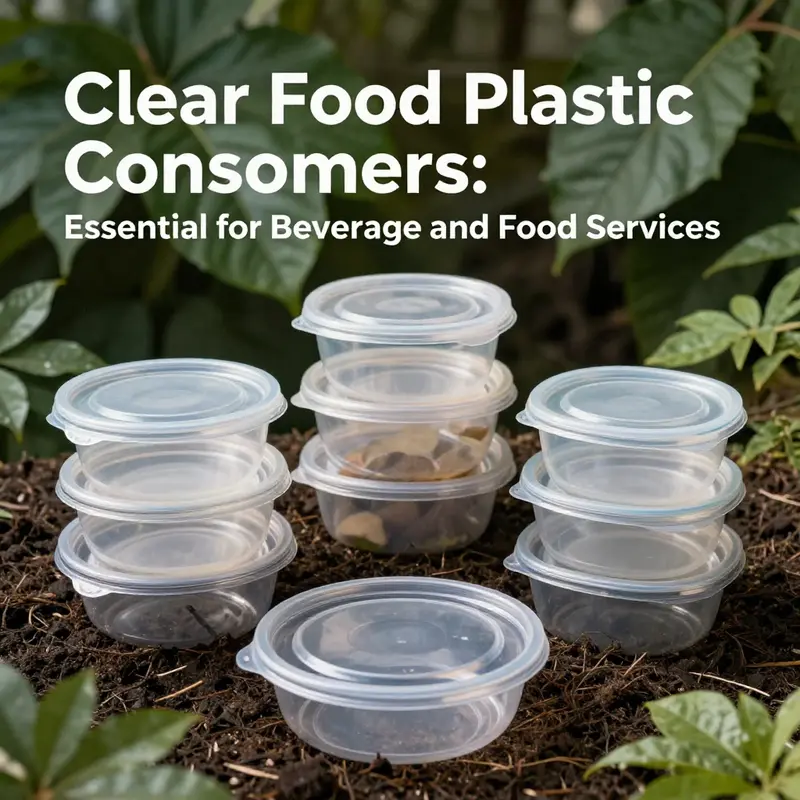
Transparency is a defining feature of clear food plastic containers. Their visibility guides decisions in kitchens and retail settings, but the ecological footprint of these containers depends on materials, collection systems, and end-of-life management. This chapter explores material choices, recycling realities, and the potential role of reusable options in moving toward a more circular economy. It argues for design that prioritizes disassembly, label clarity, and compatibility with existing infrastructure, while acknowledging the practical constraints of home kitchens and busy food-service operations. By examining lifecycle stages from sourcing to disposal, we highlight pathways that reduce waste without compromising safety or efficiency. The goal is to balance transparency with circularity through informed choices and system-level improvements.
Visible Safeguards: Navigating Safety Standards and Everyday Use of Clear Food Plastic Containers
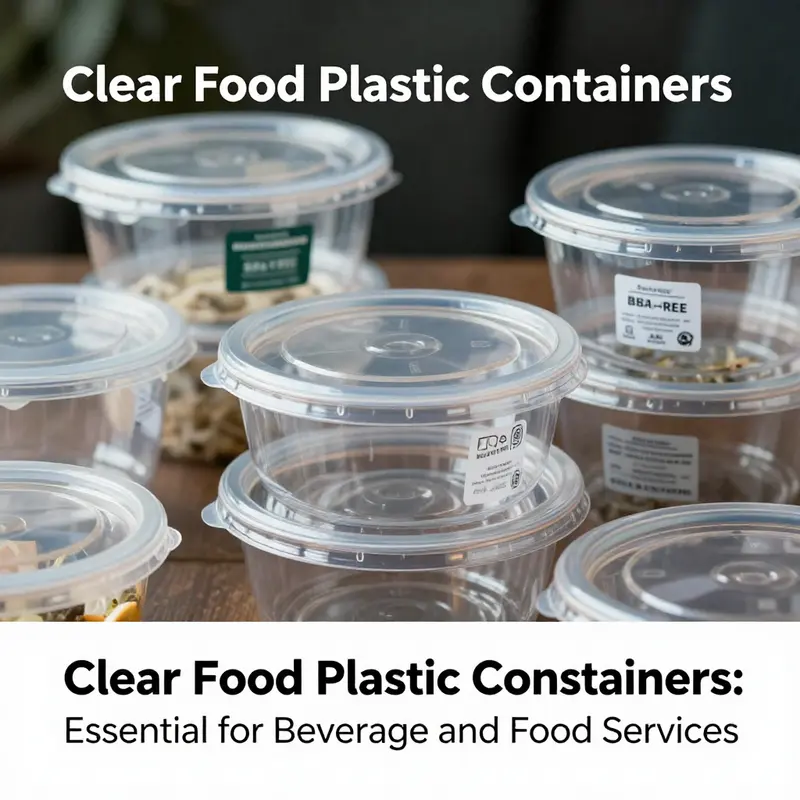
Clear food plastic containers hold a privileged place in kitchens that prize visibility, speed, and convenience. Their transparency makes it easy to identify leftovers, portion sizes, or prepped ingredients at a glance, which in turn supports portion control, inventory management, and streamlined service in both home and commercial settings. Yet with that visibility comes responsibility. The very idea of a container touching food—especially when heat, fats, or sauces are involved—requires a careful balance between practicality and safety. The chapter that follows unpacks how regulatory frameworks, material choices, and everyday-use practices intersect to govern what happens when clear plastic becomes a host for meals and moments, not merely a vessel for storage. It is a story of standards that protect health while still allowing the efficiencies that make clear containers so attractive in the first place. In doing so, it becomes clear that the value of transparency goes beyond aesthetics; it is a prompt to consider what is happening inside the plastic as much as what we can see on the outside. This is where policy, science, and kitchen habits converge.
From the US to the European Union, the guardians of consumer safety focus on one central question: can the container transfer substances into food under common use conditions? The answer hinges on the material type, the presence of additives, and the conditions of storage and heating. Plastics used for clear containers are most often polymers such as PET, HDPE, and PP. Each brings a different profile of clarity, strength, heat resistance, and compatibility with food. PET, celebrated for its high clarity and stiffness, is widely used for cold storage and non-heated servings. Yet when subjected to high temperatures, PET can warp or degrade, and its clear advantage can fade if reheating is forced. HDPE and PP, by contrast, are more forgiving when hot foods are involved; they tolerate higher temperatures better and are commonly chosen for microwavable or hot-fill applications. Even so, the labeling on a container is not just a marketing cue; it is a badge of tested suitability that should guide every use decision. Consumers who routinely reheat or store foods at elevated temperatures should pay particular attention to what the labeling says about microwave compatibility and maximum safe temperatures. The promise of convenience should not outpace the obligation to protect health and preserve flavor and texture.
The regulatory landscape—though complex—operates with a consistent aim: to minimize the transfer of potentially harmful substances from plastic into food. In the United States, this guardrail is provided by the Food and Drug Administration. The FDA specifies that plastics used in contact with food must be made from resins approved for such use, and that any substances added during manufacturing, including additives or monomers, do not migrate into food at levels that could pose a risk to health. This framework has practical implications. It helps explain why common clear plastics like PET, HDPE, and PP appear repeatedly in the market: they have established histories of safety when used within specified conditions. It also explains why some materials are treated with caution or avoided in certain applications. For example, while BPA has been a recurring concern in consumer debates, the current regulatory language places BPA-free designs within the mainstream, with many manufacturers opting for alternatives that meet safety criteria. The practical implication for the consumer is straightforward: seek containers that clearly identify their status as food-grade and verify that any additives used in the polymer or during processing have undergone appropriate safety evaluation.
Across the Atlantic, the European Union enforces a parallel, sometimes more stringent, framework through Regulation (EC) No 1935/2004 on materials and articles intended to come into contact with food. This regulation obliges all materials to be safe and to transfer no constituents to food in quantities that could endanger health or alter the food’s composition. The EU has also taken targeted steps to ban certain substances in food-contact materials, especially in products designed for children, underscoring a precautionary approach. The unified perspective here is that a clear plastic container should not only look right on a shelf but should also be proven safe under the conditions in which people use it. The two regulatory ecosystems, while not identical, share a common thread: they translate laboratory tests into everyday assurances. For end users, this means that a container labeled with recognized safety credentials represents much more than a label; it represents a vetted boundary that helps ensure a meal does not become a health concern just because it was stored for a night or heated for a few minutes.
The physical durability of clear containers is another pillar of safety. A container’s ability to withstand handling, cleaning, and temperature swings without cracking, warping, or shedding particles is essential to safe use. PET, in particular, is prized for its clarity and rigidity but is not always the best match for microwave use, where heat resistance may be limited. HDPE and PP, on the other hand, offer superior resilience to heat and repeated warm–cool cycles, which is why many hot-food storage and reheating systems favor these materials. This distinction is not merely academic. It informs day-to-day behavior: when in doubt about reheating, choose a container that is explicitly labeled as microwave-safe, and avoid using containers that show any signs of cracking, clouding, or warping. Cloudiness itself is a notable practical concern. It can arise from micro-scratches in the plastic, mineral deposits from hard water, or cumulative chemical exposure from repeated heating and greases. The good news is that cloudiness is often reversible through careful cleaning, provided the container is not structurally compromised. Soaking in a gentle mixture of vinegar and baking soda, followed by a rinse with warm water and a nonabrasive sponge, can restore clarity in many cases. Abrasive scrubbers and high-heat dishwashing cycles should be avoided for scratched or aged containers, as they can accelerate degradation and potentially increase the risk of off-flavors or material leaching. These practical care steps align with the broader safety ethos: protect the integrity of the container, and you protect the food inside.
Sustainability considerations also intersect with safety and regulation. Biodegradable options like polylactic acid (PLA) offer a single-use alternative derived from renewable feedstocks, which may align with environmental goals but require careful attention to end-of-life behavior and suitability for heat. For longer-term use, reusable options—such as tempered glass or robust high-quality plastics designed for repeated cycling—often emerge as the safer, more eco-conscious choice over time, even when their upfront cost is higher. The decision becomes a balance between the safety profile of the material, its performance under intended conditions, and the broader environmental footprint of use and disposal. In practice, this means thinking not only about the moment of storage but about what happens when the container is washed, re-filled, transported, and eventually discarded. Transparency in material composition and a clear understanding of the container’s lifecycle greatly aid this decision, enabling kitchens to pair performance with responsibility.
From a consumer guidance perspective, the simplest and most effective rule is to look for containers labeled as food-grade and to pay attention to the resin identification code on the packaging. Codes #2 (HDPE), #4 (LDPE), and #5 (PP) are widely regarded as safer choices for a broad range of food storage scenarios, while recognizing that context matters. For example, some clear containers are marketed for cold storage but not for heating; others are designed for high-heat applications. It is prudent to avoid using clear plastic containers for fatty or highly acidic foods at high temperatures unless the manufacturer’s guidelines explicitly support such use. Containers should be inspected for any signs of wear, including cracks, clouding, or brittle edges, and should be replaced when such signs appear. And when it comes to environmental impact, reusable options typically offer the most sustainable path when used consistently over time. Single-use containers, including some PLA-made varieties, may appeal for certain scenarios but may not match the durability required for repeated cycles in a busy kitchen.
For readers seeking a broader sense of how packaging materials fit into the larger ecosystem of food safety and supply chains, a deeper look into the packaging category can provide useful context. See the plastic packaging category for discussions that connect the technical properties of polymers to the practical choices faced by businesses and households alike. This connection helps bridge the gap between technical standards and everyday practice, illustrating how a durable, safe, and transparent container supports both efficiency and protection of products from deli counters to home refrigerators. plastic packaging category
The chapter’s recurring message is that safety is not a single checkmark but a continuous practice. It begins with material science—understanding what a container is made of and how that material behaves under heat, aging, and repeated cleaning. It continues with regulation—recognizing that agencies in different regions translate laboratory findings into practical rules that govern what can be sold and used for food contact. And it ends with user behavior—how we handle, store, reheat, and clean containers to preserve both safety and performance. The visible window that clear containers provide becomes a reminder that transparency has responsibilities, too. When a consumer sees through the plastic, they also glimpse the unseen journey from resin to regulation to reusable habit. The ultimate aim is not merely pristine clarity but a safe, reliable experience at every step—from storage in the fridge to a quick reheat in a busy kitchen. This is the practical backbone of trust in food packaging and a useful reminder that the simplest choices—opt for food-grade labeling, follow heating guidelines, replace worn containers, and choose materials aligned with the intended use—make a measurable difference in health and quality.
For readers needing quick, concrete references, the U.S. Food and Drug Administration’s official page on food contact substances offers authoritative guidance on what counts as safe for contact with food and why certain materials are preferred in different applications. This resource complements the practical advice offered here by anchoring everyday decisions in established standards. See the FDA’s guidance for food-contact materials to learn more about the testing, labeling, and compliance expectations that shape how clear plastic containers are designed and marketed for food use. https://www.fda.gov/food/food-contact-materials
null
null
Final thoughts
Clear food plastic containers are not just a commodity—they are essential tools that can significantly enhance the efficiency and appeal of food services. By utilizing these containers, businesses can benefit from improved storage practices, streamlined operations, and the ability to present their products attractively. Understanding the composition and safety regulations of these containers highlights their role in ensuring consumer protection while the focus on sustainability opens avenues for responsible practices in the industry. Keeping an eye on market trends and pricing can help businesses make informed decisions that ultimately enhance their offerings and customer satisfaction. Embrace clear food plastic containers as an integral part of your food service strategy to stay competitive in a rapidly evolving market.