

The ban on single-use plastic food containers in Sens, France marks a pivotal shift towards environmental responsibility in the food service industry. As businesses grapple with legislative changes, understanding the implications of such regulations is crucial. This article delves into the impact of the ban, how consumer behavior is adapting, innovations in reusable solutions, and the challenges of enforcing these new standards. By exploring these aspects, we can appreciate the comprehensive changes taking place and how they affect restaurants, beverage chains, and event services in Sens.
Tracing the Quiet Ripple: How Sens Fits Within France’s Plastic Packaging Awakening

In the shadow of France’s sweeping policy shift, Sens sits at a crossroads where national ambition meets local daily life. The country’s 2020 Anti-W Waste and Circular Economy Law set a bold course: a phased reduction of single-use plastics and other disposable packaging, with a long-range aim of recyclable or reusable packaging by 2025 and a zero-waste society by 2040. The law that took effect in 2021 targeted on-site meals in venues serving twenty or more customers, aiming to curb the volume of disposable boxes, cups, and cutlery that once cluttered streets and waterways. In practice, the ambition translates into a crafted choreography of regulation, enforcement, and innovation. Enforcement is clear but measured; fines can reach up to €1,500 for violations, yet the initial years emphasized guidance and education to ease the transition. The overarching purpose remains straightforward: shift the system from disposable convenience toward reusable practice, with the hospitality sector a pivotal arena for change. The European Union’s Single-Use Plastics Directive forms a broader backdrop, nudging member states toward extended producer responsibility and deposit-return schemes that stretch beyond national borders into everyday French life. Sens, a city with its own cadence of markets, cafés, and local governance, is not exempt from this momentum. Yet the public record on Sens-specific bans or regulations remains quiet. There is, as of now, no publicly documented, city-level decree in Sens that mirrors the sweeping national ban. That absence matters. It means the town’s experience of the policy is less about a city’s dramatic policy act and more about how nationwide expectations are translated into local practices—how restaurants, residents, and municipal services conceive, test, and refine logistics around packaging, reuse, and cleanliness. The story of Sens, then, is not a loud proclamation but a patient adaptation inside a national framework that already places the town within a continental march toward circularity. When researchers, journalists, or curious residents look for a Sens-specific ban, they are confronted with a broader reality: local administrations usually implement within the national scaffolding, rather than erecting parallel structures. If Sens has any local measures related to plastic packaging, they would likely slot into the national policy rather than stand as isolated ordinances. The prudent path for anyone seeking concrete local rules is to consult the City of Sens official site and to reach out directly to municipal authorities for the latest guidance. In practice, this means looking for official communications, municipal decrees, or council notes that translate national targets into city-grade actions—be it in procurement, restaurant licensing, or community recycling programs. For researchers, the absence of a Sens-specific ban is itself informative. It suggests a landscape where the push toward reuse is not a sensational local confrontation but a gradual realignment of habits, supply chains, and service models. It also underscores the importance of monitoring how national targets proliferate into street-level realities: the visible signs of change in Sens may be subtle—new guidance on waste sorting, a pilot project in a handful of restaurants, or community programs that promote container returns rather than disposable waste, rather than a declarative local ban. This quiet transition is, in many ways, the most revealing part of the policy’s impact. It captures the practical engineering of change—how distributors adapt, how venues redesign kitchens, and how customers adjust to different expectations when they dine in or take away. The absence of a Sens-specific ban also opens room for creativity in the city’s hospitality sector. In a country with strong café and bistro cultures, the shift toward reusable systems often arises through partnerships rather than coercion. Some establishments contemplate collaboration with third-party services that specialize in reusable dishware logistics, creating a closed loop that ensures containers are collected, cleaned, and sanitized to rigorous health standards before returning to service. Others experiment with deposit systems, inviting customers to return containers in exchange for a refund or credit. These models hinge on trust, convenience, and efficiency. They require robust infrastructure: reliable washing facilities, data-driven tracking, and clear customer communication so that the return process feels simple rather than burdensome. For Sens’s residents who enjoy the town’s everyday conviviality—portraits of local life that revolve around small eateries, markets, and social spaces—the evolution might be less dramatic than a new law and more about new routines. A customer who brings a personal container, for instance, is not merely avoiding waste; they contribute to a broader social practice of responsibility, signaling a shared value rather than a personal preference. Yet the transition also faces genuine hurdles. Establishments may worry about the costs of upfront investments in reusable systems, the risks of contamination or mismanagement, and the real-world complexities of a busy dining service that must balance speed with safety. Even with a generous educational approach from authorities in the first year, restaurants must contend with the logistics of return, cleaning, and tracking—functions that demand reliable partnerships, staff training, and customer cooperation. Sens’s local governance might respond with supportive measures: guidelines that facilitate recycling and reusables, pilot programs that test different container return schemes, or incentives for venues that adopt sustainable packaging and service practices. The practical questions become more acute when considering the town’s tourism and seasonal fluctuations. If visitors rely on take-away meals during peak hours or festivals, the system must work smoothly under pressure. The ideal outcome is a sustainable triangle: accessible reuse options for visitors and residents, transparent and enforceable standards, and a business ecosystem that sees reuse not as a burden but as an opportunity to differentiate through responsible service. The national frame helps to anchor these local efforts, but real progress in Sens will reflect the town’s ability to translate policy into practice in a way that resonates with daily life. The broader narrative also invites attention to alternatives that move beyond single-use plastics while honoring the town’s culinary culture. Paper-based and bagasse or other plant-fiber packaging can serve as transitional substitutes, offering compostable or reusable pathways that align with the law’s intent without sacrificing service quality. In this space, the potential for interesting dialogue emerges between municipal authorities, restaurateurs, and residents. A common thread links these conversations: the challenge of coordinating materials, waste streams, and consumer behavior into a coherent system. Where a Sensian diner once offered a quick plastic container for a hot sandwich, the new equilibrium asks whether that meal can be presented in a reusable vessel or a durable, returnable one. If a diner orders a salad to go, might the vendor provide a sturdy, washable container that will be collected and returned through a simple, customer-friendly process? These questions, when addressed, can unlock efficiencies that benefit not only the environment but also the town’s economy. They can spur local innovation—new service models, refined logistics, and perhaps even partnerships with regional networks seeking to reduce packaging waste across multiple towns. The public interest in Sens’s local outcome must be framed by a clear understanding of national expectations. The Plan for the Reduction of Plastic Packaging, a national blueprint, is a useful reference for any city attempting to calibrate its path within the EU framework. For readers seeking more detailed policy context, the government’s overview provides a longitudinal view of targets, milestones, and methods for achieving higher recyclability and reuse across packaging streams. It is a reminder that Sens is part of a broader movement, not an isolated experiment. In practical terms, the chapter’s takeaway for Sens is this: even without a citywide ban, the national policy acts as a catalyst that can reshape how meals are packaged, served, and disposed of. The town’s future policies, should they emerge, will likely emphasize collaboration and logistics—how to collect reusable containers, how to sanitize them safely, and how to maintain hygiene while keeping service fast and affordable. The internal shift may be visible in the design of take-away options. A restaurant in Sens might experiment with a compact, durable system that supports quick turnover, clean washing cycles, and customer incentives for participation. It can reimagine the “to go” experience by weaving together in-house reuse and third-party logistics in a way that preserves quality, reduces waste, and invites customers to become part of a shared sustainability project rather than passive observers of a changing policy. For those who want to understand where to seek authoritative information about Sens specifically, the City of Sens Official Website offers the best starting point, along with direct inquiries to municipal departments responsible for waste, environment, and commerce. The absence of a published Sens-specific ban in public records does not undermine the seriousness of the national agenda; it highlights instead a local playground where collaboration can shape practical outcomes. In this sense, Sens’s path toward sustainable eating experiences may become a model of how towns translate ambitious policy into everyday life—by balancing taste, practicality, and responsibility. The conversation about plastic packaging in Sens will likely continue to unfold as data accumulates on compliance, consumer behavior, and the performance of reusable systems. The town’s experience will also inform neighboring municipalities seeking to collaborate on shared waste streams, shared logistics, and joint educational campaigns. As France and Europe press forward, Sens may gradually reveal more of its own version of the policy’s impact—quietly changing the way people eat, and the way a town talks about waste, one meal at a time. External reference: Plan for the Reduction of Plastic Packaging remains a useful lens for understanding the direction of policy, while local inquiries anchor the narrative in Sens’s own governance and daily life. For more detailed policy context, see the official national framework at https://www.gouvernement.fr/en/plan-for-the-reduction-of-plastic-packaging. Meanwhile, readers curious about tangible packaging alternatives that could align with Sens’s evolving practices may explore options such as durable, reusable or compostable take-away containers. An example of a practical alternative in the broader packaging landscape is the use of reusable, returnable vessel options and paper-based or plant-fiber packaging that can reduce reliance on traditional plastics while preserving the convenience that customers expect. A sample approach to durable packaging in a local setting might involve a simple, customer-friendly return system, clear labeling of containers, and a reliable sanitation protocol that satisfies health standards. This is not merely a technical transformation but a cultural one, inviting customers to participate in a shared system that values cleanliness, efficiency, and environmental stewardship. In exploring these possibilities, it is worth noting a tangible, implementable option within the hospitality supply chain: the shift toward take-away packaging that emphasizes compostable materials or recyclable paper-based alternatives. The town could pilot a small set of venues that test these solutions, measure customer response, and scale successful models across the city. Such a path respects Sens’s local identity while embracing the national directive’s aspirations. For residents and visitors alike, the transition promises not just a reduction in waste but an invitation to participate in a broader movement toward sustainability. The interplay of policy, practice, and culture makes Sens a microcosm of the national and European project: a place where meals become opportunities to reimagine consumption, recycling, and reuse as everyday expectations rather than extraordinary exceptions. In the end, the story of Sens is one of continuity and change—continuity in its local charm and social texture, and change in the packaging choices that sustain it. As policies evolve and communities adapt, Sens’s experience will contribute to a larger conversation about how cities can nurture sustainable habits without losing the sense of place that makes them unique. The question remains not simply whether a ban exists in Sens, but how Sens chooses to live with and beyond the national framework, guiding its people toward a future where every meal reflects a commitment to reducing waste, protecting resources, and keeping the town’s life-affirming pace intact. Internal link: for a concrete example of the packaging alternatives discussed, see this take-away option: takeaway kraft paper octagonal box with lid.
From Convenience to Circularity: Sens’s Response to France’s Plastic Packaging Ban
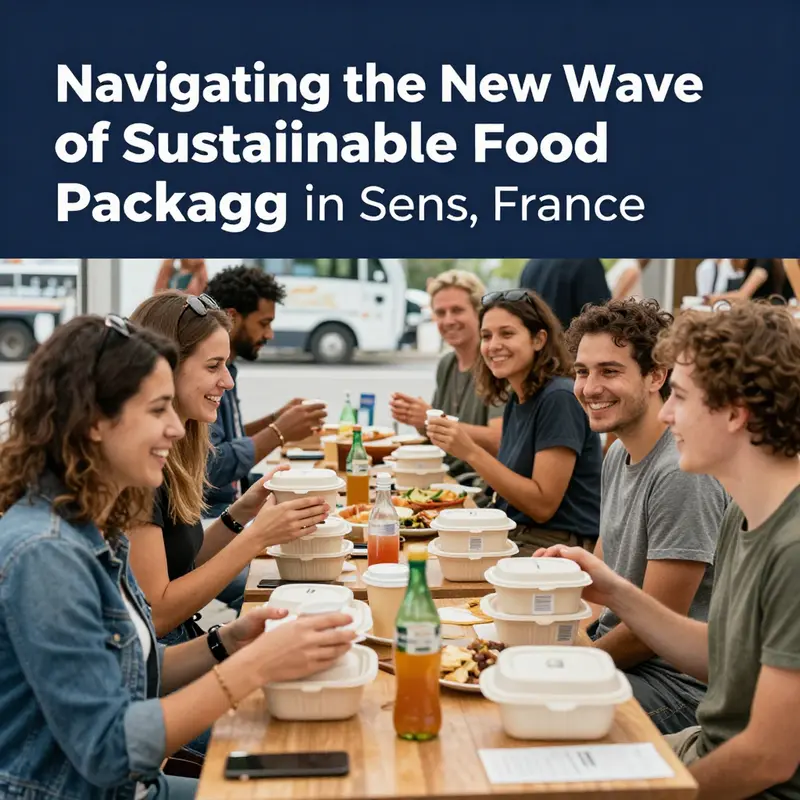
In Sens, as in much of France, the regulatory push against disposable plastic food containers operates as more than a policy move. It acts like a catalyst for a social experiment, testing how a community shifts everyday routines toward reuse and responsibility. The 2020 Loi Agec created a national frame that bans single-use packaging used for meals served on-site at venues with twenty or more customers. The aim is clear and ambitious: to phase out disposable plastic, paperboard, and other non-reusable materials for items such as take-away boxes, pizza trays, burger containers, and even plastic cutlery and cups. Enforcement is strict, with fines up to €1,500 for violators, and the first year emphasized education over punishment. In Sens, local restaurants and cafes confronted a dual pressure: overhaul their service models and preserve the ease and speed customers expect when they dine out. The outcome, so far, is a blend of hesitation, ingenuity, and gradual normalization as operators and patrons learn a new rhythm together.
Across France, consumer sentiment has been shifting alongside policy. Environmental awareness has grown beyond abstract worry to tangible concern about litter in streets and rivers, and about the broader health of ecosystems. In Sens, residents—like many others—are likely influenced by this rising consciousness, even if they differ in how deeply they connect their daily choices to long-term environmental outcomes. The regional texture matters: urban centers may move more quickly with reusable dishware and on-site washing infrastructure, while smaller towns rely on coordinated networks of venues, waste services, and municipal programs to make reuse practical. Nevertheless, the mood is converging toward a shared expectation: meals should be served in a way that minimizes waste without sacrificing convenience.
What changes in purchasing decisions does this regulatory shift stimulate? The broader studies on consumer behavior signaling a move away from single-use plastics point to several converging factors. People are increasingly drawn to packaging that is designed for reuse, durability, and easy maintenance. They also want packaging that can be trusted to be clean, safe, and simple to return or reuse within a trusted system. In Sens, as in other places, availability and convenience remain decisive. When a restaurant offers a clear, well-signaled option to borrow, return, or exchange containers, customers are more willing to adjust their routines. Conversely, if operations feel cumbersome, patrons revert to familiar habits or seek alternatives outside the local network. This dynamic underscores a fundamental truth: the success of a ban rests not only on prohibition but on making reuse seamless, economical, and socially accepted.
In practice, many Sens-based venues have reimagined the dining experience by integrating reusable systems into their core operations. The most visible changes come from establishments that operate with on-site consumption and a structured return flow. For these venues, the path to compliance has involved retooling front-of-house processes, investing in durable dishware, and coordinating with partners who manage cleaning, sanitization, and logistics. Third-party reusable-dish services—though not named here—offer a plausible model by handling the end-to-end lifecycle of containers, from washing to redistribution. Such arrangements reduce the burden on a single restaurant and help create a more predictable cycle of use and reuse. In conversations with operators in similar markets, the appeal often lies in the ability to present customers with a credible, low-friction alternative to disposable packaging, while also delivering the reassurance that each container will be properly cleaned and sanitized before its next use.
A crucial feature of the new culture around dining in Sens is the alignment of consumer expectations with system reliability. For a switch to work, customers must understand how the reuse system operates and trust that it is easy to access, hygienic, and worth the effort. Signage, staff training, and intuitive workflows are as important as the physical equipment. In the best cases, the interaction becomes almost invisible: customers place their orders, opt into a reusable option, and then either return the container at the end of the meal or leave it with staff who manage the pickup. When this flow is smooth, the initial friction of changing habits fades, and reuse starts to feel like a natural extension of dining out rather than a burden. Some restaurateurs have encouraged participation through small, visible incentives, such as deposits or loyalty-like credits, which transform the act of returning a container into a payback experience rather than a chore. The psychology of reward—consumers supporting a local circular economy and seeing tangible gains—can be surprisingly powerful in normalizing reuse, especially when reinforced by clear communication about the environmental benefits and the cost savings that accrue at scale.
The consumer experience, however, is still evolving, and Sens provides a telling example of the balance between aspiration and practicality. The analysis of broader trends notes that information availability shapes decisions as much as convenience. People notice when packaging is recyclable or reusable, but they also notice when options are scarce or when the process feels opaque. Accessibility, price, and speed remain decisive. This means that a critical period for Sens lies ahead: ensuring that the supply of reusable containers matches the demand peak times—lunchtime rushes, weekend crowds, and the seasonal influx of visitors to the town. If cafés and eateries can coordinate, the market can move toward a stable equilibrium where reusable options are the path of least resistance, not the path of least convenience. The reconfiguration of supply chains around reusable dishware is a visible signal that the local economy is adapting to the circular economy framework envisioned by the national policy.
As Sens adjusts, a consequential question concerns the scope of the ban and the potential expansion to takeout orders. The current regulation targets meals served on-site at larger venues, leaving takeout policies for future discussion. This creates a two-layer dynamic in consumer behavior: students and workers who eat inside a café may encounter a different policy than those who order lunch to go. In Sens, this can influence why customers choose particular venues or why they might prefer places that provide a well-defined reusable-system experience, even if they also offer takeout. Operators anticipating expansion are exploring how to scale reusable-dish programs without compromising service speed for takeout or delivery. The tension between on-site dining norms and off-site convenience remains a central design problem for the ecosystem of Sens’s eateries.
From a business perspective, the move toward reuse is both a challenge and an opportunity. The upfront costs of durable dishware, washing infrastructure, and logistics are non-trivial, especially for small independent venues. Yet, the long-run benefits can include reduced waste-management fees, stronger customer loyalty, and a distinctive value proposition in a market where sustainability increasingly informs brand identity. The literature suggests that when consumers perceive tangible environmental benefits and see clear demonstrations of responsibility, they adjust their expectations and become more forgiving of small frictions in service. In Sens, as in other communities undergoing the transition, the most resilient businesses are those that frame reuse as a service innovation rather than a compliance burden. They emphasize simplicity, reliability, and a pleasant dining experience that aligns with contemporary concerns about plastic pollution and resource stewardship. In that sense, the ban becomes an invitation to rethink not only packaging, but the very rhythm of a visit to a café or restaurant—how a meal is served, how it is consumed, and how the container returns to circulation.
The social dimension of this shift should not be underestimated. For many consumers, adopting reusable dishware is as much about identity as efficiency. Being seen as someone who supports a local circular economy can become part of a person’s social signaling, especially among younger cohorts who view sustainable practices as a core expectation of responsible citizenship. In Sens, where local culture and a sense of place matter, the narrative around dining decisions can be reinforced through community conversations, school programs, and events that celebrate waste reduction and reuse. When residents see neighbors participating, the behavior becomes contagious. The regulatory framework thus interacts with social norms to create an environment where sustainable choices are perceived as normal, accessible, and even preferable. This normalization is critical to achieving the long-term vision of a zero-waste society by 2040, a frame that France and the European Union have advanced through policy and practice.
Ultimately, consumer behavior in Sens echoes a broader arc identified by national and international studies: the shift from disposable convenience to durable responsibility. The available data—though not always region-specific—highlight how regulations can drive brands to diversify packaging materials, how retailers can innovate around logistics and returns, and how consumers adjust their routines to prioritize reuse when the experience is straightforward and rewarding. The local nuance matters: Sens’s proximity to regional suppliers, its municipal waste infrastructure, and the willingness of local authorities to support reusable systems all shape how quickly and smoothly the transition occurs. For researchers and policymakers, Sens offers a microcosm of the larger European push toward circular economy practices. It demonstrates that regulations can catalyze meaningful shifts in consumer routines when they are paired with practical delivery mechanisms, visible benefits, and a community-centered narrative that makes sustainable choices feel personal and doable.
For readers seeking a broader regulatory frame and official guidance on packaging and the French approach to reducing single-use plastics, the government’s information page provides essential context and updates on ongoing initiatives. This resource helps illuminate why Sens is moving in this direction and how the national strategy translates into local action. In this sense, consumer behavior is not simply a reaction to a rule; it is part of a collaborative, evolving system in which residents, businesses, and authorities co-create a more circular urban life. Readers who want to explore practical design choices, kitchen workflows, or consumer education strategies may find the linked internal resource offering practical examples of reusable food packaging formats helpful. For a broader regulatory frame, see the French government’s packaging information page: https://www.gouvernement.fr/info/les-emballages-et-le-packaging. The insights from Sens thus sit within a wider trajectory toward more sustainable consumption, where everyday meals become opportunities to reinforce values, reinforce trust, and reinforce the idea that the best meals are the ones that keep giving back to the community and the planet.
Note: The evidence base for Sens specifically remains limited, as regional case studies are sparse. However, the pattern of consumer adaptation observed in comparable contexts suggests that triumphs and trials in Sens will likely hinge on how well businesses can embed reuse into routine, how clearly the benefits are communicated, and how steadily the system scales to meet demand. The chapter that follows will continue to examine these dynamics, focusing on the practicalities of implementing reuse at scale and the lived experiences of customers as they navigate this transition in a town that embodies the balance between heritage and modern environmental ambition. Meanwhile, interested readers can explore related packaging options and eco-friendly design approaches through this internal link to a representative category of durable, reusable takeaway solutions: food-grade take-away bowls with lids.
Sens’s Circular Kitchen: Pioneering Reusable Food Container Innovation Within France’s Plastic-Reduction Frontier

In Sens, a modest town along the Yonne, the transition from throwaway to reusable packaging has become more than a regulation; it is a daily experiment. In France, sweeping reforms under the 2020 Loi Agec have pressed restaurants and cafes to rethink every container that carries a meal for on-site service. The aim is straightforward yet ambitious: to shrink the mountain of packaging waste emitted by the fast-food and casual dining sector, and to rewire a system that previously treated disposable ware as an afterthought. Sens has embraced this shift with a particular intensity, not because it is more virtuous than other places, but because its local networks—manufacturers, designers, environmental groups, and city authorities—have learned to translate policy into practical, scalable solutions. The city’s experiments illuminate how a national push to curb plastic pollution can crystallize into on-the-ground innovation that redefines what a restaurant can be in the age of circular economy.
A central thread in Sens’ evolving story is material choice. Reusable containers here increasingly feature tempered borosilicate glass and high-grade 18/8 stainless steel. These materials are not just robust; they carry a philosophy of safety and longevity. They stand up to the day-to-day rigors of a busy kitchen—and, crucially, to the ritual of cleaning and sanitizing that follows service. Glass and stainless steel are non-porous, non-reactive, and remarkably versatile. They tolerate oven, microwave, and freezer cycles, and they survive repeated cycles in a dishwasher without losing their integrity. In the long run, they reduce health concerns about absorbed flavors or stains that can accompany porous plastics. From a lifecycle perspective, glass and steel are highly recyclable and, when designed with thought, can be repaired or reconditioned rather than discarded. This aligns with Sens’ broader aim: to replace single-use ware with durable, repairable systems that keep materials circulating within a local economy rather than letting them leak into the waste stream.
Yet the shift from throwaway to returnable systems cannot rely on materials alone. It demands a reimagining of supply chains and service models. In Sens, collaboration has become the central instrument driving change. Local manufacturers team with designers who understand both the realities of kitchen throughput and the consumer’s desire for convenience. Environmental organizations contribute expertise on toxicology, chemical safety, and end-of-life options. Together, they map out a practical logic for reusable ware: what to produce, how to collect it after a meal, how to clean it to the required sanitary standard, and how to ensure it returns to kitchens quickly enough to avoid service delays. The efforts echo a longer European and global pattern toward safer, chemical-free systems. The SNA-BPA initiative, launched more than a decade ago, plays a quiet but important role in this ecosystem by offering guidance on replacing harmful chemicals like bisphenol A with safer alternatives. Although the project’s primary audience is broader than a single city, the principles it champions—transparency, chemical safety, and a workable path to chemical-free reuse—resonate with Sens’ approach. The project’s resources, available in multiple languages, provide a backbone for restaurants seeking to transition away from risky packaging while preserving performance.
The operational logic of Sens’ reuse systems reveals a blend of entrepreneurship and public commitment. Restaurants and cafes in the city have started to adopt deposit models, where customers pay a small refundable amount when selecting a reusable container and receive a refund upon returning it. Others partner with specialized logistic services that manage the flow of containers—from washing lines to redistribution back into the dining space. The practical benefits are tangible: containers that last longer than typical takeout ware, ease of cleaning protocols that fit into peak-hour workflows, and a visible signal to customers that sustainability is now part of the dining experience rather than an afterthought. This is not merely a sustainability experiment; it is a service design challenge. It requires careful calibration of throughput, shelf life, and return rates so that the system remains a net positive for operators without imposing excessive complexity on customers. A central element of these systems is standardization—defining compatible dimensions, lids, and stacking behavior so that different venues can share a common ecosystem. When standardization succeeds, a city can amortize the cost of the reusable fleet across many operators, and the user experience becomes simpler: a familiar container, a familiar process, and a familiar sense that one’s meal participates in a larger circular economy, not in a disposable supply chain.
From a consumer perspective, the change requires a shift in habit that is increasingly normalized. Bringing one’s own container to a cafe or restaurant is not yet universal in Sens, but it is becoming more common as awareness grows and as places offer convenient return options. Training and branding matter here; customers must feel that returning a container is as easy as paying for a coffee. The social contract in Sens emphasizes responsibility as collective practice: a pledge that the meal you enjoy is not a one-off purchase but a contribution to the city’s environmental goals. The result is an experience that preserves the sensory pleasure of sharing a meal while reframing waste as a resource. For business, the implications go beyond compliance. Reusable systems can sharpen a venue’s identity, differentiating it through responsible, visible practices. They invite partnerships with civic groups, universities, and local artisans in ways that extend beyond the restaurant floor, into the city’s public spaces, farmers markets, and school programs. The potential is to transform packaging from an afterthought into a touchpoint for education and community engagement.
What makes Sens’ trajectory particularly instructive is how it threads together policy, design, and daily life. The 2020 law, enforced with a mix of education and penalties, sends a message about the seriousness of waste reduction. Yet the real engine is the everyday workflow: the design choices in a container, the choreography of return and cleaning, the scheduling of pickups, and the incentives that sustain participation. That engine does not run on rhetoric alone. It runs on data, pilot programs, and the willingness of small businesses to experiment with new repertoires of packaging. In Sens, the dialogue around packaging innovations is not an abstract environmental debate; it is a pragmatic inquiry into how to serve hot meals in a way that respects both public health standards and resource limits. The city’s actions also reflect a broader EU context. While France has moved ahead of several peers, the Single-Use Plastics Directive continues to press member states toward more sweeping measures, including extended producer responsibility and deposit-return schemes that could further incentivize reuse. Sens demonstrates how a local initiative can prefigure and inform national policy, offering a proving ground for scalable ideas that can later be adapted across regions with different climates, urban densities, and customer frequencies.
In this sense, Sens operates as a micro-lab within a continental project to reconfigure the material life of food. The innovations here—beyond the explicit choice of materials—are the social and logistical arrangements that make reuse practical and appealing. They are the design decisions that lower the barriers to participation, the partnerships that convert artisanal sensibilities into scalable solutions, and the governance arrangements that keep a reusable system alive amid fluctuations in demand and supply. The lessons extend well beyond the borders of a single city. They point to a future where a restaurant is not a single node in a disposable chain but a collaborator in a shared, circular infrastructure. If France is to reach its long-term zero-waste ambitions by 2040, Sens offers a compelling blueprint: start with durable, safe materials; build a collaborative network across makers, service providers, and civil society; normalize reuse through deposits and convenient return options; and align policy with everyday practice in a way that feels ordinary rather than exceptional.
For researchers, practitioners, and city planners, the Sens example invites several lines of inquiry. How might standardization of container dimensions accelerate adoption across numerous venues? What support systems are needed to manage the wash and return cycle without interrupting the customer experience? How can designers better reconcile aesthetics with durability to ensure that reusable ware remains visually appealing across many cycles? And how will consumer expectations evolve as reuse becomes part of the cultural fabric of dining out? The answers will shape not only Sens but the broader French landscape as cities navigate the next stages of the circular economy. As we look toward 2040, the core question is not only how to eliminate waste but how to reimagine the social rituals of dining so that sustainability is woven into ordinary routines rather than treated as a niche concern. In Sens, the answer is already visible: reuse is not an adjunct to hospitality; it is an integral feature of how a city feeds itself with care for people and the planet.
External resources offer complementary perspectives on chemical safety, waste reduction, and the practicalities of deploying reusable systems. See SNA-BPA resources for guidance on replacing harmful chemicals in containers and ensuring safer, reusable workflows. SNA-BPA website
Enforcement Frontlines in Sens: Navigating France’s Ban on Single-Use Plastic Food Containers and the Move Toward Reuse
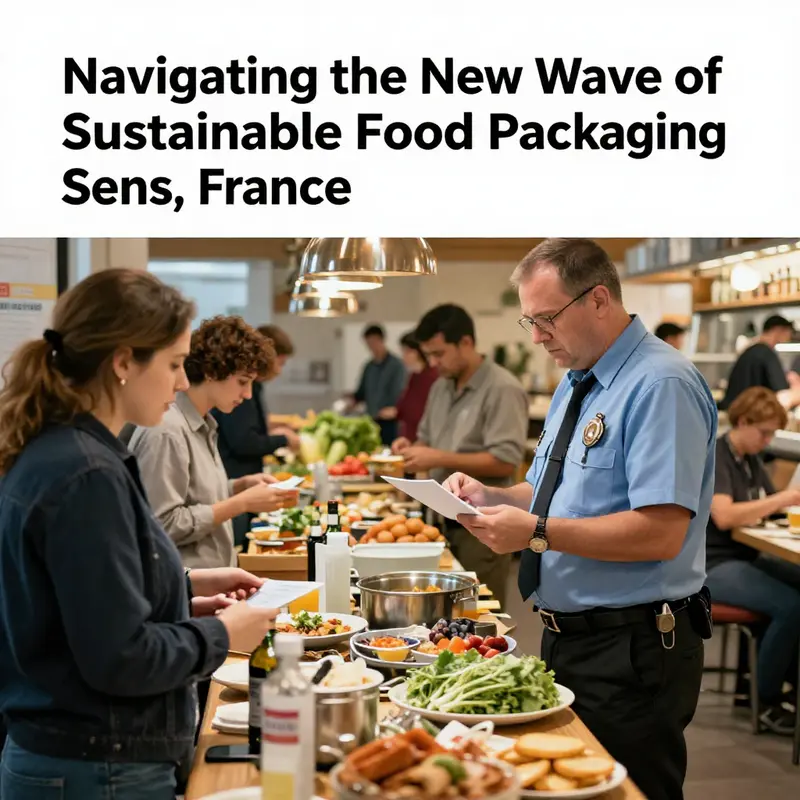
Sens sits at the crossroads of national ambition and local practicality. In France, the broader push to curb plastic waste through the Loi Agec and aligned EU directives has elevated the fate of disposable food packaging from a routine operational concern to a civic governance issue. The experience in Sens mirrors the larger trajectory across the country: a bold policy framework that aims to eliminate the most common sources of on-site and take-away waste, paired with the daily realities of restaurateurs, retailers, and residents who must adapt or risk penalties. As the Single-Use Plastics Directive tightens the leash on certain plastic items, and as France implements its own rigorous national rules, local authorities in Sens confront a learning curve that tests the strength of regulation in a real-world, diverse urban ecosystem. The result is a story of tension and creativity, a narrative of how law translates into practice, and a case study in the political economy of sustainability where enforcement, commerce, and public sentiment intersect.
The regulatory backbone is clear on paper: the aim is to reduce waste, encourage reuse, and shift consumer behavior toward systems that can reliably collect, clean, and return durable containers. In Sens, as in many French municipalities, this translates into periodic inspections of food service establishments, with a clear message that non-compliance carries consequences. Yet the pathway from ruling to routine is far from straight. Local enforcement officers report that the directives coming from national and European levels are precise about what cannot be used to package meals and what must be provided as a reusable alternative in designated settings. The difficulty lies less in knowing the rules than in ensuring consistent, fair, and effective application across dozens or hundreds of venues. The EU directive bans specific single-use plastic items and, in practice, pushes authorities to monitor a wide array of packaging choices—from the most visible take-away boxes to the less obvious foams and films that accompany meals. For Sens, this means compliance is not a one-off adjustment but an ongoing process of alignment with evolving standards, supplier contracts, and customer expectations. The local dimension is crucial because many decisions made at the neighborhood level ripple outward into the broader economy and daily life of residents. When a café or school cafeteria shifts from a familiar disposable cup to a reusable system, the benefits accrue not only to the environment but to the civic identity of the community as a conscientious actor in the circular economy.
Across Sens and similar towns, inconsistent enforcement remains a defining challenge. While some inspectors take a proactive, education-first stance, others lean more heavily on penalties as deterrence. The lack of universal guidelines tailored to small businesses compounds the issue. A small, independently operated eatery might struggle with unclear expectations around how to manage deposits, how to handle the logistics of return, and how to document sanitation processes for reusable containers. In practice, these ambiguities create space for different interpretations of the same rule, and that space can translate into uneven compliance. The result is a patchwork where some venues move quickly toward reuse and others cling to conventional packaging longer than policy advocates would like. In Sens, the tension between uniform enforcement and local discretion can feel like a delay in progress, even as municipal staff emphasize that every enforcement action is grounded in the broader public interest.
Resources amplify these tensions. Local authorities often face constrained budgets and limited personnel, especially in smaller municipalities where the scale of enforcement must balance competing public service priorities. Monitoring compliance across all food service establishments requires a combination of routine checks, spot visits, and follow-up investigations—an elaborate choreography that becomes harder to sustain when staff numbers do not keep pace with the number of venues to be supervised. In Sens, as in many regions, this means some inspections are scheduled, others are opportunistic, and a few establishments operate in a gray area where noncompliance is possible but not always promptly identified. The resource gap is not simply about money; it encompasses the time needed to train inspectors, develop standardized checklists, and coordinate with national agencies and suppliers. The outcome is a steady drumbeat of improvement rather than a single, dramatic enforcement push. This incremental rhythm has its virtues, but it can slow the pace at which new practices—such as robust container-cleaning protocols, standardized sanitization cycles, and transparent deposit systems—become embedded in everyday business.
Consumer convenience remains a stubborn obstacle to rapid, universal adoption of reusable packaging. In many cases, lightweight plastic packaging is chosen for its low cost and durability, especially for high-volume, quick-service formats where speed matters. Even when policy nudges providers toward alternatives like biodegradable or reusable options, the upfront investment and logistical overhaul can be substantial. Reusable systems demand more than just a shift in packaging; they require a new workflow: containers must be collected, cleaned, inspected, and returned to circulation without disrupting service flow. For smaller operators with tight margins, this is a significant operational leap. In Sens, the practicalities of storage space, cleaning facilities, staff training, and the reliability of return logistics translate policy ambition into a daily calculation: will the new system pay for itself in reduced waste, customer goodwill, and possible incentives, or will it add vacation-style headaches to a busy shift? The friction is real, and it underlines why policy alone cannot compel rapid transformation without parallel supports such as third-party logistics for reuse, clear deposit models, and accessible guidance for implementation.
Public awareness campaigns have attempted to energize residents to participate actively in the transition, but their impact has been uneven. Some residents embrace the new culture of reuse with enthusiasm, seeing it as a shared social project that aligns with broader European commitments to a circular economy. Others view changes as inconvenient, particularly when public behaviors collide with longstanding habits—such as carrying a personal container or returning used items at a participating venue. The mixed response is not unique to Sens; it reflects a broader challenge of aligning behavior with regulatory incentives. Educational outreach helps, but it cannot substitute for the structural elements that make reuse practical and reliable. That means clear messaging around how and where to return containers, predictable deposit schemes, and assurance that the sanitation standards meet public health expectations. Without these assurances, even well-meaning customers can experience “return fatigue,” a reluctance to engage because the benefits are not immediately visible or easy to access.
A lack of standardization in inspection protocols across France’s regions further complicates enforcement. When every region interprets regulations through its own administrative lens, discrepancies arise in what inspectors emphasize, how noncompliance is documented, and what constitutes a “reasonable” transition period for businesses. In Sens, municipal authorities report that periodic checks occur, but staffing limitations and budget constraints impede exhaustive, uniform monitoring of all food service establishments. The absence of a single, nationwide protocol means a small café might be judged by one standard in one year and a different standard a year later, creating uncertainty for operators who strive to stay compliant. This is precisely the kind of regulatory ambiguity that can erode the credibility of enforcement and slow the adoption of more sustainable packaging practices. Yet it also highlights an important opportunity: wherever standardization improves, the efficiency and fairness of enforcement improve too. Sens can be a testing ground for scalable, region-wide guidelines that harmonize expectations while allowing for local nuance. The EU’s regulatory framework, while enabling, also calls for orderly implementation at the national and subnational levels, and the experience of Sens contributes to a broader learning process that can inform other municipalities facing similar constraints.
In the balance between law and practice, penalties act as a final lever, but they are not the only instrument. France’s approach has combined initial educational emphasis with later enforcement actions, acknowledging that behavior change and process reform take time. In Sens, the possibility of fines—potentially up to a meaningful amount—serves as a deterrent, yet the emphasis remains on guiding businesses through the transition rather than punishing them for a temporary step in the journey. This is compatible with a longer-term vision: to transform not only packaging choices but also the business models around meals, containers, and logistics. Several venues have begun experimenting with reusable deposit schemes, where customers recover a portion of the cost by returning containers at designated points. Others have partnered with external providers who specialize in the logistics of reusable dishware, presenting an alternative to building internal cleaning and return systems from scratch. These arrangements illustrate that enforcement is not simply a monitoring exercise; it is also a catalyst for innovation. They show that compliance can be reframed as an opportunity to redesign service models, align with circular economy principles, and create value through new partnerships rather than solely through penalties.
The causal chain from policy to practice in Sens also has a clear economic logic. The transition to reusable or biodegradable packaging changes the cost structure of food service operations. Initial investments in durable containers, cleaning equipment or partnerships, and staff training are offset over time by savings in waste disposal, a potential reduction in packaging costs, and the marketing payoff of demonstrating environmental stewardship. For smaller operators, co-locating with a regional reuse network or leveraging a third-party logistics system can diffuse capital expenditures and reduce risk. The municipal context matters here. When local authorities help ensure consistent guidance, provide access to shared facilities, and coordinate with suppliers and service providers to reduce the transactional burden on small businesses, the transition becomes more feasible. Conversely, without that supportive scaffolding, the same law could be perceived as economically punitive rather than environmentally transformative. Sens’s ongoing experience suggests that enforcement success depends on the degree to which regulators, businesses, and residents can co-create practical, scalable pathways to reuse.
Ultimately, Sens’s regulatory and enforcement challenges illuminate a broader truth about plastic packaging in food service: the policy intent is to shift a system, not just to ban a material. The local texture of enforcement—how rules are interpreted, how resources are allocated, how public awareness is cultivated, and how standardized practices are developed—will determine the tempo of change. The city’s journey demonstrates that progress grows from a combination of clear regulations and intelligent design of support mechanisms. It shows that a country aiming for a zero-waste future by 2040 cannot rely on a single instrument. It requires a suite of coordinated actions—law, logistics, consumer behavior, and business innovation—woven together in a way that makes reuse not only possible but preferable for everyday life. For readers seeking a concrete image of what this means in practice, consider how a typical venue might evolve: it would use durable containers where feasible, participate in a deposit-return system, integrate third-party reuse services when internal capacity is limited, and educate customers about the benefits and mechanics of the new system. The transition is not instantaneous, but it is becoming steadily more coherent as guidance solidifies, infrastructure expands, and public commitment strengthens. As France and its European partners continue to refine these mechanisms, Sens’s experience will likely serve as a microcosm of the larger transformation sweeping through urban life and the hospitality sector alike. The aim remains clear: reduce disposable packaging, advance reuse, and align everyday choices with the principles of a circular economy that can sustain both people and the planet.
External resource: https://ec.europa.eu/environment/waste/plastic-waste_en.htm
Internal link reference: For a practical look at reusable packaging options that communities might consider in this transition, see the concept of a disposable kraft-paper take-away box with clear lid, a design commonly discussed in depot-based and returnable packaging discussions. disposable kraft-paper take-away box with clear lid
Final thoughts
The ban on single-use plastic food containers in Sens sets an ambitious precedent for sustainable dining practices. By fostering community engagement and inspiring innovative packaging solutions, the local food service industry is poised to thrive in an environmentally-conscious market. Understanding these shifts not only benefits businesses but also enhances customer loyalty as consumers increasingly prioritize eco-friendly practices. As we look ahead, the ongoing evolution in Sens serves as a case study for how regulations can drive significant change in food culture and practices.