

Clear plastic cups have become essential for several businesses in the beverage service industry, including bubble tea shops, restaurants, food trucks, and catering services. Their versatility, convenience, and aesthetic appeal make them a favorite choice for event planners and corporate teams alike. This article delves into key aspects of purchasing clear plastic cups from Dollar General, examining product availability, pricing strategies, competitive advantages of retail versus wholesale, user feedback, and the environmental implications of using such products. Each chapter will provide insights that can help your organization make informed decisions to enhance your offering.
Clear Choices, Low Prices: How Everyday Clear Plastic Cups Shape Household Use at a Dollar Store
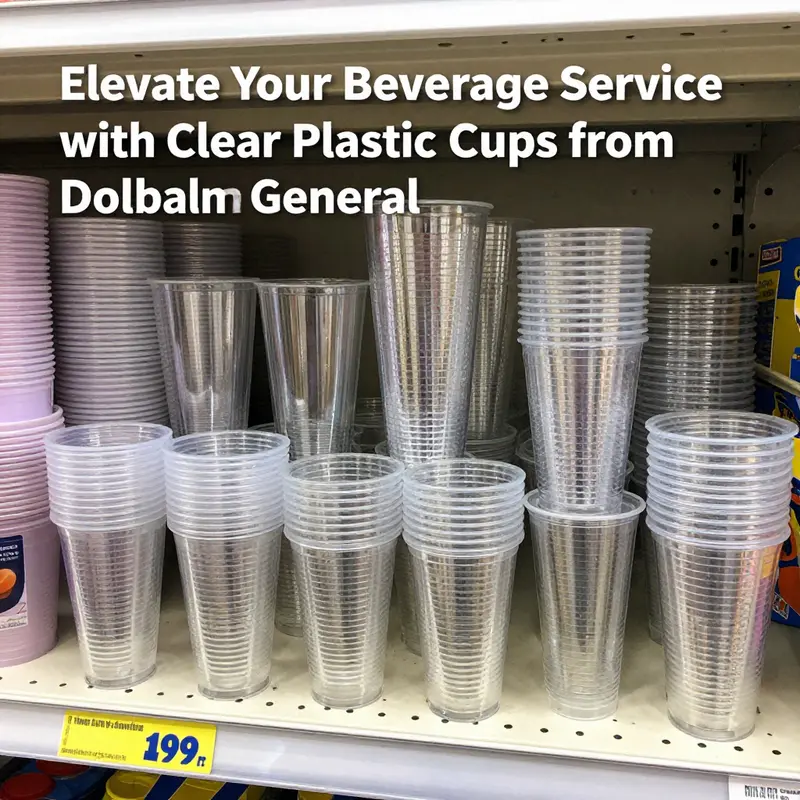
Clear choices, low prices, and everyday practicality converge on the shelf where a simple clear plastic cup sits alongside a handful of other affordable essentials. In households that cultivate efficiency and adaptability, this humble item becomes a reliable tool for everyday life. The dollar-store environment, renowned for its no-frills approach and straightforward value, reinforces how such cups are perceived not as luxury but as practical currency for daily organization. The transparent cup is more than a container; it is a versatile instrument that supports quick meal prep, easy cleanup, and flexible event planning. Its ubiquity at bargain retailers reveals a practical consumer psychology: people favor tools that are inexpensive to acquire, simple to use, and easy to replace when needed. The cup’s presence is a quiet reflection of how modern households manage time, space, and resources without complicating the routine.
To understand why clear plastic cups show up so reliably in a budget retail environment, it helps to look at the broader retail and supply dynamics. In wholesale channels, items like disposable cups can be priced aggressively when purchased in bulk, especially when the vendor has established distribution channels and predictable turnover. The same logic translates in a retail setting where the product lines are designed for rapid replenishment. A dollar-store chain, with its emphasis on speed, accessibility, and cash-conscious purchasing, leans into products that are immediately usable and widely compatible with a range of everyday activities. The result is a market in which households can acquire a practical good for a modest outlay and put it to work instantly, from meal prep to beverage service to small-scale organization tasks. The convenience offered by this setup is not about novelty; it is about the confidence that a familiar form will work in a familiar situation.
A simple clear plastic cup carries a surprising amount of implicit information about how households organize time and space. The transparency of the material makes contents visible at a glance, which reduces the cognitive load involved in managing meals or snacks for multiple people. When a family is packing lunches or setting up a snack station for kids, being able to see what each cup contains speeds decision-making and helps avoid cross-contamination or mix-ups. The clear cup’s familiar shape and predictable lip help ensure a comfortable drinking experience, especially for younger children who are still learning to handle containers with care. Moreover, because the cup is lightweight and stackable, it simplifies storage in cabinets or car trunks, where space is often at a premium. These practical benefits accumulate over time, turning a simple purchase into a dependable habit that supports routine domestic efficiency.
Lids add another layer of utility to the equation. For households on the go, the combination of a clear cup with a lid has proven especially valuable for keeping beverages fresh, preventing spills, and extending the usability window for leftovers or samples during community events. A lid can transform a casual selection into a transport solution—whether for school, work, or a small family gathering. It is easy to underestimate how much the mere option of a secure seal reduces the anxiety around moving liquids and snacks between locations. In spaces like busy kitchens, break rooms, or makeshift serving areas, such small design decisions ripple outward, enabling smoother flow, less cleanup, and more predictable logistics. The synergy between cup and lid embodies the retail philosophy of providing uncomplicated, effective goods that function in multiple contexts.
The availability of clear cups at budget retailers also speaks to a broader pattern: households frequently rely on simple, repeatable purchases to meet recurring needs. When the items are durable enough for multiple uses, yet inexpensive enough to be replaced with little financial pain, shopping becomes a process of assembling a toolkit rather than a single, decisive purchase. The cup’s role as a low-cost, high-utility item mirrors how families approach other everyday tools—pencils, containers, utensils—where the objective is steady performance at an approachable price. This alignment between price, performance, and practicality helps explain why such cups appear with regularity on store shelves and in shopping baskets. The consumer’s experience of shopping at a value-focused retailer is shaped by a balance: willingness to pay a modest price for a reliable product, confidence that the purchase will meet a broad range of needs, and comfort with how quickly the item can be integrated into daily life.
Beyond the household, clear cups at discount retailers increasingly serve the needs of small home-based ventures and casual entrepreneurship. A lemonade stand, a bake-sale fundraiser, or a neighborhood potluck often requires simple, scalable packaging solutions that can be trusted to hold liquids or snacks without fuss. The affordability of cups means organizers can scale up their offerings without inflating costs, testing new formats, or adjusting quantities on a whim. The cups become a practical building block for micro-operations that still demand crisp presentation and predictable performance. In this sense, the dollar-store availability of clear cups supports a broader ecosystem where small-scale enterprise and everyday domestic life share a common toolkit—one that lowers barriers to experimentation and reduces the risk of waste when plans change or guests arrive unexpectedly.
An important nuance in this narrative is the way stock levels and product mix can vary across store locations and seasons. While the general concept remains consistent—clear cups are a staple of practical households—the actual inventory can shift with promotions, supply disruptions, or shifts in consumer demand. A given store might feature a few standard sizes and a limited set of lid options, while another location might offer a broader range. For shoppers who want to optimize their purchase, it is helpful to think in terms of versatility rather than single-use reliance. Keeping versatile sizes on hand can accommodate family meals, party setups, and impromptu projects alike. The ability to select cups that are easy to reuse for leftovers, or that pair well with lids for transport, adds another strategic layer to how households approach meal planning and event preparation.
From an organizational standpoint, the cup-on-store shelf also invites reflection on how consumers manage space and time in their homes. The fragility of a busy kitchen rarely makes room for fragile, decorative packaging, so dependable, translucent cups align with the preference for practical, space-saving solutions. The cost-conscious shopper often appreciates the balance between affordability and capacity. A cup that can hold a standard beverage while still being robust enough for quick handling becomes a default choice—especially when it is readily available in a location that is easy to reach during routine errands. The item’s accessibility reinforces its role as a familiar, reliable tool rather than a conditional purchase tied to a special occasion.
The environmental implications of disposable containers also enter this discussion in meaningful ways. In communities with growing attention to waste reduction, the simple, inexpensive cup becomes part of a larger conversation about lifecycle, recycling options, and the trade-offs between convenience and sustainability. While the appeal of affordable, no-frills packaging cannot be denied, shoppers increasingly weigh the benefits of reuse, the energy costs of production, and the potential for material recovery. In many households, the decision to use disposable cups in a particular setting is paired with careful planning about how to minimize waste, recycle where possible, or substitute with reusable alternatives for routine use. The dialogue around these items thus evolves from a single purchase decision to an ongoing practice that blends practicality with responsibility.
Cultural expectations also shape how households interact with these products. In some circles, the clear cup is simply a default for casual meals and gatherings; in others, it becomes part of a ritualized approach to hosting, where consistency and predictability of servingware matter as much as price. The clarity of the cup supports a straightforward narrative: drinks and snacks are accessible, portions are easy to gauge, and cleanup is uncomplicated. This alignment with everyday sociability helps explain why households keep such items in steady rotation, even when they explore other packaging formats for special occasions. The cups function as a neutral, dependable element that can support diverse social settings without complicating the planning process.
Having considered these layers of use, it is useful to relate the discussion back to the practical steps a shopper might take when seeking clear cups at a discount retailer. First, it helps to identify the typical sizes that best fit daily needs—whether for beverages, snacks, or storage applications. Second, shoppers can assess lid options, which add value by enabling transport and reducing spills. Third, proximity and stocking patterns matter: checking store apps or websites for real-time inventory can save trips and help ensure the desired quantity is available. The overall takeaway is that clear cups at a dollar-focused retailer are not merely a commodity; they are a flexible, affordable tool that supports efficient home management and small-scale hospitality.
For readers who want to explore related packaging options that echo the same practical logic, a related product category page on disposable, single-wall cups with lids offers a useful, nearby reference point. This link illustrates how packaging prioritizes straightforward design, cost efficiency, and compatibility with everyday use, even as contexts differ slightly from clear plastic cups. Disposable single-wall food cup with lid
External reference: https://www.fda.gov
Clear Cups, Quiet Prices: Navigating the Dollar General Landscape for Transparent Disposable Cups
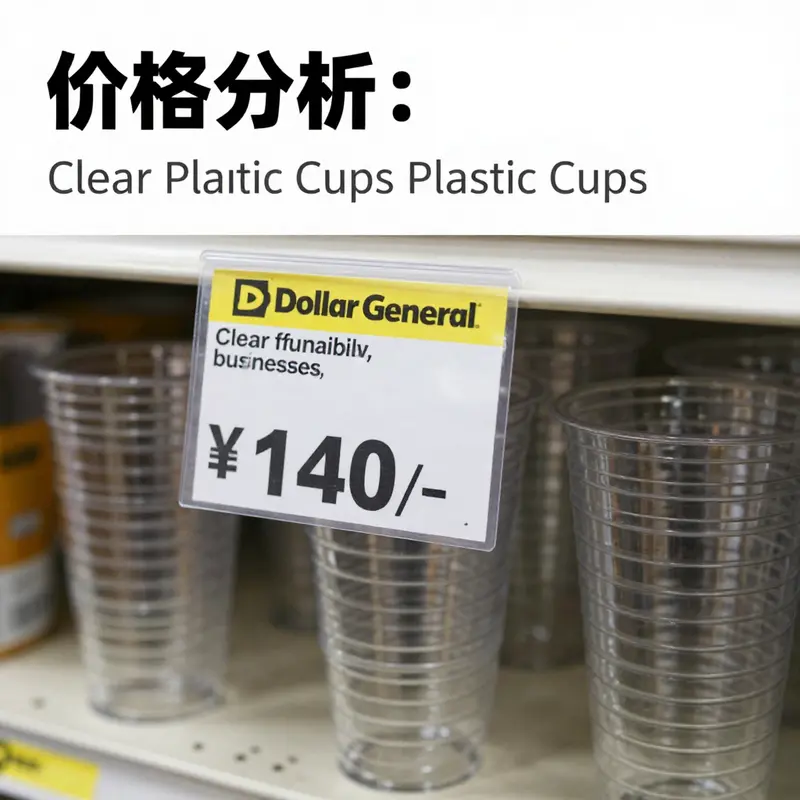
Transparent, lightweight, and ubiquitous, clear plastic cups have become a familiar sight at parties, picnics, and everyday gatherings. They are the kind of item that operates in the background, enabling social rituals—the clink of ice against acrylic, the swirling of a cold beverage, the quick serving of beverages at a casual event. Yet as a researcher or a small-business buyer, you quickly learn that the apparent simplicity of “clear cups” hides a complex mix of sourcing channels, price points, and regional realities. When the topic turns to discount retailers, the conversation often pivots to savings, but savings are not merely a function of sticker price. They are shaped by order size, packaging, and the interplay between wholesale avenues and retail shelves. In exploring the Dollar General ecosystem and its role in the market for transparent disposable cups, we move from prices on a page to the lived economics of inventory, promotions, and consumer demand. The available knowledge points toward wholesale platforms that list blanket figures for bulk orders, while retail environments—Dollar General among them—present a different set of dynamics governed by store-level stock, regional promotions, and consumer expectations for low prices and convenient access. The tension between wholesale quotes and retail reality becomes more evident when you consider the scale of a typical event, where per-unit costs determine whether a choice is viable and whether the cups will be sufficient to meet demand without driving up the total expenditure.
In the absence of explicit product listings for clear plastic cups on Dollar General’s official channels within the provided materials, it helps to juxtapose wholesale price signals with retail strategies. The wholesale landscape often anchors price expectations with large-volume discounts. For instance, some suppliers advertise 7-ounce clear plastic cups in a 100-piece pack starting around $14.29, which equates to roughly $0.143 per cup when purchased at that quantity. Similarly, 16-ounce clear cups offered in cases of 50 may start around $4.68, translating to about $0.0936 per cup. When lids accompany cups—creating a combined cup-and-lid unit—the bundles become pricier on a per-item basis, with a 25-count set around $9.99, or about $0.40 per piece. These figures illustrate how bulk purchasing alters the economics; the per-unit cost can plummet toward a few cents if the order scales into the tens of thousands of units. The pronounced delta between small retail packs and bulk wholesale quotes underscores the practical reality: the Dollar General shopper, like many discount shoppers, is sensitive to price but also constrained by space, stock, and the pace of turnover at any given store. Even if Dollar General does not list wholesale-type bulk options on its storefront, the underlying arithmetic of unit cost remains a critical lens through which to assess the feasibility of sourcing clear cups for events or daily needs.
Beyond raw price, the decision to purchase clear cups through a discount retailer such as Dollar General is shaped by how customers weigh convenience against cost. Dollar General’s strength lies in proximity and price competition, not in bulk warehouse-style fulfillment. The store network spreads the overhead of retail operations across many locations, enabling frequent promotions and rapid replenishment cycles that echo the needs of casual buyers who require immediate access rather than bulk procurement. This model favors smaller, more frequent purchases—think 16-ounce cups for a community event, or a handful of 7-ounce cups for a backyard gathering—where the cost per unit might be higher than a wholesale quote but the immediacy and lack of logistical friction compensate for it. The trade-off invites buyers to evaluate the total cost of ownership beyond the price tag: perishability concerns, storage space, the cost of fuel or time spent traveling to a store, and the risk of stockouts during peak seasons. For a small event, the convenience of a nearby Dollar General could offset a modestly higher unit price compared with a wholesale supplier that requires larger minimum orders and longer lead times. For larger, recurring events, however, the scale economies become more compelling, and the logic of a wholesale channel strengthens the case for dedicated procurement.
The notion of “clear” cups also invites reflection on material quality, clarity, and compatibility with lids and domed seals. In wholesale listings, the design parameters are explicit: cup size, wall construction, clarity level, and whether a lid is included. You can find 7-ounce and 16-ounce variants with separate lids, or discrete cup-and-lid bundles, each with distinct price points that reflect not only volume but packaging convenience and the intended use case. The same cup can be marketed to the consumer as a simple beverage vessel or as part of a set designed for a catered event, a school function, or a family party. The retail experience in a store like Dollar General—where price, accessibility, and consistency across locations are highly valued—might emphasize the practicality of a straightforward purchase: a reliable, clear cup, readily available near the checkout area, with a predictable price that makes budgeting easy for a family purchase or a community organization operating on a tight margin. The consumer’s perception of value, in this case, is split between the immediate affordability of a single-pack purchase and the longer-range economics of bulk buying. The math matters, but so does the experience of buying—how quickly a shopper can find the product, how familiar the packaging is, and how well the price aligns with expectations formed by everyday shopping and promotional cycles.
From a business perspective, the decision to source clear plastic cups at a discount retailer should be anchored in an explicit cost-benefit analysis that captures both direct and indirect costs. Direct costs include the sticker price, any tax implications, and the shipping or transport costs if purchasing in bulk from a distant supplier. Indirect costs include storage space, the risk of misplacing stock or overstocking, and the opportunity cost of time spent comparing options across channels. The wholesale path offers potential savings per unit as volumes rise, but it comes with the need to forecast demand accurately and to manage inventory over longer horizons. The discount retail path prioritizes immediate availability and straightforward replenishment, but the per-unit price remains higher in small loads. In this tension, savvy buyers monitor not just the headline price but the total cost of ownership: the time saved from a one-stop shopping trip, the reliability of supply, and the alignment with event timelines. A pragmatic approach involves mapping typical event sizes, estimating the number of cups required per guest, and then probing whether Dollar General can meet those needs through a single trip or a few quick visits, rather than establishing a long-term partnership with a supplier whose lead times and minimum orders might outpace demand.
To bring this discussion back to the practical, the chapter integrates a concrete example that mirrors the real-world decision-making process. Consider an organizer planning a mid-size community gathering with roughly 200 attendees. A retailer’s nearby platform might offer a mix of 16-ounce clear cups with and without lids, in various pack sizes. The organizer would face a choice: purchase a few bulk baskets from a wholesale platform to drive down the per-unit cost, or buy smaller retail packs from a local store to ensure immediacy and minimize storage. The bulk option could bring the price per cup down into the low tens of cents if the total quantity purchased climbs into the tens of thousands, but the upfront investment and storage need careful scrutiny. The retail option, while more expensive per unit, reduces the risk of overstock and ensures the cups are readily available at a predictable price. In regions where Dollar General stores cluster densely, the convenience factor can tip the balance toward retail purchases, especially when event dates are tight and the organizer must avoid stockouts. The decision, in other words, is less about choosing the lowest advertised price and more about balancing price with availability, reliability, and timeliness.
As you conclude this exploration, one thread remains clear: the price landscape for clear plastic cups is not monolithic. It shifts with scale, channel, and purpose. The absence of explicit Dollar General pricing data in the provided materials does not erase the practical realities that shoppers face every day in discount retail spaces. Instead, it invites a more nuanced approach to sourcing—one that respects the speed and simplicity of retail shopping while acknowledging the sharper economics that bulk procurement can offer when the scope of needs justifies it. For buyers who want to place a finger on the pulse of availability and potential promotions at a site like Dollar General, the recommended path is to check the official store locator and the mobile app for current stock, price points, and any in-store promotions that can tilt the balance in favor of a more favorable deal. If a reader seeks a concrete example of how one supplier frames disposable cups within a broader product ecosystem, the following page offers a glimpse into related disposable ware and packaging that can be relevant for event planning and catering workflows: senang05-food-grade-500-750-1000ml-take-away-bowl-with-lids-packing-food-single-wall-fast-food-salad-bowls. This link, while not a Dollar General listing, anchors the broader conversation about quality, compatibility, and customization that buyers weigh when they assemble a convenient, cost-conscious kit of disposable ware for events. For readers who want a broader context on retail pricing and store-level promotions in the discount sector, the Dollar General official site can offer current and location-specific information that supplements the wholesale-price snapshots discussed earlier: https://www.dollargeneral.com.
From Bulk to Bin: Understanding Clear Plastic Cups in Wholesale vs Retail
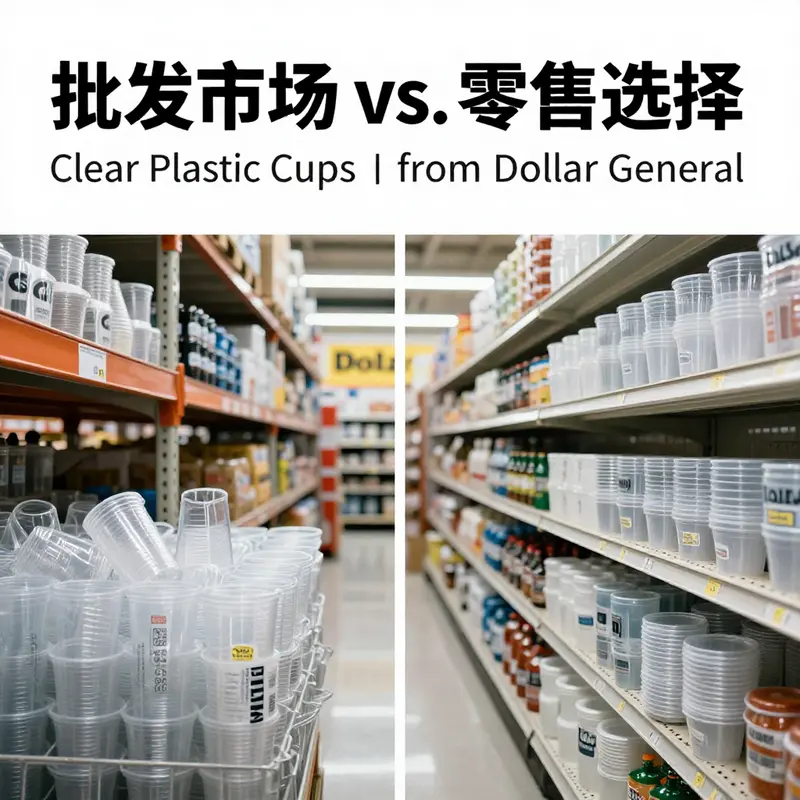
The path of a clear plastic cup from manufacturer to consumer can be read as a study in channels. In wholesale and in retail, the same product meets different expectations and different economics.
In Dollar General style retail, speed, price, and reliability drive decisions. The cups must be inexpensive, easy to stock, and quick to find on crowded shelves. Volume and efficiency are the levers, and promotions or private label options can improve margins despite tight unit economics.
In wholesale channels, buyers look for scale, long term supply, and total cost of ownership. Large orders justify lower per unit costs, and customization such as logos or packaging can command small premiums. The relationship with the supplier becomes more collaborative and contract driven, with defined delivery schedules and durable quality control.
Understanding both sides helps manufacturers plan product specs, packaging, and logistics that can fit either path, or a hybrid approach that hedges risk and expands revenue opportunities.
Transparent Choices on a Budget Aisle: A User-Experience Chronicle of Clear Plastic Cups in Discount Retail

Clear plastic cups sit quietly at the intersection of everyday practicality and price-driven decision making. For many households, a trip to a discount retailer to pick up a stack of transparent, single-use cups feels almost like restocking a staple—an economical move that quietly connects daily routines, quick gatherings, and the occasional impulse project. The chapter you’re about to read situates these cups not as isolated artifacts, but as part of a broader ecosystem where cost, utility, and user expectations constantly negotiate with each other. The data at hand points to a simple truth: the appeal of ultra-low prices is matched by the variability that price can bring to quality. This tension shapes how people perceive, choose, and actually use these cups in the real world.
To begin, consider the economic logic behind these seemingly banal items. Wholesale data—though far from the reach of everyday shoppers—reveals two striking price points. Plain, transparent cups can be found at extremely low unit costs, roughly two cents per piece when purchased in massive quantities. When the same cups are offered with personalized branding or lids, the per-unit price still remains remarkably affordable, hovering around four cents in large-scale orders. The gulf between what a consumer pays at a convenience visit and what an organization pays in bulk underscores a core theme of the chapter: value is not merely price, but price multiplied by purpose. For households planning a casual birthday party, a bake sale, or a weekend picnic, those two-cent cups may seem almost a no-brainer. For small businesses or clubs that want a modest branding opportunity, the four-cent-per-unit option—if available with a lid and a logo—transforms an ordinary disposable cup into a practical, inexpensive marketing touchpoint. These prices hint at why such cups appear with unusual frequency in the shopping baskets of budget-conscious shoppers: they offer a compelling combination of affordability, transparency, and speed.
The user experience with these cups, however, hinges on more than price. The most consistent advantage cited by buyers is straightforward: the cups perform their core function well enough for everyday use. They hold a range of beverages at room temperature, serve as convenient vessels for fruit juices or soft drinks, and accommodate small portions of snacks or desserts. The transparent walls let the contents show clearly, which many users value for quick identification, portion control, and display during gatherings. In households with children, the cups are favored for their simplicity and the ease with which kids can handle them during crafts, snacks, or party activities. For organizers or parents, the cups double as a practical staging area for ingredients or small toys, a use case that goes beyond their intended beverage purpose. The practical, no-frills design—clear, clean lines with a basic rim—aligns with a common consumer desire: simplicity without fuss.
Yet, the same consumer voices often highlight a spectrum of quality that accompanies rock-bottom pricing. Some cups arrive with pleasantly smooth rims, crisp transparency, and a sturdiness that feels surprisingly confident for the price bracket. Others reveal a more fragile temperament: thinner walls that give a slight hollow sound when tapped, rims with minor imperfections, or edges that aren’t perfectly smooth to the touch. The functional consequences are predictable. If the cup is intended for hot liquids, many shoppers express hesitation, choosing instead to use them for cold beverages or room-temperature desserts to avoid deformation, leaks, or sudden weakening at the lip. For longer storage, the concern shifts toward integrity rather than presentation: lids that don’t seal snugly, cups that warp after brief contact with warmer contents, or lids that feel like an afterthought rather than a precise fit. In short, the price advantage is real, and it buys a reliable baseline utility, but it also invites a range of subjective experiences that color each user’s overall satisfaction.
The conversations about these cups—whether among family shoppers, small-event organizers, or curious DIY enthusiasts—also illuminate how people deploy them in unanticipated ways. The simple, transparent cup becomes a practical tool for a spectrum of tasks far beyond the beverage service. They serve as convenient, disposable organizers for tiny kitchen ingredients, beads for school crafts, or mini portions for taste tests and cooking experiments. They are used to manage and portion snacks when guests arrive, helping to reduce waste and streamline cleanup. In many homes, they also function as a temporary home for home-brewed sauces, dips, or salad dressings during gatherings. This kind of hybrid use underscores a broader truth: low-cost cups thrive not only as drinkware, but as flexible containers that lend themselves to micro-organization in the kitchen and at events. The capacity to repurpose a single kind of cup across multiple tasks is a subtle, sometimes overlooked benefit of mass-market disposables.
Against this backdrop, the contrast with higher-design, branded alternatives becomes more evident. The budget cup’s lack of customization and its minimalistic aesthetic are not merely stylistic traits—they reflect a deliberate positioning. The same mass-market channels that offer ultra-low prices also present a ceiling on features. There is little room for insulated walls, spill-proof lids with gaskets, or ergonomic rims. The result is a product that emphasizes practicality and economy, rather than premium performance or image. For consumers who are planning a formal event or require cups for hot beverages, the general expectation is that these cups will perform adequately at best, with the caveat that they might not meet the standards of more robust cocktail or dining ware. For many shoppers, this is a purposeful trade-off: accept the convenience and price, while acknowledging the limitations with heat tolerance, durability, and lid fit. The practical implications of this trade-off are frequently discussed in the comments sections of budget retailers’ aisles and at friends’ kitchen tables where people exchange tips about what to expect when checkout lines offer little more than a price tag.
An additional dimension to the discussion concerns personalization and business use. For individuals who run small-scale events or who want a modest branding opportunity, a wholesale channel can offer cups with custom logos and lids, paired with generous volume discounts. In those contexts, a business-oriented buyer might invest a little more for a more polished presentation, while still benefiting from the overall affordability that characterizes mass-market disposables. Retail shelves at discount storefronts, however, tend to emphasize quick turnover and universal design—generic clear cups that avoid any design risk and maintain broad compatibility with common lids. The dichotomy between retail simplicity and wholesale customization helps explain why some organizers choose wholesale suppliers for branding projects, while casual shoppers at discount retailers accept plain cups as a practical staple. The economics and the end use align with a familiar pattern: price leads, function follows, and branding remains a secondary consideration unless the buyer is pursuing a specific marketing or event-oriented objective.
To illustrate a point about accessibility and information flow, consider how a consumer might navigate real-time stock and pricing when shopping in a discount chain. The most reliable route is to check the retailer’s own online listings or mobile app for whether a particular cup size, lid option, or packaging configuration is in stock at a local store. This approach helps avoid misaligned expectations that can arise from flexible in-store inventory. For anyone curious about the broader landscape of disposable cups—beyond the immediate checkout lane—there exists a broader ecosystem of product options, including cups designed for specialized uses such as desserts or cold servings, with variations in materials, thickness, and lids. In this sense, even the cheapest options participate in a larger conversation about how households adapt to resource constraints while maintaining simple, functional routines. The discourse around these cups is a microcosm of consumer behavior: price sensitivity, practical necessity, and a steady stream of innovation guided by the realities of everyday life.
For readers who want to explore related design variations in the disposable-cup family, consider this example of design flexibility in other disposable formats: disposable single-wall paper ice cream cups with lid. Although these paper cups occupy a different segment, the underlying theme—how lids, walls, and branding affect perceived value and utility—offers a useful comparative lens. It implies that even in a field driven by low prices, customers appreciate options that offer a clean surface, predictable performance, and a degree of personalization that makes a simple cup feel tailored to a moment or a brand. The takeaway is not that cheaper cups are superior or inferior in a vacuum, but that consumer satisfaction emerges from aligning a product’s basic function with the specific use case, the environment, and the expectations set by price.
When the story closes for now, a clear pattern emerges. Budget retailers succeed in delivering the core utility of transparent cups at a price that enables households to plan more flexibility into their budgets. The cups’ reliability for cold beverages, desserts, or light-duty tasks—paired with their sheer affordability—creates a compelling value proposition for frequent, low-stakes uses. Yet the experience remains inherently uneven. The quality variance across shipments, occasional rough rims, and a lack of robust heat resistance mean that the cups are best treated as economical tools for everyday life rather than premium ware for high-heat, long-term, or presentation-focused settings. This mix of strengths and limitations explains why many shoppers continue to rely on these cups for routine, everyday tasks while seeking alternative options when they need more reliability or a branded touch for an event.
External reference: for real-time stock, pricing, and availability, you can visit the budget retailer’s official site. External resource: https://www.dollargeneral.com
Aisle Footprint: Unraveling the Environmental Cost of Clear Plastic Cups Sold at Dollar General

The story of clear plastic cups in a price-driven retail landscape begins with something as ordinary as an item perched on a shelf between disposable plates and sugary drinks. In many dollar-value aisles, the cups are purchased not for their aesthetic or for a long-term relationship with a consumer, but for the fleeting satisfaction of convenience. Yet the cumulative effect of those choices extends far beyond a single purchase. When millions of cups circulate through low-cost retailers, the environmental ledger accumulates quickly, and the costs reveal themselves in ecosystems, soils, and waterways. The chapter that follows threads through the materials themselves, the ways they travel through markets, and the human behaviors that propel a disposable culture, all while grounding the analysis in the realities of a retailer that operates on affordability and high turnover. The central question is not whether these cups exist, but how their material composition, recycling realities, labeling claims, and consumer practices converge to shape a broader environmental footprint—an imprint that many shoppers may not fully see when they reach for a clear cup for the next event, drink, or snack.
At the heart of the environmental conversation is material choice. Clear disposable cups are most commonly made from a few different polymers, each with distinct implications for end-of-life fate. PET, or polyethylene terephthalate, is widely used for its clarity and strength; it is recyclable in many jurisdictions, but recycling rates for PET remain imperfect in practice. The material’s propensity to re-enter the economy hinges on robust collection systems and consumer sorting—processes that often falter in households and across neighborhoods with limited access to convenient recycling infrastructure. Then there is PS, polystyrene, a material that yields even higher transparency and a lighter feel, but whose end-of-life trajectory is less forgiving. PS tends to fragment and persist in the environment if mismanaged, and its recycling is far less common in many regions. Finally, PLA, polylactic acid, has emerged as a label-friendly alternative rooted in renewable feedstocks. While PLA is marketed as biodegradable or compostable, true degradation rarely occurs in typical landfill or home composting conditions. Industrial composting facilities, with controlled high heat and humidity, are often required for PLA to break down. In ordinary waste streams, the cup can persist for years, undermining the consumer’s belief that they are choosing a “green” option. The result is a paradox: a product that appears to offer clarity and cleanliness on the shelf may carry a hidden durability risk if its actual end-of-life pathway is not well supported by local systems and consumer behavior.
Compounding the material puzzle is the challenge of labeling and truth-in-advertising. In recent testing and industry monitoring, there have been disturbing findings about products marketed as biodegradable or compostable. Some cups marketed with such claims were found to rely on additives or blends that render them non-biodegradable under real-world composting conditions. A recent study traced a sample labeled as degradable and found that, after a 20-day composting trial, the cup remained largely intact, signaling that the product would not meaningfully degrade in practical settings. The broader implication is clear: labeling and certification become central to how consumers interpret environmental impact. If a product suggests a path to degradation that does not materialize in the intended environment, the result is environmental misdirection that could erode trust and hamper genuine progress toward sustainability.
The environment is not simply a backdrop for the recycling bin; it is also a consequence of how goods are sourced, priced, and distributed. Dollar General, as a retail platform known for affordability and high-volume turnover, occupies a particular niche in the plastic economy. While there is no public, itemized disclosure about every brand or material choice in its stores, the procurement logic is transparent in its effects: cost efficiency and volume drive product selection. This tends to favor materials with lower unit costs, which, in practice, often means traditional plastics such as PET and PS. The result can be a steady supply of clear cups that are inexpensive to produce and distribute but less favorable for end-of-life management, especially in communities where curbside recycling is inconsistent or underfunded. The emphasis on price and availability, while economically rational for the retailer and for many consumers, sets the stage for a larger sustainability trade-off. When millions of such cups are purchased and used for short periods before being discarded, the aggregate effect becomes a substantial share of plastic waste entering landfills, incinerators, or the environment.
Beyond the materials and labeling, the real-world recyclability of these cups is further complicated by consumer behavior. Even when cups are technically recyclable, the actual practice of rinsing, sorting, and guiding them to the correct recycling stream is uneven. In households, confusion over what can be recycled, how to prepare it, and where to drop it leads to contamination of recycling streams and, in many places, lower recovery rates for plastics overall. Global statistics on plastic recycling reveal a stubborn reality: a relatively small fraction of plastic waste is recovered and reprocessed into new products. A widely cited concern is that even recyclable items fail to achieve circularity if the local system, consumer participation, and market demand for recycled material are misaligned. In the context of dollar-store cups, this misalignment can be acute, given the rapid turnover of products and the intense volume in high-traffic urban and rural neighborhoods alike.
The environmental discourse around these cups must also reckon with broader pollution dynamics. Global reports, including those from activist and research networks tracking plastic leakage, have highlighted that single-use packaging is a central driver of marine and terrestrial pollution. The 2025 Global Plastic Pollution Report underscores that excessive reliance on disposable packaging contributes materially to environmental degradation, a point that resonates with the everyday purchases in dollar-value retailers. While such reports do not single out any one retailer, they illuminate the systemic nature of the problem: when low-cost channels push high volumes of single-use plastics, the cumulative pressure on ecosystems intensifies. In this frame, the issue is not simply a matter of consumer choice in a single aisle, but a reflection of how a consumer economy organizes packaging, distribution, and waste management at scale.
This landscape invites a critical turn toward practical alternatives and more cautious consumer expectations. On one hand, traditional disposable cups still offer undeniable convenience. On the other, manufacturers and retailers are experimenting with materials and designs that aim to balance performance with more responsible end-of-life options. Paper-based cups, particularly those with enhanced thermal insulation such as double-wall constructions, have gained traction as an alternative that can offer competitive functionality while aligning better with recycling streams in some regions. Newer materials such as bagasse fibers or certain bamboo or pulp-based composites present additional outlets for reducing reliance on conventional plastics. Yet these options also carry caveats: many still require careful sorting and infrastructure to ensure they are accepted in recycling or composting streams, and some are only truly sustainable when produced and disposed of under controlled conditions. The message is that the path to meaningful improvement lies not in a single material miracle but in a portfolio of options that align with local waste systems, consumer habits, and institutional incentives.
At the regulatory and standards level, real progress hinges on clear, robust labeling and the avoidance of greenwashing. In some jurisdictions, standards exist to identify and limit problematic additives that hinder degradation or pose environmental risks. One documented concern is the presence of fluorinated substances in certain plastic products. Standards such as GB/T 41010-2021, issued by national standardization bodies, specify criteria for biodegradable plastics and the labeling of their degradation performance. Notably, products with total fluorine levels above a certain threshold (for example, 100 mg/kg in the cited context) may be deemed potential environmental pollutants. Such standards remind manufacturers and retailers that environmental claims require rigorous substantiation. When a cup marketed as biodegradable or compostable fails to meet the expected end-of-life performance, it contributes to a cycle of disappointment and erosion of consumer trust, while continuing to introduce uncertain material behavior into composting streams and landfills.
For shoppers seeking a more sustainable path, the guidance emerges clearly enough, even if the choices are not always perfect. Prefer products with transparent material declarations—PET, PLA, PP, or others—so that the consumer understands the expected fate after use. Be wary of labels that promise easy degradation without specifying the required end-of-life conditions. When feasible, bring a reusable cup to reduce the total volume of single-use plastics entering the waste stream. Support product designs that prioritize recyclability, such as cups that minimize multilayer laminates or coatings that hinder recycling. Seek out packaging that is either widely accepted by local recycling programs or designed for home or industrial composting under clearly stated conditions. And, where possible, reward retailers and brands that demonstrate transparent supply chains, clear labeling, and investments in circularity rather than mere aesthetic or cost-driven marketing.
In weaving together these threads—the material science, the consumer behavior, the retailer’s procurement logic, and the policy enablers and constraints—the overarching narrative becomes more than a catalog of problems. It becomes a call for alignment among producers, retailers, regulators, and consumers toward packaging that is not only affordable but also resilient within contemporary waste infrastructures. A retailer that traditionally emphasizes low prices can still contribute to environmental improvement by embracing materials that offer genuine end-of-life compatibility, promoting consumer education about proper disposal, and supporting convenient programs that collect and redirect used cups into recycling or composting streams where feasible.
To illustrate a concrete step toward alternatives within a price-sensitive market, consider the rise of eco-friendly disposable options that pair clarity with responsible design. A subset of papers, printed logos, and lids signals a consumer interest in personalization without compromising the environmental narrative, provided the materials and end-of-life pathways are well defined. An example of this direction is the availability of eco-friendly printed-logo paper cups designed for take-away contexts. Such products, when coupled with clear recycling or composting guidance and verified certifications, offer a pathway to reduce the reliance on traditional plastics while preserving the convenience ethos that drives dollar-store purchases. For readers curious about how these design choices are being implemented in real-world product lines, a representative example of a supplier’s catalog entry highlights the potential for recyclable paper cups with logo customization, demonstrating that branding and sustainability are not mutually exclusive in the right conditions. eco-friendly-printed-logo paper cup.
Despite these hopeful trajectories, the chapter remains anchored in the practical reality that a large share of the cups circulating through dollar-value retailers still originate from suppliers prioritizing cost over end-of-life performance. The environmental price tag of these choices is not always visible at the shelf; it emerges later as waste streams encounter the friction of inconsistent recycling, limited composting capacity, and the long tail of plastic pollution in land and sea. The outcome is a call to action that transcends any single retailer or consumer: it is a systems-level invitation to reimagine packaging in ways that reward circularity, permit accurate environmental labeling, and reduce the volume of single-use cups entering problematic waste streams.
External resource for a broader view on this challenge can be found in the Global Plastic Pollution Report 2025, which synthesizes findings about the scale and sources of disposable packaging and its impact on ecosystems. This resource helps situate the coffee cup and beverage cup discourse within a larger environmental context, underscoring why efforts to improve end-of-life pathways matter across retailers and supply chains. https://www.breakfreefromplastic.org/reports/global-plastic-pollution-report-2025/
Final thoughts
In conclusion, clear plastic cups from Dollar General present a practical and affordable option for a wide range of businesses in the beverage sector. Understanding their availability, analyzing cost-effectiveness, and comparing retail to wholesale buying options can greatly benefit anyone operating in this industry. Moreover, gathering user experiences and considering environmental impacts will help you make better-informed decisions that align with your business values and operational goals. With these insights, you can confidently enhance your service offerings and meet customer demands.