
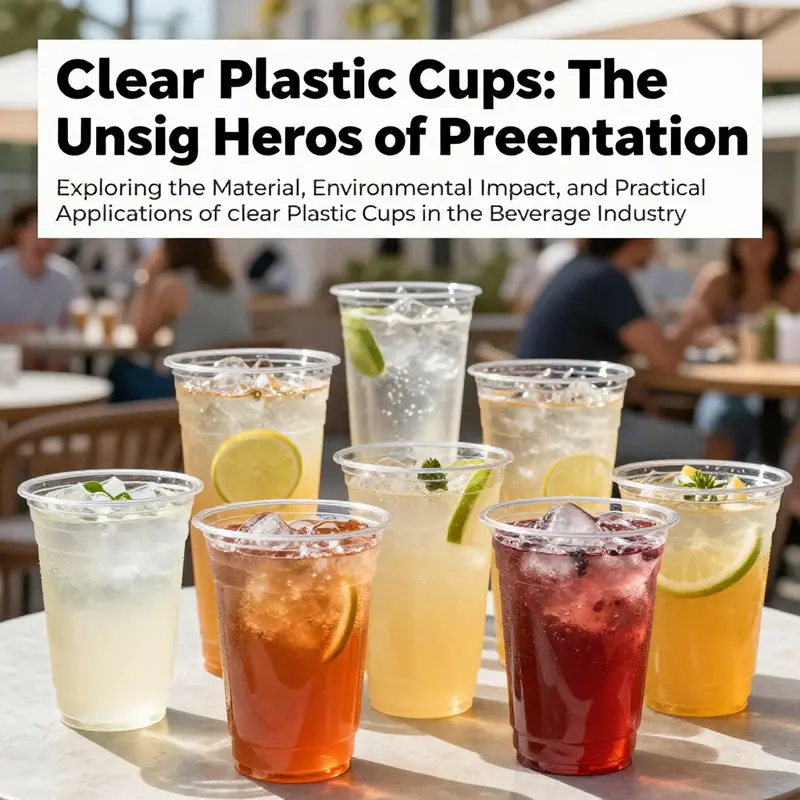
Clear plastic cups have emerged as essential tools across various sectors, especially in beverage service. Their visual clarity and practical usability make them a favorite among bubble tea shops, restaurants, food trucks, and catering services. Understanding the chemistry behind these cups, as well as their environmental implications, can help businesses make informed choices. This exploration covers the core materials—polypropylene and polystyrene—highlights their sustainability features, and showcases practical applications that make these cups indispensable in hospitality, engineering, and corporate procurement. Each chapter builds on the previous one, forming a comprehensive look at how clear plastic cups serve multiple purposes, catering to both consumer preferences and industry innovations.
Seeing Through Strength: The Chemistry and Choice Behind Clear Plastic Cups

Clear plastic cups are more than containers for beverages; they are small but telling demonstrations of polymer science in everyday life. When a customer twists a cup in her hand or watches a lemonade shimmer through a transparent wall, she is witnessing a material story about clarity, strength, safety, and how those traits are balanced to fit a purpose. The chapter topic here centers on two polymers that dominate the scene in clear cups: polypropylene and polystyrene. Each brings a distinct profile of performance, cost, and sustainability considerations to the table, and together they illuminate why a seemingly simple cup can reflect a complex engineering decision. The choice between these materials echoes a broader pattern in consumer packaging: clarity is essential, but it must be paired with durability, temperature tolerance, and a realistic view of end-of-life recycling.
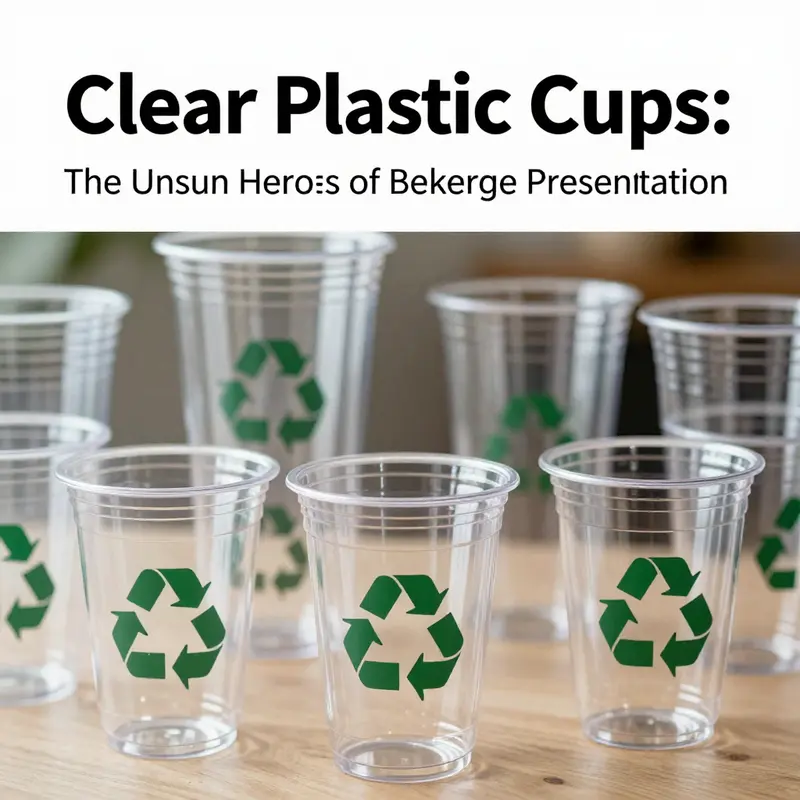
Polypropylene, often designated by the resin code #5, is the workhorse of many modern clear cups. It is a widely used thermoplastic known for excellent chemical resistance and a relatively high melting point, which sits around 160°C. This combination translates into practical benefits: the same cup that holds a cold smoothie can, in the right conditions, withstand hotter beverages or steam-filled environments without warping or releasing unwanted flavors. Its inherent clarity is another significant advantage, enabling product visibility and consumer appeal while maintaining a clean, glass-like appearance. Importantly, polypropylene is BPA-free and food-safe, aligning with rigorous health standards for direct contact with consumables. These safety assurances are crucial in homes, schools, offices, and daycare centers where repeated use is a real concern. A further sustainability edge for PP is its recyclability. The material can be reprocessed into new products, contributing to a circular approach that is increasingly prioritized by manufacturers and policymakers alike. In practice, this means that a reusable PP cup can outlast a single-use lifecycle when treated with care, and the material can re-enter production streams, reducing raw material demand over time.
Compare this to polystyrene, designated by resin code #6, which is a cornerstone of low-cost, clear and rigid disposable cups, especially for cold drinks. Polystyrene’s appeal lies in its optical clarity, rigidity, and low manufacturing cost. These attributes make PS-based cups common in fast-food and convenience settings where price and straightforward performance are decisive. However, PS has notable limitations. Heat resistance is lower than PP’s, which makes PS a less reliable option for hot liquids or long-term heat exposure. This can matter at events or venues where beverage temperatures rise quickly or where cups are pre-filled and left out. The environmental story of PS is more complicated. Technically recyclable, PS recycling systems are often underperforming due to logistical challenges and limited market demand, which can mean that many PS cups do not complete a robust end-of-life loop. The result is a tension between affordability and long-term environmental persistence, a tension that stakeholders continually weigh as they plan inventory, storage, and waste management.
Beyond intrinsic properties, the two polymers offer different pathways for practical use. PP’s durability and higher thermal stability support both reusable small cups and bulk, everyday use in homes, schools, offices, and care settings where cups are emptied, washed, and reused. In contrast, PS remains widely used in cold-drink service where the goal is a low-cost, readily disposable option. For lab-like or industrial contexts, the appeal of PP often extends further: dimensional stability, chemical resistance, and consistent optical clarity are not merely consumer-facing attributes. Engineers and technicians rely on these qualities when measuring, mixing, or storing liquids in controlled conditions. In such settings, tight tolerances and predictable performance reduce the risk of readouts or results being compromised by the container itself. The broader engineering principle here is that material selection must align with the operating environment. A cup is not just a container; it is a designed interface between liquid and instrument, between the user and the product it protects or serves.
This material calculus also informs how we think about cleaning, reuse, and hygiene. Many modern clear plastic cups are designed to withstand dishwasher cycles, which simplifies cleaning in bulk settings—from cafeterias to event spaces. Dishwasher durability is not a trivial feature; it translates into cost savings, time efficiency, and a lower risk of residual contamination when cups are reused. Yet the decision to reuse must consider the mechanical fatigue of the chosen polymer, the wear-and-tear of repeated cycles, and the specific temperatures used in washing. In practice, PP cups often outperform PS cups in long-run reuse scenarios, thanks to their higher heat tolerance and robust structural integrity. For consumers who are considering sustainability, this distinction matters. Choosing a PP-based option for reuse aligns with a lifecycle approach that seeks to minimize waste and leverage materials that can re-enter production streams rather than accumulate in landfills.
In the realm of measurement, testing, and controlled environments, the material properties of PP and PS reveal why clarity and stability matter beyond appearance. Dimensional stability ensures that the cup retains its shape and volume under varying temperatures and handling conditions. Chemical resistance protects the contents from unintended interactions with the container, preserving flavor and safety. Optical clarity supports a consistent user experience, letting consumers gauge fill levels at a glance. These properties are not merely technical footnotes; they shape how cups perform in coffee shops, catering operations, laboratories, and retail displays. The resin-code framework—#5 for PP and #6 for PS—serves as a shorthand in manufacturing and recycling networks, guiding processes from melt flow and thermoforming to sorting and end-of-life recovery.
For readers who think about packaging strategy as a balance of form and function, these material choices illuminate a practical pathway. If the priority is durability and a broader path toward reuse, polypropylene offers a compelling blend of thermal resilience and recyclability. If cost constraints and ultra-clear presentation for short-term, cold-drink service dominate the project brief, polystyrene remains a viable option, provided the end-of-life challenges are acknowledged and managed. This interplay between performance and sustainability is not a single verdict but a spectrum of trade-offs that designers and operators navigate. Even within a single product line, designers may select a PP or PS formulation based on the intended service context—hot versus cold, single-use versus multi-use, local recycling infrastructure versus regional waste streams.
Readers exploring related packaging options might find useful context in the broader packaging ecosystem, including examples that combine transparency with a different material ethos. For instance, a related set of solutions explores how clear plastics interact with alternative packaging forms, including packaging combinations that integrate clear plastic with other materials. See the related example here: disposable-biodegradable-kraft-paper-matt-lamination-clear-plastic-combo-pastry-dessert-tiramisu-cake-food-container-packaging. While not identical to a polypropylene or polystyrene cup, this link illustrates how transparency, compatibility, and sustainability questions intersect across packaging categories, underscoring that material science remains a dynamic decision engine across the entire container landscape.
In reflecting on the material science of clear cups, it is helpful to consider the end user’s context: from a casual backyard gathering to a hospital break room, from a campus coffee station to a laboratory bench. The straightforward wish for a cup—clear, safe, reliable—unlocks a chain of design choices about polymers, processing, and end-of-life. These cups carry the imprint of resin codes, processing temperatures, and the logistics of recycling streams. The dialogue between PP and PS is thus more than a debate about cost or appearance; it is a story about how materials are selected to harmonize safety, performance, and environmental responsibility in a world where every sip and spill leaves a trace. For researchers, students, and practitioners, understanding these material differences empowers more informed decisions—whether you are refreshing a product line, evaluating supplier options, or planning a sustainability-focused packaging strategy. And as consumer expectations evolve toward greater transparency and responsibility, the role of polymer science in shaping the everyday cup will only grow more nuanced, precise, and essential for designers who aim to keep clarity and integrity at the forefront of usable packaging.
External resource: https://www.plasticsnews.com/industries/plastic-ware/understanding-the-materials-in-disposable-plastic-cups
null
null
Crystal Clarity in Service: The Strategic Role of Clear Plastic Cups in Hospitality and Event Management

Clear plastic cups occupy a paradoxical space in hospitality and event management. They are at once modest and essential, unassuming in appearance yet central to how a venue presents itself, serves, and handles high volumes with consistent speed. Their transparency is not merely a visual cue; it is a practical tool. When guests can see the contents clearly, they perceive freshness, portion control, and cleanliness more readily. In fast-paced settings, such immediacy translates into smoother service, faster replenishment, and fewer questions about what is in the cup. For managers overseeing large teams, this clarity becomes a quiet but powerful ally in maintaining service standards from the first pour to the last sip of a long event. The appeal extends beyond perception. Clear plastic cups are typically constructed from plastics that are safe for food contact and free from bisphenol A, aligning with contemporary expectations around health and safety while preserving the practical benefits that make them a staple for high-volume operations. The choice of material, such as polypropylene or polystyrene, matters as much as the decision to deploy a disposable or reusable option. These polymers offer a combination of rigidity and lightness that suits the demands of crowded venues, where cups must withstand rapid handling, stacking, and occasional rough transport without compromising reliability. In many contexts, their clarity remains an asset even as handling evolves from grab-and-go to more curated beverage experiences, where guests expect a clean, unobtrusive presentation of drinks and desserts alike. The simplicity of a clear cup allows the drink or dessert to take center stage, while the container itself stays quietly functional. This interplay between form and function is why clear cups appear in the service lineups of outdoor festivals, corporate functions, weddings, and approximation of café-style service at scale. They are designed to be affordably produced, shipped, and stored in bulk, enabling venues to forecast expenses with confidence and to manage inventory with a straightforward, uniform system. Their low per-unit cost relative to glass or other premium vessels means that operators can refresh stock more frequently, ensuring that every service point has a consistent presentation and reduced risk of breakage. The practical advantages extend into operations logistics. A 16-ounce polymer cup, for instance, is engineered for strength and reduced breakage risk, which matters when staff are rushing to fill lines or when cups must survive the jostling of close-quarter service. This durability, paired with a light weight, reduces handling fatigue for servers who must carry multiple cups at once, whether delivering beverages across a banquet hall or refilling drink stations during a conference break. In bulk settings, the ability to stack, nest, and transport these cups efficiently translates into tangible cost savings—lower shipping fees, reduced storage space, and quicker restocking. The aesthetic value should not be underestimated either. The clean, transparent surface showcases the beverage’s color, volume, and character, making even simple iced drinks look appealing. This visual appeal matters for customers who judge quality at a glance, especially when presenting beverages at outdoor events where lighting and ambient conditions can distort color perception. The same principle applies to desserts and cold treats. A clear cup can encase layered desserts, fruit cups, or gelato-style servings, allowing the color and composition to shine through. Savvy operators often pair cups with spoons or other utensils to streamline the guest experience. The combination enhances service flow at ice-cream stations, smoothie bars, or self-serve beverage corners, where guests appreciate the convenience of a single container that holds both liquid and accompanying toppings or utensils. Even within the laboratory or testing environments where precision matters, the same attention to optical clarity and dimensional stability that makes clear cups reliable also supports accurate measurement, mixing, and storage of liquids. The cups’ design is not accidental; it reflects a careful balance of optical properties, chemical resistance, and dimensional tolerance that ensures consistency across batches and suppliers. The practical implications reverberate through budgeting, where managers weigh the trade-offs between disposable and reusable options. Clear plastic cups present a compelling case for many operations because they combine low upfront costs with predictable ongoing expenses. In large, recurring events, this predictability is invaluable. It allows planners to forecast waste streams, logistics, and staffing needs with a degree of certainty that is harder to achieve with more premium materials. Yet there are boundaries to their use. Temperature sensitivity remains a meaningful caveat. Clear plastic cups are generally not suited for high-heat applications, such as hot coffee or soup, where the plastic may warp or degrade. In scenarios requiring heat tolerance, alternative packaging—often metal or specialized insulated vessels—delivers superior performance. This limitation should be anticipated in menu planning and event design. A well-structured approach to choosing cups recognizes not only the economics but also the guest experience and safety considerations. When a venue prioritizes speed, volume, and a clean aesthetic, clear cups excel as the backbone of service. Their versatility extends beyond beverages to desserts, samples, and even small portions of cold foods in tasting stations, where their neutral look ensures the focus remains on flavors and textures. The broader supply chain benefits from the standardization that clear cups enable. Operators can rely on uniform sizing across outlets, simplifying training, inventory, and waste management. This uniformity reduces the cognitive load on staff and helps ensure consistent guest experiences from kitchen to service line. The conversation about sustainability is not sidestepping the economic case. Clear plastic cups that are designed for reuse through dishwasher-safe properties extend this value proposition by enabling bulk operations to cycle cups efficiently, while still offering the convenience that many guests expect in today’s service environments. For venues seeking to blend speed with environmental responsibility, reusing cups where feasible and selecting materials with high recyclability can align operational goals with broader sustainability targets. In this light, the capacity to reuse, recover, and recycle becomes part of a holistic service model that respects both cost efficiency and environmental stewardship. A thoughtful procurement strategy acknowledges the full lifecycle of the cup—from raw materials to end of life—without sacrificing the clarity and reliability guests value. As with any material choice in hospitality, the decision is about balancing competing priorities: cost, performance, guest perception, safety, and sustainability. By embracing the inherent strengths of clear plastic cups and by recognizing their boundaries, operators can design experiences that are efficient, visually appealing, and practically sound. For those exploring alternatives or complements, a related option worth considering is the broader family of cup formats that can be used in tandem, including multi-size disposable options that accommodate different service contexts while maintaining a consistent visual language. See for example this related range: disposable double-wall craft paper cups multi-size 6-24 oz. In all cases, the core idea remains clear: the container should support the beverage, protect the guest, and contribute to an efficient, memorable service experience. These cups are not merely vessels; they are enablers of scale, speed, and presentation that keep hospitality moving with confidence. When planned thoughtfully, the choice of a clear plastic cup becomes a strategic lever in delivering consistent quality across events of any size, while maintaining the crisp, inviting look that guests expect in modern service environments. External standards and guidelines continue to inform the safe use of these materials, ensuring that what reaches the table adheres to safety and quality expectations. For reference, see the ISO standard noted in the detailed research results, which outlines the migration and safety criteria for food-contact plastics. External resource: https://www.iso.org/standard/92354.html
Clear Frames, Precise Flows: Engineering Applications of Transparent Cups in Micro-Scale Measurement and Mixing
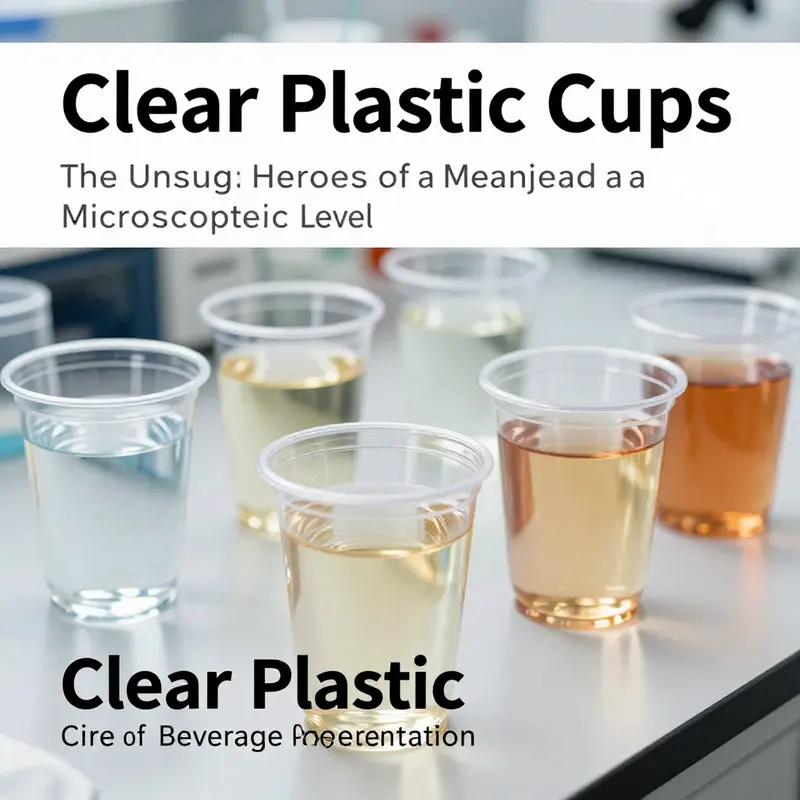
Clear plastic cups are often perceived as everyday wares, slipping quietly into the background of daily life. Yet when viewed through the lens of engineering and science, these transparent vessels reveal a surprising depth of function. Their clarity is not mere aesthetics; it is a practical feature that enables real-time observation of reactions, separations, and phase changes at scales that demand meticulous attention to volume, surface interactions, and chemical compatibility.
In engineering contexts, even small choices—wall thickness uniformity, material composition, and surface finish—can ripple into measurable differences in repeatability and reliability. The result is a class of cups that, far from being disposable props, act as precise, engineered components within micro-measurement and micro-mixing workflows. The interplay of material science, manufacturing, and application-specific demands makes clear plastic cups a surprisingly fertile ground for exploring how a simple container can embody rigorous design principles.
The precision demanded by micro-scale applications is not only about what the cup is made from but how it is made. Injection molding yields consistent wall thickness and calibrated volumes, ensuring that repeated fillings reflect true quantities rather than manufacturing variance. In resin casting, for example, 8oz reusable measuring cups can serve as compact, repeatable vessels where accuracy matters for the resin’s polymerization kinetics, cure times, and color development. The transparent walls allow technicians to monitor resin. Any entrapped air bubble, separation line, or resin bleed can be observed instantly, enabling real-time adjustments. In small-scale paint formulations or adhesive tests, the same visual feedback is equally valuable. The combination of precise volumes with immediate visibility reduces the chance of compounding errors and supports rapid prototyping cycles, where a handful of milliliters can determine the viability of a concept before larger investments are made.
Beyond conventional consumer-like use, clear cups are increasingly embedded in microfluidic and lab-on-a-chip oriented workflows. In these contexts, researchers might push the boundaries of what “cup” means by integrating microchannels or microstructured interiors into the broader concept of a clear vessel. Even when a cup is not a microfluidic device in the strict sense, its transparency allows researchers to watch fluid movement, mixing fronts, and reaction boundaries with minimal interference. In early-stage prototyping, a 30ml micro-measuring vessel can act as a test bed for reaction schemes, allowing researchers to adjust reagent addition in small increments while visually confirming the progression of the system. The ability to observe color changes, phase separation, or turbidity in real time is a fundamental advantage that supports rapid iteration and optimization.
Another dimension of engineering practicality is the cups’ durability under repeated handling and exposure to reactive environments. Multi-layer or reinforced transparent cup designs, while preserving clarity, provide a level of resilience essential for high-throughput environments such as automated testing stations. In such settings, wall integrity matters: a crack or warping during a critical measurement can introduce variability that corrupts data. The engineering solution lies in combining material stability with controlled surface properties and calibrated geometry. Researchers and technicians rely on these carefully engineered attributes to maintain dimensional stability under thermal and mechanical stress, especially when small volumes are subjected to mixing, heating cycles, or solvent exposure. The net effect is a set of clear cups that behave like robust accessories rather than fragile containers, enabling reliable, repeatable experiments across sessions and operators.
The theme of observation-driven design extends to the measurement and mixing workflows themselves. In micro-measuring contexts, precise volumes are pivotal. A 30ml mini-cup, marked with calibrated graduations, offers a ready-made solution for transferring tiny quantities with a known degree of accuracy. The user can visually verify the meniscus, confirm the absence of air pockets, and document the exact volume that was introduced into a reaction mixture. In micro-mixing tasks—such as resin formulation, adhesive testing, or colorant blending—the cups function as the smallest practical vessels for staged additions. Transparent walls allow the practitioner to track mixing efficiency, observe stratification, and gauge homogeneity. The feedback loop is immediate: adjust a ratio, observe, record, and proceed. This inline visibility accelerates the design-build-test cycle that typifies engineering prototyping.
In addition to these functional advantages, clear plastic cups also serve as a bridge between laboratory and field contexts. They are compact, portable, and compatible with limited-space environments, whether in a temporary test rig, a field station, or a compact benchtop. Their lightweight form factor reduces fatigue during long sessions of sample handling, while their chemical resistance and ease of cleaning support hygiene and waste management protocols. It is not uncommon for engineers to employ dishwasher-safe or easily sanitized cups in bulk settings when pilot runs generate large volumes of samples or when multiple teams must share equipment. The practical synergy of portability, safety, and reusability further underscores the cups’ value in real-world workflows.
Clarity, Craft, and Responsibility: Market Currents in Clear Plastic Cups
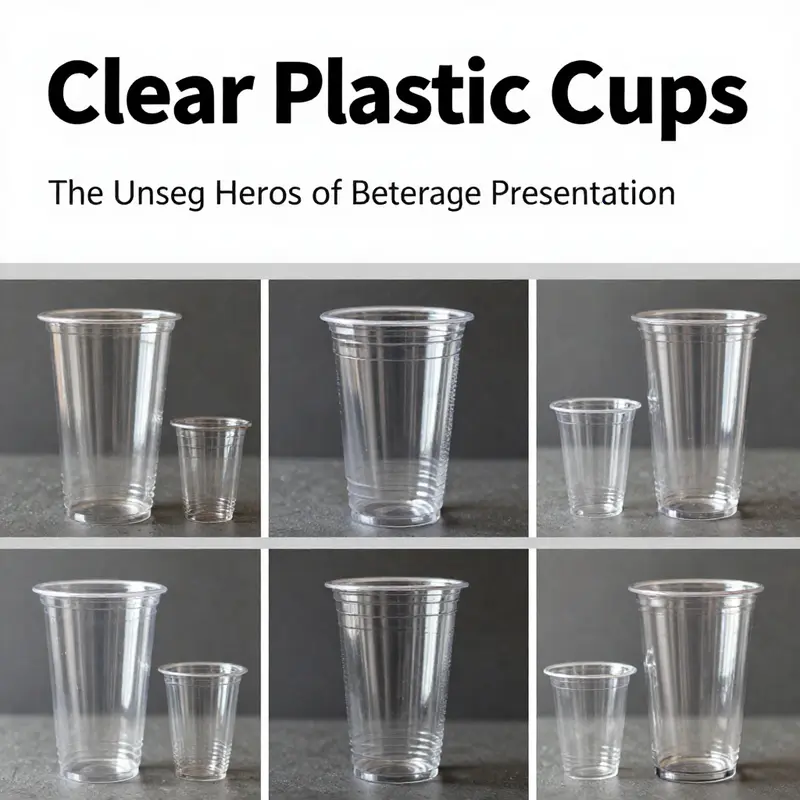
Clear plastic cups occupy a remarkable intersection of utility, perception, and responsibility. They are not merely vessels but cultural artifacts that shape how we drink, share, and think about packaging. In homes, offices, events, and laboratories, these cups have stabilized as a practical standard. They are typically produced from high-quality, BPA-free plastics such as polypropylene and polystyrene, chosen for safety, optical clarity, and dependable performance. The result is a lightweight, versatile container that can carry everything from iced coffee to laboratory samples. What this chapter reveals is a market in motion, where consumers expect not only reliability and cost-effectiveness but also transparency in appearance, handling comfort, and a thoughtful approach to environmental impact. The conversations around clear cups are increasingly about the whole lifecycle—from material choice and manufacturing practices to end-of-life options and consumer education—because the same object can be a symbol of convenience or a reminder of waste, depending on how it is used and disposed of.
The defining feature of the category remains transparency. People want to see their drink—the color, the texture, the layers that tell a story of freshness and flavor. This visual clarity is valued across hot and cold applications alike, from a bold, dark roast poured into a crystal-clear cup to a vibrant smoothie that reveals fruit layers. Yet clarity is not only an aesthetic trait. It is a practical attribute that supports hygiene and quality control: you can detect spills, separation, or contamination at a glance, which is especially important in crowded service environments. The emphasis on visibility naturally aligns with ergonomic design too. Cups are evolving to fit a user’s grip with gentle contours, balanced rims, and comfortable lips to ensure a pleasant sip during rushing commutes or long receptions. When paired with lids and straw access, these cups transform into a reliable system that minimizes mess, speeds service, and protects beverages in transit. The design language is deliberately simple, letting the drink speak for itself while the form supports confident handling.
In the broader context of science and industry, clear cups serve a dual role. In laboratories and product-testing settings, their dimensional stability and chemical resistance are essential. The precision of wall thickness, the predictability of heat transfer, and the reliability of measurements all hinge on consistent material properties. The advantage of a truly clear container is not merely cosmetic; it enables researchers and engineers to observe reactions, color changes, and separation phenomena without ambiguity. This is more than a convenience—it is a safeguard for accuracy in experiments, sample preparation, and quality assurance. The same properties that give researchers confidence—clarity, stability, and inertness—also translate into everyday reliability for consumers who rely on these cups in home kitchens and commercial spaces.
As consumer behavior shifts, market trends illustrate a nuanced balance among function, aesthetics, and sustainability. Aesthetic appeal now extends beyond mere transparency. Ergonomic forms and tactile comfort contribute to on-the-go usability, and fashion-forward prints and branding can still be applied to the clear surface without obscuring visibility. The cups’ visual neutrality becomes a canvas for branding and personalization, supporting a wide range of service contexts from corporate events to casual gatherings. At the same time, environmental considerations press for change. The industry is moving toward sustainable innovations, increasingly focusing on recyclable and biodegradable materials, reduced material usage, and designs that encourage reuse where feasible. While single-use cups remain prevalent due to hygiene and convenience, the push for eco-friendly alternatives is robust. Innovations span from material substitutions to clever machining and coating technologies that preserve optical clarity while enhancing end-of-life outcomes. The overarching objective is not to abandon disposables wholesale but to reframe them within a lifecycle-aware framework that nudges users toward responsible choices.
There is also a pricing dimension that quietly shapes behavior. Charges for disposable cups, combined with discounts for reusable options, can nudge consumers toward more sustainable practices. The economics become clearer when the cost of a single-use cup is weighed against the value of a reusable system, especially in venues with high turnover or repeated events. Transparent environmental information and clear disposal guidance further influence decisions, helping consumers connect purchase choices with stewardship. Yet performance remains non-negotiable. Clear cups must withstand a spectrum of beverages—from piping hot coffee to icy blends—without warping, sweating, or leaking. The engineering challenge is to maintain optical clarity and structural integrity while presenting predictable costs for operators, institutions, and households. This is where the balance among performance, aesthetics, and sustainability becomes a competitive differentiator for suppliers who can deliver on multiple fronts at once.
Compatibility and convenience are increasingly central to the mix. Modern cup systems emphasize the synergy between cups, lids, straws, and sleeves. A cohesive ecosystem reduces service times, minimizes spills, and reinforces temperature control, all of which matter to consumer satisfaction in busy environments. The emphasis on interoperability extends into branding opportunities as well. A clear cup provides a prominent stage for logos or messages, letting the content shine through while the ancillary print communicates identity and intention. The best designs acknowledge that visibility is a two-way street: the drink feels more vibrant when the container is pure and undistracted, yet branding can be tastefully integrated without obscuring the beverage itself. In this sense, clear cups embody a design philosophy that favors essentialism—clarity in function and form—paired with responsible material choices that signal environmental mindfulness.
A concrete example of how clarity and environmental intent can coexist appears in product configurations that blend paper-based sustainability with clear-plastic elements for specific uses. For readers exploring real-world packaging solutions, see this option: disposable-biodegradable-kraft-paper-matt-lamination-clear-plastic-combo-pastry-dessert-tiramisu-cake-food-container-packaging. The idea is not to imitate but to illustrate how different materials and finishes can be integrated to achieve both visibility and end-of-life considerations. It signals an industry trend: packaging systems are becoming more modular, with clear elements used where visibility is valued while other components are selected for their sustainability credentials. This kind of cross-material thinking broadens the horizon for what a “clear cup” can mean in practice, inviting designers to explore hybrid solutions that maintain clarity while respecting environmental constraints.
Looking ahead, the market is poised to refine these trajectories rather than abandon them. Advances in polymer science, coatings, and molding techniques are likely to yield walls that use less material without compromising strength or clarity, while recycling streams become more accessible and efficient. The education of buyers—whether students, lab technicians, or hospitality managers—will play a central role in shaping demand. When customers understand the trade-offs between transparency, durability, and lifecycle impact, they can make choices that reinforce sustainable procurement and usage patterns. Clear cups may also increasingly reflect local recycling capabilities and regulatory contexts, evolving from a generic product into a component of regionally tailored packaging strategies.
In sum, the trajectory of clear plastic cups is a story about aligning visible appeal with dependable performance and responsible practice. It is a narrative in which material science, ergonomic design, and environmental stewardship converge to redefine what the simplest beverage container can achieve. The cups themselves remain efficient vessels, but their meaning expands as users, manufacturers, and policymakers collaborate to reduce waste, extend reuse, and keep the drink in focus. As this interplay continues, the future of clear cups will likely hinge on transparent communication about life cycles, continuous improvement in performance, and a willingness to adopt packaging solutions that honor both the drink and the planet.
External resource note: This perspective aligns with current market analyses of plastic cup trends and the push toward sustainability in beverage packaging. For a broader view of market dynamics and regional differences, see external research here: https://www.marketresearchfuture.com/reports/plastic-cup-market-19548
Final thoughts
In conclusion, clear plastic cups are more than just disposable tableware; they embody a blend of scientific innovation, consumer demand, and environmental consciousness. Their robust material properties ensure reliability in multiple settings—from casual events at food trucks to formal gatherings in corporate environments. By understanding the implications of the materials used, the environmental impact, and the practical benefits offered, businesses can continue to leverage these cups effectively. Their role extends far beyond simplicity, proving essential for those in the beverage industry while aligning with modern sustainability goals.