

Sustainability is no longer an afterthought; it’s a core value driving choices in the beverage industry. Super compostable paper cups represent a significant step forward in this movement, offering businesses a robust alternative to environmentally harmful plastic options. These cups, made from renewable resources and coated with plant-based materials, promise not only high durability but also a fully compostable lifecycle—addressing the urgent need for sustainable practices among bubble tea shops, restaurants, food trucks, and event planners. In the following chapters, we will delve into the technological advancements behind these cups, examine their economic impact, consider geopolitical perspectives, and highlight societal trends pushing for their adoption. Together, these elements will provide a comprehensive understanding of the pivotal role super compostable paper cups play in a greener future.
Technological Advances in Super Compostable Paper Cups
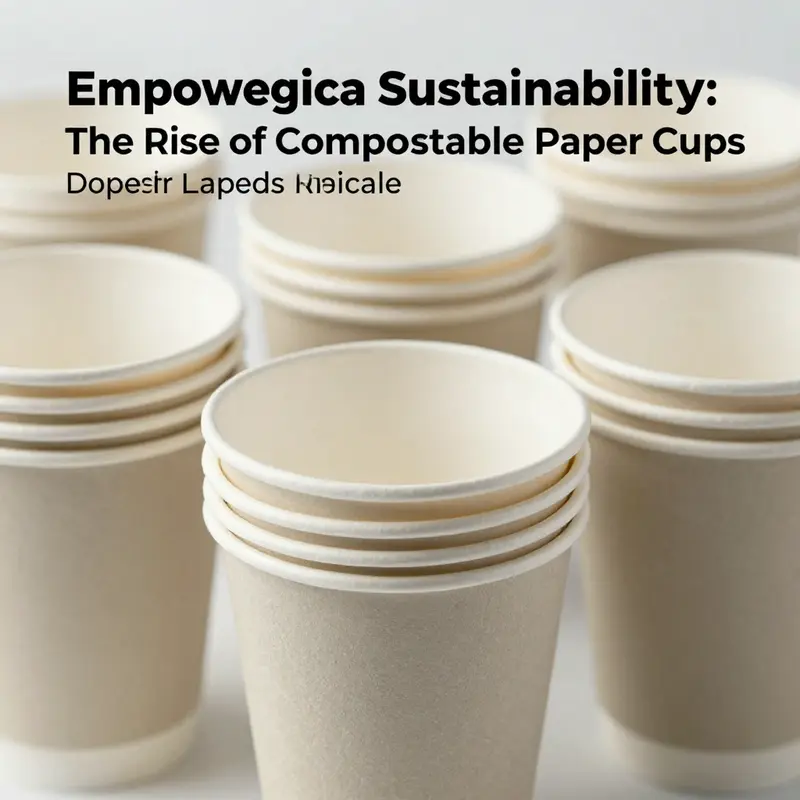
Technological advances in super compostable paper cups have emerged as a quiet revolution in how we think about disposable drinkware. The arc of this evolution begins with a fundamental shift away from petroleum-based linings toward plant-based barriers that keep beverages from soaking the cup wall while preserving the integrity of the fiber. The industry is moving beyond single-layer solutions toward multi-layer constructions that pair renewable fibers with carefully calibrated coatings. The result is a cup that not only performs under pressure—holding hot coffee, tea, or even soups at elevated temperatures—but also moves reliably toward composting streams in industrial facilities. The heart of this transformation lies in reimagining both material composition and the way waste streams are managed. When the lining itself is derived from nature and designed to degrade within industrial composting processes, the entire life cycle of the cup shifts from a linear path of production and disposal to a circular loop where waste becomes input for future products or energy. This is not mere tinkering with packaging; it is a reengineering of durability, safety, and end-of-life outcomes that affects producers, retailers, and consumers alike.
The material choices underpinning these cups are central to their performance and sustainability credentials. Recycled paper and tree-free fibers such as sugarcane bagasse or bamboo provide a renewable base that can be transformed into rigid, water-resistant walls without sacrificing recyclability or compostability. The coatings used to create a moisture and grease barrier are increasingly plant-based, with polylactic acid (PLA) and other bio-based polymers playing a critical role. These materials are designed to break down under industrial composting conditions, typically yielding water, carbon dioxide, and organic matter rather than lingering residues. The challenge for designers is to balance barrier properties with compostability. The coating must resist soaking and grease for hours, yet not hinder the cup’s eventual fate in an industrial facility. This delicate balancing act has spurred innovations in barrier chemistry and adhesion, pushing researchers to develop coatings that fuse performance with environmental compatibility. The practical effect is a cup that can sustain hot beverages at temperatures approaching 200°F (93°C) without warping or leaking, while remaining faithful to its end-of-life promises.
Durability is another centerpiece of the modern super compostable cup. Early compostable cups often relied on thinner walls that could deform when exposed to heat or pressure. The new generation adds structure through double-wall designs, reinforced rolled rims, and thicker bases, all engineered to maintain shape and resist deformation during transport and serving. These features are not mere luxury touches; they translate into real-world benefits for baristas and customers alike. A cup that preserves its form during a busy morning rush reduces spill risks, improves pour accuracy, and reinforces a sense of reliability in a product that must perform as well as conventional options. The mechanical resilience of these cups is matched by improvements in surface finish. The rims are burr-free and the mouth is smooth, offering a hygienic and comfortable drinking experience. Even in the case of cold beverages, the structural cues matter—slosh prevention, snug lids, and stable bases all contribute to a more seamless consumer interaction with a product designed to be disposed of in the correct industrial facility rather than discarded as waste.
The forward motion in materials science is complemented by process innovations that make these cups feasible at scale. Manufacturing teams are refining slurry casting methods, coating application techniques, and lamination processes to ensure uniform barrier coverage without introducing defects that would compromise compostability. Adhesives used in assembly are increasingly bio-based or fully integrated into the fiber panel, reducing or eliminating residual synthetic components at the interface between layers. The aim is a product whose entire makeup—fiber, binder, coating, and sealant—collaborates to degrade in concert rather than leaving isolated pockets of resistant material. This coordination is essential for maintaining performance during use while ensuring predictable behavior in composting facilities. It also demands a new alignment of production lines, quality control protocols, and supply chains that can certify consistent performance across batches and regions.
From a waste-management perspective, the shift to fully compostable barriers and fiber-based designs dovetails with a larger push toward circular economy models. When cups are designed to be composted industrially, the waste path is no longer a one-way street but a route that can enrich soil or feed energy recovery streams. In practice, this means that the cup leaves the consumer’s hands as a clean, certified input for compost facilities, where it contributes to soil amendment programs or renewable energy generation instead of contributing to perpetual waste in landfills. Certifications play a crucial role here. Recognized programs that validate industrial compostability and recyclability help ensure that the cup will behave as intended in the right facility. These standards, while rigorous, provide a shared framework that helps manufacturers, waste managers, and retailers communicate clearly about end-of-life expectations. The presence of credible certification helps separate truly compostable solutions from products that merely claim to be biodegradable, a distinction that has historically led to public misunderstanding and improper disposal.
The consumer experience is also evolving in meaningful ways. Branded printing on compostable cups is now commonly available, enabling businesses to project their sustainability commitments through visual identity. The ability to employ CMYK print or even more complex branding while maintaining compostability is a strategic advantage. Brands can convey a message that aligns with environmental stewardship without sacrificing the professional appearance of take-away packaging. For example, printing capabilities on eco-friendly paper cups support a consumer perception that sustainability and quality go hand in hand. Such customization is not just about aesthetics; it reinforces consumer confidence that the packaging aligns with the product inside and the values of the business behind it. A well-branded cup of this kind communicates a commitment to responsible consumption at the exact moment of purchase, reinforcing the narrative that sustainability is integrated into everyday choices rather than bolted on as an afterthought. This potential is part of why many businesses view these cups as more than disposableware; they are a platform for story-telling and brand trust in a world increasingly defined by environmental accountability.
As this technology path unfolds, the broader ecosystem around these cups—logistics, availability of industrial composting capacity, and consumer disposal behavior—takes on renewed importance. The best cup in the world can still fail if the end-of-life infrastructure is uneven or if consumers misinterpret disposal instructions. A cup designed for industrial composting assumes that it will be diverted from standard landfills to facilities equipped to process the material. Public education, clear labeling, and accessible municipal or private sector programs become integral to achieving the promised environmental benefits. In parallel, supply-chain reliability remains critical. The shift away from fossil-based barriers toward bio-based alternatives requires stable access to feedstocks, scalable manufacturing capacity, and robust recycling or composting streams that can absorb higher volumes as demand grows. The convergence of material science, process engineering, and waste-management policy is what ultimately makes the promise of super compostable cups not just feasible but transformative for multiple industries.
The significance of a milestone announcement in this field cannot be overstated. The introduction of the world’s first fully compostable and recyclable paper cup marks a pivotal moment—a clear signal that a true closed-loop option exists for one of the most ubiquitous items in global consumer culture. By removing the plastic lining entirely and relying on advanced biodegradable materials, this breakthrough demonstrates that compatibility with both composting and recycling streams is achievable in a single design. It is not merely about ending plastic use; it is about reconciling the demands of performance, safety, and end-of-life responsibility in a single product. The potential benefits are broad: reduced pollution from disposable cups, a more efficient conversion of waste to value, and a pathway toward a circular economy where cups become inputs rather than waste. For communities and businesses seeking to minimize environmental footprints, the implications are profound. The cup becomes a tangible artifact of a system-wide shift toward sustainability, signaling that industry, academia, and policy can align to deliver packaging that serves consumption without compromising planetary health.
The practical implications for hot-beverage service providers are particularly compelling. Operators face daily trade-offs between operational efficiency and environmental responsibility. The durable, heat-tolerant, and leak-resistant properties of modern super compostable cups reduce the risk of spillages during busy service periods and shorten cleanup times. Reliability in performance means fewer tray-side accidents and less product loss, which translates to improved cost efficiency and customer satisfaction. For the artisan and high-end operators who prize a premium experience, the premium feel of a double-wall cup, the smoothness of a burr-free rim, and the clean print finish on a compostable substrate contribute to a perception of quality that rivals traditional plastics—without the environmental baggage. Yet this is not a one-size-fits-all narrative. Operators must align cup selection with available disposal infrastructure, because a cup that is compostable in one region may require a different composting standard or even separate recycling streams elsewhere. The design, therefore, must be accompanied by clear disposal guidance and, ideally, the availability of accredited facilities that can responsibly process the collected cups.
Brand storytelling around sustainability is also becoming more nuanced. Beyond simply communicating that a cup is compostable, companies are showcasing how their supply chains are reimagined for circularity. This includes transparent sourcing of plant-based coatings, nuts-and-bolts details about barrier performance, and explanations of how end-of-life management is implemented across markets. Consumers increasingly expect not only a product that performs well but also a narrative that explains how the product avoids waste and minimizes emissions. In this sense, the cup becomes a small but meaningful ambassador for a broader sustainability program, signaling a company’s values and its willingness to invest in infrastructure that supports responsible consumption.
One practical path forward involves ongoing collaboration between cup designers, waste-management professionals, and policymakers. Regulators can drive adoption through standards that ensure industrial compostability and by supporting the expansion of composting facilities, especially in regions with limited infrastructure. Manufacturers can accelerate uptake by investing in scalable production lines, rigorous quality-control regimes, and flexible formats that meet different beverage categories—from hot coffee to cold smoothies and soups. The consumer experiences a tangible benefit in the stability and reliability of the cup, which can translate into greater willingness to participate in the composting program if disposal instructions are clear and accessible. The resulting ecosystem becomes a feedback loop: better materials and processes lead to more effective composting, which, in turn, informs future product iterations and policy development. This holistic approach to technological advancement emphasizes not only what the cup is made of, but how it lives in the world after use.
Finally, it is worth acknowledging the role of external resources in guiding this evolution. For readers who want to explore a landmark case and its implications in greater depth, an external resource provides a detailed account of the milestone development and its broader context in sustainable packaging. The linked material offers a technical and industry-wide perspective that complements the narrative of this chapter by anchoring it in a concrete example of what is possible when innovation, regulation, and market demand converge. This is not merely a triumph of material science; it is a demonstration of how thoughtful design, coupled with an organized waste-management framework, can redefine what it means to produce and dispose of everyday items.
For those seeking practical guidance on how branding and sustainability can coexist in this space, it is also valuable to consider how such cups can serve as a canvas for corporate responsibility without compromising usability. Some manufacturers now offer customization on compostable cups that preserves the integrity of the barrier and the compostability standard while enabling high-visibility branding. A notable example is the availability of eco-friendly printed-logo paper cups for take-away coffee, a solution that aligns a company’s visual identity with its environmental commitments. This convergence of aesthetics, functionality, and sustainability illustrates how modern cup design is not merely about replacing a plastic lining but about rethinking packaging as a platform for responsible business practice. As more players enter the field, these experiences become increasingly standardized, and the market begins to reward those who deliver performance, reliability, and clear environmental value in equal measure.
External resource for further reading: For more information on the milestone launch and its implications, see the external resource at https://www.internationalepapierwirtschaft.com/news/fully-compostable-paper-cup-launch-2026.
Internal link note: To see an example of branding integration on sustainable paper cups, consider the option of eco-friendly printed-logo take-away coffee cups, which demonstrates how a brand can communicate environmental responsibility while delivering a premium consumer experience. See example here: eco-friendly printed-logo paper cups for take-away coffee.
From Footprint to Fortune: The Economic Transformation of Super Compostable Paper Cups in the Beverage Industry
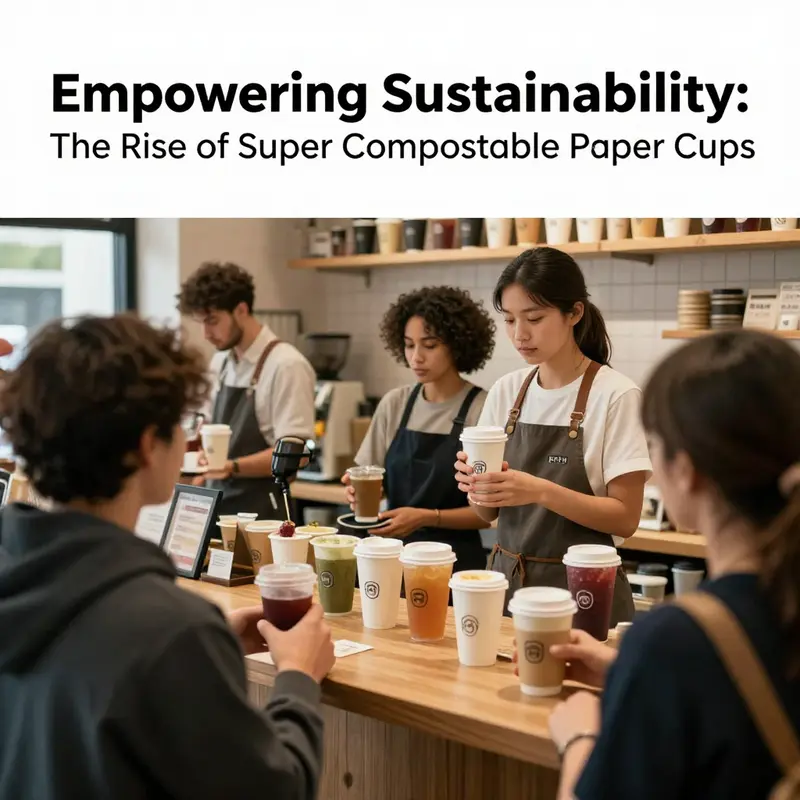
A shift in packaging material can look incremental from a distance, yet it often carries the weight of a broader economic transformation. The move from petroleum-based or PE-lined paper cups to super compostable variants is one such shift, where environmental responsibility and bottom-line performance begin to move in parallel rather than in opposition. In the beverage sector, where the cup is both a vessel and a brand touchpoint, the economics of super compostable paper cups reveal a layered story. It is a narrative that intertwines consumer expectations, regulatory pressure, material science, waste-management realities, and the strategic calculus of operators ranging from single-shop cafes to large catering networks. The chapter that follows explores this landscape, tracing how demand dynamics translate into measurable economic impact and how a more sustainable cup can become a lever for growth and resilience in a crowded market.
Market dynamics frame the foundation of this transformation. The biodegradable paper cup segment, which includes super compostable variants, was valued at around USD 2.5 billion in 2024 and is forecast to grow at a robust 8.5 percent CAGR from 2026 to 2033. Those numbers are not mere projections; they reflect a steady and widening willingness among consumers to accept or even demand packaging that aligns with environmental values. Urban markets, where coffee culture and on-the-go consumption are most intense, drive much of that momentum. In these environments, sustainability is not only a feel-good attribute but a practical differentiator that can influence choosing one cup brand over another, especially when the product performance—heat resistance, leak prevention, and comfort of use—remains non-negotiable. In this sense, the economic story of super compostable cups is inseparable from the story of consumer perception and trust.
Cost implications sit at the heart of adoption decisions. It is no secret that the upfront production costs for super compostable cups tend to be higher than for conventional PE-lined cups. The plant-based coatings, renewably sourced fibers, and sometimes more complex wall constructions contribute to a higher per-unit cost. Yet the economics bend in a favorable direction as scale, process innovation, and supplier competition mature. Achieving meaningful price parity or even a net cost advantage hinges on several factors: a supplier’s capacity to leverage economies of scale, the speed at which new manufacturing equipment can be deployed, and the ability of producers to optimize the supply chain for renewable materials. Government incentives for green manufacturing, subsidies tailored to circular economy initiatives, and reduced energy costs in cleaner production environments can further narrow the gap. For a business weighing instant price tags against longer-term value, the calculus extends beyond per-cup cost. It includes potential reductions in waste-management charges, eligibility for tax credits related to sustainable operations, and the premium that comes with aligning with a brand narrative centered on responsibility.
Long-term savings emerge not merely from disposal cost considerations but from a holistic view of waste, regulatory compliance, and customer loyalty. While industrial composting facilities are essential to achieving the full promise of these cups, the savings materialize in several ways. First, as cities and municipalities tighten rules around single-use plastics or non-degradable alternatives, brands that preemptively adopt compostable solutions can avoid late-sighting penalties, surcharges, or disruptive shutdowns in service. Second, some waste streams may be more efficiently sorted when the cups are clearly labeled as compostable and produced with transparent certification—an outcome that can streamline sorting facilities and reduce contamination, which in turn lowers processing costs. Third, the ability to demonstrate a credible sustainability posture can yield customer retention and attract new segments such as corporate clients that embed environmental criteria into procurement policies. A brand that can point to a compostability credential—verified by recognized certifications—often gains a multiplier effect in marketing, which can translate into higher sales volumes or at least a more stable demand profile as consumers increasingly favor purpose-driven brands.
Brand reputation becomes a strategic asset in this transition. Consumers are not simply purchasing a beverage; they are signaling values with every cup they choose. Compostable cups, when paired with transparent disposal guidance and clear certification, reinforce a narrative of stewardship. This alignment matters beyond transactions; it informs loyalty, repeat visits, and positive word of mouth in a marketplace where environmental seriousness is part of the value proposition. For operators, the reputational lift can translate into higher customer lifetime value and more favorable conditions in vendor negotiations for the broader sustainability agenda. It also supports compliance with local bans on certain single-use plastics, turning regulatory risk into a branding advantage rather than a cost burden.
Strategic moves among operators illustrate a deliberate orchestration of efficiency, sustainability, and customer experience. A growing number of beverage brands and their partners are recognizing that the transition to super compostable cups is not a purely ecological decision but a strategic business choice. By investing in printing capabilities that support CMYK branding on compostable cups, brands can maintain strong visual identity while signaling environmental leadership. This capability is particularly valuable in high-traffic settings such as coffee shops, food trucks, and corporate cafeterias where first impressions matter and the cup is a frequent touchpoint. The ability to print with consistent color, legible logos, and clear sustainability messaging helps create a cohesive brand experience across multiple locations, reinforcing trust and recognition. In parallel, manufacturers and distributors are pursuing upgrades to production lines that enhance durability and performance without compromising compostability. Double-wall constructions, reinforced rims, and stronger bases reduce leakage and deformation when hot beverages are served, which preserves user experience and minimizes returns or complaints that could erode brand equity. The combined effect is a packaging ecosystem that can deliver both quality and responsibility, a pairing that resonates with modern consumers and regulators alike.
At the material level, the economics of super compostable cups are anchored in advances that blend renewable fibers with plant-based coatings. Many cups use renewable fibers such as recycled paper or tree-free sources, coated with biobased films like PLA derived from corn starch instead of traditional petroleum-based plastics. This approach endows the cups with the necessary barrier properties to contain hot liquids while remaining fully biodegradable under industrial composting conditions. The durability features—thickened walls, reinforced rolled rims, and optimized seam construction—address one of the most persistent consumer concerns: performance under heat. Cups designed to withstand hot liquids at temperatures up to 93°C (200°F) minimize incidents of warping or leaks, which in turn reduces product waste and operational disruption. These performance characteristics are essential because they directly influence throughput and service reliability in busy venues. A smooth, burr-free rim and a polished mouth improve the drinking experience, contributing to customer satisfaction and repeat visits.
The operational implications of shifting to super compostable cups extend beyond the cup itself. Beverages and packaging ecosystems hinge on the availability of compatible disposal infrastructure. While industrial composting facilities are critical for realizing the environmental benefits, their geographic distribution and capacity can shape the economic outcome of adoption. Regions with robust composting networks may realize faster payback through streamlined waste streams and potential incentives, while areas with sparse facilities may experience transitional costs or mixed disposal results. This reality underscores the importance of aligning procurement decisions with regional waste-management capabilities and of communicating disposal guidance clearly to customers. In parallel, the certification landscape matters. Cups bearing recognized seals—such as those from credible environmental bodies—help ensure that end-users and waste processors have confidence in the product’s compostability. The alignment of material science, manufacturing practices, and certification standards is a central driver of both trust and economic performance.
The broader economic ripples of adopting super compostable cups extend through the supply chain. Packaging manufacturers invest in converting lines, extruders, and coating equipment capable of handling plant-based materials and certifications. Printing houses adapt to the demand for on-cup branding that maintains legibility and color fidelity on compostable substrates. Waste-management partners must develop or adapt collection streams, sorting protocols, and facility capacities to handle compostable packaging at scale. The cumulative effect is more robust green manufacturing ecosystems, potentially creating jobs and business opportunities in new verticals. The result is a more resilient supplier network that can weather commodity volatility in traditional plastics and paper markets, while also aligning with a shifting policy environment that increasingly prioritizes circularity.
From a strategic perspective, early adoption can yield a competitive edge that compounds over time. Brands that commit to compostable packaging early position themselves to meet evolving consumer expectations, satisfy regulatory timelines, and benefit from supplier incentives that favor sustainable production. This proactive stance can translate into share gains in a market where product differentiation often hinges on how a brand communicates value rather than simply the price point. It also creates opportunities for co-branding and customization, enabling companies to tell a more complete sustainability story through their packaging in tandem with product design, store design, and experiential marketing. The economics of such strategies are nuanced, but when combined with the right scale, supplier partnerships, and disposal infrastructure, they can yield a durable return on investment through revenue stability, cost management, and enhanced brand equity.
A note on implementation is essential. The pathway to profitability with super compostable cups is not a single-turn switch but a staged evolution. It begins with selecting a coating and fiber system that meet performance standards for heat resistance and leak prevention, coupled with a certification plan that assures end-users of compostability. It continues with partnerships that optimize procurement, logistics, and branding capabilities, and it culminates in a disposal strategy that leverages available industrial facilities and consumer guidance. In markets where disposal infrastructure is still developing, clear labeling and strong consumer education can help maximize the economic benefits by improving diversion rates and reducing contamination. The result is a more predictable waste stream and a more stable waste-management cost profile for operators who align their practices with local capabilities.
As this chapter closes, the economic impact of super compostable paper cups on the beverage industry emerges as a multi-layered proposition. It is a story of rising demand and strategic adaptation, where the questions that previously concerned only environmental outcomes now drive financial performance. The market dynamics point toward sustained growth, while the cost structure, when paired with scale and policy support, can deliver meaningful long-run savings and brand value. The strategic value rests not just in reducing environmental footprints but in transforming those footprints into brand trust, customer loyalty, and competitive differentiation. This is not merely a sustainability initiative; it is a growth strategy that aligns the economics of production with the economics of consumer choice and policy direction. For readers seeking a deeper technical and performance perspective, a comprehensive guide on performance, specifications, and industry application provides further insights into how these cups can be applied across diverse beverage contexts.
Internal link note: for a practical example of branding-focused, eco-friendly cup options, see the discussion of eco-friendly printed-logo paper cups with lids in the supplier catalog. This link illustrates how printing capabilities can harmonize with compostable materials to deliver consistent brand expression while meeting sustainability goals.
External resource: For a detailed technical overview of performance specifications and industry application, consult the following resource: Performance specifications guide.
Shaping the Circular Horizon: Geopolitics, Policy, and the Rise of Super Compostable Paper Cups
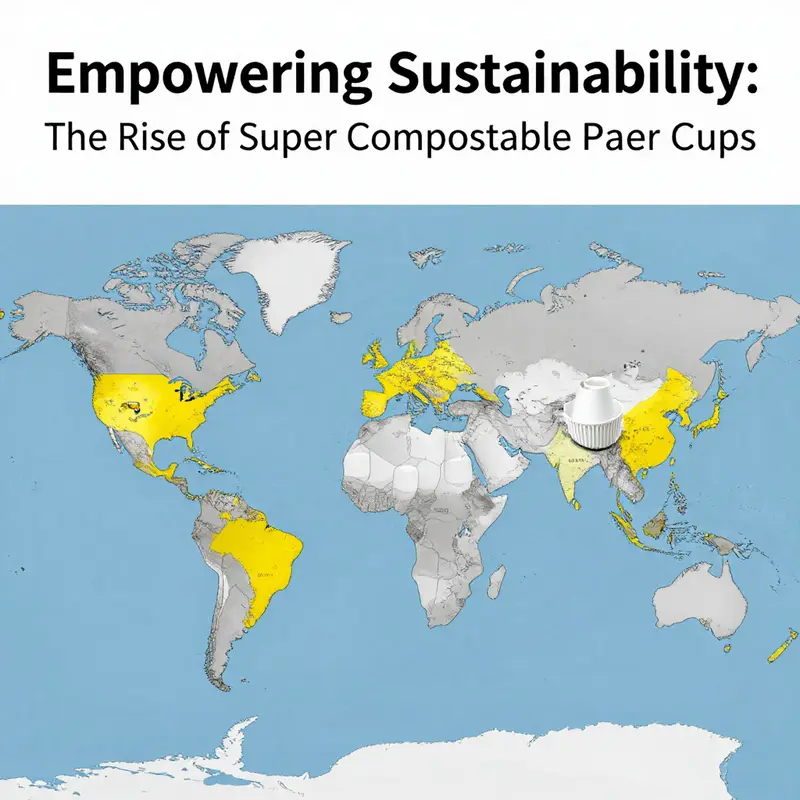
Geopolitics rarely rests quietly in the background of everyday convenience. When a disposable cup claims to be fully compostable, it signals more than a cleaner end of life for one-off beverages; it signals a bridge between policy design, economic strategy, and consumer behavior that stretches across continents. The emergence of super compostable paper cups sits at the intersection of regional regulations, supply chain agility, and national ambitions to lead in sustainable industries. To understand how these cups move from concept to common, one must trace the currents of geopolitics that shape not only what is possible, but what is affordable and scalable. The story begins with policy as a catalyst. In the European Union, for instance, the Single-Use Plastics Directive has compelled member states to rethink packaging around hot beverages and surface-level convenience. The directive pushes companies to replace petroleum-based, short-lived plastics with materials that can be composted industrially. This regulatory pressure has a twofold effect: it creates demand for certified compostable cups and it accelerates the research and development of plant-based coatings and fiber assemblies that can withstand the rigors of hot liquids without warping or leaking. When policy nudges demand toward compostable alternatives, manufacturers turn toward innovations in fiber sourcing, barrier coatings, and end-of-life infrastructure. The EU’s push thus becomes less about a single product and more about a system—how cups are produced, what they are made from, and where they are accepted for composting. In this environment, the regulatory win is not only a win for the environment but a geopolitical signal about who sets the standards, who aligns with them, and who bears the cost of transition. Across the Atlantic, the United States presents a mosaic of state-level regulations that similarly tilt markets toward sustainable cup solutions. California’s ban on polystyrene foam, and related statewide measures, ripple outward as municipalities and businesses seek alternatives that can meet stringent waste-management criteria and public sentiment. These state-level policies create demand for robust, high-performance compostable cups capable of serving hot beverages without compromising safety or taste. They also incentivize investments in processing facilities that can handle industrial composting, thus reinforcing a circular economy in which discarded cups return to the system as organic matter rather than tailing waste. Yet policy alone is not the sole driver; it interacts with broader geopolitical dynamics—tariffs, regional manufacturing hubs, and the geography of key raw materials. The sourcing of bamboo fiber and polylactic acid (PLA) hinges on supply chains centered in Asia and increasingly in other regions seeking to reduce vulnerability to disruption. Trade tensions and geopolitical frictions can complicate access to these inputs, driving managers to diversify suppliers, explore regional production, and invest in domestic capabilities. The result is a more resilient but also more complex global palette for cup manufacturing. In such a landscape, sustainability shifts from a technical attribute to an economic strategic priority. Countries aspiring to leadership in green technology are channeling capital toward research in biodegradable materials, abrasion-resistant barrier coatings, and the engineering of multi-layer walls that preserve heat without sacrificing compostability. Investments in infrastructure—industrial-scale composting facilities, standardized testing, and certification regimes—are not merely scientific concerns; they are national commitments. They signal a willingness to embed circular economy practices into critical supply chains and to position a country as a hub for sustainable packaging manufacturing. This strategic posture matters for more than local markets. When governments articulate a clear pathway to sustainability, it reshapes competitive dynamics and invites international collaboration. Standards, certifications, and mutual recognition agreements begin to matter as much as price and performance. The BPI and TÜV Austria’s OK Compost INDUSTRIAL labels, for instance, do not merely certify a product; they certify a pathway for its disposal. In a world of cross-border commerce, such certifications ease market access and reduce friction in import and export flows. Businesses that align with recognized standards can navigate regulatory landscapes more smoothly, which in turn mobilizes investment and accelerates adoption. The consumer voice—an increasingly assertive force in geopolitics—drives corporate decisions as well. As awareness of plastic pollution grows, buyers in major markets demand products that do not simply perform during use but also integrate neatly into end-of-life streams. This awareness translates to competitive advantage for operators who can present a credible, verifiable lifecycle story: renewable fiber sourcing, plant-based coatings, durability under heat, and a credible composting story. The marketing of sustainability, though often framed in glossy terms, rests on rigorous supply chains and credible certifications. For businesses, connecting branding with the science of compostability creates a narrative that resonates with environmentally conscious consumers and with regulators who want to see measurable outcomes. In practice, this means product designers must consider not just the cup’s performance in a café but its fate in a facility that processes compostable waste. The end-of-life reality is a geopolitical issue in its own right. Industrial composting networks are unevenly distributed, with some regions boasting robust infrastructure while others lag behind. The successful deployment of super compostable cups, therefore, depends on aligning product design with the local and regional realities of waste management. A cup that ships well from a factory in one country and decomposes efficiently only in a centralized, urban facility may struggle to deliver the promised environmental benefits in regions with limited composting capacity. This misalignment invites a policy response: incentives to build out infrastructure, clearer signaling about what can be composted where, and harmonization of guidelines so that a cup’s end-of-life story remains coherent across borders. The geopolitical dimension also emerges in consumer expectations and brand legitimacy. When a café or restaurant markets itself as sustainability-driven, it must stand on verifiable commitments that survive scrutiny at the policy level and in the court of public opinion. Certification schemes become more than marketing labels; they become a form of governance that holds companies accountable to shared standards. In this sense, geopolitics also mediates trust between producers, regulators, and end-users. The balancing act—between cost, performance, and environmental benefit—becomes a reflection of who can manage risk most effectively in a world where trade, regulation, and consumer sentiment are simultaneously in flux. The practical implications for the industry are clear. Companies will increasingly pursue diversified sourcing to shield themselves from policy shifts in any one region, invest in local or regional manufacturing capabilities to shorten supply chains, and participate in multi-stakeholder dialogues about composting infrastructure and standards. This is not merely a procurement strategy; it is a strategic repositioning of business models around the circular economy. As such, super compostable paper cups become emblematic of a broader movement toward sustainability-led economic policy. They embody the idea that environmental stewardship can coexist with robust growth, trade, and innovation. The chapter-level takeaway is not about a single technology or a single regulatory victory; it is about how a global system negotiates the tension between convenience and stewardship. The cups we now take for granted were once deeply intertwined with policy expectations, supply chain complexity, and the evolving norms of consumer responsibility. Today, as nations negotiate tariffs, align standards, and invest in waste-processing infrastructure, these cups stand at the nexus of economic strategy and planetary care. They are, in effect, a small, portable laboratory for how the world can reconnect production, consumption, and end-of-life in a way that respects both human needs and ecological limits. For practitioners and policymakers alike, the path forward is to maintain alignment across standards, to broaden and accelerate the development of domestic and regional manufacturing capabilities, and to ensure that end-of-life pathways keep pace with product innovation. In that sense, the geopolitical conversation around super compostable cups is really a conversation about the resilience of our systems: the resilience to adapt to policy shifts, to supply-chain disruptions, and to the evolving preferences of a public that expects its choices to be both good for their daily life and responsible for the world they inhabit. To illustrate how positioning and branding intersect with policy and procurement, consider the broader ecosystem of sustainability-focused packaging resources. For a concrete example of how branding and sustainability intersect in compostable cups, see the eco-friendly-printed-logo paper cup page. The page demonstrates how design, branding, and environmental claims can be synchronized with material choices, regulatory expectations, and consumer trust. Such alignment is not incidental; it is a deliberate outcome of cross-border collaboration, market signaling, and strategic investment. Looking ahead, the market will likely continue to evolve as geopolitical realities push toward greater circularity and greater transparency. Investors and policymakers will scrutinize the entire lifecycle—from fiber origin to end-of-life processing—to verify claims of compostability and safety. The trajectory suggests a future where super compostable paper cups are not just a niche alternative but a common standard across regions that have built out reliable composting infrastructure and harmonized certification regimes. The overarching narrative is that sustainability is increasingly a geopolitical project, and cups are a portable piece of that project. They travel with capital, policy, and people, carrying with them the promise of a cleaner planet and a more robust, interlinked network of producers, recyclers, and regulators who understand that economic strength can coexist with ecological responsibility. For readers seeking a broader external lens on these forces, a comprehensive industry outlook emphasizes how market dynamics, regulatory regimes, and consumer demand converge to shape the biodegradable paper cups market at scale: Global Outlook for the Biodegradable Paper Cups Market (2026).
From Cup to Culture: Society’s Accelerating Embrace of Super Compostable Paper Cups
From Cup to Culture: Society’s Accelerating Embrace of Super Compostable Paper Cups
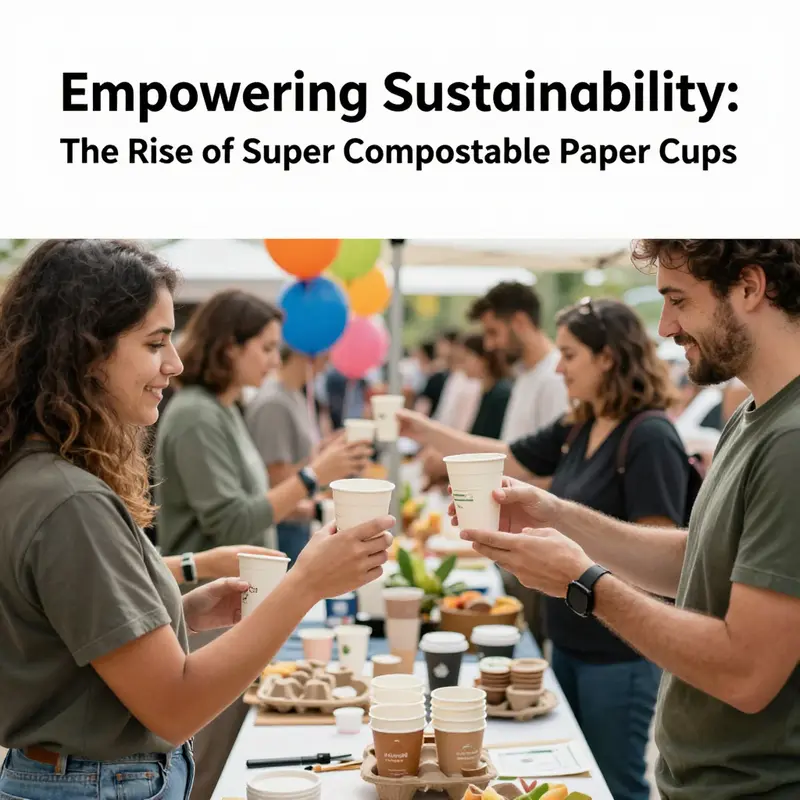
The move toward super compostable paper cups is not only a product trend. It represents a broad cultural shift in how communities, businesses, and institutions think about single-use packaging. Awareness of plastic pollution has matured into clear expectations. Consumers now look for functional items that also reduce environmental harm. Businesses face demand from patrons, employees, and shareholders to act responsibly. Policymakers respond with rules that favor compostable options. These forces combine into a sustained adoption curve for high-performance compostable cups.
Economic signals reflect this shift. Market analysis values the biodegradable cup sector at USD 8.24 billion in 2025. Forecasts project a compound annual growth rate of 9.34% from 2026 through 2033. That growth tracks two parallel developments: improvements in compostable materials and expansion of composting infrastructure. Better materials make compostable cups meet or exceed the performance of plastic-lined cups. At the same time, more industrial composting capacity makes end-of-life management realistic.
Adoption patterns vary by sector, but several common drivers appear. Food service operators face the most visible pressure. Cafés, quick-service restaurants, stadiums, and campus food halls receive constant scrutiny from patrons. Events and venues also face waste diversion mandates. These operators choose super compostable paper cups because they meet performance needs and align with sustainability goals. The cups handle hot beverages, resist leaking, and accept high-quality printing for brand messaging. Businesses can communicate their environmental commitments without sacrificing utility.
Institutional procurement changes accelerate adoption at scale. Colleges, corporate cafeterias, and healthcare systems now include compostability requirements in contracts. Bulk purchasing consolidates demand and lowers unit cost. Procurement teams increasingly prioritize items that fit circular-economy criteria. They ask for validated certifications and disposal plans. This shifts supplier behavior as well. Manufacturers respond by offering robust, customizable products with verifiable claims and supporting documentation.
Regulation is a powerful catalyst. Many municipalities restrict single-use plastics or require waste diversion. Where bans are in effect, operators seek immediate alternatives. Super compostable paper cups are an attractive replacement because they avoid fossil-derived liners. Legislation also raises the cost of non-compliant items, changing total cost calculations. Rather than simply switching materials, many businesses adopt broader waste strategies. They invest in on-site collection and partner with regional composters. This reduces landfill fees and aligns with regulatory timelines.
Consumer expectations amplify these pressures. Shoppers increasingly reward brands that demonstrate environmental stewardship. Social media and review platforms magnify responsible choices. Customers expect clarity, so labeling and messaging matter. An operator that clearly explains how to discard compostable cups gains trust. Clear signage and staff cues reduce contamination in collection streams. That practical clarity is essential because compostable cups usually require industrial composting to fully break down.
Infrastructure is the hinge between product and impact. Without industrial composting, compostable materials risk ending up in landfill or recycling streams. That outcome undermines environmental benefits and confuses buyers. Recognizing this, some regions adopt coordinated approaches. Municipalities invest in organics collection. Public-private partnerships fund new composting sites. Haulers add specialized routes. When those systems grow, retail and foodservice operators feel confident adopting compostable options. They know the cups will be processed properly.
Manufacturers and suppliers also play a role by tailoring offerings to local disposal realities. Strategic rollouts match product portfolios to regional infrastructure. In areas with robust composting, companies promote fully compostable liners and certification-backed claims. Where composting is limited, suppliers may offer products that fit existing streams or provide take-back solutions. This localized product strategy reduces the risk of improper disposal and increases adoption.
Branding and customization are important levers. Super compostable paper cups can be printed in full color. That capability turns an environmental choice into a marketing asset. Operators display logos and sustainability messages without resorting to unappealing generic packaging. Custom printing also fosters accountability. Branded cups are easier to trace through collection systems. For businesses that want to evaluate waste streams, this traceability simplifies audits and vendor reporting. Suppliers who provide robust printing options help clients keep sustainability visible and verifiable. Explore an example of eco-friendly printed paper cups for inspiration: eco-friendly printed paper cups.
Education and communication reduce the most persistent barrier: contamination. Consumers often conflate recyclability and compostability. A compostable cup in a recycling bin can damage equipment and reduce material value. Conversely, a recyclable cup with a plastic lining may contaminate composting streams. Clear, consistent labeling and point-of-sale education alleviate this confusion. Operators train staff to answer questions. They use signage that explains disposal steps. When stakeholders understand the system, contamination rates fall and the composting process performs as intended.
Cost remains a real consideration. Super compostable paper cups can carry a premium compared with petroleum-lined alternatives. However, the total cost of ownership often favors compostable options when broader waste management costs are considered. Reduced landfill tipping fees, compliance with regulations, and enhanced brand value offset price differences. Moreover, volume purchasing and improved manufacturing efficiencies are narrowing the cost gap. As adoption scales, unit prices continue to decrease.
Performance improvements have removed earlier objections. Where basic compostable cups once warped with heat, newer designs feature reinforced bases, thicker walls, and burr-free rims. These enhancements preserve user experience and operational reliability. The result is fewer service interruptions, less product waste, and fewer customer complaints. This performance parity comforts operators worried about switching materials.
Supply chains are adapting too. Raw materials such as recycled paper, bagasse, and bamboo are more available. Plant-based coating technologies have diversified. Suppliers source from regional feedstocks when possible. Shorter supply chains reduce carbon footprints and increase resilience. Some manufacturers pursue certification for responsible sourcing. Buyers looking for high-integrity suppliers now include sourcing criteria in tenders.
Certification and transparency underpin trust. Third-party certification bodies verify compostability claims. Labels backed by independent testing reassure buyers and waste managers. Transparency also involves life-cycle thinking. Businesses request life-cycle assessments to compare options across impact categories. These assessments help avoid supplier greenwashing and reveal trade-offs. For example, a cup made from a particular crop might have low end-of-life impact but higher agricultural emissions. Decision makers weigh those factors.
Cultural adoption also depends on visible leadership. Early adopters—cafés, event venues, and campus dining services—demonstrate that compostable systems work at scale. Their metrics inform policy and procurement elsewhere. Case studies show how coordinated rollouts, staff training, and partnerships with composters deliver measurable diversion rates. Those examples reduce perceived risk for more conservative buyers.
Finally, adoption is driven by the consensus that single-use systems must change. Many consumers accept single-use cups for convenience. They are less willing, however, to accept environmental harm as the price. Super compostable paper cups align convenience with responsibility. They fit existing service models. They perform under demanding conditions. When paired with proper disposal systems, they return nutrients to soil. That circular outcome resonates with stakeholders who demand practical solutions rather than idealized ones.
This pattern of adoption is not uniform. Regional variation will persist while infrastructure scales. Some jurisdictions lead with ambitious mandates and ample composting capacity. Others lag for economic or logistical reasons. Nonetheless, the trajectory favors compostable cups that meet performance expectations and disposal realities. The combined influence of consumer preference, regulation, procurement practice, and improved logistics creates a reinforcing cycle.
As systems mature, additional innovations will follow. Collection logistics will become more efficient. Labeling standards will converge. Materials science will continue to improve heat tolerance and barrier properties. Educational campaigns will reduce contamination. All of these changes will further lower barriers and create positive feedback loops for broader adoption. The current momentum suggests that super compostable paper cups will move from niche sustainable options to mainstream components within foodservice and events, wherever infrastructure and policy align to support their circular promise.
For further insight into the market dynamics and the innovations shaping supply and demand, consult the latest industry report from International Bottler & Packer: https://www.internationalbottlerpkr.com/.
Final thoughts
Super compostable paper cups are not merely a trend; they signal a transformative shift within the beverage industry toward greater environmental responsibility. As technological innovations advance their durability and performance, these cups become a practical choice for beverage chains, restaurants, and event planners committed to sustainability. Moreover, their economic viability and international support highlight their potential for widespread adoption. The societal inclination towards eco-friendly options reinforces their popularity among consumers, making them a smart investment for any business. Embracing super compostable paper cups is more than a choice for packaging; it’s a commitment to a healthier planet and a sustainable future.