
The packaging that holds your delicious pizzas can significantly impact customer satisfaction and brand image. As demand for pizza delivery grows, business owners must consider cost-effective solutions that do not compromise quality or sustainability. Cheap pizza boxes are increasingly popular among pizzerias, offering significant benefits in materials, customization, and regulatory compliance. This article delves into the properties of various pizza box materials, the flexibility of customization and pricing options, sustainability certifications that can enhance your brand’s green reputation, and diverse applications in the food industry that illustrate the importance of reliable packaging solutions.
Between Kraft and Clay: The Hidden Engineering of Cheap Pizza Boxes
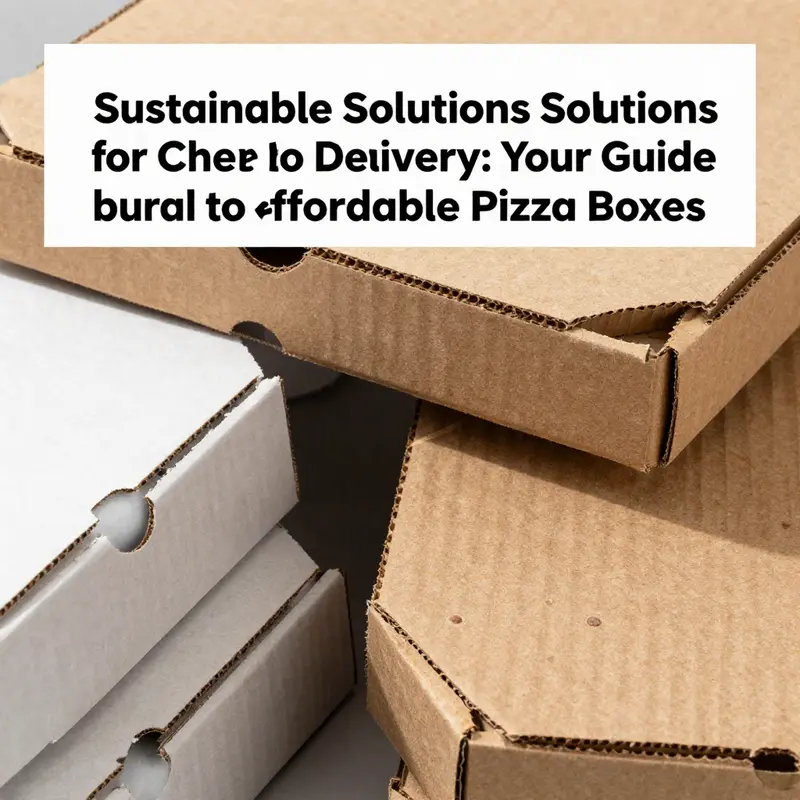
The box that carries a hot pie from oven to doorstep is more than a wrapper. It is a carefully engineered vessel that must balance heat retention, structural integrity, brand presentation, and cost. In the world of affordable takeout packaging, the cardboard box is usually the unsung hero. Its design rests on a simple anatomy that blends material science with practical constraints: a corrugated backbone, a durable face stock, and, often, a grease barrier that keeps the mess inside from becoming the mess outside. When you peel back the layers, you see a deliberate choice set that aligns with the realities of high-volume delivery, lean operations, and increasingly sustainability-minded customers.
At the core of a cheap pizza box is corrugated cardboard. This material is chosen because it delivers a dependable mix of strength, flexibility, and light weight. Corrugated cardboard is, at its essence, a sandwich: a fluted, wavy layer nestled between two flat sheets called linerboards. The flute—whether it’s a modest 1.0 mm or a thicker profile—creates air pockets that trap heat, slowing the escape of warmth from the box to the outside air. That trapped air, in turn, contributes to insulation. It is not perfect insulation, but it is an efficient solution for short trips and typical delivery times, helping pizzas remain appetizing as they travel from kitchen to customer.
The linerboards that enclose the flute are typically kraft paper or recycled paper. Kraft is prized for its natural strength and its brown, unbleached appearance, which many brands associate with sustainability and earth-friendly values. Recycled liners, meanwhile, foreground the use of post-consumer materials, a choice that echoes consumer expectations around resource stewardship. Either way, the outer and inner faces of the box are designed to take printing and branding, while still preserving structural performance under load. The surface can be smooth or slightly textured, depending on the chosen combination of linerstock and flute geometry. Printing methods such as lithography, flexography, or offset printing can dress the box with logos, colors, and messages. The result is a box that can communicate a brand story while also serving as a functional container—two roles packed into a single, fold-flat rectangle.
Yet a box cannot rely on cardboard alone to perform its duties. A greasy, oily, cheese-laden pizza tends to sully the box and threaten its internal integrity. The porous nature of uncoated corrugated board means that, in many cases, an inner liner or additional grease barrier is necessary. The inner layer, often a grease-resistant paper or a thin film, acts as a shield. It helps prevent oils from wicking into the liner, reduces the risk of leaks, and makes the box more hygienic for consumer use. Without that barrier, a gleaming layer of cheese oil can soften the cardboard, weaken the box, and increase the chance of spills during delivery. In practice, the choice of an inner liner becomes a practical compromise: a more robust grease barrier adds cost and can complicate recycling, while a lighter barrier saves money but demands careful handling to avoid leaks.
A mid-range option many budget-conscious operators consider is clay-coated paperboard. This material sits between standard corrugated and premium finishes in terms of performance and price. The clay coating is mineral-based and acts as a grease- and oil-resistant barrier. It helps maintain box rigidity when faced with oily toppings and ensures that the box does not become soggy or weak as the pizza spends time on the move. The coating also yields a smoother surface that can showcase sharper branding—glossy or semi-gloss finishes can be achieved with relative ease, which is a boon for pizzerias seeking a more polished look without breaking the budget. That said, the clay coating is not an absolute solution; it tends to increase the base cost and can influence environmental attributes, such as biodegradability, depending on the specific formulation and coatings used. In the balancing act of materials, clay-coated paperboard represents a practical middle ground for operators who want better performance than plain corrugated but still need to keep costs contained.
In some applications, particularly where the orders are large, sturdy deliveries travel in corrugated boxes with greater thickness or additional rigidity. This can mean using a heavier flute or even a double-wall structure in select designs. Such configurations improve impact resistance and stacking strength, which matters for long-distance deliveries or high-volume wholesale orders where boxes may be stacked in delivery vehicles or storage rooms. The range of thicknesses—from lighter, cost-efficient options to more robust constructions—gives manufacturers and pizzerias a spectrum from which to choose. The actual thickness chosen depends on the anticipated handling, the weight of the toppings, and the expected delivery distance. The result is a family of box designs that can be customized to the operator’s logistics footprint, rather than a one-size-fits-all product.
Branding through printing adds another layer of complexity. Lithographic printing can deliver bright CMYK color and precise branding, while flexographic printing can be more cost-effective for large runs and simple color schemes. Offset printing provides high fidelity, ideal for campaigns that rely on a strong, consistent look. The surfaces of uncoated corrugated board, however, pose printing challenges: the porous, fibrous texture can limit print sharpness, and color fidelity may be tempered by surface roughness. This is not a fatal flaw, but it is a factor operators consider when they want bold, color-rich logos on every box. Some manufacturers offer treated or coated surfaces to enhance print quality, but coatings can alter recyclability and price, so the decision becomes a careful trade-off between aesthetics, cost, and environmental goals.
Sustainability threads through nearly every decision in cheap pizza box design. Reputable suppliers increasingly emphasize certifications such as FSC, which assures responsible forest management, and ISO-9001, which signals consistent manufacturing quality and process control. Recyclability is another critical attribute. Corrugated cardboard is widely accepted in most curbside recycling programs, and many suppliers promote the recyclability of their boxes as part of a broader sustainability narrative. Yet coatings and liners can influence end-of-life outcomes. Clay coatings, for instance, may complicate certain recycling streams depending on local facilities and the specific coating chemistry. The industry’s trajectory leans toward materials and finishes that minimize ecological impact while preserving performance and cost advantages. This confluence of ecological considerations and practical requirements makes the cheap box a microcosm of modern packaging design: it must be affordable, functional, and forward-looking.
The economics around these boxes are not abstract. For pizzerias delivering in high volume, the economics are a matter of daily relevance. Bulk pricing can dip to surprisingly low levels, with unit costs dropping as order volumes rise. A typical pathway might see corrugated boxes offered at lower unit prices when the order reaches five thousand units or more, with smaller runs carrying higher per-unit costs. The price spectrum is not merely a function of raw material; it is also shaped by the degree of customization, the chosen finish, and the speed of production. A simple, unprinted box is cheaper to produce than one with full-color branding, intricate coatings, or specialty finishes. However, even basic branding matters to many operators who want their takeout experience to feel cohesive with in-house dining, social media presence, and in-store collateral. In this sense, pricing becomes a lever that can convert branding investments into measurable returns when customers associate quality and care with a familiar box.
Beyond the factory floor, the supplier landscape for cheap pizza boxes reflects global supply chains and marketplaces that have grown accustomed to scale. Platforms known for packaging and printing supply connect buyers with a network of verified sellers, offering thousands of options, sample availability, and bulk pricing structures. This ecosystem makes it possible for a pizzeria of any size to negotiate a package that aligns with its operational tempo and budget—whether it prioritizes brute affordability, interior grease resistance, or the ability to showcase a vivid brand message on a recyclable substrate. The trade-off space—between cost, performance, and branding—is not just an engineering problem; it is a business strategy. For operators, it is a matter of choosing a packaging partner who can deliver on-time, on-spec, and in a way that resonates with the restaurant’s sustainability and branding goals.
For readers curious about the wider material and supplier ecosystem, the landscape offers a mix of traditional and digital marketplaces. On one hand, established channels emphasize certifications, compliance, and consistent production standards; on the other, online marketplaces provide breadth—thousands of options with samples and flexible MOQs. The combination of material science and supply chain strategy explains why the cheap pizza box remains a surprisingly dynamic product category. Its seemingly simple task—keep the pizza intact and warm—hinges on a calculated blend of corrugated geometry, surface treatment, barrier performance, and color management. The result is a packaging solution that can be tailored to different pizza styles, delivery distances, and consumer expectations without pushing costs beyond practical limits.
If you want to see how the packaging world translates these choices into real options, consider the breadth of materials and customization available. A brand can opt for a straightforward, cost-conscious route with standard kraft interiors and minimal print, or push toward a mid-range clay-coated solution that balances grease resistance with print clarity. It can also choose to lean into heavier-duty corrugated for bulk deliveries, accepting a modest rise in price for added stiffness and stacking reliability. The decision is rarely about a single factor. It is about how heat, oil, print, and recyclability converge within a single box that travels from kitchen to customer, and how that box aligns with the restaurant’s broader goals—cost discipline, brand integrity, and environmental stewardship.
For practitioners seeking further reading on packaging materials, the world of paper packaging offers a practical map of how different stock choices influence performance, aesthetics, and end-of-life outcomes. paper packaging category provides a curated view of materials, finishes, and design considerations that influence a box’s behavior in real-world delivery scenarios. This readers’ guide helps connect the dots between material properties and everyday packaging decisions, illustrating how a seemingly small product can reflect larger technical and business imperatives.
In the end, the cheap pizza box is a testament to economical engineering. It tells a story of how a simple rectangle can simultaneously insulate, carry, brand, and protect. Its hidden engineering—corrugated geometry, barrier layers, printing choices, and sustainability considerations—reveals an iterative process where every choice carries consequences for cost, customer experience, and environmental impact. It is a story of design under constraints, where the objective is not to create the perfect box but to create the right box for a given pizza, a given route, and a given set of consumer expectations. The next chapters will delve deeper into how brands translate this engineering into consumer perception, and how innovations in materials science and logistics might reshape the box’s role in the takeout ecosystem.
External resource: https://www.alibaba.com/product-detail/Cheap-Customized-Recyclable-Corrugated-Paper1600729833247.html?spm=a2700.details.click&fsb=y&productid=1600729833247.html
Custom by Cost: How Branding and Budget-Driven Design Shape Cheap Pizza Boxes
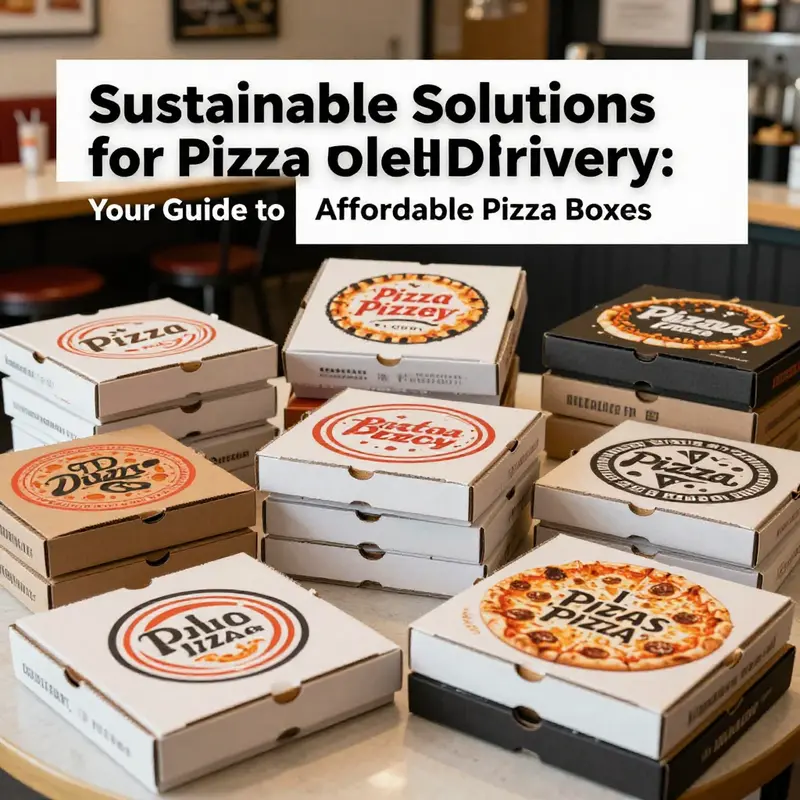
A cheap pizza box is rarely just a vessel for a slice; it is a modular component of a restaurant’s brand experience and a工作的 workhorse in the delivery chain. In markets where minutes matter and margins tighten, customization becomes a strategic lever rather than a cosmetic flourish. The trick is to weave branding, performance, and price into a single, coherent package. When a pizza leaves the kitchen, the box it travels in already begins to tell a story: it signals care, reliability, and even environmental consciousness before the first bite. That is why the chapter on customization and pricing is more than a catalog of options. It is a guide to balancing the expectations of customers with the realities of production, logistics, and the economics of scale, all within the constraints of a budget that must hold hot cheese and crisp crust in a single, disposable moment.
To understand customization on a budget, one must first examine the materials that sit at the heart of cheap pizza boxes. Cardboard, or paperboard, remains the default for most pizzerias: cheap to produce, easy to print on, and sufficiently insulating to keep heat from escaping during a standard delivery window. It is lightweight, easy to shape, and largely recyclable when uncontaminated. But cardboard’s performance is not uniform. The degree to which a box resists grease and moisture affects both the likelihood of sogginess and the structural integrity of the stack during transit. In a landscape where every delivery matters, even a minor fold or tear can become a customer touchpoint. This is where inner liners or specialized coatings slip into cost-effective measures. An oil- or grease-resistant liner, for instance, can protect the exterior from the slick sheen of cheese and toppings, preserving the box’s rigidity and preserving the brand’s visual appeal.
A step up in performance for budget-minded buyers is the clay-coated paperboard. The clay layer forms a barrier that improves grease resistance without requiring a heavy, multi-layer design. The benefit is twofold: it helps maintain box integrity under oily toppings and provides a smoother surface ideal for branding applications, from full-color logos to glossy finishes that catch the eye on a shelf or in a delivery bag. The trade-off, naturally, is cost. The coating adds an incremental expense, and that expense scales with volume. For pizzerias pursuing a premium look within a tight budget, the clay-coated option often hits the right balance between performance and price, especially when a strong brand impression matters for takeout and first-run impressions.
Corrugated cardboard represents another layer of choice, particularly for wholesale operations or longer-haul deliveries. The corrugated variant elevates impact resistance and stacking strength, which matters when a rider’s bag carries multiple orders or when boxes are palletized for bulk shipments. The material’s thickness—often adjustable in the 1.0 to 3.0 mm range—can be tuned for both price and protection. Corrugated boxes can carry bold, colorful branding across a larger footprint, making them suitable for campaigns that emphasize durability and reliability for distance deliveries or multi-location chains. Yet corrugated designs tend to be heavier and can incur higher per-unit costs at smaller volumes. For large, recurring orders, the economics tilt toward corrugated because the reduction in breakage and the assurance of box stability can offset the higher unit price.
With materials laid out, the next frontier is customization and its pricing mechanics. Customization is where a box stops being a mere vessel and becomes a mobile advertisement and a heat-retention device. Fully custom branding, color matching, and logo printing can be layered onto any of the base materials. The resulting price reflects a few interacting variables: material choice, the complexity of the imprint, the number of colors, and the dimensional tolerance of the print. In practice, suppliers typically offer tiered options that let a buyer trade off visuals for cost. A simple, single-color logo on a standard size box will be cheaper than a full-color, high-resolution print across multiple sides and a special finish like a gloss lamination or spot UV. The key insight is that most customization is incremental but highly scalable with order quantity.
Order volume is perhaps the most significant determinant of unit cost. The pricing curve for cheap pizza boxes is steep at the lower end and flattens as volumes rise. In the lower bracket—think hundreds to a few thousand units—the per-piece price can swing widely, from a few cents up to around half a dollar depending on the exact material and finish. For example, small orders in the three- to five-thousand-piece range commonly fall between $0.03 and $0.50 per unit, depending on the combination of material and branding. As volume climbs into the ten-thousand- to thirty-thousand-piece range, per-unit costs typically compress, landing in the $0.04 to $0.24 band, with real-world examples showing midrange pricing around the mid-tenths of a dollar per box. For truly large orders—three thousand units up to a hundred thousand or more—the lower bound can dip to the low tens of a cent, while the upper end retains some premium iterations around a dollar, with the lower end often reserved for straightforward designs and standard sizes.
This pricing reality lines up with the industry’s practical approach: the more you print, the more you can afford to print well. Many suppliers offer flexible minimum order quantities and the option to request samples before committing to a mass run. The opportunity to see a digital proof, check the exact color matching, and test a mockup in real-world conditions (hot coffee odors, grease, steam) is critical, especially for pizzerias with brand-sensitive goals. Some suppliers also provide options for low-cost samples—sometimes as little as a few cents per piece—before moving to a full production run. The emphasis is on reducing risk and ensuring that the final product aligns with brand expectations and functional needs.
Branding abroad in the box is not restricted to a two-tone print or a single logo. Modern customization often includes multiple sizes and shapes tailored to specific menu items, as well as features that improve the packaging’s function in delivery. For instance, some designs integrate heat-retentive features, such as a clever lid seal or an interlocking closure that reduces heat loss during a ride. Ergonomics can factor in as well, with options like smooth, circular handles or reinforced corners designed to resist crushing in transit. These design choices carry incremental costs, but they can significantly enhance the customer experience, which translates into higher perceived value and repeat orders.
Sustainability and certifications also influence customization and pricing. A growing number of suppliers provide FSC-certified, recyclable, and biodegradable options. Food-safety standards, evidenced through certifications such as ISO-9001 and SGS, offer reassurance to buyers choosing boxes for sensitive menus or environmentally conscious brands. The sustainability story often aligns with marketing narratives that resonate with customers who seek responsible packaging. In practice, a pizzeria can advertise its use of eco-friendly options without incurring a prohibitive premium if the volume is managed effectively and the chosen materials balance performance with cost. The ability to communicate this value to customers can be as important as the physical packaging itself, turning a standard box into a thin, portable billboard for a restaurant’s values.
Customization, however, is not purely about aesthetics or sustainability. It also encompasses the practicalities of printing and production. The standard format—Length × Width × Depth—must be clearly specified to prevent misfits in the oven or the delivery bag. Some buyers find it useful to standardize on a core set of sizes, then offer a limited number of special shapes for flagship items. This approach reduces costs and simplifies inventory management. It is not uncommon to encounter flexible but minimum order quantity (MOQ) policies in the hundreds or low thousands, with the option to adjust MOQs as demand grows. For buyers who are newly converting from generic packaging, the value of a tested, proven size can be substantial: fewer returns, faster production, and more predictable delivery times.
An important nuance in the pricing story is the availability of branding options that do not require lavish finishes. In many scenarios, a mid-range approach—solid color branding, a clear logo, and a matte or soft-gloss finish—can deliver strong visibility without inflating costs. For brands seeking a touch of premium without a full luxury upgrade, metallic foils or spot varnishes on select panels may offer the right balance. The economics of such finishes hinge on print run length and the number of color passes; however, when deployed strategically (for example, on the front lid only or on one side of a two-piece design), these finishes can yield a noticeable lift in perceived quality without derailing the budget.
From a procurement perspective, the pathway to smart customization and pricing often runs through platforms and supplier networks that aggregate options, verify capability, and support negotiation for bulk terms. The market presents a spectrum of possibilities, from general packaging houses to manufacturers that emphasize food-grade safety and production traceability. The most successful buyers use a disciplined approach: they request digital proofs, sample boxes, and dimensions in the standard Length × Width × Depth format; they compare total cost of ownership rather than just per-unit price, accounting for potential waste, breakage, and the marketing value of branded packaging. They also employ a simple rubric for consistency: does the box perform in heat retention, does it resist grease effectively, is the print legible under different lighting, and does the box fit within the restaurant’s standard carry bag without obstruction?
For those exploring the supplier landscape, it is common to encounter regional strengths. Some manufacturers emphasize eco-friendly processes, others highlight fast-turn prototypes, and a few offer highly automated print lines that deliver high-volume, batch-consistent results with precise color alignment. While the anatomy of a box—material choice, coating, size, and print—is technical, the decision often comes down to a practical balance: you want a box that keeps the pizza hot, looks consistent with brand standards, carries an acceptable price tag, and ships reliably to meet delivery demand. In many cases, the most effective strategy is to start with a core, cost-efficient material and a restrained branding approach. As volume grows and the brand’s appetite for packaging expands, you can layer in more sophisticated features, finishes, and sizes without destabilizing supply or budgets.
To guide this decision in a real-world context, consider the value proposition of a packaging program that integrates branding with performance. A clean, well-printed logo on a grease-resistant surface communicates professionalism and care. A box that retains heat for longer can improve a customer’s experience, reducing the need for re-delivery or complaint handling. A design that is easy to carry, with comfortable handles and intuitive folding, improves driver efficiency and reduces the risk of accidental drops. When these elements combine well, a pizzeria earns not only customer goodwill but also a scalable tool for marketing and differentiation that does not require a huge expenditure per unit.
An additional practical step in the customization journey is the use of an internal resource for product categorization. For readers seeking more information on packaging options, a deeper dive into paper packaging categories can be enlightening. Explore general paper packaging options here: Paper Packaging. This resource can help clarify how different materials, coatings, and finishes align with branding goals and environmental considerations, offering a broader view that complements the specific box design decisions discussed above.
The pricing and customization landscape described here is not a static snapshot. It shifts with supply-chain dynamics, currency movements, and evolving consumer expectations. Yet the core insight remains stable: customization can be affordable even at scale, provided buyers design with volume, material performance, and brand value in mind. A well-chosen box becomes more than a protective shell; it becomes a platform for storytelling and a driver of customer satisfaction. The right combination of material, finish, and size—paired with a thoughtful, brand-aligned design—can deliver a packaging solution that feels premium while still being cost-conscious.
As buyers walk the line between economy and expression, two practical guidelines emerge. First, articulate the minimum viable branding that preserves recognition and readability. A strong logo, legible typography, and consistent color usage from the lid to the base can generate a durable brand impression without demanding complex, multi-color processes on every run. Second, align the chosen material with expected delivery conditions. If a restaurant serves many oily pizzas or travels longer distances, a clay-coated or lightly treated liner approach may deliver better value by maintaining visual appeal and box integrity, even if it costs a bit more upfront. This kind of thoughtful compromise is the essence of cost-aware customization in the cheap pizza box market.
Finally, for teams managing the procurement process, a practical checklist helps keep everyone aligned. Confirm the standard dimensions you’ll rely on most, request samples to verify heat retention and grease resistance, and compare the total landed cost rather than unit price alone, including shipping and potential waste. Remember that the end goal is to maximize customer satisfaction while preserving margin. When customization supports both outcomes—brand visibility and reliable delivery—the box ceases to be a mere container and becomes a strategic asset in the restaurant’s ongoing relationship with its customers.
External resource for broader context on supplier options and current market offerings: https://www.alibaba.com/product-detail/Cheap-Customized-Recyclable-Corrugated-Paper1600729833247.html?spm=a2700.details.click&fsb=y&productid=1600729833247.html
Greener Creds on a Budget Box: Navigating Sustainability Certifications in Cheap Pizza Box Manufacturing
In the budget segment of pizza packaging, sustainability certifications are not a luxury; they are a strategic tool that can differentiate a low-cost box from a credible option in a crowded market. For operators chasing the smallest possible cost per box, certifications may seem like extra cost and paperwork, yet in practice they translate into clearer supply chains, better grease resistance options when aligned with compostability standards, and a verifiable story that resonates with eco-minded customers. The tension between cost minimization and environmental accountability is real, but not unsolvable. Certification programs provide a framework for credible, verifiable improvements without wrecking margins or stable supply chains.
Key standards include industrial compostability criteria and third-party verifications such as EN 13432 and BPI certification. EN 13432 defines criteria for packaging to be commercially compostable, including disintegration and biodegradation within a defined period, while avoiding unacceptable ecotoxicity. BPI certification offers a recognizable stamp for products meeting compostability criteria in industrial facilities. These certifications are more than logos; they are due-diligence that reduces risk for buyers pursuing green procurement programs.
Coastal and Fujian suppliers increasingly weave these certifications into their production DNA. They aim to retain low price points while delivering boxes that can claim compostability or higher sustainability than traditional options. Certifications help ensure that raw materials, adhesives, inks, and coatings are compatible with end-of-life pathways and that the full journey from pulp to pack is validated by independent bodies.
Materials choices matter. Paperboard remains the default for cheap boxes due to rigidity and recyclability, but grease resistance requires coatings or liners. For certification, coatings that preserve grease resistance and remain compatible with compostability are a focal area. Bagasse, a byproduct of sugarcane, offers another low-cost option with natural degradability, provided binders and coatings carry explicit compostability certifications. The supply chain must be traceable and auditable to meet buyer expectations.
Quality management and third-party verification further support credibility. ISO 9001 combined with compostability certifications, along with inspection and auditing from bodies like SGS, can reduce recalls and quality risk, which is especially valuable in price-sensitive markets. While certification incurs upfront costs, it can unlock procurement programs, incentives, and improved acceptance by municipal waste streams that favor certified packaging.
For buyers, a recognized compostability mark provides a signal that a product will behave as end-of-life intended in modern waste streams. It is important to understand limits: industrial compostability does not guarantee acceptance in every local facility or home composting setup. Decisions to pursue certification should consider market demand, local waste infrastructure, and the ability to maintain certified materials at scale. The cheapest box today may become expensive tomorrow if the end-of-life pathway proves inconsistent or if waste streams reject the packaging. Certification, when approached thoughtfully, helps align production with a broader sustainability narrative that customers increasingly expect.
Where Cheap Pizza Boxes Earn Their Keep: Practical Uses Across Foodservice and Beyond
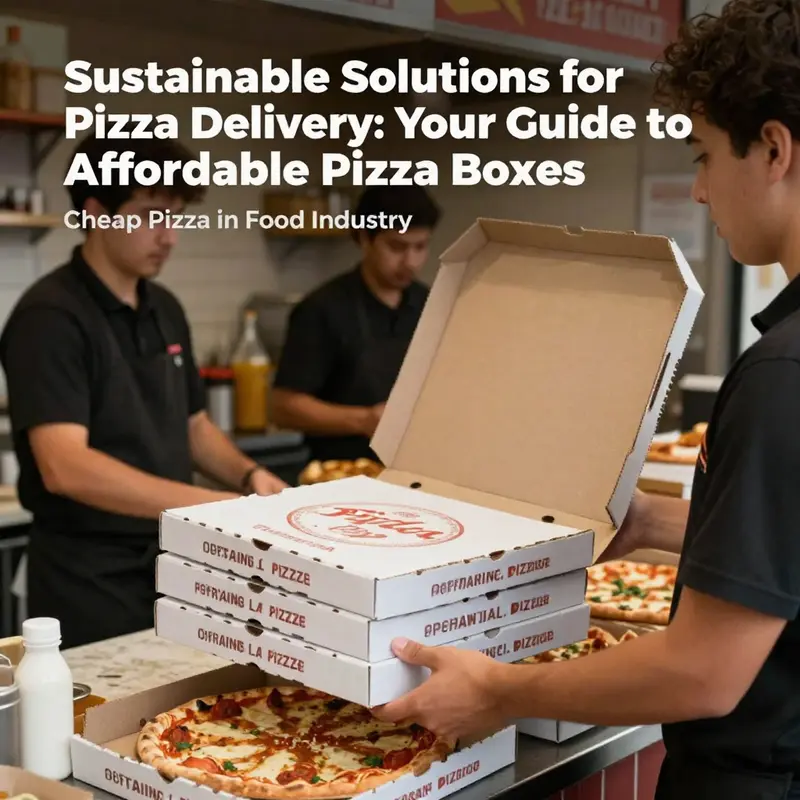
Where Cheap Pizza Boxes Earn Their Keep: Practical Uses Across Foodservice and Beyond
Cheap pizza boxes are more than a low-cost container for a pie. They are a flexible tool that supports operations, branding, sustainability goals, and logistical efficiency across the food industry. When chosen and used intelligently, these boxes do far more than hold food. They protect quality, extend reach, lower costs, and communicate a brand story. This chapter explores the many ways inexpensive pizza boxes are applied in everyday foodservice and industrial settings, showing how a simple piece of cardboard becomes a strategic asset.
At the most obvious level, cheap pizza boxes serve delivery and takeout. They are engineered to keep heat in and moisture at bay long enough for a pizza to reach its customer in good condition. Materials like uncoated cardboard provide insulation and rigidity at minimal cost. Corrugated variants add stacking strength for bulk orders. Clay-coated paperboard adds grease resistance when a cleaner presentation is needed. For busy outlets that turn pizzas quickly, these choices translate directly into consistent product quality without raising packaging spend.
Beyond transporting whole pizzas, these boxes handle a surprising range of menu items. Calzones, flatbreads, baked sandwiches, and savory pastries fit comfortably. Dessert items, including pies and cheesecakes, travel well when the box interior is dry and stable. The same geometry that protects a pizza—flat base, wide lid, and rigid sides—adapts to many shapes and temperatures. For operators that rotate menu items seasonally, this adaptability reduces the need to stock multiple packaging SKUs.
In restaurants and food trucks, cheap pizza boxes are a workhorse for both front-of-house and back-of-house tasks. In high-turn dining models, boxes provide an easy takeout option for leftover slices. Food trucks benefit from their light weight and low cost, which minimizes overhead while maximizing portability. In commercial kitchens, boxes help organize mise en place, store prepared portions, and move items between stations. They can be laid flat for storage and assembled quickly when needed. This convenience supports fast service and lower labor handling time.
Wholesale and distribution channels also rely heavily on budget-friendly pizza boxes. Corrugated options enable efficient stacking and palletizing for long-distance shipping. Their strength protects finished, frozen, or par-baked products during transit and at distribution centers. For manufacturers that ship large volumes to retailers or foodservice clients, material thickness and flute type are selected to balance protection with per-unit cost. Because these boxes are lightweight, freight costs remain lower than for heavier packaging solutions.
Branding is a high-value application of otherwise inexpensive packaging. A box that bears a logo, tagline, or distinctive color becomes a mobile billboard. The cost of printing on cardboard is low, yet the marketing return can be substantial. Branded boxes enhance perceived value and create memorable unboxing moments. Limited-edition prints for holidays or promotions turn ordinary takeout into a shareable experience, increasing organic exposure on social channels. Even minimalist, well-designed boxes can elevate a meal, making customers more likely to order again.
Customization goes beyond simple prints. Designers can add vents to manage steam, tabs to improve closure, and interior liners to resist grease. These modest features improve food quality on arrival and reduce complaint rates. For outlets experimenting with upsells or partnerships, custom-printed inserts or coupon slots inside the lid encourage repeat business. The cost of these small changes is often offset by improved customer retention and reduced waste from returned orders.
Sustainability concerns are driving a shift in how inexpensive pizza boxes are perceived and purchased. Many suppliers offer recyclable, compostable, or FSC-certified cardboard. This allows businesses to align packaging choices with sustainability commitments without substantial cost increases. For eco-conscious customers, the availability of recyclable boxes can influence ordering behavior. In addition, boxes that are easier to recycle—uncoated, single-material constructions—lower contamination risk when customers separate packaging from food waste.
Operationally, cheap pizza boxes support waste reduction and simpler kitchen workflows. Standardized box sizes streamline inventory management. Staff train quickly on one box type, reducing packing errors and improving throughput. When boxes are stackable and nest inside one another, storage space is conserved. For multi-location chains, consistent packaging specifications ensure uniform presentation and simplify procurement at scale. This helps maintain brand standards while keeping purchasing efficient.
There are also specialized industrial uses for inexpensive pizza boxes inside food manufacturing plants. They are used to store frozen pizzas before boxing into larger cartons. They can stage ingredients, separate batches, or package sample pieces for quality control. Cardboard dividers and simple die-cuts turn a plain pizza box into an internal organizational tool. Where hygiene rules permit, these boxes are a temporary, disposable option that reduces the need for reusable containers that require washing and logistics.
In certain retail contexts, cheap pizza boxes get repurposed creatively. Bakeries and delis use them as a low-cost packaging choice for oversized sandwiches or sheet cakes. Event caterers use larger-format pizza boxes to deliver feeds for groups cost-effectively. Their flat shape stacks neatly in transport vehicles and coolers. For community programs and temporary food distribution events, inexpensive pizza boxes offer a dignified plate substitute for participants.
Design innovations continue to expand the functional profile of low-cost pizza boxes. Paper dividers can separate slices or flavors. Perforated vents can be used to reduce sogginess while keeping heat. Removable liners make cleaning or recycling easier in operations with strict waste protocols. These refinements extend the life of a basic box design into product niches previously served by far more expensive packaging.
Even as the box serves practical needs, the economics are compelling. Bulk pricing can drive per-unit costs down to a few cents. For high-volume operations, savings on packaging accumulate rapidly. Those savings can be redirected to ingredients, labor, or marketing. When combined with the boxes’ functional benefits—insulation, stacking strength, branding—the return on a modest investment in well-chosen cheap boxes becomes clear.
Finally, cheap pizza boxes influence customer perception in subtle ways. A tidy, well-branded box signals care and professionalism. A damp or flimsy box signals the opposite. Choosing a slightly better material or a simple grease-resistant liner can shift perception drastically. For small operators, this is an affordable way to punch above their weight. For larger chains, modular upgrades to box construction provide incremental improvements across thousands of transactions.
Across restaurants, delivery services, manufacturing, and retail, inexpensive pizza boxes serve as a practical, versatile, and strategic packaging choice. By balancing material selection, customization, and sustainability, businesses can use these boxes to protect product quality, lower costs, and express brand identity. Their role extends far beyond pizza delivery: they are tools for operations, marketing, and logistics. As packaging options evolve, the cheap pizza box remains a cornerstone of efficient foodservice.
For businesses exploring packaging options with an eye to practical use and cost, browsing a category of similar products provides useful context. See the paper boxes category for comparable packaging solutions that can complement pizza box choices: https://cupbowlpack.com/product-category/paper-boxes/.
For a deeper look at standards, materials, and industrial uses that inform these practical applications, consult the comprehensive industry guide: https://www.industrialpackaging.com/pizza-box-guide/.
Final thoughts
In the ever-evolving food industry, understanding the nuances of cheap pizza boxes is crucial for business owners. Selecting the right materials fosters the durability and functionality needed for pizza deliveries, while customization options enable brand development. Furthermore, embracing sustainability through certifications can fortify your position in a competitive market. Combining these elements effectively not only enhances customer experience but also boosts brand loyalty. Investing in quality packaging solutions is integral to the success of your pizzeria and its long-term growth.