

In today’s competitive food industry, understanding the nuances of delivery food packages is crucial for businesses aiming to succeed. Whether you own a bubble tea shop, restaurant, food truck, or catering service, the packaging that facilitates food delivery significantly impacts customer satisfaction and operational efficiency. This article delves into the definitions and concepts surrounding delivery food packages, examines their role in modern consumer habits, and addresses the challenges and innovations in delivery logistics. By integrating insights from each chapter, readers will acquire a comprehensive understanding of how effective packaging can elevate their service and meet evolving consumer demands.
The Delivery Food Package: Designing for Freshness, Convenience, and Sustainability
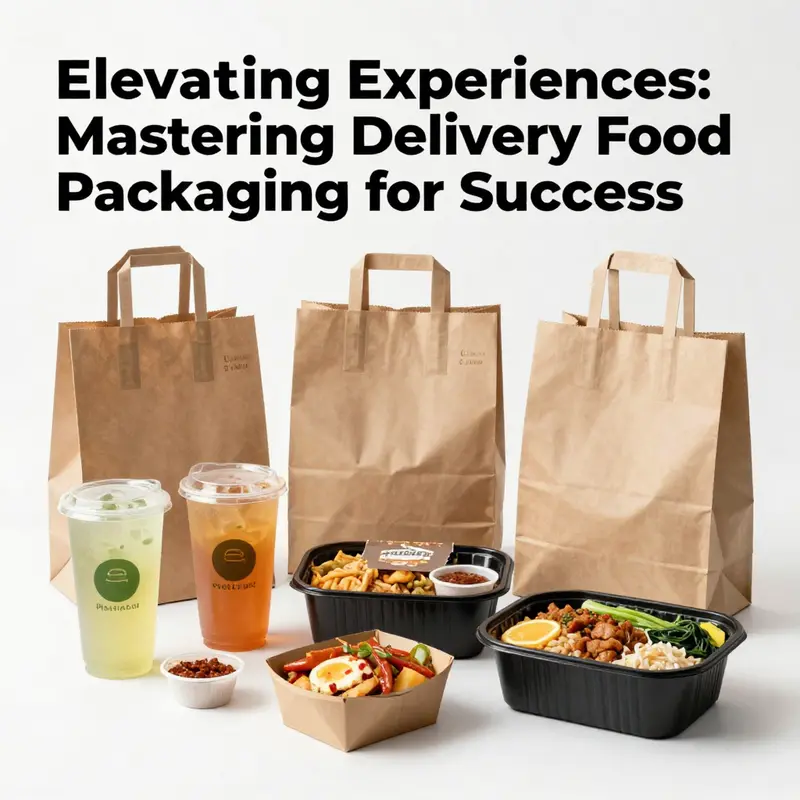
When a customer places an order for a meal to arrive at their doorstep, the act of delivery is already underway in a chain of decisions that begins long before the first bite. The delivery food package is more than a container; it is a carefully engineered intermediary that translates a restaurant’s culinary intention into a portable, reliable, and safe dining experience. In its most effective form, the package functions as a silent partner to the cooking and the delivery logistics, preserving temperature, protecting integrity, guiding consumption, and signaling care for the environment. This chapter explores the core ideas behind the delivery food package, weaving together the technical, operational, and consumer-facing dimensions that make modern delivery feasible and increasingly dependable.\n\nAt the heart of packaging design lies a simple but demanding mandate: keep food at the right temperature from the kitchen to the customer’s table, or rather, to their table via the door. Temperature control is not a single feature but a system. Insulated bags serve as the first line of defense, reducing heat exchange as meals travel through bustling kitchens, couriers’ vehicles, and the unpredictable realities of street-level delivery. Within those bags, heat packs or cooling inserts create a calibrated thermal environment, sometimes tailored to different components of a meal. A stew needs warmth to preserve its aroma and texture, while a salad hopes to stay crisp, its greens resisting wilt as the dressing remains isolated until the moment of consumption. The packaging materials themselves contribute to this stability. The choice of containers, their seals, and the arrangement of components work together to reduce spills and maintain separation between foods that may flavor one another or create moisture imbalances. In practice, this means carriers and kitchens must respect margins of error and design with real-world transit in mind. Even a minor tilt during transit should not result in a soggy crust or a toppled sauce; the correct combination of venting lids, secure interlocking trays, and correctly placed inserts can avert a cascade of micro-failures that would otherwise degrade the overall dining experience.\n\nThis attention to physical behavior is inseparable from the idea of standardization. A delivery food package is often built around fixed menu items with consistent portion sizes and ingredient lists. Standardization accelerates kitchen workflows and minimizes errors in assembly, which, in turn, speeds up order fulfillment—an essential advantage in a market where speed and reliability are closely linked to customer satisfaction and repeat business. When a consumer sees a familiar package arrive with predictable contents and predictable portioning, they gain trust in the service. Predictability also translates into more stable supply chains. If a restaurant can rely on a consistent packaging system, it reduces variability in prep times, inventory usage, and even courier routing. The package becomes a kind of blueprint for the entire order, a physical manifest that aligns culinary intention with logistical execution. This alignment matters especially as the industry expands toward multi-item family meals, where a single delivery can include several components—main courses, sides, beverages, and occasional desserts—each with distinct requirements for temperature, moisture, and packaging compatibility. The packaging system must accommodate these differences without demanding a separate handling procedure for each item. In practice, standardized packaging simplifies both kitchen operations and the delivery process, creating a smoother handoff from kitchen to courier to consumer.\n\nBeyond practicality, sustainability has moved from a desirable add-on to a core criterion in packaging decisions. Across the industry, many operators are actively seeking materials and processes that minimize environmental impact without compromising safety or performance. Compostable containers, biodegradable utensils, and paper-based wrapping have shifted from niche options to mainstream components of delivery packages. This shift is not merely a trend but a response to evolving consumer expectations and regulatory environments that prize responsible sourcing and waste reduction. An efficient, sustainable package can help a brand differentiate itself in a crowded market by signaling ethical alignment and long-term thinking. It is not enough to deliver a hot meal; the meal must be delivered in a way that aligns with broader social values and long-term ecological balance. The design challenge, then, is to balance barrier properties, barrier economics, and environmental stewardship. The goal is to choose materials that meet safety standards and performance requirements while also enabling a circular lifecycle where feasible. In practice, brands are experimenting with plant-based or recycled content, eliminating superfluous packaging layers, and partnering with recycling or composting streams that can handle the specific streams generated by takeout and delivery formats. All of these moves contribute to a package that is not only functional but also responsible.\n\nThe consumer benefits of a well-conceived delivery food package extend well beyond temperature and safety. Convenience remains a central virtue. A thoughtfully designed package simplifies the dining experience for busy individuals and households. Clear labeling, intuitive opening sequences, and portion sizes that align with typical eating occasions reduce cognitive load for the consumer. For families, standardized packaging can mean fewer mixed-up items or mismatched portions when sharing meals or reheating leftovers. The value proposition extends to cost efficiency as well. When operators optimize packaging for standardization and scale, the per-unit cost can become more predictable, enabling more transparent pricing for customers. Value, in this context, emerges from predictable quality and predictable outcomes, rather than from price alone. Consumers enjoy the reassurance that the package will support warmth, freshness, and ease of consumption, which, in turn, encourages repeat orders and trust in the service. The packaging also supports dietary diversification—a growing area of customer preference—by accommodating different dietary needs within the same ordering framework. A robust packaging strategy can adapt to vegan, gluten-free, or allergen-conscious options without compromising the integrity of other items in the same box or bag.\n\nTechnology stands as a powerful amplifier of these material and process decisions. The rise of digital ordering systems has transformed how customers interact with delivery packages. Beyond the checkout experience, technology informs packaging choices in real time. For instance, order data can reveal which items travel best together, enabling better bundling and fewer substitutions that disrupt the packaging design. Personalization features on apps allow customers to indicate temperature preferences or delivery instructions that inform how a package should be treated en route. In addition, intelligent packaging concepts—though still emerging—hint at a future where sensors or indicators communicate conditions, from temperature deviations to potential contamination risks. Even without advanced sensors, the mere ability to match packaging configurations to anticipated transit routes and weather conditions improves reliability. A crisp, airtight lid and a well-segregated tray may protect a dessert from a hot crackle, while a compact, spill-proof arrangement keeps a sauce from escaping and staining neighboring items. The digital ecosystem not only helps restaurants adjust to real-time demand but also helps customers feel confident about the safety and readiness of their meals when they arrive.\n\nThe integration of packaging design with operational workflows is a subtle but crucial aspect of the narrative. Packaging is not a one-off decision; it is a recurring consideration that shapes kitchen layout, staff training, and quality control processes. Standardization influences prep lines, with specific containers selected to fit the pace of the kitchen, the typical order mix, and the expected energy and water usage of cleaning protocols. A well-arranged system reduces the likelihood of errors, such as mismatched lids or incorrect heat packs, which can undermine not only the product’s integrity but also the brand’s reliability in the eyes of the consumer. Training becomes more straightforward when the packaging has been designed with the human factors in mind. Clear visual cues, consistent seals, and intuitive assembly steps shorten the learning curve for new staff, ensuring that even during peak times or staff turnover, the quality of the packaged food remains stable. In this way, packaging design threads through the entire service chain, linking culinary artistry to mechanical reliability and customer satisfaction.\n\nOne of the most compelling shifts in the packaging discourse is the growing emphasis on sustainability as a design constraint rather than a marketing afterthought. Companies recognize that the materials used in a package contribute to the product’s life cycle. The idea of a circular economy—where packaging materials are designed to be reused, recycled, or composted—appears more often in strategy documents, investor briefings, and consumer-facing communications. The practical implication is that packaging teams must collaborate closely with procurement, logistics, and waste-management partners to map out end-of-life scenarios. Such decisions influence not only the environmental footprint but also the total cost of ownership for the package. In some cases, a slightly heavier or more expensive material that offers better recyclability or compostability can deliver longer-term savings by reducing waste handling costs and improving brand reputation. The conversation extends to the use of eco-friendly alternatives that still meet performance standards. For example, compostable containers must be able to withstand the journey from kitchen to doorstep without degrading, while also breaking down efficiently in composting facilities after use. The packaging team, therefore, becomes a steward of both product quality and environmental accountability.\n\nFrom a consumer perspective, the emergence of clear labeling and transparent sustainability claims helps consumers align their choices with their values. People increasingly want to know not just what they are eating but how it was packaged, how it traveled, and what happens to the waste after consumption. Transparent packaging information builds trust and reduces confusion, particularly as multisite restaurant networks or delivery platforms scale their operations. The consumer’s confidence grows when the packaging tells a coherent story: it arrived intact, it kept its temperature, and it is portioned in a way that respects dietary needs and cultural preferences. The packaging, in short, functions as a narrative device, communicating care, quality, and responsibility alongside the culinary experience. When customers feel that a package has been designed with thoughtfulness and integrity, they are more likely to view the entire order as a cohesive experience rather than a simple transaction.\n\nThe market context for delivery food packages continues to evolve as consumer demands and competitive pressures intensify. A growing share of delivery demand comes from busy professionals, students, and families seeking convenience and reliability. The packaging system, therefore, must accommodate fluctuating demand without compromising quality. In practice, this means scalable packaging lines, flexible container assortments, and a logistics mindset that treats packaging as an enabler of efficient delivery routes and predictable service times. The digital ordering environment supports this scalability by enabling dynamic packaging options, such as bundling strategies that maximize efficiency and minimize waste. Operators can present curated meal kits that pair items in a way that makes sense for delivery, while maintaining the same high standards for freshness and flavor. This approach blurs the line between restaurant-on-premises dining and home dining, inviting customers to think of the delivered meal as a complete dining experience rather than a simple meal wrapped in plastic or cardboard.\n\nA practical illustration of these principles can be glimpsed in how packaging engineers and kitchen teams converse during a typical shift. They discuss the optimal container stackup for a three-item bundle, the most suitable lid types to prevent leaks, and the ideal placement of wet items to avoid flavor transfer. They consider the weather and transit times—will the courier encounter heat or cold acutely in the early morning or late evening, and how should cooling inserts be deployed to preserve texture? They plan for the returnability or recyclability of packaging in the local waste stream, ensuring that every choice resonates with the community’s infrastructure. The conversation is technical, but it is ultimately centered on the customer’s experience: a meal that tastes as if it were just prepared, arrived at the peak of its freshness, and presented in a package that embodies responsibility as much as convenience.\n\nIn shaping the narrative of the delivery food package, it helps to reflect on a concrete intersection of design, logistics, and consumer expectation. An illustrative approach is to imagine a standard dinner bundle that includes a main, a side, and a beverage. The main is housed in a sturdy, heat-retaining container that can withstand reheating if the consumer chooses to enjoy it later. The side is packed in a moisture-controlled compartment to prevent wilting or sogginess, while the beverage travels in a separate vessel designed to minimize leakage. All three items are placed in a single outer wrap that bears clear instructions for opening, reheating guidelines, and sustainability disclosures. Such a configuration demonstrates how packaging can streamline assembly, enable precise portioning, and promote a consistent consumer experience. It also illustrates how technology and design collaborate: digital order management ensures the right components are matched to the right containers, while the physical design ensures these components stay intact through transit and arrive ready for consumption.\n\nThe ongoing evolution of the delivery food package is not merely about materials or aesthetics; it is about aligning every layer of the chain with the expectations of a modern consumer who values speed, predictability, safety, and environmental mindfulness. As brands experiment with new materials and configurations, the packaging becomes a lever for differentiation. A well-conceived packaging strategy communicates that a company takes its customers’ needs seriously, from the moment an order is placed to the moment the remaining packaging is disposed of. It is a signature that says delivery can be a high-quality, reliable, and responsible dining option, even when the consumer cannot visit a restaurant in person. In this sense, the package becomes an extension of the restaurant’s culinary philosophy, one that preserves the chef’s intention across distance and time.\n\nFor readers seeking a practical touchstone in this broad landscape, consider the broad spectrum of packaging options that modern operators deploy to satisfy different delivery contexts. The best solutions balance practical performance with environmental considerations, all while remaining accessible to kitchen teams and delivery fleets. They support a fast-paced service model without sacrificing the sensory experience—the appearance, aroma, texture, and temperature that define a successful meal. When a customer opens the door and finds a package that looks well-thought-out and behaves as expected, the moment transcends mere consumption. It becomes a reaffirmation of the values the service intends to uphold: reliability, care, and stewardship across the entire journey from kitchen to doorstep.\n\nTo bring this discussion full circle, it is instructive to view the delivery food package as a system rather than a single artifact. The packaging system is a nexus where material science, process engineering, consumer psychology, and environmental ethics converge. Its success hinges on clear goals—maintaining temperature, preventing leakage, enabling easy opening, and supporting sustainability—while being adaptable enough to handle a wide range of menu formats and logistical realities. The packaging choices influence and are influenced by kitchen design, order management, and even the design of loyalty programs that reward customers for choosing more sustainable options. In such a system, even a seemingly small decision, such as selecting a particular lid type, can ripple through the operation and affect the speed of service, the consistency of the product, and the overall satisfaction of the consumer. It is a vivid reminder that the delivery food package is not a mere afterthought but a central, dynamic component of modern food service.\n\nFor further exploration of how packaging ecosystems are evolving in response to consumer expectations and market pressures, consider examining industry resources that discuss materials, sustainability, and consumer trends. One resource that provides a broader view of the delivery market landscape and its growth trajectories is a widely cited external report on global food delivery market size by region. This report helps illuminate the macro context in which delivery packaging decisions are made and how these decisions intersect with consumer demand, platform dynamics, and regulatory developments. External reading: https://www.statista.com/statistics/1347861/global-food-delivery-market-size-by-region/\n\nInternal linkage note: to illustrate practical packaging concepts in a real-world context, one example of a packaging option that aligns with the themes discussed—especially around durability, standardization, and eco-friendliness—is the family of take-away bowls designed for single-wall use and compatible with heat-resistant lids. For readers who wish to explore a concrete case study of such a packaging solution, see the following resource: senang05 food-grade take-away bowl with lids. This example embodies the principles described: it provides reliable containment, supports consistent meal presentation, and reflects a shift toward materials chosen for suitability in delivery ecosystems. It is not a name-drop of a brand but a demonstration of the practical implementation of the concepts discussed in this chapter. The aim is to show how packaging choices, when anchored in engineering and sustainability, can reinforce the entire delivery experience rather than merely serve as a passive container.\n\nIn sum, the delivery food package operates as a carefully designed interface between cooking and consumption, a conduit that preserves flavor, texture, and safety while signaling a commitment to responsible practices. It is a quiet underwriter of trust, converting the chef’s skill and the courier’s timeliness into a reliable, enjoyable meal experience for customers. As consumer expectations continue to evolve, so too will the packaging ecosystem, becoming more intelligent, more recyclable, and more integrated with both the digital ordering landscape and the circular economy. The end-to-end journey—from packaging material selection through to waste disposal—will increasingly be recognized as a critical driver of quality, sustainability, and consumer satisfaction in the ever-expanding world of food delivery.
Shipping Taste, Shaping Habits: The Quiet Power of Delivery Food Packaging in Modern Consumer Life

In modern life, delivery packaging sits at the threshold of kitchen tables and doorsteps. It is more than a container; it is an interface between time, technology, and taste. The study of packaging reveals how a simple box can shape routines, choices, and perceptions. Urban life accelerates pace, making convenience essential. People rely on delivery not just for what they eat but for how they orchestrate daily rituals. The packaging that carries the meal is part of that choreography, balancing reliability with expectations of freshness and ease of use.
The material choices and design features of delivery packaging help preserve quality during transit. Insulation, moisture barriers, leak-resistant linings, and user-friendly openings all contribute to safety and satisfaction. A well-designed box can keep a hot dish steaming or a cold salad crisp, turning a moment of anticipation into a positive sensory experience. At the same time, simple, clean packaging signals care for the customer and respect for the meal.
Beyond functionality, packaging carries messages about sustainability. Recyclable materials, reduced plastic, and clear labeling align with evolving consumer values. In practice, brands balance performance with environmental responsibility, choosing materials that meet safety standards while limiting waste. The design challenge is to create packaging that is easy to recycle, supports the supply chain, and communicates a brand’s commitments clearly at a glance.
The rise of data-enabled packaging adds another dimension. Temperature indicators, tamper-evident seals, and QR codes can provide storage guidance, allergen information, and recycling instructions. This digital-physical bridge reassures customers and can reduce waste by helping people time meals more accurately.
Ultimately, packaging helps shape behavior as much as it protects the meal. It can influence perceived value, trust, and willingness to reorder. When packaging aligns with a brand story of quality, responsibility, and clarity, it strengthens loyalty and differentiates a service in a crowded marketplace.
As the ecosystem of delivery evolves, the role of packaging expands from a fixed product feature to a platform for innovation. It invites collaboration among designers, engineers, sustainability experts, and marketers to imagine solutions that are practical, affordable, and environmentally responsible. The result is a delivery experience that feels seamless, trustworthy, and meaningful.
From the Doorstep to Data Streams: A Cohesive View on Delivery Food Package Logistics
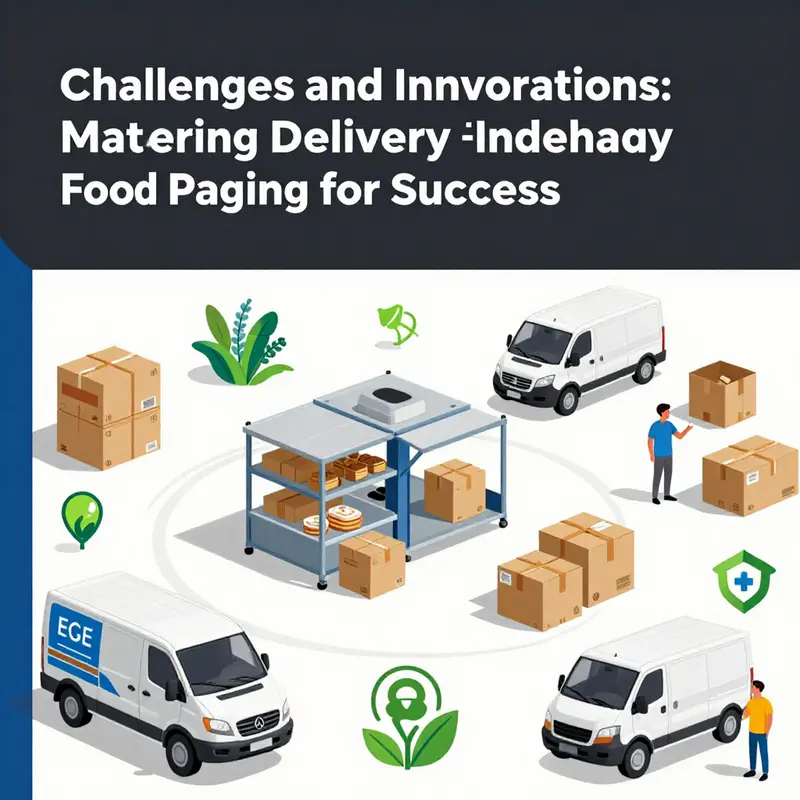
The choreography of getting a meal from kitchen to doorstep has evolved into a sophisticated system that binds together people, processes, and technologies. It is not merely the act of moving a bag from point A to point B. It is an orchestration of timing, temperature, and trust. When we speak of delivery food packages, the terms delivery, food, and package each carry a distinct meaning. Yet in the bustling field of modern logistics, these meanings merge. Delivery describes the action, the movement across time and space. Food names the payload—the perishable, sometimes fragile content that must arrive in prime condition. Package stands for the vessel that protects, communicates, and sometimes informs. The interplay among these elements shapes every decision a company makes, from whether a container should be insulated to how real-time alerts should be configured. In this sense, the chapter before us is not only about speed. It is about safeguarding quality, reducing waste, and building a chain of visibility that customers can rely on, meal after meal, order after order.
To understand the operational terrain, consider what happens in the last mile—the final stretch that brings a package from a distribution node to a customer’s front door. This arc is the most dynamic and the most challenging. It is where urban congestion, unpredictable weather, and human factors converge. It is also where consumer expectations sharpen. People not only want their food fast; they want it hot or cold when required, fresh in aroma and texture, and delivered with professional care. The last mile is a crucible. It tests how well a system can maintain the integrity of temperature-sensitive products while navigating the real world of traffic, time windows, and human error. In this environment, the meaning of a simple phrase—“I ordered food delivery”—expands into a narrative of package design, temperature control, route intelligence, and proactive risk management. Every component matters because each delay, each fluctuation in temperature, and each moment of uncertainty compounds into customer experience. And that experience, in turn, feeds the next order, the next review, the next expectation.
The framing of delivery, food, and package in everyday conversation often misleads a little. People may say they bought a “delivery,” or they received a “package.” Yet the most resilient operations recognize the interdependence of all three. A food order is not just a product; it is a process that travels through a network of facilities, vendors, and people. The packaging is not mere wrapping; it is a functional barrier against spoilage, a vehicle for data, and sometimes a signal of brand intent. The delivery action is not only a movement; it is a digital handshake that communicates status, temperature, location, and anticipated arrival. When these dimensions align, the system delivers more than sustenance. It delivers confidence, which for modern consumers is as valuable as the food itself.
The temperature challenge sits at the heart of this system. Perishable foods demand controlled environments, and the last mile can be the most unforgiving leg of the journey. Even short delays can compromise safety and quality. A few degrees’ deviation, a door left ajar for a few minutes, or an uneven handoff can set off a cascade of spoilage risks. These risks are not theoretical; they translate into real costs—lost product, wasted resources, and negative customer sentiment. The industry has learned to treat temperature management as a continuous discipline rather than a momentary precaution. It requires calibrated insulation, reliable cooling and heating capabilities, and, crucially, real-time awareness of conditions across the entire route. Temperature control is a living system: sensors collect data, analytics interpret it, alerts trigger actions, and operators adjust plans on the fly. The result is a chain that can respond before a problem becomes visible to the customer. This proactive posture is not simply about compliance; it is about preserving texture, moisture, aroma, and safety. When a package moves, its internal climate speaks through data, and those data tell a story about care, competence, and consistency.
The logistics network around delivery food packages is a complex web, yet it can feel surprisingly intimate. It includes kitchens that prepare meals, packagers who choose the right containers, couriers who carry goods through city streets, and customers who expect punctuality and quality. Each touchpoint carries risk but also opportunity. Innovations in packaging design, for instance, are not cosmetic improvements. They are functional enhancers that influence everything from thermal retention to signal accuracy. A robust packaging solution does more than protect; it informs. It can carry temperature data, transit time indicators, or tamper-evident seals that reassure customers about safety and integrity. It can also reduce waste through smarter materials and reuse strategies. Packaging sits at the interface of safety, sustainability, and brand narrative. A well-designed container can improve stacking efficiency, minimize spillage, and simplify handoffs. In practice, this means choosing materials and geometries that align with logistics realities—smooth passenger route flows, compatible with shelf life, and resilient under typical urban handling. The packaging choice becomes a quiet but powerful stakeholder in the overall delivery performance.
The financial pressures surrounding these chains are equally pronounced. Fuel costs rise, congestion intensifies, and labor markets tighten. Each of these pressures can erode margins if not addressed with data-informed strategies. The challenge is not merely to move a package quickly; it is to move it efficiently. Efficiency here means using routes that minimize distance and stops while maximizing the probability that each unit remains within its designated temperature band. It means deploying equipment that uses energy intelligently, not just more of it. It means designing processes that reduce idle time in warehouses and in the field. In other words, efficiency becomes a sustainability strategy. Lower fuel consumption translates into lower emissions and improved city air quality. When operations optimize routing and reduce returns due to spoilage, the system creates a virtuous circle: better service at a lower per-order cost, with less waste and a smaller environmental footprint.
Visibility is the thread that ties temperature control, packaging, and delivery together. Real-time tracking and monitoring have moved from a nice-to-have feature to a baseline expectation. Track-and-trace technologies—encompassing IoT sensors, GPS, telematics, and AI—have become the nervous system of modern food logistics. These systems deliver end-to-end visibility, enabling teams to monitor location, temperature, humidity, and even shock events along the entire journey. The practical value is clear: when a refrigerated van reports a temperature spike, an alert can be issued immediately. The moment the system detects a deviation, planners can reroute, reassign resources, or intervene with portable cooling strategies. The aim is not only to respond to problems but to anticipate them before customers notice. This anticipatory capability transforms risk management into a proactive service ethos. It shifts the industry from ad hoc problem solving to continuous optimization, with data-driven decision points guiding every level of operation.
The scale of track-and-trace adoption is compelling. A 2026 report by a market intelligence firm projects a compound annual growth rate of about 10.5% through 2027, driving the market toward an estimated value of around $6.1 billion. The implications extend beyond numbers. They signal a broader shift toward transparency and accountability. Operators can share verifiable data with customers, regulators, and partners. They can quantify performance, identify bottlenecks, and validate improvements. Real-time data streams make it possible to measure what matters: did the package stay within safe temperature ranges? How long did it sit idle at a delivery hub? What was the exact route traveled and the time spent in traffic? In short, visibility converts guesswork into evidence, and evidence into trust.
Innovations in this space are not limited to sensing and data capture. They also include the way we think about packaging and the cold chain itself. Sustainable packaging has become a strategic priority. Companies are adopting materials that are biodegradable, compostable, or reusable, reducing waste and carbon emissions without compromising performance. The cold chain itself has grown smarter and more energy-efficient. Refrigeration units are more energy-conscious, designed to minimize power draw while preserving precise temperature control. Predictive analytics are increasingly used to forecast demand, enabling more accurate production planning and route optimization. Dynamic temperature control is another frontier, where packaging and transport units adapt their thermal settings based on real-time conditions and expected dwell times. These developments reflect a broader commitment to resilience: a system that can weather disruptions, adapt to new constraints, and continue delivering high-quality food without unnecessary waste.
One practical implication of these trends is the growing importance of packaging geometry and material choice. An evolutive approach to packaging recognizes that a container is a working component of the logistics chain, not a passive vessel. The right design can improve stacking, reduce leakage, and even simplify handoffs at transfer points. A reference point in this regard, though not named here for neutrality, illustrates how a new design for a take-away container can integrate with automated handling systems, maintain insulation, and support easy disposal or recycling at the customer’s end. The choice of container thus matters at every stage—from packing at the restaurant to unloading at the customer’s home. This is why, within the broader conversation of logistics, packaging design deserves thoughtful consideration as a core driver of performance, sustainability, and customer satisfaction.
The narrative of delivery food package logistics interweaves technology, process, and human factors. It is a story of how teams manage risk while seeking opportunities for improvement. It is about reducing spoilage through better temperature control and faster turnarounds, but it is also about reducing the environmental footprint of delivery through smarter packaging and cleaner routing. It is about delivering not just a meal, but a reliable experience—consistently fresh, safely transported, and responsibly packaged. This is the promise modern logistics makes to the food industry and to the customers it serves. The more facilities, vehicles, and people are connected by data and aligned by design, the more seamless the journey from kitchen to doorstep becomes.
The content above draws attention to the core themes that shape the field today. The last mile is where theory meets practice, where forecasts become routes and dashboards become decisions. The innovations discussed—track-and-trace, sustainable packaging, cold chain advancements, and dynamic temperature control—work together to form a resilient ecosystem. A resilient system can absorb shocks, adapt to evolving urban landscapes, and continue to meet rising consumer expectations for safety, speed, and sustainability. The takeaway is not merely that technology exists, but that it is embedded in the daily choreography of delivery. When a courier receives a temperature alert, when data-driven routes reduce idle miles, when packaging choices minimize waste, the entire network earns credit for the quality of the customer experience. It is in these quiet, data-rich moments that the future of delivery food package logistics takes shape.
This examination is not a conclusion but a stepping stone. It invites us to imagine how further improvements could unfold: modular packaging that adapts to different meal types, more granular visibility across multi-temperature consignments, and new business models that align incentives for all participants in the chain. The path forward is not a single upgrade but an ongoing discipline of measurement, experimentation, and collaboration. In this sense, the discipline of food delivery packaging becomes a shared craft—one that blends culinary care, engineering rigor, and data-driven insight into a process that consistently delights customers.
As the narrative continues, readers will encounter deeper explorations of how these innovations translate into practice in diverse environments. The next chapters will unpack how different cities, regulation regimes, and consumer expectations shape the design of last-mile networks. They will examine the trade-offs between speed, safety, and sustainability and explore how organizations balance short-term performance with long-term resilience. The thread that ties these discussions together remains the same: the package is the nucleus around which temperature, timing, and trust orbit. The quality of the journey from kitchen to doorway depends on the choices made about packaging, on the precision of monitoring, and on the willingness to act quickly when conditions change.
Internal link: In the context of packaging design that supports efficient handling and sustainability, consider the concept of a new-design kraft paper take-away box with lid as a practical illustration of how form and function can align in everyday operations. This example, represented by a generic design approach rather than a marketed product, demonstrates how thoughtful geometry and materials influence both performance and environmental impact. You can explore a practical embodiment of this idea here: new-design Kraft paper take-away box with lid.
As the field advances, the emphasis on data-informed practice will intensify. Real-time visibility, predictive analytics, and smarter packaging will continue to converge with customer-centric service models. The result will be a delivery system that not only moves food efficiently but also communicates clearly, protects safety, and minimizes waste. The doorbell rings, the package is handed over, and data streams confirm that everything happened as planned. That moment encapsulates the essence of modern delivery food package logistics: a quietly complex set of choices that makes a simple meal a dependable, enjoyable experience. External resource: for a broader industry perspective on track-and-trace in food logistics and its market trajectory, see the external study at https://www.reportocean.com/industry-reports/track-and-trace-in-food-logistics-market.
Final thoughts
As the delivery food landscape continues to evolve, understanding the intricacies of packaging is more important than ever. The synergy between proper packaging, logistics, and consumer preferences is pivotal in ensuring a positive experience for your customers. By adopting innovative solutions and staying attuned to modern trends, businesses can enhance their delivery services and build lasting customer loyalty. Remember, the right delivery food package is not just about practicality; it’s also an opportunity to express your brand’s identity and commitment to quality.