
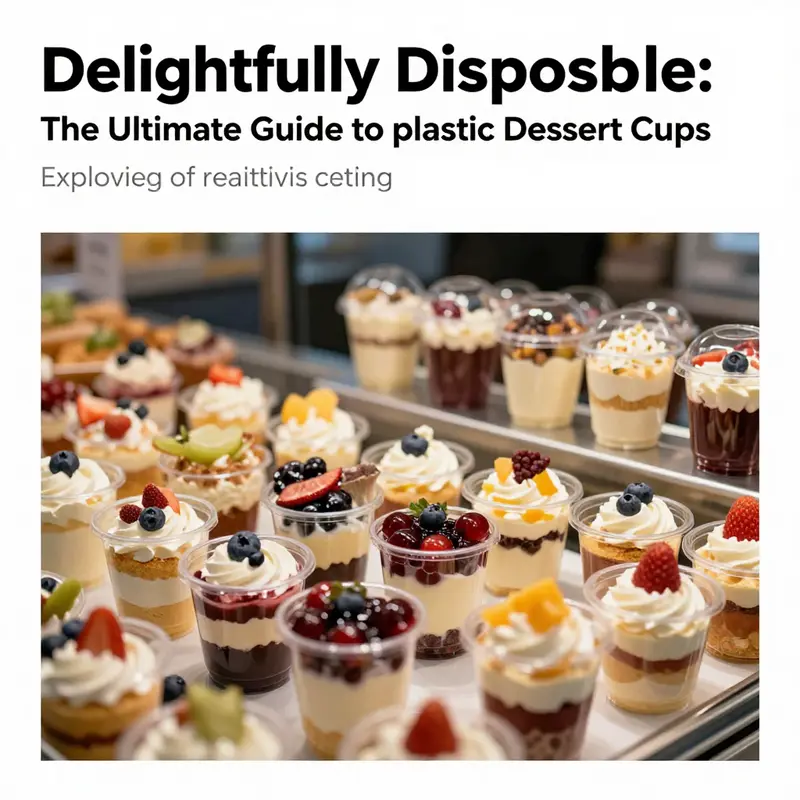
In the world of food service, disposable plastic dessert cups have become essential for various establishments, including bubble tea shops, restaurants, food trucks, catering services, and event planning. These versatile containers cater to a wide range of sweet treats, enhancing presentation while providing convenience. This guide will delve into the different types of dessert cups, the materials they are made from, eco-friendly innovations shaping the market, and the latest trends and consumer preferences. Each chapter will offer insights into how these factors influence selecting the right dessert cup to meet your business needs.
null

null
Materials That Shape Dessert Cups: Performance, Safety, and Sustainability in Disposable Plastic Desserts
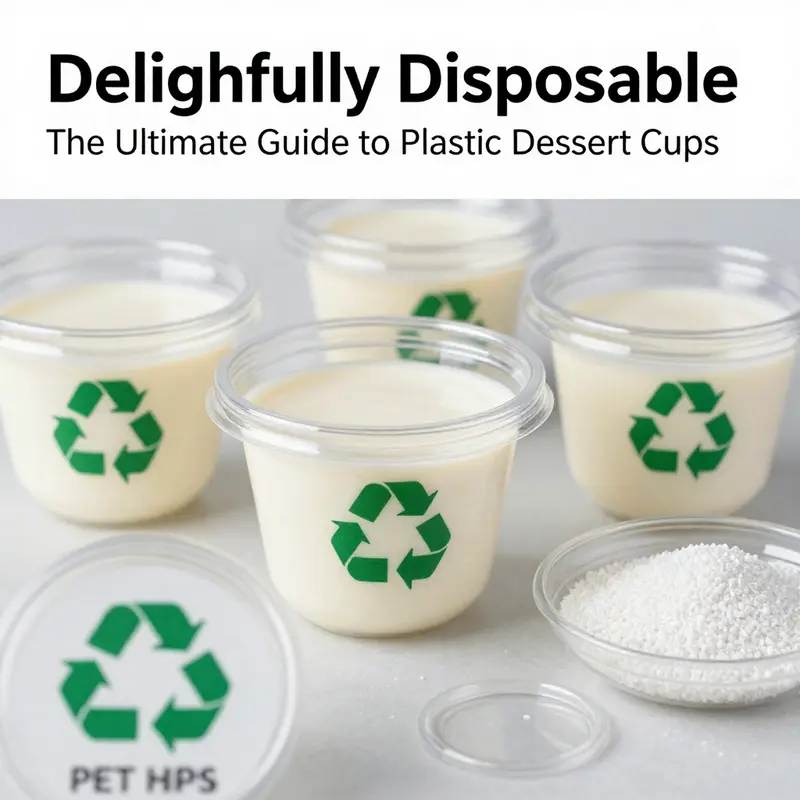
The material choices behind disposable plastic dessert cups do more than hold treats; they frame the entire experience. Clarity, texture, temperature response, and even the ease of branding hinge on the specific plastic that forms each cup. In a world where presentations must be both appealing and pragmatic, the interplay between performance and sustainability becomes less of a trade-off and more of a calculated design decision. Three primary materials dominate the landscape: PET, PS, and PP. Each brings a distinct profile of strengths and constraints, and each can be tuned with different design features to serve the needs of a given dessert, a particular service scenario, or a specific brand promise. The result is a spectrum rather than a single default: cups chosen not merely for their shape or lid, but for how their material behaves from the moment the product is plated to the moment it reaches the guest’s table or doorstep. This dynamic matters because consumers increasingly equate packaging with safety, environmental responsibility, and even the sensory cues of the dessert itself. The cup becomes a first taste of the dessert’s quality before the spoon meets the mousse or the gel shakes with motion in a take-out bag. Understanding the materials at play allows chefs, bakers, and venue operators to optimize for both performance and perception, a balance that now reads as a core competency in modern catering and food service.
Polyethylene Terephthalate, or PET, remains the workhorse for many cold-dessert applications. Its authenticity as a clear, rigid, shatter-resistant material makes it ideal for showcasing a layered mousse, a jewel-like jelly, or a tiramisu adorned with visible textures. The transparency of PET is more than aesthetic; it’s a practical advantage. It gives customers an unobstructed view of a dessert’s structure, color, and composition—an essential feature when presentation is a major part of the dining experience. PET cups are food-grade and BPA-free, aligning with safety expectations that keep buyers confident about direct contact with edible contents. Yet PET comes with clear limitations. It is not suitable for hot liquids or high-heat processes, and its recyclability varies across regions. In many places, recycling streams favor PET for beverages but struggle with mixed-use cups, leading to a pragmatic question for operators: is the environmental benefit of PET worth the handling and end-of-life considerations in specific markets? The presence of dome-shaped lids on PET cups adds another layer of utility. These lids seal in freshness and prevent leaks during transport, a feature especially valuable for take-out and event catering. In practice, the combination of PET cups with domed lids can deliver a compelling package: a crisp, transparent shell that both reveals and protects a delicate dessert, while providing dependable transport stability. The brandStory here is one of clarity and care, with the material doing much of the storytelling through visibility and purity.
Polystyrene, or PS, offers a different calculus. Standard PS cups are lightweight and cost-effective, which makes them attractive for high-volume venues like schools, cafeterias, or concession stands. The rigidity and clean edge of PS contribute to a crisp tactile and visual impression, and its printability makes branding and label integration relatively straightforward. In recent years, a movement toward biodegradable PS has emerged, responding to concerns about plastic lifecycles while preserving the practical benefits of PS. Biodegradable PS can decompose faster than conventional PS in appropriate conditions, a feature that can align with sustainability goals without sacrificing performance in the short term. The EU’s EC No 1935/2004 framework provides a baseline for food-contact safety, underscoring that PS products designed for desserts should meet strict standards for non-toxicity and inertness in contact with edible contents. But biodegradability is not a universal panacea. The rate and completeness of degradation depend on environmental conditions, and not all PS alternatives fit every use-case. For guardrails like heat exposure or dishwasher use, ordinary PS can be vulnerable to warping or surface gloss loss if misapplied. For specialized desserts that require sturdy transport with a neat, compact profile, PS remains a compelling option when matched to the right application and lifecycle mindset. Where PS shines is in scenarios that demand a reliable, inexpensive cup with good barrier properties and an acceptable print surface for branding.
Polypropylene, or PP, is the most versatile among the trio when it comes to heat resistance and durability. PP cups can withstand higher temperatures, often up to 100°C, which makes them suitable for warm desserts, hot beverages served in cups, or even sauces and gravies that accompany a dessert plate. This thermal resilience, combined with a lighter weight profile, positions PP as a practical choice for environments with frequent handling, such as rail stations, large cafés, and event venues. PP’s recyclability and general resilience also contribute to a longer potential lifecycle in some service models, especially when used in reusable or semi-reusable handling systems. In markets where double-wall construction and heat-resistant coatings are common, PP cups offer a measured balance between user safety and sustainability. The material’s capacity to tolerate higher temperatures without deformation helps preserve the intended presentation of delicate desserts that might otherwise slump or leak in a less capable cup. For these scenarios, PP becomes more than a convenience; it becomes a reliability factor that supports a consistent guest experience across multiple service contexts.
As these materials form the backbone of many dessert-cup offerings, innovations continue to push the envelope. Built-in spoons attached to lids, or dual-access structures that facilitate quick consumption without sacrificing cleanliness, illustrate how design and material science converge to improve efficiency at food-service points. Such designs respond to real-world needs: speed in busy settings, reduced utensil waste, and heightened convenience for on-the-go pastry lovers. These innovations can be paired with material choices that optimize temperature retention and odor containment, ensuring that the dessert’s sensory profile remains intact from counter to mouth. In addition, dome lids and secure snap-fit mechanisms are not only about transport safety; they play a role in preserving the dessert’s texture and aroma. A well-sealed lid can prevent condensation that would otherwise water down a mousse or moisten delicate toppings, while a precisely engineered cup wall minimizes sweat and moisture transfer that can dull the dessert’s surface appearance. The union of clever design with the right plastic technology helps brands deliver a more reliable, restaurant-like experience in a disposable format.
From a sustainability perspective, the market has begun to tilt toward materials and formats that reduce environmental impact without compromising performance. Cleaner-material options, certified eco-friendly formulations, and clearer signaling of recyclability are increasingly important for brands seeking to align with consumer values. Certifications, such as those aligned with EU Food Safety Standards, help reassure customers that safety is not sacrificed for convenience. In parallel, the supply chain is seeing a gradual shift toward alternatives that lower the burden of end-of-life disposal. While PET remains a strong choice for visibility and purity, it is not universally recycled everywhere, and the end-of-life narrative matters as much as the in-use performance. Advances in biodegradable variants or coatings for PS and PP are part of a broader trend toward materials that break down more readily in appropriate industrial or home-composting contexts. The challenge, of course, lies in ensuring that the claimed sustainability benefits translate into real-world outcomes. Without robust collection, sorting, and composting streams, even the most responsibly marketed cup can underperform when it comes to genuine environmental responsibility.
In practical terms, operators often make decisions by matching dessert type, serving context, and logistics with the material’s inherent behaviors. Cold desserts that rely on a crystal-clear presentation benefit from PET’s transparency and rigidity, which convey the dessert’s structure and color with minimal distortion. Gel-based desserts and mousse textures that need a crisp, clean edge usually prosper in PS or PET environments where the surface finish remains intact during transport. For warm or hot desserts, PP offers the needed resilience. The broader takeaway is that no single material is the universal answer; success comes from a deliberate pairing of dessert characteristics with the cup’s thermal performance, barrier properties, and end-of-life implications.
A nuanced thread in the conversation about materials is the question of branding and consumer perception. Printability plays to PS’s advantage, and PET’s clarity enables high-fidelity imagery to grace the cup’s exterior. With today’s emphasis on customization, brands often look to eco-friendly or BPA-free formulations as a signaling device. Clear safety messaging, coupled with visuals that highlight a cup’s responsible attributes, supports a more compelling package for the consumer. In turn, retailers and manufacturers must remain transparent about what a cup is made of, how it should be disposed of, and what the consumer can expect from the material’s performance during use. The messaging around sustainability cannot be an afterthought; it must be integrated with product development, packaging design, and consumer education to be credible.
To illustrate the breadth of available formats and how these choices translate into real-world results, consider a practical example of how a brand might diversify within a single portfolio. One line might lean into PET for a visually striking cold-dessert presentation, pairing it with dome lids to protect the dessert during transport. Another line might employ FP-grade biodegradable PS for layered desserts intended for quick-service dining with a shorter shelf life. A third line could leverage PP cups for hot or warm desserts, where customers expect a secure hold and minimal risk of deformation. Such a strategy demonstrates how the material spectrum supports both uniformity in service and flexibility in menu design. It also highlights the importance of considering the entire lifecycle of the cup—from manufacturing and use to disposal and potential recycling streams.
For those seeking concrete options that align with sustainable goals while maintaining a practical edge, it is worth noting the availability of eco-friendly materials and configurations. BPA-free PET products with dome lids illustrate a convergence of safety, visibility, and transport security. Biodegradable PS offerings present a pathway to faster end-of-life degradation while preserving the performance characteristics needed for preservation of texture and form. PP remains a strong candidate for hot-dessert applications and for operators who prize durability and heat resistance as part of a reliable guest experience. In regions where double-wall constructions and heat-resistant coatings are common, PP-based solutions also offer improved handling comfort and a reduced risk of burns during manual service. The interplay of these material choices with design features—lids, snap-fit closures, spoon attachments—helps shape a portfolio that can be tailored to specific market segments and event types while remaining faithful to safety and regulatory expectations.
A note on the broader ecosystem of sourcing also emerges in this discussion. Suppliers across the globe are responding to demand for materials that perform under varied temperatures and that also align with environmental goals. Some manufacturers emphasize customizable, logo-friendly finishes and transparent signaling of material safety and recyclability. Others are innovating with compostable or bagasse-based alternatives that pair with dessert formats in a way that reduces the overall plastic footprint. The takeaway for practitioners is that the choice of cup material is not merely a cost calculation; it is a strategic decision that shapes product presentation, service speed, guest satisfaction, and sustainability reporting. The cup becomes a material story in its own right—a story that travels with the dessert from the kitchen to the consumer’s table and then into the waste stream, where it will be processed, repurposed, or, in the best-case scenario, reintegrated into a more sustainable cycle.
To connect these ideas with concrete practice, consider the way branding and package design interact with material choice. A dessert cup that is crystal-clearPET can serve as a stage for vibrant layers, delicate mousses, and glossy toppings, provided the shelf life and transport conditions align with the product’s heat and light exposure. A biodegradable PS option may be preferable for shorter-run promotions or events where the emphasis is on eco-credibility, academics of lifecycle thinking, and consumer perception of responsibility. In other cases, hot-dessert scenarios will push teams toward PP for its heat tolerance and structural integrity. Across all these choices, the best outcomes arise when teams coordinate material selection with service model, branding, and waste-management capabilities in the local context. When a cup’s performance and sustainability signals align in practice, the consumer experience is cleaner, more predictable, and more meaningful, which in turn supports repeat business and brand loyalty.
For readers seeking a quick reference to how these materials translate into packaging choices, a practical takeaway is to map dessert types and service contexts to material properties: PET for pristine visibility and cold or room-temperature desserts that rely on presentation; PS for cost-effective, print-friendly applications with faster turnover or biodegradable variants for mid-range sustainability goals; and PP for high-heat applications, durability, and extended handling in busy, risk-prone environments. This mapping is not a rigid rule but a framework that can guide menu development, bulk purchasing, and in-store display decisions without sacrificing safety or taste.
As the category of disposable dessert cups continues to evolve, the sophisticated dance between materials, design, and sustainability will only intensify. Operators who stay attuned to these developments—understanding the trade-offs, leveraging innovations in lid-and-spoon integration, and selecting materials that harmonize with the intended consumer journey—will be best positioned to deliver desserts that shine in both appearance and performance. The net effect is a more thoughtful packaging ecosystem: one that respects the integrity of a dessert while acknowledging the environmental responsibilities that accompany modern food service. In the end, the cup is not just a container; it is a partner in taste, texture, and trust.
To illustrate a point about how packaging choices intersect with everyday practicality, some retailers favor compact, rectangle designs with integrated lids and simple branding. These formats demonstrate how even small shifts in form, when paired with compatible materials, can enhance handling efficiency and reduce spillage during transport. For practitioners curious about specific examples in this space, one practical reference is a commonly chosen rectangle kraft paper salad bowl with a lid, which exemplifies how different material and lid configurations can support a cohesive on-the-go experience. Rectangle kraft paper salad bowl with PP lid.
Ultimately, the landscape of disposable plastic dessert cups is a mosaic of performance, safety, and sustainability considerations. PET, PS, and PP each offer a distinct set of advantages, and ongoing innovations continue to blur the lines between convenience and responsibility. The most compelling solutions emerge when teams design with intent—selecting materials that not only hold shape and flavor but also convey a message about how a brand treats waste, cares for safety, and respects the guest’s experience. This is the essence of modern dessert packaging: a carefully engineered synthesis of material science, culinary presentation, and environmental stewardship, all anchored by the simple, enduring goal of delivering a dessert that delights from first glance to final bite.
External resource: https://www.alibaba.com/product-detail/GF-BDDessert-cup-2-Clear-PET-Mini_1600731486589.html
Rethinking Sweet Vessels: Eco-Friendly Innovations in Disposable Plastic Dessert Cups
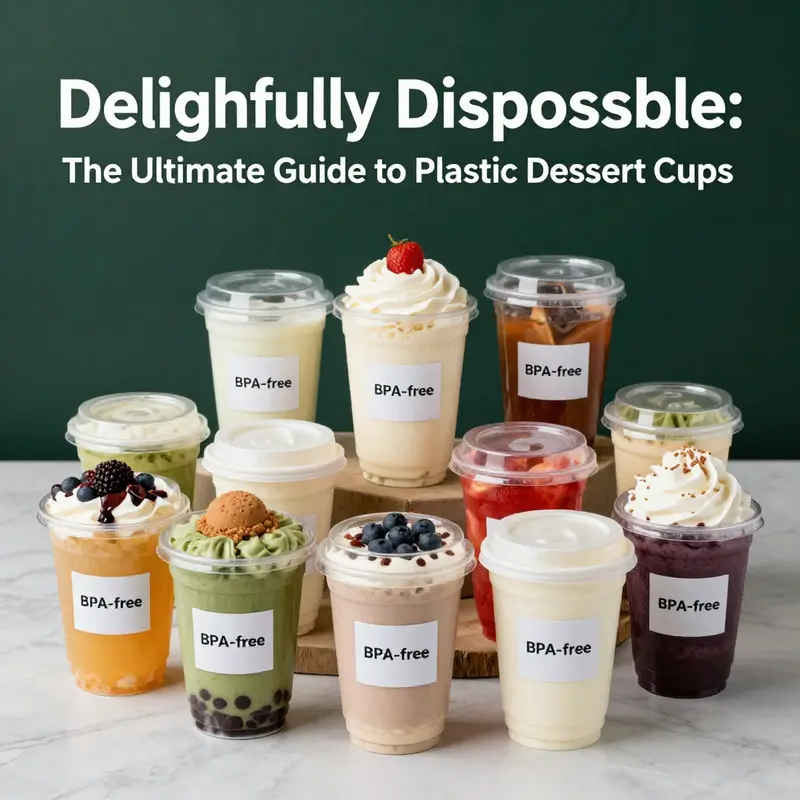
Dessert cups have long been the quiet workhors of food service, catering, and home entertaining. They offer portability, portion control, and a clear window into the dessert itself, turning a simple treat into a curated moment. Yet as menus evolve and sustainability becomes a driving criterion for brands and consumers alike, these small vessels are increasingly evaluated not just for their function and appearance but for their environmental footprint. This chapter follows a thread that begins with the practical virtues of disposable plastic dessert cups and travels toward a more conscientious future where design, material science, and supply-chain choices work together to reduce waste without sacrificing the sensory impact of a well-presented dessert. The arc is not about abandoning usefulness; it is about reimagining usefulness so it aligns with the values and needs of modern diners, from in-house cafés to delivery platforms and banquet operations.
At the core of this shift is a nuanced understanding of the materials that shape dessert cups. The most common plastics in cold-dessert applications are forms of polyethylene terephthalate (PET), polypropylene (PP), and polystyrene (PS). Each material brings a distinct balance of clarity, strength, flexibility, and cost. PET is valued for its crystal-clear appearance and good impact resistance, a crystalline advantage when a parfait or mousse is on display for a shopper or guest. It is widely recyclable in many municipal streams, identified by the universal code #1. But PET has limits: it performs best with cold fluids and desserts, and it can lose its shape when exposed to high heat or prolonged contact with hot liquid. PP offers a tougher, often slightly opaque alternative that can handle more aggressive handling and some stacking pressure. It also supports branding opportunities through printability and labeling, which is essential for in-house branding or event-driven packaging. PS, when chosen, can deliver a high-clarity look with good rigid strength, but it tends to be less compatible with high-temperature applications and can pose more challenging recycling considerations in some locales.
These material choices matter far beyond a single event. The ability to recycle, reuse, or responsibly dispose of cups ties directly into a restaurant’s or caterer’s sustainability goals and the waste-management realities of delivery and off-site service. In markets where recycling streams are mature and accessible, PET cups with secure lids become a practical choice for cold desserts and gelatines, enabling safe transport and retention of freshness. Where recycling is more fragmented, biodegradable or compostable options—whether rooted in plant-based polymers or post-consumer recycled content—offer alternative narratives for brands trying to demonstrate environmental stewardship. The literature surrounding eco-friendly dessert cups emphasizes a spectrum of paths: recyclable PET and PP designs that maintain performance, and bio-based or biodegradable variants that aim to align with industrial composting or specialized waste streams. This spectrum is not a single solution; it is a toolkit that enables operators to choose based on the context, the dessert, and the destination of the packaging after use.
One of the most compelling innovations in this space is the emergence of truly recyclable packages designed to retain their form and clarity through transport, while also enabling a clear pathway to recycling. In many cases, that means cups and lids engineered for compatibility with standard recycling streams, reducing contamination and increasing the likelihood that the container will be returned to a recycler rather than ending up in a landfill. The design language of these cups often prioritizes stability for layered or delicate desserts, such as custards, mousses, or jiggly confections, where even a small wobble can compromise presentation. The thicker-walled variants that support gelatinous textures without collapse are a reminder that durability and consumer experience can coexist with sustainability. These cups also frequently feature secure, snap-on or dome lids that protect the dessert during transport and make delivery practical, while preserving the dessert’s visual appeal when presented on-site.
Beyond mere materials and shapes, the eco-conscious evolution of dessert cups increasingly involves earned certifications and strict alignment with food-safety standards. Consumers expect packaging to be safe for contact with food, free from leachable substances, and compatible with the temperatures at which desserts are served. Rigid plastic containers manufactured from certified materials provide robust performance for delicate desserts while staying within the boundaries of what is considered acceptable for recycling. Certifications that verify food-grade compatibility and safety are now paired with endorsements that emphasize environmental responsibility. This coupling helps foodservice operators make decisions that satisfy both sensory expectations and corporate commitments to sustainability. It also clarifies the path for end-of-life management, empowering kitchens to communicate clearly with guests about why a particular cup was chosen and how it will be processed after use.
Branding and customization emerge as practical benefits in this narrative of sustainable innovation. In a world where packaging is an extension of brand storytelling, being able to offer a crisp, transparent cup with a branded design or logo can reinforce a café’s or venue’s aesthetic while maintaining recyclability. The clear material surface serves as a stage for layered desserts to shine, turning the cup into a moving advertisement as guests transport and present their treats. For operators contemplating customization, it is important to balance branding ambitions with practical considerations. Printability, enclosure integrity, and the impact of branding on recyclability all come into play. The best designs achieve a high-clarity, minimal-ink look that minimizes impurities in recycling streams while preserving shelf appeal and the perception of premium quality. In this balancing act, the sustainability story becomes part of the brand’s narrative, reinforcing a commitment to responsible packaging without sacrificing visual impact or customer experience.
A crucial part of the sustainability conversation is the lifecycle of the packaging itself. The shift toward circular-economy thinking in the packaging world is not a mere marketing slogan; it translates into tangible steps across the supply chain. Manufacturers are engineering cups to withstand typical handling during production, distribution, and consumer use, while also simplifying the recycling process. Thicker walls, reinforced rims, and secure lids contribute to sturdiness and reduce spillage during movement, which in turn lowers waste from damaged desserts and compromised deliveries. At the same time, suppliers are exploring the use of recycled-content resins or bio-based feedstocks that help reduce the demand for virgin materials. While not every solution is suitable for every dessert or service model, the principle remains the same: design choices that preserve dessert integrity while aligning with waste-management realities.
Another layer of this evolution is the emergence of domed and leak-resistant lids that seal in freshness and prevent leaks during transit. A well-designed lid works in concert with the cup to minimize waste and maintain the dessert’s texture and appearance. For delicate layers and toppings, a lid can be a guardian against environmental moisture, temperature fluctuations, and transport-induced jostling. Yet the lid design must not be an afterthought; it should integrate with the cup’s geometry to maximize recyclability and minimize material usage. In practice, this means leaner, smarter lid profiles and lids that are easy to remove cleanly at the point of consumption, reducing the risk of cup contamination and making recycling a straightforward, consumer-friendly action.
The consumer’s role in closing the loop is increasingly prominent. As take-away culture accelerates, the public is more aware of packaging life cycles and more selective about the choices they make. Clear, informative labeling helps diners understand whether a cup is recyclable in their community and what to do with the lid after use. In parallel, restaurants and caterers are adopting communication strategies that explain how guests can recycle or responsibly dispose of their packaging. These efforts often accompany a broader set of sustainability tactics, including waste sorting, partnerships with local recyclers, and incentives for customers who return or properly segregate packaging. When done well, these steps transform packaging from a mere container into an element of a sustainability program guests can participate in—without sacrificing the pleasure of a beautifully presented dessert.
The landscape of suppliers and manufacturers reflects a global diligence to improve both performance and environmental outcomes. Across regions, producers are experimenting with composition, processing, and post-consumer recycling compatibility, while seeking scalable, cost-effective solutions. One practical implication of this global push is the ability for operators to source cups that fit their specific needs—whether for a casual café or a formal dessert bar—without compromising on the goals of waste reduction and responsible disposal. In addition to the material choices, the supply chain now emphasizes transparency, ensuring that customers and partners can trace the origin of components, understand the recyclability mechanics, and assess the overall environmental footprint. This transparency supports decision-making that aligns with corporate sustainability policies and local regulations, ultimately shaping a more coherent, responsible packaging ecosystem.
The future of disposable dessert cups is less about a single miracle material and more about a harmonized approach that blends performance, presentation, and sustainability. It imagines a world where a cup can showcase a dessert with the same clarity it did yesterday, while traveling through the supply chain with minimal environmental disruption. It envisions materials that are either recyclable through accessible municipal streams or compostable in appropriate facilities, coupled with design pragmatism that minimizes waste and maximizes reuse opportunities. It recognizes the realities of take-away and delivery, where durability, leak resistance, and freshness preservation are non-negotiable. And it accepts the role of branding and consumer experience, ensuring that a dessert cup can be both a performance vehicle and a visible commitment to responsible packaging.
For practitioners and decision-makers, this is a call to integrate material science with culinary artistry. It invites kitchen teams, event planners, and retail operators to consider not just how a cup looks on a plate, but how it behaves on the shelf, in transit, and at home. It invites suppliers to provide clear, actionable information about recyclability, certification, and end-of-life pathways. And it invites researchers and designers to push the boundaries of what is possible with lightweight, strong, transparent plastics that can be recycled or responsibly broken down in recoverable loops. The convergence of aesthetics, practicality, and environmental integrity has the potential to elevate the consumer experience while embedding sustainability into routine operations rather than treating it as an exception.
To bridge theory and practice, organizations can explore dedicated resources that discuss eco-friendly packaging options in greater depth and provide practical pathways for brands seeking to align packaging with sustainability commitments. For instance, consider a page that highlights eco-friendly, logo-printed cup options suitable for take-away contexts. This reference can serve as a springboard for brands aiming to translate environmental values into tangible packaging choices that still deliver the visual appeal and reliability consumers expect. senang07-eco-friendly-printed-logo-buy-paper-cup-take-away-coffee-cup
In summary, the dessert cup landscape is undergoing a thoughtful transformation. It is not simply about substituting one plastic for another; it is about rethinking how a small, everyday object can contribute to a more sustainable system. It is about designing cups that hold their form and beauty through transport, that can be processed responsibly after use, and that support a brand’s storytelling through clarity, accessibility, and responsible stewardship. It is about embracing a continuum of materials and strategies—from clear, recyclable PET and durable PP to emerging bio-based alternatives—while ensuring food safety, presentation quality, and consumer convenience remain at the forefront. As this evolution continues, dessert cups can remain a reliable canvas for culinary creativity and a meaningful component of a more sustainable foodservice ecosystem.
External resource for further reading on sustainable dessert cup solutions: https://www.alibaba.com/product-detail/GF-BDDessert-cup-2-Clear-PET-Mini-Disposable-Cups-with-Lid_1600584398816.html
Between Convenience and Conscience: Navigating Market Trends in Disposable Plastic Dessert Cups

Across hospitality, catering, and home entertaining, disposable plastic dessert cups have become more than just a utilitarian tool. They are a small theater for dessert, a stage where color, transparency, and portion control interact with the realities of busy service, fast turnover, and the evolving expectations of consumers. The latest market intelligence paints a picture of steady growth, driven by the relentless rise of takeaway culture and ready-to-eat dining. A recent forecast projects the broader disposable cup market reaching into the mid-twenties of billions of dollars by the mid-2030s, with a compound annual growth rate that, while modest, remains resilient in the face of shifting consumer priorities and regulatory pressures. Regions such as Asia, North America, and Europe are at the forefront of this expansion, not only because of urban density and dining-out habits, but also due to the enduring demand for efficient, clean, and visually appealing presentation that these cups can offer. In this landscape, the disposable plastic dessert cup is less a single-use item and more a flexible tool in the hands of operators who balance speed, science, and style. The simplest cups, with clear walls that showcase a creamy mousse or layered parfait, still play a crucial role. Yet the market also rewards innovations that enhance stability, stackability, and transport integrity. The rise of dome lids and snap-on closures, for instance, has helped protect delicate textures during delivery and service, enabling culinary teams to maintain product quality from kitchen to customer. In parallel, brands and retailers are leaning into design details that support branding and consumer experience, such as clear printing areas, color accents, and even lids that snap shut with a reassuring click. The emphasis on presentation has never been more important because consumers now equate the container with the overall sensory impression. A well-chosen cup can elevate a dessert from a simple serving to a tempting, Instagram-worthy moment that reinforces a shop’s identity and a brand’s promise of consistency. Yet beneath the glossy surface of trend reports lies a more complex, sometimes uneasy, conversation about sustainability and safety that is reshaping how the category is perceived and purchased. The dual pressures of price sensitivity and environmental accountability push producers, distributors, and operators to weigh material choices, labeling honesty, and end-of-life options with equal seriousness. The economics of mass production are not trivial here. PET and HIPS, two of the most common base materials for cold-dessert cups, offer distinct advantages. PET brings clarity, good impact resistance, and recyclability in many jurisdictions, making it a practical option for high-volume use where the cups remain cold and the beverages or desserts stay within safe temperature ranges. HIPS, with its resilience and printability, supports branded cups and more complex shapes, but it may impose constraints around heat and dishwasher compatibility. These material realities anchor decisions around performance and sustainability, framing choices operators can justify to customers who are increasingly scrutinizing the ecological footprint of their purchases. While many companies continue to rely on traditional, cost-efficient options, there is a clear undercurrent of experimentation aimed at aligning product performance with environmental claims. In this space, the industry has seen a polarization of claims around biodegradability. Some suppliers promote pseudo-biodegradable narratives that promise faster decomposition while relying on blends or additives that do not always deliver in real-world composting environments. Consumers have grown wary of labels that sound green but do not translate into tangible outcomes. A landmark evaluation by a prominent consumer protection agency in early 2026 exposed the gaps between marketing messages and material reality. The findings showed that some cups marketed as biodegradable retained integrity after extended composting trials, underscoring a gap between labeling and actual biodegradation. This kind of revelation does more than muddy trust; it invites a recalibration of how products are described and demonstrated to customers. In practice, this means that education and transparency are becoming as valuable as the cups themselves. Operators who can clearly explain what happens to a cup after disposal—whether it is recyclable, compostable under specific industrial conditions, or simply reusable in some contexts—are better positioned to earn customer confidence. The conversation around safety has complemented the environmental narrative. Tests that gauge contaminants and hazardous substances in consumer goods have heightened public attention. When products exceed regulatory thresholds, even if this happens intermittently or in certain batches, the repercussions ripple across social media and into shopper behavior. The takeaway for the industry is not simply to avoid a few bad apples but to institutionalize robust quality control across supply chains. The most resilient players are those that view safety as a prerequisite to trust, not merely a compliance checkbox. This shift from “green hype” to “health safety” is a defining turn for the sector. It redefines what constitutes credible green credentials. The legitimacy of eco-friendly claims now hinges on verifiable data and third-party certifications rather than on glossy marketing alone. It also elevates the role of suppliers who can demonstrate consistent performance across the product’s lifecycle—from raw materials and manufacturing processes to storage, transport, and end-of-life management. In response, large food and beverage companies are investing heavily in reinforcing quality control around disposable utensils and in exploring biodegradable materials that can meet evolving regulatory expectations without sacrificing cost efficiency. The industry’s transformation is not just about replacing one material with another; it is about building a resilient ecosystem that can withstand waves of regulation and consumer scrutiny while still delivering the speed and convenience that customers expect. However, the market is not merely chasing the green halo. It recognizes the practical demand for solutions that address the realities of service environments: cup rigidity for multi-layered desserts, transparent walls that show off colors and textures, secure lids that prevent spills during curbside pickup, and reliable seals that help maintain freshness in fragile items like mousse and gelatin. This pragmatic perspective fuels steady growth and encourages creative design that does not compromise function for form. An emerging trend in this space is the development of specialized formats that extend the dessert cup’s utility beyond standard servings. One such evolution involves the so-called “ice cup” concept, which pairs a single-serve dessert with a compact ice component or ice ball within the cup, catering to youthful, on-the-go consumers seeking ultra-cold, portable experiences. Even as this variant grows in popularity, it remains rooted in the same core principle: the container must keep the product intact and visually appealing from the moment it is filled until the moment it is enjoyed. The consumer’s appetite for personalization also shapes product design. The demand for customizable cups—where brands can imprint logos, colors, or specific messaging—drives the growth of printed or branded options in a way that preserves the essential clarity of the dessert inside. In practice, this means that more cups are designed with brand-aware surfaces and flexible configurations that accommodate different portion sizes, from small tasting serves to larger single-serve options. The business implications are multifaceted. On the one hand, customization opportunities can lead to higher unit values and stronger brand recall. On the other, they introduce manufacturing complexities and longer supply lines. The best-performing options balance scale with the ability to tailor a few visual elements without complicating logistics or inflating costs. This balancing act is central to how operators think about inventory, shelf life, and waste. Waste reduction remains a key objective across channels. The economics of disposable cups drive attention to the cycle that begins with purchase and ends with proper disposal or recycling. In practice, that means designing for recyclability, reducing dye loads and heavy additives, and providing clear disposal guidance for consumers. The push toward transparency aligns with broader shifts in consumer behavior, where shoppers increasingly demand evidence that what they buy aligns with stated environmental commitments. The regional dynamics of demand also shape product development and supply strategies. In mature markets, where safety standards and labeling transparency have become embedded in shopping norms, buyers press for consistency and verifiable sustainability metrics. In rapidly expanding regions, the emphasis often rests on affordability, effective distribution, and reliable performance in hot climates or dense urban areas. Producers must navigate these divergences with flexible manufacturing platforms, ensuring that a common family of cups can meet diverse regulatory expectations while delivering consistent results in terms of crush resistance, leak prevention, and color clarity. The supply chain transformation accompanying this shift is noteworthy. Larger buyers seek tighter control over sourcing, often favoring suppliers who can demonstrate end-to-end traceability, robust testing regimes, and credible environmental claims. The ecosystem is increasingly collaborative, with customers, manufacturers, and waste-management partners working together to align product design with end-of-life outcomes. The objective is not simply to sell more cups but to enable responsible consumption patterns. To that end, some operators are experimenting with simpler, more widely recyclable formats, while others pursue compostable variants that perform acceptably in industrial facilities. The challenge remains to harmonize the cost base with environmental objectives, a concern that underscores the need for scalable solutions rather than niche, high-cost options. The broader market narrative also voices caution about labeling and certification integrity. A central lesson of the 2026 landscape is that “green” claims must be anchored in verifiable outcomes. Without credible third-party verification, even well-intentioned products can provoke skepticism and erode trust. This insight matters not only to consumers but to operators who aim to align their procurement with credible, sustainable supply chains. Looking ahead, genuine innovations will likely hinge on advances in material science and process engineering. Biodegradable or compostable polymers that can meet real-world conditions—whether industrial composting or specific home environments—will require robust standards and transparent communication about end-of-life scenarios. For the market to mature, manufacturers and retailers will need to invest in clear, accessible labeling, easy-to-understand disposal instructions, and independent testing that confirms performance under real-use conditions. In this sense, consumer education becomes a strategic lever. When customers understand what a cup can—and cannot—do in terms of recyclability or compostability, they can participate more effectively in waste reduction initiatives. This is not merely about appeasing trends but about supporting the sustainability framework that many communities are building in response to waste challenges and environmental policy developments. As the dialogue around safety and sustainability evolves, so too does the repertoire of design decisions behind the cup. The shape, wall thickness, and lid style are not incidental; they are carefully chosen to preserve texture, prevent friction against delicate layers, and ensure secure transport. The industry’s intentionality toward performance without sacrificing environmental promises marks a mature phase in the category. Given these dynamics, operators should approach procurement with a holistic lens. They should consider the entire lifecycle—from material selection and manufacturing practices to post-use disposal infrastructure and consumer education. A well-informed strategy recognizes that a cup is more than a container; it is a signal about a business’s values and capabilities. For the modern consumer, that signal matters. It informs perceptions of quality, safety, and reliability, and it can determine whether a purchase feels effortless and trustworthy or uncertain and problematic. In this context, one practical step is to select cup options that balance cost with core performance attributes—clarity, rigidity, and sealing reliability—while also offering credible disposal pathways. When in doubt, a cautious approach favors transparent labeling, third-party certifications, and readily accessible information about end-of-life options. This approach helps maintain consumer confidence and aligns with stricter regulatory expectations that are likely to expand in decades to come. The evolution of the disposable plastic dessert cup, then, is less about chasing a single ideal and more about constructing a resilient toolkit for modern service. It is about choosing formats that support the culinary intent—whether a light custard, a layered parfait, or a gelatin dessert—while also acknowledging the logistical realities of takeout, catering, and self-service stations. It is about designing for today’s tastes and tomorrow’s responsibilities, recognizing that the market’s heartbeat lies at the intersection of convenience, safety, and environmental accountability. As markets continue to evolve, the dialogue between designers, manufacturers, and operators will intensify. Those who listen closely can anticipate shifts in consumer sentiment, regulatory cues, and the practical demands of high-volume service. In that conversation, the dessert cup emerges not merely as a disposable vessel but as a shared commitment: to deliver delightful experiences, to safeguard health, and to steward resources with more care than ever before. Internal link to a practical example and sourcing context can be found here: senang05-food-grade-500-750-1000ml-take-away-bowl-with-lids-packing-food-single-wall-fast-food-salad-bowls. This reference highlights how a single-design approach can support branding while maintaining core performance standards across multiple serving scenarios. The broader narrative remains: market growth will persist, consumer scrutiny will sharpen, and suppliers who can demonstrate honest sustainability, rigorous safety, and dependable quality will define the leaders of tomorrow. External resource: https://www.sh315.cn/News/Detail/123456
Final thoughts
Disposable plastic dessert cups have evolved significantly, catering to diverse needs in the food service industry. From traditional designs to innovative eco-friendly options, these containers remain essential for enhancing the dining experience. Understanding the various types, materials, and trends in disposable dessert cups can empower businesses to make informed choices that align with sustainability goals and customer preferences. Investing in the right disposable plastic dessert cups not only supports operational efficiency but also celebrates culinary creativity.