
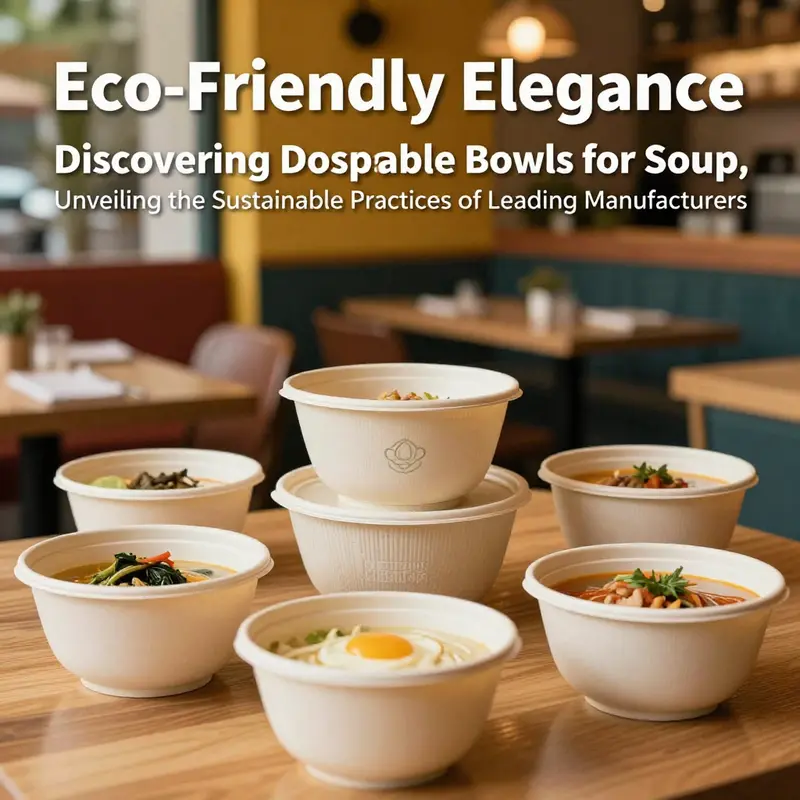
In a world that values sustainability and convenience, the demand for eco-friendly disposable bowls for soup has surged, especially among Bubble Tea Shops, restaurants, food trucks, and event planners. The Products Group Corporation stands out as a pioneer in this sector, offering an array of options crafted from compostable materials. Each chapter of this article deep dives into their sustainable materials, customization options, and impressive production capacity, providing insight into how these bowls can elevate your offerings while minimizing environmental impact.
Greener Bowls on the Front Line: Reimagining Disposable Soup Bowls for a Sustainable Manufacturing Era
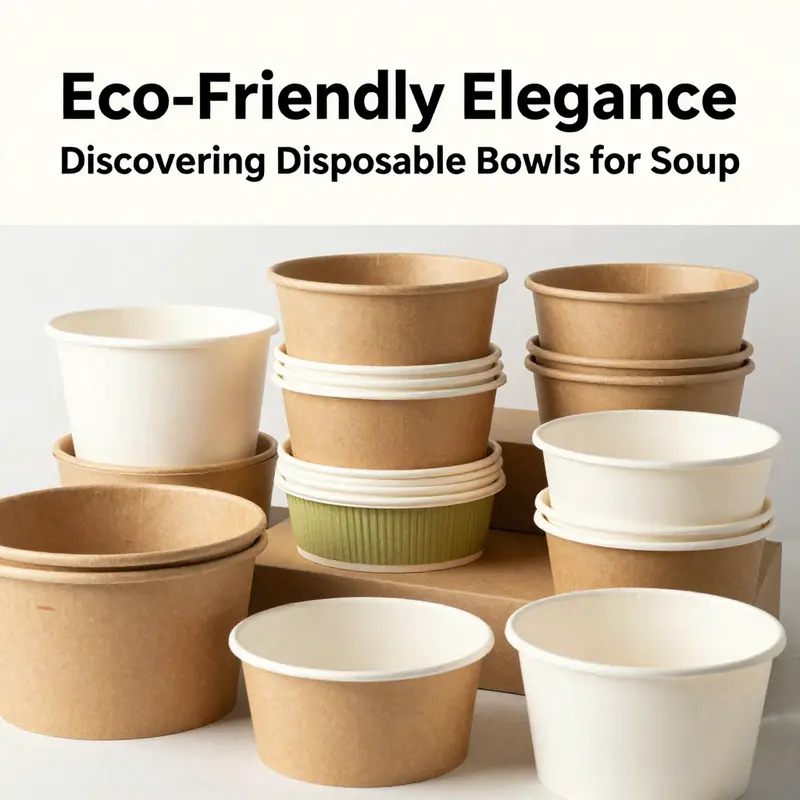
Sustainable materials in disposable bowls for soup manufacturers are no longer a niche concern but a strategic imperative that threads through product development, sourcing decisions, and brand trust. When a company contemplates the full arc of a disposable soup bowl—from forest to shelf to composting facility—it encounters a matrix of material choices, coating technologies, and end-of-life realities that together determine environmental impact, consumer acceptance, and regulatory compliance. In this landscape, the sizes that matter most are not just the 24-ounce and 35-ounce capacities that serve diners across casual and fast-casual settings, but the broader metrics of durability, reliability, and sustainability that influence which bowls wind up on the table today and in waste streams tomorrow. A leading manufacturer in this space has demonstrated how a single product family can balance performance with responsibility by deploying a mix of paper-based substrates, plant-derived alternatives, and coatings designed to resist moisture and grease without compromising recyclability or compostability where feasible. This approach—grounded in material science, rigorous testing, and a willingness to adapt with market demand—offers a blueprint for the entire soup-ware ecosystem as it wrestles with plastic phase-outs, circular economy objectives, and evolving consumer expectations.
At the core of this balance are material options that can be traced to responsible forest management, agricultural byproducts, and non-petroleum pathways. Paper-based materials, when sourced from responsibly managed forests or from certified alternatives like agricultural residues, provide a foundation that aligns with growing scrutiny of deforestation and habitat loss. Kraft paper, bamboo fiber paper, and ivory board each bring distinct attributes to the bowl: Kraft paper offers a warm, natural aesthetic and robust printability, bamboo fiber paper contributes a high strength-to-weight ratio and a distinctive texture, and ivory board provides a smoother surface that can enhance premium branding while maintaining rigidity. The goal is not merely to replace plastic with a different polymer but to shift toward materials whose life cycles exhibit lower environmental burdens, particularly when integrated with coatings and coatings-free designs that foster end-of-life options.
Coatings play a pivotal role in translating these substrates into practical serving ware. Polyethylene (PE) and polylactic acid (PLA) coatings are common choices because they create a moisture barrier that curtails water and grease penetration. This barrier is essential for hot liquids, like soups, and for fat-rich toppings that can otherwise compromise bowl integrity. Yet coatings introduce a paradox: while they extend usability and protect food quality during service, they can hinder compostability, especially in home composting environments where high-temperature industrial facilities may not be reachable. The trade-off becomes a design question: how to maintain performance for hot or oily foods while ensuring that the bowl can break down in appropriate facilities or at least reduce long-term persistence in landfills.
A nuanced development in this area is the emergence of black disposable bowls with moisture-resistant coatings. The visual appeal of a black bowl, combined with strong liquid and oil resistance, gives operators a practical edge in merchandising and service, particularly in settings that want to conceal residual staining or presentation defects. However, the same coating technologies that deliver reliable barrier properties can complicate end-of-life outcomes. When a bowl relies on a PE-type coating, it may not meet compostability standards even if the substrate itself is derived from renewable or recyclable sources. This is not a barrier to innovation but a banner for careful certification and transparent labeling—consumers and waste handlers benefit from knowing whether a given black bowl is industrially compostable, home compostable, or simply recyclable in conventional streams. In other words, the green credentials of such solutions are only as strong as their verifiable certifications and the clarity with which manufacturers communicate them to users, waste processors, and policymakers.
For true sustainability, many in the industry are turning toward fully compostable coatings and 100% biodegradable materials that meet international standards. Programs and standards such as ASTM D6400 and EN 13432 provide the framework for evaluating biodegradability and compostability under specified industrial conditions. When a bowl achieves these certifications, it signals a credible commitment to closing the loop: it can break down in industrial composting facilities within a defined period, leaving behind minimal tangible residues. This is not merely a technical badge; it translates into supplier decisions, investment in processing infrastructure, and a more reliable promise to customers about end-of-life behavior. The challenge remains to ensure these coatings and substrates work in concert with the entire supply chain—from packaging design and material sourcing to printing, lamination, and the logistics of waste collection. The industry continues to iterate toward combinations that preserve mechanical performance for hot and cold foods, deliver consistent print quality for branding, and, crucially, behave predictably in composting streams or other recovery pathways.
When a journalist or a product designer peers into the material toolkit of modern disposable bowls, the questions quickly broaden beyond whether a bowl can hold soup without leaking. They consider how a bowl is manufactured at scale, how it is printed with brand identity, and how its life ends. A widely cited factor is the weight and rigidity of the substrate. Paper-based materials, particularly kraft-grade boards or composites, can be engineered to resist flexing under the weight of a hot soup while still remaining cost-competitive. On the printing front, flexo printing enables brands to convey logos, nutritional information, and promotions in up to six colors, delivering shelf-impact and on-table recognition that can drive repeat purchases. The ability to customize is not a cosmetic feature alone; it influences consumer perception of quality and sustainability. A bowl with a strong branding story—one that communicates compostability or recyclability, or highlights a precise forest-management certification—can transform a routine take-away experience into a tangible pledge of responsibility.
From a manufacturing perspective, the economics of sustainable bowls hinges on production scale and process efficiency. A robust operations profile—such as a facility capable of producing hundreds of tons per month—gives a manufacturer the latitude to experiment with materials, coatings, and coatings-free designs without jeopardizing supply reliability. Flexibility in production lines supports the transition from one substrate to another as market demand shifts or regulatory expectations tighten. It also enables a gradual phasing out of materials with uncertain end-of-life performance as new, more credible solutions prove their worth. In practice, this means maintaining a portfolio that includes multiple substrates and coatings, yet prioritizing those with the lowest credible environmental impact while meeting service-level commitments for both hot and cold foods.
Branding considerations intersect with sustainability in meaningful ways. Operators evaluating disposable bowls weigh not only the functional performance but the messaging that accompanies the product. A bowl composed of recycled content or sourced from responsibly managed forests offers a narrative that resonates with diners who want to support responsible business practices. The possibility of incorporating up to six-color flexo printing means that a brand can translate its sustainability story into recognizable cues—green leaves, certified forest logos, or explicit compostability statements—without sacrificing legibility or brand recall. Importantly, these decisions are not made in a vacuum; they must be evaluated in concert with packaging design, lid compatibility, and the downstream effects on waste management. For instance, a bowl that pairs well with a matching paper lid or a PET-free packaging stack reduces the likelihood of mixed-material waste streams, which can complicate recycling and composting efforts. In some cases, a single packaging family can be designed to support multiple end-of-life pathways, depending on regional waste infrastructure and customer preferences.
A practical marker of capability in this space is the availability of direct inquiry channels that invite conversations between buyers and manufacturers. When a consumer-facing online portal includes an “Add Inquiry” button, it signals a willingness to tailor solutions to specific use cases, such as a particular soup type, heat tolerance, or branding requirement. This kind of engagement is critical because it acknowledges that end-user needs are diverse and that material and process choices must be responsive to those needs. The best supplier relationships in this arena are characterized by collaborative development—jointly testing materials for heat resistance, grease performance, and thinness of coatings; validating branding options in printed runs; and aligning on end-of-life outcomes so that the final product does not simply perform in a restaurant but also performs in a way that reduces environmental burden when discarded.
The choice of substrate—kraft paper, bamboo fiber, or ivory board—carries implications beyond aesthetics and cost. Kraft paper is widely favored for its natural feel and recyclability; bamboo fiber offers a leaner profile and high strength, sometimes enabling thinner walls without compromising rigidity. Ivory board, with its smoother surface, supports high-quality print finishes that can enhance consumer perception of premium value. Each substrate interacts with the moisture and grease barrier differently, which in turn affects how it behaves under heat and how it degrades in composting facilities. The production process for these materials must also be considered in a holistic life-cycle assessment. For instance, the energy intensity of pulping and pulping-related processing, the potential for water use reductions, and the management of byproducts determine the overall footprint of the final bowl. In a market where customers increasingly demand transparency, manufacturers are embedding life-cycle data into product sheets and are pursuing third-party certifications that substantiate environmental claims.
Another layer of complexity arises when considering the end user’s environment. In many urban and suburban settings, customers rely on municipal or third-party recycling streams that are not always equipped to handle multi-layered or coated paper products. A bowl that can be readily separated from its lid and disposed of in a standard recycling bin is more likely to contribute to a circular economy than one that requires a specialized facility or a consumer’s in-home composting setup. This reality pushes designers and procurement teams to optimize for real-world waste management conditions, which vary across regions. The result is a nuanced product strategy: offer a strong substrate with a credible, certified barrier, while clearly labeling the product’s end-of-life pathway so waste collectors can process it correctly. In some markets, that means prioritizing compostable coatings that align with local industrial facilities; in others, it means maximizing recyclability of the paper substrate while minimizing non-recyclable coatings.
The interplay of material science, branding, and waste management can be seen through a practical lens when examining a representative line of disposable soup bowls. A family of bowls offered in 24-ounce and 35-ounce sizes can be produced from kraft paper, bamboo fiber paper, or ivory board, each option carrying a distinct environmental performance profile. The bowls may be plastic-free in the sense of having no exterior plastics on the main body, but they may employ a moisture barrier such as a thin PLA coating or, in some designs, a PE-based barrier for superior liquid resistance. Such distinctions matter to social and regulatory audits, since some coatings are more compatible with composting standards than others. The coating choice affects not only end-of-life outcomes but also manufacturing choices—lamination, adhesion, and the tolerance of printing inks to elevated temperatures during the coating cure can influence production yield, defect rates, and overall cost. For operators seeking to align with branding objectives, the ability to flexo-print up to six colors means that a single bowl family can deliver a high-impact design across multiple SKUs, enabling regional customization while maintaining a common recycling or composting message.
The production capacity figure—around 200 tons per month in this illustrative case—signals more than scale. It indicates the capacity to sustain large orders for quick-service chains, while simultaneously supporting the iterative testing that sustainability programs require. Scale supports research into alternative materials and coatings, supplier audits, and the validation of new end-of-life outcomes. It also provides the resilience needed to manage supply disruptions, a common challenge in global supply chains, especially when fiber sourcing is sensitive to weather patterns or regional policy changes. Yet scale must be balanced with credibility. The most successful programs combine a breadth of substrates and coatings with transparent environmental claims and third-party verifications that reassure customers, waste managers, and regulators alike that the product lives up to its stated sustainability profile.
In practical terms, this means a soup manufacturer can offer options that align with different waste-management realities. For markets with robust industrial composting facilities, a fully compostable coating and 100% biodegradable substrate can be an attractive path. For markets where recycling streams are more developed but where home composting is scarce, a design that emphasizes recyclability with minimal non-recyclable coatings may be more appropriate. In both cases, the brand’s communications must be clear and consistent. It is equally important that packaging choices do not inadvertently create consumer confusion about what to do with the product after use. Clear labeling and accessible recycling or composting information can transform a routine disposal decision into a conscious environmental act, reinforcing consumer trust and brand loyalty.
From a supplier perspective, achieving these outcomes requires a thoughtful mix of materials science, process engineering, and supplier collaboration. A plant must be able to switch between substrates with minimal downtime, ensure consistent barrier performance across runs, and maintain print fidelity for branding. This is where the ability to customize—through flexo printing with up to six colors—and the use of downstream finishing processes such as PE or PLA barrier coatings intersect with sustainability goals. Each choice—substrate, coating, and finish—must be weighed against its environmental footprint and its compatibility with end-of-life pathways. The most forward-looking producers are building a technology roadmap that anticipates regulatory shifts, consumer expectations, and evolving waste-management infrastructure.
A concrete, albeit generalized, example of consumer-facing packaging strategy is the availability of a commonly used take-away option, such as a 26-ounce kraft paper soup cup with a paper lid. This product configuration illustrates how a supplier can balance performance with sustainability while maintaining branding opportunities and supply-chain reliability. The inclusion of a paper lid, and the option to pair with a matching sleeve or carrier, supports a coherent packaging family that simplifies waste sorting for customers and waste processors alike. For brands that want to differentiate themselves, a messaging platform that highlights certified sustainable sourcing, recyclability, or industrial compostability can be woven into the decorative printing on the bowl, provided it remains legible and compliant with labeling standards. Importantly, this approach does not rely on a single material solution but rather a portfolio that acknowledges regional waste realities and customer preferences while maintaining a consistent, credible sustainability narrative across SKUs.
As this narrative unfolds, it is worth noting the role of external guidance and industry benchmarks. The chapter’s anchor in credible standards and assessments helps ensure that sustainability claims withstand scrutiny and translate into tangible environmental benefits. The broader field continues to refine test methodologies, certification criteria, and reporting frameworks so that manufacturers can benchmark performance and progress over time. For buyers, the message is that material choices, coatings, and end-of-life pathways are not abstract concepts; they are operational levers that influence costs, waste streams, and brand reputation. The best partnerships in this space are built on shared commitments to credible certifications, transparent communication, and a willingness to adjust strategies as waste-management ecosystems evolve. The result is a more resilient supply chain that can deliver reliable, safe, and more sustainable disposable bowls for soup service while respecting the realities of regional waste infrastructure and consumer behavior.
For readers seeking a deeper technical exploration of material standards and performance specifics related to sustainable disposable bowls, a foundational resource offers a comprehensive overview of black disposable bowls, including material standards, technical specifications, and performance insights. This external guide helps stakeholders understand the trade-offs between barrier performance, compostability, and real-world disposal outcomes, reinforcing the idea that material science is not isolated from policy and practice. (External resource: https://www.sustainablepackaging.org/insights/black-disposable-bowls-material-standards/ )
Internal linking can also illustrate how such material decisions translate into concrete product offerings that align with brand strategy and customer needs. For instance, a supplier may provide a 26-ounce kraft paper soup cup with a paper lid that embodies the blend of sustainability, functionality, and branding discussed above. This product configuration, which can be used across multiple channels and regions, demonstrates how a well-considered packaging ecosystem supports both operational efficiency and environmental responsibility. In practice, buyers can explore options like this through engagement channels that facilitate customization and rapid prototyping, ensuring that material and design choices do not merely appear virtuous on paper but deliver measurable improvements in waste performance and customer satisfaction. The synergy between substrate selection, barrier technology, branding flexibility, and end-of-life outcomes represents a practical pathway for a soup manufacturer aiming to reduce environmental impact without sacrificing reliability, aesthetics, or value for customers.
To close this loop, the ongoing evolution of sustainable disposable bowls rests on three pillars: credible material choices anchored in responsible sourcing, barrier and coating technologies that preserve performance while enabling end-of-life options, and transparent, branded communications that guide consumers toward environmentally sound disposal. When these pillars converge within a scalable manufacturing framework—one that can handle high-volume production, customization, and diverse regional waste realities—the result is a robust, sustainable platform for disposable soup bowls. This platform respects the intent of a plastic-free or reduced-plastic strategy where feasible, acknowledges the practicalities of current waste-management systems, and keeps pace with brand ambitions for differentiation and trust. The path forward is not a single universal recipe but a carefully orchestrated menu of material options, process innovations, and consumer education that together advance the industry toward bowls that perform well during service and responsibly end their lives, whether in industrial composting facilities, recycling streams, or, where appropriate, well-managed home composting contexts. In this sense, sustainable disposable bowls become more than functional items; they become a testimony to a manufacturing culture that treats materials as enduring resources rather than disposable inputs. The end goal is a soup experience that delights customers today while easing the environmental burden for future generations, a goal that aligns with the broader trajectory of the disposable-ware sector and its evolution toward a more circular economy.
For reference and further reading, see the external resource noted above, which offers a deeper dive into the standards that shape how black disposable bowls are evaluated for end-of-life performance. And for readers seeking concrete product examples and supplier capabilities that reflect these sustainability principles, an internal link to a representative kraft-sourced, lid-compliant option demonstrates how branding, barrier performance, and end-of-life considerations can be harmonized in a practical product family: 26oz kraft paper soup cup with paper lid.
Branding by Design: Customization and Technological Innovation in Modern Disposable Soup Bowls
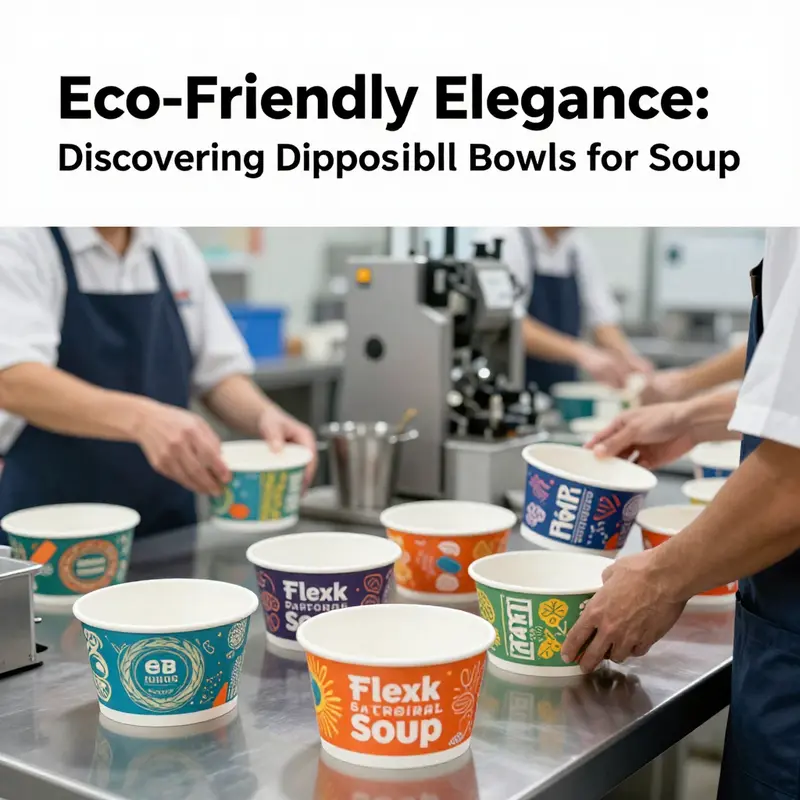
Customization and technological innovation have moved beyond mere aesthetics in the disposable bowls sector, turning branding, performance, and sustainability into a single integrated value proposition for soup manufacturers and their clients. Companies that supply 24 Oz and 35 Oz sizes, built from Kraft paper, bamboo fiber paper, or ivory board, are now narrating a story that marries design freedom with responsible material choices, an approach that not only elevates product appearance but also furthers market access across foodservice and retail channels. The capacity to deliver up to 200 tons per month speaks to the operational backbone behind this narrative, offering brands reassurance that their labels and messages can travel from concept to consumer without compromising timelines or quality. The ability to provide plastic-free options and to lean on food-grade, recyclable, compostable, or biodegradable materials aligns with both regulatory expectations and evolving consumer preferences, where eco-conscious decisions are often a proxy for trust and long-term relationships with customers and end-users alike. A key feature of this landscape is the choice of coatings, with polyethylene or polylactic acid serving as protective layers that maintain water and grease resistance while preserving the integrity of the underlying paperboard or fiber structure. These coatings are not mere afterthoughts; they contribute to a controlled performance envelope that allows hot soups to travel safely and cold beverages to remain stable, supporting a wide range of menu items, from broths and chowders to noodle bowls and hearty stews. In practice, this means a supplier can present a single family of products that covers both dine-in takeaway and curbside delivery, reducing SKU proliferation while enabling brand consistency across formats. Yet the heart of the chapter lies not simply in what these bowls are made of or how they perform, but in how they can be personalized to reflect a brand’s identity, values, and storytelling ambitions. Flexo printing, a mature yet continuously evolving technology, enables designers and marketers to place a logo, a graphic motif, or a carefully chosen message onto kraft paper soup cups and bowls with a precision and color richness that were once reserved for more rigid packaging substrates. The potential for color, line work, gradients, and even fine typographic details means brands can use their packaging as a true marketing medium rather than a disposable afterthought, a shift that positions packaging as a living extension of the brand’s voice. For soup manufacturers, this is more than an aesthetic upgrade; it is a strategic lever to differentiate in crowded environments where competitive parity on price and product quality is no longer enough. The ability to customize across sizes, from 24 oz to 35 oz, as well as across different form factors such as round-bottom kraft paper noodle soup bowls or take-out containers with lids, creates a flexible platform that can accommodate varied meal occasions, from single-serve lunches to family-sized portions. This flexibility is not just about style; it reflects an understanding of consumer behaviors that hinge on presentation, perceived value, and the ease with which a brand can scale its messaging across multiple touchpoints. Buyers who seek customization often ask for specific dimensions and material specifications to fit particular applications, and manufacturers have responded with a willingness to tailor offerings to these needs. Options such as 135×105×98 mm or 131×98×107 mm in the packaging geometry, and precise paper thicknesses, speak to a careful engineering approach that recognizes how subtle changes in dimensions can affect stacking efficiency, heat retention, and user convenience. Alongside physical dimensions, the possibility to request sample kits, inspection certifications, and other quality assurances demonstrates a confidence in the reliability of the process, while also acknowledging the commercial realities of procurement where sample costs can be a factor. This approach statements for prospective buyers that the path from concept to countertop is traceable, measurable, and verifiable, which is critical in regulated food packaging environments where provenance and performance matter. The materials themselves carry a story that resonates with sustainability commitments and brand promises. Kraft paper, with its linerless beauty and natural tone, offers a surface that accepts high-resolution flexo prints and holds ink with a level of fidelity that helps brands reproduce vibrant imagery without resorting to plastic laminates that undermine recyclability. Bamboo fiber paper adds another dimension, combining renewable feedstock with a smooth, premium feel that can elevate a brand’s premium positioning, particularly for lines that emphasize natural textures or earthy color palettes. Ivory board, a sturdier option, can be used for heavier hot soups or multi-ingredient meals, where the structural integrity of the container is as important as the branding on its exterior. The real distinction, however, is how these materials are integrated with coatings and barrier technologies. PE coatings have long provided reliable moisture resistance, while PLA coatings align with compostability goals, albeit with trade-offs in certain recycling streams that require careful management. The choice of coating affects not only performance but end-of-life outcomes, and brands increasingly want to communicate this lifecycle story to their audiences, turning packaging choices into a platform for education as well as promotion. The landscape also reveals insulated soup bowls as a growing category, where layered paper or selective coatings create a thermal barrier that keeps soup from cooling too quickly during transport while still allowing for recyclability or compostability at the end of life. Insulation is not merely about temperature; it is about preserving sensory experience, ensuring that a consumer tasting a hot broth does so with the expected aroma, mouthfeel, and heat intensity, which in turn reinforces brand loyalty and repeat purchases. Similarly, advanced printing technologies enable packaging that remains legible and visually compelling when faced with steam, humidity, or oil exposure. High-resolution graphics, durable inks, and smart color management are now common in flexo workflows tailored for food-contact substrates. The result is packaging that supports branding ambitions without compromising the functional requirements of a disposable item designed to be discarded after a single use. The joint emphasis on sustainability and branding reflects a broader market shift: packaging is no longer a peripheral consideration but a primary instrument for competitive advantage. When a soup brand can offer a plastic-free vessel with clear signaling of recyclability or compostability, the packaging becomes a persuasive claim about corporate responsibility as well as quality. The integration of six-color flexo printing unlocks a broader color palette, which is particularly valuable for brands seeking to reproduce complex dish imagery, seasonal color cues, or regional motifs that resonate with local diners while maintaining a consistent corporate look across geographies. The implications for procurement teams are meaningful. Customization typically involves pilot runs, color proofs, and material trials to validate print fidelity, barrier performance, and consumer safety under real-world conditions. The ability to conduct such pilots without excessive risk hinges on the scale of production capacity; facilities capable of delivering hundreds of tons per month can support multiple simultaneous pilots, test a range of coatings, and still meet lead times for large campaigns. In practice, this means a buyer can balance the desire for differentiated packaging with the need for reliability and predictability in fulfillment. The procurement process is further streamlined by supplier ecosystems that provide digital tools for design libraries, proof approvals, and streamlined communication channels. A modern packaging partner can offer a seamless path from concept to production, integrating design feedback loops with manufacturing capabilities and logistics planning. The opportunity to embed a branded design on a durable kraft or bamboo-fiber base is more than an aesthetic flourish; it is a strategic move toward brand coherence across channels, from foodservice counters to home delivery. Within this context, an internal resource that highlights customizable branding options can be a valuable reference point for teams exploring how to translate a brand’s visual identity into functional packaging. For example, brands can explore how to push a customized logo or graphic on eco-friendly disposable kraft packaging through suppliers that specialize in logo-printable materials. See how design and sustainability can align in practical packaging by visiting a resource that showcases a customized logo on kraft-based packaging. custom-logo kraft paper packaging. This kind of reference helps teams understand execution realities, from color stability to edge quality, while demonstrating that creativity can coexist with rigorous safety and environmental stewardship. The conversation about customization is also a conversation about end-of-life outcomes. Recyclable kraft-based solutions reduce landfill burden, while compostable or biodegradable options align with broader circular economy objectives. The end-of-life pathway—whether recycling stream viability or municipal composting programs—becomes a part of the value proposition marketed to foodservice operators and consumers alike. In this sense, packaging is a narrative about responsibility as well as presentation. The end-to-end lifecycle perspective informs choices about material blends, barrier design, and fiber sourcing, ensuring that the story told on the outer surface of a bowl aligns with what happens when the consumer discards it. The practical implications for brand teams are significant. They can leverage customization not only to refresh seasonal campaigns but also to facilitate co-branding initiatives with retailers and restaurants, extending a brand’s reach without sacrificing consistency. This is where digital ecosystems and procurement platforms come into play, enabling brands to compare options, request samples, and validate performance attributes in a time-efficient, data-driven manner. The industry’s trajectory toward customization is complemented by ongoing investments in technology that improve manufacturing efficiency and environmental outcomes. Developments in die-cutting, forming, and lamination, for example, reduce waste and improve the uniformity of complex shapes such as octagonal or nested bowls, while advances in coating chemistry enable stronger moisture barriers with thinner film thickness, which can preserve material strength without adding significant weight. These improvements, in turn, influence the sustainability profile of the packaging, since lighter weight materials and fewer additives often translate into reduced energy consumption in production and transportation. When brands consider the total cost of ownership for packaging, the calculus grows more nuanced. Upfront costs for customization may be offset by savings in assembly time, reduced packaging complexity, and enhanced consumer appeal, which can translate into higher order fulfillment rates and stronger brand recall. The financial dimension is inseparable from the environmental and user-experience benefits that customization brings. As with any strategic procurement decision, transparency matters. Buyers typically seek documentation such as material safety data sheets, compostability certifications, and third-party verification of print durability and ink migration in contact with food. Transparent materials data give marketing teams confidence to articulate the sustainability story and support claims about recyclability, compostability, or biodegradability in product labeling. The long-term payoff for these efforts is a packaging system that travels with the meal instead of remaining as a disposable afterthought. It becomes part of the consumer’s impression of the brand, a silent ambassador that communicates care for the planet while delivering practical performance. In the wake of such developments, a final observation emerges: customization is not a finite feature but a living capability that needs ongoing governance. Brands will need to maintain design libraries, standardize brand elements, and coordinate with suppliers to refresh graphics in line with evolving campaigns and regulatory changes. This governance ensures that the brand’s message remains consistent across all consumer touchpoints, from the moment the customer chooses a soup bowl in a grocery store to the moment they finish a hot cup of broth at home. The opportunities here are broad and meaningful. A soup manufacturer can leverage customization to enter new market segments, test color stories that reflect seasonal flavors, or partner with restaurants and retailers to co-create branded packaging that enhances perceived value. Insiders know that the most successful packaging stories are not only visually compelling but are robust in function, with predictable performance under hot or cold conditions, reliable barrier properties, and clear, consumer-friendly labeling that communicates both safety and sustainability. The convergence of customization and technology also creates a platform for storytelling that connects product quality with social responsibility. Consumers increasingly expect packaging to speak to them about where materials come from, how waste is managed, and what happens at the end of the product’s life. A well-executed customization program can respond to this expectation with transparent narrations about fiber sourcing, manufacturing energy intensity, and end-of-life pathways. The practical takeaway for stakeholders across the supply chain is clear. Invest in flexible machinery and adaptable coating systems; invest in design capabilities that can be deployed across multiple SKUs without sacrificing color fidelity; invest in supply chain resilience that ensures consistent access to high-quality kraft, bamboo fiber, or ivory board substrates; and invest in clear pathways for stakeholder communication, so brands, suppliers, and distributors can collaborate on time, cost, and sustainability. This is the architecture of a modern packaging program: a living system that can evolve with changing consumer expectations, regulatory developments, and advances in materials science, while preserving the reliability and predictability that large foodservice operators rely on. Acknowledging the broader ecosystem helps explain why some suppliers invest in multi-material platforms that can be tuned for different performance criteria without sacrificing core branding capabilities. It also explains why many brands insist on transparent labelling around material composition and end-of-life options, as this transparency becomes a differentiator in a marketplace that increasingly rewards responsible storytelling as much as product quality. Finally, the industry is anchored by a practical recognition: customization is not a one-off campaign but a governance challenge. Brand teams must develop scalable design libraries, standardized color references, and approved supply chain pathways that can adapt to seasonal campaigns while preserving a consistent identity across all touchpoints. This requires collaboration among creative teams, packaging engineers, procurement specialists, and sustainability experts, all aligned behind a shared objective: to deliver packaging that enhances the eating experience, communicates a clear environmental stance, and remains economically viable for both large operators and nimble startups. The end result is a packaging system that truly travels with the meal—easy to recognize, easy to handle, and easy to dispose of in a manner that aligns with local waste-management practices. It is a system that supports the brand’s story from first glance to last bite, turning a simple bowl into a durable ambassador for quality, responsibility, and taste. For readers who want to see how these ideas translate into practice, an external resource illustrates the market reality of customized kraft-paper soup bowls with branding from a leading supplier platform. External resource: https://www.alibaba.com/product-detail/Custom-Disposable-Kraft-Paper-Soup-Bowls-with_1601025581373.html?spm=a2700.191302.0.0.3c9d5f1cNjHtIg. The journey from concept to consumer is ongoing, and the trajectory points toward packaging that is as expressive as the flavors it carries, as responsible as it is attractive, and as scalable as the demand that continues to rise across communities, channels, and occasions.
Rising Tide of Sustainability and Scale: Market Dynamics and Production Capacity in Disposable Soup Bowls
The market for disposable soup bowls sits at a complex juncture where sustainability priorities, branding aspirations, and the realities of global supply converge. As food service providers, convenience retailers, and home delivery concepts push for packaging that is hygienic, practical, and cost effective, the design and production of disposable bowls have become a strategic axis for competition. In this landscape, a notable manufacturer that focuses on disposable bowls for soup demonstrates how capacity, material choice, and customization translate into real world advantages for buyers seeking both reliability and responsible packaging. The broader narrative, however, extends beyond a single supplier. It encompasses the evolving dynamics of material science, consumer expectations, regulatory considerations, and the logistics of scale that together shape what a soup bowl can be and how it travels from design table to table.
At the heart of current market dynamics is a palpable shift toward sustainability that is not merely about meeting regulatory minimums but about aligning with consumer values and lifecycle thinking. Traditional plastic coated items have given way to innovations centered on paper based materials that can withstand the demands of hot liquids while still being compatible with recycling streams or composting programs. A widely adopted approach involves coatings such as PE on paper, or biodegradable alternatives like PLA, which raise the bar for moisture and grease resistance without compromising end of life options. Beyond coatings, there is growing interest in bamboo fiber paper and ivory board as substrates that promise strength, printability, and a more favorable environmental profile. The implications for manufacturers are twofold: material sourcing must balance performance with sustainability claims, and product design must embrace end of life realities—whether that means recyclability, compostability, or biodegradability—without sacrificing user experience.
Sustainability permeates every stage of the value chain, from raw materials to the customer’s post consumer journey. For soup bowls designed to handle both hot and cold contents, the demand is for materials that maintain integrity—no leaks, no soggy rims, and stable stacking—while still enabling a responsible disposal path. This balance often leads product developers to explore multi layer structures and specialized surface coatings that reduce water and grease penetration. In practice, this translates to packaging that can perform under a range of temperatures and viscosities, supporting soups, broths, stews, and even side items like fried foods or fruit garnishes within the same family of products. The environmental narrative becomes more credible when suppliers emphasize food grade status, recyclability, and compostability, coupled with clear indications of where the packaging fits within existing waste streams. In a market that increasingly values transparency, the ability to communicate lifecycle attributes through branding and labeling becomes a competitive differentiator, not just a compliance checkbox.
Branding and customization play a central role in market dynamics, reflecting a broader trend in which packaging is part of the marketing mix rather than a simple containment solution. The ability to brand disposable bowls through flexo printing in multiple colors enables businesses to extend their logos, taglines, and promotional graphics directly onto the vessel that carries soup to the consumer. With capabilities to print up to six colors, manufacturers can transform a commonplace service item into a visible touchpoint that reinforces a brand’s identity and messaging at the point of sale or in delivery scenarios. Customization is not just about aesthetics; it also carries practical benefits. Branded bowls can reduce confusion in multi brand environments, facilitate promotional campaigns, and improve customer recall when paired with lids that seal securely and present a clean, professional appearance. In this sense, customization becomes a bridge between product performance and market visibility, allowing soup vendors to maintain a cohesive brand experience across in store dining, takeout, and online ordering channels.
The interplay between customization and sustainability is particularly intricate. Architectural decisions about color, finish, and coating must consider downstream recycling or composting requirements. A six color print job, for instance, requires compatibility with the substrate, adhesion properties, and ink formulations that avoid contaminants in recycling streams. The packaging ecosystem responds by offering branding options that do not compromise end of life outcomes. As a result, buyers need to navigate trade offs between vivid branding and recyclability, choosing combinations that deliver strong marketing impact without creating obstacles in waste processing. The value proposition for a soup bowl manufacturer, therefore, hinges on a careful alignment of material science, print technology, and waste management pathways. When executed successfully, this alignment yields bowls that perform under heat and moisture stress while presenting a branded, hygienic exterior that resonates with consumers who insist on responsible packaging.
Global supply chain integration adds another layer of dynamics that buyers cannot ignore. The modern disposable packaging landscape features a network of manufacturers able to produce large volumes with relatively low MOQs and competitive pricing, especially when production is concentrated in scale driven hubs. For buyers, this means access to global capacity, faster lead times, and the ability to respond quickly to shifting demand. Yet reliance on a global network also introduces variability in costs, availability, and quality control. The capacity to ramp up production, as a case in point, is often tied to automation, the sophistication of forming lines, and the speed of printing systems. A high volume operation that can sustain monthly outputs in the hundreds of tons demonstrates a resilience that matters in peak demand periods, such as holiday seasons or large catering events. The use of advanced machinery for forming, coating, and printing ensures that capacity remains flexible, enabling a manufacturer to adjust to different bowl sizes, coatings, and branding requirements without sacrificing throughput or quality.
Prices and terms offered by global suppliers play a decisive role in market competitiveness. Reports of low MOQs and aggressive per piece pricing for large orders underscore the economics of scale that drive accessibility to international markets. For buyers seeking to distribute into multiple regions, such pricing can open doors to new opportunities, especially when coupled with the ability to customize and to meet strict regulatory or sustainability criteria. However, these advantages come with considerations around quality assurance, certifications, and consistent supply. Buyers commonly seek third party verification to confirm material safety, ink compliance, and adherence to environmental standards. Certifications such as SGS or equivalent attestations help reassure customers and buyers that the packaging meets the expectations established by food safety and environmental regulations. In practice, an informed procurement approach blends price, performance, and certification into a holistic assessment that guides supplier selection and long term sourcing strategies.
The production capacity narrative is inseparable from the technologies employed in manufacturing. A soup bowl intended for both hot and cold services and for diverse food items—ranging from thick broths to delicate accompaniments—benefits from a combination of sturdy substrates, moisture barriers, and optimized structural designs. The presence of a robust monthly capacity—measured in hundreds of tons—often signals a mature operation with access to automation, diagnostic processes, and a workflow that minimizes waste. Automation can include feed forward systems for material handling, precision coating, and high speed printing that preserves color fidelity while meeting strict timeframes. The result is a reliable supply that enables buyers to commit to large campaigns or ongoing programs with confidence. At the same time, capacity is not a fixed attribute; it reflects an ecosystem of suppliers, logistics partners, and contingency plans that collectively determine how well a manufacturer can scale in response to evolving demand patterns.
The conversation about production capacity also touches the practical realities of product diversification. Consumers and operators do not rely on a single bowl design or size; they require a spectrum of options to fit different meal formats, service styles, and price points. This reality pushes manufacturers to offer a portfolio that includes variations in volume, such as 24 or 35 ounce bowls, across a range of materials and coatings. The design challenge is to maintain consistent performance whether the bowl is filled with piping hot broth or a chilled fruit medley, while ensuring compatibility with lids, insulation features, and leak proof seals. The economics of diversification demand careful process optimization, as each option requires distinct tooling, printing plates, and quality control checks. Yet the reward is clear: a robust catalog reduces the need for suppliers to source external packaging for different items and simplifies the buyer’s procurement workflow by delivering a one stop solution with a coherent branding and performance profile.
Within this broader context, supplier insights emerge as a practical compass for buyers seeking to navigate the market. Real time access to supplier capabilities, pricing, and certifications—whether through digital marketplaces or direct engagement with manufacturers—helps buyers delineate realistic expectations and plan ahead. Platforms that provide detailed product specifications and the ability to request samples enable buyers to validate performance before committing to large orders. Certifications serve as a bridge between marketing claims and regulatory compliance, offering a measurable basis for comparing options. When exploring potential partners, decision makers often weigh the balance between lead times, material choices, and branding opportunities, ensuring that the selected option aligns with the company’s sustainability commitments and market ambitions. This is especially important as environmental expectations become a differentiator in crowded foodservice markets, where customers increasingly scrutinize packaging choices alongside the quality of the product inside.
Direct customer engagement features, such as an inquiry submission button, further influence market dynamics. The ability to initiate dialogue with producers about custom sizing, coating preferences, and branding specifications accelerates the path from concept to market. For soup manufacturers, rapid feedback loops can translate into shorter development cycles, allowing pilots to test new formulations or branding concepts with minimal risk. The practical implication is a tighter alignment between product development and market needs, which in turn supports faster iterations and more responsive supply chains. This channel based interaction complements the more formal channels of certification, audits, and supply agreements, creating a spectrum of engagement that strengthens trust and reliability in the supplier customer relationship.
As the industry continues to evolve, the direction of travel points toward greater integration of sustainability, branding, and scalability. Companies that can demonstrate clear performance in moisture and heat resistance, while offering recyclable or compostable options, will be best positioned to meet both regulatory demands and consumer expectations. The ability to deliver customization at scale, coupled with transparent claims about end of life options, adds value beyond mere packaging. It contributes to a brand story that resonates with customers who value convenience without compromising responsibility. The optimization of production capacity, in this sense, is not just a technical achievement; it is a strategic enabler of growth across geographies and market segments. The most successful players will be those who can orchestrate a balanced portfolio of materials, finishes, and branding capabilities that together meet hot and cold use cases, align with waste management realities, and scale with demand.
To illustrate how these dynamics manifest in practice, consider a representative scenario in which a soup brand seeks a packaging partner capable of delivering both high performance bowls and branding flexibility. The buyer evaluates substrates for strength and heat resistance, coating options for moisture barriers, and printing capabilities that maintain color fidelity under field conditions. The decision framework also includes evaluating end of life outcomes, ensuring that the chosen packaging aligns with environmental commitments. The supplier’s ability to provide large volumes, with reasonable MOQs and competitive pricing, becomes a critical factor in meeting quarterly targets and enabling promotional campaigns. The buyer’s procurement team also weighs the value of direct inquiry channels, which expedite customization requests and facilitate alignment on packaging constraints, schedules, and regulatory requirements. In this environment, the best partnerships are those that can demonstrate a consistent record of quality, a transparent approach to sustainability, and a willingness to adapt production plans to accommodate evolving brand strategies.
In closing, the market dynamics surrounding disposable bowls for soup manufacturing reveal a landscape where sustainability, branding, and capacity are inseparable. The industry trend toward eco friendly substrates, coupled with coatings and printing technologies that preserve performance, creates a fertile ground for innovation. Customization remains a powerful lever for differentiation, enabling brands to imprint their identity at the point of consumption while maintaining a responsible end of life narrative. Parallel to this, global supply chain integration offers scale and resilience, enabling suppliers to meet rising demand while maintaining quality and cost effectiveness. Production capacity, a tangible signal of operational maturity, underpins the ability to serve large volume campaigns and diverse use cases, from hot soups to cold salads. The consequence for soup manufacturers is clear: they must seek packaging partners who can deliver a coherent blend of material science, branding flexibility, and scalable production, all anchored in reliable sustainability outcomes. The packaging choice becomes part of a broader strategic framework that influences operational efficiency, customer perception, and environmental stewardship. As markets continue to evolve, those who invest in integrated capabilities—material innovation, branding acuity, and scalable production—will define the standard for what a disposable soup bowl can achieve in a world that values both performance and responsibility. For readers seeking concrete examples of the kinds of eco friendly, branded solutions that drive marketing at the point of sale, a representative resource on the topic offers further contextual insight.
Final thoughts
In conclusion, the demand for disposable bowls for soup continues to rise, driven by the increasing emphasis on sustainability and customization. The Products Group Corporation exemplifies excellence through eco-friendly materials and innovative designs, making them an ideal partner for businesses like yours. As you consider your dining solutions, remember that sustainability can go hand in hand with quality and style, ensuring a positive impact on your customers and the planet.