
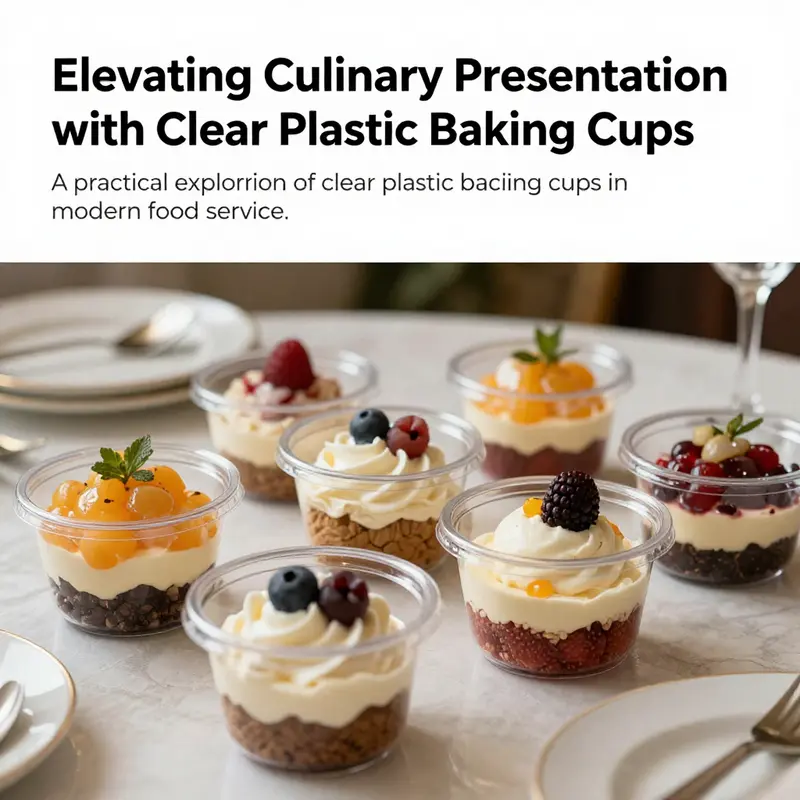
Clear plastic baking cups are emerging as an essential tool for a variety of culinary businesses, from bubble tea shops to catering services. Their durable, versatile design not only caters to aesthetic needs but also streamlines operations. By examining their material composition and design, the myriad applications within different establishments, economic benefits, safety considerations, and innovations in sustainable production, this article establishes clear plastic baking cups as an innovative solution for food service professionals eager to enhance their offerings.
Clarity in Form: Designing Clear Plastic Baking Cups for Presentation and Practicality
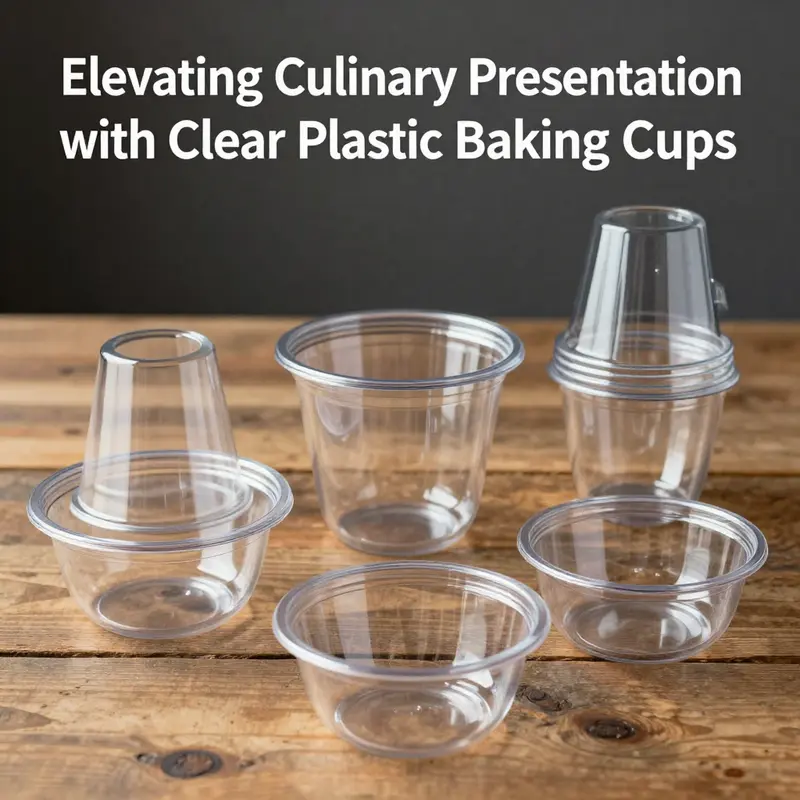
Clear plastic baking cups are more than a simple vessel; they are a carefully engineered stage for desserts. In professional kitchens and home bakeries alike, the choice of design and material determines how well a treat sets, how it looks in the final shot, and how smoothly the workflow runs from batter to serving. The chapter you’re about to read surveys how form and substance work together in these cups, emphasizing not just how they hold a mousse or a jelly, but how their transparency, shape, and resilience shape the entire baking and presentation experience. The basic appeal—clarity—serves a broader purpose. When a dessert is showcased in a crystal-clear cup, its colors, textures, and delicate layers are free to speak for themselves. The goblet-like glow of a pale mousse or the glisten of a citrus jelly becomes part of the culinary narrative, not hidden behind opaque walls or metal molds. This visibility is a powerful tool for bakers who want to communicate quality through appearance as surely as through taste. It also influences how customers perceive portion size and value, which is why the design stage matters as much as the recipe itself.
Design features of these cups extend far beyond mere aesthetics. A notable variety includes forms that range from square and rectangular to circular shapes, each chosen to complement specific desserts and presentation styles. Square and rectangular cups offer clean lines that work well with layered desserts or desserts with sharp, modern styling. Circular cups, whether used for mousses or mini cakes, echo traditional cup shapes while offering a contemporary twist through profile height or rim thickness. Some manufacturers explore playful motifs, such as star or heart shapes, which can elevate themed events or celebratory menus without complicating the baking process. A practical improvement seen in several lines is the inclusion of handles. Handles provide a secure grip when transporting or serving delicate creations, minimizing the chance of smudging the sides or displacing a carefully piped topping. The handles are not just cosmetic; they support a smoother service, especially in busy service windows or at bustling party setups. In many cases, cups are designed to be stackable or nestable. This feature is more than storage efficiency; it reduces shipping costs, minimizes space in crowded kitchens, and simplifies inventory management for large-scale operations.
The material composition of clear plastic baking cups centers on PS, or polystyrene. PS is prized in the food-service sector for its remarkable clarity, which preserves the visually appealing aspects of every dessert. The rigidity of PS helps cups stand upright and maintain a neat, unmangled silhouette as fillings set and textures firm up. This rigidity also supports safe transport on flat baking sheets, where cups can be slid into position and held steady during a bake or a chill. Food-grade labeling is common, signaling that the cups meet safety standards for direct contact with edible contents. Some products emphasize the use of virgin, or new, raw materials to reinforce purity and reduce the risk of contaminants that could affect flavor or safety. Taken together, these material choices create a baseline of reliability: high clarity, dependable strength, and predictable behavior in a crowded kitchen.
Yet no material discussion would be complete without noting the practical limits. Polystyrene is not typically designed for prolonged high-heat exposure, and most clear cups are not microwave-safe unless explicitly stated by the manufacturer. The temperatures they can endure without deformation vary, with many models rated to handle baking temperatures up to around 400°F (204°C). This makes them well suited to cupcakes, muffins, petit fours, and mousse-based desserts, where the bake is modest and the form is meant to hold its shape while cooling. It also means bakers should reserve these cups for standard baking tasks rather than trying to coax them into jobs that demand sustained, intense heat. A related consideration is environmental impact. PS is not biodegradable, and recycling streams for rigid polystyrene vary by region. This reality invites a thoughtful balance: leveraging the cups for their display advantages and convenience while seeking responsible disposal or recycling options in line with local guidelines. For many users, that balance means using these cups in contexts where presentation and ease of cleanup are worth the trade-off of non-biodegradability, and choosing products that clearly label food safety and recycling guidance.
The practical workflow around clear plastic cups is informed by their role as a bridge between bakeware and display. They are free-standing and do not require metal molds, which streamlines prep and cleanup. Placing cups directly on a sheet pan enables straightforward oven use without the need for greasing or lining, and it simplifies post-bake handling. The ability to bake, chill, and serve within the same cup minimizes transfers and potential damage to delicate decorations. This compatibility with a seamless process makes them especially attractive for events, catering, and competitive baking where timing is tight and presentation must shine. When a dessert is finished and ready for transport, the option of domed lids or clear dome tops—where available—adds convenience for storage or takeaway without obscuring the dessert’s visual appeal. The net effect is a workflow that respects both the integrity of the dessert and the expectations of the presentation.
From a design perspective, the choices go beyond straight lines and clean edges. The variety in sizes allows for precise portioning, which in turn informs pricing and menu structure in a professional kitchen. Smaller cups can highlight bright fruit glazes or delicate mousses, while taller cups provide room for layered fillings or ganache-topped creations. The shape, height, and rim thickness contribute to the mouthfeel and how the dessert is experienced from first bite to last. In events and formal presentations, the interplay of color and form becomes a central part of the menu’s storytelling. A transparent cup gives a dessert room to “bloom” visually—think of a jewel-toned jelly or a softly layered parfait where each layer’s hue is as important as the flavor. The cups themselves, with their refined clarity, act as a transparent stage on which the culinary performance unfolds.
A key logistical advantage is how these cups interact with packaging and transport. Their transparent walls encourage a quick audit of the finished product, both for quality control and for customer-facing displays. In bulk purchases, the nests and stacks maximize warehouse space, reduce handling time, and streamline shelf replenishment. Even the most modest batch can gain a refined, store-ready appearance simply by choosing the right cup size and shape to suit the dessert’s composition. In environments where speed and consistency matter, the predictability of PS cups—how they hold and release a finished treat—becomes a meaningful differentiator. For home bakers, this translates into a reliable, mess-free method to portion treats for parties, bake sales, or gifts. The cups reduce cleanup while preserving the dessert’s presentation, a combination that resonates with cooks who prize both efficiency and aesthetics.
The synergy between design and material choice extends to how these cups are perceived as part of a broader packaging ecosystem. Some conversations around display quality emphasize the cups’ ability to complement other serving and packaging options—such as clear pastry containers or compatible toppers—without competing with the dessert’s color and texture. In this light, a carefully chosen clear cup can elevate a small dessert from a simple bite to a memorable presentation. It is not merely about containment; it is about how containment becomes accompaniment, how the vessel helps to tell the dessert’s story through form, transparency, and ease of use. For bakers who also manage inventory or logistics, the availability of diverse shapes and sizes means the same dessert can be shared in varied formats, from casual tasting portions to elegant, multi-layered miniature cakes.
In summary, the design and material composition of clear plastic baking cups reflect a deliberate balance between visibility, durability, and practicality. Polystyrene provides the clarity and stiffness needed to showcase color and texture while supporting stable service. The shapes, sizes, and features—ranging from square and rectangular silhouettes to circular mini-cakes, with optional handles and stackable design—address both presentation and performance. Temperature tolerance makes them suitable for standard baking tasks, while their limitations remind bakers to reserve them for appropriate applications. And while the environmental considerations invite ongoing reflection on sustainability, the cups remain a versatile tool in the baker’s repertoire, enabling precise portioning, clean handling, and a presentation that invites appetite before the first bite. For further exploration of related packaging options that pair with clear plastic cups, you can explore related containers that blend clear presentation with practical transport. disposable-biodegradable-kraft-paper-matt-lamination-clear-plastic-combo-pastry-dessert-tiramisu-cake-food-container-packaging.
For readers seeking additional context on how packaging choices intersect with food safety, one external resource offers guidance on packaging materials and their regulatory considerations. https://www.fda.gov/food/packaging-labeling-guidance
Clear Clarity in the Cup: How Transparent Baking Cups Redefine Portioning, Presentation, and Practical Kitchen Workflows
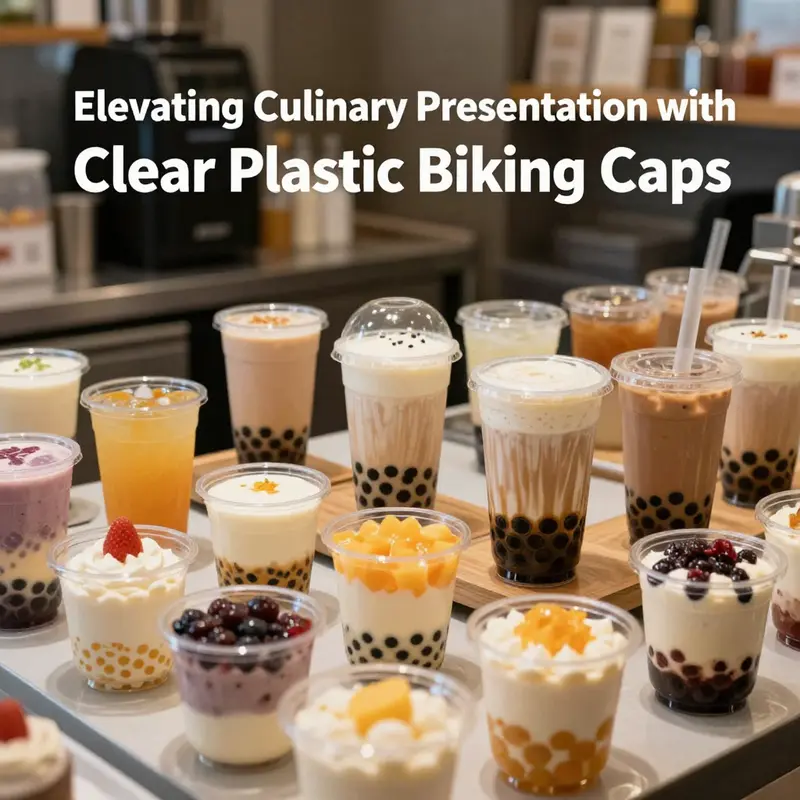
The appeal of clear plastic baking cups lies in their transparency and the quiet efficiency they bring to kitchens of every scale. When a batter bakes in a cup that remains unobstructed by color or opacity, cooks can observe the bake with precision, catching a delicate rise, even browning, and the moment when the dome peaks toward a centered crown. This clarity supports consistency, providing a visual cue about fill levels and helping bakers portion batter with a steady hand. The result is more uniform bake times and predictable results batch after batch.\n\nThe practical advantages extend beyond the bake itself. Their shatter-resistant construction reduces the risk of breakage in busy kitchens, schools, or event settings. The cups are lightweight, easy to stack, carry, and nest, which reduces fatigue during long prep sessions and simplifies inventory management. They can be placed directly on a sheet pan or tray, eliminating an extra step of greasing and lining. Cleanup is simplified too; the absence of liners means fewer scraps and less scrubbing.\n\nPresentation and versatility go hand in hand with clear cups. The transparent material acts like a lens, highlighting the dessert inside and elevating simple treats to visually striking offerings. Lids—domed or flat—enable secure takeaway and storage, protecting tops and preventing spills during transport. For producers serving crowds, domed lids turn a muffin into a portable, presentable treat.\n\nFrom a materials perspective, many cups are made from food-grade plastics such as PET or PP, chosen for safety, rigidity, and compatibility with common baking temperatures. Users should still follow the manufacturer’s limits, as prolonged exposure to heat or improper microwave use can cause warping or clouding. When in doubt, treat clear cups as oven- or room-temperature serving ware rather than microwave-ready containers.\n\nThe flexible use of clear cups extends beyond baking. They serve as convenient measuring and staging vessels for dry ingredients, liquids, or even non-food items in crafts or organization tasks. Their durability and light weight make them a practical option in schools and community programs while keeping ingredients visible and accessible. This adaptability supports a streamlined workflow in both home kitchens and professional operations.\n\nIn practice, choosing the right clear plastic baking cups starts with a mindful assessment of need. Sizes and styles vary, and bulk purchases can drive down unit costs based on demand, storage, and event frequency. Dome lids offer a balanced package: the cups stay elegant on display yet remain secure for transport and takeaway. The core benefit remains: the ability to go from prep to plate with minimal fuss.
Clear Clarity, Clear Profit: The Economic Case for Transparent Baking Cups

A row of clear plastic baking cups on the cooling rack catches the eye the moment a tray of cupcakes exits the oven. It isn’t just the promise of a pristine, glassy shell or the crisp, clean lines that make these cups compelling; it’s the way transparency converts into practical advantage. In many modern bakeries and retail dessert shops, this is more than a design choice. It is a strategic move that links presentation, process, and profit in a single, cohesive package. Clear plastic baking cups offer a rare combination of visibility and versatility: you can watch the bake through the cup walls, yet you still preserve the neat, uniform form that customers value. The result is a product that looks built for display while delivering the reliability that a busy kitchen needs. The economics of that combination deserve a closer look, not as a niche concern but as a central thread in how contemporary food service operates.
From a purely aesthetic perspective, the appeal of clear cups rests on the idea of “visual economy.” When a dessert is showcased in a transparent vessel, every layer, gradient, and detail becomes part of the sales narrative. Consumers are drawn to the ability to assess freshness, texture, and portion size at a glance. Research from 2025 underscores a broader consumer behavior trend: transparent packaging tends to increase dwell time on product displays by about a quarter, compared with traditional opaque packaging. In bakeries and dessert shops, this extended attention translates into higher conversion rates, as customers are more likely to select a clearly visible treat that appears fresh and appealing. The tangible takeaway is that the presentation gap between a cup, a cake, and a customer’s decision becomes smaller when the product can be visually validated in the moment. It is not merely about looking good; it is about enabling confidence in the buyer, which in turn nudges purchases upward.
But the value of transparency extends beyond sight. Clear cups support a streamlined, cost-conscious workflow. They are designed to stand on their own, eliminating the need for metal molds or grease-heavy liners. Bakers can set up production on a simple sheet pan, slide in batter, and bake without the extra step of pre-greasing. When the cupcakes emerge, the cups retain their shape and hold up to handling during transport and display. This structural reliability reduces waste from deformities and breakages, a surprisingly material efficiency in day-to-day operations. In busy environments where dozens or hundreds of portions cross the counter, even small reductions in breakage and waste accumulate into meaningful savings. The durability of the cups contributes to a smoother supply chain, where products go from oven to display to customer in a way that keeps loss to a minimum and margins intact.
A related operational advantage is the sealing and storage capability that many clear plastic cups offer, especially when dome lids or compatible lids are included in the mix. A well-sealed cup of pastry or cake fragments can maintain freshness longer, extending shelf life for items that might otherwise lose appeal tomorrow. The extended freshness helps restaurants and bakeries manage inventory more predictably, with less spoilage leading to better cost control. In markets with strict freshness expectations or seasonal peaks, the ability to preserve quality without extra packaging steps matters. It is precisely this alignment of packaging performance with inventory discipline that compounds the economic benefits over the life of a product line.
From the perspective of production economics, the category benefits from a relatively favorable cost structure and scalable processes. A 2023 industry note highlighted that launching a plastic disposable cup operation can require a modest upfront investment, often in the neighborhood of twenty to thirty thousand dollars, with the potential to realize daily profits on the order of several thousand. The payback window—often measured in single-digit months—reflects the efficiency of using standard, food-grade polymers like polypropylene and the ease with which designs can be printed or contoured to fit branding needs. For clear baking cups or dome-lidded variants, the cost per unit tends to be around a few cents when produced at scale, with material costs hovering near the two-cent mark in many scenarios. The economics shift slightly when customization is added—printing, branding, or color accents can command premium pricing without dramatically increasing unit costs because the base manufacturing process is already designed for high-volume output.
The manufacturing narrative is not just about raw cost per cup; it is about the flexibility to adapt quickly to demand. The same production lines that stamp a basic cup can often accommodate variations in size, shape, and decorative finish with minimal downtime. For bakers and retailers, that flexibility translates into faster time-to-market for seasonal products or limited-edition desserts. When a shop wants to test a new cupcake flavor or presentation, the ability to deploy a clear cup with light branding or a simple logo adds perceived value while preserving a predictable cost structure. The result is a compelling blend of speed and sophistication: the shop can introduce new offerings without the risk of expensive tooling or long lead times.
Environmental considerations still shape the long-term calculus of any disposable packaging decision. While the clear cups provide obvious operational and display advantages, concerns about plastic waste have driven attention to reuse and recyclability. In practice, many producers and retailers are exploring strategies that extend the life of containers and reduce overall footprint. Some companies are dedicated to consumer education about cleaning and reusing containers, recognizing that a portion of the market remains sensitive to environmental impact even as it pursues cost efficiency. The broader conversation also includes the ongoing development of reusable or recyclable plastics that maintain clarity, strength, and safety for food contact. This evolving landscape suggests that clear cups can form part of a balanced packaging strategy—one that respects freshness, display, and waste considerations while remaining fiscally prudent.
Market dynamics further reinforce the economic appeal of clear plastic baking cups. In addition to the direct cost savings from reduced prep time and material waste, there is a brand-enhancing opportunity embedded in the cups’ transparency. A well-executed display strategy can justify higher price points for premium desserts, especially when the product is visually appealing and consistently presented. The combination of improved shelf presence and product protection creates a feedback loop: better presentation drives more impulse buys, which in turn sustains higher production volumes and further economies of scale. For small businesses, the ability to offer a visually compelling product with a straightforward, scalable packaging solution reduces the barrier to growth and supports a more predictable revenue stream, even as demand fluctuates with seasons or promotions.
Beyond the shop floor, the packaging choice intersects with logistics and store operations. The stand-alone nature of clear cups simplifies stock organization and reduces the risk of mislabeling or misplacing liners and molds. Inventory planning becomes more straightforward when the cup is the primary unit of packaging, enabling clearer forecasting and scheduling. The practical implications are tangible: fewer moving parts in the supply chain, less need for specialized equipment, and a smoother path from raw material to final sale. All of this converges on a central insight—clear plastic baking cups are not merely an aesthetic tweak; they are a series of intertwined decisions that touch production, display, storage, and profitability.
As businesses weigh these factors, there is value in recognizing the potential for complementary packaging to amplify the cups’ impact. For example, a coordinated display system that pairs a clear baking cup with a lid or dome can offer an integrated solution for take-away sales. Such a pairing supports portion control, keeps products stable during transport, and presents a cohesive brand message to customers. The packaging ecosystem around the cups—lid compatibility, labeling options, and even compatible marketing inserts—can create additional revenue streams or enhance customer satisfaction without requiring dramatic changes to the core baking process.
From an internal operations standpoint, the intersection of clarity and simplicity often yields savings that are easy to overlook in a quick financial snapshot. Clear cups can align with other kitchen tools that use or reveal clear measurement markings or ingredient indicators. For instance, when batters and fillings are portioned with transparent cueing, chefs can monitor consistency in real time, reducing waste from under- or over-poured portions. This can be especially valuable in high-volume environments where uniformity across hundreds of servings matters for both cost control and consumer expectations. The practical takeaway is that the value proposition of clear cups multiplies when they are integrated into a holistic kitchen system designed for speed, precision, and consistent presentation.
It is worth noting that some performance cautions remain. Not every clear plastic cup is intended for very high-heat or extended baking, so operators must heed manufacturer guidelines regarding oven safety and temperature limits. And while most cups are not designed for microwave use unless specified, many bakers rely on these cups primarily for baking applications that are within safe temperature ranges and for display or take-away contexts where microwaving is not required. For those who need oven-safe performance up to 400°F (204°C) or higher, it is essential to verify specifications and select models that meet those requirements. In this sense, the choice of cup becomes a careful balance among heat tolerance, clarity, durability, and the intended use case.
The economic narrative of clear plastic baking cups is thus a layered one. It begins with how visibility drives purchase decisions, continues with the efficiency and reliability they bring to production and logistics, and extends into the branding opportunities and scalable manufacturing considerations that shape profitability over the long term. It also acknowledges the environmental and regulatory landscape that influences both how these cups are made and how they are disposed of or reused. Taken together, these factors suggest a practical framework for bakers and retailers who are looking to optimize both their bottom line and their customer experience. When a shop can deliver a dessert that looks as good as it tastes, with packaging that supports freshness, easy handling, and clear branding, the result is a compelling value proposition that resonates with today’s price- and quality-conscious consumer.
For a broader context on the environmental performance of reusable versus single-use containers, see the discussion in this external resource: Pengpai News, June 2022. [External resource: https://www.thepaper.cn/newsDetailforward1749756]
To connect this chapter with the wider packaging ecosystem, consider how a packaging family that includes dome lids or printed branding alongside clear cups can enhance the retail story. A relevant example of the packaging category that pairs with clear plastic components is explored here: clear plastic pastry packaging options that merge function with display appeal. You can explore related packaging designs at this resource: https://cupbowlpack.com/product/disposable-biodegradable-kraft-paper-matt-lamination-clear-plastic-combo-pastry-dessert-tiramisu-cake-food-container-packaging/. This internal reference highlights how a simple, cohesive packaging strategy can elevate product presentation without compromising cost efficiency, supporting a bakery’s broader goals of consistent quality, waste reduction, and customer appeal.
Clear Cups: Safety and Quality in Clear Plastic Baking Cups

Clear plastic baking cups sit at the intersection of practicality and presentation. For bakers who prize visibility and for venues that depend on consistent, efficient service, these cups offer a dependable canvas. Yet beneath their transparent simplicity lies a web of safety considerations that must guide every choice from material selection to post-bake handling. The goal is not merely a pretty cupcake but a product that protects health, preserves flavor, and maintains integrity from oven to display case. This chapter focuses on safety—how materials are chosen, how cups are manufactured, and how kitchens minimize risk without sacrificing the advantages that make clear cups appealing. A thoughtful approach to safety becomes a natural companion to quality and efficiency.\n\nAt the heart of safety in clear plastic baking cups is the material itself. Not all plastics intended for food contact are created equal, especially when heat is involved. The most common debate centers on polycarbonate (PC), a transparent material known for strength and clarity. PC can be durable, but heated or repeatedly exposed to high temperatures raises concerns about chemical migration and potential leaching of substances such as BPA. Because of this, many practitioners now approach PC with vigilance. The broader consensus emphasizes avoiding prolonged or repeated heat exposure with PC when hot foods are involved, especially in busy bakery environments where cups may be used multiple times as part of a single service or kept warm for longer periods.\n\nBy contrast, reputable suppliers often favor food-grade materials such as polypropylene (PP) or polyethylene terephthalate (PET) for clear baking cups. These polymers are widely recognized as safe for food contact and demonstrate robust resistance to heat and chemical migration. PP and PET materials are designed to withstand typical baking temperatures without deforming or releasing substances in amounts that would raise concern for consumer safety. They tend to retain their shape and clarity better under oven warmth, provided the product specifications are followed. The distinction between PC and safer alternatives translates into concrete choices about what to buy, how to use, and how to store products in busy kitchens where speed and presentation matter as much as safety.\n\nSafety certification is another essential pillar. The cups you choose should carry clear labeling that confirms adherence to food-contact standards. In many markets, this means compliance with FDA regulations in the United States and corresponding EU guidelines. Certifications do not guarantee perfection, but they provide an external benchmark that the material, coatings, and manufacturing processes meet established safety criteria for contact with food. In practice, this means that a cup’s packaging and labeling will indicate the material class (PP or PET preferred), any coatings used, and the intended temperature range. When a supplier emphasizes safety, they also typically supply documentation or certificates that can be reviewed by quality teams. This transparency helps bakeries build trust with customers and maintain consistent quality across batches.\n\nFrom a design perspective, a clear plastic baking cup must perform under heat without compromising the product. Heat resistance is not just about avoiding deformation; it also concerns leakage prevention and overall stability. The walls should be sturdy enough to hold batter and risen pastries without collapsing or distorting under the weight of moisture and steam. A well-designed cup will provide a reliable barrier between the batter and the cup’s interior surface, minimizing migration and ensuring that the food contacts only the intended food-grade material. For transport or short-term storage, many cups include features such as a dome lid option, which can help with containment and presentation. Yet even with such features, it remains crucial to operate within the manufacturer’s stated temperature limits. Exceeding those limits can lead to softened edges, warping, or contamination risks if coatings or linings are compromised by heat.\n\nThe risks attached to clear plastic cups are not abstract. Even minor flaws in construction–thin walls, weak adhesions, or imperfect seams–can compromise safety. A wall that is too thin may deform under the oven’s heat, leaving small gaps where foods or residues could interact with non-food-safe components. Weak adhesion between layers can create micro-leaks, allowing trace substances to migrate. Similar concerns apply to coatings and linings that might be used to improve appearance or barrier properties. If a coating deteriorates or detaches, there is potential for substances such as residual monomers or plasticizers to migrate into the food. Formaldehyde, certain phthalates, or other additives have been cited as migration risks when plastics are stressed or degraded. These concerns underscore why many bakers prefer cups with straightforward, robust constructions that rely on food-grade polymers and avoid complex interior coatings unless explicitly certified for high-heat baking.\n\nGiven these considerations, practical safety guidelines emerge for bakery operators. First, material choice matters. Favor PP or PET cups over PC when possible, especially for high-heat or prolonged baking tasks. Second, insist on food-grade certification and clear material labeling. This documentation should be accessible to quality staff and easily verifiable. Third, verify heat resistance through the product’s specifications. This means checking oven temperature limits, deformation temperatures, and any warnings about prolonged exposure. Fourth, inspect packaging for signs of weakness before use. In a busy shop, cups may sit in storage for weeks. A quick check for uniform walls, solid seams, and intact lids can prevent surprises during service. Fifth, consider the entire lifecycle: from bake to display to transport. If a cup is used for transport or storage, ensure that it can withstand the intended conditions without compromising the food or the cup. Sixth, train staff to avoid microwaving these cups unless the manufacturer explicitly permits it. Many clear cups are not designed for microwave heating, and misuse can lead to safety hazards. Seventh, maintain a clean, dry storage area. Moisture and humidity can affect the integrity of seals and adhesives, especially on cups with domed lids. Eighth, plan for waste and disposal. If a cup is damaged during handling or service, replace it rather than attempting a repair that could introduce contamination risks.\n\nThe practical benefits of safety-conscious choices extend beyond health. Clear cups preserve the visual appeal of the product, letting customers appreciate the artistry of cupcakes and muffins. But this aesthetic benefit should not come at the expense of safety. A responsible bakery balances the clarity that makes the presentation appealing with the rigorous standards that protect consumers. The conversation about safety also intersects with efficiency. When cups reliably withstand heat and transport, bakers spend less time managing breakage or leakages. That reliability translates into fewer product losses, steadier yields, and a more predictable service experience for customers. In other words, safety is not a restriction; it is a foundation for consistent quality and customer trust.\n\nTo connect these ideas to a practical resource, consider how some suppliers highlight food-grade options designed for take-away use. When searching for cups, you might encounter descriptions that emphasize safety alongside convenience, such as options that pair clear cups with lids for easy transport of baked goods. For example, you can explore more about durable, food-grade take-away containers that support safe handling of hot foods by following this example: food-grade take-away bowls with lids. This linkage illustrates how the safety conversation extends beyond the bake itself to the entire customer journey—from oven to display to transport.\n\nIn the broader landscape of safety resources, official guidance from health authorities provides authoritative context for food-contact materials. For rigorous, science-based information on what materials can safely touch food, consult the U.S. Food and Drug Administration’s resources on food contact materials. This external reference helps kitchens align their purchasing and handling practices with current regulatory expectations, reinforcing the commitment to safety that should accompany every bake.\n\nThe path to safer clear plastic baking cups does not require sacrificing efficiency or presentation. By prioritizing material safety, demanding robust certifications, ensuring heat resistance, and implementing careful handling and storage practices, a bakery can deliver products that are both appealing and safe. The transparent appeal of these cups remains a valuable asset, enabling bakers to showcase their work while reinforcing a culture of health and responsibility in the kitchen. As the chain from ingredient to consumer strengthens, safety becomes the quiet backbone that supports every gleaming cupcake and perfectly formed muffin. And with ongoing attention to material choices and proper usage, clear plastic baking cups can continue to serve as a trustworthy, high-clarity vehicle for both creativity and care in the art and science of baking. For further reading on authoritative guidelines for food-contact materials, see the FDA resources on food contact materials.
Sustainable Practices and Innovations in Clear Plastic Baking Cups

The evolution of clear plastic baking cups is increasingly defined by sustainability. In kitchens and bakeries, these cups balance visual clarity and performance with responsible material choices and end-of-life considerations. The manufacturing landscape is shifting toward materials and designs that support a circular economy while preserving the essential benefits of clear, oven-safe bakeware.
Material science is guiding this shift. Traditional clear plastics from petroleum feedstocks deliver clarity and strength but raise environmental concerns. Manufacturers are exploring biobased polymers such as polylactic acid (PLA) derived from renewable resources. PLA and related materials can offer the needed transparency and heat resistance for cupcakes and muffins, but many require industrial composting facilities to break down efficiently. Communicating realistic end-of-life expectations to customers is therefore critical and may necessitate centralized processing and clear labeling of disposal streams. This nuance helps buyers understand what compostable or biodegradable means in practice.
Design innovations are also expanding sustainability without compromising performance. Lightweighting reduces resin use and energy in production, while mono-material designs simplify sorting and recycling by avoiding multilayer laminates and adhesives. Advances in surface treatments and polymer blends help maintain clarity and strength while reducing material intensity. The result is a family of cups that can be recovered and reintroduced into the economy where local infrastructure supports it.
Standards and certifications play a key role in guiding choices. Certified compostable materials and standards such as ASTM D6400 and EN 13432 provide benchmarks for industrial compostability and informed end-of-life handling. Manufacturers often emphasize supply-chain logistics, production, packaging, and distribution, because the environmental benefits depend on proper separation in real-world waste streams.
Performance remains the cornerstone. Clear cups must withstand baking temperatures, hold batter, and be easy to use, while not sacrificing recyclability or compostability in appropriate facilities. Ongoing material and process research aims to improve heat tolerance and durability while enabling more efficient recycling and recovery at end-of-life.
The lifecycle perspective is cradle-to-grave or cradle-to-cradle and keeps the focus on reducing material inputs, energy use, and emissions across extraction, manufacture, transport, use, and disposal. When feasible, renewable energy in production, waste-minimizing packaging, and optimized logistics contribute to lower footprints for these commonly used bakeware items.
Final thoughts
In conclusion, clear plastic baking cups represent a forward-thinking choice for food service providers keen on enhancing presentation, improving efficiency, and working within safety guidelines. Their versatility and range of applicable scenarios position them as an optimal solution for bubble tea shops, restaurants, food trucks, and event catering services. As the culinary landscape evolves, aligning with sustainable practices will ensure these innovative tools not only serve practical purposes but also align with modern consumer values.