

Understanding the financial landscape of disposable food container manufacturing is essential for beverage service providers like bubble tea shops, restaurants, and catering services. As the demand for sustainable and efficient packaging grows, recognizing the investment involved in machinery, plant operations, and market trends becomes crucial for informed decision-making. This article explores four critical areas: the costs associated with manufacturing equipment, a comprehensive breakdown of plant expenses, key considerations in budgeting, and emerging market insights for the years 2025 to 2026 that impact the operational landscape for businesses. Each chapter builds a detailed picture, guiding stakeholders to make strategic investments that align with their operational goals.
From Machinery to Margins: Navigating Costs in Disposable Food Container Plant Investments

Investing in a disposable food container manufacturing plant is rarely a one-size-fits-all decision. The cost landscape is shaped by a triad of machine choice, production capacity, and the degree of automation, all of which interact with the materials you plan to work with—paper, plastic, or biodegradable composites. The current market reflects a spectrum of possibilities, from compact, semi-automatic lines designed to serve local markets to fully automated, high-capacity facilities intended for export. Understanding where a project sits on that spectrum is essential not only for initial budgeting but for long-term viability in a market that increasingly rewards efficiency and sustainability. The cost canvas begins with the machines themselves, then widens to cover the ancillary systems, the raw materials, and the facility’s operational backbone. As with any manufacturing venture, early decisions ripple through every line item, shaping both the upfront capital outlay and the ongoing operating expenses that determine the real economics of the enterprise over time.
The core choice facing an entrepreneur or investor is the type of forming technology that best aligns with intended products and volumes. Automatic vacuum forming machines, for example, offer a practical path to producing disposable lunch boxes, clamshells, and other rigid containers from polystyrene. Typically priced in the range of US$69,900 to $99,900 per set, these machines come with a minimum order quantity of one set and are valued for their ability to deliver clear, sturdy shells with reliable insulation properties when scaled. The investment is not merely the machine price; it includes setup, testing, and calibration to ensure consistent performance across shifts. The appeal of vacuum forming lies in its balance of capital cost and downstream efficiency. It provides a predictable route to mid-volume production without requiring the enormously higher capital outlays associated with some high-precision processes.
On the other side of the spectrum, high-speed injection molding machines, such as those designed for thin-walled, high-clarity containers, represent a different kind of commitment. An example widely discussed in the industry is a high-speed injection platform tuned for producing disposable cups and related containers with tight wall thickness tolerances. While specific pricing for these specialized machines can vary and is often not published publicly, the capital outlay tends to be significant due to the precision, control systems, and mold technology required for high-volume, consistent output. The decision to pursue this route usually accompanies expectations of higher throughput, greater automation, and the capacity to support expanded product lines, but it also brings a longer payback horizon and a steeper learning curve for operators.
Beyond single machines, the economics of a complete manufacturing plant are governed by scale and automation. A small-scale plant that leans on basic automation can land somewhere in the $100,000 to $200,000 range, providing a foothold in local or regional markets. For a facility designed to deliver higher output with more automated handling, forming, sealing, and packaging built in, the investment rises to roughly $300,000 to $500,000. This middle ground usually features multiple forming units, conveyors, and integrated packaging systems that reduce manual handling and enhance consistency. At the upper end of the spectrum, a large-scale, fully automated plant targeted at mass production and export can exceed $700,000 to $1,000,000+, especially when it includes advanced quality control, robotics, and a robust material handling network. The differential between these scales is not merely about machines; it encompasses the entire ecosystem around the line: automated feeders, cooling and drying systems, waste handling, and data capture that underpins process control and traceability.
Installation and setup costs represent a meaningful portion of the initial investment, often ranging from $5,000 to $20,000 depending on location, facility complexity, and integration requirements. These costs cover utility hookups, machine leveling, safety interlocks, and basic commissioning. Then there is the matter of raw materials and inventory. An initial stock of feedstock—whether paper, plastic pellets, or biodegradable resins—can run from $10,000 to $50,000. The working assumption behind these numbers is that production will begin with a buffer to smooth ramp-up and allow for supplier onboarding, quality testing, and supplier certifications. Utilities and facility modifications are another steady line item, frequently demanding $20,000 to $50,000 to ensure the plant has a dedicated power supply, appropriate ventilation, and the space required for efficient material flow. Finally, labor and training form the ongoing investment that makes the whole system function. Operators, maintenance staff, and process engineers require budgeting for wages, training programs, and skill development to maintain uptime and quality.
These financial dynamics unfold against a backdrop of evolving material trends. The market is increasingly leaning toward eco-friendly and biodegradable containers, a shift that influences capital decisions in meaningful ways. Not only do the materials themselves carry different price points and supply considerations, but the machinery used to process them—whether paperboard, PLA-based resins, or bio-based alternatives—often carries distinct maintenance profiles and energy demands. In several regions, particularly where manufacturing costs are lower, Chinese suppliers continue to offer cost-competitive equipment with shorter lead times, a factor that can tip the balance for startups evaluating early-stage ROI. Long-term operating costs, especially energy efficiency and reliability, become critical in determining the true total cost of ownership. A machine that consumes less electricity or requires less downtime can dramatically alter cash flow over the plant’s life. In this sense, the cost discussion extends well beyond the sticker price.
The project’s financial narrative is not complete without considering the broader economics of the venture. A comprehensive plant project report typically lays out capital investment, operating expenses, and return on investment (ROI) analysis, along with overall project economics that synthesize risk, capacity utilization, and market demand. The ROI outcome depends on scale, product mix, and the ability to convert capacity into high-quality, consistently sourced outputs. In practice, a small to medium facility may achieve payback within a few years if utilization remains robust and waste is kept to a minimum through disciplined process control. A larger, highly automated plant, while requiring a bigger upfront commitment, can unlock lower unit costs at scale and position the business for export markets that demand consistent quality and reliability. In this context, decision makers must weigh the trade-offs between capital intensity and speed to market, balancing the allure of high automation with the risk of underutilization in a volatile demand environment.
The practical path forward often involves staged investment. A plant can begin with a core forming line and essential packaging, then progressively add auxiliary systems, additional forming units, and QC modules as demand grows. This approach reduces upfront risk while preserving the ability to scale. The initial focus typically gravitates toward machines that deliver the best early return on capacity—either through steady throughput or the ability to transition to higher-margin products as market tastes shift toward eco-friendly packaging. Maintenance strategies and energy efficiency plans should accompany the capital plan from day one, because even small improvements in uptime or energy use can yield meaningful savings over the life of the facility. In the end, the plant cost is not a single number but a dynamic forecast that must adapt to supplier prices, material costs, labor trends, and policy shifts related to sustainability and recycling.
For stakeholders seeking tangible illustrations of scalable packaging lines, a practical example can be found on supplier pages that showcase take-away bowl and cup applications. Check one representative product page for context on how packaging designs translate into production capacity and process steps: https://cupbowlpack.com/product/senang05-food-grade-500-750-1000ml-take-away-bowl-with-lids-packing-food-single-wall-fast-food-salad-bowls/. This link, while just one example, helps align product requirements with the manufacturing capabilities discussed above and underscores how material choice, mold design, and automation level interact to shape the cost structure.
From a strategic standpoint, the economic calculus also hinges on how a plant positions itself within the broader packaging ecosystem. If the objective is to serve local foodservice chains with fast turnover and consistent quality, a lean, modular setup with high automation can deliver reliable margins at a moderate scale. If the aim is global distribution and participation in the biodegradable segment, a more robust investment in sustainable materials handling, process automation, and QC systems becomes prudent. In either case, the key is to forecast demand with diligence, incorporate sensitivity analyses that capture fluctuations in raw material prices, and design the facility with flexibility in mind. The capital plan should anticipate potential shifts, such as a move toward compostable resins or a transition to recycling-friendly processes, so that the plant can pivot without a catastrophic retooling of the entire line.
For readers who want to connect the financial theory with concrete production realities, examining a project’s economics through a lifecycle lens—the upfront capex, the ongoing opex, and the eventual decommissioning or repurposing costs—can reveal the true cost of bringing disposable packaging to market. This lifecycle perspective helps ensure that every dollar spent on machinery, every kilowatt of energy consumed, and every hour of downtime is accounted for in the business case. In practice, successful capital planning blends market intelligence with engineering pragmatism: choose equipment that meets current demand while preserving the agility to adapt as consumer preferences, regulatory standards, and sustainability pressures evolve. The result is not only a financially sound plant but one that remains resilient in a rapidly changing packaging world.
To ground these reflections in a real-world context, consider the importance of structuring the plant around reliable process control and traceability. Quality control systems, cooling and material handling, and robust data capture are not mere add-ons but core components that determine product consistency and waste reduction. As automation intensifies, data-driven monitoring becomes a competitive differentiator, enabling tighter tolerances, lower scrap rates, and better yield. Such advantages accumulate over time, gradually altering the cost-to-output equation in favor of those who invest in both the hardware and the software that govern modern packaging production. In sum, the cost of a disposable food container manufacturing plant is not a fixed figure; it is a living budget that reflects choices about technology, scale, and strategic direction—and it is most favorable when built on a disciplined plan that prioritizes efficiency, adaptability, and sustainable materials.
External resource for broader operations insight: https://www.mckinsey.com/business-functions/operations/our-insights
From Machinery to Margins: A Cohesive Look at the True Cost of a Complete Disposable Food Container Plant
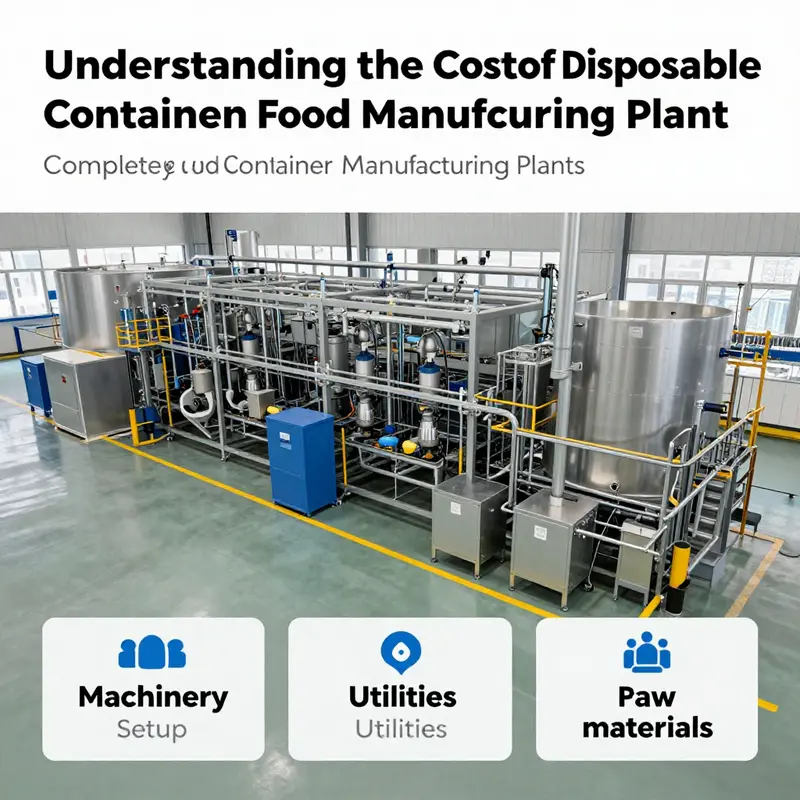
Establishing a complete disposable food container manufacturing plant is a disciplined exercise in budgeting, risk assessment, and long-term planning. The cost is rarely a single line item; it threads through production machinery, the building and utilities that house it, the raw materials that feed it, the team that operates it, and the compliance framework that keeps it legal and reputable. When you sequence these expenses against anticipated output, the picture becomes clearer: scale and material choice drive most of the variance, but automation and sustainability drive the long-term viability. In practical terms, the capital required to launch a full-scale operation can span a broad spectrum, from a lean, semi-automated setup to a fully automated, export-ready plant. The numbers from current market data reflect this reality, showing how much each element contributes to the overall blueprint and how sensitivity to decisions like material type and capacity can tilt the economics from break-even to robust profit margins.
The machinery at the heart of the plant is the first and most visible cost block. The type of machine sets the ceiling on what you can produce, how fast you can produce it, and how much labor you need to run the line. For rigid plastic containers such as clamshells, trays, and lids, injection molding remains the workhorse. A typical high-speed, precision-capable unit, like the GF258kc family, comes in a price range of roughly $38,000 to $45,000 per unit, with a minimum order of one piece. For a medium-scale operation aiming at tens of thousands of units per day, you’ll usually deploy 2–4 of these forming engines to maintain throughput and yield stable cycle times. When you do the math across three machines, the headline investment in primary production machinery sits roughly in the $114,000 to $135,000 neighborhood.
But those numbers are just the starting point. If a plant intends to diversified output—producing both standard plastic containers and biodegradable or molded fiber alternatives—the machinery mix expands. Biodegradable forming stations, for example, can range widely in price because the technology encompasses drying, pressing, and forming lines that may be specialized for PLA or molded pulp resins. The spectrum for these units often falls between $20,000 and $100,000 or more, depending on capacity and the degree of automation chosen. A mixed facility with both plastic and compostable lines will inevitably push total machinery investment higher than a purely plastic plant, but it also unlocks access to markets with premium pricing and longer-term sustainability incentives.
In the broader blueprint, the facility itself is the second major cost block. Even with a modern plan, the aim is to pair a workable footprint with adequate space for raw materials, finished goods, personnel, and maintenance workflows. In major manufacturing hubs, the land and building costs can vary dramatically by location. In coastal or industrial corridors, per-square-foot prices can be meaningful, while in peri-urban areas, the cost of the plant footprint may be more favorable. A practical range to anticipate for a 5,000-square-foot facility sits around $50,000 to $150,000, once you include basic power upgrades, ventilation, and the essential infrastructure. Utilities and environmental controls add another layer of investment: high-power electrical service for molding machines, robust ventilation with fume extraction for safety, and water handling or recycling systems where sustainable lines are deployed. The total facility envelope thus lingers in a similar range, with a midpoint that comfortably covers site preparation and basic upgrades, enabling a smooth ramp to production.
Raw materials anchor the short-term economics and long-run flexibility of the plant. The initial stock is not merely a purchase; it is a bridge to continuous operation during the critical startup phase. For standard plastic materials such as PS, PP, or PET, current market dynamics place roughly $1.20 to $1.80 per pound as a base reference. An initial one-ton batch thus runs around $1,200 to $1,800, a figure that represents the first step in a broader inventory strategy. Biodegradable resins, fibers, and molded pulp components carry a heftier price tag—often in the $3.50 to $6.00 per pound range. An initial one-ton order for these materials might cost between $3,500 and $6,000. Additives, colorants, and UV stabilizers can further shape the opening inventory, typically ranging from a few hundred to a couple of thousand dollars, depending on product diversity and brand customization. Taken together, the initial raw material investment is modest relative to machinery and facilities but remains foundational to avoiding stoppages through the early months.
Labor represents the human engine of the plant, and its cost profile is highly location- and technology-dependent. A typical small-to-medium throughput facility may require a workforce in the range of 10 to 20 employees. In a major operations center, wages for machine operators, quality assurance staff, maintenance technicians, and supervisory roles accumulate into a meaningful annual payroll. For a plant located in a cost-conscious region, wage estimates for 2026 commonly place machine operators around $1,500 to $2,500 per month, quality control at $1,200 to $2,000, and maintenance technicians from $1,800 to $3,000, with supervisors or managers ranging from $2,500 to $4,000 per month. On a conservative headcount of about 15 people, the monthly payroll can land near $30,000 to $50,000, translating into a first-year payroll of roughly $360,000 to $600,000. The true picture, of course, depends on local labor markets, any overtime expectations, and the degree of automation that reduces reliance on manual labor. Automation tends to shift the cost burden toward capital expenditure and maintenance rather than wages, but it also adds a layer of ongoing maintenance and parts replacement that must be funded in the operating budget.
Compliance, certification, and licensing shape the feasibility of exporting and market access as much as the factory floor itself. For food-contact packaging, you will likely pursue ISO 22000 or HACCP certifications, which can cost between $5,000 and $15,000 for initial program development and audits. Regulatory testing for FDA or EU compliance can run another $3,000 to $10,000, with CE marking adding a few thousand dollars more. Environmental permits and waste-disposal licenses can add $1,000 to $8,000, depending on the local regulatory regime. In total, a one-time compliance envelope of roughly $10,000 to $30,000 is a prudent planning assumption, with ongoing periodic audits and renewals built into annual budgets.
Beyond these core categories lie the “soft” but consequential costs that determine the plant’s day-to-day viability. Installation and setup, often underestimated, typically run from $5,000 to $20,000 depending on location and complexity. A lean startup may carefully sequence equipment delivery and commissioning to reduce this uplift, while a fully integrated project could push this figure higher. Raw-material inventories need not be cash-heavy at launch, but a window of $5,000 to $10,000 for initial stock helps maintain uninterrupted production. Utilities and facility modifications, including potential water recycling or specialized exhaust systems for odor control or VOC emissions, can add another $20,000 to $50,000. Then there are ongoing maintenance reserves, spare parts, and software systems for production planning and quality tracking. Collectively, these overheads can range from $30,000 to $80,000 in the first year, depending on how aggressively automation and sustainability features are pursued.
If you total these elements, the startup cost for a complete disposable container plant typically falls in a broad band—from around $669,000 to just over $1 million for a small to mid-size operation, and into higher seven-figure territory for a fully automated, export-ready, high-capacity site. An often-cited mid-point, supported by market summaries, places the average startup investment near $800,000. That figure reflects a balance of basic automation, reasonable capacity, and a plant layout that can scale. It also suggests a practical pathway: begin with a single, well-integrated line focused on a core product family, then add capacity as demand consolidates.
This cost architecture carries a few important strategic implications. Location matters, not just for labor and real estate but for access to a dense supplier network of both machinery and raw materials. In certain hubs, proximity to plastics and packaging clusters can yield favorable lead times, favorable freight, and better warranty and service arrangements. The sustainability trend adds a distinct premium for biodegradables and molded fiber lines. While these modules increase upfront outlays, they can unlock premium pricing, align with stricter waste-management regulations in target markets, and position the plant for long-term growth as consumer preference tilts toward eco-friendly options. Automation remains a critical lever: higher automation reduces dependence on a large workforce and enhances consistency and throughput, but it requires a larger upfront investment and a stronger technical training program for staff.
For anyone planning a new plant, a phased, data-driven approach tends to work best. Start with robust core capacity—perhaps one injection-molding line capable of delivering the primary product family—then evaluate demand and working capital to justify additional lines and material diversification. This approach helps manage risk, keeps cash flow predictable, and preserves the option to pivot toward sustainable materials as customer demands evolve. When the procurement team contemplates external sourcing, the decision to source from suppliers in low-cost regions can significantly affect the total cost of ownership, especially as energy efficiency and maintenance costs become a larger portion of operating expenses over time. The costs are not just about the sticker price; they are about the long-term reliability, energy use, spare parts availability, and the ability to maintain stringent quality control as production scales.
As a practical note for decision-makers, it is useful to anchor planning in a detailed, bottom-up budget that captures the clearly defined line items described above and then stress-test the model against several scenarios. A baseline scenario might assume a plastic-only line with moderate automation and a modest initial inventory, while growth scenarios would add a biodegradable line, increased automation, and expanded packaging formats. Even under the baseline, the potential to reach a favorable unit cost per container rises with higher utilization, supply chain optimization, and continuous improvement in the manufacturability of the chosen materials. Keeping a tight rein on energy consumption and maintenance will also protect margins as the plant scales up.
For readers evaluating suppliers or researching the procurement path, a real-world touchstone is the currency of the machinery marketplace. A representative unit in the plastic forming category demonstrates the scale: a single high-speed injection molding unit can be a multi-year asset, with energy consumption, periodic maintenance, and downtime risks that must be accounted for in the operating plan. The broader supplier ecosystem, including regional hubs and technology providers, shapes not only price but the speed of delivery, training support, and after-sales service that determine the reliability of the plant’s first year. A practical takeaway is that the total startup investment you plan for should be complemented by a robust contingency buffer—typically 10–20% of the total budget—to absorb unforeseen costs, supplier delays, or shifts in material pricing.
From a strategic standpoint, the cost arithmetic anchors the feasibility but not the destiny of the plant. The market’s demand for eco-friendly packaging, regulatory expectations, and the entry cost of a regional competitor will all influence whether a plant’s cost base translates into competitive pricing and solid margins. In the end, the path to a successful plant hinges on disciplined capital allocation, a careful sequencing of investments, and a willingness to adapt product lines as the market evolves. For further context on procurement and packaging formats, see a supplier listing that highlights eco-friendly kraft packaging options and the impact they can have on startup planning. disposable-eco-friendly-kraft-box-boat-shape-pla-coated-custom-packaging-for-fast-food-cookie-sugar-tray.
External reference for further technical pricing and supplier verification: https://www.alibaba.com/product-detail/GF258kc-Disposable-Plastic-Container-MakingMarket1600436286787.html
Charting the Cost Landscape: How Machinery, Materials, and Scale Shape a Disposable Food Container Plant
Establishing a disposable food container manufacturing plant is never a simple numbers game. It unfolds as a careful negotiation among several intertwined drivers: the type and capacity of the forming and sealing machinery, the automation level that determines throughput and labor needs, the choice of raw materials, and the size and location of the operation. When viewed as a single currency, the project becomes a mosaic of cost blocks that must fit together to deliver a viable business case, maintain quality, and stay adaptable to evolving consumer preferences and regulatory expectations. The starting point, in practice, is the machinery mix. The heart of any plant lies in its forming and sealing lines, the stations that shape the material into cups, bowls, and containers, then seal and ready them for packaging. The price of individual units varies with technology and automation. A high-capacity, fully automatic forming line for plastic or paper containers typically commands a price in the mid five-figure range per set, while more compact or semi-automatic lines may run from the low tens of thousands to just under fifty thousand dollars per unit, depending on capacity and reliability. Smaller, specialized lines—perhaps tailored to niche shapes or single-material outputs—can occupy a broad spectrum, ranging from a few thousand dollars to well into six figures for high-speed, multi-line configurations. In aggregate, a complete end-to-end plant, integrating material feeding, forming, sealing, and downstream packaging, can reach modest six-figure figures at the lower end, climbing toward seven figures for large-scale, fully automated operations that aspire to mass production and export readiness. Those larger figures reflect not only equipment but the surrounding ecosystem: conveyors, robotics for palletization, integrated quality control, and the robust control systems that synchronize every step of a high-volume line. While the upfront capital is substantial, the real economic calculus extends to operating costs and total cost of ownership over the plant’s life span. Installation and commissioning, while often overlooked in optimistic projections, can contribute a meaningful share of the initial outlay, typically a few percent of equipment costs, depending on complexity and site readiness. A careful site survey early in the project helps keep installation within budget by anticipating power quality, ventilation, workflow, and utility requirements. Raw materials, too, form a decisive portion of the recurring spend. The choice between traditional plastics such as polypropylene and PET, versus eco-friendly equivalents like bagasse, molded fiber, or PLA-lined paper, sets both capex and opex on different tracks. Conventional materials tend to offer lower unit costs and a well-established processing landscape, which translates into predictable procurement and lower downtime. On the other hand, sustainable alternatives often carry higher material costs and more specific processing demands, but they align with stricter regulatory regimes and consumer demand for reduced environmental impact. The up-front premium for biodegradable or compostable resins can be offset over time by improved brand perception, potential tax incentives, or access to markets with tight packaging standards. This tension between cost and value is central to the budgeting process. The scale and location of production magnify or mitigate these dynamics. In regions with mature logistics networks and clustering of suppliers, such as major industrial zones near ports, access to a skilled workforce and rapid prototyping of new designs can shorten lead times and reduce risk. Conversely, a plant in a location with higher energy costs or more complex permitting can erode margins unless offset by efficiency gains elsewhere. The geometry of scale matters as well. A small-scale operation may offer the agility needed to test markets or support local service levels, but it carries a steeper per-unit cost of machinery and a potentially higher labor intensity. Medium-scale facilities with a higher degree of automation strike a balance between cost and throughput, enabling more predictable monthly output while preserving some flexibility for line changes as trends shift. Large-scale, highly automated plants are designed for mass production, often targeting export markets and a broad customer base. They benefit from economies of scale and automation-driven quality control but require substantial upfront capital and rigorous management of maintenance, energy use, and waste streams. The site’s utility profile—power reliability, air handling, water use, and waste management—also shapes ongoing costs. Many plants invest in energy-efficient drives, heat recovery, and smart sensors that reduce energy per unit of output. These investments, while adding to initial capex, typically lower operating expenses over the long run and improve sustainability credentials, an increasingly important selling point in global supply chains. Beyond the physical plant, the cost model must accommodate the lifecycle of personnel and know-how. Labor remains a meaningful variable, especially in locations where specialized operators and maintenance staff are scarce or expensive. Training, onboarding, and ongoing skills development are not merely payroll items; they are investments in operational stability, product consistency, and compliance with standards. The cost of skilled labor tends to be harmonized when automation reduces manual handling in repetitive tasks, but this does not eliminate the need for technicians who understand process control, diagnostics, and preventative maintenance. The broader regulatory and standards environment also informs cost. Companies aiming to serve markets with strict environmental or food-contact regulations must design lines that meet these rules from the outset. This often entails additional certifications, material traceability systems, and process controls that can cost more upfront but reduce risk and potential rework later. The interplay among these factors—machinery selection, material strategy, scale, location, and compliance—shapes the total cost picture and the strategic path a company chooses. For an operation intended to serve domestic and regional markets, a smaller, more flexible setup could be a prudent stepping-stone. It would emphasize modular automation, quicker changeovers for different container sizes, and a lean initial raw material inventory. Over time, as demand stabilizes and the business proves its model, the plant could expand capacity with additional lines or upgrade existing equipment to higher throughput. In contrast, an ambitious venture aiming for export and high-volume production would justify substantial initial investment in fully automated lines, integrated quality control, and a robust logistics spine. The appetite for scale must be matched by a credible plan for sourcing and managing materials, energy, and waste. The cost trajectory in this path benefits from proximity to suppliers and logistics networks that minimize lead times and reduce inventory carrying costs. In practice, this means evaluating the trade-off between a location that offers lower labor costs but higher energy costs or logistic complexity versus a site with a premium on utilities and wages but superior access to ports and export channels. The decision to pursue eco-friendly packaging capabilities adds another layer of strategic cost management. The rising demand for sustainable alternatives, particularly in regions with stringent packaging regulations or consumer preference shifts, prompts many investors to tilt toward biodegradable resins, molded fiber, and compostable coatings. While these choices increase raw-material spend, they can unlock markets, reduce end-of-life costs for customers, and align with longer-term environmental commitments. It is essential to plan for the entire lifecycle, including end-of-life processing compatibility, certifications for industrial composting when applicable, and the potential for energy recovery or waste minimization. To ground these considerations in a coherent design narrative, imagine a plant that begins with a core forming and sealing line capable of producing a mix of paper and lightweight plastic containers. The initial footprint might accommodate a modest scale with room for one or two additional forming modules as demand grows. The facility would include a controlled materials storage area, dedicated process utilities, and a packaging and warehousing zone designed to minimize handling. As the business evolves, a modular approach to expansion—adding lines in parallel rather than replacing existing equipment—can preserve cash flow while capturing economies of scale. The financial plan would itemize costs across categories: equipment investments, installation and commissioning, raw-material inventories, utilities and facility modifications, and ongoing labor and training. A robust forecast would incorporate sensitivity analyses showing how changes in raw-material prices, energy costs, or demand swings affect unit costs and margins. In the end, the question is not only “How much” but also “How well.” A well-constructed plant design translates into competitiveness through predictable performance, consistent quality, and responsive production that can adapt to the shifting tides of consumer preference and regulatory direction. The promise of sustainable machinery and materials is not merely a moral stance; it is a strategic lever that can tilt the cost equation in favor of long-term value. For readers seeking a concrete example of how material choices intersect with cost and performance, consider a line that demonstrates how kraft-paper-based, eco-friendly containers perform in real-world packaging scenarios. kraft-paper-octagonal-bowl-pet-lid-waterproof-eco-friendly-disposable-customizable-snack-pet-food-salad-containers-1l. This link illustrates a container family designed for durability, leak resistance, and compatibility with standard sealing and packaging workflows, underscoring how materials and design choices feed back into cost and performance in a living production environment. While numbers anchor the budgeting exercise, it is the alignment of machinery capability, material strategy, and scale with a clear path to quality and compliance that ultimately defines a plant’s cost trajectory. The planning process benefits from a deliberate balance between flexibility and commitment, ensuring that initial capital investments are protected by a modular architecture that invites iterative improvements rather than wholesale redesigns. In this sense, the cost of a disposable food container manufacturing plant is not a single figure but a living framework—one that grows with the business and adapts to market signals, regulatory expectations, and the evolving story of sustainable packaging. External research for deeper technical grounding can be found in comprehensive analyses of production line standards, material specifications, and performance insights, such as the study available at the following external resource: https://www.researchgate.net/publication/398765445DisposableFoodContainerProductionLineOverviewMaterialStandardsTechnicalSpecificationsandPerformance_Insights.
Capital, Compliance, and Craft: Navigating Costs and Market Shifts in Disposable Food Container Manufacturing (2025–2026)

The journey from a blank factory floor to a line humming with eco-conscious production is defined as much by the cost of machines as by the costs that surround them. In 2025 and into 2026, the economics of disposable food container manufacturing shifted noticeably as sustainability moved from a selling point to a core driver of investment decisions. The numbers are instructive. Individual forming and sealing machines continue to appear as the visible backbone of a plant, but the larger financial picture now centers on the scale and speed of the line, the degree of automation, and the material mix that a facility is prepared to handle. A small, basic automation setup might still sit in the neighborhood of six or seven figures, yet the real divergence in cost emerges when a plant aims to produce more than a modest local load. The gap between a compact, low-automation operation and a fully automated end-to-end line has widened, driven by demands for higher throughput, better quality control, and, most critically, the ability to process sustainable materials that behave differently from traditional plastics.
At the component level, the price of the core machinery follows a familiar arc. Full automatic disposable nutrient hot food container making lines command a premium relative to simpler thermoforming or injection setups. The higher upfront capex is justified, in part, by longer equipment lifespans and improved process stability. The latest vendor reports show that an advanced eco-friendly production line can run from the millions to the multi-million range, with typical modernizations touching the $2–5 million band depending on scale, automation, and the breadth of materials accommodated. Retrofitting an existing facility to handle alternatives to conventional plastics—whether PLA-based resins, paper composites, or cellulosic blends—adds further layers of expense. Retooling molds, modifying heating and cooling circuits, and upgrading waste management systems all contribute to a higher threshold for entry, but they also unlock the potential to serve growing demand for sustainable packaging.
The upfront investment, however, must be weighed against a longer horizon of operating costs and subsidies. In 2025–2026, many manufacturers have begun to quantify not only the obvious expenses—installation, commissioning, and staff training—but also the often underappreciated costs of compliance, waste management, and energy. The regulatory climate in major markets has become more stringent with respect to single-use plastics, driving both charges and incentives. The result is a cost curve that looks steeper at the outset but flattens over time as energy efficiency, material utilization, and waste reduction deliver tangible savings. In practice, this means that while a plant may face higher capital expenditure to install high-speed thermoforming lines or multi-material co-extrusion capabilities, the running costs can be tempered by lower disposal fees, eligibility for green subsidies, and bonus points for sustainability in procurement and branding.
To put this into context, the broader market dynamics show a global market that keeps expanding, even as it pivots away from conventional plastics toward compostable and recyclable options. The market size in 2026 reached an impressive USD 217.92 billion, a signal that demand for convenient packaging remains robust. The same period also underscored the rebalancing of supply chains as buyers seek more sustainable suppliers. The long-term profitability of a plant now hinges more on how well it integrates sustainable materials into its product mix, how efficiently it runs, and how effectively it communicates its environmental performance to customers and regulators alike. In other words, the strategic decision to move toward eco-friendly materials is not only an environmental choice but a financial one, with the payback measured not just in years but in brand equity and access to subsidies and preferred procurement channels.
From a regional perspective, the cost and competitiveness story continues to be shaped by geography. China remains a dominant hub for equipment due to its expansive supplier base, manufacturing ecosystems, and export efficiency. Yet the cost advantage can be tempered by the complexity of sourcing upgrades that align with Western standards for environmental compliance and product quality. In Southeast Asia and parts of Eastern Europe, labor cost advantages coexist with capability gains in high-precision molding and automation. These regions offer compelling options for cost-effective scaling, especially for producers seeking to diversify supply sources or to establish regional manufacturing footprints that reduce logistics risk and currency exposure. The strategic choice between a single, large, highly automated plant and a network of smaller, semi-automated facilities hinges on the expected scale of demand, the breadth of permissible materials, and the logistics of distributing to target markets.
A key thread running through 2025–2026 is the push to broaden the material palette beyond traditional plastics. Manufacturers face two intertwined challenges: securing reliable supply chains for sustainable inputs and ensuring performance parity with legacy materials. Biodegradable and compostable options—such as PLA-based resins, paper-based composites, and similar plant-derived clads—offer attractive environmental credentials, but they introduce heat resistance and moisture barrier challenges. The technology race now centers on multi-layer structures and innovative coatings that maintain integrity under hot-fill or microwave conditions while remaining compatible with industrial composting infrastructure where it exists. The upshot is a higher level of technical rigor in both the formulation and processing stages, a broader array of molds and processing parameters, and a longer learning curve for operators who must manage these advanced lines.
The cost implications of these material shifts are meaningful. The addition of multi-layer composites or plant-based coatings typically increases material costs and can require more stringent quality control measures. Yet the narrative around sustainability is compelling for a broad set of stakeholders. For brands, the opportunity to secure subsidies, tax breaks, or preferential procurement terms creates a favorable financial context for upgrading lines and adopting new materials. For consumers and retailers, the growing demand for carbon-neutral or low-carbon packaging translates into stronger brand affinity and loyalty, which can justify premium pricing or secure longer-term contracts. In this way, the cost of capital to upgrade lines is offset by changes in revenue potential and in the cost of waste management—factors that vary widely by region and regulatory regime.
The performance gap between traditional plastics and eco-friendly options remains a focal point of ongoing research and development. Heat resistance, moisture barriers, and shelf-life stability are at the forefront of engineering work. In hot-food applications, the need to resist absorption of oils and fats while maintaining structural rigidity is essential. Where PS containers historically benefited from coatings and liners, the new eco-friendly systems must rely on alternative coatings—often plant-based or mineral- derived—that add complexity to the production line. The industry response has been iterative: firms invest in more versatile forming heads, enhanced control systems, and smarter adhesives, while suppliers push for more cost-efficient raw materials and more robust testing standards. The outcome is a manufacturing ecology that rewards lines capable of handling multiple materials with minimal changeover times, and it penalizes those anchored to narrow material specializations that may become stranded as regulations tighten.
The strategic takeaway for planners and operators is clear. The total cost of ownership now extends far beyond the sticker price of machines. It encompasses the cost of integration with conveyors, packaging systems, and automation layers; the expense of facility modifications to support new energy demands and ventilation requirements; and the ongoing spend on training, maintenance, and calibration. A small plant with basic automation might still hit the lower end of the spectrum, roughly in the six-figure range when considering the base machines, installation, and initial material stock. However, when the plan calls for end-to-end automation, high-throughput lines, and the ability to process sustainable inputs at scale, the investment crosses into the seven-figure territory. This is not a transient shift but a structural realignment of capital intensity in the packaging equipment industry.
Within this framework, buyers and operators are also recalibrating risk. The retrofitting of existing facilities—while costly—can reduce the risk of obsolescence and provide a smoother path to strategic alignments with green subsidies and evolving regulations. The choices around capacity—whether to aim for a small, regional market, a mid-scale national footprint, or a large export-oriented operation—directly determine the financial profile of a project. A small-scale plant, designed for basic automation and local distribution, can be viable with careful material sourcing and tight inventory management, but it may miss out on the economies of scale and chilling resilience offered by larger facilities. Conversely, a fully automated plant designed for mass production can deliver lower per-unit costs over time but requires a much larger upfront commitment and a longer runway to achieve steady-state operation.
The market context supports a higher willingness to invest in sustainability, even if the near-term cost of goods sold might rise as new materials and coatings are perfected. As noted in industry analyses, the global market is expanding with a pronounced tilt toward compostable and recyclable options. This shift is accelerating the demand for machines capable of processing non-traditional inputs and for facilities that can demonstrate a credible environmental profile. For buyers, the decision to invest is increasingly a decision about resilience, compliance, and brand stewardship as much as about price per unit. For manufacturers, the challenge is to balance the competing pressures of cost control, quality, and regulatory alignment while building a portfolio that can adapt to evolving consumer preferences and policy landscapes.
For readers exploring the practical implications of these shifts, consider the range of packaging options beyond simple single-use plastics. One illustrative example of an accessible option is the eco-friendly Kraft box boat-shape PLA-coated packaging, which reflects how sustainable packaging can combine form, function, and environmental performance. This kind of option underscores the importance of material compatibility with processing capabilities and downstream recycling or composting infrastructure. Such packaging choices influence not only the design of forming lines and molding heads but also the logistics and warehousing required to manage a diverse material mix.
On a closing note, the industry’s cost trajectory from 2025 to 2026 signals a move toward a future where sustainability and efficiency are inseparable. The capital required to realize this future is substantial, but the payoffs are equally material: lower waste disposal burdens, access to subsidies and incentives, stronger brand equity, and the opening of new market opportunities driven by consumer expectations and regulatory foresight. For leaders planning new facilities or upgrading existing ones, the strategic path lies in integrating flexible forming technologies with intelligent controls, sourcing capable and compliant inputs, and building a culture of continuous improvement that aligns financial metrics with environmental outcomes. External pressures will continue to shape the pace and direction of investment, but they will also reward those who anticipate the shift and invest accordingly.
External resource for context: Plastics Europe’s 2026 report on production line standards, material specifications, and performance insights offers a comprehensive backdrop for the evolving landscape of disposable food container manufacturing. This broader industry perspective helps anchor the specific cost considerations described here and provides a framework for evaluating long-term strategic choices. Plastics Europe, January 2026: Disposable Food Container Production Line Overview.
Internal link reference for further reading on sustainable packaging options: eco-friendly Kraft box boat-shape PLA-coated packaging. This example highlights how a single, adaptable packaging solution can influence equipment choice and operational planning, illustrating the practical implications of the broader market shifts described above.
Final thoughts
Investing in a disposable food container manufacturing plant demands careful planning and solid financial insight to ensure sustainability and growth in the changing market landscape. As trends favor eco-friendly solutions, being informed about the costs associated with machinery, setup, and operational factors is vital. By understanding these aspects, beverage chains, food trucks, restaurants, and procurement teams can align their investments with future demands, making strategic choices that enhance both profitability and sustainability in their operations.