
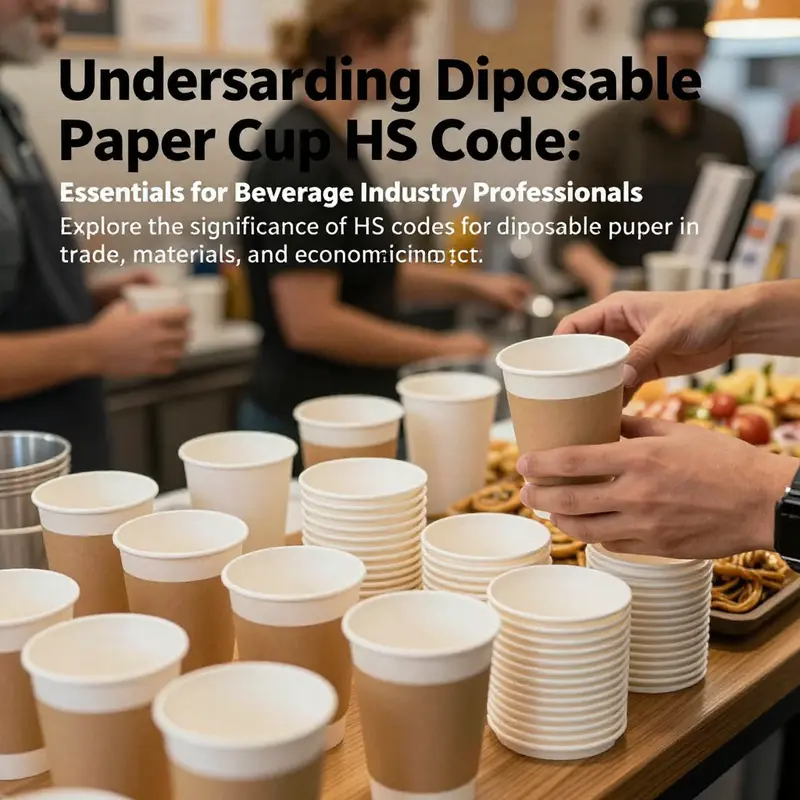
In the vibrant world of beverage services, such as bubble tea shops, catering companies, and corporate event planners, understanding product classification is vital. The Harmonized System (HS) code for disposable paper cups plays a crucial role, impacting everything from international trade regulations to material specification. By breaking down the intricate details of HS codes 4823699000 and 482369, businesses can streamline their operations and ensure compliance. This article delves into the classification and application of disposable paper cup HS codes, their implications in international trade, the importance of product materials, and the economic impact on the market. Each chapter offers valuable insights that foster better decision-making and strategic planning.
The Paper Cup Code: Navigating HS Classifications, Coatings, and Global Trade Flows
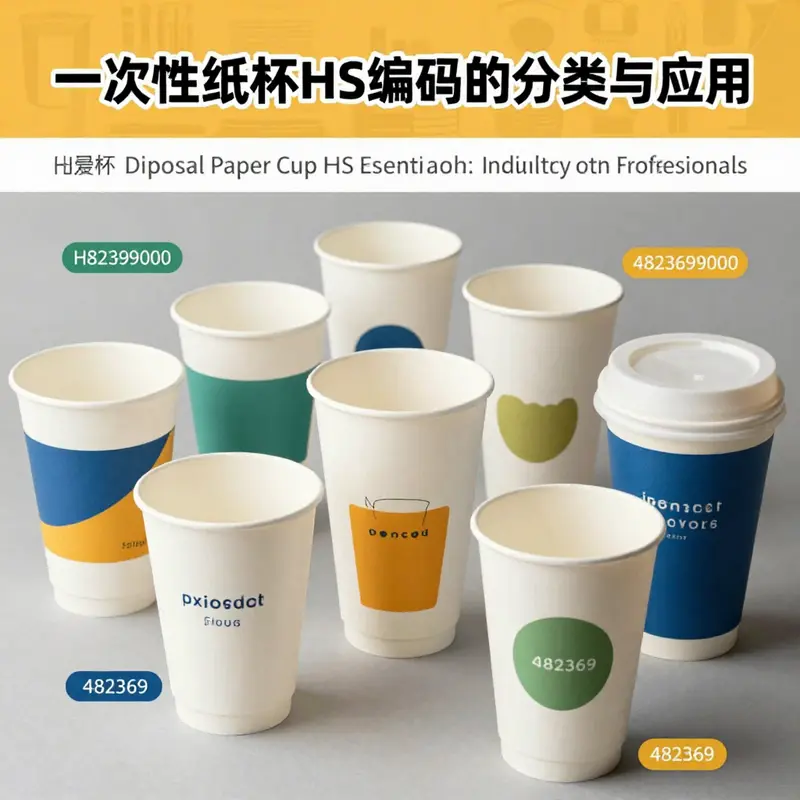
The moment a disposable paper cup leaves a factory door and enters the whirl of international trade, it meets a system that can feel almost invisible yet governs tariffs, regulatory scrutiny, and market access: the Harmonized System, or HS. For researchers, policymakers, and traders alike, the HS code is more than a bureaucratic label. It is a lens through which the material, design, and use of a cup reveal their broader economic and environmental implications. In the case of disposable paper cups, the codes commonly referenced—some cascading within the 4805 and 4823 families—do not merely classify a product by its physical form. They encode choices about coatings, raw materials, and end-use realities. They signal whether a cup is a simple, uncoated vessel or a sophisticated, coated package built to resist leakage and temperature extremes. They also hint at sustainability narratives, such as bamboo pulp cups that position themselves as eco-friendly alternatives, and at the practicalities of packaging when cups are sold as part of a set with lids, sleeves, or other accessories. All of this matters because a single HS code can affect tariff rates, compliance requirements, and even consumer perception in different markets. As such, understanding the nuanced distinctions between codes like 48051100.00, 48236900.00, 48236990.00, and 48236100 is not a dry exercise in taxonomy but a practical toolkit for strategic planning in both export operations and policy design.
The journey from raw material to a finished, sellable cup begins with material choices that naturally steer classification. An uncoated paper cup, typically produced from rollstock of pulp-based paper, tends to align with the lower end of the spectrum within HS Chapter 48. When a cup is described as uncoated and intended for industrial processing or for further conversion rather than direct consumer sale, an HS entry such as 48051100.00 can apply. This code reflects a basic paper cup substrate in its most elemental form, distinguishing it from cups that are designed to resist the rigors of hot beverages or transit through moisture-heavy environments. The distinction between uncoated and coated is more than texture or appearance. It is a materials-driven decision with tax and compliance consequences. Coatings—whether wax, impermeable plastics, or laminations—transform the cup’s functional profile. They create barriers to leakage, heat retention, and sometimes even odor containment. In HS terms, these functional transformations push the product into the 4823 series, a family that covers coated or otherwise specially treated paper products.
Within 4823, the codes 48236900.00 and 48236990.00 carry particular weight for disposable cups. The split between these two entries hinges on coating type and the presence of special features. The 48236900.00 designation can be appropriate for paper cups that are non-printed, non-embellished, and without a hydrophobic or protective coating that would demand a different tariff treatment. By contrast, 48236990.00 captures the broader universe of coated, waterproof, or otherwise modified paper cups—those with barrier coatings, whether a thin polymer film, polyethylene, or other water-resisting layers. The practical implication is straightforward: a consumer-facing, water-resistant disposable cup with a plastic or polymer barrier will likely fall under 48236990.00, while a simpler, uncoated variant will align more closely with 48236900.00. For exporters and customs brokers, this distinction determines not only the applicable duty but also the specific documentation required to prove the coating type, the presence of barrier layers, or the absence of such features.
A different but related line of inquiry arises with bamboo pulp cups. These cups, produced from bamboo pulp rather than conventional wood pulp, inaugurate a sustainability narrative that has particular resonance in markets prioritizing ecological considerations. In HS terms, bamboo pulp disposable cups fall under 48236100, a code that signals a distinct raw-material pathway within the broader paper cup family. The bamboo pulp entry is frequently used by brands aiming to emphasize biodegradability or reduced environmental footprint, especially in regions with heightened consumer demand for eco-friendly packaging. The subtle but meaningful distinction here is not just about the end product’s performance; it is about the supply chain story—the feedstock origin, the manufacturing process, and the environmental claims that customers, regulators, and retailers scrutinize. A cup labeled as bamboo pulp may unlock policy incentives or consumer goodwill in markets that attach a premium to sustainable packaging, even if the practical performance in a café setting remains similar to conventional cups.
The classification story grows more intricate when one considers special-purpose packaging or bundled configurations. A paper cup sold with a lid, a cup sleeve, or a branded, print-laden design introduces a new layer of complexity. In many jurisdictions, tariff classification will revert to the primary function or the overarching bundle’s dominant use. If the primary function remains a disposable cup intended to hold beverages, the bundle may still be classifiable under the cup’s main HS entry, but the presence of additional components can trigger separate consideration—especially in customs valuation, where the combined price and the product’s overall function matter. For exporters, this means documenting the main use, the proportion of the bundle that constitutes the cup vs. add-ons, and the product’s marketing claims. Misclassification risk rises when a cup, a lid, and a sleeve are sold as a single branded package; accurate main-use determination and transparent product descriptions become essential to avoid misdeclaration and potential penalties. The literature on classification emphasizes that if the package’s primary utility is as a multi-component container for takeaway beverages, the main HS heading should reflect the principal article’s function, not merely the most visually salient component.
From a practical perspective, government agencies and customs administrations increasingly stress the importance of precise material disclosures. When filing declarations, it is essential to convey the cup’s composition—whether it is made from uncoated paper, coated paper with a PE or other barrier layer, or bamboo pulp—and to specify coating details, capacity (for instance, 450 ml or 12 oz equivalents), and any branding, customization, or packaging that accompanies the product. This level of detail does more than facilitate a correct tariff rate; it underpins regulatory compliance in health, safety, and consumer information domains. For example, coating type can influence not only tariff classification but also environmental labeling, recycling guidelines, and end-of-life streams in various markets. In many places, there is a growing preference for packaging that supports recycling infrastructure or compostable disposal, which in turn shapes demand for certain HS categories and informs product development decisions.
The broader trade and policy context further colors how these HS codes are used in practice. The tariff landscape for disposable paper cups has evolved with shifting trade rules and national policies. As a rough reference, and highlighting a key policy line for many exporters, “ordinary” disposable paper cups categorized under 4823.69.0000 can carry a 0% most-favored-nation (MFN) rate in some regimes, depending on the year and trade agreements in force. This is not a universal rule, however; the exact rate depends on the destination country, any regional trade agreements, and whether the cup’s coating or packaging elements push the product into a different subheading. The ever-present caveat is that coatings, multi-component bundles, or newer materials can alter the tax treatment. It is essential for exporters to consult up-to-date tariff schedules and confirm the most specific HS code for their exact product formulation. In practice, that means careful product specification, supplier declarations, and, when feasible, a pre-shipment tariff ruling or broker consultation to ensure harmonized classification across re-export markets.
The policy environment in potential destination markets also shapes how exporters frame their HS declarations. Take, for example, markets with stringent plastic-use restrictions or heightened scrutiny of single-use packaging. While these policies do not directly determine HS codes, they influence the perceived value proposition of paper cups. A market that is increasingly open to paper-based replacements for plastic cups may reward products with simpler, uncoated or lightly coated constructions, aligning with lower tariff complexity or with regulatory incentives for sustainable packaging. Conversely, markets with strong consumer awareness of compostability may look more favorably on bamboo pulp or other renewable feedstocks, even if the tariff outcome remains similar. The interplay between material choices, coatings, and end-user policies thus interacts with HS classification to shape go-to-market strategies, pricing, and the narrative brands construct around their packaging.
In translating these classifications into practice, traders must also consider how to document the product for customs purposes. The recommended approach begins with a clear, standardized material disclosure: specify the type of pulp (primary wood pulp, recycled pulp, or bamboo pulp), indicate whether a coating is present and, if so, its nature (wax, PE, or other barrier layers), and provide the cup’s capacity. If the cup comes as part of a multi-item set, clarify the main product’s function and the share of total value attributable to the cup itself. For brands that emphasize customization—logos, color printing, or branding motifs—notes about the extent of customization should accompany the declaration, as these factors can influence both classification and valuation. The combined information helps avoid misclassification and supports smoother clearance at borders, with fewer delays and fewer requests for supplementary information.
Embedded in this chapter’s study of HS classifications are practical implications for supply chain planning. First, product developers should anticipate how coating choices affect not only performance but regulatory and tariff outcomes. A non-coated cup may be easier to classify under a certain subheading and could entail lower duties in some markets, yet it may underperform in settings where moisture resistance is crucial. A coated cup, while offering enhanced functionality, might fall into a different HS category that carries different tariff implications or regulatory scrutiny. Second, sustainability claims must be aligned with the product’s taxonomy. Bamboo pulp, for instance, can enable a compelling environmental narrative but must be substantiated with transparent sourcing and verifiable lifecycle data to avoid misrepresentation and ensure that the declared HS code remains congruent with the product’s actual composition.
The internal link embedded in this discussion serves as a bridge between the classification framework and practical product examples. For readers who want to explore a concrete set of cup designs and their packaging configurations, a representative catalog entry illustrates how brands describe uncoated versus coated cups and how this translates into product pages that emphasize usage scenarios (hot drinks, cold drinks, or specialty desserts) and related accessories. See the specific product entry here: Senang01 hot-sale customized disposable single-wall paper ice-cream cups with lid.
Looking ahead, the chapter’s core message remains stable: HS codes are not static arrows pointing to a single destiny for a product. They are living classifiers that reflect the material, the manufacturing process, and the intended market. For a disposable paper cup, the simplest, uncoated variant tells a different tariff and regulatory story than a multi-layered, laminated, or bamboo-piber variant. The choice of coating is not merely a performance decision; it is a decision about how the product will be perceived by customs officials, regulators, and ultimately consumers who increasingly value clarity and sustainability. In practice, those who want to navigate this terrain successfully will build a robust product specification dossier, stay attuned to evolving tariff schedules, and maintain transparent communication with suppliers and customers about the product’s composition. This approach helps ensure that the HS code chosen at the time of export remains aligned with the product’s actual characteristics across multiple markets, reducing the risk of misclassification and smoothing cross-border flows.
As a closing reflection for this chapter, the interplay between material science, regulatory frameworks, and market demand reveals a broader truth about disposable packaging: the material choices we make and the way we describe them in trade documents echo far beyond the dock and the tariff desk. They shape perceptions of quality, influence the regulatory and environmental narratives that around the product, and quietly determine the ease with which food and beverages move from supplier to consumer in a world where packaging is as important as the drink it holds. The HS code is the map legend for that journey—a tool to help us read the terrain with greater confidence and to chart routes that respect both commerce and stewardship. It is a reminder that in global trade, a cup is never just a cup; it is a piece of a much larger conversation about sustainability, transparency, and the efficiency of the routines that feed our daily lives.
External reference:
- CBSA HS 4823.69.00 guidance and related classification decisions: https://www.cbsa-asfc.gc.ca/trade/hs/2026/eng/48236900-eng.html
Tracing the HS Code Trail: Disposable Paper Cups and the Rules That Move Them Across Borders
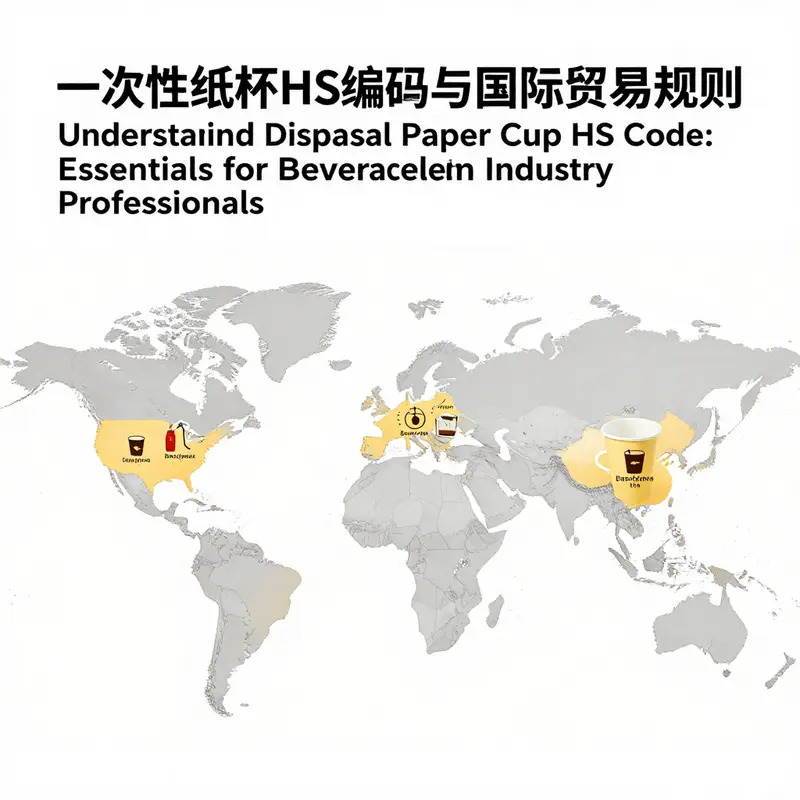
The Harmonized System (HS) code is more than a bureaucratic label. It is the shared language that customs officers use to decide duties, quotas, and compliance obligations for goods that travel the globe. When the item in question is a disposable paper cup, the language becomes especially nuanced. The chapter that precedes this one laid out the landscape of classification, where the raw material and the finished product each follow their own pathways through tariff schedules. In practice, the journey from pulp to cup is not a single arrow pointing to a single code; it is a lattice of decisions driven by the material, the finish, and the intended use. For disposable cups, the most commonly referenced entries revolve around a few key numbers: codes in the 4823 family and codes associated with base paper, particularly when it has not yet been coated. The nuance matters. A cup is not just a cup; its HS code can shift based on whether it is simply paper with no coating, a coated or laminated cup, or even a specialized cup sleeve that accompanies the cup in a multi-component packaging scenario. Each variation has its own duty treatment and eligibility for certain trade policies, which can influence margins, compliance burdens, and even the speed with which a shipment clears customs.
To understand the classification in a tangible way, start with the production chain: the base paper used to manufacture cups, and the finished cup itself. The uncoated base paper intended for making cups is encoded as 48051100.00. This is the HS entry for uncoated paper rolls typically entering the production line as a raw material. An example offered in the reference materials is a paper roll around 230 grams per square meter with a width near 45 millimeters. Such a specification helps producers and importers determine whether the material is treated as a commodity raw material or as a finished good, which in turn informs the applicable tariff and the documentation required for clearance. The separation between raw material and finished product matters not only for duties but for record-keeping, post-entry audits, and even eligibility for import programs that emphasize recycled content or sustainable sourcing.
The finished disposable cup, however, enters the tariff system under a different set of codes that reflect its status as a consumer-item rather than raw stock. The standard, ordinary disposable paper cup—without any unusual finishes or proprietary structures—tends to be classified under 48236900.00. This code captures plain paper cups that do not fall into other more specific subcategories and are not described as having coatings or specialized construction. But if the cup has a coating, such as a waterproof or oil-resistant layer, the classification tends to migrate toward more specific entries within the 4823 family, where the nuance of coating, lamination, or multi-layer construction is recognized. In many tariff systems, the coated or specially treated variants are addressed under 4823.69.0000 or similar subheadings, reflecting a more detailed approach to products with protective finishes. The practical implication is clear: even a modest change in surface treatment can move a shipment from a general-purpose category into a more specialized tariff line, with consequences for duty rates, import documentation, and compliance checks.
Within the same family, there are also codes that reference disposable cups and related paper tableware that do not fit neatly into the basic cup category. For example, 48236990.00 is used to cover other paper tableware items that do not fall into the exact cup category, including various cup-shaped products and similar items that share material characteristics but differ in design or intended use. For importers and exporters, the challenge is to determine whether the product at hand belongs to the core cup category or to a catch-all bucket of paper dishware. A careful read of the product’s description, packaging, and functional claims is essential before filing the customs declaration. The difference between a plain cup and a cup with a sleeve or a cup set can trigger a different HS entry, a distinction that translates directly into the tax and regulatory treatment the shipment will receive.
Beyond the straightforward cup versus cup-with-coatings distinction, there is a growing emphasis on sustainability and the material composition of disposable cups. In many jurisdictions, environmental considerations are shaping tariff policies and consumer expectations. For instance, cups manufactured from bamboo pulp or sugarcane bagasse are gaining attention for their renewable content and compostability. In some trade codifications, these eco-friendly materials can still fall under the same general 4823 family, but they also intersect with other lines that describe the material source or processing method. A referenced code, 4823691000, appears in the materials as a possible designation for certain bamboo or bagasse-based disposable cups. The exact acceptance of this code varies by country and, importantly, by the precise material formulation and finishing steps used in production. The broader message is that the HS system recognizes material and process differences, even when the end product resembles a familiar consumer cup. Importers should keep this in mind when they document the product for customs and when they consider sustainability-related trade policies that might influence duty rates or eligibility for green tariffs.
The distinctions do not stop at the cup body. Accessories such as cup sleeves—the insulating or decorative wrappers designed to fit around the cup—also carry their own considerations. The literature notes a separate emphasis on thickened disposable cup sleeves as a product category. Depending on the jurisdiction and the way the sleeve is described in the invoice or the declaration, classification may align more closely with cup entries or with separate paper goods. This is not merely a theoretical exercise; in practice a sleeve could affect the overall tariff treatment of a shipment if the customs office determines that the sleeve constitutes a distinct, billable item or if the sleeve is integrated as a structural layer that changes the classification of the complete package. The precise code for the sleeve, especially if it is thickened or reinforced, may differ from the cup itself and can influence the way a shipment is reported and charged at the border.
Amid these technical distinctions, one practical thread runs through all classification questions: the reliability and depth of product documentation. The HS classification is not a guess; it is a legal determination based on the product’s physical characteristics and declared use. For the uncoated base stock, the uncoated sheet or reel is a straightforward entry under 48051100.00, but for the end product, the finish, coating, and packaging components must be described precisely in the commercial invoice, packing list, and any technical specifications provided by the manufacturer. The more transparent the documentation—explicit coatings, thickness, grammage, and any multilayer construction—the more likely the classification will align with the intended entry. Misclassification invites delays, penalties, and, in some cases, a reclassification after a post-entry audit. The stakes are not merely hypothetical. Tariff treatment, value-added taxes, and possible eligibility for trade-facilitating programs depend on accurate categorization at the outset.
To bridge theory with practice, consider the role of authoritative rulings. Customs authorities publish binding or persuasive determinations that illuminate how certain product configurations should be classified. In the United States, the U.S. Customs and Border Protection (CBP) maintains a rulings database that offers decision summaries and the reasoning behind them. For traders who regularly move disposable cups and related tableware, these rulings provide a reference point for questions that arise when product specs are on the boundary between two subheadings. This is not a static exercise; classifications can evolve as material innovations, coating technologies, or packaging forms change. Rulings programs help importers stay aligned with current interpretations, reducing the risk of post-clearance adjustments that can disrupt cash flow and customer deliveries.
From a practical standpoint, the classification journey also informs how a shipment should be documented and what kind of declarations accompany it. The standard bill of lading or airway bill should reflect not only the HS code but the material details and finish descriptions that the importer has verified with the supplier. If a product is coated with certain polymers, or if it contains mixed fibers or bio-based alternatives, it is prudent to reference the coating type, the presence or absence of a liner, and any applicable certifications in the declaration. The goal is to provide a factual map that customs officers can follow without ambiguity. At the same time, it is wise to anticipate the possibility of a country-specific interpretation. Some markets favor more granular subcategories, while others rely on broader lines. The HS system is designed to accommodate this variability, but only if the importer supplies accurate, complete, and transparent information.
The broader regulatory environment reinforces the importance of due diligence. Governments increasingly encourage environmental stewardship and the use of sustainable packaging. In some cases, such policy direction can intersect with tariff incentives or administrative simplifications for eco-friendly products. While such programs are country-specific and subject to change, they underscore a strategic advantage for companies that invest in precise product definitions, maintain clear supplier specifications, and stay vigilant about changes in tariff schedules. When a product characteristics shift—such as adopting a recycled content paper, moving to a biodegradable composition, or changing the barrier coating to a more environmentally friendly formulation—the HS code discussion may shift as well. The moment such a shift occurs, the importer should revalidate the classification with the appropriate customs authority to ensure continued compliance and to capture any new tariff or incentive opportunities.
The path from raw material to finished cup, then through the border, is a layered process that requires both technical understanding and procedural discipline. The labels—48051100.00 for uncoated base paper, 48236900.00 for standard disposable cups, 48236990.00 for other paper tableware, and 4823.69.0000 for coated entries—function as signposts. They do not capture every possible permutation of cup designs, sleeves, or multi-part packaging, but they provide a framework within which traders can operate with confidence. For those who work across multiple markets, this framework becomes a toolkit for harmonizing operations: it supports consistent supplier communication, clearer customer expectations, and smoother customs clearance. Of course, in practice, a shipper will work with a product description, a material specification, and a coating certificate as the basis for a classification decision. When disputes arise, the decision should lean on the documentation, the coating details, and the stated use of the product, rather than on anecdotal impressions.
For readers who want a concrete touchstone in the middle of this discussion, a practical example from the broader ecosystem of disposable cup products shows how a single product can prompt multiple considerations. In a real-world setting, a cup that is advertised as a single-wall, heat-resistant disposable cup with a paper lid and a plastic-free closure would require careful attention to the coating and the lid material, if any, to determine whether the cup falls cleanly under 48236900.00 or moves into a coated-entry category. Even the presence of a lid could influence the classification if it becomes an integrated part of the presentation of the cup as a combined unit for sale. The key lesson remains consistent: precise product specification, including material composition, coatings, separable components, and intended use, is the backbone of reliable HS classification and efficient cross-border movement.
To connect theory with a tangible lookup, consider this internal resource as a model in practice: a product page illustrating a disposable single-wall paper cup with lid. This kind of listing helps illustrate how suppliers describe the cup, the coating or lack thereof, the volume capacity, and any packaging configurations that accompany the cup. For readers who want to explore a representative example of such product pages, a sample listing can be found here: hot-sale customized disposable single-wall paper ice-cream cups with lid. Although the specific product line is not the subject of this chapter, the linked example demonstrates how a supplier frames material, finish, and packaging in a way that aligns with the kind of documentation customs officers require when applying HS codes. It also shows how the same product could sit under different tariff lines depending on the coating and the assembly. This is a practical reminder that even seemingly small changes in finish or packaging can ripple through the classification process and affect the bottom line.
The external anchor for readers who want to see how government authorities formalize these decisions is the CBP rulings database. The CBP maintains a searchable repository of official determinations that clarify how particular products are classified in practice. These rulings illuminate the reasoning behind the codes and provide a reference framework for traders seeking to anticipate how their own products might be treated. Access to these rulings supports more predictable import experiences and helps avoid costly delays caused by misclassification. For further reading and to review real-world rulings related to paper cups and related tableware, consult the official resource: CBP rulings database at https://www.cbp.gov/trade/rulings. This external resource complements the internal examples and reinforces the principle that classification is grounded in documented interpretations rather than guesswork.
In closing, the HS code for disposable paper cups sits at the intersection of material science, design, and policy. It requires attention to detail about the base material, the finishing, and the intention behind the product. The codes—48051100.00 for uncoated base paper, 48236900.00 for standard cups, 48236990.00 for other paper tableware, and coating-sensitive lines such as 4823.69.0000—reflect a nuanced approach to classification that can significantly affect tariffs, compliance obligations, and transit times. The ongoing dialogue between producers, exporters, importers, and customs authorities—enriched by official rulings and up-to-date tariff databases—forms the backbone of efficient trade. For businesses that aim to move disposable cups smoothly across borders, the blueprint is clear: document precisely, verify coating and construction, consult rulings, and stay attuned to policy shifts that could alter the classification landscape. The chapter thus ends where it began, with a reminder that the HS code, properly understood and properly applied, is a powerful ally in global commerce rather than a mere bureaucratic hurdle.
Decoding Disposable Cups: HS Codes, Coatings, and Material Realities
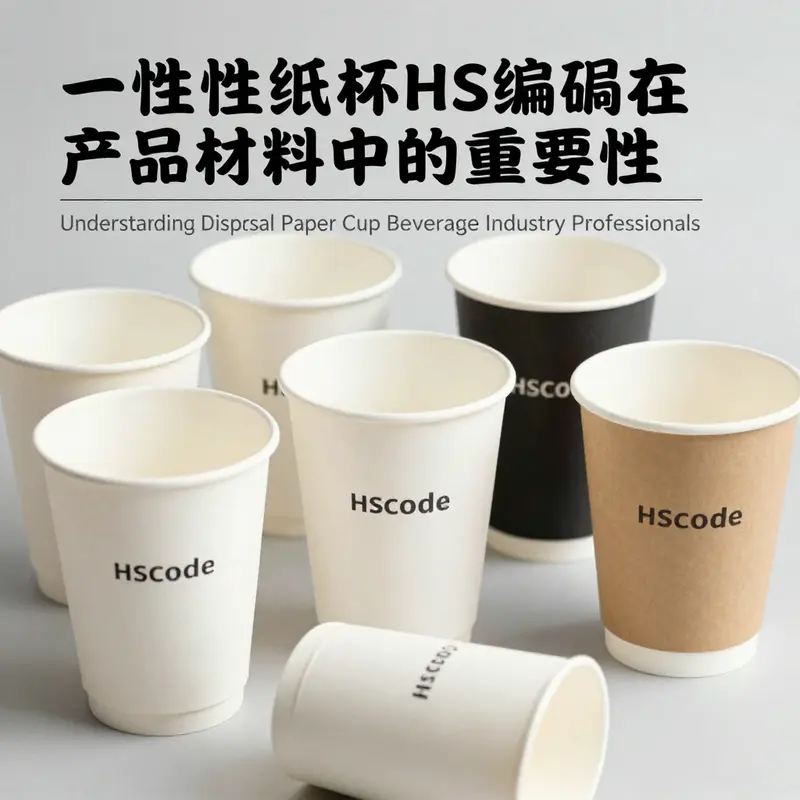
The HS code system is a fast, standardized language for describing what a disposable cup is made of and how it is used. For paper cups, most discussions fall under the paper products family, with subheadings around 4823.69 and its variants. Classification hinges on precise material makeup, coatings, thickness, and packaging features such as sleeves or lids. In many jurisdictions the uncoated cup stays under a broad paper product heading, while a coated interior or laminated structure can move the product into a narrower subheading with different tariff rates, often 4823.69.00.00 versus 4823.69.90.00 or their national equivalents. The boundary is not about branding but about the product’s construction and function, affecting duties, regulatory treatment, and compliance timelines. Practitioners should document the bill of materials, confirm the presence of coatings or lamination, and consider whether any accessories are integral or separate. When ambiguity exists, a binding tariff information ruling or classification opinion can provide certainty. In practice, even small changes such as adding a food grade inner coating may shift the applicable subheading, with meaningful cost and compliance implications. This analysis framework helps exporters manage landed cost, forecasting, and policy alignment, while policymakers use HS data to monitor packaging trends and environmental objectives. The key takeaway is that the HS code for disposable cups encodes material reality, and accurate classification depends on careful material specification rather than assumptions.
Tracing the HS Code Path of Disposable Paper Cups: Tariffs, Compliance, and the Green Shift in Global Packaging

The Harmonized System (HS) code is more than a label on a customs form. It is a decision gate that shapes the cost, speed, and accessibility of trade. For disposable paper cups, the most commonly cited classifications sit in the 4823 family, where the broad category of paper plates, bowls, and similar items sits alongside cups and other drinkware. The nuance matters. If a cup is plain and uncoated, it may find itself grouped under a relatively precise subheading that carries predictable tariff duties. If, however, the cup carries a coating, a sleeve, or is bundled in a certain way, the classification can slide to a different subheading with a materially different duty rate. These shifts are not cosmetic; they alter the economics of each shipment, the competitiveness of a product in a foreign market, and the likelihood of smooth customs clearance.
Within the 4823 line, disposable cold-drink cups and certain types of decorative or hand-colored paper cups are typically classified in the 4823699000 segment, which belongs to the broader paper products category. In some references, 482369 is also cited for thicker or reinforced cup sleeves, i.e., cup wraps designed to buffer heat or improve grip. Yet the exact numeric code is not merely a single digit game. It hinges on product details—material composition, coating presence, the purpose of the item, and even packaging configurations. In practical terms, this means a shipment that looks straightforward to a sales desk may require a more careful classification at customs, simply because a coating or a sleeve changes the product’s identity in the eyes of the tariff schedule.
The tests of accuracy begin with a close, item-by-item description. Is the cup a single-wall, paper-formed vessel meant for cold beverages, with no inner layer or external finish? Does it include a polymer coating that adds moisture resistance or heat protection? Is the cup sold alone or as part of a packaging unit that includes lids, sleeves, or multipack configurations? Each of these questions can nudge the classification toward 4823699000, 482369, or even 4823691000, depending on jurisdiction and the specific wording of the tariff code. The consequence of mislabeling at the border extends beyond an extra moment of paperwork. It can trigger reclassification, duties adjustments, or even penalties if a customs authority suspects deliberate misdeclaration. In today’s tightly managed global trade environment, accuracy in HS coding is a risk management practice as well as a tax calculation craft.
The economic implications of getting this right extend beyond the immediate cost of duties. In the United States, tariff practitioners have noted that, under the HTSUS framework, certain subheadings in the 4823 series have enjoyed MFN or preferential rates under specific tariff treatments. As of the mid-2020s, for exporters that qualify under the 4823.69.0000 heading for “other paper articles of cups, plates, dishes, and similar items” (the exact phrasing varies by country), there can be favorable MFN duty rates, sometimes approaching zero in particular tariff environments. This is not automatic, and it can hinge on product specifics such as whether the cup is coated or used in combinations with other packing elements. For a company selling disposable cups to a major market, the difference between 0% and a nonzero MFN rate translates into a competitive price advantage, the possibility of price leadership in tenders, and the ability to maneuver more aggressively on cost-sensitive bids.
Conversely, any indication of a coating or a composite packaging scenario can trigger a reclassification to a higher tariff bracket. In a global value chain, even small shifts in classification can cause ripple effects: higher landed cost, altered landed price, changes in wholesale strategy, and the need to revisit manufacturing or sourcing decisions. This is especially true for products positioned as eco-friendly or biodegradable. Materials such as bagasse fiber (sugarcane pulp) or bamboo pulp, often promoted for their sustainability advantages, frequently end up in codes that reflect their fiber-reinforced nature and potential coating or lamination, typically within the 4823690000 to 4823699000 range. The market momentum toward renewable, compostable, and recyclable paper-based cups aligns with a broader trade policy trend: green products may benefit from favorable trade conditions in markets that explicitly promote sustainable packaging. Yet this benefit only materializes when the product’s coding accurately reflects its material composition and end-use characteristics.
A key driver in the last few years has been the global shift toward eco-conscious packaging. Consumers increasingly favor products produced with renewable or biodegradable materials, and regulators in many regions are accelerating prohibitions on certain plastics or demanding higher standards for recyclability and compostability. In this context, the HS code is not just a tax number but part of a narrative about material choice, end-of-life destiny, and the regulatory posture of a country toward plastic pollution. For disposable cups made from mature paper streams such as virgin pulp or recycled fibers, the entry into the 4823 range is common. But for those pursuing biobased alternatives—bagasse, bamboo, or other agricultural residues—the exact code can hinge on whether the product is merely paper or a coated, laminated, or treated variant that alters its classification. The line between “paper cup” and “paper cup with coating” becomes a boundary that a compliance officer must map with care.
This complexity has practical implications for market access. For instance, some markets are beginning to implement stricter waste-management policies, encouraging materials that align with circular economy objectives. In parallel, trade agencies are refining their interpretation of HS codes to reflect these product realities. Companies that systematically verify their material inputs, production processes, and packaging configurations before filing declarations stand a better chance of avoiding post-shipment disputes, delays, or costly amendments. In this environment, the HS code validation step becomes a proactive risk-control measure rather than a reactive compliance task.
For firms aiming to exploit green trade policies, the precise coding of environmentally friendlier cups matters even more. In many jurisdictions, the adoption of a biodegradable or compostable cup may interact with tariff schedules in ways that create both opportunities and ambiguities. The codes 4823691000 and 4823699000 surface repeatedly in discussions of reinforced or specialized paper cups, especially when coatings or specific fiber sources are involved. These entries are not static; evolving product standards and the introduction of new subheadings in 2026 reflect ongoing attempts to align tariff classifications with material science and environmental performance. Indeed, the 4823691000 subheading has gained attention as a potential anchor for products marketed as stronger or more durable, such as those designed for retail or foodservice settings with higher service temperatures or longer consumption times. The practical effect is that a business with a 4823691000-classified cup may enjoy a more favorable regulatory environment in markets harmonizing green procurement or sustainability criteria with tariff policy.
The regulatory environment surrounding disposable cups is not limited to tariff schedules. It also includes product compliance and environmental labeling requirements. Authorities across Canada, the European Union, and parts of Asia are tightening rules around single-use plastics, promoting reusable and biodegradable alternatives, and enhancing the end-of-life traceability of packaging. This regulatory wave intersects with HS coding in meaningful ways. If a product claims biodegradability, compostability, or renewable content, exporters must ensure that the product’s technical documentation, including material declarations and certification, supports the declared HS classification. Products backed by credible environmental credentials can sometimes access preferential treatment in public procurement or be favored in market access programs that reward sustainable packaging. Yet again, these advantages depend on accurate classification. Misclassification can nullify sustainability claims in border scrutiny, triggering audits, fines, or product detention, which disrupts supply chains and damages reputation.
An additional layer of complexity comes from the ongoing evolution of the HS coding system itself. As the global market expands to include more diverse pulp sources and innovative packaging architectures, tariff authorities periodically update subheadings and crosswalks to reflect new material realities. The 2026 updates in particular have drawn attention to 4823691000 as a potential focal point for environmentally oriented product families. This means that exporters must stay attuned to official notices, amendments, and transitional provisions. They should maintain a living classification guide within the company’s trade compliance ecosystem, ensuring that product specifications, test reports, and supplier declarations align with the chosen HS code. The cost of not doing so can be substantial: misclassification may trigger retroactive duties, penalties, or costly clearance holds, especially in markets with rigorous enforcement.
From a strategic perspective, the HS code becomes a lens through which a company views its own product architecture and supply chain choices. The decision to use a particular fiber source, the degree of coating, and the packaging configuration will ripple through tariff costs and regulatory compliance. If a company positions its cups as eco-friendly, it should not treat HS coding as an afterthought but as a core element of the sustainability story. This involves close collaboration among product development, procurement, and compliance teams. When the product design is finalized, the team should simulate the tariff impact under different classification scenarios, then confirm with a customs broker or local authority the most accurate coding given the product’s tested substrate, coating, and intended usage. The goal is not merely to minimize duties but to ensure transparent, verifiable classification that supports green branding without inviting compliance risk.
Within this framework, a few practical habits emerge for exporters and manufacturers. First, document every material input—fiber source, coating type, binder, and any lamination or multilayer configurations. Second, capture the full packaging ensemble in which the cup ships, including any lids, sleeves, or multipack arrangements. Third, build a decision tree that mirrors the tariff rules for 4823.6x subheadings so that a customs professional can trace how a declared product maps to a specific code. Fourth, when in doubt, seek pre-classification opinions from the relevant customs authority or from a trusted, experienced broker. These steps do not guarantee a perfect classification, but they dramatically reduce the risk of misclassification and the consequent costs.
To illustrate how markets relate to this coding conversation, consider the broader trend toward sustainable cups. The market is increasingly receptive to pulp-based or bagasse-based cups that are marketed as compostable or easily recyclable. This trend intersects with tariff policy in ways that reward products aligned with environmental objectives, while still requiring precise declarations about material composition and manufacturing processes. A company that can demonstrate credible environmental attributes and seamlessly align product specifications with the appropriate HS code—while maintaining robust documentation—will likely enjoy smoother customs clearance, less tariff volatility, and a stronger platform for global sales. The strategic takeaway is clear: HS coding is not simply a bureaucratic hurdle; it is an ongoing design and market strategy, shaping product development, sourcing choices, and international competitiveness.
For readers seeking a concrete example of how this plays out in one jurisdiction’s tariff regime, the U.S. Harmonized Tariff Schedule provides a definitive reference point for the 4823 family. The entry 4823.69.0000 covers a broad class of “other paper plates, dishes, cups, and similar articles” and serves as a baseline for evaluating how a disposable cup might be treated at the border. However, the exact duty rates can differ when coatings, laminations, or combination packaging are present. This is why companies often run dual checks—one for the uncoated, basic configuration and another for the coated or multi-component version—to understand the best and cleanest classification path.
To connect this discussion with practical industry examples, readers may explore a curated collection showcasing eco-friendly and customizable cups as part of broader packaging solutions. You can browse a representative set that demonstrates how sustainable features align with modern design and production capabilities by visiting this internal resource: senang01-hot-sale-customized-disposable-single-wall-paper-ice-cream-cups-with-lid-eco-friendly-food-grade. The page itself highlights how a sustainable packaging proposition can be packaged, labeled, and presented in the market, offering a glimpse into the practical realities of translating environmental claims into compliant, market-ready products. While the product page contains its own distinctive elements, the broader message remains consistent: suit the HS code to the material reality of the cup, not the marketing silhouette of the product.
Ultimately, the HS code is a practical instrument that links product design to cost, compliance, and market access. Its precision influences tariff exposure, speeds clearance, and underpins the strategic narrative of sustainable packaging in global trade. The evolving environment—characterized by greener materials, stricter plastic regulations, and updated tariff classifications—calls for disciplined governance of classification processes. Companies that master this discipline will enjoy more predictable costs, faster shipments, and greater confidence when engaging with customers who care about both price and sustainability. In this sense, the HS code for disposable paper cups is more than a numeric label; it is a compass for navigating the economics of green, borderless packaging.
External resource for tariff specifics: For authoritative tariff details and official classifications, consult the U.S. HTSUS page dedicated to 4823.69.0000 and related subheadings at https://hts.usitc.gov/.
Final thoughts
The application of HS codes for disposable paper cups extends beyond mere classification; it forms the foundation of compliance with international trade regulations and supply chain logistics. For bubble tea shops, restaurants, catering services, and vendors, leveraging accurate HS codes ensures seamless operations and facilitates advantageous business practices. By understanding the importance of product materials and the economic effects, businesses can navigate the market more effectively. As the beverage industry continues to evolve, staying informed about these classifications will not only enhance operational efficiency but also foster growth and adaptability in a competitive landscape.