
Finding the right tools to enhance productivity and sustainability in your business can drive success, especially in the fast-evolving food and beverage industry. The ODM Cup Plastic Machine for Disposable Flower Pots is more than just a piece of equipment; it represents a crucial step towards efficiency, cost savings, and environmental responsibility. This comprehensive exploration will reveal the technical design of the machine, its economic benefits, the latest technological advancements, environmental considerations, and market trends that can empower your business decision-making process.
ODM Thermoforming Machines for Disposable Flower Pots: Engineering and Market Realities
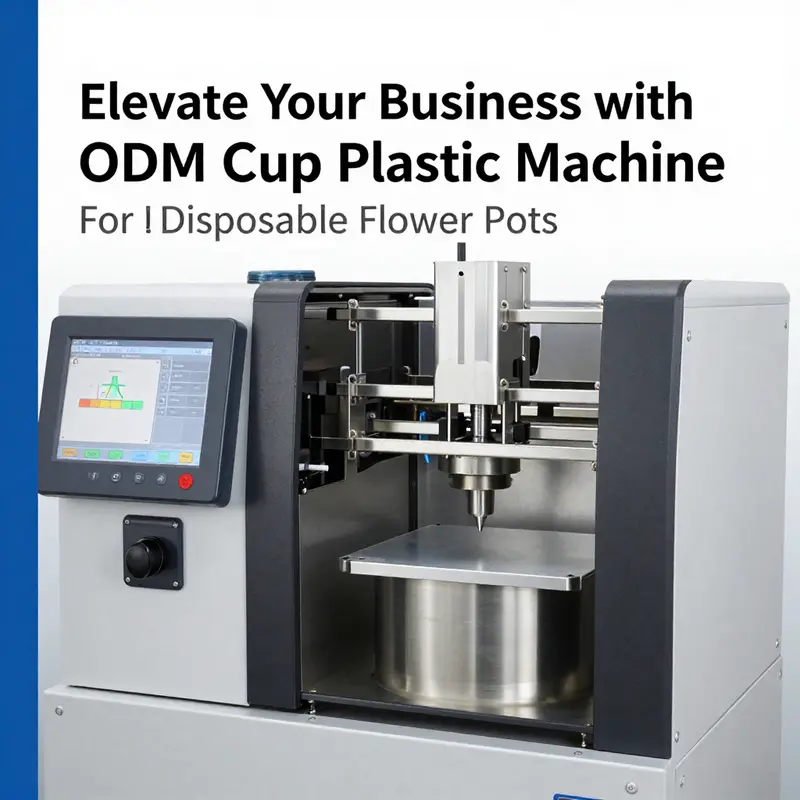
In this overview, we examine how an ODM cup plastic machine converts thermoplastic sheets into lightweight, hollow pots for horticulture. The system integrates heating, forming molds, and inflation to produce consistent wall thickness and shapes. A four-column hydraulic frame provides stability for high-speed production, with automation handling trimming, cooling, ejection, and stacking. Changeovers between pot sizes rely on different molds and quick cycle adjustments, enabling a single line to support multiple SKUs. Materials like polypropylene and polystyrene are common, with wall thickness typically 0.3 to 2 mm, often 0.4 to 0.8 mm for small pots. Quality control monitors wall uniformity, flash, and dimensions, while inline sensors track temperature, pressure, and timing. Certifications such as CE or ISO reassure buyers of safety and quality. Sustainability considerations include material recyclability and the potential for using recycled scrap. The ODM model emphasizes rapid design-to-delivery, enabling product diversification without excessive tooling costs. For further context, this topic sits at the intersection of materials science, mechanical design, and supply-chain strategy, with the goal of delivering durable, recyclable pots at scale.
From Asset to Advantage: The Economic Upside of ODM Cup Plastic Machines for Disposable Flower Pots
Manufacturers chasing greater margins in a crowded plastics market are increasingly looking at a single, versatile engine for growth: an ODM cup plastic machine designed to produce disposable flower pots. This chapter follows that logic, tracing how such lines—when properly specified and operated—translate capital expenditure into recurring, scalable value. The central premise is simple but powerful: a high-speed thermoforming or molding system that can turn the same set of raw materials into multiple, market-ready forms reduces idle capacity, expands revenue streams, and raises the return on investment with every cycle. By focusing on the economics of production rather than the allure of novelty, we can see how an integrated line reshapes cost structures, supplier relationships, and strategic planning across a range of end-use applications. The figures, material choices, and control architectures behind these machines are not just technical details; they are levers that push profitability higher while enabling agile responses to shifting demand in gardening, packaging, and consumable goods alike.
At the heart of the economic argument is material efficiency. The ability of a modern ODM line to form thin-wall profiles—often from PP or PS resins—while maintaining strength and uniformity is a function of precise thermoforming parameters and intelligent sheet handling. Thin walls, when executed with tight tolerances, reduce raw material consumption per unit and cut waste at the source. In practical terms, a line capable of forming sheets in the 0.3 to 2 millimeter range, with consistent distribution of material and minimal scrap, can lower per-unit material cost significantly even as output rises. This is not merely theoretical; automated lines with servo-driven clamps, high-precision tooling, and closed-loop feed-back loops respond to slight material variation without pausing production. The result is more kilograms of finished product per kilogram of resin, a small but meaningful delta when multiplied across thousands of parts per shift.
Automation amplifies that delta. A fully automated control system—typically incorporating PLCs, servo motors, and touch-screen interfaces—reduces reliance on skilled labor for routine setup, changeovers, and quality checks. Operators transition from constant intervention to rapid, repeatable program changes. In practice, this lazy-man approach to maintenance and operation lowers labor costs while improving consistency and uptime. A contemporary industrial outlook notes that such automation can bring the entire process under tight digital governance, enabling quick product restarts after format changes and near-zero human error during scheduled runs. The economic impact is measured in faster changeover times, reduced scrap, and more predictable production calendars—factors that ultimately translate into lower inventory carrying costs and higher plant utilization.
One of the most valuable economic advantages of an ODM cup plastic machine is multi-product versatility. Rather than investing in separate lines for cups, pots, and related packaging items, a single high-speed line designed for both disposable flower pots and plastic cups enables asset sharing across product families. This means raw material, tooling, and process knowledge are not siloed. Instead, a manufacturer can rotate into a different geometry, adjust wall thickness, or switch to a different decorative print or lid style without incurring the capital expense of a second line. The market implication is substantial: the ability to serve multiple, high-demand segments—furnishing small garden pots during peak planting seasons, supplying yogurt or snack cups, and supporting other food-grade packaging needs—substantially broadens revenue opportunities and reduces the risk associated with reliance on a single product stream. A 2026 industry overview highlights how automatic thermoforming setups increasingly advertise “one line, many industries” capability, illustrating the ROI benefits of multi-product operation in real terms.
Quality control and product consistency play a pivotal role in sustaining profitability as volumes scale. The best ODM lines come with intelligent sensors, programmable presets, and real-time process monitoring. These features minimize scrap by catching deviations early and allow rapid, data-driven adjustments. When quality is built into the process, repeat business follows. End customers in both horticulture and consumer packaging demand a predictable product: uniform pots with consistent drainage holes, uniform cup rims, and stable lid interfaces. Achieving that consistency at high speed reduces post-production returns and warranty costs, which tend to erode margins more insidiously than the initial capital outlay. In turn, improved reliability supports longer operating cycles, higher throughput, and greater capacity utilization. The financial consequence is straightforward: lower unit costs, fewer downtime penalties, and a steady stream of orders that lowers the risk premium applied to the project.
The global reach of ODM lines also matters economically. These machines are often certified to international standards, easing export flows and enabling manufacturers to enter Europe, North America, or other regulated markets with fewer compliance frictions. Certifications—such as general safety, environmental health, and quality management—reduce the likelihood of costly regulatory delays and align production practices with customer expectations. The certainty provided by such certifications enhances the lender and investor confidence that underpin capital expenditure decisions. In practice, that translates into more favorable financing terms and longer amortization periods, which improve project economics and free capital for plant modernization or capacity expansion.
Another economic angle is market resilience. Because the same line can be repurposed to accommodate changes in consumer needs—for example, a rise in demand for eco-friendly, single-use packaging, or a shift toward garden-centered consumer products—the business model becomes less vulnerable to single-market downturns. The ability to re-skill the workforce and re-seat tooling for a new product mix reduces the risk of underutilized assets during seasonal troughs. A diversified production capability also invites more stable cash flows, smoother capacity planning, and better hedging against raw material price volatility, especially when resin prices swing in response to supply chain disturbances. In practice, manufacturers can time changeovers with demand forecasts to minimize dead time, using predictive maintenance to stay ahead of equipment wear.
The economics of scale also come into sharper focus as plants grow. A line that reliably produces high volumes of pots and cups on a single chassis lowers the marginal cost per unit as volumes climb. Capital cost per unit declines with higher utilization, while maintenance and energy consumption per part shrink thanks to shared infrastructure and optimized cycle times. This creates a virtuous circle: improved margins fuel reinvestment in automation, process control, or new tooling, which in turn expands capacity or product scope. It is not pure theory; the literature on automated thermoforming stresses that the best-performing facilities leverage high output, minimal downtime, and rapid setup to cushion the fixed costs that accompany capital-intensive equipment. In real terms, the business case for an ODM line strengthens when the operator can switch from one product family to another within the same shift without sacrificing efficiency.
Beyond internal economics, the strategic value of such lines emerges in supplier ecosystems and customer partnerships. The shared platform model—where contract manufacturers offer ODM capabilities to multiple brands—creates a flexible landscape for co-development. Clients can co-create flower pot designs or cup geometries while retaining ownership of the mold and process parameters. This arrangement reduces the barrier to entry for new product introductions, allowing retailers and growers to test incremental innovations with lower risk. For contract manufacturers, the platform approach spreads the overhead of tooling and validation across more products and customers, improving the amortization profile of those investments. The synergy between design freedom and process discipline becomes a competitive moat: once a line demonstrates reliability and speed, it becomes a preferred partner for customers seeking custom shapes, lids, or drainage configurations without destabilizing production.
To illustrate the practical link between capability and profitability, consider the way material and changeover efficiency intersect with market dynamics. In a climate where eco-consciousness drives resin selection and recycling compliance, manufacturers must balance performance, safety, and sustainability. The right ODM setup accommodates recycled content, while preserving mechanical integrity and surface finish. This alignment can broaden supplier options, reduce material costs, and align with regulatory expectations in different regions. The economics of such choices become clearer when viewed through the lens of total cost of ownership: upfront capital, ongoing energy and maintenance, labor, waste, and the opportunity costs of downtime. A line that minimizes waste, maximizes uptime, and supports rapid product changes can deliver a lower total cost than competing configurations, even if the latter boast a lower sticker price.
For readers seeking a concrete sense of the tooling and process architecture that enable these outcomes, consider this practical glimpse: a typical high-speed line can handle a family of lightweight, thin-walled items with consistent wall thickness and dimensional stability. Operators set the cycle time, adjust the forming temperature, and select the appropriate mold for cups or pots. The system then executes a series of correlated actions—sheet feeding, heating, forming, trimming, ejection, and stacking—with precision; all these steps occur under a digital control regime that supports jump-cuts between product families with minimal non-productive downtime. The economic payoff is clear in the numbers: higher throughput, lower waste, and predictable production windows that translate into lower working capital requirements and improved cash conversion cycles.
The overarching message is that the economics of ODM cup plastic machines for disposable flower pots are not about a single metric but about an integrated performance envelope. Material efficiency, automation, multi-product versatility, quality control, certification, and supply-chain agility coalesce to produce a business case that stands up to scrutiny in capital markets and in day-to-day operations. When a plant can reliably switch from pots to cups and back, while maintaining safety and environmental standards, it gains a strategic depth that supports long-term investment in people, processes, and technology. The result is a more resilient, more productive, and more profitable manufacturing operation with a broad horizon of application—from greenhouse supply chains to consumer packaging—and a clear pathway to sustained growth in a competitive landscape.
For readers who wish to explore a broader spectrum of packaging and disposable-product applications, see the related discussion on disposable single-wall paper ice-cream cups with lid. disposable single-wall paper ice-cream cups with lid to gain context on end-use aesthetics, functional requirements, and consumer expectations that shape demand signals for ODM platforms.
External resource: https://www.alibaba.com/product-detail/High-Speed-Production-Plastic-Cup-Thermoforming_1600679144458.html
null
null
Sustainable Turning Points: Environmental Stewardship in ODM Cup Plastic Machines for Disposable Flower Pots
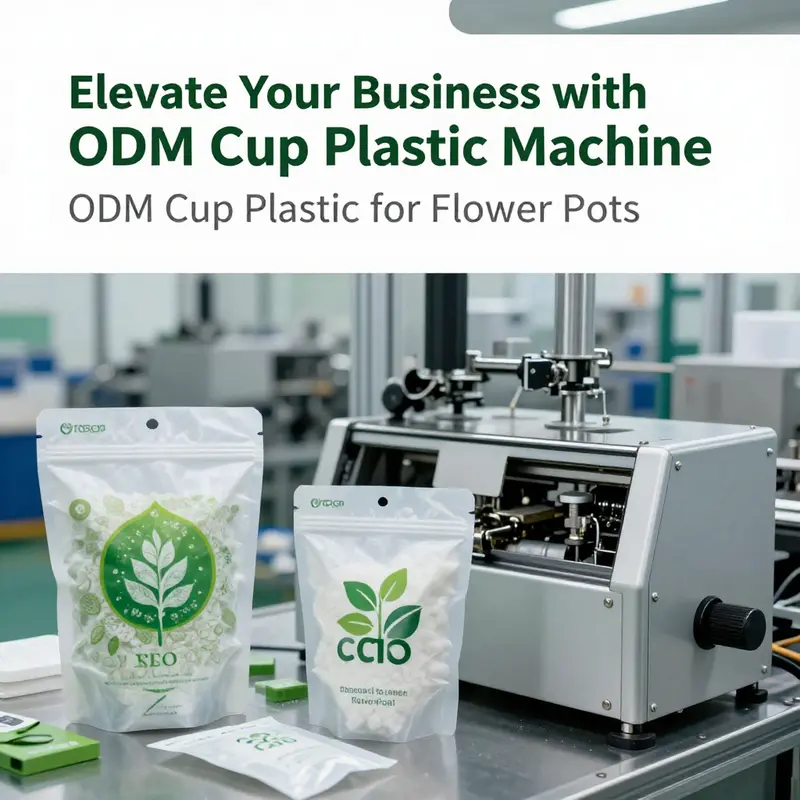
The production of disposable flower pots on an ODM cup plastic machine sits at a compelling crossroads of efficiency and responsibility. The equipment is designed to form thin-walled cups and pots with remarkable speed and precision, yet every kilowatt consumed and every gram of material used reverberates through the broader environment. This chapter treats the environmental considerations not as a checklist but as an integrated design and operational philosophy. It invites designers, operators, and business leaders to imagine a production line where performance and sustainability reinforce one another, where material choices, process controls, and end-of-life strategies interlock to reduce impact without sacrificing the flexibility that ODM models demand. In practice, this means thinking about five intertwined dimensions: raw materials, emissions, energy use, lifecycle sustainability, and end-of-life management. Each dimension informs decisions at the machine’s core and in the daily routines of the plant floor, shaping products that meet market needs while aligning with a longer horizon of environmental stewardship.
Raw materials sit at the very start of the environmental equation. The ODM cup plastic machine is optimized for common thermoplastics such as polypropylene and polystyrene, materials that balance form and function for thin-walled pots. Yet the environmental narrative pushes beyond conventional choices. Advocates of sustainable plastics point to recyclable or bio-based polyurethane blends, especially those partially derived from renewable resources or incorporating recycled content. While PU blends are more often associated with coatings and specialty foams, the principle—reducing reliance on virgin fossil resources and cutting greenhouse gas emissions during production—can guide material sourcing for the entire tooling and accessory ecosystem of the machine. Even within the standard PP/PS process, there is room to adjust resins toward higher recycled-content streams where compatible, accompanied by rigorous quality control to preserve lustre, stiffness, and surface finish. In an ODM context, the capacity to switch input materials without downgrading performance becomes a strategic asset. The objective is to preserve the versatility that makes the machine suitable for a range of orders—from decorative potted plants to compact seedling systems—while gradually shifting toward feedstocks with a lower cradle-to-gate footprint. This path requires transparent supplier communications, testing regimes that ensure consistent wall thickness and heat resistance, and traceability that can support closed-loop conversations with customers who demand sustainability data alongside product specs.
A second pillar concerns emissions, particularly volatile organic compounds that can arise from inks, coatings, adhesives, and certain process steps. Even when the primary output is a plastic cup or flower pot, the production environment may expose workers to VOCs if solvent-based coatings are used or if inks and laminates require solvents. The environmental imperative is not merely regulatory compliance; it is a practical investment in air quality and worker health. The modern thermal forming line can minimize emissions through a combination of low-VOC formulations, water-based inks and coatings, solvent recovery when some processes still require them, and intelligent controls that optimize dwell times and temperatures to reduce solvent use. Facility design matters as well: dedicated capture ventilation near the forming stations, effective filtration, and commensurate housekeeping reduce fugitive emissions. Beyond the plant floor, suppliers can be vetted for safer chemistries, ensuring that the entire supply chain aligns with lower-VOC goals. The result is not only cleaner air but a more stable work environment with fewer health and safety incidents, which in turn sustains productivity and morale on the line.
Easy-to-control energy efficiency follows as a natural extension of responsible manufacturing. An advanced ODM cup plastic machine embodies energy-saving technologies that discipline heat input and reduce idle losses. Precise temperature control, rapid heating and cooling cycles, and optimized platen design can dramatically lower energy consumption without compromising cycle times. In many facilities, energy performance is further enhanced by smart automation: servo drives that modulate clamping force, vacuum systems that ramp down when not actively forming, and advanced sensors that minimize misruns and scrap. The potential gains extend beyond electricity use. Heat recovery strategies can reclaim waste heat from the extrusion and forming stages to preheat incoming material or to support ancillary processes such as drying of coatings. Even modest improvements add up when a line runs at high volume, and the ODM model’s emphasis on flexibility makes it possible to adopt these upgrades incrementally—starting with critical stations and expanding as demand patterns justify investment. In dialogue with customers who value sustainability, energy efficiency becomes a tangible metric on the bottom line, not merely a compliance checkbox.
Lifecycle sustainability weaves together design for maintenance, durability, and adaptability. A machine should be built to endure multiple product cycles with minimal downtime, and its architecture should support straightforward maintenance rather than costly, full-system replacements. In practice, this means modular components, standardized fasteners, and clear service manuals that empower technicians to service rather than abandon aging parts. Lifecycle thinking also favors design choices that simplify cleaning, reduce wear on critical surfaces, and allow quick tooling changes for different cup and pot geometries. The ODM framework shines here because it enables rapid product mix—thin-walled cups for one client, sturdier pots for another—without forcing a new line installation. Yet every product variation carries a hidden environmental cost in the form of changed scrap rates, lubrication needs, and potential energy consumption shifts. A thoughtful approach tracks these variables, guiding material suppliers and maintenance teams to minimize waste and extend useful life. The long view aligns with economic realities: a durable machine with predictable maintenance schedules reduces capital churn and the volume of discarded components that otherwise accumulate as industrial waste.
End-of-life management closes the loop in the circular economy story. For disposable flower pots and their plastic cup forms, the ideal outcome is a system that channels post-consumer waste back into the production stream or, better, sorts and processes them so they re-enter the market as new products. In practice, this requires both product design and organizational partnerships. Design choices that favor recyclability—clean separations of materials where possible, coatings that do not hinder recycling streams, and compatibility with standard resin sorts—ease post-use processing. Compostability in industrial settings, while a noble goal for certain bioplastics, is rarely practical for conventional PP/PS packaging unless integrated into a broader composting infrastructure. Therefore, many manufacturers explore closed-loop models that incentivize take-back programs, allow scrap from the forming process to be regranulated, and collaborate with recyclers to ensure that post-consumer pots and cups do not end up as landfill. This is where the ODM approach becomes strategic: it can facilitate pilot programs with a few customers, measure material recovery rates, and gradually expand to a broader network of partners who share a commitment to circularity. In the absence of a perfect solution, a pragmatic blend of recycling compatibility, waste reduction on the line, and customer engagement yields steady progress toward a more sustainable end product.
Institutional attention to certification and standards remains essential. Internationally recognized credentials—such as those governing safety, quality, and environmental management—offer a framework for continuous improvement. While the machine itself is a technical system, its sustainability profile hinges on how it is operated and maintained. Training that emphasizes energy-aware production practices, safe chemical handling, and efficient cleaning cycles pays dividends in both environmental performance and worker welfare. An ODM operation may find it advantageous to publish a sustainability narrative alongside technical specifications, presenting data on scrap rates, energy intensity per unit produced, and the share of recycled content in input materials. Such transparency can build trust with customers who increasingly value lifecycle thinking and supply-chain resilience. The goal is not to freeze the design in time but to create a living system that evolves as new materials, processes, and regulatory expectations emerge. Consistency and adaptability can coexist; the machine becomes a platform for sustainable manufacturing rather than a single-purpose asset locked into a narrow use case.
Incorporating an internal example can illustrate how these ideas translate into practice. Imagine a line configured to switch between a standard disposable flower pot and a compatible plastic cup, with quick-change tooling and a control interface that presets material feeds, temperatures, and cycle counts for each format. Operators monitor a dashboard that highlights energy use, cycle efficiency, and material waste in real time. When a batch finishes, the scrap is diverted to a recycling stream or regranulated for future runs, minimizing waste. Maintenance routines emphasize minimized solvent use, optimized lubrication intervals, and proactive replacement of wear-prone parts before efficiency dips. The production plan includes periodic reviews of material suppliers to assess recycled-content availability and to identify opportunities for lower-VOC chemistries. All of these activities, though technical at their core, serve a simple aim: to deliver the same reliable, cost-effective pots and cups that customers expect, while reducing environmental impact and aligning with broader societal values around responsible manufacturing.
As readers consider these dimensions, a practical takeaway emerges: environmental stewardship in ODM cup plastic production is not a separate program but an integrated design and operations mindset. It requires embracing alternative materials where feasible, reducing emissions through safer chemistries and smarter process controls, pursuing energy efficiency as a core performance metric, prioritizing durable, maintainable machine architectures, and planning end-of-life strategies that close the loop. The interplay among these factors determines whether sustainability becomes a differentiator on the market or a checklist that is merely ticked off. For practitioners, the message is clear: every decision on material choice, process setting, and waste handling reverberates downstream. When done thoughtfully, it yields products that meet the needs of today’s customers while protecting resources for tomorrow. And as the packaging world continues to evolve toward more earth-friendly options, the ODM cup plastic machine can remain at the forefront of responsible manufacturing—providing the flexibility to adapt, the efficiency to compete, and the integrity to sustain.
For readers seeking a concrete example of how sustainable packaging considerations intersect with practical product choices, consider exploring eco-friendly disposable kraft paper options that can complement or substitute plastics in certain applications. This resource highlights alternatives that align with circular economy goals and broader environmental objectives: eco-friendly disposable kraft paper soup cup with lid for takeaway. While the focus here remains on plastic forming technology for pots and cups, the broader lesson is universal: sustainability succeeds when materials, processes, and end-of-life thinking are treated as a coordinated system rather than a series of isolated choices. External perspectives, such as the guidance offered by public agencies and environmental authorities, reinforce the value of this integrated approach. For further reading on growing environmental management within plastics industries, the U.S. Environmental Protection Agency offers a detailed framework you can consult: https://www.epa.gov/sustainable-management-plastics.
Market Currents and the ODM Cup: Trends Shaping Disposable Flower Pot Production
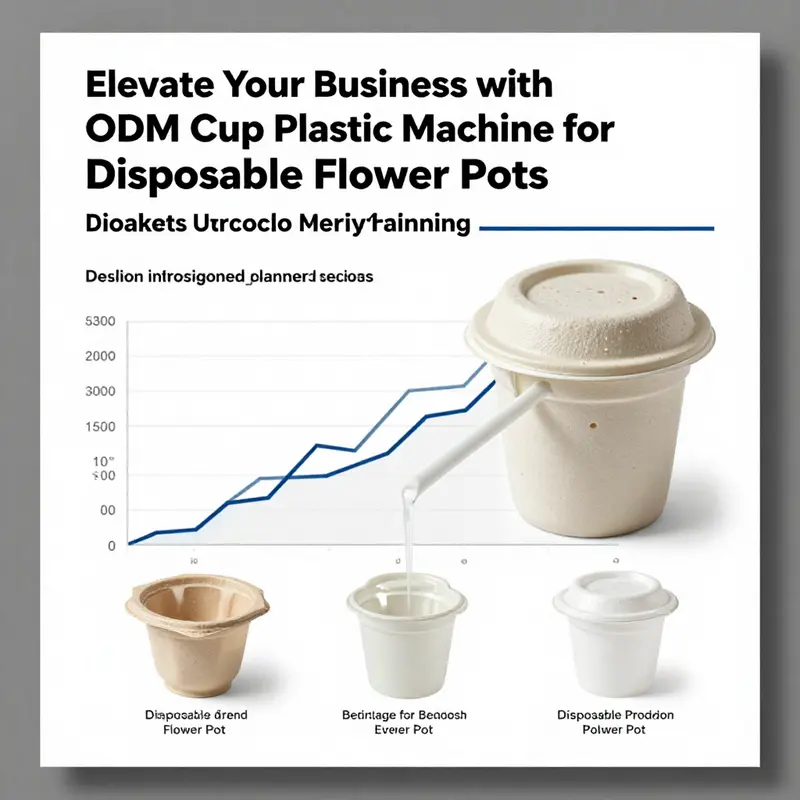
The ODM plastic machinery market for disposable flower pots is evolving in step with horticulture and packaging trends. Demand from urban green spaces, container gardening, and professional plant outsourcing is driving lines that convert raw plastic sheet into lightweight pots at scale. The core goal remains to deliver reliable pots at low cost for single use or short lifecycle applications, but the new generation of production lines emphasizes speed, precision, and flexibility. They are designed to handle a spectrum of thermoplastics, enable rapid changeovers, and sustain quality across large orders in a single shift.
Technically, the shift toward high speed thermoforming and related molding technologies is reshaping what counts as a practical production solution. Modern lines are engineered to work with widely used thermoplastics such as polypropylene and polystyrene, valued for light weight and rigidity. Equipment is built to accommodate sheet thickness ranges from a few tenths of a millimeter to about a couple of millimeters, with a focus on preserving structural integrity while minimizing material use. For disposable flower pots, balancing thin walls with robust form is a defining capability. Integrated cooling and trimming systems help reduce deformation and deliver clean, uniform edges, essential when pots nest or stack during packaging and shipment.
Automation blends traditional mechanical reliability with modern digital control. Programmable touchscreens, multi product presets, and fast changeover tooling allow operators to switch between pot sizes, wall thicknesses, and even decorative features with minimal downtime. The ability to preset a lineup of products and recall them at the touch of a button means mass production can still deliver a high degree of customization. Modular design enables upgrading a station like cooling or trimming without a full system rebuild, preserving capital investments while expanding capabilities.
Certification and regulatory alignment have moved from nice to haves to baseline expectations. Buyers seek assurance that equipment complies with safety, health, and environmental standards. Achieving certifications such as CE and ISO helps ODM providers access European, North American, and Asia Pacific markets with fewer regulatory hurdles. For producers and end users, certifications translate into lower risk, easier financing, and greater confidence in long term production stability. The certification narrative also feeds supplier risk management, with an emphasis on traceability and consistent performance under varied operating conditions. For flower pot lines, this means predictable wall thickness, neat neck finishes, and consistent molding quality across thousands of units per shift.
Sustainability has sharpened its focus in response to consumer expectations and policy trends. Modern lines are designed to accommodate a broader material mix without sacrificing throughput, supporting recyclable or biodegradable options. End of life pathways are considered in design, enabling easier separation for recycling or composting at scale. Operators optimize wall thickness and air trapping to reduce scrap while maintaining durability. Energy efficiency and waste minimization, including smarter scrap handling and smarter preform design, help producers lower operating costs and reduce environmental impact. The result is a production environment that can meet aggressive cost targets while embracing sustainability as a core value proposition.
Market diversification is a notable strategic shift. Modern lines can handle a broader product mix beyond plant pots to disposable containers used in food service, cosmetics, and healthcare packaging. This diversification makes the high speed platform more attractive, delivering a higher return on investment as operators repurpose the same machine for multiple applications. From small seedling pots to larger nursery models, and even to compact cups or specialty packaging, the shared platform reduces downtime, speeds time to market for new designs, and lowers unit costs through higher utilization. The multi functionality aligns with the ODM business model that emphasizes adaptable tooling, quick change components, and smart process control.
Manufacturing ecosystems in regions with plastics knowhow, especially in Asia, are pushing toward smart factory concepts. The automation stack spans material handling to final packaging, with sensors, data analytics, and remote diagnostics that minimize downtime. In these environments, the line is a node in a larger digital twin workflow used to optimize yield, cycle time, and energy use. Operators benefit from real time feedback on wall thickness uniformity, material yield, and defect rates, enabling rapid corrections before defects spread. For ODM providers, this means more trials and faster iteration on new pot geometries or branding. A repeatable production recipe that still scales for custom orders becomes the competitive edge that differentiates a provider in crowded markets.
From the client side, the business case rests on speed, flexibility, and risk management. Faster cycle times unlock capacity, enabling larger orders with shorter lead times. Enhanced changeover capabilities reduce downtime between lots, which is valuable during peak seasons. Precision and repeatability lower scrap rates, translating into material savings and a cleaner environmental footprint. The modular architecture ensures investments stay relevant as needs evolve, enabling retooling of line segments with minimal disruption to preserve momentum and reduce capital exposure. The practical takeaway is to seek a platform that supports rapid customization without compromising throughput.
In practical terms, the ODM platform should offer not only machinery but co development, process optimization, and post sale technical support. The success story for a modern flower pot production line rests on a cycle of design refinement, pilot runs, and scale up that keeps pace with changing customer requirements. For buyers evaluating lines, the decision is as much about software and control philosophy as hardware robustness. A capable control system that hosts multiple product presets, integrates with downstream packaging, and delivers actionable process data will determine long term competitiveness as much as the mechanical specs.
Final thoughts
Investing in the ODM Cup Plastic Machine for Disposable Flower Pots is not merely about acquiring a machine, but embracing a future of efficiency, sustainability, and economic viability. As the trends in the beverage and events industries continue to shift, aligning your business practices with these advancements will yield both immediate and long-term rewards. From increasing productivity to contributing positively towards environmental goals, this machine stands out as a versatile asset. Harness its capabilities and join the wave of businesses committed to creating a more sustainable future.