
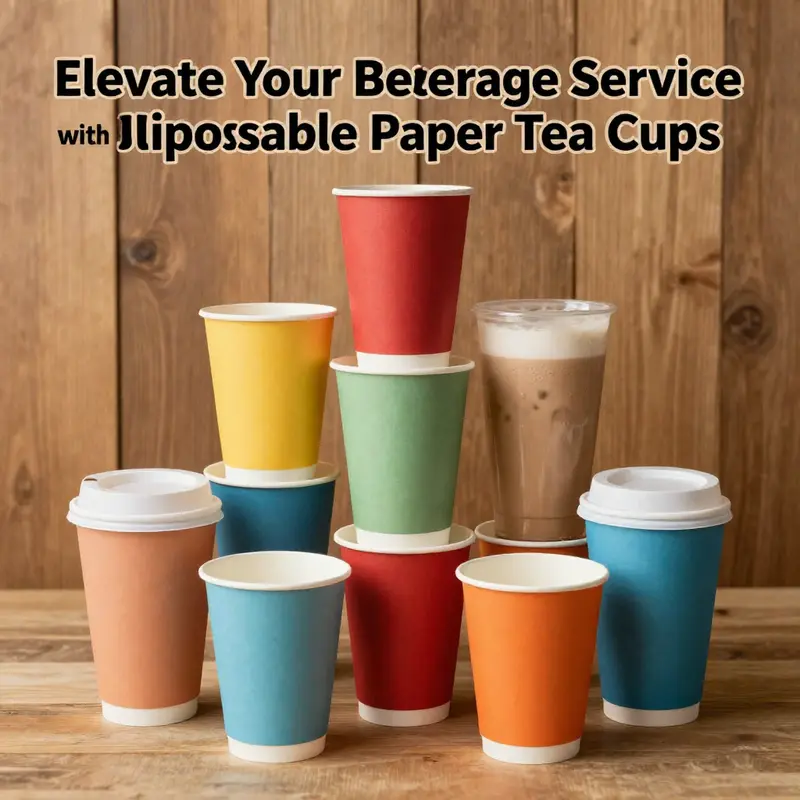
In an era where sustainability and convenience reign supreme, disposable paper tea cups with handles have emerged as a popular packaging choice for businesses in the beverage industry. Whether you run a bubble tea shop, manage a beverage chain, operate a food truck, or plan events, offering these eco-friendly cups can enhance your service while addressing modern consumer preferences. This article delves into the market demand for these cups, explores their manufacturing processes, evaluates their environmental impact, and uncovers the customization opportunities that allow businesses to shine. By understanding these facets, you’ll be equipped to make informed decisions that align with your brand values and operational goals.
null

null
From Fiber to Finishing: The Hidden Mechanics Behind Handle-Equipped Paper Tea Cups

Every day, in cafes, markets, and event spaces, a simple act unfolds that travelers at the counter rarely notice: a cup made of paper, with a secure seal, a comfortable handle, and the promise of a reliable drink experience. The journey from raw material to the moment a hot tea is cradled in a passenger’s hands is a carefully choreographed sequence of engineered choices. It begins not with a single formula, but with a web of decisions about what the cup should do, how it should feel, and what it must endure on its way to a customer who expects both safety and convenience. At the core of this journey lies the selection of paperboard that will become the cup’s body, a material chosen with food safety as the baseline and performance as the extra frame. The board must be sturdy enough to hold liquids without bending, yet thin enough to be formed quickly on a production line. It is typically a food-grade stock, often layered with a thin film on either side to prevent leakage and to guard against the intrusion of heat from a piping-hot drink. The film choices—ranging from conventional polyethylene to more modern, compostable alternatives like polylactic acid—shape not only the cup’s barrier properties but its end-of-life footprint. The coating is more than a mere waterproofing; it is a design decision that intersects with consumer expectations for sustainability, regulatory compliance, and even branding. In many markets, the coating must balance leaching risk, heat resistance, and recyclability. The pragmatic result is a cup whose surface has been tailored to resist the assault of steam while remaining compatible with downstream processes, from printing to disposal. The raw material phase, however, is only the overture to a more intricate performance—one that takes shape on the factory floor as the blank becomes a cup and the cup gains a handle.
The forming stage is where precision becomes poetry. A sheet of coated paperboard slides into a cup forming machine, a device engineered to convert flat stock into a three-dimensional vessel with remarkable repeatability. Blanks are cut with exacting tolerances, then guided through heat and pressure to take on the typical cylindrical or slightly tapered geometry. The integration of a handle—an add-on that might seem simple but is technically demanding—occurs either by pre-attaching the handle to the blank at an early stage or by affixing it during the forming sequence. Modern lines rely on automated systems that align, fold, and glue the handle with a consistency rarely found in manual processes. The handles themselves can be made from the same paperboard, sometimes molded fiber, or other compliant materials that meet food-contact standards. The adhesive chemistry used to attach the handle is chosen to endure the heat of a hot beverage without softening or detaching during the cup’s brief life in a customer’s hand. It is a small detail, yet essential to the user experience, because even a minor looseness can undermine confidence in a drink service.
Finishing processes follow with their own blend of art and science. If branding is a goal, the cup body receives printed designs in a process that must survive the rigors of heat exposure and potential moisture as the beverage is consumed. The printing inks, the alignment of the artwork, and the gloss or matte finish are all calibrated to ensure legibility and continuity across thousands of units. After printing, the cups may pass through additional stages such as lamination of a protective outer layer or the addition of lids and liner materials, depending on the intended service setting. Quality checks are not mere formalities; they are real-time measures of dimensional accuracy, leakage resistance, and the integrity of the handle connection. A robust quality loop helps identify a drift in any parameter—be it a tiny misalignment in the finishing seam or a slight variation in wall thickness—that could compromise the experience for the end user.
An important design feature in many disposable tea cups with handles is double-wall construction. The space between the inner and outer walls is engineered to minimize heat transfer to the hand, creating a comfortable grip even with a hot brew. The double-wall approach also forms a buffer against condensation and thermal shock, making the cup more versatile for both hot and cold beverages. The practical effect is a cup that feels solid in the hand, which in turn supports a more confident service ritual in busy venues. The manufacturing line must implement precise synchronization to maintain this symmetry. When the cup geometry is consistent, so too is the perceived quality, a factor that drives repeat purchases in a market that prizes predictable experiences.
Sustainability threads through every step of the process. In response to consumer demand and global policy trends, manufacturers are increasingly adopting compostable coatings and alternative base fibers. PLA coatings and bagasse or sugarcane fiber components are not mere marketing headlines; they reflect a shift in how cups are designed to align with waste management practices in different jurisdictions. The coating choice influences not only leakage prevention but also end-of-life outcomes, which matters to buyers who want to reduce environmental impact without sacrificing performance. Compliance with regulatory standards—such as FDA food-safety guidelines—and independent third-party testing, like SGS certifications, remains a non-negotiable anchor for reputable producers. These certifications reassure customers that the cups are suitable for food contact, even when filled with hot liquids, and that the materials will not compromise safety during normal use. The result is a trusted product that can be sold globally, often with flexible options for customization, bulk pricing, and scalable production.
Automation is the silent driver behind the scale and consistency of today’s disposable paper tea cups with handles. On a well-ordered line, dozens of units emerge per minute, each one a small victory of engineering: the blank is cut with precision, the cup is formed and stabilized, the handle is affixed with controlled pressure, and the finish is inspected for defects. Such efficiency is not happenstance; it is the outcome of decades of refinements in die design, adhesive chemistry, and process control. The economics of scale are clear. What begins as a high-stakes investment in machinery—often a full turnkey solution that can include pre-attachment of handles and real-time quality analytics—pays off when distributors are moving tens to tens of thousands of units per month. The production line, in other words, is a living map of trade-offs: faster speeds versus tighter tolerances, more robust coatings versus greater recyclability, and more elaborate branding versus simpler, more versatile designs. Each decision ripples through to the shelf, the cafe counter, and the consumer’s experience with the cup.
The lifecycle considerations extend beyond the factory floor. While a sturdy cup with a well-integrated handle can perform admirably in many settings, its ultimate fate is shaped by how it is disposed of and where it will be treated after use. The choice of barrier coatings hinges on environmental policies in different regions, and some facilities now prioritize compostability to reduce landfill burden. Yet the reality of waste streams is nuanced. Not every municipal program can process PLA coatings or bagasse-based blends, and local infrastructure often dictates whether a cup can be accepted into composting streams or must be managed as regular paper waste. These complexities push manufacturers to design with broader end-of-life scenarios in mind, fostering collaboration with waste-management partners to ensure that the cup’s materials are compatible with the nearby treatment options. The long view, therefore, becomes a balance among performance, cost, and environmental responsibility.
To connect the technical with the commercial, the production ecosystem surrounding disposable cups with handles thrives on a network of suppliers and buyers who value reliability, branding flexibility, and price competitiveness. Large-volume buyers seek predictable lead times, consistent print quality, and the ability to customize with logos, color palettes, and targeted messaging. Small businesses, meanwhile, rely on suppliers capable of offering samples and trial runs to test performance before committing to a full order. This is where the broader ecosystem—ranging from raw-material mills to converting plants and downstream packaging providers—becomes crucial. The interplay between material science, mechanical engineering, and supply chain logistics shapes not just a single cup, but the accessibility of a service model that can scale with demand without compromising quality.
As we trace the path from fiber to finishing, it is useful to consider how a visitor to a supplier’s site might read the craftsman’s toolset behind every cup. The machines that squeeze, cut, form, and seal are more than mechanical artifacts; they are living embodiments of a supply chain designed to deliver a consistent product at a forced pace. The ability to incorporate branding on the cup surface, to attach a handle securely, and to maintain barrier integrity under heat and moisture—all these factors are interwoven with the provider’s capability to produce on a global stage. In many ways, the manufacturing narrative mirrors the consumer’s experience: a well-made cup that feels right in the hand, keeps a drink warm, communicates a brand story through color and pattern, and ultimately disappears into the circular economy with minimal waste.
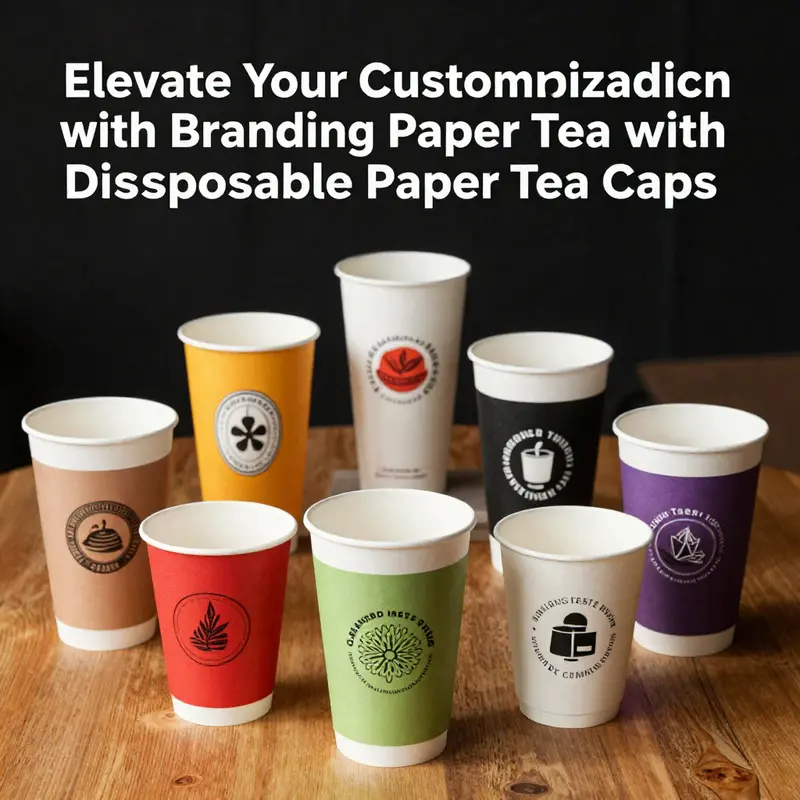
For readers curious about the branding and customization options that can accompany these cups, one practical entry point is a supplier-focused page that highlights eco-friendly printed-logo options for single-use vessels. This link offers a concrete sense of how manufacturing choices align with marketing goals while staying true to material and regulatory constraints: senang07-eco-friendly-printed-logo-paper-ice-cream-cups-with-lid. The page underscores that even as the cup remains a disposable commodity, its surface can be a canvas for brand storytelling without compromising performance or sustainability. Keeping such considerations in view helps buyers make informed decisions about which coatings, which printing methods, and which handle attachment techniques best suit their service needs.
Owned by a broader dialogue about environmental stewardship and efficiency, the manufacturing story of disposable paper tea cups with handles is not merely a sequence of steps but a coordinated performance. Material scientists, process engineers, quality managers, and logistics specialists all play a role in ensuring that each cup can travel from a mill to a cafe counter and finally into a consumer’s hand with confidence. The dance of layers, contours, and bindings is repeated millions of times across the world, yet every unit remains a unique touchpoint between a drink and a person who seeks warmth, convenience, and a moment’s comfort. The end result is a familiar object that, at its core, carries the lived experiences of countless hours of engineering, testing, and refinement—an everyday artifact that embodies a sophisticated balance among safety, usability, and responsibility.
External resources offer further insight into one facet of this expansive process. For those who want to understand the machinery that can autonomously produce cups with handles at scale, an external reference provides a detailed overview of full automatic paper cup making machines with handles. This resource helps illuminate how automation translates design intent into mass-produced reality, a key driver behind the affordability and availability of these cups in markets worldwide: https://www.alibaba.com/product-detail/Full-Automatic-Paper-Cup-Making-Machine-with_1600398467885.html?spm=a2700.1.xUcQWt.2.5f1d7a4cHJpZDw&productSource=1600398467885&sourceType=productDetail&market=global
The chapter thus completes its arc by returning to the human center of the process—the operators, engineers, and buyers who dream up the cup’s form, test its limits, and ensure that, in every service setting, a hot drink can be enjoyed with dignity, comfort, and a clear conscience about the material choices that helped to bring it to life.
null

null
null
null
Final thoughts
Disposable paper tea cups with handles provide an ideal solution for beverage service providers aiming to offer convenience without compromising on environmental responsibility. With increasing market demand, efficient manufacturing processes, a positive environmental impact, and customizable options for branding, these cups are a versatile choice for bubble tea shops, restaurants, food trucks, and event planners. By choosing these eco-friendly products, businesses not only enhance their customer experience but also contribute to a sustainable future. Embrace the opportunity to make a lasting impression while serving stylish beverages in disposable paper tea cups.