
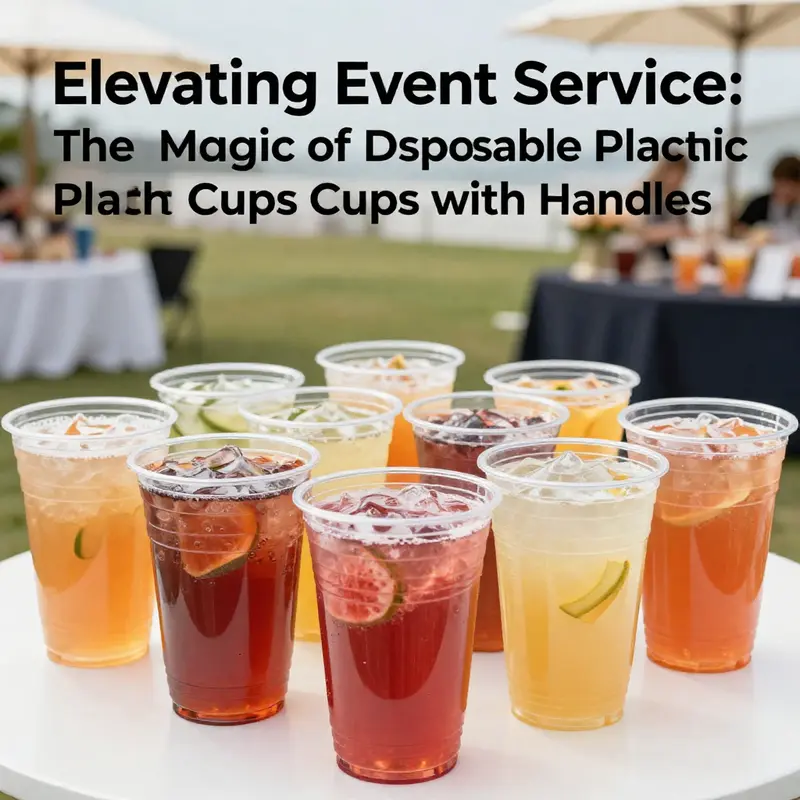
In today’s bustling food and beverage industry, providing efficient and appealing service can set your establishment apart. For bubble tea shops, beverage chains, restaurants, food trucks, catering services, and event planners, disposable plastic punch cups with handles offer a delightful solution. These cups not only combine practicality with aesthetics but also address various challenges faced in high-traffic environments. This article delves into the material composition, unique design features, and the latest market trends associated with these versatile cups, empowering you to enhance your beverage offerings and guest experience effectively.
Inside the Clear Cup: Material Choices, Design, and Practical Realities of Disposable Punch Cups with Handles
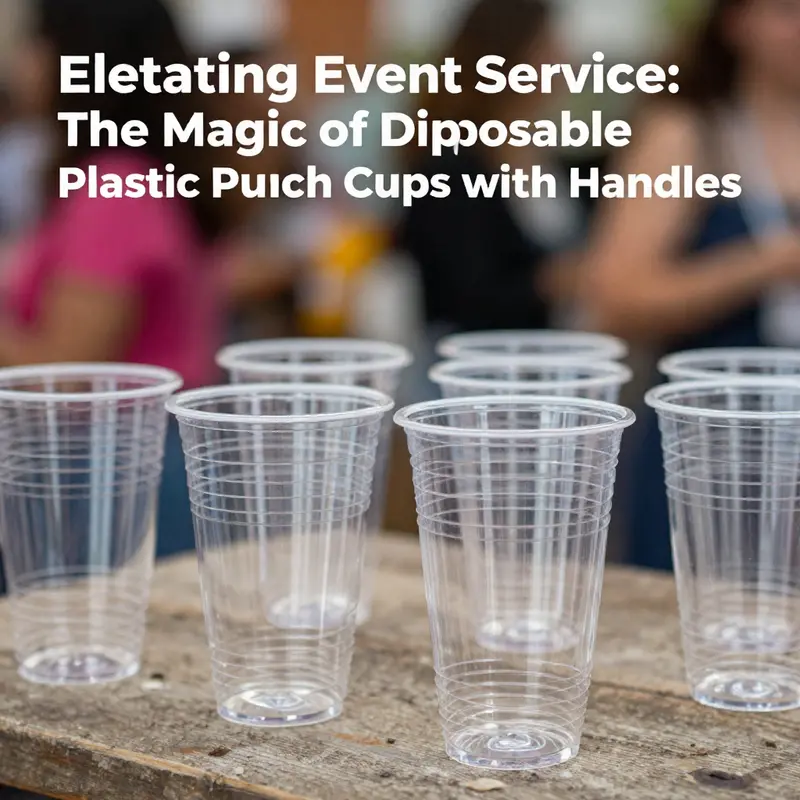
The punch bowl is only as elegant as the vessels that carry its reach. At large gatherings, the flow of drinks must be uninterrupted, and the cups that cradle those drinks play a crucial supporting role. A disposable punch cup with a handle is not just a convenience; it is a carefully engineered object that balances grip, insulation, clarity, and cost. In moments when guests mingle, mingle, and move, the ability to hold a cup without using both hands can be the subtle difference between a smooth progression of service and a spill that sends a wave of beverage across a crowded room. The material choices behind these cups—especially when a handle is part of the design—shape how easily hosts can stage a flawless service, how boldly a brand can express its wedding palette, and how responsibly the product meets the needs of a temporary but memorable event. The chapter that follows dives into the material composition that makes these cups work, the design features that ensure comfort and reliability, and the wider environmental and practical considerations that event planners, caterers, and retailers weigh when choosing between one-time use and reuse-friendly options.
At the heart of disposable punch cups with handles lies a tension between clarity, structural integrity, and the kind of temperature exposure the cup will endure. The most familiar picture is a crystal-clear vessel that preserves the beverage’s color and opacity, inviting guests to admire the punch’s hue as it swirls in the glass-like container. Clarity, in plastic cup design, is often achieved with materials that can be molded into precise shapes and retain their form under expected use. While the broader category of disposable beverage containers frequently relies on PET for its transparency and general food-safety profile, the specific context of punch cups with handles—where a guest will be carrying a filled cup across a room, sometimes across uneven surfaces or through a crowded line—leans toward materials with predictable thermal behavior and robust edge strength. The practical reality is that the coated, double-walled, or uniquely ribbed designs that give a cup its character also come with material implications. In a crowded reception, a cup’s ability to resist deformation when hot liquid is inside, or to maintain its grip under pressure, becomes a tangible factor in guest experience and service efficiency.
A close look at the most common material families used for these cups reveals a careful balancing act between performance and cost. The two materials most often cited in a detailed examination of disposable cups with handles are polypropylene and polystyrene. Polypropylene, or PP, stands out for its strength, resilience, and safety for food contact. It handles both hot and cold beverages without warping in the way a thinner shell might. For events where the punch is served warm or even hot in a double-walled configuration, PP provides a stable platform. Its thermal properties enable the cup to tolerate brief high-temperature exposure without losing shape, which is essential when the liquid is poured from a heated pot or a steam-rich punch dispenser. The result is a cup that guests can hold comfortably, with a touch of insulation that keeps hands from warming the drink too quickly. The double-wall variation, often seen in these designs, further improves this thermal buffer. By keeping the outer surface cooler to the touch, the double-wall construction reduces the need for additional sleeves or protective grips and offers a more polished appearance on crowded tables.
Polystyrene, another widely used material in disposable cup manufacture, brings ease of manufacture and a crisp, glossy finish. In many single-use contexts, PS proves cost-effective and amenable to rapid production runs. Yet PS has limitations when faced with hot liquids or extended exposure to warmth. When hot beverages are involved, PS can begin to deform under sustained contact with heat, which may compromise both aesthetics and usability. For punch cups with handles that are meant to be carried with confidence, this resistance-to-heat consideration is part of the design calculus. In instances where the beverage remains cool or only mildly warm, PS can offer excellent stiffness, making it favorable for certain display-centric applications or shorter service windows where the cup is not subjected to prolonged heat. The material’s ease of molding also supports a variety of handle geometries—flat, die-cut, or more elaborate shapes—allowing manufacturers to tailor the grip to a particular service scenario.
Beyond these two core plastics, there is a broader discussion to be had about PET, the material often associated with the pristine clarity of many cold beverage containers. PET’s translucence and general inertness make it a staple for many one-time-use cups. It is particularly appealing for punch services that aim to showcase the color and texture of the beverage, a factor that matters when guests are assessing the overall aesthetics of a reception. However, PET cups with handles are less common for hot beverages, where insulation and grip are paramount. In many instances, the punch cup with a handle is a design that leans into the thermal realities of serving, and while PET may still appear in related single-use cups, the handle-enabled options frequently favor PP or PS due to their more predictable behavior under heat and during the mechanical stresses of transport.
In practice, the construction of these cups often relies on design features that bolster insulation and leakage resistance. A double-walled configuration, as mentioned, is one way to deliver thermal comfort for the guest and reduce the need for extra insulating sleeves. The inner wall holds the liquid, the outer wall forms a separate layer, and a gap in between creates the air insulation that lowers heat transfer to the hand. This helps maintain a comfortable touch even with beverages at warmer temperatures. Some designs incorporate a specialized coating on the interior or exterior to improve leak resistance. The coating helps seal minor imperfections in the plastic and reduces the risk of external dampness or drips when the cup is jostled during bustling events. It is important to note, though, that coatings can complicate recyclability, especially in regions with strict post-consumer recovery programs. Environmental considerations then become a dialogue between the material, its lifecycle, and the local waste infrastructure.
Handle design is not simply a matter of aesthetics. The shape and position of the handle alter how the cup feels in the hand, how it distributes weight, and how securely a guest can carry it from the punch bowl area to a seat or a standing table. Flat handles, often seen as a practical baseline, provide a straightforward grip but can fatigue fingers after long periods of holding. Rope handles, where present, offer a softer, more ergonomic grip that distributes pressure more evenly around the hand. Die-cut handles, molded directly into the cup, usually reflect a more ergonomic contour that supports a secure finger purchase. The chosen handle type must work in harmony with the wall material. PP’s inherent rigidity can tolerate more robust, integrated handle geometries, while PS’s crispness may yield more intricate handle shapes without sacrificing strength. The result is a family of cups that can be tailored to the service rhythm of the event. A wedding reception might prioritize elegance and a refined silhouette, favoring a slim, integrated handle that complements a delicate table setting. A large outdoor event, by contrast, may value a more rugged grip and easy stacking, where a flattened or rope alternative becomes preferable.
No discussion of disposable cups would be complete without considering the broader environmental and disposal implications. The majority of disposable cups today are designed with short-term use in mind, and the materials selected reflect a balance between performance and the realities of post-consumer processing. A common thread across PP and PS cup families is the emphasis on safety for food and beverage contact, which translates into BPA-free formulations and a certain standard of inertness. The BPA-free claim speaks to the long-standing concern about chemical migration from container to liquid, a factor that matters across all age groups and event contexts. Yet the environmental footprint cannot be ignored. Biodegradable or recyclable options exist, but they often come with caveats. Some designs labeled as biodegradable rely on composting conditions found in specialized facilities, conditions not always available in every locale. Others may present recyclable pathways that are viable only when the cup is free of coatings or combined with other materials. Coatings intended to improve leak resistance or thermal performance can complicate mechanical or chemical recycling, depending on local processing capabilities. For planners and suppliers, this means a careful assessment of local disposal regulations and infrastructure when selecting between a disposable option and a more sustainable, reusable approach.
In practice, many buyers weigh the allure of one-time use against the growing demand for eco-conscious choices. While some versions are explicitly designed for limited reuse and even washing, the majority of disposable punch cups with handles are positioned as single-use items. When a client asks for a reusable option, the discussion often pivots to the handful of lines that promote durability, stacking efficiency, and heat resistance that can extend the product’s life in a controlled setting. The conversation then extends to whether the event’s budget and guest flow justify a higher initial investment in a sturdier option that could be washed and reused, or whether the perceived convenience of a simple, no-fuss disposable experience suits the gathering better. In either case, the material’s performance—how it behaves under temperature extremes, how it feels in the hand, and how it interacts with the punch’s color and aroma—becomes part of the overall sensory and logistical equation.
For practitioners who need to communicate these decisions clearly to clients or teams, the material choice becomes a language of performance metrics. PP’s resilience speaks to scenarios involving warmer beverages and a service tempo that requires quick handoffs and easy stacking. PS’s economy shines in venues where temperatures are moderate and a crisp, glossy image matters for the guest experience. PET, with its transparency and chemical stability, remains a compelling backdrop for cold beverage displays, even if it is not always the preferred choice for hot drinks in handle-equipped cups. The balancing act extends beyond the cup alone. It intersects with the design of the punch bowl or beverage station, the flow of guests, the spacing of tables, and the degree to which a host wants to project a brand narrative through the sensory details of the service. Every facet—material, wall construction, coating, handle geometry—plays a role in shaping the moment when a guest lifts a cup, feels the cool exterior, inhales a hint of the punch’s aroma, and moves on to the next part of the event.
Event planners and retailers who navigate these decisions also frequently consider branding and bulk ordering needs. The material choice can influence labelability and printing options, the ease with which cups can be stacked for transport and display, and the speed at which a service staff can assemble and replenish beverage stations. In a setting where large volumes are required, the manufacturing characteristics of PP and PS—such as moldability, cycle times, and nominal thickness—translate into practical benefits on the floor. A cup that touts a smooth surface and a stable edge is less likely to suffer from leakage or distortion during a service sprint. Likewise, a well-engineered handle that maintains its grip after a handful of passes across a crowded room reduces the risk of spills that would otherwise cascade into a busy, high-pressure moment.
The environmental conversation, while more nuanced, remains central. There is a growing appetite for materials that align with responsible disposal practices, even in the context of short-term use. Biodegradability and recyclability are valuable goals, but they depend on product design as well as the availability of post-consumer recovery streams. In some regions, the coatings that improve performance may complicate recycling because the material cannot easily be separated from other plastics or requires specialized processing. In others, recyclability may be straightforward if the cup is made from a single resin and free from coatings. These regional differences matter, and they encourage a pragmatic approach: select materials and constructions that not only meet the performance requirements of the event but also align with the local waste ecosystem. The conversation is less about chasing a single “perfect” material and more about understanding tradeoffs—how a chosen material behaves under service conditions, how its end-of-life options align with local infrastructure, and how much flexibility is available to adapt to a given event’s timeline and geography.
To bring this discussion back to the broader article topic, the material composition of disposable punch cups with handles reveals a landscape built on choices that respond to real-world use. The interplay of polypropylene and polystyrene, with occasional PET in related contexts, creates a spectrum of options, each with distinct advantages for grip, insulation, heat tolerance, and cost. The double-wall design often accompanying these cups elevates the user experience by reducing heat transfer to the hand and supporting a more comfortable hold, even when the beverage inside is warm. The variety in handle geometries—from flat to rope to die-cut—illustrates how the form can complement the function, shaping the rituals of serving and movement in a crowded environment. Coatings that improve leak resistance add another layer of reliability, yet they invite a closer look at end-of-life outcomes, especially in places where recyclability is a key consideration. The environmental dimension therefore remains inseparable from the practical and aesthetic ones; it is as much a matter of the container’s fate after the party as of the guest’s moment of enjoyment during it.
For readers who are curious about the broader ecosystem of disposable cups beyond plastics, the category sprawl includes paper-based and bagasse-derived options that offer compelling advantages in terms of biodegradability and perceived sustainability. These alternatives often address the same service needs—single-use convenience, grip stability, and spill resistance—while presenting different lifecycle considerations. The choice between one-time-use plastics and paper or plant-based alternatives is seldom purely technical. It is a strategic decision that weighs performance, guest experience, logistics, and environmental responsibility in equal measure. In practice, event professionals often field questions about branding potential, bulk pricing, and the ease of procurement. The material story then becomes part of a larger conversation about what it means to host responsibly in a world where waste management and consumer expectations are constantly evolving. If a host wants to balance elegance with practicality, and convenience with conscience, they must read the material as carefully as the menu and the seating plan.
As we reflect on the chapter’s core message, the material composition of disposable punch cups with handles emerges as a microcosm of modern product design: a careful synthesis of science, craft, and context. The choices of PP or PS, the presence of a double wall, the nature of coatings, and the shape of the handle all translate into a tangible experience for guests. They shape how warmth travels from cup to hand, how confidently a server navigates a crowded space, and how cleanly a party ends its night. The ultimate takeaway is not merely which plastic dominates in a given liner of the market, but how the designer’s decisions echo through the guest’s senses and the event’s logistics. When a host selects the right combination of material and form, the cup becomes more than a container for liquid—it becomes a facilitator of sociable moments, a small yet meaningful instrument in the choreography of a successful gathering.
For those who want to explore a broader spectrum of disposable options that align with environmentally conscious practices, there is a pathway to options that emphasize plastic-free materials while still serving the same essential functions at events. plastic-free, single-wall craft paper cups can be a compelling alternative in contexts where guest expectations include a sustainable narrative without sacrificing grip or ease of use. These products illustrate the broader market reality: materials matter, but so do the ecosystem and the experience they help create. In the end, the material choices for disposable punch cups with handles reflect a careful balance of performance, practicality, and responsibility, a balance that event professionals continually negotiate as they translate a guest list into a memorable evening.
External reference for further material-science context on similar disposable cup categories can be found at this external resource, which discusses polypropylene and related materials in the context of disposable beverageware: https://www.alibaba.com/product-detail/Disposable-Cup-With-Handles-Polypropylene-PP_1601493582787.html
Ergonomic Ingenuity at Large Gatherings: How Handles and Design Shape the Experience of Disposable Plastic Punch Cups
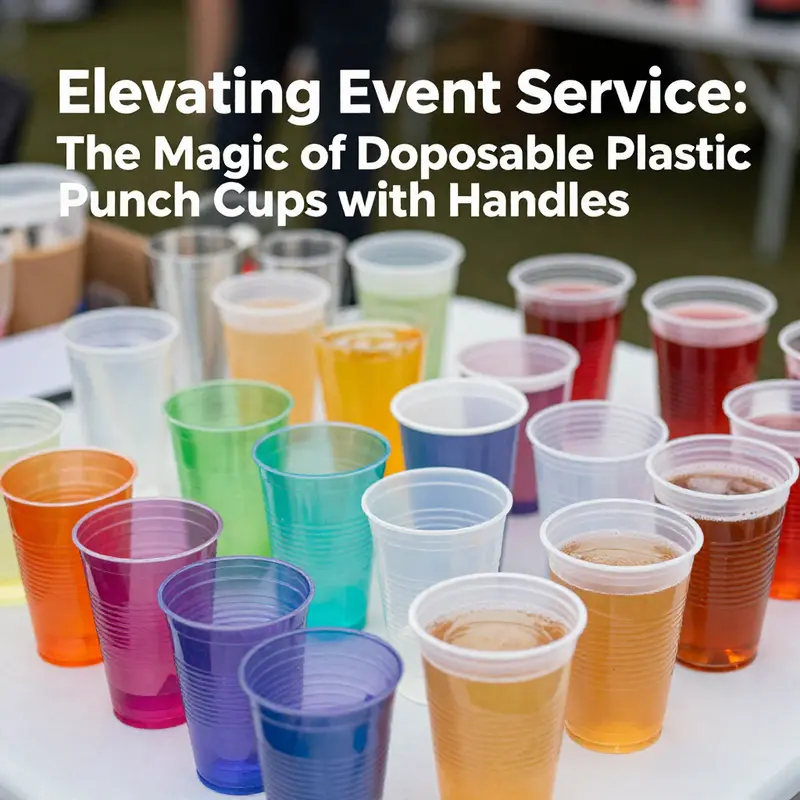
In the bustle of a crowded reception, a well-designed disposable punch cup with a handle becomes more than a vessel. It is a small system engineered for speed, safety, and subtle comfort. The integrated handle, the way weight is distributed when liquid swells the cup, and even the way the rim feels against the lip all converge to influence how guests move through a service area, how they refill without spilling, and how they carry a drink across a lawn or through a corridor of mingling guests. The design features of these cups are not mere details; they are the interface between people and beverage at scale, a choreography of ergonomics and material science that keeps events flowing smoothly while maintaining hygienic, one-time-use practicality. At the heart of this design is the molded-in handle, a feature that transforms the act of holding from a two-handed, awkward reach into a natural, almost instinctive grasp. The handle is typically fashioned from durable polypropylene (PP) or polystyrene (PS), chosen for a mix of rigidity, resilience, and safe contact with food and beverages. This single feature anchors the cup’s usability. It allows guests to carry a drink with one hand while reaching for napkins, answering a question from a friend, or placing a cup down briefly to step away and then return. The handle’s presence also reduces the likelihood of pinching and slipping, especially when hands are damp from condensation, ice, or the chill of a cold drink. When a guest moves from a punch bowl to a serving station, the handle acts as a lever for balance, keeping the cup upright and the liquid within more stable. The result is a reliable, confident transfer from bowl or pitcher to mouth, with far fewer spill points than a cup without a dedicated grip. In practice, the integrated handle is not a cosmetic flourish but an explicit response to human dynamics in crowded environments. The engineering behind it rests on a careful assessment of grip geometry. The curved contour of the handle is designed to nestle into the natural shape of the fingers, with a thumb resting lightly on the rim for control. In wet conditions, this grip is reinforced by selecting materials and surface textures that are smooth yet non-slip when slick with beverage or condensation. The materials themselves are chosen with a clear purpose. Food-grade PP (recycling code 5) is the common baseline for many disposable punch cups, prized for its heat resistance, impact strength, and predictable performance in a single-use workflow. Its heat tolerance—often cited around 130°C in many formulations—ensures that cold drinks, fruit punches, or slightly warm beverages do not deform the cup during service. PET (recycling code 1) can appear in lighter applications or in cups where clarity is a priority, but it is less common for larger punch cups because of its comparatively lower heat tolerance. The choice between PP and PET is not only about temperature; it is about the service context. For a catered outdoor event where a punch bowl is passed along a long line of guests, a robust PP cup with a reinforced rim and base provides the confidence that the cup will maintain shape through a busy service, even when staff move quickly or guests expect prompt refills. In addition to material choice, the capacity and geometry of the cup contribute to ergonomic outcomes. Punch cups of 16 to 32 ounces (roughly 470 to 950 milliliters) dominate the market for large gatherings because they strike a balance between volume and palatability. A straight-sided or gently tapered cylindrical form maximizes internal volume while simplifying stacking for storage and transport. Stacking is not a trivial convenience; it reduces the time staff spend during setup and refilling, which in turn reduces the time a line forms and exception handling is minimized. A well-designed cup will feature a reinforced rim—a thicker edge that resists deformation when the cup is tipped or when a quick pour adds a moment of stress to the edge. The reinforcement also helps prevent small leaks at the rim during movement or when the cup is jostled in crowded spaces. There is a perceptible difference when a cup is designed with this kind of durability in mind. Even the way the cup sits on a table after a guest sets it down matters. A stable base prevents wobble in the tray, and a slightly wider base can help the cup resist tipping when the surface is uneven, such as a deck during a summer soirée or a picnic table at an outdoor wedding. The interplay between the handle and the body of the cup influences not only grip but also weight distribution. Ergonomic design considers how the weight of the liquid shifts as the cup is filled. The handle is positioned to balance the load across the hand, so the cup feels less top-heavy as liquid levels rise. This balance reduces the muscular effort required to hold and maneuver the cup for extended periods, which is especially important for events with standing crowds or long beverage lines. The impact of these decisions becomes most apparent at scale. For event planners and caterers, a cup that saves a few seconds per guest can translate into meaningful improvements in flow and service efficiency. When guests can refill without wrestling their cup or adjusting their grip, the risk of accidental spills drops and the overall guest experience improves. The ability to carry a cup with one hand leaves the other free for social interaction, whether it is collecting a plate, guiding guests to the next activity, or pointing to a beverage station while continuing conversation. This is where the ergonomic underpinning extends beyond comfort and into operational performance. In practice, the open-top design paired with the integrated handle also supports accessibility in a crowded environment. It allows guests to drink, pour, and refill with a natural motion arc. The user can sip without removing the cup from the mouth at an awkward angle, and the shape of the cup can guide a pour back into a punch bowl or pitcher with minimal spill risk. The non-slip characteristics of the surface play a role here as well; a slightly textured inner shoulder can help when the cup is moved quickly or bumped, preventing the liquid from sliding in a way that would destabilize the cup during a transfer. Because the target use-case is disposable and single-use, hygienic handling becomes a natural design constraint. The integrated handle reduces the risk of transferring oils or residues from the hand to the cup’s interior when guests repeatedly pick up and set down a cup during a social hour. In addition, the rim and interior edge are smoothed to reduce nicks that could collect liquid near the lip and complicate drinking. Even the design of the outside surface can influence the experience. A smooth exterior that is easy to grip by the average adult hand is complemented by subtle texturing near the handle to reassure grip when fingers are damp. The visual language of the cup—its translucence or opacity, its color, and its surface finish—also interacts with ergonomics. Clarity ensures guests can see the color of the punch, which aids in self-regulation of alcohol or sugar-laden beverages, while color can assist staff during service by signaling different varieties at a glance. While the design emphasis is on plastic, it is impossible to ignore the burgeoning interest in eco-conscious alternatives and how they influence ergonomic choices. Some iterations of disposable cups pivot toward biodegradable or compostable materials, including PLA-based options or bagasse fibers. In these cases, the challenge for ergonomics is maintaining grip and balance when materials might behave differently under heat or moisture exposure. The ergonomic calculus must anticipate variations in rigidity, flexibility, and surface texture, so that even with alternative materials, the handle remains a reliable point of contact, and the user’s experience does not degrade as temperatures shift from cold ice to a room-temperature punch. A practical consequence of this is the adoption of standardized shapes and dimensions that can accommodate a wide range of beverages and user hand sizes without forcing guests to adapt their grip. The cups are designed to fit a broad spectrum of hand anatomies—from younger adults to older guests—without requiring a second hand to steady the cup during transit. This inclusivity is a quiet but important facet of design that aligns with the expectations of many large events where guests come from diverse age groups and physical capabilities. The practical orientation of these design decisions is complemented by considerations about safety and regulatory compliance. The cups must be BPA-free and food-safe, and the materials chosen should resist deformation or leaching when in contact with cold or tempered beverages. For many, this means adhering to standards that guarantee safe contact with beverage components while maintaining the performance of the handle and cup in a busy service environment. In terms of manufacturing, the integrated handle is produced in a single molding process with the cup body, creating a seamless interface that minimizes weak points. The manufacturing tolerance ensures a consistent feel across a full batch of cups, which translates to predictable grip and balance for servers and guests alike. The result is a product that performs reliably under the conditions of a large event: staff move quickly, guests mingle, beverages swirl, and refills are demanded with limited friction. The interplay of functional features with ergonomic considerations is also a driver of branding potential. Even though the primary role of these cups is practical, there is space for branding and customization, especially at corporate or milestone events. Custom logos, color accents, or branded rims can be integrated without compromising the grip or the reliability of the cup during use. A careful approach to branding preserves the priority of ergonomics while enabling the host or sponsor to leave a memorable visual impression. For readers seeking a concrete example of how branding and ergonomics can coexist in a disposable cup, one can review online product pages that illustrate branding options on various cup formats. An internal example of this approach is a page showcasing custom-logo disposable double-wall craft paper cups, which demonstrates how visual identity can be layered onto a practical cup design without sacrificing grip, balance, or usability. Such examples help illuminate how designers balance form and function across materials and contexts, even when the practical focus remains on single-use, crowd-friendly beverage service. In sum, the design features and ergonomic considerations of disposable plastic punch cups with handles are not incidental. They are the product of thoughtful choices about materials, geometry, and human interaction. The integrated handle anchors a cascade of benefits: improved grip, safer transport, reduced spills, easier refilling, and a friendlier user experience across large crowds. The cups are engineered to be robust enough for busy service lines while remaining simple enough to be produced at scale and disposed of responsibly after a single use. They are a reminder that even everyday items—like a drinking cup at a party—can embody a refined understanding of how people move through space, how they hold, how they drink, and how a small ergonomic detail can ripple outward into smoother events, happier guests, and more efficient catering operations. For readers who want to explore ongoing innovations in this space, including how eco-conscious materials and branding strategies intersect with ergonomics, it is useful to consider the broader landscape of disposable drinking vessels and their evolving roles in event design. As a point of reference, the industry often points to bulk and wholesale channels where these cups are offered in diverse capacities and finishes, balancing cost with performance for large-scale deployments. A practical takeaway is that even a single design choice—the presence and shape of a handle—can steer the entire user experience, from first grab to the final sip, during a sprawling celebration. External resource for further context on supplier platforms and material options can be found here: https://www.alibaba.com. For an illustrative internal example of branding-friendly cup design, see this internal product page that highlights a customizable, logo-ready cup format: custom-logo disposable double-wall craft paper cups.
Rising Currents: Market Dynamics and Environmental Realities of Disposable Punch Cups with Handles

The evolution of disposable punch cups with handles sits at an intersection of service efficiency and environmental responsibility. Event planners, caterers, and venues prize cups that are easy to grip, minimize spill risk, and streamline service—especially at weddings, festivals, and large corporate gatherings. Yet as demand grows, buyers increasingly weigh end-of-life outcomes and recycling options alongside price and lead times.
Material choices matter: PET cups offer optical clarity but are generally intended for single use, while PP cups provide higher heat tolerance and sturdier grips. Each material carries an environmental footprint shaped by production energy, transportation, and the availability of local recycling streams. In regions with robust curbside programs and dedicated plastics recycling, the case for lightweight, well-designed PP or PET cups strengthens; where recycling is limited, purchasers seek transparency about suppliers, material composition, and end-of-life pathways.
Beyond materials, the supply chain, branding opportunities, and regulatory context shape decisions. Manufacturers increasingly document composition and QA processes, while buyers demand responsible sourcing and clear labeling for recycling. The narrative around these cups now blends convenience with stewardship, encouraging brands to innovate on ergonomics, reduce material use, and promote better disposal practices at the point of service.
Final thoughts
Incorporating disposable plastic punch cups with handles into your beverage service can significantly enhance customer satisfaction while aligning with modern event and catering demands. Their material composition ensures durability and safety, while the ergonomic design promotes convenience and reduces spills. As trends shift towards sustainability, these cups cater to both practicality and environmental responsibility. By staying informed about these features and trends, businesses can make better product choices that resonate with consumer preferences and elevate service quality in any gathering.