
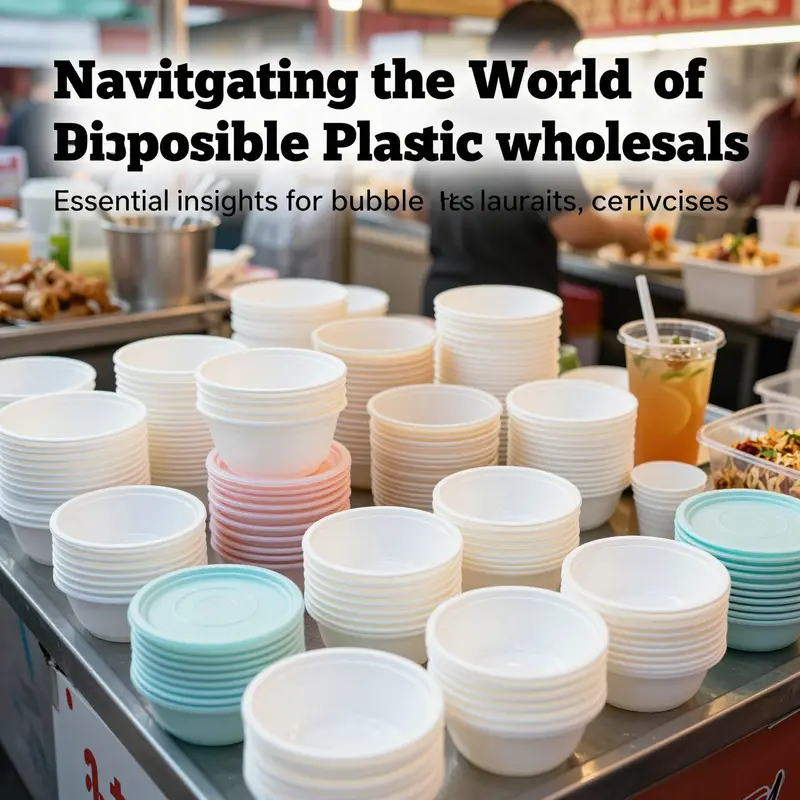
In the culinary landscape, disposable plastic bowls have become indispensable for various businesses, from bubble tea shops to catering services. Their versatility and practicality cater to an array of uses, making them a critical element in food service operations. This article delves into the intricacies of disposable plastic bowls wholesale, exploring the diverse materials and types available, the specifications suited for different applications, essential procurement points, quality assurance while selecting suppliers, and the rising trend towards environmentally friendly options. With insights tailored to help decision-makers in food-related sectors, we aim to facilitate better choices that enhance both service and sustainability.
Material Spectrum and Market Demands in Wholesale Disposable Plastic Bowls: Choosing, Customizing, and Delivering Value
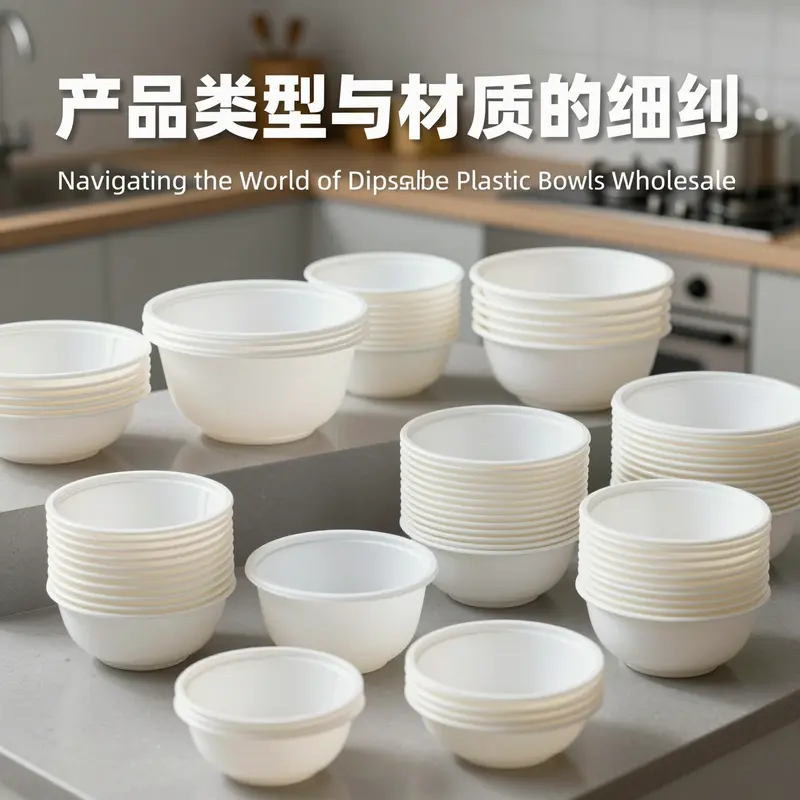
Wholesale disposable plastic bowls sit at the intersection of economics, practicality, and brand storytelling. They are not mere vessels; they are tools that carry food, protect integrity, and communicate a host of expectations from cooks, servers, and guests. In wholesale, the sheer variety of materials, shapes, and capacities becomes a language of trade. Each material carries a fingerprint of performance and cost, while form and size translate into how easily a kitchen can portion, portion again, and present meals. The wholesale buyer, therefore, must read this landscape with an eye for how a given combination of material and geometry will perform across a spectrum of settings—from bustling quick-service counters to more formal catering events. The typical buyer does not pursue a single magic solution. Instead, they seek a family of bowls that can scale in use, adapt to temperature, and preserve the food’s appearance from the moment it leaves the pass-through until the moment it reaches the table or tray. This chapter threads those considerations into a practical, coherent narrative that connects material science with everyday service realities, without losing sight of the business context that drives wholesale decisions.
The first and most visible axis of choice is material. In the wholesale world, four broad families dominate discussions about disposable bowls: polystyrene, polypropylene, polylactic acid, and polyethylene. Each brings its own balance of clarity, strength, heat tolerance, and environmental footprint. Polystyrene bowls, for instance, offer transparent appeal and low unit cost. Their rigidity is well-suited for short-service environments where the bowls are used once and discarded, and where the food on display benefits from a crystal-clear backdrop that makes salads and cold dishes look appealing. The trade-off is that polystyrene can be brittle under stress and tends to have limited heat resistance, which constrains its use with hot foods or longer service periods. In contrast, polypropylene presents a more versatile profile. It maintains clarity for certain designs, but its real strength lies in heat tolerance. A PP-based bowl can comfortably handle hot soups and micro-waved dishes, enabling a broader range of service styles—from casual take-out to quick-service dine-in formats. The flexibility of PP also supports semi-vented lids and stackable designs, which matter when space is at a premium in busy kitchens or during high-volume deliveries.
Polylactic acid introduces a different conversation altogether. PLA is a bio-based, compostable option that aligns with sustainability narratives that many brands want to tell. In practice, PLA-based bowls appeal to venues that want to signal environmental stewardship without sacrificing performance. They can be suitable for cold or room-temperature foods, depending on the formulation and the presence of coatings, and they can meet consumer expectations in regions where compostability is a regulatory or market advantage. Yet, the environmental advantage of PLA is nuanced. Real-world composting infrastructure matters, and some PLA designs require controlled conditions to achieve the desired end-of-life outcomes. The wholesale buyer must weigh these considerations alongside perceptions of value, supply stability, and the willingness of customers to pay a premium for greener options. Finally, polyethylene, though less common for bowls than for other single-use containers, still makes appearances in niche designs. PE can offer moisture resistance and certain barrier properties, enabling unique shapes or liners that improve spill resistance or moisture management. Its occasional use reflects a broader trend in wholesale where material blends and specialty coatings extend the range of performance that bowls can deliver, even if the base resin is not the most prevalent choice in standard, everyday bowls.
The second axis is geometry. Beyond the material, the shape and depth of a disposable bowl carry practical implications. Standard round bowls dominate because they fit naturally with widely used food portions and are easy to stack, store, and transport. Deep bowls support heartier portions and foods with sauces or gravies, where the risk of spill increases if the container is shallow. Lidded bowls, whether for take-out or for dine-in service with portioned sides, address both thermal retention and customer convenience. The market also sees an array of specialized forms—oval or square bases, rectangular layouts for salads, and even novelty shapes intended to catch a consumer’s eye. While novelty has its place in branded campaigns, wholesale buyers know that the most reliable workhorses are those that maintain structural integrity during transit, resist leakage from fatty or viscous foods, and remain easy to clean up from a user’s perspective after the meal. The capacity spectrum often runs from small portions around 150 to 250 milliliters up to larger 500 to 1000 milliliters and beyond. This range supports a broad set of applications—from tasting samples and desserts to main courses and family or group servings.
A practical consequence of this combination of material and form is the way wholesale buyers plan production and inventory. When a supplier offers printed or branded options, the story becomes more than utility; it becomes brand identity in a single-use item. Flexo printing, for example, enables up to six colors of branding on certain surfaces, turning a simple vessel into a portable advertisement. The implications for a venue’s marketing strategy can be meaningful. Branded disposables reinforce recognition, create a cohesive take-out experience, and help guests recall the event, venue, or campaign long after the meal is over. However, customization adds layers of complexity and cost. The minimum order quantities can rise dramatically when printing is involved, and lead times may extend as the supplier coordinates colors, coatings, and print cycles. Yet, for operators seeking to differentiate in a crowded field, the payoff can be substantial. The right combination of material, shape, and print design translates into a tangible asset that travels with the food and survives the journey—from kitchen to customer’s table or doorstep.
Within wholesale procurement, the logistics of packaging and shipping are never far from the decision matrix. Most bowls are packed in standard export cartons, a packaging approach designed to maximize efficiency and minimize damage in transit. The geography of sourcing matters as well. Major manufacturing hubs, often concentrated along cost-efficient corridors, provide scale advantages that help drive lower per-unit prices, especially when orders are large. Buyers must balance these economies with lead times, import duties, and the reliability of carriers. The conversation about payment terms is another layer. Typical arrangements lean toward staged payments, such as a 30 percent deposit with the balance due on shipment, or the use of at-sight documentary credits for larger or more complex orders. These terms influence cash flow and risk management, and they are part of the broader strategic negotiation that accompanies wholesale purchases.
Quality assurance is the quiet backbone of wholesale. Reputable suppliers recognize that a single misstep—defective plastics, misprinted branding, or inconsistent thickness—can ripple through the food service ecosystem and erode trust in a brand. A robust supplier will offer前-production samples for approval and conduct final quality checks before shipment. This approach reduces costly post-sale returns and protects the buyer’s reputation. A reliable supply chain also means access to a broader set of materials and finishes beyond plastics, including wood, bamboo, paper, and degradable blends. The best partners are those that can scale with a buyer’s changing needs—from seasonal spikes in demand to new menu concepts that require different bowl formats. The underlying message is clear: wholesale success rests on a robust marriage of material science, manufacturing discipline, and a dependable logistical network that can consistently deliver the right product at the right time.
The environmental dimension cannot be separated from the technical and commercial ones. Across regions, consumer and regulatory expectations push brands toward materials that claim lower environmental impact. PLA and other biodegradable options have gained traction in markets that value sustainability, even when these choices involve higher unit costs or more nuanced end-of-life logistics. The balance between environmental performance and economic viability is a recurring theme for wholesale buyers. The best outcomes occur when procurement teams quantify trade-offs—cost per use, potential brand value, and the practical realities of recycling or composting infrastructure in their target markets. In some cases, the most sustainable choice is not the most expensive or the most technologically advanced, but the one that aligns with customers’ willingness to participate in responsible disposal programs and with a supply chain capable of closing the loop. The result is a portfolio of bowls that can serve a broad spectrum of venues while staying aligned with a brand’s environmental commitments and with the realities of global distribution.
In practice, choosing the right material and form is a collaborative process. Brands often segment markets by service style, temperature tolerance, and branding ambitions. A quick-service concept may prize heat resistance and stackability at a cost-efficient price point. A boutique event or brand-led hospitality concept may demand elevated presentation, reliable branding, and a more predictable supply chain, even if it requires a premium. Education and alignment across the food, packaging, and logistics teams ensure that decisions reflect both customer experience and financial viability. A well-considered mix—PS for display and cost-effective cold items, PP for hot foods and microwavable servings, and PLA where sustainability signals support the brand—can cover a wide terrain. The aim is not to chase a single perfect material, but to curate a balanced ecosystem of options that work in concert. The chapter that follows in this book will return to the practical implications of this balance when considering real-world supplier profiles, quality controls, and the strategies brands use to translate material choice into measurable business value.
For brands pursuing branded solutions and reliable, large-capacity disposables that still preserve food quality and presentation, consider exploring this example of a versatile take-out bowl family: disposable bowls for party take-out. The anchor here points to a category that emphasizes capacity, stability, and branding potential, without endorsing a single supplier as the universal answer. It highlights how wholesale players can balance form, function, and branding in a way that supports both operational efficiency and market differentiation. In the end, the wholesale journey through material choices, shapes, and customization is about translating physical properties into dependable service experiences. It is about ensuring that every bowl can perform, protect, and promote the food it carries while remaining a viable part of the business model from supplier to end user.
External resource for broader context: https://www.alibaba.com/product-detail/Disposable-Plastic-Bowls-Wholesale-For-Food-Service_1600587924247.html
null
null
From Selection to Scale: Navigating Wholesale Disposable Plastic Bowls for Foodservice

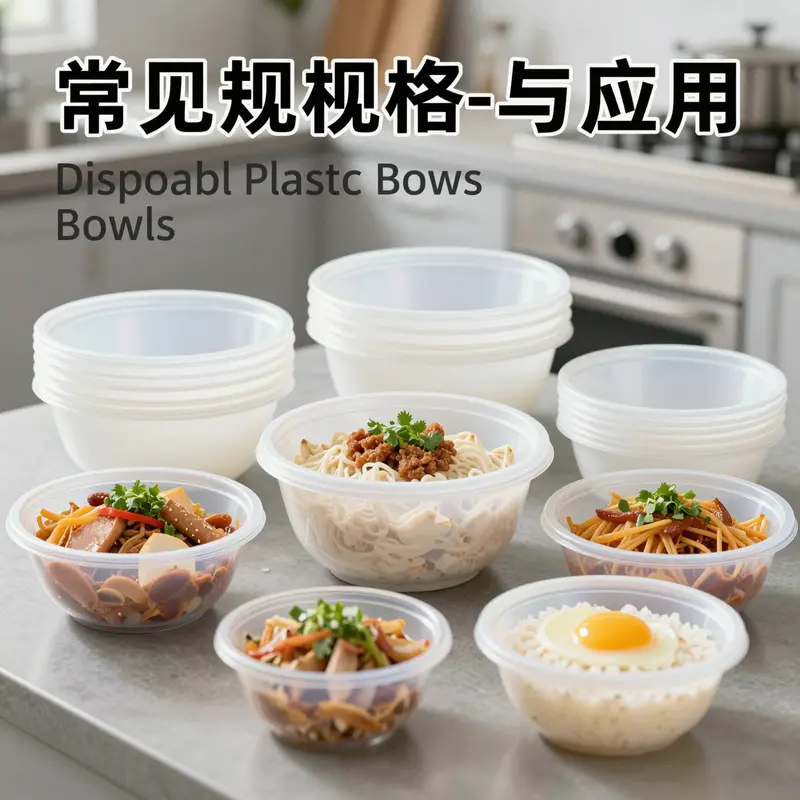
In wholesale buying, bowls must balance performance, safety, and cost. This chapter outlines how to translate application needs into material choices, size ranges, and supplier capabilities. Start by matching hot and cold use cases with polypropylene for heat resistance and clarity-focused materials like PET for cold dishes, while recognizing trade-offs with sustainability options such as PLA blends. Consider size versatility, wall thickness, rim geometry, and stackability to optimize handling, storage, and transport. Evaluate supplier quality control, pre-production sampling, branding capabilities, and total cost of ownership beyond unit price, including waste, labor, and lead times. Confirm compliance with food-contact safety standards and certifications, and plan packaging and logistics to minimize damage and downtime. Finally, align with sustainability goals without compromising performance, and establish a reliable after-sales program to support growth.
Safeguarding Quality and Securing Trusted Suppliers in Wholesale Disposable Bowls

Quality assurance in wholesale disposable bowls is more than a checkbox; it is a strategic pillar that underpins safety, consistency, and brand integrity across every link in the supply chain. In a market driven by demand for convenience, speed, and responsible packaging, buyers must navigate a web of materials, processes, and vendors with a clear lens on how each choice affects food safety, delivery reliability, and long-term cost. The wholesale landscape, in particular, magnifies the consequences of shortcuts. A tolerable defect in a small batch can ripple into costly recalls, damaged reputations, and lost customer trust. The path to reliable sourcing begins with a disciplined approach to quality assurance and supplier selection, tightly aligned with the realities of food service operations, regulatory expectations, and shifting consumer preferences toward safer and more sustainable options.
At the heart of core quality assurance is a set of principles that translate from the factory floor to the delivery dock. First, materials safety and regulatory compliance must be verified before any negotiation begins. In many markets, credible suppliers hold certifications such as FDA compliance for food-contact plastics, LFGB or EU equivalents, CE marks where applicable, and third-party verification from SGS or similar labs. These badges are not decorative; they signal that the supplier has mapped the chain of custody from resin to finished bowl and has subjected products to tests that mirror real-world use. For wholesale buyers, asking for current certificates and the most recent test reports should be a standard step in the procurement process, not a gate kept for later.
Second, production process control matters as much as the raw materials. An established quality management system—ideally ISO 9001 or an equivalent framework—provides the backbone for end-to-end traceability. A reputable supplier will document material receipts, in-process checks, and finished-product inspections, with records available for review. When bowls are produced in high-speed presses, maintaining stable process parameters such as melt temperature, injection pressure, and cooling time is essential to ensure uniform wall thickness, precise dimensions, and absence of surface defects. The objective is not only a compliant product but a repeatable product—one that behaves the same way in the hands of the first restaurant, the third-party caterer, or the school cafeteria, batch after batch.
Third, physical performance tests must reflect real-operation scenarios. Bowls intended for hot soups or microwavable service require heat resistance testing beyond a basic tolerance check. A common benchmark is performance at temperatures around 120°C or higher without softening or leaching substances. For bowls with lids, seal integrity and leakage tests are essential to prevent spills during transport or stacking. While some suppliers may promise “high-quality” results, prudent buyers request third-party test data or conduct pilot tests on their own equipment. If a vendor cannot provide verifiable results, the risk of compromised performance grows with every shipment.
Beyond safety and function lies appearance and consistency. In wholesale procurement, bulk orders magnify minor imperfections into visible defects. Variability in dimensions, wall thickness, and lid fit can translate into stacking problems, inefficient warehouse handling, or damage during transit. A rigorous approach combines initial sample evaluations with in-line inspection data and pre-shipment verification by independent labs where feasible. The aim is to ensure that every pallet arriving at a distribution center matches agreed tolerances and that downstream partners experience predictable performance, not a lottery of slightly differing lots.
As buyers elevate quality standards, they increasingly adopt structured supplier selection strategies rather than simple price comparisons. A widely adopted framework is the Q.C.D.S model—Quality, Cost, Delivery, and Service—which guides a holistic assessment of each supplier’s capabilities. Quality remains paramount; it encompasses not just certificates but the factory footprint, equipment modernity, and a track record with similar clients. A supplier with a robust R&D capability can support customization needs without compromising core compliance. Cost, while critical, must be understood in terms of value rather than sticker price. Value engineering, such as optimizing wall thickness or optimizing packaging, can reduce total cost while preserving performance and safety. Yet price should not eclipse quality. Delivery performance—lead times, production cadence, contingency planning for interruptions, and logistics reliability—often becomes the deciding factor in wholesale procurement, where delayed shipments cascade into restaurant menus and event planning schedules. Service reflects how responsive and flexible the supplier is in supporting OEM/ODM activities, providing samples, navigating certifications, and resolving issues swiftly.
A prudent strategy is to diversify suppliers to avoid overreliance on a single source. The risk of disruption—whether from raw material shortages, logistics bottlenecks, or regulatory changes—can be mitigated by maintaining a balanced supplier base. The principle of “no single point of failure” is practical for wholesale buyers who require steady supply through peak seasons and unpredictable demand swings. Establishing clear supplier tiers, with primary and secondary sources, helps keep inventory levels aligned with sales forecasts and production schedules. In practice, the diversification approach should be measured, ensuring that each vendor contributes distinct strengths—whether in material options, customization capabilities, or geographic proximity to key distribution hubs—without multiplying complexity beyond manageable levels.
The role of digital tools in supplier management cannot be overstated. An online quality monitoring platform—whether built in-house or through a trusted vendor—allows real-time tracking of production progress, inspection results, and shipment status. Regular supplier performance reviews—quantified via KPIs such as defect rate, first-pass yield, on-time delivery, and cooperation in change management—create a transparent environment for continuous improvement. A mature program also includes a formal change control process covering any material change, process modification, or redesign that could impact safety or performance. When suppliers demonstrate proactive communication, rapid issue resolution, and a willingness to share documentation, buyers gain confidence that the partnership can weather regulatory changes and shifting market demands.
The selection and management framework should be complemented by a practical emphasis on evidence-based procurement. Buyers frequently request production pre-shipment samples to verify conformity to specifications and to confirm that printing, labeling, or packaging elements meet the brand’s requirements. Customization options—such as color choices, molded shapes, or printed logos—can add perceived value, but they demand careful qualification to avoid introducing noncompliant features. The relationship with suppliers should be anchored by a mutual commitment to safety, reliability, and continuous improvement. When a supplier communicates about certifications, process controls, and test results in a transparent, accessible way, it becomes a reliable partner rather than a distant vendor.
Incorporating non-plastic packaging options into the evaluation can also be instructive. While this chapter centers on wholesale disposable bowls, the broader decision framework recognizes that brands increasingly compare plastic options with compostable, biodegradable, or paper-based alternatives. For buyers, this means not only assessing regulatory compliance for the material itself but also examining the supplier’s ability to provide end-to-end solutions—ranging from design and printing to cost-effective packaging and sustainable disposal pathways. The inclusion of such alternatives should be framed by the brand’s sustainability commitments and the regulatory expectations in each target market. For those exploring non-plastic options, the kraft paper octagonal bowl product page offers a relevant comparison. kraft paper octagonal bowl product page
The practical implications of these principles extend to the daily realities of wholesale purchasing. Buyers commonly encounter a mix of suppliers with varying strengths in material science, production scale, and service orientation. The most successful procurement teams treat these differences as strategic assets rather than obstacles. They map supplier capabilities against demand channels—restaurant chains, catering events, institutional dining, and food-service distributors—to ensure alignment with the required service levels and regulatory commitments. This alignment must also reflect anticipated growth: can the supplier scale to meet an expanding customer base without compromising quality? Will the supplier’s certifications cover new territories as the business enters new markets? Answering these questions early minimizes risk and reduces the need for expensive mid-stream changes.
In practice, the recommended actions reinforce a proactive posture. Begin with a dossier of certifications and a current set of test results for each potential supplier. Require traceability data—from raw resin to finished bowl—and confirm that production records are accessible for audit. Request pre-production and post-production samples to assess dimensional accuracy, wall uniformity, surface finish, and lid compatibility. Validate heat resistance with targeted tests that mirror end-use scenarios, and obtain third-party verification for any claims about performance. Consider the supplier’s capability to support customization—printing patterns, color options, logos, and even unique shapes—only after foundational safety and performance criteria are met. Finally, implement a formal supplier evaluation cycle that reviews KPI data, conducts annual or semi-annual supplier audits, and maintains a diversified pool of vetted partners.
To close, quality assurance and supplier selection in wholesale disposable bowls demand a disciplined blend of rigorous testing, regulatory awareness, and strategic relationship management. The prudent buyer treats this as a long-term investment in safety, reliability, and brand equity. A supplier that can demonstrate robust certifications, transparent process control, consistent physical performance, and responsive service becomes not just a vendor but a dependable collaborator in delivering safe, consistent, and visually reliable packaging to customers. By integrating these practices with smart diversification, digital monitoring, and thoughtful consideration of sustainable alternatives, wholesale buyers can navigate the market with confidence and build a supply chain that withstands disruption while supporting growth. External resource: https://www.fda.gov/food
Rethinking the Bowl: Environmental Currents Reshaping Wholesale Disposable Plastic Bowls
Across the wholesale landscape for disposable bowls, a quiet revolution is taking shape. It is not merely a shift in taste or a fleeting trend; it is a recalibration of value, performance, and responsibility that reshapes how buyers assess risk, how manufacturers design, and how retailers explain choices to a broad spectrum of customers. The topic is ostensibly simple—a bowl for takeout, a vessel for a portion of soup, salad, or dessert. Yet the market forces at play now run much deeper than price per unit or lead times. They touch the core of what it means to offer convenience while preserving trust, and they compel wholesalers to think in longer horizons about materials, end-of-life options, and the true cost of single-use items across their supply chains.
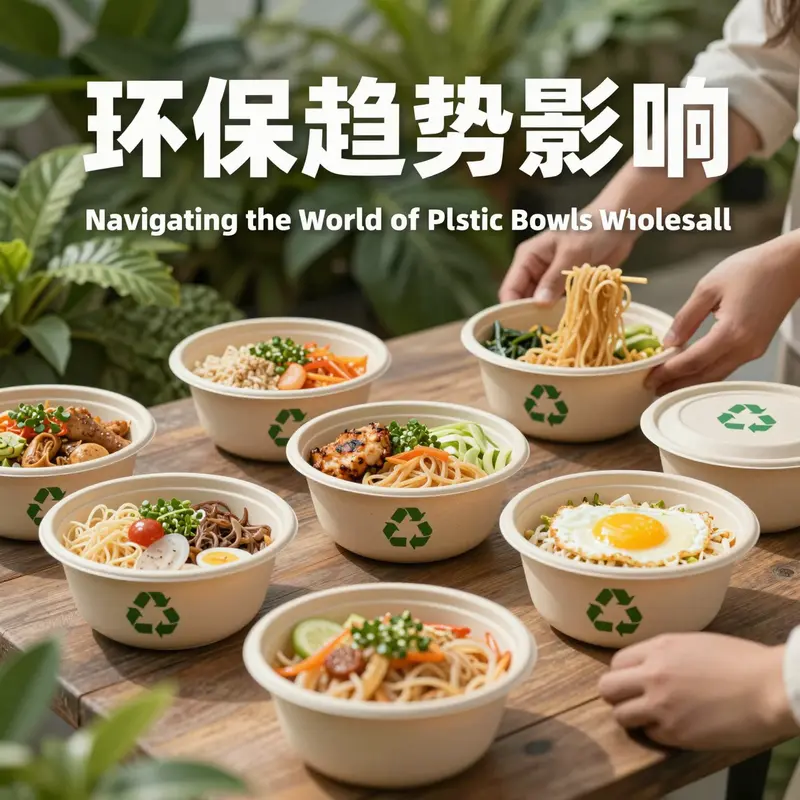
The materials portfolio for wholesale disposable bowls has long hinged on a few workhorse plastics and a small number of performance criteria. PET, with its glassy clarity and robust barrier properties, has been favored for high-end or display-focused applications, where the visual appeal of the food matters as much as its functional integrity. PP, known for higher heat tolerance, has captured a large share of bowls intended for hot foods and microwavable use. Yet even as these materials deliver reliability, a widening array of policy signals and consumer expectations is shifting the balance toward eco-friendly alternatives. PLA, sugarcane bagasse, bamboo fiber, and other bio-based or plant-derived fibers have moved from niche corners to the mainstream in many wholesale catalogs. They offer a different alignment of performance, perception, and sustainability that resonates with buyers who must demonstrate responsibility to customers, regulators, and investors alike.
The breadth of sizes available helps wholesalers meet diverse use cases—from compact tasting portions of 150–250 ml to generous bowls surpassing 1 L. The practical versatility is crucial: small bowls for samples or desserts, mid-sized for salads and pasta portions, and large bowls for group meals or buffet-style events. Demand in the market is not limited to restaurants and takeaways; it extends to hotels accommodating conferences, schools and university cafeterias, corporate events, and even social gatherings that seek cleaner, low-wuss packaging options. In each case, the capability to pair an appropriate form with suitable performance attributes—heat resistance, stackability, clarity where needed, and, crucially, end-of-life characteristics—becomes a differentiator for wholesale buyers and their customers.
The environmental context in which this market operates has grown markedly more influential. Governments across regions have introduced or tightened regulations aimed at reducing plastic pollution. Bans or restrictions on certain single-use plastics have accelerated interest in alternatives that can perform in the same setting without leaving a heavy environmental footprint. In regions like the European Union and parts of Asia and North America, policymakers are linking product approvals, waste management systems, and industry standards in ways that push brands toward bio-based or compostable options, even when costs and supply chain complexities rise. Wholesalers who anticipate these shifts find themselves better prepared to help buyers navigate the trade-offs between performance, compliance, and brand narrative.
In this climate, the literature on environmental performance increasingly informs decision making. A study released in 2026 underscores a critical insight: while replacing disposable tableware in high-demand contexts such as aviation catering remains technically challenging, bio-based plastics and reusable options offer substantial reductions in carbon footprint. The findings remind buyers that material choice matters not only for disposal or post-use fate but also for the lifetime emissions associated with production, transportation, and end-use. The study further notes that stainless steel, when reused sufficiently—specifically beyond about 29 uses—enjoys a notable environmental advantage. This does not imply a blanket substitution for all disposable bowls, but it does illuminate a path toward integrating more sustainable choices into the wholesale mix, with clear criteria for when a given alternative makes sense from a lifecycle perspective.
For wholesalers, this means expanding the eco-friendly segment of the catalog in a thoughtful, strategic way. It is not enough to offer a single green option; the portfolio must include a spectrum of materials with clear specifications for heat tolerance, shelf life, recyclability, compostability, and end-of-life pathways. Certifications and standards become a competitive anchor. Buyers increasingly look for evidence of responsible sourcing and lifecycle thinking—whether through FSC certification for paper-based components, OK Compost or BPI certifications for compostable products, or other verifiable marks that signal credible environmental performance. The end goal is not simply to check a box but to enable customers to communicate a credible sustainability story to their own customers, whether they operate in hospitality, education, healthcare, or event management.
The strategic implications extend into the operational core of wholesale procurement. The minimum order quantities (MOQs) and the flexibility of customization influence which offerings can realistically scale for a given buyer segment. For printed versions of bowls or those requiring special branding, MOQs can be substantial, but non-printed versions often allow more accessible entry points. The market has shown growing appetite for customization that aligns with environmental messaging—such as color selections that avoid opaque whiteness in favor of natural tones, or shapes that optimize stacking and reduce material waste during production and transport. In this sense, a close collaboration between buyers and manufacturers becomes essential. A supplier capable of providing both material variety and reliable quality assurance throughout a long lead time contributes to a healthier wholesale ecosystem, where buyers can confidently extend a more sustainable lineup to their clients.
The packaging and logistics dimensions of this shift should not be underestimated. Eco-conscious procurement often coincides with smarter packaging design and optimized logistics that minimize waste and energy use in transit. Suppliers who can offer standard export packaging that reduces damage and streamline customs clearance hold a practical advantage. The geographic reality of the supply chain matters as well: ports in key hubs such as major Chinese logistics centers remain central to international distribution. Wholesalers who align procurement cycles with production plans and shipping windows can reduce stockouts, avoid excess inventory, and maintain a consistent ability to meet demand for both conventional and eco-friendly bowls.
Crucially, the wholesale narrative around disposable bowls must remain coherent and informative. Buyers need to understand not only the functional performance of a bowl but also its lifecycle implications. The discussion should connect the dots between heat resistance, clarity, rigidity, and the environmental profile of each material. A PLA-based bowl, for example, may offer benefits in certain consumer contexts where compostability is a key buying criterion. In other situations, a bagasse-based option might deliver the needed stiffness and heat tolerance while avoiding the issues associated with fragile coatings or the complexities of recycling. The challenge lies in presenting a transparent, comparative picture that helps buyers select the most appropriate option for each application, rather than a one-size-fits-all solution.
Within this broader framework, one tangible signal of the market’s evolving preferences is the emergence of catalogs that emphasize eco-friendly or recycled content and that clearly indicate end-of-life options. The inclusion of such details helps buyers and end users align their procurement decisions with their sustainability commitments. For example, an established line of eco-friendly disposable containers built around kraft paper and other compostable or recyclable options demonstrates how a sustainable narrative can be woven through the entire product lifecycle—from raw materials to waste disposal. This approach is not only about meeting regulatory requirements; it is about enabling a credible brand story for the many customers who now ask for environmentally responsible choices as a default rather than as an exception.
Incorporating eco-friendly options does require careful management of expectations. Biobased materials can bring advantages in terms of renewability and perceived sustainability, but they may carry trade-offs in barrier properties, heat resilience, or price stability. The wholesale buyer must weigh these factors against the requirements of their own customer base, whether that base demands microwave-ready solutions, crystal-clear presentation for salads and desserts, or a preference for compostable packaging that aligns with urban waste systems. The conversation with manufacturers often centers on performance benchmarks as well as lifecycle claims, with real-world data and third-party certifications used to substantiate environmental statements. This is not a marketing exercise; it is a practical, discipline-based approach to product selection that can drive loyalty and reduce risk across the supply chain.
The potential for meaningful differentiation in this space is real, and it rests on the integration of several elements. First, the material spectrum must be broad enough to cover the most common use cases in the sector, from cold salads to hot soups, from wet foods to dry snacks. Second, the design must prioritize durability, ease of processing in kitchens and catering environments, and compatibility with common transport and display methods. Third, the environmental story needs to be credible—supported by certifications, validated lifecycle analyses, and transparent labeling that makes it easy for buyers to communicate with their customers. Fourth, the supply network must offer reliable lead times, consistent quality, and scalable customization to accommodate the irregular but predictable surges in demand that come with events, seasons, and regulatory cycles.
To illustrate how a catalog can reflect these priorities without sacrificing practicality, consider a widely used option in the eco-friendly segment: kraft paper bowls, often paired with biodegradable or recyclable lids and a simple, sober aesthetic that appeals to brand-conscious buyers. The practical advantages of such a lineup include compatibility with standard takeaway packaging ecosystems, reduced reliance on fragile coatings, and a cleaner post-use disposal story when paired with appropriate waste streams. For buyers exploring options beyond conventional plastics, this family of products demonstrates how durability and usability can coexist with a more responsible environmental footprint. For readers who want to explore a concrete example of this approach, the following link offers a tangible option that shows how eco-friendly packaging can be integrated with robust design: kraft paper octagonal bowl 1200ml waterproof eco-friendly disposable salad bowl.
Analysts and forecasters who study wholesale markets consistently point to a future in which environmental considerations become a baseline expectation rather than a premium add-on. The implications for wholesalers are clear: invest in a diversified materials portfolio that can satisfy both price-sensitive buyers and sustainability-minded brands, ensure your supply chain is capable of meeting compliance and certification workflows, and cultivate education around lifecycle thinking that helps customers articulate the value of their choices to end users. This is not about abandoning the familiar, cost-efficient options but about broadening the spectrum so that each client can select the most appropriate balance of performance, cost, and environmental responsibility for their own market. The result is a more resilient wholesale ecosystem, capable of delivering reliable products that support businesses as they transition to a model where sustainability and practicality coexist in equal measure.
External reference for further reading on lifecycle considerations and the potential of replacing disposable tableware in demanding settings is available here: https://doi.org/10.1016/j.resconrec.2022.106615. This resource provides a rigorous environmental framing that can help wholesalers, manufacturers, and buyers alike calibrate expectations and plan investments that yield meaningful reductions in carbon footprint while preserving essential function and service quality.
Final thoughts
In conclusion, as the demand for disposable plastic bowls continues to grow, understanding their various types, applications, and sustainable alternatives becomes vital for businesses. Whether you are in the bubble tea market, catering, or event planning, choosing the right disposable plastic bowls can significantly enhance your service and environmental responsibility. Through careful consideration of procurement factors and the importance of quality assurance, you can ensure a reliable supply that meets your operational needs while aligning with sustainability goals.