
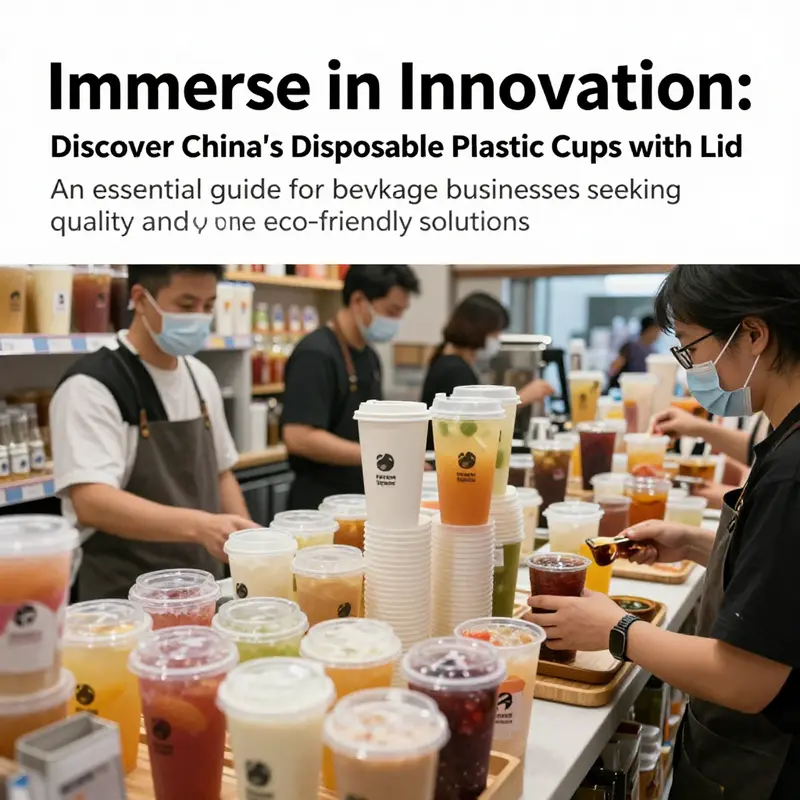
Disposable plastic cups with lids are now essential for beverage businesses, especially in bustling sectors like bubble tea shops, restaurants, and catering services. China stands at the forefront of manufacturing these products, offering a vast range of options suited for various needs. From their affordability to innovative biodegradable materials, understanding this market can greatly benefit your operations. This guide will explore the leading suppliers, pricing structures, key vendors, environmental trends, and logistics, helping you make informed decisions that meet both your business and environmental standards.
China’s Cup-Mourning to Crown: How a Global Staple of Lids and Vends Emerged from a Cohesive Industrial Ecosystem
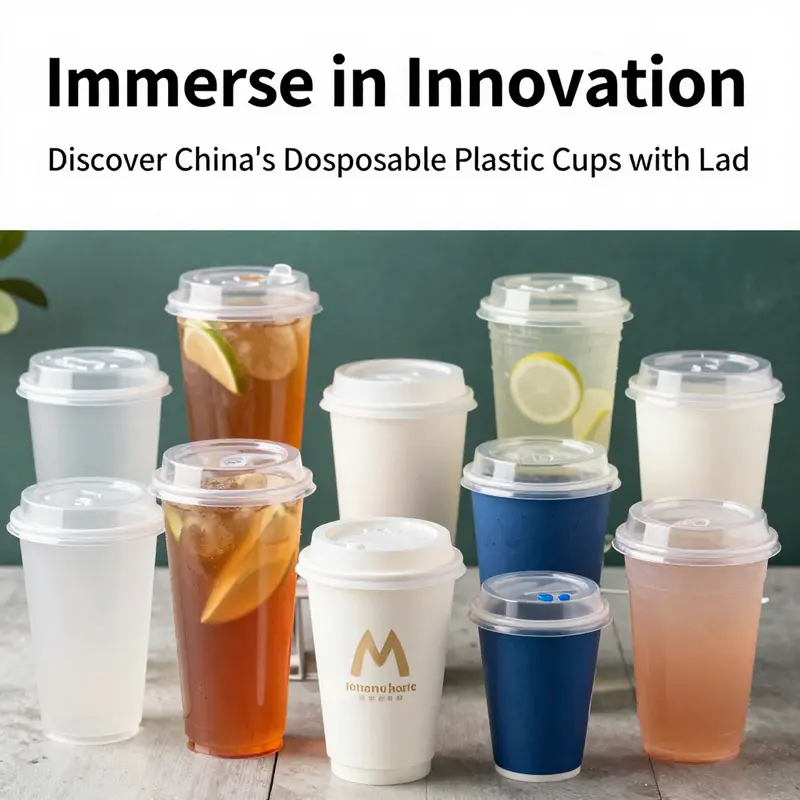
The global market for disposable plastic cups with lids rests on a remarkably dense and efficient Chinese industrial ecosystem. It is not merely a collection of manufacturers scattered along a coastline or in a handful of cities; it is a finely tuned network where raw material supply, precision molding, surface finishing, and packaging logistics converge to deliver a standard commodity at scale and with a reliability that many buyers have learned to trust. In this chapter, we trace the currents that make China the central hub for these products, the material and design choices that shape performance, the commercial dynamics that govern price and lead time, and the environmental and regulatory pressures that are pushing innovation toward more sustainable options without sacrificing the conveniences that consumers expect in cold drinks, hot beverages, and ready-to-eat desserts.
The backbone of any robust supply chain lies in clustering. In China, the most active and influential supplier clusters are concentrated in regions that benefit from a dense mix of capabilities: material processing, high-precision injection molding or thermoforming, and sophisticated printing and packaging. This proximity not only reduces transportation costs but also shortens the feedback loop between design changes and manufacturing adjustments. The proximity to major ports and logistics hubs further enables rapid turnarounds for large orders and a steady stream of repeat business. The end result is a capability to serve the market with a continuum of options—from standard, transparent PP cups suitable for everyday cold drinks to more specialized configurations designed for hot beverages, fruit teas, or premium desserts where presentation matters as much as performance.
Materials sit at the heart of these choices. The most common thermoplastics in this segment are polypropylene (PP) and polyethylene terephthalate (PET), each with its own advantages. PP is the workhorse material; it combines heat resistance, good stiffness, and broad recyclability. It works well for cold drinks and many hot beverage applications where a consistent barrier against leakage is crucial. PET, on the other hand, is favored when transparency and visual appeal are paramount. It can showcase vibrant colors and layered beverages, a feature often sought after in cafes and beverage brands that crave a premium appearance. There is also a growing segment built around polylactic acid (PLA) and other biodegradable formulations, introduced in response to heightened environmental concerns and stricter regulatory standards in many markets. PLA cups, while typically more expensive, offer improved compostability profiles that are appealing for brands aiming to align with sustainability goals. Across these materials, the most common cup geometries span a spectrum that covers small tasting portions for desserts and syrups to larger capacities—roughly from 80 milliliters up to 700 milliliters for sports and meal-on-the-go formats. The familiar sizes such as 16 ounces (about 473 milliliters) and 22 ounces (about 650 milliliters) populate menus everywhere, providing a uniform reference point for buyers and suppliers alike.
From a functional standpoint, the lids are not afterthoughts but essential components that define the user experience. Most cups ship with screw-on or snap-on lids that seal reliably and resist leakage during transit. A subset of designs even incorporates straw holes, enabling a simple, all-in-one solution for on-the-go consumption. For beverages that require a higher degree of containment—such as bubble tea, fruit teas, or dairy-based drinks—the lid geometry is engineered to complement the cup’s wall thickness and rim profile, reducing spill risk while supporting a clean sealing surface. Such integrated designs reflect a broader trend toward “cup+lid+straw” ecosystems, where a single product family can cover multiple use cases. The design language here favors practicality and portability, but it also keeps room for customization when brands want to reinforce their identity through colors, logo placements, or packaging configurations.
Customization is where the manufacturing network shines. Nearly every supplier offers some form of customization—logos, color schemes, and even unique shapes or packaging bundles—so that a generic cup can transform into a branded experience. Printing typically relies on flexible or rotational printing techniques capable of handling multi-color branding within a limited palette, often three colors or fewer for cost efficiency and speed. Beyond the visual identity, packaging options are flexible as well, with variations ranging from simple protective secondary packaging to sophisticated tray or outer carton configurations tailored to production schedules and distribution channels. The ability to deliver not just the cup but a complete packaging solution is a significant advantage for buyers who operate in fast-paced sectors like quick-service restaurants, event venues, or catering services.
Market dynamics in China reflect both scale and sophistication. Guangdong Province stands out as a pivotal export engine; its factories leverage the logistical advantages of neighboring ports and an established export-oriented mindset. The regional ecosystem around Guangdong supports heavy output and efficient supply lines, helping drive a large share of total exports. Yet the story does not end there. Jiangxi and Hubei have been accelerating in areas such as paper-based and biodegradable materials, recognizing that environmental compliance and consumer demand for sustainability are shaping new opportunities. This geographic distribution of capabilities translates into a robust, flexible supply chain that can accommodate orders ranging from standard, low-cost PP cups to higher-value, eco-friendly PLA or even compostable solutions.
For buyers planning procurement, the price and the minimum order quantity (MOQ) are central considerations. On the PP side, standard, transparent cups with lids have historically been the most cost-effective option. Prices can range from roughly one to five U.S. cents per piece, depending on size, print requirements, and the level of customization. MOQs for these core products tend to be substantial—often in the tens of thousands per order, with typical thresholds around 50,000 units for a standard mix. This reflects the scale efficiencies built into the extrusion, molding, and inventory management practiced by large-capacity plants. The PLA and other biodegradable variants, while addressing growing environmental concerns, usually command a higher unit price. In many cases, a PLA cup might fetch around a dozen or more cents per piece, with MOQs in the ten-thousand-unit range. These cost differentials are not arbitrary; they mirror the raw material costs, processing complexities, and the regulatory assurances that accompany approved eco-friendly solutions.
Quality assurance is another pillar of the ecosystem. For a buyer acknowledging the importance of safety and compliance, several industrial standards loom large, including food-grade certifications and recognized quality-management systems. In practice, suppliers often promote FDA or ISO 9001 certifications as a proxy for consistent materials, reliable production processes, and robust traceability. The presence of such credentials can reduce diligence overhead for buyers who must meet internal standards or regulatory requirements in international markets. Lead times further shape procurement choices. The initial run for a large, customized order typically spans thirty to forty-five days, incorporating tooling, sampling, and initial production. Once a relationship is established, repeat orders can be fulfilled much more rapidly—typically within seven to fifteen days—thanks to stabilized tooling setups and refined logistics. These timelines illustrate how scale and process maturity translate into predictable delivery, a critical factor for operators who plan menus, seasonal promotions, and promotional campaigns around particular events.
As the market matures, environmental and regulatory pressures continue to influence product development. The rising demand for biodegradable materials mirrors a broader societal shift toward sustainable consumption. In practice, this means more suppliers are exploring compatibility with composting standards, end-of-life options, and clearer labeling that communicates disposal directions. While PP remains favored for practical performance and cost, PLA and other sustainable polymers are increasingly present in portfolios aimed at brands seeking to differentiate themselves through responsible packaging. In some cases, suppliers are even offering dual-material configurations that balance performance with recyclability or compostability, depending on the intended distribution chain and end-user behavior.
Buyer education and supplier transparency have become decisive factors in procurement decisions. The most effective buyers cultivate a sense of partnership with manufacturers, outlining clear expectations for quality, color, shape, and packaging while leaving room for iterative design refinements as the product evolves. A practical approach is to start with a well-understood standard offering and then progressively layer in customization—be it branding, color accents, or specialized lids—while monitoring performance in real-world conditions. The interplay between price, lead time, and quality becomes a dynamic equation where early-stage pilots can inform subsequent scale, reducing the risk of expensive misalignment when orders spike around holidays or promotions. In this landscape, the role of a capable supplier network cannot be overstated. It is the engine that sustains not only the price and delivery but also the confidence with which brands can plan for shelf life, promotions, and cross-category usage.
The exploration of alternatives and innovations is not simply a way to diversify risk; it reflects a broader strategic imperative. The same clustering that supports plastic cups with lids also underpins adjacent packaging solutions, enabling a quick pivot when consumer preferences shift or when retailers demand more sustainable packaging options at a similar price point. In practice, this means that buyers who invest in robust supplier relationships, invest in quality control, and maintain clarity about desired certifications position themselves to weather fluctuations in raw material costs, exchange rates, and regulatory changes. The end result is a supply chain that is resilient, transparent, and capable of delivering a broad spectrum of cup-and-lid configurations at scale, while still allowing for customization and brand coherence.
For readers seeking a concrete illustration of how these dynamics play out in the procurement market, consider the documented price ranges and ordering patterns widely reported through wholesale platforms. The data show a clear gradient: basic PP cups with lids occupy the lower end of the spectrum, with cost-efficient units designed for high-volume use. In contrast, high-end or bio-based cups—offering superior environmental credentials—sit at a higher price curve, reflecting both material and processing costs and the value brands place on sustainability messages. The spectrum is not a single price tier but a continuum that reflects size, material, finish, and the extent of customization. Buyers who map this landscape against their consumption profiles—whether cold drinks at scale, hot beverages requiring heat resistance, or dessert cups with secure sealing—will find the path that aligns most closely with their brand promise and supply chain capabilities.
In closing, the chapter on major suppliers and product types in China’s disposable cup with lid market is not about a snapshot of a few credentials or a narrow slice of the industry. It is about a mature, integrated system that harmonizes material science, molding precision, branding, packaging logistics, and regulatory compliance into a reliable, scalable supply chain. It is a system built to deliver consistency at a pace that supports both the cadence of retail and the spontaneity of catering and event-based demand. It is a system that respects the physics of leakage and the aesthetics of presentation while acknowledging the moral and regulatory currents that push manufacturers toward more sustainable options. For buyers, the lesson is clear: invest in relationships with suppliers who offer transparency on materials, certifications, and lead times; start with a solid core product; and then, as confidence grows, layer in customization that elevates brand value without sacrificing the efficiency that mass distribution demands.
Internal link (for further context on related packaging formats and eco-friendly alternatives): senang01-hot-sale-customized-disposable-single-wall-paper-ice-cream-cups-with-lid-eco-friendly-food-grade
External resource: https://www.alibaba.com/product-detail/China-OEM-Disposable-Plastic-Cup-for_1600541754358.html?spm=a2700.133357.0.0.7e6a1c9fXJUxuQ
Price, MOQ, and the China Connection: How Disposable Plastic Cups with Lids Move from Factories to Global Hands
Price and minimum order quantity are not just numbers in a catalog; they are the weather in a supply chain that moves with the rhythm of cranes, forklifts, and the predictable hum of mass production lines. When a buyer in a distant market seeks disposable plastic cups with lids, the first conversations usually orbit around cost and scale. Yet behind every per-unit price lies a tangle of material choices, process tolerances, customization demands, and long-standing vendor relationships that define whether a project stays on budget, lands on schedule, or simply dissolves into a delay in customs. In China, the world’s leading hub for these cups, the calculus is particularly nuanced. The same item can swing from pennies to several tenths of a dollar depending on whether the cup is a plain, generic PP (polypropylene) model or a branded, printed container made from a bio-based PLA material. It may also depend on whether the cup is designed for cold drinks, a hot beverage, or an indulgent dessert, and on whether the buyer requires additional certifications that ensure safety and quality across global markets.
From a distance, the market reads as a straightforward table: base price ranges, typical MOQs, and lead times. In reality, those rows encode a living set of decisions. The cheapest, generic cups, usually made from food-grade PP, sit at the lower end of the price spectrum—roughly between $0.01 and $0.05 per piece, depending on volume, dimensions, and the exact resin grade. A common capacity band for these standard cups runs from 8 to 24 ounces, aligning with the range used for cold beverages like iced coffee, bubble tea, juices, and even dessert cups. These baseline products are often the backbone of a supplier’s catalog because they are amenable to high-speed molding, robust process control, and scalable packaging. They also typically ship with straightforward lids, often snap-on types that fit securely and resist leakage under light-to-moderate handling conditions.
When a purchaser wants a stronger claim on branding or product differentiation, the price ticks upward, even for cups that are otherwise identical in shape and size. Custom prints, logo imprints, or color treatments — such as a branded band, a heat-transfer ink, or a zero-to-low color palette on the cup’s surface — can push unit costs into a band roughly between $0.012 and $0.039 per piece. The delta is not merely aesthetic; it reflects setup costs, the need for precise color matching, and minimum runs tied to screen-printing, pad printing, or label applications. These processes require extra steps in the manufacturing line, a closer quality-control loop, and sometimes longer pre-production testing to ensure ink adhesion and food-safety compliance at scale. The distinction between a generic cup and a branded cup is not just about appearance; it is a measure of how closely a supplier’s capabilities align with a buyer’s go-to-market strategy and brand guidelines.
A newer, even more complex tier arrives with materials that claim to address sustainability concerns. PLA-based cups and other biodegradable options, though still a small but growing portion of the market, bring their own price dynamics. In these cases, the per-unit price can hover around $0.02 to $0.05, sometimes higher when the product experience requires specialized compostability certifications or stricter supply-chain traceability. The environmental narrative around these cups matters in multiple geographies—regulatory expectations, customer demand, and corporate ESG commitments all converge here. For buyers, evaluating PLA versus PP involves not only the cost per cup but also the total cost of ownership: disposal pathways, end-of-life handling, and the potential impact on brand perception and regulatory alignment in target markets.
Another pricing angle rests on weight-based or material-based costing. Some suppliers price by kilogram for very large orders, with current ranges around $2.71 to $4.55 per kilogram. This model can unlock savings when orders scale into tens or hundreds of thousands of units, but it also requires meticulous planning and a clear sense of the final product’s total mass. The heavier a cup is, the more raw material is consumed, and thus the more pronounced is the impact of any waste or spoilage along the supply chain. For procurement teams, weight-based pricing translates into a different kind of cost optimization: it incentivizes engineering teams to trim unnecessary material without compromising performance, while also encouraging packaging engineers to consider the total volume and weight that must cross borders and warehouses.
Alongside price, minimum order quantity (MOQ) remains a central piece of the procurement puzzle. In the world of disposable cups with lids, MOQs tend to bifurcate into two broad lanes. For small to mid-sized brands seeking customization or a test run, MOQs often range from 1,000 to 5,000 units. This tier is where sample testing and market validation can happen with a tolerable financial risk, enabling a startup or a regional distributor to assess performance, branding, and consumer response without committing to tens of thousands of units at once. In many cases, a printed or branded cup will require a minimum run of around 5,000 units, as the production line needs to amortize the costs of printing plates, color separations, and quality-control checks across a workable batch size.
For larger operations, the MOQ can climb dramatically. The wholesale bloodstream of the sector may require 50,000 units, 100,000 units, or even higher thresholds. Some suppliers push MOQs into the realm of tens of millions when there is a need for very long, uninterrupted production runs or when the supplier is asked to ship in bulk for retails chains or large hospitality programs. In practice, these higher MOQs reflect the fixed costs embedded in set-up, tool maintenance, and factory capacity planning. They also reveal a practical truth of global sourcing: it is usually more cost-efficient to consolidate orders, centralize branding, and leverage existing logistics channels than to fragment production into many small, bespoke batches. Yet the market remains fluid, because buyers may stagger orders, combine several SKUs into a single production plan, or negotiate multi-year sourcing agreements that soften the per-unit price and stabilize lead times.
Lead times illustrate how price and MOQs translate into real-world timelines. The first order for a new cup design often requires a longer window, typically around 30 to 45 days from the moment a factory confirms production parameters and a packaging plan. This window captures mold creation, printing plate setup (if customization is involved), and the initial quality-control cycle to verify that the cup, lid, and seal meet safety and performance standards. Once a relationship is established and the process is well-tuned, subsequent orders can compress to about 7 to 15 days for production and dispatch, a schedule that helps buyers align with seasonal demand, new product launches, or promotional campaigns. In some cases, a supplier may offer even faster cycles for repeat orders if the prior run was completed without adjustment, and if the buyer’s forecast and payment terms enable the production line to be staged efficiently.
Material choice, obviously, mediates many of these timings. PP cups tend to offer predictable cycles, a broad spectrum of capacities, and abundant equipment availability across factories. PET variants, if used, can present different heating tolerances and transparency expectations, which again influences both pricing and timing. Environmental variants, such as PLA, often come with certification checks and testing regimes that may extend the timeline slightly but align with customers’ sustainability objectives. Certifications matter here, too. Across the board, suppliers frequently cite FDA compliance for food-contact suitability and ISO 9001 for quality management as indicators of a robust operation. Buyers who export to markets with specific regulatory requirements—Europe, North America, or Asia-Pacific jurisdictions—often pair these with additional certifications or declarations to ensure that the product passes customs checks and meets end-user expectations. The interplay between regulatory compliance, price, and MOQs thus becomes a crucial arena for negotiation and planning.
In practice, the buyer’s decision-making space expands with the help of digital marketplaces and direct supplier outreach. Alibaba-like platforms, which aggregate thousands of manufacturers, provide a first-pass map of options, price bands, and lead times. Buyers can compare configurations by material type, capacity, and finish quality, then contact suppliers for quotes that reflect exact quantities and customization needs. The most successful buyers approach this space with a clear specification sheet: the precise cup diameter, height, wall thickness, lid type, material grade, tolerance bands, certification requirements, packaging configuration, and the intended use-case. They also conduct a careful supplier assessment that looks beyond the price tag to evaluate lead-time reliability, communication responsiveness, and production capability. A supplier who responds promptly with a well-structured quote and a transparent path to certification is often worth a higher per-unit price if the schedule risk is significantly reduced.
Even with strong price bands and MOQs, the negotiation plays out on the front end of the relationship. For buyers who plan to source in high volumes, there is typically room to maneuver. Prices can be adjusted by consolidating orders to a single destination, bundling multiple SKUs under a common PO, or agreeing on long-term purchase commitments that let the factory optimize capacity. For customers who need branding, the cost of printing can be reduced by selecting fewer colors, simpler designs, or a standard palette that still delivers the brand message. The economics of customization are real, but the strategic benefit—brand visibility, consistency across outlets, and faster shelf-to-market timelines—often outweighs the incremental cost for major campaigns. The approach to MOQs also shifts when a buyer can forecast a robust, long-term purchase trajectory. In such cases, a supplier might be willing to lower the effective per-unit price or accept a more flexible MOQ in exchange for a multi-quarter commitment and a defined usage plan.
The market’s trajectory over the past few years reveals a growing emphasis on environmental responsibility. While traditional PP cups remain dominant due to their low cost and broad compatibility with existing machinery, the demand for PLA and other biodegradable options continues to ascend, especially for brands seeking to project an eco-conscious narrative. This shift shapes both price and MOQ because biodegradable materials often involve more specialized sourcing and tighter supply chains. The resulting cost premium, coupled with modest MOQs for some eco-focused lines, can alter project feasibility for smaller brands or startups. Yet the same trend strengthens opportunities for suppliers who optimize bio-based resin supply, standardize certifications, and streamline production processes to close the gap with conventional plastics.
The practical takeaway for procurement teams is to treat price, MOQ, and lead times as a triad rather than isolated levers. A strategic plan emerges from understanding how these three dimensions interact within the supplier ecosystem in China. It begins with a precise product specification—capacity, lid type, and material choice—and extends into a clear sourcing philosophy: should this project aim for the lowest possible unit cost at high volume, or is the priority to secure branding, regulatory compliance, and a consistent supply chain through longer-term partnerships? For teams that must align with sustainability goals, the decision tree expands further into environmental attributes, disposal pathways, and end-of-life considerations, which can add both value and cost but ultimately support a brand’s broader mission.
To illustrate these dynamics in a concrete frame, consider the practical realities of a large-volume procurement plan. If a buyer targets a standard 12-ounce transparent PP cup with a basic lid and seeks branding via a small logo, the price might sit near the lower end of the spectrum, say around $0.01 to $0.03 per piece for a 50,000-unit order, provided the color scheme is straightforward and the packaging is conventional. If the same order includes a four-color logo, a specialized lid, and a seal designed for hot-fill applications, the per-unit cost could reach toward the upper band of $0.04 to $0.07, particularly if expedited shipping or premium packaging is included. For sustainability-driven programs, the base price could sit in a slightly higher tier due to PLA or other certified materials, with MOQs that align to the supplier’s capacity and certification status. In all cases, the first order will likely be longer (30–45 days) to accommodate production setup and testing, while subsequent orders can travel more quickly (7–15 days) as the relationship matures and forecasting stabilizes.
For readers seeking a direct, practical reference point that anchors these considerations in real-world procurement, a recent listing on a global wholesale platform highlights the essential range and scale involved. The entry summarizes how general-use cups with lids can be priced and how MOQs vary with customization and material choice, while also underscoring typical lead times and sample policies. This kind of data point helps buyers calibrate expectations against their own budgets and timelines, and it reinforces the idea that making a well-informed supplier choice hinges on balancing upfront cost with long-term supply reliability and regulatory alignment. When designing a sourcing plan, it is useful to triangulate: the target price band, your minimum viable order quantity, and the supplier’s ability to deliver on time and with the desired certifications.
In parallel, buyers can leverage internal and external resources to refine their decision. Internally, align your cross-functional teams—procurement, packaging design, and regulatory compliance—to ensure that the chosen cup configuration will perform under anticipated use conditions and meet transport and shelf-life requirements. Externally, consult trusted supplier catalogs, request samples, and verify certifications before placing a full-scale order. An accessible route to begin this verification is to review published product pages and supplier profiles that present the material options, capacities, and customization capabilities side by side. For brands that want to explore branding options without committing heavy upfront costs, a targeted approach—starting with a small, branded run and ramping up after market feedback—can provide essential learnings without risking too much capital. The bottom line remains clear: price and MOQ are not simply thresholds; they are signals about capacity, reliability, and alignment with a brand’s ambition in a crowded, competitive market.
For readers who wish to explore a more detailed catalog of possibilities related to custom branding and eco-friendly options, one of the supplier pages offers a pathway to branded, eco-conscious disposables that may align with a brand’s narrative and consumer expectations. You can learn more about custom-logo options in this example page: senang01-custom-logo-eco-friendly-disposable-matt-lamination-brown-kraft-catering-takeaway-sushi-food-box. This link highlights how branding and material choices intersect with pricing and minimums, especially when the design requires durable surface finishes and food-safe coatings.
As a closing thought for this chapter, the China connection remains a powerful driver of global packaging affordability and scalability. Price bands reflect a complex mix of resin costs, tooling, and capacity, while MOQs reveal the factory’s appetite for risk and investment in line efficiency. Buyers who navigate this terrain well tend to approach the market with clear specifications, a staged testing plan, and a readiness to adapt either the product or the schedule as supplier capabilities are proven. The best outcomes arise not from chasing single-digit savings but from cultivating mutually beneficial partnerships that deliver consistent quality, reliable lead times, and responsible choices across the product’s lifecycle. The result is a procurement strategy that respects the economics of scale while honoring the practical realities of global distribution, regulatory environments, and evolving consumer expectations.
External resource: External source on Alibaba
From Factory Floors to Global Tables: Tracing China’s Lidded Disposable Plastic Cup Supply Chain
The disposable plastic cup with a lid has quietly become one of the most visible yet least understood links in the global beverage economy. In China, a nation known for its vast manufacturing capacity, these cups flow from busy production lines to wholesale marketplaces, then into restaurant chains, coffee shops, street vendors, and household kitchens around the world. The chain is not just about plastic and heat resistance; it is a story of scale, control, and evolving design that meets the demands of speed, safety, and increasingly stringent environmental expectations. Buyers across continents rely on a dependable rhythm: a reliable supplier, consistent material quality, predictable lead times, and the assurance that the cup will seal, insulate, and present a brand message with equal clarity. In this chapter, we trace that rhythm from its industrial core to the moment a cold drink lands on a customer’s table, while also considering the forces shaping the future of these ubiquitous vessels.
Material choices do not merely determine price; they define what a cup can endure and how it behaves in a real-world setting. The two dominant materials in this space are polypropylene, a transparent, heat-tolerant plastic, and polylactic acid, a bio-based alternative that speaks to a growing demand for sustainability. The typical cup range—roughly from three ounces to twenty-four ounces—maps to a spectrum of uses, from small sample beverages and dessert portions to large iced drinks and ready-to-drink compositions. For everyday cold beverages, the clear, food-grade PP cup remains the standard bearer for its combination of clarity, strength, and low cost. The material can handle the chill of iced drinks and the brief warmth of transport without deforming, while keeping manufacturing costs per unit remarkably low. In markets where environmental considerations are paramount, PLA-based cups, sometimes marketed as biodegradable or compostable, have gained attention. They carry a premium price and a different set of handling requirements, since biodegradability often depends on industrial composting facilities rather than consumer-grade disposal. The result is a dynamic tension in the market: cost efficiency and reliability versus environmental performance and certification.
Scale drives behavior in a way no other factor does. The typical first-order quantity for standard, non-customized cups sits in the tens of thousands, with many orders starting at or above fifty thousand units. This scale shapes every decision, from tooling to resin procurement to the way a cup is printed and labeled. It also feeds the logistics ecosystem. Large orders travel by sea freight, traversing weeks of transit and a maze of port clearances, while the blanks are cut and formed on lines designed for speed and uniformity. The economics of scale also influence material selection. PP-based cups, by far the most common, deliver the best price-per-unit in large volumes. PLA cups, though more expensive, are implemented by brands seeking to align packaging with sustainability narratives or regulatory requirements in particular markets. When a buyer considers an eco-forward strategy, the choice often becomes a continuum rather than a binary decision: a blend of materials by application, with a clear plan for end-of-life management and a credible set of third-party certifications.
Beyond the material, the geometry and finish of the cup matters as much as the resin. The standard silhouette is designed to maximize stacking efficiency, minimize leakage, and present a clean surface suitable for printing or labeling. The lid, typically a separate polypropylene cap, is engineered to resist spills during transit and to seal effectively with minimal effort. The design variations—such as ribbed textures that improve grip, rounded rims for comfort, or subtle curves to enhance stacking—are small changes that can materially affect user experience, brand perception, and return rates. Lids may incorporate anti-leak features, tamper-evident indicators, or slide-on seals that improve performance in delivery scenarios. In a crowded wholesale market, vendors differentiate themselves not by the cup alone but by the holistic design package: material quality, cap reliability, print compatibility, and the ability to deliver exactly matching colors or branding elements on a large scale.
Quality control sits at the heart of what makes this supply chain trustworthy. The best suppliers maintain dedicated quality management systems and testing protocols that stretch from incoming raw materials to finished goods. A straightforward equation governs many decisions: if the material fails on a key dimension—thickness uniformity, heat resistance, or seal integrity—the entire order loses value. Reputable producers implement systematic dry-run tests, continuous sampling during production, and final batch testing to ensure the cups meet international safety and performance standards. Even with robust systems, the sheer volume of units involved means that occasional variability must be anticipated and managed through clear specifications, rigorous supplier audits, and strong communication channels with buyers. Certification frameworks such as ISO 9001 for quality management and FDA compliance for food-contact materials often form the backbone of supplier credibility, signaling a readiness to operate at international scales and across multiple regulatory jurisdictions.
Delivering on a first order that can stretch from thirty to forty-five days in production and shipping is as much about planning as it is about process control. The earliest stage involves material procurement and mold setup, which accounts for substantial lead time before any cup is formed and finished. After the first order, turnaround accelerates to roughly seven to fifteen days for repeat business, a rhythm that reflects refined production schedules, stable supplier capacity, and a practiced logistics network. The minimums and the price ranges reflect the same logic: a standard, clear PP cup with a basic lid may run at a fraction of a cent per piece in large lots, while specialized or biodegradable cups command higher unit costs due to feedstock price, processing complexity, and certification costs. Buyers who are optimizing for total cost per unit, rather than just the sticker price, recognize the trade-offs they face—whether to push for lower unit costs at the expense of longer lead times, or to pay a premium for faster delivery and more flexible customization.
As concerns over environmental impact intensify, PLA and other bio-based materials have moved from niche options to widely discussed alternatives. Yet even as bio-based cups present a compelling story for some markets, adopters must grapple with the practicalities of end-of-life management. In regions with industrial composting infrastructure, PLA cups can be treated as compostable waste, but in many common disposal streams, separation and proper processing are required to realize the environmental benefits. This reality influences both supplier offerings and buyer strategies. Some buyers pursue a mixed portfolio—retaining PP cups for standard, high-volume use while introducing PLA variants in specific product lines or promotional campaigns where the environmental posture matters most. Certification becomes essential in this context, as buyers seek third-party assurances that the cups meet food-grade safety standards, as well as any environmental or sustainability certifications that resonate with their customers. The market is moving toward more transparent labeling, clear instructions about disposal, and credible environmental claims, all of which in turn influences how suppliers design their product lines and how buyers negotiate terms.
The design and customization options are another axis along which the market has evolved. For beverage operators and retailers, the ability to imprint logos, brand colors, and promotional messages on cups and lids is a powerful way to translate a purchase into a brand experience. The production ecosystem supports a spectrum of customization, from simple color choices in translucent PP cups to full-color, multistage printing for higher-end campaigns. The printing process must be compatible with the chosen material, preserving clarity and resisting smudge or fade during handling, transport, and even brief heat exposure. Some buyers seek tamper-evident features or packaging that aligns with privacy and safety requirements in different markets. This is why a stable supplier base, with proven capabilities in both standard and customized runs, is so valuable. The buyer’s decision often rests on a balance of price, lead time, and the supplier’s demonstrated ability to deliver consistent quality across both generic and bespoke orders.
In evaluating suppliers, practical considerations extend far beyond a price quote. Buyers seek candidates with long export experience and a robust quality assurance framework. They look for evidence of compliance with food-safety standards and a track record of on-time performance in international shipments. They ask for test reports, materials data sheets, and references that attest to the reliability of the packaging solution under real-world handling conditions. Importantly, a responsible supplier should offer samples and clear guidance on how best to test for seal integrity, leak resistance, and print fidelity. The buyer’s due diligence also involves examining the supplier’s ability to accommodate shifting demand. In a world of volatility—whether due to supply chain disruptions, currency fluctuations, or sudden changes in consumer demand—the most resilient suppliers maintain flexible manufacturing schedules, diversified resin sources, and scalable logistics arrangements that can adapt to varying order sizes without compromising quality.
For readers who want a practical glimpse into one of the design and customization paths often pursued within this ecosystem, a related piece explores customized, disposable cups with lids used in ice cream and other treats. It provides a useful exemplar of how design decisions, material compatibility, and branding ambitions intersect in a single product family. See this related discussion here: hot-sale-customized-disposable-single-wall-paper-ice-cream-cups-with-lid-eco-friendly-food-grade for a sense of how customization challenges are approached in practice and what buyers should consider when requesting samples, evaluating print quality, and aligning with brand requirements. This link serves as a companion to the broader picture of lidded cups, illustrating how even paper-based designs navigate decisions around material choice, print compatibility, and market fit within a global supply chain.
For buyers and planners, the path forward in China’s lidded disposable cup sector rests on a few practical levers: selecting the right material mix for the intended use, demanding clear testing and documentation, and framing orders with realistic expectations about lead times and minimums. It is a marketplace that rewards clarity of specification, reliable certifications, and a transparent approach to environmental claims. The realities of mass production mean that a well-informed buyer should not only compare unit prices but also weigh how a supplier’s capabilities align with the business cadence—seasonal demand peaks, promotional campaigns, and long-term brand-building efforts. In the end, the cups are more than a packaging accessory; they are a critical touchpoint in the customer experience, shaping first impressions just as surely as the beverage inside.
External resource: https://www.fda.gov/food-packaging-food-contact-materials
绿色边缘上的杯盖:环境趋势、材料选择与认证路径在中国一次性杯具市场的演变
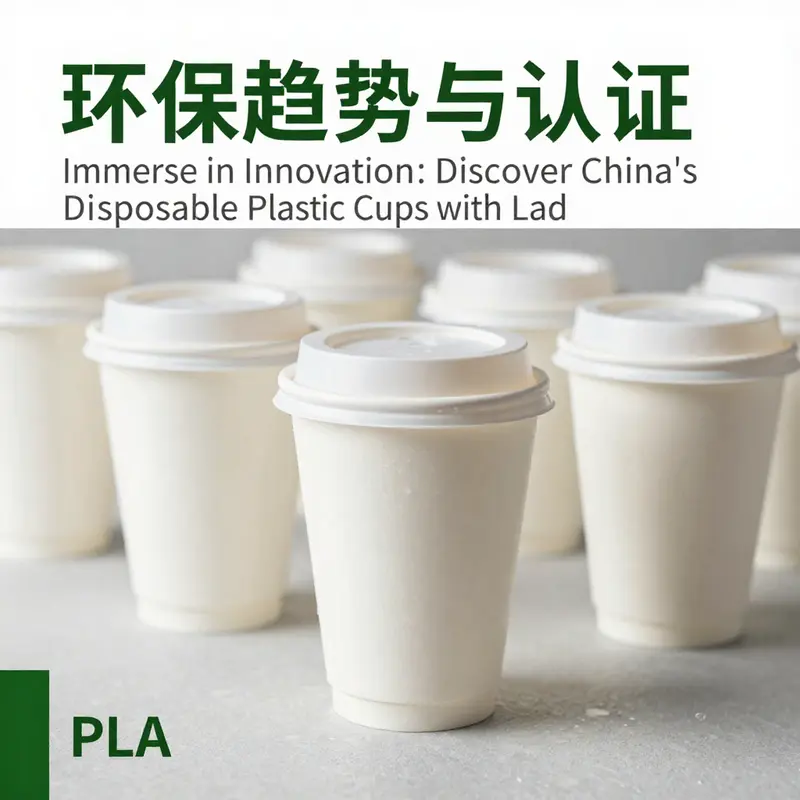
中国依然是全球一次性塑料杯及其杯盖的核心生产与出口基地,这个位置并非简单的地理优势,而是由规模化制造、完善的供应链和对国外市场严格标准的长期适应共同支撑的结果。随着全球对环境议题的关注不断升温,行业的格局也在悄然发生变化。传统的塑料杯以聚丙烯(PP)和聚对苯二甲酸乙二醇酯(PET)为主,因成本低、成型稳定、可观的透明度与阻隔性能而在冷饮、热饮和甜点等多场景中广泛使用。市场报告显示,普通透明PP杯的单价大约在每只0.01美元至0.05美元之间,起订量通常需要在五万只以上。相比之下,高端或可生物降解的PLA杯则价格显著更高,约在每只0.12美元左右,且起订量通常在一万件以上。容量方面,从3盎司到24盎司不等,可以覆盖从小型甜点杯到大容量冷饮杯的多种用途。这些数据并非孤立的数字,而是反映出中国制造商在成本、性能与环保之间的权衡取舍。对于买家而言,选择供应商时不仅要看价格和产能,更要关注材料背后的可持续性与合规性,这正成为新一轮采购考量的核心要素。
在这个背景下,环保趋势逐步向更可持续和更具降解性的材料倾斜,PLA等生物基材料的应用呈现出显著上升势头。PLA杯在特定工业堆肥条件下可以分解为水和二氧化碳,这一特性在一定程度上缓解了传统塑料在环境中的长期积累压力。然而,生物基材料并非全能解决方案。其成本上升、对热耐受性的要求、以及在实际堆肥条件下的可控分解时间等因素,都需要行业、监管与回收基础设施共同发力才能实现真正的全生命周期优势。对于食品接触材料的安全性要求,认证体系的存在与完善显得尤为关键。
在这一点上,行业普遍认识到认证不仅是质量的背书,更是进入全球市场的“准入证”。美国FDA(食品药品监督管理局)对食品接触材料设定了严格的标准,表明产品符合美国市场对食品安全的基本要求。ISO 9001则通过对质量管理体系的规范,帮助企业在从设计到出货的每一个环节维持可重复的高水平表现。英国的BRC( British Retail Consortium)则被全球零售商广泛认可,作为食品安全与质量管理体系的权威认证之一。对中国制造商而言,获得并持续维护这些认证,意味着他们的生产过程和质量控制能力已经达到国际市场的可审查水平,也为客户提供了信任的跨境交易基础。事实上,越来越多的供应商在公开声明中明确指出其产品已通过FDA与ISO9001等认证,并愿意参与BRC等测试程序,以迎合不同市场的法规要求。这种认证驱动的合规文化,正在把原本以成本驱动为主的采购决策,转变为以可持续性、风险控制与品牌信誉为核心的综合考量。
在价格和认证的对比中,供应链管理的稳健性成为更重要的竞争力。中国的主要厂家分布集中、规模庞大,浙江、江苏等省份的企业在全球市场中拥有较高的知名度和出口额。对买家来说,选择高响应率与信誉良好的供应商不仅能够提高订单执行的成功率,还能在遇到定制需求、品质追溯或合规核查时提供更高的协同效率。这种协同效应在批发平台上的交易特征中尤为明显。以阿里巴巴等平台为例,买家往往需要在大宗采购中完成从样品确认、材质选择、认证文件对账到运输安排的一整套流程。供应商的响应速度、证书的完整性、质量追溯体系和售后支持,都会直接影响到首次订单的生产周期与后续重复采购的稳定性。首次订单的典型生产与运输周期通常在30至45天之间,随着经验积累与流程优化,后续订单的交付时间往往能够缩短到7至15天。这一时间节奏,不仅决定了企业在新市场中的起步速度,也关系到品牌方在新品投放、季节性促销与活动期的库存管理。
在材料层面的选择上,PP因其热稳定性、良好成型性和成本优势,仍是许多杯盖组合的首选。另一方面,PLA杯的崛起为市场提供了可降解选项,尤其是在对环境友好性要求更高的客户群体中。砂糖、木质纤维以及其他生物降解材料的研究也在持续推进,试图在保持杯体强度与功能性的前提下,进一步降低环境负担。不可忽视的是,现实世界中的回收与堆肥体系并非在所有地区都同样发达。PLA在某些工业堆肥条件下才具备分解能力,而在普通家庭堆肥或普通垃圾填埋场中,其降解路径与时间表可能与预期存在差异。这就要求供应商在材料选择上进行透明披露,帮助买家评估整体环境效应,并结合地区回收能力制定更合适的包装解决方案。
采购与供应链管理的另一层含义,是对材料属性、食品安全与市场准入之间关系的理解。对食品接触材料而言,除了材料本身的性能,包装结构的设计、印刷与涂层也会影响到食品安全性、致敏风险以及对热源的耐受性。比如,某些可降解材料在高温饮品中的稳定性、与不同类型的甜品或油脂的相容性等,都是需要在设计阶段就仔细评估的问题。厂商在进行材料选择时,往往需要在多重约束之间寻求平衡:成本、强度、透明度、气体阻隔、耐热性、以及最终的环境影响。
这也是为什么市场对“带盖的一次性杯具”在采购层面越来越强调全生命周期的环境责任。带盖设计不仅关系到泄漏防护与使用便利性,也关系到包装密封性、运输稳定性以及最终的回收路径。在这一维度上,供应商的创新往往体现在材料组合、厚度优化、表面处理与盖子的紧密性设计等方面。那些在结构设计与材料配比上能保持高效能源利用、降低废弃物产生并同时确保食品安全的方案,将更容易获得全球品牌的青睐。 在这一点上,供应链的透明度尤为关键。一些企业会公开披露其认证证书、材料检测报告、原料采购链条和追溯体系,以帮助客户建立对供应商的信任。对于中国制造商而言,建立并维护这样的透明性,不仅是市场合规的需要,更是提升市场地位、进入高端市场的关键。
鉴于市场对环保诉求的提升,企业在采购时也越来越关注是否具备“环保包装”与“可降解材料”相关的认证与测试支持。一份完整的认证组合通常包括FDA对食品接触安全性的认可、ISO 9001质量管理体系认证,以及BRC等全球零售商认可的标准。通过这些认证,企业不仅证明了自身体制中对质量的持续承诺,也向客户传递了对食品安全、员工健康与环境影响的负责任态度。对消费者而言,品牌在包装材料上的承诺往往成为购买决策的重要因素之一,因为环保包装被视为企业社会责任的具体体现。在餐饮与零售领域,越来越多的连锁品牌倾向于与具备上述认证的包装供应商合作,以实现其可持续发展战略、提升品牌形象并降低供应链风险。
在中国市场的实际操作层面,买家在选择带盖的一次性杯具供应商时,可以从以下几个方面进行综合判断。首先,关注材料的组合与证书。供应商若能提供PLA或其他降解材料的证书、以及FDA、ISO9001等认证的正式文件,往往意味着其生产过程具备严格的质量控制与环境合规性。其次,评估供应商在市场中的信誉与响应能力。高信誉往往伴随更短的交期、准确的发货与完善的售后服务。第三,关注供应商的产能与交付时效。长期稳定的供货关系,能够显著降低采购风险,尤其是在大规模活动与促销期。第四,审视溯源与透明度。在材料来源、加工环节、涂层与印刷过程中的信息透明度越高,买家越容易进行全链路的合规审查。这些维度共同决定了一个供应商在全球市场中的长期竞争力,而不仅仅是单次交易的价格优势。
在信息获取与分析方面,批发平台与行业展会提供了重要的渠道。买家可以通过平台筛选具备特定认证、特定材料组合和最低起订量的供应商,并结合历史交易数据评估风险与机会。对于企业而言,建立与多家具备不同专长的供应商的关系网络,将有助于在波动的材料价格、运输成本及监管要求变化时保持灵活性。与此同时,许多品牌正在推动包装设计创新,将环保诉求与美学体验结合起来。带盖包装的外观、触感、印刷图案与品牌叙事相结合,成为传达企业价值的重要载体。此类创新不仅提升用户体验,也有助于提升回收端的识别度与投放效率,从而推动循环经济的发展。
在这一演变的叙事中,外部环境的变化同样起到关键作用。全球对塑料污染的关注度持续上升,监管机构、城市回收系统、以及消费者教育都在协同推动包装行业的改进。对中国制造商而言,这既是挑战,也是机遇。通过深化认证、提升生产透明度、扩大对PLA等降解材料的研发投入、以及加强与全球品牌的协同,企业可以在保持成本竞争力的同时,提升对环境责任的承诺,赢得更广阔的国际市场与长期合作。
与此同时,作为知识链的一部分,消费者与企业之间的信任需要在信息公开与透明沟通中逐步建立。这也解释了为何越来越多的制造商愿意在产品页与公开资料中列出认证信息、材料等级、以及在特定应用中的性能数据。对采购方而言,理解材料特性、认证含义以及全球市场对合规性的具体要求,是做出明智选择的前提。若将眼光投向未来,带盖的一次性杯具的市场将不再仅仅追求“便宜与快”,而是追求“可追溯、可验证、可负担且对环境友好”的综合解决方案。内在的转变,是从单纯的功能性包装走向负责任的消费品包装。正是在这样的长期趋势下,中国的制造商、全球品牌和消费者共同塑造了一个更为可持续的包装生态系统。
为了帮助读者更直观地理解这一变化,以下是一个内部相关资源的示例,便于快速了解环保设计与带盖包装的实际应用:环保纸杯带盖。这一资源展示了在可降解材料、环保印刷与合规设计方面的潜力,以及在全球市场需求推动下的实际应用场景。对于希望深入了解材料选择与认证要素的读者,这类内部资源提供了一条有益的参考路径。
展望未来,带盖的一次性杯具的行业将继续面临成本、性能、环保与合规之间的微妙平衡。中国制造商需要在保证产品质量、提升材料创新、完善认证体系以及优化供应链效率之间找到更好的结合点。对于全球品牌而言,选择具备完整认证与透明溯源的供应商,既是降低合规风险的策略,也是履行企业社会责任、提升品牌信誉的必要步骤。在这一持续的变革中,供应商、采购方与监管机构三方的协同将成为推动行业可持续发展的关键驱动力。
外部资源:如需进一步了解食品接触材料的合规框架与监管要点,可以参考以下外部资源以获取权威信息与最新动态。
https://www.fda.gov/food/packaging-food-contact-substances-fcs/overview
Rhythms of Reach: Logistics, Delivery Cycles, and the Global Flow of China-Made Disposable Cups with Lids
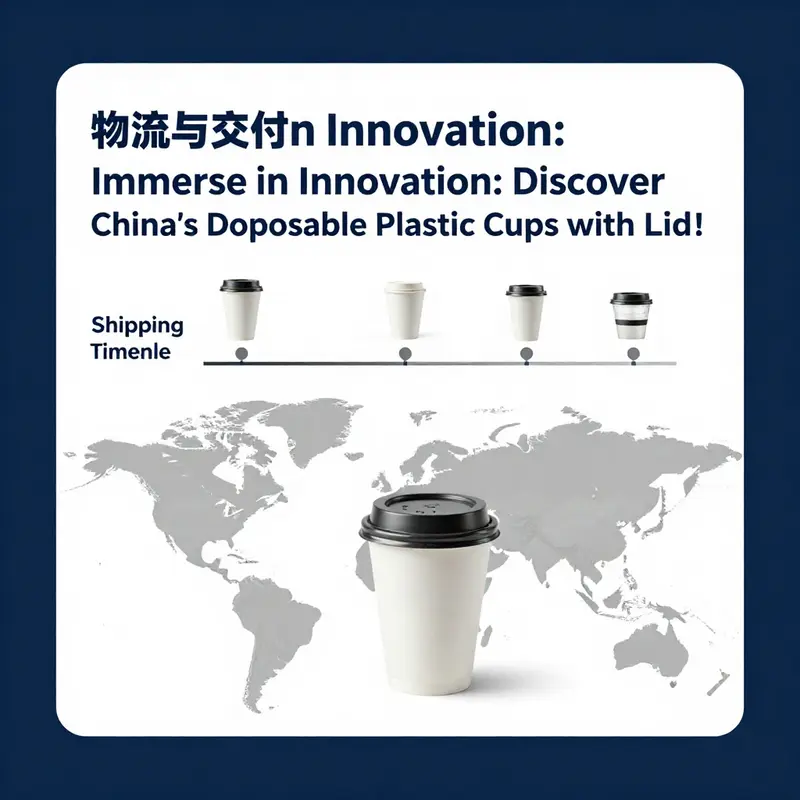
The journey of a disposable plastic cup with a lid from a Chinese factory floor to a shelf in a distant market is rarely a simple path. It is a choreography of regional strengths, production rhythms, order profiles, and multi-modal transportation that must align with the tempo of global demand. In practice, the delivery cycle becomes both a gauge of a supplier’s reliability and a test of whether a brand’s launch or promotion can stay on schedule. What shapes this rhythm are not only the materials and molds but also the geography of production clusters, the scale of the order, and the logistics choices that accompany international trade. When we examine the logistics and delivery cycles of China-made disposable cups with lids, a clear pattern emerges: clusters that minimize distance between creation and port dominate the faster end of the spectrum, while customization and sustainability add layers of lead time that brands must anticipate in advance.
Chinese manufacturing for these cups is deeply clustered in several provinces, where the supply chain for raw resin, injection molding, printing, and packaging has matured into a tightly integrated pipeline. Guangdong stands out as a production and export hub with the most mature logistics network, especially near the urban gateways of major ports. For standard specifications, such as the widely used 12-ounce or 16-ounce formats, a typical order can move from order confirmation to shipment within a window of about seven to fifteen days when the supplier maintains adequate stock and a ready-made mold. This speed is not incidental; it reflects decades of mature port infrastructure, road networks, and the ability to consolidate shipments for ocean freight. The same general logic applies to Zhejiang, a region renowned for high-precision PET/PP containers and a tradition of quality control that makes stacking and reusing supply lines more efficient. Here, the delivery cycle tends to run a touch longer—roughly ten to twenty days—reflecting slightly more complex handling in the line, a greater emphasis on finish quality, and the channels through which goods reach coastal gateways.
In the central and inland provinces, including Jiangxi and Hubei, the production ecosystem increasingly emphasizes sustainable materials and innovative cup designs. This shift carries a natural impact on delivery timelines because the process often involves specialized resins or paper-plastic composites. The typical cycle length there sits around fifteen to twenty-five days, with flexibility baked into the schedule to accommodate eco-friendly variants and color customization. The regional spread matters because it shapes who can deliver quickly and who can tailor products to a brand’s precise specifications without compromising on quality. A brand that needs a quick run of a standard cup may prioritize Guangdong for speed, while a brand seeking a specific eco-friendly cup variant may be better served by suppliers in Hubei or Jiangxi, even if that entails a slightly longer lead time.
Order size further defines the delivery rhythm. Small to mid-sized orders, for example, between one thousand and fifty thousand units, can sometimes be fulfilled in as little as five to ten days if the supplier has existing inventory or can leverage standard molds. On platforms that enable stock-keeping and direct-from-warehouse fulfillment, this scenario is plausible and increasingly common as factories aim to reduce lead times to capture repeat business. In contrast, large, customized orders—those exceeding fifty thousand units or requiring bespoke features like full-color printing, unusual cup shapes, or specialized lid formats—generally require a longer window, typically fifteen to thirty days. The longer cycle here is not merely about producing more units; it is about the engineering work that may be needed to modify molds, adjust automation in the injection area, or recalibrate printing and labeling lines to meet exact brand standards. Opening a new mold, a step that may take three to seven days, adds another layer to the schedule and underscores why early planning is indispensable for projects with firm go-live dates.
Even within the broad categories of lead times, the micro-patterns of the supply chain can shift. For standard, off-the-shelf cups, a manufacturer’s capacity, a shared-tooling ecosystem, and the presence of vitamin-quick-turn print lines can compress the timeline by days. For highly customized demand, the risk of delays grows, but it can be mitigated through early engagement, sample approvals, and staged production where prototyping and pre-production runs confirm tolerances for size, wall thickness, lid fit, and printing alignment before full-scale production begins. In practice, this means that a brand contemplating a 100,000-unit run with a color imprint and a special lid design must map the flow in stages: a design review, a pre-production sample, a small pilot run, and then the main production phase. Each stage has its own cadence, and any hiccup in printing, lid sealing, or quality checks can ripple into the overall schedule.
Logistics for moving the product away from the factory floor adds its own layer of complexity. Domestic transport to the port—whether by road or rail—typically requires two to five days, depending on proximity to Shanghai, Ningbo, or Shenzhen’s corridor. The choice of port matters because it influences the speed of export clearance, the availability of consolidated shipments, and the per-container cost. Once on the water, international shipping becomes the decisive tempo for global distribution. For traditional routes to North America and Europe, sea freight commonly spans twenty-five to thirty-five days, including the time needed for customs clearance in the destination country. For regions closer to Asia, the delivery window can shrink to roughly seven to fifteen days, but with higher sensitivity to port congestion and weather-related disruptions. In urgent situations, air freight provides a rapid, though costly, option—roughly five to ten days door-to-door for many markets. The dual reality remains: the speed of air freight comes with a premium that brands must evaluate against production urgency and budget constraints.
Expanding the spectrum of delivery options, multi-modal and rail-led solutions have gained traction in recent years. Intermodal shipments that combine rail with sea or road can offer a compelling balance of cost and transit time, particularly for orders that originate in inland provinces yet need to reach western or northern ports. While this approach may incur additional handling steps, it can yield reliable transit times around the range of eighteen to twenty-five days, with more predictable schedules than pure air freight. For brands that depend on predictable replenishment cycles, the predictability of multi-modal chains often outweighs the convenience of the fastest mode. The key lies in aligning internal planning with the realities of the chosen mode: knowing when the cargo leaves the factory, when it clears customs, and when it arrives at a warehouse ready for distribution.
Reliability in this space is measured not only by transit time but by the consistency of delivery and the transparency of the supply chain. Industry benchmarks frequently highlight a supplier’s on-time delivery record, yet achieving a 100% on-time performance is a moving target that can depend on regional demand surges, weather, and port backlogs. Reputable manufacturers and their buyers increasingly rely on platform protections to reduce risk: payment guarantees, compensation for delayed shipments, and refunds for quality issues. Another vital dimension is the ability to provide real-time progress updates. A supplier who can share mold completion milestones, first-off-part testing, and pack-out photos reduces uncertainty and enables brands to anticipate when containers will depart, when they will reach the port, and when the goods will be available for distribution on arrival.
What does a practical, risk-aware approach to planning look like in this environment? It begins with clarity on the material and configuration—whether the cups will be PP, PET, or a PLA-based alternative, and whether printing is required, the number of colors, and the type of lid. The downstream implications are substantial. For instance, a purely transparent PP cup intended for cold beverages may enjoy shorter lead times and lower cost per unit. In contrast, a PLA-based cup, favored by brands prioritizing compostability, introduces a different lead-time dynamic, as suppliers source biodegradable resins and ensure compatibility with FDA guidelines and ISO certifications. The trade-off between cost, environmental goals, and timing then becomes a central planning decision for the procurement team.
To operationalize these insights, brands should engage suppliers with strategic clarity. Begin by confirming capacity for the target quantity, the exact lid style, and the presence of any customization. Ask for the estimated delivery time for a specific volume, such as 100,000 pieces with a minimum order quantity of 10,000, and request a shipping timeline to the destination country. Inquire about the possibility of sea freight for the main shipment, and demand a commitment to a realistic delivery window. A practical path is to request samples to verify size, wall thickness, lid fit, and print alignment before locking in the full run. Some suppliers may offer a nominal sampling fee, but the investment pays off by reducing the risk of post-production rejection and reruns. Throughout this process, leverage platform protections to secure payment terms that align with performance milestones and insist on sharing a tracking number at each stage of production and transit. The result is not just a delivery date but a transparent timeline that allows marketing, logistics, and retail teams to synchronize launches with supply.
For brands that rely on consistent, repeatable cycles of replenishment, the rhythm becomes a forecasting tool as well. If a supplier can maintain a steady cadence for periodic restocks, this stability supports seasonal promotions and demand spikes. When the cadence is reliable, procurement teams can lock in earlier production slots, negotiate better unit costs for larger volumes, and reduce the last-minute rush costs associated with expedited shipping. The choice of region and the speed of the chosen logistics route will continue to reflect the balance between cost and schedule that each brand must strike. The aim is not to chase the fastest possible shipment, but to cultivate a dependable, predictable delivery rhythm that aligns with consumer demand, production capacity, and the realities of global logistics.
As brands evaluate the landscape, a few practical touchpoints emerge. First, map your demand curve against the supplier’s regional strengths. If speed is paramount, prioritize Guangdong’s scale and proximity to export facilities; if customization and sustainability dominate, consider Jiangxi or Hubei for their growing capabilities in eco-friendly materials. Second, calibrate expectations around order size and lead times. Distinguish standard from customized runs and build buffers into production calendars to accommodate mold changes, color matching, and quality checks. Third, select a logistics path that balances cost and reliability. While air freight can satisfy extreme timelines, multi-modal and rail-enabled solutions often deliver predictability at lower cost, a combination particularly valuable for brands with frequent restocks. Finally, insist on transparency. Require tracking updates, preserve the option of practice shipments (pilot runs), and ensure platform protections are in place to mitigate risk should delays occur.
The literature and market observations converge on a single insight: the rhythm of delivering disposable cups with lids from China is a function of regional specialization, order architecture, and the chosen channel for movement to market. The pace can be brisk for standard configurations and moderate in the face of customization, but with disciplined planning and clear communication, the delivery cycle can become a competitive advantage rather than a source of delay. For those seeking a concrete example of how design options intersect with delivery realities, a practical reference on related packaging formats offers a useful snapshot of the landscape and a reminder that the journey from factory to consumer is a coordinated enterprise, not a single-hand motion. disposable 26oz kraft paper soup cup with paper lid offers a window into how design variety, material choices, and lid configurations influence not just aesthetics and function but the tempo of production and shipment. This integration of form, function, and delivery cadence is at the heart of modern packaging supply chains and a reminder that the timing of a purchase decision can be as important as the product itself.
External reference: https://www.alibaba.com/product-detail/Bulk-Disposable-Plastic-Cups-with-Lids-12oz-16oz_1600595379283.html
Final thoughts
Understanding the manufacturing landscape of disposable plastic cups with lids in China equips businesses with vital knowledge. With a variety of suppliers, competitive pricing, and an increasing focus on eco-friendly products, your beverage establishment can thrive. Choose wisely among the listed suppliers and consider not just cost but also quality and sustainability. Ultimately, partnering with a reliable supplier will not only enhance your product offerings but also align with growing environmental standards, benefiting your brand and the planet alike.