
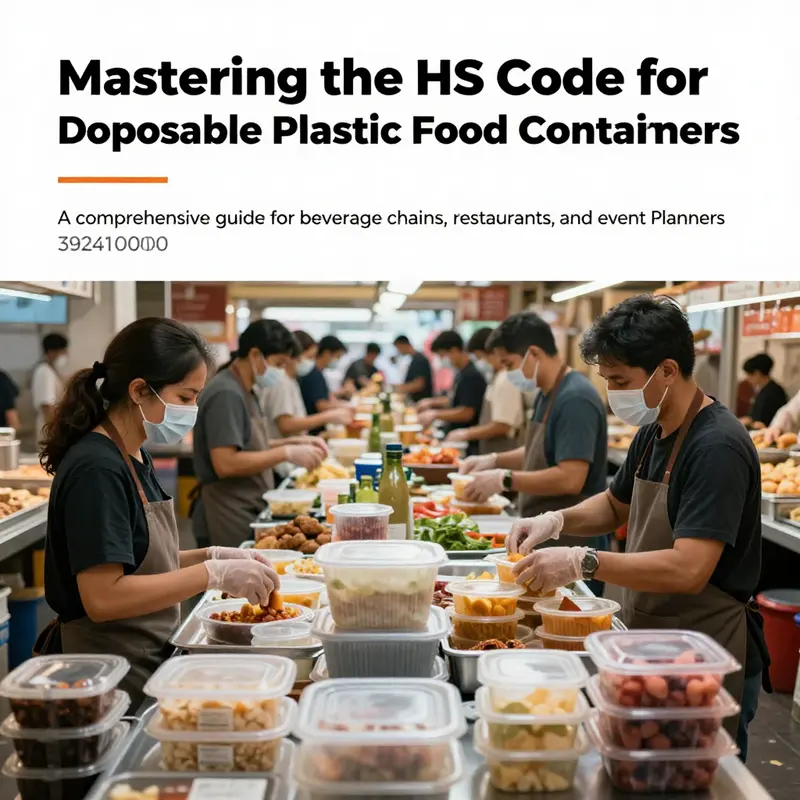
In today’s culinary landscape, the use of disposable plastic food containers is omnipresent, serving everyone from bustling bubble tea shops to high-end catering services. Understanding the HS code for these products, specifically 3924100000, is crucial for any business involved in the food and beverage sector. It not only governs how products are classified for trade but also influences inventory choices, cost management, and legal compliance. This article will delve into the significance of HS code 3924100000, explore various types of disposable plastic containers and their classifications, assess the economic impact of this code on trade, and discuss critical geopolitical considerations that could affect compliance and sourcing strategies.
Decoding the 3924100000: How the Disposable Plastic Food Container HS Code Shapes Trade, Compliance, and Packaging Innovation
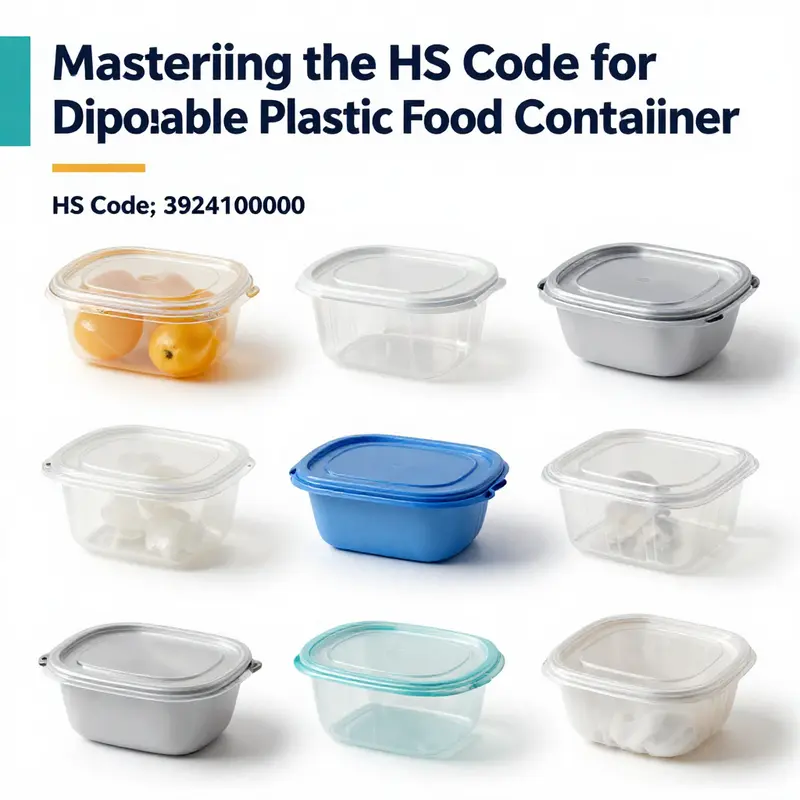
The global system that governs trade begins with classification. At its heart lies the Harmonized System, a framework that standardizes how customs agencies describe goods, assign tariffs, and enforce regulations. Within this vast taxonomy, the code 3924100000 stands as a pivotal umbrella for plastic tableware and kitchenware. This single code captures a broad family of items that people use daily in food service, preparation, and storage. It covers objects as familiar as disposable plates, bowls, and cups, along with the containers and trays that carry meals from kitchen to consumer. The variety of materials that can fall under this umbrella—polypropylene (PP), polystyrene (PS), and PET among them—reflects the pragmatic needs of modern food service. In practice, 3924100000 is not a narrow niche. It is a gateway to understanding how governments view the basic tools of dining, whether disposable or reusable, when those tools are made primarily of plastic and intended for table, kitchen, or canteen use.
This code matters most when traders prepare goods for customs declarations, because it anchors tariff calculations, regulatory expectations, and import or export compliance. For a dessert container that doubles as a take-out box, or a clamshell package designed to protect a hot meal during transit, the 3924100000 label signals a specific family of products rather than a random assortment of packaging. The clarity of such classification reduces delays, minimizes miscommunication with customs officers, and helps buyers and sellers align with national rules about packaging waste, recyclability, and environmental claims. While 3924100000 is broad, it is also precise enough to guide a dispatcher through the maze of regulatory nuance that accompanies global food packaging.
Within this broad category lie important distinctions that practitioners must respect. The primary material and the item’s intended use are the two levers that determine whether a particular product belongs here or slips into a neighboring code. For instance, plastic containers used for serving or storing food—whether a compact dessert cup, a take-away tray, or a simple plastic box—usually land under 3924100000 if their main purpose is to hold or present food at the table, in a kitchen, or in a canteen setting. Yet there are neighboring codes that appear in the same ecosystem of plastic packaging. Plastic containers for fruit or other specific foods, especially those with hinged lids, can fall under 3923900000. Specialized packaging such as certain sauce seal boxes may appear under 3920109090. The lines are not drawn at random; they reflect product function, lid mechanics, and the relationship between container and contents. When these boundaries are blurred, a careful audit of the product description and its material composition becomes essential for accurate classification.
The literature around 3924100000 also points to a notable openness to eco-friendly and biodegradable packaging, even when it is marketed as sustainable. A product listing described as a Custom Eco Friendly Take Away out Biodegradable Packaging Disposable Food Container explicitly references 3924100000, underscoring that the category is defined by plastic content and table-use function, not by a promised end-of-life outcome. This framing matters for exporters who want to promote greener options without misrepresenting the underlying material. It also signals to regulators and buyers that “biodegradable” or “compostable” may coexist with a 3924100000 classification so long as the product remains plastic-based and functionally aimed at food handling. The broader implication is clear: the HS code reflects material and use, not just aesthetics or environmental narrative. The interplay between packaging design, material science, and regulatory perception can be intricate, but it remains navigable with careful description and documentation.
Delving deeper into the architecture of 3924100000, there are sub-codes that refine the classification for more granular needs. Sub-codes such as 3924100091 cover plastic cooking utensils and tableware, 3924100093 refers to plastic disposable tall glasses and cups, 3924100094 captures other plastic disposable tableware, and 3924100099 labels plastic cooking utensils in a broad sense. While these sub-codes exist to provide a more exact label for particular product lines, they also illustrate how the system recognizes a spectrum—from sturdy, reusable dinnerware to single-use containers and accessories. Understanding these nuances helps traders avoid two classic pitfalls: misclassifying a product as something it is not, and missing a more precise sub-code when the packaging design, material set, or intended retail use pushes it just beyond the general 3924100000 umbrella. In practice, the decision often rests on the item’s primary function. If the object is primarily a vessel for food, even if it is decorative or marketed as eco-friendly, it will typically be anchored to 3924100000, unless another code more accurately captures its core use.
Beyond the code itself, the chapter turns to the practical world of international trade. For exporters and importers, the accuracy of classification translates into the reliability of the paperwork: commercial invoices, packing lists, certificates of origin, material declarations, and, crucially, tariff determinations. Correctly labeling a dessert container, a clamshell package, or a take-out box reduces delays at border checks and helps ensure compliance with regional packaging regulations. It also aligns with broader environmental policies that govern how packaging is recycled, incinerated, or treated as waste. In a regulatory climate where regions such as Canada consider revising certain single-use plastics restrictions, the ability to reference a stable, globally recognized code becomes even more valuable. The HS classification does not negate the need to monitor local rules; instead, it provides a common frame of reference that supports transparent and consistent trade practices.
For businesses navigating these waters, the process of classification starts with a precise product description. The description should be faithful to the item’s primary function, its material composition, its intended use, and any functional features such as hinged lids, microwavability, or stackability. If a product is marketed as disposable and plastic-based but includes a reusable lid or a hard-shell design, the manufacturer and the trader must assess which aspect dominates the product’s core function. Is it a food container meant to be a vessel for holding a meal, or is it a kitchen utensil with broader culinary uses? The answer often hinges on how the item is marketed and how customs authorities interpret its primary use in practical terms. When doubt persists, a supplementary material declaration—clarifying the plastic type, whether the product is recyclable or compostable, and the presence of any additives or bioplastics—can provide valuable context for the customs officer reviewing the file.
The conversation around eco-friendly packaging also touches on the broader goal of responsible production and consumer protection. The presence of green claims, such as compostability or reduced plastic content, does not automatically reclassify a product outside the 3924100000 umbrella if the core material remains plastic and the object serves a table or kitchen function. This nuance invites manufacturers to be precise in their marketing while supplying robust technical data to support classification. For stakeholders, this means that a well-documented bill of materials, clear product specifications, and transparent environmental certifications can help reduce interpretation friction at the border. It also means that suppliers should be prepared to explain the manufacturing process, the degree of plastic usage, and any biodegradation pathways or end-of-life scenarios that could inform policymakers and buyers alike.
To ground these ideas in a practical route, consider a dessert container or plastic clamshell used for a take-out meal. Such items are a recurring example in trade literature because they illustrate the dual needs of protection during transport and compliance with packaging standards. A container designed to hold food securely, resist leaks, and accommodate a lid is typically a straightforward candidate for 3924100000. If, however, the item is primarily a rigid decorative shell with a decorative function and only occasionally used for food, the classification question becomes more nuanced. The decision often turns on the product description provided to customs and the accompanying documentation that clarifies the container’s primary function. In this context, the chapter underscores a central theme: clarity in product description is not a mere formality. It is a practical instrument that guards against misclassification, speeds clearance, and supports fair, predictable tariff treatment.
In this environment, vendors and manufacturers can also leverage internal resources to support classification. For example, a case study from the trade literature demonstrates how an item described as a disposable eco-friendly take-away container still sits under 3924100000 when plastic content and food-serving function predominate. The same case highlights how related products—such as hinged-lid fruit containers or sauce mini boxes—might appear under neighboring codes if their structure and intended use diverge from standard food tableware. The takeaway is not to memorize a list of do’s and don’ts, but to cultivate a disciplined approach to product description and material verification. Accuracy at the outset reduces the risk of post-entry reclassification, penalties, or duties that can erode margins and disrupt supply chains.
For readers who want to explore related resources, a practical path forward is to examine related product pages that discuss take-away and disposable packaging through the lens of sustainability and design. One useful internal reference is a collection of disposable, eco-friendly, and bamboo-based utensils and tableware resources, which provide context for the broader family of consumer goods that share the same design and manufacturing ethos as plastic containers. Accessing a representative example can help teams better articulate their product’s function and material attributes when seeking classification. senang05-disposable-eco-friendly-biodegradable-fork-spoon-knife-bamboo-utensils-dinnerware-cutlery-tableware-set-napkins
The chapter thus threads a line from the analytical spine of the HS code to the practical realities of modern packaging. It emphasizes that classification is both a legal and a logistical instrument—one that supports accurate tariff assessment, dependable regulatory compliance, and meaningful dialogue with customers and regulators about what is inside each box and how it should be treated at the end of its life. In an era where sustainability claims are increasingly scrutinized, the 3924100000 code remains a steadfast, if sometimes imperfect, frame for discussing plastic tableware and kitchenware in the global market. It invites a careful balancing act: respect the rigid logic of the tariff schedule while embracing the evolving expectations around packaging, recyclability, and responsible production. The goal is not to constrain innovation but to anchor it in a transparent, well-documented, and predictable system that serves both commerce and public policy.
External resource for further verification and broader context: https://www.wcoomd.org/en/topics/hs-code-3924100000-plastic-tableware-and-kitchenware.aspx
Tracing the Invisible Lines: How Disposable Plastic Food Containers Find Their HS Code
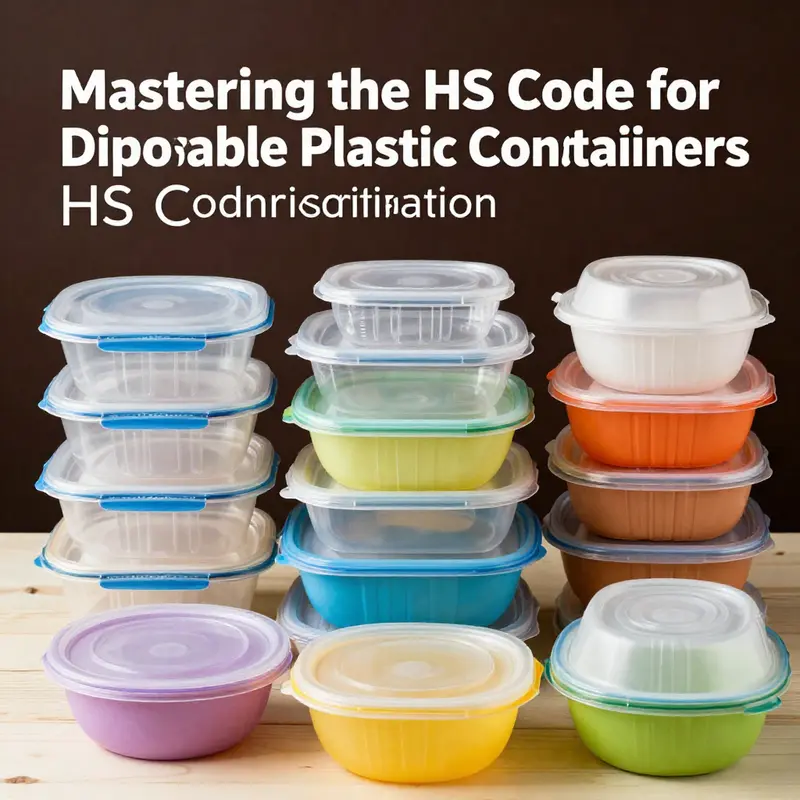
The global trade of disposable plastic food containers rests on a set of invisible lines that customs officials, manufacturers, and importers alike must read with precision. These lines are not merely bureaucratic trivia; they shape tariffs, determine compliance obligations, and influence which pathways products travel from factory floor to restaurant counter. At the heart of this framework is the Harmonized System (HS) code, a standardized language that translates a physical object into an economic identity recognized across borders. For disposable plastic food containers—those everyday boxes and lids that hold salads, desserts, takeaway meals, and snacks—the most commonly cited entry is a code that the trade community often writes as 3924100000. This designation is spoken of in industry chatter as the vessel for “Plastic tableware and kitchenware, including parts thereof, of a kind used for the table, kitchen or canteen,” and it covers items such as disposable plastic food boxes and take-out packaging made from plastics like polypropylene (PP), polystyrene (PS), or PET. Yet even as that code anchors understanding, the real story of classification unfolds as a sequence of material choices, product forms, and regulatory nuances that can tilt duties, import eligibility, and even environmental compliance in subtle but meaningful ways.
To appreciate the full landscape, it helps to situate 3924100000 within the broader tapestry of plastic packaging codes. The HS system segments plastic tableware and related items with sub-classifications that hinge on use, rigidity, and the presence of features such as hinges or lids. In practice, many disposable containers used for food service land under 3924100000 because they are designed to be used at the table or in a canteen setting and serve a packaging function that is closely aligned with tableware and kitchenware. However, there are related headings—such as 3923.10 for plastic tableware and kitchenware that can include semi-rigid items, or 3923.90 for other plastic articles—that sometimes capture containers with particular forms or applications. Some disposable, rigid, and reusable-looking storage containers may be categorized under 3924.10 or 3924.90 depending on the exact product configuration and intended use. These distinctions are not just academic; they guide tariff rates, import restrictions, and even how data should be reported to customs authorities. As a result, accurate classification requires a careful description of both the material composition and the product’s functional end use, rather than relying solely on appearance or common marketing labels.
The materials themselves carry informative clues about likely classifications. Polypropylene (PP) is a mainstay for microwave-safe take-out boxes, lids, and many storage containers because of its heat resistance and durability. The plastic is robust enough to withstand reheating or hot-fill scenarios while remaining light enough for single-use packaging when preferred by vendors. Polystyrene (PS) spans two forms: solid PS, used in rigid salad bowls and sandwich boxes, and expanded PS (EPS), which underpins many lightweight clamshells and foam cups valued for insulation in hot and cold servings. The latter, EPS, is well known for its insulating properties, making it a common choice for fast-food clamshell packaging and beverage cups. Polyethylene terephthalate (PET), while more recognized for clear beverage bottles, also appears in certain rigid, transparent disposable containers where clarity and rigidity are prized. PET’s heat resistance is generally lower than PP’s, but its strength and transparency can be advantageous for display-oriented packaging. Each material family carries implications for classification. A container made primarily of PP and intended for hot foods might be confidently treated as 3924100000 in many jurisdictions, while a transparent, rigid PET container with specialized insulation features might require closer scrutiny to determine whether a closer match lies in 3924.x or another heading.
The resulting decision is rarely a single material test. It is a product description and technical dossier that describes not just what the plastic is, but how the product is used and what its functional role in the supply chain is. This emphasis on end use helps prevent misclassification that could trigger improper tariffs or regulatory obligations. For instance, a dessert container or a take-out box, even if made from PS or PP, tends to fall under the 3924100000 umbrella when its primary function is as tableware or kitchenware for food service. But a non-disposable plastic container whose primary function is to hold raw fruit, or a hinged-lid design with a strong emphasis on long-term storage rather than serving at the table, might be directed toward a different subheading such as 3923.10 or 3924.10, depending on the jurisdiction and the precise product description. The interplay between material, form, and function is thus the practical engine behind HS classification in this space.
Beyond the classificatory logic, there is a regulatory and regulatory-adjacency landscape that shapes how these codes are used in practice. Exporters and importers must not assume that a single HS entry will shield them from other compliance considerations. Tariffs are only one piece of the puzzle; quotas, anti-dumping duties, non-tariff measures, and packaging-specific obligations can also come into play. Some governments are revisiting single-use plastics through new policy instruments, a trend that can change how certain disposable items are treated at the border or within domestic markets. For example, jurisdictions exploring or implementing stringent controls on single-use plastics may impose bans or restrictions that influence the admissibility of particular packaging formats, even if the item would otherwise fit a standard HS heading. In such environments, accurate coding remains essential for eligibility, auditability, and compliance, but it must be coupled with an understanding of evolving policy contexts and record-keeping expectations.
Amid this complexity, there is a practical pathway to reliable classification: a disciplined product description that translates material properties and end-use considerations into a narrative a customs officer can verify. For many disposable containers, the core attributes to document include the primary material (PP, PS, PET, or EPS), the intended use (tableware, take-out packaging, dessert containers, or clamshells), whether the item is rigid or semi-rigid, and any features that affect its thermal performance, lid compatibility, or recyclability. The chain of custody—how the product was made, how it is sold, and how it is intended to be used—matters almost as much as the physical composition. In the end, the HS code becomes not only a tariff analytic but a reflection of the product’s role in the dining ecosystem: a disposable vessel designed to facilitate hygiene, convenience, and speed in a food service environment.
As this ecosystem evolves, some trends in packaging materials and formats point toward shifts in classification dynamics. Alternative materials such as molded fiber, bagasse-based composites, and other biodegradable or compostable options are gaining ground as sustainability considerations rise in procurement decisions. While many of these alternatives are not plastic and thus fall outside 3924100000 by default, the broader conversation about end-of-life impacts and regulatory expectations for single-use items underscores why manufacturers and traders pay close attention to the precise wording of product descriptions and the associated HS codes. The goal is to ensure that the packaging meets both consumer expectations for safety and hygiene and the logistical realities of international trade, where a small misalignment in a code can ripple through declarations, duties, and compliance documentation.
In formal terms, the 3924100000 category anchors a family of disposable containers in a way that many stakeholders find intuitive: it captures the set of plastic serving and storage items central to the dining experience. Yet the surrounding codes—such as 3923.10, which covers plastic tableware and kitchenware that can include non-rigid or semi-rigid items; 3923.90 for other plastic articles not specified elsewhere; and 3924.10 or 3924.90 for kitchenware and tableware with varying degrees of rigidity and reuse intent—function as a nuanced system to handle edge cases. When a container sits near the boundary, a precise product description and material specification becomes especially important. The more thoroughly a company documents the product’s primary usage, the greater the likelihood that the right HS heading will be applied consistently across shipments, a factor that directly influences tariff exposure and audit risk.
Within this framework, readers may encounter official guidance that ties HS classifications to material families and functional profiles. For exporters and importers, this means investing in clear product data sheets, including material composition, recyclability statements, heat resistance ratings, lid compatibility notes, and typical use-case scenarios. It also means training procurement and logistics teams to describe products in a way that aligns with code definitions, rather than relying on market labels alone. A misalignment—such as describing a clamshell as “recyclable” without noting its material class or mischaracterizing its primary end use—can lead to misclassification and the costly consequences that follow.
The conversation also touches the economics of packaging decisions. When a customer requests a particular disposable container, the choice of material and design—PP for microwave resilience, PS for rigidness, EPS for insulation, or PET for clarity—carries implications for classification, labeling, and even post-consumer processing requirements. The interplay between performance, cost, and compliance can steer product development away from a one-size-fits-all approach toward a more deliberate, code-conscious design strategy. In practice, this means packaging developers and compliance teams must work hand in hand to ensure new container formats are described to customs in ways that reflect their true function and material makeup. The aim is not to game the system but to illuminate the pathway from the factory floor to restaurant counters in a manner that respects hygiene, safety, and traceability, while also acknowledging the realities of cross-border trade.
As the sector continues to innovate, the push toward sustainability adds another layer of nuance. The rising interest in compostable and recyclable packaging is shaping how companies describe and categorize their products in declarations. A take-away box might be made from a bioplastic or a bagasse-based composite, and in those cases, the product could be outside the 3924100000 scope of traditional plastics-based tableware. Even when such items still function as disposable containers for hot or cold foods, their material makeup and end-of-life plans may steer classification toward different headings or even lead to exemptions or special regimes in some jurisdictions. The practical consequence is that producers must stay vigilant about product lifecycle attributes and regulatory expectations in tandem with the core HS code logic. For the reader navigating this landscape, the message is clear: accurate classification is a continuous discipline, not a one-time labeling exercise.
To illustrate the real-world flavor of these considerations, consider how a packaging line might balance performance, cost, and compliance for a dessert container. The container’s primary use is to hold dessert while allowing easy transportation and lid coverage; it must withstand chilling or warming, maintain integrity during transit, and offer a clean presentation. If the design relies on PP, it is a reasonable assumption that the item can be categorized under 3924100000 in many markets, given the material’s heat resistance and suitability for food contact. A clamshell made from EPS, by contrast, may require closer inspection of its classification, as its insulation properties drive a slightly different product identity even if it serves as a take-out package. The decision process becomes a careful balance of material properties, functional role, and the precise phrasing in product descriptions that customs authorities will rely on when assessing duty and compliance requirements. The result is a narrative—built from the raw data of the product—that travels with the shipment and helps ensure that all stakeholders share a common understanding of what is being traded and under what terms.
Effective classification also has implications beyond tariff rates. It informs supply chain visibility, risk management, and regulatory reporting. When a shipment is declared under a structured code that reflects its actual use and material, auditors and inspectors can cross-check declarations against product specifications more efficiently. This reduces the likelihood of post-entry adjustments, penalties, or delays stemming from misclassification. It also creates a clearer signal to downstream users—food-service operators, retailers, and end consumers—about the packaging’s material profile and end-of-life outlook. In a marketplace that increasingly values transparency and sustainability, the ability to articulate how a disposable container fits into the HS code framework becomes an asset—one that helps align commercial objectives with regulatory obligations and environmental stewardship.
For those who manage trade documentation, the practical upshot is straightforward: invest in precise product descriptions, maintain up-to-date material data, and stay informed about jurisdiction-specific interpretations of the HS headings. When a container sits right at the boundary of classifications, a detailed dossier that captures its end-use scenario, material class, lid compatibility, and heat resistance can be the deciding factor in achieving an accurate and consistent declaration across shipments. In an era where packaging formats evolve rapidly and policy landscapes shift, this disciplined approach to HS classification remains a foundational practice for the global trade of disposable plastic food containers.
As sustainability considerations influence both design and procurement, a representative example of the broader packaging ecosystem emerges in the form of paper-based and composite options that coexist with plastics. For readers itching to see how non-plastic options intersect with the broader discourse on disposables, a practical illustration can be found in the kraft-paper-based take-away containers and bowls that are designed to mimic the convenience of plastic while offering alternative end-of-life profiles. For a representative product page that showcases the kind of packaging often discussed in this broader context, see kraft paper soup cup with lid product page. This link illustrates how packaging formats are evolving while still occupying a place within the trade classification system. The broader lesson, however, remains constant: the HS code is a living instrument that must reflect the current material reality and use case of the item being shipped, not merely its marketing name.
External resource: https://www.wto.org/english/tratope/tariffse/tariffprofilese.htm
Trade Winds and Policy Lines: The Economic Currents Shaping Disposable Plastic Food Container HS Code
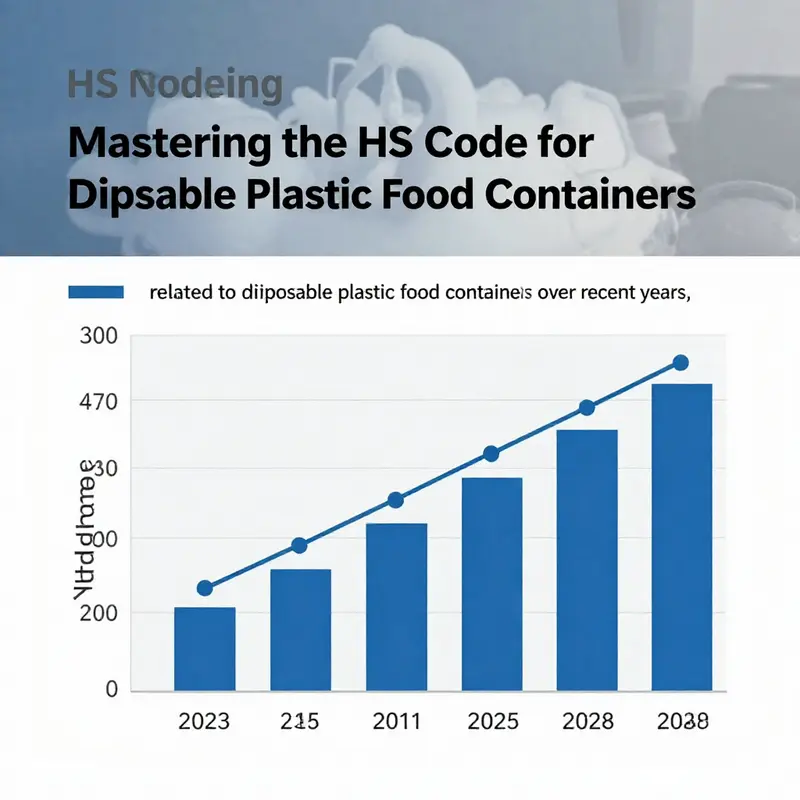
The global choreography of disposable plastic food containers pivots on a simple yet powerful axis: a Harmonized System code that translates physical goods into customs receipts, regulatory obligations, and market possibilities. The HS code most often cited for these products is 3924100000, which covers a broad family of plastic tableware and kitchenware designed for the table, kitchen, or canteen. This classification acts as a practical map guiding manufacturers, exporters, and importers through tariff lines, import duties, quotas, and compliance thresholds. Within this category, subcodes such as 3924100091 for plastic disposable cups and glasses, 3924100093 for high-footed variants, and 3924100094 for other disposable tableware reflect material nuance and product complexity. The precise code can influence tariff incidence, testing requirements, and regulatory compliance, especially as sustainability goals tighten or relax regulatory regimes. The HS classification thus serves as a frontline lever in international trade strategy.
In practice, the classification process combines material composition, intended use, and design features. Disposable dessert containers, clamshell packaging, and snack boxes made from PP, PS, or PET often fall under 3924100000, illustrating how material type and functional design converge under a single umbrella. The classification has immediate consequences: duties, eligibility for trade-preference programs, and the ability to participate in specialized supply chains. Yet trade is not only about tariffs; it is also about what regulators permit or prohibit, and how those permissions shift with public policy. A notable trend in recent years is the tightening weave of single-use plastic regulations across multiple jurisdictions, a development that redefines supply choices and market access for disposable containers.
Two regulatory currents consistently shape the economic impact of these HS-coded goods. The first is a global shift toward stricter single-use plastic controls. For example, Canada has discussed relaxing certain export restrictions on six types of single-use plastics, including disposable food containers, a move reflected in notifications published in 2026. Policy makers argue that targeted adjustments can preserve competitiveness for domestic producers while maintaining environmental safeguards, provided exporters maintain robust documentation and traceability. For international traders, such dynamics demand agile compliance programs.
The second current comes from the EU and select national regimes that push for higher recycled content and safer material streams. The EU’s Single-Use Plastics Directive, alongside national implementations such as Germany’s Packaging Act, has elevated standards for packaging. Recycled-content targets are prominent: greater reliance on post-consumer recycled polymers and transparent lifecycle data. While these targets are often framed around bottles, the logic extends to containers and other packaging used for food. Producers and exporters must anticipate demand for materials with credible recycled content, end-of-life stewardship, and safety for contact with food. This shift reshapes trade flows as buyers seek suppliers who can deliver consistent recycled content and robust compliance.
The economic calculus extends beyond compliance costs. Higher standards raise per-unit testing and certification costs but also create opportunities for differentiation and premium pricing. Materials must meet food-contact safety standards, avoid harmful substances, and pass tests for heat resistance and containment integrity. Many firms rely on ISO 17025-accredited laboratories, which can influence pricing and lead times. Innovation flourishes as manufacturers explore recyclable packaging options, biodegradable components, and new packaging architectures that align with sustainability and performance demands.
The consumer-facing side remains important. Demand for disposable containers persists in catering, take-away, and mass-event contexts where convenience and protection matter, yet public sentiment increasingly prefers packaging with responsible end-of-life outcomes. The result is a market where price is not the sole determinant; access to markets, reliability of supply, and demonstrable sustainability credentials can be decisive.
A practical illustration is the development of highly traceable packaging formats that meet safety and sustainability targets. For example, durable, recyclable kraft-based containers with plant-derived coatings can satisfy food-contact safety standards while offering improved end-of-life outcomes. Such formats support diversified supply chains and help exporters hedge risk in regions with stricter rules by offering broadly accepted products. See also examples of take-away packaging designed for safe shipping and storage.
From a policy and trade perspective, the practical outcome is a marketplace that rewards compliant, traceable, and sustainable packaging ecosystems. Investment in certification and material validation can be offset by access to longer-term contracts and compatibility with circular economy objectives. The regulatory horizon continues to matter as a driver of competitiveness; when governments signal willingness to adjust export controls or demand documentation proving compliance, traders must build resilient reporting and supplier-verification processes. In this sense, the HS code becomes a strategic instrument for aligning global trade with environmental priorities.
Ultimately, the future trajectory of disposable plastic food containers within the 3924100000 family rests on a balance: regulators push for safer materials and higher recycled content, while industry respond with safer formulations and more efficient packaging. The result is a trade environment that rewards reliability and sustainability alongside price. External resources and ongoing regulatory updates will continue to shape decisions from material selection to consumer choices.
External resource note: Canada’s Proposed Relaxation of Single-Use Plastic Ban for Export (G/TBT/N/CAN/764).
Shaping Trade, Pollutants, and Policy: The Geopolitics of Classifying Disposable Plastic Food Containers
The Harmonized System code 3924100000 sits at a quiet crossroads where commerce, materials science, and geopolitics converge. It is not only a description of a product category but a tool that helps nations shape tariffs, regulate safety, and negotiate access to markets. When a company ships a plastic takeout container or a dessert box, the exact words used to describe the item in customs paperwork can determine whether the shipment faces a tariff that stings or a clearance that moves quickly. In the growing global emphasis on sustainability and plastic pollution, these classification decisions assume a political weight they did not carry before. Countries seek to protect public health, encourage recycling, and reduce waste, while exporters seek predictable rules and low cost markets. The HS code thus becomes a subtle instrument of geopolitical strategy, even when it appears only as a line on a tariff schedule.
Across many jurisdictions, the push to regulate packaging is no longer a domestic matter alone. It is part of a broader fabric of sustainable food packaging regulations designed to curb plastic leakage, protect consumers, and encourage transitions to less polluting materials. In Europe, Asia, Africa, and the Americas, policymakers are using bans, taxes, labeling requirements, and procurement standards to steer the market toward recyclability and compostability. The same regulatory threads that promote safer, greener options also complicate how a product is described on customs forms. A container described as plastic tableware may be straightforward in one country but could be interpreted differently in another if the material, hinge lids, or surface treatments lead officials to draw a slightly different line between 3924100000 and related codes such as 3923900000 for hinged lid fruit containers or 3920109090 for specialized packaging. Such nuance matters because even modest misclassifications can ripple into delays, higher duties, or stricter compliance checks that disrupt supply chains and add uncertainty to pricing.
Geopolitics enters this space in two intertwined ways: incentives and friction. On one hand, governments want to reward innovations in sustainable packaging—paper, bagasse, and compostable bioplastics—with favorable procurement rules, faster customs processing, or lower duties when the materials meet clear environmental criteria. On the other hand, divergent regulatory philosophies raise the risk that the same product is treated differently in different markets. Regions wrestling with environmental policy may impose stricter interpretations of what constitutes a disposable plastic container, or demand documentation proving recyclability or compostability. When such expectations are not aligned, exporters encounter a mosaic of rules that complicates the flow of goods and can become the focus of negotiations in trade talks or even dispute settlement forums. The HS code, in this sense, is not just a technical filing requirement; it is a proxy for how nations balance trade openness with environmental stewardship.
Within this geopolitically charged landscape, broader dynamics emerge. Sustainable packaging regulations are increasingly central to national strategies for reducing plastic leakage into oceans and land. This is not only about domestic waste management but also about the materials and technologies that appear on international supply lines. Countries with advanced recycling industries and robust control over post consumer waste tend to champion policies that favor recyclable or reusable packaging. Those with limited waste management capacity may pursue different routes— mandating minimal packaging, supporting alternative materials, or engaging in international cooperation to build capacity. These divergent approaches influence how HS classifications are used in practice. When a container is marketed as recyclable in one jurisdiction and claimed as biodegradable in another, the paperwork may need to reflect both realities, and authorities will scrutinize descriptions, certifications, and consumer labeling to determine the applicable rules and the corresponding HS code narrative.
International efforts to address plastic pollution also cast a long shadow over how packaging is regulated and traded. Negotiations for a legally binding instrument aimed at curtailing plastic pollution have heightened awareness of harmonized standards, testing protocols, and environmental labeling. In such negotiations, the classification system becomes a shared reference point for aligning regulatory expectations across borders. If a treaty or agreement pushes toward universal criteria for recyclability or compostability, it could indirectly influence how customs authorities interpret product descriptions and which HS codes they assign. The geopolitical calculus here includes who bears the costs of compliance, who benefits from faster trade routes, and how capacity building support is distributed to developing economies so they can meet new environmental standards without sacrificing access to essential packaging for food security.
Alongside formal treaties and regulations, voluntary codes of conduct and industry led standards shape the landscape. A notable example from international organizations is the effort to develop voluntary guidelines for the sustainable use of plastics in agriculture, which may intersect with trade rules for packaging used in transporting agricultural products. Such voluntary frameworks do not replace formal classifications, but they can influence the perceived environmental credentials of a product and, by extension, the scrutiny it receives at the border. Firms engaged in cross border trade must navigate both the letter of the HS code and the spirit of these voluntary commitments, aligning product descriptions, material disclosures, and certifications with the evolving expectations of regulators and buyers alike. This is where geopolitics most acutely manifests: nations may converge on certain environmental criteria, while others resist, or implement them unevenly, creating an uneven playing field that trade partners must manage through negotiation, documentation, and credible third party verification.
To manage these complexities, exporters and importers increasingly rely on authoritative sources and formal guidance. The World Customs Organization and national customs authorities offer frameworks for classification, yet interpretations still hinge on exact product descriptions and material inputs. The material science behind a container whether it is polypropylene, polystyrene, or a biodegradable substitute plays a decisive role in classification, while the end of life treatment of the packaging can influence policy choices about what is considered acceptable or preferred in a given market. The risk here is not merely financial; it is strategic. A shipment misclassified at the border can trigger delays that disrupt procurement cycles, alter price points, and complicate supplier relationships across continents. In regions where plastic pollution is a pressing concern, authorities may tighten scrutiny or demand more robust environmental credentials, intensifying the geopolitical stakes of a routine classification decision.
Within this broader frame, real world implications begin to surface for policymakers, industry players, and researchers alike. Regulators seek to standardize definitions and testing, aiming to eliminate ambiguity that could be exploited to circumvent environmental rules. At the same time, trade negotiators must acknowledge legitimate concerns about market access, capacity constraints, and the competitive consequences of rapid transitions away from conventional plastics. The challenge is to balance the imperative of reducing plastic waste with the practical needs of food businesses that rely on reliable, affordable, and safe packaging. In this balancing act, the HS code becomes a linguistic instrument that helps or hinders alignment between environmental policy and trade facilitation. It is a lens through which the world negotiates the pace and direction of packaging innovation, the allocation of regulatory burdens, and the distribution of economic opportunities that accompany a shift toward more sustainable materials.
Effective navigation of this terrain requires a disciplined approach to classification and an openness to cross border dialogue. Importers should be prepared to present precise product descriptions, including materials, construction features such as lids or hinges, and any certifications or test results that demonstrate recyclability or compostability. Customs authorities, for their part, benefit from clear guidance that aligns with ongoing environmental objectives while preserving the integrity of the HS classification system. Researchers and policy observers can contribute by mapping how regulatory trends interact with HS code interpretations, documenting where misalignment occurs, and highlighting corridors where cooperation could remove bottlenecks without compromising environmental goals. This is particularly important in the Global South, where capacity constraints and rapid urbanization intersect with intensifying pollution concerns. In these contexts, the geopolitical dimension of HS code classifications becomes a central element of development planning, trade strategy, and environmental governance.
On the practical side of the equation, a shift toward sustainable packaging emerges as a recurring theme in policy discourse and market adaptation. Regions that push for recyclable or compostable options often design procurement and regulatory levers that reward choices compatible with circular economy objectives. The trade implications extend beyond tariffs. They touch labeling requirements, environmental claims, and the procedural clarity of customs declarations. When a shipping document accurately reflects the material composition and end of life pathway of a container, it reduces the likelihood of disputes and promotes smoother cross border movement. Conversely, vague descriptions or ambiguous certifications can invite scrutiny, trigger reclassification, or invite disputes that escalate into formal consultations or even disputes under trade agreements. In this sense, the HS code, though technical, operates as a political instrument one that can either accelerate a transition to sustainable packaging or slow it through legislative ambiguity and administrative friction.
To illustrate how policy and trade dynamics intersect with packaging choices without naming specific products, consider the broader shift toward bio based and recyclable materials in disposable food containers. The move toward kraft and bagasse, or other renewable fibers, often accompanies regulatory incentives, procurement mandates, and consumer demand for cleaner supply chains. Such shifts influence not only product availability but also how nations calibrate their classifications and their environmental narratives on the world stage. The result is a complex tapestry in which technical tariff language, environmental policy, and geopolitical strategy intertwine. As researchers map this landscape, it becomes clear that a single HS code cannot capture all the nuance, but it can be a reliable anchor for dialogue, a reference point for policy alignment, and a practical tool for traders seeking predictability in an evolving regulatory environment.
For readers seeking a concrete example of how policy shifts can be linked to packaging trends while sustaining focus on the HS framework, one can examine the growing emphasis on environmentally responsible take away packaging and the move to biodegradable or recyclable formats. The conversation around these formats is not just about material science; it is about how nations negotiate access to markets, how they protect domestic waste management interests, and how they balance incentives for innovation with the need to maintain fair and predictable trade rules. In this sense, the geopolitical considerations surrounding disposable plastic food container HS code regulations are not abstract. They are about the real world consequences of how goods are described, how they are treated at borders, and how governments, businesses, and civil society collaborate to shape a food system that is both safe and sustainable across borders.
For further exploration of how customs harmonization evolves in response to environmental challenges, readers may consult international guidance and case studies from leading customs authorities and global trade organizations. Internal links can offer practical examples of sustainable packaging and compliance resources that illustrate the ongoing shift in trade and policy. As countries continue to refine classifications and align them with sustainability goals, the conversation about HS codes will remain a dynamic mirror of broader geopolitical shifts in production, consumption, and responsibility across the globe. The path forward hinges on transparent classification, sound environmental standards, and cooperative international governance that recognizes the interdependence of trade and the health of the planet.
Internal reference for related packaging innovation and sustainability examples: disposable-biodegradable-kraft-paper-matt-lamination-clear-plastic-combo-pastry-dessert-tiramisu-cake-food-container-packaging
External resource: For an overview of how customs organizations pursue harmonization and address environmental considerations in trade, see https://www.wcoomd.org/.
Final thoughts
Navigating the complexities of HS code 3924100000 for disposable plastic food containers is essential for ensuring compliance and optimizing operations across various sectors. From bubble tea shops to catering services, understanding how these containers are classified not only aids in import-export processes but also supports informed purchasing and sustainability strategies. As regulations continue to evolve in response to environmental concerns, staying informed about the classifications and their implications can empower businesses to adapt and thrive in a competitive market.