
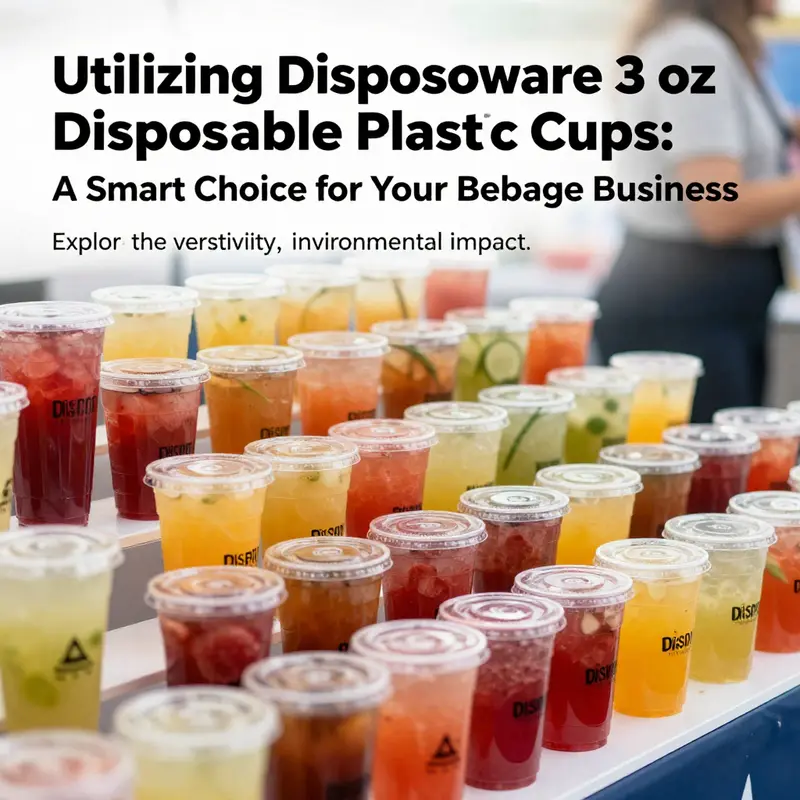
In the ever-evolving beverage service industry, choosing the right disposable materials can significantly affect both convenience and customer satisfaction. Disposoware’s 3 oz Disposable Plastic Cups, available in packs of 100, stand out for their versatility across various sectors, including bubble tea shops, restaurants, food trucks, and catering services. This article delves into their myriad usage scenarios, carefully considers their environmental implications, analyzes market demand, and compares them with other disposable options. Each chapter aims to provide a comprehensive understanding of why these cups can be an invaluable asset to your operations.
Tiny Vessels, Big Impact: How 3-Ounce Disposable Cups Streamline Service and Safeguard Sanitation

Across banquet tables, break rooms, and tasting stations, the three-ounce disposable cup quietly powers efficiency, safety, and satisfaction. These compact vessels do more than hold a sip; they embody a practical service philosophy: quick delivery, controlled portions, and hygienic handling in fast-paced environments. In practice, bulk cups enable fast replenishment, easy portioning, and clean presentation, helping staff focus on guest interaction rather than cleanup. A conference coffee station short on small cups becomes a bottleneck; lines slow, and guest experience suffers. The three-ounce cup steps in as a reliable partner: light enough to carry, sturdy enough for cold beverages, and clear enough to reveal a guest’s drink at a glance. The result is smoother workflows, a tidier presentation, and a guest experience that feels thoughtful and efficient.
The material core of these cups is deliberate and practical. Most cups are made from lightweight, transparent polypropylene (PP), balancing clarity with stiffness. Clarity helps guests verify contents at a glance; stiffness resists collapse under ice or grip, preserving upright presentation. The BPA-free composition addresses common safety concerns with food-contact plastics. A waved wall rim provides a comfortable grip for quick cycles, while nesting and stacking optimize storage and transport. The 3-ounce capacity, about 89 milliliters, supports consistent sampling and portion control in tastings or demonstrations, and the compact shape reduces waste and crowding on busy service lines.
Across use cases, the cups shine in cold beverage service and short-duration sampling. They are not designed for hot liquids, a design reality that keeps handling simple and safe. The bulk 100-count packaging suits events, offices, and kitchens by easing procurement, storage, and replenishment, while reducing packaging footprint. In operational terms, disposable cups cut washing time and water use, enabling staff to focus on replenishment and guest assistance. From classrooms and clinics to conferences and catering venues, the cup supports hygiene, speed, and consistent presentation in a scalable way. Sustainability note: PP cups are commonly recyclable where facilities exist; arrange clear disposal guidance to staff and guests and consider recycling streams to minimize environmental impact.
From Footprint to Footpath: Tracing the Environmental Journey of 3-Ounce Disposable Cups in a 100-Count World

The everyday ritual of a quick refill, a social toast, or a medical wash is often powered by a tiny, transparent vessel with a three-ounce capacity. These cups, sold in convenient bundles of a hundred, promise effortless use and minimal care: a discard at the end of a moment, a new moment, and a quick return to the cycle. Yet behind that simplicity lies a web of environmental considerations that challenge the notion of convenience as a neutral act. To understand the true footprint of these small, disposable cups, it helps to follow them from the moment raw materials are chosen, through the moment they leave a consumer’s hands, and into the complex systems that handle waste, recycling, and eventual fate. The journey, when traced in full, reveals a landscape where material choice, waste infrastructure, consumer behavior, and policy all converge to determine whether the act of throwing away becomes a net benefit or a latent burden on the planet.
At first glance, the material story of such cups seems straightforward. They are typically manufactured from common thermoplastics like polyethylene or, in some cases, polylactic acid. The latter is often presented as a more sustainable option because it is derived from renewable plant-based resources, such as corn starch. PLA’s appeal rests on the idea that a bio-based origin might translate into lower fossil fuel consumption and a reduced carbon tether to petrochemical economies. But the environmental equation is more nuanced than a single label can convey. The fate of PLA, after all, is not automatically benign simply because its feedstock is renewable. Disposal pathways play a decisive role in determining whether the material contribution translates into a real environmental advantage.
Recycling is a central hinge in the discourse around disposables. Many cups are marketed with recyclable claims, sometimes branded as 100% recyclable. In practice, however, recycling rates for disposable plastics remain highly uneven across regions. A cup can be technically recyclable, but if it arrives contaminated with liquids, or if it ends up in a municipal stream that lacks appropriate sorting and processing capacity, it escapes the recycling loop. Contamination is a ubiquitous obstacle: a few droplets of juice or coffee can complicate the separation process, increasing the chance that a batch of cups becomes non-recyclable and is diverted to landfills. The infrastructure needed to collect, sort, and process these cups is not uniformly available, especially in smaller towns, rural areas, or jurisdictions with limited waste management budgets. Even in places with robust recycling programs, the economics of recycling certain plastics—especially polyolefins and some multilayer or thin-walled plastics—can be challenging. The price signals that make recycling viable are often out of alignment with the costs of collection, transportation, and processing.
PLA’s story with regard to recycling is even more intricate. While PLA is compostable in theory, this is not a universal truth in practice. Effective industrial composting facilities are the environments designed to heat PLA sufficiently to drive it to decomposition within a reasonable timeframe. These facilities, however, are not universally available, and many communities lack access to industrial composting at all. When PLA cups end up in landfills, their bio-based origin offers little advantage. In such anaerobic, oxygen-poor environments, PLA degrades slowly, if at all, and the material can contribute to the same long-lived residue as conventional plastics. Even when PLA is composted properly, it is not a simple one-for-one environmental win. The broader lifecycle—cultivation of the corn, processing into resin, and energy used in manufacturing—still carries an environmental toll. The picture emerges clearly: the label “bio-based” or “compostable” does not automatically guarantee a lower overall impact unless the entire system—from origin to end-of-life—supports appropriate handling and rapid, efficient processing.
The lifecycle assessment of disposable cups, in a general sense, highlights this complexity. When you consider raw material extraction, resin production, bottle-to-jar manufacturing energy, and the emissions associated with transporting relatively lightweight products across distances, the cradle-to-grave footprint is rarely trivial. A comprehensive lifecycle analysis suggests that the environmental footprint of these cups cannot be reduced to a single metric like “lower carbon” or “higher recyclability” without acknowledging the interplay of multiple factors. In some contexts, the carbon footprint might appear modest when measured against heavier, more resource-intensive alternatives. In others, the overall environmental burden could be substantial if disposal streams are misaligned with the product’s material characteristics and if end-of-life options are constrained or underutilized. The nuance matters because it reframes a simple choice—use or reuse—into a broader decision about how communities, businesses, and households manage resources.
These considerations extend beyond the material science of the cup and into the realm of end-of-life management. Recycling, composting, and waste-to-energy pathways each come with distinctive opportunities and limitations. For example, recycling can conserve raw materials and reduce energy use relative to virgin resin production, but only if collection systems, sorting facilities, and downstream processors are functioning smoothly. Contamination and the lack of standardized labeling for recyclable streams can derail these advantages. Composting, while potentially beneficial for organic-wiber materials, faces practical barriers. Industrial composting requires temperature, humidity, and microbial communities finely tuned to accelerate degradation. The absence of such facilities in many localities means that even compostable cups, if not destined for the right processing channel, may end up in landfills where degradation is slow and resource recovery is minimal.
The broader question that emerges is not merely whether these cups can be recycled or composted, but whether the systems we rely on are aligned with the realities of material composition and consumer habits. If a product is deemed recyclable in principle but is rarely recovered through real-world recycling streams, its label can become a form of greenwashing by default. When that happens, the pressure to improve the end-of-life system becomes as important as the pressure to reform the product itself. This is not to say that the efforts to design more sustainable disposables are futile. Rather, it underscores that sustainability is a systemic attribute. It is a condition that requires not only thoughtful material choices but also a robust, accessible, and economically viable waste-management infrastructure that can handle the specific characteristics of what households and businesses throw away.
In practice, what happens in real life often hinges on local conditions as much as on laboratory metrics. The same cup that might be considered a relatively modest contributor to greenhouse gas emissions in a region with efficient curbside recycling can become a significant burden in a region that struggles with collection efficiency, contamination, and limited processing capacity. This situational variability invites a cautious stance toward universal claims about sustainability. It also encourages a more nuanced approach to decision-making that weighs the local realities of waste management, the feasibility of separation, and the availability of infrastructure for both recycling and composting. Such an approach pushes designers, manufacturers, and policy-makers to ask hard questions about whether a given disposable product is the right tool for a particular setting and whether alternative packaging options could better align with local waste-management realities.
From a policy perspective, the conversation often shifts from what a product is made of to how it is managed after use. Regulations that require clear labeling, standardize recyclable streams, and incentivize recycling and composting can help align consumer behavior with the capabilities of a locale’s waste system. In regions where alternative packaging streams are emerging, such as standardized compostable options or enhanced curbside recycling, the environmental calculus improves if these streams are genuinely accessible and cost-effective. Education also plays a critical role. When consumers understand what happens after disposal and why certain streams must be kept clean of contaminants, they are more likely to participate in recycling and composting programs effectively. Yet even with education, the system must provide practical, convenient pathways for waste to flow from consumer to processor. Without that, individual intent is unlikely to translate into tangible environmental benefits.
The broader narrative, then, is not a single linear storyline of production to disposal. It is a series of interconnected chapters where the material choice, the infrastructure, and the daily habits of users co-create outcomes. The three-ounce cup, small as it is, serves as a focal point for this complex tapestry. It embodies both the desire for convenience and the ongoing challenge of waste management in a world facing resource constraints and escalating waste generation. When planners consider a new event, a clinic, or a workplace break room, they often weigh not only the immediate metal- or plastic-use implications but also the downstream realities of the local recycling plant, the availability of industrial composting, and the probabilities of contamination creeping into a stream of recyclables. In other words, the same cup that satisfies a moment of need also tests the resilience of a community’s waste system.
This perspective invites experimental thinking about alternatives without demonizing one material class or another. Reuse, for instance, emerges as a compelling route to reduce the need for single-use cups in environments where washing facilities, durable containers, and simple hygiene practices are feasible. When reuse is practical, it can dramatically lower the per-use environmental burden by spreading the energy and material costs of production over many uses. In venues where waste streams are well-managed, a robust reuse culture could coexist with high standards of sanitation, delivering benefits that neither a single-use nor a purely compostable path can guarantee on its own. Even when reuse is not feasible, combining well-designed product stewardship with accessible recycling and composting options can close the loop more effectively than relying on a single end-of-life pathway.
To ground these reflections in practical terms, consider how an organization might approach procurement and waste policy around disposable cups. A prudent strategy begins with material awareness: understanding whether a cup is PE-based or PLA-based, and recognizing the implications for recycling or composting pathways in the local context. It continues with supply-chain transparency: selecting packaging options that are compatible with nearby processing facilities and that carry credible labeling for end-of-life processing. It extends to waste-management design: arranging convenient, clearly marked collection points, paired with education campaigns that help users distinguish between streams and understand what happens after disposal. And it ends with ongoing evaluation: monitoring contamination rates, assessing local facility capacity, and remaining open to switching to alternative packaging when the local infrastructure evolves. In that sense, the seemingly modest choice of a three-ounce disposable cup becomes a lens through which communities can reimagine resource use, waste sorting, and the integration of consumer behavior with policy and technology.
For readers who want to explore the broader academic context, lifecycle analyses of disposable products offer rigorous frameworks to quantify trade-offs and illuminate where real improvements are achievable. These studies remind us that even materials with renewable or recyclable promises require careful accounting of agricultural inputs, processing energy, transport emissions, and end-of-life processing. While the details vary by product and region, the overarching message remains consistent: sustainability is most robust when it is grounded in a system-wide view that spans from cradle to grave and actively engages the people who use and manage these items. When such perspectives guide procurement and waste-management decisions, the small, often taken-for-granted cups can become catalysts for more responsible consumption patterns across institutions and households alike.
Internal link for further reflection
For readers seeking a closely related, though non-plastic, take on eco-friendly disposables and design considerations, explore this resource on eco-friendly printed-logo paper cups with lids. It offers a lens into how labeling, branding, and material choices intersect with sustainability goals while illustrating how alternative packaging streams are presented and managed in consumer settings. eco-friendly-printed-logo-paper-cup.
External resource for deeper analysis
For a rigorous, peer-reviewed perspective on the lifecycle impacts of disposable products and their greenhouse-gas potential, see the study in the Journal of Cleaner Production. This external research provides a structured framework for comparing cradle-to-grave footprints across materials and end-of-life pathways, reinforcing the need for system-wide thinking when evaluating seemingly simple packaging choices. External reference: https://www.sciencedirect.com/science/article/pii/S0959652624007895
Small Vessels, Big Footprint: Market Dynamics of the 3 oz Disposable Cup Pack

Behind everyday tasks, a small, clear 3 oz disposable cup works as a quiet workhorse. Its capacity of about 89 milliliters is enough for a measured sip, a mouthwash rinse, a sample, or a medication dispensed in a controlled amount. The transparency and lightness of the cup make contents immediately visible and its disposable nature supports a quick turnover, minimizing cleanup time and reducing the risk of cross-contact. This combination of features makes the 3 oz cup a staple in several sectors where hygiene and convenience matter as much as price and storage.
In healthcare facilities, these cups are frequently used for mouthwash rinses or medications in precisely measured doses. The single-use design helps maintain sterile conditions between patients and simplifies inventory management because the cups can be distributed in bulk to wards, clinics, or home-care programs without requiring extensive sterilization protocols for each unit. Hospitality and service-oriented environments also rely on such small cups for water, juice samples, condiments, or as part of tasting menus. In beauty salons and spas, mini cups are handy for rinse water, scent samples, or as a hygienic way to offer trial portions. Within many homes and offices, the cups support quick hydration, sample tastings, or simple hygiene routines like rinsing after using mouthwash or applying topical products. The pattern across these settings is consistent: a need for discrete, portable, single-use containers that are inexpensive to purchase in large quantities, easy to store, and simple to dispose of after use.
The post-pandemic emphasis on sanitation has reinforced this pattern, shaping consumer expectations around hygiene without sacrificing convenience. People prefer disposable solutions that feel clean from the moment they pick them up, and the 3 oz size hits a sweet spot between usability and efficiency. For many buyers, the decision to stock a pack of 100 is driven not just by unit price but by the practical reality of keeping enough supply on hand without overstocking storage areas. In environments with fluctuating demand—event venues, clinics that operate on appointment-based schedules, or beauty studios booking multiple clients—having a reserve of 100 cups allows quick replenishment, avoids mid-shift shortages, and supports smooth workflows. The clear plastic material further assists users by exposing the liquid inside, which can reduce mistakes and improve service accuracy, particularly where dosing or measurement matters.
From a cost and logistics perspective, the economics of a 100-count pack is compelling for both individual consumers and bulk buyers. When manufacturers scale production to such standard pack sizes, per-unit costs drop, enabling retailers to offer low price points that still preserve margins. It is common to find these packs priced under a modest threshold, often making them accessible for small clinics or weekend event planners who must balance quality and cost. The ability to purchase as a single, straightforward bundle reduces shopping friction; buyers avoid negotiating multiple line items or negotiating for separate packaging configurations. The packaging itself—the outer carton designed to hold many cups—also optimizes storage and handling. In warehousing and distribution, a compact 100-count pack translates into straightforward stacking, easier shelf placement, and predictable shipping pallets. All of these factors combine to produce a stable revenue stream for manufacturers and a reliable supply channel for customers who rely on consistent availability.
Yet the same economic advantages that reinforce demand also invite scrutiny of environmental impact. Plastic single-use cups contribute to a broader packaging waste problem, particularly when used at scale in events, healthcare facilities, or hospitality operations that run on the rhythm of turnover rather than the cadence of longer service cycles. The industry is responding with a mix of strategies. Some producers emphasize recyclability; others explore biodegradable options made from plant fibers or compostable blends, while still maintaining the transparency and short-term performance customers expect. Regulatory trends and evolving consumer expectations have nudged suppliers to expand their portfolios beyond conventional plastics, especially for segments like take-away and in-venue service. The balance between maintaining low cost and delivering sustainability remains delicate, but it is a focal point for manufacturers who want to preserve access to this essential tool while reducing long-term ecological footprints.
On the demand side, the small size of the cup—3 ounces—promotes storage efficiency and transport efficiency that larger cups cannot match. In a world where space in a back room or a mobile event kit matters, the 89-milliliter cup helps minimize bulk while preserving versatility. This efficiency matters not only for the end user but also for the logistics chain. Carriers that move packaging products value items that maximize container fill rates and minimize wasted space on pallets. For clinics, spas, hotels, or catering outfits that rely on predictable inventory turns, the ability to forecast usage by the hundreds rather than by the dozens supports better budgeting and operations planning. And because the cups are typically transparent and disposable, they reduce the time needed for cleaning protocols between uses and decrease downtime during service shifts, which matters in high-volume settings.
Market dynamics also hinge on the broader disposable tableware landscape. A growing global market—driven by convenience, safety, and cost-effectiveness—supports steady expansion across regions and industries. The 3 oz cup is part of a family of small-format disposables that optimize both cost and space, enabling a wide range of operators to meet daily needs without committing to heavier, more expensive vessels. In this context, the growth trajectory becomes a function of how quickly manufacturers can scale, how efficiently they can source raw materials, and how well they can align distribution networks with seasonal demand. The economics of scale are clear: large-volume production reduces unit costs and enhances profitability, an equation that aligns with the needs of both small businesses and large buyers who require predictable pricing.
Industry analyses released in recent years highlight a favorable growth outlook for disposable tableware, with small-sized cups enjoying notable momentum as a result of cost containment and space efficiency. The numbers reflect a broader pattern: when consumers and businesses prioritize sanitation, convenience, and predictable pricing, demand for compact, single-use options remains resilient even as the market explores more sustainable materials. Across the globe, manufacturers and distributors report steady order flow for 3 oz packs, with buyers ranging from medical clinics and wellness centers to event organizers and hospitality outlets. The ability to source these cups in bulk—often in 100-count configurations—helps these buyers manage budgets and risk. With a predictable price point and a straightforward utility, the 3 oz disposable cup becomes a practical bedding for the operations of many service-oriented businesses.
For readers who want a broader frame of reference beyond the micro-level use cases, the landscape is illuminated by market research that projects ongoing expansion for disposable tableware through the next several years. A widely cited outlook from a leading analytics firm places the global disposable tableware market on a growth path, with a compound annual growth rate in the mid-single digits through 2030. This frame underscores that even as consumer preferences shift toward sustainability, the structural reasons for demand—hygiene, convenience, packaging efficiency, and cost—remain robust. The 3 oz cup, as a representative of small-format disposables, benefits from that macro trend, while suppliers continue to experiment with materials and coatings that balance performance with environmental considerations. The result is a market that rewards those who can deliver consistent quality at scale, while remaining attentive to the evolving expectations of customers who seek cleaner, more responsible packaging options.
As buyers consider options for this essential tool, they also weigh complementary choices that extend beyond traditional plastic. The relative ease of switching to paper-based or compostable alternatives for some applications makes sense when the service context involves a focus on sustainability or a capped usage window. The decision can hinge on a mix of factors—cost, compatibility with other service materials, and the end-of-life pathways available to customers. For operators who want to explore related packaging solutions, a related resource discusses paper-based disposable cups with lids and other take-away formats, offering insights into how different materials perform in similar contexts. Here is a link to a related exploration: hot-sale customized disposable single-wall paper ice-cream cups with lid. This example illustrates how the choice of cup material and design can shape operational decisions, from storage requirements to merchandising opportunities in a single venue.
The market, therefore, sits at an intersection of discipline and adaptability. Producers benefit from the efficiency of standardized packaging like the 100-count configuration, which streamlines procurement and reduces logistical friction. Buyers—from clinics to cafés to event organizers—gain from predictable pricing, straightforward stock management, and the ability to plan around consistent supply. The ongoing dialogue between these sides continues to push the category forward, prompting ongoing refinements in manufacturing processes, resin formulations, and distribution strategies. In this dynamic, the 3 oz cup emerges as more than just a disposable vessel; it is a small, pragmatic instrument with a tangible impact on how organizations run their routines, how they adhere to hygiene standards, and how they manage the balance between cost control and service quality.
For a broader market view, see the disposable tableware market report referenced in industry analyses, which highlights continued growth and evolving opportunities across segments and regions. External resource: https://www.grandviewresearch.com/industry-analysis/disposable-tableware-market
Small Vessels, Big Decisions: Weighing 3‑Ounce Disposable Cups Against Paper, PLA, and Reusables in Modern Service

The 3‑ounce disposable cup is a deceptively simple tool. It is a small, clear vessel that can hold a modest amount of liquid, a dab of condiment, or a measured dose of medicine, and it often arrives in a bulk pack of one hundred for quick, economical distribution at events, labs, or busy workplaces. Its unassuming form—transparent, light, and single-use—belies a complex set of tradeoffs that become especially visible when you scale up, whether you are planning a conference reception, a daycare clinic, or a campus lab where every practical choice ripple-quickly into costs, waste, and environmental impact. When we examine these cups in the context of other disposable options—paper, PLA, and the lasting question of reuse—the decision comes into sharper relief. The conversation moves beyond price per cup and into material safety, environmental responsibility, functional performance, and future policies that could reshape the cost calculus for anyone who routinely supplies beverages, samples, or test materials in small volumes.
From a safety standpoint, the material makeup of these small cups matters more than their size would suggest. They are typically produced from conventional plastics such as polystyrene or PET, selected for clarity and low cost. Each material carries its own profile of hazards and interactions with temperature. Polystyrene, for instance, has long been scrutinized for the potential migration of styrene when exposed to hot liquids or extended storage. This is not a universal warning against all uses, but it does push practitioners to think carefully about the temperature and duration of contact. PET, while often praised for clarity and toughness, is not a universal hot-drink solution either. Recent testing conducted in 2026 noted that microplastics did not appear in cups made from PS, PET, PLA, or coated papers after boiling-water immersion. Yet, such testing cannot conclusively rule out chemical migration under different conditions. The takeaway is practical: for cold or room-temperature servings, most plastics perform reliably; for hot beverages, the risk–benefit balance shifts toward materials designed for heat, and toward coatings and designs that are explicitly rated for hot use.
Paper cups coated with polyethylene or other barriers present a familiar alternative, especially for hot liquids. The PE coating can make paper cups suitable for hot beverages up to around 90°C, a relatively comfortable range for many coffees and teas. However, coatings are not without their own concerns. Some samples have shown fluorinated compounds in certain coatings, and precise limits can vary by jurisdiction and testing regime. Breathing room exists between “safe for hot drinks” and the broader environmental and regulatory implications of coatings that complicate recycling. Wax-coated options are generally better for cold drinks but fail under heat, warping or melting when subjected to warmth. Against this backdrop, paper cups offer a different advantage and risk profile than plastics: a renewable material base, but potential recycling complications due to barrier layers, and, in some cases, a higher per-unit cost.
Bioplastics such as PLA aim to blend disposability with a more favorable environmental story. PLA cups are sold as compostable and derived from renewable resources. The real-world performance, however, depends heavily on disposal conditions. Industrial composting facilities can break PLA down under controlled heat and moisture, but home composting or informal waste streams often fail to achieve the necessary environment, leaving PLA to persist longer than intended. Microplastic migration tests under standard conditions have not flagged significant migration, but the temperature sensitivity of PLA makes hot-liquid applications more uncertain than with some other materials. In practice, PLA cups fit well where composting infrastructure exists and where hot liquids are less common, or where waste streams can be carefully separated and directed to appropriate facilities.
A broader truth emerges when we compare these disposables with durable, reusable options. Stainless steel, glass, or high-quality BPA-free plastic travel cups, when cleaned and reused, dramatically reduce the waste burden of short-lived disposables. The long-term energy and material costs of producing new cups repeatedly pale in comparison to the cumulative impact of a well-managed reuse system. In any thoughtful sustainability plan, reusables offer the strongest environmental upsides, even if their upfront price and responsibility for cleaning are higher. Between disposables, PLA and paper can be seen as middle-ground choices—more sustainable in the right waste-management context, but not universally so across all regions and systems.
Cost is the final lens through which many buyers view this choice. The economics of a single 3 oz cup may appear simple—low per-unit cost, a straightforward bulk purchase, and predictable invoice line items. When scaled to dozens or hundreds of uses in a week, however, the calculus shifts. The typical plastic cup may fall into a broad range of roughly one cent to two cents per unit in large-volume marketplaces, depending on the exact resin, finish, and packaging. PE-coated paper cups can be in the same neighborhood per unit, with a little more variability driven by coating thickness, brand, and bulk discounts. PLA cups tend to sit higher on the price scale, reflecting material costs and processing needs. Reusable options, by contrast, demand a higher initial outlay but can amortize costs over many uses. The economics of long-term waste management, product stewardship, and potential regulatory changes further tilt the scales. If a city-sponsored program prices cups on a per-use basis or imposes takedown fees for waste, the case for reusables often becomes numerically stronger. In contrast, in a minimal-waste operation or a micro-event scenario with limited turnover, disposables are still the simpler, more predictable option.
Regulation and market trends loom large in shaping this landscape. A growing chorus of policymakers is moving to curb single-use plastics, in part to curb waste and embedded environmental risk. In some regions, bans or taxes are already in place or slated to expand. The EU has set ambitious timelines for reducing single-use plastics, and there are concrete policy moves in other jurisdictions—such as cup pricing schemes and reusable-by-default requirements—that complicate the long-run economics of disposables. The practical implication for organizers and facilities managers is clear: even if disposables are today the cheapest and most convenient option, the regulatory horizon can narrow their appeal over time. In places where a fee per cup or a mandatory reuse policy is introduced, the cost of single-use cups climbs and the case for durable, reusable systems strengthens. Conversely, in settings where waste systems and composting infrastructure are robust and well-integrated, compostable or paper alternatives may offer a more favorable balance between convenience and environmental performance.
These layers of material science, environmental impact, performance, and policy all converge on a few guiding judgments for anyone choosing a small cup in practice. For cold or room-temperature servings, these cups are generally safe and effective. The risk profile for hot liquids makes it prudent to consider PE-coated paper or heat-rated plastics, depending on the exact use case. In the environmental realm, reusables remain the superior option in most long-running scenarios, with compostable and coated paper solutions offering meaningful gains where the waste stream is well-tuned to those materials. And in the economics department, the “best” choice is a moving target that shifts with scale, waste handling capabilities, and regulatory developments.
To illustrate how an on-the-ground choice might unfold in a real-world setting, consider a mid-sized conference with a catering station and a lab station for sample collection. The hot beverage line would generally benefit from a material that maintains integrity and insulation, reducing heat transfer to the hand and minimizing leakage. A double-wall paper cup with a reliable barrier can deliver superior insulation and user comfort for hot drinks, while also offering a branding canvas if needed. The cold beverage and sample portions could be served in clear plastic cups or PLA cups, depending on the facility’s waste-management strategy and whether the goal is rapid turnover of samples with minimal handling. If the operation is deeply committed to waste reduction, implementing a reusable cup program—paired with a robust cleaning and sanitizing process—could transform operating costs and environmental impact over the event’s duration. In a setting where composting is feasible and widely utilized, PLA would be a reasonable compromise between disposability and environmental performance. Where neither composting nor recycling is robust enough, PE-coated paper may provide a more recyclable pathway, albeit with caveats about coating separation during processing.
This is where the choice becomes less about a single product and more about an integrated system. The right combination of disposables, coatings, and reuse strategies must align with local waste streams, energy budgets, and regulatory expectations. A simple price comparison will not reveal the full picture; the true value lies in durability during service, safety for the intended use, and the life-cycle footprint of the chosen path. The question is not only what is cheapest today, but what will be most responsible, scalable, and legally compliant over the next few years.
In pursuit of practical guidance, it helps to anchor decisions to a few concrete cues. For hot beverages, lean toward materials explicitly rated for heat—whether a heat-tolerant plastic or a PE-coated paper option that can reliably insulate and contain. For cold beverages, sampling, or non-beverage uses like oral medications or lab rinses, the clear plastic or PLA options provide straightforward performance with an environmental calculus that varies by disposal infrastructure. For venues that aim to minimize waste altogether, a well-managed reusable cup program combined with a standardized cleaning workflow can dramatically cut both cost and waste. In all cases, a holistic view that weighs safety, waste streams, and policy trajectories will tend to yield the most durable and responsible choice.
As you map these considerations to your own operation, you may find yourself drawn to specific language in supplier documents or industry guidelines. The thread that runs through the discussion is clear: the choice of a 3 oz cup is not just about capacity or clarity; it is about risk, resource management, and the evolving expectations of how we handle disposables in modern service systems. If you are exploring eco-friendly options beyond traditional plastics, you can explore examples of coated-paper options versus compostable bioplastics in a broader catalog of suppliers. For a practical example of how eco-friendly paper options are positioned, see this supplier page: senang07-eco-friendly-printed-logo-paper-ice-cream-cups-with-lid-ice-cream-paper-bowl-paper-ice-cream-cups-with-lid.
The real-world takeaway is that the best choice is rarely a single option in isolation. Instead, it is a thoughtfully assembled package that fits the scale of your operation, the needs of your customers or participants, and the waste-management reality of your location. The 3 oz disposable cup sits at the intersection of convenience and consequence. It remains a dependable tool for certain tasks, but its suitability shifts with the temperature of the contents, the infrastructure available for disposal, and the direction of regulatory and public expectations. In planning for the near term, prioritize solutions that offer robustness and clarity for cold uses, while keeping an eye on alternatives that minimize waste and hazards when hot use, or when environmental stewardship is a higher priority.
For readers who want to anchor the environmental discussion in a broader marketplace perspective, the external literature and supplier catalogs illustrate how different materials stack up in terms of compostability, recyclability, and life-cycle impact. A representative external resource provides a window into compostable options with PLA commitments and industrial composting pathways. This resource helps frame the trade-offs between immediate disposability and longer-tail environmental performance, especially for facilities that have the infrastructure to support industrial composting. External resource: https://www.alibaba.com/product-detail/Custom-Compostable-3oz-Ice-Cream-Cups-PLA1600578641822.html?spm=a2700.galleryofferlist.pproductDetail.2.7d4a5f77tRmJYr
Final thoughts
In conclusion, Disposoware 3 oz Disposable Plastic Cups offer exceptional versatility and practicality for beverage businesses, catering groups, and event planners alike. Their lightweight and transparent design not only accommodates various liquids but also aligns with the operational needs of high-traffic service settings. As we’ve explored, environmental considerations and market trends play a pivotal role in the decision-making process for businesses. By making informed choices about your disposable supplies, you can enhance service quality while keeping an eye on sustainability. Partnering with Disposoware can be an invaluable step towards optimizing your operational efficiency as well as your customer satisfaction.