
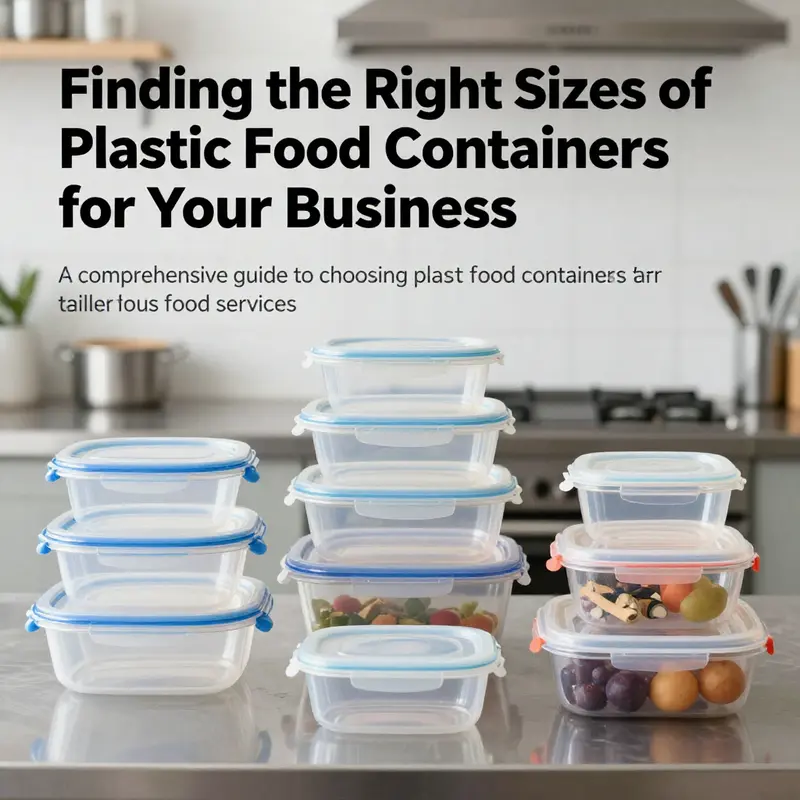
The choice of plastic food containers can significantly impact the efficiency and presentation of your culinary offerings. Whether you own a bubble tea shop, manage a food truck, or plan events, understanding the available sizes of plastic food containers is crucial for seamless operation. This article explores the different dimensions of square, round, and industrial plastic food containers, providing insights into their specific applications to help you make well-informed choices. Each chapter delves into the sizing specifics, ensuring you select the perfect container for your food service, aligning with your brand identity and operational needs.
Measured Boundaries: The Square Footprint of Plastic Food Containers and Its Role in Storage, Portioning, and Movement

Geometry shapes more than aesthetics; it guides how food is stored, how meals are portioned, and how containers move through households and kitchens. The square form is valued for its predictable footprint on shelves, in lunch bags, and in transport crates. Its flat sides maximize wall space, enable stable stacking, and simplify labeling. Across home, catering, and retail environments, square containers support efficient organization and consistent portioning. For practical use, standard square sizes align with fridge shelves and pantry grids, while lids and seals are designed to fit without gaps that invite leaks. In real-world data, however, occasional anomalies remind us to cross-check dimensions against actual geometry and tolerances. Typical tolerances of +/- 3 percent ensure reliable stacking without surprises during automated handling. The square family extends from compact 500 ml units to larger 5 L variants and even into bulk drums for industrial use, all sharing a common logic: a uniform footprint that translates into better space utilization and throughput.
Circles of Containment: How Round Sizes Shape Plastic Food Containers

Round plastic food containers occupy a central role in kitchens and food-service operations. Their round geometry influences handling, storage, sealing, and consumer experience. Sizes range from small portions to bulk capacities, and each size supports different applications, from single-serve desserts to family meals. The round shape promotes even heat distribution, easier lid alignment, and predictable nesting of lids with bases, which simplifies stock management and reduces picking errors. In practical terms, 8 oz to 16 oz containers serve condiments and snacks, while 750 ml to 1 liter options support meals, leftovers, and lunch-pack bundles. Larger formats, such as 5 to 20 liters, address bulk storage and transport in warehouses and catering settings. Materials commonly used include food-grade polypropylene and other polymers that offer rigidity, chemical resistance, and cleanable interiors. Standards and testing ensure safety, hygiene, and reliable performance across brands. The round design also facilitates modular stacking, grip during handling, and consistent sealing behavior that helps reduce leaks and waste. In sum, the circle is more than a shape; it is a practical system that links portion control, storage efficiency, and user experience.
From Bento to Bulk: The Hidden Geometry of Plastic Container Sizes

The world of plastic food containers is a landscape of shapes and measurements that quietly organize how meals are prepared, stored, and transported. From compact bento boxes to industrial drums, each dimension – length, width, height, and diameter – encodes a practical logic of stacking, compatibility, and hygiene. In kitchens and warehouses, square footprints support orderly shelving; round bowls optimize sealing and heat distribution; cups and bowls illustrate how small variations ripple through an entire supply chain. Standards such as GB/T 18006.1-2009 and GB 9687 provide a shared vocabulary so equipment and lids interoperate across brands and borders. The result is a predictable system where tolerances, material choices, and closure designs work together to keep products safe, accessible, and cost-effective through every step of handling, from storage to service to reuse.
Final thoughts
Selecting the right sizes of plastic food containers is pivotal for optimizing your business operations, enhancing food safety, and elevating the customer experience. Whether you need square, round, or industrial options, understanding the specifications will empower you to make strategic decisions that align with your offerings. Choose wisely, and you will not only enhance the efficiency of your operations but also reflect professionalism in how you serve and store food.