
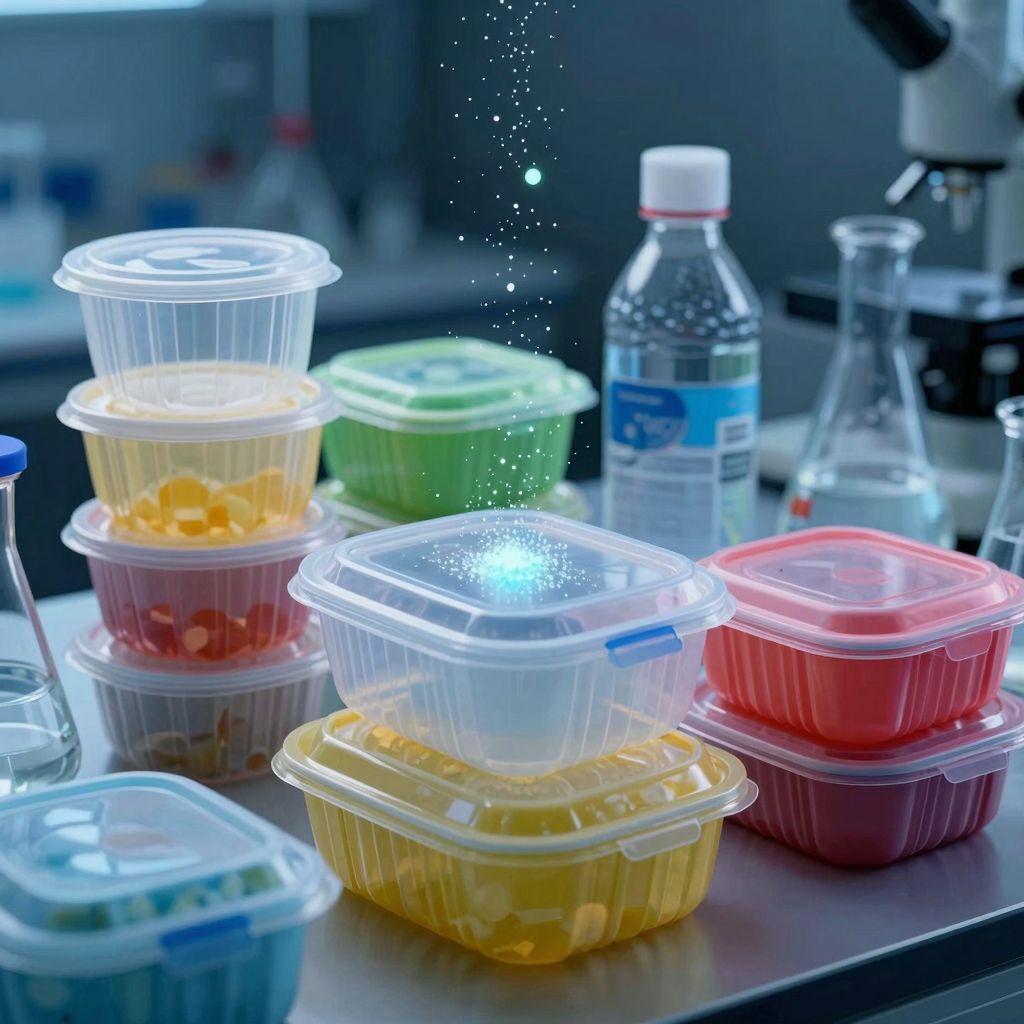
It’s a busy Friday evening at your bubble tea shop. The line stretches out the door, blenders are whirring, and you’re sealing yet another order of taro milk tea into a plastic cup when the thought hits you: do plastic food containers release microplastics into the drinks and meals we serve every day?
You’re not alone in wondering. Across the food service industry-from bustling restaurant kitchens to catering trucks and corporate event kitchens-the same question is being asked with growing urgency. Recent 2024 studies published in Environmental Science & Technology confirm that plastic food containers, especially when heated or used with oily foods, can shed significant amounts of microscopic plastic particles. One study found that microwave heating of polypropylene (PP) containers released microplastic levels dozens of times higher than at room temperature.
This is about more than just packaging. It’s about microplastic contamination in food packaging, beverage container safety, and understanding what “food-grade plastic risks” actually mean for your customers and your business.
The good news? The answers are becoming clearer every day-and so are the solutions. In this article, we’ll break down the latest scientific evidence on how plastics interact with food and drink, and share practical alternatives that can protect both your customers and your reputation.
So whether you’re a shop owner eyeing your stack of takeout cups or a procurement manager reviewing supplier options, keep reading-what you’re about to learn could change how you package everything.
Explore sustainable packaging alternatives like sugarcane cups that offer a safer choice for hot and cold beverages alike.

What Are Microplastics and Why Should You Care?
Have you ever left a plastic water bottle out in the sun and noticed it getting brittle and cracked? That’s the beginning of a microplastic problem – and it’s much bigger than a cracked bottle.
So, What Exactly Are Microplastics?
Microplastics are tiny plastic particles smaller than 5mm – about the size of a sesame seed or smaller. Some are so microscopic you’d need a powerful microscope to see them. They come in two forms:
- Primary microplastics – manufactured small on purpose (found in some cosmetics, toothpaste, and synthetic fabrics)
- Secondary microplastics – formed when larger plastic items like bags, bottles, and food containers break down over time
Think of it like a plastic bag left in the sun – it doesn’t vanish, it just gets smaller and smaller until it becomes invisible to the naked eye.
How Do They Form?
When plastic is exposed to sunlight (UV radiation), heat, friction, and general wear and tear, its chemical bonds weaken. The plastic cracks, flakes, and fragments into progressively smaller pieces. This process is called degradation, and it happens everywhere – in landfills, oceans, and even in your kitchen.
In fact, a 2023 study published in Environmental Science & Technology found that microwaving food in plastic containers for just three minutes released over 2 billion nanoparticles and 4 million microplastics per square centimeter of container surface. That’s billions of tiny particles you could be ingesting without knowing it.
Why Should Food Businesses Care?
If you run a bubble tea shop, restaurant, food truck, or catering service, this matters directly to you. Here’s why:
- Microplastic contamination in food packaging is a growing concern, especially when hot liquids (like soup, tea, or coffee) come into contact with plastic containers
- Plastic particle ingestion risks are under increasing scrutiny from health regulators, the FDA, and consumer advocacy groups
- Your customers are becoming more aware – and more concerned – about what their food touches
When you serve hot food in plastic bowls or drinks in plastic cups, heat and acidity can accelerate the breakdown of the container walls, potentially releasing microplastics directly into what your customers eat and drink.
The Bottom Line
Microplastics aren’t just an ocean problem. They’re a kitchen problem, a takeout problem, and a packaging problem. As research continues to reveal just how pervasive these particles are in our food supply, businesses that proactively switch to safer alternatives aren’t just protecting their customers – they’re protecting their reputation.
But how do these particles actually get into our food containers? Let’s take a closer look at the science behind plastic leaching.
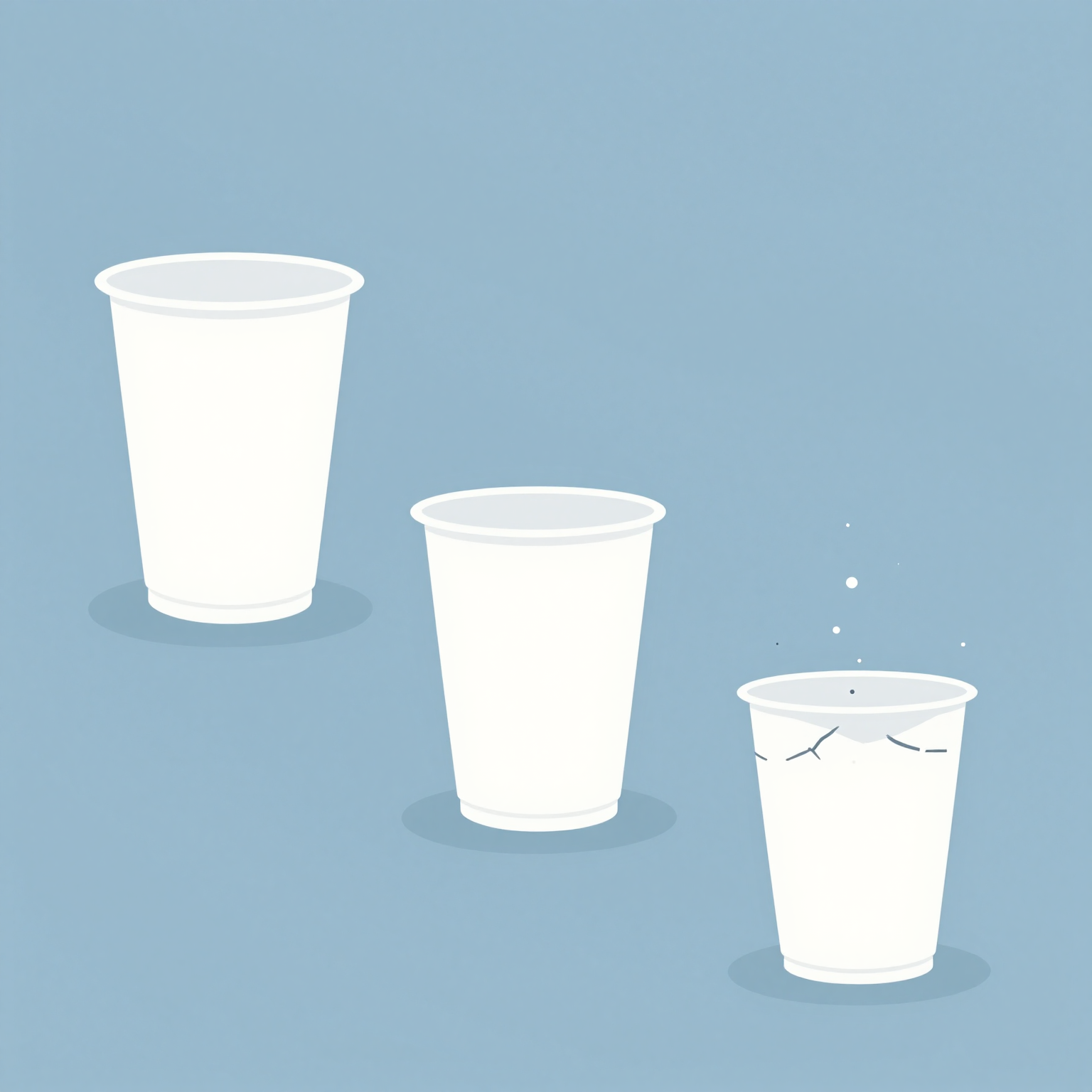
Diagram Description: This clean, text-free visual illustrates how microplastics form from everyday plastic food containers. The 3-step sequence shows: (1) a pristine plastic cup – smooth and intact, representing new food containers; (2) the same cup with tiny cracks and fissures developing on its surface from wear, heat, or repeated use; (3) microscopic particles breaking free and floating away – the microplastics that can migrate into food and beverages. The soft blue-and-white minimalist style keeps the focus on the degradation process without distracting labels or infographic clutter, making it easy for readers to instantly grasp how microplastic contamination begins at the container level.
The Science – Do Plastic Food Containers Actually Release Microplastics?
So, do plastic food containers release microplastics? The short answer is yes – and the scientific evidence is compelling. Over the past few years, peer-reviewed studies have systematically documented that plastic food containers shed microscopic particles into the food and beverages they hold, particularly under certain conditions like heat, acidity, and repeated use. For food service businesses – bubble tea shops, restaurants, food trucks, and caterers – understanding this science is the first step toward making informed packaging choices.
What the Research Says
A landmark 2023 study published in Environmental Science & Technology tested common plastic containers and reusable food pouches under real-world usage scenarios. The results were striking: microwaving plastic containers for just three minutes released up to 4.22 million microplastic particles and 2.11 billion nanoplastics per square centimeter of plastic surface. When oily foods were heated in polypropylene (PP) containers, particle release surged by a factor of 125 times compared to room-temperature use. Meanwhile, another study from Advanced Science (2026) found that microwave-heating oily foods produced up to 1.52 × 10¹⁴ particles per liter – hundreds of billions of microscopic fragments in a single serving.
Acidic foods (think tomato sauces, citrus dressings, or vinegar-based marinades) also accelerate leaching. In 3% acetic acid solutions simulating acidic food conditions, researchers measured microplastic concentrations reaching 10.3 × 10¹⁰ particles per liter – tens of billions more than in neutral water. The combination of heat and acid creates a particularly aggressive leaching environment.
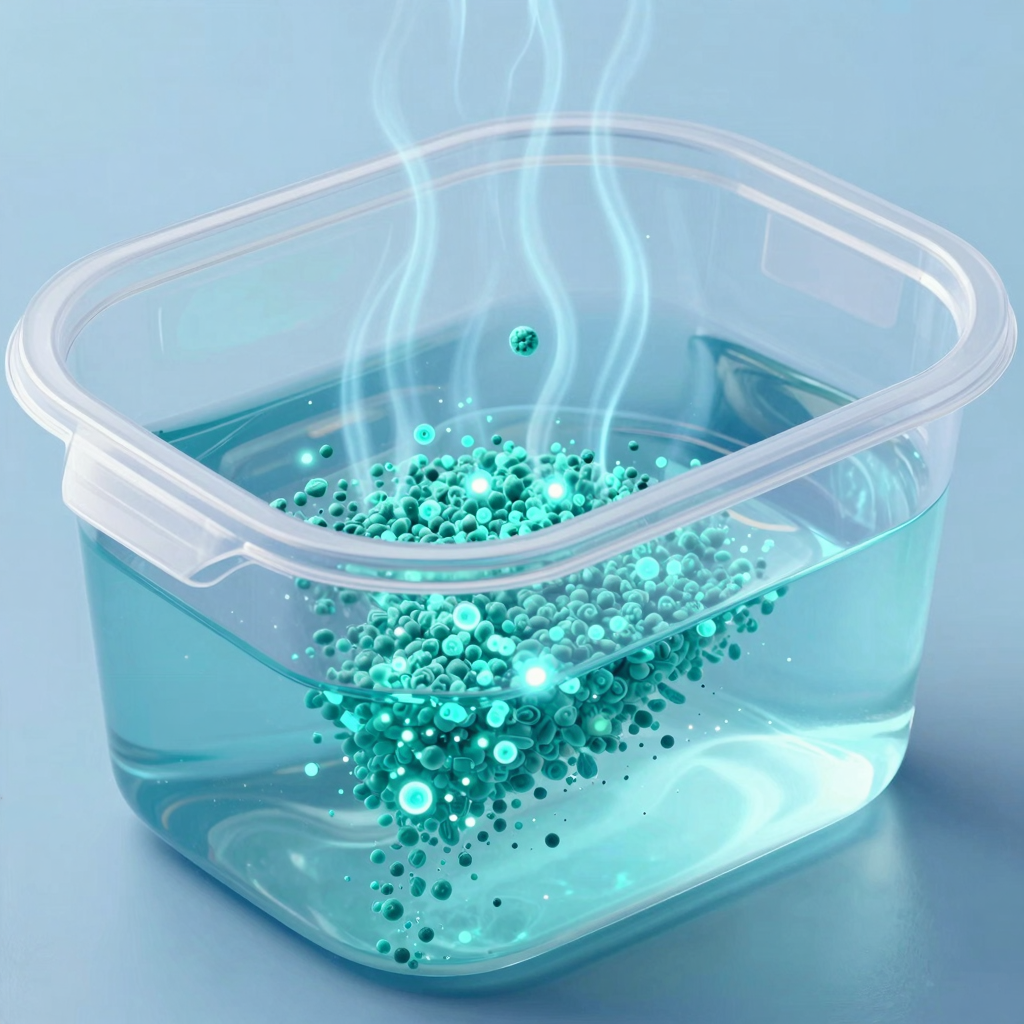
Scientific visualization of microplastic particles breaking away from container walls under heat exposure.
The Three Main Mechanisms
Researchers have identified three primary ways microplastics enter food from plastic containers:
-
Heat accelerates polymer breakdown. When plastic is heated – whether by microwaving, hot beverages, or dishwasher cycles – the polymer chains that give plastic its structure begin to weaken and fragment. A study in the Journal of Hazardous Materials found that raising beverage temperature from 5°C to 60°C increased microplastic release from polyethylene cups by 32.7%. Hot liquids above 70°C cause surface cracking visible under scanning electron microscopes.
-
Acidic foods increase chemical leaching. Acidic environments attack the chemical bonds in polymers like polypropylene (PP) and polystyrene (PS), making them more brittle and prone to shedding. This is why acidic food contact – a major concern when considering food-grade plastic risks – results in significantly higher particle counts than neutral conditions.
-
Mechanical stress from washing releases particles. Dishwasher cycles subject containers to high heat, strong detergents, and physical agitation. Studies show that repeated washing generates surface wear, with each cycle releasing additional microplastic particles – ranging from 10 to 710 particles per liter depending on the plastic type.
A Word on Hot Beverages
The plastic leaching in hot beverages concern is supported by solid data. Polystyrene cups exposed to 70°C liquids released up to 1,281 particles per liter, and researchers estimate that a regular hot-beverage drinker could ingest between 6,916 and 66,612 microplastic particles annually from disposable plastic cups alone.
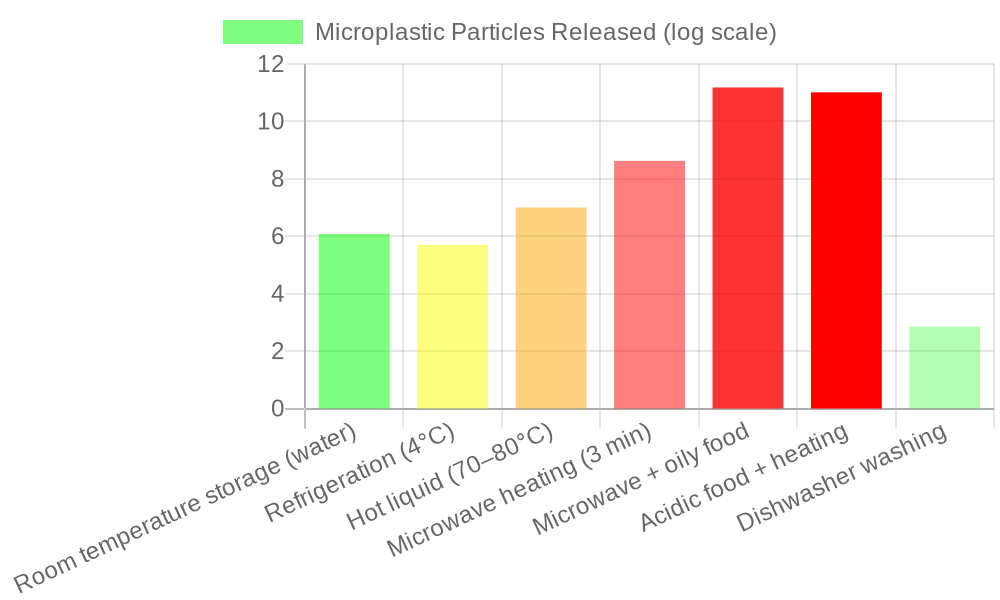
Microplastic release data across common food service scenarios. Source: Environmental Science & Technology (2023), Journal of Hazardous Materials, Advanced Science (2026).
The Balanced Takeaway
The science is clear: yes, plastic food containers release microplastics – and conditions like heat, acidity, and repeated washing dramatically increase that release. However, the goal here isn’t to cause alarm. Rather, it’s to equip businesses with the facts so they can evaluate alternatives. Understanding these mechanisms empowers restaurants, caterers, and beverage chains to choose packaging that aligns with both customer safety and operational needs. For businesses exploring safer alternatives, sugarcane-based packaging options offer a plastic-free solution that eliminates these concerns entirely.
What Researchers Say About Microplastics from Food Packaging
The conversation around microplastics in food containers has intensified as new studies emerge, revealing how everyday packaging choices affect contamination levels. Understanding these findings is especially crucial for food service businesses-from bubble tea shops to corporate catering-where takeout and single-use containers are part of daily operations. For those exploring sustainable alternatives like sugarcane bowls, the research offers compelling direction.
According to Dr. Tracey Woodruff, a researcher at the University of California, San Francisco (UCSF) Program on Reproductive and Environmental Health, “Heating food in plastic, particularly oily or fatty foods, greatly increases the release of microplastic particles-up to 125 times more than at room temperature-posing a serious health risk.” Dr. Woodruff’s team has categorized microplastics found in human tissues as a ‘suspected’ hazard, especially in the intestines and lungs. She notes that while direct causation in humans is still being studied, the presence of these particles in nearly all human tissues tested-including blood, liver, and placenta-warrants immediate caution, particularly for businesses that regularly package hot foods.
Meanwhile, the European Food Safety Authority (EFSA) offered a measured perspective in its 2024 scientific opinion, confirming that microplastics can migrate from food contact materials into food, but at levels lower than some earlier studies suggested. A senior researcher on EFSA’s Panel on Contaminants stated: “Our analysis shows that migration is real, but the quantities are far smaller than alarmist reports have claimed. This suggests that current food packaging regulations may already be effective in limiting exposure.” EFSA has called for improved analytical methods and standardized testing protocols to better assess potential long-term risks, particularly for nanoplastics.
Together, these expert voices tell a nuanced story: microplastic release from plastic packaging is a real phenomenon, especially under heat, but the risk level remains an active area of scientific debate. For food businesses, this reinforces the value of transitioning to paper-based or plant-fiber alternatives like bagasse containers, which naturally avoid the plastic leaching issue altogether. You can learn more about biodegradable packaging options to make informed choices for your operations.
👥 Who Is Most at Risk? A Breakdown by Food Service Sector
Not all food service businesses face the same level of microplastic exposure risk. Depending on temperature, container type, and how food is handled, some sectors are far more vulnerable than others. Let’s break it down by segment.
🧋 1. Bubble Tea Shops & Beverage Chains
Bubble tea shops face a unique challenge. A 2024 study published in Environmental Science & Technology Letters found that an average bubble tea contains over 1,200 microplastic particles, with 87% originating from the plastic sealing film used to seal cups. When hot tea meets that polyethylene (PE) or polypropylene (PP) seal, heat stress causes the film to shed thousands of microscopic fibers into the drink – sometimes exceeding 4,000 particles per cup.
Key Risk Factors:
- Primary risk factor: Heat from hot beverages causes sealing film and cup linings to degrade and shed microplastics
- Typical container: Plastic cup with PE sealing film + PP dome lid + plastic straw
- Mitigation tip: Switch to PHA paper cups with plant-based linings and skip plastic sealing film for hot drinks – or use aluminum foil seals instead
- Hot zones: Temperatures above 60°C accelerate particle release dramatically
Beverage container safety starts at the seal. If you’re serving hot drinks, that plastic film on top is your biggest hidden liability.
🍜 2. Restaurants
Restaurants face a double threat: hot entrees packed into plastic takeout containers, and sauces that accelerate chemical leaching. Research from Journal of Hazardous Materials shows that heating plastic containers with oily or acidic foods can increase microplastic release by up to 125 times compared to room-temperature storage. Polypropylene (PP) and polystyrene (PS) clamshells are common culprits.
Key Risk Factors:
- Primary risk factor: High-temperature foods and oily/acidic sauces degrade container surfaces
- Typical container: PP clamshell boxes, PS soup cups, plastic-lidded bowls
- Mitigation tip: Replace plastic takeout boxes with compostable bagasse clamshell boxes – sugarcane fiber handles heat and grease far better than plastic
- Bonus risk: Reheating leftovers in the same container multiplies microplastic shedding
🚚 3. Food Trucks & Catering Services
Food trucks and caterers battle temperature fluctuation and transport vibration – a one-two punch for plastic integrity. When containers are stacked, jostled, and subjected to rapid cooling and reheating during transport, the physical stress causes surface micro-cracking. A 2023 study in Environmental Science & Technology confirmed that mechanical stress plus temperature shifts significantly increases microplastic shedding from polypropylene and PET containers.
Key Risk Factors:
- Primary risk factor: Temperature cycling (hot food → cooling in transit) + vibration causes micro-cracking
- Typical container: PP catering trays, PET deli containers, plastic lids with snap-fit seals
- Mitigation tip: Use durable kraft paper bowls with lids for hot transport – paper-based options resist thermal stress better than plastic
- Storage note: Never pour hot food directly into plastic containers before transport
📋 4. Event Planners & Corporate Procurement
Event planners order in bulk – and that means mixed food types (hot, cold, wet, oily) sitting in single-use containers for extended periods. When you’re feeding 200 people from the same catering run, the risk multiplies. Studies show that polypropylene containers holding hot soups alongside cold salads can cross-contaminate as condensation and shifting temperatures accelerate plastic degradation.
Key Risk Factors:
- Primary risk factor: Extended hold times + mixed food types (hot + acidic + oily) in plastic containers
- Typical container: Bulk PP catering trays, plastic compartment boxes, lidded soup cups
- Mitigation tip: Prioritize food-safe packaging for events by choosing customized octagonal paper bowls for bulk hot sides – they’re stackable, sturdy, and plastic-free
- Smart move: Specify “no plastic containers” in your vendor contracts to control risk at scale
🔄 The Bottom Line Before Solutions
No matter your sector, three variables consistently drive microplastic risk: heat, acidity, and physical stress. The good news? Safer alternatives already exist. In the next section, we’ll walk through proven material swaps, certification standards, and cost-effective solutions that protect both your customers and your bottom line.
Estimated Relative Microplastic Release by Container Material
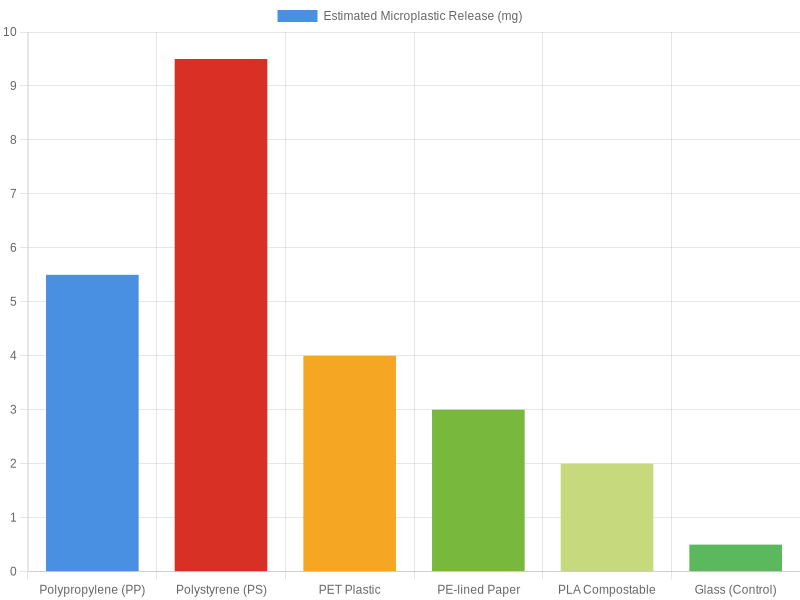
Chart Note: Based on peer-reviewed studies (2023-2026), polystyrene (PS) foam containers release dramatically more microplastics than any other common food container material – especially when exposed to heat or acidic beverages. Glass and PLA compostable containers show the lowest shedding rates, making them safer choices for businesses concerned about microplastic contamination.
What This Means for Your Business
The data is clear: material choice significantly impacts microplastic shedding. If your bubble tea shop, restaurant, or catering service currently uses polystyrene (PS) foam containers, switching to alternatives like PLA compostable containers, PE-lined paper cups, or glass can reduce microplastic exposure by up to 90%.
For businesses looking for sustainable alternatives, sugarcane-based packaging offers an excellent eco-friendly option that combines low microplastic potential with compostability. Similarly, compostable hamburger boxes made from bagasse (sugarcane fiber) provide a durable, heat-resistant alternative to PS foam without the microplastic concerns.
How to Choose Safer Food Containers for Your Business
The good news? You don’t have to choose between convenience and safety. With a growing number of certified, food-safe packaging options on the market, you can serve hot soups, noodle bowls, and bubble tea confidently – without worrying about microplastics or chemical leaching. Here’s your practical guide to making safer choices for your business.
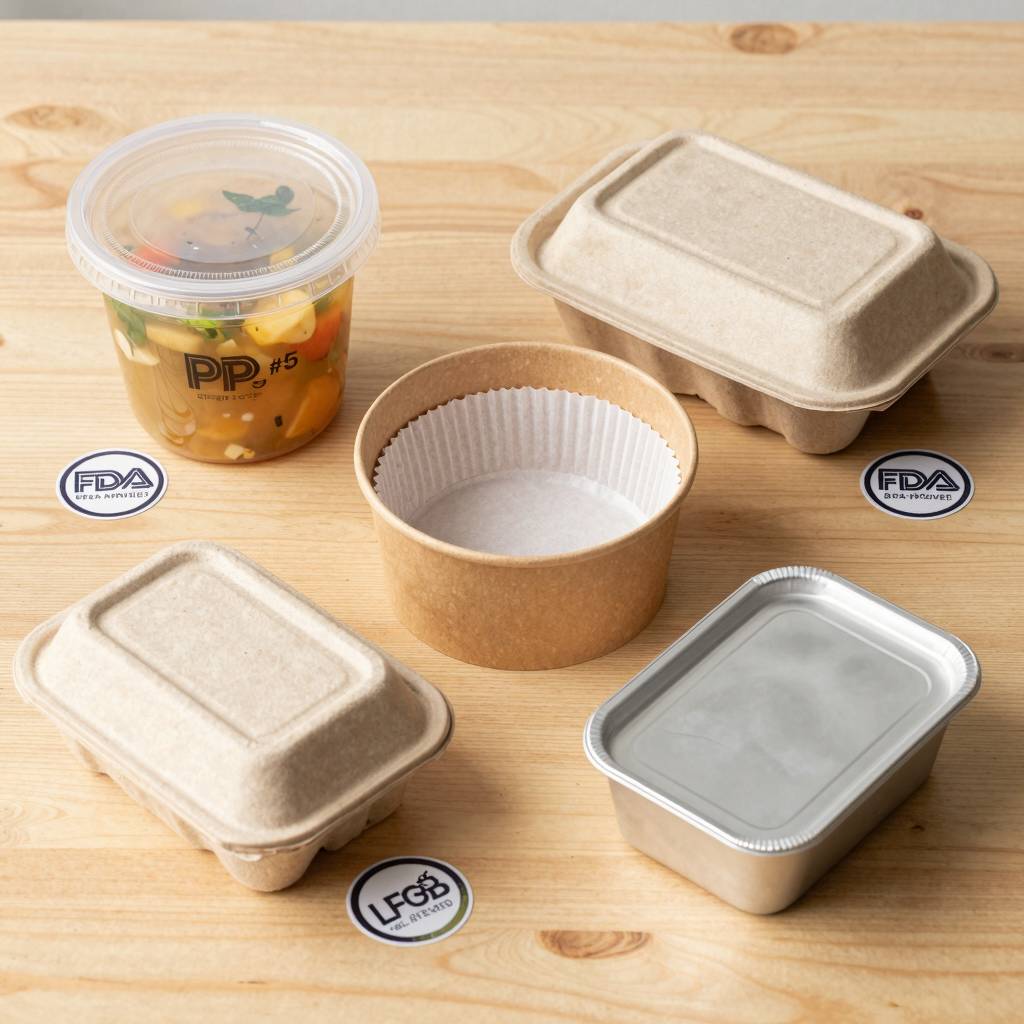
1. Know Your Plastic Resin Codes
Not all plastics are created equal. The recycling number on the bottom tells you everything you need to know about a container’s safety:
| Resin Code | Material | Heat Tolerance | Food Safety Verdict |
|---|---|---|---|
| #2 (HDPE) | High-Density Polyethylene | Up to ~75°C (167°F) | ✅ Safe for cold foods, milk jugs, and dry storage. Not for high heat. |
| #5 (PP) | Polypropylene | Up to 130°C (266°F) – microwave & hot-fill safe | ✅ Best choice among plastics. Withstands hot soup, tea, and reheating. |
| #6 (PS) | Polystyrene (Styrofoam) | Low – deforms above 75°C | ❌ Avoid. Can leach styrene when heated. Not safe for hot foods. |
Pro tip: Stick with PP (#5) for hot applications and HDPE (#2) for cold items. If you see a #6 on a container meant for hot food, look for another option.
2. Check Temperature Ratings
Always look for containers explicitly rated for hot filling (typically 90-100°C for immediate fill) or microwave safe (usually up to 120-130°C). Even if a container looks sturdy, the material may soften or release chemicals when exposed to high temperatures. Reputable suppliers will clearly list the temperature range on product specifications.
3. Explore Safer Alternatives to Plastic
Beyond plastic, several excellent alternatives offer both safety and sustainability:
- Paper-based containers with safe linings – Look for aqueous or PLA-coated paper bowls that are grease-resistant and rated for hot foods. These avoid the microplastic concerns of traditional polyethylene (PE) linings. Explore custom octagonal paper bowls for a sturdy, stylish option.
- Bagasse (sugarcane fiber) – Made from agricultural waste, bagasse containers are naturally heat-resistant (up to 200°C), microwavable, and compostable. They’re ideal for hot entrees and soups. See how sugarcane bowls benefit businesses.
- PLA (polylactic acid) – A plant-based bioplastic, but limited to cold foods only (softens at 43-55°C). Great for salads and cold desserts, not for hot beverages.
- Aluminum containers – Excellent heat tolerance and fully recyclable, though not suitable for microwave use.
4. Look for These Certifications
Before you buy in bulk, verify that your supplier’s containers carry these key certifications:
- FDA food-grade – Ensures compliance with U.S. FDA 21 CFR standards for food contact materials.
- BPA-free – Confirms no bisphenol A is present in the container lining or resin.
- LFGB – Germany’s stringent food safety standard (often required for EU markets).
- SGS testing – Third-party laboratory verification of material safety and migration limits.
Shortcut: Always ask your supplier for a compliance certificate. If they can’t provide one, that’s a red flag.
But choosing the right material is only half the equation – working with a trusted supplier is just as important.
| Material | Microplastic Risk | Heat Resistance | Eco-Friendliness | Best For |
|---|---|---|---|---|
| Polypropylene (PP) | High – Releases 1,420 particles/L at 50°C (hot water). Surface cracks appear under heat, shedding microplastics into food. | Medium-High – Withstands temperatures up to 120-130°C (microwave-safe). However, thermal stress accelerates particle shedding. | Low – Petroleum-derived, not biodegradable. Recyclable in theory, but low recycling rates globally (~1-5%). | Durable hot food containers, microwaveable bowls, takeout lids. |
| Polystyrene (PS) Foam | Very High – Highest microplastic release among all tested materials (up to 1,281 particles/L at 70°C). 77% of particles are fragmented flakes. | Low – Not microwave-safe. Deforms above 80°C. Hot liquids accelerate structural breakdown and particle release. | Very Low – Made from petroleum, non-biodegradable, difficult to recycle, and breaks into persistent microplastics in the environment. | Cheap takeout containers, hot soup cups (though not recommended). |
| PET Plastic | Medium-High – Releases microplastics under heat; container deforms at high temperatures, shedding particles. Lower than PS but still significant. | Low – Not heat-resistant. Warps above 60-70°C. Never microwave-safe. Best for cold or room-temperature use only. | Low-Moderate – Widely recyclable (bottle-grade), but single-use food containers have low recycling uptake. Petroleum-based. | Cold beverages, salad containers, fresh fruit packaging, deli trays. |
| Paper (PE-lined) | Lowest among plastics – Releases ~126 particles/L at 50°C (up to 4× less than PP cups). PE lining sheds fewer particles than solid plastic cups. | Medium – PE-coated paper handles moderate heat (up to 90-100°C). Good for hot drinks, but not for prolonged high-heat exposure. | Moderate – Paper is renewable and biodegradable. However, PE liner prevents full compostability. Still, lower carbon footprint than all-plastic options. | Hot beverage cups, takeout soup containers, dry food packaging. |
| Bagasse (Sugarcane Fiber) | Medium – Research shows bagasse can shed micro/nanoparticles under heat, sometimes at levels comparable to or exceeding some plastics. Particles are cellulose-based (not petroleum), but still a contamination concern. | High – Excellent heat resistance (up to 200°C). Microwave and oven-safe. No deformation or melting. | High – Made from agricultural waste (renewable). Fully compostable in industrial and home composting systems within 60-90 days. No petroleum content. | Hot meals, oily/greasy foods, microwavable containers, food trucks, catering. |
| PLA (Corn-based) | High – PLA-lined cups release up to 3.6× more microparticles than PE-lined cups under hot conditions. Heat and alcohol trigger particle shedding. | Low-Medium – Softens at ~60-70°C (140°F). Not suitable for hot foods or microwave use. Best for cold and room-temperature items. | Conditional – Renewable (corn starch). Compostable only in industrial facilities (home compost is ineffective). Often ends up in landfills where it persists. | Cold drinks, salads, deli items, short-shelf-life packaging at room temperature. |
Note: No container is 100% microplastic-free, but choosing lower-risk materials significantly reduces contamination.
Regulatory Standards and What They Mean for Your Business
If you’re sourcing disposable tableware, takeout containers, or any food contact packaging for your bubble tea shop, restaurant, or catering business, understanding the regulations behind the “food-grade” label isn’t just important – it’s essential for protecting your customers and your brand reputation.
So what does food-grade actually mean? Many business owners assume it means “zero migration” – that absolutely nothing transfers from the container into the food. In reality, no material is completely inert. Even glass and ceramics can leach trace elements. Food-grade means that any migration that does occur stays within strict, scientifically determined safe limits.
Let’s look at the three key regulatory frameworks that govern food contact materials.
FDA (United States)
The U.S. Food and Drug Administration regulates food contact substances under Title 21 of the Code of Federal Regulations (CFR). The FDA sets an Overall Migration Limit (OML) of ≤ 0.5 mg/in² (approximately 8 mg/dm²). This means the total amount of non-volatile substances that can migrate from a container into food simulants must stay below this threshold. Additionally, Specific Migration Limits (SMLs) apply to individual regulated substances – for example, lead must be below 0.01 mg/L and cadmium below 0.005 mg/L. Materials not already listed in the CFR must go through a Food Contact Notification (FCN) process before hitting the market.
EU Regulation (EC) No 1935/2004
The European Union’s framework regulation sets a harmonized safety standard across all member states. The core principle is elegantly simple and powerfully protective:
“Food contact materials shall not transfer their constituents to food in quantities which could endanger human health, bring about an unacceptable change in the composition of the food, or bring about a deterioration in its organoleptic characteristics.” – Article 3, Regulation (EC) No 1935/2004
Under this regulation, the OML is set at 10 mg/dm² (or 60 mg/kg for articles intended for infants), and hundreds of individual SMLs are defined in implementing regulations like (EU) No 10/2011 for plastics. Every substance is evaluated by the European Food Safety Authority (EFSA) before approval.
LFGB (Germany)
Germany’s Lebensmittel- und Futtermittelgesetzbuch (LFGB) goes a step further. While it aligns with the EU framework, it adds stricter requirements including mandatory sensory testing (DIN 10955) to ensure no odor or taste transfers to food, and tighter limits on metals and organic compounds. Products sold in Germany must carry an LFGB certificate – often recognized by the trusted “knife and fork” symbol.
What This Means for Your Business
Both overall migration limits (OML) and specific migration limits (SMLs) work together to ensure safety. OML controls the total volume of migrating substances, while SMLs set strict caps on specific chemicals that may be more hazardous. When you buy from reputable suppliers – especially those using materials like bagasse and other natural fibers – the testing to meet these standards is already baked into the manufacturing process. You can serve your customers with confidence.
Still, it pays to be proactive. When evaluating a supplier, here are questions every business should ask about certifications:
- Do your products carry FDA, EU (EC) No 1935/2004, or LFGB certification for the specific intended use (hot food, liquids, acidic contents)?
- What was the Overall Migration Limit (OML) result from your latest third-party migration testing?
- Can you provide test reports showing Specific Migration Limits (SMLs) for regulated substances like heavy metals and monomers?
- For compostable or sugarcane-based tableware, do you also test for microplastic release under real-world usage conditions?
Regulations exist to protect your customers and your business. Understanding them empowers you to make informed sourcing decisions that keep your operation safe, compliant, and trustworthy.

Prioritize Safety Without Compromising Service

We’ve covered a lot of ground, and here’s the takeaway you can count on: yes, plastic food containers can release microplastics – but the level of risk is not a one-size-fits-all story. It depends on the material you choose, the conditions you use them under, and the quality of your supplier. Studies confirm that heating low-grade plastics can release billions of particles, while materials like sugarcane fiber (bagasse), paperboard, and PLA-based alternatives offer excellent performance with significantly lower risk.
The good news? You don’t have to choose between safety and service quality. Safe, cost-effective alternatives are widely available today – from compostable paper bowls and sugarcane cups to eco-friendly sushi boxes and kraft paper bags – all designed to keep your food fresh, your brand looking sharp, and your customers happy.
You shouldn’t have to worry about what’s in your packaging. That’s why we exist.
At cupbowlpack.com, we believe great food deserves packaging you can trust. We rigorously test every product to meet applicable safety standards, so you can serve with confidence – whether you’re running a bubble tea shop, a bustling food truck, a catering operation, or a corporate event.
Choose our reliable disposable tableware and packaging solutions for your business. We offer quality products that meet safety standards, with fast delivery and flexible options. Partner with us today to elevate your service – contact our team now for a tailored quote!
Explore our range of sugarcane cups and eco-friendly containers to see how easy it is to switch to safer packaging without sacrificing durability or design.
Warmly,
The Cofe-Cup Team ♻️

Frequently Asked Questions
Got questions about your takeout containers and food packaging? You’re not alone. Here are three of the most common ones we hear from restaurant owners, catering teams, and bubble tea shop operators – answered with the latest science in plain language.
FAQ 1: Are all plastic food containers unsafe?
Not all plastics are created equal, and no – they’re not all unsafe. Materials like polypropylene (PP, recycling code #5) and high-density polyethylene (HDPE, recycling code #2) have a lower risk profile compared to, say, polystyrene (#6) or polycarbonate. When used correctly – meaning at room temperature or for cold storage – PP and HDPE containers are considered food-grade and show much lower microplastic shedding. That said, even these safer plastics can release particles under extreme conditions like high heat or oily food microwaved for several minutes. So the short answer is: some plastics are safer than others, but no plastic is risk-free under all circumstances. That’s why many food service businesses are exploring compostable paper bowl alternatives for hot or oily menu items.
FAQ 2: Does heat always increase microplastic release?
Yes – heat is the single biggest driver of microplastic release from plastic containers. Research from Zhejiang University found that microwaving food in HDPE containers for just 3 minutes increased microplastic release by up to 125 times compared to cold conditions. However, the temperature threshold varies significantly by material. PP (#5) containers are rated safe up to about 120°C (248°F) and can handle hot soups better than polystyrene. PET (#1) bottles begin releasing compounds above 70°C. So while heat always increases particle shedding, materials like PP and certain coated paper containers are designed to tolerate moderate hot use better than others. For piping-hot soups or oily dishes served above 100°C, switching to sugarcane bagasse bowls eliminates the microplastic concern entirely.
FAQ 3: Can I trust ‘BPA-free’ labels on disposable containers?
BPA-free is a good start – but it’s not a complete safety guarantee. Here’s why: BPA (Bisphenol A) is a chemical additive that was widely used in polycarbonate plastics and epoxy linings. Switching to BPA-free means that one specific chemical has been removed. But microplastics are a physical particle issue, not a chemical one. Even a 100% BPA-free polypropylene container can still shed thousands of microscopic plastic fragments into food – especially when heated or used with acidic, oily contents. A 2024 study in Environmental Science & Technology confirmed that microplastic migration happens independently of whether BPA or similar chemicals are present. So while BPA-free labeling matters for endocrine-disrupting chemical exposure, it doesn’t address the physical microplastic concern. The best approach? Look at the material itself, not just the label – and consider eco-friendly packaging options when serving hot, oily, or acidic foods.
Key terms: food-grade plastic risks, microplastic contamination in food packaging
Why Trust Matters When Choosing Food Packaging
For bubble tea shops, restaurants, catering services, and event planners, choosing the right food containers goes beyond aesthetics – it’s a commitment to your customers’ health and the planet. As we’ve explored throughout this article, plastic food containers can leach microplastics, especially when exposed to heat, acidic foods, or repeated use.

The good news? There are safer, sustainable alternatives that don’t compromise on quality. Businesses that switch to eco-friendly packaging not only protect their customers but also build brand loyalty among environmentally conscious consumers.
Your Next Step Toward Safer Packaging
Making the switch to sustainable food containers is one of the most impactful decisions you can make for your business. Whether you’re looking for sugarcane bowls for business that are naturally biodegradable or exploring paper bowls for nachos and other hot foods, there’s a responsible option for every need.
✅ Shield Icon – Protection through materials tested for safety and durability
🌿 Leaf Icon – Eco-friendly, compostable, and responsibly sourced
✔️ Checkmark Icon – Certified quality you and your customers can trust
“Every container you choose is a statement about your values. Make it one that speaks of safety, sustainability, and quality.”
📦 Ready to Upgrade Your Packaging?
Explore our full range of disposable biodegradable bowls, cups, and containers designed for food service businesses. From hot soup bowls to salad containers, our products offer the reliability you need with the eco-conscious design your customers deserve.
👉 [Browse eco-friendly packaging solutions →]()
This article was brought to you by Cofe Cup – your partner in sustainable food service packaging.