
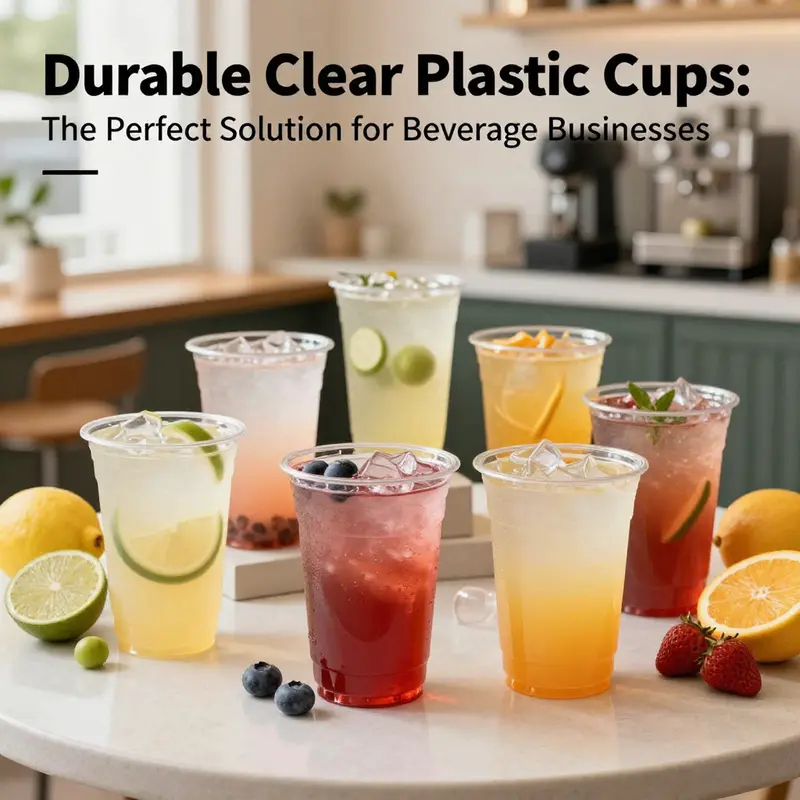
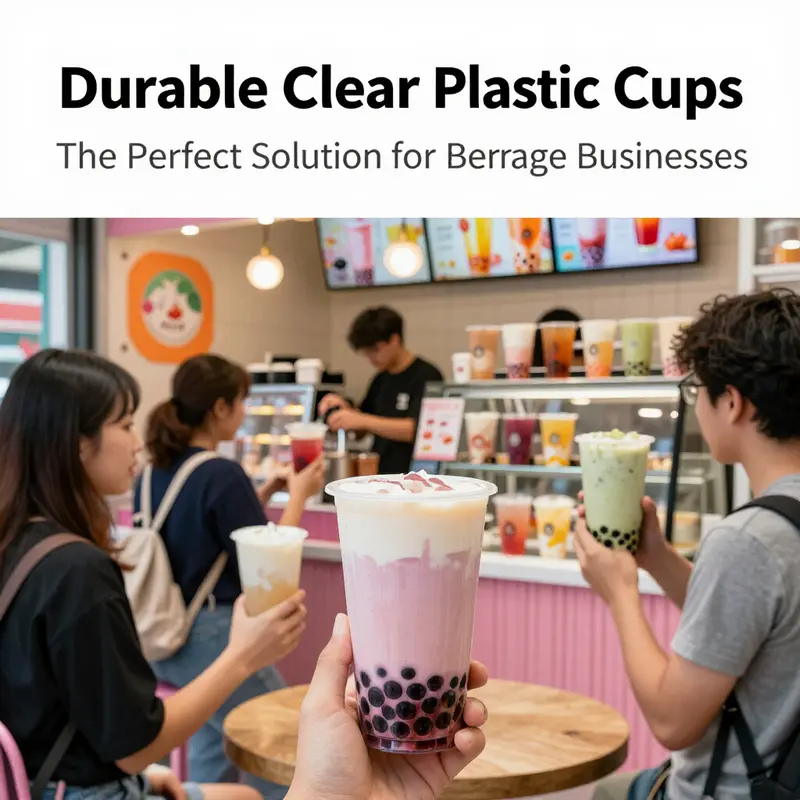
In the competitive world of beverage service, the choice of serving ware can significantly impact both functionality and brand perception. Durable clear plastic cups stand out as a versatile option for bubble tea shops, restaurants, and event planners alike. Their robust composition and stylish transparency make them a smart choice for various settings, allowing you to showcase vibrant beverages while ensuring customer satisfaction. Dive into this exploration of durable plastic cups, as we break down their material composition, versatile usage scenarios, and environmental benefits that can elevate your service standards.
Crystal Durability in Motion: How Material Choices and Precision Molding Define Clear Plastic Cups

Durable clear plastic cups sit at the intersection of clarity and resilience, a balance achieved through careful material selection and meticulous manufacturing. They must present contents with exact visibility while withstanding the bumps of everyday use, the clatter of busy events, and the repetitive cycle of washing in a shared dishwasher. In practice, the performance hinges on two intertwined domains: the chemistry of the resin and the precision of the forming process. When these two domains align, the result is a cup that remains crystal clear after countless uses, resists cracking when accidental drops occur, and preserves its shape and integrity under typical handling, even in high-volume environments. The story of durability begins with the resin, but it is completed in the mold shop, where process engineers tune conditions to maximize strength without sacrificing the optical purity that makes these cups appealing to service teams and consumers alike.
PET, or polyethylene terephthalate, is the workhorse for many clear cups designed for cold beverages. Its properties are a combination of light weight, high impact resistance, and exceptional clarity. PET cups feel sturdy in hand, yet their thin walls keep costs reasonable for single-use applications. Most PET formulations resist cracking when a cup is bumped off a table or nudged by a busy hand during a crowded service. The clarity of PET remains one of its strongest selling points; the material transmits light well and minimizes yellowing, preserving the visual appeal of beverages from water to juice to more complex infusions. Importantly, PET is recyclable, a feature that aligns with sustainability goals for many kitchens and event programs. The recyclability of PET contributes to a circular approach to plastic cup use, allowing cups to rejoin the materials stream after their useful life. In practice, brands that emphasize reuse over disposability often select PET-compatible designs that tolerate a significant number of dishwasher cycles, provided the cup is labeled as dishwasher-safe and the washing cycle remains within recommended temperatures. The result is a dependable, clear vessel that blends user experience with responsible waste management.
Beyond PET, polycarbonate offers a different set of advantages that can be decisive in particular settings. PC provides outstanding optical clarity and rigidity, which translates into a seemingly flawless view of the cup’s contents even when the cup is held at extreme angles. The material resists deformation under pressure, and it demonstrates higher heat resistance compared with PET, making it a relevant choice for applications where contents run warmer or where repeated handling occurs under less controlled conditions. PC also has a track record of withstanding sterilization processes that involve high temperatures, such as autoclavable contexts, which makes it attractive for reusable medical or industrial sampling containers. However, the same properties that confer strength can bring drawbacks. PC can be more susceptible to scratching and can degrade under prolonged UV exposure, which may dull the clarity over time if the cup is exposed to bright light environments for extended periods. UV stability and surface wear become practical considerations for designers and end users, particularly in outdoor event settings or venues with intense lighting. Thus, while PC is unmatched in some scenarios for its ruggedness and sterilizability, it is not always the default choice when daily exposure to sunlight or rough dishwashing protocols is a central concern.
Styrene acrylonitrile, or SAN, offers a nuanced balance between clarity, chemical resistance, and cost. SAN cups tend to keep a sharp, transparent appearance while resisting certain solvents or formulations that could otherwise cloud or distort the surface. The material’s good dimensional stability supports shapes and features that matter in engineering contexts—cups must maintain their form when in contact with heat, cold, or a range of beverages. SAN is not as impact-resistant as PC, yet it can provide a favorable compromise between stiffness and resilience for many standard-use scenarios. In industrial or QA environments, SAN cups are valued for their predictable behavior under solvent exposure and variable temperatures, ensuring that the cup remains visually faithful to its contents without bending or warping. For consumers, the material’s cost-performance sweet spot can translate into a durable, clear cup that can withstand everyday use without compromising the user experience or the perceived value of the beverage itself.
The interplay of these materials is only part of the durability equation. The manufacturing processes—primarily injection molding and blow molding—define how the chosen polymer expresses its potential in the final cup. Injection molding is the preferred route when precise wall thickness, integrated features, and tight tolerances matter. This method allows for consistent wall thickness, which directly affects both optical clarity and strength. A cup with uniform walls resists stress concentrations that can become initiation points for cracks, particularly after drops or tumbles. Integrated features such as molded rims or subtle grip textures can be engineered into the tool path, eliminating secondary assembly steps and reducing weak points that would otherwise compromise durability. The injection-molded approach is well suited to higher-end, reusable cup designs where long-term performance and a refined appearance are paramount. For single-use or lower-cost options, blow molding offers a more economical path to scale. Blow molding creates hollow, thin-walled cups rapidly, enabling mass production while keeping material usage in check. The walls may be thinner in these designs, which saves weight and cost but can demand more careful quality control to ensure translucence and crack resistance persist through the product’s life cycle. Both processes require rigorous quality checks—optical inspection for clarity, dimensional checks for uniform wall thickness, and stress testing that simulates real-world handling. The manufacturing environment thus plays a decisive role in translating the raw polymer’s potential into a durable, transparent consumer product.
Durability also emerges from deliberate design decisions that extend the life of the cup beyond mere material selection. For instance, reinforced multi-layer constructions, though not universal across all clear cups, can dramatically increase shatter resistance without sacrificing transparency. In premium variants, a strengthened polymer layer or a carefully arranged multi-layer stack can distribute impact forces more evenly, reducing the likelihood of micro-cracks that propagate under repeated washing or knock-offs. This approach sees use in high-volume environments such as restaurants or event venues where cups are cycled through hands, dishwashers, and storage distances many times per day. Even in standard single-use formats, careful attention to rim geometry, base design, and wall consistency matters. A robust rim resists chipping and cracking at contact points with utensils, table surfaces, and other dishes, while a well-proportioned base supports stability and minimizes tipping or wobble. These features, coupled with proper wall thickness, contribute to a durable product that maintains its clarity and shape as it traverses the journey from service cart to table, through wash cycles, to the next day’s service.
Sustainability and safety considerations further influence the material and process choices. The drive toward BPA-free formulations has become a standard expectation in many markets, aligning with concerns about chemical exposure in beverages and during repeated contact with containers. PET and SAN-based cups frequently fulfill these safety expectations, reinforcing consumer trust while opening pathways to recycling streams that make sense for food-contact plastics. Recyclability, however, varies by polymer and by regional infrastructure. PET’s recyclability is widely recognized, while PC presents a more nuanced recycling landscape, depending on local facilities and regulations. Even SAN, though often chosen for its clarity and stability, may face similar challenges in end-of-life management. In practice, the decision matrix for manufacturers and users blends these safety and sustainability considerations with performance goals: clarity, impact resistance, heat tolerance, solvent resistance, and the ability to withstand dishwasher and long-term use. The result is a family of clear cups that can be tuned to different service models, with PET as the most common workhorse for many cold-beverage applications, while PC and SAN present options when specific performance envelopes demand them, each with its own lifecycle implications.
To understand the overall value proposition, consider how the material choices and processing methods translate into the customer experience. In bustling events or fast-paced cafes, the cups must remain visually pristine even after hours of service, resisting fogging or clouding that can obscure the beverage. They must survive accidental drops and tumbles without cracking, offering a secure handling experience that reduces waste and the need for immediate replacement. They must tolerate the heat and chemical exposure of everyday use, including the occasional spill of sugary or acidic beverages, without staining or distorting the clarity. These requirements are not merely aesthetic; they influence operational efficiency, waste reduction, and even the perceived quality of the beverage itself. The clarity of the cup, the ease with which a customer can inspect the contents, and the assurance of durability all feed into a dependable service model where staff can manage inventory, reduce breakage, and fulfill orders with confidence. In this way, the durable clear cup becomes more than a simple vessel; it embodies a discipline of materials science and manufacturing craftsmanship that brings together optical quality, mechanical resilience, and practical sustainability in a single, user-friendly package.
For designers and procurement teams, this discussion is not a theoretical exercise but a practical guide to aligning performance with operational realities. In choosing a material, teams weigh clarity against toughness, heat tolerance against solvent resistance, and cost against lifecycle value. The molding process then translates those material choices into a final product whose geometry, thickness, and surface finish determine how well it withstands daily wear and repeated cleaning. When executed well, the result is a clear cup whose transparency remains unblemished and whose edges retain their integrity even after years of use in demanding environments. In this sense, the durable clear cup becomes more than a simple vessel; it embodies a discipline of materials science and manufacturing craftsmanship that brings together optical quality, mechanical resilience, and practical sustainability in a single, user-friendly package.
For readers seeking a broader perspective on how materials in the plastic family are evolving toward greater durability and recyclability, a representative external resource provides a useful overview of consumer-grade clear cups and their production considerations. External resource: https://www.prestee.com/products/250-pack-clear-disposable-cups-9-oz. Within the broader context of material science and manufacturing optimization, this chapter’s synthesis of PET, PC, and SAN, and the molding pathways that bring them to life, offers a lens into the ongoing balancing act between clarity, strength, and lifecycle responsibility. As markets continue to demand cups that stay clear under real-world stress while remaining friendly to recycling streams, innovations in polymer blends, multi-layer structures, and precision molding will keep advancing the durability of clear plastic cups. To connect these ideas to practical choices, consider related topics such as exploring environmentally conscious cup designs that pair with sustainable packaging systems, a thread that can guide future chapters in examining how durable clear cups fit into broader strategies for waste reduction, brand integrity, and customer satisfaction. And for readers curious about adjacent formats, a look at paper-based or hybrid cups can illuminate how durable plastics compare with alternatives in terms of clarity, tactile feel, and performance under heat and wash cycles. For more direct reference to evolving designs and processes, see the linked material choices and manufacturing insights discussed above, which together illuminate the path from polymer chemistry to an everyday, dependable consumer experience.
null
null
Durable Clear Plastic Cups: Environmental Trade-offs and Recycling Realities
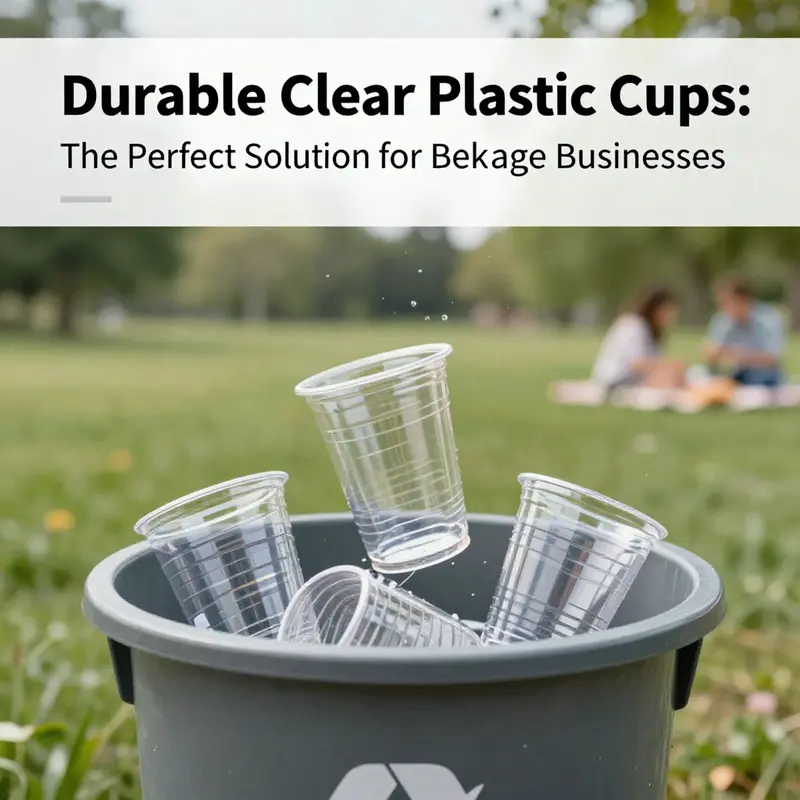
Durable clear plastic cups offer clarity and resilience, but their environmental footprint is shaped by how they are made, used, and disposed. Most are PET or Tritan, with PET offering mature recyclability in many regions and Tritan delivering durability and dishwasher resistance. Reuse can lower resource use, but it depends on cleaning energy, water, and the number of cycles before wear reduces recyclability or acceptability in streams. Multi-layer or coated designs can boost durability but complicate recycling. In practice, recycling rates depend on local facilities: some collect PET separately and reprocess into new products, while others mix streams that hinder sorting. End-of-life outcomes hinge on consumer behavior, infrastructure, and policy. For events, a blended strategy—durable cups for reuse where feasible, plus accessible recycling or take-back programs for used cups—often performs best. Labels indicating resin type and recyclability matter, but only if local processing supports them. In sum, the greener choice depends on context: the scale of use, the local waste system, and the willingness to invest in proper cleaning, sorting, and recovery. Readers may compare with alternatives like single-wall paper cups, which have different end-of-life profiles and requirements. The key is designing for the local frame: align materials, processes, and consumer practices to enable a true circular pathway.
Final thoughts
Durable clear plastic cups offer an ideal blend of functionality, style, and environmental responsibility for beverage establishments. Their robust materials ensure they withstand the rigors of daily service, from vibrant bubble tea shops to high-volume catering events. As consumer awareness about sustainability continues to grow, opting for recyclable and durable options can set your business apart in a crowded market. By investing in high-quality cups, you not only enhance your customers’ experience but also contribute to eco-friendly practices. Make the switch today and embrace a future of reliable service ware that aligns with your brand values.