
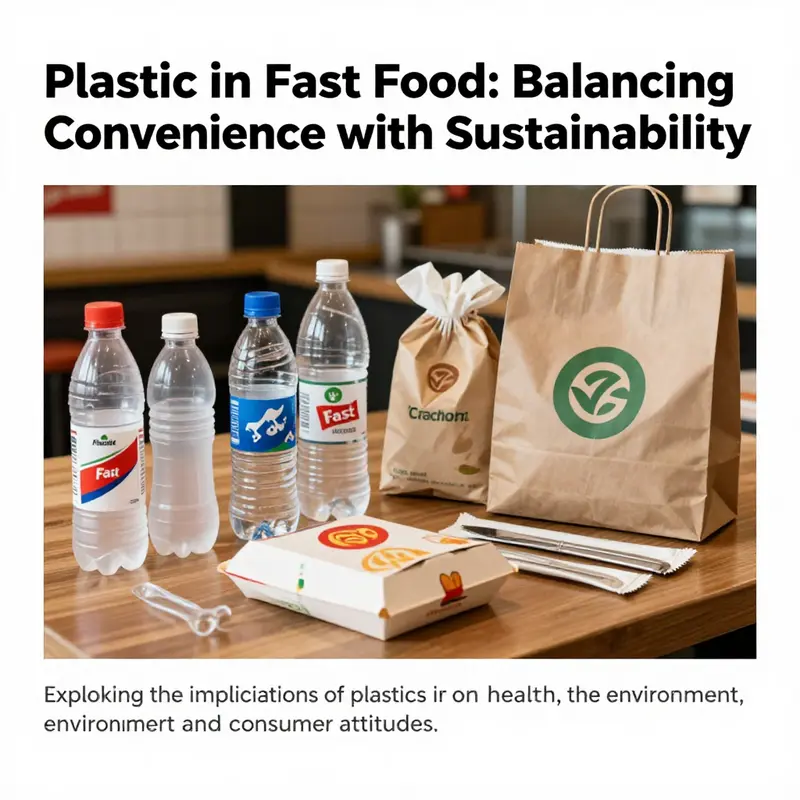
The prevalence of plastic packaging in the fast food industry has become a pressing concern. Fast food outlets thrive on efficiency and cost-effectiveness, but this convenience comes at an environmental and health cost. As beverage chains, restaurants, food trucks, and event planners focus on delivering quality service, understanding the multifaceted implications of plastic use is essential. The chapters that follow will delve into the environmental impacts of fast food containing plastic, highlight associated health risks, examine regulatory responses, explore industry trends towards reducing plastic usage, and assess consumer attitudes. By understanding these dynamics, businesses can make informed decisions to mitigate their environmental impact while still meeting customer needs.
Plastic Footprints in a Quick-Service World: The Environmental Toll of Fast-Food Packaging
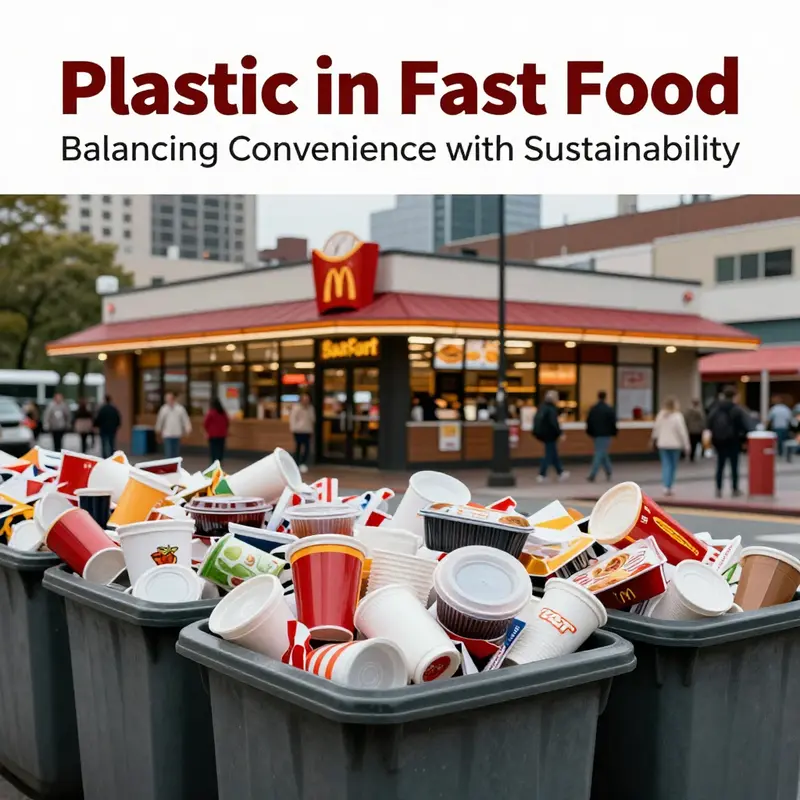
Plastic has become the quiet backbone of the fast-food economy. Disposable cups, wrappers, and containers made from plastics are chosen for their low cost, durability, and their uncanny ability to seal in heat and freshness during rapid transport. For beverages, the familiar cups carved from materials like polypropylene or polystyrene have become standard across chains and events, available in various sizes to suit different orders and branding. The appeal is pragmatic: spill-resistant lids, leak-proof seams, and the capacity to keep hot drinks hot and cold drinks cool, which translates into faster service and a consistent customer experience. Yet the convenience here carries a rising environmental price tag that more and more observers are compelled to acknowledge. The same materials that enable quick service also contribute to a growing stream of waste that persists long after customers depart. The picture is not simply about a handful of discarded cups; it is about the entire lifecycle of packaging—how it is produced, used, and finally disposed of in a system that struggles to manage it responsibly at scale. The environmental implications extend beyond litter to the atmosphere, soil, and water, creating a chain of effects that touches wildlife, ecosystems, and human health alike. In this sense, fast-food packaging acts as a microcosm of the larger plastics problem, crystallizing the tensions between efficiency, hygiene, consumer convenience, and planetary stewardship.
The environmental tally grows once we consider the production side. These plastics are largely derived from petroleum, a non-renewable resource whose extraction and refinement release greenhouse gases and other pollutants into the atmosphere. The energy intensity of creating single-use packaging compounds the problem, especially in a sector that churns out enormous volumes of cups, lids, wrappers, and containers every day. When multiplied across millions of meals, the emissions associated with manufacturing and distribution become substantial. The end-of-life story for many of these items is equally troubling. Even when packaging is technically recyclable, practical barriers abound. Contamination from grease, sauces, and food scraps can render streams of plastic unrecyclable in real-world settings. Mixed materials, coatings that resist moisture, and multi-layer constructions further complicate the sorting process at recycling facilities. In an ideal world, every plastic cup would be captured, sorted, and reprocessed into new packaging. In reality, far more of it ends up in landfills or as environmental litter. The result is a persistent pressure on land, waterways, and urban infrastructure that are already stretched thin by waste handling, resource constraints, and demand for clean ecosystems.
In addition to waste and emissions, the environmental narrative includes a notable biodiversity toll. Plastic debris in oceans and landscapes creates a spectrum of hazards for wildlife. Animals may ingest fragments, mistake colored wrappers for food, or become entangled in stray lids and strings. These outcomes reduce survival and reproduction rates for affected species and have cascading effects throughout ecosystems. Microplastics—tiny fragments that break down from larger pieces—can infiltrate soils, freshwater, and marine systems. Once these particles enter the food web, they have the potential to move up the chain, reaching seafood and other animal-derived foods consumed by humans. Although the long-term health implications for people are still under study, the possibility of chemical additives leaching from plastics or of microplastics acting as carriers for environmental pollutants remains a legitimate concern for researchers and public health professionals. This convergence of ecological disruption and emerging health questions underscores why the packaging choices of a fast-food outlet matter beyond the kitchen counter.
The discourse around solutions is evolving, driven by policy shifts, corporate commitments, and an informed consumer base that increasingly prioritizes sustainability. In many places, there is growing momentum toward compostable materials and recyclable paper-based packaging that promises lower environmental persistence than conventional plastics. Yet the transition is not simple. Compostable alternatives require appropriate industrial facilities to decompose; home composting or backyard facilities may not achieve the necessary conditions. Paper-based packaging, while more amenable to recycling in some systems, must contend with grease resistance and moisture management, which often necessitates coatings or lamination that can impair recyclability. As a result, the environmental benefits of substitutions hinge on local waste-management infrastructure, consumer behavior, and the economics of material choice. The takeaway is not a single silver bullet but a portfolio approach: redesign packaging to be simpler, choose materials aligned with local end-of-life options, and strengthen the connection between product design and waste-management realities.
From a design perspective, this means rethinking packaging from the ground up. A key principle is to favor systems that minimize material use while maintaining safety and hygiene. That can translate into thinner walls, standardized sizing, and reducing the variety of packaging types to streamline sorting and processing. It also means moving away from multi-layer constructs that combine plastic with foil or waxed papers, toward options that can be efficiently separated and processed in mainstream recycling streams. Such design shifts are not just technical; they require coordination across supply chains, waste facilities, and municipal programs, as well as transparent communication with consumers about end-of-life outcomes.
Consumer behavior and corporate accountability intersect in powerful ways. When customers demand transparency about what happens to packaging after it leaves a restaurant, companies feel pressure to disclose not only the materials used but also the end-of-life pathways and actual recycling rates in given communities. This knowledge can empower shoppers to make more sustainable choices and can encourage operators to select packaging with proven recyclability and compostability profiles. The transition is often framed in terms of branding and image, but its core is a systemic shift toward a circular economy that reduces waste, recovers materials, and phases out persistently problematic plastics where feasible. In practice, this translates into choices such as offering paper-based or bagasse-based containers that withstand the rigors of fast-food service while aligning more closely with local waste-management capabilities. It also invites experimentation with reusable or returnable systems in contexts where it makes logistical and economic sense, thereby reducing the volume of single-use items entering the waste stream.
For readers seeking practical avenues to explore alternatives, one direction involves locating packaging options that emphasize environmental compatibility without compromising hygiene or customer experience. This is not merely a theoretical discussion. There are tangible, store-friendly options that align with broader environmental goals, including discussions around paper-based solutions and other rapidly evolving materials that contend with grease and moisture while offering improved end-of-life outcomes. The idea is to shift toward packaging ecosystems that support reuse, recycling, or composting where feasible, rather than relying on plastics as an inexhaustible convenience. To illustrate a pathway, consider the concept of opting for eco-friendly paper cup options, which can be a meaningful step toward reducing plastic dependence while maintaining service quality. Access to such alternatives underscores the practical viability of sustainable choices in fast-food settings.
External resource: Environmental impacts of food packaging materials provide a broader lens on why these design choices matter. For a detailed review of materials, life-cycle considerations, and environmental trade-offs, see the external resource here: https://www.ncbi.nlm.nih.gov/pmc/articles/PMC7635928/
In summary, the environmental toll of fast-food packaging containing plastics is a story of scale, opportunity, and responsibility. It is a narrative that reaches beyond clattering trays and drive-thru windows to touch climate, oceans, urban ecosystems, and human health. The path forward requires coordinated action across producers, policymakers, waste managers, and consumers. By combining smarter design, better waste management, and informed consumer behavior, the industry can reduce plastic footprints without compromising the essential benefits of fast-food service. The goal is not to annihilate convenience but to redefine it in a way that respects planetary boundaries while keeping meals accessible and hygienic for millions around the world.
The Quiet Health Toll of Quick Bites: Plastics in Fast-Food Packaging and What It Means for Our Bodies
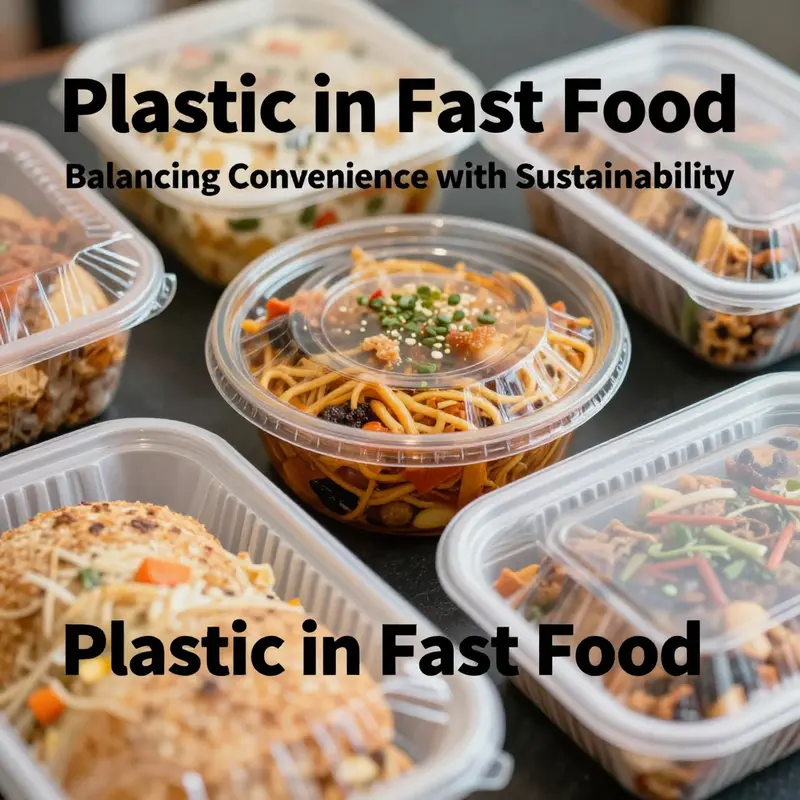
A quick memory often repeats itself after a casual lunch break: the steam from a hot drink rising under a plastic lid, the glossy sheen of a container catching the midday sun, the convenience of grabbing a meal on the go. What seems like a minor choice—the cup you pick up, the wrap you unwrap—unfolds into a broader, more troubling dynamic when viewed through the lens of health. Fast-food packaging relies heavily on plastics for practical reasons: they resist heat, they seal in freshness, they keep leaks at bay, and they travel well from the kitchen to the curbside. Yet beneath the surface of convenience lies a pattern of chemical migration that makes these everyday containers a potential source of exposure to substances known to disrupt the body’s delicate hormonal and metabolic balance. The risk is not just theoretical. It arises most when hot foods or fatty contents meet certain plastics, creating conditions that allow chemicals to migrate from packaging into the food we eat and, eventually, into our bloodstream.
The science at the core of this concern focuses on a few familiar culprits that have occupied public and regulatory attention for years. Bisphenol A, or BPA, used in some epoxy linings and polycarbonate plastics, has a long history of being scrutinized for endocrine-disrupting effects. Endocrine disruption is not a minor nuisance; it can alter hormone signaling, with potential consequences for reproductive health, weight regulation, and metabolic disease risk. Even as many manufacturers have reduced or eliminated BPA in consumer products, its substitute, BPS, has entered the scene. Emerging research suggests that BPS may carry risks similar to BPA, prompting ongoing evaluation of how safe these substitutes truly are when heated or in contact with fatty foods. This pattern—phasing out one chemical and replacing it with another that might be just as problematic—highlights a fundamental challenge: replacing a known hazard without fully understanding the new hazard’s profile.
Phthalates, another group of plastic additives, act as plasticizers that make materials more flexible. They’re common in various PVC-based packaging items. Phthalates have been linked to hormonal interference, developmental issues in children, and chronic diseases that unfold over decades. The data show correlations between higher body burdens of certain phthalates and disruptions to metabolic and endocrine function. The concern multiplies when meals are consumed from plastic containers after being heated or when the packaging is in contact with oily or fatty foods, which can mobilize these additives more readily into the food matrix. The overall message is not that plastics are a monolithic threat, but rather that specific interactions between heat, fat content, and the chemical makeup of packaging shape how much of these compounds might migrate into what we eat.
Another layer to this issue is the presence of microplastics, the tiny particles that can shed from degraded packaging materials. Once thought to be a nuisance confined to the environment, microplastics have been detected in human blood, lungs, and even placentas in some studies. When fast-food wrappers, cups, or lids are used for heated items, microplastics can migrate into the food or beverage. The health implications of ingesting microscopic plastic fragments are not yet fully understood, but early research points to inflammatory responses, oxidative stress, and potential organ exposure that warrant concern for long-term health outcomes. This is not a single-hazard narrative but a confluence of exposures that accumulate as the body interacts with repeated meals from plastic-containing packaging.
Beyond BPA, BPS, phthalates, and microplastics, there are other additives in plastics that raise safety questions. Antimony trioxide, used in some PET bottles, and perfluorinated compounds, often employed for grease resistance, have been associated with toxicity and persistence in the environment and the human body. Taken together, these substances illustrate a broader framework: plastic packaging is not a neutral vehicle for food; it is a potential source of chemical exposure that may intersect with chronic disease risk over time.
The practical takeaway for individuals is not to abandon all fast food or to demonize convenience, but to recognize how packaging practices influence exposure and to adjust choices where feasible. For those seeking to minimize contact with heated plastic, opting for paper-based or other non-plastic packaging when possible can reduce the likelihood of high-temperature interactions and fatty-matrix migrations. Some fast-food venues and event organizers are increasingly exploring alternatives, but the transition is uneven and often slower than consumer demand for safer packaging. In the meantime, small behavioral shifts—avoiding heating food in plastic at home, not reusing single-use containers for reheating, and limiting the frequency of meals that come wrapped in plastic—offer practical steps to reduce exposure.
From a public-health perspective, the concern is heightened by the ubiquity of fast food in diets around the world. Repeated exposure, even at low levels, may contribute to a cumulative body burden of potentially harmful chemicals. The vulnerable populations—pregnant people, infants, and young children—may be particularly sensitive to hormonal disruptions or developmental effects. While exposure from any single meal is unlikely to cause immediate harm, the cumulative effect across meals, days, and years becomes more meaningful. This is why researchers emphasize routine-checked packaging standards, safer food-contact materials, and continued regulatory vigilance as essential elements of reducing population-level risk.
The path forward lies in a dual approach: reduce exposure where feasible and accelerate the development and adoption of safer packaging technologies. Scientific investigations continue to map the fate of plastic-related chemicals during real-world food handling, including how heat, acidity, and salt content influence migration rates. Regulators and industry alike are under pressure to replace hazardous substances with safer alternatives while preserving the functional attributes that plastic packaging provides. Meanwhile, consumer awareness can drive demand for safer options, pressuring markets to scale up the supply of non-plastic or less-risky materials without sacrificing food safety or shelf life.
In practical terms, the choice landscape is expanding. Paper-based takeaway containers, bagasse or plant-fiber composites, and other compostable or recyclable materials are making strides in many regions. Yet the real-world performance of these alternatives—how well they handle hot beverages, greasy foods, or long-distance transport—remains a critical area of evaluation. The balance between cost, performance, and safety continues to shape what ends up on restaurant shelves and in consumer hands. This underscores the need for ongoing transparency from manufacturers about the materials used, the heat thresholds they can withstand, and the reasoning behind formulation choices so that customers can make informed decisions about their meals.
As readers consider their own fast-food habits, a simple frame can guide decisions: treat packaging as part of the food system. The container is not just a vessel; it is a potential contribution to our chemical exposure profile. By prioritizing packaging that minimizes chemical migration, people can reduce unnecessary contact with substances that have known or suspected health effects. When possible, opting for meals served in paper-based or plant-based packaging, requesting no plastic liners for hot items, and avoiding re-heating in plastic can collectively reduce potential risk. If avoidance is not feasible, choosing venues that clearly label their packaging materials or that demonstrate commitment to safer alternatives adds an extra layer of precaution.
For readers seeking further evidence and a broader scientific context, the biomedical literature provides a solid, up-to-date frame. Health risks associated with plastic food containers synthesize findings on BPA, BPS, phthalates, microplastics, and other additives, highlighting both known hazards and areas where more research is needed. See the NIH review for a comprehensive summary of how these substances interact with food systems and human health. [External resource: https://www.ncbi.nlm.nih.gov/pmc/articles/PMC10235798/]
Within the broader conversation about fast food and health, the packaging story is inseparable from the nutrition story. The foods themselves, when heated or combined with fats, can modulate the behavior of migrating chemicals. The same conditions that enhance the sensory appeal of a meal—steam, heat, fat content—also tend to amplify chemical leaching from packaging. This convergence helps explain why the risk profile is not uniform across meals but rather varies with temperature, composition, and packaging design. The chapter thus invites readers to consider not only what they eat but how it is wrapped, transported, and heated at each step of the journey from kitchen to mouth.
Amid this complexity, one clear implication emerges: the transition away from plastic-dominated packaging has health relevance beyond environmental or aesthetic considerations. It is about reducing the daily, practical exposure of millions of people to substances that affect hormonal pathways and metabolic processes. The challenge is thus twofold: push for safer materials and ensure that the switch sustains the hygiene, convenience, and safety standards that fast-food systems depend on. The payoff is not merely cleaner oceans or less waste; it is a potential reduction in the body’s toxic load, especially for those who rely most heavily on grab-and-go meals.
In closing, the everyday act of ordering and consuming fast food carries more than flavor and convenience. It intersects with science, regulation, and the long arc of public health. By understanding how plastics in packaging can influence the migration of chemicals into food, consumers can advocate for safer options, regulators can tighten safety standards, and industries can invest in materials that deliver both performance and harm reduction. The story is not finished, but the direction is increasingly clear: safer packaging choices are within reach, and with them, a quieter but meaningful improvement to daily health—one order at a time.
From Policy to Plate: How Regulators Are Reining in Plastics in Fast Food
The ubiquity of plastic in fast food—from cups and lids to trays and wrappers—has forced regulators to rethink how food contact materials are governed. Where packaging once met only basic performance criteria, today it faces scrutiny on chemistry, physical shedding, waste management, and public health. This chapter traces how regulatory frameworks have shifted, and how those shifts are reshaping fast-food operations across supply chains.
At the heart of the regulatory response is the concept of food contact materials (FCMs). FCMs include any item that touches food during preparation, storage, transport, or consumption. Regulators now treat these materials as a distinct class of products because of the risk that chemical constituents can migrate into food. Migration increases with heat, time, and fat content. That simple fact has led to more conservative safety limits for plastics used with hot items and fatty foods. It also explains why regulators focus on the full life cycle of a package, not only its disposal.
Modern rules balance two goals: protecting public health and preserving functional benefits. Plastics can prevent leaks, retain heat, and reduce spills. But regulators insist these benefits cannot come at the cost of chemical exposure. Many jurisdictions use a layered approach. Generic safety principles require that materials must be inert and not transfer substances to food in harmful amounts. Specific lists then control which monomers, additives, and processing aids may be used. Substances often undergo risk assessment and authorization before inclusion on these lists. Migration limits are set for individual chemicals and for overall migration from a given article.
Europe provides a clear example of this layered governance. Broad principles establish safety expectations for all FCMs. Detailed regulations then define permitted substances, testing methods, and documentation obligations for plastics. Manufacturers must demonstrate compliance through migration testing and by following good manufacturing practices. They must also provide written declarations of compliance for downstream users. That documentation creates traceability and helps enforcement agencies act when products fail tests.
Regulation is not static. Scientific advances and new exposure data prompt regular updates. Recent years have seen sharper attention to chemicals previously deemed safe. Likewise, detection methods have improved, revealing trace contaminants and breakdown products at ever-lower concentrations. Regulators have responded by tightening limits and by scrutinizing whole families of compounds, such as certain plasticizers and per- and polyfluoroalkyl substances. Some policies now require phasing out particularly concerning additives in items that contact food.
Beyond chemicals, the emergence of microplastics and nanoplastics has complicated oversight. Traditional regulation focused on soluble or extractable chemicals. Physical particles were not the central concern. New research shows micro- and nano-sized plastic fragments can enter food from degraded packaging, utensils, and processing equipment. This has triggered debates about whether current migration tests capture such particles and whether new standards are needed to quantify and limit them. Several jurisdictions are actively considering regulatory pathways to address particulate contamination, not only chemical release.
Waste and circularity policies are another regulatory lever. Single-use plastics in food service have been targeted through bans, restrictions, and extended producer responsibility schemes. The logic is simple: reducing the volume of disposable plastic reduces the pool of material that can fragment, leach, or persist in the environment. When outright bans are politically feasible, they often cover items with low recyclability or frequent littering. Where bans are impractical, regulators use mandates for recycled content, separate collection, or requirements that packaging be readily recyclable.
These public policies ripple into day-to-day fast-food operations. Operators must assess suppliers, demand compliance documentation, and sometimes redesign entire packaging ecosystems. Food service chains increasingly require certificates showing compliance with FCM rules. They also pilot alternatives such as fiber-based bowls, compostable sugarcane bagasse containers, and certified paper cups. For example, many outlets are experimenting with bagasse and other plant-fiber containers as a direct response to regulatory pressure and consumer expectations. Some suppliers now offer certified biodegradable and microwave-safe options, enabling chains to meet both functional needs and regulatory standards. One such alternative is the senang-950ml-eco-friendly-biodegradable-bagasse-food-container-with-matt-lamination-for-sushi-and-restaurant-use, which illustrates the kinds of materials entering supply chains as replacements for plastic bowls.
Enforcement mechanisms vary. Regulators rely on market surveillance, laboratory testing, and complaint-driven investigations. Border controls monitor imports of non-compliant articles. Penalties may include recalls, fines, and public naming. Importantly, regulators also publish guidance and testing protocols to help businesses comply. That guidance often clarifies which simulants and conditions to use when testing migration into foods with different properties.
Global coordination remains a challenge. Rules differ across regions in terms of permitted substances, migration limits, and testing methods. This patchwork complicates compliance for manufacturers and suppliers that operate internationally. Some multinational chains respond by harmonizing to the strictest standard across all markets. Others maintain region-specific product lines. Meanwhile, international bodies and scientific networks are working to standardize methods and to develop consensus on emerging risks like microplastics.
Regulatory change also spurs innovation. When an additive is restricted, manufacturers seek safer alternatives or modify formulations to meet functional needs without harmful constituents. Investment flows into alternative materials, coating technologies, and improved barrier solutions that reduce migration. At the same time, regulators are cautious about substituting one poorly studied material for another. Substitution must avoid regrettable outcomes where a banned chemical is replaced by a less tested but equally hazardous one.
Finally, regulators are adapting outreach strategies. They invest in stakeholder consultations, publish transition timelines, and provide technical assistance to small businesses. These measures help avoid abrupt disruptions to food service operations. They also support the broader goals of waste reduction and public health protection.
The regulatory response to plastics in fast food is therefore multifaceted. It combines chemical safety assessment, physical contamination concerns, waste policy, enforcement, and international coordination. For fast-food operators, the message is clear: packaging choices now carry regulatory risks as well as operational implications. Compliance requires technical documentation, supplier audits, and awareness of evolving science. As regulators sharpen standards and broaden their focus to include particulate contamination, the industry must continue to adapt. The result should be safer food contact materials and fewer plastics ending up in the environment.
Reference: https://eur-lex.europa.eu/legal-content/EN/TXT/?uri=CELEX%3A32011R0010
From Single-Use to Smart Systems: How Fast Food Is Cutting Plastic Without Losing Convenience
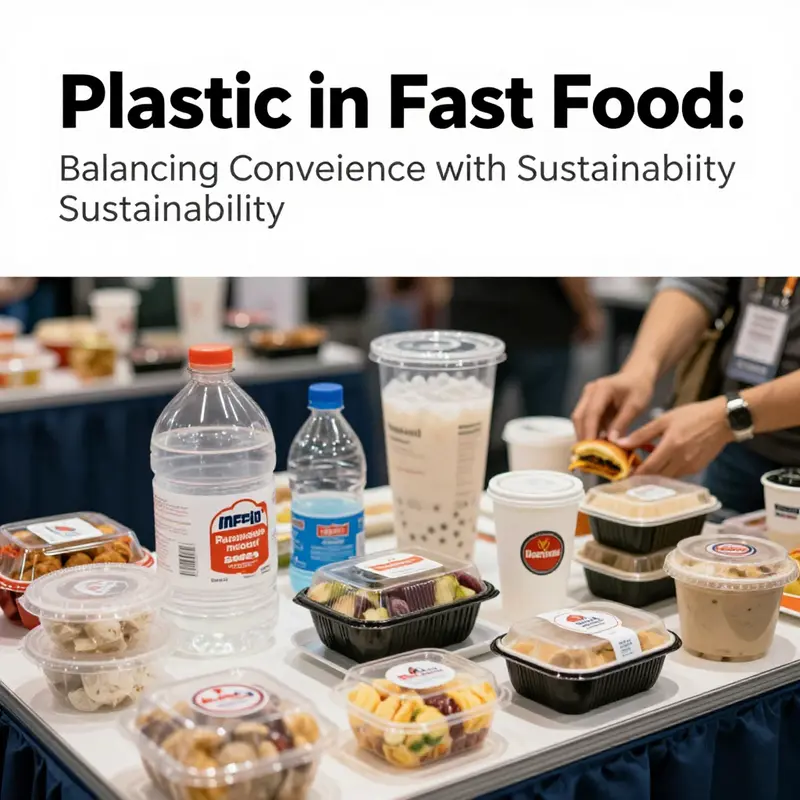
A shifting supply chain and smarter materials are changing how fast food meets demand.
The fast-food sector is quietly redesigning itself around the physics of takeout: temperature control, spill resistance, shelf life and rapid turnover. For decades, single-use plastics delivered on those needs with low cost and simple logistics. Now a blend of regulation, consumer expectation and material innovation is driving a systemic move away from plastic. This chapter follows that transformation, showing how new materials, reuse models and operational change are reshaping packaging decisions.
At the material level, the most visible change is substitution. Fiber-based trays and molded pulp solutions are replacing rigid polystyrene and polypropylene in many applications. These fiber products match essential performance traits: they can be engineered to retain crispness, hold sauces, and maintain structure during delivery. One recent innovation reduces plastic content by more than four-fifths in certain tray types, proving that functionality and lower plastic use can coexist. Alongside molded fiber, bagasse and other plant-fiber composites offer microwave-safe, compostable alternatives for hot meals. Paperboard designs with improved grease resistance now serve fried items without soaking through, while coated paper cups provide insulation without bulky double walls.
Yet not every alternative is a simple swap. Coatings and barriers are the technical heart of many choices. Traditional polyethylene or plastic laminates provide moisture and grease barriers, but they also defeat recycling and composting systems. New water-based and bio-based barrier coatings aim to preserve recyclability and industrial compostability. Some coatings allow paper to pass through standard paper recycling streams. Others biodegrade in industrial composting facilities. The distinction matters: a compostable box that ends up in a landfill can still produce environmental harm. Fast-food operators must therefore consider not only material choice but the downstream infrastructure for disposal.
Parallel to material innovation, the industry is experimenting with reuse and circular models. Reuse systems include returnable containers for dine-in and delivery, deposit-and-return schemes for takeout, and partnerships for bulk packaging in frequent-use settings. These programs reduce single-use consumption when logistics are right. They require washing and tracking infrastructure, which complicates operations but can still yield lower life-cycle emissions when implemented at scale. Digital coordination plays a role: apps, drop-off points, and return incentives simplify customer participation. For cities and campuses with dense foot traffic, reuse models have clear potential. In lower-density delivery markets, hybrid approaches often work better—compostable fiber for single trips, reuse for recurring customers.
Market dynamics can seem contradictory. Forecasts show growth in disposable packaging, driven largely by booming delivery and convenience demand. But growth in volume does not equate to a growth in plastic share. Many chains and suppliers are channeling that demand into fiber and hybrid options. The packaging industry itself is expanding capacity for sustainable materials to meet orders formerly filled by plastic. This substitution is uneven: some regions adopt alternatives quickly, while others lag due to cost, supply chain limits, or lack of composting infrastructure.
Regulation accelerates the change. Governments are banning single-use plastic items, taxing disposable plastics, or requiring reusable options. Such policies shift economics immediately. When a regulatory policy increases the cost of plastic, fiber and reuse solutions suddenly become competitively attractive. Compliance also pushes suppliers to reveal full material compositions, forcing brands to avoid greenwashing and choose materials that truly meet sustainability standards.
Consumer expectations fuel corporate strategy. A growing share of customers say they prefer brands that reduce waste and use clearly recyclable packaging. That preference changes menus, promotions and packaging briefs. Brands are redesigning wrappers and lids to make clear recycling instructions. Some chains now offer discounts to customers who bring their own containers. The messaging is twofold: environmental responsibility and operational transparency. Clear labeling about compostability and recycling is becoming part of the purchase decision.
Operational realities create constraints and trade-offs. Cost remains a major factor. Fiber-based and compostable materials often cost more per unit than plastic, especially when ordered in smaller volumes. Supply chain reliability can be an issue during rapid menu changes or seasonal surges. Packaging must also perform under real-world stresses—rain, long delivery routes, and mixed-temperature orders. Some fiber trays struggle with long-duration hot liquids. In response, designers are refining structures and coatings to extend performance while keeping end-of-life benefits.
End-of-life considerations continue to trip up well-meaning initiatives. Compostable materials require separate collection and industrial composting to deliver environmental benefit. Recycling streams are easily contaminated by food residue. Low public awareness about the difference between recyclable and compostable causes mis-sorting. To overcome this, many operators invest in clear on-package instructions and collaborate with local waste services to ensure proper processing. Successful pilots often pair material switches with localized waste solutions, matching packaging to what the local system can actually process.
Innovation ecosystems matter. Suppliers, packaging designers and food operators must coordinate. Standardization helps buyers scale sustainable solutions. When fast-food brands consolidate demand for a specific compostable lid or molded tray, manufacturers can invest in larger runs, lowering cost and improving quality. Conversely, fragmentation keeps prices high and choices inconsistent across regions.
Finally, the future blends incremental improvements and systemic shifts. Expect continuous improvements in biobased barrier chemistries, better fiber engineering, and more resilient reuse logistics. Corporate commitments are becoming measurable, with many companies setting targets to phase out specific single-use plastics. The most effective strategies will combine smarter materials with systemic changes: reuse where practical, compostable or recyclable fiber where reuse is impractical, and clear alignment with local waste infrastructure.
For operators, the takeaway is pragmatic: reduce plastic where it provides little operational advantage, and replace it with materials that match both food-safety needs and local disposal options. For policymakers, the task is to align incentives and invest in collection and processing facilities. For consumers, the role is simple and powerful: choose packaging-aware options and support reuse and return programs when available.
For more context on industry shifts and the role of packaging innovation, see a recent overview of food trends that highlights sustainability and tech developments: https://www.attest.com/blog/food-trends-2026-sustainability-tech-innovations-more
For practical supplier examples of fiber and kraft options suitable for fast-food formats, explore eco-friendly kraft paper salad bowl options: https://cupbowlpack.com/product/senang-950ml-eco-friendly-biodegradable-bagasse-food-container-with-matt-lamination-for-sushi-and-restaurant-use/
Awareness in Action: Consumer Attitudes Toward Plastic Packaging in Fast-Food Dining
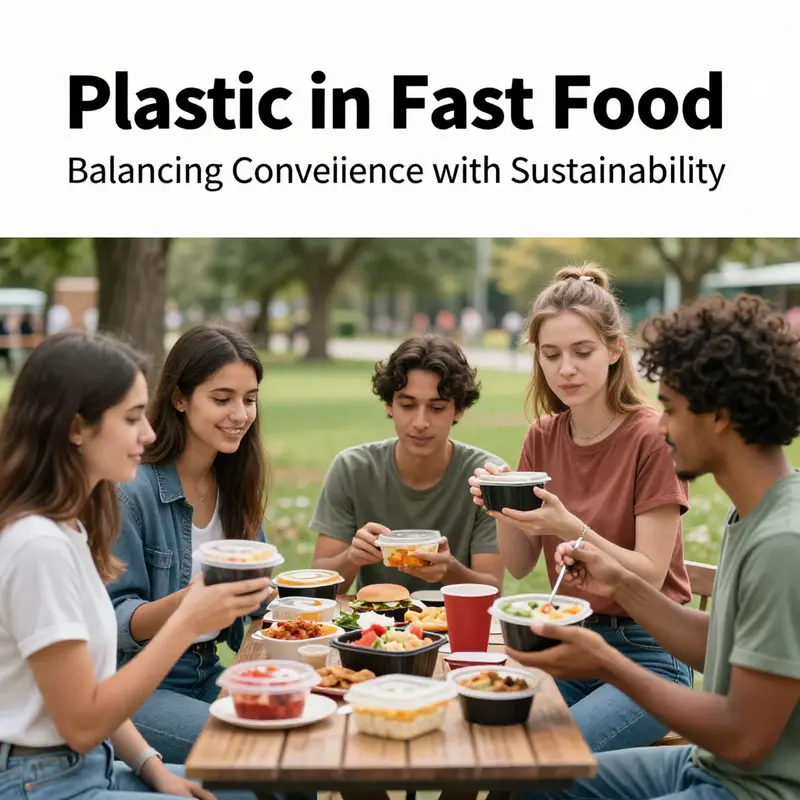
In the steady flow of fast-food supply chains, plastic packaging is invisible most of the time. It becomes noticeable only when a cup, wrapper, or lid disrupts the moment of eating or when its persistence raises questions about the wider system. The latest research shows a clear trend: environmental and health concerns around plastic packaging are rising, and with them, expectations about how meals are presented, transported, and disposed of. Consumers are not just passively absorbing messages about waste; they are forming preferences based on how brands address packaging life cycles, potential microplastic contamination, and the overall footprint of a meal. This shift is particularly pronounced among younger generations who have grown up amid campaigns about plastic waste. They are more likely to judge a restaurant by its packaging policies and to translate concern into concrete choices at the point of sale. They read labels, they notice disposal instructions, and they look for commitments that extend beyond taste and price. In short, awareness is evolving into preference, and preference into action, even within the high-speed, convenience-driven realm of fast food.
Shifting Minds and Market Realities
Yet awareness does not always align neatly with behavior. The same body of research highlights a gap between concern and action. The reasons are practical as much as psychological. Plastic packaging currently offers superior performance: it seals in heat, prevents leaks, and minimizes contamination during transit. The fast-food model thrives on speed and reliability, and these functional benefits help explain why plastics endure despite growing environmental scrutiny. Consumers face real-time pressures for convenience: a tight schedule, limited on-the-go disposal options, and a habit that rewards single-use solutions. For many, the perceived cost and effort of switching to alternatives—such as paper-based or compostable materials—appear higher than the environmental payoff, especially when local waste systems do not reliably support recycling or composting. Behavioral science suggests that comfort and routine trump abstract benefits; even well-intentioned shoppers may revert to familiar packaging when overwhelmed by choices or uncertainty. Bridging awareness and action, therefore, requires more than information. It demands practical pathways that reduce friction, making sustainable choices easy, visible, and consistent across meals, locations, and occasions. A consumer who understands the stakes still needs a clear road to act on those stakes in the moment of purchase.
The research also points to the role of labeling and consumer education. People want information they can trust, presented in straightforward terms. When packaging carries ambiguous claims or unclear disposal directions, the effect can be skepticism or disengagement. This is especially true for the vast spectrum of fast-food packaging, where items range from cups and sleeves to trays and bags. Standardized, simple labeling that communicates recyclability or compostability—and how to dispose of each item—can transform intent into practice. Consumers will engage more readily when the end-of-life path is unambiguous and aligned with local infrastructure. In this context, brand transparency matters as much as technical capability. A firm that communicates its packaging choices clearly and backstories them with verifiable actions earns credibility with a wary audience. For some, the signal is a willingness to reduce plastic use or to adopt recyclable or compostable designs. For others, it is a demonstration that packaging innovation is guided by life-cycle thinking rather than by short-term cost savings. A growing segment of brands now explore alternatives such as eco-friendly packaging options. This emphasis on responsible choices does not erase the need for durability and hygiene; it reframes those requirements through a sustainability lens, signaling to customers that convenience can coexist with care for the environment.
The consumer landscape is also shaped by social and cultural cues. When people see peers advocating for reduced plastic use, intolerance toward single-use plastics grows more quickly. Social norms become powerful levers; if a community normalizes bringing a reusable cup, or if a city’s campaigns emphasize clear disposal pathways, the likelihood of consistent behavior increases. The outcome is not merely a selective avoidance of plastics but a broader expectation that brands will treat packaging as part of a holistic environmental strategy. When shoppers sense that a company is serious about reducing waste, reporting progress in accessible terms, they reward that honesty with continued loyalty. The challenge remains that not all jurisdictions offer the same disposal infrastructure, and not all brands have the resources to redesign packaging comprehensively. Yet the trajectory is clear: consumer pressure can accelerate packaging innovations and push for standardized labeling, robust recycling channels, and more responsible procurement—all while preserving the essential benefits packaging provides in the fast-food model.
For consumers, the pathway from awareness to action is most tangible when information is actionable. Simple, universal disposal cues—icons that convey whether an item is recyclable, compostable, or requires separate collection—can lower the cognitive load of sorting. In practice, this means a bin in the restaurant that directs the correct action for each item, or a small in-app guide that helps a customer choose the right disposal option after a meal. When such cues are coupled with visible recycling stations and trained staff who can answer questions on end-of-life options, the likelihood of correct sorting increases significantly. These measures address two stubborn realities: first, the confusion about what belongs where, and second, the drop in motivation that can accompany a long day or a rushed lunch break. The end result is a more reliable signal to waste-management systems that the consumer segment is participating, not merely observing.
Brand responsibility in this environment goes beyond messaging. It consists of commitments that manifest in packaging design, supplier choices, and measurable progress toward reducing plastic leakage. Consumers respond not to vague intentions but to verifiable outcomes: quantified reductions in single-use plastics, increased recycled-content in containers, and clear demonstrations of how end-of-life recovery is supported by both policy and practice. The research indicates that brands that take concrete steps—such as minimizing material use, adopting recyclable structures where feasible, and collaborating with local municipalities on recycling streams—tend to earn credibility and loyalty. The payoff is multifaceted: it strengthens trust, differentiates a brand in a crowded market, and potentially broadens the customer base to include those who prioritize ethics as a factor in food choices. The interplay between consumer expectations and corporate strategy becomes a catalytic force for change, aligning the speed and convenience of fast food with a more sustainable packaging ecosystem.
As consumers voice concerns, policymakers and industry leaders are urged to respond with coordinated action. Education campaigns that explain not just what to do but why it matters can sustain momentum over time. Public-private partnerships that support packaging reform—whether through funding for research, standards for labeling, or incentives for adopting recycled materials—can accelerate progress. The aim is to cultivate a culture in which disposal is integrated into the dining experience rather than treated as an afterthought. When consumers see packaging as part of a broader environmental commitment, they are more willing to support brands that demonstrate progress with transparency and accountability. The final takeaway is not a summary of a mood but a map of how awareness can translate into practical, measurable change across the fast-food landscape, without sacrificing the convenience that makes these meals so accessible.
For further insight into consumer attitudes and environmental awareness, see the external study discussed in the research results: https://www.sciencedirect.com/science/article/pii/S187734352400067X
Final thoughts
The increasing awareness of the consequences of plastic usage in the fast food sector calls for a dynamic response from businesses and consumers alike. As the environmental and health risks associated with plastic become more pronounced, it’s evident that sustainable practices should be adopted. Fast food establishments—from shops to large chains—must lead the charge in minimizing reliance on single-use plastics, enhancing public health, and protecting the environment. By recognizing the impact of their choices, companies can not only comply with rising consumer expectations but also contribute to a healthier planet. Essential change is not just a matter of compliance; it’s an opportunity for innovation and ethical responsibility.