

Food grade plastic containers have become invaluable in the culinary world, particularly for businesses like bubble tea shops, beverage chains, restaurants, food trucks, catering services, event planners, and corporate procurement teams. These containers are meticulously designed to safely store, transport, and serve various food and beverage items, giving businesses the reliability they need in a fast-paced market. Each chapter in this article will delve deeper into important aspects of food grade plastic containers, covering their composition and safety standards to innovations shaping their future, while also exploring their applications and economic viability in broader market trends. By the end of this discussion, you’ll be well-equipped to make informed decisions about incorporating these versatile containers into your operations.
From Polymer to Pantry: How Composition and Safety Standards Smarten Food-Grade Plastic Containers

Food-grade plastic containers are more than simple receptacles; they are a carefully engineered link between manufacturing, regulation, and everyday meals. The chapter explores how the materials themselves—PP, PE, and PET—and the safety frameworks that govern their use shape what we can store, transport, and serve. When we peel back the surface of a familiar plastic box, we find a disciplined choice of polymers, each chosen for a precise balance of strength, stability, and safety. Polypropylene, the workhorse of many food containers, stands out for its heat resistance and versatility. It tolerates reheating and hot water sterilization, which makes it a common choice for containers that may go from fridge to microwave. Its crystalline structure provides stiffness and clarity in some forms, while its chemical stability helps minimize interactions with fatty or acidic foods. Yet PP is not universal; the same material used for a robust, microwavable lunch box may not be ideal for all high-heat situations or for prolonged storage where other properties could matter. Then there is polyethylene, in its HDPE and LDPE character. HDPE offers durability and chemical resistance that suit it to thicker-walled jugs and sturdy storage solutions, where weight stays low but resilience remains high. LDPE, often found in film and flexible packaging, contributes to safer seals and barrier layers in some container designs. The range between HDPE’s rigidity and LDPE’s pliancy helps product designers tailor containers for specific uses, such as freezer storage or wrap-around lids, without overburdening the consumer with bulky weight or brittle behavior. PET, the transparent face of many single-use beverage bottles, also appears in certain food-contact applications. PET provides excellent clarity and a light feel, but its cautionary tale—limited reusability and potential for degradation with repeated heating—reminds us that not every PET container is built for long-term use or high-temperature applications. In practice, the material choice becomes a conversation: what will be stored, how long it will be stored, at what temperatures it will be used, and how it will be cleaned. The best food-grade containers are those that respect both the food’s nature and the conditions of the kitchen. The choice of polymer is inseparable from the additives that accompany it. Stabilizers, plasticizers, antioxidants, and slip agents help plastics endure the rigors of daily use. Each additive introduces a potential pathway for chemicals to migrate into food, so regulation tightly governs what can be used and at what levels. The core principle is predictable: any substance that might transfer to food under normal use must be within clearly defined safety thresholds. This is precisely why the term “food-grade” is not a casual label but a formal assurance grounded in testing and oversight. In the United States, the FDA sets the benchmark. Food-contact materials must be able to contact food without transferring harmful substances under normal conditions. The rules scrutinize both the base polymers and the additives, including residual monomers and process aids, ensuring that migration stays well below levels that could pose a risk. Across the globe, similar aims exist, even if the regulatory frameworks differ. In China, for instance, the GB 4806 standard family governs the safety requirements for materials and articles intended for food contact. GB 4806.7-2016, in particular, articulates migration limits and safety criteria designed to prevent substances from leaching into food. Taken together, these standards frame a global baseline for what counts as safe plastic for meals, whether it’s a consumer bottle, a kitchen storage tub, or a professional catering vessel. The story of safety, however, extends beyond the polymer itself. It encompasses the manufacturing environment, the compatibility of coatings and inks with food contact, and even the packaging’s lifecycle from production to reuse or disposal. Recycled plastics highlight this complexity. The guidelines do not universally ban recycling in food-contact applications, but they demand strict adherence to safety thresholds. In practice, recycled content must meet the same safety criteria as virgin materials, ensuring that any previously encountered contaminants do not migrate into food. This emphasis on a clean, auditable supply chain echoes the broader industry trend toward sustainability without compromising safety. For consumers and professionals, the implications are concrete. A container’s suitability for microwaving, dishwashing, or freezing is not a marketing promise but a specification born from polymer chemistry and regulatory scrutiny. A microwave-safe PP container, for example, must demonstrate that its polymer matrix tolerates the heat without releasing substances in amounts that would be harmful. A freezer-stable HDPE, by contrast, should resist cracking or becoming brittle at low temperatures and maintain its barrier properties to protect moisture and aroma. The design language of safe food containers also involves practical engineering choices—airtight seals, leak resistance, and the ability to stack efficiently without deforming. These features are crucial for meal prep, pantry organization, and professional service, where integrity of the contents and efficiency of handling go hand in hand. The broader supply chain adds another layer of relevance. For bulk or industrial uses, the market often relies on liners and liners-related technologies that interface with standard export or transport systems. Flexitanks and similar innovations enable the movement of large liquid volumes while maintaining safety and minimizing contamination risk. While these industrial solutions sit at the periphery of consumer awareness, they illustrate the same underlying discipline: choosing materials and designs that protect quality, minimize risk, and meet regulatory expectations across borders. As we weigh choices, the path to informed decision-making becomes clearer. For home cooks and small businesses seeking practical, safe, and cost-effective options, the spectrum of food-grade plastic containers offers credible options that balance performance with health considerations. BPA-free labeling has become a widely recognized cue in the marketplace, signaling an awareness of consumer concerns and a commitment to safer formulations. But BPA-free is only part of the equation; migration potential, heat tolerance, and the compatibility of coatings or printed aesthetics with food safety all shape the overall risk profile. In this light, a simple label becomes a starting point for due diligence rather than a definitive guarantee. The narrative of composition and safety standards is not a static checklist but a dynamic framework that adapts as science advances and as regulatory expectations evolve. Manufacturers continually refine materials and processes to lower migration, improve heat resistance, and extend the usable life of containers without compromising safety. For readers who want a tangible touchstone, consider how a seemingly ordinary container embodies a layered set of decisions—from the polymer’s molecular structure to the design of the sealing mechanism, to the stringency of testing that validates its use with various foods under diverse conditions. The conversation remains practical: choose containers that match intended use, heed temperature and cleaning guidelines, and look for clear signals of compliance with recognized standards. To connect these concepts with real-world options, one can explore examples of food-grade take-away bowls that highlight safe materials and reliable construction in everyday service. food-grade take-away bowls with lids. This kind of product demonstrates the translation of polymer science and safety regulation into a convenient, everyday tool that supports both home cooking and professional catering without compromising the meal’s safety or quality. Finally, for readers seeking a grounded reference on safety in food-contact materials, official guidance from regulatory authorities provides a rigorous framework for understanding how these plastics are tested, certified, and monitored over time. External resource: FDA guidance on food contact substances and safety assessments can be consulted for a deeper dive into regulatory expectations and testing methodologies (https://www.fda.gov/food/packaging-foods/food-contact-substances-fcs).
How Food-Grade Plastic Containers Transform Culinary Workflows: Practical Uses and Clear Advantages

Food-grade plastic containers sit at the intersection of safety, convenience, and efficiency in modern food handling. Their role extends far beyond simple storage; they streamline kitchens, support complex supply chains, and enable new service models such as meal delivery and large-scale catering. Understanding how their design and material properties translate into everyday benefits helps culinary professionals and small businesses choose the right container for each task.
At the core of their utility is the combination of secure closures and material performance. Containers with snap-on or press-fit lids create a near-airtight environment that limits moisture loss and blocks airborne contaminants. This keeps sauces, dressings, and soups where they belong during transport. For takeout and meal prep, leak resistance reduces waste and customer complaints. For buffet-style service, well-sealed lids let staff prepare and portion food ahead of service without compromising texture or flavor.
Transparency is another practical advantage that impacts workflow. Clear plastics such as PET allow immediate visual identification of contents. Staff can scan shelves at a glance to find prepped ingredients or finished items, reducing retrieval time and minimizing mistakes. In fast-paced kitchens, that saved time can mean faster service and fewer kitchen errors. Clear containers also improve display for retail or grab-and-go setups, where visible freshness directly influences sales.
The lightweight nature of many food-grade plastics further enhances operational efficiency. Compared with glass or metal, plastic reduces handling fatigue and lowers shipping costs. Meal delivery services and catering operations benefit from lighter bulk shipments and easier stacking during transit. Yet despite low weight, the right plastics provide robust impact resistance, so stacked containers survive repeated use and transport in busy kitchens.
Different polymers bring distinct advantages that map to specific culinary needs. Polypropylene (PP) handles heat well and tolerates repeated cycles in microwave and dishwasher settings when rated accordingly. It is often used for microwavable meal trays and reusable deli-style containers. PET excels in clarity and tensile strength, making it suitable for bottled beverages and short-term storage of salads and fresh produce. High-density polyethylene (HDPE) offers strong chemical resistance and is widely used for milk, juices, and bulk storage of dry ingredients. When choosing a material, consider both thermal demands and chemical exposure to ensure the container maintains integrity under real-use conditions.
For large-scale and industrial applications, food-grade intermediate bulk containers (IBCs) and flexible inner liners play a critical role. IBCs store hundreds of gallons of sauces, oils, and syrups in centralized production. They are engineered to be bacteriostatic and impact-resistant, which preserves product integrity and meets regulatory requirements. For shipping liquids over long distances, single-use liners—often called flexitanks—offer a cost-effective, leak-resistant solution for loading into standard 20-foot shipping containers. Flexitanks reduce the need for multiple drums or bottles and minimize contamination risk because they are single-use and sealed at the source.
Stackability and modular design are subtle but powerful benefits of well-designed containers. Uniform shapes let staff stack and organize refrigerators, freezers, and dry storage to maximize space. Nesting lids and bodies when empty saves storage space and reduces clutter. For meal prep operations that package hundreds of meals a day, consistent dimensions speed up packing, palletization, and automated handling. The ability to label externally, often on clear surfaces, supports rotation practices like FIFO (first-in, first-out) and helps track shelf life without opening containers.
Temperature tolerance matters across the supply chain. Many food-grade plastics are freezer-safe, allowing companies to freeze prepared meals or ingredients without container failure. Microwave-safe options permit reheating in the same vessel, which is convenient for consumers and reduces dishwashing in institutional settings. Not all plastics tolerate extreme heat or repeated microwave exposure; reading manufacturer ratings avoids warping or leaching concerns. Likewise, understanding dishwasher-safe classifications ensures long-term reuse without loss of seal performance.
Environmental and regulatory considerations influence purchasing and end-of-life decisions. Many food-grade plastics are BPA-free and meet regulatory standards for food contact. Recycling infrastructure varies, however, and not all polymer types are equally recycled in every region. Businesses balancing convenience and sustainability often pair plastic containers with recycling programs or select materials compatible with local recycling streams. Increasingly, suppliers offer sample kits and bulk discounts, enabling buyers to test container performance and determine the best balance of cost, durability, and recyclability before committing to large orders.
For small businesses and home-based operations, smaller disposable deli containers—commonly in sizes like 16 oz—provide flexible solutions for soups, salads, and sauces. These containers typically come with secure lids and are available in packs sized for cost-effective bulk buying. Many suppliers provide promotional pricing for larger quantities and sample packs to evaluate lid fit and clarity before scaling purchases. For businesses focused on branding or retail presentation, clear containers can be paired with external labels or sleeves to create a consistent look without sacrificing the functional benefits of plastic.
Operational advantages also extend to sanitation and throughput. Smooth interior surfaces and tight seals make cleaning and sanitizing more effective for reusable containers. Bacteria and food residue are less likely to lodge in seams when designs are well-executed. For single-use liners and flexitanks, single-dose usage eliminates cross-contamination across batches and simplifies compliance with food safety audits.
While plastics offer many strengths, integrating them intelligently with other materials can yield further gains. For example, pairing rigid plastic containers with compostable outer packaging or recyclable sleeves supports greener branding. Alternatively, using durable plastic containers for in-house prep and switching to disposable options for customer-facing takeout can balance hygiene, convenience, and waste management.
Choosing the right food-grade plastic container depends on a clear view of the use case: short-term display, long-term cold storage, high-temperature reheating, bulk liquid transport, or ready-to-eat meal delivery. Each scenario emphasizes different material properties and design features. Testing samples, verifying regulatory compliance, and planning for end-of-life disposal are pragmatic steps that ensure containers deliver performance while aligning with operational goals.
For a practical example of reusable plastic options geared toward salads and similar applications, see this supplier offering food-grade reusable square salad bowls with PP lids. For more detailed background on standards and material properties that inform these choices, refer to the complete guide at Foodsafety News: https://www.foodsafetynews.com/2026/02/understanding-food-container-plastics-complete-guide-to-standards-properties-and-industrial-applications/.
Bulk Transport and Storage: How Food-Grade Plastic Containers Keep Supply Chains Safe and Efficient

Food-grade plastic containers are the backbone of modern bulk food transport and storage. They bridge the gap between production and consumption by protecting quality, simplifying handling, and meeting strict safety requirements. In bulk contexts, containers must do more than hold product: they must preserve freshness, resist contamination, stack securely, and integrate with logistics systems. This chapter follows how design, material choice, and operational practices converge to make large-scale storage and shipment both practical and compliant.
At the industrial scale, the design of a container shapes its performance. Intermediate Bulk Containers (IBCs) and large-capacity canisters exemplify how robust construction and food-safe materials enable efficient handling of liquids and solids. IBC totes provide rigid, reusable transport for syrups, oils, and liquid ingredients. Their cube-like shape improves palletization and warehouse utilization, cutting wasted space on trucks and in storage. When made from certified food-grade plastics such as HDPE, these totes resist corrosion from acids and sugars and avoid interactions that could alter flavor or safety. Reusable IBCs also reduce packaging waste, lowering lifecycle costs when cleaning and circulation systems are properly managed.
For liquid cargo that must travel in standard shipping containers without rigid intermediate packaging, disposable inner liners or flexitanks offer an economical alternative. These single-use liners are fabricated from food-grade polymers and designed to conform to the interior of a 20-foot container. They enable transport of thousands of liters of sauce, juice, or edible oil in one shipment. By eliminating multiple drums and reducing handling steps, flexitanks simplify loading and unloading, and they minimize cross-contamination risks when they arrive sealed and intact. Single-use liners also ease regulatory compliance: after unloading, the liner is discarded, reducing the burden of sanitation and inspection for returnable containers.
Solid bulk foods require different strategies. Large-capacity canisters with airtight lids, from 9.5 liters upward, protect flour, sugar, rice, and dry mixes. The right lid design is vital. An airtight seal blocks moisture and pests while maintaining the product’s original texture. Stackable bodies with interlocking bases multiply usable storage without sacrificing stability. This is especially beneficial for distribution centers and commercial kitchens where vertical space is a premium. When these canisters are manufactured from BPA-free, food-grade plastics, they eliminate concerns about chemical migration and remain suitable for long-term contact with dry foods.
Perishable items bring ventilation into focus. Bakery boxes, fruit crates, and perforated bins prevent condensation and preserve appearance. Ventilated walls and airflow panels reduce humidity buildup, which delays mold growth and staling. For produce, controlled airflow can slow respiration and reduce spoilage rates during transit. Well-designed ventilated containers must balance protection against physical damage with sufficient ventilation. The result is less food waste and more consistent quality at the point of sale.
Material selection is the single most important technical decision. Food-grade HDPE and polyethylene terephthalate (PET) are common because they combine chemical resistance with mechanical strength. These polymers are compatible with cleaning agents and repeated handling. Certifications and regulatory approvals verify that the materials meet migration thresholds and are safe for intended uses. Choosing certified plastics also helps companies demonstrate compliance to retailers and regulators, simplifying audits and recalls. In markets where traceability is required, containers can be marked with batch numbers, barcodes, or RFID tags to track product movement and storage history.
Operational practices amplify the safety design. A hygiene-focused cleaning regimen for reusable containers prevents microbial buildup and cross-contamination. Sanitization protocols vary with product class; acidic or high-sugar liquids often demand more frequent inspection and cleaning cycles. For single-use flexitanks, inspection focuses on proper installation, valve integrity, and sealing procedures to prevent leakage during transit. Training staff on correct filling techniques, palletizing patterns, and secure stacking reduces the risk of spills or structural failures.
Logistics efficiency is another advantage of well-engineered containers. Lightweight plastics lower shipping weight, reducing fuel costs per ton. Stackability and uniform sizing improve trailer and container loading density. Reusable solutions like IBCs deliver savings over time through repeated use. Conversely, single-use liners reduce handling complexity and return-flow logistics but generate more waste. Selecting the best solution requires comparing total landed cost, handling labor, risk of contamination, and disposal or recycling infrastructure.
Safety and sustainability are not mutually exclusive. Reusable food-grade containers cut waste and often yield lower carbon footprints when returned and sanitized efficiently. Single-use liners can be made from recyclable or lower-impact polymers where recycling streams exist. Many operators combine approaches: rigid, reusable outer containers for repeated transport plus disposable inner liners for sensitive products. This hybrid model secures hygiene while minimizing handling and cleaning costs.
For small businesses and commercial kitchens, bulk purchasing of smaller, stackable deli containers and BPA-free canisters offers similar benefits on a reduced scale. Buying by the pallet lowers unit cost and ensures consistent packaging for meal prep, retail, or catering. Sample kits and supplier audits help evaluate lid fit, clarity, and material feel before committing to large orders. Even small operations must pay attention to seal performance and material certifications to avoid liability and food safety incidents.
Beyond functionality, container choices influence inventory management and customer experience. Transparent plastics offer quick visual checks, making stock rotation simple and reducing waste from expired goods. Clear labeling and compartmentalized containers speed picking and assembly tasks in busy kitchens and distribution centers. In retail or buffet settings, containers that maintain appearance and freshness help preserve brand reputation.
Operationally, integrating food-grade containers into existing systems requires planning. Facilities should map storage flows, select containers that match pallet and shelving dimensions, and standardize handling equipment. A cohesive strategy aligns container choice with cleaning capacity, waste management, and procurement cycles, delivering measurable improvements in efficiency and safety.
For businesses exploring food-grade reusable or disposable options at scale, supplier resources and case studies are helpful. One practical example of bulk reusable solutions and their benefits is documented in industry materials that explore IBC applications for safe transport. For smaller-scale packaging that pairs well with bulk storage practices, companies often source reusable square salad bowls with PP lids to streamline portioning and serving; a useful supplier reference for such consumer-sized containers can be found here: https://cupbowlpack.com/product/senang-130-disposable-eco-friendly-food-grade-reusable-square-salad-bowls-with-pp-lids-for-pet-food/.
For additional detailed guidance on food-grade IBC totes and their suitability for bulk transport, consult the resource provided by an industry specialist: https://www.tosca.com/food-grade-ibc-totes-for-bulk-transport.
By aligning material properties, container design, and operational practices, food-grade plastic containers enable secure, efficient, and compliant bulk transport and storage. Thoughtful selection reduces waste, protects product integrity, and supports reliable supply chains across commercial and industrial settings.
Next-Generation Food Grade Plastic Containers: Sustainability, Sealing, and the Shift Toward Circular Packaging

Material Shifts and Sustainable Choices
The landscape of food grade plastic containers is evolving from a narrow focus on durability and cost to a broader balance of performance, safety, and environmental responsibility. Manufacturers are rethinking resin selection, seeking polymers that meet food-safety regulations while enabling recycling streams. Polyethylene terephthalate (PET) and polypropylene (PP) remain core materials because they combine clarity, heat resistance, and regulatory compliance. Yet innovation is redirecting attention toward recyclable blends and mechanically or chemically recycled polyolefins. These recycled resins aim to match virgin material performance while reducing carbon footprint and landfill burden.
Designers are also pairing plastics with renewable or compostable substrates in hybrid formats. For businesses that need the barrier and clarity of plastic lids but want to advertise sustainable choices, combinations like kraft-based bowls with a clear PP lid create a visible message: functional protection with recyclable components. Such pairings are particularly attractive for grab-and-go food service, where presentation and perceived sustainability influence purchase decisions. For an example of blended material formats suitable for takeaway and retail, consider reusable options like recyclable kraft salad bowls with PP lids.
Sealing, Freshness, and Transit Reliability
Seals and closures have advanced beyond simple snap-on lids. Modern food grade containers use multi-layer sealing systems, engineered ribs, and precision-fit lids to achieve repeatable airtight seals. This matters at two levels: at the consumer end, where meal prep and household storage require leakproof performance; and at the industrial end, where long-distance shipping exposes products to vibration, temperature swings, and stack pressure. New gasket geometries and lid flange tolerances reduce micro-movement that can allow air or moisture ingress. For refrigerated and frozen goods, sealing systems now account for differential contraction between lid and base to maintain integrity across the cold chain.
Insulation and multilayer constructions further protect sensitive foods. Some containers now incorporate thin insulating foams or air-pocket geometries to buffer temperature changes during short-term transport. Others apply barrier coatings or metallized layers to extend shelf life for oxygen- or light-sensitive contents. These advances extend applicability from home meal prep to catering and retail distribution, where consistent freshness establishes brand trust.
Scaling Up: Flexitanks and Bulk Liquid Transport
On the industrial scale, flexible single-use inner liners—commonly called flexitanks—represent a different side of food grade plastics. These liners transform a standard shipping container into a large-volume food transport vessel. Engineered for sauces, oils, juices, and other food liquids, flexitanks prioritize leak resistance, chemical compatibility, and hygienic design. They reduce the need for intermediate filling into drums and minimize handling steps, which lowers contamination risks and cost. While flexitanks are single-use by design to preserve product integrity, material innovations are exploring more sustainable feedstocks and designs that facilitate responsible disposal or energy recovery.
Emerging Recycling Technologies and Circularity
True environmental progress requires closing the loop on plastic packaging. Emerging technologies seek to produce food-grade recycled polyolefins from post-consumer waste. Mechanical recycling remains the most common route but often struggles to meet the purity requirements for direct food contact. Chemical recycling and advanced purification methods promise to recover monomers and rebuild polymers to virgin-equivalent quality. These approaches could allow recycled content to enter direct food contact applications without compromising safety. However, cost, energy use, and integration into existing logistics and manufacturing systems remain practical hurdles.
Producers and brands can accelerate circularity by standardizing materials across product lines, designing for disassembly, and choosing resins compatible with local recycling systems. Clear labeling and consumer education complement these design choices, increasing the likelihood that containers enter the intended recycling stream rather than landfill.
Safety, Regulation, and Consumer Confidence
Safety remains non-negotiable. Any material intended for food contact must satisfy regulatory agencies and pass migration testing for additives and contaminants. As recycled content becomes more common, regulators will scrutinize sourcing, decontamination processes, and final resin purity. Manufacturers therefore invest in validated recycling processes and third-party testing. Transparency in supply chains and documented compliance builds buyer confidence for both commercial purchasers and end consumers.
Simultaneously, the industry is reducing reliance on controversial additives by developing alternative stabilizers and colorants that meet migration limits and maintain performance. These changes help avoid negative publicity and support long-term acceptance of plastic solutions in food applications.
Convenience Meets Performance
Innovations focused on user convenience have multiplied the contexts where food grade plastic containers excel. Stackable designs improve storage efficiency for retail and food-service operations. Containers engineered for microwave use with venting features allow safe reheating without lid deformation. Freezer- and dishwasher-safe ratings simplify lifecycle use, increasing reuse potential and reducing waste per meal.
Lightweighting remains a crucial trend. Reducing material per container lowers shipping costs and carbon emissions while preserving strength via improved polymer formulations and ribbed geometries. For last-mile delivery and meal-kit businesses, every gram saved multiplies across thousands of shipments.
Cost, Supply Chains, and Adoption Barriers
Despite technical progress, economics govern adoption. Recycled and specialty resins can be more expensive than conventional plastics. Shifts in supply chain practices—such as segregating post-consumer feedstock and investing in recycling infrastructure—require capital and long-term planning. Smaller food operators may find it challenging to absorb initial costs even when lifecycle savings exist. Overcoming these barriers often demands collaboration across the value chain: resin suppliers, converters, brands, and waste managers aligning incentives and sharing risk.
Practical Choices for Buyers
For buyers, selecting next-generation food grade plastic containers means balancing sustainability goals with functional needs. Ask for documentation of recycled content and food-contact testing. Prioritize containers with recyclable resin codes compatible with local collection systems. Evaluate sealing performance under the specific conditions of use: ambient, refrigerated, frozen, or heated. Consider modular designs that allow reuse of lids or bases across multiple product sizes to extend utility.
At the procurement level, sample kits help validate performance before bulk purchase. Many suppliers offer configurable options for lids, venting, and barrier properties. When scaling to industrial solutions like flexitanks, insist on certifications for food-grade manufacturing and leak-test histories tailored to the transported product.
The Road Ahead
The most impactful innovation will emerge where performance, safety, and circularity converge. Advances in recycling technology, combined with smarter design for disassembly and standardized materials, can enable food grade plastic containers to meet both regulatory and environmental expectations. As supply chains adapt, the industry will increasingly favor materials and systems that demonstrate real reductions in waste and greenhouse gases while preserving the convenience and protection that plastics uniquely provide.
For readers who want a technical review of material trends and innovations in food packaging, see this comprehensive overview: https://www.researchgate.net/publication/305468229PlasticsinFoodPackagingTrendsInnovations_and
Beyond Storage: The Economic Pulse of Food Grade Plastic Containers in a Changing Market
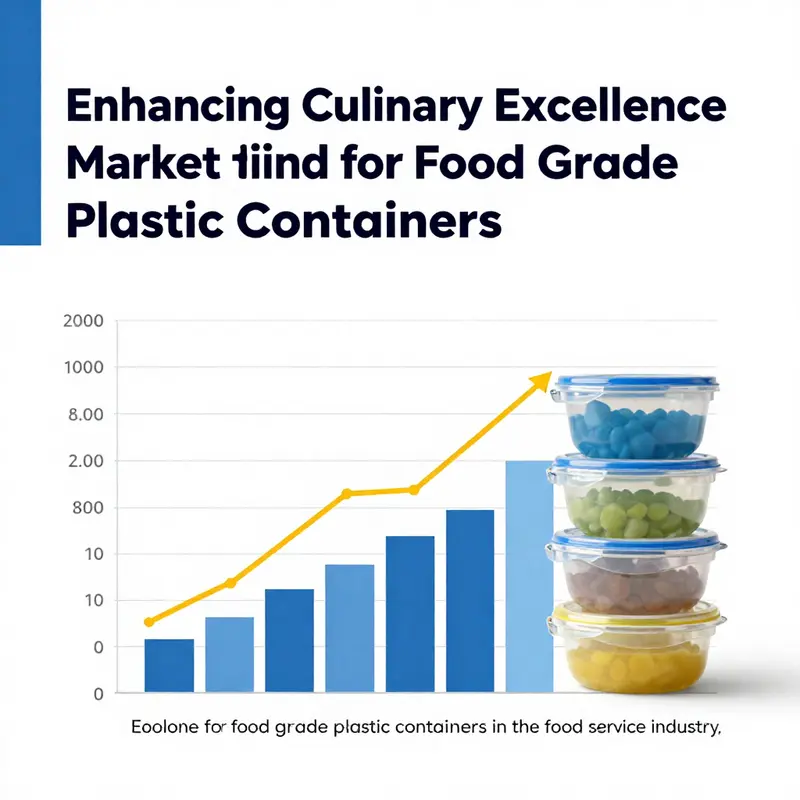
The market for food grade plastic containers sits at an intersection of practicality and progress. Dominating the packaging landscape with a share approaching half of the market, these containers are favored not just for their price, but for the way they translate storage into scalable operational efficiency. The logic behind their ascent is straightforward: plastic can be produced at low cost, is lightweight, and lends itself to a dazzling array of shapes and sizes. In a world where millions of meals travel from kitchen to curb, shelf to service counter, the ability to offer a predictable, transparent, and reliable container becomes a competitive advantage. This is not merely about keeping food safe; it is about enabling speed, reducing waste, and supporting a business model that relies on accuracy and repeatability. The figures and observations from current market analyses illuminate why plastic containers have entrenched themselves so deeply. A near 49 percent market share is not just a statistic; it represents a practical consensus about what works in real kitchens and real supply chains. Cost efficiency remains at the core of this dominance. Plastic materials used for food contact, when properly certified, can be manufactured at scale with consistent quality. The production lines that shape these containers are optimized to minimize waste, cut energy use, and accelerate throughput, translating into lower prices for end users while preserving performance standards. The lightweight nature of these containers also matters. Reducing weight lowers shipping costs and improves handling for both distributors and customers, making meal kits, bulk retail, and catering more economically viable. And then there is versatility. The ability to mold plastics into a wide range of geometries allows manufacturers to tailor containers for specific foods—dry goods like cereals, grains, and nuts, as well as soups, stews, and sauces when seals and materials permit. This versatility intersects with consumer expectations for visibility, organization, and routine reuse, especially as urban living compacts kitchens and pantries into smaller footprints. The result is a packaging ecosystem that feels seamless: a consumer buys a container once, uses it many times, and trusts that its material will not interact unfavorably with the food inside. The value proposition extends beyond households. In food service and retail, durable, airtight designs preserve freshness and reduce spoilage during transit and on shelves. The combination of airtight seals, moisture barriers, and inert materials helps extend shelf life and maintains sensory quality, a critical factor when logistics stretch across regions and even continents. It is this reliability that underpins the broader adoption in meal prep, buffet service, and commercial distribution channels where consistency matters as much as convenience. At the same time, the market faces genuine constraints that shape product development and procurement strategies. For instance, while many containers perform well with dry goods, liquids introduce leakage risks that demand robust sealing systems and sometimes different geometries. The balance between airtight performance and ease of cleaning has been a constant design tension. Dividers and compartments, when non-removable or poorly adjustable, can hamper the flexibility users expect. Cleanability matters too; edges and seams can harbor residues, particularly in containers designed for multiple uses. Staining is another practical concern. Tomato sauces, curry dishes, and other pigments can leave lasting marks that affect aesthetics and perceived hygiene, even when the container remains functionally sound. These realities push manufacturers toward advanced materials and coatings, better gasket technologies, and modular textures that minimize residue retention while promoting hygienic maintenance. The industrial side of the market adds another layer of complexity and opportunity. For bulk or large-scale liquid transport, disposable food-grade inner liners—often described in industry discussions as flexible tanks—offer a lean solution. These liners fit inside standard shipping containers, enabling the safe, leak-proof loading of sauces, juices, or oils in large quantities. The economics here hinge on the liner’s compatibility with long-distance transport, the cost per liter delivered, and the ability to discharge contents cleanly at the destination. This approach reduces the need to move heavy rigid containers and can streamline supply chains that involve multiple handoffs, from manufacturers to distributors to food service operations. The broader market dynamics reflect how consumer trends feed into corporate strategy. Convenience packaging continues to surge as more people lean toward ready-to-eat products and meal kits. The rapid expansion of food delivery services reinforces the need for durable, leak-resistant containers that keep contents secure during transit and during reheating at the consumer’s end. Urbanization compounds this demand. Compact living spaces drive demand for stackable, space-efficient storage that can be quickly located and retrieved, a need that plastic containers are well positioned to meet given their lightness and clear visibility. In this ecosystem, transparency becomes not only a physical property but a strategic feature. Consumers increasingly want to see what is inside at a glance, which encourages designs that emphasize clear or translucent plastics. The combination of visibility with durable construction supports efficient pantry organization, particularly as people seek to manage dry goods, cereals, rice, pasta, and nuts with greater ease. Yet even as plastics capture a sizable share of the market, the conversation continues to evolve around materials safety and sustainability. The regulatory environment remains a critical influence, with certifications and approvals guiding what can be marketed as food-grade. The industry faces ongoing scrutiny about additives, colorants, and potential interactions with foods. In response, manufacturers emphasize BPA-free designs, phthalate-free formulations, and materials that comply with stringent food-contact standards. The result is a spectrum of products that balance safety, cost, and performance, enabling buyers to select containers that align with their use cases and regulatory obligations. Within this evolving landscape, the consumer and small-business segment often drives experimentation with different configurations and sizes. Deli-style containers in the 16-ounce range, designed to hold soups or salads, become bread-and-butter offerings for small operations seeking cost-effective shelf life and easy labeling. Bulk buyers pursue larger, stackable formats that maximize storage density in warehouses and cold rooms, sometimes complemented by bundling offers that reward volume purchases. The pricing dynamics underscore a practical truth: larger orders often yield meaningful discounts, while sample kits and trial bundles help buyers assess fit before committing to longer-term supplier relationships. In this sense, the market’s health depends as much on trust and service quality as on the raw performance of the plastic itself. The ecosystem is not static. As technology advances, new polymers and coatings promise improved chemical resistance, enhanced heat tolerance, and even more robust sealing solutions. The regulatory maturation around food-contact safety pushes continuous improvement in both materials science and manufacturing processes. This is where market intelligence, aligned with compliance, becomes a strategic asset. For businesses sizing up opportunities, the path forward lies in recognizing not only the immediate cost benefits but also the long-tail value of reliability, ease of use, and consistency across the supply chain. The economic narrative is thus not only about the container as a product, but about the entire system it enables—from kitchen prep to doorstep delivery. That system increasingly favors solutions that deliver savings at scale, reduce waste, and maintain safety and hygiene. It is worth noting how the packaging world remains mindful of alternatives. While plastic containers lead in many segments, the broader ecosystem includes paper-based and other sustainable formats that cater to different consumer priorities. For those exploring the full spectrum of choices, a closer look at packaging options such as kraft-paper-noodle-box packaging options can illuminate how different materials solve distinct problems in logistics, shelf space, and consumer perception. kraft-paper-noodle-box packaging options. As a reference point for strategic planning, industry analyses project continued growth with shifts in demand patterns and technology. To those seeking a deeper market forecast and projections, the Global Food Storage Container Market Forecast to 2033 provides an in-depth examination of trends, forecasts, and market dynamics that can guide decision making across manufacturing, distribution, and retail. External resource: https://www.researchandmarkets.com/reports/5764281/global-food-storage-container-market-forecast-to-2033
Final thoughts
Food grade plastic containers are essential tools in the foodservice industry, providing safety, versatility, and economic efficiency. They not only meet stringent safety standards but also adapt to the needs of various applications—whether in bustling restaurants or small food trucks. Innovations in their design and material composition continue to enhance their effectiveness, ensuring they remain at the forefront of food storage and transportation solutions. By harnessing the benefits of food grade plastic containers, culinary professionals can confidently elevate their service offerings and maintain the freshness and safety of their products.