
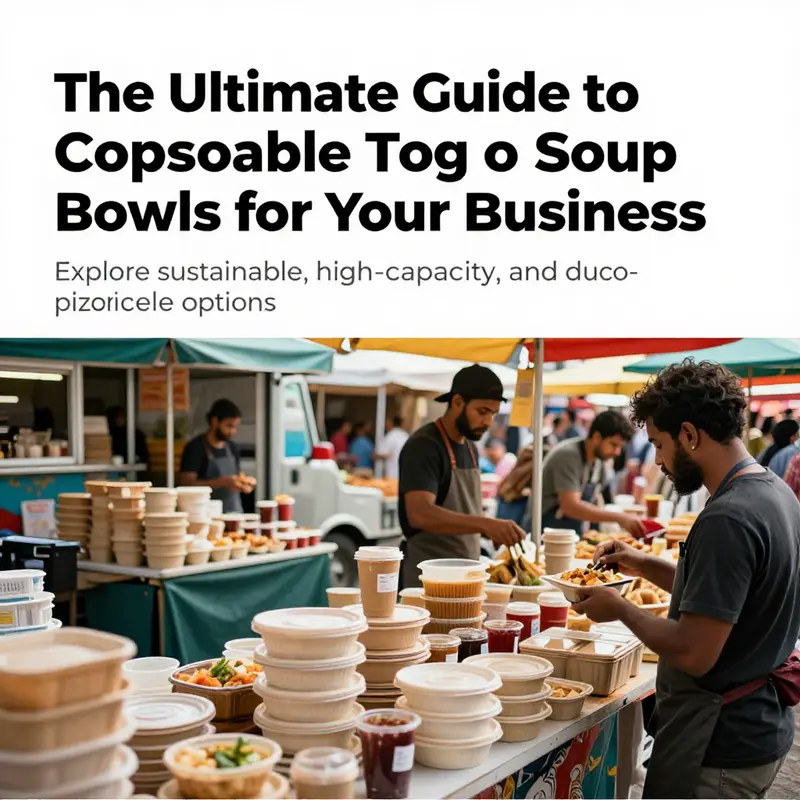
In the modern food industry, the demand for efficient and sustainable packaging solutions has surged, especially for togo soup bowls. Whether you’re a bubble tea shop, a food truck, or an event planner, the right packaging can make all the difference in presentation and functionality. This comprehensive guide covers the best disposable bulk togo soup bowls, incorporating aspects of sustainability, capacity for large events, and customization options for branding. By understanding these categories, you will be better equipped to select the perfect bowls that align with your business needs and environmental goals.
Beyond the Takeout Cup: How Bulk Disposable Bowls Redefine Togo Soup Service
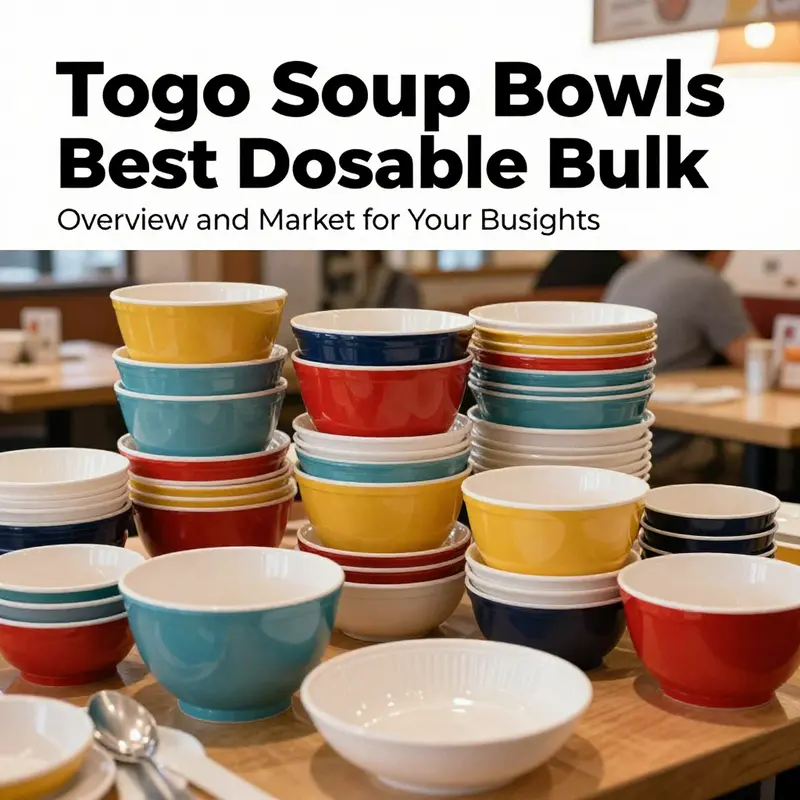
The growth of to-go food has quietly rewritten the expectations surrounding soup service in fast-casual dining, catering, and large events. What once was a simple container for a hot bowl is now a carefully engineered system that balances convenience, hygiene, and sustainability at scale. In the world of bulk disposable bowls, operators seek packaging that can withstand the rigors of transport, preserve temperature and texture, and align with evolving environmental standards. The challenge is not merely to offer a single, cheap option but to curate a lineup that can adapt to high-volumeservice while signaling a responsible brand ethic to customers who increasingly scrutinize every layer of their takeaway experience. The result is a category that blends material science with practical food-service design, delivering containers that perform under heat, stay leak-proof in transit, and degrade in a responsible time frame when composted in appropriate facilities.
At the core of this shift is a move away from traditional plastics toward biodegradable and compostable materials rooted in plant-based fibers. Bagasse, the fibrous by-product of sugarcane, has emerged as a leading material due to its renewability and performance. Bags and bowls made from bagasse typically offer robust heat tolerance, allowing hot soups to be served confidently without the container softening or warping. This fiber is often used without wax linings, relying on the inherent properties of the pulp to repel moisture sufficiently for many meals. In cases where oil-based broths are involved, the material’s barrier properties, combined with appropriate lid designs, contribute to reliable performance during short travels from kitchen to table. The popularity of bagasse-based options continues to grow as people recognize that compostability can align with practical food-service needs, not just a green badge. Alongside bagasse, other plant-based composites such as paper pulp blends and corn-starch derivatives are shaping a more sustainable baseline for bulk to-go service, particularly for containers designed to hold liquids over extended periods.
A defining feature of the current market is the emphasis on heat resistance and leak resistance. For hot soups, containers must tolerate temperatures at least around the boiling point without warping or losing their structural integrity. The best designs also prevent leaks during transit, a key factor for bulk orders where hundreds or thousands of meals are stacked and moved through warehouses, delivery fleets, and event spaces. This is achieved through a combination of snug-fit lids and reliable sealing designs, sometimes including venting features to manage steam pressure. The result is a package that travels well, keeps soups hot, and minimizes the risk of spills that can contaminate other items in a shipment. The emphasis on heat resistance is closely tied to consumer expectations; customers want a reliable experience that mirrors the quality of dine-in service, even when the meal is purchased in a bulk setting.
Another pivotal element is the environmental certification framework that underpins these products. Certifications such as OK compost HOME and BPI provide confidence that the bowls will break down in home and industrial composting environments, respectively. In regions where regulation is strict, these marks help buyers navigate the choice between products that merely claim compostability and those with verifiable end-of-life pathways. In addition, compliance with food-safety regulations—such as EC No 1935/2004 in the European framework—reassures buyers that the materials used in these bowls are suitable for contact with food and won’t transfer harmful residues. For operators serving diverse markets, such certifications are not decorative; they’re practical tools that simplify compliance and align with corporate sustainability reporting.
From a design standpoint, stackability and space efficiency are often overlooked but essential attributes in bulk applications. Square or square-ish geometric bases, flat lids that seal tightly, and nested stacking reduce warehouse footprint and simplify loading. This matters because every saved inch in storage translates into tangible cost reductions when orders scale into tens of thousands of units per month. A compact, stackable profile is especially valuable for caterers who juggle multiple events on peak weekends, where space is at a premium and speed of setup matters. The ability to stack bowls securely also means fewer breakages and less waste, both of which contribute to a smoother operation and better cost control.
Branding and customization have become a strategic advantage in bulk packaging. Modern suppliers offer flexible options for logo printing and custom packaging, enabling businesses to extend their branding from the menu to the packaging itself. This creates a consistent consumer experience and reinforces brand recognition across venues and events. In practice, this customization can be scaled across a large batch without compromising the container’s performance or safety. For operators who are building or refreshing an event-driven or restaurant brand, the ability to imprint color, logo, or messaging on bulk-supply bowls is more than aesthetics; it’s a practical method to differentiate the service in crowded markets and to communicate a commitment to sustainability through visible design choices.
The commercial realities of bulk purchasing add another layer of consideration. Suppliers based in major manufacturing hubs offer bulk production runs, sometimes with minimum order quantities that enable both startups and established chains to plan procurement with predictable cadence. Lead times, often ranging from a few weeks to a month or more, require careful demand forecasting and production scheduling. Payment terms may include a deposit arrangement, such as a percentage upfront with the balance due upon shipment, or alternative terms that accommodate large harvests of orders during peak seasons like holidays and festivals. Logistics considerations—export cartons, loading ports, and standard distribution routes—play a critical role in delivering bulk to-go bowls to diverse markets across regions. The overall price and availability hinge on material prices, packaging design complexity, and the extent of customization.
In practice, the market presents a spectrum of sizes and formats tuned to different use cases. High-volume operations favor larger capacities for bulk meals, where a single container can hold substantial portions of soup or accompanying items. These large-volume bowls are designed with robust lids to maintain heat and prevent leakage during long shipments. At the other end of the spectrum, smaller, PFAS-free bagasse oval bowls offer an eco-friendly alternative for fast-casual settings, where branding opportunities and compact design matter. The PFAS-free aspect aligns with growing consumer and regulatory expectations around safer, more sustainable materials in food packaging, reinforcing the idea that bulk does not have to compromise safety or environmental integrity. And for operators who want to balance branding with practicality, there are options that support flexible printing (often up to several colors) and tailored packaging solutions that still perform under the challenges of busy kitchens and event venues.
The practical implications of these choices become clear when considering the everyday realities of running a bulk-to-go program. The most successful operators plan for a portfolio of packaging options that cover the widest possible range of customer needs while staying aligned with sustainability goals. They understand that some customers prefer a simple, no-frills experience for quick-service formats, while others demand a more premium presentation that reinforces a brand’s commitment to the environment. They also recognize the value of compatibility with common takeout bags and cart systems, ensuring that the packaging not only travels well but also integrates smoothly into the day-to-day flow of the business.
To illustrate the breadth of this category without anchoring to a single product name, consider a widely adopted, high-capacity option with a secure lid that handles hot liquids reliably. This kind of container represents the trend toward sustainability paired with performance. It embodies the idea that compostable materials can deliver the durability needed for bulk service, while still offering a clear, credible end-of-life path for the consumer who wants to recycle or compost correctly. It’s also a reminder that the best bulk solution is not a single item but a curated set of choices designed to meet evolving demands across markets and seasons. For teams managing events, catering fleets, or a growing takeout program, this approach reduces risk, improves guest satisfaction, and supports a transition toward more sustainable practices.
For teams seeking a tangible example of durable kraft-based packaging with a lid, an option worth considering is described here: kraft paper soup cups with lids. This kind of product exemplifies how a seemingly simple container can balance weight, heat, and environmental credentials while offering branding opportunities that reinforce a company’s sustainability story.
Looking ahead, the market is unlikely to settle into a single standard. Instead, it is evolving toward a framework where performance, sustainability, and customization are integrated into a scalable system. The best bulk solutions will be those that offer options across a continuum—from simple, cost-efficient bowls for mass-service venues to highly customizable, branded vessels that elevate the takeout experience for festivals, corporate events, and premium quick-service concepts. In this sense, the future of bulk to-go soup bowls lies in a mix of compostable materials, precise engineering for heat tolerance and leak resistance, certification-backed end-of-life pathways, and flexible manufacturing that can respond to shifting demand with speed and reliability.
In sum, the category reflects a thoughtful convergence of material science, design pragmatism, and supply-chain strategy. It rewards operators who plan holistically—one foot in the practicality of daily kitchen operations and the other in the broader aim of reducing environmental impact. The best overall approach combines a heat-tolerant, compostable sugarcane fiber option with a secure lid and a clear, verifiable path to end-of-life processing. This is the sweet spot where performance meets responsibility. It’s not about chasing the lightest or the cheapest option; it’s about choosing a scalable solution that upholds safety, efficiency, and environmental stewardship as the service grows. The bulk to-go bowl, once a mere vessel, now stands as a visible indicator of a brand’s commitment to sustainable practice, operational excellence, and the evolving expectations of customers who want their meals to travel well and depart the planet with less impact.
External resource: https://www.amazon.com/dp/B0B8XQKJYR
From Sustainable Fiber to Successful Service: Bulk Togo Soup Bowls That Balance Performance, Purity, and Purpose
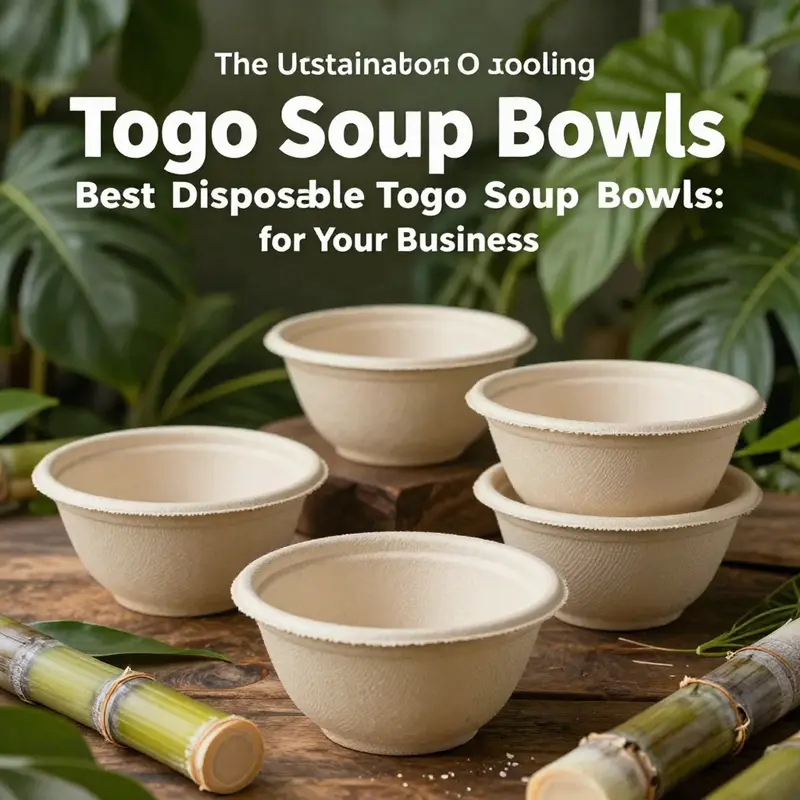
Every takeout counter is a stage where function meets responsibility. In the world of bulk togo soup bowls, operators face a common tension: how to deliver hot, hearty servings with packaging that respects the planet. The answer is not a single magic material but a thoughtful mix of renewables, compostability, and practical design. When you examine the market through that lens, three pathways emerge—each rooted in renewable fiber, each engineered to handle the rigors of day-to-day service, and each designed to minimize the environmental footprint from the moment the lid is closed to the moment the container returns to the compost bin. This chapter threads these pathways together, offering a cohesive sense of how bulk-ready, sustainable bowls can align with the realities of busy kitchens, large events, and environmentally minded brands that want to scale without compromise.
First, consider the round bagasse-based bowls, a family of products derived from the fibrous residue of sugarcane after juice extraction. These bowls are composed of sugarcane fiber mixed with plant-based pulp, producing a material that is both strong and renewable. In practice, a 24-ounce round variation exemplifies the balance point many operators seek: a portion-size that feels substantial to customers and remains light enough for efficient stacking. The real strength lies not just in the material’s renewability but in its serviceability. The fibers provide a sturdy base that resists warping under hot liquids, while the product’s geometry keeps weight distribution even when carried through crowded service lines. In addition to mechanical reliability, these bowls typically carry the promise of end-of-life clarity. They are designed to be compostable, breaking down within home or industrial composting streams under conditions that meet recognized standards. The decomposition horizon—often within months in the right facilities—gives operators a credible path to reduce waste volume in bins that would otherwise fill quickly under bulk service. For menus that emphasize clean labels, the absence of plastic or petroleum-based coatings in many of these formulations speaks loudly: the bowl’s integrity comes from plant fibers rather than adhesives or waxes that complicate recycling streams. In practice, this makes them a compelling option for catering, cafeterias, and events that want a tangible statement about responsibility without sacrificing performance.
Second, the bulk-venue option is the large-volume paper bowl with a secure lid. In the world of big events, corporate catering, and multi-service kitchens, capacity drives reliability. A 36-ounce variant—designed to hold generous portions of hot soup or even salad and accompaniment—addresses a specific operational reality: the need to service many plates per hour while maintaining temperature and preventing leaks during transport. The key advantage here is straightforward: bulk availability. Sold in sizable packs, these bowls deliver predictable feedstock for kitchens that must arm dozens of servers or drivers with identical containers, reducing the risk of mismatched components or inconsistent performance. The design typically features a robust lid that locks in heat and minimizes leaks, a vital feature when the bowls travel across campus venues, conference centers, or outdoor venues where mobility is constant. The material composition blends recycled paper with barrier coatings that provide some resistance to moisture and oil, an important consideration when soups contain oils or cream bases that can challenge weaker substrates. The trade-off in some bulk options is weight and rigidity compared with fiber-based compostables, yet for many high-volume operations, the ease of procurement, speed of assembly, and proven durability outweigh those considerations. A bulk solution of this type excels where service speed matters most and where standardization across thousands of units translates directly into smoother kitchen workflows. The net effect is a reliable, scalable solution that supports a consistent guest experience at scale, whether the event is a large wedding reception, a city festival, or a corporate expo.
The third pathway moves toward compact, PFAS-free, bagasse-based oval bowls, designed for fast-casual outlets that value branding and footprint efficiency. The oval shape pairs well with grab-and-go bags and standard delivery workflows, offering a modern aesthetic while prioritizing safe handling in the hands of customers. The material choice—bagasse fiber from sugarcane—refines the conversation around sustainability. Bagasse is a byproduct of an agricultural process, meaning the bowls leverage a resource that would otherwise require disposal. Crucially, these bowls are crafted to be PFAS-free and fully biodegradable, aligning with rising consumer expectations for chemical safety and environmental responsibility. For brands seeking a degree of customization, this category often supports flexible printing options, enabling logos, color schemes, or messaging that reinforce a brand story without compromising the material’s compostability. The PFAS-free attribute specifically addresses a segment of the market wary of fluorinated substances that some alternative materials may employ for grease resistance or water barriers. In practice, these oval bowls deliver a compact footprint suitable for quick-service counters, drive-thrus, or campus dining halls, where space is at a premium and the pace of service is relentless.
Taken together, these three families of bulk sustainable bowls illuminate how the market has evolved. The first family speaks to the “green enough” approach: renewable fiber, compostable end-of-life, and a lean, no-wuss design that performs across a broad range of kitchen conditions. The second family speaks to the operational realities of large-scale service: predictable capacity, reliable lids, and a familiar form factor that reduces training time and errors on the line. The third family demonstrates that sustainability can be integrated with aesthetics and branding, while preserving a strong environmental profile and a practical footprint that fits fast-casual workflows. A thoughtful operator does not have to choose one over the others. Rather, the most effective bulk strategy often combines elements of all three, selecting the right type of bowl for the right portion size and the right service context. This approach yields a kit of parts that can adapt to seasonal menus, event logistics, and the evolving expectations of diners who regard packaging as a meaningful signal about a brand’s values.
In making sense of the options, certifications and performance benchmarks matter almost as much as the raw materials. For the sugarcane fiber-based bowls, the most compelling certifications often include compostability standards that cover both home and industrial contexts. When a product is validated to OK Compost HOME or BPI standards, it communicates a credible pathway to end-of-life that many buyers value highly. At the same time, heat tolerance remains a practical yardstick. A to-go bowl must withstand the interior heat of a freshly poured soup, the potential warmth of a lid in transit, and the chiller-watch of refrigerated storage. Systems that demonstrate heat resistance up to boiling points or near-boiling conditions, combined with a sealed lid that precludes leakage, earn trust from kitchen staff and drivers who rely on consistent performance every day. These are not merely technical specifications; they are the daily guarantees that a bulk program will retain its integrity from kitchen to customer’s hands. The more transparent a supplier is about the material breakdown, the more confident operators become in promoting composting programs that align with campus recycling initiatives, municipal guidelines, or corporate sustainability goals.
Branding often plays a subtle but important role in bulk takeout. While sustainability is the north star, the ability to customize packaging—whether through logo printing, color branding, or packaging messaging—can significantly influence customer perception. A package that clearly communicates compostability, provenance, or a brand’s environmental promises can turn ordinary takeout into a platform for values-based marketing. The design choices—from lid fit and the tightness of seals to the silhouette of the bowl and its capacity—also influence the customer’s experience. A well-fitted lid reduces the risk of spills in transit, a crucial factor when thousands of bowls leave a kitchen within a short window. A stackable form reduces warehouse space and shipping costs, which in aggregate has a meaningful impact on the total cost of ownership for bulk packaging. In this sense, sustainable bulk bowls are not only about the material’s end-of-life story but also about the entire lifecycle—manufacture, transport, service, and disposal—as an integrated system.
To bring this into a practical frame for decision-makers, consider a phased approach to procurement. Start with a core set of 24-ounce and 36-ounce options to cover standard menu items and event-scale needs. Pair the round, fiber-based bowls with a high-quality seal that can withstand hot liquids during transit, and maintain a stock of sturdy lids that prevent leaks. In parallel, evaluate a line of PFAS-free bagasse oval bowls for compact, branding-forward fast-casual applications where customers expect a cleaner, more modern aesthetic and a straightforward disposal story. Together, these choices create a resilient backbone for a bulk program that can scale across peaks in demand while delivering on sustainability promises. The interplay of material sustainability, performance, and branding is what yields a packaging system capable of performing in the kitchen and projecting responsibility to the guest. As consumer awareness grows, those choices may become not just a matter of compliance or cost, but a differentiator in a crowded market where customers remember not just the flavor of the soup but the integrity of its container.
For operators exploring the landscape further, a practical path includes examining supplier catalogs for three shared signals. First, confirm the material composition and whether it aligns with renewable fiber or compostable standards. Second, verify heat resistance and sealing performance to ensure the product can handle the pressures of a busy service window. Third, assess customization options that support branding without undermining compostability. These checks, while seemingly straightforward, can dramatically reduce the risk of mismatched expectations between procurement teams and kitchen staff and can ultimately contribute to a more seamless guest experience. In a supply chain increasingly oriented toward circularity, these choices also support broader waste-reduction goals, enabling a kitchen to achieve a meaningful upshift in its sustainability metrics without compromising the speed and reliability of service.
One practical note for teams mapping this landscape is how to balance the desire for aesthetic variety with the imperative for end-of-life clarity. It is tempting to chase the most visually striking container for marketing reasons, but if the product complicates recycling streams or requires specialized processing, it may degrade the overall sustainability outcome. The smarter path is to lean into materials that naturally align with compostability standards, and to pair them with clear labeling that helps customers understand how to dispose of them responsibly. In other words, the best bulk solution combines a well-considered fiber-based material, a design that resists leaks and warping, and a transparent story about end-of-life that customers can grasp at the moment of purchase. Such a combination allows for a bulk program that is not only scalable but also trustworthy in the eyes of diners who want to be part of a solution rather than merely participants in a disposable economy.
For those who want a concrete, real-world reference without losing the focus on sustainability, consider exploring the catalog of eco-friendly kraft packaging options that emphasize plant-based barriers and clear disposal guidance. These containers illustrate how a brand can harmonize aesthetics, performance, and planetary responsibility. They provide a blueprint for companies seeking to grow their takeout business with a robust sustainability narrative while maintaining the practical demands of high-volume service. If you want to delve deeper into one such example, see this resource on eco-friendly kraft paper packaging options. eco-friendly kraft paper packaging options.
As the market continues to evolve, the most compelling bulk solutions will remain those that demonstrate a clear alignment among material choice, performance, and end-of-life outcomes. The best bets are not merely about finding a cheap container or a flashy design; they are about choosing a system that supports a brand’s sustainability commitments while delivering a reliable, high-quality guest experience. The three pathways explored here illustrate a spectrum of possibilities—each grounded in renewable fiber, each engineered for durability, and each capable of scaling to meet the demands of modern food service. In the end, bulk togo soup bowls that embody this balance offer more than a practical vessel; they offer a promise that the act of enjoying a warm bowl of soup can be part of a broader culture of care—for customers, for workers, and for the world. This is the core idea behind contemporary sustainable packaging: it is not a trend but a framework for responsible growth that respects the aspirations of everyone who touches a meal from kitchen to curbside.
External resource: https://www.amazon.com/dp/B0CZ7YJQK6
Bulk High-Capacity To‑Go Soup Bowls: Durable, Compostable Solutions for Large Events
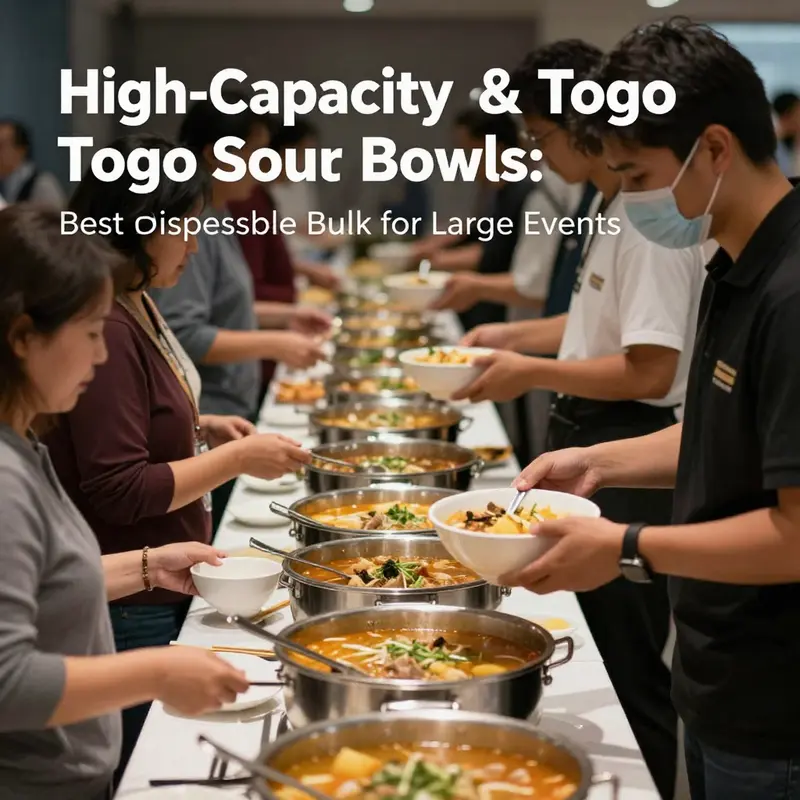
High-capacity disposable soup bowls are the backbone of large-scale food service. When planning catering for weddings, festivals, corporate functions, or large family events, organizers need containers that combine volume, strength, and environmental responsibility. The ideal bulk solution holds generous portions without leaking, stacks efficiently for transport and storage, resists heat and moisture, and aligns with growing sustainability commitments. This chapter explores how to choose those bowls, what performance characteristics really matter, and how to make bulk purchasing decisions that reduce risk while improving service flow.
Large events demand containers engineered for heavy use. Capacity is the first consideration: bowls in the 36–48 ounce range serve hearty soups, stews, noodle dishes, and large salads with room to spare. But capacity without structure leads to disappointment; bowl walls must resist softening and warping when filled with hot liquids. Look for thickened rims, reinforced seams, and materials with inherent thermal resistance. These design elements let staff fill and carry containers confidently, even when lines are long and trays are crowded.
Thermal performance matters for both safety and presentation. Many modern compostable materials handle boiling liquid temperatures without losing shape or integrity. This means you can serve piping-hot soups up to the boiling point with no visible sagging. That capability keeps guests satisfied and minimizes incidents of spills that create extra work and liability. Equally important is lid performance: a secure, leak-resistant lid prevents mess in transit and allows guests to take food off-site. Lids that lock in place, or include a slight groove that snaps over the bowl rim, are the difference between a clean pick-up station and a cluster of damp napkins on the floor.
Sustainability is no longer optional for many event organizers and venue operators. Compostable fiber options such as bagasse (sugarcane fiber) and molded paper pulp now provide credible alternatives to petroleum plastics. The most useful items carry recognized certifications that verify compostability in home and industrial systems and confirm safe food contact standards. Certifications that demonstrate home and industrial composting, combined with compliance with food-safety regulations, allow venues to advertise responsible sourcing and reduce landfill waste. When selecting bulk bowls, prioritize suppliers who can produce documentation for eco-certifications and testing on request.
Functionality often defines the success of disposable bowls during service. Square or slightly tapered designs stack tightly, saving truck and kitchen space, and reducing the time staff spend moving supplies. Bowls intended for large events should be stackable even when lidded, enabling pre-assembled grab-and-go stations. Good stacking minimizes the risk of crushed packaging during transport and makes setup quicker. Additionally, bowls designed with drip channels or inner lips help contain steam and condensation; that keeps lids secure and reduces sogginess.
Customization can elevate a venue’s brand presence at large gatherings. Many manufacturers of compostable bowls offer printing and packaging customization at scale. For venues that want a branded takeaway at weddings, conferences, or product launches, the ability to print logos or event information on bowls or lids adds perceived value. Keep in mind minimum order quantities for printed runs and factor lead times into event timelines—printed bulk orders often require production runs that are measured in weeks, not days.
Cost is a practical constraint but must be evaluated against durability and environmental impact. Bulk pricing typically drops steeply with volume, making large orders economical per unit. Compare per-unit pricing across different material types and loading options. While compostable fiber bowls may carry a slightly higher unit cost versus conventional plastic, total event savings appear when factoring in lower cleanup tariffs, reduced need for disposal management, and the positive guest perception that supports pricing. For event planners managing multiple gatherings, buying in larger centralized lots often reduces per-event procurement time and can secure favorable shipping terms.
Logistics and supplier reliability are critical. For large orders, verify lead times, minimum order quantities, and the supplier’s capacity to scale. Confirm export and import details if ordering internationally—many suppliers serve a global market, but shipping schedules and customs clearance can add days to delivery windows. If the event calendar is tight, prioritize suppliers that maintain domestic inventory or offer expedited shipping. Also ask about sample availability. Testing a small sample pack under service conditions—filling with hot broth, stacking, and transporting—helps avoid costly surprises.
Durability testing is an often-overlooked step that saves trouble on event day. Before committing to a large purchase, perform simple real-world tests: fill bowls with their typical hot contents, secure lids, stack them as you would in service, and allow them to rest for the interval typical of your operation. Check for leaks, lid loosening, and any softening around rims or seams. Evaluate how well the bowl retains heat over an hour, and whether condensation builds up on lids. These tests are fast, inexpensive, and expose potential performance failures before they impact guest experience.
Waste handling at the venue must align with the compostable properties of the bowls. If bowls are certified for industrial composting, ensure that venue waste collection matches that capability. Provide clear signage at disposal stations so guests place compostable bowls in the correct bin. When home compostable products are used, venues can sometimes offer take-home compost instructions to guests. For large outdoor events, contracting with a composting service and scheduling post-event pickup will ensure compostable materials reach appropriate facilities rather than landfills.
Complementary accessories affect usability. Sturdy lids, napkin dispensers, and utensils made from compostable bamboo or wood round out the guest experience. If the event includes a walk-and-eat format, consider including small cardboard trays or carriers that secure bowls in one hand and leave the other free. Keep the event’s service flow in mind: single-handed carrying comfort reduces congestion at entrances and exit points. Choose lids that are easy to open for busy guests but secure enough to prevent accidents.
One of the practical advantages of current high-capacity compostable bowls is their compatibility with a range of service models. For buffet lines, enabled bowls reduce the need for staff to portion on demand. For plated service replacements, they offer a hygienic, single-use option that simplifies cleanup. For take-home meals, the right bowl and lid combination ensures food arrives in good condition, protecting both temperature and texture.
Finally, procurement strategy for large events balances certainty with cost-effectiveness. Maintain a core inventory sufficient for typical gatherings, and establish relationships with suppliers who can top up quickly when unexpected demand arises. Negotiate long-term pricing for recurring events, and keep a rolling stock of sample bowls from newer product lines to test for future adoption. Factor in storage—stackability and compact packaging reduce warehousing costs—and remember that a modest premium for higher-quality, compostable bowls often translates into less waste, fewer service disruptions, and better guest impressions.
For event planners and venue operators seeking a practical next step, sample-testing recommended large-size bowls in realistic service conditions is the most direct way to validate choices. Try full-volume trials that include hot-fill, lid lock, stacking, and transport simulations. That short investment prevents common on-site problems and confirms that the chosen bowls will perform under real pressure. For more product specifications and ordering options for larger sizes like 48-ounce bowls, refer to this detailed external product listing: https://www.alibaba.com/product-detail/48OZ-Disposable-Noodle-Soup-Deli-Bowl_1600427681669.html
If you need a practical option for smaller insulated containers and bowls designed for porridge or similar dishes at events, consider exploring a bulk double-wall porridge bowl available from a supplier that offers a range of sizes and lids, which can streamline your procurement: https://cupbowlpack.com/product/senang05-promotion-large-porridge-350ml-double-wall-eco-friendly-disposable-round-kraft-paper-soup-bowl-with-lid-cup-bucket/
Choosing the right high-capacity to‑go bowl for large events reshapes service reliability. Prioritize structural strength, heat resistance, secure lids, and verified compostability. Combine careful testing with strategic procurement and coordinated waste-handling, and you turn disposable bowls from a logistical headache into a service advantage that supports both guest satisfaction and environmental goals.
Branding at Takeout Scale: Customizable, Eco‑Friendly Bulk Togo Soup Bowls That Deliver Performance, Profit, and Purpose
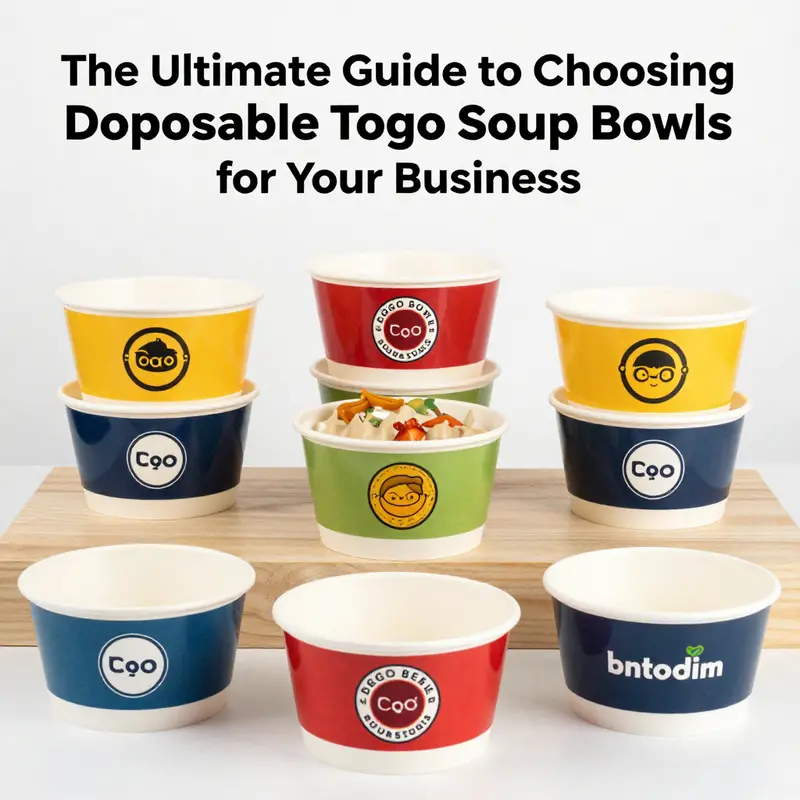
In a market where takeout is not just a convenience but a daily ritual, the container that carries your soup can be as important as the recipe inside. The best disposable bulk bowls for togo service are no longer judged only by how well they hold up in transit. They must also carry your brand, align with sustainability goals, and scale to meet demand without breaking the budget. This chapter traces a practical path through the rich landscape of customizable, bulk-ready togo soup bowls that marry performance with branding. It is a narrative of choices that enable kitchens, caterers, and restaurant groups to project reliability, reduce waste, and extend their reach through packaging that speaks in color, shape, and material about who they are and what they value.
A first principle guides every smart bulk decision: clients want containers that behave like premium ware while being affordable in large quantities. The top tier in this class is a bagasse-based, PFAS-free oval bowl. Bagasse—the renewable pulp remaining after sugarcane pressing—offers a compelling blend of strength and compostability. A 20-ounce capacity provides the generous portions that fast casuals, food halls, and catering operations routinely seat in a single serving. Beyond the capacity, the material tells a powerful sustainability story. It is compostable and biodegradable, breaking down with less environmental burden than traditional petrochemical-based disposables. Health-conscious operators recognize the importance of PFAS-free formulations, a detail that resonates with regulators and customers who scrutinize packaging for long-chain fluorinated substances. In practice, this means a bowl that not only safely contains hot soups, stews, or hearty sides but also aligns with modern expectations for responsible sourcing and end-of-life outcomes.
Customization is where the business case for bulk bowls becomes most tangible. In bulk production, an option that supports logos, colors, and brand messages without compromising performance is priceless. The bagasse oval option supports flexo printing with multiple colors, enabling a brand’s palette to travel with the meal—from the color of the broth to the hue of the brand’s logo. The result is a takeaway experience that reinforces recognition with every grab-and-go moment. The aesthetic value matters. A clean, contemporary oval silhouette can fit neatly into standard takeout bags, while a shape that feels premium in the hand signals quality. When combined with a reliable seal, a comfortable weight, and a simple, robust lid, the total package feels cohesive and professional, inviting repeat orders and positive reviews.
But packaging decisions do not end with one ideal bowl. A bulk operation benefits from a portfolio approach that leverages both sustainability and practicality across sizes and shapes. A spacious 36-ounce paper bowl with a lid, designed for high-volume events and bulk food service, exemplifies the other end of the spectrum. This option targets caterers and large restaurants that must serve substantial portions quickly and consistently. It leverages a durable, liquid-securing design with a lid to maintain temperature and minimize leaks during transport. The bulk logic here is straightforward: high-capacity containers reduce the number of units needed per order, streamline packing and loading, and simplify inventory management. When a single supplier can provide large quantities with predictable performance, the risk of spillage or temperature loss diminishes, and the operation gains reliability.
In between these two poles lies a versatile class of kraft-based solutions that are equally important for many operators. A 100% kraft paper and corrugated-topped take-away box, designed for large-scale distribution, demonstrates how material science and packaging design can deliver both environmental advantages and practical benefits. The corrugated insert provides natural thermal insulation, slowing heat transfer and extending the window during which a hot soup remains appealing as it travels from kitchen to customer. The inherent biodegradability and compostability of kraft paper reduce plastic waste, a factor that increasingly weighs with clients who prefer to see tangible sustainability in action. The same solution often provides an excellent value in bulk scenarios: large quantities at a fraction of the unit cost, enabling menus and promotions to be scaled without pushing the price above market expectations.
From a branding perspective, this bulk mix creates fertile ground for differentiation. The kraft-based take-away box offers a neutral yet hospitable canvas for branding—lids and exterior panels are amenable to high-quality printing, embossing, or matte lamination that protects the surface and elevates perception. The combination of eco-credibility and brand visibility is particularly potent in sectors where customers are deciding between competing concepts. A container that is both kind to the planet and generous in its brand storytelling turns ordinary takeout into a small but meaningful brand moment. It is not merely a vessel for soup; it is a moving billboard that reinforces a business’s identity with every pickup and delivery.
The quality of bulk packaging is also tightly linked to standards and regulatory expectations. A growing portion of the market emphasizes food-contact safety and compliance, recognizing that packaging is an extension of the brand’s risk management. Solutions described in this space frequently align with recognized food safety standards and certifications that reassure customers and operators alike. This alignment matters in bulk acquisitions where procurement teams weigh cost, performance, and compliance in one decision. The practical outcome is straightforward: choosing containers that demonstrate clear conformance to food-contact norms helps protect brand reputation and reduces the potential for supply-chain disruptions caused by noncompliance issues.
A crucial element that emerges from this discussion is the ability to blend branding with operational efficiency. The same bulk packaging that carries a logo can also be designed to optimize stacking, space utilization, and load stability. Square or near-square shapes can dramatically improve packing density in stacked pallets and on flatbed deliveries. In kitchens that run tight, space is a currency, and every cubic inch saved in storage translates into more throughput and less waste. The ability to nest or stack containers securely also translates to fewer damaged units and lower replacement costs, an important consideration in high-volume contexts where margins are thin and demand can swing quickly.
This is where the supply ecosystem becomes a strategic asset. The landscape comprises platforms that connect buyers with manufacturers capable of scaling production to match seasonal spikes and promotional campaigns. The best partners bring more than just a product; they offer a service ecosystem that includes logo-printing capabilities, packaging customization, and a breadth of sizes that cover hot soups, cold soups, and salads alike. An ODM (Original Design Manufacturer) or a facility with a robust customization program can shorten lead times and reduce the costs associated with reorders. In practice, a buyer can specify material preferences—bagasse, kraft, or recycled paper—print requirements, lid type, and packaging configurations, then receive a coherent line-up of options that align with both branding goals and operational realities. This is where strategy becomes design: the right combination of material, form, and print can yield a container that is visually distinctive in photos and on shelves, while staying resilient enough for daily use in a busy service environment.
For teams exploring the branding-first route, an emphasis on multi-option flexibility is essential. A reliable supplier ecosystem should offer a range of capacities and shapes that meet the typical portion sizes of soups, stews, and mixed bowls. It should also provide a flexible print pipeline capable of handling different branding requirements—from a bold logo on the lid to a subtle, one-color stamp on the side panel. The ability to print up to several colors without sacrificing legibility, and to do so across batches of thousands or tens of thousands of units, is not a luxury but a practical necessity for bulk operators seeking consistent brand presentation and cost certainty.
In contemplating these choices, it is helpful to imagine the end-to-end customer journey. The moment the customer places an order, the bowl chosen must reinforce expectations: it should be sturdy enough to withstand the journey, heat-retentive enough to protect the dining experience, and stylish enough to look professional in photos and on social feeds. A brand that models such care with their packaging—demonstrating commitment to sustainability, to heat safety, and to aesthetic coherence—gains more than just a satisfied customer. They cultivate trust, encourage repeat business, and position themselves to charge a slight premium for a packaging pledge that aligns with broader corporate values. The container becomes a legible, portable extension of the restaurant’s philosophy.
To bring this discussion to a practical close without sacrificing nuance, consider the following synthesis. If a business prioritizes eco-conscious credentials and strong branding in bulk, a PFAS-free, compostable bagasse oval bowl can serve as the flagship option. It communicates environmental discipline and brand fidelity in a single stack-and-serve bundle. For bulk events, large-scale catering, or high-portion needs, a kraft-based take-away box with natural insulation presents a complementary path that emphasizes reliability and cost efficiency, while preserving a premium look. For fast-casual menus where branding must travel across many touchpoints, printing capabilities on cups, trays, and lids enable a cohesive brand expression from counter to curbside pickup. The strategic value lies in choosing a balanced portfolio that aligns materials with capacities, print options with brand identity, and supplier relationships with predictable delivery performance.
This is not merely about packaging; it is about building a scalable, responsible, and brand-forward togo program. The right portfolio supports a narrative—the one that tells customers, with every bowl, that they are part of a company that values quality, transparency, and stewardship. And because the bulk market rewards efficiency, it is essential to collaborate with suppliers who can deliver consistent quality at scale, provide customization options that maintain legibility and color fidelity across thousands of units, and offer reliable service that supports growth without forcing costly compromises on either price or sustainability.
For readers who want a concrete example of how branding can be integrated into a bulk packaging strategy, consider a case where a brand pairs a PFAS-free bagasse bowl with a printed lid and a matching kraft take-away box. The visual continuity—from the logo on the lid to the color of the exterior packaging—creates a cohesive image across multiple channels. When customers see a uniform design across packaging, signage, and even online menus, the recall strength increases. This, in turn, translates into better recognition and more orders over time, especially in crowded markets where competition is intense. The logistics of such integration require careful coordination with suppliers and a clear specification for printing, color matching, and material choice. But the payoff is clear: brand fidelity goes hand in hand with operational efficiency, and both contribute to a more resilient, scalable business model.
To keep the reader anchored in practical steps, one actionable path is to explore a curated mix of materials and sizes that can cover the majority of menu needs. Start with a flagship eco-friendly bagasse-based option for standard soups and bowls, then add a bulk-capable kraft option for large events and promotions. Ensure both lines support branding through printing on lids and external surfaces, and verify certification and food-safety compliance as part of the procurement criteria. Finally, cultivate a supplier network that can deliver ODM services and scalable customization, so you can flex the portfolio as demand and branding initiatives evolve. The goal is not to chase every trend but to build a robust, flexible system that can adapt to changing menus, seasonal promotions, and evolving customer expectations without sacrificing performance, sustainability, or brand integrity.
Internal link: brands exploring branding-first disposables can look to a case study on a take-away bowl with lids that emphasizes food-grade materials and customization options. This resource illustrates how a well-chosen bulk container strategy translates into stronger brand identity and smoother operations. senang05 food-grade disposable take-away bowl with lids
External resource: for broader insights into PFAS-free bagasse materials and compostability standards, see industry supplier documentation and standards discussions that accompany bulk bagasse options. https://www.alibaba.com/product-detail/20oz-Biodegradable-Disposable-PFAS-FreeBagasseOvalBowlPaperBowlsFoodPackingContainersTogoBowls.html?spm=a2700.details.click&productId=1600879538741
Final thoughts
Understanding the range of available disposable bulk togo soup bowls is crucial for any food service business or event planner. The selection process should center around sustainability, capacity, and branding to meet both operational needs and customer expectations. Sustainable choices not only resonate with eco-conscious consumers but are increasingly becoming a standard in the industry. High-capacity options are perfect for catering large events, while customizable bowls help enhance your brand’s visibility. Assess these factors closely to make informed decisions that align with your business values and goals.