
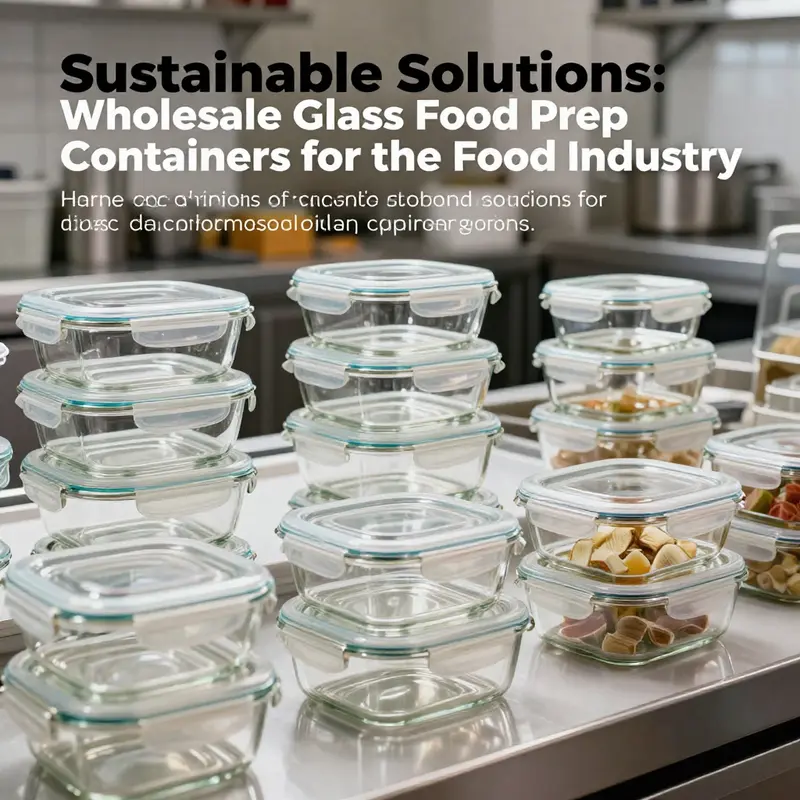
As the demand for quality food storage continues to rise, the food industry is turning its attention to durable, eco-friendly solutions like glass food prep containers. These containers offer an excellent alternative to traditional plastic options, combining safety and functionality with aesthetic appeal. From bustling restaurants to modern catering services, the versatility of these containers meets the practical needs of professionals while promoting a commitment to sustainability. In the following chapters, we will explore key specifications of wholesale glass food prep containers, their various market applications, both the advantages and disadvantages they present, the dynamics of the global supply chain, and effective sourcing strategies that can enhance procurement decisions.
Specs That Matter: Essential Technical and Purchasing Criteria for Wholesale Glass Food Prep Containers
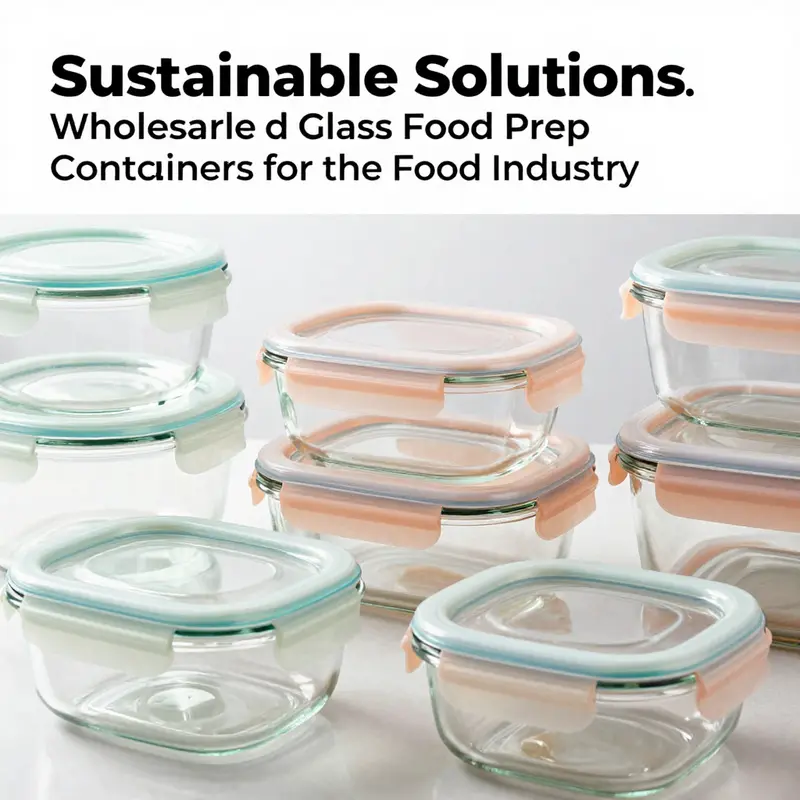
Material first, then performance. When you evaluate glass food prep containers at wholesale scale, material composition sets the baseline for every other specification. Two glass families dominate the market: borosilicate and tempered soda‑lime. Borosilicate glass offers superior thermal shock resistance and clarity. It tolerates sudden temperature swings and repeated heating cycles with minimal risk of cracking. Tempered soda‑lime glass is more economical and still provides strong mechanical durability for everyday commercial use. For large purchases, specify the glass type, its chemical composition or grade, and whether the supplier performs batch certification for thermal tolerance. Those details determine whether containers can move directly from freezer to oven, and whether they will withstand commercial dishwashing cycles.
Beyond glass type, the lid system determines usability and liability. Wholesale containers typically pair glass bases with silicone‑gasket lids. Specify gasket material and hardness, and request samples to test sealing performance after repeated cycles. Lids should be BPA‑free and food‑grade silicone, with an engineered rim that resists deformation under stack pressure. Leak resistance needs objective criteria: suppliers can provide millibar pressure or immersion tests. For delivery operations or liquid foods, demand proof of leak‑proof performance under vibration and tilt. If reusable lids will be printed or custom branded, include ink adhesion and wash durability requirements in the technical sheet.
Thermal and mechanical performance is nonnegotiable for meal prep and foodservice buyers. State the maximum and minimum safe temperatures for the glass and the lid separately. Ask suppliers for documented test reports showing compliance with microwave, oven (glass only), freezer, and dishwasher exposure. For borosilicate containers, require demonstration of thermal shock resistance—typically the ability to endure repeated 120°C swings without failure. For tempered soda‑lime, prioritize impact resistance and shard behavior: tempered glass should break into small, less dangerous fragments if failure occurs. Include acceptance criteria for visible defects like bubbles, internal fractures, and devitrification.
Size, shape, and stackability influence logistics and storage economics. Standard wholesale ranges include portion sizes from roughly 12–16 oz to larger 40 oz units, across round, rectangular, and square footprints. Specify the exact internal volumes, rim dimensions, and maximum stack height without deformation. For batch picking and palletization, provide the exact outer dimensions so suppliers can verify how many units fit per carton and per pallet. Stackable design must be validated under compression testing to ensure lids and glass do not warp or crack when stacked in refrigerated trucks or storage racks.
Clarity, scratch resistance, and surface finish affect both aesthetics and hygiene. Glass is naturally non‑porous and chemically inert, but finishing processes differ. Polished, annealed surfaces resist staining and maintain transparency. Request scratch‑resistance metrics and accelerated abrasion test data if your containers will face metal cutlery or repeated scraping. For brands that require laser engraving or printed logos, confirm how these processes affect glass strength and warranty coverage. If you plan to include product labels, define acceptable label adhesives that do not leave residues after dishwashing.
Sustainability and safety claims must be verifiable. Glass is inherently BPA‑free and non‑toxic, yet buyers should still require third‑party certifications. Common certifications include FDA compliance for food contact, LFGB for European markets, and CE marking for electrical or mechanical aspects, where relevant. Ask for material certificates and lab reports for heavy metals, phthalates in lids, and volatile organic compounds. If your market emphasizes carbon footprint, request supplier data on energy usage or kiln efficiency. Many manufacturers can provide eco‑statements showing recycled content or downstream recyclability.
Manufacturing provenance and supply chain details matter for lead times and quality consistency. When sourcing from major production hubs, ask suppliers to disclose kiln technologies, raw material sources, and distance to accessory suppliers like gasket and lid producers. Suppliers in regions with integrated ecosystems can often scale beyond 10,000 units quickly. Clarify minimum order quantities, typical lead times, and the ramp schedule for larger orders. Typical standard orders ship in roughly 25–40 days, but that depends on customization, certification needs, and seasonal demand. Include required inspection gates and acceptance tests in your contract to protect against late or defective shipments.
Durability and lifecycle cost weigh heavily when comparing unit price to total ownership. Glass may cost more upfront than plastic, but it resists staining and odor retention. Define expected usable life in wash cycles and thermal cycles. Ask suppliers for accelerated lifecycle test results, and model replacement rates against unit price to estimate true cost per use. Also specify warranty terms: will the supplier cover thermal breakage, or only manufacturing defects? Clear warranty definitions reduce disputes and clarify responsibilities for transit damage or improper use.
Packaging and customization can affect both branding and transport safety. For wholesale customers, request carton strength data and internal packing schemes. Specify individual vs. multi‑pack presentation, and whether anti‑scratch separators are required. If you need private labeling or custom packaging, include dielines, color tolerances, and printing processes in the purchase order. If you also source disposables or complementary items, consider mixed shipments for consolidated logistics. For examples of complementary disposable packaging that pairs well with glass meal kits, review a sample product line of food‑grade takeaway bowls with lids to see compatible portion sizes and lid styles: food-grade take-away bowls with lids.
Finally, prepare a short but precise technical specification sheet for suppliers. Include: glass type and grade, lid material and gasket spec, thermal tolerance ranges, leak‑proof and compression test criteria, exact dimensions and capacities, certification requirements, packaging details, lead time expectations, warranty terms, and sample approval steps. This single document clarifies expectations and reduces iterations during sourcing.
When specifications are complete, you can compare suppliers on more than unit price. Evaluate their testing data, certification packages, lead time reliability, and willingness to run pre‑production samples. Those factors distinguish a single cost‑driven purchase from a scalable, low‑risk supply partnership built for high volumes.
For supplier listings, certifications, and real‑time pricing, consult wholesale B2B platforms that provide MOQs, factory verification, and shipping options: https://www.alibaba.com/product-detail/Wholesale-Glass-Food-Containers-B2B-Supplier_1600491758411.html
Crystal Confidence in Bulk: Market Applications of Wholesale Glass Food Prep Containers
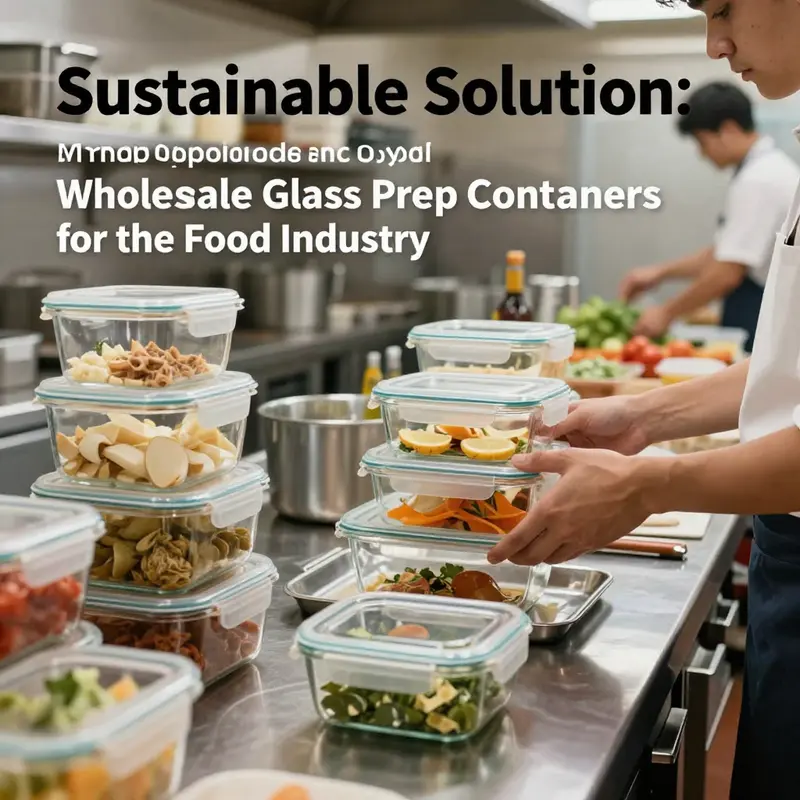
Glass has earned a lasting place in professional kitchens, cafeterias, and retail food environments not by flash alone, but by the quiet reliability it brings to daily operations. In wholesale markets, glass food prep containers are far more than attractive showpieces. They are workhorses that align safety, sanitation, and sustainability with the rigorous demands of meal prep, storage, and service. In this chapter, we explore how these containers find life across a spectrum of market applications—how they perform in high-use kitchens, how brands leverage their clarity and durability for presentation and packaging, and how buyers navigate the economics of scale in a global supply chain that has come to rely on glass as a premium storage solution. The story is less about a single feature and more about a cohesive system in which performance, safety, and purpose reinforce one another, day after day, batch after batch.
The core advantages of wholesale glass food prep containers begin with durability and chemical inertness. Glass, especially tempered borosilicate or soda-lime variants, resists thermal shock better than most plastics and is famously non-reactive. This matters because kitchen environments expose containers to broad temperature ranges—freezers, refrigerators, microwaves, and sometimes ovens. In many workflows, containers are used for meal prep and storage, then reheated or refreshed during service. The non-porous surface of glass resists odors and stains, a practical virtue in bustling kitchens that cycle through ingredients with strong aromas or colorants. When a lid seals tightly with a BPA-free silicone gasket, the container becomes a reliable vessel for portion control, batch cooking, and ready-to-serve meals. The visual clarity of glass is not a cosmetic advantage alone; it expedites inventory management, allowing staff to identify ingredients and portions at a glance, even in a crowded line or a dimly lit walk-in.
The market itself has embraced glass for multiple functional roles. In commercial kitchens, glass containers are used for meal prep and ingredient storage because their surfaces are easy to sanitize and their transparency reduces the need to label and search. In catering and food service, the ability to transport meals in a container that preserves presentation and protects integrity during transit is a decisive edge. For institutions such as schools and hospitals, glass enables organized, repeatable portions and clear visual checks for freshness and date labeling. For consumers and meal-prep enthusiasts, glass offers a durable, reusable alternative that aligns with a growing desire to minimize plastic and environmental impact. The aesthetic appeal of glass—crystal-clear surfaces that showcase food beautifully—also supports premium presentation, whether it’s a ready-to-serve lunch or a brand’s artisanal product line.
This broad applicability rests on a stackable, space-efficient design that thrives in both fridge and pantry contexts. Space is a currency in wholesale operations, where kitchens, cafeterias, and retail packaging facilities manage dozens or hundreds of containers per shift. The stackable form factor minimizes footprint while enabling rapid retrieval and restocking. Clear surfaces resist discoloration and maintain their appeal after months of use, a critical factor for brands that market glass as a long-term storage solution rather than a disposable accessory. Eco-conscious buyers appreciate the lifecycle value of glass: repeatedly washed, reused, and recyclable at end of life. In a marketplace increasingly oriented toward sustainability, glass serves as a tangible statement of commitment to safety and responsibility.
Yet glass is not without its trade-offs. The upfront cost is higher than most plastics, and while tempered glass is resilient, it remains vulnerable to impact and sudden temperature shifts. In wholesale procurement, these realities shape supplier negotiations and selection criteria. Buyers assess not only the unit price but the total cost of ownership—lead times, quality consistency, the robustness of lids and gaskets, and the availability of compatible lids that maintain airtight, leak-proof sealing. The best wholesale partnerships recognize that a glass container is part of a broader system: the glass itself, the lid, the gasket, and the careful handling required to prevent breakage in bulk storage, transport, and warehouse operations. In practice, this means buyers favor suppliers with proven fabrication capabilities, tight tolerance control, and reliable after-sales service to address any manufacturing variance or defect remediation.
On the topic of production and sourcing, the global supply chain for wholesale glass containers reveals a contemporary balance between capacity, proximity to raw materials, and logistical efficiency. China remains a central hub for wholesale glass production, with clusters in provinces that offer advanced kiln technology, robust capabilities for forming both borosilicate and soda-lime glass, and a dense ecosystem of gasket and lid suppliers within close geographic reach. This proximity supports shorter lead times and greater customization options, important for brands looking to scale while maintaining consistent product quality. Buyers often consider the full ecosystem when selecting a supplier: manufacturing capability, quality control procedures, and the reliability of lead times—commonly in the 25–40 day range for standard orders. The advantage of such clusters lies not only in price but in the ability to coordinate a broader packaging solution, from the glass container to the corresponding lid, gasket, and even branding opportunities through custom packaging options.
From a product-performance standpoint, the glass containers themselves are frequently paired with airtight silicone lids to preserve freshness and prevent leaks. In wholesale contexts, this pairing is critical for meal-prep programs and long-storage workflows, where any compromise in sealing can cascade into spoilage, cross-contamination, or waste. For batch cooks who prepare across many days, being able to reheat or re-cook without transferring to a different vessel is a meaningful efficiency gain. This is especially true when meals are portioned for service or distribution; the ability to reheat directly in the container—if the design supports it—simplifies workflows and reduces handling steps. In cases where oven use is required, containers must be rated for oven use without lids, a nuance that retailers and food-service operators weigh during supplier selection and onboarding. The integration of glass with compatible lids and seals highlights why many wholesale customers evaluate suppliers on a broader technical package, not just the container itself.
Branding and packaging considerations are another dimension of market applications. Glass containers can project a premium image, particularly when paired with brand-forward packaging and labeling. For food manufacturers who emphasize natural ingredients, organic or artisanal products, glass can reinforce quality perception and align with consumer expectations around purity and safe storage. In wholesale channels, brands sometimes explore customization through branding on lids or cartons and through co-branded packaging. The opportunity to align visuals with product narratives—such as “cold storage to kitchen-to-table” life cycles—strengthens relationships with buyers who seek consistent, market-ready solutions. Within this broader strategy, wholesale buyers weigh customization options, minimum order quantities, and the feasibility of aligning packaging with imprinting or labeling processes that support retail shelf presence.
For wholesale buyers who seek more than containers, the ecosystem of compatible packaging becomes a strategic asset. In practice, a buyer may explore a diverse range of eco-friendly, reusable holding options alongside glass, while ensuring that the entire lineup can be harmonized for inventory management and cross-use in multi-channel sales. A single SKU that can perform across prep, storage, and service reduces complexity and enables more predictable demand planning. In this sense, glass containers operate not only as storage vessels but as integral components of brand experience, safety standards, and operational efficiency. The market rewards wholesalers who can deliver stable quality, dependable lead times, and responsive service, because those factors translate into fewer disruptions and greater confidence for kitchens that must operate under tight schedules and high throughput.
In the practical, day-to-day reality of wholesale procurement, buyers often balance the allure of glass with the realities of kitchen performance. They consider the durability of the container against accidental drops, the resilience of the seal over repeated cycles of washing and heating, and the clarity that makes contents instantly recognizable. They also evaluate the sustainability narrative: the more a product can be reused, repurposed, and recycled, the greater its appeal in markets that are increasingly transparent about environmental impact. This is where the overarching topic—food prep containers glass wholesale—meets the realities of budget, throughput, and consumer expectations. The optimal outcome is a cohesive system in which glass containers and lids work as a family, each part reinforcing safety, efficiency, and brand integrity across scales.
To illustrate how these ideas translate into concrete procurement choices, consider the broader ecosystem of wholesale packaging options that buyers often compare alongside glass. While the glass containers themselves deliver clarity, safety, and reusability, many buyers also seek compatible, eco-friendly alternatives for complementary needs. For example, some wholesale buyers explore kraft-paper-based bowls and containers that pair with lids and branding opportunities, offering a sustainable complement to glass where appropriate. An example of such options can be found in related packaging lines that emphasize durable, compostable, and customizable solutions, such as octagonal bowls and other take-away formats designed for wholesale distribution. These alternatives illustrate how wholesale buyers curate a diversified yet cohesive portfolio that supports a multi-channel strategy, without compromising the core advantages of glass where it matters most. For readers who want to visualize a similar packaging ecosystem, an example of such options can be found at the linked product page: Senang kraft paper octagonal bowl 1200ml, which demonstrates how packaging choices can complement a glass-forward strategy by extending sustainability and branding across every touchpoint. Senang kraft paper octagonal bowl 1200ml.
As markets continue to evolve, wholesale buyers of glass food prep containers will likely prioritize suppliers who demonstrate consistency, velocity, and value across a complex set of criteria. Technical capability, quality consistency, and lead time reliability all matter. Service flexibility—whether it’s color options for lids, customization of logos, or packaging design to support branded campaigns—also plays a pivotal role. In parallel, buyers will increasingly emphasize a cradle-to-cradle mindset: the capacity for containers to be reused, recycled, and integrated into circular economy programs. Taken together, these factors shape a market in which glass becomes not only a storage medium but a strategic asset for product quality, brand trust, and operational resilience.
External resource: For a deeper look into the glass container market and its applications across commercial and manufacturing settings, see an external industry resource at https://www.glassfoodcontainers.com/.
Weighing the Trade-Offs: Why Wholesale Glass Food Prep Containers Make Sense — and Where They Don’t
Advantages and Disadvantages of Glass Food Prep Containers in Wholesale Buying
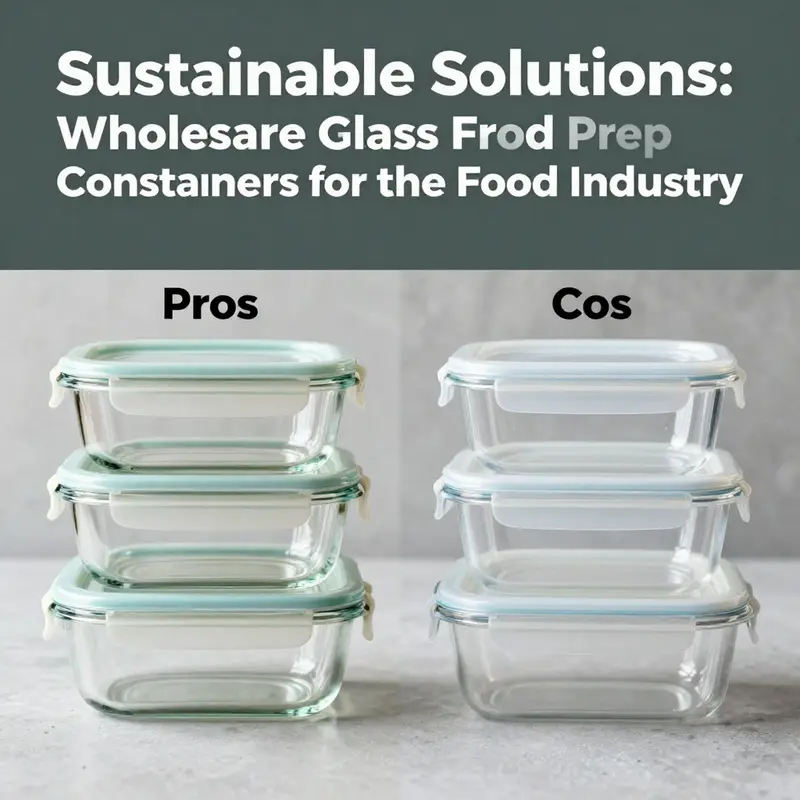
Choosing glass food prep containers at wholesale scale requires balancing clear benefits against real operational costs. On one hand, glass delivers safety, longevity, and kitchen versatility that plastic and single-use alternatives struggle to match. On the other, its weight, fragility, and higher initial price demand careful logistics and purchasing strategy. This chapter navigates those trade-offs and shows how businesses can decide if glass is the right long-term choice.
Glass containers begin to make financial and environmental sense when you look past unit price. High-quality tempered borosilicate and well-manufactured soda-lime glass resist scratches, staining, and odor retention. That reliability preserves product appearance and functionality in busy kitchens. For brands and operators who serve prepared meals, clear containers that keep looking new reduce the frequency of replacement. Over time, the cost per use of glass often undercuts disposable or low-grade plastic options.
Safety is another decisive advantage. Glass is inert and non-porous, so it does not leach chemicals into food. That matters for reheating, acidic ingredients, or prolonged storage. Health-conscious consumers and foodservice buyers increasingly require materials they can trust for both hot and chilled applications. Glass containers that pair with BPA-free silicone lids offer airtight seals without toxic gaskets. That combination keeps food fresher and protects flavor integrity in ways that many plastics cannot match.
Operationally, glass is versatile. Containers rated for microwave and freezer use simplify workflows. A single container can move from prep to refrigeration, reheating, holding, and serving. For kitchens focused on efficiency, this reduces the need for multiple vessels and minimizes cross-contamination risk during transfers. Stackable designs maximize fridge space, and clear walls let staff quickly identify contents and rotation dates, cutting waste.
Compartmentalized glass containers make portion control straightforward. For meal-prep businesses or catering services, pre-divided units allow precise protein and side allocation. That supports nutrition claims and consistent portion sizes, which are vital for subscription meal services and corporate accounts. The optical clarity of glass also presents plated food attractively for retail grab-and-go formats.
Despite these strengths, glass carries drawbacks that wholesale buyers must account for. The most obvious is fragility. Glass can shatter on impact or suffer thermal shock if moved rapidly between extreme temperatures. For operations with high drop rates or rough handling, breakage can erode expected savings. During international freight, the risk is amplified; better packaging and careful palletization add cost.
Weight adds another layer of overhead. Heavier shipments increase freight charges and handling labor. For businesses that ship prefilled meals to customers or move inventory across multiple locations, the extra weight may push logistics costs above acceptable thresholds. Staff ergonomics also become a consideration; repeated handling of heavier containers raises the potential for strain injuries.
The upfront cost of wholesale glass is usually higher than plastic or single-use alternatives. Smaller operators may find capital outlay daunting. But comparing purchase price alone misses the lifetime value. Glass resists the wear that makes plastic cloudy or porous. It withstands repeated dishwashing cycles without degrading. A lifecycle cost analysis often reveals glass to be the more economical choice over three to five years for frequent-use scenarios.
Shipping and packaging are not trivial expenses. Because of breakage risk, glass requires robust protective packaging. That increases material costs and packing time. Some suppliers offer reinforced cartons, foam inserts, or wooden pallets to minimize damage. Buyers should budget for these needs and insist on clear insurance and claims processes from their suppliers to mitigate losses when shipments arrive damaged.
Certain applications remain less suitable for glass. Outdoor events, mobile food trucks, and on-the-go customers often prefer lighter, shatter-resistant containers. For those settings, high-grade reusable plastics or compostable disposables may still be a better fit. Glass excels where controlled handling and long-term use are feasible: central kitchens, meal-prep facilities, corporate cafeterias, and retailers with in-store dining.
Mitigating the disadvantages requires intentional procurement and supplier selection. Buyers should prioritize suppliers with proven quality control and technical capability. Look for certifications that matter for food contact safety. Confirm lead times and minimum order quantities. For many manufacturers, a standard lead time for large runs falls between three and six weeks, but exact numbers depend on customization and seasonality.
Packaging choices can reduce breakage and freight costs. Selecting stackable designs that nest for shipment, using pallet optimization, and negotiating consolidated container loads are practical tactics. Requesting samples and stress-testing them under your handling conditions uncovers weak points before a full order. Insist on reinforced shock-absorbent packaging for sea freight and on fixture-level packing for air shipments to minimize loss.
Design decisions also influence cost-effectiveness. Thinner-walled glass reduces weight but may sacrifice durability. Silicone lids add sealing performance, but sourcing BPA-free, heat-resistant silicone from nearby suppliers lowers production lead time and cost. For private-label brands, modest customization such as printed lids or branded boxes can elevate perceived value without large mold costs, but buyers should evaluate minimum order quantities carefully.
Sustainability often tips the scale for large-scale buyers. Reusable glass reduces single-use waste and aligns with corporate sustainability goals and consumer expectations. When stakeholders demand traceability, suppliers that can document material sourcing and kiln processes provide a stronger story. Manufacture clusters with close proximity to raw materials and accessory suppliers tend to offer better pricing and faster turnarounds. That makes regional supplier vetting an important step in procurement.
Ultimately, the choice to buy wholesale glass food prep containers is strategic. It suits businesses that prioritize food safety, presentation, and longevity, and which can absorb higher initial costs through smarter logistics and product design. For settings where weight and breakage are primary concerns, alternatives may still prevail.
If you want to compare a disposable alternative for settings where glass isn’t suitable, review this example of a popular kraft paper salad bowl to understand different use cases and trade-offs: best-selling disposable rectangle kraft paper salad bowl (750ml).
For supplier sourcing, verification of certifications, and bulk listings, consult verified B2B platforms where manufacturers post MOQs, lead times, and customization options. https://www.alibaba.com/product-detail/Wholesale-Glass-Food-Containers-Microwave-Safe_1600859713146.html
From Furnace to Fridge: Global Supply Chain Forces Driving Wholesale Glass Food Prep Containers
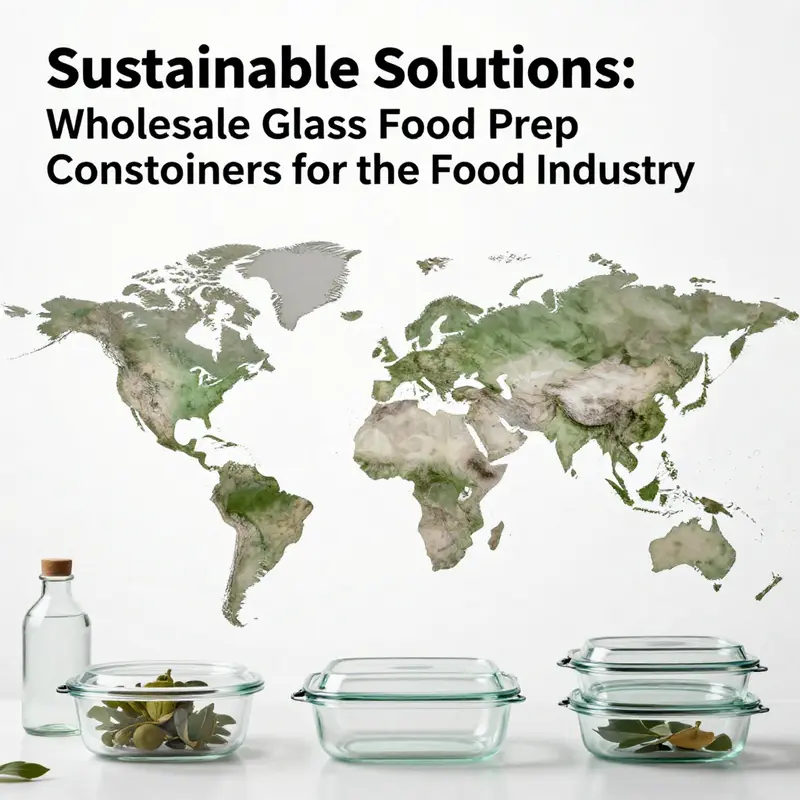
The worldwide flow of glass food prep containers begins at raw materials and ends on retail shelves or in commercial kitchens. Understanding that journey explains cost, timing, and quality for wholesale buyers. It also shows why sourcing decisions matter now more than ever for brands that sell meal-prep glassware or supply institutional food programs.
Glass starts as silica, soda ash, and other minerals. Production clusters have grown where those inputs, energy, and skilled kiln operators converge. In the current landscape, one country supplies the majority of wholesale glassware. Concentrated manufacturing brings scale and competitive pricing for bulk buyers. It also concentrates risk. Local kiln capacity, regional fuel prices, and export regulations all ripple through global lead times and unit costs.
Manufacturing clusters deliver more than low unit price. They enable vertical networks. Within short distances, buyers can find gasket and lid makers, silicone suppliers, and packaging converters. Those adjacent suppliers reduce transit costs and shorten assembly times. They also allow for higher degrees of customization. Wholesale buyers can order tempered borosilicate glass with custom lid seals, private labels, and tailored pack formats. This proximity fuels innovation in features such as airtight silicone gaskets, stackable designs, and clear, scratch-resistant surfaces that retain clarity through heavy use.
Yet glass has unique handling needs. Tempered glass offers strong thermal shock resistance, but sudden temperature swings can still fracture it. Manufacturers fold quality control into annealing, tempering, and inspection stages. For importers, proof of consistent quality means checking factory process controls, defect rates, and certifications. Certificates for food contact safety and material composition are essential documents buyers should obtain. These reduce risk at customs and reassure retail partners in strict markets.
Wholesale procurement is not only about per-unit cost. Buyers must weigh minimum order quantities, sampling protocols, and predictable lead times. Typical production cycles for standard glass prep containers fall into a three- to six-week window once production starts. For custom tooling, add additional weeks. Transit and customs add to total time from order to delivery. In practice, realistic planning factors in 25–40 days for standard orders, with contingency buffers for port congestion or seasonal demand spikes.
Logistics choices further influence landed cost. Full container loads bring the best per-unit freight economics, but not every buyer needs that level of inventory. Consolidated shipments reduce inventory burdens, though they lengthen lead times. Warehousing strategies in destination markets—such as bonded warehousing or cross-dock operations—can trim time to market for high-turn SKUs. Insurance and careful packaging specifications also matter. Glass needs robust inner packaging and shock-absorbing pallets to avoid breakage in transit.
Regulatory and market expectations shape supplier selection. North American and European buyers demand documented compliance with food-contact regulations and recognized third-party testing. Beyond safety, retailers increasingly expect sustainability disclosures. Glass is recyclable and reusable, which gives it an advantage over single-use plastics. But buyers now also scrutinize a supplier’s environmental practices, including energy use in kilns and the recyclability of ancillary materials like silicone gaskets and inner liners.
Market demand is evolving. Consumers favor reusable, premium packaging for meal prep and takeaway food. This boosts interest in glass containers that handle microwave and oven use, freezer storage, and robust sealing. At the same time, the market for single-use and compostable alternatives continues where convenience dominates. Savvy procurement teams monitor both streams to offer complementary options for different customers. For brands seeking to present mixed offerings, linking glass containers with sustainable disposable options can be a strategic move. For example, pairing glass retail lines with eco-friendly disposable kraft paper bowls helps cover both reusable and to-go needs; a useful resource on that type of product is available here: eco-friendly 1000ml noodle soup salad bowl.
Price dynamics are only half the picture. Long-term partnerships with reliable manufacturers reduce variability. Strategic sourcing moves beyond transactional bargains to focus on consistency, shared forecasts, and collaborative contingency plans. A supplier that invests in quality controls, maintains flexible production schedules, and communicates transparently helps downstream teams manage inventory and marketing plans. Buyers assessing partners should inspect sample lots, audit production processes, and verify traceability of materials.
Risk management spans several fronts. Single-sourced components, such as proprietary lid seals or specialized gaskets, create bottlenecks. Supply chain managers mitigate this by qualifying secondary vendors within the same region or by maintaining safety stock. Geopolitical shifts and trade policy changes are another factor. Diversifying sourcing—whether by region or by manufacturing partner—reduces exposure to tariffs or export restrictions.
Operational resilience also rests on visibility. Effective buyers demand accurate lead time estimates, batch-level quality reports, and production progress updates. Digital tools from procurement platforms can help. They provide real-time supplier data: pricing, MOQs, and certifications. Those tools speed supplier comparisons and shorten the supplier discovery phase. But digital visibility must be complemented by on-the-ground verification for technical products like glass.
Finally, design and packaging choices influence success at retail and in foodservice. Clear glass that resists staining, airtight lids that prevent leaks, and modular shapes that facilitate stacking increase consumer satisfaction. Packaging design that reduces transit damage and presents products attractively on shelves reduces returns and supports higher margins. For wholesale buyers, negotiating packaging standards with suppliers ensures products arrive market-ready and keeps total cost of ownership predictable.
These supply chain forces define the competitive landscape for wholesale glass food prep containers. Buyers who balance sourcing cost with quality, regulatory compliance, and supply chain resilience position themselves to serve growing markets in North America and Europe. Long-term partnerships and precise logistics planning convert manufacturing scale into dependable supply. The result is predictable product availability, better margins, and stronger brand reputation in a market that increasingly values durability and sustainability.
For a structured framework on supplier evaluation and pricing analysis, see this strategic sourcing guide: https://www.beyondprice.com/glass-container-sourcing-guide
Forging Resilient Supply Chains: Strategic Sourcing for Wholesale Glass Food Prep Containers
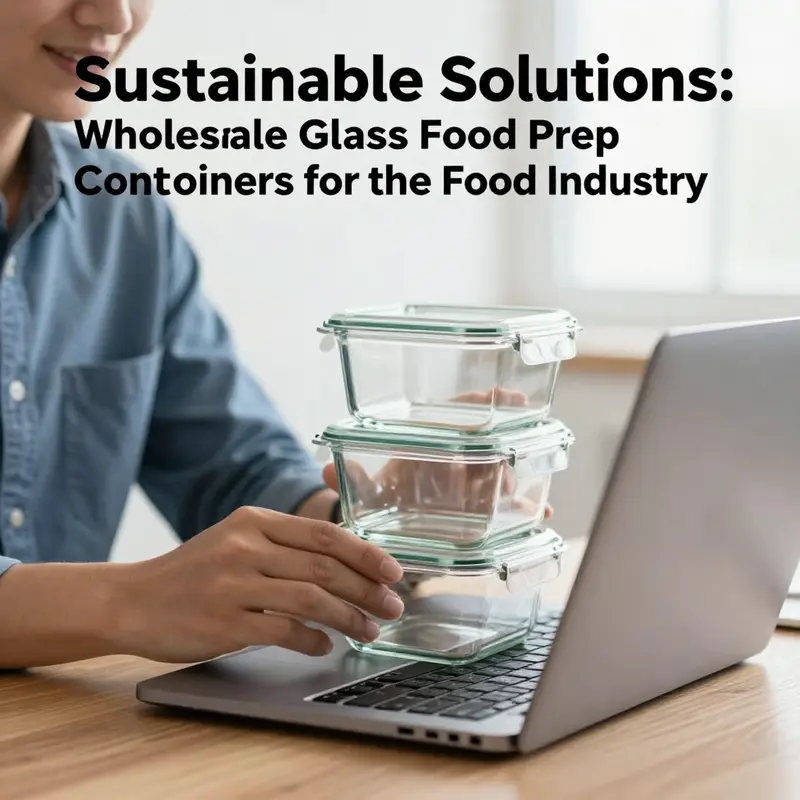
The market for glass food prep containers sold at wholesale levels has evolved beyond a simple packaging choice. It sits at the intersection of safety, performance, and sustainability, and it requires buyers to think in terms of long horizons rather than single-purchase transactions. As meal-prep culture expands into both commercial kitchens and home kitchens, the demand for containers that endure repeated heating and cooling, resist staining and odors, and remain visually clear over time has intensified. In this context, sourcing strategies must move from price chasing to partnerships anchored in technical capability, rigorous quality control, and dependable service. When done well, wholesale glass containers become more than storage vessels; they become a core element of a brand’s promise about safety, convenience, and responsibility. The strongest sourcing programs recognize that the path from raw material to market-facing product starts with a deliberate choice of glass type and a meticulous evaluation of the suppliers who can reliably translate that choice into consistent, scalable outputs.\n\nGlass itself offers advantages that are particularly meaningful in wholesale procurement. Borosilicate glass, in particular, is prized for its resistance to thermal shock and chemical inertness. It holds up under a broad range of temperatures, a practical necessity for containers that people may breathe hot steam into, place in the microwave (where permitted), or tuck into the freezer for long-term storage. The contrast with soda-lime glass is not merely academic; it translates into real-world resilience during repeated oven-to-table or fridge-to-microwave cycles. Within borosilicate formulations, the silicon dioxide content—often cited as a benchmark around 70 percent or more—helps explain why these containers can tolerate rapid temperature differentials without fracturing. For procurement teams, that translates into fewer replacements, reduced risk of damage during transit or handling, and improved consumer trust when the product is used as intended.\n\nBeyond material choice, the backbone of a sound sourcing strategy rests on safety compliance and verifiable testing. Buyers need assurance that the glass and the finished container meet the strict requirements of major food-safety authorities. Third-party testing reports and material safety data sheets provide essential validation. The baseline standards commonly awaited include evidence of compliance with FDA guidelines in the United States, European regulatory expectations, and regional safety certifications. These attestations are not mere formalities; they are essential safeguards that support a brand’s claim to safety and quality across markets. In practice, this means requesting full test documentation, current certificates, and ongoing quality assurance data from each supplier. It also means recognizing that compliance is a moving target. Regulations tighten as environmental and health concerns evolve, so buyers should treat certification as a dynamic asset rather than a one-off checkbox.\n\nThe supplier landscape for wholesale glass containers in a modern, multi-market supply chain is heterogeneous. A robust sourcing approach requires evaluating suppliers through a lens that combines technical capability with reliability and flexibility. Technical capability encompasses the ability to produce containers with precise dimensions, reliable seal performance, and durability under stress. Operational reliability translates to consistent on-time delivery, even during peak demand or disruption scenarios. Customization capabilities—private labeling, distinctive lid designs, or special sealing features—can be decisive for brands seeking differentiation at scale. Transaction security matters too: clear terms, trusted payment methods, and transparent governance of quality issues help preserve a smooth relationship over time. In practice, leading buyers give preference to suppliers who can demonstrate a long track record of meeting these criteria, and who can offer a spectrum of formats and sizes that accommodate different meal-prep workflows without sacrificing performance.\n\nGeography matters as well, particularly when sourcing at scale from a complex geography like a major manufacturing hub. In today’s market, the most efficient wholesale operations often align with integrated supply chains in regions known for automation, proximity to raw materials, and a network of ancillary producers. The most dependable partners may be located in industrial clusters where glassmaking, molding, and lid production intertwine to shorten lead times and reduce logistical risk. Lead-time expectations for standard orders are typically measured in weeks rather than months, with the exact window influenced by order size, customization, and seasonality. Buyers should plan for contingencies and build in buffer time for testing and audits, recognizing that even small delays at one node of the chain can ripple through to affect shelf availability and client partnerships.\n\nSustainability has moved from a “nice-to-have” feature to a market-access criterion. Progressive suppliers increasingly incorporate recycled glass into their feedstock, invest in energy-efficient furnaces and manufacturing lines, and emphasize plastic-free or minimal packaging. For brands operating under stringent environmental expectations, these practices are not only responsible; they can accelerate market access in regions where regulations curb single-use plastics and demand greener packaging solutions. The sourcing conversation, therefore, shifts from “Can you produce this container?” to “How do you produce it, with what energy footprint, and how do you package and transport it to reduce waste?” Such questions encourage a broader view of value that includes waste reduction, recyclability, and the ease with which customers can reuse or recycle the containers after use.\n\nQuality control rests at the heart of any wholesale procurement program. Given the higher upfront cost of glass and the fragility of the material in certain contexts, buyers must insist on comprehensive upstream and downstream QA. Factory audits—whether on-site or virtual—are a standard step before placing bulk orders. Audits assess cleanliness, equipment calibration, maintenance logs, and staff training in food safety protocols. The testing regime should extend beyond batch samples to include independent laboratory verification for thermal shock, seal integrity, and potential leaching of metals or other chemicals. The aim is not to catch every flaw after it happens but to prevent defects from entering production in the first place and to secure transparency about what is being produced and how it is tested.\n\nBuilding enduring partnerships with suppliers is perhaps the most strategic aspect of sourcing glass containers wholesale. The most successful buyers cultivate relationships that yield better pricing, flexibility around minimum order quantities, and preferential service during supply chain disturbances. The value of a true partnership can manifest as co-development opportunities, faster iteration cycles, and shared improvements in sustainability and packaging efficiency over time. This relational approach reduces transactional friction and supports a long-range view of growth, where both sides invest in continuous improvement and risk management.\n\nIn practice, a disciplined procurement narrative begins with a careful material choice and a rigorous safety posture, then progresses to supplier qualification, audit, and testing. It moves through the realities of production capacity and lead times, and it culminates in a stability-centered relationship that yields consistent quality and reliable delivery. The overarching aim is clear: to source glass food prep containers at wholesale scale that perform as expected under the toughest conditions, that comply with global standards, and that align with a brand’s values around safety and sustainability. In this frame, cost alone becomes a secondary factor to the deeper question of how well a container supports a consumer’s everyday life—whether a batch of meals can be stored safely, reheated efficiently, and enjoyed without compromise.\n\nFor buyers stepping into large-scale procurement, the path to success lies in seeing the supply chain as an ecosystem rather than a sequence of orders. It requires ongoing engagement with suppliers, continuous validation of materials and processes, and a readiness to adjust specifications in light of new safety data or regulatory developments. The result is a more resilient sourcing strategy that can absorb shocks, maintain quality, and sustain growth as demand for durable, safe, and eco-friendly glass containers continues to rise. This is how wholesale glass becomes a strategic asset rather than a risk-laden cost center, enabling brands and retailers to deliver consistent value to kitchens and households around the world.\n\nExternal reference: For regulatory context and safety guidelines related to food-contact substances, see the FDA’s official guidance at https://www.fda.gov/food/food-contact-materials/food-contact-materials-and-substances.
Final thoughts
Wholesale glass food prep containers present a compelling choice for businesses in the food service industry, blending functionality with sustainability. As the demand for durable and eco-friendly solutions continues to grow, understanding the specifications, market applications, advantages and drawbacks, and global supply dynamics is paramount for making informed procurement decisions. By adopting effective sourcing strategies, businesses can enhance their operational efficiency and contribute to a greener future. The right choices today not only improve food storage solutions but also align with the increasing consumer demand for responsible practices in the culinary world.