
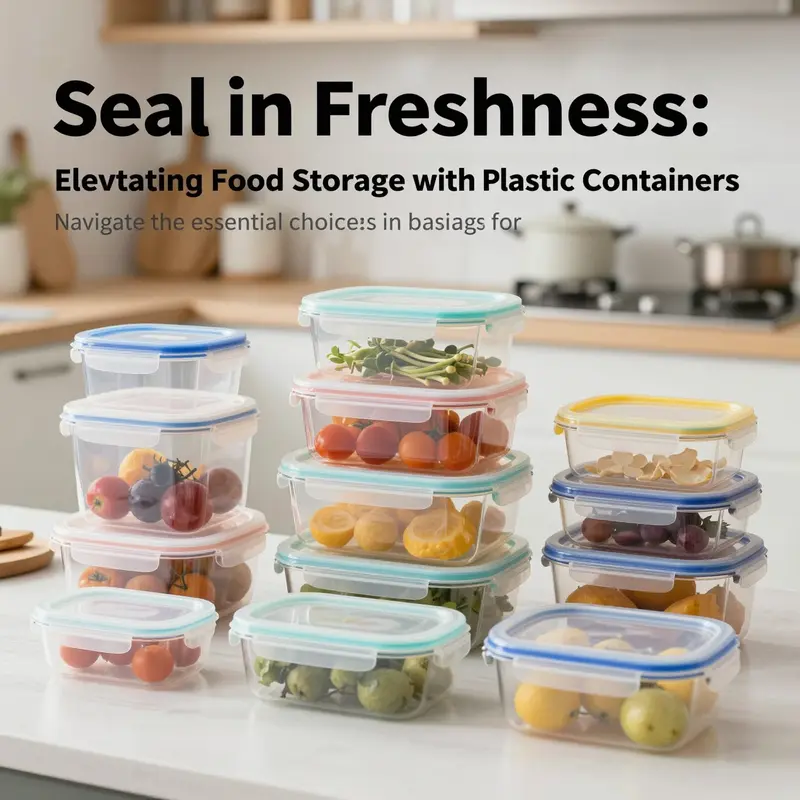
Choosing the right food storage containers is vital for businesses in the beverage, food service, and event planning sectors. This decision impacts not only food safety but also operational efficiency and customer satisfaction. In the first chapter, we will delve into the safety standards and material considerations that ensure the integrity of these containers. The second chapter will explore design innovations aimed at optimizing efficiency in busy environments. Finally, we will analyze current market trends and consumer preferences, highlighting how they influence your choices in food storage solutions. Together, these insights will guide you in making informed decisions to enhance your business operations and elevate customer experiences.
Guardians of Freshness: How Safety Standards and Material Choices Shape Plastic Food Storage Containers with Lids

The container that keeps tomorrow’s leftovers safe starts its life in a factory, not in a home pantry. Yet the true weight of a plastic food storage container lies not in its color or its clever hinges, but in the quiet legal and chemical promises wrapped into its structure. When households, schools, restaurants, and large-scale kitchens reach for a container with a lid, they are really selecting a shield for food—one that guards against contamination, preserves nutrients, and reduces waste. The backbone of that shield is twofold: safety standards that govern how materials contact food, and the material choices that define performance under heat, cold, and time. This is not a debate about aesthetics or price alone. It is a reckoning with how plastics behave when food meets heat, acid, or prolonged storage, and with how industry practices translate into everyday peace of mind for cooks and eaters alike.
To understand why a lid matters as much as the container beneath, one must first acknowledge the regulatory frame. Across Europe and many global markets, food-contact materials are not a free-for-all; they are bound by regulation designed to prevent toxicity and unwelcome migration of substances into food. The cornerstone here is the principle that materials that touch food must be non-toxic and stable under normal use. In practical terms this means that the polymer chosen for a container and the coatings or additives inside it should not leach harmful chemicals, even after repeated microwaving, freezing, or dishwashing. Regulators emphasize that any substances migrating into food must stay within safe limits, and that the material should maintain its integrity rather than corrode or crack when it encounters hot liquids, acids, or oils.
The European framework has grown more specific over time. Central to it is the notion that food-contact materials must be designed to meet safety and performance requirements in a predictable way. Within this framework, a series of standards and guidelines guide manufacturers toward safer plastics, tested seal systems, and reliable labeling. The emphasis on chemical stability means that when a lid seals a container, the seal’s material, the gasket, and the interface between lid and body must all resist degradation and migration. These considerations are particularly important when a lid is used for microwaving or when a container is exposed to the freezer and then brought into a heated setting. In practice, this translates into a concise set of consumer expectations: containers should be BPA-free or equivalent, the labeled heating or freezing capabilities should reflect reality, and the packaging should carry credible certifications or statements about its safety for direct contact with food.
Material selection is a second pillar of safety and performance. Among the most common food-grade plastics used for containers with lids are polypropylene (PP), high-density polyethylene (HDPE), and, in some cases, PET. Each material brings a distinct profile of strengths and limitations that color how a product behaves in real kitchens. Polypropylene, for instance, is prized for heat tolerance and resilience. It can tolerate microwave-like heating and hot contents, typically up to around 100°C, and in some formulations even higher temperatures can be handled without deformation. This makes PP a go-to for meal prep and for containers designed to be heated before serving. Its stiffness and clarity in many grades also contribute to a sense of durability, while the absence of bisphenol A (BPA) in modern PP formulations is a major selling point for health-conscious consumers.
HDPE offers robust chemical resistance and excellent stiffness in thicker-walled designs. It excels in scenarios where a container may be subjected to chemical cleaners or acidic foods, and its chemical stability helps prevent cross-contamination from residues. However, HDPE generally does not perform at the same elevated temperatures as PP and is thus less suited to frequent high-heat applications. Its structural integrity shines in the freezer and during long-term storage, where a thicker-walled HDPE container helps resist cracking or warping when contents expand. PET, when used in food-contact packaging, can provide clarity and a lightweight profile, which is appealing for consumer packaging and transparent storage solutions. Yet PET’s performance in repeated microwaving and high-temperature cycles tends to be more variable, so manufacturers often reserve PET for cold storage or short-term use, or combine it with specially engineered barrier layers to manage diffusion and migration.
A critical dimension of material choice concerns the lid itself. The lid is not merely a cover; it is a sealing mechanism, a barrier against leaks, and a potential pathway for migration if the seal is compromised. The most successful lid designs pair a durable shell with a gasket or seal that remains compliant, even after repeated exposure to heat, cold, and wash cycles. Silicone and food-grade elastomers are common gasket materials because they combine flexibility with stability and safe contact with food. When made from compatible materials, lids can be microwave- or freezer-safe, and they can maintain a tight seal that prevents spills during transport. Yet even the best gasket materials degrade with time. Heat, sunlight, and repeated thermal cycling can accelerate aging, crack the gasket, or cause micro-scratches that alter the seal’s effectiveness. The result is a practical reminder: the life of a container with a lid depends as much on how the lid is manufactured and maintained as on the base material.
The interplay between body material and lid design is further influenced by labeling and certification. Reputable brands frequently seek third-party verification to reassure users that the product meets recognized safety standards. Tests from laboratories accredited by bodies such as SGS, Intertek, or TÜV provide an external audit of safety claims, helping to translate regulatory compliance into consumer confidence. The labeling on a container—“food grade,” “BPA-free,” “microwave-safe,” or “suitable for freezer use”—becomes a shorthand language for risk assessment in everyday use. While these labels are important, they are most meaningful when they reflect robust testing and transparent documentation. A consumer who sees a seemingly simple symbol or claim can be empowered to verify it by looking for corresponding certifications, documentation, and a known testing regime. In a world of ever-sophisticated plastics, certification acts as a compass that points toward predictable performance and safer choices.
Beyond the formal standards and the polymer science, real-world use scenarios shape the safety profile of plastic containers with lids. Home cooks often microwave stored meals, freeze soups for later use, and clean containers in high-temperature dishwashers. Each of these cycles tests the material and the seal in different ways. Repeated heating can accelerate the aging of seals and the softening of margins where the lid meets the body. Freezing can induce microcracks if the container is not designed to handle the stresses of ice formation. Dishwasher cycles can subject containers to aggressive cleaning agents, high heat, and mechanical wear. In these cycles, the material’s resistance to leaching, migration, and structural degradation is the difference between a container that preserves flavor and one that compromises it. Manufacturers seek to reconcile these competing demands by selecting materials that strike a balance between heat tolerance, chemical resistance, and mechanical durability, while designing lids that stay reliable through thousands of use cycles.
From a consumer perspective, understanding material choices helps in making informed decisions. It means looking beyond color and size to ask practical questions: What temperatures can this container handle in the microwave? Is the lid gasket compatible with the cleaning regimen I follow? Is the container truly BPA-free, and does the labeling support that claim with third-party verification? How long is the expected usable life under typical household or commercial use? Answers to these questions often emerge from a combination of manufacturer disclosures, third-party certifications, and practical testing by users themselves. For instance, a PP-based container may advertise heat tolerance up to 100°C with a BPA-free formulation, but the consumer must also consider the compatibility of the lid material and the gasket with repeated microwaving. If the gasket begins to wear or the seal starts to leak, the very purpose of the container as a protective vessel for food quality is undermined, regardless of the base polymer’s theoretical resilience.
In a commercial setting, the stakes are higher still. Food service operations demand containers that not only resist leaks during transport but also withstand the daily rhythms of a busy kitchen. This includes frequent washing and sanitizing cycles, occasional exposure to high-temperature dishwashers, and the constant rotation of inventory that comes with meal-prep lines or catering events. Here, the supply chain, traceability, and the consistent application of safety standards become as essential as the materials themselves. A reliable supplier will provide evidence that their products meet international standards and are manufactured under controlled conditions, with batch records, material safety data sheets, and clear guidance on usage. The ability to source containers that are compatible with existing equipment—microwave ovens, freezers, and dishwashers—reduces operational risk and helps maintain food quality from purchase to plate.
One practical implication of the safety-material nexus is the importance of consistent labeling and consistent supply. When a kitchen purchases hundreds or thousands of containers, uniformity matters. Uniform products reduce the risk of mismatched lids, unexpected leaks, or wrong heating guidance, all of which can lead to compromised food safety. In this light, the value proposition of a well-engineered plastic storage system is not merely in the single item, but in the consistency across the packaging family: the same material family for body and lid, harmonized adhesive and gasket choices, and a standardized set of performance claims verified by independent testing. This consistency translates into clearer training for staff, fewer mistakes, and a lower chance of cross-contamination or mislabeling. For a kitchen that handles diverse food types—from acidic sauces to dairy-rich preparations—the assurance that a container can be heated, cooled, stored, and cleaned without compromising safety becomes a central operating principle.
In addition to compliance and performance, there is a broader ethical and environmental dimension to material choice. The drive toward safer food storage often dovetails with sustainability goals. Reusable containers with durable shells and reliable seals tend to reduce waste compared to disposable alternatives, particularly when designed for long life and easy repair. Some modern designs emphasize modularity and nestable shapes that save storage space in both home and industrial environments. The stackability and nestability of high-quality containers are not merely conveniences; they contribute to inventory control, minimizing misplacement and spoilage. Moreover, the choice of materials can influence end-of-life outcomes. Recyclability, avoidance of heavy metals, and the feasibility of recycling streams for a given polymer affect a product’s environmental footprint. In this sense, safety and sustainability emerge as intertwined imperatives: the same regulatory attention that guards against harmful migrants can also steer designers toward recyclability and minimal environmental impact while maintaining performance.
To support consumers and businesses in navigating these complexities, many manufacturers and retailers provide a clear road map. They present material specifications, heat and cold tolerances, and the nature of the seals and gaskets used. They also offer guidance on appropriate cleaning methods and usage constraints. These details are not mere marketing fluff; they are practical assurances that help prevent common misuse that could undermine safety. For example, a container might be marketed as microwave-safe, but it may require removing certain lid components or avoiding the use of metal in contact with the product during heating. Clear usage instructions protect both the user and the material, extending the container’s useful life and preserving the safety of stored foods.
For a deeper dive into the regulatory landscape and how it translates into everyday product design, consider examining a case where standards are applied across borders. In many regions, food-contact materials are expected to comply with a framework that prohibits the release of toxic substances and ensures chemical stability under typical consumer conditions. This means that the base polymer, any additives, colorants, and the seal system must all be evaluated for safety. It also means that suppliers should be prepared to provide documentation validating conformity with relevant regulations, including batch-specific data where applicable. While not every consumer will read the technical dossiers, the existence of credible documentation becomes a guardrail that protects public health and supports informed choices. The practical upshot is that when a consumer selects a container with a lid, they are not just buying a product; they are selecting a safety philosophy that governs how food is touched, stored, heated, and transported.
In terms of practical guidance for readers assembling a storage system, the following synthesis may be helpful. First, prioritize containers built from PP for hot or microwavable uses, especially when you anticipate heating foods directly in the container. Look for BPA-free statements and third-party verifications that substantiate safety claims. Second, reserve HDPE for heavy contents, bulky volumes, and items stored in the freezer or subjected to prolonged cold storage, recognizing its robust chemical resistance and durability in those contexts. Third, be mindful of the lid’s seal system. A gasket made from food-grade silicone or similar material should stay intact after multiple wash cycles and should be compatible with the heating method you intend to use. Fourth, verify that the product carries credible certifications and labeling. Finally, consider overall lifecycle implications. Favor designs that promote reuse, easy cleaning, and compatibility with standard storage systems so that your kitchen can be both safe and efficient over the long term.
How does one translate these principles into daily practice? A kitchen that takes safety seriously will adopt a policy of visible labeling, consistent stocking, and routine inspection. Lids should be checked for cracks or softening at regular intervals. Seals should be tested for leaks by filling the container with a small amount of water and tipping it gently. Any sign of seepage should prompt a replacement lid or a move to a different design that offers a more reliable seal. Teams in commercial kitchens often implement standardized wash and sanitize cycles that do not harm the material and maintain the integrity of the seal. They document usage patterns to anticipate wear and schedule proactive replacements before a seal becomes ineffective. These steps, while seemingly mundane, are the practical embodiments of safety standards in action. They prove that good design is not only about what a container can hold but also about how reliably it preserves food quality across countless cycles of use.
The conversation about safety standards and materials is also a reminder that not all plastics are created equal in every circumstance. While PP’s heat resilience makes it a popular choice for heated storage, certain food types or culinary practices may warrant alternative materials or specialized formulations. For instance, highly acidic foods, when stored for extended periods, may demand additional barrier properties to minimize migration. In such cases, manufacturers may employ co-polymers or modified plastics designed to withstand chemical attack while maintaining clarity and durability. The art of material science in this space is to tailor solutions that answer real-world cooking and storage needs without compromising safety. Consumers benefit when these subtleties are translated into clear product guidance and robust certifications, not vague promises about performance.
For professionals designing or sourcing containers for a restaurant chain, the stakes are even higher. They must balance safety claims with supply reliability, cost, and environmental impact. A strategic sourcing approach involves evaluating material safety data, understanding the full lifecycle of the product, and ensuring that the chosen suppliers can maintain consistent quality across large orders. It also means selecting designs that reduce the risk of leaks during transport from kitchen to service line, as a spill can quickly tarnish the brand and waste precious ingredients. In this context, the advantages of a well-conceived lid system—one that pairs precision sealing with material stability—extend beyond safety. They contribute to operational efficiency, reduce waste, and support a reputation for dependable, safe food handling.
The thread that links all these considerations is trust. Trust that the container you reach for has been designed with attention to how it will touch food, how it will be heated or cooled, and how it will be cleaned. Trust that the packaging and labeling reflect actual testing and real-world use. Trust that the supply chain has been verified and that the product you purchase can be used with confidence over time. In the end, safety standards and material choices are not abstract bells and whistles. They are the quiet guardians ensuring that a simple act—storing leftovers or transporting a meal—preserves flavor, nutrients, and safety. They shape a kitchen’s culture of care, from the consumer who stores a week’s meals to a chef orchestrating a catering service. They are, in essence, the invisible but essential architecture of modern food storage.
As you reflect on your own storage needs, consider not only the size and shape of the container but also the promise behind the lid. A lid that seals reliably and a body that resists the everyday tests of heat, cold, and washing are worth more than a fashionable design. They are investments in safety and quality that compound with every use, every reheating, and every recycling cycle. The variables at play—material type, heat tolerance, seal integrity, certifications, and supplier reliability—come together to define what it means to store food safely in plastic with lids. This integrated view moves beyond a single product rating. It embraces a system—the interplay of regulatory compliance, material science, mechanical design, and consumer care—that ultimately preserves the trust between what we eat and how it is prepared and saved for later.
For readers who wish to explore a concrete example that ties together a lid-enabled packaging solution with the kind of material and safety considerations discussed here, see the linked product example with a PP lid. This reference demonstrates how a practical packaging piece can embody the principles outlined in this chapter, from material choice to sealing performance, while illustrating how a brand communicates safety and usability in a real-world context: disposable-rectangle-kraft-paper-salad-bowl-with-pp-lid-750ml.
To ground the safety framework in established regulatory guidance, it is useful to consult international standards bodies and official resources that outline the expectations for food-contact materials. The European Commission provides comprehensive information on Food Contact Materials, detailing how substances migrate into food, the role of testing, and the labeling requirements that help consumers make informed choices. You can access this official resource here: https://ec.europa.eu/food/safety/foodcontactmaterials_en. The guidance there complements the practical knowledge shared in this chapter, helping readers connect everyday storage decisions to a broader regulatory and scientific context.
Sealed for Speed: Precision Design and the Modern Efficiency of Plastic Storage Containers with Lids
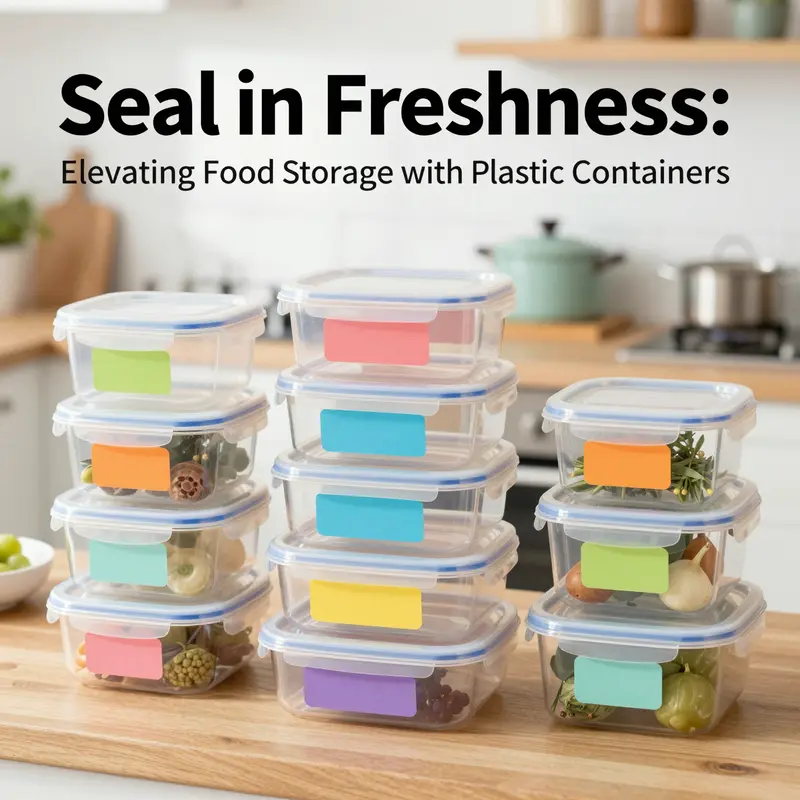
The evolution of plastic food storage containers with lids is a quiet revolution that sits at the intersection of everyday practicality and industrial precision. What began as simple, stackable boxes for leftovers has grown into a landscape of highly engineered options that optimize space, preserve quality, and streamline workflows in kitchens of every scale. In this chapter we trace how design innovations—driven by demand for faster meal prep, safer storage, and smarter inventory management—have reshaped the very fabric of how we store, transport, and access food. The thread that binds these developments is not merely function; it is a philosophy of efficiency that considers the entire lifecycle of a container—from the moment a meal is planned to the moment its contents are disposed or repurposed. This perspective helps explain why materials, forms, and features now harmonize to deliver reliability under heat, cold, and everything in between, while also reducing waste and enabling brands to communicate trust through clear labeling and responsible production practices.
One of the most visible shifts in design is the relentless pursuit of stackability and nestability. In dense kitchens and crowded pantries, every cubic inch counts, and containers that can nest inside one another or stack in a uniform column greatly improve organizational efficiency. The result is a family of shapes with standardized dimensions, reinforced edges, and interlocking rims that prevent wobble when stacked high on a shelf or in a cabinet drawer. This approach is not merely aesthetic; it translates to real-world benefits. In households, it means less time spent searching for the right size and fewer crumpled lids after a scramble to close a leaking box. In commercial operations, it means more predictable racking systems, easier inventory counting, and reduced risk of breakage during handling. The science behind this efficiency lies in precision engineering during the molding process, as well as careful consideration of tolerances so that edges align snugly and lids close with consistent pressure.
Airtight sealing is another core pillar of contemporary design. The seal is not just about keeping moisture out; it is about preserving texture, aroma, and color, which are essential for both consumer satisfaction and food safety. Modern lids employ ribbed gaskets, asymmetric hang hooks, and molded-in sealing beads that distribute clamping force evenly around the container. The result is a reliable barrier against spills during transport and a barrier against ambient humidity once the container is in the fridge or freezer. For dry goods such as cereal, flour, and sugar, an airtight seal helps prevent moisture ingress and pest intrusion, extending shelf life and reducing waste. This emphasis on sealing performance is often paired with compatibility considerations, ensuring lids work across a family of containers and vice versa. The user experience improves when a lid provides a confident feel—an audible click or a tactile cue that the seal is engaged—minimizing the guesswork that accompanies storage.
Material science undergirds these design choices. Polypropylene and PET have become standard bearers because they balance clarity, rigidity, chemical inertness, and safety. PP, in particular, is valued for its heat resistance and dimensional stability. With appropriate design, PP containers can withstand temperatures that make them suitable for microwave reheating, while maintaining integrity in the freezer and dishwasher. PET offers excellent clarity, enabling quick visual identification of contents, which reduces waste by helping users locate what they need without opening multiple containers. In tandem with these materials, the avoidance of harmful additives—such as BPA—has become a baseline expectation in today’s market. Migration testing and strict certification requirements reassure buyers that containers are safe for direct contact with a broad range of foods, including acidic, fatty, and salty items. The combination of safe materials and precise molding ensures that clarity and durability can coexist with practical utility.
Transparency in design is more than about aesthetics; it is a strategic feature that reduces waste and elevates usability. Clear or translucent walls let users assess contents at a glance, which speeds up meal planning and helps with inventory control in commercial settings. While transparency supports quick decisions, it also informs the ongoing conversation about sustainability. When users can see what they have left, there is less likelihood of over-purchasing or over-prepping, which in turn reduces spoilage and disposal. At the same time, designers have learned to balance visibility with privacy of contents when needed, using color-tinted walls or modular compartments that segment different foods within a single container.
Modularity and integrated compartments mark a notable breakthrough in the way containers accommodate complex meals and diverse storage needs. The modular approach enables a single base container to be paired with removable inserts, dividers, or built-in compartments that separate components in ways that preserve flavors and textures. For example, a single unit may feature a primary cavity for a main dish, plus one or more partitioned sub-sections for sides, toppings, or snacks. This design fosters more deliberate portion control and simplifies meal planning for families and busy professionals alike. It also aligns with the broader culinary trend toward batch cooking and meal prepping, where portioned components can be kept distinct until reheating or serving. The beauty of this system lies in its adaptability; as needs shift, users can reconfigure compartments, swap inserts, or scale the container lineup without replacing entire sets.
Advances in injection molding and material processing have enabled manufacturers to realize these design goals with unprecedented precision. Modern machinery supports tighter tolerances, finer surface finishes, and more uniform wall thicknesses. This is critical not only for stackability and sealing but also for appearance and durability. When walls are uniformly thick, containers warm evenly and resist warping in extreme temperature changes. The surfaces can be engineered to be smooth for easy cleaning or slightly textured to enhance grip, and the rigidity of the chosen thermoplastics helps maintain shape during repeated cycles of heating and cooling. The interplay between process parameters and final form is a careful dance: gate locations, cooling times, mold temperatures, and ejector strategies all affect how a container feels in the hand, how it seals, and how long it lasts under heavy use.
Safety and sustainability sit at the center of current design philosophy. Beyond BPA-free materials, there is a broader attention to chemical safety through migration testing and compliance with international standards. This ensures that even under heat, cold, or acidic exposure, the materials do not release harmful compounds into food. At the same time, many manufacturers are embracing sustainable practices by reducing resin loads, exploring recyclable or reusable packaging options, and incorporating recycled content where feasible. Digital labeling and clear certifications become part of the conversation with consumers and business buyers who demand transparency about composition and processing. The goal is not merely to meet regulatory requirements but to build consumer confidence through evidence of responsible production and ongoing stewardship of the environment.
The commercial dimension of these innovations cannot be overlooked. In food service and institutional settings, the operational benefits of efficient container designs are magnified. Bulk procurement through global platforms and major retailers has raised the bar for performance expectations and supply reliability. The right containers support faster service, more accurate inventory control, and easier loss prevention. For kitchens that prepare hundreds or thousands of meals daily, reliable lids that seal with consistent force, and containers that resist warping in cold storage, become essential. In warehouses and distribution centers, stackability translates into higher density storage, easier forklift handling, and more efficient picking and packing processes. Some suppliers now offer customization options, enabling businesses to brand their packaging, print essential safety and usage information, or tailor sizes for specific menus or protocols. This is not merely a cosmetic upgrade; branded packaging can convey quality assurance and align with corporate sustainability goals, reinforcing the trust that customers place in the safety and integrity of the food they receive.
From a sourcing perspective, the decision to adopt newer design features rests on a synthesis of material properties, manufacturing capabilities, and value. The most effective choices emerge when buyers evaluate a holistic picture: material safety certifications (FDA, ISO, or other recognized standards), theability of a supplier to maintain consistent mold precision, the availability of scalable production, and robust after-sales support. The discourse moves beyond price and minimum order quantities to include supply chain resilience, lead times, and the supplier’s capacity to accommodate changes in demand. In practice, this means that smart purchases consider not only the immediate need but also the trajectory of a facility’s operations, whether it is a home kitchen expanding into meal prep at scale or a caterer seeking to standardize a large repertoire of containers with compatible lids and compartments.
Design innovations also acknowledge the realities of use. For households, the goal is intuitive performance—lifting a lid, snapping it shut, and placing the container in the fridge without fuss. For professionals, the objective is repeatable efficiency: consistent lid fit, predictable stacking behavior, and a predictable cycle time in a filling and sealing line. In both contexts, the best designs reduce the cognitive load on users. A well-thought-out lid, for instance, should be easy to locate when rummaging through a pantry or a storage bin, should seal with assurance after a hectic day, and should be discernible at a glance whether it belongs to a full set or a misfit pile. The interfaces—where lid and container meet—are therefore as important as the body of the container itself. Subtle enhancements, like reinforced rims that resist cracking under impact or color coding on lids to indicate capacity or material, contribute to a quicker, more confident storage routine.
To illustrate how these ideas translate into real-world options, consider how a 58-ounce container demonstrates the modular ethos in a single unit. This size integrates built-in compartments that allow leftovers, meal prep components, or sandwiches to be kept separate without mixing flavors or textures. It is a simple, elegant solution that reduces waste by enabling consumers to combine multiple foods in one transportation-friendly package while preserving quality. The success of such designs rests on precise moldmaking and rigorous quality control, ensuring that every part of the unit—whether it is the lid, gasket, or divider—performs reliably across thousands of cycles. In a modern factory, the mold precision and the speed of the molding line determine not only output but also the economic viability of complex, multi-feature containers. The reference points here are systems that balance aesthetic appeal with function, leveraging clarity, clean lines, and strong edges to convey durability and trust at a glance.
The narrative around design is also a narrative about culture and communication. In the era after 2025, packaging innovations have become as much about consumer education as about performance. Clear labeling about safe reheating instructions, recommended cleaning practices, and the lifecycle of the product helps buyers make informed decisions aligned with their values. Digital printing and on-pack graphics enable customization that supports branding and sustainability storytelling. The emphasis on eco-conscious design—whether through the choice of resins, the use of recycled content, or the encouragement of reuse and recycling—speaks to a broader consumer expectation that choices in the kitchen resonate with a responsible approach to the planet. In practice, this means that a design is not merely about making something that works; it is about producing a material and a form that people feel good about using again and again.
The interplay between design and manufacturing is also a conversation about efficiency at the process level. Advances in machinery, tooling, and automation have improved the speed and precision with which containers are produced. High-precision mold cavities, automated quality checks, and automated ejection systems contribute to tighter tolerances and a more uniform product. The machinery behind these innovations, and the engineering work that informs it, are described in detail in technical overviews that dissect the specifications, structure, and performance of plastic food container molding machines. These resources illuminate how seemingly simple shapes become the result of complex coordination among designers, toolmakers, and machine operators. The end result is a product that meets exacting standards while remaining cost-effective to manufacture at scale, ensuring that households and food businesses alike have reliable access to efficient storage solutions.
In this convergence of materials science, user-centric design, and scalable manufacturing lies a future of even more capable containers. Look for further refinements in heat and chemical resistance, sustainable material compatibility, and smarter, more intuitive interfaces. The direction is not toward gimmickry but toward coherent systems that help people store, access, and transport food with greater ease and less waste. As storage becomes more integrated with other kitchen technologies—like smart fridges, inventory-tracking apps, and standardized prep workflows—the role of the container lid as an intelligent interface will likely expand. A lid might, in time, carry RFID or simple sensing features to indicate temperature, freshness, or remaining shelf life, further reducing guesswork and waste. Yet even as the technology evolves, the core design principles endure: a secure seal, a reliable fit, clear visibility of contents, and modular adaptability that harmonizes with how people actually cook, pack, and share meals.
For readers seeking a deeper dive into the machinery that brings these containers to life, the authoritative overview on plastic food container molding machines offers a technical lens on the precision and performance behind the scenes. This external resource provides a structured exploration of mold design, cycle times, and the interplay between material choice and processing efficiency. It helps connect the dots between a user-friendly lid that snaps shut with confidence and the industrial systems that reproduce that experience at scale. External resource: Exploring Plastic Food Storage Containers Making Machine: Technical Specifications, Structure, and Performance Insights.
If you are curious to see a real-world example of how a container family can be extended through smart design while maintaining a customer-friendly footprint, consider a reference to an adjacent product category that shares many core principles. Take, for instance, a take-away box that balances structural integrity with lid compatibility and packaging efficiency. The design choices in that context echo the same priorities: a container that can be opened and closed with ease, stacked securely with its siblings, and identified at a glance on a crowded shelf. While the materials may vary—from recycled paperboard to compostable coatings—the strategic emphasis on safety, performance, and scalability remains constant. This continuity underscores a broader takeaway: the most successful storage solutions are those that honor the user’s daily rhythms while aligning with sustainable production practices and responsible sourcing.
In summary, the innovations in plastic storage containers with lids are less about a single breakthrough and more about an ecosystem of improvements. They reflect a careful balancing act: weight against strength, transparency against privacy, rigidity against flexibility, and cost against longevity. They are designed to perform in the kitchen as fluidly as in a warehouse, to protect what matters most—food safety and quality—while supporting the efficiency demands of modern life. The result is a set of containers that not only hold ingredients and meals but also embody a pragmatic, forward-looking approach to how we feed ourselves in a world that values speed, reliability, and sustainability. For those who manage kitchens, whether at home or at scale, this design language translates into practical advantages: easier organization, more dependable sealing, clearer content identification, and a footprint that better respects the planet. And as the conversation advances, the line between form and function continues to blur, yielding containers that do more with less while helping people do more with their time.
Internal reference for further reading: senang03-in-stock-new-design-salad-rectangle-takeaway-kraft-paper-octagonal-box-with-lid. You can explore how a design like this balances compartmentalization with portable simplicity, a principle that informs many current plastic storage solutions even as material choices evolve. senang03-in-stock-new-design-salad-rectangle-takeaway-kraft-paper-octagonal-box-with-lid
Sealed for Freshness: Navigating Market Trends, Consumer Preferences, and the Sustainability Shift in Plastic Food Storage Containers with Lids
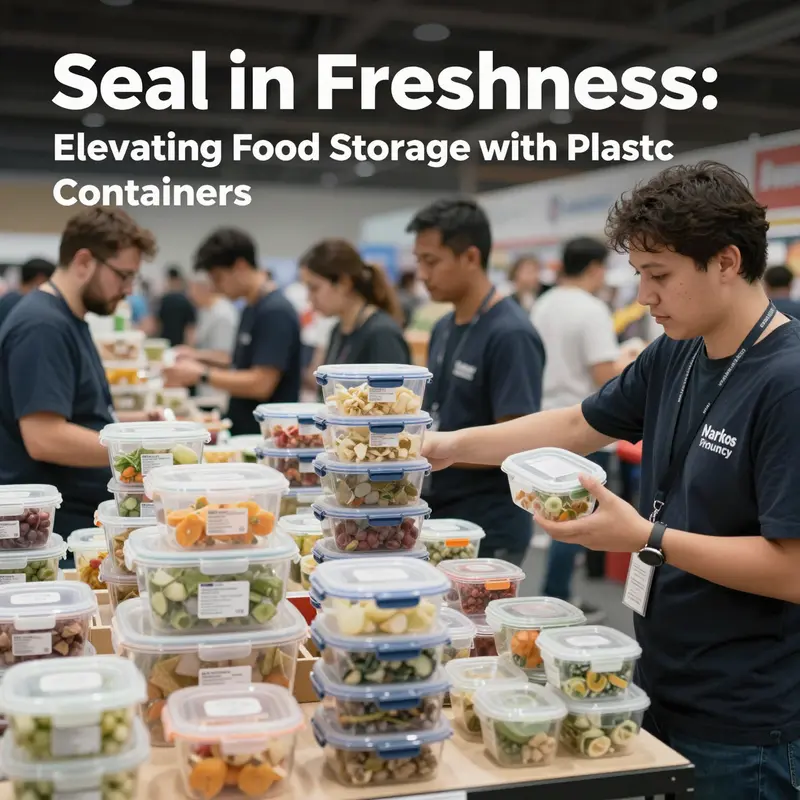
Plastic food storage containers with lids sit at the intersection of everyday practicality and a broader conversation about how we preserve, transport, and present food. They are not mere vessels; they are systems that influence kitchen organization, batch cooking, supply chains, and even the way menus are planned in commercial settings. The market for these containers is guided by a dynamic mix of performance expectations, consumer taste, and the push toward environmental accountability. To understand where this category is headed, it helps to follow three threads that run through the research: the scale and trajectory of growth, the evolving preferences of people who buy and use these products, and the way industry players respond with material science, design, and new business models.
Numbers tell a compelling part of the story. Plastic food storage containers with lids continue to command a substantial share of the overall packaging landscape. In 2026, they accounted for nearly half of the market, about 48.9 percent, signaling that plastic remains the dominant material choice for storage and transport in kitchens and foodservice environments. The size of the market in that year was estimated at around 46.28 billion dollars, and projections point to a robust expansion in the coming years, with expectations that the global market could reach approximately 69.6 billion dollars by 2035. A particularly telling figure is the expected growth rate in the near to mid-term: a compound annual growth rate of roughly 14.8 percent from 2026 to 2033, driven by the ongoing demand for containers designed to keep contents secure, fresh, and portable. These numbers are not just about volume; they reflect how rapidly both households and businesses value reliable, durable packaging that can function across the temperatures and environments that food encounters in daily life.
Yet the market narrative is not a story of unbounded expansion. It sits within a broader arc of sustainability and responsible consumption. Consumers are increasingly eyeing alternatives that reduce plastic use or minimize environmental impact. While plastic remains the workhorse, there is a measurable shift toward glass, stainless steel, and other non-plastic options in many households and a growing interest in materials that are explicitly recyclable or compostable. This does not erase the demand for plastic containers; rather, it reframes the decision calculus. People want non-toxic materials, containers that can withstand microwave use when needed, and lids that seal tightly to preserve flavor and prevent leaks during transport. The consumer’s eye is becoming a more discerning filter through which safety, convenience, and aesthetics must pass.
Aesthetics and usability now travel hand in hand with function. The so-called Yiyan Economy, or a focus on appeal and style, has become a real factor, especially among younger shoppers who seek products that feel not only safe and practical but also visually pleasing and expressive. Color, form, and even the tactile sense of edges and lids contribute to how confident a consumer feels about using a container in a busy kitchen, in a delivery lineup, or on a restaurant prep line. The same container that keeps leftovers fresh can be part of a social media-worthy meal-prep routine when it looks the part and is easy to stack and store. In practice, that means designers are paying attention to more than just the internal dimensions and the leak-proof seal. They are thinking about nestability, stack height, and the friction of handling in fast-paced environments, as well as how a container’s color or labeling can support branding or household organization schemes without compromising safety or cleanliness.
The applications of plastic containers with lids have widened beyond homes into serious commercial use. Restaurants, meal-prep services, delivery operations, and institutional kitchens rely on containers that can be sanitized, reused, and transported to customers while maintaining safety and quality. Standardization becomes a compelling advantage in these spaces because it simplifies inventory management and ensures that a single lid can fit multiple vessel sizes, or at least that a family of shapes shares compatible seals and stacking patterns. In warehouse and pantry planning, the ability to nest and stack containers translates directly into space savings, reducing clutter and improving access for staff. This is not only about conserving physical space; it also reduces handling time, improves the speed of meal assembly, and cuts down on the risk of spills during transit.
Innovation in response to these demands has taken several interlocking directions. First, there is the material science track: polypropylene (PP) and certain forms of polyethylene terephthalate (PET) remain common due to their proven food-safety profiles, heat resistance, and clarity in some formats. The safety question is non-negotiable. Materials marketed as food-grade are certified to contact food safely, with standards and certifications such as FDA alignment and, in many regions, ISO-based quality and environmental management schemes. Heat resistance is a practical concern as some containers are designed for microwave use; others are optimized for freezer storage or dishwasher cycles. In the best cases, a container can withstand a broad temperature range without warping, cracking, or leaching. The design of the lids matters just as much as the body. A strong seal, reliable gasket, and a leak-proof interface are essential for travelers, caterers, and parents who want to avoid spills when carrying soups or sauces.
Beyond safety and performance, the push toward sustainability shapes both materials and business models. The industry is actively exploring biodegradable and compostable alternatives, as well as improved recycling technologies that enable circular flow of plastics rather than a linear take-use-discard pattern. In practice, this means experimenting with formulations that degrade under industrial composting conditions or that are easier to reclaim in recycling streams. It also means optimizing the entire lifecycle: designing for durability and reuse, enabling easy cleaning and long service life, and offering take-back or recycling programs where feasible. These efforts align with broader regulatory and market pressures aimed at carbon neutrality and reduced environmental footprints. They also intersect with consumer expectations for clean, safe, and responsibly manufactured products that can be trusted to perform across a range of settings.
From a design perspective, the emphasis on standardization and modularity is clear. The most effective plastic storage systems feature uniform dimensions that allow multiple containers to stack neatly and be nested within each other when not in use. Reinforced edges, consistent wall thickness, and predictable lid geometries maximize compatibility across product lines and across different users, from a family at home to a large-scale catering operation. When a customer adds a new shape or size, the manufacturer’s ability to offer compatible lids, seals, and labeling becomes a key differentiator. This is where customization—such as color choices, printing for branding, or even OEM production for a retailer or corporate client—enters the story. Customization increases the perceived value of a product and helps businesses create a cohesive storage ecosystem for their staff, customers, or guests. Yet customization also adds complexity and requires careful validation to ensure that any added features do not compromise safety, stackability, or wash durability.
In the sourcing landscape, buyers are increasingly turning to global platforms and retailers that can provide bulk options, consistent quality, and reliable logistics. The ability to source in volume, negotiate favorable terms, and ensure rapid replenishment is central to the success of both small kitchens and large-scale foodservice operations. The economic calculus goes beyond sticker price; it encompasses total cost of ownership, which includes leakage risk, breakage rates, and the time saved during preparation and cleaning. As with any durable good, supplier reliability and traceability pay dividends in reduced downtime and fewer product defects. Certifications and traceable supply chains reassure customers and enable procurement teams to meet internal standards and external regulations. In this sense, the market is as much about governance and assurance as it is about shape, size, and color.
Within this evolving ecosystem, it is worth noting a concrete example of how design, safety, and branding can converge—yet safely without naming particular products in this discussion. A practical illustration of this convergence can be found on a dedicated product page hosted on the broader packaging platform. For readers who want to explore how an individual item demonstrates the interplay of material choice, lid integrity, and branding potential, a visit to cupbowlpack.com provides a snapshot of how one supplier is packaging a simple, everyday storage solution with a focus on safety, usability, and corporate presentation. This page serves as a reminder that the everyday item we reach for at grocery trips and in kitchens is also a site of ongoing experimentation, where form and function are refined in service of reliability and appeal. The link below points to that resource for readers who wish to see a real-world example of how these design decisions translate into a tangible product on the market:
On the scientific and market-analysis side, researchers and industry analysts continually map the trajectory of demand and supply, emphasizing both the breadth of use and the depth of requirements that drive product development. The projections and trends cited earlier reflect a market that remains robust but that is increasingly conscious of its environmental responsibilities. The future likely includes more emphasis on recyclability and safer chemical profiles, more integration with digital tools that track inventory and lifecycle data, and more attention to the design of lid mechanisms that balance ease of use with secured seals under a range of conditions. In business terms, the story is one of balancing three imperatives: performance, safety, and sustainability, all while keeping eyes on cost efficiency and supply resilience.
This balance is not theoretical. It translates into practical decision making for kitchens and facilities managers who must decide not only what to buy, but how to store, reuse, and dispose of containers as part of a larger waste-management and sustainability program. For households seeking to keep weekly meal-prep routines orderly, it means choosing containers that can safely transition from fridge to microwave to freezer, that can be stacked to maximize pantry space, and that resist staining and odors. For restaurants and delivery services, it means selecting systems that minimize the risk of leaks during transit, that withstand repeated cycles of washing and sanitizing, and that support consistent portioning and ordering accuracy. In both cases, the choice of container is a small but meaningful lever that can influence food safety, waste generation, and customer satisfaction over time.
As the market continues to mature, consumer education plays a growing role. People want to know that the containers in their homes and workplaces are safe, durable, and designed with thoughtful lifecycle considerations. Clear labeling of microwave safety, heat tolerance, dishwasher compatibility, and recycling information helps users make informed decisions. In turn, manufacturers are pushed to improve the reliability of seals, extend the life of lids under repeated use, and reduce the likelihood of warping or cracking in colder or hotter environments. The integration of sensor-enabled or digitally trackable packaging remains a frontier for the industry, offering opportunities to monitor storage conditions and ensure that products remain within safe boundaries throughout their lifecycle.
Taken together, the current trajectory suggests plastic food storage containers with lids will continue to play a central role in both domestic and professional kitchens, even as the market experiments with greener materials and more circular business models. The appeal of a reliable seal, a compact footprint, and a safe, food-grade composition remains strong. The challenge—and the opportunity—lies in marrying that reliability with a transparency about environmental impact, a willingness to innovate in material science, and an approach to design that makes storage both efficient and aesthetically pleasing. Readers who want to delve deeper into the market dynamics and future projections can consult industry analyses such as the Grand View Research report, which aggregates these threads into a comprehensive forecast and underlines how consumer expectations, regulatory environments, and technological advances will shape the next wave of plastic storage solutions. External reference: https://www.grandviewresearch.com/industry-analysis/plastic-food-storage-container-market
Final thoughts
Selecting the right plastic food storage containers with lids is essential for businesses in the beverage and catering industries. Understanding safety standards and material qualities, embracing design innovations, and staying informed about market trends will empower your organization to make optimal choices. These decisions will not only enhance the efficiency of your operations but also ensure that your products meet consumer expectations for safety and quality. By prioritizing these aspects, you can foster a sustainable business environment and a loyal customer base that trusts your brand.