

In the bustling realm of food service, maintaining the integrity of each dish during transport is paramount. Food takeaway box dividers serve not just as separators but as essential tools for ensuring flavors and textures remain distinct while enhancing presentation. These dividers come in various materials and designs, each tailored to specific culinary needs. From the robust nature of plastic and molded fiber dividers to the eco-friendly nature of paperboard options, each type plays a vital role in the takeaway experience. This exploration will delve into the applications of different divider materials, highlight safety enhancements, and discuss how organized packaging contributes to customer satisfaction and brand image. As food businesses strive for excellence, understanding these elements is key to providing a high-quality service.
Separating Flavor and Form: The Craft and Consequences of Plastic and Molded Fiber Dividers in Takeaway Boxes
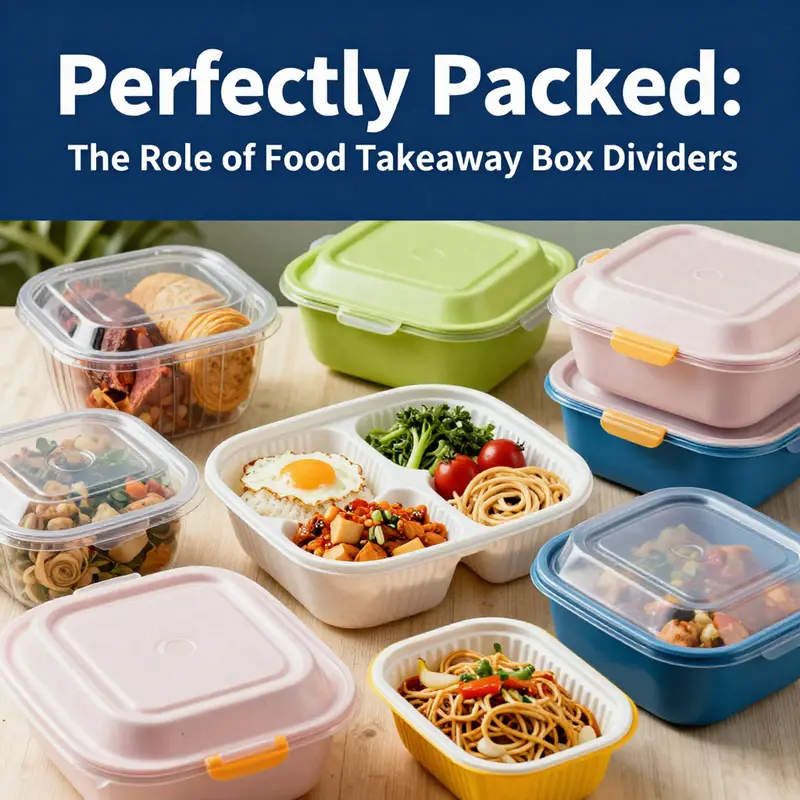
In any meal carried from kitchen to customer, the divider is more than a simple partition; it is a stability system for flavor, texture, and presentation. When a single container carries multiple components—a savory main, a crisp side, a sauce, and perhaps a delicate garnish—the divider acts as a shield. It curtails cross-talk between ingredients, preserves intended textures, and helps enforce portion control. The result is not just a practical packaging feature but a quiet ambassador of a brand’s promise: care, consistency, and control from the moment the order is placed to the last bite. In this space, plastic and molded fiber dividers have become the workhorses of high-volume takeaway operations because they balance durability, barrier performance, and versatility with a footprint that is increasingly scrutinized by brand guardians and customers alike. A close look at these materials reveals how design, material science, and supply-chain logistics converge to deliver reliable, menu-preserving packaging experiences.
Plastic dividers, forged from food-grade polymers such as polypropylene or polyethylene terephthalate, bring a suite of properties that align with the needs of rapid delivery and reusability. Their durability is not merely about resisting a few bumps along the way; it includes a resilient moisture barrier that keeps sauces from seeping into neighboring components and oils from migrating into delicate items. The inherent clarity of many plastic dividers also serves a subtle but important marketing function: it allows the consumer to view the meal’s components as intended, reinforcing the perception of care and professionalism. This transparency can amplify the perceived quality of the entire packaging system. Moreover, the ability to withstand microwave heating and freezing expands the lifecycle of the container for both consumer convenience and supply-chain flexibility. With that said, the environmental reality of plastic dividers is less forgiving. Many are not readily recyclable after a single-use cycle, and their fossil fuel origins raise concerns about long-term sustainability and resource stewardship. In a marketplace that increasingly frames packaging choices through a sustainability lens, plastic dividers sit at a crucial inflection point between performance and responsibility. The challenge is to balance durability and barrier performance with evolving waste-management realities and corporate sustainability commitments.
Molded fiber dividers offer a contrasting set of strengths that appeal to brands seeking a more eco-conscious image or alignment with compostable waste streams. Crafted from renewable resources such as paper pulp or bamboo fiber, these dividers can be molded into precise forms that fit the geometry of premium takeaway boxes. The environmental narrative here is prominent: compostability and biodegradability under appropriate conditions reduce long-term ecological impact and resonate with consumers who value circular economy principles. Yet the fiber route is not a flawless substitute for plastic in every context. The moisture and oil barrier of molded fiber—though enhanced by plant-based coatings—often lags behind plastic, especially when facing high-moisture or high-fat foods. Coatings can significantly improve water resistance, but they add cost and can influence recyclability or compostability depending on regional waste streams. The mechanical strength of molded fiber dividers tends to be lower than that of plastic. They may soften under humidity or when exposed to prolonged contact with moist foods, making them less reliable for oily components or long transit times through variable climates. For this reason, fiber dividers are frequently favored for dry or semi-dry foods such as baked goods, salads with minimal moisture, or items like sushi where a dry separation suffices. The combination of weight, printability, and customization capability makes molded fiber an attractive option for brands looking to elevate their environmental narrative while maintaining a clean, premium presentation.
With these material families in mind, the real-world design decisions come down to trade-offs. In a high-volume fast-casual operation or a bustling delivery kitchen, durability, leak resistance, and compatibility with microwaves and freezers are non-negotiables. Plastic dividers can be the reliable backbone in such contexts, especially when paired with secure lids and robust box ergonomics. They support complex, multi-component meals that require precise stacking and clear delineation of portions. The downside is the environmental footprint and the growing scrutiny of single-use plastics. Brands balancing this tension often pursue a layered approach: selecting plastic dividers for meals with higher moisture or oil content and stronger barrier needs, while using molded fiber dividers for menus that can lean into sustainability narratives without sacrificing the consumer experience.
Beyond material choice, the design of the divider integrates tightly with lid mechanisms, box geometry, and the overall packaging ecosystem. Dividers must fit the internal cavity with minimal movement, thereby reducing the risk of spill during transport. They should resist warping at elevated temperatures and maintain their integrity when exposed to freezing conditions. The most successful configurations also consider ease of assembly for kitchen staff and the end-user experience of unboxing. A well-designed divider reduces the likelihood of accidental cross-contact, bolstering food safety and aligning with best practices in cross-contamination prevention. In some operations, the divider is not just a barrier but a cue for order assembly—detailing where to place each component to optimize both the eating experience and the visual appeal of the meal when opened.
The choice between plastic and molded fiber dividers is thus not simply a material preference but a strategic statement about how a brand wants to sequence its values. If a brand emphasizes speed, reliability, and broad compatibility with existing equipment, plastic dividers remain a practical anchor. If the brand aims to foreground sustainability, transparency, and consumer perception of responsible packaging, molded fiber becomes a persuasive ally, especially when paired with a compostable lid and environmentally conscious sourcing. The industry has begun to harmonize these approaches by adopting irrigation-like supply chains where the most critical meals receive the most appropriate divider. This alignment helps reduce waste and tighten cost controls while preserving the intended sensory experience of the dish.
What guides a practical, future-ready decision is a clear assessment of use-case scenarios, rather than a universal best choice. For a multi-component dish that travels in variable climates and endures a window of delivery while remaining visually pristine, a plastic divider with a reliable moisture barrier and stable mechanical properties can provide a predictable performance envelope. When the menu emphasizes fresh, dry or semi-dry components, a molded fiber divider—perhaps with a plant-based coating—can deliver a compelling environmental story without sacrificing the appearance of premium packaging. In both cases, these dividers work best when designed as an integrated system: the box, the lid, and the divider coordinate to create predictable margins, prevent leakage, and sustain temperature and texture during transit.
Considerations extend into the broader supply ecosystem as well. Material availability, regional waste-management capabilities, and cost volatility all influence decisions. An operation that prioritizes brand storytelling around sustainability might invest more heavily in molded fiber dividers and associated compostable coatings, while a portfolio that requires high throughput and consistent performance across a diverse menu might lean more on plastic dividers, paired with robust recycling or takeback programs where feasible. Either path can be reinforced by transparent communication with customers about the packaging choices, the reasons behind them, and the end-of-life options. Such transparency reinforces trust and helps customers feel confident that a brand’s packaging aligns with its culinary values.
The practicalities of performance and sustainability are echoed in industry literature and practitioner guides. A recent authoritative synthesis emphasizes how divider materials influence not only barrier performance but also the feasibility of scaling up production, achieving consistent print quality for branding, and maintaining cost discipline across seasons and demand cycles. It also highlights the importance of testing under real-world transport conditions—shaking, temperature fluctuations, and long-haul journeys—to ensure that the chosen divider continues to perform as intended from kitchen to consumer doorstep. This perspective underscores that the divider is a strategic, rather than incidental, element of the overall food packaging system. The takeaway is that thoughtful material selection, informed by both functional performance and sustainability goals, enables brands to deliver reliable, visually appealing, and responsible meals.
For a broader look at how these considerations fit into the wider industry framework, readers can explore technical discussions that address structure, properties, and implementation in practice. As packaging designers refine the balance between barrier performance and environmental responsibility, the dialogue between materials science, consumer expectations, and logistical realities becomes more nuanced. In the end, the divider’s purpose remains singular: to preserve the integrity of the meal, protect safety, and communicate a brand’s care through every bite. A well-chosen divider harmonizes with the container and lid, supports efficient kitchen workflows, and resonates with customers who expect that delivery food can be as thoughtfully packaged as it is delicious. For those exploring packaging options that echo these principles, see the example of a rectangle takeaway kraft paper octagonal box with lid as a reference point for how a well-integrated packaging system can complement a fiber divider while reinforcing a sustainability narrative. rectangle takeaway kraft paper octagonal box with lid
External resources provide additional context on industry practices and performance benchmarks. A comprehensive guide detailing the structure, properties, and implementation strategies for takeaway boxes offers deeper technical insight into how dividers interact with other packaging components under real-world conditions. This external perspective helps frame the chapter’s discussion within the broader professional discourse on food packaging and safety: https://www.foodserviceindustry.com/food-boxes-takeaway-explained
Sustainable Cardboard Dividers: Elevating Takeaway Box Design Through Eco-Friendly Paperboard Compartments
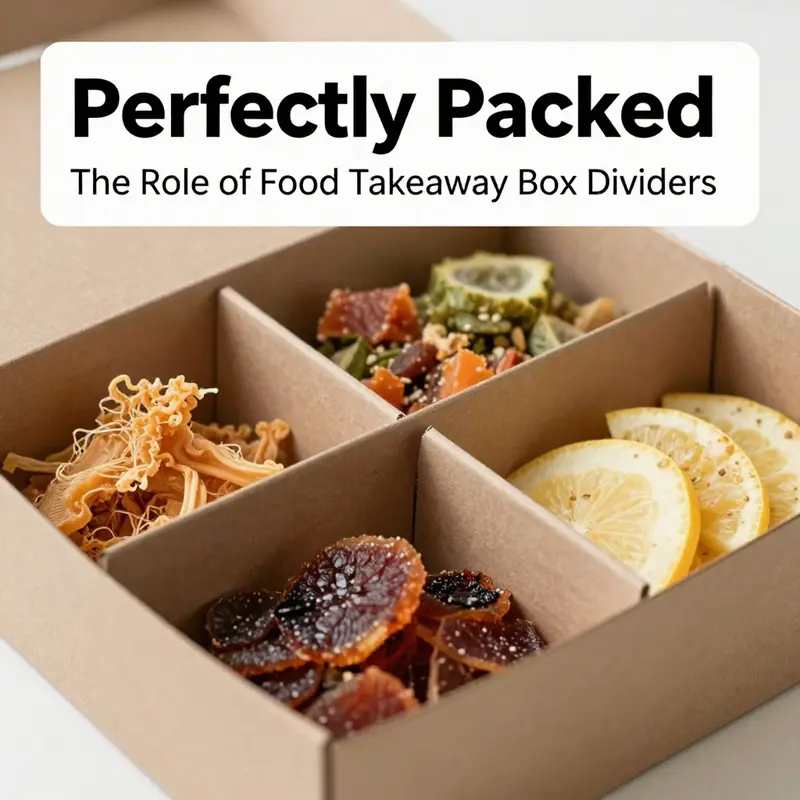
Sustainable packaging is reshaping how a takeaway meal travels from kitchen to customer, and at the heart of this shift are the humble dividers that separate, protect, and preserve. In the modern landscape of takeout and delivery, a well-designed paperboard divider does more than keep flavors from mingling; it reinforces a brand’s commitment to responsibility, reliability, and respect for the dining experience. Eco-friendly paperboard dividers meet this triple demand by combining material science with practical functionality. They are lighter on the environment without compromising on the crispness of presentation or the safety of the food inside. They are engineered to withstand the rigors of transit, from busy corridors of a kitchen to the crowded compartments of a courier vehicle, while maintaining their shape and purpose through different environments. The result is a packaging component that contributes to a seamless, high-quality impression with every order.
Material composition sits at the core of this sustainability narrative. These dividers are built from FSC-certified recycled cardboard and paperboard, a combination that curtails the demand for virgin fiber while ensuring the material remains durable enough to function as a divider under pressure. The emphasis on responsible sourcing means forest conservation is prioritized, and the final product remains biodegradable and recyclable within appropriate systems. When suppliers pursue and maintain certifications such as CE, BV, and ISO, they signal adherence to rigorous safety and environmental performance standards. The effect is a supply chain where the dividers carry not just the weight of the food, but also the weight of trust investors and customers place in sustainable practice. For many operators, this alignment with global standards is as important as the divider’s physical performance, because it underpins the promise of consistent quality across markets and timelines.
The ability to customize compartmentalization is another defining strength. Paperboard dividers can be engineered with multiple, clearly defined compartments that hold a variety of items—tacos and churros, salads with delicate toppings, or a charcuterie assortment—without allowing components to shift and mingle. This separation does more than preserve texture; it preserves the visual appeal that motivates a customer to choose a premium takeaway option. Some designs even incorporate dedicated spaces for sauces or condiments, keeping them accessible yet kept away from the main components so crusts stay crisp and dressings stay where they belong. The layout itself becomes a design element, contributing to a cohesive, attractive presentation that arrives intact and ready to enjoy. In practice, this kind of structured layout reduces the likelihood of mix-ups on delivery, with the lid acting as a transparent veil that reveals the contents without demanding an untidy unwrap.
Performance characteristics of these dividers further reinforce their practical value. They are engineered to be lightweight yet rigid, an important balance for any takeaway solution. A lighter panel eases handling by staff and reduces shipping weight, while the rigidity prevents sagging or deformation that might cause items to shift during transit. The combination enhances stackability and portability, enabling kitchens and delivery hubs to optimize space in both storage and vehicles. Importantly, this design approach can offer up to 20% more space efficiency compared with some standard flat boxes, a meaningful improvement for operators juggling large menus and tight delivery timelines. Where transparency matters, some systems incorporate lids made from recyclable, see-through material, enabling customers to identify their meals at a glance without opening each container. This visibility supports a better user experience and can help minimize waste by reducing the chance of mistaken orders.
Regulatory alignment and environmental stewardship also shape the deployment of eco-friendly paperboard dividers. As markets increasingly implement Extended Producer Responsibility (EPR) frameworks, especially in France and Germany, packaging suppliers are motivated to ensure products are designed with end-of-life considerations in mind. That often means favoring materials that can be efficiently recycled or accepted by composting streams where feasible, and it may involve documentation that supports compliance with recycling and waste-management regulations. Some products also pursue certifications that signal alignment with global eco-conscious standards, giving brands confidence to market their packaging as sustainable, compliant, and future-ready. In this context, the dividers do not simply perform a function; they become an integral element of a broader strategy—one that links operational efficiency, customer experience, and environmental accountability.
The practical implications for a business are tangible. Paperboard dividers deliver a strong value proposition for operators who want to offer a premium takeaway experience without sacrificing sustainability. They help preserve the integrity of multiple components in a single package, ensuring that sauces, crisp textures, and delicate greens arrive as intended. The opportunity to customize branding—through UV coating or embossing on the outer surfaces or even subtle textures on the dividers themselves—provides a way to reinforce a brand identity while maintaining a clean, minimalist aesthetic that resonates with eco-conscious consumers. This branding possibility dovetails with the functional advantages, transforming packaging into a cohesive extension of the product itself rather than a mere container.
Yet even as the benefits are compelling, it is important to acknowledge the constraints that come with paperboard dividers. They are best suited for dry or semi-dry foods and should be chosen with an eye toward moisture management. A divider’s performance hinges on the surrounding box design and the sealing method; when moisture is excessive, the board can lose rigidity and begin to warp. For items with high liquid content, careful layout planning and barrier assurances become critical. The industry response is to pair these dividers with compatible feed-throughs, effective lids, and thoughtful interior layouts that maintain separation without relying on overly thick or bulky materials. The objective is to preserve crisp textures and vibrant colors, a goal that customers subconsciously associate with quality and care.
From a broader perspective, the rise of eco-friendly paperboard dividers invites retailers and food brands to rethink not just the material, but the entire system of packaging. A well-designed divider prompts better portion control and consistent meal presentation, supporting inventory planning and reducing waste. It also fosters a clearer, more attractive on-shelf display when used for premium take-home meals or giftable sets, where the aesthetic quality of the packaging matters as much as the food itself. In this sense, the divider becomes a strategic asset, a small element with outsized influence on customer satisfaction and operational efficiency.
To illustrate how such dividers can function as a bridge between sustainability and market demand, consider the broader ecosystem that supports responsible packaging. A prominent supplier profile—demonstrating sustainable design, modular compartmentalization, and branding flexibility—offers a concrete example of how eco-friendly dividers integrate into a complete packaging system. For a concrete example of industry-facing packaging that balances sustainability with clear visibility, see this supplier page: Eco Friendly Tacos Takeaway Packaging with Dividers, Paper Box for Food.
In terms of consumer engagement, the visibility of sustainable choices in packaging can be a powerful signal. Transparent lids, visible branding, and the clean separation of course components communicate care and quality, while the use of recyclable or compostable materials reinforces a narrative of responsibility. When a brand combines these elements with practical benefits—reliable transport, easy storage, and preserved food quality—the packaging itself becomes a source of trust. That trust translates into repeat orders and positive word of mouth, which, in a crowded market, can be a decisive factor for a business seeking to differentiate itself through responsible packaging.
In sum, eco-friendly paperboard dividers fuse environmental mindfulness with everyday practicality. They enable multi-component meals to travel intact, support efficient logistics, and contribute to a premium dining experience from the moment the order is placed. They also align with regulatory trends that push for greater accountability in packaging life cycles, signaling to customers and regulators alike that a brand is serious about environmental stewardship. As more operators adopt these dividers, we can anticipate a broader shift toward packaging systems that respect both the planet and the palate. The future of takeaway packaging may well hinge on how elegantly a divider can manage a plate of diverse foods while keeping the footprint small, and the evidence from current materials science and regulatory frameworks suggests this is a future already unfolding.
External resource: https://www.alibaba.com/product-detail/Eco-Friendly-Tacos-Takeaway-Packaging-with1600574389243.html?spm=a2700.galleryofferlist.poffer_list.2.1c7d2b1dLZBwDx&urlShowcase=1
Bamboo Boundaries: Tradition, Texture, and Trust in Asian Takeaway Box Dividers
Bamboo has long carried the aura of craft, patience, and respect for materials in Asian kitchens. When it finds its place as a divider inside takeaway boxes, bamboo becomes more than a simple partition; it is a quiet guarantor of flavor integrity and dining dignity. In the lineage of Asian food packaging, traditional bamboo dividers are not only practical tools but also cultural artifacts that translate centuries of table etiquette, artistry, and seasonal sensibility into a modern, portable form. The takeaway box, once a humble container, becomes a stage where each component sits deliberately apart, preserving the delicate balance between a glossy lacquered rice layer, a tangle of braised greens, and a glossy pool of sauce. The divider’s presence signals a careful hand behind the packaging—one that prizes clarity of taste and a neat visual order as much as it does convenience. In this sense, bamboo dividers are a bridge between old-world craft and today’s demand for high-quality, reliable, and eco-conscious packaging solutions.
Material and craftsmanship anchor the chapter. These dividers are often fashioned from natural bamboo fiber or from hardwoods like teak or mahogany, chosen for their combination of strength and flexibility. The design is not merely functional but sculptural: slender slats or interlocking panels that create micro-compartments within the box, each area tailored for a particular dish—rice, vegetables, protein, sauces. The aim is not to cage food but to give it its own space so flavors do not blur or mingle during transit. Even the way a divider sits can reduce shifts of content, preventing items from rubbing and sticking together and reducing the chance of leaks that compromise the entire meal. This is especially important for multi-component meals where aroma profiles—like a sharp soy glaze against a delicate herb—need to stay distinct until the moment of consumption.
Eco-friendly properties define the ethical core of bamboo dividers. Bamboo is celebrated for its renewability: it grows rapidly, often without chemical fertilizers, and it can be harvested with minimal environmental disturbance. As a material, bamboo fibers are inherently biodegradable under suitable conditions, and when the divider ends its life in an industrial composting stream or a well-designed home compost system, it can rejoin nutrient cycles rather than contribute to landfill mass. In an era when customers increasingly seek responsible packaging, bamboo dividers offer a tangible demonstration of a brand’s commitment to sustainability. Their compostability and comparatively low water footprint—relative to many conventional hardwoods—resonate with consumers who value not just the taste of their meal but the footprint of its packaging. The result is a packaging narrative that aligns environmental ideals with daily eating routines, a narrative that can be reinforced by signage and marketing materials in a way that feels authentic rather than performative.
From a technical standpoint, bamboo dividers deliver several practical advantages that matter in real-world delivery and takeout. They are durable enough to withstand the rigors of transit; not overly brittle, they resist cracking under pressure and temperature fluctuations, which is essential when the box contains hot mains and cool sides. Their light weight keeps overall packaging costs down and reduces the burden on delivery fleets concerned with efficiency and vehicle load. Thermal properties are another merit; bamboo’s innate structure provides a modest insulating effect that helps retain the warmth of rice and proteins while shielding delicate greens from direct heat. In addition, bamboo possesses natural antimicrobial tendencies that, while not a substitute for proper food safety practices, can contribute to a cleaner handling environment by limiting surface transfer of microbes from one component to another. The overall effect is a more stable dining experience, where textures stay crisp and presentation remains visually appealing even after a short journey.
Yet no material is perfect, and bamboo dividers carry their own limitations. Disposal conditions matter. Processed bamboo products may require specific disposal streams—industrial composting or certain municipal programs—to break down efficiently. Without appropriate facilities, the environmental promise can be undermined by improper disposal. Degradation can emerge with time or exposure to damp environments, and while carved, high-quality bamboo containers may exude a timeless elegance, they may not be ideal for frequent reuse if surfaces become stained or cracking occurs at stress points. These realities compel operators to weigh long-term reuse strategies against single-use convenience. They also shape how designers approach the pairing of dividers with lids, seals, and box substrates to ensure the entire system remains coherent under real-world conditions. In practice, a bamboo divider is most effective when its life cycle is aligned with the packaging ecosystem it inhabits, from raw material sourcing to end-of-life handling.
Cultural significance frames modern applications in both tradition and trend. The bamboo divider echoes centuries-old craftsmanship in Chinese and Japanese food culture, where presentation has always mattered as much as flavor. The visual rhythm of neatly partitioned compartments mirrors ceremonial dining arrangements, yet it adapts to contemporary expectations for portion control, branding, and sustainability. In today’s kitchens and delivery hubs, bamboo dividers have found a pragmatic role beyond the home dining table. They are used in premium takeaway boxes that emphasize quality and care, with dividers designed to hold diverse components without crowding, preserving each item’s identity. The modern incarnation of bamboo dividers can feature foldable elements, integrated textures, and subtle design cues that nod to traditional forms while addressing the needs of fast-growing, delivery-focused operations. In practice, multiple forces converge: cuisine identity, consumer values, and business goals. The result is packaging that communicates care through material choice, not just through color or print, and that enhances the dining experience without sacrificing efficiency.
The market’s response has been to treat bamboo dividers as part of a broader sustainability strategy rather than as an isolated accessory. While some operators lean toward plastic-free packaging, bamboo dividers serve as a tactile symbol of that commitment. They pair well with other eco-conscious choices—recycled or sustainably sourced paperboard boxes, soy-based inks, and water-based coatings—to form a cohesive narrative that resonates with customers who seek authentic, thoughtfully crafted meals. Rather than simply placing a divider between components, the design becomes an element of storytelling—an emblem of tradition meeting contemporary ethics. In this sense, bamboo dividers contribute to a packaging vocabulary that communicates reliability, care, and respect for both the food and the planet.
For readers curious about the breadth of sustainable packaging trends beyond bamboo, there is a broader conversation about eco-friendly materials that still honor performance. A valuable resource in this space explores the practical and environmental aspects of kraft-based, paperboard, and bagasse options, which often complement bamboo in multi-material packaging systems. This broader lens helps businesses evaluate where bamboo fits within their overall sustainability goals, whether as a primary divider or as part of a modular system where multiple materials work in concert to optimize both function and footprint. For a broader look at eco-friendly kraft-based packaging trends, see the resource linked here. eco-friendly-disposable-kraft-paper-soup-cup-bowl-with-paper-lid-takeaway-lunch-packing-takeout-food-packaging-bucket.
In practice, the integration of bamboo dividers into takeaway boxes reflects a growing demand for items that are not only functional but culturally resonant. The divider becomes part of the box’s identity, guiding expectations about how a meal will arrive and how it should be enjoyed. In Asian cuisines, where the sensory experience extends beyond taste to aroma, texture, and visual impression, the divider supports a more faithful transfer of those elements from kitchen to consumer. It helps keep the rice separate from a glossy sauce or a spicy kimchi from a delicate steamed item, ensuring that each bite delivers its intended punch without interference. This careful orchestration is essential for meals that combine multiple components—each with its own temperature, moisture level, and mouthfeel. When executed well, bamboo dividers contribute to a sense of occasion, a feeling that the meal was prepared with the same attention and artistry one would expect from a dine-in setting.
In closing, bamboo dividers in Asian takeaway boxes embody a compelling blend of tradition, practicality, and sustainability. They honor the lineage of craft while aligning with contemporary logistics, safety, and environmental values. The material’s natural beauty, durability, and compatibility with temperature and texture preservation make it a resilient choice for meals that rely on clear separation to preserve quality. As more operators seek to reduce plastic use and embrace greener packaging ecosystems, bamboo dividers stand out as a reaffirmation that good packaging can be kind to the planet without compromising the dining experience. They remind us that even a small, well-placed partition can carry a larger message: reverence for food, respect for resources, and a commitment to delivering meals with integrity from kitchen to curbside.
External reading and practical considerations continue to evolve as the industry negotiates trade-offs between reuse, compostability, cost, and performance. For a broader perspective on bamboo’s role in sustainable takeaway packaging and its long-term implications for food safety and logistics, see the external reference below. https://www.dhifoods.com/products/bamboo-takeaway-containers
Guardians of Flavor: The Safety-Centric Design of Takeaway Box Dividers

Within every takeout container, there is a quiet engineer at work. The divider acts as a barrier, a practical boundary that keeps different foods from mingling in ways that would compromise safety, texture, or taste. This is not a minor detail; it is a deliberate design choice rooted in hygiene, quality, and trust. When a meal arrives at a customer’s door, the integrity of its components depends on how well those components are separated. A well-engineered divider prevents cross-contamination between raw and cooked elements, between strong sauces and delicate grains, and between allergen-prone items and the rest of the plate. In kitchens that handle multiple components, this physical barrier becomes a visible guarantee that each element stands on its own terms, ready to be enjoyed as intended, without surprises that could shorten shelf life or raise safety concerns during transit.
Cross-contamination is a central concern in food safety guidelines, and dividers are a practical frontline defense. They create explicit boundaries that reduce the likelihood of microbial transfer during storage, handling, and transport. When a container is jostled or stacked with others, a sturdy divider helps prevent unintended contact between surfaces that could harbor bacteria or other contaminants. This is especially critical for meals that involve raw proteins, marinades, or sauces that can act as vehicles for microbes if they mingle with ready-to-eat components. The divider’s role is to maintain separation even in compact spaces, making it part of a broader packaging system designed to meet strict hygiene codes and industry best practices.
Beyond containment, dividers contribute to temperature management, a factor intimately tied to safety. Hot foods remain hot where they should be, and cool components stay cool enough to minimize time spent in the danger zone. Insulated or heat-resistant dividers help preserve the thermal gradient inside the box, reducing the rate at which heat or cold bleeds between compartments. This is not just about comfort; it is about safety. The longer a component stays within the temperatures where bacteria thrive, the greater the risk of quality loss and safety breaches. A thoughtfully designed divider thus becomes part of the meal’s cold-chain strategy, preserving freshness and reducing the window during which microbial growth could occur during delivery and brief storage.
Allergen containment is another critical function of modern dividers. In a world where meals often include multiple components sourced from different suppliers, clear separation helps prevent accidental exposure. A divider acts like a shield for allergen-containing items, minimizing the chance of cross-contact if a box is tipped or stacked. This capacity to isolate ingredients not only protects the consumer with allergies but also reduces the burden of mislabeling or misinterpretation at the moment of service. When a customer reads a packaging label or opens a box, the expectation is that the layout reflects accurate boundaries. The divider makes that expectation a physical reality.
Technically, the materials chosen for dividers carry as much weight as their geometry. Food-safe plastics, when used, must be BPA-free and meet regulatory standards for leak resistance and heat tolerance. Paperboard dividers, especially those formed from recycled or sustainably sourced fiber, offer eco-friendly options for dry or semi-dry components. In regions where sustainability is a guiding principle, compostable materials provide a path to reduce waste without compromising safety. For reusable systems, stainless steel or durable silicone components can be integrated into a broader takeout program, aligning safety with long-term environmental goals. The spectrum of materials reflects a core design philosophy: the divider must be inert to foods, non-reactive with sauces, and stable under the container’s temperature profile. It should neither impart odors nor lose integrity through microwaving or freezing when the packaging is designed for such use.
Culinary contexts also shape divider form. Traditional cuisines with multiple textures and sauces often rely on dividers that are tailored to the dish profile. For dim sum or other multi-item assortments, bamboo or heat-resistant paper dividers can preserve the separation while helping to maintain the customary temperature characteristics. The right divider supports not just safety but also the sensory experience—the aroma of steamed vegetables kept distinct from a rich, saucy centerpiece, the visual appeal of neatly arranged components, and the crispness of elements that should remain separate for optimal texture. When the packaging design respects these nuances, the entire meal travels with a sense of purpose and professionalism, signaling to the customer that quality is paramount.
From an operational perspective, dividers are a practical investment for high-volume kitchens. They enable consistent portioning, reduce the risk of cross-contact during busy shifts, and support compliance with health codes and hygiene standards. In premium takeaway boxes with secure lids, dividers are harmonized with other structural elements to form a cohesive system. This system is designed not only for safety but also for efficiency: easy insertion during packaging, reliable stacking for transportation, and compatibility with standard reheating or cooling workflows. The overarching goal is a reliable, repeatable experience for every order, where each component remains true to its original preparation and presentation.
The design and selection of dividers also engage sustainability considerations. Recycled-paper dividers align with broader environmental commitments, while compostable options offer a path to reduce waste streams without compromising performance. In settings that emphasize a circular economy, reusable or refillable divider systems provide a longer-term solution that remains congruent with stringent safety practices. The evolving standards in the industry now treat compartmentalization as a fundamental aspect of modern food packaging design. When a business invests in high-quality, food-safe dividers—whether made from BPA-free plastics, compostable paper, or durable stainless steel in a reusable system—it signals a holistic approach to safety, quality, and responsibility that resonates with customers and regulators alike. This alignment with best practices is underscored by industry references and official guidance that stress segregation, proper packaging, and the maintenance of cold and hot chains as critical components of safe meal delivery.
To translate these principles into everyday operations, teams should view dividers as more than a separator. They are a regulatory and reputational instrument. Properly selected dividers support clear allergen declarations, assist in maintaining accurate portion sizes, and reinforce consumer confidence in the packaging’s integrity from kitchen to doorstep. In addition, when dividers are designed with thoughtful color-coding or labeling strategies, they can assist staff in quickly identifying components and ensuring that packaging decisions reinforce safety and clarity. The practical payoff is a smoother handoff to delivery partners and a more predictable experience for customers who rely on takeout meals as a reliable, safe source of nourishment. Ultimately, the divider embodies a quiet but essential philosophy: packaging should protect, not tempt fate. It should enable flavor to survive transit intact while guarding the health and well-being of those who savor every bite.
For businesses seeking to anchor these ideas to a concrete practice, it helps to reference established guidelines and case studies that illustrate how compartmentalization dovetails with safety protocols. Industry best practices emphasize the importance of segregation, the use of durable, food-safe materials, and the compatibility of dividers with the broader packaging ecosystem. As highlighted in the official guide from a respected industry source, the performance, composition, and best practices of takeaway dividers are a growing area of focus for operators who want to balance efficiency, safety, and sustainability. In the real world, this translates to choosing dividers that meet the specific needs of each menu and delivery scenario, selecting materials that align with environmental goals, and validating the packaging design through rigorous testing and regulatory alignment. The aim is not to complicate packaging but to codify a reliable standard that keeps meals safe, intact, and ready to enjoy, regardless of the route from kitchen to table.
In practice, thoughtful integration of dividers can also showcase a brand’s commitment to quality without shouting about it. A well-presented, neatly partitioned box communicates care in both process and product. It reassures customers that the company values safety as much as taste and presentation. The rise of transparent labeling and allergen containment further strengthens this message, turning a simple packaging choice into a subtle but powerful assurance. When a customer opens a box and sees clear boundaries between components, they experience a moment of confidence that the meal was prepared with the same attention to safety standards that governed the cooking itself. That confidence is rooted in the divider’s function, but it is felt as a broader promise of consistency and care.
For readers seeking to explore practical packaging solutions that align with these ideas, consider examining real-world examples such as kraft paper-based systems that pair durable, sealable containers with clean, compartmentalized interiors. See for instance the kraft paper octagonal bowl with lid, which embodies a combination of sustainability, reliability, and modularity that is well suited to diversified menus and delivery logistics. kraft paper octagonal bowl with lid. This pairing illustrates how a simple component can support a broader safety strategy while maintaining a visually appealing, consumer-friendly package. External resources and regulatory references, such as the guidance on safe food handling and storage, provide additional context for teams seeking to align their practices with national standards and evolving industry expectations.
External resource: For a comprehensive overview of safe handling and storage practices, see the U.S. FDA guidance on food handling and storage, which underscores the importance of segregation and proper packaging in preventing contamination and preserving safety across the supply chain.
Framing Flavor: How Takeaway Box Dividers Elevate Experience, Presentation, and Trust
The moment a customer receives a takeaway order, the sensory story begins not with the main dish alone but with how the meal is arranged inside the package. A well-designed takeaway box divider does more than keep food apart; it frames the eating experience, preserving texture, temperature, and visual appeal while signaling the brand’s care for detail. In practice, dividers function as invisible engineers of satisfaction. They prevent syrup from soaking pancakes, keep sauces away from delicate greens, and shield crispy elements from moisture and crowding that would otherwise dull their bite. When a customer peels back a lid and sees a neat, compartmentalized layout, the perception is not only about convenience; it is about a promise kept. The texture of the pancake remains crisp because the syrup has its own space; the salad stays vibrant because the dressing remains contained; the sandwich is protected from the crumby drift of a nearby side. In this sense, dividers contribute directly to food integrity and presentation, two pillars of a positive first impression that lingers long after the meal is finished.\n\nTexture preservation is as much about physics as it is about aesthetics. A compartment for sauce enables control over portioning and helps maintain viscosity without sogging adjacent components. A separate pocket for dipping sauces or condiments means that the consumer can decide when and how to mingle flavors, rather than experiencing one overpowering fusion of tastes at the moment of first bite. The deliberate separation also reduces cross-contamination risks, a consideration that has grown in importance as delivery and takeaway become standard channels for diverse menus. From a safety perspective, the divider acts as a barrier that minimizes direct contact between allergenic or strong-flavored components and others, aligning with practical food-safety expectations without introducing heavy-handed protocols at the consumer end.\n\nBeyond function, the divider shapes perception through presentation. A tidy, multi-compartment box communicates professionalism and quality. It is a tangible manifestation of brand values: precision, care, and control. When dividers are customizable—color-matched to the brand, printed with logos, or patterned to reflect the menu’s theme—the packaging doubles as mobile advertising and a visual extension of the dining experience. The unboxing becomes a moment of delight, a cue that the business has invested in packaging as part of the meal. The organization conveyed by the compartments reinforces the notion that every component has a rightful place, which can elevate perceived value and willingness to pay for premium packaging. This aesthetic alignment isn’t mere style; it shapes consumer expectations and post-purchase satisfaction, translating into repeat orders and positive word-of-mouth.\n\nThe practical benefits extend to portability and convenience. Containers built around dividers tend to stay rigid in transit, resisting leakage and preserving structure even when the box is carried, driven by the momentum of a busy pickup or a shifting courier route. Many of these designs employ foldable lids and stackable bases to optimize storage and minimize space during delivery. In high-volume settings, the modular logic of dividers supports standardized packing processes, making it easier for kitchen staff to assemble meals quickly without compromising the integrity of each component. The result is a system that scales—where a business can increase throughput while maintaining consistent packaging quality, rather than trading speed for presentation.\n\nA closer look at materials reveals a spectrum of trade-offs that influence both performance and sustainability. Plastic or molded fiber dividers often excel in durability and leak resistance, with heat resistance compatible with reheating or microwaving as needed. Paperboard dividers, especially those sourced from recycled or sustainably managed fibers, offer eco-friendly advantages and are well-suited to dry or semi-dry components. Bamboo or heat-resistant papers find a special place in traditional cuisines or multi-component trays, where temperature maintenance and a tactile sense of natural material align with brand storytelling. Each material interacts with moisture, heat, and mechanical stress differently, so the selection of a divider becomes a strategic decision; it optimizes not just the immediate meal but the entire lifecycle of packaging, from production to end-of-life.\n\nIn the realm of branding and consumer perception, the divider’s role becomes even more nuanced. The organized tableau inside a box is a canvas for storytelling. A well-placed divider can echo a menu’s color palette, reinforce a logo’s geometry, or guide the consumer’s eye along a deliberate path from starter to main to dessert. This visual choreography enhances the unboxing experience, turning it into a small, portable moment of theater. For businesses looking to maximize this effect, the divider design can be integrated with lid architecture and insulation features to sustain heat, or to preserve crispness, while still presenting a cohesive brand narrative. The tactile experience—the feel of a clean seam, the snap of a secure lid, the invisible guarantee that nothing will topple in transit—contributes to a sense of reliability that customers come to expect in premium takeaway packaging.\n\nThe strategic value of dividers also extends to customer trust and loyalty. When customers consistently receive meals that maintain form as well as flavor, they perceive the brand as dependable. This trust translates into repeat orders, especially in markets where customers value predictability. The divider thus becomes a credibility amplifier: a small element with outsized influence on perceived quality. It also feeds into a broader packaging strategy where branding, safety, and presentation are harmonized. The goal is a cohesive packaging ecosystem in which every component—box, lid, liner, and divider—speaks the same design language and upholds the same standards of care.\n\nOperationally, dividers support portion control and menu versatility. A single box with a modular divider can accommodate a range of items without requiring bespoke packaging for each order. This modularity reduces waste and simplifies inventory, enabling operations to offer diverse menus while maintaining consistent packaging performance. The divider can be engineered to align with standard box sizes, minimizing the risk that a new item disrupts packing flow. In this sense, the divider is a quiet facilitator of agility in the kitchen, empowering cooks to assemble meals with confidence and speed.\n\nReferences to where design guidance is codified can ground these observations in industry practice. Consider the official guide from a respected packaging authority, published in early 2026, which consolidates performance, composition, and industry best practices for takeaway box dividers. While individual businesses may tailor their solutions, the guide provides a framework for evaluating materials, safety, and environmental impact, reinforcing that divider design is not an afterthought but a core competency of premium packaging. In practice, teams translate this guidance into concrete criteria: strength under load, resistance to moisture and oils, temperature tolerance, recyclability or compostability, and the capacity for customization that aligns with brand storytelling. The result is a packaging system that harmonizes function and message, delivering a consistent and trusted consumer experience across orders and channels.\n\nA practical example that encapsulates many of these ideas can be seen in the way some restaurants approach the architecture of multi-component meals. A neatly partitioned space within a robust carton ensures that syrup remains a separate, controllable accent rather than an intrusive element. The absence of cross-flavor mingling preserves the integrity of each dish, enabling diners to experience intended textures and aromas at their own pace. Designers sometimes reference specific container configurations—such as a salad rectangle takeaway kraft paper octagonal box with lid—as archetypes of how form and function can dovetail. These configurations demonstrate how a versatile container framework can accommodate a variety of menu formats while maintaining an elevated appearance and a responsible materials story. For readers curious about such configurations, a representative example can be explored through one of the packaging product lines: salad rectangle takeaway kraft paper octagonal box with lid.\n\nAs the industry evolves, attention to sustainability continues to grow alongside demands for performance. Consumers increasingly expect packaging to be recyclable or compostable and to minimize plastic use without compromising integrity during transit. Dividers are a focal point in this transition; the selection between plastic, molded fiber, or paperboard dividers carries implications for end-of-life outcomes as well as for the supplier’s environmental footprint. The best practices emerging from recent industry discussions emphasize not only leak resistance and heat tolerance but also the feasibility of recycling streams and the availability of certified composting pathways. In this context, divider design becomes a collaborative effort among packaging engineers, procurement teams, and brand strategists, all working to balance performance, cost, and planet-conscious objectives.\n\nIn sum, the divider in a takeaway box is more than a functional separator. It is a design and brand touchpoint that communicates care, supports consistent food quality, and enhances the consumer journey from order to disposal. It helps the kitchen manage complexity, supports efficient logistics, and reinforces trust in the brand’s promise of a high-quality dining experience on the go. The chapter’s argument is simple yet powerful: when packaging designers consider dividers as integral elements of the overall user experience, they enable meals to travel with the same care they receive on the plate. This is how a well-conceived divider becomes a cornerstone of customer satisfaction, brand perception, and operational excellence in the modern takeaway landscape. For practitioners seeking further guidance, consult the industry guide and related packaging resources to align on materials, safety, and sustainability benchmarks. For readers who want a concrete example of how a divider can harmonize with branding and usability, the linked product page offers a tangible reference point that demonstrates the practical application of these principles in a real-world context.\n\nExternal resource for further reading: Packaging Digest provides broader perspectives on packaging design and food-packaging best practices that complement the specific insights discussed here. Packaging Digest.
Final thoughts
Incorporating food takeaway box dividers is a strategic move for businesses aiming to elevate their offerings. By understanding and utilizing different types of dividers—from plastic and molded fiber to eco-friendly paperboard and traditional bamboo—food service entities can enhance both food safety and customer satisfaction. As consumers increasingly prioritize sustainability and presentation, embracing these innovative solutions not only ensures the quality of the meal but also reflects a brand’s commitment to excellence. Whether you operate a bubble tea shop, restaurant, food truck, or catering service, investing in quality takeaway box dividers is key to flourishing in a competitive market. Your attention to detail in packaging can leave a lasting impression, ultimately driving repeat business and customer loyalty.