
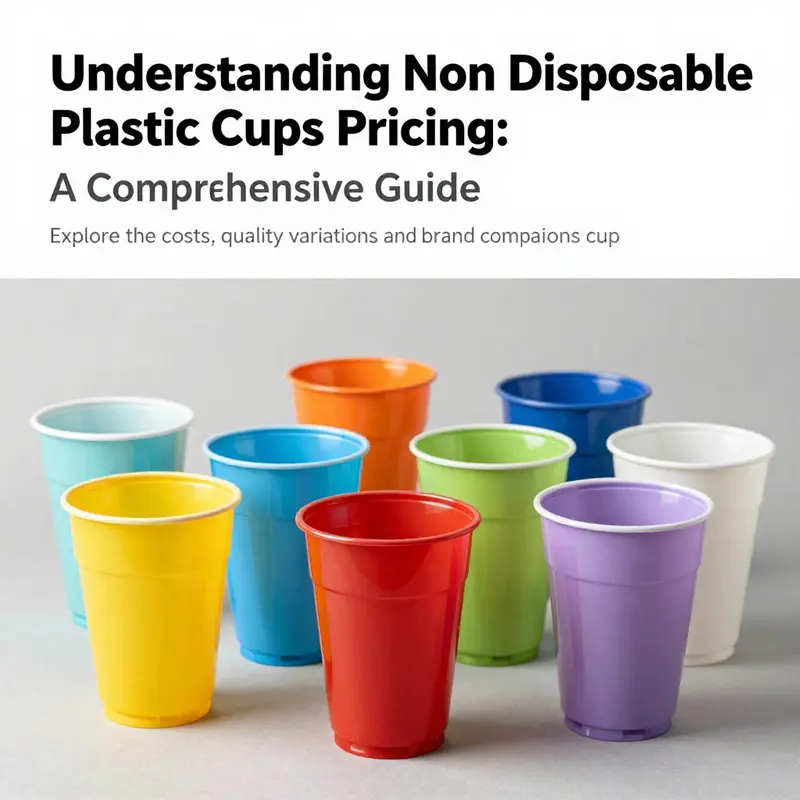
Non disposable plastic cups are becoming increasingly popular among businesses such as bubble tea shops, restaurants, and catering services. These reusable options not only help reduce environmental waste but also present a cost-effective solution for beverage service. In this guide, we delve into the pricing landscape of non disposable plastic cups, addressing various factors that influence their costs. The first chapter offers a pricing analysis highlighting market costs, while the second chapter examines how quality variations impact these prices. Finally, we compare pricing across different brands to equip you with the knowledge to make informed purchasing decisions.
Beyond Reuse: A Price Map of Non-Disposable Plastic Cups in a Sustainability-Driven Market
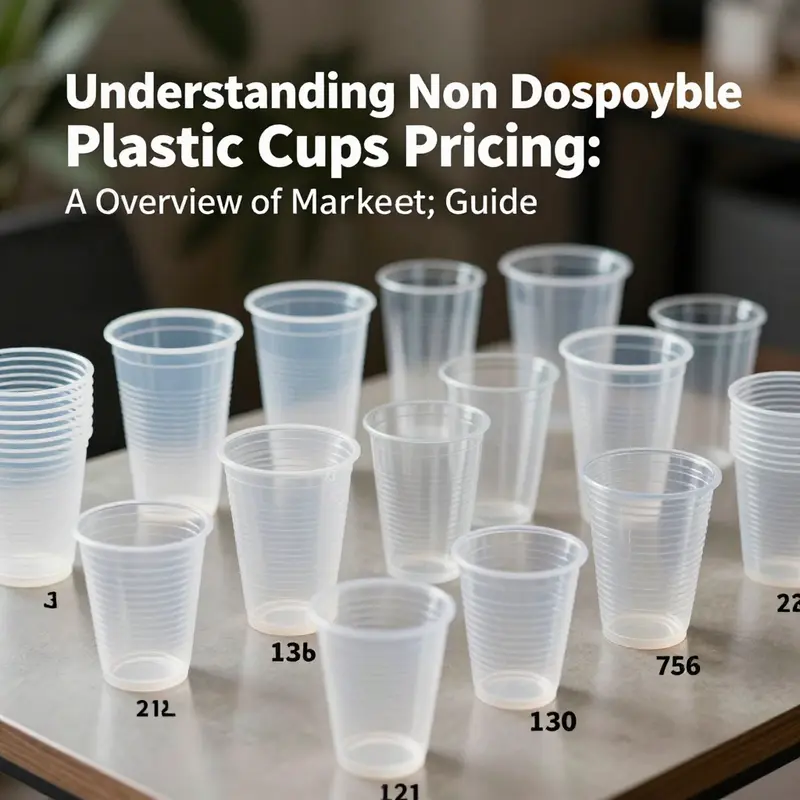
The pricing landscape for non-disposable plastic cups, or reusable beverage vessels, sits at the intersection of material science, manufacturing precision, and evolving consumer expectations. Prices move not only with the raw cost of resin, but with the durability, the design complexity, the branding narrative, and the scale at which a producer operates. In markets that prize sustainability, buyers increasingly weigh the long-term value of a cup against its upfront price, and suppliers respond with a spectrum of options that reflect both quality and functionality. The core message of this pricing map is simple: a reusable cup is a product with a lifecycle, and its price points encode the trade-offs that buyers are willing to make between safety, performance, and longevity.
At the most basic level, the material composition largely sets the floor for price. Reusable cups are commonly fashioned from durable polymers such as high-density polyethylene (HDPE), polypropylene (PP), or polycarbonate (PC). Each material carries distinct cost implications tied to its properties. PP, for instance, offers a balance of impact resistance, chemical safety, and low weight. When used in ordinary, single-material forms, it can deliver a unit price near the lower end of the spectrum, roughly in the range of one to two U.S. dollars per cup for standard designs. This price band reflects relatively straightforward molding processes, moderate resistance to temperature variation, and the absence of advanced features.
In contrast, cups built from higher-grade polymers aimed at commercial food safety or enhanced longevity push beyond that baseline. PC, a sturdy option known for clarity and toughness, or other premium copolymers, can command a higher unit price, often landing in the three to six dollar range when measured against basic PP configurations. The leap from PP to PC or similarly robust materials is not merely a materials tax; it is an investment in safety margins, wash-cycle resilience, and resistance to wear and heat exposure. It also signals a longer service life, which, when calculated across batches and usage cycles, can tilt the economics in favor of reusable choices for institutions and households that run higher-volume or longer-term beverage programs.
But material cost is only one axis of price formation. The design and functionality of a non-disposable cup injects additional layers of cost that may be invisible at the shelf but are salient to the total cost of ownership. A cup designed for professional use might include features such as insulated walls, leak-proof or tamper-resistant lids, ergonomic handles, and integrated measurement marks for portion control. Each of these adds manufacturing complexity. Insulation layers require careful engineering to maintain temperature, while leak-proof lids demand precise tolerances and reliable sealing mechanisms that withstand repeated disassembly and washing. Integrated measurement markings require durable printing or molding techniques that resist abrasion through countless cycles. Ergonomic handles raise molding complexity and can influence mold cycle times, which in turn affect per-unit costs, especially for smaller runs. While a simple, lidless cup may sit near the lower end of the price spectrum, a multi-feature design can push prices higher, reflecting the cumulative contribution of design engineering, tool wear, and quality control checks across production lines.
Branding and aesthetics further shape pricing in meaningful ways. In markets where sustainability resonates with consumer identity, products that convey a story—clear labeling about recyclability, safe materials, and a design language that signals durability—often command a premium. The premium is not solely about appearance; it is tied to perceived value and the reliability customers expect from a reusable cup compared to disposable options. A recognizable brand or a distinctive silhouette, even when produced through the same molding process as a cheaper competitor, can create price separation. The consumer’s willingness to pay more is frequently anchored in trust—trust that the cup will perform in the dishwasher, survive a dozen uses, and remain non-toxic through repeated contact with beverages and ice.
Production scale is another decisive factor. The economics of scale matter a great deal in the reusable-cup segment, perhaps more so than in the disposable world. Large orders enable suppliers to amortize fixed costs—tooling, automation software, quality-control infrastructure—over more units, reducing the per-unit cost and smoothing price volatility. In-house production lines with automated injection molding, automated labeling, and efficient warehousing can offer more competitive pricing while maintaining consistent quality. Conversely, smaller operators that rely on contract manufacturers or more manual processes may face higher per-unit costs, which can squeeze margins or drive up retail prices for niche designs. The interplay between scale, automation, and quality assurance is central to how price changes propagate from factory floor to retail shelf.
Regions matter, too. Currency fluctuations, local labor costs, energy prices, and regulatory requirements shape the cost structure behind non-disposable cups. In some markets, the push toward sustainability has created incentives or subsidies for equipment that reduces waste, which can indirectly lower unit costs over time. In others, strict safety testing and certification regimes add compliance costs that are reflected in higher sticker prices. Buyers should consider not only the sticker price but the anticipated maintenance, replacement frequency, and end-of-life handling when evaluating a reusable cup as an economical choice. A robust pricing decision thus weighs upfront expense against the expected life cycle and the broader benefits of reducing single-use waste.
Across the board, the absence of a single canonical price for non-disposable cups reflects the diversity of configurations available. The information that does exist in the market often emphasizes a spectrum rather than a single line: starter-grade reusable cups with basic PP bodies in low-to-mid volumes, mid-range options combining PP with modest insulation or multi-function lids, and premium configurations that rely on higher-grade polymers, tighter tolerances, and more advanced features. In practice, buyers must assess the total value proposition—durability, safety, performance, and aesthetic appeal—against the upfront investment required. This is where the concept of cost-of-use becomes particularly relevant. A cup that can endure hundreds of dishwashing cycles with minimal degradation lowers the per-use cost when compared with cheaper alternatives that fail after a few uses. In environments like campuses, corporate cafeterias, or hospitality venues with heavy throughput, the per-use economics often trump the initial price tag, making higher upfront investments economically rational over time.
One challenge in pricing discourse is the limited availability of direct, apples-to-apples data on non-disposable cups as a standalone category. Much of what practitioners know comes from adjacent markets—reusable beverage ware, durable containers, and broader categories of flexible packaging. The data that exist thus require careful interpretation. For instance, the general market trend toward sustainability has boosted demand for more durable, reusable solutions, and this trend exerts upward pressure on price ceilings for premium products. Yet, digitized procurement ecosystems and competition among manufacturers can generate downward pressure on unit costs, particularly for standard shapes and common dimensions that command high production volumes. What emerges from this blurred data landscape is a price ecosystem that rewards performance and reliability but also rewards scale and efficient manufacturing.
From a buyer’s perspective, the decision to invest in non-disposable cups hinges on multiple, interlocking criteria. Safety and regulatory compliance loom large; cups intended for repeated contact with food and beverages must meet safety standards, resist leaching, and tolerate repeated washing. This translates into material choices, testing regimes, and quality-control protocols that all have cost implications. Then there is the practical dimension of usability: cups with comfortable grip, stable base, easy stacking, and compatible lids reduce the risk of breakage and loss—factors that indirectly affect the total cost of ownership by reducing replacement frequency and customer dissatisfaction. A cup that leaks, stains, or shatters during a busy service will impose hidden costs that quickly exceed any apparent savings from a lower upfront price.
Another economic layer is the opportunity cost of tying up capital in reusable cups versus other capital investments. When institutions plan new beverage services, they weigh the amortization period of a cup against alternative improvements—improved brewing equipment, better dishwashing capacity, or enhanced employee training. The price of a reusable cup thus becomes part of a broader capital planning calculation. In markets where waste-reduction mandates or corporate sustainability goals carry heavy weight, the perceived value of durable, reusable cups can rise, widening the gap between upfront price and perceived long-term value. In such contexts, procurement teams often adopt a total-cost-of-ownership framework, projecting costs across the lifecycle from purchase through refurbishment, replacement, and end-of-life recycling. This approach can make mid-to-high-priced cups more attractive, especially when their performance and longevity translate into measurable savings in waste disposal, labor, and customer experience.
The literature and industry commentary that touch on disposable and reusable container markets provide a useful macro lens, even if they do not isolate non-disposable cups as a standalone category. These sources describe a market in flux, driven by environmental policy, shifting consumer behavior, and the confluence of design innovation and manufacturing efficiency. While the exact pricing data for non-disposable cups is not always explicit in the public sources, the overarching narrative is consistent: as demand grows for durable, high-performance vessels, price tiers will stabilize around material quality, feature set, and production scale, with room for price compression when volumes rise and supply chains optimize.
A practical takeaway for practitioners and researchers alike is to anchor price expectations in the three core levers: material quality, functional design, and production scale. Materials set the baseline, with basic PP configurations providing a lower-cost entry point and premium PC-based formulations offering higher resilience and safety margins. Functional design—whether it is insulation, secure lids, or ergonomic features—adds layers of value but also cost, especially when tight tolerances and rigorous testing are involved. Production scale, particularly in-house automation and the ability to secure favorable tooling terms, can create significant price advantages, especially for customers who place large orders or commit to long-term supplier partnerships. Understanding where a given cup sits on this axis can illuminate why two seemingly similar products carry different price tags and why price movements over time may reflect shifts in any one of these dimensions.
Conversations about pricing also need to account for consumer perception and policy context. In regions where single-use plastics are increasingly restricted or taxed, the market response often focuses on durable alternatives, which can sustain demand for higher-priced reusable cups. Conversely, in markets where price sensitivity is acute, suppliers may emphasize simple designs and standardized specifications to keep upfront costs approachable, while still advertising the long life of the product. This pricing dynamic—between broad accessibility and premium performance—shapes the market structure and the range of choices available to buyers, from institutions looking to maximize long-term value to individual consumers seeking everyday durability.
Ultimately, the practical implication of this pricing map is that the non-disposable cup market operates as a nuanced ecosystem rather than a single-price category. Buyers should evaluate not only the per-unit price but the total life-cycle cost and the reliability of performance under real-world usage. Suppliers, in turn, must balance the cost of materials and manufacturing with the expectations of customers who demand both safety and sustainability. In markets where data transparency improves and procurement practices evolve, the gap between perceived value and actual cost shrinks, enabling more informed decisions and a healthier market for durable, reusable beverage solutions.
For stakeholders seeking benchmarks beyond anecdotal observation, several industry reports offer broader context on the container and beverage ware markets, including the share of demand attributed to reusable options and the long-term trajectory of waste-reducing packaging. While these reports may not isolate non-disposable cups in every metric, they provide a credible frame for anticipating how price dynamics could evolve as sustainability goals become more embedded in corporate and consumer behavior. As the market continues to mature, pricing will reflect not only the physics of materials and manufacturing but the economics of responsibility, the ergonomics of use, and the enduring appeal of a cup designed to be reused rather than discarded.
For readers who wish to explore the broader landscape of market data and trends, further benchmarks are available through industry analysis platforms that compile market size, share, and trends across disposable and reusable containers. These resources can help translate the qualitative insights of materials, design, and scale into quantitative expectations for cost, risk, and opportunity. In sum, the price of a non-disposable cup is a mirror of its intended life—the longer and more reliably it serves, the more its price justifies itself in the ledger of a sustainable beverage program.
External reference for deeper benchmarks: Grand View Research, Disposable Cups Market Size, Share & Trends Analysis Report. Access here: https://www.grandviewresearch.com/industry-analysis/disposable-cups-market
Quality as a Price Signal: How Variations in Non-Disposable Plastic Cups Shape the Pricelist
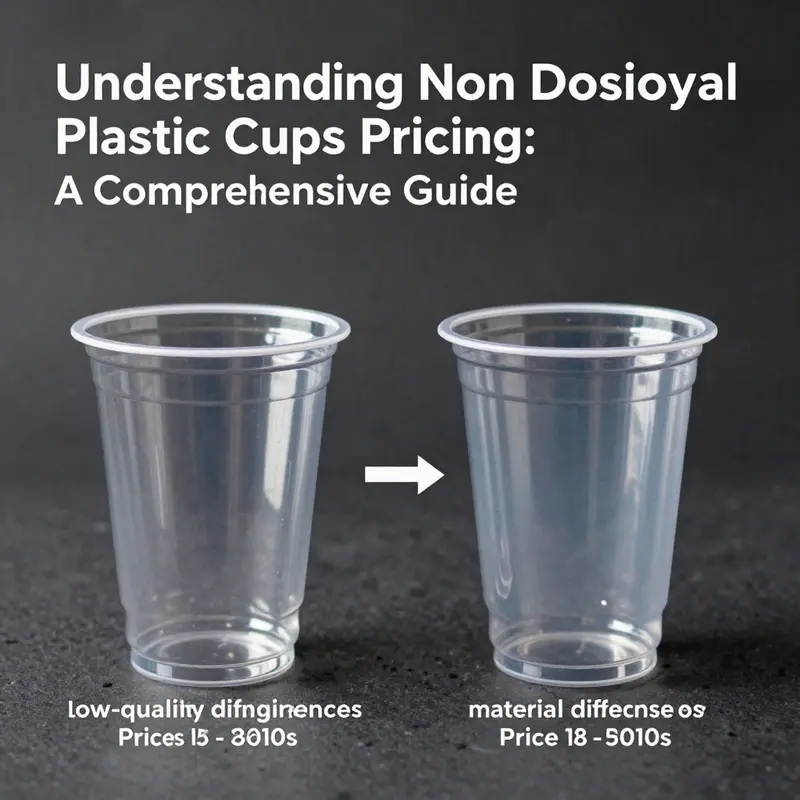
The market for non-disposable plastic cups is a study in how value is perceived and priced when durability, safety, and sustainability ride in close company with convenience. In conversations about pricelists, the most visible numbers are the sticker prices per unit. Yet those prices reflect a deeper calculus, one that weighs material science, engineering, manufacturing discipline, and long term costs to both buyers and end users. A careful look at quality variations reveals that pricing is not a simple reflection of material cost or production volume; it is a signal about lifecycle performance, risk, and the reputational and environmental implications that accompany a given cup. The trajectory from basic to premium cups follows a logic that is easy to overlook in the rush of bulk ordering, but it is precisely this logic that determines how the price of a reusable cup aligns with the expected return on investment for a business, a school, a hospital, or a cafe that wants to project responsibility as part of its value proposition. To understand why some non-disposable plastic cups command higher prices than others, it helps to trace the chain from material composition through manufacturing reality to environmental impact and consumer expectations, while keeping an eye on how these factors translate into practical outcomes for users and buyers alike.
At the core of quality variation is material composition. Premium reusable plastic cups are frequently manufactured from advanced materials such as Tritan copolyester or high-grade polypropylene. These materials are chosen for properties that matter in real-world use: superior impact resistance, resilience against temperature shocks, and a reduced tendency to degrade chemically over repeated cycles of washing, heating, and cooling. When a cup is subjected to the stresses of daily use—hot liquids in the morning, ice-cold beverages after a long afternoon, frequent handwashing, and occasional drops—the material is tested not merely for stiffness or clarity but for a balance between toughness and safety. Tritan, in particular, has established a niche as a material that maintains clarity and toughness after many cycles while showing low propensity to haze or crack. A price list that reflects such material sophistication is signaling to buyers that the cup promises predictable performance, little risk of cracking under typical loads, and an operating envelope that covers a broad range of temperatures without releasing flavors or chemicals into beverages.
In contrast, lower-grade plastics often power the less expensive end of the market. These materials can be more susceptible to cracking, staining, and slower, subtle degradation over time. The risk is not only aesthetic. Cracking or micro-fractures can become channels for micro-leakage, harbor bacteria, or contribute to customer dissatisfaction when cups fail during use or after repeated washing. Staining may be more than cosmetic; it can be a marker of chemical leaching, even if only trace levels are detected. The price of a cup that uses such materials is purposely lower at the outset, but the lifecycle economics can tilt the balance as replacement needs rise and confidence in repeated use slips. The pricing signal, then, embodies more than the immediate cost. It deploys a forecast of performance that can be tested by a buyer through the lens of risk and reliability and how those factors influence long-run financial planning.
Manufacturing processes compound these material differences. A cup that is thick-walled or double-wall insulated commands a higher price because the production line must deliver more material per unit, tighter tolerances, and more robust quality controls. Thickness translates into durability and thermal performance, crucial for beverages that stay hot or cold for longer periods. The construction quality, including wall seams and lid integration, demands precision machinery and skilled oversight. The extra cost is not limited to raw materials; it extends into the engineering of molds, the calibration of extrusion or injection processes, and the testing regimes that ensure each batch meets safety and performance standards. In the higher end of the market, ergonomic features such as comfortable grip contours or textured surfaces that reduce heat transfer to the hand are more than cosmetic touches; they are part of a comprehensive user experience that justifies a premium price. Similarly, features like leak-proof lids, secure closures, and BPA-free certifications require additional testing, certification, and assurance communications. These attributes weave into the price tag in a way that is not merely additive but multiplicative: the marginal cost of a feature is balanced against the probability of enhanced customer satisfaction, lower return rates, and stronger brand trust.
Environmental and sustainability considerations increasingly influence pricing dynamics as well. Cups designed with sustainability in mind—recyclability, compatibility with post-consumer recycled materials, and transparent sourcing of inputs—often command a higher upfront price. This premium is a reflection of ethical manufacturing practices and responsible material stewardship. Buyers today are more attuned to the broader social and environmental narratives that accompany consumer goods. A cup that can be marketed as a sustainable choice or as part of a closed-loop or circular economy approach carries value beyond its immediate function. The premium justifies itself when the product reduces waste, aligns with procurement policies that favor reduced lifecycle impact, or satisfies consumer demand for greener options. Yet sustainability is a spectrum rather than a fixed category. A cup may be designed for recyclability but not for recycled content, or it may employ post-consumer recycled content in some components while other materials remain virgin. Each combination influences lifecycle costs and therefore the price you see on a pricelist.
From a cost perspective, the trade-off between initial outlay and long-term value is a central theme. On the one hand, low-cost cups deliver immediate savings by reducing sticker price per unit. On the other hand, they may require more frequent replacement as durability wanes, color fades, or surface integrity degrades. In a setting with high throughput and repeated use, such as a university café or a corporate cafeteria, the long-run costs of frequent replacements can erase the initial savings. High-quality cups, while more expensive upfront, tend to offer better lifecycle value when you account for lower breakage rates, reduced replacement cycles, and greater user satisfaction. They also reduce the risk of customer dissatisfaction or negative perceptions that can arise when cups crack, leak, or stain during service. The math of pricing in this segment thus evolves from a straightforward unit cost to a broader calculus that includes reliability, safety, and brand integrity. In practice, buyers who optimize their pricelist for lifecycle value will model scenarios that account for anticipated usage patterns, cleaning regimes, and the probability of accidents, then compare these against initial costs and warranties offered by manufacturers.
Design features commonly associated with higher-end cups also influence price in meaningful ways. Ergonomic grips, double-wall insulation, and secure lids are not merely conveniences; they are performance investments. Ergonomic grips can reduce user fatigue during prolonged consumption, a detail that matters for daily rituals in offices or educational facilities. Double-wall insulation is a practical benefit for preserving beverage temperature, which can affect customer satisfaction, perceived value, and the likelihood that a reusable cup replaces disposable alternatives. Lids that seal reliably and are easy to operate contribute to spill prevention, a tangible risk management benefit in busy service environments. These design features require tighter tolerances, more rigorous testing, and often more expensive materials or coatings. The result is a higher price point, which is justified by the reduction in service errors, improved customer experience, and enhanced branding opportunities when cup aesthetics align with a retailer or institution’s identity. Certifications, such as BPA-free guarantees, add another layer of assurance that resonates with health-conscious buyers and can propel premium pricing in markets that demand strict safety standards.
The sustainability narrative also interacts with market structure and consumer expectations in nuanced ways. In markets where procurement policies reward suppliers who disclose material sources, demonstrate traceability, and show progress toward circularity, prices for quality cups reflect these attributes. The premium becomes an investment in supply chain resilience as well as in product performance. Buyers increasingly weigh the relative risk of supply disruptions, regulatory changes, and reputational exposure when selecting cups for institutional use. A cup with stronger guarantees around recyclability, safer packaging, and minimized environmental footprint often commands a price that reflects these contractual and strategic advantages. Importantly, the price signal here is not purely altruistic; it is often tied to risk management and compliance benefits that translate into cost avoidance and stable long-term procurement costs.
The relationship between quality and price also shifts with the scale and context of purchase. In small businesses or consumer markets, price sensitivity can dominate, pushing buyers toward lower-cost options that may carry higher long-term risk. In larger institutional contexts, the economics of scale can support the premium features of higher-grade cups, because the aggregated savings from reduced waste, lower replacement rates, and enhanced user experience accumulate across thousands of units. This scale orientation reinforces the idea that price is a plan for risk management as much as a charge for material and labor. The pricelist for non-disposable cups, therefore, often embodies a tiered structure: a basic line for high-volume, cost-conscious buyers; a mid-range line balancing cost and durability; and a premium tier that prioritizes longevity, safety, and sustainability credentials. Buyers who understand this structure are better equipped to align their purchases with strategic objectives, whether those are minimizing ecological impact, supporting corporate social responsibility goals, or delivering reliable beverage service in high-demand environments.
One practical takeaway for buyers navigating a complex pricelist is to evaluate value in a broader frame. Quality is not only about material resilience; it encompasses the reliability of the entire system—the compatibility of cup and lid, the durability of printing or branding, the ease of cleaning, and the capacity to withstand the intended washing cycles without degradation. A cup that looks strong on a spec sheet but fails under routine use can undermine brand trust just as surely as a poorly sourced material would. In procurement terms, the highest return on investment emerges when you can quantify reductions in waste, lower replacement frequencies, and improvements in user satisfaction. When these factors are measurable, price becomes a responsible proxy for long-term performance rather than a simple line item to be minimized.
To connect these ideas with the broader market data, consider the way different materials and construction methods converge on typical pricing bands. Basic, entry-level reusable cups, often fashioned from standard PP, commonly trade within a lower per-unit price range. These options may suffice for short-term campaigns or light-use contexts where durability expectations are modest. As buyers look for greater resistance to impact, better temperature stability, and reduced chemical risk, the market shifts toward higher-priced materials and more intricate manufacturing processes. Tritan-based cups or other premium polymers occupy the upper end of the spectrum, with pricing reflecting the added value of impact resistance, heat tolerance, clarity, and long-term reliability. The same logic extends to features that improve user experience and sustainability performance, each feature adding a layer of cost that supports a corresponding uplift in price. Buyers who understand this continuum can tailor their assortments to their audience, ensuring that the pricelist aligns with the quality expectations of their customers while maintaining a competitive edge through calculated value propositions.
The chapter on quality variations thus illuminates a central truth about non-disposable plastic cups: price functions as a multifaceted signal. It encodes material science credentials, engineering sophistication, and the durability of the overall product—while also signaling commitment to safety, environmental stewardship, and service quality. In a market that increasingly prizes responsible consumption, the pricelist becomes a communication tool. It tells buyers and end-users what level of reliability, safety, and sustainability they can expect from a given cup. It also helps vendors segment markets, match products to specific usage scenarios, and justify warranties or guarantees that provide reassurance to purchasers who must justify spend within budgets that demand measurable returns.
For stakeholders who are building or refining a pricelist, a practical approach is to integrate lifecycle cost analyses into the pricing framework. This means documenting the expected replacement interval, maintenance implications (such as washing compatibility and temperature exposure), and the potential cost savings from reduced waste and lower risk of product failure. It also means placing a premium on transparency: clearly communicating the material composition, the source of inputs, and the sustainability attributes that justify higher prices. When a pricelist embodies this level of clarity, it empowers buyers to make informed trade-offs between upfront cost and long-term value. It also strengthens relationships with suppliers who can demonstrate consistent performance across real-world use and who can articulate the return on investment that accompanies higher-quality cups.
In a broader sense, the discussion of quality and price ties into ongoing conversations about consumer behavior and corporate responsibility. As more organizations track and report on their environmental footprints, the purchase of reusable cups becomes a measurable piece of the sustainability puzzle. The decision to invest in higher quality cups may be influenced by corporate branding, by the promise of a longer product life, and by the expectation that buying decisions should align with broader goals around waste reduction and resource stewardship. In this light, the pricelist is not merely a catalog of unit costs but a map of strategic choices—choices about how a business or institution wants to be seen and how it wants to impact the environment and community it serves.
In closing, the quality variations among non-disposable plastic cups create a price ecosystem in which the most durable, well-engineered, and environmentally considerate options command higher prices. Yet those higher prices are not arbitrary; they reflect tangible advantages in performance, safety, and lifecycle efficiency. The smarter approach for buyers is to evaluate value in terms of total cost of ownership, not just the sticker price. This mindset moves procurement away from the race to the bottom and toward a more sustainable and financially prudent path. It also aligns with a growing market expectation that products used in daily life should combine convenience with reliability and responsibility. The pricelist, when interpreted through the lens of quality, thus becomes a narrative about long-term value and credible performance, rather than a single snapshot of cost. External resource: https://www.sustainabilityreporting.org/2025/12/reusable-plastic-cups-materials-and-cost-analysis
Internal reference for further exploration: eco-friendly paper cups with printed logos
From Materials to Market: Price Landscapes of Non-Disposable Cups
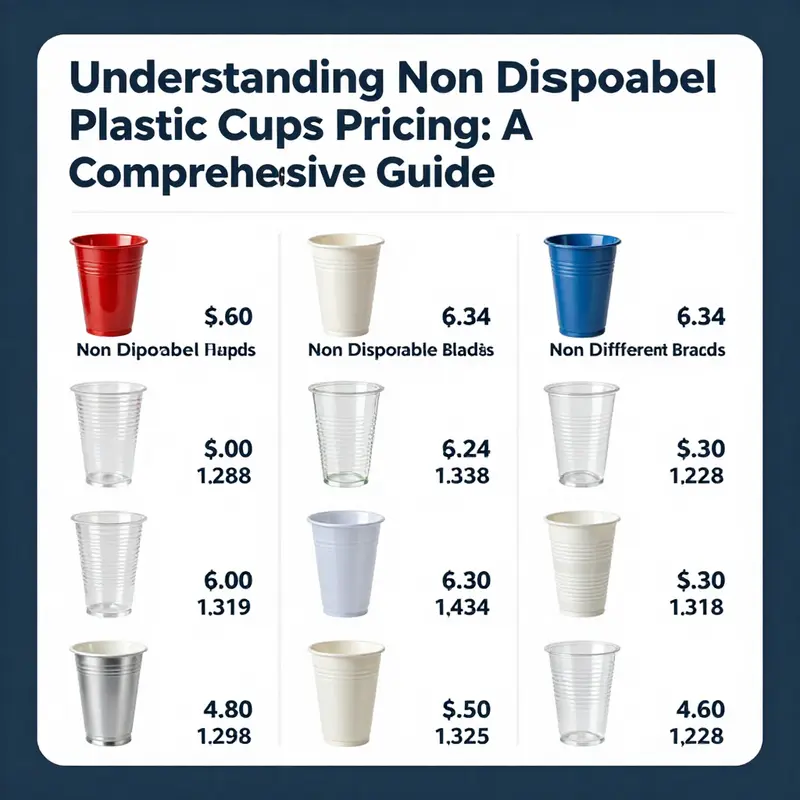
This chapter outlines the pricing dynamics for non-disposable plastic cups. It explains how material families, production scale, customization, and regional factors influence unit costs. It emphasizes ranges rather than fixed prices and discusses how bulk discounts, MOQs, and lifecycle cost considerations shape procurement decisions. It also suggests structuring a price list by material category, capacity, and design features, with anchor points such as basic PP cups in the $1-$2 range, double-wall variants in the $2-$5 range, and premium materials potentially reaching $4-$7 per unit. The text notes the lack of universal brand-to-brand comparability in this market and proposes a practical framework that uses ranges, assumptions, and transparency about lead times and warranties. A closing note encourages buyers to use total cost of ownership, sustainability impact, and customization options as key decision levers.
Final thoughts
In conclusion, understanding the landscape of non disposable plastic cup pricing is essential for businesses looking to invest wisely in reusable options. The analysis provided in this guide underscores the importance of considering both quality and brand reputation when making purchasing decisions. By evaluating costs effectively, businesses can not only bolster their environmental stance but also enhance customer experience. Adopting these products can translate to long-term savings and sustainability, ensuring you’re equipped to meet consumer demands responsibly.